

- Article

Premature Neuroimmune and Redox-Inflammatory Breakdown at the Prodromal Stage in Male and Female Triple-Transgenic Alzheimer’s Disease Mice
- Lydia Giménez-Llort,
- Carmen Vida and
- Monica De la Fuente
- + 3 authors
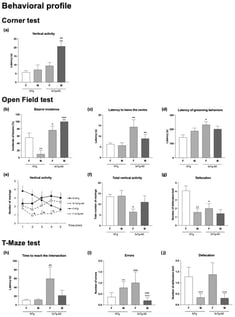
Background/Objectives: Homeostatic (nervous, immune and endocrine) systems and their communications network are crucial for health and aging rate. We previously reported behavioral and peritoneal leukocyte function alterations and oxidative-inflammatory stress in young female triple-transgenic (3xTg) mice for Alzheimer’s disease (AD). Here, the deterioration of the homeostatic systems and their interplay was investigated, in an integrated way, at prodromal stages and in both sexes of 3xTg-AD mice. Methods: An integrative analysis of the behavioral profile, peripheral immune splenic and thymic leukocyte functions, splenic oxidative-inflammatory state, and plasmatic corticosterone in both sexes of 3xTg-AD mice at 4 months of age was compared to that of age- and sex-matched NTg counterparts. Results: The prodromal stage of 3xTg-AD, characterized by anxiety-like behaviors and disrupted exploration, was aligned with reduced chemotaxis, natural killer activity, and lymphoproliferation—especially in the spleen. In addition, 3xTg-AD mice exhibited lower anti-inflammatory (IL-10) and higher pro-inflammatory (IL-2, IL-1β, and TNF-α) cytokine concentrations and oxidative stress (higher oxidants and lower antioxidants). Several of these alterations displayed sex-dependent differences (worse in males). However, no differences in corticosterone were found. Conclusions: These findings suggest that neuroimmune and redox-inflammatory dysfunctions, indicative of premature aging, emerge at the prodromal stage of AD, preceding corticosterone changes, unveiling a time lag in the neuroimmunoendocrine alterations in these animals. They may act as early indicators of premature aging in AD pathology and provide potential targets for sex-specific prodromal intervention.
9 February 2026