

- Article

An Analysis of the Risk Factors and Outcomes of Patients with COVID-19 Admitted to a Non-Acute Hospital
- James Dafydd Ainsworth,
- Aung Min Saw and
- Suresh Pillai
- + 1 author
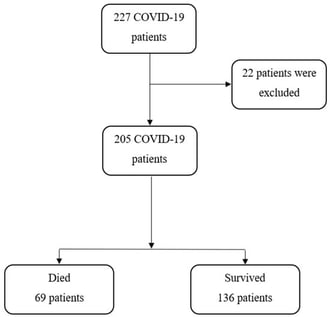
Coronavirus disease 2019 (COVID-19) has caused substantial global health and economic disruption, and identifying factors associated with adverse outcomes remains essential. This study is a first-wave observational study and examined risk factors and outcomes among patients admitted with COVID-19 to a non-acute hospital during the first wave of the pandemic, with particular focus on social deprivation and frailty. We conducted a retrospective review of clinical notes for 205 patients admitted between December 2019 and June 2020. Frailty was assessed using the Clinical Frailty Score and the Charlson Comorbidity Index, and social deprivation was evaluated using the Welsh Index of Multiple Deprivation. Although more women than men were admitted, mortality rates were similar across sexes. Older age was associated with increased mortality, and ischaemic heart disease was the most common comorbidity, occurring more frequently among patients who died. Those who died also demonstrated greater frailty, reflected in higher frailty and comorbidity scores. Most patients, irrespective of survival, were from less deprived areas, and greater social deprivation was not associated with increased admission or mortality. These findings indicate that older age, frailty, and ischaemic heart disease are important predictors of mortality in non-acute hospital settings, while social deprivation did not appear to influence admission risk or outcomes in this cohort. As this cohort predates widespread vaccination and antiviral therapy, these findings provide insight into baseline risk factors for COVID-19 mortality in frail populations during the first pandemic wave.
9 February 2026