Skip Content
You are currently on the new version of our website. Access the old version .

Complications

Complications (ISSN 2813-4966) is an international, peer-reviewed, open access journal on the prevention, diagnosis, etiology, and management of complications in all aspects of basic, translational, and clinical research, as well as epidemiology.
The journal seeks to offer best practices and expert experience, and recommendations on intra-operative and post-operative adverse events, published quarterly online by MDPI.

All Articles (47)

  • Case Report
  • Open Access

Chronic subdural hematoma (CSDH) in frail older adults is increasingly recognized as a sentinel event, with mortality often driven by medical complications rather than neurosurgical factors. We report a failure-to-rescue case in which rapid postoperative deterioration occurred after burr-hole drainage for bilateral CSDH in a frail older adult with diabetes. A clinical picture consistent with sepsis was suspected, and a gastrointestinal source was considered, but the infectious focus could not be confirmed due to limited diagnostic work-up. On admission, chest-computed tomography showed mild right lower-lobe pneumonia, and incidental transverse colonic dilatation was also visible. Burr-hole drainage was uneventful and oxygenation rapidly normalized on room air. On postoperative day (POD) 3, the patient developed a high fever (39 °C), rising C-reactive protein (CRP; 14 mg/dL), abrupt leukopenia (15,300 → 3300/µL), and, several hours later, profuse watery diarrhea. At that time, an evaluation for an infectious source and escalation of therapy (e.g., blood cultures, serum lactate, and abdominal imaging) were not performed. In the early hours of POD 4, he suffered sudden desaturation, shock, and cardiac arrest, and died despite resuscitation. A portable radiograph after intubation showed no new diffuse pulmonary infiltrates but marked colonic gas distension. This case highlights the need to reassess diagnostic framing when discordant postoperative “red flags” emerge and proposes practical triggers for early sepsis evaluation and escalation—prioritizing early recognition and timely rescue rather than a definitive determination of the cause of death—in high-risk CSDH patients.

2 February 2026
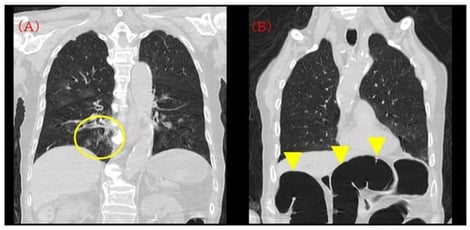
Initial computed tomography (CT) on admission. (A) Chest CT demonstrating mild bronchopneumonia predominantly in the right lower lobe without extensive consolidation or pleural effusion (yellow circle). (B) The same CT series incidentally showing a moderately distended transverse colon with intraluminal gas (yellow arrowhead). This finding was visible on the admission CT but was not pursued with dedicated abdominal evaluation at that time and was later revisited during case review.

Carotid paragangliomas are rare neuroendocrine tumors that, despite being typically benign, present significant surgical and anesthetic challenges. This manuscript outlines the anesthetic management for surgical resection, highlighting preoperative assessment, intraoperative monitoring, and postoperative care. A multidisciplinary approach is essential, particularly for functional tumors, requiring preoperative screening and pharmacologic preparation. Intraoperatively, cerebral perfusion monitoring is critical to prevent ischemic events. Postoperative vigilance is necessary to detect complications such as bleeding, cranial nerve deficits, and hemodynamic instability. A multidisciplinary team skilled in these surgical procedures is essential to improve safety in carotid paraganglioma surgery.

30 January 2026

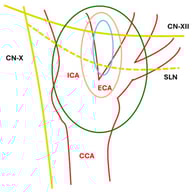
Anatomical Shamblin Scheme. ICA: internal carotid artery; ECA: External carotid artery; CCA: common carotid artery; SLN: superior laryngeal nerve; CN-XII: XII cranial nerve; CN-X: X cranial nerve; blue line: type I; orange line: type II; green line: type III.
  • Case Report
  • Open Access

Managing Gallstone Ileus and Surgical Considerations in Resource-Limited Settings: A Case Series from the Amazon Jungle

  • Santiago Andrés Suárez-Gómez,
  • Valentina Velasco-Muñoz and
  • Oscar Guevara
  • + 2 authors

Gallstone ileus is a rare but serious complication of gallstone disease, often requiring surgical intervention. While enterolithotomy remains the standard treatment, the role of additional biliary surgery, particularly subtotal cholecystectomy, remains controversial. This study examines the management of gallstone ileus in a rural setting, where limited surgical resources and access to specialized biliary interventions pose unique challenges. We present a case series of four patients diagnosed with gallstone ileus in a rural healthcare facility. All patients underwent initial enterolithotomy for bowel obstruction relief. Surgical outcomes, complications, and the necessity for a second intervention, including subtotal cholecystectomy, were evaluated. Ever patient had a successful recovery. Of the four cases, two patients underwent a subtotal cholecystectomy. No perioperative mortality was observed, but limited access to advanced imaging and specialized biliary surgery influenced clinical decision-making. The rural setting in which these series occurred comes with its unique challenges regarding resource management and technological demands.

9 January 2026

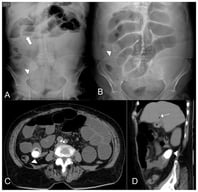
(A) Plain abdominal X-ray showing a radiopaque object in the right flank (arrowhead), consistent with a gallstone, along with stepladder-pattern air-fluid levels (thick arrow). (B). Scout view from an abdominal computed tomography (CT) scan demonstrating a gallstone in the right flank (arrowhead) and dilated small bowel loops. (C). Axial contrast-enhanced abdominal CT scan revealing a thick-walled gallbladder containing a large calculus, along with pneumobilia and passage of oral contrast into the gallbladder. (D). Coronal contrast-enhanced abdominal CT scan showing a gallstone at the jejunal level (arrowhead) with a second, smaller adjacent gallstone, as well as pneumobilia (arrow).

Robotic retroperitoneal lymph node dissection (R-RPLND) represents an evolution in the surgical management of testicular germ cell tumors, offering reduced morbidity compared with open approaches. However, this procedure remains technically challenging, particularly after chemotherapy, due to dense fibrosis and distortion of the retroperitoneal anatomy. We report a case of an unrecognized intraoperative thermal injury causing a partial transection of the proximal ureter presenting postoperatively as a urinary fistula following R-RPLND for residual mass resection, along with a focused review of the contemporary literature on procedure-related complications. A review of large series highlights severe complications (Clavien–Dindo ≥ III) occurring in 6–12% of cases, with ureteral injuries occurring in up to 6%, often identified after surgery. This case underscores the importance of meticulous dissection, awareness of altered anatomy, and prompt intervention when unexpected events arise during R-RPLND.

8 January 2026

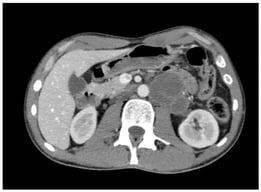
Residual retroperitoneal mass before surgery.

News & Conferences

Issues

Open for Submission

Editor's Choice

Get Alerted

Add your email address to receive forthcoming issues of this journal.

XFacebookLinkedIn
Complications - ISSN 2813-4966