Skip Content
You are currently on the new version of our website. Access the old version .

Colloids and Interfaces

Colloids and Interfaces is an international, peer-reviewed, open access journal on colloids and interfaces chemistry published bimonthly online by MDPI.

All Articles (593)

Optimized Thyme Oil Single and Double Emulsion for Sustainable Animal Health Applications

  • Costanza Bonnici,
  • Maria Federica Marchesi and
  • Marijana Dragosavac
  • + 1 author

Thyme oil (TO) is emerging as a promising candidate to counteract antimicrobial resistance due to its renowned antimicrobial and anti-inflammatory properties. However, rapid gastric absorption of its bioactive compounds limits its intestinal delivery, where its action is required, so the protection of these components is necessary. This pilot study optimized TO-loaded emulsions for targeted intestinal release. High-shear homogenization and membrane emulsification were compared to formulate single oil in water (O/W) and double water in oil in water (W/O/W) emulsions, screening emulsifiers (lecithin, Tween 20, Tween 80) and functional biopolymers (pectin, sodium alginate). High-shear homogenization with lecithin (0.5%), pectin (1.80%), and sodium alginate (0.2%) yielded stable submicron O/W emulsion (Span = 0.5; d(v,0.5) = 0.21 µm), achieving electrostatic stabilization (ζ-potential = −51.5 ± 1.5 mV) at a target poultry dosage. A pH-responsive behavior was observed: protective hydrogel formed in gastric conditions (d(v,0.5) = 2.64 µm) and maintained stability at intestinal pH (d(v,0.5) = 3.03 µm). Membrane emulsification enabled precise droplet control under mild conditions, producing monodisperse O/W emulsions (d(v,0.5) = 38–59 µm; Span ≤ 1.0) and W/O/W double emulsions (d(v,0.5) = 26.5 µm; Span = 0.6) with ultra-low interfacial tension (0.52 mN·m−1). Repeated membrane passes reduced droplet size to ~6.6 µm. These systems represent a foundational step toward bioactive intestinal delivery, providing a viable antibiotic-free strategy for sustainable livestock production.

9 February 2026

Schematic and perspective views of the experimental set used to inject the dispersed phase. (a) Cross-sectional view of the stirred cell, highlighting the main geometric parameters (T = 37.57 mm, D = 30.08 mm, b = 10.20 mm, blade number = 2, Dm = 41.18 mm). The stirrer shaft and the membrane are shown in grey. The membrane support, which also constitutes the cell base, is shown in light beige. The red component represents the external housing of the stirrer shaft used to seal the cell. The white arrow indicates the direction of dispersed phase inlet into the cell base. (b) Schematic representation of shear surface formation during membrane emulsification using a stirred cell equipped with a flat-sheet membrane. The curved arrow indicates the direction of stirrer rotation, while the upward arrows represent the flow of the dispersed phase through the membrane pores toward the continuous phase. The figure layout and concept were inspired by Dragosavac et al., 2008 [21]. The image was generated using artificial intelligence based on a large language model.

Correlation Between Interfacial Parameters in Bead Packs: Contact Angle and Zeta Potential

  • Tomislav Vukovic,
  • Thomas Luxbacher and
  • Antje van der Net
  • + 3 authors

Wettability determination is of crucial importance for multiphase flow in porous media. Currently available methods are either applied to simplified geometries (sessile drop) or are time-consuming (Amott, USBM) and cost-intensive (micro-CT scanning). The purpose of this study is to systematically test the streaming potential method as a fast, cheap, and in situ applicable method for surface probing and determination of the wetting state of soda lime glass beads through zeta potential. Different wetting states are achieved by means of silanization and are characterized by an average contact angle. Comparison of contact angles measured by sessile drop on plate geometries and contact angles derived from bead pack micro-CT images confirmed that the treatment is transferable to the bead packs. The correlation between the zeta potential of the single bead size packing with a single wetting state and the contact angle is non-unique over the entire range of tested treatment volume ratios. The contact angle plateaus at higher degrees of silanization, while the zeta potential values still change. Before the plateau, a correlation between contact angle and zeta potential is present. Zeta potential measurements on the mixtures of the same-sized beads with two different wetting states confirm the existing theory that the apparent zeta potential is a surface area-weighted average of constituents. For a mixture where the zeta potential is size dependent, a new correlation for a dual bead system was derived. The non-unique correlation between zeta potential and contact angle, combined with a bead size-dependent zeta potential, will limit the use of zeta potential for contact angle derivation for the system of soda lime glass beads with various silanization coatings used here. Monitoring relative changes of wetting conditions might still be possible.

6 February 2026

Images (left) and micro-CT scan slice (right) of custom PMMA holder filled with glass beads used in SurPASS 3 streaming potential and Nikon XT H 225 micro-CT measurements. Image obtained from Vukovic et al. [20].

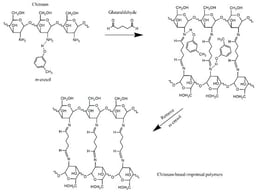
In this preliminary study, chitosan-based molecularly imprinted polymers crosslinked with glutaraldehyde were synthesized and evaluated for the selective removal of m-cresol, a volatile phenol associated with the sensory defect known as smoke taint in wine. Three formulations of chitosan-based molecularly imprinted polymers (MIP-Gs) were synthesized using glutaraldehyde as a crosslinker and m-cresol as a template. Non-imprinted polymers (NIP-Gs) served as controls. The polymers were characterized by Fourier-transform infrared spectroscopy, thermogravimetric analysis, and scanning electron microscopy, which confirmed successful crosslinking and structural differences between MIPs and NIPs. Adsorption performance was evaluated using solid-phase extraction cartridges packed with the synthesized polymers, employing a Cabernet Sauvignon wine. The MIPs exhibited higher adsorption efficiency and selectivity toward m-cresol compared to NIPs, achieving removal rates of 15% to 40%, depending on polymer formulation and analyte concentration. Molecular dynamics simulations were used to investigate polymer–analyte interactions at the molecular level, providing mechanistic insight into the preferential binding of m-cresol within the imprinted cavities. Physicochemical analyses of red wine showed that m-cresol removal occurred with minimal impact on key phenolic parameters, supporting the functional selectivity of MIPs. These results demonstrate that chitosan-based MIPs constitute a promising class of materials for selective adsorption applications in complex liquid systems.

6 February 2026

Schematic illustration of the steps for the synthesis of chitosan-based imprinted polymers.

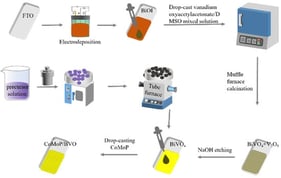
Herein, a cobalt–molybdenum bimetallic oxide precursor was synthesized via a hydrothermal route, followed by a phosphidation strategy in a tube furnace to produce a CoMoP cocatalyst. Subsequently, a CoMoP/BiVO4 composite photoanode was successfully constructed by loading the CoMoP cocatalyst onto the surface of an electrodeposited BiVO4 film using a drop-casting method. A suite of analytical tools such as TEM, XRD, and XPS was utilized to comprehensively examine the material morphology and crystalline features, verifying that CoMoP was effectively anchored on the BiVO4 surface with intimate interfacial contact. Photoelectrochemical (PEC) performance testing indicated that the composite photoanode achieved optimal performance with a 200 µL loading of the CoMoP dispersion (2 mg/mL). Under front-side illumination, the photocurrent density of the CoMoP/BiVO4 composite photoelectrode reached a photocurrent density of 2.8 mA/cm2 at 1.23 V (vs. RHE), which is approximately 3.1 times higher than that of unmodified BiVO4 (0.9 mA/cm2). Under back-side illumination, the composite photoanode generated 3.5 mA/cm2, representing a 2.3-fold improvement over the 1.5 mA/cm2 recorded for bare BiVO4. The bandgap energy of BiVO4 was determined to be approximately 2.44 eV based on UV–vis absorption spectra and the corresponding Tauc plot. Owing to its metallic nature, CoMoP exhibits strong broadband absorption in the visible-light region and does not display an intrinsic semiconductor bandgap behavior. Combined with photoluminescence (PL) spectroscopy and PEC results, it was demonstrated that the CoMoP loading effectively promoted interfacial charge separation and transport while accelerating water oxidation kinetics. These results demonstrate that the CoMoP/BiVO4 system serves as an advanced semiconductor material with excellent performance for photoelectrocatalytic water splitting.

6 February 2026

Schematic illustration of the synthesis procedure for pristine BiVO4 and CoMoP/BiVO4 electrodes.

News & Conferences

Issues

Open for Submission

Editor's Choice

Reprints of Collections

Advances in Functional Thin Films
Reprint

Advances in Functional Thin Films

Editors: Ricardo Lopez Anton, Jose Maria De Teresa, Sion Federico Olive Méndez
Recent Advances in Emulsions and Applications
Reprint

Recent Advances in Emulsions and Applications

Editors: César Burgos-Díaz, Mauricio Opazo-Navarrete, Eduardo Morales

Get Alerted

Add your email address to receive forthcoming issues of this journal.

XFacebookLinkedIn
Colloids Interfaces - ISSN 2504-5377