Skip Content
You are currently on the new version of our website. Access the old version .
  • Indexed in
    Scopus
  • 27 days
    Time to First Decision

Coasts

Coasts is an international, peer-reviewed, open access journal on coastal engineering, management, conservation, biology and ecology, published quarterly online by MDPI.

All Articles (142)

The Sacred Ibis Threskiornis aethiopicus is an invasive alien species (IAS) that has become established in many European countries. Because of its invasive status and its frequent interactions with native species, understanding the behavioural tolerance of this species to human disturbance is relevant for both conservation and management. Here, we analysed Flight Initiation Distances (FID) of T. aethiopicus recorded between 2012 and 2025 across the northern Adriatic coast. The dataset (n = 72) included approaches on foot and by boat in six habitat types (artificial saltmarshes, farmlands, brackish ponds, freshwater wetlands, saltmarshes, tidal flats). Mean FID was 41 m (SD = ± 24); it was affected mainly by group size, whereas habitat, season and approach mode had no clear effect. A cross-species analysis of mean FID versus body mass indicated that, for its size, T. aethiopicus has a much shorter FID than expected from the allometric relationship observed in 20 other waterbirds species for which FID was also collected (n = 1505) at the same sites. The results suggest partial habituation to anthropized environments and a limited flight response compared to native species. These findings may support management actions aimed at monitoring and controlling the expansion of the species while mitigating disturbance to native assemblages.

5 February 2026
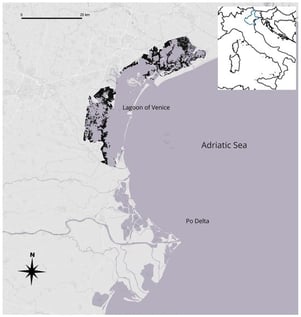
Map of the study area, with the location of the Lagoon of Venice and the Po Delta highlighted.

Degradation and Decomposition of Holopelagic Sargassum: A Review on Process Dynamics

  • Román Manuel Vásquez-Elizondo,
  • Adrian Fagundo-Mollineda and
  • Daniel Robledo
  • + 1 author

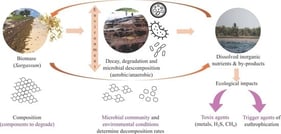
This review synthesizes the literature on the degradation and decomposition of holopelagic Sargassum, with a focus on process dynamics, including microbial contribution, process descriptions, and ecological impacts. Our objective is to consolidate a robust knowledge framework to inform and optimize management strategies in affected areas. Overall, we observed that the current literature relies primarily on isolated field ecological descriptions rather than a coherent, unified research line; mechanistic studies, including bacterial pathways and factors controlling degradation, remain scarce. At the fine scale, microbial community shifts during decomposition are strongly linked to the sequential utilization of distinct organic substrates, thereby favoring the proliferation of microorganisms capable of degrading complex organic molecules and of bacterial groups involved in sulfur respiration, methanogenesis, and nutrient recycling. In the case of sulfur respiration, groups such as Desulfobacterales and Desulfovibrionales may be responsible for the reported H2S emissions, which pose significant public health concerns. At a broad scale, degradation occurs both on beaches during emersion and in the water column during immersion, particularly during massive accumulations. The initial stages are characterized by the release of organic exudates and leachates. Experimental and observational studies confirm a strong early-stage release of H2S until the substrate is largely depleted. Depending on environmental conditions, a significant amount of biomass can be lost; however, this loss is highly variable, with notable consequences for contamination studies. Leachates may also contain low but ecologically significant amounts of arsenic, posing a potential contamination risk. Decomposition contributes to water-quality deterioration and oxygen depletion, with impacts at the individual, population, and ecosystem levels, yet many remain imprecisely attributed. Although evidence of nutrient enrichment in the water column is limited, studies indicate biological nutrient uptake. Achieving a comprehensive understanding of degradation and decomposition, including temporal and spatial dynamics, microbiome interactions, by means of directed research, is critical for effective coastal management, improved mitigation strategies, industrial valorization, and accurate modeling of biogeochemical cycles.

14 January 2026

Landscape scenarios of holopelagic Sargassum degradation and decomposition on beaches. (A) Initial arrival of small algal fragments on clean beaches; this typically occurs at the beginning or end of the Sargassum season. Scenario 1 (B–D): Degradation during emersion (exposure to air). In this scenario, accumulated material dries rapidly, slowing decomposition; however, as more biomass arrives, internal conditions change, promoting faster decay (note the different colors of the stranded biomass in (D)). Scenario 2 (E,F): decomposition during emersion. This process may initiate under high stress while biomass is still floating before it strands; however, it is most noticeable when accumulations peak and degradation is already occurring on the shore. Scenario 3 (E,F). Massive accumulations form a barrier for fresh algae. Stress and lack of water circulation trigger decomposition during immersion (underwater), while the emersion processes occur simultaneously. Consequently, released compounds in leachates may migrate into the ocean or groundwater, creating a complex scenario (F) where decomposing, stressed-decaying, and fresh algae coexist. Panels (G–J) show a post-accumulation scenario, where strandings are diminishing, but decomposing biomass and released products remain in the environment. Panel (J) shows a view from the open ocean toward the beach. In most cases, biomass is transported to clandestine (K) or permitted disposal sites, open-air sites, or special containers. Without proper management, biomass can leach and contaminate groundwater. See text for details. (A–G) Puerto Morelos, Q. Roo, México, 2017–2018; (H–J) Xcalak, Q. Roo, México, 2018; (K) Ruta de los Cenotes, Q. Roo, México. All pictures were taken by the authors, except for (K) (source: https://piedepagina.mx/la-amenaza-de-lo-tiraderos-clandestinos-de-sargazo/ accessed on 1 October 2025).
  • Systematic Review
  • Open Access

Unintended Victims: A Systematic Review of Global Marine Turtle By-Catch in Fisheries

  • Breno Carvalho da Silva,
  • Lucas Garcia Martins and
  • Rômulo Romeu Nóbrega Alves
  • + 2 authors

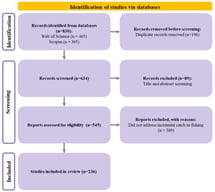
Incidental capture (bycatch) is a major threat to all seven marine turtle species worldwide. This systematic review assessed (i) research trends over the past 20 years; (ii) relationships between fishery types, gear, and species caught; (iii) post-capture outcomes; and (iv) challenges in bycatch mitigation. A systematic search of Web of Science and Scopus up to April 2024 identified 236 studies, comprising 336,616 global bycatch records. Publications on turtle bycatch increased significantly (p < 0.001), peaking in 2020. Reported captures also rose (ρ = 0.45; p = 0.026), with Caretta caretta most frequently documented (74.8%). Methodology influenced outcomes: aerial monitoring and direct observation underestimated captures of Chelonia mydas, Lepidochelys kempii, and Eretmochelys imbricata compared with mixed methods; interviews only affected the latter. Regarding fishery interactions, Dermochelys coriacea was more susceptible to hook-and-line fishing (p = 0.0079), while C. mydas was more associated with small-scale fisheries (p = 0.0115). Most turtles were released after capture (60.6%), with no significant temporal variation in outcomes (p > 0.05). Despite growing monitoring, knowledge gaps remain in standardized reporting, regional and species coverage, and methodological integration. Addressing these issues is essential to guide effective, collaborative conservation strategies.

8 January 2026

PRISMA 2020 flow diagram illustrating the study selection process.

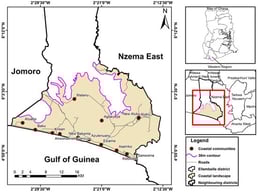
The study focuses on the impact of climate change and spatial planning policies on coastal landscape dynamics. We examine the present and future coastal land use/land cover (LULC) change for southwestern Ghana under the coastal resilience (CR) scenario and coastal planning (CP) scenario. It employs an integrated approach of a review of literature and satellite imagery analysis to map coastal land use/land cover (LULC) change, from 2010 to 2020, to predict future landscape transitions under a coastal resilience approach and then contrast it with a scenario where development of the coast continues. The results show a continual decline in wetlands, from 1882.43 ha in 2010 to 1743.49 ha in 2020. Increased development would dominate the landscape under a scenario where coastal planning continues to expand, whereas cultivated, agricultural lands and vegetation are likely to increase under a coastal resilience scenario in 2035 and 2057. This study recommends that government and other stakeholders should consider coastal landscape restoration plans and programmes towards landscape sustainability for Sustainable Development Goals (SDG) 11 and 13.

22 December 2025

Map showing the southwestern coastal landscape in Ellembelle District of Ghana.

News & Conferences

Issues

Open for Submission

Editor's Choice

Get Alerted

Add your email address to receive forthcoming issues of this journal.

XFacebookLinkedIn
Coasts - ISSN 2673-964X