Skip Content
You are currently on the new version of our website. Access the old version .

Clinics and Practice

Clinics and Practice is an international, peer-reviewed, open access journal on clinical medicine, published monthly online by MDPI (from Volume 11, Issue 1 - 2021).

Indexed in PubMed | Quartile Ranking JCR - Q2 (Medicine, General and Internal)

All Articles (1,368)

Longitudinal Changes in Depression, Anxiety and Stress Symptoms Among Hemodialysis Patients

  • Adriana-Luciana Luca,
  • Felicia Militaru and
  • Eugen Moța
  • + 2 authors

Background/Objectives: Chronic kidney disease (CKD) progresses with the gradual and irreversible loss of renal function. In Romania, given the increasing number of patients undergoing hemodialysis (HD), the prevalence of psychiatric symptoms and disorders in this population has become particularly significant. Although important advances have been made in the management of psychiatric conditions in HD patients, their mental health remains relatively poor. The aim of this study was to observe the severity temporal trends of depression, anxiety and stress symptoms and correlations among HD patients. Methods: A total of 173 patients, underwent a detailed anamnesis, with emphasis dialysis duration, comorbidities and a complex psychiatric evaluation, followed by the application of the Socio-economic Scale (SES-3); Mini Mental State Examination (MMSE); and the Depression, Anxiety and Stress Scale 21R (DASS-21R). The dialysis performance (spKt/V) and Charlson Comorbidity (CCI) indices were provided by DIAVERUM Nephrology and Dialysis Center in Craiova. Results: The severity of depression and anxiety symptoms significantly increased over six months, 0.248 ± 1.432 vs. 0.453 ± 1.488 (p < 0.0001; rrb = 0.296) for depression, and −0.090 ± 1.004 vs. 0.089 ± 1.047 (p < 0.0001; rrb = 0.252) for anxiety; while stress-like symptoms remained stable 0.080 ± 1.318 vs. 0.164 ± 1.357 (p = 0.0661; rrb = 0.123), despite improvements in dialysis adequacy (spKt/V). Depression scores were moderately correlated with anxiety and weakly correlated with stress and spKt/V. Anxiety results were moderately correlated with stress, while both anxiety and stress showed negligible correlations with spKt/V. Clinical variables assessed showed moderate predictive value for psychological outcomes in this cohort. Conclusions: Our study confirms the temporal trend of severity of mental symptoms and their persistence among HD patients, highlighting the urge to integrate mental health screening and intervention programs and a multidisciplinary team adapted for each case.

8 February 2026
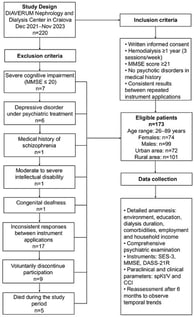
Study design and data collection process. Flowchart illustrating study period, inclusion and exclusion criteria, sample characteristics and data collection methods applied to 173 HD patients (74 females, 99 males; age range: 26–89 years) at the DIAVERUM Nephrology and Dialysis Center in Craiova (December 2021–November 2023) (created using Adobe InDesign 21.0.1).

Background: For the majority of chronic spontaneous urticaria (CSU) sufferers, nocturnal itch has a profound effect on quality of life (QoL), as it leads to sleep disturbances. To ensure good sleep quality (SQ), the body must produce an adequate amount of melatonin, which regulates the sleep cycle. Methods: This study examines the levels of salivary melatonin in 38 CSU patients and 38 healthy controls, as well as the relationship between CSU severity, QoL and SQ. The Enzyme-Linked Immunosorbent Assay (ELISA), Dermatology Quality of Life Index (DLQI), and Pittsburgh Sleep Quality Index (PSQI) were used to determine salivary melatonin levels, QoL, and SQ. In addition, the CSU participants were given the Urticaria Activity Score (UAS) and the Urticaria Control Test. Results: The median value of salivary melatonin in CSU patients was lower than that in healthy individuals (0.2 vs. 15.985 pg/mL; p < 0.001). A decreased melatonin level was seen in 90% of CSU patients and 18% of healthy individuals. Individuals with lower melatonin levels were significantly more likely to have CSU compared with those with higher melatonin levels (OR = 37.6; 95% CI 10.0–141.1). Melatonin was linearly related to QoL and sleep quality in the whole sample (r = −0.606 and −0.536; p < 0.001) but not in CSU patients. Impaired QoL in patients correlated with itch intensity and the number of hives (r = 0.740 and 0.646). The severity and activity of CSU are linearly related to impaired QoL and sleep quality (r = −0.606 and −0.536; p < 0.001). Sleep quality acts as the mediator of the association between QoL and salivary melatonin, when controlling for the effect of age and gender (B = −0.347; 95% CI = −0.679 to −0.080). Conclusions: The data suggest that melatonin may be more a non-specific marker of sleep disturbance than the severity of CSU. Sleep quality may act as a mediator linking dermatology-related QoL, circadian dysregulation and reduced melatonin secretion.

6 February 2026

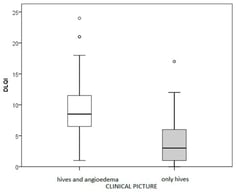
Urticaria activity effects on quality of life (DLQI). Circles present outliers.
  • Case Report
  • Open Access

Background: Ledderhose Disease, or plantar fibromatosis, is a fibroproliferative disorder affecting the plantar fascia with limited effective treatment options. Although hyaluronidase has a long history of clinical use, it has not been previously used for Ledderhose Disease. This study explores the use of combined hyaluronidase and triamcinolone acetonide enzymatic injections as a novel and promising technique for managing Ledderhose Disease. Methods: This paper investigates the use of combination therapy with hyaluronidase, triamcinolone acetonide, and lidocaine injections in three patients with Ledderhose Disease. Injection protocols, dosage, frequency, and patient outcomes are all discussed. Additionally, this study explores the underlying mechanisms of hyaluronidase action in Ledderhose Disease, shedding light on its potential to modulate fibrotic tissue and alleviate symptoms. Results: All three patients treated with a series of hyaluronidase, triamcinolone acetonide, and lidocaine anesthetic injections experienced either a significant reduction in or elimination of nodules and associated pain within 6 weeks after initial injection. Patients were asymptomatic at two years follow-up after injections. Conclusions: The combination of hyaluronidase and triamcinolone acetonide injections significantly decreased pain and softened fibromas faster than triamcinolone acetonide injection alone, as explored in previous studies. Large prospective studies are needed to further compare enzymatic injection therapies in the management of Ledderhose Disease.

6 February 2026

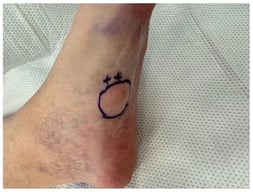
Identification and marking of injection site for lidocaine with epinephrine and enzymatic injection.
  • Correction
  • Open Access

In the original publication [...]

3 February 2026

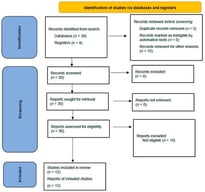
Flowchart of the systematic review.

News & Conferences

Issues

Open for Submission

Editor's Choice

Get Alerted

Add your email address to receive forthcoming issues of this journal.

XFacebookLinkedIn
Clin. Pract. - ISSN 2039-7283