Skip Content
You are currently on the new version of our website. Access the old version .

Children

Children is an international, peer-reviewed, open access journal on children’s health, published monthly online by MDPI.

Indexed in PubMed | Quartile Ranking JCR - Q2 (Pediatrics)

All Articles (9,499)

Objective: To evaluate parental attitudes towards vaccination in children with inflammatory bowel disease (IBD), assess the level of adherence to immunization schedules, and identify key barriers hindering vaccination. Materials and Methods: A comparative survey was conducted involving 215 respondents, divided into an IBD group (109 parents of children with IBD) and a control group (106 parents of healthy children). The majority of respondents were mothers (96%) with higher education (81% and 79%, respectively) residing in a major metropolitan area. We assessed demographic data, vaccination history of both children and parents, sources of medical information, and reasons for vaccine refusal. Results: Routine vaccination coverage in children under 6 years of age was high and comparable in both groups (>93%). The majority of parents in the IBD group (n = 68; 62%) expressed a positive attitude towards vaccination. However, following the onset of IBD, only 24 (22%) continued vaccination, while 85 (78%) reported a categorical refusal to continue immunization. It was found that parents tend to misinterpret normal post-vaccination reactions as vaccine complications. A significant factor contributing to refusal is the lack of information from attending physicians and reliance on the Internet as a primary information source. Additionally, low rates of adult revaccination were noted, with over 30% of parents in both groups not being vaccinated in adulthood. Conclusions: The low vaccination rate in children with IBD after disease onset is driven not by initial anti-vaccination sentiment, but by acquired fears and a lack of professional communication from primary care providers and specialists. Improving immunization coverage requires the active implementation of educational programs for parents regarding vaccine safety during immunosuppressive therapy, as well as the development of specific guidelines for attending physicians.

7 February 2026
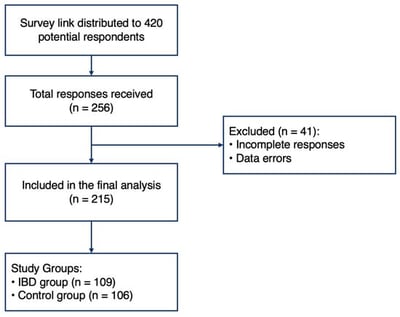
Flowchart of participant selection.

Human cytomegalovirus (HCMV) and Human Immunodeficiency Virus (HIV) are two pathogens known to have dramatic consequences when contracted early in life. In addition to having a significant impact when acquired individually, these two viruses are known to frequently cause coinfections. Indeed, also in the modern era, HCMV remains one of the most prevalent coinfections in newborns of mothers living with HIV, including both HIV-positive children regardless of their immune status, and those exposed to HIV but uninfected (HEU). In children with HIV infection, HCMV coinfection has historically been associated with AIDS-defining disease, high mortality, and prolonged, elevated HCMV viral load. Although timely administration of antiretroviral therapy prevents immunodeficiency in people living with HIV and thus reduces the incidence of full-blown HCMV disease in cases of coinfection, emerging data suggest that HCMV-induced immune activation and aging persist, potentially contributing to long-term, non-AIDS-related comorbidities. Growing evidence indicates that also HCMV amplifies HIV susceptibility, disease progression, and immune dysregulation through multiple synergistic mechanisms. Moreover, congenital and early postnatal HCMV infections occur at significantly higher rates in HEU newborns than in HIV-unexposed children and are associated with worse clinical outcomes, particularly when HCMV viral loads are high. This review summarizes current knowledge on the epidemiology, clinical impact, and immunopathogenetic interactions of early HCMV–HIV coinfection in pediatric populations. By integrating recent findings with historical evidence, it highlights critical mechanistic and epidemiological gaps that warrant further investigation.

7 February 2026

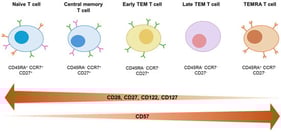
T cell maturation. CD45RA is shown in orange, CCR7 in pink, and CD27 in green.

Early Detection of Pediatric Type 1 Diabetes: The Expanding Role of Screening

  • Marco Calderone,
  • Sara Aramnejad and
  • Stefano Passanisi
  • + 6 authors

Type 1 diabetes (T1D) is a common chronic autoimmune disease in childhood, often presenting abruptly and frequently complicated by diabetic ketoacidosis at diagnosis. T1D develops through well-defined presymptomatic stages characterized by islet autoimmunity and progressive dysglycemia, offering a window for early identification. This narrative review summarizes current evidence on screening for T1D in children and adolescents, focusing on target populations, screening strategies, and methodological approaches for autoantibody detection. Data from major international programs involving familial, high-risk, and general population screening are discussed, highlighting their impact on reducing diabetic ketoacidosis at onset, improving metabolic outcomes, and facilitating structured follow-up and family education. Advances in assay technologies, including electrochemiluminescence, multiplex platforms, and novel ultrasensitive methods, have enhanced the feasibility and accuracy of large-scale screening. The review also examines the public health implications, cost-effectiveness, and ethical considerations of implementing population-based screening, particularly in light of emerging disease-modifying therapies such as teplizumab. Overall, available evidence supports screening as a meaningful strategy to shift T1D diagnosis from an acute emergency to a predictable clinical trajectory, with potential benefits extending from individual patient outcomes to healthcare system sustainability.

7 February 2026

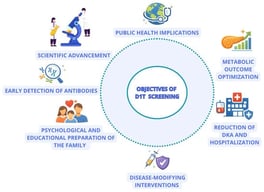
Objectives and benefits of pediatric type 1 diabetes (T1D) screening. Schematic overview of the main goals of islet autoantibody screening in children, including early detection of presymptomatic T1D, family education and psychological preparation, support for research, access to disease-modifying interventions, reduction in diabetic ketoacidosis and hospitalizations at diagnosis, optimization of metabolic outcomes, and broader public health benefits.

Background/Objectives: Food allergy (FA) is a substantial health burden in children. FA is often associated with malnutrition and malabsorption, due to restrictive food avoidance diets, which can significantly impair the patient’s and their family’s quality of life. To this date, population-based data combining sensitization and clinical allergy remain limited. This study aimed to assess the patterns of sensitization rates to food and food allergy prevalence rates in Croatian children and to evaluate differences according to age, sex, and region of origin. Materials and Methods: In this cross-sectional study, 1948 preschool and school-aged children from three Croatian regions (Zagreb, Dalmatia, and Slavonia) were included. Participants underwent skin prick testing to common food and inhalant allergens. Data on personal and family medical history were collected using questionnaires and medical records. FA prevalence was evaluated using self-reported data in school-aged children and physician-diagnosed FA data in preschool children. Results: Overall, 41% of participants were sensitized to at least one allergen, while 13% were sensitized to at least one food allergen. Tree nuts—particularly hazelnut—were the most common food-derived sensitizers, followed by hen’s egg, cow’s milk, and fish. Boys exhibited higher total sensitization rates than girls (44.2% vs. 37.5%; p = 0.001), higher food allergen sensitization rates (14.7% vs. 11.4%; p = 0.037), and higher total polysensitization rates (30.7% vs. 22.6%; p < 0.001). School-aged children showed higher total sensitization (44.8% vs. 33.4%; p < 0.001) and polysensitization rates (29.8% vs. 20.5%; p < 0.001) than preschool children, while sensitization to food allergens did not differ between age groups. Food allergen sensitization rates differed by region, with higher prevalence in Zagreb compared with Dalmatia and Slavonia (p = 0.0055), whereas total sensitization rates did not differ regionally. The agreement between sensitization and self-reported FA among school-aged children was low (κ = 0.22; p < 0.001), as was the agreement between sensitization and physician-diagnosed FA in preschool children (κ = 0.13; p < 0.001), despite high specificity in both analyses (95% and 99%%, respectively). Conclusions: Allergic sensitization is common among Croatian children, but it poorly predicts clinically relevant food allergy. These findings highlight the multifactorial nature of allergen sensitization in children and emphasize the need for improvements in diagnostic pathways, targeted prevention strategies, and continued surveillance to optimize allergy prevention and management in children.

6 February 2026

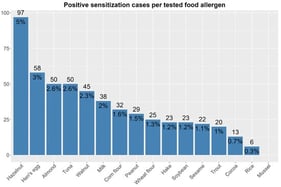
Total sensitization rates to individual food allergens in the study population (n = 1948), according to skin prick test results.

News & Conferences

Issues

Open for Submission

Editor's Choice

Reprints of Collections

Addressing Challenges in Child Mental Health
Reprint

Addressing Challenges in Child Mental Health

Research and Strategies for Comprehensive Development
Editors: Ignasi Navarro-Soria, Tíscar Rodríguez-Jiménez
Parenting and Child/Adolescent Development
Reprint

Parenting and Child/Adolescent Development

Current Updates and Global Perspectives
Editors: Elitsa Dimitrova, Apolinaras Zaborskis

Get Alerted

Add your email address to receive forthcoming issues of this journal.

XFacebookLinkedIn
Children - ISSN 2227-9067