Skip Content
You are currently on the new version of our website. Access the old version .

Biomolecules

Biomolecules is an international, peer-reviewed, open access journal on structures and functions of bioactive and biogenic substances, molecular mechanisms with biological and medical implications as well as biomaterials and their applications, published monthly online by MDPI.

Indexed in PubMed | Quartile Ranking JCR - Q1 (Biochemistry and Molecular Biology)

All Articles (12,518)

Chinese hamster ovary (CHO) cells are widely utilised in the biopharmaceutical industry to produce therapeutic proteins. Understanding the mechanisms of endoplasmic reticulum (ER) stress and its interplay with protein degradation pathways remains pivotal for improving production efficiency and product quality. In this study, we investigated the proteomic responses of CHO-K1 (non-producer), CHO DP-12 (IgG-producer), and NISTCHO (IgG-producer) cell lines under ER stress induced by a combination of the proteasome inhibitor MG132 and the glycosylation inhibitor tunicamycin. Viability, cell growth, and IgG titre were measured for 24 h, 48 h, and 72 h of treatment and the 48 h timepoint was used for the comparative analysis of the proteomic data across the three cell lines. Proteasome inhibition with MG132 intensified ER stress and altered ER-associated protein degradation (ERAD). Combined tunicamycin + MG132 treatment was associated with cell line-specific proteomic changes: NISTCHO upregulated ER translocation and glycoprotein quality control proteins (SSR4, SEC24C, UGGT1), CHO DP-12 activated redox/disulfide regulators (DNAJC10, CAPN1), while CHO-K1 showed broad proteome shifts, suggesting differences in baseline stress handling. These findings provide mechanistic insights into ER stress and protein quality control in CHO cells, offering a foundation for strategies to enhance cell line robustness and optimise biopharmaceutical production.

10 February 2026
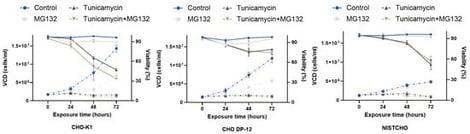
Viable cell density (VCD) and cell viability of CHO K-1, CHO DP-12, and NISTCHO in response to tunicamycin and MG132 treatment. CHO cells were cultured under four conditions: untreated control, tunicamycin to induce ER stress, MG132 to inhibit proteasomal degradation, and combined tunicamycin + MG132 treatment. VCD (dashed lines) and viability (solid lines) were measured at 24, 48, and 72 h post-treatment. Data represent mean ± SD from three independent experiments.

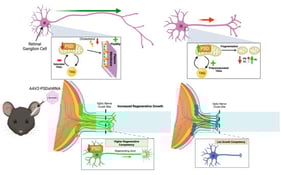
Mitochondrial lipid metabolism is an emerging regulator of neuronal regeneration, yet its role remains poorly defined. We investigated the function of phosphatidylserine decarboxylase (PSD), a mitochondrial enzyme that converts phosphatidylserine to phosphatidylethanolamine (PE), in retinal ganglion cell (RGC) regeneration. Using human glaucomatous degenerating optic nerves, we found PE was aberrantly accumulated with an elevated PSD expression and activity. In contrast, transcriptomes of regenerating RGCs present downregulated PSD, implicating PSD as a potential negative regulator of axonal growth. Using AAV2-mediated gene modulation, we evaluated how PSD knockdown (PSDKD) and PSD overexpression (PSDOE) alter RGC neurite outgrowth in vitro while evaluating effects on mitochondrial morphology, membrane fluidity by C-Laurdan staining, and lipidomes by LC-MS analysis. PSDOE did not support RGC neurite outgrowth, fragmented mitochondria, and increased polyunsaturated triacylglycerols. PSDKD significantly enhanced RGC neurite outgrowth and increased somal membrane fluidity accompanied by decreased cholesterol and saturated triacylglycerols. Notably, Doxorubicin, which attenuates PSD activity, increased neurite growth in PSDOE RGCs, supporting PSD’s activity as a negative role for growth. Using the optic nerve crush degenerative model in C57BL/6 mice, we confirm PSDKD RGCs have higher growth competency in vivo. These findings indicate PSDKD positions RGCs in a more growth-permissive state.

9 February 2026

PSD upregulation in human glaucomatous optic nerves. (A) Total phospholipid levels between normal and glaucomatous human optic nerves. (B) Bar graph of PE acyl- and plasmalogen-based lipid species from glaucomatous and control human optic nerves. p value shown after two-way ANOVA comparing within linkage groups. (C) Activity analysis of phospholipid metabolic enzymes from control and glaucomatous optic nerves (pmol product/min/mg). N = 12 biological replicates/group. t-test Analysis: * p < 0.05 (D) Western Blot of normal and glaucomatous human optic nerve samples with matched age and sex. Corresponding WB quantification (PSD/GAPDH) showing increased PSD Expression with GAPDH Control Band. The original Western Blot images can be found at the Supplementary Materials Figure S11.

Tricyclic Analogs of Thioguanine as Photosensitizers of Reactive Oxygen Species-Induced DNA and RNA Damage

  • Katarzyna Taras-Goslinska,
  • Katarzyna Krancewicz and
  • Bronislaw Marciniak

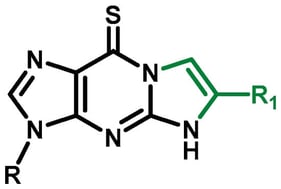
Analogs of tricyclic thiopurine nucleosides combine structural features of endogenous DNA adducts with efficient photosensitizing chromophores, making them valuable models for studying nucleic acid damage induced by reactive oxygen species (ROS). In this work, we investigate the photochemical properties of two tricyclic guanosine derivatives, 9-thio-1,N2-ethenoguanosine and 6-methyl-9-thio-1,N2-ethenoguanosine, under UVA irradiation. We characterize their excited-state behavior, their ability to generate singlet oxygen (1O2) and superoxide radicals (O2●−), and the resulting oxidative transformation pathways. Both compounds are photochemically stable under anaerobic conditions but undergo efficient oxygen-dependent phototransformation, yielding a diverse set of oxidative and dimeric photoproducts. Product analysis reveals that singlet oxygen mediates desulfurization, ring opening, and extensive sulfur oxidation, whereas radical pathways involving superoxide lead exclusively to dimer formation. Importantly, the triplet excited states of these tricyclic thiopurines are not quenched by natural nucleosides, allowing both Type I and Type II photosensitizing pathways to operate in nucleic-acid-like environments. These results provide molecular-level insight into ROS-induced purine damage and highlight tricyclic thiopurines as effective photosensitizers of oxidative DNA and RNA damage.

9 February 2026

Structures of guanosine analogs containing an additional five-membered ring and a sulfur atom at the C-(9) position: (1) 9-thio-1,N2-ethenoguanosine (TEGuo), where R = β-D-ribose, R1 = H; (2) 6-methyl-9-thio-1,N2-ethenoguanosine (6MeTEGuo), where R = 2′,3′,5′-tri-O-acetyl-β-D-ribose, R1 = CH3.

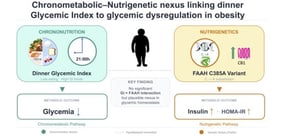
The interaction between chrono-nutrition (dinner intake), glycemic index (GI), and the C358A variant of the endocannabinoid-degrading enzyme fatty acid amide hydrolase (FAAH), along with its impact on morning fasting insulin and glycemia, has not been previously explored. This study provides new insights into chronometabolic and nutrigenetic interactions. This study aims to analyze the association between the dinner GI and the C385A variant in the FAAH gene with respect to fasting glucose, insulin levels, and HOMA-IR in adults with obesity. It was hypothesized that the dinner GI, probably influenced by the FAAH variant, could be associated with glycemic homeostasis in adults with obesity. This is a secondary analysis of a cross-sectional study focused on 189 adults with obesity (129 women; mean age, 41 ± 12 years; mean BMI, 38.0 ± 5.2 kg/m2). Dietary intake was assessed through two 24 h food records, enabling the calculation of GI and macronutrient composition at each meal, especially dinner. Fasting-parameter setting and genotyping were done during the study. The lineal regression analyses were adjusted by age, sex, BMI, energy intake and dinner protein. Participants with lower fasting glucose levels had higher total GI and dinner GI values than those with higher fasting glucose levels, whereas no differences in dinner GI were observed across groups stratified by insulin or HOMA-IR levels. In fully adjusted regression models, dinner GI values remained inversely associated with fasting glucose levels (β = −0.172, 95%CI −0.298 to −0.045; p = 0.008). The FAAH C385A variant independently predicted lower insulin (β = −2.674, 95%CI −5.185 to −0.164; p = 0.037) and lower HOMA-IR (β = −0.731, 95%CI −1.364 to −0.099; p = 0.024) levels. No statistically significant interaction between dinner GI and the FAAH genotype was detected with respect to glycemia, insulin, and HOMA-IR. Overall, these findings indicate that the dinner GI influences fasting glucose levels in adults with obesity; the FAAH variant predicted lower insulin and HOMA-IR levels, supporting a plausible chrono-nutrigenetic interaction between carbohydrate quality, mealtime intake, and FAAH variation in metabolic regulation, which must be further studied.

9 February 2026

Association between the dinner glycemic index (GI) and glycemia (first panel), insulin (second panel), and HOMA-IR (third panel) levels according to FAAH C385A genetic variant. Scatter plots depict the relationship between dinner GI and fasting glycemia, fasting insulin, and HOMA-IR levels, respectively. Green circles represent individuals with the CC genotype (Pro129Pro), while red circles represent carriers of the A allele (CA: Pro129Thr and AA: Thr129Thr). Solid lines indicate linear regression models for each genotype group. The p value shown corresponds to the interaction term between dinner GI and FAAH genotype in the adjusted regression models.

News & Conferences

Issues

Open for Submission

Editor's Choice

Get Alerted

Add your email address to receive forthcoming issues of this journal.

XFacebookLinkedIn
Biomolecules - ISSN 2218-273X