Skip to Content

Biomimetics

Biomimetics is an international, peer-reviewed, open access journal on biomimicry and bionics, published monthly online by MDPI. 

Indexed in PubMed | Quartile Ranking JCR - Q1 (Engineering, Multidisciplinary)

All Articles (2,950)

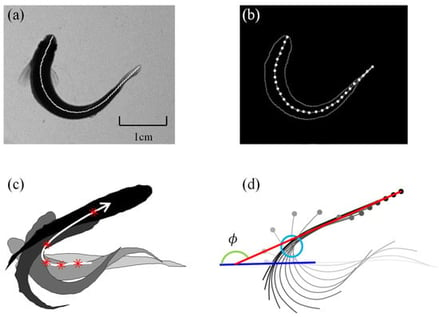
C-type maneuvers (abbreviated as C-turns), a crucial escape response from for carangiform fish, are investigated to elucidate their yaw control mechanism. High-speed photography coupled with image processing was used to quantify the time-varying midline curvature during C-turns of adult zebrafish (Danio rerio). Self-propelled simulations replicated the motion, resolving the evolving vorticity field and pressure gradients. Statistical analyses revealed a pronounced linear correlation between body deformation and total turning angle for yaw angles exceeding 60°. Notably, large-angle turns (>140°) exhibited both higher initial speed and sustained greater mean speed throughout the maneuver, indicating that achieving substantial yaw not only relies on enhanced body deformation, but also, critically, on inertial dominance persisting throughout the unsteady hydrodynamic interaction. The vortex dynamics and pressure distributions obtained form simulations corroborate the inferred control strategy rooted in this inertial dominance.

20 February 2026

156.3° C-turn motion capture: (a) Experimental images. (b) Midline and contour in the binary image. (c) Contour, center of mass (red stars), and trajectory (white curve with arrows). (d) Midline information (grey curves, terminating in a circular dot denoting the anterior of fish), initial head direction (blue line), final head direction (red line), and total turning angle 
  
    ϕ
  
 (green arc).

Zirconia is a material that mimics human teeth and has been extensively studied and applied. This study investigated the surface modifications of dental zirconia induced by two UV-C wavelengths (222 and 254 nm). A total of 72 zirconia specimens were prepared and divided into groups for irradiation at varying distances (1, 6, 12 cm) and durations (40, 120, 480 and 1440 min), with three specimens retained as untreated controls. Surface changes were assessed by measuring colour difference (ΔE) and water contact angle, and by analyzing surface morphology and elemental composition using SEM and EDX, and XRD was employed to determine the crystalline structure. The results showed that both wavelengths induced clinically perceptible colour changes (ΔE > 2.0), with the most pronounced effect at 6 cm for 222 nm and 1 cm for 254 nm. WCA decreased significantly with irradiation time, showing a linear correlation with log(time), and 222 nm irradiation yielded lower WCA than 254 nm. While SEM revealed no morphological changes, both UV treatments significantly increased the Zr/O ratio compared to the control. XRD tests confirmed that UV-C irradiation does not damage the zirconium oxide crystal structure. It is concluded that both UV-C wavelengths can alter the colour and enhance the wettability of zirconia; these modifications are particularly relevant for dental restorative applications, specifically in the fabrication of anterior tooth crowns, where achieving a natural tooth-like appearance is desired.

20 February 2026

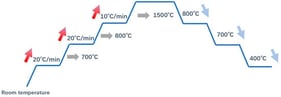
Program of sintering furnace for LavaTM Frame zirconia mill blanks.

Accurate and timely classification of skin lesions is critical for early cancer detection, yet current deep learning approaches suffer from high computational costs, limited interpretability, and poor transparency for clinical deployment. This study presents HCHS-Net, a lightweight and interpretable multimodal framework for six-class skin lesion classification on the PAD-UFES-20 dataset. The proposed framework extracts a 116-dimensional visual feature vector through three complementary handcrafted modules: a Color Module employing multi-channel histogram analysis to capture chromatic diagnostic patterns, a Haralick Module deriving texture descriptors from the gray-level co-occurrence matrix (GLCM) that quantify surface characteristics correlated with malignancy, and a Shape Module encoding morphological properties via Hu moment invariants aligned with the clinical ABCD rule. The architectural design of HCHS-Net adopts a biomimetic approach by emulating the hierarchical information processing of the human visual system and the cognitive diagnostic workflows of expert dermatologists. Unlike conventional black-box deep learning models, this framework employs parallel processing branches that simulate the selective attention mechanisms of the human eye by focusing on biologically significant visual cues such as chromatic variance, textural entropy, and morphological asymmetry. These visual features are concatenated with a 12-dimensional clinical metadata vector encompassing patient demographics and lesion characteristics, yielding a compact 128-dimensional multimodal representation. Classification is performed through an ensemble of three gradient boosting algorithms (XGBoost, LightGBM, CatBoost) with majority voting. HCHS-Net achieves 97.76% classification accuracy with only 0.25 M parameters, outperforming deep learning baselines, including VGG-16 (94.60%), ResNet-50 (94.80%), and EfficientNet-B2 (95.16%), which require 60–97× more parameters. The framework delivers an inference time of 0.11 ms per image, enabling real-time classification on standard CPUs without GPU acceleration. Ablation analysis confirms the complementary contribution of each feature module, with metadata integration providing a 2.53% accuracy gain. The model achieves perfect melanoma and nevus recall (100%) with 99.55% specificity, maintaining reliable discrimination at safety-critical diagnostic boundaries. Comprehensive benchmarking against 13 published methods demonstrates that domain-informed handcrafted features combined with clinical metadata can match or exceed deep learning fusion approaches while offering superior interpretability and computational efficiency for point-of-care deployment.

19 February 2026

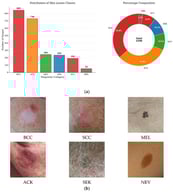
PAD-UFES-20 dataset overview. (a) Class distribution showing severe imbalance. (b) Representative samples from each class.

The temperature regulation of nonlinear continuous stirred tank reactor (CSTR) processes remains a challenging control problem due to strong nonlinearities, time-delay effects, and sensitivity to disturbances and parameter variations. Conventional proportional–integral–derivative (PID)-based control strategies often fail to provide the robustness and precision required under such conditions, motivating the use of more flexible controller structures and advanced optimization techniques. In this study, an enhanced joint-opposition artificial lemming algorithm (JOS-ALA) is proposed for the optimal tuning of a fractional-order PID (FOPID) controller applied to CSTR temperature control. The proposed JOS-ALA incorporates a joint opposite selection mechanism into the original ALA to improve population diversity, convergence stability, and resistance to local optima stagnation. A nonlinear CSTR model is linearized around a stable operating point, and the resulting model is employed for controller design and optimization. The FOPID controller parameters are tuned by minimizing a composite cost function that simultaneously accounts for tracking accuracy, overshoot suppression, and instantaneous error behavior. The effectiveness of the proposed approach is assessed through extensive simulation studies and benchmarked against state-of-the-art and high-performance metaheuristic optimizers, including ALA, electric eel foraging optimization (EEFO), linear population size reduction success-history based adaptive differential evolution (L-SHADE), and the improved artificial electric field algorithm (iAEFA). The benchmarking set is further extended with the success rate-based adaptive differential evolution variant (L-SRTDE) to broaden the comparative evaluation. Simulation results demonstrate that the JOS-ALA-based FOPID controller consistently achieves superior performance across multiple criteria. Specifically, it attains the lowest mean cost function value of 0.1959, eliminates overshoot, and yields a normalized steady-state error of 4.7290 × 10⁻⁴. In addition, faster transient response and improved robustness under external disturbances and measurement noise are observed when compared with competing methods. Statistical reliability of the observed performance differences is additionally examined using a Wilcoxon signed-rank test conducted over 25 independent runs. The resulting p-values confirm that the improvements achieved by the proposed approach are statistically significant at the 5% level across all pairwise algorithm comparisons. These findings indicate that the proposed JOS-ALA provides an effective and reliable optimization framework for high-precision temperature control in nonlinear CSTR systems and offers strong potential for broader application in complex process control problems.

19 February 2026

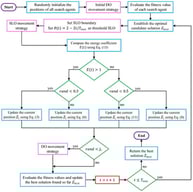
Detailed flowchart of proposed JOS-ALA.

News & Conferences

Issues

Open for Submission

Editor's Choice

Reprints of Collections

Bio-Inspired Soft Robotics
Reprint

Bio-Inspired Soft Robotics

Design, Fabrication and Applications
Editors: Yong Zhong, Pei Jiang, Sun Yi

Get Alerted

Add your email address to receive forthcoming issues of this journal.

XFacebookLinkedIn
Biomimetics - ISSN 2313-7673