Skip to Content
  • 29 days
    Time to First Decision

BioMed

BioMed is an international, peer-reviewed, open access journal on the broad field of subjects in human life science and medicine published quarterly online by MDPI.

All Articles (165)

Glutamine metabolism has emerged as one of the most critical bioenergetic and biosynthetic programs sustaining leukemic cell growth, survival, stemness and therapeutic resistance. In both acute and chronic leukemias, including acute myeloid leukemia (AML) and acute lymphoblastic leukemia (ALL), malignant cells display a strong dependency on extracellular glutamine to support mitochondrial respiration, anabolic biosynthesis and redox homeostasis. This dependency is reinforced by oncogenic signaling networks, post-transcriptional metabolic regulation and microenvironmental adaptation within the bone marrow niche. Therapeutic strategies targeting glutamine utilization, including glutaminase inhibition, transporter blockade and enzymatic glutamine depletion, have demonstrated robust antileukemic activity in preclinical models, and early clinical efforts have begun to explore glutamine-directed interventions in myeloid neoplasms. However, metabolic plasticity, microenvironment-derived nutrient buffering and systemic toxicity remain significant limitations to clinical translation. This review provides a detailed synthesis of the biochemical framework of glutamine metabolism in leukemia, the molecular mechanisms enforcing glutamine addiction, the downstream functional consequences on proliferation, redox balance and leukemic stem cell biology, the current landscape of therapeutic strategies and emerging directions aimed at overcoming resistance and improving clinical efficacy.

4 February 2026
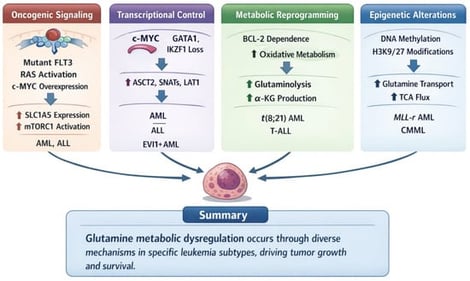
Dysregulation of Glutamine Metabolism in Leukemia.

Breast cancer remains the most frequently diagnosed cancer in women worldwide, with outcomes strongly dependent on stage at detection. Conventional imaging modalities such as mammography, ultrasound and MRI are limited by reduced sensitivity in dense breasts, radiation exposure, high cost and restricted availability in low-resource settings. This review critically examines microwave imaging (MWI) as a non-invasive, radiation-free and an emerging resource-efficient breast imaging modality that exploits dielectric contrast between healthy and malignant breast tissues. We first summarise experimental and clinical evidence on breast dielectric properties and their implications for numerical phantoms and device design. We then review passive, active (tomographic and radar-based) and hybrid MWI systems, including key clinical prototypes such as SAFE, MammoWave, MARIA and Wavelia, and analyse associated image-reconstruction algorithms from classical inverse scattering to advanced beamforming, Huygens-based methods and AI based reconstruction. Finally, we discuss outstanding challenges—tissue heterogeneity, calibration, hardware constraints and computational complexity—and identify future directions including AI-assisted reconstruction, multimodal hybrid imaging and large-scale clinical validation needed to translate MWI into routine breast cancer screening and diagnosis.

3 February 2026

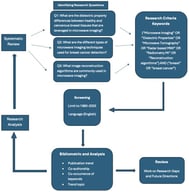
Framework for conducting a systematic review and bibliometric analysis of microwave imaging for breast cancer detection. Arrows indicate the directional and iterative flow of the review process, from research question formulation and keyword selection through screening, bibliometric analysis, and final review, with feedback loops supporting research analysis and refinement.

Background/Objectives: Mesenchymal stem cells (MSCs) are deemed to be a highly safe model for autologous and allogeneic cellular therapy, owing to their inherent lack of HLA-DR expression, immunomodulatory properties, homing ability, and plasticity allowing differentiation into different cell types. The interest in activating autophagic signaling in MSCs has recently grown due to its significant potential in maintaining stemness, enhancing paracrine signaling, and providing therapeutic benefits for cancer and neurodegenerative diseases. This study aimed to explore the impact of autophagy induction on enhancing the therapeutic potential of MSCs by maintaining their plasticity and to assess different induction agents. Methods: In this study, MSCs were first extracted from the fat tissue of Sprague–Dawley (SD) rats and characterized phenotypically and molecularly by their positive expression of stemness markers CD29, CD106, and CD44, and their negative expression of hematopoietic surface markers CD14, CD34, and CD45, using a flow cytometry approach. Isolated MSCs were then treated separately with two FDA-approved autophagy inducers: Lithium Chloride and Trehalose, following assessment of autophagy activity. Results: Treated MSCs showed significant increases in autophagic activity at both the transcriptional and translational levels. The successful induction of autophagy in MSCs was confirmed through the elevated expression of autophagy-related genes such as ATG3, ATG13, ATG14, P62, and ULK1. These data were confirmed by the significant upregulation in LC3 protein expression and the formation of autophagosomes, which was detected using a transmission electron microscope. Furthermore, the expression of Oct4, Sox2, and Nanog genes was significantly enhanced after treatment with Trehalose and Lithium Chloride compared with untreated control MSCs which may indicate an upregulation of pluripotency. Meanwhile, Lithium Chloride and Trehalose did not significantly induce cellular apoptosis, indicated by the Bax/Bcl-2 expression ratio, and significantly decreased the expression of the antioxidant markers SOD and GPx. Conclusions: Treatment of MSCs with Trehalose and, in particular, Lithium Chloride significantly activated autophagic signaling, which showed a profound effect in enhancing cells’ pluripotency, reinforcing the usage of treated MSCs for autologous and/or allogenic cellular therapy. However, further in vivo studies for activating autophagy in cellular grafts should be conducted before their use in clinical trials.

16 January 2026

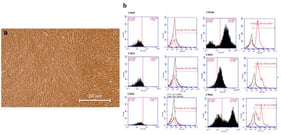
(a) Morphological features of isolated rat MSCs showing the typical spindle-shape and fibroblast-like structure of MSCs. (b) Flow cytometric analysis of isolated rat MSCs for mesenchymal surface markers (CD29, CD106, and CD44) and hematopoietic surface markers (CD14, CD34, and CD45); control unstained MSCs were used as negative controls, and the number of events was stopped at 10,000 counts.
  • Case Report
  • Open Access

Background/Objectives: Pilates is a form of exercise that benefits people with bodily pain and movement limitations. The Clinical Pilates method assesses a patient through history taking and exercise testing to identify the patient’s problem side and directional preference. This study is a technical report of two case studies to evaluate the feasibility of the Clinical Pilates conceptual framework for the management of neck and shoulder musculoskeletal conditions. Methods: A conceptual framework on the use of the diagnostic bullseye for neck and shoulder movements are presented. To illustrate the application of the framework, two independent case studies with neck and shoulder pain were interpreted. These cases were assessed for upper and lower quadrant movement preferences using the Clinical Pilates method. Patient self-reported outcome measures included the pain numeric rating scale (/10), patient-specific functional scale (/10), and shoulder pain and disability index (%). Results: In both case studies, the clinical outcomes improved by more than 50% from the baseline. These improvements showed that the conceptualized framework is feasible for use among individuals with neck and musculoskeletal conditions. Conclusions: The neck and shoulder diagnostic bullseyes developed provide an extension from existing lower quadrant diagnostic bullseye. The feasibility of the Clinical Pilates method for neck and shoulder conditions was illustrated in the two case studies.

15 January 2026

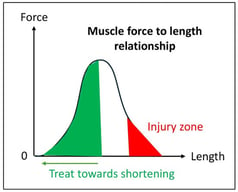
Muscle force to length injury and treatment rationale of the Clinical Pilates method.

News & Conferences

Issues

Open for Submission

Editor's Choice

Reprints of Collections

Artificial Intelligence in Medical Imaging and Image Processing
Reprint

Artificial Intelligence in Medical Imaging and Image Processing

Editors: Rafał Obuchowicz, Michał Strzelecki, Adam Piórkowski
Photodynamic Therapy
Reprint

Photodynamic Therapy

Editors: Stefano Bacci, Kyungsu Kang

Get Alerted

Add your email address to receive forthcoming issues of this journal.

XFacebookLinkedIn
BioMed - ISSN 2673-8430