Skip Content
You are currently on the new version of our website. Access the old version .

All Articles (143)

Sequencing technologies have reshaped the study of the subgingival microbiome, but selecting the appropriate method remains challenging because of differences in resolution, cost, host DNA contamination, and computational complexity. This review compares 16S rRNA sequencing, full-length 16S, shotgun metagenomics, and metatranscriptomics with respect to taxonomic resolution, functional output, sample requirements, and analytical limitations. Key practical issues, including low microbial biomass, contamination control, and the choice of appropriate bioinformatic tools, are emphasized to help researchers avoid common pitfalls. A decision-making framework is provided to link study goals to suitable sequencing methods while outlining realistic budget and sample-handling constraints. The review concludes with recommendations for integrating sequencing with complementary techniques to improve the accuracy, reproducibility, and clinical relevance of periodontal microbiome studies.

9 February 2026
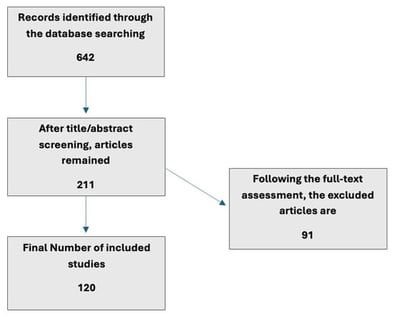
Literature search and study selection.

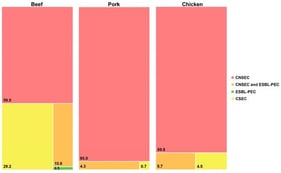
(1) Background: Carbapenem-resistant Escherichia coli (CREC) is widespread and resistant to almost all available antimicrobial agents. In this study, we aimed to assess the phenotypic and molecular characteristics of CREC isolated from retail meats in Hat Yai, Songkhla, Thailand. (2) Methods: A total of 155 retail meat samples were randomly collected, and 412 presumptive carbapenem-non-susceptible isolates were screened via culturing on imipenem-containing eosin methylene blue (EMB) agar. Susceptibility to imipenem and meropenem was tested using the disk diffusion method, and carbapenemase and virulence genes in CREC isolates were detected using PCR. Phylogenetic groups and genetic relatedness of carbapenemase-positive CREC isolates were analyzed using gene markers and BOX-PCR, respectively. (3) Results: The results revealed a high prevalence of presumptive carbapenem-non-susceptible E. coli (CNSEC) isolates in beef samples. Over 89% of the CNSEC isolates from all meat types were identified as CREC. Of these, only 4.8% of the isolates from beef samples were positive for the blaNDM gene, and one was also positive for the blaVIM gene. These isolates carried only the fimH gene as a virulence factor. The blaNDM-positive CREC isolates were classified in phylogenetic Group D. (4) Conclusions: Identifying antimicrobial-resistant pathogens, particularly CREC, in food-producing animals is critical due to potential risks to public health.

9 February 2026

Distribution of positive isolates from beef, pork, and chicken samples. CNSEC, carbapenem-non-susceptible Escherichia coli; CSEC, carbapenem-susceptible Escherichia coli; ESBL-PEC, extended-spectrum β-lactamase-producing Escherichia coli.

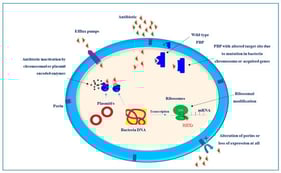
Klebsiella pneumoniae is a prominent pathogen implicated in a wide range of infections, including pneumonia, urinary tract infections, and septicemia. Its ability to acquire and disseminate antibiotic resistance, coupled with the rising prevalence of hypervirulent strains, represents a significant public health threat. Understanding the molecular basis of drug resistance can guide the design and development of effective treatment strategies. Antimicrobial resistance (AMR) in these bacteria is a complicated process and cannot be attributed to a single resistance mechanism. K. pneumoniae develops resistance to antibiotics through a variety of mechanisms, ranging from single molecular mechanisms to complex interactions, where molecular synergy exacerbates resistance. This review summarizes the current understanding of the molecular mechanisms that contribute to the drug resistance and virulence of this pathogen. Key antibiotic resistance mechanisms include drug inactivation via B-lactamases and carbapenemases, membrane remodeling, efflux pump systems, such as AcrAB-TolC and OqxAB, and biofilm formation facilitated by quorum sensing. Additionally, the role of ribosomal changes in resistance is highlighted. This review also examines the mechanisms of virulence, emphasizing fimbriae, iron acquisition systems, and immune evasion strategies. Understanding these mechanisms of drug resistance and virulence is crucial for remodeling existing antibiotics and developing new therapeutic strategies.

2 February 2026

Generalized illustration of mechanisms involved in antimicrobial resistance.

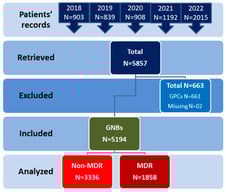
Background: Multidrug-resistant (MDR) Gram-negative bacilli (GNBs) significantly compromise the effective management of urinary tract infections (UTIs) worldwide. As antimicrobial resistance varies across regions, locally tailored data are essential to guide empirical therapy. This study investigated the prevalence, determinants, and temporal dynamics of MDR GNBs in UTI patients from Central Portugal between 2018 and 2022. Methods: We conducted a retrospective observational study at a hospital center in Central Portugal, analyzing data from 2018 to 2022. Data from 5194 UTI patients with GNB-positive cultures were analyzed. Binary logistic regression was used to identify determinants of MDR GNBs, defined as resistance to ≥1 agent in ≥3 antibiotic classes. Results: The study population had a mean age of 64.5 ± 25.3 years, and females represented two-thirds of the sample (67.0%). The overall prevalence of MDR GNBs was 35.8%. Advanced age (≥75 years), male sex, and specific treatment contexts—particularly day treatment and laboratory-only cases—were independently associated with MDR. SBL-producing Enterobacterales and non-fermenting GNBs showed the highest risk levels. Conclusions: MDR GNBs are highly prevalent among UTI patients in Central Portugal, and their increasing trend—particularly in 2022—highlights an urgent need for strengthened surveillance and updated empirical treatment strategies. The observed temporal increase highlights the urgent need for strengthened regional surveillance and updated empirical treatment guidelines.

2 February 2026

Flow diagram showing sample selection process.

News & Conferences

Issues

Open for Submission

Editor's Choice

Get Alerted

Add your email address to receive forthcoming issues of this journal.

XFacebookLinkedIn
Bacteria - ISSN 2674-1334