Skip to Content
You are currently on the new version of our website. Access the old version .

Atmosphere

Atmosphere is an international, peer-reviewed, open access journal of scientific studies related to the atmosphere, published monthly online by MDPI.
The Italian Aerosol Society (IAS) and Working Group of Air Quality in European Citizen Science Association (ECSA) are affiliated with Atmosphere and their members receive a discount on the article processing charges.

All Articles (12,220)

Coordinated mitigation of greenhouse gases (GHGs) and air pollutants (APs) offers an effective strategy to address climate and air quality challenges, yet systematic evaluations in medium-sized industrial cities remain limited, despite their coal-dependent energy systems and emission-intensive manufacturing that disproportionately shape national emission trajectories. Thus, this study focuses on Weifang, a representative industrial city in Shandong Province, developing a high-resolution, multi-pollutant inventory and applying quantitative synergy indices to characterize emission patterns, sectoral contributions, and hotspot regions. In 2023, Weifang’s total emissions comprised 114.54 million metric tons (Mt) CO2, 121.91 thousand metric tons (kt) CH4, and 27.67 kt N2O, alongside major APs including CO (662.99 kt), TSP (154.44 kt), and NOx (100.83 kt). Industrial sources and electricity-heat production contributed over 80% of CO2 and SO2, while agriculture dominated CH4 (59.5%) and N2O (40.5%). Mobile sources accounted for 66.6% of NOx, over 20% of VOCs, and 61.4% of CO. Spatially, suburban areas produced over 65% of total emissions due to heavy industry and agriculture, whereas the urban core exhibited higher intensities but lower total contributions. Bivariate and integrated synergy indices revealed stronger SO2-NOx-CO2 synergies in the urban core, while suburban emissions were more heterogeneous and spatially dispersed. Synergy analysis indicated strong SO2-CO2 co-variation from shared industrial sources but weak NOx-CO2 correlations due to divergent origins. Hotspot mapping identified industrial parks, power plants, steel zones, and suburban agriculture as priority control areas. These findings demonstrate that source-specific measures are critical to maximizing co-benefits. The proposed methodological framework offers transferable insights for evaluating emission synergies in other industrial cities.

13 February 2026

Study workflow and analytical framework.

Fine particulate matter (PM2.5) formation mechanisms in fragile highland ecosystems remain inadequately constrained, particularly regarding thermodynamic non-linearities (aerosol pH, liquid water content) and their interaction with geochemical modulation. Here, we present comprehensive year-long online measurements from Xining, Qinghai-Tibet Plateau, integrating hourly measurements of water-soluble ions, inorganic elements, and gaseous precursors with ISORROPIA-II thermodynamic modeling and ensemble machine learning. Median pH was 4.38 but exhibited two distinct pH regimes (14.8% pH < 3.0, 11.5% pH > 7.2), with acute acidification enhancing toxic metal solubility (Fe, Pb by 3-5×), and it posed distinct ecological risks. Our analysis reveals a distinct “highland mechanism triad” governing PM2.5 dynamics: (1) winter meteorological confinement amplifying dust-catalyzed sulfate formation (SOR = 0.68); (2) spring alkaline dust buffering (pH > 7.2) that titrates NH3 and suppresses nitrate formation (NOR < 0.10); and (3) summer photochemical oxidation constrained by chronic NH3 limitation within an oxidant-excess regime. Random Forest achieved optimal prediction for the chemically active inorganic fraction (RMSE = 6.63 μg/m3, R2 = 0.91) by learning regime-specific non-linearities, with local sensitivity analysis identifying Ca2+, SO42−, and Al as chemically sensitive drivers (S > 0.35) while revealing NH3’s seasonally variable influence (rank 15 in winter, significant in summer; S > 0.28), subsequently complemented by global SHAP analysis, which further revealed NO3 as the most robust predictor (ranking 1st–2nd) and captured NH3’s non-linear threshold effects (). Positive Matrix Factorization apportioned secondary aerosols (30.11%) within a unique alkaline–dust matrix. These findings demonstrate that highland PM2.5 inorganic chemistry operates through fundamentally different pathways than lowland photochemical haze, with acid-induced toxic metal activation providing a new target for ecological protection in this fragile ecosystem. Seasonally adaptive mitigation is required: concurrent SO2-NH3 control in winter, dust suppression infrastructure in spring, and agricultural NH3 capture in summer. This integrated framework provides a transferable methodology for air-quality management in alkaline dust-dominated, NH3-limited highland ecosystems (>2000 m).

13 February 2026

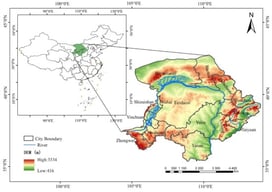
Location of the sampling sites located in Xining, China.

Characterization of Coarse Organic Particulate Matter in Urban and Rural Switzerland Using Advanced Offline Mass Spectrometry

  • Kristty Stephanie Schneider-Beltran,
  • Tianqu Cui and
  • Kaspar R. Daellenbach
  • + 17 authors

Although the organic fraction of PM2.5 has been extensively studied, there is a considerable gap in understanding the organic fraction of coarse particles with diameters between 2.5 and 10 µm. We investigate the composition of coarse organic aerosol (OA) across rural, suburban, and urban areas of Switzerland. Using Aerosol Mass Spectrometer analyses of water-soluble OA extracted from collected filter samples (one entire year, 441 samples per size fraction), we identified two distinct classes of coarse OA. The first class, which constitutes 41–81% of coarse organic carbon (OC), is associated with primary biological organic carbon (PBOC). PBOC is characterized by specific marker ions (e.g., C2H5O2+) and exhibits pronounced seasonal variation, with peak concentrations observed in the summer. This seasonal trend correlates with that of molecular markers such as arabitol and mannitol, as well as the fraction of biological particles determined by automated scanning electron microscopy coupled to energy dispersive X-ray spectroscopy of individual particles. The second class, contributing 7.9–17.8% to OCcoarse, is denoted as sulfur-containing organic carbon (SCOC) due to the presence of sulfur-containing ions such as CH3SO2+. Elevated concentrations of SCOC in urban environments near roadways suggest a strong influence from non-exhaust traffic emissions and resuspended dust. While the overall variation in coarse OC between rural and urban areas is approximately 10%, PBOC concentrations are 1.4 times higher in rural areas, whereas SCOC concentrations are 1.5 times higher in urban settings. Overall, our study shows that although OCcoarse concentrations in Switzerland are relatively consistent across site types, major water-soluble sources, particle properties and composition vary considerably geographically and seasonally.

13 February 2026

The annual mean concentration (a) and fraction (b) of OC and WSOC in different size fractions at the five studied sites (Bern, Zurich, Basel, Payerne, and Magadino). Bars are color-coded by size fraction (blue for PM2.5, black for coarse), and patterned bars denote the measurement type: solid blue for WSOC PM2.5, patterned blue for OC PM2.5, solid black for OC PMcoarse, and patterned black for WSOC PMcoarse. Panel (c) shows a scatterplot of WSOCcoarse as a function of OCcoarse for all measured filter samples, represented by unique symbols and a color denoting temperature. Both dashed lines represent the theoretical solubility limits: a 1:1 line for 100% solubility and a 1:2 line for 50% solubility, aiding visual interpretation. Panel (d) shows the cumulative distribution function of WSOC/OC ratio (water solubility when WSOC/OC &gt; 0) for the coarse fraction at all stations (black line), the coarse fraction at individual stations (colored lines), and the PM2.5 fraction at all stations (blue line).

Psoriasis is a common, chronic skin disorder that has negative impacts on patients’ quality of life, and is triggered by a combination of genetic and environmental factors. However, epidemiological evidence about the effect of air pollution on psoriasis risk is still limited and inconsistent. The generalized additive model (GAM) was applied to investigate the association between common air pollutants and daily psoriasis outpatient visits in Guangzhou, China from 2013 to 2019. The analysis focused on particulate matter with an aerodynamic diameter of less than 10 μm and 2.5 μm (PM10 and PM2.5), nitrogen dioxide (NO2), and sulfur dioxide (SO2). To examine the effect modifications, stratified analyses were conducted by gender, age, and season. Population attributable fraction of psoriasis burden from ambient air pollution exposure was further calculated. A total of 145,034 psoriasis outpatient visits were included during the study period. Each 10 μg/m3 increment in PM2.5, PM10, SO2, and NO2 was significantly associated with an excess risk of psoriasis outpatient visits of 3.46% (95% CI: 2.53%, 4.39%), 2.51% (95% CI: 1.86%, 3.17%), 4.73% (95% CI: 2.67%, 6.82%), and 4.75% (95% CI: 3.78%, 5.73%) at lag05. Stratified analysis revealed notably stronger effects during the cold seasons. Based on the World Health Organization’s Ambient Air Quality Guidelines, PM2.5, PM10, NO2, and SO2 accounted for 9.08% (95% CI: 6.54%, 11.74%), 4.73% (95% CI: 3.45%, 6.06%), 8.93% (95% CI: 6.99%, 10.93%), and 0.18% (95% CI: 0.10%, 0.27%) of psoriasis outpatient visits, respectively. In conclusion, short-term air pollution exposure is an important risk factor for psoriasis outpatient visits, especially in cold seasons. PM2.5 and NO2 accounted for a relatively larger attributable burden among common air pollutants. Effective strategies are needed for air pollution control and prevention of psoriasis exacerbation.

13 February 2026

The geographic distribution of air monitoring stations in Guangzhou.

News & Conferences

Issues

Open for Submission

Editor's Choice

Get Alerted

Add your email address to receive forthcoming issues of this journal.

XFacebookLinkedIn
Atmosphere - ISSN 2073-4433