Skip Content
You are currently on the new version of our website. Access the old version .

AppliedMath

AppliedMath is an international, peer-reviewed, open access journal on applied mathematics published monthly online by MDPI.

All Articles (394)

On the Use of the Quantum Alternating Operator Ansatz in Quantum-Informed Recursive Optimization: A Case Study on the Minimum Vertex Cover

  • Pablo Ramos-Ruiz,
  • Antonio Miguel Fuentes-Jiménez and
  • Inmaculada Jiménez-Manchado
  • + 1 author

In recent years, several quantum algorithms have been proposed for addressing combinatorial optimization problems. Among them, the Quantum Approximate Optimization Algorithm (QAOA) has become a widely used approach. However, reported limitations of QAOA have motivated the development of multiple algorithmic variants, including recursive hybrid methods such as the Recursive Quantum Approximate Optimization Algorithm (RQAOA), as well as the Quantum-Informed Recursive Optimization (QIRO) framework. In this work, we integrate the Quantum Alternating Operator Ansatz within the QIRO framework in order to improve its quantum inference stage. Both the original and the enhanced versions of QIRO are applied to the Minimum Vertex Cover problem, an NP-complete problem of practical relevance. Performance is evaluated on a benchmark of Erdös-Rényi graph instances with varying sizes, densities, and random seeds. The results show that the proposed modification leads to a higher number of successfully solved instances across the considered benchmark, indicating that refinements of the variational layer can improve the effectiveness of the QIRO framework.

6 February 2026
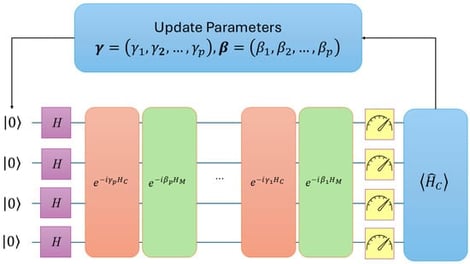
Workflow of the QAOA.

Optimizing the Bounds of Neural Networks Using a Novel Simulated Annealing Method

  • Ioannis G. Tsoulos,
  • Vasileios Charilogis and
  • Dimitrios Tsalikakis

Artificial neural networks are reliable machine learning models that have been applied to a multitude of practical and scientific applications in recent decades. Among these applications, there are examples from the areas of physics, chemistry, medicine, etc. To effectively apply them to these problems, it is necessary to adapt their parameters using optimization techniques. However, in order to be effective, optimization techniques must know the range of values for the parameters of the artificial neural network, so that they can adequately train the artificial neural network. In most cases, this is not possible, as these ranges are also significantly affected by the inputs to the artificial neural network from the objective problem it is called upon to solve. This situation usually results in artificial neural networks becoming trapped in local minima of the error function or, even worse, in the phenomenon of overfitting, where although the training error achieves low values, the artificial neural network exhibits low performance in the corresponding test set. To address this limitation, this work proposes a novel two-stage training approach in which a simulated annealing (SA)-based preprocessing stage is employed to automatically identify optimal parameter value intervals before the application of any optimization method to train the neural network. Unlike similar approaches that rely on fixed or heuristically selected parameter bounds, the proposed preprocessing technique explores the parameter space probabilistically, guided by a temperature-controlled acceptance mechanism that balances global exploration and local refinement. The proposed method has been successfully applied to a wide range of classification and regression problems and comparative results are presented in detail in the present work.

6 February 2026

Plot of the sigmoid function 
  
    σ
    (
    x
    )
  
 in the range 
  
    [
    −
    5
    ,
    5
    ]
  
.

Amyotrophic Lateral Sclerosis (ALS) is a progressive neurodegenerative disorder for which despite its severity, no validated biomarker currently exists to support early diagnosis, limiting therapeutic effectiveness and patient survival. In this context, mathematical modeling therefore becomes essential: it allows us to maximize the information obtainable from a limited number of samples, identify patterns that may not be directly observable, and estimate the relative contribution of different molecular markers to ALS progression. In this work, we propose methods for qualitatively and quantitatively evaluating the relevance of selected biomarkers in ALS classification and disease-state identification and laying the foundations for the definition of a protocol useful for constructing “digital twins” of the entire process of study, diagnosis, and treatment of the disease from the perspective of innovative precision medicine.

5 February 2026

Cloud of points in the original p-dimensional space (a) and the cloud of transformed points in the new Factorial Space (b). 
  
    
      d
      X
    
    
      i
      ,
      
        i
        ′


 and 
  
    
      d
      F
    
    
      i
      ,
      
        i
        ′


 denote, respectively, the distance, between two different points i, and 
  
    i
    ′
  
, in the original space and in the Factorial Space. Credits: Aluja et al. [32].

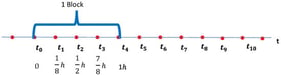
This study introduces a novel single-step hybrid block method with three intra-step points that attains fifth-order accuracy, offering an accurate and computationally economical tool for solving first-order differential equations. The method is specifically designed to handle first-order differential equations with efficiency and precision while employing a constant step size throughout the computation. To further enhance accuracy, interpolation techniques are incorporated to approximate function values at specific positions, addressing the fundamental properties of the method and verifying its mathematical soundness. These analyses confirm that the scheme satisfies the essential requirements of stability, consistency, and convergence, ensuring reliability in practical applications. In addition, the method demonstrates strong adaptability, making it suitable for a broad spectrum of problem settings that involve both stiff and non-stiff systems. Numerical experiments are carried out, and the results consistently demonstrate that the proposed method is robust and effective under various test cases. The outcomes further reveal that it frequently outperforms several existing numerical approaches in terms of both accuracy and computational efficiency.

5 February 2026

Single-step method with three intra-step points.

News & Conferences

Issues

Open for Submission

Editor's Choice

Get Alerted

Add your email address to receive forthcoming issues of this journal.

XFacebookLinkedIn
AppliedMath - ISSN 2673-9909