Skip to Content
You are currently on the new version of our website. Access the old version .
  • Indexed in
    Scopus
  • 30 days
    Time to First Decision

Allergies

Allergies is an international, peer-reviewed, open access journal on allergy and immunology published quarterly online by MDPI.

All Articles (117)

  • Systematic Review
  • Open Access

Introduction: The potential role of food hypersensitivity in the insurgence of inflammatory activity in arthritis such as Rheumatoid Arthritis (RA) has received intermittent attention, also supported by theoretical links involving mucosal immunity, mast-cell activation, and microbiome–immune interactions. Despite biological plausibility, the clinical significance of dietary antigens in RA remains uncertain. Methods: A systematic review was conducted following the PRISMA guidelines. Searches using PubMed, Scopus, and Web of Science identified studies exploring dietary interventions or food hypersensitivity in RA. Eligible articles included clinical trials, case reports, and observational studies, in English or Italian, up to the 10 December 2025. Data extraction and quality assessment were performed using the Newcastle–Ottawa Scale. Results: Eight studies met the inclusion criteria. Findings indicate that elimination or elemental diets occasionally yielded subjective improvements—such as a reduction in pain, morning stiffness, and functional improvements—yet objective inflammatory markers rarely changed. Small, highly selected, cohorts demonstrated immuno-histological alterations, including reduced mast-cell density, while long-term diets (e.g., gluten-free or vegan) have reduced specific IgG levels without altering radiographic progression. Conclusions: Evidence suggests that dietary interventions may offer symptomatic relief only in a minority of RA patients. Due to methodological constraints, inconsistent outcomes, and limited applicability to contemporary treatments, dietary approaches need further exploration and investigation. Rigorous trials in modern cohorts are warranted to clarify whether food hypersensitivity meaningfully influences RA pathophysiology.

14 February 2026
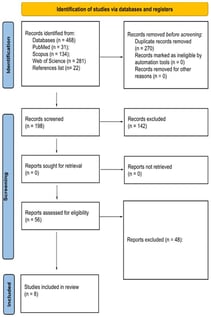
PRISMA flowchart for search strategy.

Penicillin allergy delabelling improves patient outcomes, reduces healthcare costs, and supports antimicrobial stewardship. While PADL protocols (PADL-P) are increasingly used in clinical practice, the consistency of Australian PADL-Ps and their alignment with established guidance remain unclear. A cross-sectional study (from June to August 2025) identified Australian PADL-Ps through organisational and professional outreach, the literature, and structured internet searches. Protocol features were extracted iteratively and deductively. Citation counts and overlap were determined using the Graphical Representation of Overlap for OVErviews (GROOVE) methodology. Protocols were applied to 20 validated penicillin allergy scenarios, and the Australasian Society for Clinical Immunology and Allergy (ASCIA) Consensus Statement for the Management of Suspected Penicillin Allergy and risk alignment were compared. Fifteen Australian PADL-Ps were identified. They shared similar features; however, differences were observed in the no/low-risk criteria and subsequent delabelling actions. Protocols cited a mean of nine references (mean of 4.7 (43.9%) unique), with one protocol citing no references. When applied to clinical scenarios, protocol-assigned risk did not consistently align with the ASCIA risk classification (54.6% of adult and 77.8% of paediatric protocols assigned scenarios to the same risk level). Adult protocol alignment was lowest for no-risk (31.9%) and low-risk (50.0%) scenarios and highest for moderate-risk scenarios (78.8%), whereas paediatric protocol alignment was 33.3% for moderate risk and 100% for low and high-risk scenarios. Although Australian PADL-Ps shared core structural features, incongruencies in risk criteria and alignment with established guidelines may result in different clinical outcomes for patients with similar penicillin allergy histories. These findings emphasise the complexity of clinical decision-making around penicillin allergy and suggest a need for standardisation of PADL-Ps to maximise delabelling benefits and safety across Australian healthcare settings.

9 February 2026

Background: Dermatitis affecting the earlobe is a highly frequent clinical presentation, predominantly attributed to Allergic Contact Dermatitis (ACD) caused by metallic ions like nickel from earrings. However, a significant subset of patients presents with recurrent eczematous lesions highly suggestive of ACD but with inconclusive or negative patch test results, posing a profound diagnostic and therapeutic dilemma. Objective: This comprehensive review critically evaluates the differential diagnosis of earlobe eczema in the context of negative patch tests. Drawing from a representative case of a 30-year-old female with recurrent earlobe eczema and a strong family history of psoriasis, we explore alternative non-immunological and endogenous mechanisms, specifically Irritant Contact Dermatitis (ICD) and the Koebner Phenomenon on a background of Psoriatic Diathesis. Methods: We performed an extensive review of the current literature focusing on the epidemiology and pathogenesis of metal ACD, non-allergic mechanisms of jewelry-induced dermatitis (ICD), the molecular basis of the Koebner phenomenon, and the clinical overlap between eczema and psoriasis (Eczematous Psoriasis). Results: The localized nature of the inflammation, coupled with the absence of generalized nickel sensitivity, strongly suggests that the mechanical and occlusive trauma from earrings can induce a purely irritant reaction. Crucially, the presence of a familial psoriatic diathesis supports the hypothesis that this local irritation acts as a Koebner phenomenon trigger, leading to an eczematous manifestation of an underlying psoriatic tendency. Conclusions: Not all recurrent eczematous lesions at common contact sites are caused by ACD. Clinicians must adopt an integrated diagnostic approach, factoring in personal and family history alongside patch test results, to differentiate true allergy from ICD and the Koebner phenomenon. This nuanced perspective is vital for providing appropriate counseling (strict jewelry avoidance) and targeted, often steroid-sparing, management (e.g., topical calcineurin inhibitors) for a durable therapeutic outcome.

27 January 2026

Diagnosis of Food Allergy: Which Tests Truly Have Clinical Value?

  • Katarzyna Napiorkowska-Baran,
  • Alicja Gruszka-Koselska and
  • Jozef Slawatycki
  • + 5 authors

Food allergy diagnosis remains challenging due to the difficulty of distinguishing true clinical allergy from asymptomatic sensitization. Inaccurate diagnosis may result in unnecessary dietary restrictions, reduced quality of life, or, conversely, failure to identify individuals at risk of severe allergic reactions. This review critically analyzes the efficacy, limitations, and clinical utility of currently available diagnostic tests for food allergy, with particular emphasis on their ability to predict true clinical reactivity. A comprehensive literature review was conducted to evaluate the sensitivity, specificity, and predictive values of both traditional and emerging diagnostic modalities. English-language guidelines, systematic reviews, and key clinical studies published primarily within the past 15 years (up to 2025) were identified through PubMed and Google Scholar. Classic diagnostic tools, including skin prick testing (SPT) and serum-specific IgE (sIgE), were assessed alongside novel approaches such as component-resolved diagnostics (CRD), basophil activation test (BAT), mast cell activation test (MAT), atopy patch testing (APT), cytokine profiling, and omics-based diagnostics. Particular attention was given to how these tests compare with the oral food challenge (OFC), which remains the diagnostic gold standard. The findings demonstrate that while conventional tests offer high sensitivity and are valuable for initial risk assessment, their limited specificity often leads to overdiagnosis. Emerging molecular and cellular assays show improved specificity and functional relevance, especially in complex cases involving polysensitization or unclear clinical histories and may reduce reliance on OFCs in the future. However, accessibility, cost, and lack of standardization currently limit their widespread clinical application. Advances in artificial intelligence and data integration hold promise for improving diagnostic accuracy through enhanced interpretation of complex immunological data. Based on the synthesized evidence, this review proposes an evidence-based, stepwise, and individualized diagnostic algorithm for food allergy. Integrating clinical history, targeted testing, and selective use of OFCs can improve diagnostic certainty, enhance food safety, minimize unnecessary dietary avoidance, and optimize patient outcomes. The review underscores the need for continued research, standardization, and validation of novel diagnostic tools to support personalized and precise food allergy management.

27 January 2026

News & Conferences

Issues

Open for Submission

Editor's Choice

Get Alerted

Add your email address to receive forthcoming issues of this journal.

XFacebookLinkedIn
Allergies - ISSN 2313-5786