

- Article

Professional Appraisal for Social Workers: A Multidimensional Model
- Horia Mihai Raboca
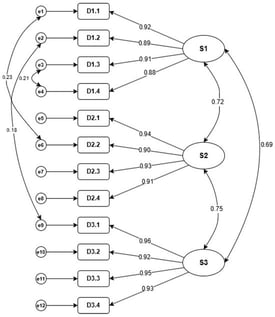
One of the most important priorities of the most recent research work regarding the professional appraisal (PA) process is to understand different aspects of the social workers’ satisfaction with this particular type of professional evaluation. In this sense, this study addresses the imperative to comprehensively understand social workers’ satisfaction with PA, a pivotal yet sensitive human resource instrument within public administration. Drawing on a sociological survey of social workers in Romania’s North-West Development Region, the research empirically validated a multidimensional theoretical model of PA satisfaction (PAS) through rigorous exploratory and confirmatory factor analysis. The findings definitively establish that PAS is not a unidimensional construct, but rather a complex phenomenon underpinned by three distinct dimensions: (1) satisfaction with the most recent performance rating; (2) satisfaction with the appraisal system; and (3) satisfaction with the rater. This validated model significantly advances the conceptualization of satisfaction regarding PA, providing a precise diagnostic instrument for identifying systemic inefficiencies. Consequently, it offers a strategic framework for targeted organizational interventions and informs the development of more equitable and growth-oriented public policies. The study highlights that holistic measurement across these identified dimensions is crucial for cultivating employee motivation, reinforcing organizational justice, and fostering sustainable professional development within the public sector.
9 February 2026