Skip Content
You are currently on the new version of our website. Access the old version .
  • 25 days
    Time to First Decision

J - Multidisciplinary Scientific Journal

J — Multidisciplinary Scientific Journal is an international, peer-reviewed, open access journal on all natural and applied sciences, published quarterly online by MDPI.
Our goal is to improve fast dissemination of new research results and ideas, and to allow research groups to build new studies, innovations and knowledge without delay.

All Articles (306)

Optical synaptic transistors employing polymer dielectrics have emerged as promising building blocks for neuromorphic computing due to their low power consumption and rich photo-induced memory behaviors. While extensive experimental studies have demonstrated various synaptic functions, a unified physical understanding of the coupled charge trapping and ionic polarization processes governing device dynamics remains incomplete. In this work, we develop a unified physical model to investigate optical synaptic behaviors in polymer-based transistors with oxide interlayers. The model explicitly describes the time-dependent evolution of photo-induced charge trapping at the semiconductor–dielectric interface and ionic polarization within the polymer dielectric, which jointly modulate the effective threshold voltage of the transistor channel. Based on this framework, key synaptic functions including excitatory postsynaptic current (EPSC), paired-pulse facilitation (PPF), and pulse-dependent potentiation are quantitatively reproduced. The model further reveals how dielectric structure and trapping strength govern the transition between short-term and long-term plasticity. This study provides a physically intuitive and experimentally relevant modeling framework for understanding optical synaptic transistors, offering guidance for the rational design and optimization of polymer-based neuromorphic devices. Although simplified, the proposed model captures the essential physics governing optical synaptic behaviors and provides a general framework applicable to a wide class of ion–electronic neuromorphic devices. Experimental measurements are used as physically motivated proxies to validate the multi-timescale structure of the model rather than direct numerical fitting.

3 February 2026
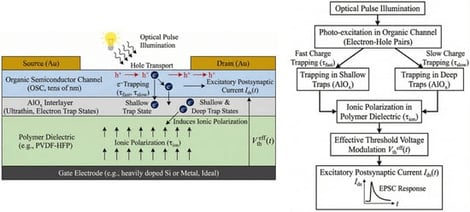
Device structure and unified physical mechanism of the optical synaptic transistor based on coupled trap and ionic dynamics.

Dual-Optimized Genetic Algorithm for Edge-Ready IoT Intrusion Detection on Raspberry Pi

  • Khawlah Harasheh,
  • Satinder Gill and
  • Sayed Ahmad Shah Sekandary
  • + 7 authors

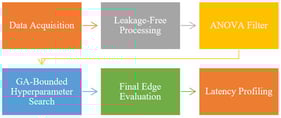
The Internet of Things (IoT) is increasingly deployed at the edge under resource and environmental constraints, which limits the practicality of traditional intrusion detection systems (IDSs) on IoT hardware. This paper presents two IDS configurations. First, we develop a baseline IDS with fixed hyperparameters, achieving 99.20% accuracy and ~0.002 ms/sample inference latency on a desktop machine; this configuration is suitable for high-performance platforms but is not intended for constrained IoT deployment. Second, we propose a lightweight, edge-oriented IDS that applies ANOVA-based filter feature selection and uses a genetic algorithm (GA) for the bounded hyperparameter tuning of the classifier under stratified cross-validation, enabling efficient execution on Raspberry Pi-class devices. The lightweight IDS achieves 98.95% accuracy with ~4.3 ms/sample end-to-end inference latency on Raspberry Pi while detecting both low-volume and high-volume (DoS/DDoS) attacks. Experiments are conducted in a Raspberry Pi-based real lab using an up-to-date mixed-modal dataset combining system/network telemetry and heterogeneous physical sensors. Overall, the proposed framework demonstrates a practical, hardware-aware, and reproducible way to balance detection performance and edge-level latency using established techniques for real-world IoT IDS deployment.

25 January 2026

Proposed dual-optimization framework.
  • Systematic Review
  • Open Access

Natural Antimicrobial Peptides in the Control of Oral Biofilms: A Systematic Review of In Vitro Studies

  • Ana Carolina Cambuí Pereira,
  • Thalya Fernanda Horsth Maltarollo and
  • Ericka Tavares Pinheiro
  • + 2 authors

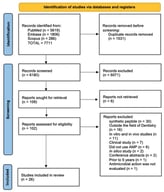
Due to the limitations of conventional antibiotics, antimicrobial peptides (AMPs) have emerged as promising therapeutic alternatives for the prevention and treatment of oral infections. This study systematically evaluated in vitro evidence regarding the antimicrobial and anti-biofilm activity of natural AMPs against oral pathogens. A systematic search using the PICOT strategy was conducted in PubMed, EMBASE, and Scopus, retrieving 7711 articles. After title and abstract screening, 109 studies were selected for full-text analysis, resulting in 26 articles that met the eligibility criteria. Among the AMPs evaluated, nisin (n = 15) and LL-37 (n = 5) were the most frequently investigated, while other peptides included lactoferrin, lactoferricin, melittin, lysozyme, histatin-5, cystatin C, chromogranin A, parasin-1, protamine, AmyI-1-18, and DCD-1L. Natural AMPs of human and animal origin demonstrated antimicrobial activity against bacteria associated with oral infections, particularly Streptococcus mutans and Enterococcus faecalis. These peptides were tested in different formulations, including solutions, incorporation into dental materials and polymers, and application in sonodynamic antimicrobial therapy. Overall, the findings indicate that natural AMPs represent a promising class of biomolecules for controlling oral biofilms; however, further clinical studies are required to validate their long-term efficacy and safety.

22 January 2026

PRISMA flow diagram of study selection.

Spider Test Modified for Pickleball: Reliable, but Do Not Use It

  • Margaret J. Falknor,
  • Eric A. Martin and
  • Steven B. Kim

Change in direction ability (COD) is a fitness component that may be related to safe and effective participation in pickleball. The general aim of the research was to examine a COD test that may be specific to the movement demands of the sport. Therefore, we tested the inter-trial reliability of the modified spider test for pickleball, compared learning effects between younger and older adults, and examined the reliability and validity of hand timing compared to timing gates. In this cross-sectional study, 36 participants (ages 19–78) were grouped as adults (ages 18–49) or seniors (ages 50+) according to the USA Pickleball age groupings. Participants completed a standard warm-up, one practice trial, and five full-effort trials with 4–6 min of rest between trials. Intraclass correlation coefficient (ICC) was used to determine reliability across five trials. Inter-rater reliability and validity of hand timing were also examined with ICCs. Pairwise comparison t-tests of individual trials were performed using the Hochberg method to determine learning effect. Linear regression analyses were used to determine if any segment could predict total trial time. During participation, older players provided unsolicited feedback that they were concerned about the safety of the backpedaling in the spider test. We observed that one person fell while backpedaling, though suffered no injury. Results indicate that the spider test was reliable across all five trials (ICC = 0.977). A learning effect was detected between the first and second trial (p = 0.001), and the magnitude of the effect was significantly different between age groups (p = 0.009). Hand timing demonstrated excellent inter-rater reliability (ICC = 0.993) and validity (ICC = 0.990). Splits 2, 3, and 4 significantly predicted total test time (R2 = 0.973, 0.973, and 0.986, respectively). The test demonstrated reliability, but older players expressed concern about backpedaling. This raises questions about backpedaling safety in pickleball. Therefore, we do not recommend this test. Future research needs to determine appropriate tests to screen for fall risk in the dynamic movements relevant to pickleball.

24 December 2025

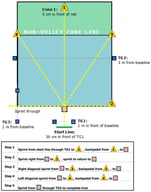
Set up and procedures for modified spider test for pickleball. Participants sprint to each cone in numerical order then return to the return square after touching a cone, before sprinting through the finish on the left side of the baseline.  = Cone.  = Timing Gate (TG).  = Return Square. Yellow dotted arrows indicate directions of sprinting. Red dotted lines indicate the light-beam created by the Brower Timing Gates.

News & Conferences

Issues

Open for Submission

Editor's Choice

Get Alerted

Add your email address to receive forthcoming issues of this journal.

XFacebookLinkedIn
J - ISSN 2571-8800