Skip Content
You are currently on the new version of our website. Access the old version .

IoT

IoT is an international, peer-reviewed, open access journal on Internet of Things (IoT) published quarterly online by MDPI.

Quartile Ranking JCR - Q2 (Telecommunications)

All Articles (259)

Gun violence in U.S. schools not only causes loss of life and physical injury but also leaves enduring psychological trauma, damages property, and results in significant economic losses. One way to reduce this loss is to detect the gun early, notify the police as soon as possible, and implement lockdown procedures immediately. In this project, a novel gun detector Internet of Things (IoT) system is developed that automatically detects the presence of a gun either from images or from gunshot sounds, and sends notifications with exact location information to the first responder’s smartphones using the Internet within a second. The device also sends wireless commands using Message Queuing Telemetry Transport (MQTT) protocol to close the smart door locks in classrooms and announce to act using public address (PA) system automatically. The proposed system will remove the burden of manually calling the police and implementing the lockdown procedure during such traumatic situations. Police will arrive sooner, and thus it will help to stop the shooter early, the injured people can be taken to the hospital quickly, and more lives can be saved. Two custom deep learning AI models are used: (a) to detect guns from image data having an accuracy of 94.6%, and (b) the gunshot sounds from audio data having an accuracy of 99%. No single gun detector device is available in the literature that can detect guns from both image and audio data, implement lockdown and make PA announcement automatically. A prototype of the proposed gunshot detector IoT system, and a smartphone app is developed, and tested with gun replicas and blank guns in real-time.

31 January 2026
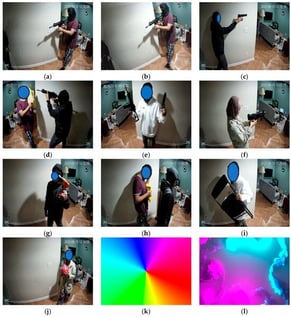
Samples from the image dataset. (a–f) show images from the gun class, while (g–l) show images from the non-gun class. Faces are covered for privacy.

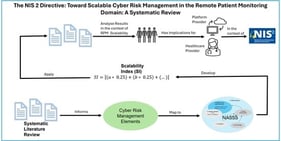
Healthcare 5.0 and the Internet of Medical Things (IoMT) is emerging as a scalable model for the delivery of customised healthcare and chronic disease management, through Remote Patient Monitoring (RPM) in patient smart home environments. Large-scale RPM initiatives are being rolled out by healthcare providers (HCPs); however, the constrained nature of IoMT devices and proximity to poorly administered smart home technologies create a cyber risk for highly personalised patient data. The recent Network and Information Systems (NIS 2) directive requires HCPs to improve their cyber risk management approaches, mandating heavy penalties for non-compliance. Current research into cyber risk management in smart home-based RPM does not address scalability. This research examines scalability through the lens of the Non-adoption, Abandonment, Scale-up, Spread and Sustainability (NASSS) framework and develops a novel Scalability Index (SI), informed by a PRISMA guided systematic literature review. Our search strategy identified 57 studies across major databases including ACM, IEEE, MDPI, Elsevier, and Springer, authored between January 2016 and March 2025 (final search 21 March 2025), which focussed on cyber security risk management in the RPM context. Studies focussing solely on healthcare institutional settings were excluded. To mitigate bias, a sample of the papers (30/57) were assessed by two other raters; the resulting Cohen’s Kappa inter-rater agreement statistic (0.8) indicating strong agreement on study selection. The results, presented in graphical and tabular format, provide evidence that most cyber risk approaches do not consider scalability from the HCP perspective. Applying the SI to the 57 studies in our review resulted in a low to medium scalability potential of most cyber risk management proposals, indicating that they would not support the requirements of NIS 2 in the RPM context. A limitation of our work is that it was not tested in a live large-scale setting. However, future research could validate the proposed SI, providing guidance for researchers and practitioners in enhancing cyber risk management of large-scale RPM initiatives.

29 January 2026

Typical Remote Patient Monitoring scenario for a chronic disease condition.

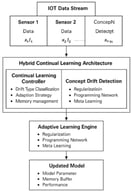
The rapid expansion of Internet of Things (IoT)-enabled smart grids has intensified the need for reliable fault detection and autonomous self-healing under non-stationary operating conditions characterized by frequent concept drift. To address the limitations of static and single-strategy adaptive models, this paper proposes H-CLAS, a novel Hybrid Continual Learning for Adaptive Self-healing framework that unifies regularization-based, memory-based, architectural, and meta-learning strategies within a single adaptive pipeline. The framework integrates convolutional neural networks (CNNs) for fault detection, graph neural networks for topology-aware fault localization, reinforcement learning for self-healing control, and a hybrid drift detection mechanism combining ADWIN and Page–Hinkley tests. Continual adaptation is achieved through the synergistic use of Elastic Weight Consolidation, memory-augmented replay, progressive neural network expansion, and Model-Agnostic Meta-Learning for rapid adaptation to emerging drifts. Extensive experiments conducted on the Smart City Air Quality and Network Intrusion Detection Dataset (NSL-KDD) demonstrate that H-CLAS achieves accuracy improvements of 12–15% over baseline methods, reduces false positives by over 50%, and enables 2–3× faster recovery after drift events. By enhancing resilience, reliability, and autonomy in critical IoT-driven infrastructures, the proposed framework contributes to improved grid stability, reduced downtime, and safer, more sustainable energy and urban monitoring systems, thereby providing significant societal and environmental benefits.

27 January 2026

End-to-end framework of proposed hybrid continual learning for drift-aware adaptation.

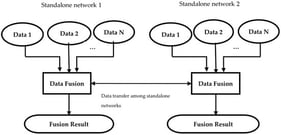
In Internet of Things (IoT) systems, data collected by geographically distributed sensors is often incomplete due to device failures, harsh deployment conditions, energy constraints, and unreliable communication. Such data gaps can significantly degrade downstream data processing and decision-making, particularly when failures result in the loss of all locally redundant sensors. Conventional imputation approaches typically rely on historical trends or multi-sensor fusion within the same target environment; however, historical methods struggle to capture emerging patterns, while same-location fusion remains vulnerable to single-point failures when local redundancy is unavailable. This article proposes a correlation-aware, cross-location data fusion framework for data imputation in IoT networks that explicitly addresses single-point failure scenarios. Instead of relying on co-located sensors, the framework selectively fuses semantically similar features from independent and geographically distributed gateways using summary statistics-based and correlation screening to minimize communication overhead. The resulting fused dataset is then processed using a lightweight KNN with an Iterative PCA imputation method, which combines local neighborhood similarity with global covariance structure to generate synthetic data for missing values. The proposed framework is evaluated using real-world weather station data collected from eight geographically diverse locations across the United States. The experimental results show that the proposed approach achieves improved or comparable imputation accuracy relative to conventional same-location fusion methods when sufficient cross-location feature correlation exists and degrades gracefully when correlation is weak. By enabling data recovery without requiring redundant local sensors, the proposed approach provides a resource-efficient and failure-resilient solution for handling missing data in IoT systems.

26 January 2026

Data fusion in interconnected network architectures.

News & Conferences

Issues

Open for Submission

Editor's Choice

Reprints of Collections

IoT for Energy Management Systems and Smart Cities
Reprint

IoT for Energy Management Systems and Smart Cities

Editors: Antonio Cano-Ortega, Francisco Sánchez-Sutil

Get Alerted

Add your email address to receive forthcoming issues of this journal.

XFacebookLinkedIn
IoT - ISSN 2624-831X