


Abstract
Scientific advances in biosensor technology are leading to the potential of wearable biosensors for salivary biomarker detection. This review aims to identify the current status of intraoral biosensor technology that can be used to monitor systemic diseases. A total of 11 studies were identified for inclusion, which included nine different devices, including modified mouthguards, retainers, toothbrushes, and dental floss. Out of the 11 studies, 8 studied continuous biomarker monitoring, and the remaining 3 were point-of-care applications. A total of seven biomarkers were studied, six of which investigated the intraoral detection of salivary glucose levels using glucose oxidase enzyme. All the sensors demonstrated excellent sensitivity (minimum R = 0.9928) and selectivity. The study designs were proof of concept, with five studies including in vivo components. We concluded that while there are established links between salivary biomarkers and systemic health, there is a lack of mature intraoral biosensor research. Refinement of biosensor design and data analysis is required to improve patient acceptability by promoting more discrete, real-time, low-cost, and wireless devices. Further research that utilises the biosensor technology in large controlled clinical trials will be required to confirm clinical applicability before intraoral biosensor technology can be integrated into routine health monitoring.
1. Introduction
Rapidly advancing intraoral technology provides novel and exciting opportunities that have the potential to revolutionise how dental and medical professionals monitor patients’ health and detect systemic diseases. Scientific progress in biosensors, microelectronics, molecular biology, and their combined outputs is leading to the potential of utilising biomarkers detection for early diagnosis and monitoring of systemic diseases. Early disease recognition will enable early intervention, leading to reduced treatment requirements, morbidity, recurrence rates, and healthcare burden, alongside improvements to patient’s quality of life. It is essential that healthcare professionals are aware of evolving biosensor technologies for systemic health monitoring due to these emerging innovations having the ability to redefine optimised holistic patient care.
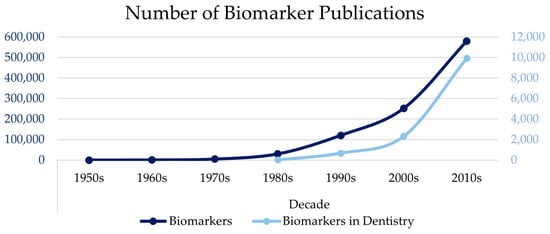
Whilst principles of medical technology can be transferred to the oral environment, there is often a delay in research. This can be demonstrated by the first publications regarding systemic biomarkers in dentistry being written in the 1970s, more than 20 years after initial medical publications using similar technology [1]. There has been an exponential growth in biomarker publications on these topics in recent years, with biomarkers in dentistry demonstrating a 4.3-fold increase over the last decade, as can be seen in Figure 1. This acceleration in published research warrants a critical review of the literature to ascertain the clinical applications of these advances and current status.
Figure 1.
Number of publications per decade available on PubMed database defined by search criteria; dark blue left y-axis: biomarkers, light blue right y-axis: biomarkers in dentistry.
Haematological medical samples are routinely used for the diagnosis and monitoring of systemic diseases; however, alternative biofluids are being explored to overcome the invasive nature of haematological specimen collection. These alternative biofluids include tears, sweat, and saliva [2,3]. In addition to the benefits of non-invasive sample collection, saliva has been suggested as a promising sensing medium due to its ease of storage, plentiful quantity, continual production, and abundance of biomarkers [4,5]. The recognised bidirectional relationship between oral and systemic health [6,7] and exchange between salivary glands and blood has indicated that saliva biomarker contents correlate with an individual’s pathophysiological status; however, clarity is needed to understand the specificity and sensitivity of salivary biomarker tests [4,5,8].
Biomarker readings can be performed through repeated point-of-care (POC) sampling or continuous monitoring. Wearable devices have promoted patients’ health autonomy by combining mobile devices with biosensor technology to continuously monitor health data such as oximetry, heart rate and rhythm, continuous glucose tracking, and blood pressure [9]. Salivary sensors were first reported in the 1960s to measure plaque pH on a partial denture; however, intraoral sensors have only recently been investigated for the detection of systemic biomarkers [10]. Applications of biosensor technology continue to expand within general medicine, with researchers investigating the ability to detect electrolytes, pathogens, and nitrites [11]. Salivary biomarkers have been widely researched with an aim to detect systemic conditions such as neurodegenerative, cardiovascular, smoking status, and endocrine disease [12,13]; however, most applications rely on the extraction of saliva samples for point-of-care external analysis. This paper will seek to identify what novel intraoral biosensors exist for saliva biomarker detection and monitoring. Whilst there are established systemic salivary biomarkers identified, intraoral biomarkers are still not being routinely utilised within healthcare. It is essential that robust, high-quality research is conducted to determine evidence of clinical relevance, predictability, patient safety, and financially viable results prior to biosensors being commercially available and widely accepted within the highly regulated healthcare setting.
Whilst biomarkers are being extensively studied to detect oral diseases such as periodontitis and caries, this article will focus on exploring emerging biosensors used within the oral environment that have the potential to monitor systemic health. The article will review the current status, limitations, and future research requirements to enable the implementation of future innovations of this intraoral technology.
2. Materials and Methods
The literature search was conducted independently by two reviewers (NA, SL), using the Web Of Science database to find articles that answered the primary research question, ‘What is the current status of intraoral biosensor technology?’ and the secondary research question, ‘What further research is required to determine clinical utility?’. When articles were assessed to determine inclusion or exclusion, any uncertainties from reviewers NA and SL were discussed with HP to determine relevance.
Publication dates were restricted to between 1 January 2015 and 28 October 2023. Article reference and citation lists were reviewed, and articles were included if they developed the discussion and met the inclusion and exclusion criteria.
The search terms that were used, alone or in conjunction, to identify relevant titles and abstracts were ‘biomarker*’, ‘*proteomic*’, ‘microbiome’, ‘metabolomic*’, ‘*sensor*’, ‘active appliance*’, ‘active device*’, ‘organic electrochemical transistor’, ‘OECT’, ‘systemic’, ‘health’, ‘disease*’, ‘monitor*’, ‘diagnos*’, ‘*oral’, ‘saliva*’, and ‘gingival crevicular fluid’. Articles containing caries, ‘periodont*’, or ‘oral cancer’ were excluded. A full search strategy is available from the authors.
Additional references were identified through hand searching and a grey literature search for articles published since 1 January 2018 in the following journals and databases: Journal of Dental Research, Analytical Chemistry, Trends in Analytical Chemistry, Biosensors, and the Data Archiving and Networked Services (DANS) Grey.
- Inclusion criteria:
- Clinical or laboratory studies, including case reports, researching intraoral applications biosensors for systemic health monitoring.
- Published between 1 January 2015 to 28 October 2023, including e-publications ahead of print.
- Full text available and published in English or with English translation.
- Exclusion criteria:
- Technologies with non-intraoral sensors or point-of-care applications.
- Articles focusing on oral diseases, vital signs, or microorganisms.
- Sensors that detect pressure, energy absorption, or thermal measurements.
- Editorial, reviews, opinion articles, or animal studies.
The literature quality was determined jointly by NA and SL using the Quality Assessment with Diverse Studies scoring criteria [14]. Data were extracted and cross-checked by two assessors (NA and SL). The data collection outcomes sought were determined prior to data collection and were the type of intraoral host device and sensor technology design, biomarker detected, clinical relevance, sensing medium, analysis response time, sensing current, linear range, selectivity, and sensitivity. During article analysis, further data were recorded if deemed relevant by both assessors.
3. Results
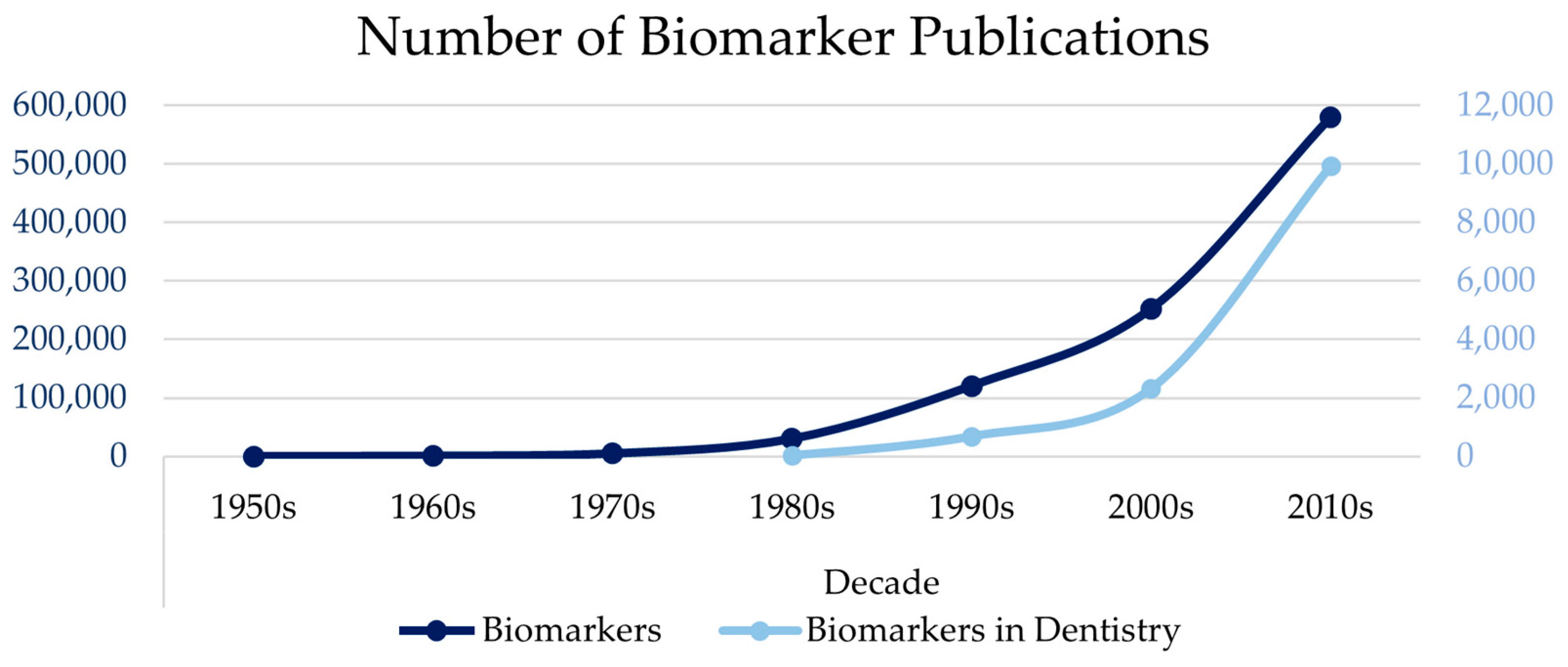
A total of 2384 studies were identified from the Web of Science search strategy, of which 7 [15,16,17,18,19,20,21] were deemed relevant after reviewing the title, abstract, and full text. A total of four additional articles were included from hand and citation searching [22,23,24,25]. The full search strategy results can be seen in Figure 2.
Figure 2.
PRISMA search strategy results.
3.1. Biomarkers
Studies researching intraoral sensors investigated seven different biomarkers, as shown in Table 1. Glucose was the most frequently researched biomarker, being analysed by six of the included papers. Other biomarkers included nitrite, lactate, uric acid, thiocyanate, sodium, and potassium.
3.2. Intraoral Devices
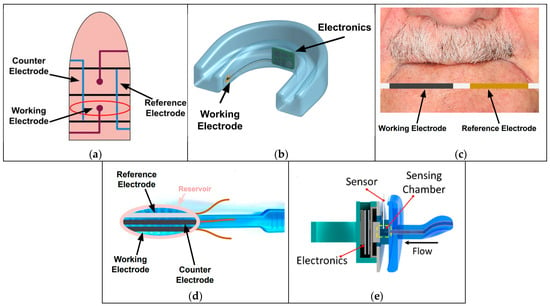
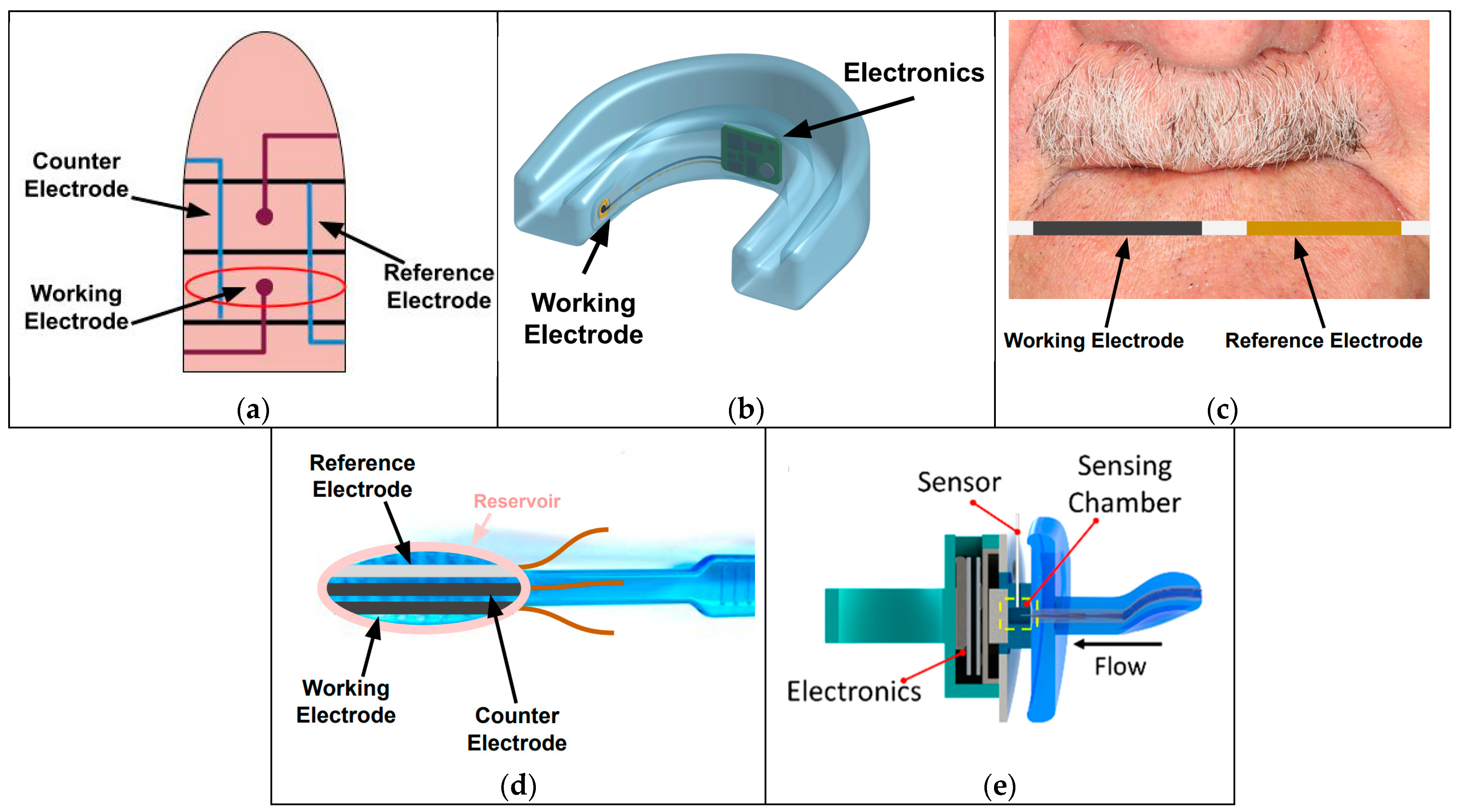
A total of 9 different devices were used, as shown in Figure 3. Two of the devices were modified by the research team for inclusion in another article, as shown by Kim et al. [23,26] and Arakawa et al. [18,19]. Eight of the studies researched wearable devices and three point-of-care devices. The point-of-care devices included modifications to wooden tongue depressors, dental floss, and toothbrushes, which relied upon a wired connection to a potentiostat for data collection. Some devices were modified to include a saliva reservoir for improved biomarker detection, with glue walls on the toothbrush model [25] and microfluidic channels in the pacifier [21] design.
Figure 3.
This figure contains graphics to represent images of intraoral sensor devices. (a) Wooden tongue depressor [22], (b) Mouthguard style of biosensor, with included studies having various occlusal coverage designs [16,18,19,21,23,28], (c) Dental floss [24], (d) Toothbrush [25], (e) Pacifier (reproduced with permission from Garcia-Carmona [15]).
Table 1.
This table shows a summary of included articles highlighting details of the sensor technology, biomarker, and main results. * blood uric acid (BUA).
There were five mouthguard studies, with all but one relying on full arch coverage. All mouthguards were made from biocompatible polyethene terephthalate (PET) glycol at varying thicknesses to host the biosensors.
3.3. Sensor Technology
3.3.1. Electrode Technology
Eight of the studies relied on enzyme coatings on the working electrode for the detection of the analyte. All six studies investigating glucose relied on the glucose oxidase enzyme (GOD), whilst the articles investigating lactate and uric acid relied on lactate oxidase and uricase, respectively. The enzymes reduce a reactant, for example, molecular oxygen to hydrogen peroxide, as a product of the reaction of their metabolite; this may be through a free product, an artificial electrode-bound mediator, or direct enzyme coupling to the electrode, resulting in a measurable amperometric current [27,29] The reactions can be seen in Table 2.
Table 2.
This table shows a summary of the chemical reactions at the working electrodes to analyse the presence of specific biomarkers. Reduction of molecular oxygen and subsequent oxidation at the electrode is shown as an example pathway.
Chlorinated silver (Ag|AgCl) was used as the reference electrode in all studies to enable redox reactions at the working and counter electrodes. Immobilisation of the enzyme differed between the studies, including poly(MPC-co-EHMA-co-MBP)(PMEHB) and ultraviolet radiation, 2% dilute glutaraldehyde and Nafion, chitosan layer, polydimethylsiloxane (PDMS), and thermal strategies to immobilise GOD.
The remaining three articles used ion-selective electrodes, without enzymes, to measure sodium, potassium, thiocyanate, and nitrite.
3.3.2. Selectivity, Interference, and In Vivo Confounds of Biosensor Metabolites
Membranes, enzymes, and immobilisers were used by many of the studies with the aim of achieving selectivity of the biosensors. Arakawa et al. [18] used a Poly (MPC-co-EHMA) (PMEH) overcoat on a glucose oxidase sensor and confirmed that a 1% PMEH overcoat was optimal to protect the biosensors without interfering with glucose readings. In a different study by the same team, Arakawa et al. [19] used a cellulose acetate (CA) membrane to suppress the influence of uric acid (UA) and ascorbic acid (AA). The results found that a 5% CA membrane was ideal to optimise the noise ratio by 97.1%. Three additional studies [15,23,25] also researched the influence of UA and AA on analyte detection and found that sensors had good selectivity for the target analyte. Kim et al.’s [26] UA sensor determined that small variations were observed for in vivo UA concentrations, which were attributed to the influence of the circadian rhythm and food intake.
Sangwasang et al. [16] demonstrated high selectivity for thiocyanate using an ion-selective sensor immobilised with chitosan on a mouthguard in the presence of glucose, creatinine, citrate, lactic acid, uric, and urea.
Both studies by Arakawa et al. [18,19] reported a high selectivity for glucose when using GOD enzymatic sensors and optimised immobilisers in the presence of glucose, galactose, fructose, mannitol, sorbitol, and xylitol. Both studies had different sensor modifications, with one immobilising the enzyme with a cellulose acetate interference rejection medium and crosslinking ultraviolet (UV) and the other using a polydimethylsiloxane (PDMS) insulator. One study [21] applied a 9 µm thick polyimide dielectric coating to a sodium biosensor, and solutions containing ionic calcium, magnesium, potassium, and citric acid were tested with negligible interference. In addition, three different sodium-containing food items were explored, with isolated peaks during initial consumption, which was suspected to be due to the direct contact of the food with the biosensor. Food products were also investigated in vivo in neonate saliva by Garcia–Carmona et al.’s [15] pacifier, which concluded that milk sugars in neonates had negligible affinity for the biosensor.
3.3.3. Sensitivity
Table 1 shows the details of the biosensor sensitivity. All studies using human saliva reported a biosensor correlation coefficient for sensitivity to its analyte in excess of 0.9899. Glucose correlation coefficients exceeded 0.9928 when testing for glucose in buffer solution and artificial saliva.
Liu et al. [25] repeated experiments on three separately manufactured batches of biosensors for H2O2 and glucose sensing to assess sensitivity and reproducibility. H2O2 correlation coefficients were 0.9884, 0.9911, and 0.9977 (0.9924 mean), and glucose correlation coefficients were 0.9929, 0.96226, and 0.9772 (0.9775 mean). Lee et al. [20] tested the sensitivity to sodium concentrations of three different sodium-containing foods in vivo. The biosensor detected 130 mM sodium in chicken noodle soup compared to the actual value of 124 mM, while for potato chips, the biosensor value was 20 mM compared to the actual 264 mM. The one-order of magnitude lower concentration observed for potato chips was hypothesised to be caused by saliva diluting the food product.
Arakawa et al. [19] observed differences between biosensor readings compared to the known concentration of the glucose analyte. In vivo glucose results overestimated glucose concentrations; saliva biosensor estimates were 21.1 µmol/L compared to the actual value of 17.6 µmol/L, confirmed by a glucose measurement kit and spectrophotometer.
3.3.4. Stability
Varied biosensor stability levels have been reported, with stability not being the main research question for any of the studies. Arakawa et al. [19] reported the glucose oxidase enzymatic sensor remained stable for four cleaning cycles with sodium hypochlorite solution, after which sufficient enzyme was removed from the sensor to reduce the function. No data were included to demonstrate this change in stability. Sha et al. [24] tested a dental floss glucose biosensor and found that 80% of the signal response was maintained at 50 uses and 30% at 70 uses. No other data were provided to indicate the change in relative response.
Both studies by Kim et al. [23,26] commented that high stability was achieved, with Kim et al. [23] reporting a 2 h stability with small variations between 90 and 106% from the relative current and Kim et al. [26] reporting a 4 h stability with a 3.13% standard deviation around the relative current.
Liu et al. [25] reported that the fiftieth measurement had a current response that was 67.75% of the initial signal value. No details were provided on what cleaning solutions were used or the time between readings.
3.3.5. Saliva Viscosity
Saliva viscosity was a covariate reported by several of the papers as a factor that influences the analysis response rate. To accelerate the saliva contact rate with the pacifier sensor, Garcia–Carmona et al. [15] investigated the rate at which absorbent paper became stained with a blue candy dye. A single inlet at the tip of the nipple was found to be the optimal design to minimise the delay in the biosensor reading.
Kim et al. [26] reported a lower correlation coefficient for human saliva compared to a low-viscosity aqueous buffer solution, which the authors attributed to a saliva viscosity resulting in a slower analyte diffusion rate.
3.4. Research Quality
The 11 studies were proof of concept research, demonstrating the use of sensors for intraoral biomarker detection. Table 3 provides a summary of the quality of research using the Quality Assessment with Diverse Studies (QuADS) criteria [14]. None of the studies included a clearly defined research aim or explored the limitations of their research and results.
Table 3.
This table shows a summary of included article quality related to predefined research strategies (QuADS), which has a 0–3 rating scale (Score of 0 indicates criteria not mentioned at all, to a score of 3 which means a high level of detail) [14]. Colour Gradient Key: .
.
Five of the included studies had in vivo components; Garcia–Carmona et al. [15] was the only paper that referenced ethical approval in their methodology. Garcia–Carmona [15] and Lim [21] studied pacifiers and clearly defined their target population as neonates. Garcia–Carmona tested their pacifier biosensor on 25 to 60-year-old adults, and Lim et al. reported testing the sensor on infants; however, further subject demographics or sampling methods remained unclear. Garcia–Carmona et al. [15] also used a blue candy to confirm pacifier nipple design; this needs to be further understood in regard to sugar content due to the ethical concerns and caries risk if sugar-containing items are being used for widescale and prolonged monitoring purposes.
There was a consensus amongst the articles that whilst successful results were identified, further research on real-time intraoral studies would be required prior to the sensors being commercially available.
4. Discussion
The purpose of this article was to review the current status of intraoral biosensors with the capability of detecting salivary biomarkers relevant to systemic health. From our review of the current literature, it is evident that intraoral biosensor development is still in the initial experimental stages. All published studies are proof of concept that demonstrate an exciting potential for clinical use; however, currently, there is a lack of robust clinical evidence and limited external validity. Whilst all the sensors demonstrated a successful ability to detect the defined biomarkers with excellent sensitivity, selectivity, and linear detection values that encompass biomarker concentrations within saliva, only five of the studies had an in vivo component [15,19,20,21,26]. Of the studies that had in vivo components, all lacked essential methodological data, including sampling and recruitment strategies. In addition, due to the heterogeneity in study designs and data collected, direct comparison of the intraoral sensors was challenging.
Within the studies, eight different biomarkers were investigated; however, there are many established salivary biomarkers that have not been tested with an intraoral biosensor component, including cortisol [30,31], c-reactive protein (CRP) [32], and creatinine [33,34].
The biomarker that was most frequently investigated was glucose, which was the focus of more than half of the studies. Literature has confirmed that salivary glucose biosensors have the potential to play a role in the personalised diagnostics and management of diabetic and prediabetic patients. It is estimated that by 2025, 5 million people in the UK will have been diagnosed with Type 2 Diabetes Mellitus [34]. All glucose papers used a consistent sensor design of enzymatic GOD on the working electrode and silver–silver chloride reference electrode, achieving high sensitivity and correlation coefficients. The glucose detection response times were highly variable, between 5 s and 20 min, which will lead to an influence on clinical usefulness. In addition, studies that looked at glucose detection within human saliva samples required subjects to fast for 8 h prior to sampling, reducing the generalisability of results and feasibility of continuous glucose monitoring; oral intake of glucose-containing foods will introduce a confounding signal.
Whilst glucose is a diabetes-specific biomarker, the other studies included biomarkers that are responsible for less disease specificity, for example, uric acid, which can be implicated in patients with hyperuricaemia, gout, renal syndrome, and stress [26]. This demonstrates the importance of combining biosensor results with other clinical investigations to consider wider diagnostic data or introducing a multisensory system within a single device to analyse multiple biomarker concentrations [35]. Only one study [26] recruited a patient living with a systemic disease and compared them to a control group, a patient who had been diagnosed with hyperuricaemia and increased BUA, with significant differences in uric acid detected between the two participants. The patient with hyperuricaemia was also monitored for salivary uric acid change in response to Allopurinol intervention, which revealed salivary uric acid was within normal ranges within 4 days and showed that biosensors could be used for non-invasive real-time monitoring of pharmaceutical intervention. Further research that investigates biosensor performance in patients with specific diseases compared to a control group is required to improve the diagnostic potential of intraoral biosensors.
From the studies that were identified, two of the biosensor devices were pacifiers that aimed to detect the presence of sodium, potassium, and glucose biomarkers in neonates. Monitoring biomarkers in neonates is essential for rapid detection of systemic diseases, with small deviations in biomarker concentrations often leading to high mortality risk and current investigations being invasive compared to the suggested biosensors [36,37]. Lim et al. [21] reported successful and highly sensitive salivary glucose detection using a pacifier device in neonates; however, results need to be interpreted with caution due to no details being provided on sample size or recruitment. In addition, Garcia–Carmona et al.’s [15] pacifier was tested on adult saliva, and therefore, results may not be valid for the target neonate population.
According to the Adult Dental Health Survey, almost one in five adults wear dentures in the UK, and many more wear other dental prostheses [38]; therefore, if a sensor could be built into a patient’s existing prosthesis, this could provide a unique opportunity to monitor individual comorbidities. Prior to this being a viable utilisation option for routine biosensor use, the impact of eating and drinking on the biosensor sensitivity and longevity must be assessed. Two studies [21,22] had dual purposes by incorporating two biomarker detections within one sensor, which highlights a future opportunity for tailored biosensors dependent on patient-specific health needs. In this review, intraoral biosensors rely upon indwelling electronics in the oral cavity [18,20,26] or short-term contact between external active circuits and saliva-contacting electrodes [15,16,17,21,22,23,25]. When placed in the oral cavity, it is essential that the instrumenting electronics are protected from the moist environment to prevent corrosion, device failure, and leakage of toxic chemicals [39]. Electronics protection methods used in the identified papers focus on compliant and non-hermetic approaches, including silicone elastomers [18,20] and other non-specified adhesives [26]. In addition, patient safety issues must be considered, such as material biocompatibility, including the safety of sensing layers and electrodes, such as the common Ag|AgCl reference electrodes [40]. Safety of the applied sensing currents should also be considered, both to avoid degradation of the sensing surface and to avoid patient harm.
For commercial viability, it is essential that biosensors are cost-effective; only Koukouviti et al.’s [22] laser engraved diode laser wooden tongue depressor commented on the cost and ease of fabrication, with the tongue depressor costing < USD 0.1 and USD 55 for the domestic laser engraving. Due to successful biosensor development having the potential for substantial profit generation, it is interesting to query whether further developments have been made in unpublished private companies’ research or patent pending research.
The use of intraoral sensors to detect biomarkers can be challenging due to saliva being a complex biofluid that has a variable composition, including high viscosity, high protein content, and abundance of electroactive species [26]. All of the studies considered some of these factors to varying extents when designing their intraoral sensors with the aim of minimising biofouling, increasing device longevity, and increasing sensor specificity. The complexities that were considered include viscosity, ionic solutions, food, and other organic substrates. Whilst there is evidence that supports the correlation between salivary and haematological biomarkers, salivary diagnostics are not widely used for routine systemic health monitoring at present. Further research with increased duration and strategies to combat salivary issues such as biofouling, temperature, or pH fluctuations to match those that may be experienced within the oral cavity need to be identified and their effects mitigated.
Although further development is required in this field, significant merit can be seen for the use of intraoral sensors capable of continuous health monitoring, and initial studies have demonstrated promising results. For intraoral sensors to be incorporated into systemic health monitoring and overcome the translational gap, devices must be developed to the maturity where large group clinical trials with robust study design can be conducted, and devices can be supported through the pathway to clinical translation.
5. Conclusions
There are established links between salivary biomarkers and systemic health, yet there is still limited intraoral biosensor research that looks to harness this potential. The published literature is proof of concept research and demonstrates promising sensor technology results with high sensitivity; however, there is a lack of robust methodologies and sampling methods. The long-term stability of the sensors also remains unclear. The wearable biosensor designs and data analysis require further refinement to improve patient acceptability and ease of use by promoting more discrete, real-time, low-cost, and wireless devices. Incorporation of biosensors into patients’ existing dental prostheses will provide additional benefits. Further research that utilises biosensor technology in large controlled clinical trials, especially in patients with and without systemic disease, will be required to confirm clinical relevance before intraoral biosensor technology can be integrated into health monitoring.
Author Contributions
Conceptualisation, methodology, writing original draft, review, and editing N.A., S.L., H.T.L. and H.P. All authors have read and agreed to the published version of the manuscript.
Funding
This research received no external funding.
Institutional Review Board Statement
Not applicable.
Informed Consent Statement
Written informed consent has been obtained from the patients to publish this paper.
Data Availability Statement
No new data were created or analysed in this study. Data sharing is not applicable to this article.
Conflicts of Interest
The authors declare no conflicts of interest.
References
- Freidin, L.; Kulagin, P.; Chishieva, M. Carcinoembryonic antigen in caries and parodontosis. Stomatologiia 1977, 56, 10–12. [Google Scholar] [PubMed]
- Senf, B.; Yeo, W.; Kim, J. Recent Advances in Portable Biosensors for Biomarker Detection in Body Fluids. Biosensors 2020, 10, 127. [Google Scholar] [CrossRef] [Scilit] [PubMed]
- Kim, J.; Campbell, A.; de Ávila, B.; Wang, J. Wearable biosensors for healthcare monitoring. Nat. Biotechnol. 2019, 37, 389–406. [Google Scholar] [CrossRef] [Scilit] [PubMed]
- Sempionatto, J.; Lasalde-Ramírez, J.; Mahato, K.; Wang, J.; Gao, W. Wearable chemical sensors for biomarker discovery in the omics era. Nat. Rev. Chem. 2022, 6, 899–915. [Google Scholar] [CrossRef] [Scilit]
- Roi, A.; Rusu, L.; Roi, C.; Luca, R.; Boia, S.; Munteanu, R. A New Approach for the Diagnosis of Systemic and Oral Diseases Based on Salivary Biomolecules. Dis. Markers 2019, 2019, 8761860. [Google Scholar] [CrossRef] [Scilit] [PubMed]
- Kane, S. The effects of oral health on systemic health. Gen. Dent. 2017, 65, 30–34. [Google Scholar] [PubMed]
- Botelho, J.; Mascarenhas, P.; Viana, J.; Proenca, L.; Orlandi, M.; Leira, Y.; Chambrone, L.; Mendes, J.; Machado, V. An umbrella review of the evidence linking oral health and systemic noncommunicable diseases. Nat. Commun. 2022, 13, 7614. [Google Scholar] [CrossRef] [Scilit] [PubMed]
- Song, Z.; Zhou, S.; Qin, Y.; Xia, X.; Sun, Y.; Hang, G.; Shu, T.; Hu, L.; Zhang, Q. Flexible and Wearable Biosensors for Monitoring Health Conditions. Biosensors 2023, 13, 630. [Google Scholar] [CrossRef] [Scilit]
- Battelino, T.; Alexander, C.; Amiel, S.; Arreaza-Rubin, G.; Beck, R.W.; Bergenstal, R.M.; Buckingham, B.A.; Carroll, J.; Ceriello, A.; Chow, E.; et al. Continuous glucose monitoring and metrics for clinical trials: An international consensus statement. Lancet Diabetes Endocrinol. 2023, 11, 42–57. [Google Scholar] [CrossRef] [Scilit]
- Graf, H. Telemetry of plaque pH from interdental areas. Helv. Odontol. Acta 1966, 10, 94–101. [Google Scholar]
- Topol, E. A decade of digital medicine innovation. Sci. Transl. Med. 2019, 11, eaaw7610. [Google Scholar] [CrossRef] [Scilit] [PubMed]
- Mani, V.; Beduk, T.; Khashiam, W.; Ceylan, A.; Timur, S.; Wolfbeis, O.; Khaled, N. Electrochemical sensors targeting salivary biomarkers: A comprehensive review. TrAC-Trends Anal. Chem. 2021, 135, 116164. [Google Scholar] [CrossRef] [Scilit]
- Kim, E.; Joe, E.; Mitchell, R.; Gu, M. Biosensors for healthcare: Current and future perspectives. Trends Biotechnol. 2023, 41, 374–395. [Google Scholar] [CrossRef] [Scilit] [PubMed]
- Harrison, R.; Jones, B.; Gardener, P.; Lawton, R. Quality assessment with diverse studies (QuADS): An appraisal tool for methodological and reporting quality in systematic reviews of mixed- or multi-method studies. BMC Health Serv. Res. 2021, 21, 144. [Google Scholar] [CrossRef] [Scilit]
- Garcia-Carmona, L.; Martin, A.; Sempionatto, J.; Moreto, J.; Gonzalez, M.; Wang, J.; Escarpa, A. Pacifier biosensor; toward noninvasive saliva biomarker monitoring. Anal. Chem. 2019, 91, 13883–13891. [Google Scholar] [CrossRef] [Scilit] [PubMed]
- Sangsawang, R.; Buranachai, C.; Thavarungkul, P.; Kanatharana, P.; Jeerapan, I. Cavitas electrochemical sensors for the direct determination of salivary thiocyanate levels. Microchim. Acta 2021, 188, 415. [Google Scholar] [CrossRef] [Scilit]
- Pataranutaporn, P.; Jain, A.; Johnson, C.; Shah, P.; Maes, P. Wearable lab on body: Combining sensing of biochemical and digital markers in a wearable device. In Proceedings of the 2019 41st Annual International Conference of the IEEE Engineering in Medicine and Biology Society (EMBC), Berlin, Germany, 23–27 July 2019. [Google Scholar]
- Arakawa, T.; Kuroki, Y.; Nitta, H.; Chouhan, P.; Toma, K.; Sawada, S.-I.; Takeuchi, S.; Sekita, T.; Akiyoshi, K.; Minakuchi, S.; et al. Mouthguard biosensor with telemetry system for monitoring of saliva glucose: A novel cavitas sensor. Biosens. Bioelectron. 2015, 84, 106–111. [Google Scholar] [CrossRef] [Scilit] [PubMed]
- Arakawa, T.; Tomoto, K.; Nitta, H.; Toma, K.; Takeuchi, S.; Sekita, T.; Minakuchi, S.; Mitsubayashi, K. A Wearable Cellulose Acetate-Coated Mouthguard Biosensor for in Vivo Salivary Glucose Measurement. Anal. Chem. 2020, 92, 12201–12207. [Google Scholar] [CrossRef] [Scilit] [PubMed]
- Lee, Y.; Howe, C.; Mishra, S.; Lee, D.S.; Mahmood, M.; Piper, M.; Kim, Y.; Tieu, K.; Byun, H.-S.; Coffey, J.P.; et al. Wireless, intraoral hybrid electronics for real-time quantification of sodium intake toward hypertension management. Proc. Natl. Acad. Sci. USA 2018, 115, 5377–5382. [Google Scholar] [CrossRef] [Scilit]
- Lim, H.-R.; Lee, S.M.; Park, S.; Choi, C.; Kim, H.; Kim, J.; Mahmood, M.; Lee, Y.; Kim, J.-H.; Yeo, W.-H. Smart Bioelectronic Pacifier for Real-Time Continuous Monitoring of Salivary Electrolytes. Biosens. Bioelectron. 2022, 210, 114329. [Google Scholar] [CrossRef] [Scilit]
- Koukouviti, E.; Soulis, D.; Economou, A.; Kokkinos, C. Wooden Tongue Depressor Multiplex Saliva Biosensor Fabricated via Diode Laser Engraving. Anal. Chem. 2023, 95, 6765–6768. [Google Scholar] [CrossRef] [Scilit] [PubMed]
- Kim, J.; Valdes-Ramirez, G.; Bandodkar, A.; Jia, W.; Martinez, A.G.; Ramírez, J.; Mercier, P.; Wang, J. Non-invasive mouthguard biosensor for continuous salivary monitoring of metabolites. Analyst 2014, 139, 1632–1636. [Google Scholar] [CrossRef] [Scilit] [PubMed]
- Sha, P.; Luo, X.; Shi, W.; Liu, Y.; Cui, Y. A Smart Dental Floss for Biosensing of Glucose. Electroanalysis 2019, 31, 791–796. [Google Scholar] [CrossRef] [Scilit]
- Liu, Y.; Yue, W.; Cui, Y. Development of an amperometric biosensor on a toothbrush for glucose. Sens. Actuators Rep. 2023, 5, 100133. [Google Scholar] [CrossRef] [Scilit]
- Kim, J.; Imani, S.; de Araujo, W.; Warchall, J.; Valdés-Ramírez, G.; Paixao, T.R.L.C.; Mercier, P.P.; Wang, J. Wearable salivary uric acid mouthguard biosensor with integrated wireless electronics. Biosens. Bioelectron. 2015, 74, 1061–1068. [Google Scholar] [CrossRef] [Scilit] [PubMed]
- Toghill, K.; Compton, R. Electrochemical Non-enzymatic Glucose Sensors: A Perspective and an Evaluation. Int. J. Electrochem. Sci. 2010, 5, 1246–1301. [Google Scholar] [CrossRef] [Scilit]
- Haug, C.; Drazen, J. Artificial Intelligence and Machine Learning in Clinical Medicine. N. Engl. J. Med. 2023, 388, 1201–1208. [Google Scholar] [CrossRef] [Scilit] [PubMed]
- Naikoo, G.; Awan, T.; Salim, H.; Arshad, F.; Hassan, I.U.; Pedram, M.Z.; Ahmed, W.; Faruck, H.L.; Aljabali, A.A.A.; Mishra, V.; et al. Fourth-generation glucose sensors composed of copper nanostructures for diabetes management: A critical review. Bioeng. Transl. Med. 2022, 7, e10248. [Google Scholar] [CrossRef] [Scilit] [PubMed]
- Kaur, S.; Gupta, N.; Malhotra, B. Recent developments in wearable & non-wearable point-of-care biosensors for cortisol detection. Expert Rev. Mol. Diagn. 2023, 23, 217–230. [Google Scholar] [CrossRef] [Scilit]
- Karachaliou, C.E.; Koukouvinos, G.; Goustouridis, D.; Raptis, I.; Kakabakos, S.; Petrou, P.; Livaniou, E. Cortisol Immunosensors: A Literature Review. Biosensors 2023, 13, 285. [Google Scholar] [CrossRef] [Scilit]
- Sikorska, D.; Orzechowska, Z.; Rutkowski, R.; Prymas, A.; Mrall-Wechta, M.; Bednarek-Hatlińska, D.; Roszak, M.; Surdacka, A.; Samborski, W.; Witowski, J. Diagnostic value of salivary CRP and IL-6 in patients undergoing anti-TNF-alpha therapy for rheumatic disease. Inflammopharmacology 2018, 26, 1183–1188. [Google Scholar] [CrossRef] [Scilit] [PubMed]
- Renda, R. Can salivary creatinine and urea levels be used to diagnose chronic kidney disease in children as accurately as serum creatinine and urea levels? A case-control study. Ren. Fail. 2017, 39, 452–457. [Google Scholar] [CrossRef] [Scilit]
- Kalasin, S.; Sangnuang, P.; Khownarumit, P.; Tang, M.; Surareungchai, P. Salivary Creatinine Detection Using a Cu(I)/Cu(II) Catalyst Layer of a Supercapacitive Hybrid Sensor: A Wireless IoT Device To Monitor Kidney Diseases for Remote Medical Mobility. Biomater. Sci. Eng. 2020, 6, 5895–5910. [Google Scholar] [CrossRef] [Scilit]
- Gill, A.; Ghoreishizadeh, S. Advances in nanomaterials integration in CMOS-based electrochemical sensors: A review. IEEE Sens. J. 2023, 23, 4659–4671. [Google Scholar] [CrossRef] [Scilit]
- Woo, H.; Tolosa, D.; El-Metwally, D.; Viscardi, R. Glucose monitoring in neonates: Need for accurate and non-invasive methods. Arch. Dis. Child. Fetal Neonatal Ed. 2014, 99, F153–F157. [Google Scholar] [CrossRef] [Scilit] [PubMed]
- McKinlay, C.; Chase, J.; Dickson, J.; Harris, D.; Alsweiler, J.; Harding, J. Continuous glucose monitoring in neonates: A review. Matern. Health Neonatol. Perinatol. 2017, 3, 18. [Google Scholar] [CrossRef] [Scilit]
- Centre for Health and Social Care, 4: Complexity and Maintenance—A Report from the Adult. 2011. Available online: www.ic.nhs.uk (accessed on 25 March 2024).
- Stieglitz, T. Implantable device fabrication and packaging. In Handbook of Neuroengineering; Spinger Nature: Singapore, 2023; pp. 289–337. [Google Scholar]
- Smith, A.; Li, R.; Tse, Z. Reshaping healthcare with wearable biosensors. Sci. Rep. 2023, 13, 4998. [Google Scholar] [CrossRef] [Scilit]

Disclaimer/Publisher’s Note: The statements, opinions and data contained in all publications are solely those of the individual author(s) and contributor(s) and not of MDPI and/or the editor(s). MDPI and/or the editor(s) disclaim responsibility for any injury to people or property resulting from any ideas, methods, instructions or products referred to in the content. |
© 2024 by the authors. Licensee MDPI, Basel, Switzerland. This article is an open access article distributed under the terms and conditions of the Creative Commons Attribution (CC BY) license (https://creativecommons.org/licenses/by/4.0/).