


Abstract
Cosmetics and personal care products (PCPs) are a few of the most commonly used products across the globe with a whopping market share of approximately USD 500 billion. These products are used for cleansing purposes and for improving the quality and beauty of the face, hair, and skin. There are many chemical substances involved in the manufacturing of cosmetics and PCPs. These chemical substances incorporated in cosmetics or PCPs are crucial to develop high-quality products with superior appearance, applicability, and stability; however, excessive use of such chemicals in cosmetics and PCPs has become a safety concern as many of these are reported to cause severe health complications. Overuse of cosmetics and PCPs with hazardous material should be minimized, especially by pregnant women and children. Gynecologists advise pregnant women not to use cosmetics and PCPs with hazardous chemicals. The implementation of a lawful framework is crucial to establish the safety of cosmetics and PCPs. Cosmetic companies/industries must be strictly regulated and made compliant to the guidelines in order to protect human health and minimize safety concerns. In this review, hazardous chemicals incorporated in the personal care products/cosmetics and their related risk and health complications have been discussed in detail. Additionally, regulatory status and clinical trials of chemical substances that involve toxicity and causing severe complications have also been discussed.
Keywords:
personal care products; harmful chemicals; hair dyes; 1,4-dioxane; parabens; cosmetics; regulation; cancer 1. Introduction
According to Section 3(a) of the Drugs and Cosmetics Act, 1940 “Cosmetic can be explained as a product anticipated for coating, gushed, dispersed or sprayed on, or instigate into, or else dermally used on the humans or any part of the things just mentioned for cleansing, embellishing, enhancing attractiveness, or changing the looks, and includes any product intended for a component of cosmetic”. The definitions of cosmetics as per different stringent regulatory agencies are presented in Table 1 [1,2]. It can be said that beauty products are the ones that help to clean and beautify human skin/hair or appearance. These products are also intended to repair damaged skin.
Table 1.
Definition of cosmetics according to regulatory agencies.
After globalization in 1980s, the cosmetic/PCPs industry boomed globally. These products are helping millions of people to improve their appearance, cleanliness, hydration, and moisturize the body. Some of the constituents in these products are toxic for human use and may cause serious health concerns [3,4]. Regularly, every culture of the world is known to apply their required cosmetic/PCPs that are mainly used for protection, cleaning, beauty, hygiene, and well-being [5]. Approximately 60–80% of pregnant women use these skincare products, hair products, and facial makeovers for the long term. As we know, the chemical components of these cosmetic products are dermally absorbed and have a chance of crossing the skin and entering the systemic circulation [6]. These products include hair care products, oral cavity products (toothpaste and mouthwashes, etc.), and mucosal products used on the scalp, eyes, face, and lips [7]. The dermal products series are classified as leave-on products applicable for their limited period of use or intended for cleansing/wash-off products. On the basis of time/duration of application, some are applied regularly (moisturizer, lip care, eye makeup, etc.), seasonally (sunscreen and winter lotion), and occasionally (hair color dye). Other categories are related to consumer interest such as daycare cream/moisturizer plus ultra-violet protective products [8,9].
When these cosmetic products penetrate dermally after getting absorbed, they can cause severe complications such as endocrine disorders, cancer, neurological disorder, reproductive disorders, etc. There are more than 13,000 synthetic and other industrial chemicals that are incorporated in cosmetic products; however, only 20% of these chemicals are perceived as safe, and illustrated by the USFDA [10].
The threshold of toxicology concern (TTC) study of chemical compounds of cosmetics/PCPs has limited absorption data as functional barriers work on the stratum corneum. Quantitative study data of chemicals that have crossed the skin barriers are determined through in vitro studies. Absorption data of chemical constituents are expressed with the coefficient of dermal permeation (kp) and designated as steady-state flux via a concentration gradient [11,12].
Based on the report of the breast cancer fund, an average woman in the US applies more than twelve cosmetic products daily while men use six products. More than 10,000 chemicals are used in the manufacturing of these cosmetic products and ≤20% of chemicals or constituents are reported to be safe [13]. These active chemicals can transdermally penetrate the systemic circulation, which can adversely affect human health. High frequency and duration of application could enhance the risk of cancer, endocrine disorders, neurotoxicity, and reproductive disorders. Following the regulation for safe cosmetics/PCP, the United States has banned 11 chemicals while European Union has banned 1328 chemicals from use in cosmetics [14].
A large group of PCP such as skin whitening products, creams, and body oils contain around 9% of hydroquinone which is used in 30 times higher concentration than the maximum limit (0.3%). It can cause allergic reactions to the skin, ocular disorders, genetic disorders, and even cancer [15].
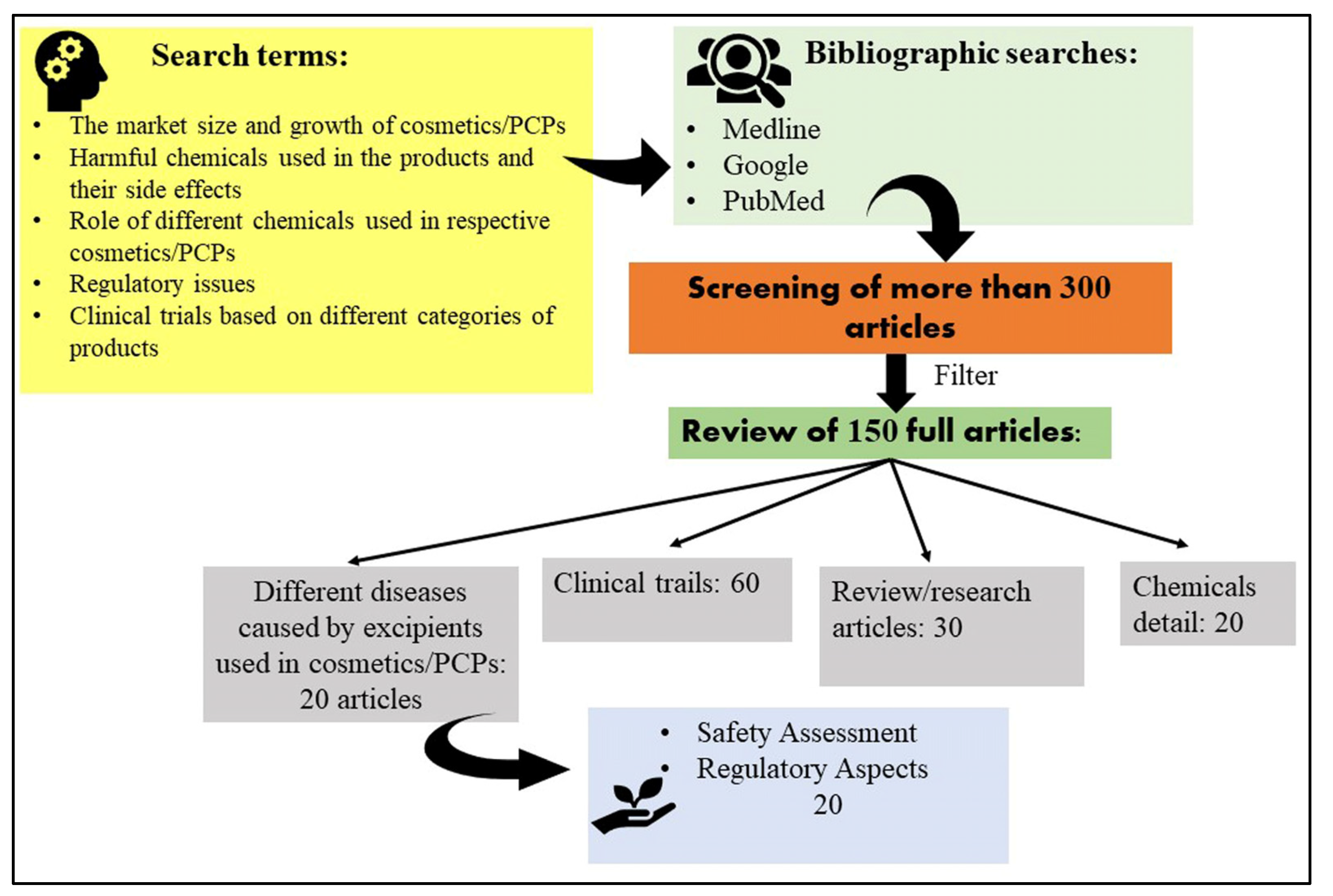
The high demand for cosmetics/PCP worldwide at all age groups has also elevated awareness associated with safety issues. In this review, a focus has been made on chemicals found in cosmetics/PCPs that are toxic and harmful to human health. This paper also highlights the regulatory issues and safety assessment of chemical ingredients and their related clinical trials. The search criteria of the key factors required in the given review have been mentioned in Figure 1.
Figure 1.
Searching criteria and filtration of literature.
1.1. Range of Personal Care or Topical Products
Personal care products include face wash, moisturizer, cotton swabs, eyeliner, lip balm, deodorant, cologne, sunscreen, etc. These are applied to improve or maintain the physical appearance of the user [16]. These products are either cleansers or dermally applied cream or lotion (sunscreen, moisturizer, etc.,) for different purposes to clean or to protect the skin from sunburn, dryness, and dust particles [17]. Additionally, they are used for facial makeovers are intended to beautify the look. In the modern lifestyle, consumers are diverting toward natural ingredient-based products with limited toxicity of natural compounds. However, herbal cosmetics also contain other synthetic chemicals such as parabens, artificial colorants, stabilizers, and emulsifiers, etc., [18]. These are not safe for humans and can cause serious health issues. Chemicals such as phenol, triclosan, parabens, ether could cause endocrine disorders, neurological disorders, and risk of other diseases [19]. The cosmetic industry is still growing and has some keys drivers for the growth areas.
1.2. Market Size and Growth
In 2019, world’s beauty care industry had a capital of USD 532 billion [20]. In 2019, the biggest consumer was the United States (US) which occupies 20% of the overall market size; China occupied the second position and third position by Japan with a market percentage of 13% and 8%, respectively. The cosmetic industry is expected to reach USD 800 billion by the year 2025 with a CAGR (compound annual growth rate) of 5–7% [21]. The cosmetic industry is the largest sector under the beauty care industry. Top leading companies are L’Oreal, Unilever, Estee Lauder, Coty, Proctor, and gamble. In the year 2018–2019, the Indian cosmetic market was valued at USD 6.5 billion. The top leading companies in India are Boutique, Lotus, Patanjali, Coach, Estee Lauder Companies Inc. [22] According to recent data, the market growth size of cosmetic industries increased through the increment in consumer’s income and urbanization, increment in consumer demand, lifestyle modification, rising interest in male grooming, and also increased demand for natural or bio-based products [23].
1.3. Harmful Chemicals Present in the Products
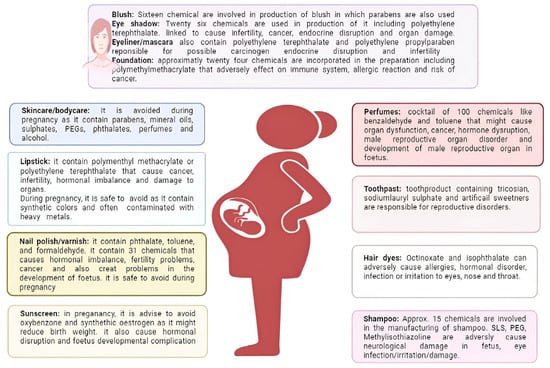
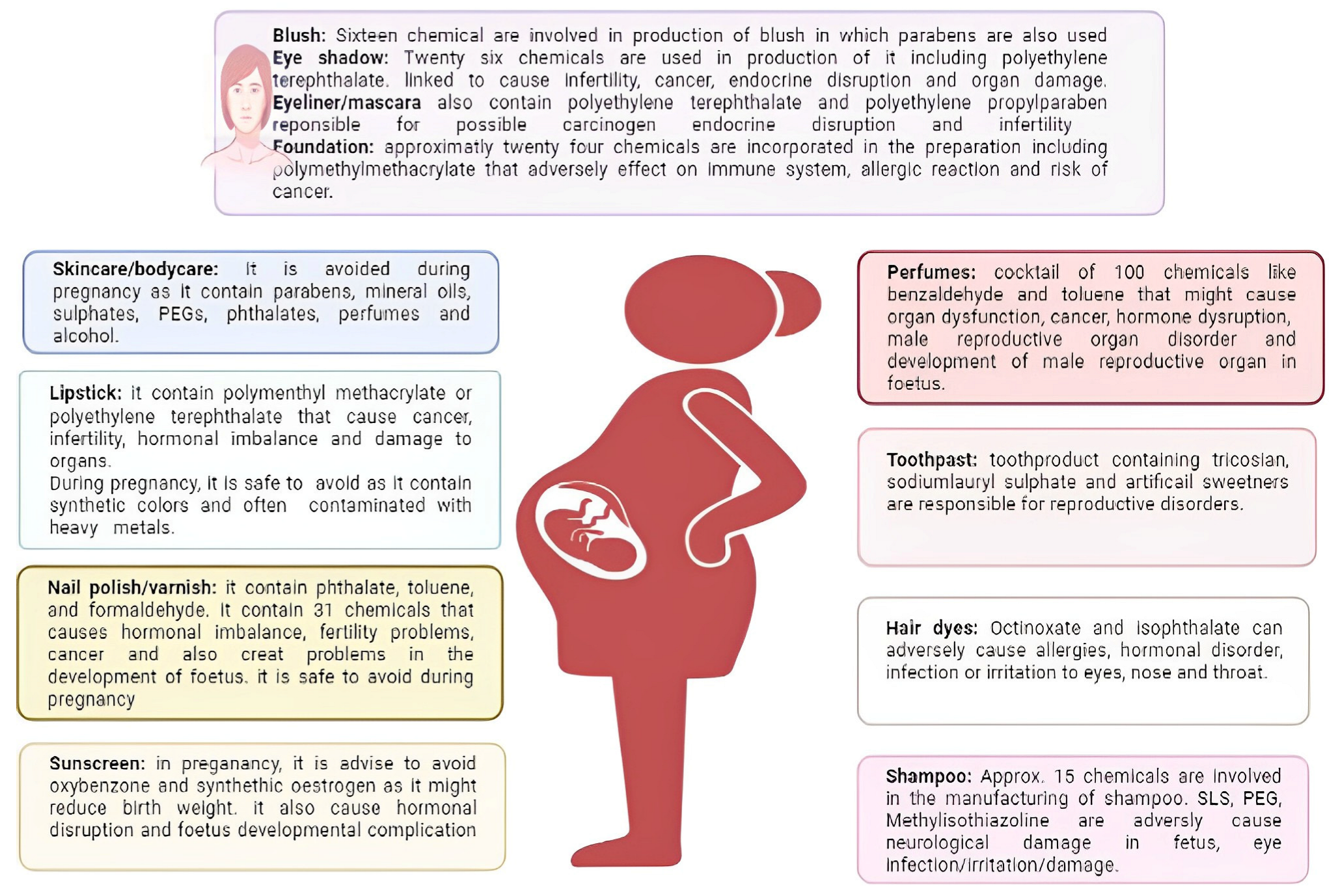
Despite all the positivitiess of cosmetics, we need to focus on safety measures of these hazards as it is a matter of human health. Chemicals and other ingredients present in these products can be hazardous [24]. A lot of these chemicals used as preservatives, UV filters, color additives, etc., can cause cancer, mutation, developmental and reproductive toxicity, endocrine disruption, etc., [25]. Most of the cosmetic products are applied on the skin, which results in the toxic/harmful chemicals penetrating the stratum corneum barrier and reaching the dermis of the human skin, and may further reach the systemic circulation [26]. Hence, it is capable of disrupting fertility during pregnancy and causing female reproductive disorders as shown in Figure 2. All the ingredients in the beauty products meet certain regulatory obligations, but some ingredients are allowed at low concentrations due to their toxicity at higher concentrations. Facial wash or cleansers might not be ideally safe for regular use on or around the delicate and specialized dermal layer of eyelids. These face wash/cleansers contain sodium lauryl sulfates that remove delicate natural oil/moisture on eyelids by evaporation [27]. Globally, lip care products are high-selling cosmetic products in the modern era used to enhance self-esteem and make attractiveness, and moisturize the lips. In lip care products, chemicals such as dye, mineral mica, colorant, and shiner are incorporated during manufacturing to develop high-quality products and boost its effect. These chemicals contain trace metals such as antimony, arsenic, copper, etc., [28] can cause severe adverse effects. Regular long-term use of lip care cosmetic reveal that when these trace metals are used in high quantity they can penetrate the systemic blood circulation causing damage of various organs [29].
Figure 2.
Cosmetic products/PCP which are routinely used by young women and pregnant women possess hazardous chemicals that can cause severe complications.
2. Major Health Concerns
2.1. Cancer
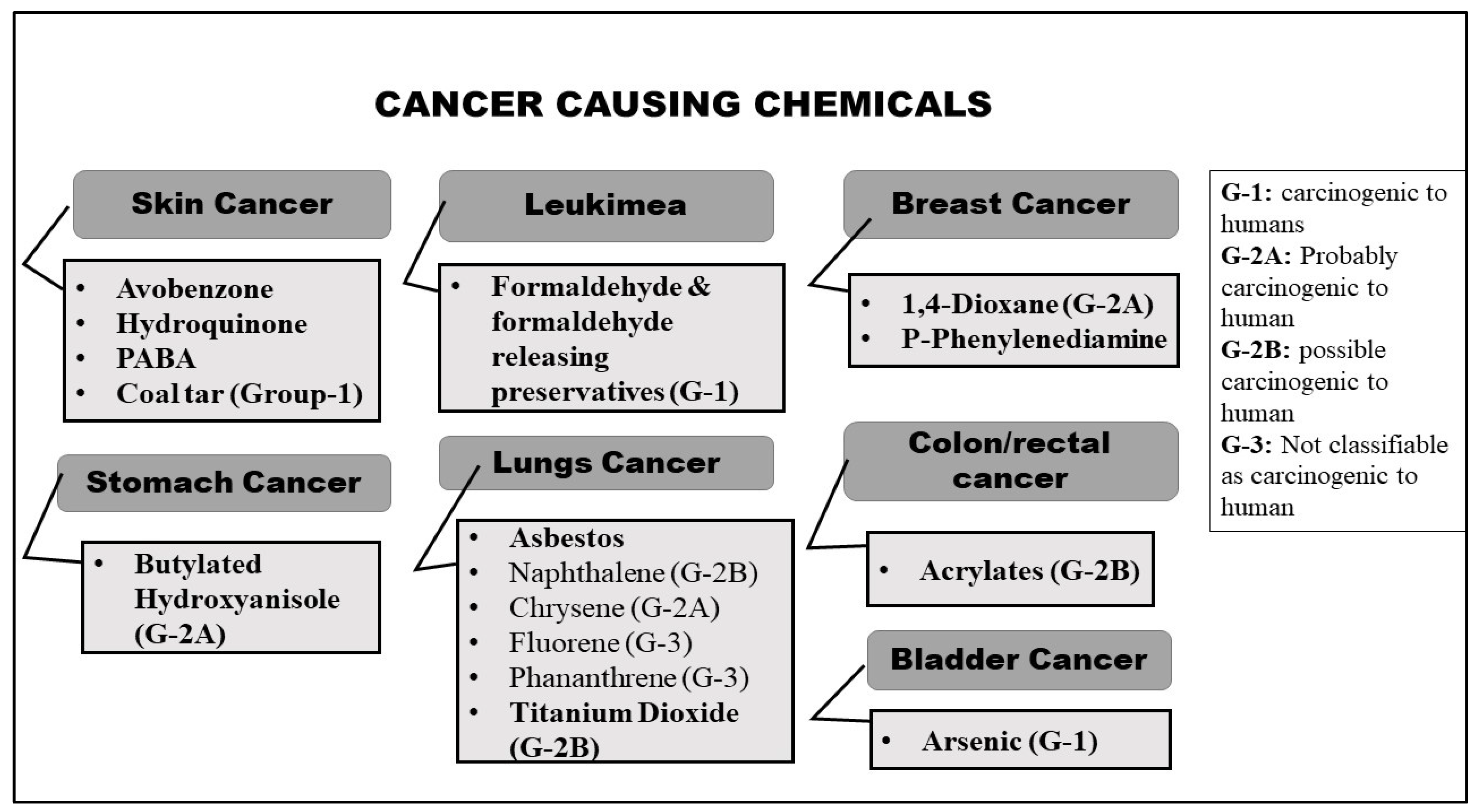
Cancer is a disease in which aberrant cells divide with no control and conquer nearby cells and tissues. Chemicals that are used in beauty care products either directly show carcinogenic effects or have a risk of causing cancer [14]. Fluorene and phenanthrene (group 3) along with naphthalene (group 2B), chrysene (group 2A), and titanium dioxide (group 2B) are carcinogenic agents capable of inducing lung cancer; however, other chemicals such as naphthalene, N-nitrosodiethanolamine (group 2A) can develop liver cancer. Similarly, chemicals such as butylatedhydroxyanisole (group 2A) can cause stomach cancer [30]. Formaldehyde and formaldehyde-releasing preservatives (group1) can cause leukemia (blood cancer). Some chemicals such as avobenzone, hydroquinone, and PABA present in the sunscreens are not carcinogenic but can increase the risk of having skin cancer, while coal tar (group 1) is carcinogenic that can cause skin cancer as shown in Figure 3 [31]. 1,4-Dioxane (group 2A) present in hair products can cause breast cancer, while p-phenylenediamine present in hair dyes can increase the risk of skin cancer [28]. Arsenic (group 1) can cause bladder cancer, and acrylates (group 2B) in nail products can cause colorectal cancer [29].
Figure 3.
Range of toxic chemicals used in cosmetic/personal care products which causes cancer.
2.2. Organ System Toxicity
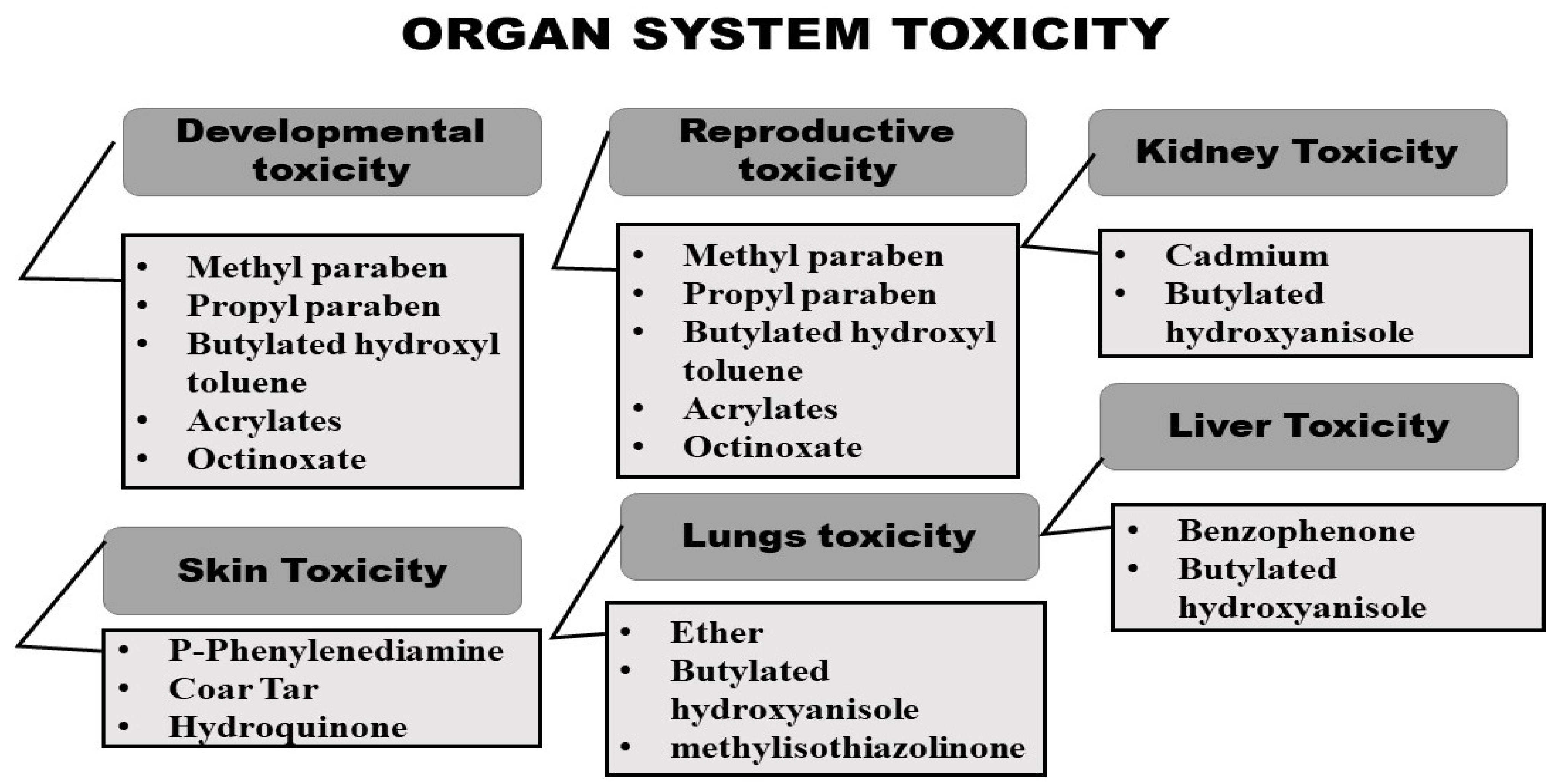
Harmful ingredients present in beauty care products can accumulate in our bodies and might cause organ system toxicity [32]. As can be seen in Table 2 and Figure 4, many ingredients can cause various types of organ system toxicity. Substances such as methylparaben, propylparaben, butylated hydroxy-toluene, acrylates, and octinoxate (present in shampoos, sunscreen, and nail products) can cause developmental toxicity [33]. Substances such as p-phenylenediamine, coal tar, and hydroquinone can cause skin toxicity. Butylated hydroxy-anisole and cadmium can cause renal toxicity [34]. Methylparaben, propylparaben, acrylates, and octinoxate can also cause reproductive toxicity. Ingredients such as ether, butylated hydroxy-anisole, and methylisothiazolinone (used in hair products) possess risk of causing lung toxicity while benzophenone can cause liver toxicity [35].
Figure 4.
Range of toxic chemicals used in cosmetic/personal care products causes organs/tissues toxicity.
2.3. Endocrine Disruption
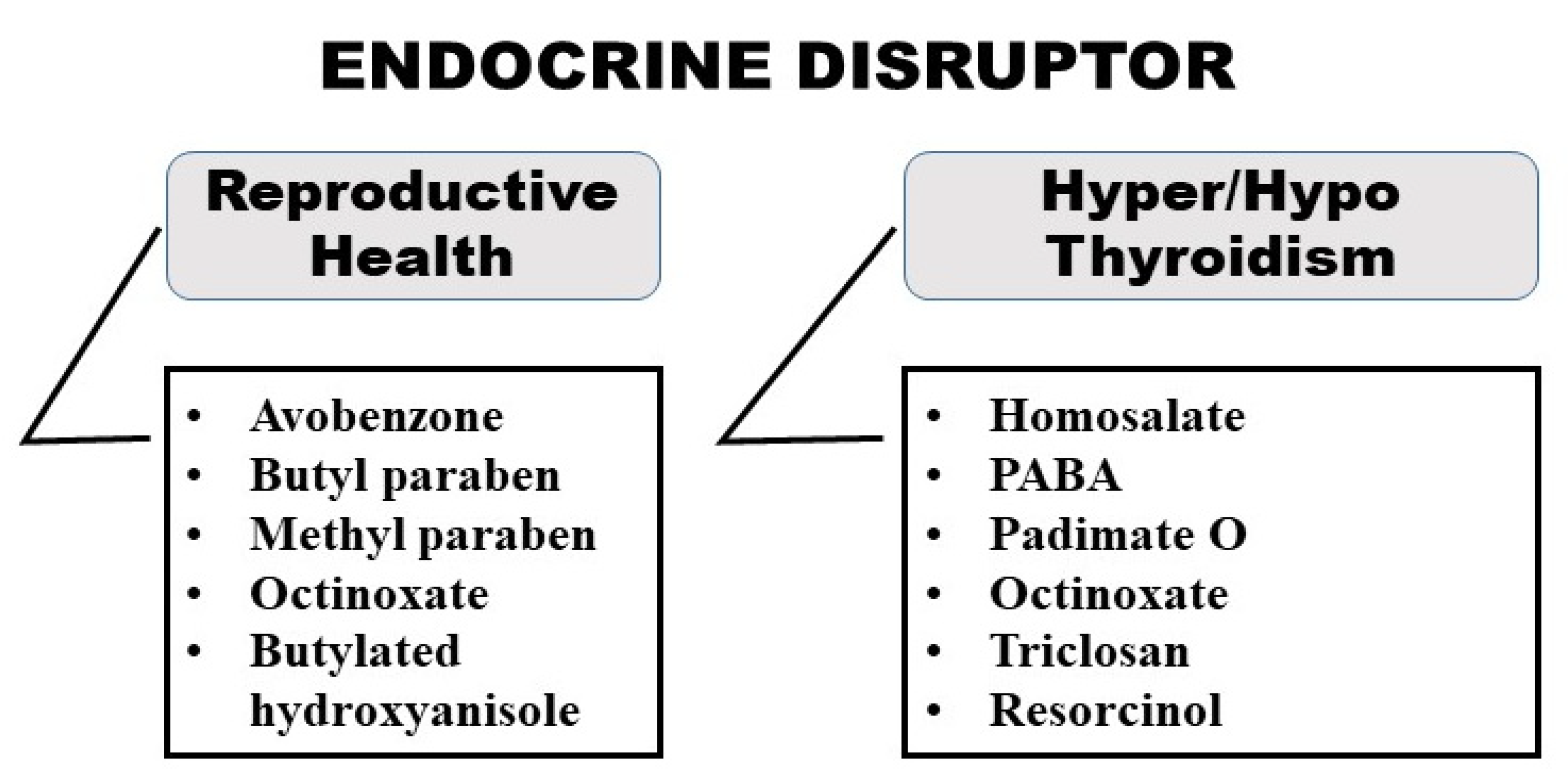
Endocrine disruptors are chemical substances that are capable of disrupting hormonal signals thus affecting the reproductive and nervous systems. Various grades of phthalate can prevent the synthesis of testosterone, while antimicrobial agents (triclosan) cause hypothyroidism [36]. We can generalize endocrine disruptors present in beauty products in two parts namely reproductive health endocrine disruptor and thyroid endocrine disruptor, as shown in Figure 5. Ingredients such as avobenzone, butylparaben, methylparaben, octinoxate, and butylatedhydroxyanisole (present in sunscreen and hair products) are reproductive health endocrine disruptors and can cause fertility abnormalities, skewed sex ratio, and in females can also cause menstrual problems [37]. Chemicals such as PABA, padimate O, homosalate, triclosan, octinoxate, and resorcinol can disrupt the thyroid hormone and can cause hyperthyroidism or hypothyroidism. Generally, there are no metabolic disruptors present in any beauty care products [38]. In a a study on the examination of urine samples of a specified group of adults, in more than 96% of the samples methyl/propylparaben was obtained. Several other studies have also reported the high concentration of parabens in various products, dermal penetrability, and its toxic effects [39].
Figure 5.
Range of chemicals used in cosmetic/PCPs can cause endocrine disruption.
2.4. Allergies, Irritation, and Asthma
Allergies are the body’s immune system shows hypersensitive response to a foreign substance (harmful or harmless). Different people present different kinds of reactions to similar allergens. Skin allergies are one of the most common side effects of cosmetic or beauty care products. Allergic reactions could also be occurring by some chemicals that are common in cosmetics manufacturing, like alcohol (in shampoos, lotions), isothiazolinones (preservatives added in shampoos and body wash), butylated hydroxytoluene (preservative in hair products), and ether (as an impurity in hair products) [36].
2.5. Other (Cellular and Neurological Damage, Ochronosis, Sensitization)
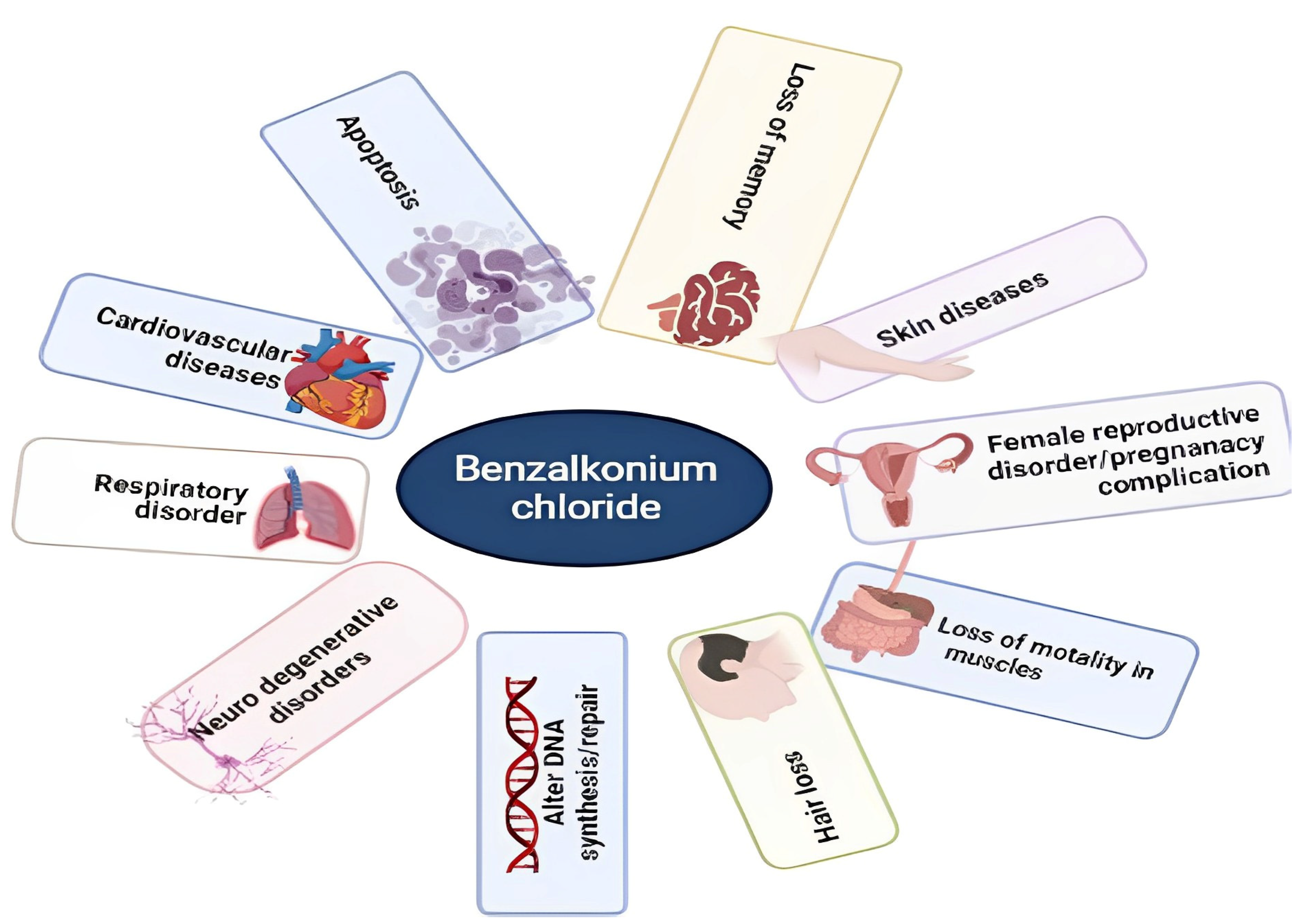
Other health issue that can be caused by using beauty care products are ochronosis caused by hydroquinone (present in skin lightener and facial moisturizer), chemicals such as oxybenzone (present in sunscreen), diethanolamine (present in soap and shampoos), padimate-O (present in sunscreen), coal tar (present in shampoos and hair dyes) can cause bioaccumulation [40]. P-phenylenediamine and benzalkonium chloride are mutagenic, acrylates can cause cellular and neurological damage, mercury present in eye area products can cause mercury poisoning, and methylisothiazolinone (present in shampoos as preservatives) can cause neuroticism as mentioned in Figure 6 [23].
Figure 6.
Severe complications caused by benzalkonium chloride commonly used in cosmetic/personal care products.
3. Regulatory Issues
In USA, cosmetics regulation comes under FDA and is authorized by the Federal Food, Drug, and Cosmetic Act (FD & C Act) and Fair Packaging and Labeling Act (FPLA). Except for color additives, all the manufacturing items and excipients do not require any FDA premarket approval [31]. Manufacturers have the legal authority to guarantee the safety of products [41]. Based on the Safe Cosmetic and Personal Care Product Act, manufacturing brand holders in the USA have to register and renew annually and deposit actual data of excipients used in cosmetic products. In 2013, a subcommittee of workforce protection was referred by the secretary of health and human services [42,43]. Complete information on various chemicals used in cosmetics/personal care products including their major health concern and regulatory status are shown in Table 2.
4. Safety-Based Global Clinical Trials of Personal Care Products
In clinical trials, research is carried out on people to study the effect of new tests and treatments in order to observe and evaluate their effects on the human body. These trials include a test of new drugs, surgical treatment, biological products, etc., on people volunteering to take part in these clinical trials [44]. These clinical trials first have to be approved by the respective authorities of that country. Clinical trials have four phases: Phase (1) when the trial is carried out on healthy volunteers; phase (2) when the trial is carried out on a small population of the diseased patient; in the third and fourth phases, the test is approved for human use on a large populationto check its effect on the human body in a longer time frame [45]. Global data of clinical trials of cosmetics/PCPs are shown in Table 3a–c.
Table 2.
Range of chemicals used in cosmetics/personal care products and their major health concern and regulatory status.
Table 3.
(a): Safety-based global clinical trials of sunscreen products. (b): Safety-based global clinical trials of baby products. (c): Safety-based global clinical trials of skin care/other products.
5. Safety Assessment of Excipient Used in Cosmetic/Personal Care Products
In the analysis of risk, safety margin (infertility factors) is determined in the last step of safety assessment. According to WHO, a minimum value of 100 is required for margin of safety (MoS) is required to accept the compound for minimum adverse effect/safety purpose and their equation is shown below [45].
NOAEL is the maximum amount of dose from which no treatment-related side effects are observed. The SED of a personal care product is the predicted amount that enters into the blood circulation and is expressed as mg/kg BW/day. Whereas SED is expressed as % of component penetrating the skin as shown in the equation.
Cosmetic ingredient review (CIR) was organized by the PCPC (Personal Care Product Council) Expert panel of CIR and constitutes industry representatives, toxicologists, dermatologists, and chemists [29]. The purpose of the meetings is to re-evaluate all the published and unpublished research, industry data, the literature on all chemicals of cosmetics being determined to check the safety of chemicals that are involved in the formulation of cosmetics [146]. Furthermore, based on the voting system, safety evaluations are finalized and concluded and then published in peer-reviewed journals. Documents of guidance are developed and followed for the cosmetics/ personal care products manufacturing and quality assurance unit [3].
The scientific committee on consumer safety is a self-governing body that is capable to suggest the European Commission. By risk assessment process, it also delivers the guidelines for characterizing and analyzing of the safety of cosmetics [147]. International Council of Chemical Associations is responsible to publish guidance on risk assessment of chemicals which govern the comprehensive strategy used to appraise risk factors of chemicals that are incorporated in cosmetics. Guidance documents are published to meet the criteria for the development of safe products and for the betterment of health worldwide [148]. Another framework, the International Fragrance Association (IFRA) was implemented to design and publish the standard safety guidelines for the use of fragrance ingredients and components in a wide range of cosmetic/personal care products. The standard of fragrance components is developed by IFRA with regard to risk assessment strategies that facilitate recently applied level, category of cosmetic item, and exposure potency during application along with scientists of Research Institute for Fragrance Materials [149]. Evaluation and conclusion are appraised by advisory experts including skin specialists, physicians, toxicologists, and other required scientists. Analyzed data that are published in peer review journals and standard criteria of IFRA for fragrance components are also uploaded on the website. The Flavor and Expert Manufacturers Association (FEMA) research scientists rely on a structurally similar group of chemicals as functional materials of its risk assessment strategies for food flavoring compounds [150].
6. Conclusions
The human body is exposed to various chemical substances. A substantial amount of hazardous chemicals are being used in the preparation of cosmetic products such as preservatives, perfumery, surfactant, colorant, and other excipients. Most of these chemicals possess toxicity and are known to cause various complications. For human grade products, there is a requirement to follow legal or regulatory guidelines and risk assessment to cover all possible aspects of using chemicals in cosmetics and PCPs. In some cases, if any ingredient exceeds the limits, especially in case of children or pregnant ladies, it can cause permanent damage to the skin, internal organs, as well as the brain. Many of these ingredients present in body care products can even cause cancer, neural damage, and permanent skin disorders.
According to the authors, the guidelines pertaining to safety should be made stringent and the compliance should be made mandatory. It is a general practice that products are granted marketing authorization on the basis of safety information or data of ingredients. However, there should also be a safety assessment of product as a whole. In the given point of view, the generation of preclinical data becomes mandatory but there are ethical concerns of using animals for the same. It can be addressed by using in vitro tools such as cell line studies, artificially generated skin models etc. The authors also suggest to put pharmacovigilance system in place for cosmetic products. The group is already working in this direction, and a survey study in this regard is also in process.
Author Contributions
Conceptualization, M.K. and U.F.; methodology, M.K.; software, M.S.A.; validation, M.A.M. and Z.I.; writing—original draft preparation, M.K.; writing—review and editing, U.F.; M.J.A. visualization, M.J.A.; supervision, M.A.M.; project administration, Z.I.; funding acquisition, M.J.A. All authors have read and agreed to the published version of the manuscript.
Funding
This research received no external funding.
Institutional Review Board Statement
Not applicable.
Informed Consent Statement
Not applicable.
Data Availability Statement
Not applicable.
Acknowledgments
The authors are highly grateful to the Jamia Hamdard University, New Delhi, India for all its support.
Conflicts of Interest
The authors declare no conflict of interest.
References
- Gupta, V.; Mohapatra, S.; Mishra, H.; Farooq, U.; Kumar, K.; Ansari, M.J.; Aldawsari, M.F.; Alalaiwe, A.S.; Mirza, M.A.; Iqbal, Z. Nanotechnology in cosmetics and cosmeceuticals—A review of latest advancements. Gels 2022, 8, 173. [Google Scholar] [CrossRef] [Scilit] [PubMed]
- Tripathy, S.; Dureja, H. Cosmetics: Regulatory Scenario in USA, EU and India. J. Pharm. Technol. Res. Manag. 2015, 3, 127–139. [Google Scholar] [CrossRef] [Scilit]
- Lintner, K. Global Regulatory Issues for the Cosmetics Industry; Elsevier: Amsterdam, The Netherlands, 2009. [Google Scholar]
- Fonseca-Santos, B.; Corrêa, M.A.; Chorilli, M. Sustainability, Natural and Organic Cosmetics: Consumer, Products, Efficacy, Toxicological and Regulatory Considerations. Braz. J. Pharm. Sci. 2015, 51, 17–26. [Google Scholar] [CrossRef] [Scilit]
- U.S. Food & Drug Administration. Guidance for Industry: Safety of Nanomaterials in Cosmetic Products; U.S. Food & Drug Administration: Silver Spring, MD, USA, 2014; p. 9. Available online: https://www.fda.gov/regulatory-information/search-fda-guidance-documents/guidance-industry-safety-nanomaterials-cosmetic-products (accessed on 20 December 2022).
- Kim, B.; Cho, H.-E.; Moon, S.H.; Ahn, H.-J.; Bae, S.; Cho, H.-D.; An, S. Transdermal Delivery Systems in Cosmetics. Biomed. Dermatol. 2020, 4, 1–12. [Google Scholar] [CrossRef] [Scilit]
- Danziger, P.N. 6 Trends Shaping the Future of the $532 B Beauty Business. Forbes Magazine. 2019. Available online: https://www.forbes.com/sites/pamdanziger/2019/09/01/6-trends-shaping-the-future-of-the-532b-beauty-business/?sh=474ef85d588d (accessed on 23 May 2022).
- Panico, A.; Serio, F.; Bagordo, F.; Grassi, T.; Idolo, A.; De Giorgi, M.; Guido, M.; Congedo, M.; De Donno, A. Skin Safety and Health Prevention: An Overview of Chemicals in Cosmetic Products. J. Prev. Med. Hyg. 2019, 60, E50. [Google Scholar]
- Chauhan, P.; Mendonica, M. Role of Regulatory Authorities on the Working of Contract Research Organization and Pharmaceutical Company’s Clinical Trials in India: A Study of Strategic Alliances between Pharmaceutical Companies and Clinical Research Organisations in India. Asia Pac. J. Health Manag. 2021, 16, 87–91. [Google Scholar] [CrossRef] [Scilit]
- Malik, A.; Claoué, C. Transport and Interaction of Cosmetic Product Material within the Ocular Surface: Beauty and the Beastly Symptoms of Toxic Tears. Contact Lens Anterior Eye 2012, 35, 247–259. [Google Scholar] [CrossRef] [Scilit]
- Semwal, S.; Rani, E.; Verma, V. Impact Assessment of Goods and Services Tax (GST) on Shopkeepers. Adv. Res. 2020, 21, 1–9. [Google Scholar] [CrossRef] [Scilit]
- Navabhatra, A.; Maniratanachote, R.; Yingngam, B. Antiphotoaging Properties of Zingiber Montanum Essential Oil Isolated by Solvent-Free Microwave Extraction against Ultraviolet B-Irradiated Human Dermal Fibroblasts. Toxicol. Res. 2021, 38, 1–14. [Google Scholar] [CrossRef] [Scilit]
- Bilal, M.; Mehmood, S.; Iqbal, H. The Beast of Beauty: Environmental and Health Concerns of Toxic Components in Cosmetics. Cosmetics 2020, 7, 13. [Google Scholar] [CrossRef] [Scilit]
- Okereke, J.; Udebuani, A.; Ezeji, E.; Obasi, K.; Nnoli, M. Possible Health Implications Associated with Cosmetics: A Review. Sci. J. Public Health 2015, 3, 58. [Google Scholar]
- Adepoju-Bello, A.A.; Oguntibeju, O.O.; Adebisi, R.; Okpala, N.; Coker, H. Evaluation of the Concentration of Toxic Metals in Cosmetic Products in Nigeria. Afr. J. Biotechnol. 2012, 11, 16360–16364. [Google Scholar]
- Nasto, B. Biotech at the Beauty Counter. Nat. Biotechnol. 2007, 25, 617–620. [Google Scholar] [CrossRef] [Scilit] [PubMed]
- Klaschka, U. Trust, but Verify! Personal Care Products in the Rapid Alert System Database RAPEX. Sustain. Chem. Pharm. 2017, 5, 30–41. [Google Scholar] [CrossRef] [Scilit]
- Kala, C.P. Medicinal and Aromatic Plants: Boon for Enterprise Development. J. Appl. Res. Med. Aromat. Plants 2015, 2, 134–139. [Google Scholar] [CrossRef] [Scilit]
- Burger, P.; Landreau, A.; Azoulay, S.; Michel, T.; Fernandez, X. Skin whitening cosmetics: Feedback and challenges in the development of natural skin lighteners. Cosmetics 2016, 3, 36. [Google Scholar] [CrossRef] [Scilit]
- Abrar, M.; Iqbal, T.; Fahad, M.; Andleeb, M.; Farooq, Z.; Afsheen, S. Determination of Hazardous Ingredients in Personal Care Products Using Laser-Induced Breakdown Spectroscopy. Laser Phys. 2018, 28, 056002. [Google Scholar] [CrossRef] [Scilit]
- Siddanthi, P. Analysis of Indian Cosmetic Brands over International Cosmetic Brands; Politecnico: Milano, Italy, 2019. [Google Scholar]
- Kajapriya, R.; Surya, R. An Analysis on Insight of Women Consumer’s towards Cosmetic Products. Int. J. Manag. Res. Rev. 2015, 5, 246. [Google Scholar]
- Hashim, P. and Hashim, D.. A review of cosmetic and personal care products: Halal perspective and detection of ingredient. Pertanika J. Sci. Technol. 2013, 21, 281–292. [Google Scholar]
- Gao, P.; Lei, T.; Jia, L.; Yury, B.; Zhang, Z.; Du, Y.; Feng, Y.; Xing, B. Bioaccessible Trace Metals in Lip Cosmetics and Their Health Risks to Female Consumers. Environ. Pollut. 2018, 238, 554–561. [Google Scholar] [CrossRef] [Scilit]
- Gao, P.; Liu, S.; Zhang, Z.; Meng, P.; Lin, N.; Lu, B.; Xing, B. Health impact of bioaccessible metal in lip cosmetics to female college students and career women, northeast of China. Environ. Pollut. 2015, 197, 214–220. [Google Scholar] [CrossRef] [Scilit] [PubMed]
- Braun, J.M.; Just, A.C.; Williams, P.L.; Smith, K.W.; Calafat, A.M.; Hauser, R. Personal Care Product Use and Urinary Phthalate Metabolite and Paraben Concentrations during Pregnancy among Women from a Fertility Clinic. J. Expo. Sci. Environ. Epidemiol. 2014, 24, 459–466. [Google Scholar] [CrossRef] [Scilit] [PubMed]
- Rinaldi, A. Healing Beauty? More Biotechnology Cosmetic Products That Claim Drug-like Properties Reach the Market. EMBO Rep. 2008, 9, 1073–1077. [Google Scholar] [CrossRef] [Scilit]
- Harp, B.; Barrows, J. US Regulation of Color Additives in Foods. In Colour Additives for Foods and Beverages; Elsevier: Amsterdam, The Netherlands, 2015; pp. 75–88. [Google Scholar]
- Alam, M.; Akhter, M.; Mazumder, B.; Ferdous, A.; Hossain, M.; Dafader, N.; Ahmed, F.; Kundu, S.; Taheri, T.; Ullah, A.A. Assessment of Some Heavy Metals in Selected Cosmetics Commonly Used in Bangladesh and Human Health Risk. J. Anal. Sci. Technol. 2019, 10, 1–8. [Google Scholar] [CrossRef] [Scilit]
- Zhong, Z.; Li, G. Current Trends in Sample Preparation for Cosmetic Analysis. J. Sep. Sci. 2017, 40, 152–169. [Google Scholar] [CrossRef] [Scilit] [PubMed]
- Bocca, B.; Pino, A.; Alimonti, A.; Forte, G. Toxic Metals Contained in Cosmetics: A Status Report. Regul. Toxicol. Pharmacol. 2014, 68, 447–467. [Google Scholar] [CrossRef] [Scilit]
- Oishi, S. Effects of Propyl Paraben on the Male Reproductive System. Food Chem. Toxicol. 2002, 40, 1807–1813. [Google Scholar] [CrossRef] [Scilit]
- Mínguez-Alarcón, L.; Bellavia, A.; Gaskins, A.; Chavarro, J.; Ford, J.; Souter, I.; Calafat, A.; Hauser, R.; Williams, P.; EARTH Study Team. Paternal mixtures of urinary concentrations of phthalate metabolites, bisphenol A and parabens in relation to pregnancy outcomes among couples attending a fertility center. Environ. Int. 2021, 146, 106171. [Google Scholar] [CrossRef] [Scilit]
- Ghosh, J.; Das, J.; Manna, P.; Sil, P.C. Hepatotoxicity of Di-(2-Ethylhexyl) Phthalate Is Attributed to Calcium Aggravation, ROS-Mediated Mitochondrial Depolarization, and ERK/NF-ΚB Pathway Activation. Free Radic. Biol. Med. 2010, 49, 1779–1791. [Google Scholar] [CrossRef] [Scilit]
- Yang, C.; Lim, W.; Bazer, F.W.; Song, G. Butyl Paraben Promotes Apoptosis in Human Trophoblast Cells through Increased Oxidative Stress-induced Endoplasmic Reticulum Stress. Environ. Toxicol. 2018, 33, 436–445. [Google Scholar] [CrossRef] [Scilit]
- Dodson, R.E.; Nishioka, M.; Standley, L.J.; Perovich, L.J.; Brody, J.G.; Rudel, R.A. Endocrine Disruptors and Asthma-Associated Chemicals in Consumer Products. Environ. Health Perspect. 2012, 120, 935–943. [Google Scholar] [CrossRef] [Scilit]
- Choi, S.M.; Roh, T.H.; Lim, D.S.; Kacew, S.; Kim, H.S.; Lee, B.-M. Risk Assessment of Benzalkonium Chloride in Cosmetic Products. J. Toxicol. Environ. Health Part B 2018, 21, 8–23. [Google Scholar] [CrossRef] [Scilit] [PubMed]
- Jung, C.; Son, A.; Her, N.; Zoh, K.-D.; Cho, J.; Yoon, Y. Removal of Endocrine Disrupting Compounds, Pharmaceuticals, and Personal Care Products in Water Using Carbon Nanotubes: A Review. J. Ind. Eng. Chem. 2015, 27, 1–11. [Google Scholar] [CrossRef] [Scilit]
- Pop, A.; Kiss, B.; Loghin, F. Endocrine Disrupting Effects of Butylated Hydroxyanisole (BHA-E320). Clujul Med. 2013, 86, 16. [Google Scholar]
- Jones, G. Globalization and Beauty: A Historical and Firm Perspective. EurAmerica 2011, 41, 885–916. [Google Scholar]
- Brody, T. Food and Dietary Supplement Package Labeling—Guidance from FDA’s Warning Letters and Title 21 of the Code of Federal Regulations. Compr. Rev. Food Sci. Food Saf. 2016, 15, 92–129. [Google Scholar] [CrossRef] [Scilit] [PubMed]
- Reddy, G.T.K.; Reddy, G.N.K. Significance of Pharmaceutical Regulatory Bodies-a Review. PharmaTutor 2017, 5, 15–22. [Google Scholar]
- Miernicki, M.; Hofmann, T.; Eisenberger, I.; von der Kammer, F.; Praetorius, A. Legal and Practical Challenges in Classifying Nanomaterials According to Regulatory Definitions. Nat. Nanotechnol. 2019, 14, 208–216. [Google Scholar] [CrossRef] [Scilit]
- Abellán, E.F.G.; Pérez, D.M. Quality Control of Cosmetic Products: Specific Legislation on Ingredients. In Analysis of Cosmetic Products; Elsevier: Amsterdam, The Netherlands, 2018; pp. 39–53. [Google Scholar]
- Nohynek, G.J.; Antignac, E.; Re, T.; Toutain, H. Safety Assessment of Personal Care Products/Cosmetics and Their Ingredients. Toxicol. Appl. Pharmacol. 2010, 243, 239–259. [Google Scholar] [CrossRef] [Scilit]
- Acrylates. Available online: https://www.safecosmetics.org/get-the-facts/chemicals-of-concern/2978/ (accessed on 16 September 2021).
- P-Phenylenediamine. Available online: https://www.safecosmetics.org/get-the-facts/chemicals-of-concern/p-phenylenediamine/ (accessed on 16 September 2021).
- Diazolidinyl Urea|Cosmetics Info. Available online: https://cosmeticsinfo.org/ingredient/diazolidinyl-urea-0 (accessed on 16 September 2021).
- p-Phenylenediamine|Cosmetics Info. Available online: https://cosmeticsinfo.org/ingredient/p-phenylenediamine (accessed on 16 September 2021).
- Talc. Available online: https://www.safecosmetics.org/get-the-facts/chemicals-of-concern/talc/ (accessed on 16 September 2021).
- Benzophenone & Related Compounds-Safe Cosmetics. Available online: https://www.safecosmetics.org/get-the-facts/chemicals-of-concern/benzophenone/ (accessed on 12 September 2021).
- CFR—Code of Federal Regulations Title 21. Available online: https://www.accessdata.fda.gov/scripts/cdrh/cfdocs/cfcfr/CFRSearch.cfm?CFRPart=352&showFR=1 (accessed on 16 September 2021).
- Commission Regulation (EU) 2017/238-of 10 February 2017-Amending Annex VI to Regulation (EC) No 1223/2009 of the European Parliament and of the Council on Cosmetic Products 2. Available online: https://eur-lex.europa.eu/legal-content/EN/TXT/HTML/?uri=CELEX:02009R1223-20220301&qid=1653495150566&from=en (accessed on 16 September 2021).
- Butylated Compounds. Available online: https://www.safecosmetics.org/get-the-facts/chemicals-of-concern/butylated-compounds/ (accessed on 16 September 2021).
- Coal Tar. Available online: https://www.safecosmetics.org/get-the-facts/chemicals-of-concern/coal-tar/ (accessed on 16 September 2021).
- Ethanolamine Compounds (MEA, DEA, TEA and Others). Available online: https://www.safecosmetics.org/get-the-facts/chemicals-of-concern/ethanolamine-compounds/ (accessed on 16 September 2021).
- Triethanolamine|Cosmetics Info. Available online: https://cosmeticsinfo.org/ingredient/triethanolamine (accessed on 16 September 2021).
- Phenoxyethanol. Available online: https://www.safecosmetics.org/get-the-facts/chemicals-of-concern/phenoxyethanol/ (accessed on 16 September 2021).
- Inactive Ingredient Search for Approved Drug Products. Available online: https://www.accessdata.fda.gov/scripts/cder/iig/index.Cfm?event=BasicSearch.page (accessed on 16 September 2021).
- 1,4-dioxane. Available online: https://www.safecosmetics.org/get-the-facts/chemicals-of-concern/14-dioxane/ (accessed on 16 September 2021).
- Formaldehyde And Formaldehyde-Releasing Preservatives. Available online: https://www.safecosmetics.org/get-the-facts/chemicals-of-concern/formaldehyde/ (accessed on 16 September 2021).
- Lead And Other Heavy Metals. Available online: https://www.safecosmetics.org/get-the-facts/chemicals-of-concern/lead-and-other-heavy-metals/ (accessed on 16 September 2021).
- Michalek, I.M.; Benn, E.K.T.; dos Santos, F.L.C.; Gordon, S.; Wen, C.; Liu, B. A Systematic Review of Global Legal Regulations on the Permissible Level of Heavy Metals in Cosmetics with Particular Emphasis on Skin Lightening Products. Environ. Res. 2019, 170, 187–193. [Google Scholar] [CrossRef] [Scilit]
- FDA’s Testing of Cosmetics for Arsenic, Cadmium, Chromium, Cobalt, Lead, Mercury, and Nickel Content. FDA 2020. Available online: https://www.fda.gov/cosmetics/potential-contaminants-cosmetics/fdas-testing-cosmetics-arsenic-cadmium-chromium-cobalt-lead-mercury-and-nickel-content (accessed on 20 December 2022).
- Resorcinol. Available online: https://www.safecosmetics.org/get-the-facts/chemicals-of-concern/resorcinol/ (accessed on 16 September 2021).
- CFR—Code of Federal Regulations Title 21. Available online: https://www.accessdata.fda.gov/scripts/cdrh/cfdocs/cfcfr/CFRSearch.cfm?fr=333.310 (accessed on 16 September 2021).
- CFR—Code of Federal Regulations Title 21. Available online: https://www.accessdata.fda.gov/scripts/cdrh/cfdocs/cfcfr/CFRSearch.cfm?fr=346.20 (accessed on 16 September 2021).
- Methylisothiazolinone and Methylchloroisothiazolinone. Available online: https://www.safecosmetics.org/get-the-facts/chemicals-of-concern/methylisothiazolinone/ (accessed on 16 September 2021).
- Burnett, C.L.; Boyer, I.; Bergfeld, W.F.; Belsito, D.V.; Hill, R.A.; Klaassen, C.D.; Liebler, D.C.; Marks, J.G.; Shank, R.C.; Slaga, T.J.; et al. Amended Safety Assessment of Methylisothiazolinone as Used in Cosmetics. Int. J. Toxicol. 2019, 38 (Suppl. S1), 70S–84S. [Google Scholar] [CrossRef] [Scilit] [PubMed]
- FDA to Set Limits on Use of MCI/MI, MI Preservatives—Taipei Times. Available online: http://www.taipeitimes.com/News/taiwan/archives/2013/11/19/2003577227 (accessed on 16 September 2021).
- Octinoxate—Safe Cosmetics. Available online: https://www.safecosmetics.org/get-the-facts/chemicals-of-concern/octinoxate/ (accessed on 16 September 2021).
- PABA. Available online: https://www.safecosmetics.org/get-the-facts/chemicals-of-concern/paba/ (accessed on 16 September 2021).
- PABA|Cosmetics Info. Available online: https://cosmeticsinfo.org/ingredient/paba-0 (accessed on 16 September 2021).
- PABA (Para-Aminobenzoic Acid)—Health Library. Available online: https://healthlibrary.epnet.com/GetContent.aspx?token=b07cead8-3508-47b4-a855-614f3d8eb5ee&chunkiid=21831 (accessed on 16 September 2021).
- Parabens. Available online: https://www.safecosmetics.org/get-the-facts/chemicals-of-concern/parabens/ (accessed on 16 September 2021).
- Hydroquinone—Safe Cosmetics. Available online: https://www.safecosmetics.org/get-the-facts/chemicals-of-concern/hydroquinone/ (accessed on 16 September 2021).
- Hydroquinone: Uses, Safety, Side Effects, OTC Products, Alternatives. Available online: https://www.healthline.com/health/beauty-skin-care/hydroquinone (accessed on 16 September 2021).
- Polyacrylamide. Available online: https://www.safecosmetics.org/get-the-facts/chemicals-of-concern/polyacrylamide-2/ (accessed on 16 September 2021).
- CFR—Code of Federal Regulations Title 21. Available online: https://www.accessdata.fda.gov/scripts/cdrh/cfdocs/cfcfr/CFRSearch.cfm?fr=74.2053 (accessed on 16 September 2021).
- Quaternium-15—Safe Cosmetics. Available online: https://www.safecosmetics.org/get-the-facts/chemicals-of-concern/quaternium-15/ (accessed on 16 September 2021).
- Homosalate—Safe Cosmetics. Available online: https://www.safecosmetics.org/get-the-facts/chemicals-of-concern/homosalate/ (accessed on 16 September 2021).
- Titanium Dioxide. Available online: https://www.safecosmetics.org/get-the-facts/chemicals-of-concern/titanium-dioxide-2/ (accessed on 16 September 2021).
- Titanium Dioxide|Cosmetics Info. Available online: https://cosmeticsinfo.org/ingredient/titanium-dioxide (accessed on 16 September 2021).
- CFR—Code of Federal Regulations Title 21. Available online: https://www.accessdata.fda.gov/scripts/cdrh/cfdocs/cfcfr/CFRSearch.cfm?fr=73.575 (accessed on 16 September 2021).
- Triclosan—Safe Cosmetics. Available online: https://www.safecosmetics.org/get-the-facts/chemicals-of-concern/triclosan/ (accessed on 16 September 2021).
- Food and Drug Administration (FDA). Assessment of the Human Systemic Absorption of Sunscreen Ingredients. Clinical Trial Registration NCT03582215. 2020. Available online: clinicaltrials.gov (accessed on 20 December 2022).
- Bayer. Supervised Outdoor-Use Test to Assess the Safety of a Sunscreen C-Spray, Bayer Sponsored, CC Products. Clinical Trial Registration NCT02857478. 2018. Available online: clinicaltrials.gov (accessed on 20 December 2022).
- Bayer. To Assess the Safety of a Sunscreen Product, BAY 987519, Bayer Sponsored, CC Products. Clinical Trial Registration NCT02803320. 2018. Available online: clinicaltrials.gov (accessed on 20 December 2022).
- Bayer. Evaluation of the Irritation Potential of Sunscreen Products in Human Eyes. Clinical Trial Registration NCT02854137. 2018. Available online: clinicaltrials.gov (accessed on 20 December 2022).
- Bayer. A Randomized Study to Assess the Potential for Phototoxicity of SPF 50 Y65 110, SPF 50 Y51 002 and SPF 15 V27-104 in Human Subjects. Clinical Trial Registration NCT02802930. 2018. Available online: clinicaltrials.gov (accessed on 20 December 2022).
- GlaxoSmithKline. Determination of the Sun Protection Factor of a Cosmetic Daily Defence Skin Cream. Clinical Trial Registration NCT03136107. 2019. Available online: clinicaltrials.gov (accessed on 20 December 2022).
- Bayer. Determination of Sun Protection Factors (PFA and SPF) in Sunscreen Formulas Containing Combinations of Zinc Oxide and Avobenzone. Clinical Trial Registration NCT01001975. 2015. Available online: clinicaltrials.gov (accessed on 20 December 2022).
- Galderma Laboratories, L.P. Cetaphil® Daily Facial Moisturizer with Sunscreen SPF 50+—Human Repeat Insult Patch Test Skin Irritation/Sensitization Evaluation (Semi-Occlusive Patch). Clinical Trial Registration NCT01892657. 2013. Available online: clinicaltrials.gov (accessed on 20 December 2022).
- GlaxoSmithKline, Clinical Study to Evaluate the Sun Protection Factor (SPF) of Sunscreen Products. Clinical Trial Registration number NCT05085327. 2021. Available online: clinicaltrials.gov (accessed on 4 November 2021).
- Bayer. Sun Protection Factor (SPF)/UVA Protection Factor (UVAPF) Assay. Clinical Trial Registration NCT02872246. 2018. Available online: clinicaltrials.gov (accessed on 20 December 2022).
- Bayer. Sun Protection Factor (SPF) Efficacy Assay. Clinical Trial Registration NCT02885805. 2018. Available online: clinicaltrials.gov (accessed on 20 December 2022).
- Kottner, P.D.J. An Exploratory Randomized Controlled Study to Evaluate the Effect of a Basic Skin Care Product on the Structural Strength of the Dermo-Epidermal Junction. Clinical Trial Registration NCT03625167. 2019. Available online: clinicaltrials.gov (accessed on 20 December 2022).
- Bayer. Supervised Outdoor-Use Test for Sunscreen Products in Adults. Clinical Trial Registration NCT02877511. 2018. Available online: clinicaltrials.gov (accessed on 20 December 2022).
- Bayer. Supervised Outdoor-Use Test for Sunscreen Products in Female Adults. Clinical Trial Registration NCT02779270. 2018. Available online: clinicaltrials.gov (accessed on 20 December 2022).
- GlaxoSmithKline. A Clinical Study in Infants to Assess the Tolerability of Three Wash Products. Clinical Trial Registration NCT02403999. 2018. Available online: clinicaltrials.gov (accessed on 20 December 2022).
- Galderma Laboratories, L.P. Tolerability of a Foaming Facial Cleanser and Moisturizer SPF 30 in a Pediatric Population (7–11) with Acne Prone Skin. Clinical Trial Registration NCT01909713. 2014. Available online: clinicaltrials.gov (accessed on 20 December 2022).
- Tangtrakulwanich, B. Efficacy of Baby Talcum in Prevention of Pruritus Assosiatedwith Cast. A Randomized Controlled Trial. Clinical Trial Registration NCT01017315. 2012. Available online: clinicaltrials.gov (accessed on 20 December 2022).
- Johnson & Johnson Consumer Inc. (J & JCI). A Randomized Controlled Trial of Gentle Touch/Early Massage with a New Wash and Lotion Regimen for Improved Skin Barrier Strength, Parental Bonding, and Physical Development in Newborn Babies: The Barrier Optimizing Skincare for Newborn Development (BOND) Trial. Clinical Trial Registration NCT03142984. 2021. Available online: clinicaltrials.gov (accessed on 20 December 2022).
- Arisa Kaewkes. The Effect of Bathing and Moisturizers on Skin Hydration in Atopic Dermatitis: An in vivo study. Clinical Trial Registration NCT02028546. 2014. Available online: clinicaltrials.gov (accessed on 20 December 2022).
- Bayer. 4 Week In-Use Study Evaluating the Tolerability of a Skin Care Product on Adults with Rosacea. Clinical Trial Registration NCT03841032. 2019. Available online: clinicaltrials.gov (accessed on 20 December 2022).
- Revision Skincare. A Randomized, Double-Blind, Placebo-Controlled Clinical Study to Evaluate the Efficacy and Safety of an Anti-Aging Serum in the Treatment of Facial Lines. Clinical Trial Registration NCT04545970. 2020. Available online: clinicaltrials.gov (accessed on 20 December 2022).
- Revision Skincare. A Double-Blind Split-Body Placebo-Controlled Clinical Study to Evaluate the Efficacy of a Cosmetic Product for Arm Firming. Clinical Trial Registration NCT04065035. 2019. Available online: clinicaltrials.gov (accessed on 20 December 2022).
- Burt’s Bees Inc. A Clinical Study to Evaluate the Safety and Efficacy of a Baby Cleanser and a Moisturizer Under the Supervision of Dermatologist and Pediatrician. Clinical Trial Registration NCT03719742. 2019. Available online: clinicaltrials.gov (accessed on 20 December 2022).
- GlaxoSmithKline. A Clinical Study to Assess the Local Cutaneous and Ocular Tolerance of a Developmental Cosmetic Facial Serum Formulation in Healthy Females with Sensitive Skin. Clinical Trial Registration NCT03640832. 2020. Available online: clinicaltrials.gov (accessed on 20 December 2022).
- Johnson & Johnson Consumer Inc. (J & JCI). A Bilateral, Controlled Clinical Trial to Evaluate 2 Different Moisturizer Chassis Formulas for the Relief of Dry Skin. Clinical Trial Registration NCT04510103. 2020. Available online: clinicaltrials.gov (accessed on 20 December 2022).
- GlaxoSmithKline. A Randomized, Parallel-Group, Evaluator-Blind, No-Treatment and Positive Controlled, Single-Site, Proof of Concept Clinical Study to Evaluate the Cosmetic Benefit Provided by 8 Weeks of Twice-Daily Topical Application of a Developmental Moisturizing Cream with Niacinamide in Healthy Subjects with Sensitive, Oily, Blemish-Prone Skin. Clinical Trial Registration NCT03093181. 2020. Available online: clinicaltrials.gov (accessed on 20 December 2022).
- Pierre Fabre Dermo Cosmetique. An International Multicentric Open-Label Descriptive Study to Assess the Effects and Evaluate the Tolerance of the Cosmetic Care Product RV3278A in the Follow-up Phase of Facial Acne in Teenagers and Young Adults for 1 Year. Clinical Trial Registration NCT04301063. 2021. Available online: clinicaltrials.gov (accessed on 20 December 2022).
- Dr. August Wolff GmbH & Co. KG Arzneimittel. Assessment of the Long-Term Efficacy and Barrier Protection of Two Skin Care Products. Clinical Trial Registration NCT03629405. 2018. Available online: clinicaltrials.gov (accessed on 20 December 2022).
- Derming SRL. Clinical Study for the Evaluation of the Depigmenting Activity of a Cosmetic Product on Spotted Hand Skin. Clinical Trial Registration NCT02204436. 2014. Available online: clinicaltrials.gov (accessed on 20 December 2022).
- Derming SRL. Clinical and Instrumental Evaluation of a Topical “Antiage” Formulation for the Face. Clinical Trial Registration NCT01948531. 2013. Available online: clinicaltrials.gov (accessed on 20 December 2022).
- Christie Medical Holdings, Inc. Evaluation of VeinViewer in Cosmetic Dermatology. Clinical Trial Registration NCT02200471. 2018. Available online: clinicaltrials.gov (accessed on 20 December 2022).
- AOBiome LLC. A Placebo-Controlled, Double-Blind, Bilateral Cosmetic Study with an Open Label Extension to Evaluate the Performance of a Cosmetic Product Designed to Improve the Appearance of Skin Afflicted with Mild to Moderate Atopic Dermatitis. Clinical Trial Registration NCT03268174. 2017. Available online: clinicaltrials.gov (accessed on 20 December 2022).
- University Hospital, Clermont-Ferrand. Perception of the Risk Associated with the Use of Cosmetics Products During Pregnancy—A Qualitative Study. Clinical Trial Registration NCT03283189. 2019. Available online: clinicaltrials.gov (accessed on 20 December 2022).
- Ercan, Z.E. Effect of Pencil Eyeliners and Waterproof Mascara on Tear Stability Tests and Meibomography. Clinical Trial Registration NCT04478955. 2020. Available online: clinicaltrials.gov (accessed on 20 December 2022).
- University Hospital Inselspital, Berne. Epicutaneous Testing of Cosmetic Products to Determine Skin Compatibility. Clinical Trial Registration NCT03024671. 2019. Available online: clinicaltrials.gov (accessed on 20 December 2022).
- Alma Lasers Inc. Fractional Erbium 2940 nm Laser & Impact US for Trans-Epidermal Delivery of Cosmetic Anti-Aging Ingredients for Wrinkles, Acne Scars and Pigmented Skin: A Randomized Split Face & Dorsal Hand Side by Side Study. Clinical Trial Registration NCT01847066. 2013. Available online: clinicaltrials.gov (accessed on 20 December 2022).
- National Taiwan University Hospital. Evaluate the Lightening Effect of the Whitening Cosmetic Product BEX-2011 on Solar Lentigines by Harmonic Generation Microscopy. Clinical Trial Registration NCT01249469. 2010. Available online: clinicaltrials.gov (accessed on 20 December 2022).
- Mother’s Choice Ltd. Dermatologically Tested-Patch Tests-to Assess the Irritancy/Allergic Sensitivity of the Natural Personal-Care Products Developed by “Mother’s Choice”. Clinical Trial Registration NCT01816542. 2013. Available online: clinicaltrials.gov (accessed on 20 December 2022).
- Bayer. Evaluation of the Stinging Potential of Sunscreen Products in Human Eyes. Clinical Trial Registration NCT02869113. 2018. Available online: clinicaltrials.gov (accessed on 20 December 2022).
- Choi, I. Efficacy and Safety of Facial Cosmetic Acupuncture on Skin Rejuvenation. Clinical Trial Registration NCT01486303. 2011. Available online: clinicaltrials.gov (accessed on 20 December 2022).
- Columbia University. Hair Care Product Use Among Women of Color: A Northern Manhattan Intervention. Clinical Trial Registration NCT04493892. 2021. Available online: clinicaltrials.gov (accessed on 20 December 2022).
- Bayer. Human Photoallergy Test. Clinical Trial Registration NCT02750449. 2018. Available online: clinicaltrials.gov (accessed on 20 December 2022).
- Helical Code, M.D. Relationship of Skin Related Single Nucleotide Polymorphisms to Clinical Response to a Topical Skin Care Product. Clinical Trial Registration NCT03446079. 2019. Available online: clinicaltrials.gov (accessed on 20 December 2022).
- Emilie, B. Impact of Exposure to Cosmetics on Sensitive Skin. Clinical Trial Registration NCT03958968. 2019. Available online: clinicaltrials.gov (accessed on 20 December 2022).
- Dr. August Wolff GmbH & Co. KG Arzneimittel. In-Use Test with a Cosmetic Product (WO 4260) for Topical Use on the Scalp. Clinical Trial Registration NCT03252730. 2017. Available online: clinicaltrials.gov (accessed on 20 December 2022).
- FondationOphtalmologique Adolphe de Rothschild. Investigation of Potential Retinal Toxicity Associated with Hair Dye Products Containing PPD (Para-Phenylenediamine) Type Aromatic Amines. Clinical Trial Registration NCT04222387. 2021. Available online: clinicaltrials.gov (accessed on 20 December 2022).
- Galderma Laboratories, L.P. Subject Repeat Insult Patch Test Skin Irritation/Sensitization Evaluation (Occlusive Patch). Clinical Trial Registration NCT01887860. 2013. Available online: clinicaltrials.gov (accessed on 20 December 2022).
- University of Pennsylvania. Prospective Evaluation of Minimally Invasive Facial Cosmetic Procedures through Measured Volumetric Changes and Patient Reported Outcomes. Clinical Trial Registration NCT03460158. 2021. Available online: clinicaltrials.gov (accessed on 20 December 2022).
- Mekos Laboratories, A.S. An Open Single Centre Evaluation of the Reactivity of the T.R.U.E. Test Quaternium-15 Patch and a Real Use Exposure in Subjects Known to Be Allergic to Quaternium-15. Clinical Trial Registration NCT00311454. 2006. Available online: clinicaltrials.gov (accessed on 20 December 2022).
- Galderma Laboratories, L.P. Cetaphil Dermacontrol Oil Control Moisturizer SPF 30–100 Human Subject Repeat Insult Patch Test Skin Irritation/Sensitization Evaluation (Semi-Occlusive Patch). Clinical Trial Registration NCT01887808. 2013. Available online: clinicaltrials.gov (accessed on 20 December 2022).
- Anika Therapeutics, Inc. A Post Approval, Multicenter, Open-Label, Longitudinal, Uncontrolled Safety Study of Cosmetic Tissue Augmentation Product (ELEVESSTM) in the Treatment of Nasolabial Folds in People of Color. Clinical Trial Registration NCT01147172. 2017. Available online: clinicaltrials.gov (accessed on 20 December 2022).
- University of Arizona. Evaluating Skin Barrier Biophysical Properties and Clinical Appearance After Moisturizer Use in Patients with Dry Skin. Clinical Trial Registration NCT03093597. 2018. Available online: clinicaltrials.gov (accessed on 20 December 2022).
- Northwestern University. Selected Skin Products for Cancer Patients: A Product Satisfaction Survey. Clinical Trial Registration NCT00871429. 2015. Available online: clinicaltrials.gov (accessed on 20 December 2022).
- Johns Hopkins University. The Effects of Over-the-Counter Products on the Skin. Clinical Trial Registration NCT03641430. 2020. Available online: clinicaltrials.gov (accessed on 20 December 2022).
- Johns Hopkins University. The Role of Skin Care Regimen in Skin Health. Clinical Trial Registration NCT03497130. 2020. Available online: clinicaltrials.gov (accessed on 20 December 2022).
- GlaxoSmithKline. A Clinical Study to Assess the Photosensitisation and Photoallergy Potential of a Cosmetic Facial Product in Healthy Subjects. Clinical Trial Registration NCT03183518. 2018. Available online: clinicaltrials.gov (accessed on 20 December 2022).
- GlaxoSmithKline. A Human Repeat Insult Patch Test (HRIPT) in Healthy Subjects to Assess the Cutaneous Irritation and Sensitization Potential of Three Developmental Cosmetic Facial Products. Clinical Trial Registration NCT04007159. 2020. Available online: clinicaltrials.gov (accessed on 20 December 2022).
- GlaxoSmithKline. A Clinical Study to Investigate the Effects of Two Developmental Cosmetic Moisturizing Cream Formulations on the Barrier Function of Human Skin on the Face and Legs. Clinical Trial Registration NCT03804710. 2020. Available online: clinicaltrials.gov (accessed on 20 December 2022).
- GlaxoSmithKline. A Clinical Study to Assess the Cutaneous and Ocular Local Tolerance of Two Cosmetic Facial Cleansers in Healthy Females with Sensitive Skin Under Normal Conditions of Use. Clinical Trial Registration NCT03172364. 2019. Available online: clinicaltrials.gov (accessed on 20 December 2022).
- Sparavigna, A. Tolerance and Efficacy Evaluation of Three Face Creams in Subjects Undergoing to Injection Procedure with Hyaluronic Acid (Intradermal Implant). Clinical Trial Registration NCT02063971. 2014. Available online: clinicaltrials.gov (accessed on 20 December 2022).
- Rodu, B.; Cole, P.; Mandel, J.S. Evaluation of the National Toxicology Program Report on Carcinogens. Regul. Toxicol. Pharmacol. 2012, 64, 186–188. [Google Scholar] [CrossRef] [Scilit] [PubMed]
- Ashbolt, N.J.; Amézquita, A.; Backhaus, T.; Borriello, P.; Brandt, K.K.; Collignon, P.; Coors, A.; Finley, R.; Gaze, W.H.; Heberer, T. Human Health Risk Assessment (HHRA) for Environmental Development and Transfer of Antibiotic Resistance. Environ. Health Perspect. 2013, 121, 993–1001. [Google Scholar] [CrossRef] [Scilit] [PubMed]
- Thierse, H.-J.; Luch, A. Consumer Protection and Risk Assessment: Sensitising Substances in Consumer Products. Allergo J. Int. 2019, 28, 167–182. [Google Scholar] [CrossRef] [Scilit]
- Koo, H.J.; Lee, B.M. Estimated Exposure to Phthalates in Cosmetics and Risk Assessment. J. Toxicol. Environ. Health A 2004, 67, 1901–1914. [Google Scholar] [CrossRef] [Scilit] [PubMed]
- Radawski, C.; Morrato, E.; Hornbuckle, K.; Bahri, P.; Smith, M.; Juhaeri, J.; Mol, P.; Levitan, B.; Huang, H.; Coplan, P. Benefit–Risk Assessment, Communication, and Evaluation (BRACE) throughout the Life Cycle of Therapeutic Products: Overall Perspective and Role of the Pharmacoepidemiologist. Pharmacoepidemiol. Drug Saf. 2015, 24, 1233–1240. [Google Scholar] [CrossRef] [Scilit]

Disclaimer/Publisher’s Note: The statements, opinions and data contained in all publications are solely those of the individual author(s) and contributor(s) and not of MDPI and/or the editor(s). MDPI and/or the editor(s) disclaim responsibility for any injury to people or property resulting from any ideas, methods, instructions or products referred to in the content. |
© 2023 by the authors. Licensee MDPI, Basel, Switzerland. This article is an open access article distributed under the terms and conditions of the Creative Commons Attribution (CC BY) license (https://creativecommons.org/licenses/by/4.0/).