


Abstract
Although the link between gut microbiota and obesity is increasingly reported, the pathophysiological mechanisms and clinical outcomes are still under debate. This overview of human and animal data addresses several pathophysiologic mechanisms, dietary habits, exercise and probiotic and symbiotic supplementation in the fields of gut microbiota and obesity. Overall, obesity impairs gut microbiota composition due to factors that may be linked to the onset of the disease, such as excessive consumption of high-energy foods, sugars and fats, as well as a low fiber intake and physical inactivity. Conversely, low-energy diets, physical exercise, and probiotic and prebiotic supplementations can enhance gut microbiota in patients with obesity, in addition to improving cardiometabolic markers. As for perspectives, further research is warranted to ascertain proper dietary manipulation, physical exercise protocols and dosing regimens of probiotics. Regarding the latter, the effects on indicators of obesity are clinically modest, and hence skepticism must be exercised.
1. Introduction
Obesity is a disease characterized by excess body fat and is associated with an increased risk of developing type 2 diabetes mellitus (T2DM), dyslipidemia, cardiovascular diseases (CVD), respiratory disorders, joint diseases, gastrointestinal diseases and some types of cancer [1,2]. According to WHO data [3], more than 1.9 billion adults worldwide were classified as overweight in 2016, of which more than 650 million suffered from obesity. In the United States, the trends of obesity indicate that nearly one in two adults will develop obesity by 2030, such that the prevalence will exceed 50% in 29 states [4]. Globally, the number of subjects who are overweight and obese will be approximately 1.35 billion and 573 million individuals by 2030, respectively [5].
Obesity is a multicausal disease in which lifestyle, environment, genetics and social, cultural, economic, psychological and physiological factors are some triggering factors [6]. Furthermore, gut microbiota seems to contribute to adiposity and influences the development and progression of obesity, since patients with obesity have an altered microbiome compared to lean individuals [7,8].
In addition to participating in the digestive and absorptive processes, gut microbiota plays an important role in immune response, metabolism, gene expression, vitamin synthesis and energy harvest from food [9]. A symbiotic relationship between bacteria in the intestinal lumen and the host promotes the renewal of cells present in the villi, the maintenance of the absorption surface, an increase in the content of microorganisms, and a reduction in intestinal transit time [10].
Disorders in the composition of gut microbiota may influence many physiological aspects [11]. The integrity of the intestinal barrier is affected by high-fat diets and entails an elevated concentration of antigens, subsequently stimulating the immune system and developing insulin resistance [12]. A high-fiber diet—mostly from plant sources—in turn, is strongly associated with stimulating the diversity of beneficial bacteria and contributing to reducing the risk of chronic diseases [13]. Moreover, physical exercise and supplementation with probiotics and/or prebiotics can enhance gut microbiota in subjects with obesity.
Despite a myriad of research studies, further attention is needed to unify the mechanistic and clinical backgrounds of non-pharmacological strategies in the circles of obesity and gut microbiota. That said, this article aims to provide an overview of the crosstalk between obesity and gut microbiota by exploring putative mechanisms and clinical environments in an attempt to elucidate the causal relationship. Taken together, pathophysiological mechanisms, dietary habits, exercise and probiotic and symbiotic supplementation are addressed in this regard.
2. Materials and Methods
An overview of human and animal studies was carried out through a search for articles in databases Pubmed (Medline), Embase and Google Scholar with the terms (and respective entry terms) “Obesity”, “Gut microbiota/Gut microbiome” and “Microbiota/microbiome” published until the search period of November 2022. Studies with observational design (cross-sectional or cohort) or clinical trials, published in English and Portuguese and published in the last 20 years were included. Animal studies were included to improve the physiological background as well; however, in vitro studies, case reports and editorials were excluded.
We included articles that associated being obese or overweight with the principal themes of the present study, such as physical activity, sedentary habits, lifestyle, foods, dietary patterns, gut microbiota, probiotics and prebiotics.
3. Results
A total of 6915 results were found, of which 695 were observational studies, 509 were clinical trials and 2322 were studies with animals. The articles were first selected by reading the titles and/or abstracts. After that, the studies were filtered by reading the complete manuscript, with 40 human studies (observational and clinical trials) and 25 experimental studies on animals remaining.
A summary of several studies reporting the link between gut microbiota and obesity in humans can be seen in Table 1 and Table 2, and those in animals in Table 3. Collectively, weight loss induced by low-energy diets alone or combined with physical exercise or bariatric surgery is sharply associated with improved gut microbiota. Probiotic and prebiotic supplementations can also enhance gut microbiota, but their effects on indicators of obesity are modest and cannot be overrated. Weight loss strategies alone or combined with probiotics and/or prebiotics can not only improve gut microbiota but also cardiometabolic markers. However, high-fat, high-calorie diets along with a low-complex carbohydrate (CHO) pattern can be detrimental to gut microbiota. Finally, a couple of research studies shed light on the role of fecal transplantation in modulating gut microbiota.
Table 1.
Clinical trials that evaluated gut microbiota and obesity in humans.
Table 2.
Observational studies that associated gut microbiota and obesity in humans.
Table 3.
Studies that evaluated gut microbiota and obesity in animals.
Further physiological and clinical backgrounds can be seen in the topics below.
4. Gut Microbiota-Derived Nutrients and Nutrient Absorption
A healthy gut microbiota is of pivotal importance in enhancing nutrient absorption. In the large intestine, bacteria interact with dietary substrates that are undigested in the upper digestive tract for survival, while bacterial fermentation can yield beneficial metabolites [77]. Gut microbiota contributes to the metabolism of CHO, proteins (PTN), lipids and short-chain fatty acids (SCFAs). Apart from macronutrients, the gut microbiota modulates the metabolism of vitamins and phytochemicals, as discussed in these subsections.
4.1. Carbohydrates
CHO metabolism and transport are major catalytic functions of the gut microbiota, with important consequences for the host. Mammals can hydrolyze starch and disaccharides to monosaccharides but have a limited ability to hydrolyze other polysaccharides [78]. Humans lack the enzymes to degrade the bulk of dietary fibers (nondigestible CHO), which are fermented by the anaerobic cecal and colonic microbiota [79]. Furthermore, gut microbiota has the ability to break down plant glycoconjugates (glycans), including cellulose, chondroitin sulfate, hyaluronic acid, mucin and heparin [80].
4.2. Protein
Since there is a tendency for gut microbiota to ferment CHO over PTN, saccharolytic bacterial fermentation occurs predominantly in the proximal colon, while proteolytic fermentation is mainly performed in the distal colon. Moreover, gut microbiota PTN breakdown produces potentially toxic metabolites such as ammonia, sulfur-containing compounds and indoles [81,82]. Therefore, CHO and PTN fermentation results in multiple groups of metabolites, of which SCFAs substantially contribute to the host metabolic phenotype and hence to disease risk [83].
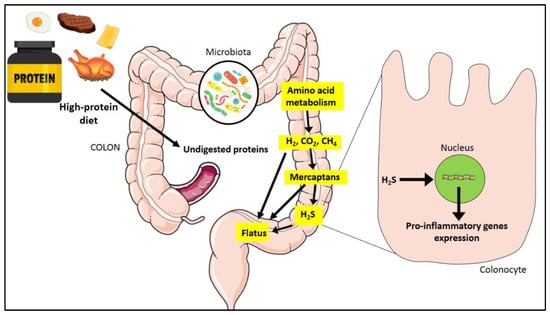
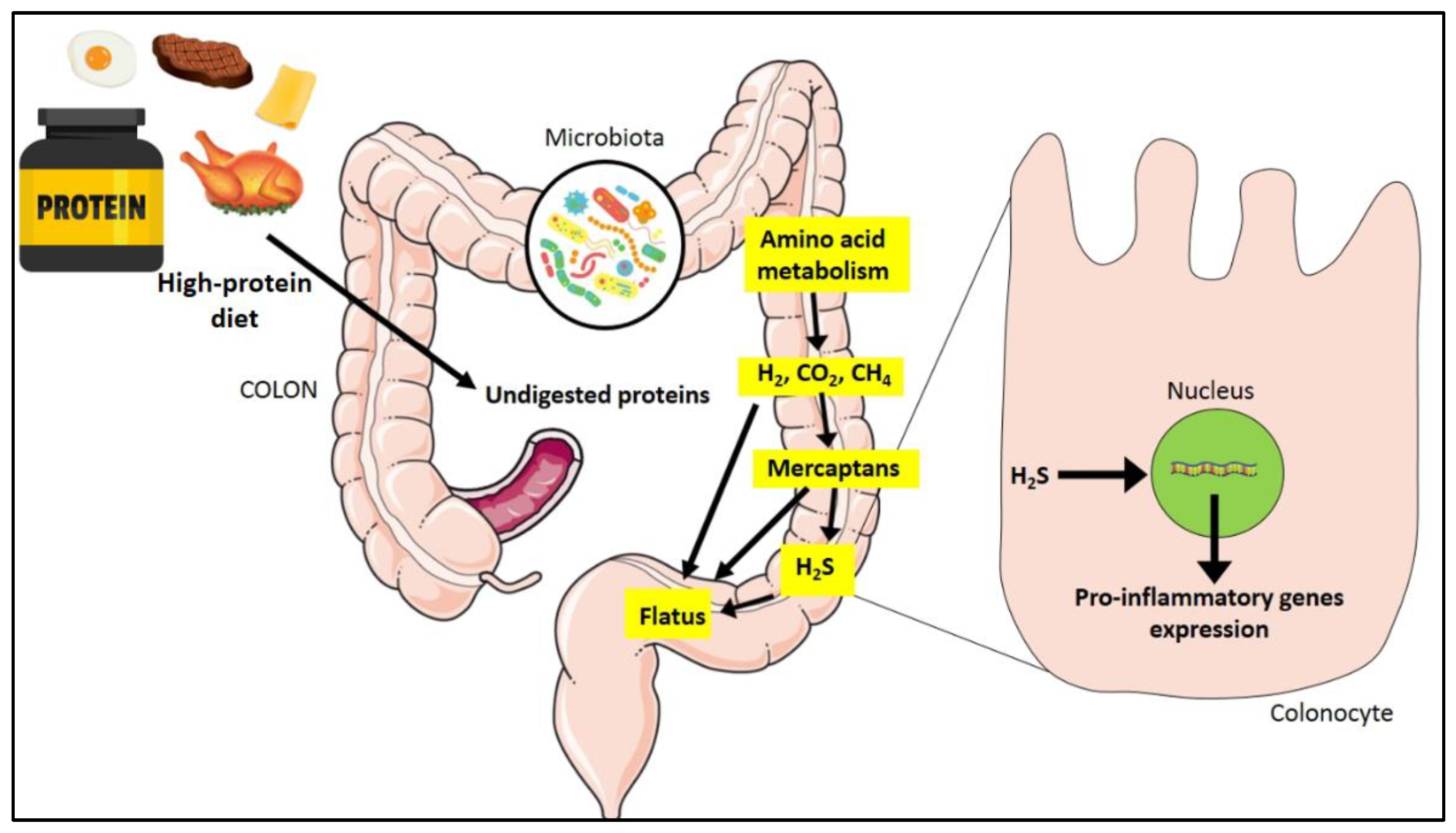
Undigested proteins have been considered potentially harmful to the gut microbiota [84,85]. Reaching the large intestine, proteinaceous fermentation substrates produce toxic metabolites, such as gaseous products (hydrogen sulfide, hydrogen, carbon dioxide and methane), ammonia, N-nitroso compounds, amines and phenolic and indolic compounds [85]. More importantly, the major concern of proteinaceous fermentation is linked to the excess of hydrogen sulfide levels, whose metabolite stimulates pro-inflammatory gene expression in colonocytes [86]. Figure 1 illustrates these concerns.
Figure 1.
High-protein diets and gut microbiota imbalance. Legend: High-protein diets can increase the undigested protein amount, which, after colonic microbial protein fermentation (putrefaction) through microbiota passage, produces several colon gases from amino acid metabolism (i.e., H2, CO2, CH4, mercaptans and H2S) [87]. These byproducts are excreted as flatus, which may lead to abdominal pain and increase the malodorous components of human flatus. A major concern is the H2S implications in the colonocytes, where it triggers an increased expression of pro-inflammatory genes [84,86]. CO2: carbon dioxide; CH4: methane; H2: hydrogen; H2S: hydrogen sulfide.
4.3. Lipids and SCFAs
Gut microbiota is also vital to bile acid pool size and thus enhances intestinal nutrient absorption and biliary secretion of lipids [88,89]. More specifically, in the gut, primary bile acids are converted by colonic bacteria to secondary bile acids, predominantly deoxycholic acid and lithocholic acid [90]. The host, in turn, generates a large, conjugated hydrophilic bile acid pool via the positive-feedback antagonism of FXR in the gut–liver axis, which is a fundamental action insofar as decreased bile acid concentrations in the gut can lead to bacterial overgrowth and inflammation [89]. Moreover, taurine-related modulation by the gut microbiota is crucial to bile acids, as taurine is an amino acid used to conjugate bile acids [91].
SCFAs, i.e., acetate, propionate and butyrate, are organic acids produced within the intestinal lumen by bacterial fermentation of undigested dietary CHO and PTN, which can be used as energy sources either by the human colonocytes or elsewhere in the body [81,92]. In humans, fermentation of 50–60 g of CHO or ~10% of the daily energy requirement (140–180 kcal) from high-vegetable and fruit diets yields 0.5–0.6 mol of SCFAs [78]. In addition to their nutritional value, SCFAs have important effects on other aspects of human physiology. SCFAs regulate the balance between fatty acid synthesis and oxidation, glucose and cholesterol metabolism via AMP-activated protein kinase (AMPK) [79]. SCFAs broadly influence host processes, which include energy uptake, host–microbe crosstalk signaling, and colonic pH control, with ensuing effects on microbiota composition, gut motility and epithelial cell proliferation [83].
4.4. Vitamins
Gut bacteria participate in vitamin K and B synthesis. Since human neonates are born with low levels of vitamin K [93], gut microbiota is essential to provide K2 (or menaquinone) [94]. Vitamin K is necessary for several blood coagulation factors (II, VII, IX and X) and some coagulation inhibitors synthetized by the liver [95]. B-vitamins are a diverse group of molecules and biosynthetic precursors of universally essential cofactors used in numerous metabolic pathways related to energy production, protein metabolism and hemopoiesis [96]. Taking into account the bacterial patterns that synthesize B-vitamins, type 1 enterotypes participate in the synthesis of biotin, riboflavin and pantothenate, while type 2 enterotypes synthesize thiamine and folate [97]. The real contribution of microbiome-produced B-vitamins to host requirements and status are unknown [96].
4.5. Phytochemicals
Gut microbiota has an extensive capacity to metabolize phytochemicals, chiefly polyphenols [98,99]. Polyphenols are secondary metabolites of plants generally involved in defense against ultraviolet radiation or aggression by pathogens. In humans, polyphenols confer antioxidant properties and may modulate the activity of a wide range of enzymes and cell receptors [100]. Although polyphenols are common in the human diet, accounting for about 820 mg/day, mainly from fruits and vegetables, they are poorly absorbed by the intestine [77,100]. It may occur because most food polyphenols are in the form of esters, glycosides or polymers that must be hydrolyzed by intestinal enzymes or by the gut microbiota before they can be absorbed [100].
Polyphenols that are not absorbed in the small intestine reach the colon, where they are hydrolyzed by the colonic microbiota, which includes Bacteroides distasonis, Bacteroides uniformis, Bacteroides ovatus, Enterococcus casseliflavus, Eubacterium cellulosolvens, Lachnospiraceae CG19-1 and Eubacterium ramulus [101,102]. Specific active metabolites are produced by the gut microbiota; for instance, (a) enterolactone and enterodiol, from lignans of linseed, and (b) equol, from daidzein of soya. Both of them have antioxidant capacities as well as phytoestrogenic and potential anti-cancer properties [103,104].
5. Gut Microbiota-Derived Metabolites and Cardiovascular Disorders
Gut microbiota under unhealthy diet patterns transforms dietary nutrients into metabolically harmful substances, of which branched-chain amino acids (BCAA), imidazole propionate and trimethylamine N-oxide (TMAO) are some examples [105,106].
The microorganisms Prevotella copri and Bacteroides vulgatus increase BCAA synthesis, while Streptococcus mutans and Eggerthella lenta are producers of imidazole propionate [7]. Since high circulating levels of BCAA are an important risk factor for insulin resistance [107], BCAA-related microbial compounds (e.g., imidazole propionate) have negative effects on insulin signaling cascades [105].
TMAO, in turn, has gained much attention due to its potential role in CVD [105,108]. Trimethylamine (TMA) is synthetized by gut microbiota from phosphatidylcholine, choline, betaine and l-carnitine, which are abundant in seafood, dairy products, egg yolks and red meat. TMA enters the portal circulation and is oxidized to TMAO in the liver by flavin-containing monooxygenase 3 [7,109]. TMAO—or its dietary precursors—accelerates arteriosclerosis via inflammation, oxidative stress, platelet aggregation and thrombosis [109,110]. Accordingly, gut dysbiosis leads to high plasma TMAO levels, which are related to CVD and all-cause mortality [105,111].
Importantly, the crosstalk between gut microbiota imbalance and obesity is inherent to inflammation induced by lipopolysaccharides (LPS). LPS are glycolipid molecules that serve as important outer membrane components of Gram-negative bacteria and have a role as bacterial toxins [112], thereby favoring cardiometabolic abnormalities. High levels of LPS can induce the expression of pro-inflammatory cytokines, thus contributing to endothelial damage and increasing the oxidation of low-density cholesterol particles and foam cell formation, ultimately accelerating atherosclerosis [113].
6. Gut Microbiota Composition in Obesity
The intestinal colon is inhabited by several microorganisms that form the gut microbiota and reach nearly trillions [114]. The predominant gut bacteria belong to the following phyla: Firmicutes, Bacteroidetes, Actinobacteria, Proteobacteria, Verrumicrobia and Fusobacteria; however, Firmicutes and Bacteroidetes occur in greater quantities among bacterial cells in the gut [115]. Seemingly, Bacteroides and Prevotella appear to be the predominant bacterial genera inside the Bacteroidetes phylum. In contrast, the genera Clostridium, Eubacterium and Ruminococcus appear to occur in greater numbers in the Firmicutes phylum [116].
In addition to the distribution by phyla, intestinal bacteria are classified as enterotypes, i.e., groups of various microorganisms that can somehow impact the health of the host. Arumugam et al. [117] define three groups: (1) type 1 enterotypes, which are apparently rich in species of Bacteroides; (2) type 2 enterotypes, with a greater presence of the genera Prevotella; and (3) type 3 enterotypes, delimited by Ruminococcus.
Individuals with obesity have a higher prevalence of Firmicutes (Fusobacteria, Proteobacteria and Lactobacillus reuteri) and a lower prevalence of Bacteroidetes (Akkermansia muciniphila, Faecalibacterium prausnitzii, Lactobacillus plantarum and Lactobacillus paracasei) compared with normal-weight individuals [118]. Furthermore, animals and humans with obesity have a higher ratio of Firmicutes/Bacteroidetes [74,118,119].
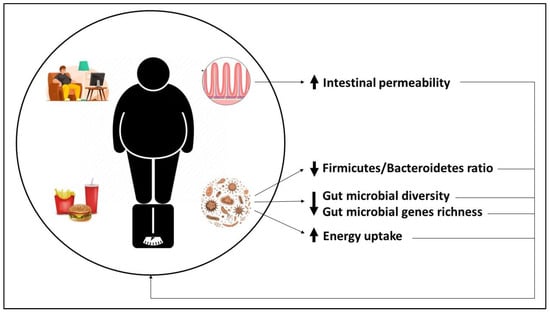
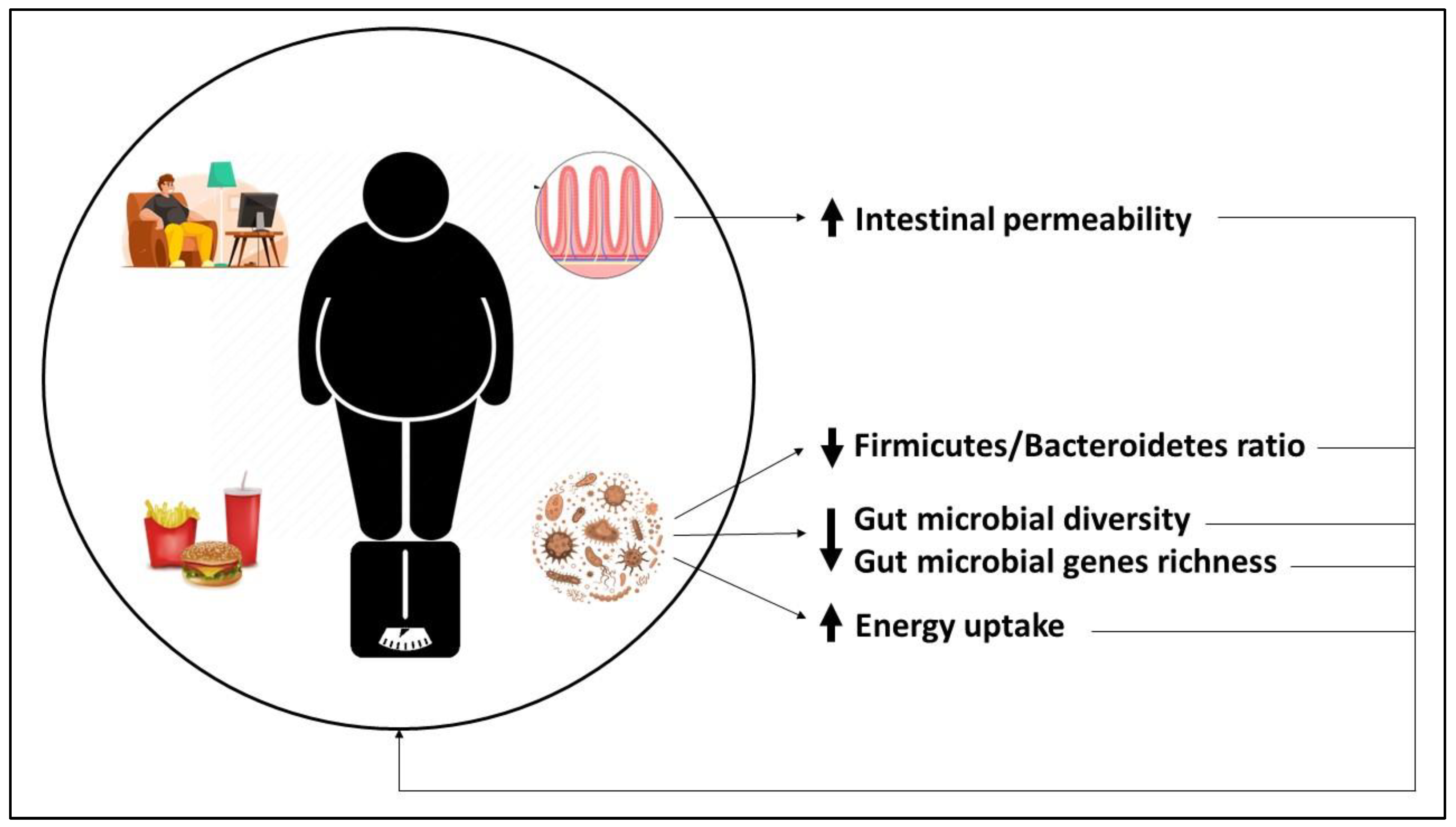
Gut microbiota plays an important role in energy uptake (the energy harvest hypothesis). Individuals with obesity show a higher energy harvest from food compared to lean individuals. This effect seems to be associated with increased CHO degradation and, consequently, the formation of SCFAs, favoring greater energy gain. In addition, microbiota has been suggested to manipulate host behaviors by changing food preferences (e.g., altered taste receptors for fat and sweets) [120]. Since obesity is a result of energy balance, a negative modification of gut microbiota can result in increased energy intake. The pathophysiological link between obesity and gut microbiota is depicted in Figure 2.
Figure 2.
Pathophysiological relationship between obesity and gut microbiota. Legend: Obesity is a disease characterized by being overweight and has triggering factors such as excessive calorie consumption and a sedentary lifestyle. Individuals with obesity suffer alterations in gut microbiota and gastrointestinal tracts, such as increased energy uptake and intestinal permeability, decreased microbial diversity and gene richness, and an increased Firmicutes/Bacteroidetes ratio.
7. Unhealthy Dietary Patterns
An excessive intake of alcohol, sugars, and saturated fatty acids (SFAs) is associated with a reduction in bacterial abundance, diversity and richness in the gut and, by virtue of an augmentation of Gram-negative bacteria (dysbiosis), can raise the production of LPS and disrupt intestinal barrier integrity [121,122,123,124,125].
That said, the crosstalk between gut microbiota imbalance and obesity is related to a dietary cluster of high-energy food, fat and sugar intake, suggesting that an “obese microbiota” may not be triggered by obesity itself [126]. In this regard, the high intake of ultra-processed foods with a low nutritional profile is an unhealthy dietary pattern that plays a negative role in gut microbiota [127,128].
The triad of a high content of sodium, SFAs and sugars across ultra-processed foods leads to a higher calorie intake, as observed in a clinical trial in which participants received an ultra-processed diet for two weeks and then a healthy food-based diet for the same period [129]. In the period of the ultra-processed diet, there was an increase of 500 calories ingested daily from CHO and fats, accompanied by a body mass gain of 900 g. Conversely, in the healthy eating phase, the participants lost an average of 900 g. Thus, a diet rich in ultra-processed foods is not only harmful to the gut microbiota but also results in a higher energy intake that, in turn, can cause obesity in the long term.
Reduced microbial gene diversity is observed in low-complex CHO diets, suggesting that this type of CHO acts as a prebiotic and promotes the diversity of gut bacteria [130]. Overall, the benefits of high-complex CHO diets and gut microbiota modulation are thoroughly discussed in the topic below.
8. Healthy Dietary Patterns
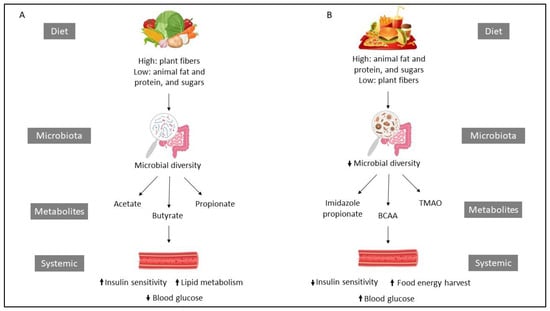
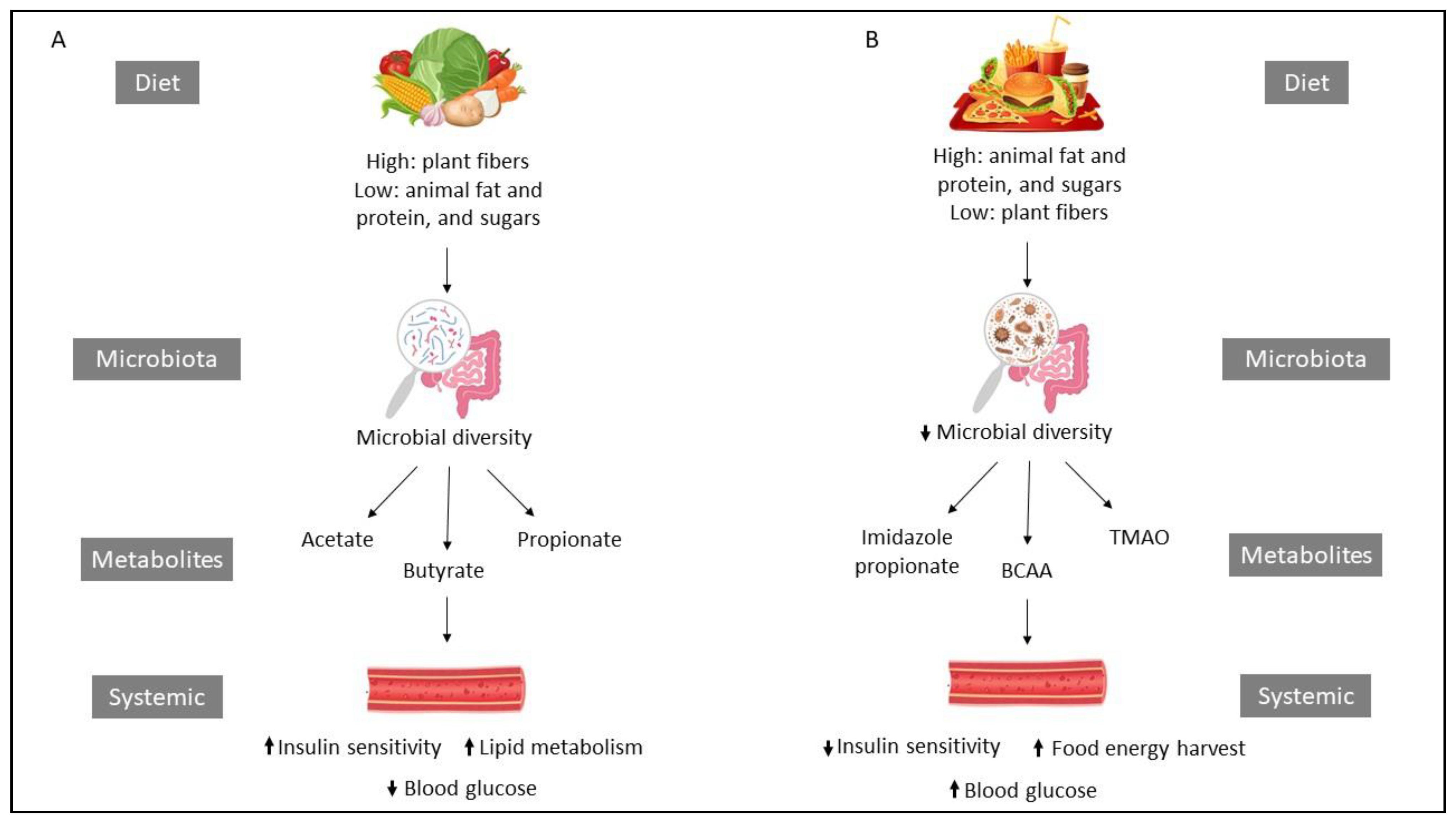
A dietary pattern based on fruits, vegetables, seeds, whole grains and mono- and poly-unsaturated fatty acids has been shown to result in gut microbiota diversity, mainly because of the large supply of dietary fiber [131]. Such an eating pattern improves cardiometabolic markers mediated by the gut microbiota, as shown in Figure 3. More specifically, the low-energy, high-fiber pattern is the cornerstone of increasing microbial gene diversity, thus affording reductions in serum cholesterol levels, adiposity and inflammation in patients with obesity [132].
Figure 3.
Influence of diet on gut microbiota and accompanied systemic consequences. Legend: (A) A metabolically healthy microbiota may be achieved through a diet high in fiber and low in animal fat and protein, as well as a low sugar intake. Fermentation of nondigestible CHO results in short-chain fatty acids (acetate, butyrate and propionate), whose elements improve cardiometabolism. (B) Gut dysbiosis may be induced by a diet low in fiber and high in animal fat and protein, as well as by high intake of sugar and alcohol. An unhealthy diet is associated with a reduction in bacterial abundance, diversity and richness in the gut, transforming dietary nutrients into metabolically harmful metabolites, i.e., branched-chain amino acids (BCAA), imidazole propionate and trimethylamine N-oxide (TMAO), and thus increasing the production of lipopolysaccharides (LPS) and/or disrupting the intestinal barrier integrity. Finally, such a background can induce the expression of pro-inflammatory cytokines and hence contribute to insulin resistance and related cardiometabolic disorders (e.g., atherosclerosis).
Both low-fat and low-CHO diets with energy restriction increase Bacteroidetes, while reducing body weight, as observed in a one-year intervention of individuals with obesity [23]. In light of this, energy restriction is imperative for modulating the gut microbiota of patients with obesity.
Lastly, public policies encouraging greater consumption of fresh or minimally processed foods and taxation of ultra-processed foods may reflect healthier habits, contributing to obesity reduction [133].
9. Probiotics and Synbiotics in Weight Loss
It is recognized that supplementation with products containing live microorganisms, known as probiotics, improves intestinal epithelial barrier function and increases mucus production [134], thereby partially reducing gastrointestinal problems such as diarrhea, abdominal pain, lactose intolerance, etc. [135]. More interestingly, probiotic supplementation has emerged as a weight loss [136] strategy by virtue of its putative anorexigenic effect by increasing SCFA production, which plays a role in fatty acid oxidation as well as the secretion of gut hormones (YY peptide and glucagon-like peptide 1) and leptin in adipocytes.
The potential effects of probiotic supplementation on weight loss could be enhanced when combined with prebiotics, a specific group of non-digestible and fermentable foods that confer more gastric volume during the meal and are substrates for microorganisms in the gut lumen [137]. Thus, the combination of probiotics and prebiotics, named synbiotics (“live microorganisms that, after ingestion in specific numbers, exert benefits for the health of the host”) [138], merits attention as to their potential in improving indicators of obesity.
Species from the Lactobacillus and Bifidobacterium genera are the components of probiotic supplements in the field of weight loss [139]; however, optimal dosing regimens and plausible clinical effects are far from discernible. A meta-analysis of randomized clinical trials (15 studies, 957 patients) of patients who were overweight or obese revealed that probiotic supplementation alone for 3 to 12 weeks significantly reduced body weight by ~0.60 kg and BMI by ~0.27 kg/m2 compared to placebos, along with a non-statistical decrease of ~0.42 kg in fat mass [140]. In addition to obesity, such a modest effect is similar in patients suffering from both obesity and its metabolic-related diseases [141]. Not only probiotics but also supplementation with symbiotics portrays a small clinical magnitude in improving anthropometric indicators of obesity [142].
10. Exercise
Exercise significantly contributes to the increased biodiversity of microbial species, modulation of the immune system, improved motility and decreased intestinal permeability. Changes in gut microbiota seem to be intensity- and volume-dependent with exercise [143]. Furthermore, exercise increases microbiota-induced SCFA synthesis in the intestinal lumen, which is related to fat oxidation and the preservation of muscle mass [144].
Aerobic exercise training improved gut microbiota and microbial-derived SCFA in previously sedentary patients with obesity without dietary modification, whereas those benefits were reversed after exercise training cessation [145].
In a recent study [26] whereby individuals who were overweight or obese underwent a Mediterranean diet with caloric restriction associated with physical activity promotion for one year, the Bacteroidetes/Firmicutes ratio increased at the end of the intervention, such that there were improvements in the indicators of obesity as well as glycemic and lipid profiles.
Regarding high-intensity interval training, it can counteract high-fat diet-induced changes in the gut by increasing the alpha diversity and Bacteroidetes/Firmicutes in rats with obesity; however, further research using this type of exercise ought to be performed in humans [53].
11. Microbiota Transplantation
Mice receiving obese microbiota transplantation increase in body mass as a result of an increase in the energy harvest without changing energy intake or expenditure, suggesting that the microbiome may favor weight gain [9]. Ridaura et al. [71] tested if gut microbiota may promote body fat increase by performing a microbiota transplant from obese discordant twins (one obese and one lean) to germ-free mice. The animals were fed a low-fat diet and a high-plant polysaccharide diet. The fecal material from mice was analyzed to identify differences between their microbial communities and the relevance of these results to metabolism and host body composition. Gut microbiota composition was modified according to the characteristics of the transplanted microbiota. Comparing results from the transplant, mice that received obese microbiota samples gained more weight than animals that received lean microbiota samples.
In humans, Vrieze et al. [31] implanted lean feces in men with metabolic syndrome and, after six weeks, identified an improvement in gut microbiota composition and insulin sensitivity. However, Yu et al. [32] performed a fecal microbiota transplant by capsules in individuals with obesity and did not find significant changes between the two groups in microbial diversity, body mass, insulin sensitivity, energy expenditure, HOMA-IR or fasting lipid profile.
There are severe limitations when comparing trials in animals and humans due to physiological, food, and microbial differences. Mice that received obese microbiota transplantation showed weight gain as a result of an increase in energy harvest without changing energy intake or expenditure, suggesting that the microbiome may favor weight gain [9].
Collectively, gut microbiota transplantation is promising; however, there are several limitations between animals and humans due to physiological, food, and microbial differences, such that there is no uniform evidence for humans.
12. Conclusions and Perspectives
A common obesity pattern can be a cause of dysbiosis due to the accumulative effects of a high intake of high-energy foods, sugars and SFAs, as well as a reduced consumption of fiber and physical inactivity.
Conversely, low-energy diets, high fiber intake and physical exercise are crucial to enhancing gut microbiota of patients with obesity. Moreover, advice to reduce the intake of ultra-processed foods with a low nutritional profile, along with increasing the intake of natural or minimally processed foods, are reasonable strategies to afford a better status of gut microbiota.
Regarding perspectives, although supplementing probiotics and synbiotics (mainly those containing Lactobacillus and/or species from the Bifidobacterium genus) can aid in the management of obesity, skepticism must be exercised due to modest clinical effects, such that more investigation is needed to better understand proper bacterial strains and dosing regimens.
Finally, microbiota transplantation is a field that deserves substantial elucidation in terms of clinical recommendations.
Author Contributions
D.S.T. and R.C.O.M. were responsible for conceiving the review. D.S.T. and F.M.D. searched and organized the results. All authors participated in the analysis and interpretation of the data and manuscript writing. H.O.S. wrote and contributed to the revision of the manuscript. All authors have read and agreed to the published version of the manuscript.
Funding
This research did not receive any specific grants from funding agencies in the public, commercial or not-for-profit sectors.
Conflicts of Interest
The authors declare no conflict of interest.
References
- Upadhyay, J.; Farr, O.; Perakakis, N.; Ghaly, W.; Mantzoros, C. Obesity as a Disease. Med. Clin. N. Am. 2018, 102, 13–33. [Google Scholar] [CrossRef] [Scilit]
- Fruh, S. Obesity: Risk factors, complications, and strategies for sustainable long-term weight management. J. Am. Assoc. Nurse Pract. 2019, 29, 3–14. [Google Scholar] [CrossRef] [Scilit]
- World Health Organization. Presents Technical Data and Information about Obesity in the World; World Health Organization: Geneva, Switzerland, 2021. [Google Scholar]
- Ward, Z.; Bleich, S.; Cradock, A.; Barrett, J.; Giles, C.; Flax, C.; Long, M.; Gortmaker, S. Projected U.S. State-Level Prevalence of Adult Obesity and Severe Obesity. N. Engl. J. Med. 2019, 381, 2440–2450. [Google Scholar] [CrossRef] [Scilit]
- Kelly, T.; Yang, W.; Chen, C.-S.; Reynolds, K.; He, J. Global burden of obesity in 2005 and projections to 2030. Int. J. Obes. 2008, 32, 1431–1437. [Google Scholar] [CrossRef] [Scilit]
- Wright, S.M.; Aronne, L.J. Causes of obesity. Abdom. Radiol. 2012, 37, 730–732. [Google Scholar] [CrossRef] [Scilit] [PubMed]
- Fan, Y.; Pedersen, O. Gut microbiota in human metabolic health and disease. Nat. Rev. Microbiol. 2021, 19, 55–71. [Google Scholar] [CrossRef] [Scilit] [PubMed]
- Greiner, T.; Bäckhed, F. Effects of the gut microbiota on obesity and glucose homeostasis. Trends Endocrinol. Metab. 2011, 22, 117–123. [Google Scholar] [CrossRef] [Scilit] [PubMed]
- Tsai, F.; Coyle, W.J. The microbiome and obesity: Is obesity linked to our gut flora? Curr. Gastroenterol. Rep. 2009, 11, 307–313. [Google Scholar] [CrossRef] [Scilit]
- Cornejo-Pareja, I.; Muñoz-Garach, A.; Clemente-Postigo, M.; Tinahones, F.J. Importance of gut microbiota in obesity. Eur. J. Clin. Nutr. 2019, 72, 26–37. [Google Scholar] [CrossRef] [Scilit]
- Lynch, S.V.; Pedersen, O. The Human Intestinal Microbiome in Health and Disease. N. Engl. J. Med. 2016, 375, 2369–2379. [Google Scholar] [CrossRef] [Scilit]
- Kau, A.L.; Ahern, P.P.; Griffin, N.W.; Goodman, A.L.; Gordon, J.I. Human nutrition, the gut microbiome and the immune system. Nature 2011, 474, 327–336. [Google Scholar] [CrossRef] [Scilit]
- Deehan, E.C.; Yang, C.; Perez-Muñoz, M.E.; Nguyen, N.K.; Cheng, C.C.; Triador, L.; Zhang, Z.; Bakal, J.A.; Walter, J. Precision Microbiome Modulation with Discrete Dietary Fiber Structures Directs Short-Chain Fatty Acid Production. Cell Host Microbe 2020, 27, 389–404.e6. [Google Scholar] [CrossRef] [Scilit] [PubMed]
- Crovesy, L.; El-Bacha, T.; Rosado, E.L. Modulation of the gut microbiota by probiotics and symbiotics is associated with changes in serum metabolite profile related to a decrease in inflammation and overall benefits to metabolic health: A double-blind randomized controlled clinical trial in women with obesity. Food Funct. 2021, 12, 2161–2170. [Google Scholar] [CrossRef] [Scilit] [PubMed]
- Dong, T.S.; Luu, K.; Lagishetty, V.; Sedighian, F.; Woo, S.-L.; Dreskin, B.W.; Katzka, W.; Chang, C.; Zhou, Y.; Arias-Jayo, N.; et al. A High Protein Calorie Restriction Diet Alters the Gut Microbiome in Obesity. Nutrients 2020, 12, 3221. [Google Scholar] [CrossRef] [Scilit]
- Gøbel, R.J.; Larsen, N.; Jakobsen, M.; Mølgaard, C.; Michaelsen, K.F. Probiotics to Adolescents With Obesity: Effects on Inflammation and Metabolic Syndrome. J. Pediatr. Gastroenterol. Nutr. 2012, 55, 673–678. [Google Scholar] [CrossRef] [Scilit]
- Gomes, A.C.; Hoffmann, C.; Mota, J.F. Gut microbiota is associated with adiposity markers and probiotics may impact specific genera. Eur. J. Nutr. 2020, 59, 1751–1762. [Google Scholar] [CrossRef] [Scilit]
- Haro, C.; Rangel-Zúñiga, O.A.; Alcalá-Díaz, J.F.; Gómez-Delgado, F.; Pérez-Martínez, P.; Delgado-Lista, J.; Quintana-Navarro, G.M.; Landa, B.B.; Navas-Cortés, J.A.; Tena-Sempere, M.; et al. Intestinal Microbiota Is Influenced by Gender and Body Mass Index. PLoS ONE 2016, 11, e0154090. [Google Scholar] [CrossRef] [Scilit] [PubMed]
- Jian, C.; Luukkonen, P.; Sädevirta, S.; Yki-Järvinen, H.; Salonen, A. Impact of short-term overfeeding of saturated or unsaturated fat or sugars on the gut microbiota in relation to liver fat in obese and overweight adults. Clin. Nutr. 2021, 40, 207–216. [Google Scholar] [CrossRef] [Scilit]
- Kanazawa, A.; Aida, M.; Yoshida, Y.; Kaga, H.; Katahira, T.; Suzuki, L.; Tamaki, S.; Sato, J.; Goto, H.; Azuma, K.; et al. Effects of Synbiotic Supplementation on Chronic Inflammation and the Gut Microbiota in Obese Patients with Type 2 Diabetes Mellitus: A Randomized Controlled Study. Nutrients 2021, 13, 558. [Google Scholar] [CrossRef] [Scilit]
- Leber, B.; Tripolt, N.J.; Blattl, D.; Eder, M.; Wascher, T.C.; Pieber, T.R.; Stauber, R.; Sourij, H.; Oettl, K.; Stadlbauer, V. The influence of probiotic supplementation on gut permeability in patients with metabolic syndrome: An open label, randomized pilot study. Eur. J. Clin. Nutr. 2012, 66, 1110–1115. [Google Scholar] [CrossRef] [Scilit]
- Leong, K.S.W.; Jayasinghe, T.N.; Wilson, B.C.; Derraik, J.G.B.; Albert, B.B.; Chiavaroli, V.; Svirskis, D.M.; Beck, K.L.; Conlon, C.A.; Jiang, Y.; et al. Effects of Fecal Microbiome Transfer in Adolescents With Obesity: The Gut Bugs Randomized Controlled Trial. JAMA Netw. Open 2020, 3, e2030415. [Google Scholar] [CrossRef] [Scilit] [PubMed]
- Ley, R.E.; Turnbaugh, P.J.; Klein, S.; Gordon, J.I. Human gut microbes associated with obesity. Nature 2006, 444, 1022–1023. [Google Scholar] [CrossRef] [Scilit] [PubMed]
- Marungruang, N.; Tovar, J.; Björck, I.; Hållenius, F.F. Improvement in cardiometabolic risk markers following a multifunctional diet is associated with gut microbial taxa in healthy overweight and obese subjects. Eur. J. Nutr. 2018, 57, 2927–2936. [Google Scholar] [CrossRef] [Scilit] [PubMed]
- Meslier, V.; Laiola, M.; Roager, H.M.; De Filippis, F.; Roume, H.; Quinquis, B.; Giacco, R.; Mennella, I.; Ferracane, R.; Pons, N.; et al. Mediterranean diet intervention in overweight and obese subjects lowers plasma cholesterol and causes changes in the gut microbiome and metabolome independently of energy intake. Gut 2020, 69, 1258–1268. [Google Scholar] [CrossRef] [Scilit] [PubMed]
- Muralidharan, J.; Moreno-Indias, I.; Bulló, M.; Lopez, J.V.; Corella, D.; Castañer, O.; Vidal, J.; Atzeni, A.; Fernandez-García, J.C.; Torres-Collado, L.; et al. Effect on gut microbiota of a 1-y lifestyle intervention with Mediterranean diet compared with energy-reduced Mediterranean diet and physical activity promotion: PREDIMED-Plus Study. Am. J. Clin. Nutr. 2021, 114, 1148–1158. [Google Scholar] [CrossRef] [Scilit]
- Neyrinck, A.M.; Rodriguez, J.; Zhang, Z.; Seethaler, B.; Sánchez, C.R.; Roumain, M.; Hiel, S.; Bindels, L.B.; Cani, P.D.; Paquot, N.; et al. Prebiotic dietary fibre intervention improves fecal markers related to inflammation in obese patients: Results from the Food4Gut randomized placebo-controlled trial. Eur. J. Nutr. 2021, 60, 3159–3170. [Google Scholar] [CrossRef] [Scilit]
- Nicolucci, A.C.; Hume, M.P.; Martínez, I.; Mayengbam, S.; Walter, J.; Reimer, R.A. Prebiotics Reduce Body Fat and Alter Intestinal Microbiota in Children Who Are Overweight or With Obesity. Gastroenterology 2017, 153, 711–722. [Google Scholar] [CrossRef] [Scilit] [PubMed]
- Sergeev, I.N.; Aljutaily, T.; Walton, G.; Huarte, E. Effects of Synbiotic Supplement on Human Gut Microbiota, Body Composition and Weight Loss in Obesity. Nutrients 2020, 12, 222. [Google Scholar] [CrossRef] [Scilit]
- Van Son, J.; Serlie, M.J.; Ståhlman, M.; Bäckhed, F.; Nieuwdorp, M.; Aron-Wisnewsky, J. Plasma Imidazole Propionate Is Positively Correlated with Blood Pressure in Overweight and Obese Humans. Nutrients 2021, 13, 2706. [Google Scholar] [CrossRef] [Scilit]
- Vrieze, A.; Van Nood, E.; Holleman, F.; Salojärvi, J.; Kootte, R.S.; Bartelsman, J.F.W.M.; Dallinga–Thie, G.M.; Ackermans, M.T.; Serlie, M.J.; Oozeer, R.; et al. Transfer of Intestinal Microbiota From Lean Donors Increases Insulin Sensitivity in Individuals With Metabolic Syndrome. Gastroenterology 2012, 143, 913–916.e7. [Google Scholar] [CrossRef] [Scilit]
- Yu, E.W.; Gao, L.; Stastka, P.; Cheney, M.C.; Mahabamunuge, J.; Torres Soto, M.; Ford, C.B.; Bryant, J.A.; Henn, M.R.; Hohmann, E.L. Fecal microbiota transplantation for the improvement of metabolism in obesity: The FMT-TRIM double-blind placebo-controlled pilot trial. PLoS Med. 2020, 17, e1003051. [Google Scholar] [CrossRef] [Scilit]
- Bervoets, L.; Van Hoorenbeeck, K.; Kortleven, I.; Van Noten, C.; Hens, N.; Vael, C.; Goossens, H.; Desager, K.N.; Vankerckhoven, V. Differences in gut microbiota composition between obese and lean children: A cross-sectional study. Gut Pathog. 2013, 5, 10. [Google Scholar] [CrossRef] [Scilit] [PubMed]
- Cho, K.Y. Lifestyle modifications result in alterations in the gut microbiota in obese children. BMC Microbiol. 2021, 21, 10. [Google Scholar] [CrossRef] [Scilit]
- Haro, C.; Montes-Borrego, M.; Rangel-Zúñiga, O.A.; Alcalá-Díaz, J.F.; Gómez-Delgado, F.; Pérez-Martínez, P.; Delgado-Lista, J.; Quintana-Navarro, G.M.; Tinahones, F.J.; Landa, B.B.; et al. Two Healthy Diets Modulate Gut Microbial Community Improving Insulin Sensitivity in a Human Obese Population. J. Clin. Endocrinol. Metab. 2016, 101, 233–242. [Google Scholar] [CrossRef] [Scilit] [PubMed]
- Jumpertz, R.; Le, D.S.; Turnbaugh, P.J.; Trinidad, C.; Bogardus, C.; Gordon, J.I.; Krakoff, J. Energy-balance studies reveal associations between gut microbes, caloric load, and nutrient absorption in humans. Am. J. Clin. Nutr. 2011, 94, 58–65. [Google Scholar] [CrossRef] [Scilit] [PubMed]
- Kim, M.-H.; Yun, K.E.; Kim, J.; Park, E.; Chang, Y.; Ryu, S.; Kim, H.-L.; Kim, H.-N. Gut microbiota and metabolic health among overweight and obese individuals. Sci. Rep. 2020, 10, 19417. [Google Scholar] [CrossRef] [Scilit] [PubMed]
- Kong, L.C.; Holmes, B.A.; Cotillard, A.; Habi-Rachedi, F.; Brazeilles, R.; Gougis, S.; Gausserès, N.; Cani, P.D.; Fellahi, S.; Bastard, J.-P.; et al. Dietary Patterns Differently Associate with Inflammation and Gut Microbiota in Overweight and Obese Subjects. PLoS ONE 2014, 9, e109434. [Google Scholar] [CrossRef] [Scilit] [PubMed]
- Menni, C.; Jackson, M.A.; Pallister, T.; Steves, C.J.; Spector, T.D.; Valdes, A.M. Gut microbiome diversity and high-fibre intake are related to lower long-term weight gain. Int. J. Obes. 2017, 41, 1099–1105. [Google Scholar] [CrossRef] [Scilit] [PubMed]
- Fernández-Navarro, T.; Salazar, N.; Gutiérrez-Díaz, I.; De Los Reyes-Gavilán, C.; Gueimonde, M.; González, S. Different Intestinal Microbial Profile in Over-Weight and Obese Subjects Consuming a Diet with Low Content of Fiber and Antioxidants. Nutrients 2017, 9, 551. [Google Scholar] [CrossRef] [Scilit] [PubMed]
- Olivares, P.D.S.G.; Pacheco, A.B.F.; Aranha, L.N.; Oliveira, B.D.S.; Santos, A.A.; Santos, P.C.M.D.; Neto, J.F.N.; Rosa, G.; Oliveira, G.M.M. Gut microbiota of adults with different metabolic phenotypes. Nutrition 2021, 90, 111293. [Google Scholar] [CrossRef] [Scilit]
- Orsso, C.E.; Peng, Y.; Deehan, E.C.; Tan, Q.; Field, C.J.; Madsen, K.L.; Walter, J.; Prado, C.M.; Tun, H.M.; Haqq, A.M. Composition and Functions of the Gut Microbiome in Pediatric Obesity: Relationships with Markers of Insulin Resistance. Microorganisms 2021, 9, 1490. [Google Scholar] [CrossRef] [Scilit]
- Peters, B.A.; Shapiro, J.A.; Church, T.R.; Miller, G.; Trinh-Shevrin, C.; Yuen, E.; Friedlander, C.; Hayes, R.B.; Ahn, J. A taxonomic signature of obesity in a large study of American adults. Sci. Rep. 2018, 8, 9749. [Google Scholar] [CrossRef] [Scilit]
- Roland, B.C.; Lee, D.; Miller, L.S.; Vegesna, A.; Yolken, R.; Severance, E.; Prandovszky, E.; Zheng, X.E.; Mullin, G.E. Obesity increases the risk of small intestinal bacterial overgrowth (SIBO). Neurogastroenterol. Motil. 2018, 30, e13199. [Google Scholar] [CrossRef] [Scilit] [PubMed]
- Stefura, T.; Zapała, B.; Gosiewski, T.; Skomarovska, O.; Dudek, A.; Pędziwiatr, M.; Major, P. Differences in Compositions of Oral and Fecal Microbiota between Patients with Obesity and Controls. Medicina 2021, 57, 678. [Google Scholar] [CrossRef] [Scilit] [PubMed]
- Shen, N.; Caixàs, A.; Ahlers, M.; Patel, K.; Gao, Z.; Dutia, R.; Blaser, M.J.; Clemente, J.C.; Laferrère, B. Longitudinal changes of microbiome composition and microbial metabolomics after surgical weight loss in individuals with obesity. Surg. Obes. Relat. Dis. 2019, 15, 1367–1373. [Google Scholar] [CrossRef] [Scilit] [PubMed]
- Da Silva, C.C.; Monteil, M.A.; Davis, E.M. Overweight and Obesity in Children Are Associated with an Abundance of Firmicutes and Reduction of Bifidobacterium in Their Gastrointestinal Microbiota. Child. Obes. 2020, 16, 204–210. [Google Scholar] [CrossRef] [Scilit] [PubMed]
- Yun, Y.; Kim, H.-N.; Kim, S.E.; Heo, S.G.; Chang, Y.; Ryu, S.; Shin, H.; Kim, H.-L. Comparative analysis of gut microbiota associated with body mass index in a large Korean cohort. BMC Microbiol. 2017, 17, 151. [Google Scholar] [CrossRef] [Scilit] [PubMed]
- Yuan, X.; Chen, R.; McCormick, K.L.; Zhang, Y.; Lin, X.; Yang, X. The role of the gut microbiota on the metabolic status of obese children. Microb. Cell Factories 2021, 20, 53. [Google Scholar] [CrossRef] [Scilit]
- Zeng, Q.; Li, D.; He, Y.; Li, Y.; Yang, Z.; Zhao, X.; Liu, Y.; Wang, Y.; Sun, J.; Feng, X.; et al. Discrepant gut microbiota markers for the classification of obesity-related metabolic abnormalities. Sci. Rep. 2019, 9, 13424. [Google Scholar] [CrossRef] [Scilit]
- Zeng, Q.; Yang, Z.; Wang, F.; Li, D.; Liu, Y.; Wang, D.; Zhao, X.; Li, Y.; Wang, Y.; Feng, X.; et al. Association between metabolic status and gut microbiome in obese populations. Microb. Genom. 2021, 7, 000639. [Google Scholar] [CrossRef] [Scilit]
- Bo, T.; Wen, J.; Zhao, Y.; Tian, S.; Zhang, X.; Wang, D. Bifidobacterium pseudolongum reduces triglycerides by modulating gut microbiota in mice fed high-fat food. J. Steroid Biochem. Mol. Biol. 2020, 198, 105602. [Google Scholar] [CrossRef] [Scilit]
- Denou, E.; Marcinko, K.; Surette, M.G.; Steinberg, G.R.; Schertzer, J.D. High-intensity exercise training increases the diversity and metabolic capacity of the mouse distal gut microbiota during diet-induced obesity. Am. J. Physiol.-Endocrinol. Metab. 2016, 310, E982–E993. [Google Scholar] [CrossRef] [Scilit]
- Evans, C.C.; LePard, K.J.; Kwak, J.W.; Stancukas, M.C.; Laskowski, S.; Dougherty, J.; Moulton, L.; Glawe, A.; Wang, Y.; Leone, V.; et al. Exercise Prevents Weight Gain and Alters the Gut Microbiota in a Mouse Model of High Fat Diet-Induced Obesity. PLoS ONE 2014, 9, e92193. [Google Scholar] [CrossRef] [Scilit]
- Everard, A.; Lazarevic, V.; Gaïa, N.; Johansson, M.; Ståhlman, M.; Backhed, F.; Delzenne, N.M.; Schrenzel, J.; François, P.; Cani, P.D. Microbiome of prebiotic-treated mice reveals novel targets involved in host response during obesity. ISME J. 2014, 8, 2116–2130. [Google Scholar] [CrossRef] [Scilit]
- Fjære, E.; Myrmel, L.S.; Lützhøft, D.O.; Andersen, H.; Holm, J.B.; Kiilerich, P.; Hannisdal, R.; Liaset, B.; Kristiansen, K.; Madsen, L. Effects of exercise and dietary protein sources on adiposity and insulin sensitivity in obese mice. J. Nutr. Biochem. 2019, 66, 98–109. [Google Scholar] [CrossRef] [Scilit]
- Gu, Y.; Liu, C.; Zheng, N.; Jia, W.; Zhang, W.; Li, H. Metabolic and Gut Microbial Characterization of Obesity-Prone Mice under a High-Fat Diet. J. Proteome Res. 2019, 18, 1703–1714. [Google Scholar] [CrossRef] [Scilit] [PubMed]
- Guirro, M.; Costa, A.; Gual-Grau, A.; Herrero, P.; Torrell, H.; Canela, N.; Arola, L. Effects from diet-induced gut microbiota dysbiosis and obesity can be ameliorated by fecal microbiota transplantation: A multiomics approach. PLoS ONE 2019, 14, e0218143. [Google Scholar] [CrossRef] [Scilit] [PubMed]
- Hussain, A.; Kwon, M.H.; Kim, H.K.; Lee, H.S.; Cho, J.S.; Lee, Y.I. Anti-Obesity Effect of Lactobacillus plantarum LB818 Is Associated with Regulation of Gut Microbiota in High-Fat Diet-Fed Obese Mice. J. Med. Food 2020, 23, 750–759. [Google Scholar] [CrossRef] [Scilit] [PubMed]
- Ji, Y.; Ma, N.; Zhang, J.; Wang, H.; Tao, T.; Pei, F.; Hu, Q. Dietary intake of mixture coarse cereals prevents obesity by altering the gut microbiota in high-fat diet fed mice. Food Chem. Toxicol. 2021, 147, 111901. [Google Scholar] [CrossRef] [Scilit] [PubMed]
- Joung, H.; Chu, J.; Kim, B.-K.; Choi, I.-S.; Kim, W.; Park, T.-S. Probiotics ameliorate chronic low-grade inflammation and fat accumulation with gut microbiota composition change in diet-induced obese mice models. Appl. Microbiol. Biotechnol. 2021, 105, 1203–1213. [Google Scholar] [CrossRef] [Scilit] [PubMed]
- Ke, X.; Walker, A.; Haange, S.-B.; Lagkouvardos, I.; Liu, Y.; Schmitt-Kopplin, P.; Von Bergen, M.; Jehmlich, N.; He, X.; Clavel, T.; et al. Synbiotic-driven improvement of metabolic disturbances is associated with changes in the gut microbiome in diet-induced obese mice. Mol. Metab. 2019, 22, 96–109. [Google Scholar] [CrossRef] [Scilit] [PubMed]
- Kiilerich, P.; Myrmel, L.S.; Fjære, E.; Hao, Q.; Hugenholtz, F.; Sonne, S.B.; Derrien, M.; Pedersen, L.M.; Petersen, R.K.; Mortensen, A.; et al. Effect of a long-term high-protein diet on survival, obesity development, and gut microbiota in mice. Am. J. Physiol.-Endocrinol. Metab. 2016, 310, E886–E899. [Google Scholar] [CrossRef] [Scilit] [PubMed]
- Kübeck, R.; Bonet-Ripoll, C.; Hoffmann, C.; Walker, A.; Müller, V.M.; Schüppel, V.L.; Lagkouvardos, I.; Scholz, B.; Engel, K.-H.; Daniel, H.; et al. Dietary fat and gut microbiota interactions determine diet-induced obesity in mice. Mol. Metab. 2016, 5, 1162–1174. [Google Scholar] [CrossRef] [Scilit] [PubMed]
- Lai, Z.-L.; Tseng, C.-H.; Ho, H.J.; Cheung, C.K.Y.; Lin, J.-Y.; Chen, Y.-J.; Cheng, F.-C.; Hsu, Y.-C.; Lin, J.-T.; El-Omar, E.M.; et al. Fecal microbiota transplantation confers beneficial metabolic effects of diet and exercise on diet-induced obese mice. Sci. Rep. 2018, 8, 15625. [Google Scholar] [CrossRef] [Scilit]
- Li, S.; Yingyi, G.; Chen, L.; Lijuan, G.; Ou, S.; Peng, X. Lean rats gained more body weight from a high-fructooligosaccharide diet. Food Funct. 2015, 6, 2315–2321. [Google Scholar] [CrossRef] [Scilit]
- Lu, Y.; Fan, C.; Li, P.; Lu, Y.; Chang, X.; Qi, K. Short Chain Fatty Acids Prevent High-fat-diet-induced Obesity in Mice by Regulating G Protein-coupled Receptors and Gut Microbiota. Sci. Rep. 2016, 6, 37589. [Google Scholar] [CrossRef] [Scilit]
- Moreira Júnior, R.E.; De Carvalho, L.M.; Dos Reis, D.C.; Cassali, G.D.; Faria, A.M.C.; Maioli, T.U.; Brunialti-Godard, A.L. Diet-induced obesity leads to alterations in behavior and gut microbiota composition in mice. J. Nutr. Biochem. 2021, 92, 108622. [Google Scholar] [CrossRef] [Scilit]
- Moretti, C.H.; Schiffer, T.A.; Li, X.; Weitzberg, E.; Carlström, M.; Lundberg, J.O. Germ-free mice are not protected against diet-induced obesity and metabolic dysfunction. Acta Physiol. 2021, 231, e13581. [Google Scholar] [CrossRef] [Scilit]
- Oh, J.K.; Amoranto, M.B.C.; Oh, N.S.; Kim, S.; Lee, J.Y.; Oh, Y.N.; Shin, Y.K.; Yoon, Y.; Kang, D.-K. Synergistic effect of Lactobacillus gasseri and Cudrania tricuspidata on the modulation of body weight and gut microbiota structure in diet-induced obese mice. Appl. Microbiol. Biotechnol. 2020, 104, 6273–6285. [Google Scholar] [CrossRef] [Scilit]
- Ridaura, V.K.; Faith, J.J.; Rey, F.E.; Cheng, J.; Duncan, A.E.; Kau, A.L.; Griffin, N.W.; Lombard, V.; Henrissat, B.; Bain, J.R.; et al. Gut Microbiota from Twins Discordant for Obesity Modulate Metabolism in Mice. Science 2013, 341, 1241214. [Google Scholar] [CrossRef] [Scilit]
- Saiyasit, N.; Chunchai, T.; Prus, D.; Suparan, K.; Pittayapong, P.; Apaijai, N.; Pratchayasakul, W.; Sripetchwandee, J.; Chattipakorn, N.; Chattipakorn, S.C. Gut dysbiosis develops before metabolic disturbance and cognitive decline in high-fat diet–induced obese condition. Nutrition 2020, 69, 110576. [Google Scholar] [CrossRef] [Scilit]
- Shang, Y.; Khafipour, E.; Derakhshani, H.; Sarna, L.K.; Woo, C.W.; Siow, Y.L.; O, K. Short Term High Fat Diet Induces Obesity-Enhancing Changes in Mouse Gut Microbiota That are Partially Reversed by Cessation of the High Fat Diet. Lipids 2017, 52, 499–511. [Google Scholar] [CrossRef] [Scilit] [PubMed]
- Turnbaugh, P.J.; Ley, R.E.; Mahowald, M.A.; Magrini, V.; Mardis, E.R.; Gordon, J.I. An obesity-associated gut microbiome with increased capacity for energy harvest. Nature 2006, 444, 1027–1031. [Google Scholar] [CrossRef] [Scilit] [PubMed]
- Turnbaugh, P.J.; Ridaura, V.K.; Faith, J.J.; Rey, F.E.; Knight, R.; Gordon, J.I. The Effect of Diet on the Human Gut Microbiome: A Metagenomic Analysis in Humanized Gnotobiotic Mice. Sci. Transl. Med. 2009, 1, 6ra14. [Google Scholar] [CrossRef] [Scilit] [PubMed]
- Welly, R.J.; Liu, T.-W.; Zidon, T.M.; Rowles, J.L.; Park, Y.-M.; Smith, T.N.; Swanson, K.S.; Padilla, J.; Vieira-Potter, V.J. Comparison of Diet versus Exercise on Metabolic Function and Gut Microbiota in Obese Rats. Med. Sci. Sports Exerc. 2016, 48, 1688–1698. [Google Scholar] [CrossRef] [Scilit]
- Rowland, I.; Gibson, G.; Heinken, A.; Scott, K.; Swann, J.; Thiele, I.; Tuohy, K. Gut microbiota functions: Metabolism of nutrients and other food components. Eur. J. Nutr. 2018, 57, 1–24. [Google Scholar] [CrossRef] [Scilit]
- Musso, G.; Gambino, R.; Cassader, M. Interactions Between Gut Microbiota and Host Metabolism Predisposing to Obesity and Diabetes. Annu. Rev. Med. 2011, 62, 361–380. [Google Scholar] [CrossRef] [Scilit]
- Den Besten, G.; Van Eunen, K.; Groen, A.K.; Venema, K.; Reijngoud, D.-J.; Bakker, B.M. The role of short-chain fatty acids in the interplay between diet, gut microbiota, and host energy metabolism. J. Lipid Res. 2013, 54, 2325–2340. [Google Scholar] [CrossRef] [Scilit]
- Devaraj, S.; Hemarajata, P.; Versalovic, J. The Human Gut Microbiome and Body Metabolism: Implications for Obesity and Diabetes. Clin. Chem. 2013, 59, 617–628. [Google Scholar] [CrossRef] [Scilit]
- Hamer, H.M.; Jonkers, D.; Venema, K.; Vanhoutvin, S.; Troost, F.J.; Brummer, R.-J. Review article: The role of butyrate on colonic function: REVIEW: ROLE OF BUTYRATE ON COLONIC FUNCTION. Aliment. Pharmacol. Ther. 2007, 27, 104–119. [Google Scholar] [CrossRef] [Scilit]
- Cummings, J.; Hill, M.; Bone, E.; Branch, W.; Jenkins, D.J.A. The effect of meat protein and dietary fiber on colonic function and metabolism II. Bacterial metabolites in feces and urine. Am. J. Clin. Nutr. 1979, 32, 2094–2101. [Google Scholar] [CrossRef] [Scilit]
- Nicholson, J.K.; Holmes, E.; Kinross, J.; Burcelin, R.; Gibson, G.; Jia, W.; Pettersson, S. Host-Gut Microbiota Metabolic Interactions. Science 2012, 336, 1262–1267. [Google Scholar] [CrossRef] [Scilit] [PubMed]
- Blachier, F.; Beaumont, M.; Portune, K.J.; Steuer, N.; Lan, A.; Audebert, M.; Khodorova, N.; Andriamihaja, M.; Airinei, G.; Benamouzig, R.; et al. High-protein diets for weight management: Interactions with the intestinal microbiota and consequences for gut health. A position paper by the my new gut study group. Clin. Nutr. 2019, 38, 1012–1022. [Google Scholar] [CrossRef] [Scilit] [PubMed]
- Yao, C.K.; Muir, J.G.; Gibson, P.R. Review article: Insights into colonic protein fermentation, its modulation and potential health implications. Aliment. Pharmacol. Ther. 2016, 43, 181–196. [Google Scholar] [CrossRef] [Scilit]
- Blachier, F.; Beaumont, M.; Andriamihaja, M.; Davila, A.-M.; Lan, A.; Grauso, M.; Armand, L.; Benamouzig, R.; Tomé, D. Changes in the Luminal Environment of the Colonic Epithelial Cells and Physiopathological Consequences. Am. J. Pathol. 2017, 187, 476–486. [Google Scholar] [CrossRef] [Scilit] [PubMed]
- Dallas, D.C.; Sanctuary, M.R.; Qu, Y.; Khajavi, S.H.; Van Zandt, A.E.; Dyandra, M.; Frese, S.A.; Barile, D.; German, J.B. Personalizing protein nourishment. Crit. Rev. Food Sci. Nutr. 2017, 57, 3313–3331. [Google Scholar] [CrossRef] [Scilit]
- Chiang, J.Y.L. Bile Acid Metabolism and Signaling. In Comprehensive Physiology, 1st ed.; Terjung, R., Ed.; Wiley: Hoboken, NJ, USA, 2013; pp. 1191–1212. ISBN 978-0-470-65071-4. [Google Scholar]
- Ridlon, J.M.; Kang, D.J.; Hylemon, P.B.; Bajaj, J.S. Bile acids and the gut microbiome. Curr. Opin. Gastroenterol. 2014, 30, 332–338. [Google Scholar] [CrossRef] [Scilit]
- Clinical and Research Information on Drug-Induced Liver Injury [Internet]; National Institute of Diabetes and Digestive and Kidney Diseases: Bethesda, MD, USA, 2012.
- Duszka, K. Versatile Triad Alliance: Bile Acid, Taurine and Microbiota. Cells 2022, 11, 2337. [Google Scholar] [CrossRef] [Scilit]
- Venema, K. Role of gut microbiota in the control of energy and carbohydrate metabolism. Curr. Opin. Clin. Nutr. Metab. Care 2010, 13, 432–438. [Google Scholar] [CrossRef] [Scilit]
- Van Winckel, M.; De Bruyne, R.; Van De Velde, S.; Van Biervliet, S. Vitamin K, an update for the paediatrician. Eur. J. Pediatr. 2009, 168, 127–134. [Google Scholar] [CrossRef] [Scilit]
- Dominguez-Bello, M.G.; Godoy-Vitorino, F.; Knight, R.; Blaser, M.J. Role of the microbiome in human development. Gut 2019, 68, 1108–1114. [Google Scholar] [CrossRef] [Scilit]
- Shearer, M.J. Vitamin K metabolism and nutriture. Blood Rev. 1992, 6, 92–104. [Google Scholar] [CrossRef] [Scilit] [PubMed]
- Pham, V.T.; Dold, S.; Rehman, A.; Bird, J.K.; Steinert, R.E. Vitamins, the gut microbiome and gastrointestinal health in humans. Nutr. Res. 2021, 95, 35–53. [Google Scholar] [CrossRef] [Scilit] [PubMed]
- Magnúsdóttir, S.; Ravcheev, D.; De Crécy-Lagard, V.; Thiele, I. Systematic genome assessment of B-vitamin biosynthesis suggests co-operation among gut microbes. Front. Genet. 2015, 6, 148. [Google Scholar] [CrossRef] [Scilit] [PubMed]
- Wan, M.L.Y.; Co, V.A.; El-Nezami, H. Dietary polyphenol impact on gut health and microbiota. Crit. Rev. Food Sci. Nutr. 2021, 61, 690–711. [Google Scholar] [CrossRef] [Scilit] [PubMed]
- Santos, H.O.; Genario, R.; Gomes, G.K.; Schoenfeld, B.J. Cherry intake as a dietary strategy in sport and diseases: A review of clinical applicability and mechanisms of action. Crit. Rev. Food Sci. Nutr. 2021, 61, 417–430. [Google Scholar] [CrossRef] [Scilit] [PubMed]
- Manach, C.; Scalbert, A.; Morand, C.; Rémésy, C.; Jiménez, L. Polyphenols: Food sources and bioavailability. Am. J. Clin. Nutr. 2004, 79, 727–747. [Google Scholar] [CrossRef] [Scilit]
- Braune, A.; Engst, W.; Blaut, M. Identification and functional expression of genes encoding flavonoid O- and C-glycosidases in intestinal bacteria: Bacterial flavonoid O- and C-glycosidase genes. Environ. Microbiol. 2016, 18, 2117–2129. [Google Scholar] [CrossRef] [Scilit]
- Rechner, A. Colonic metabolism of dietary polyphenols: Influence of structure on microbial fermentation products. Free Radic. Biol. Med. 2004, 36, 212–225. [Google Scholar] [CrossRef] [Scilit]
- Carreau, C.; Flouriot, G.; Bennetau-Pelissero, C.; Potier, M. Enterodiol and enterolactone, two major diet-derived polyphenol metabolites have different impact on ERα transcriptional activation in human breast cancer cells. J. Steroid Biochem. Mol. Biol. 2008, 110, 176–185. [Google Scholar] [CrossRef] [Scilit]
- Lampe, J.W. Is equol the key to the efficacy of soy foods? Am. J. Clin. Nutr. 2009, 89, 1664S–1667S. [Google Scholar] [CrossRef] [Scilit] [PubMed]
- Koh, A.; Molinaro, A.; Ståhlman, M.; Khan, M.T.; Schmidt, C.; Mannerås-Holm, L.; Wu, H.; Carreras, A.; Jeong, H.; Olofsson, L.E.; et al. Microbially Produced Imidazole Propionate Impairs Insulin Signaling through mTORC1. Cell 2018, 175, 947–961.e17. [Google Scholar] [CrossRef] [Scilit] [PubMed]
- Li, D.; Lu, Y.; Yuan, S.; Cai, X.; He, Y.; Chen, J.; Wu, Q.; He, D.; Fang, A.; Bo, Y.; et al. Gut microbiota–derived metabolite trimethylamine-N-oxide and multiple health outcomes: An umbrella review and updated meta-analysis. Am. J. Clin. Nutr. 2022, 116, 230–243. [Google Scholar] [CrossRef] [Scilit]
- Karusheva, Y.; Koessler, T.; Strassburger, K.; Markgraf, D.; Mastrototaro, L.; Jelenik, T.; Simon, M.-C.; Pesta, D.; Zaharia, O.-P.; Bódis, K.; et al. Short-term dietary reduction of branched-chain amino acids reduces meal-induced insulin secretion and modifies microbiome composition in type 2 diabetes: A randomized controlled crossover trial. Am. J. Clin. Nutr. 2019, 110, 1098–1107. [Google Scholar] [CrossRef] [Scilit] [PubMed]
- Li, J.; Li, Y.; Ivey, K.L.; Wang, D.D.; Wilkinson, J.E.; Franke, A.; Lee, K.H.; Chan, A.; Huttenhower, C.; Hu, F.B.; et al. Interplay between diet and gut microbiome, and circulating concentrations of trimethylamine N-oxide: Findings from a longitudinal cohort of US men. Gut 2022, 71, 724–733. [Google Scholar] [CrossRef] [Scilit] [PubMed]
- Liu, Y.; Dai, M. Trimethylamine N-Oxide Generated by the Gut Microbiota Is Associated with Vascular Inflammation: New Insights into Atherosclerosis. Mediat. Inflamm. 2020, 2020, 4634172. [Google Scholar] [CrossRef] [Scilit] [PubMed]
- Naghipour, S.; Cox, A.J.; Peart, J.N.; Du Toit, E.F.; Headrick, J.P. Trimethylamine N-oxide: Heart of the microbiota–CVD nexus? Nutr. Res. Rev. 2021, 34, 125–146. [Google Scholar] [CrossRef] [Scilit]
- Schiattarella, G.G.; Sannino, A.; Toscano, E.; Giugliano, G.; Gargiulo, G.; Franzone, A.; Trimarco, B.; Esposito, G.; Perrino, C. Gut microbe-generated metabolite trimethylamine-N-oxide as cardiovascular risk biomarker: A systematic review and dose-response meta-analysis. Eur. Heart J. 2017, 38, 2948–2956. [Google Scholar] [CrossRef] [Scilit]
- Farhana, A.; Khan, Y. Biochemistry, Lipopolysaccharide. In StatPearls [Internet]; StatPearls Publishing: Treasure Island, FL, USA, 2022. [Google Scholar]
- Schicho, R.; Marsche, G.; Storr, M. Cardiovascular Complications in Inflammatory Bowel Disease. Curr. Drug Targets 2015, 16, 181–188. [Google Scholar] [CrossRef] [Scilit]
- Al-Assal, K.; Martinez, A.C.; Torrinhas, R.S.; Cardinelli, C.; Waitzberg, D. Gut microbiota and obesity. Clin. Nutr. Exp. 2018, 20, 60–64. [Google Scholar] [CrossRef] [Scilit]
- Blaut, M. Gut microbiota and energy balance: Role in obesity. Proc. Nutr. Soc. 2015, 74, 227–234. [Google Scholar] [CrossRef] [Scilit]
- Adak, A.; Khan, M.R. An insight into gut microbiota and its functionalities. Cell. Mol. Life Sci. 2019, 76, 473–493. [Google Scholar] [CrossRef] [Scilit]
- MetaHIT Consortium (additional members); Arumugam, M.; Raes, J.; Pelletier, E.; Le Paslier, D.; Yamada, T.; Mende, D.R.; Fernandes, G.R.; Tap, J.; Bruls, T.; et al. Enterotypes of the human gut microbiome. Nature 2011, 473, 174–180. [Google Scholar] [CrossRef] [Scilit] [PubMed]
- Crovesy, L.; Masterson, D.; Rosado, E.L. Profile of the gut microbiota of adults with obesity: A systematic review. Eur. J. Clin. Nutr. 2020, 74, 1251–1262. [Google Scholar] [CrossRef] [Scilit] [PubMed]
- Flint, H.J. Obesity and the Gut Microbiota. J. Clin. Gastroenterol. 2011, 45, S128–S132. [Google Scholar] [CrossRef] [Scilit]
- Delzenne, N.M.; Neyrinck, A.M.; Bäckhed, F.; Cani, P.D. Targeting gut microbiota in obesity: Effects of prebiotics and probiotics. Nat. Rev. Endocrinol. 2011, 7, 639–646. [Google Scholar] [CrossRef] [Scilit] [PubMed]
- Sanmiguel, C.; Gupta, A.; Mayer, E.A. Gut Microbiome and Obesity: A Plausible Explanation for Obesity. Curr. Obes. Rep. 2015, 4, 250–261. [Google Scholar] [CrossRef] [Scilit] [PubMed]
- Wolters, M.; Ahrens, J.; Romaní-Pérez, M.; Watkins, C.; Sanz, Y.; Benítez-Páez, A.; Stanton, C.; Günther, K. Dietary fat, the gut microbiota, and metabolic health—A systematic review conducted within the MyNewGut project. Clin. Nutr. 2019, 38, 2504–2520. [Google Scholar] [CrossRef] [Scilit]
- Redondo-Useros, N.; Nova, E.; González-Zancada, N.; Díaz, L.E.; Gómez-Martínez, S.; Marcos, A. Microbiota and Lifestyle: A Special Focus on Diet. Nutrients 2020, 12, 1776. [Google Scholar] [CrossRef] [Scilit]
- Patel, S.; Behara, R.; Swanson, G.; Forsyth, C.; Voigt, R.; Keshavarzian, A. Alcohol and the Intestine. Biomolecules 2015, 5, 2573–2588. [Google Scholar] [CrossRef] [Scilit]
- Lee, E.; Lee, J.-E. Impact of drinking alcohol on gut microbiota: Recent perspectives on ethanol and alcoholic beverage. Curr. Opin. Food Sci. 2021, 37, 91–97. [Google Scholar] [CrossRef] [Scilit]
- Bell, D.S.H. Changes seen in gut bacteria content and distribution with obesity: Causation or association? Postgrad. Med. 2015, 127, 863–868. [Google Scholar] [CrossRef] [Scilit] [PubMed]
- Martínez Leo, E.E.; Segura Campos, M.R. Effect of ultra-processed diet on gut microbiota and thus its role in neurodegenerative diseases. Nutrition 2020, 71, 110609. [Google Scholar] [CrossRef] [Scilit] [PubMed]
- Cuevas-Sierra, A.; Milagro, F.I.; Aranaz, P.; Martínez, J.A.; Riezu-Boj, J.I. Gut Microbiota Differences According to Ultra-Processed Food Consumption in a Spanish Population. Nutrients 2021, 13, 2710. [Google Scholar] [CrossRef] [Scilit] [PubMed]
- Hall, K.D.; Ayuketah, A.; Brychta, R.; Cai, H.; Cassimatis, T.; Chen, K.Y.; Chung, S.T.; Costa, E.; Courville, A.; Darcey, V.; et al. Ultra-Processed Diets Cause Excess Calorie Intake and Weight Gain: An Inpatient Randomized Controlled Trial of Ad Libitum Food Intake. Cell Metab. 2019, 30, 67–77.e3. [Google Scholar] [CrossRef] [Scilit]
- Seganfredo, F.B.; Blume, C.A.; Moehlecke, M.; Giongo, A.; Casagrande, D.S.; Spolidoro, J.V.N.; Padoin, A.V.; Schaan, B.D.; Mottin, C.C. Weight-loss interventions and gut microbiota changes in overweight and obese patients: A systematic review: Weight-loss impact on gut microbiota. Obes. Rev. 2017, 18, 832–851. [Google Scholar] [CrossRef] [Scilit]
- Koponen, K.K.; Salosensaari, A.; Ruuskanen, M.O.; Havulinna, A.S.; Männistö, S.; Jousilahti, P.; Palmu, J.; Salido, R.; Sanders, K.; Brennan, C.; et al. Associations of healthy food choices with gut microbiota profiles. Am. J. Clin. Nutr. 2021, 114, 605–616. [Google Scholar] [CrossRef] [Scilit]
- Cotillard, A.; Kennedy, S.P.; Kong, L.C.; Prifti, E.; Pons, N.; Le Chatelier, E.; Almeida, M.; Quinquis, B.; Levenez, F.; Galleron, N.; et al. Dietary intervention impact on gut microbial gene richness. Nature 2013, 500, 585–588. [Google Scholar] [CrossRef] [Scilit]
- Boysen, O.; Boysen-Urban, K.; Bradford, H.; Balié, J. Taxing highly processed foods: What could be the impacts on obesity and underweight in sub-Saharan Africa? World Dev. 2019, 119, 55–67. [Google Scholar] [CrossRef] [Scilit]
- La Fata, G.; Weber, P.; Mohajeri, M.H. Probiotics and the Gut Immune System: Indirect Regulation. Probiotics Antimicrob. Proteins 2018, 10, 11–21. [Google Scholar] [CrossRef] [Scilit]
- Kechagia, M.; Basoulis, D.; Konstantopoulou, S.; Dimitriadi, D.; Gyftopoulou, K.; Skarmoutsou, N.; Fakiri, E.M. Health Benefits of Probiotics: A Review. Int. Sch. Res. Not. 2013, 2013, 481651. [Google Scholar] [CrossRef] [Scilit] [PubMed]
- Gomes, A.C.; De Sousa, R.G.M.; Botelho, P.B.; Gomes, T.L.N.; Prada, P.O.; Mota, J.F. The additional effects of a probiotic mix on abdominal adiposity and antioxidant Status: A double-blind, randomized trial: Probiotic Mix and Abdominal Adiposity. Obesity 2017, 25, 30–38. [Google Scholar] [CrossRef] [Scilit] [PubMed]
- Mohajeri, M.H.; Brummer, R.J.M.; Rastall, R.A.; Weersma, R.K.; Harmsen, H.J.M.; Faas, M.; Eggersdorfer, M. The role of the microbiome for human health: From basic science to clinical applications. Eur. J. Nutr. 2018, 57, 1–14. [Google Scholar] [CrossRef] [Scilit] [PubMed]
- Swanson, K.S.; Gibson, G.R.; Hutkins, R.; Reimer, R.A.; Reid, G.; Verbeke, K.; Scott, K.P.; Holscher, H.D.; Azad, M.B.; Delzenne, N.M.; et al. The International Scientific Association for Probiotics and Prebiotics (ISAPP) consensus statement on the definition and scope of synbiotics. Nat. Rev. Gastroenterol. Hepatol. 2020, 17, 687–701. [Google Scholar] [CrossRef] [Scilit] [PubMed]
- Álvarez-Arraño, V.; Martín-Peláez, S. Effects of Probiotics and Synbiotics on Weight Loss in Subjects with Overweight or Obesity: A Systematic Review. Nutrients 2021, 13, 3627. [Google Scholar] [CrossRef] [Scilit]
- Borgeraas, H.; Johnson, L.K.; Skattebu, J.; Hertel, J.K.; Hjelmesaeth, J. Effects of probiotics on body weight, body mass index, fat mass and fat percentage in subjects with overweight or obesity: A systematic review and meta-analysis of randomized controlled trials: Effects of probiotics on anthropometrics. Obes. Rev. 2018, 19, 219–232. [Google Scholar] [CrossRef] [Scilit] [PubMed]
- Perna, S.; Ilyas, Z.; Giacosa, A.; Gasparri, C.; Peroni, G.; Faliva, M.A.; Rigon, C.; Naso, M.; Riva, A.; Petrangolini, G.; et al. Is Probiotic Supplementation Useful for the Management of Body Weight and Other Anthropometric Measures in Adults Affected by Overweight and Obesity with Metabolic Related Diseases? A Systematic Review and Meta-Analysis. Nutrients 2021, 13, 666. [Google Scholar] [CrossRef] [Scilit]
- Suzumura, E.A.; Bersch-Ferreira, Â.C.; Torreglosa, C.R.; Da Silva, J.T.; Coqueiro, A.Y.; Kuntz, M.G.F.; Chrispim, P.P.; Weber, B.; Cavalcanti, A.B. Effects of oral supplementation with probiotics or synbiotics in overweight and obese adults: A systematic review and meta-analyses of randomized trials. Nutr. Rev. 2019, 77, 430–450. [Google Scholar] [CrossRef] [Scilit]
- Pedersini, P.; Turroni, S.; Villafañe, J.H. Gut microbiota and physical activity: Is there an evidence-based link? Sci. Total Environ. 2020, 727, 138648. [Google Scholar] [CrossRef] [Scilit]
- Ortiz-Alvarez, L.; Xu, H.; Martinez-Tellez, B. Influence of Exercise on the Human Gut Microbiota of Healthy Adults: A Systematic Review. Clin. Transl. Gastroenterol. 2020, 11, e00126. [Google Scholar] [CrossRef] [Scilit]
- Allen, J.M.; Mailing, L.J.; Niemiro, G.M.; Moore, R.; Cook, M.D.; White, B.A.; Holscher, H.D.; Woods, J.A. Exercise Alters Gut Microbiota Composition and Function in Lean and Obese Humans. Med. Sci. Sports Exerc. 2018, 50, 747–757. [Google Scholar] [CrossRef] [Scilit]

Disclaimer/Publisher’s Note: The statements, opinions and data contained in all publications are solely those of the individual author(s) and contributor(s) and not of MDPI and/or the editor(s). MDPI and/or the editor(s) disclaim responsibility for any injury to people or property resulting from any ideas, methods, instructions or products referred to in the content. |
© 2023 by the authors. Licensee MDPI, Basel, Switzerland. This article is an open access article distributed under the terms and conditions of the Creative Commons Attribution (CC BY) license (https://creativecommons.org/licenses/by/4.0/).