Skip to Content

Social Sciences

Social Sciences is an international, open access journal with rapid peer-review, which publishes works from a wide range of fields, including anthropology, criminology, economics, education, geography, history, law, linguistics, political science, psychology, social policy, social work, sociology and more, and is published monthly online by MDPI.

Get Alerted

Add your email address to receive forthcoming issues of this journal.

All Articles (5,107)

  • Article
  • Open Access

Human trafficking is a pervasive global challenge, with child victims among the most vulnerable to exploitation and abuse. Despite increasing research interest, concepts related to international trade appear to have limited representation in the indexed literature on child trafficking. This study uses bibliometric analysis to examine the global literature on child trafficking based on Web of Science and Scopus data and VOSviewer. From 4009 retrieved records, 3739 documents were retained after duplicate removal. The findings show that most documents appeared in Q1 journals, while co-authorship was limited and the USA ranked first in document output. Although exploitation, victimization, and child protection dominated the literature, explicit economic and international-trade-related concepts were less prominent. The study interprets these patterns through classical and modern trade theories and complements the bibliometric analysis with a purposive content check of highly cited articles. The findings highlight a blind spot in the indexed literature, while the content check indicates that economic and cross-border dimensions are addressed in parts of the highly cited literature, whereas explicit international-trade-related concepts remain less frequent. These findings identify an area for further empirical research on whether and how potential connections between child trafficking and international trade may exist.

Soc. Sci.

7 October 2026

Quartile analysis (author’s elaboration).
  • Article
  • Open Access

This article presents the results of a study on the dilemmas and practices of social work practitioners involved in the Italian return procedure, in particular those working within repatriation centers. Although social work plays an increasing role in migration governance in Italy, the knowledge on day-to-day experiences and practices of social work practitioners working within repatriation procedures remains limited. Based on a Horizon project exploring the impact of return policies on migrants and on those involved in their implementation, this article explores how social work practitioners navigate conflicting mandates, restricted discretionary space, and the limited recognition of their role. The study, which uses qualitative research methods, combines three analytical perspectives: Lipsky’s theory of street-level bureaucracy; research on moral distress and ethical conflict; and theories of recognition. The empirical material consists of a number of semi-structured interviews and focus groups conducted in 2025 across a number of Italian regions involving 53 individuals. The findings highlight the persistent tension between care and control, showing how constraints on discretion, conflicting mandates, and limited recognition contribute to experiences of moral distress, while also prompting situated strategies to preserve spaces for care, advocacy, and agency. The fieldwork shows the presence of “trespassing practices”, which refers to actions that emerge as attempts to reclaim discretionary space, alleviate ethical tensions, and maintain the supportive aspects of social work practice, while also functioning as forms of coping and situated agency.

Soc. Sci.

7 October 2026

  • Editorial
  • Open Access

Work–life balance has become an increasingly important field of research and policy intervention, reflecting profound changes in employment, family life, gender relations and care arrangements [...]

Soc. Sci.

7 October 2026

  • Article
  • Open Access

Informal Volunteering, Relational Practice and the Challenge of Measurement

  • Shirley Martin,
  • Margaret Scanlon and
  • Elaine Desmond

Informal volunteering is widely recognised as an important form of civic participation and community support, yet it remains one of the most difficult dimensions of volunteering to define and measure. Existing frameworks typically describe informal volunteering as unpaid help provided directly to individuals outside formal organisational structures. However, growing evidence suggests that many activities classified by researchers as volunteering are not understood by participants in those terms. Drawing on relational sociology, this paper examines how informal volunteering is understood, classified, and measured through a multimethod study comprising a Delphi panel of volunteering experts (n = 7), a survey (n = 94), and cognitive interviews (n = 8). Originally undertaken to inform the development of volunteering questions for the Irish Census, the study generated broader insights into the conceptual boundaries of informal volunteering. Findings reveal a consistent pattern across all three stages of the research. Experts anticipated difficulties in defining and measuring informal volunteering, survey respondents demonstrated substantial uncertainty when classifying informal volunteering activities, and interview participants frequently distinguished volunteering from helping neighbours, friends, and community members. While activities undertaken through organisations were widely recognised as volunteering, activities embedded within everyday social relationships were more often understood through the languages of care, reciprocity, neighbourliness, friendship, and community support. The paper argues that informal volunteering functions as a relational social practice rather than as a clearly bounded category of volunteer work. Difficulties in measuring informal volunteering therefore reflect not only methodological limitations but also a mismatch between institutional definitions and everyday understandings of participation and support. The study contributes to debates on the conceptualisation of informal volunteering, advances relational approaches to civic participation, and suggests that challenges in measurement are conceptual before they are methodological.

Soc. Sci.

5 October 2026

Featured Articles of Last Quarter

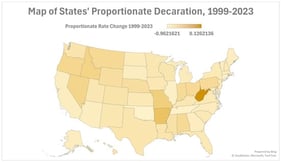
Map of Proportionate Juvenile Decarceration of U.S. States 1999–2023 (change in youth commitment rates from 1999 to 2023 as a proportion of 1999 youth commitment rates).

Highly Accessed Articles

News & Conferences

Latest Issues

Open for Submission

Journal Sections

Inclusive Research
Reprint

Inclusive Research

Is the Road More or Less Well Travelled?—2nd Edition
Editors: Patricia O’Brien
Critical Suicide Studies
Reprint

Critical Suicide Studies

Decolonial and Participatory Creative Approaches
Editors: Caroline Lenette
XFacebookLinkedIn
Soc. Sci. - ISSN 2076-0760