
Skip to Content
You are currently on the new version of our website. Access the old version .
  • 6.6
    Impact Factor
  • 13.0
    CiteScore
  • 26 days
    Submission to First Decision
  • 5 days
    Acceptance to Publication

Smart Cities

Smart Cities is an international, scientific, peer-reviewed, open access journal on the science and technology of smart cities, published monthly online by MDPI. The International Council for Research and Innovation in Building and Construction (CIB) is affiliated with Smart Cities and its members receive discounts on the article processing charges.
  • Open Access— free for readers, with article processing charges (APC) paid by authors or their institutions.
  • High Visibility: indexed within Scopus, ESCI (Web of Science), Inspec, AGRIS, and other databases.
  • Journal Rank: JCR - Q1 (Urban Studies) / CiteScore - Q1 (Urban Studies)
  • Rapid Publication: manuscripts are peer-reviewed and a first decision is provided to authors approximately 25.1 days after submission; acceptance to publication is undertaken in 4.5 days (median values for papers published in this journal in the first half of 2026).
  • Recognition of Reviewers: Reviewers whose reports are timely and of high quality receive an APC discount voucher for a future publication in an MDPI journal. Become a reviewer.

Get Alerted

Add your email address to receive forthcoming issues of this journal.

All Articles (997)

  • Article
  • Open Access

Data-Driven Safety Screening for Smart-City Urban Bicycle-Route Networks

  • Deo Chimba,
  • Rheecha Sharma and
  • Joshua Jones
  • + 2 authors

Smart-city mobility strategies aim to shift urban car trips to cycling, and that shift materializes only where streets are safe enough for ordinary riders. Many U.S. cities nevertheless expand cycling networks administratively, designating existing arterials rather than redesigning them, although whether designation carries safety information has not been tested at a network scale. Integrating a statewide crash file with a linear-referenced roadway inventory, this study analyzes 6930 unique police-reported pedalcycle crashes in Tennessee (2002–2026). Designated routes carry 17.4% of crashes and are faster (41.0 versus 37.4 mph), busier, and wider than other crash locations (all p < 0.001). In county-clustered logit models, designation was associated with higher fatal odds (OR = 1.697, 95% CI 1.15–2.50) but not significantly with fatal-or-serious odds or, in a zero-truncated negative binomial model, with crash frequency, and exposure-normalized rates are lower. The result is therefore a conditional-severity association consistent with the arterial character of designated corridors, not evidence that designated routes are generally more dangerous to ride. Designated routes hold 15.6% of analyzed crash-bearing mileage but 24.2% of fatal crashes and 20.5% of the USD 5.99 billion societal cost, and 92.3% of their mileage is high-stress. The interpretable logit (cross-validated AUC = 0.766) matches gradient boosting and random forests, and an empirical Bayes corridor index validated on 2019–2025 crashes captures 37.6% of later fatal and serious crashes on screened crash-bearing segments (about 22% statewide) within 10% of their mileage, comparable to crash density ranking; the results support pairing designation with speed management or separation, which the index can help prioritize within an urban safety digital twin.

Smart Cities

6 November 2026

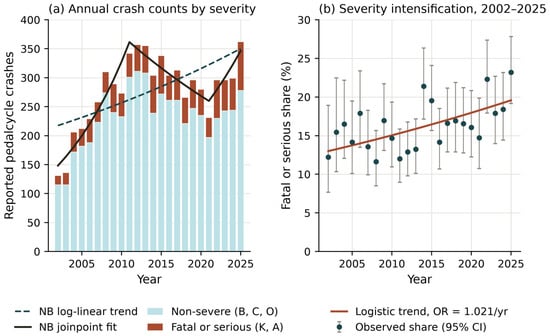
Statewide pedalcycle crash trends, 2002–2025. (a) Annual crash counts decomposed into fatal or serious (K, A) and non-severe (B, C, O) outcomes, with a log-linear negative binomial (NB) trend and a two-joinpoint NB fit (joinpoints at 2011 and 2021); (b) annual fatal-or-serious share with 95% Wilson confidence intervals and a fitted logistic trend.
  • Review
  • Open Access

Pedestrian crossings are essential elements of sustainable road design because they mediate interactions among motorized traffic, active mobility, and users with diverse abilities. At night, poor pedestrian visibility, delayed yielding, excessive approach speed, and inaccessible or poorly coordinated infrastructure can turn a compliant crossing into a high-risk conflict point. Intelligent pedestrian-crossing illumination integrates approach-specific photometry, warning devices, sensing, communications, edge processing, and artificial intelligence to adapt the road environment to pedestrian presence and traffic conditions. This critical review evaluates such systems as people-centered smart-road infrastructure rather than isolated lighting devices. Evidence is synthesized across road-safety performance, human factors, sensing and AI reliability, inclusive design, operational energy, life-cycle burdens, economic considerations, and ecological effects of artificial light at night. Studies show that improved pedestrian contrast, appropriate luminaire placement, vertical illumination, and timely warnings can enhance detection, yielding, approach speed, and stopping behavior. However, current evidence is heterogeneous and dominated by simulators, staged pedestrians, single-site demonstrations, short monitoring periods, and surrogate outcomes. Critical aspects such as crash reduction, adverse-weather reliability, accessibility, resilience, life-cycle performance, and biodiversity impacts are rarely assessed together. Three complementary outputs are proposed: an evidence-maturity framework, a multidimensional trade-off framework, and a stage-gated pathway for context-sensitive deployment.

Smart Cities

4 November 2026

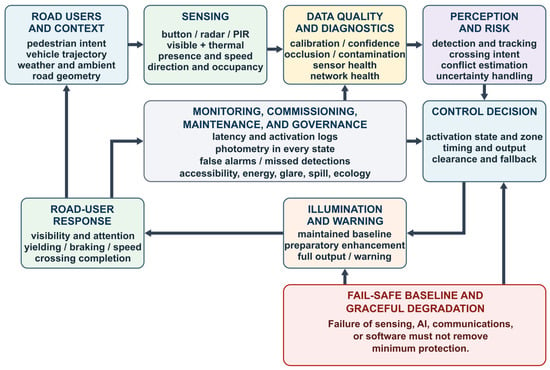
End-to-end safety architecture of an intelligent pedestrian-crossing illumination system, including monitoring and fail-safe degradation.
  • Article
  • Open Access

Artificial intelligence is becoming an increasingly used component in municipal operations, with applications spanning administrative automation, decision support, citizen interfaces, and predictive analytics across domains such as mobility, health and social services, and environmental management. While the literature documents benefits in operational efficiency and decision quality, most concrete evidence focuses primarily on internal efficiency. Urban digital twins have become commonplace in most European cities and smart cities globally. However, the role of AI within urban digital twins remains comparatively underexplored. This article addresses these gaps through a qualitative analysis of AI in Helsinki’s Experimentation Accelerator platform experiments and by comparing them against a DT framework based on the literature. Through this, we analyze how AI is piloted in municipal applications and how the identified use cases of AI align with the components of urban digital twins, identifying potential roles for AI in the urban digital twin as well as directions for future development.

Smart Cities

3 November 2026

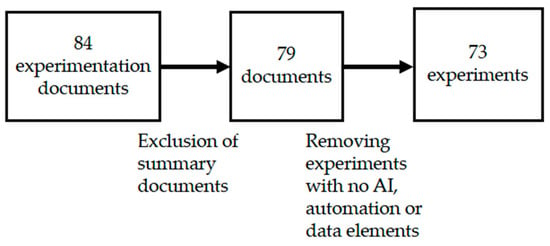
The exclusion process applied for analyzing the experimentation documents.
  • Article
  • Open Access

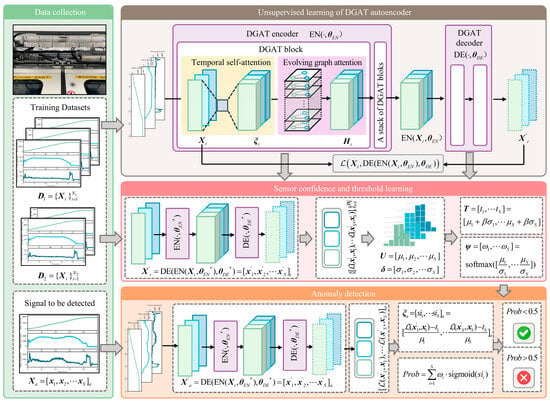
The anomaly detection of urban rail vehicle door systems is crucial for the security and reliability of rail vehicles, and unsupervised methods have received particular attention in anomaly detection due to the scarcity of anomaly data. However, existing studies have the following limitations: (1) The dynamic interrelationships between different sensor variables are not explicitly considered, which is detrimental to the learning of normal patterns. (2) The detection performance is limited due to the reliance on manual threshold settings and the lack of confidence measures for different sensor variables. To overcome the abovementioned limitations, a dynamic graph attention-based unsupervised bi-learning framework for the anomaly detection of rail vehicle door systems is proposed in this paper. First, a dynamic graph attention block (DGAT block) is designed to model dynamic interactions between sensor variables and fuse information during signal coding. Then, a bi-learning framework is developed to automatically learn thresholds and quantify the confidence of sensor variables for anomaly detection. The proposed method is verified on a real rail vehicle door system. Compared with the state-of-the-art autoencoder-based methods that are applicable to multivariate time series data, the proposed method improves the best competing precision and F1-score by 7.7% and 4.3%, respectively, while reducing the false positive rate (FPR) by 88.9%.

Smart Cities

29 October 2026

The proposed rail vehicle door system anomaly detection method.

Highly Accessed Articles

News & Conferences

Latest Issues

Open for Submission

Journal Sections

XFacebookLinkedIn
Smart Cities - ISSN 2624-6511