Skip to Content
You are currently on the new version of our website. Access the old version .
  • 1.6
    Impact Factor
  • 1.9
    CiteScore
  • 28 days
    Submission to First Decision
  • 5 days
    Acceptance to Publication

Pharmacoepidemiology

Pharmacoepidemiology is an international, peer-reviewed, open access journal on high-quality epidemiological, clinical research across the fields of clinical pharmacology and epidemiology, published quarterly online by MDPI.

Get Alerted

Add your email address to receive forthcoming issues of this journal.

All Articles (144)

  • Article
  • Open Access

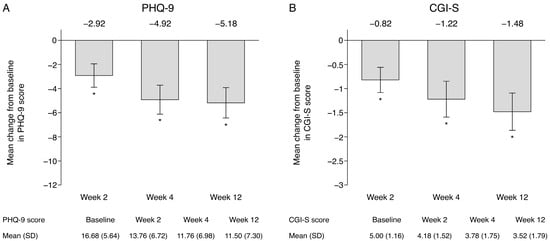
Background: This study evaluated the effects of adjunctive brexpiprazole in adult patients with Major Depressive Disorder (MDD) who experienced an inadequate response to antidepressant therapy. Methods: This 12-week, multicentre, naturalistic, prospective observational study enrolled 60 adults with MDD and an inadequate response to at least two antidepressant treatments. Depressive symptoms, anxiety, clinician-rated illness severity and improvement, functioning, and quality of life were assessed using the Patient Health Questionnaire-9 (PHQ-9), Generalized Anxiety Disorder-7 (GAD-7), Clinical Global Impressions—Severity (CGI-S) and —Improvement (CGI-I), Sheehan Disability Scale (SDS), and World Health Organization Quality of Life—Brief Version (WHOQOL-BREF). GAD-7 was assessed only at baseline and week 12. Inferential analyses used complete observations without imputation. Results: Fifty participants (83.3%) completed week 12 and contributed to the principal symptom analyses. Mean PHQ-9 scores decreased from 16.68 ± 5.64 to 11.50 ± 7.30, and GAD-7 scores from 13.32 ± 4.98 to 9.80 ± 5.63 (both p < 0.001). At week 12, PHQ-9 response and remission rates among these 50 participants were 38.0% and 22.0%; corresponding GAD-7 rates were 34.0% and 14.0%. Mean CGI-S decreased from 5.00 ± 1.16 to 3.52 ± 1.79 (p < 0.001); mean week-12 CGI-I was 2.44 ± 1.22. In 43 participants with all three SDS domains recorded at both visits, mean total SDS decreased from 16.79 ± 7.26 to 11.74 ± 8.65 (p < 0.001). Physical, psychological, and social relationship WHOQOL-BREF domains improved, whereas the overall quality-of-life item did not change significantly. Conclusions: In clinical practice, adjunctive brexpiprazole was associated with early improvement in depressive symptoms and improvements in anxiety symptoms, illness severity, psychosocial functioning, and quality-of-life domains.

Pharmacoepidemiology

6 November 2026

Mean changes from baseline in (A) PHQ-9 scores and (B) CGI-S scores among participants with complete observations (n = 50 at each visit). Changes were calculated as follow-up minus baseline; negative values indicate improvement. Error bars represent pointwise 95% confidence intervals for the mean of paired changes. * p &lt; 0.05 versus baseline, based on Bonferroni-adjusted pairwise comparisons. PHQ-9, Patient Health Questionnaire-9; CGI-S, Clinical Global Impressions—Severity; CI, confidence interval; SD, standard deviation.
  • Article
  • Open Access

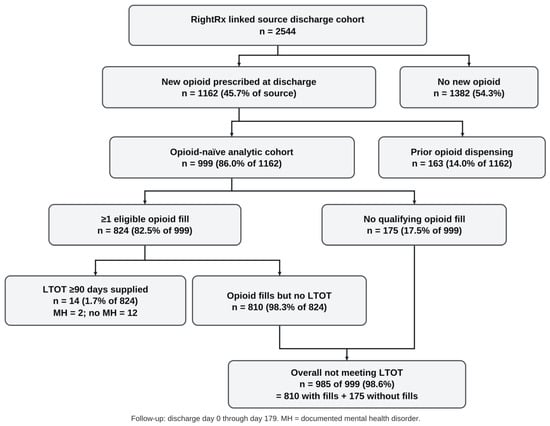
Background/Objectives: We evaluated the association of documented mental health disorders with long-term opioid therapy (LTOT) after hospital discharge in predominantly cardiothoracic surgical RightRx participants. Methods: The retrospective cohort included 999 patients newly prescribed an opioid at discharge. The 15-category administrative definition was checked against patient-level diagnosis records, and two erroneous code mappings were corrected. The corrected mental health composite identified 153 patients. LTOT was defined as ≥90 cumulative modeled days supplied within discharge days 0–179. Adjusted Firth regression included age, sex, and trial arm. Results: Four patients were reclassified from the original 157-person mental health group; none met LTOT. LTOT occurred in 14/999 (1.4%): 2/153 (1.31%) with and 12/846 (1.42%) without a corrected documented mental health disorder (adjusted OR 1.07, 95% CI 0.20–3.73; risk difference −0.11 percentage points, 95% CI −1.52 to 3.28). The adjusted opioid fill-rate ratio was 1.51 (95% CI 1.27–1.79), attenuating to 1.14 (95% CI 0.97–1.35) after removal of two extreme fill counts. A distinct late-dispensing outcome (≥1 eligible opioid fill on days 90–179) occurred in 89 patients (adjusted OR 1.42, 95% CI 0.80–2.41). Conclusions: LTOT was rare, and the confidence interval remains compatible with clinically important associations. Coding corrections did not materially alter the principal interpretation. The fill-frequency finding is upper-tail-sensitive and exploratory. Incomplete longitudinal pharmacy eligibility and predominantly surgical case mix limit inference.

Pharmacoepidemiology

2 November 2026

Selection of the 999-patient opioid-naïve cohort and qualifying 180-day outpatient opioid outcomes. Percentages use the immediate parent group as the denominator unless otherwise specified. Overall, 14/999 (1.4%) met LTOT and 985/999 (98.6%) did not, including the 175 patients without follow-up opioid dispensing. LTOT = long-term opioid therapy; MH = documented mental health disorder.
  • Article
  • Open Access

Comparative Cardiac Adverse-Event Reporting Patterns Across Antineoplastic Therapeutic Classes: A Global Analysis Using WHO VigiAccess

  • Esteban Zavaleta-Monestel,
  • Jeaustin Mora-Jiménez and
  • Sebastián Arguedas-Chacón
  • + 4 authors

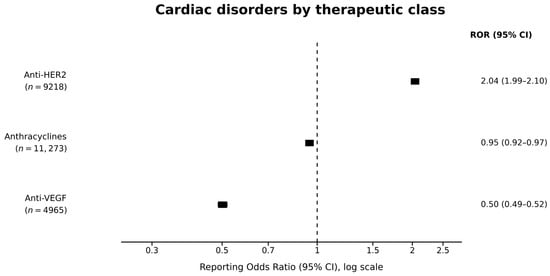
Background/Objectives: Cardiac adverse-event reports for antineoplastic agents may differ across regulatory coding categories, affecting disproportionality estimates. We compared anthracyclines, human epidermal growth factor receptor 2 (HER2)-targeted agents, and vascular endothelial growth factor (VEGF) inhibitors. Methods: We analyzed aggregated World Health Organization VigiAccess data retrieved on March 23, 2026, for eight drugs in three classes. Medical Dictionary for Regulatory Activities (MedDRA) System Organ Class and cardiac Preferred Term distributions were described; reporting odds ratios (RORs) with 95% confidence intervals (CIs) were calculated using a restricted antineoplastic comparator cohort. Pairwise within-cohort comparators and cardiac/vascular outcomes were explored; an external database-wide comparison was not feasible. Results: Across 389,068 drug-specific report observations, anti-HER2 agents had the highest proportion classified under Cardiac disorders (10.43%) and the strongest class-level ROR (2.04; 95% CI 1.99–2.10); trastuzumab had the highest drug-level ROR (2.22; 2.16–2.29). Anthracyclines contributed the most cardiac reports (11,273), whereas anti-VEGF agents showed greater proportional reporting in vascular disorders (10.86%) and prominent myocardial infarction reports among cardiac Preferred Terms. Exploratory analyses demonstrated sensitivity to comparator composition and outcome definition. Conclusions: Reporting patterns varied across classes, but these findings do not establish incidence, causality, comparative clinical risk, or independent grounds for changing surveillance protocols.

Pharmacoepidemiology

2 November 2026

Disproportionality analysis of reports classified under cardiac disorders by therapeutic class. Squares represent reporting odds ratios and horizontal lines represent 95% confidence intervals. For each therapeutic class, the comparator comprised the pooled drug-specific report observations for the remaining two classes. The value n denotes the number of report observations classified under cardiac disorders for the index class. The vertical dashed line indicates the null value of ROR = 1.
  • Article
  • Open Access

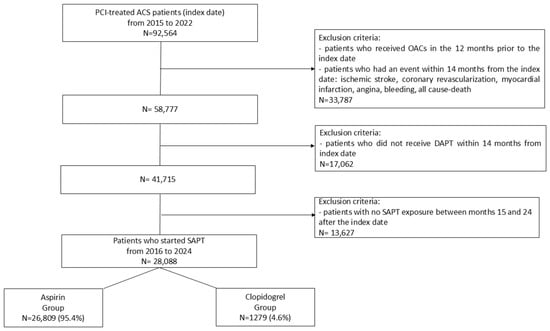
Background: Recent guidelines on Chronic Coronary Syndromes, for long-term monotherapy after acute coronary syndrome (ACS) or revascularization, have upgraded the recommendation for clopidogrel to the same strength as aspirin. We aimed to evaluate temporal trends and predictors of aspirin use compared to clopidogrel monotherapy following dual antiplatelet therapy (DAPT) in light of recent evidence from RCTs. Methods: Between 2016 to 2024, using healthcare databases of Lombardy, we conducted a real-world study identifying patients aged ≥40 years with PCI-treated ACS treated with clopidogrel or aspirin following DAPT. After DAPT, the trend of prescribing patterns of clopidogrel or aspirin monotherapy was evaluated. Multivariable logistic regression analysis was performed to investigate the association between patients’ clinical profiles and the likelihood of receiving either treatment. Results: Among 28,088 patients, 4.6% (1279) received clopidogrel and 95.4% (26,809) aspirin as monotherapy. This prevalence remained substantially stable over time. Patients receiving clopidogrel were older (71.5 vs. 65.3), had a greater burden of comorbidities, and were more frequently exposed to concomitant medications for cardiovascular prevention (all p value < 0.001). Older age, history of vascular events, diabetes mellitus, and gastro-intestinal disorders were significantly predictive of the choice of clopidogrel monotherapy, while being male sex was associated with the probability of receiving aspirin. Conclusions: Despite emerging evidence favoring clopidogrel over aspirin, the latter continues to be widely used after DAPT. Paradoxically, clopidogrel is primarily preferred for older and more severely ill patients, suggesting that it may be likely perceived as an option in this subgroup population. Further studies are needed to evaluate changes in clinical approach in response to the latest evidence.

Pharmacoepidemiology

29 October 2026

Study flowchart. Abbreviations. PCI: percutaneous coronary intervention; ACS: acute coronary syndrome; OACs: oral anticoagulants; DAPT: dual antiplatelet therapy, SAPT: single antiplatelet therapy.

Highly Accessed Articles

News & Conferences

Latest Issues

Open for Submission

Journal Sections

XFacebookLinkedIn
Pharmacoepidemiology - ISSN 2813-0618