
Skip to Content
  • 5.8
    Impact Factor
  • 10.2
    CiteScore
  • 16 days
    Submission to First Decision
  • 3 days
    Acceptance to Publication

Nutrients

Nutrients is an international, peer-reviewed, open access journal of human nutrition published semimonthly online by MDPI. The Asia Pacific Nutrigenomics Nutrigenetics Organisation (APNNO), Italian Society for Pediatric Gastroenterology, Hepatology and Nutrition (SIGENP), Nutrition Society of New Zealand (NSNZ), Ocular Wellness & Nutrition Society (OWNS) and others are affiliated with Nutrients and their members receive discounts on article processing charges.

Get Alerted

Add your email address to receive forthcoming issues of this journal.

All Articles (40,009)

  • Article
  • Open Access

Background/Objectives: Although investments are being made in school meals worldwide, their quality remains problematic due to financial, knowledge-related, or logistical factors. The aim of this study was to examine the nutritional adequacy of school meals in Zagreb (Croatia) and to determine whether the energy adequacy differs depending on selected environmental factors such as school location and neighborhood poverty rate, type of meal service system, staffing, menu planning, and participation in school-based nutrition initiatives and programs. Methods: The study was conducted in 14 primary schools in the city of Zagreb during the 2016/2017 and 2017/2018 school years. A total of 2469 daily menus were collected (2379 breakfasts, 2376 lunches, and 2103 snacks). Menus and information on environmental factors were obtained through on-site audits, direct dialogs with staff, and school curricula. The energy and macronutrient content of school meals was analyzed using Prehrana software version 1.0 and evaluated according to national guidelines. Results: The energy and macronutrient content varied greatly among schools. In 75% of schools, the average energy and macronutrient content of breakfasts exceeded 110% of recommendations, while 70% of schools averaged less than 90% of recommendations for energy and macronutrients in lunches. Considering energy and macronutrient content, three breakfasts, 38 lunches, and one snack met all four recommendations. Among the school-level environmental factors observed, the proportion of energy-adequate meals differed significantly by kitchen type, number of on-site-prepared meals, and neighborhood poverty for lunches, as well as school garden presence for breakfasts. Conclusions: The findings reveal differences in the nutritional adequacy of school meals across primary schools in Zagreb and may help guide future improvements in school food system guidelines and practices.

Nutrients

9 November 2026
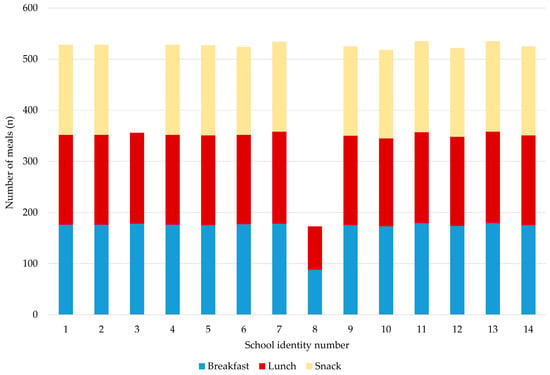
Type and total number of meals offered in annual school menus across primary schools (N = 14) in Zagreb.
  • Review
  • Open Access

Ergothioneine (ET) is an exogenous thiol antioxidant present mainly in mushrooms and, in smaller amounts, in various other food products as well. Numerous beneficial health effects of ET have been reported, suggesting that ET is a vitamin-like compound. Evidence that ET prevents and inhibits the development of neurodegenerative diseases, especially Alzheimer’s disease and Parkinson’s disease, has been accumulated based on studies of cellular and animal models, as well as epidemiologic and interventional studies in humans. The mechanism of the neuroprotective action of ET remains to be elucidated. Apart from the direct antioxidant effect, ET was found to stimulate an endogenous antioxidant defense through the activation of Nrf2 signaling while also affecting other signaling pathways. The accumulating literature data suggest that an ET-rich diet could be recommended for the prevention of neurodegeneration in the general population, but such a recommendation, though noteworthy, is not yet adequately supported by the limited human intervention data, and further studies are needed.

Nutrients

8 November 2026

  • Article
  • Open Access

Background/Objectives: Consumers often hold positive attitudes towards sustainable food, but this rarely translates into behaviour, as everyday food decisions are shaped by routines, constraints and situations. Research on food-related mobile applications has focused mainly on their functions or persuasive power, with less attention to whether their content matches the conditions under which consumers decide. We conceptualise such applications as decision-support environments and examine how their content could be tailored to behavioural readiness to change. Methods: We combined the Transtheoretical Model (stages of change, SOC) and the COM-B model. Three quantitative studies among Polish consumers examined food literacy, decisional balance, values, well-being and use of mobile applications. Results: We found non-linear differences across stages in motivational profiles and values, with health as the most consistent motivator. Readiness was not linearly related to well-being or engagement with digital tools: consumers at the earliest stage did not report the lowest well-being, and some consumers willing to use sustainability-oriented applications were unaware that such applications existed. Conclusions: Standardised, persuasive approaches are, therefore, of limited use. We propose the SOC–COM-B framework as a conceptual and decision-support design approach for organising application content according to behavioural readiness. It is a basis for prospective testing and informs developers of nutrition-related applications.

Nutrients

8 November 2026

  • Review
  • Open Access

Childhood diet may shape immune and inflammatory trajectories through interacting metabolic, microbial, and developmental pathways, but the long-term human evidence remains heterogeneous. This scoping review mapped longitudinal studies examining dietary exposures from birth to 18 years in relation to subsequent immune, inflammatory, allergic, autoimmune, gastrointestinal, immunometabolic, hepatic, neurocognitive, and endocrine–immunometabolic outcomes. The review was conducted in accordance with Joanna Briggs Institute guidance and reported according to PRISMA-ScR principles. A total of 403 studies were included. Evidence was concentrated in infancy and early childhood and predominantly addressed allergic and atopic outcomes; evidence on other immunological outcomes and on middle childhood and adolescence was more limited. Thirty studies provided relatively direct immunometabolic evidence, 149 contributed mechanistically indirect evidence, and 224 primarily reported longitudinal clinical diet–outcome associations. The principal mechanistic axes involved allergic sensitization and immune tolerance, lipid and fatty-acid metabolism, micronutrient and antioxidant pathways, cytokine signaling, gut microbiome and metabolite pathways, and human-milk-derived bioactive signals. Dietary diversity and overall diet quality intersected with several of these pathways. Associations were frequently context-dependent, varying according to developmental timing, host susceptibility, genetic background, immune state, and feeding context. Mechanistic interpretation rests on convergence across complementary studies rather than on complete pathways demonstrated within individual cohorts. Overall, the evidence is compatible with a proposed life-course nutritional immunology framework in which childhood diet acts as a dynamic developmental exposure interacting with microbial, metabolic, and immune processes; however, this framework derives mainly from early-life exposures and allergic and atopic outcomes, and the persistence of effects beyond early childhood remains insufficiently demonstrated. Limitations include restriction to English-language publications, marked methodological heterogeneity, residual confounding, and the absence of a formal risk-of-bias assessment.

Nutrients

8 November 2026

Highly Accessed Articles

News & Conferences

Latest Issues

Open for Submission

Journal Sections

XFacebookLinkedIn
Nutrients - ISSN 2072-6643