Skip to Content
  • 2.4
    Impact Factor
  • 4.0
    CiteScore
  • 21 days
    Submission to First Decision
  • 4 days
    Acceptance to Publication

Micro

Micro is an international, peer-reviewed, open access journal on microscale and nanoscale research and applications in physics, chemistry, materials, biology, medicine, food, environment technology, engineering, etc., published quarterly online by MDPI.
  • Open Access— free for readers, with article processing charges (APC) paid by authors or their institutions.
  • High Visibility: indexed within Scopus, ESCI (Web of Science) and other databases.
  • Journal Rank: CiteScore - Q2 (Engineering (miscellaneous))
  • Rapid Publication: manuscripts are peer-reviewed and a first decision is provided to authors approximately 20.4 days after submission; acceptance to publication is undertaken in 3.9 days (median values for papers published in this journal in the first half of 2026).
  • Recognition of Reviewers: Reviewers whose reports are timely and of high quality receive an APC discount voucher for a future publication in an MDPI journal. Become a reviewer.
  • Micro is a companion journal of Micromachines.

Get Alerted

Add your email address to receive forthcoming issues of this journal.

All Articles (334)

  • Review
  • Open Access

Hydrogen is widely regarded as a key component of future low-carbon energy systems, and nanomaterials are central to improving the efficiency and performance of the technologies that will deliver it. Existing reviews typically treat hydrogen production, storage and carbon capture separately; this narrative review compares nanomaterials across these selected domains using qualitative evidence categories and, where the data permit, indicative cost benchmarks. Of the 22 classes assessed, 19 are classified on the maturity axis. Of those, 14 show laboratory evidence only, three reach prototype or pilot evidence and two reach field or commercial evidence in the reviewed application. The remaining three have industrial precedent only in other applications and are not classified on this axis. Across six unmatched storage examples, reported capacities vary substantially, but the data do not support an application-specific maturity relationship. Cost data for nanomaterial-based hydrogen storage are particularly scarce compared with production and carbon capture, where indicative but inconsistently reported benchmarks exist. Commercialisation pathways, hydrogen carrier technologies and environmental, health, safety and life-cycle considerations are also examined alongside the potential contribution to industrial decarbonisation. Key research priorities are identified, including a five-point minimal reporting checklist (TERC) intended to make future cost reporting more comparable.

Micro

5 November 2026
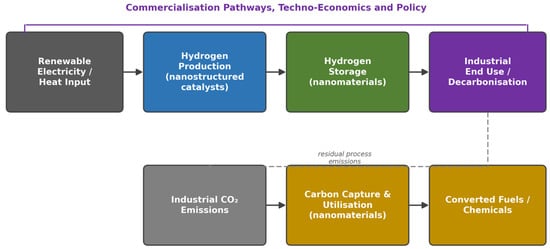
Overview of the nanomaterial-enabled hydrogen value chain, from production through storage to industrial end use, alongside the parallel carbon capture and utilisation pathway. Commercialisation pathways, techno-economics and policy act across the full chain.
  • Review
  • Open Access

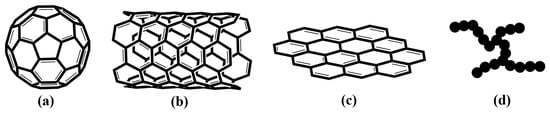
Carbon nanofillers have become a research hotspot in high-performance polymer composites, yet the correlation between filler dimensionality and macroscopic properties remains to be systematically elucidated. This review classifies carbon nanofillers into zero-dimensional (fullerenes, nanodiamonds), one-dimensional (carbon nanotubes, nanofibers), two-dimensional (graphene, nanoplatelets), and three-dimensional (assembled carbon black aggregates, graphene foams, and CNT sponges, whose 0D/1D/2D building blocks are specified where relevant) categories and compares their effects on electrical, mechanical, and thermal properties. The findings reveal that dimensionality significantly influences performance through three important pathways, namely percolation network efficiency, interfacial stress transfer, and thermal transport mechanisms including interfacial thermal resistance and phonon scattering. Zero-dimensional fillers excel in wear resistance, one-dimensional fillers impart optimal impact toughness with high aspect ratio, two-dimensional fillers provide the best tensile strength and modulus enhancement with ultra-high specific surface area, and three-dimensional fillers establish long-range continuous reinforcing networks with interconnected porous structures at low loadings. This review also elucidates the synergistic effects of carbon nanofillers with different dimensionalities, demonstrating that judicious filler combinations can break through the performance ceiling of single-filler systems, and three fundamental synergistic mechanisms (network bridging, network filling, and interlayer intercalation/exfoliation) are identified. This review provides a systematic theoretical framework and experimental basis for filler selection and structural design of high-performance polymer composites.

Micro

4 November 2026

Structure of fullerene (a), carbon nanotube (b), graphene (c), and aggregate carbon black (d).
  • Article
  • Open Access

Synthesis and Catalytic Properties of Pure and Pd-Modified SrMoO4 Catalysts for VOC Oxidation

  • Maria Gancheva,
  • Ralitsa Velinova and
  • Anton Naydenov
  • + 6 authors

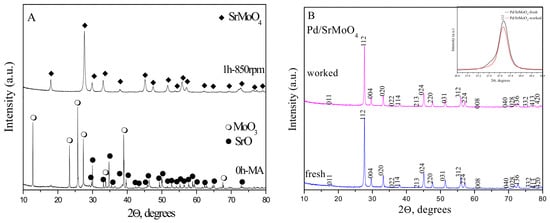
SrMoO4 nanoparticles were effectively prepared through direct mechanochemical activation carried out under ambient conditions. In order to improve their catalytic properties, the obtained SrMoO4 was modified with palladium and comprehensively characterized by X-ray diffraction analysis (XRD), N2-physisorption, transmission electron microscopy (TEM), and X-ray photoelectron spectroscopy (XPS). Catalytic tests for VOCs were carried out. The XRD patterns showed that the as-synthesized SrMoO4 and Pd/SrMoO4 samples are crystallized in a scheelite-type structure. It was found that the use of SrMoO4 as a catalytic support enables the preparation of a catalytic system with highly dispersed Pd species and strong metal–support interactions. The presence of reduced Mo species on the Pd-modified SrMoO4 catalyst, together with oxygen-deficient surface regions, suggests that the Mo species actively participate in the catalytic process through their redox cycle. The possible coexistence of both Pd2+ and Pd0 species and partially reduced Mo environments further indicates the active involvement of the Pd/SrMoO4 surface in oxygen activation and VOC oxidation, supporting the Mars–van Krevelen mechanism as the most probable reaction route. In addition, the high stability of the material demonstrates the reliability of the Pd-modified SrMoO4 catalyst. Therefore, this material can be considered a promising catalyst in environmental catalysis.

Micro

2 November 2026

XRD patterns of the initial mixture and after mechanochemical treatment (A) and of fresh and worked Pd/SrMoO4 catalyst (B).
  • Article
  • Open Access

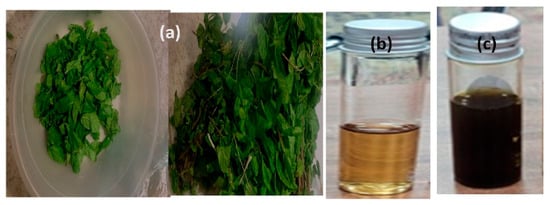
Bacterial infections, predominantly affecting the gastrointestinal tract and oral cavity, represent a considerable health burden and remain among the leading causes of morbidity and mortality globally. Exploration of therapeutic mediators from medicinal plants continues to be a foundational strategy in modern drug development. The objective of the current study was to synthesize a Mentha arvensis-mediated biogenic iron oxide heterophase nanocomposite as a green therapeutic approach to controlling oral and gastrointestinal (GI) bacteria. Green synthesis is sustainable and an economic alternative for producing nanoparticles, because it is ecologically benign. For the first time native Al-Baha M. arvensis biomass was used for green preparation of mixed-phase iron oxide nanoparticles, and these were characterized by visual observation, X-ray diffraction, scanning electron microscopy, and Energy-Dispersive X-ray and FT-IR spectroscopy. The materialization of a dark brown color preliminarily points toward the establishment of iron oxide heterophase NPs due to reduction by phytochemicals. SEM demonstrated particle sizes approximately ranging between 30 and 80 nm, whereas EDX evidenced the predominance of Fe and O in the nanocomposite. Iron oxide heterophase NPs were also tested against human pathogens. The results displayed effective antibacterial activity, which seems concentration-dependent. The largest zone was recorded for S. aureus, with a size of 25 mm, and the smallest zone for L. garvieae at 100 µg/mL, with a size of 11 mm. The findings of this study indicate that iron oxide heterophase composites possess potential as biogenic antibacterial agents with environmentally friendly properties. Further development and optimization of this nanocomposite could contribute meaningfully to advancements in pharmaceutical and medical areas.

Micro

31 October 2026

(a) M. arvensis leaf biomass; (b) aqueous extract of biomass; (c) FeCl3 precursor solution which resulted in iron oxide heterophase NPs via green synthesis.

Highly Accessed Articles

News & Conferences

Latest Issues

Open for Submission

Journal Sections

XFacebookLinkedIn
Micro - ISSN 2673-8023