Skip to Content
  • 22 days
    Submission to First Decision
  • 23 days
    Acceptance to Publication

International Journal of Medical Devices

International Journal of Medical Devices is an international, peer-reviewed, open access journal on medical devices research, development and applications, published quarterly online by MDPI.
  • Open Access— free for readers, with article processing charges (APC) paid by authors or their institutions. 
  • Rapid Publication: first decisions in 18 days; acceptance to publication in 7 days (median values for MDPI journals in the first half of 2026).
  • Recognition of Reviewers: Reviewers whose reports are timely and of high quality receive an APC discount voucher for a future publication in an MDPI journal. Become a reviewer.
  • IJMD is a companion journal of Sensors.

Get Alerted

Add your email address to receive forthcoming issues of this journal.

All Articles (10)

  • Review
  • Open Access

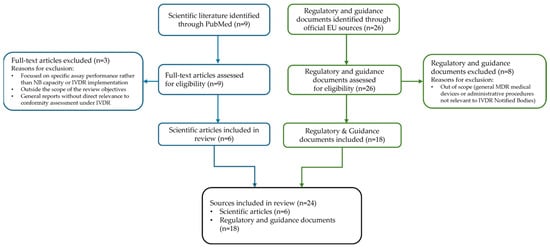
The transition from the IVDD directive to the IVDR regulation (EU) 2017/746 has radically transformed the European landscape of in vitro diagnostic medical devices, addressing the challenges of personalized medicine and the vulnerabilities exposed by the Poly Implant Prothèse (PIP) scandal, which exclusively concerned general medical devices but ultimately paved the way for the reform of both directives. This overhaul has placed Notified Bodies (NBs) at the center of the system, extending their mandatory oversight from 8% to over 80% of devices on the market through a risk-based classification. A documentary search within the EUR-Lex and NANDO registries alongside a PubMed bibliographic analysis (2017–2026) reveals a severe structural imbalance: the strict requirements of Annex VII contracted the active network to just 19 units, slowing down certification timelines. The analysis demonstrates that these delays are further compounded by new intersectoral procedures, such as mandatory EMA consultations for companion diagnostics (CDx) and review timelines by EU Reference Laboratories (EURLs) for Class D devices. The discussion of these data underscores that while the successive transitional extensions introduced first by Regulation (EU) 2022/112 and subsequently by Regulation (EU) 2024/1860 temporarily averted a lack in healthcare supplies, long-term market stability cannot rely on continuous legislative delays but demands an operational optimization of this restricted oversight network.

Int. J. Med. Devices

17 November 2026

Flow diagram of source identification, screening and selection. Blue arrows indicate the scientific literature flow, and green arrows indicate the regulatory and guidance document flow. Sources included in the review were derived from both flows.
  • Communication
  • Open Access

RehabXR: A Mixed-Reality System for Delivery of Battlefield-Focused Vestibular Rehabilitation

  • Carrie W. Hoppes,
  • Holly Richard and
  • Pedram Hovareshti
  • + 10 authors

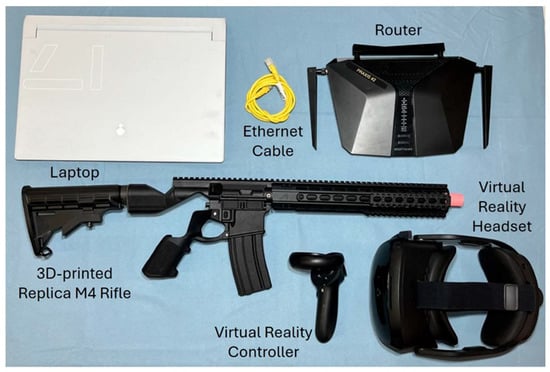
While most individuals recover from mild traumatic brain injury (mTBI) within 3 months, 10–20% continue to experience chronic post-concussive symptoms such as headaches, dizziness, and imbalance. These individuals may benefit from vestibular rehabilitation, but military medicine needs a device that can standardize key elements of vestibular rehabilitation while allowing customization and targeting military-relevant tasks. We designed RehabXR, a portable mixed-reality-based platform for assessment and rehabilitation of multisensory and cognitive impairments after mTBI. RehabXR includes a virtual reality headset, controller, custom 3D-printed replica M4 rifle, and three first-person shooter games targeting common impairments post-mTBI. To assess usability, facilitated group discussions were conducted with ten military clinicians with post-mTBI rehabilitation experience and ten individuals with a history of mTBI. Clinicians and individuals with a history of mTBI rated RehabXR prototype usability favorably, with average System Usability Scale scores of 84.5 (range 55.0–97.5) and 85.2 (range 77.5–95.0), respectively. Clinicians liked the realism, engagement, interactivity, applicability, portability, and transparency (availability of quantitative outcome metrics). Individuals with a history of mTBI liked the ease of use and reported the games were realistic, fun, and engaging. After four weeks of use, patients rated RehabXR usability favorably (although somewhat lower than the prototype) with an average System Usability Scale score of 70.89 (range 55.0–87.5). These findings support RehabXR’s feasibility and acceptability and provide a foundation for studies of clinical effectiveness and return-to-duty applications.

Int. J. Med. Devices

4 November 2026

The final RehabXR system.
  • Article
  • Open Access

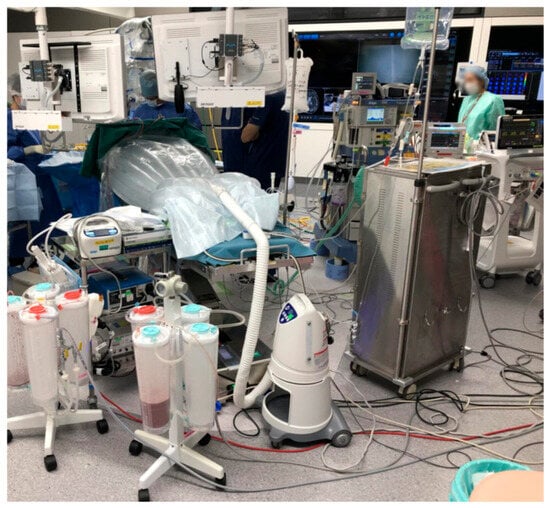
Background: With the increasing number of cables connected to medical equipment in the healthcare field, the number of medical accidents and incidents (A/Is) is also on the rise. Although wireless power transfer (WPT) for implanted devices has been partially implemented, no studies have reported WPT systems designed to operate along the floor of an operating room. Therefore, in this study, we propose a WPT system for medical equipment in operating rooms, aiming at practical implementation. Methods: Based on a legal review, on-site observations in operating rooms, and interviews, we defined the system specifications and developed a prototype. We then conducted a system verification of the prototype and performed experiments to supply power to various pieces of medical equipment. Results: Prototype testing confirmed that the system can deliver up to 1.5 kW (AC 100 V, 15 A); however, due to thermal protection, WPT operation stopped after approximately 30 min at 1.5 kW. Stable operation was demonstrated at 1.2 kW continuously for 8 h from floor-embedded WPT spots. It was also demonstrated that protective earthing can be implemented on the receiving side; nevertheless, the simplified resistance between earth terminals was 0.3 Ω, indicating the need for improvement to satisfy the ≤0.2 Ω requirement for medical locations. With reinforced EMC measures, power could be supplied to noise-sensitive ultrasound imaging equipment without image artifacts. Conclusions: This study demonstrates the feasibility and remaining challenges of a floor-embedded WPT concept for operating theaters. Key future tasks for practical implementation include achieving continuous 1.5 kW operation with thermal management, meeting protective earthing impedance requirements, and verifying compliance with human exposure guidelines (e.g., ICNIRP).

Int. J. Med. Devices

15 October 2026

Power cables crawl across the floor of an advanced operating room.
  • Article
  • Open Access

Multibeam Laser Telemetry for Head Protection of Visually Impaired Individuals

  • Lucas Bogaert,
  • Issa Berthe and
  • Clément Favey
  • + 3 authors

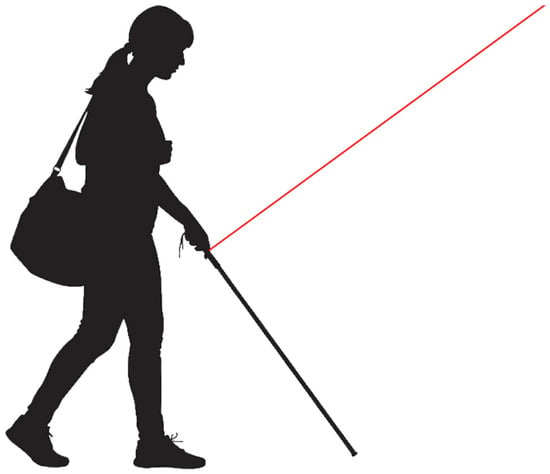
For individuals with visual impairment, traditional long canes provide insufficient protection against hazards at torso or head height. While various Electronic Travel Aids (ETAs) have been developed as complementary tools, a fully reliable solution for head protection remains elusive. Existing technologies do not yet provide a reliable and robust sensing solution suitable for all environments and all obstacle types. To address these limitations, this study presents the design and preliminary validation of a proof-of-concept multibeam laser triangulation architecture intended for head-level obstacle detection. The device uses a near-infrared (850 nm) laser source, split into three beams via a holographic grating, and a CMOS camera equipped with interference filters for signal acquisition. The hardware architecture integrates an FPGA and a low-RAM microcontroller to minimize power consumption, facilitating its use as a portable embedded device. Preliminary controlled laboratory experiments were conducted to validate the performance of the detector under varied environmental conditions and during conventional white cane use. The objective is to evaluate the feasibility of this sensing strategy, how it can enhance user safety and identify the remaining challenges toward an operational device.

Int. J. Med. Devices

12 October 2026

Illustration of the single laser beam oriented 45° upward for overhead obstacle detection.

Highly Accessed Articles

News & Conferences

Latest Issues

Open for Submission

Journal Sections

XFacebookLinkedIn
Int. J. Med. Devices - ISSN 3042-8890