
Skip to Content

Engineering Proceedings

Engineering Proceedings is an open access journal dedicated to publishing findings resulting from conferences, workshops, and similar events, in all areas of engineering. The conference organizers and proceedings editors are responsible for managing the peer-review process and selecting papers for conference proceedings.

Get Alerted

Add your email address to receive forthcoming volumes of this journal.

All Articles (8,509)

  • Proceeding Paper
  • Open Access

A Fault-Tolerant Edge Computing Architecture for Low-Latency Actuation in Agricultural IoT

  • Huynh Quy Khang,
  • Pham Chi Thinh and
  • Truong Minh Thai
  • + 1 author

Latency and connectivity problems in traditional cloud computing platforms regularly hinder the use of Internet of Things (IoT) systems for smart agriculture, especially in remote rural areas. Network quality is an essential element of centralized architectures since they require continuous telemetry transmission to support real-time control decisions. This sensitivity leads to delayed control responses and possible over-control of high-capacity farm machinery, raising operating expenses. To solve these problems, this paper proposes a lightweight edge computing architecture based on embedded microservices for fast, reliable, and automated control. The thresholds for different environmental conditions are set directly on the ESP32 microcontroller, and a wireless sensor network is used to create a fully local control loop. This configuration enables edge devices to autonomously and accurately recognize anomalies in environmental conditions at the monitoring site, eliminating the need to await cloud server processing. The experimental system was built to demonstrate the benefits of on-premises processing over cloud-based processing by carefully measuring trigger latency and fault tolerance under different network conditions in rural areas. The results indicate that the Edge architecture reliably lowers network round-trip latency, reducing overall trigger latency by 40.09% compared to the cloud platform. Without network-related trigger delays, the system lets local hardware make control decisions quickly and reliably, even if the network goes down completely. Additionally, the architecture substantially decreases unnecessary energy consumption by heavy agricultural actuators, such as aeration pumps used in aquaculture farms. In summary, this decoupled architecture improves real-time response and energy efficiency. It also makes it easier to add fog computing and distributed artificial intelligence to smart agriculture systems.

Eng. Proc.

4 November 2026
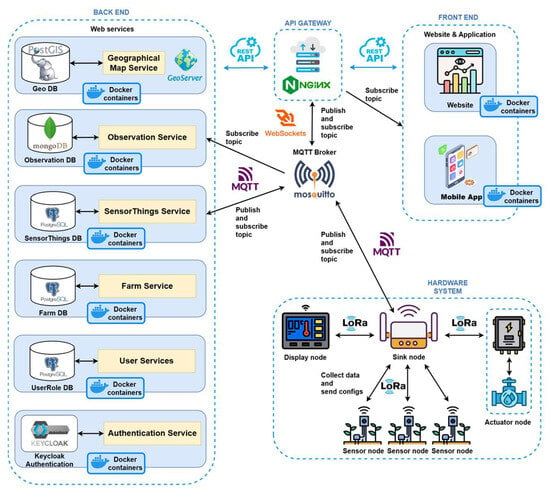
Suggested system architecture for edge computing.
  • Proceeding Paper
  • Open Access

Online assessment enables the collection of rich student response behavior data for learning diagnosis and instructional decision-making. However, classroom-level datasets are often limited and imbalanced, constraining deep learning performance. This study proposes a generative adversarial network (GAN)–convolutional neural network (CNN) framework, where GAN generates representative synthetic data to expand distribution coverage, and CNN with randomized input enhances generalization. Results show that the model achieves about 0.86 validation accuracy, with precision, recall, and F1-score all above 0.86 and validation loss around 0.8 with 6000 training samples. The developed framework improves classification stability and reduces discrepancies from small-sample-based manual classification, demonstrating its effectiveness for reliable learning diagnosis under limited data conditions.

Eng. Proc.

4 November 2026

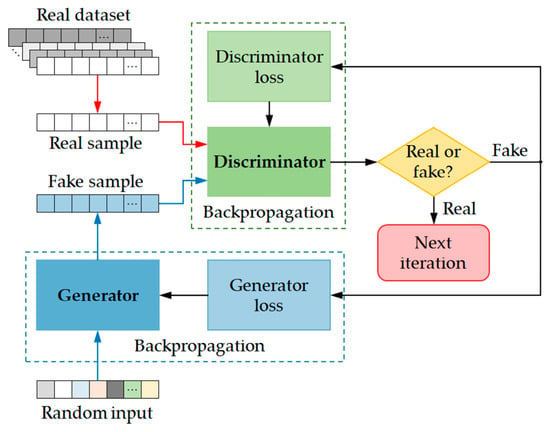
Schematic diagram of the data generation process using GAN.
  • Proceeding Paper
  • Open Access

This study examines the effect of wet and dry sulfate cycling on the durability and gamma-ray shielding of carbon-based nano-modified mortars for nuclear infrastructure in arid environments. Ordinary mortar was compared with 0.05% multi-walled carbon nanotubes (MWCNTs; designated CN5), 0.05% graphene nanoplatelets (GNPs; designated G5) and 0.10% GNP(designated G10) mortars before and after 4 months of cyclic sulfate exposure. After 4 months, the compressive strength remained stable or increased, while electrical resistivity decreased by 37–54%, showing transport-related degradation. G10 achieved the highest flexural strength of 12.7 MPa and showed 35% higher attenuation than the ordinary mortar at 1173 keV. G10 provided the best combined durability and shielding performance.

Eng. Proc.

3 November 2026

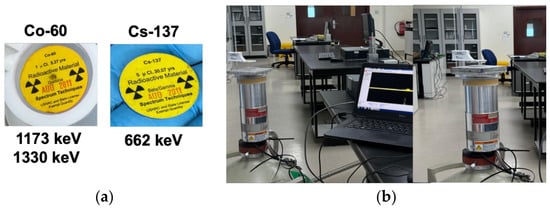
Gamma-ray attenuation measurement setup: (a) Co-60 and Cs-137 radioactive sources and (b) high-purity germanium (HPGe) detector system used for transmitted gamma-ray intensity measurements.
  • Proceeding Paper
  • Open Access

Digital Control of Uninterruptible Power Supply Systems

  • Yi-Yu Lu,
  • Bo-Ting Ye and
  • Rui-Hong Hong

An uninterruptible power supply (UPS) system delivers continuous power during outages, protecting equipment, data, and stability. It uses solar-charged lead–acid batteries as backup, with field programmable gate array (FPGA) controlling charging/discharging via relay switches. It also features free renewable energy, scalability, compact design, and easy maintenance.

Eng. Proc.

4 November 2026

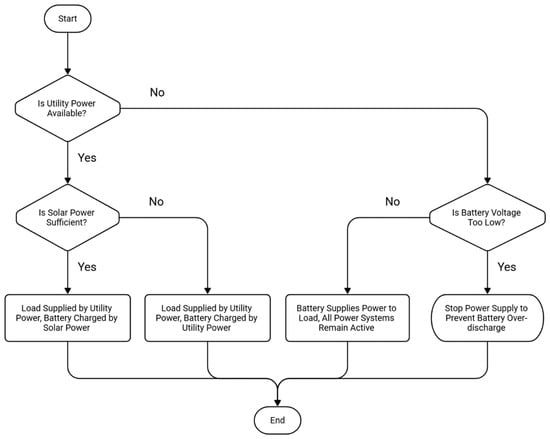
Flowchart of UPS control system.

Highly Accessed Articles

News & Conferences

Latest Volumes

Open for Submission

Journal Sections

XFacebookLinkedIn
Eng. Proc. - ISSN 2673-4591