
Skip to Content
You are currently on the new version of our website. Access the old version .
  • 57 days
    Submission to First Decision
  • 12 days
    Acceptance to Publication

Crafts

Crafts is an international, peer-reviewed, open access journal on all aspects of crafts published quarterly online by MDPI.
  • Open Access— free for readers, with article processing charges (APC) paid by authors or their institutions.
  • Rapid Publication: first decisions in 18 days; acceptance to publication in 7 days (median values for MDPI journals in the first half of 2026).
  • Recognition of Reviewers: Reviewers whose reports are timely and of high quality receive an APC discount voucher for a future publication in an MDPI journal. Become a reviewer.

Get Alerted

Add your email address to receive forthcoming issues of this journal.

All Articles (6)

  • Article
  • Open Access

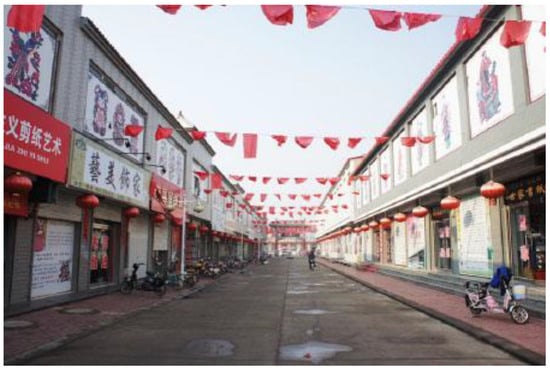
Chinese paper-cutting is recognised as intangible cultural heritage, but regional variation is usually explained through geographic, cultural and economic conditions. This study asks how practitioners interpret these conditions and negotiate the continuity and value of local traditions. A narrative review provides context for eight semi-structured interviews with two artist–studio owners in Yu County, Hebei, and six artists, teachers and a curator in Quanzhou and Zhangpu, Fujian. Three tensions emerged from the analysis: preservation and innovation, collective and individual authorship, and symbolic and market value. Participants linked them to competitions, teaching, professional exchange, packaging, functional design and artistic experimentation. The study contributes an artist-centred account of regional tradition as strategic negotiation: situated, purposeful choices made under institutional and market constraints. It distinguishes formal change from strategies of presentation, protection and sale, and suggests that heritage and commercial aims can coexist.

Crafts

9 November 2026

The ‘Chinese Paper-Cutting Street’ in Yu County, Hebei Province.
  • Article
  • Open Access

With reference to the practice of Old Believer iconography in Romania, this essay explores craft as process rather than product. That emphasis aligns with UNESCO’s 2003 Convention for the Safeguarding of the Intangible Cultural Heritage, Drawing on the theoretical framework of Ingold. Hägerstrand, Luehrmann and others, we examine the dynamic nature of transmission as both innovative and conservative. The essay draws on original fieldwork conducted by Clopot among Old Believers in Romania. It explores the lack of opportunities to learn the craft and receive formal recognition, and engages with the role of icons in individual lives and in sacred spaces. A key dimension to our argument is the often neglected “energy flow” that is implicit in iconographic practice.

Crafts

30 October 2026

  • Article
  • Open Access

This article examines how memory, knowledge, and lived experience become embedded within material environments and continue to shape engagement with historic wooden neighbourhoods. Drawing on the WoodiSH project (Wooden Cities: Memory, Sustainability and Craft in Historic Neighbourhoods), the article develops the concept of terroir as a framework for understanding historic built environments as material ecologies of memory. The analysis combines perspectives from material culture studies, phenomenology, Tim Ingold’s concepts of meshwork and wayfaring, and theories of embodied cognition. While the WoodiSH project provides the empirical context through studies of historic wooden neighbourhoods in Trondheim, Pori, and Vilnius, the article is primarily conceptual and uses observations from heritage environments and craft education as analytical entry points. The article argues that memory is not located solely in individual minds but remains materially present through traces of repair, maintenance, adaptation, and everyday use. Observations from the WoodiSH project and educational activities in traditional building crafts suggest that such traces enable residents, craftspeople, and students to recognise how previous actions and practical knowledge remain embedded within materials and places. Historic wooden neighbourhoods are therefore understood as terroirs of memory: environments in which knowledge and experience continue to be enacted through ongoing engagement with material traces. The article contributes by extending terroir beyond its traditional association with viticulture and by demonstrating how material memory becomes accessible through embodied engagement with historic environments. It further proposes a pedagogy of material sensitivity in which learning develops through observation, participation, repair, and practical involvement with heritage environments.

Crafts

29 June 2026

Highly Accessed Articles

News & Conferences

Latest Issues

Open for Submission

Journal Sections

XFacebookLinkedIn
Crafts - ISSN 3042-8718