
-
Infertility and Auto-Antibodies: A Review -
Isolation of a Monoclonal Human scFv Against Cytomegalovirus pp71 Antigen Using Yeast Display -
Computational Prediction of Single-Domain Immunoglobulin Aggregation Propensities Facilitates Discovery and Humanization of Recombinant Nanobodies -
Loss of IgA and IgM Compromises Broad Neutralization of Structurally Divergent SARS-CoV-2 Variants -
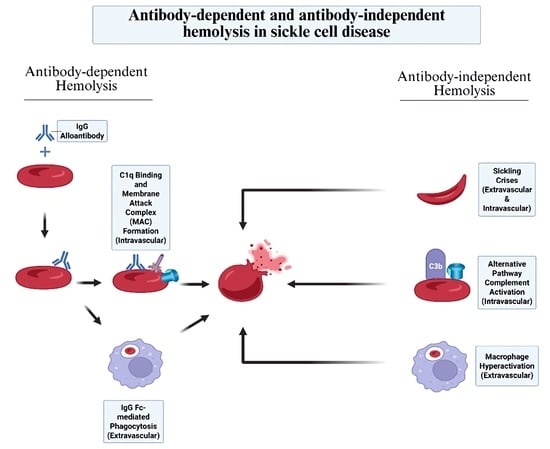
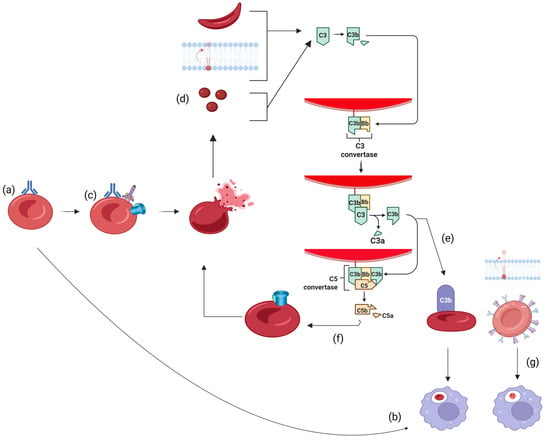
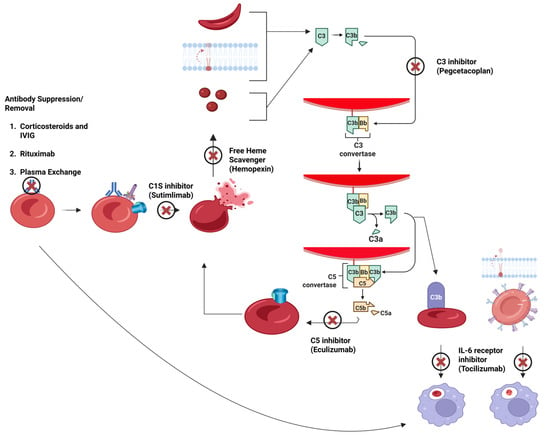
FcRn Blockade as a Targeted Therapeutic Strategy in Antibody-Mediated Autoimmune Diseases: A Focus on Warm Autoimmune Hemolytic Anemia
Journal Description
Antibodies
Antibodies
is an international, peer-reviewed, open access journal on immunoglobulins, published quarterly online by MDPI.
- Open Access— free for readers, with article processing charges (APC) paid by authors or their institutions.
- High Visibility: indexed within Scopus, ESCI (Web of Science), PubMed, PMC, Embase, CAPlus / SciFinder, and other databases.
- Journal Rank: CiteScore - Q2 (Drug Discovery)
- Rapid Publication: manuscripts are peer-reviewed and a first decision is provided to authors approximately 22.2 days after submission; acceptance to publication is undertaken in 4.6 days (median values for papers published in this journal in the first half of 2025).
- Recognition of Reviewers: reviewers who provide timely, thorough peer-review reports receive vouchers entitling them to a discount on the APC of their next publication in any MDPI journal, in appreciation of the work done.
Impact Factor:
2.7 (2024);
5-Year Impact Factor:
4.7 (2024)
Latest Articles
Evaluation of Three Recombinant Antigens for the Detection of Anti-Coxiella Antibodies in Cattle
Antibodies 2025, 14(4), 107; https://doi.org/10.3390/antib14040107 - 12 Dec 2025
Abstract
Background/Objectives: The detection of anti-Coxiella antibodies using serological methods is essential for identifying exposed ruminants and preventing this important zoonotic disease in livestock. In recent years, numerous attempts have been made to increase diagnostic performance as well as simplify the production of serological
[...] Read more.
Background/Objectives: The detection of anti-Coxiella antibodies using serological methods is essential for identifying exposed ruminants and preventing this important zoonotic disease in livestock. In recent years, numerous attempts have been made to increase diagnostic performance as well as simplify the production of serological assays. Commercially available tests often use whole-cell antigens, which can decrease specificity and require high-level biosafety facilities for manufacturing. The aim of this work was to produce three Coxiella burnetii (C. burnetii) antigens in recombinant form and assess them for the detection of anti-Coxiella antibodies in ruminants. Methods: Three recombinant C. burnetii antigens (Com-1, MceB, AdaA) were selected among immunodominant antigens and produced in a heterologous system (Escherichia coli). Following purification, the proteins were utilized to coat ELISA plates and evaluated for seroreactivity against sera from both negative and positive cattle. Results: Com-1 demonstrated the greatest agreement with the commercial test, albeit moderate. MceB exhibited nonspecific reactivity against a large number of sera, while the AdaA showed reactivity against only a few positive sera. Conclusions: Our findings are consistent with previous research, indicating that utilizing a single antigen to identify exposed animals is unfeasible with current knowledge, most likely due to the complex immunological response following C. burnetii infection in cattle. Consequently, it is critical to continue testing and identifying immunoreactive antigens in order to further investigate them and, potentially, select the most appropriate.
Full article
(This article belongs to the Section Antibody-Based Diagnostics)
►
Show Figures
Open AccessArticle
A Reproducible Sequence-Level Strategy to Enhance Peptide Immunogenicity While Preserving Wild-Type Epitope Recognition
by
Chia-Hung Chen, Yu-Chi Chiu, Kai-Yao Huang, Hsiao-Hsuan Huang, Ta-Wei Kuo, Yu-Chi Liu, Hui-Ju Kao, Chen-Lin Yu, Shun-Long Weng and Kuang-Wen Liao
Antibodies 2025, 14(4), 106; https://doi.org/10.3390/antib14040106 - 12 Dec 2025
Abstract
Background: Short peptide epitopes are valuable for mechanistic studies, yet their intrinsic low immunogenicity and lack of commercial antibodies hinder rapid antibody generation. Methods: We developed a reproducible, sequence-level workflow combining cross-species/structural triage, independent MHC-I/II prioritization, and conservative heteroclitic-style substitutions to enhance predicted
[...] Read more.
Background: Short peptide epitopes are valuable for mechanistic studies, yet their intrinsic low immunogenicity and lack of commercial antibodies hinder rapid antibody generation. Methods: We developed a reproducible, sequence-level workflow combining cross-species/structural triage, independent MHC-I/II prioritization, and conservative heteroclitic-style substitutions to enhance predicted MHC affinity while preserving native epitope features. Using visfatin as a model, two optimized fragments were conjugated to KLH and tested in mice for antibody titers, isotype profiles, and binding kinetics. Results: Mutant peptides improved MHC-binding prediction, elicited stronger antibody titers, and promoted isotype maturation (increased IgG1). Importantly, antibodies maintained measurable binding to wild-type sequences, indicating preserved cross-recognition. Similar effects were reproduced with additional antigens. Conclusions: This proof-of-concept study, based on small exploratory mouse cohorts (n = 3 per group), demonstrates that strategic, minimal sequence edits can significantly enhance peptide immunogenicity while preserving native epitope recognition. This streamlined workflow provides a low-barrier route to generate epitope-directed antibodies when commercial reagents are unavailable.
Full article
(This article belongs to the Section Antibody Discovery and Engineering)
►▼
Show Figures

Graphical abstract
Open AccessReview
Breakthrough for Anticancer Immunotherapy: Current Advances in Manufacturing Protocols of Chimeric Antigen Receptor-Based Therapies
by
Yuxin Qian, Weiwei Ma and Xiao-Ning Xu
Antibodies 2025, 14(4), 105; https://doi.org/10.3390/antib14040105 - 8 Dec 2025
Abstract
Chimeric antigen receptor (CAR)-based immunotherapy has emerged as a transformative strategy in anticancer treatment, driven by advances in CAR construct design, manufacturing platforms, and expansion to diverse immune cell types. The landmark success of CD19-targeted CAR-T cell therapy in B cell malignancies has
[...] Read more.
Chimeric antigen receptor (CAR)-based immunotherapy has emerged as a transformative strategy in anticancer treatment, driven by advances in CAR construct design, manufacturing platforms, and expansion to diverse immune cell types. The landmark success of CD19-targeted CAR-T cell therapy in B cell malignancies has paved the way for broader clinical applications. As of 2025, the U.S. FDA has approved multiple autologous CAR-T products, underscoring their therapeutic promise. However, challenges persist, including cytokine release syndrome (CRS), neurotoxicity, product inconsistency, and the high cost and complexity of cell manufacturing. Variations in cell source, gene delivery methods, expansion protocols, and CAR design significantly influence the safety, efficacy, and scalability of these therapies. In this review, we comprehensively examine the current advances in manufacturing protocols for CAR-modified T cells, natural killer (NK) cells, and unconventional T cell subsets, including γδ T, invariant natural killer T (iNKT), and mucosal-associated invariant T (MAIT) cells. We also highlight emerging innovations such as in vivo CAR-T generation and off-the-shelf allogeneic approaches. By integrating updated strategies with a critical evaluation of current limitations, this review aims to support the development of standardized, robust, and accessible CAR-based immunotherapies.
Full article
(This article belongs to the Special Issue Emerging Antibody Engineering Strategies and Applications for Immunotherapy of Cancer)
►▼
Show Figures

Figure 1
Open AccessReview
Head and Neck Dermatitis in Atopic Dermatitis: A Narrative Review of Pathogenesis, Clinical Challenges, and Therapeutic Strategies
by
Giuseppe Lauletta, Cataldo Patruno, Claudio Brescia, Andrea Cosenza, Carolina D’Elia, Valentina Ventura, Emanuela Martina and Maddalena Napolitano
Antibodies 2025, 14(4), 104; https://doi.org/10.3390/antib14040104 - 5 Dec 2025
Abstract
Background: Head and neck dermatitis (HND) represents a challenging phenotype of atopic dermatitis (AD), often showing suboptimal response or paradoxical worsening during biologic therapy. Objective: To review the efficacy and safety of current systemic treatments for HND, with a focus on
[...] Read more.
Background: Head and neck dermatitis (HND) represents a challenging phenotype of atopic dermatitis (AD), often showing suboptimal response or paradoxical worsening during biologic therapy. Objective: To review the efficacy and safety of current systemic treatments for HND, with a focus on dupilumab, tralokinumab, lebrikizumab, and janus kinase (JAK) inhibitors. Methods: We conducted a narrative review of randomized controlled trials, post hoc analyses, and real-world studies assessing clinical outcomes in patients with moderate-to-severe AD involving the head and neck. Outcomes included Eczema Area and Severity Index (EASI) H&N subscore, erythema grade, patient-reported measures, and adverse events. Results: Dupilumab shows substantial efficacy for HND in both clinical trials and real-life studies; however, responses are often less pronounced than in other anatomical regions, and facial redness (FR) has emerged as a notable adverse event in up to 9% of patients. Tralokinumab and lebrikizumab demonstrate significant improvements in HND involvement, with low incidence of paradoxical reactions. JAK inhibitors, particularly upadacitinib, provide rapid and marked improvement in refractory cases and in patients developing FR during biologic therapy. Conclusions: Systemic therapy for HND should be individualized, balancing efficacy and tolerability. JAK inhibitors represent a valuable alternative in biologic-refractory phenotypes or in patients experiencing dupilumab-associated FR.
Full article
(This article belongs to the Section Antibody-Based Therapeutics)
Open AccessArticle
Comparison of Antigen Conjugation to a Peptidic Carrier or to Bovine Serum Albumin in the Serodiagnosis of Canine Visceral Leishmaniasis via Suspension Array Technology
by
Thais Stelzer Toledo, Pauline Martins Cunha, Josué da Costa Lima-Junior, Monique Paiva De Campos, Alinne R. S. Renzetti, Fabiano Borges Figueiredo, Fernanda Nazaré Morgado, Renato Porrozzi, Fatima da Conceição-Silva, Marta de Almeida Santiago and Paula Mello De Luca
Antibodies 2025, 14(4), 103; https://doi.org/10.3390/antib14040103 - 4 Dec 2025
Abstract
Backgroud/Objectives: Canine Visceral Leishmaniasis (CVL), caused by Leishmania infantum, is a significant public health concern due to dogs serving as reservoirs for human infection. An accurate and rapid diagnostic method to distinguish symptomatic and asymptomatic CVL from healthy and vaccinated animals
[...] Read more.
Backgroud/Objectives: Canine Visceral Leishmaniasis (CVL), caused by Leishmania infantum, is a significant public health concern due to dogs serving as reservoirs for human infection. An accurate and rapid diagnostic method to distinguish symptomatic and asymptomatic CVL from healthy and vaccinated animals is essential for controlling canine and human disease. Developing innovative antibody detection techniques and exploring new antigens are essential for enhancing CVL testing efficiency. Our study focuses on a multiplex flow cytometry technique to detect Leishmania-specific antibodies in canine serum. This involved conjugating small peptides with carrier proteins or peptide tags, sequences designed to facilitate bead coupling. Methods: A peptide from the L. infantum A2 protein was coupled to beads in three forms: unconjugated, conjugated with BSA, and conjugated with a C-terminal β-alanine–lysine (x4)–cysteine TAG. This TAG was previously designed to enhance peptide solubility, improve binding efficiency, and provide functional groups for covalent attachment to the beads, ensuring stable immobilization in the multiplex assay. Results: Our results suggest that the multiplex approach shows promise as a rapid serological test for CVL, particularly with TAG-conjugated peptides, which optimize bead coupling. However, peptide/BSA conjugation revealed anti-BSA antibodies in samples from healthy and CVL dogs. Conclusions: In conclusion, our findings highlight the potential of multiplex methodologies to enhance CVL diagnostics and caution against using BSA as a bead coupling agent in serological tests for canine samples due to its impact on test specificity and sensitivity.
Full article
(This article belongs to the Special Issue Antibodies in Laboratory Diagnostic Techniques)
►▼
Show Figures

Figure 1
Open AccessArticle
Strategies to Screen and Evaluate Brain Targeting Antibodies Using an iPSC-Derived Blood–Brain Barrier Model
by
Eun Seo Choi, Sophia Sahota, Emily Burnham, Yunfeng Ding and Eric V. Shusta
Antibodies 2025, 14(4), 102; https://doi.org/10.3390/antib14040102 - 26 Nov 2025
Abstract
Background: Antibodies that cross the blood–brain barrier (BBB) by targeting receptor-mediated transport (RMT) systems can allow efficient drug delivery to the central nervous system (CNS). In order to improve brain uptake of antibodies, their binding properties have been engineered, but it is not
[...] Read more.
Background: Antibodies that cross the blood–brain barrier (BBB) by targeting receptor-mediated transport (RMT) systems can allow efficient drug delivery to the central nervous system (CNS). In order to improve brain uptake of antibodies, their binding properties have been engineered, but it is not always clear what antibody properties dictate BBB transport efficiency. In this study, we therefore developed and employed an in vitro phenotypic screen and a quantitative transcytosis assay in an attempt to identify improved variants of a previously identified BBB transcytosing antibody known as 46.1. Methods: First, a random mutagenic 46.1 antibody phage display library was screened for improved transcytosis through a human induced pluripotent stem cell (iPSC)-derived BBB model. These screens yielded antibody variants that enriched over multiple screening rounds; however, when produced as soluble antibodies, the variants did not display improved in vitro transcytosis over the wild-type (WT) 46.1 antibody. As a second strategy, we performed a targeted histidine point mutation of a solvent-exposed residue in each complementarity-determining region (CDR) and evaluated the in vitro transcytosis capacity of the variants. Results and Conclusions: In this way, we identified a 46.1 variant, R162H, with modestly improved in vitro transcytosis properties. These results show that the iPSC-derived BBB screening insights and evaluation strategies presented here could facilitate the engineering and optimization of lead antibodies for CNS delivery.
Full article
(This article belongs to the Section Antibody Discovery and Engineering)
►▼
Show Figures

Figure 1

Open AccessReview
Recent Developments in Monoclonal-Antibody-Based Biologic Therapy for Severe Refractory Eosinophilic Asthma
by
Garry M. Walsh
Antibodies 2025, 14(4), 101; https://doi.org/10.3390/antib14040101 - 25 Nov 2025
Abstract
Background: Asthma exhibits marked heterogeneity both clinically and at the molecular phenotypic level, requiring specifically targeted treatments to block the key pathways of the disease. Monoclonal-antibody-based biologics targeted at critical inflammatory pathways of T2 inflammation such as IL-5, IL-5R, IL-4, and IL-13 are
[...] Read more.
Background: Asthma exhibits marked heterogeneity both clinically and at the molecular phenotypic level, requiring specifically targeted treatments to block the key pathways of the disease. Monoclonal-antibody-based biologics targeted at critical inflammatory pathways of T2 inflammation such as IL-5, IL-5R, IL-4, and IL-13 are increasingly regarded as effective treatments for severe refractory eosinophilic asthma. Methods: This review provides an update on the potential of straightforward and reproducible biomarkers to aid in the selection of the biologic-based therapy most likely to be effective in patients with severe or refractory eosinophilic asthma based on English-language original articles in PubMed or MedLine. Results: Monoclonal-antibody-based biologic therapies have revolutionised severe asthma management, enabling reductions in symptoms that include exacerbations, discontinuation of oral corticosteroids, improved lung function, and enhanced quality of life. Significant clinical effects with anti-IL-5 or -IL-4/13 monoclonal antibodies are more likely to be seen when simple predictive biomarkers such as serum periostin, fractional exhaled nitric oxide (FENO), or blood eosinophil counts are used to aid in the identification of those patients with severe refractory eosinophilic asthma who are most likely to benefit from biologic therapies. Conclusions: Biologic-based therapy aimed at T2 inflammation benefits patients with severe eosinophilic asthma, particularly when guided by biomarkers that do not require direct sampling of the airways to target therapy, who are most likely to benefit from these treatments, with good safety profiles for these therapies.
Full article
Open AccessArticle
Species-Dependent Structural Variations in Single-Domain Antibodies
by
Marta Baselga, Javier Sánchez-Prieto, Víctor Manuel Medina Pérez and Alberto J. Schuhmacher
Antibodies 2025, 14(4), 100; https://doi.org/10.3390/antib14040100 - 25 Nov 2025
Abstract
Background/Objectives: Single-domain antibodies (sdAbs) are derived from camelid heavy-chain antibodies (HCAb). Their small size, high stability, and ease of production, among other properties, makes them highly valuable in biomedical research and therapeutic development. Several sdAb-based molecules are currently progressing through clinical trials, highlighting
[...] Read more.
Background/Objectives: Single-domain antibodies (sdAbs) are derived from camelid heavy-chain antibodies (HCAb). Their small size, high stability, and ease of production, among other properties, makes them highly valuable in biomedical research and therapeutic development. Several sdAb-based molecules are currently progressing through clinical trials, highlighting their translational relevance. As sdAbs originate from HCAb of Camelidae family, they can originate from multiple species including Vicugna pacos, Lama glama, Camelus dromedarius and Camelus bactrianus. Although several reports and databases analyze the structure of sdAbs, comprehensive evaluations on species-dependent structural differences remain scarce. Methods: We assembled MO-IISA, an open-access curated database of sdAbs with known antigen targets by integrating six public resources (iCAN, INDI, SAbDab-nano, sdAb-DB, PLabDab-nano, NbThermo) under harmonized eligibility criteria. Results: The final dataset comprises 2053 sdAbs derived from llamas (Lama glama, n = 1316); alpacas (Vicugna pacos, n = 325), dromedary camels (Camelus dromedarius, n = 377) and Bactrian camels (Camelus bactrianus, n = 35). We quantified region lengths, amino acid frequency, and conservation/entropy across frameworks (FR1–FR4). The average length of all sdAbs was about 124 ± 8 amino acids, with minor interspecies differences. We observed a consistent enrichment of lysines in FR3 (and secondarily FR2) and cysteines primarily in FR1 and FR3, with non-canonical cysteines more frequent in Bactrian and dromedary sdAbs CDRs. CDR2 and, particularly CDR3, contributed most to inter- and intra-species variability, whereas FRs were highly conserved. Conclusions: Species-neutral framework constraints and species-tuned loop adaptations have practical implications for sdAb engineering, species selection, and conjugation strategies. These features are captured in MO-IISA, an open-access database of known-target sdAbs from different species.
Full article
(This article belongs to the Special Issue A Festschrift Celebrating Dr. Dimiter Stanchev Dimitrov: Antibodies, Innovation, and Impact on Infectious Disease and Cancer Research)
►▼
Show Figures

Graphical abstract
Open AccessArticle
Physiologically Based Pharmacokinetic Model for Prediction of Immunoglobulins Exposure in Pregnant Women
by
Million A. Tegenge
Antibodies 2025, 14(4), 99; https://doi.org/10.3390/antib14040099 - 19 Nov 2025
Abstract
Background: Physiologically based pharmacokinetic (PBPK) modeling is applied to address clinical pharmacology issues including dose selection and exposure assessments for special populations (e.g., pediatrics, and renally or hepatically impaired patients). The objective of this study was to evaluate the predictive performance of
[...] Read more.
Background: Physiologically based pharmacokinetic (PBPK) modeling is applied to address clinical pharmacology issues including dose selection and exposure assessments for special populations (e.g., pediatrics, and renally or hepatically impaired patients). The objective of this study was to evaluate the predictive performance of a PBPK model for dosing assessment of intravenous immunoglobulin (IVIG) and anti-D immunoglobulin (anti-D Ig) products in pregnant women. Methods: A minimal PBPK (mPBPK) model that incorporates pregnancy-specific physiological parameters and allometric scaling approaches was developed and evaluated for predicting the exposure of IVIG and anti-D Ig in pregnant women. The concentration versus time data were obtained from the published literature. Results: The IVIG (n = 22) and anti-D Ig (n = 29) concentrations were predicted using the mPBPK model with an average fold error of 1.17 and 1.22, respectively. A total of 100% and 95% of IVIG concentrations were predicted within the 0.5–2-fold and 0.5–1.5-fold prediction error ranges, respectively. For anti-D Ig, predictions fell within the 0.5–2-fold and 0.5–1.5-fold ranges for 93% and 76% concentrations, respectively. A mPBPK model-based simulation following administration of 0.5 g/kg IVIG in 100 virtual nonpregnant and pregnant subjects revealed that the maximum plasma concentration (Cmax) was 15% lower and trough concentration (Ctrough) was 8% lower during the third trimester of pregnancy compared to nonpregnant subjects. In contrast, with flat dosing, Cmax and Ctrough were 32% and 26% lower in pregnant subjects, respectively. Overall, the model demonstrated reasonable predictive performance, and bodyweight-based dosing regimen is an acceptable approach that results in minimal change in exposure of IVIG in pregnant women.
Full article
(This article belongs to the Section Antibody-Based Therapeutics)
►▼
Show Figures

Figure 1
Open AccessArticle
Developing a 3D Model Culture of an EBV+/CD30+ B-Anaplastic Large Cell Lymphoma Cell Line to Assay Brentuximab Vedotin Treatment
by
Paolo Giannoni, Gabriella Pietra, Orlando Izzo, Giuseppina Fugazza, Roberto Benelli, Alessandro Poggi, Mauro Krampera, Chiara Utzeri, Monica Marchese, Marco Musso, Paola Visconti and Daniela de Totero
Antibodies 2025, 14(4), 98; https://doi.org/10.3390/antib14040098 - 10 Nov 2025
Abstract
Background/Objectives: Three-dimensional (3D) in vitro cell culture models have recently stimulated great interest since they may have more pre-clinical value than conventional in vitro 2D models. In fact, 3D culture models may mimic the in vivo biophysical 3D structure of tumors and cell-to-cell
[...] Read more.
Background/Objectives: Three-dimensional (3D) in vitro cell culture models have recently stimulated great interest since they may have more pre-clinical value than conventional in vitro 2D models. In fact, 3D culture models may mimic the in vivo biophysical 3D structure of tumors and cell-to-cell interaction, thereby representing a more useful approach to testing drug responses. In this study we have developed a 3D culture model of an EBV+/CD30+cell line, D430B, previously characterized as an Anaplastic Large Cell Lymphoma of B phenotype (B-ALCL), to determine the cytotoxic activity of the antibody–drug conjugate Brentuximab Vedotin. Methods: By using of ultra-low attachment plates, we developed D430B spheroids that appeared particularly homogenous in terms of growth and size. Results: Brentuximab Vedotin treatment (1 to 20 μg/mL) turned out to be significantly cytotoxic to these cells, while the addition of the anti-CD20 chimeric antibody Rituximab (10 μg/mL) appeared almost ineffective, even though these cells express CD20. Moreover, when we co-cultured D430B cells with stromal cells (HS5), to re-create a microenvironment representative of neoplastic cell/mesenchymal cell interactions within the lymph node, we observed a significant, although faint, protective effect. Conclusions: This simple and reproducible method of generating D430B-ALCL spheroids to evaluate their response to Brentuximab Vedotin treatment, as here described, may provide a valuable preliminary tool for the future pre-clinical screening of patients’ primary lymphoma cells or the development of novel therapies for this type of pathology and related diseases.
Full article
(This article belongs to the Special Issue Unravelling Effector Functions of B cells in Infectious Diseases and Cancer)
►▼
Show Figures

Graphical abstract
Open AccessArticle
A Novel FLI1 Monoclonal Antibody Which Recognizes EWS::FLI1 with High Affinity Is Useful for Detecting Ewing Sarcoma
by
Saravana P. Selvanathan, Olivia O. Lansinger, David V. Allegakoen, Emma J. W. McGuire, Ashley R. Gaffey, Jeff R. Petro, Purushottam B. Tiwari, Quinn Tufiño, Aykut Üren and Jeffrey A. Toretsky
Antibodies 2025, 14(4), 97; https://doi.org/10.3390/antib14040097 - 10 Nov 2025
Abstract
Background: Ewing sarcoma (ES) is a rare tumor that affects children, adolescents, and young adults. ES is associated with high morbidity in all patients and high mortality for those who present with metastatic disease. A chromosomal translocation, either t(11;22)(q24;p12) or t(21;22)(q22;q12) leads to
[...] Read more.
Background: Ewing sarcoma (ES) is a rare tumor that affects children, adolescents, and young adults. ES is associated with high morbidity in all patients and high mortality for those who present with metastatic disease. A chromosomal translocation, either t(11;22)(q24;p12) or t(21;22)(q22;q12) leads to the fusion oncoproteins EWS::FLI1 or EWS::ERG in 95% of ES patients. We recognized a critical need for a stably sourced high-affinity antibody that recognizes EWS::FLI1 with maximal specificity. Understanding EWS::FLI1 protein complexes is a pivotal gap in ES knowledge that necessitates the development of antibodies capable of identifying native proteins in solution. Further, variable epitope sequencing of a monoclonal antibody enables the construction of degraders and nanobody identifiers. Methods: Monoclonal antibodies were produced following informed peptide synthesis, injection, and hybridoma creation. Hybridoma antibodies were validated for specificity and function. Results: Our results indicate that the FLI1 1.2 monoclonal antibody, which recognizes the EWS::FLI1 fusion oncoprotein, can be reliably applied to multiple molecular biology applications like immunoblot, immunoprecipitation, immunofluorescence, and immunohistochemistry. This FLI1 1.2 monoclonal antibody has a high affinity of 0.3 nM KD to EWS::FLI1. In terms of specificity, this antibody is highly specific to EWS::FLI1 and some cross reactivity with ERG. Conclusions: This reagent will provide the research community with valuable tools for further biochemical and genomic interrogation of the oncogenic activity of EWS::FLI1 in ES.
Full article
(This article belongs to the Section Antibody Discovery and Engineering)
►▼
Show Figures

Figure 1

Open AccessArticle
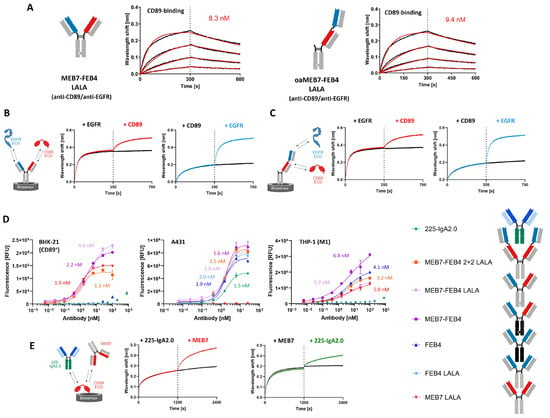
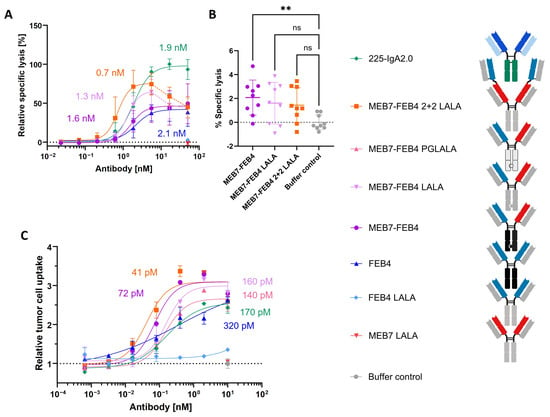
CEA-4-1BBL: CEACAM5-Targeted 4-1BB Ligand Fusion Proteins for Cis Co-Stimulation with CEA-TCB
by
Christina Claus, Claudia Ferrara-Koller, Johannes Sam, Sabine Lang, Rosmarie Albrecht, Regula B. Buser, Esther Bommer, Grégory La Sala, Valeria G. Nicolini, Sara Colombetti, Marina Bacac, Pablo Umaña and Christian Klein
Antibodies 2025, 14(4), 96; https://doi.org/10.3390/antib14040096 - 7 Nov 2025
Abstract
Background/Objectives: T cell bispecific antibodies (TCBs) result in the activation of T cell receptor signaling upon binding to tumor antigens providing signal 1 to T cells. To enhance and sustain their activity, a co-stimulatory signal 2 is required. Here CEACAM5-targeted 4-1BBL antibody fusion
[...] Read more.
Background/Objectives: T cell bispecific antibodies (TCBs) result in the activation of T cell receptor signaling upon binding to tumor antigens providing signal 1 to T cells. To enhance and sustain their activity, a co-stimulatory signal 2 is required. Here CEACAM5-targeted 4-1BBL antibody fusion proteins for combination with CEA-TCB (cibisatamab, RG7802) are described in an investigation of the relationship between the CEACAM5 epitope and T cell activity. Methods: CEACAM5-targeted bispecific 4-1BBL antibody fusion proteins (CEA-4-1BBLs) were generated based on different CEACAM5 antibodies and characterized in vitro in Jurkat-4-1BB reporter and PBMC cell assays. The impact of shed CEA on in vitro activity and cynomolgus cross-reactivity was studied. In vivo efficacy was assessed in human stem cell humanized NSG mice xenograft models bearing MKN-45 and HPAFII tumors. Results: MFE23-4-1BBL and Sm9b-4-1BBL showed superior functional activity in Jurkat-4-1BB reporter and primary T cell assays when combined with the CD3 antibody V9, whereas T84.66-LCHA-4-1BBL and A5B7-4-1BBL performed better when combined with CEA-TCB. In humanized NSG mice MKN-45 and HPAFII xenograft models, T84.66-LCHA-4-1BBL mediated the best anti-tumor efficacy. Conclusions: For the assessment of the combination of CEA-TCB with CEA-4-1BBL, co-stimulatory antibody fusion protein in vitro assays are not sufficient to fully capture the complex relationships affecting efficacy. Thus, screening with different cell assays and in vivo efficacy studies in combination with CEA-TCB are essential to select the best candidate. Based on the totality of data on the T84.66-LCHA-4-1BBL antibody fusion protein comprising the CEACAM5 antibody, T84.66-LCHA was selected as the optimal combination partner for CEA-TCB.
Full article
(This article belongs to the Special Issue Emerging Antibody Engineering Strategies and Applications for Immunotherapy of Cancer)
►▼
Show Figures

Graphical abstract
Open AccessReview
Influence and Role of Regulatory B Cells in Organ Transplantation: The State of the Art, Prospects, and Emerging Insights
by
Marina Fernández-González, Santiago Llorente, José Antonio Galián, Carmen Botella, Rosana González-López, María José Alegría, Alicia Hita, María Rosa Moya-Quiles, Helios Martinez-Banaclocha, Manuel Muro-Pérez, Javier Muro, Alfredo Minguela, Isabel Legaz and Manuel Muro
Antibodies 2025, 14(4), 95; https://doi.org/10.3390/antib14040095 - 7 Nov 2025
Abstract
B cells have attracted increasing interest in the field of organ transplantation due to their newly discovered immunoregulatory properties in alloimmune responses. Traditionally, B cells have been primarily associated with adaptive immunity to foreign substances and alloreactive immune response to allografts, differentiating into
[...] Read more.
B cells have attracted increasing interest in the field of organ transplantation due to their newly discovered immunoregulatory properties in alloimmune responses. Traditionally, B cells have been primarily associated with adaptive immunity to foreign substances and alloreactive immune response to allografts, differentiating into antibody-producing plasma cells or memory cells upon antigen recognition and T cell collaboration. However, the existence of B cells with regulatory functions (Bregs) in humans has been widely confirmed, highlighting the presence of this subset, which has immunosuppressive properties and which might contribute to allograft tolerance, within the B cell compartment in humans and mice. In this mini review, we summarize all the information available in the published reports about the role of regulatory B cells in solid organ transplantation.
Full article
(This article belongs to the Special Issue Unravelling Effector Functions of B cells in Infectious Diseases and Cancer)
►▼
Show Figures

Figure 1

Open AccessArticle
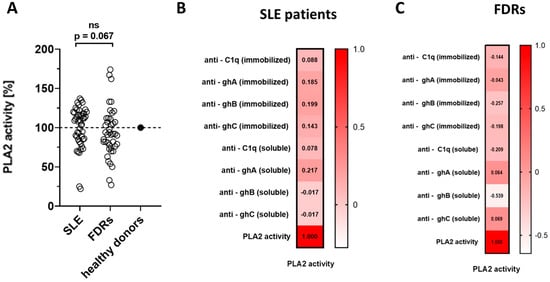
C1q Is Recognized as a Soluble Autoantigen by Anti-C1q Antibodies of Patients with Systemic Lupus Erythematosus
by
Alexandra Anatolieva Atanasova, Ginka Ilieva Cholakova, Alexandra Panagiotis Kapogianni, Vancho Donev, Delina Ivanova, Anna Dimitrova Yordanova, Vanya Petkova Bogoeva and Ivanka Georgieva Tsacheva
Antibodies 2025, 14(4), 94; https://doi.org/10.3390/antib14040094 - 5 Nov 2025
Abstract
Background and Aims: C1q is an autoantigen in different autoimmune disorders, Systemic Lupus Erythematosus (SLE) and Lupus Nephritis (LN) among them. The two functional domains of C1q, the collagen-like region (CLR) and the globular head region (gC1q), are frequently recognized by autoantibodies in
[...] Read more.
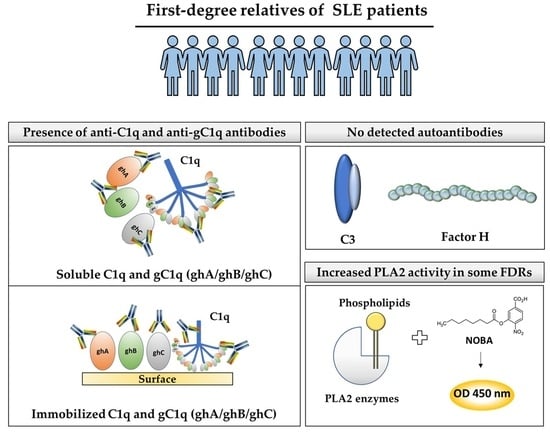
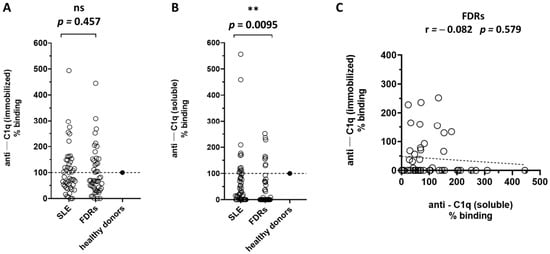
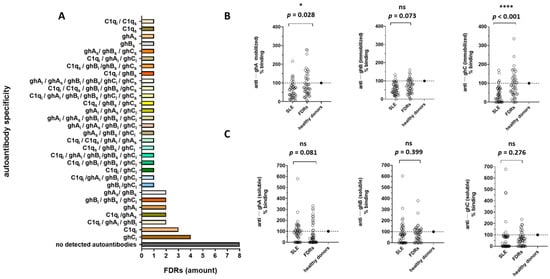
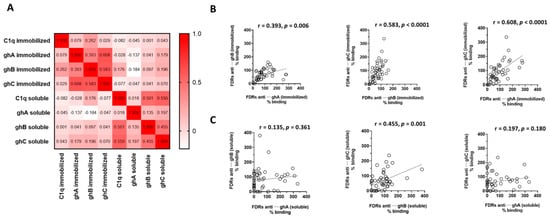
Background and Aims: C1q is an autoantigen in different autoimmune disorders, Systemic Lupus Erythematosus (SLE) and Lupus Nephritis (LN) among them. The two functional domains of C1q, the collagen-like region (CLR) and the globular head region (gC1q), are frequently recognized by autoantibodies in SLE and LN when C1q is immobilized. We studied whether autoantibodies to C1q in SLE and LN patients recognized C1q as a soluble autoantigen and whether the act of immobilization was a prerequisite for the recognition of C1q autoepitopes localized on gC1q domains. Methods: The interaction of soluble C1q and its globular fragments ghA, ghB, and ghC with immobilized IgG autoantibodies (and vice versa) from sera of 48 patients with SLE and LN was studied with ELISA. Data were compared using Spearman correlation coefficient. Fluorescence spectroscopy was used to study the interaction between C1q and LN IgG autoantibodies both presented in solution. Results: We found that anti-C1q autoantibodies from SLE and LN patients specifically bound C1q and gC1q fragments, ghA, ghB, and ghC, both as immobilized and soluble antigens. Correlation analysis indicated a negative correlation between the levels of autoantibodies against immobilized and soluble C1q and immobilized and soluble gC1q fragments which indicates different epitopes when these proteins were recognized as autoantigens in soluble and immobilized conformations. Conclusions: Serum C1q in patients with SLE is a target molecule for binding from anti-C1q autoantibodies. The gC1q region undergoes a conformational change in an immobilized and a soluble form, thus exposing different epitope-binding sites.
Full article
(This article belongs to the Section Humoral Immunity)
►▼
Show Figures

Graphical abstract
Open AccessReview
N-Glycosylation of Antibodies: Biological Effects During Infections and Therapeutic Applications
by
Jessica Castañeda-Casimiro, Luis Vallejo-Castillo, Eliud S. Peregrino, Alejandro Hernández-Solis, Luis Vázquez-Flores, Rommel Chacón-Salinas, Isabel Wong-Baeza and Jeanet Serafín-López
Antibodies 2025, 14(4), 93; https://doi.org/10.3390/antib14040093 - 28 Oct 2025
Cited by 1
Abstract
Antibodies are produced by cells of the adaptive immune response and recognize epitopes of microbial structures with high affinity and specificity. Antibodies are recognized by Fc fragment receptors (FcRs) found on the surface of phagocytic cells (neutrophils, monocytes, macrophages) and NK cells, among
[...] Read more.
Antibodies are produced by cells of the adaptive immune response and recognize epitopes of microbial structures with high affinity and specificity. Antibodies are recognized by Fc fragment receptors (FcRs) found on the surface of phagocytic cells (neutrophils, monocytes, macrophages) and NK cells, among others. Hence, antibodies link the adaptive immune response with the innate immune response. The functions of antibodies are related to the N-glycosylation profile of these proteins. In this review, we describe how N-glycosylation of the Fc fragment of the different antibody classes is carried out, and which oligosaccharides are most commonly found in these antibodies. Subsequently, we summarize the biological effects of N-glycosylation of antibodies: on the binding of antibodies to FcRs (which affects various functions, such as antibody-dependent cellular cytotoxicity, antibody-dependent phagocytosis, and the production of pro- or anti-inflammatory chemokines and cytokines), on the ability of antibodies to activate complement and on the ability of some antibodies to directly neutralize the adhesion of bacteria and viruses to host cells (independently of Fab recognition). We describe how the N-glycosylation profile of antibodies is modified during certain infections (such as tuberculosis, COVID-19, influenza and dengue) and in response to vaccination, and the potential use of this profile to identify the stage and severity of an infection. Finally, we review the importance of N-glycosylation for the pharmacokinetic, pharmacodynamic and safety profiles of therapeutic monoclonal antibodies.
Full article
(This article belongs to the Special Issue Therapeutic Antibodies: New Trends in Discovery, Developability and Characterization)
►▼
Show Figures

Graphical abstract
Open AccessReview
Rabbit-Derived Antithymocyte Globulin-Associated Perioperative Anaphylaxis in Renal Transplantation: A Multidisciplinary Perspective on Pathophysiology, Clinical Presentation, and Management
by
Imran Gani, Usman Baig, Ahmad Mirza, Shais Jallu and Abrar Ahad Chawdhary
Antibodies 2025, 14(4), 92; https://doi.org/10.3390/antib14040092 - 28 Oct 2025
Abstract
Rabbit antithymocyte globulin is one of the most commonly used agents for induction immunosuppression in renal transplantation. It has contributed significantly to improved allograft survival and has a favorable safety profile. Despite its advantages, rabbit antithymocyte globulin carries a rare but potentially life-threatening
[...] Read more.
Rabbit antithymocyte globulin is one of the most commonly used agents for induction immunosuppression in renal transplantation. It has contributed significantly to improved allograft survival and has a favorable safety profile. Despite its advantages, rabbit antithymocyte globulin carries a rare but potentially life-threatening risk of anaphylaxis, which can lead to severe morbidity and mortality. Anaphylaxis is an acute and dramatic complication that requires prompt recognition and immediate management. In this review, we discuss the pathophysiology, clinical features, and management of rabbit antithymocyte globulin-associated anaphylaxis. We have also included practical insights from our clinical experience to guide early recognition and management, aiming to help clinicians safely manage this critical adverse event.
Full article
(This article belongs to the Section Antibody-Based Therapeutics)
►▼
Show Figures

Figure 1
Open AccessArticle
Evaluating the Role of Basiliximab Induction in Simultaneous Liver–Kidney Transplantation: A Multicenter Propensity-Score-Matched Analysis
by
Avery Koi, Trine Engebretsen, Alfred S. Lea, Daniel Arango, Heather L. Stevenson and Michael L. Kueht
Antibodies 2025, 14(4), 91; https://doi.org/10.3390/antib14040091 - 28 Oct 2025
Abstract
Introduction: Simultaneous liver–kidney (SLK) transplant recipients are considered at lower immunologic risk than kidney-alone recipients, so steroid-only induction is often used. However, some centers continue to include basiliximab induction in their protocols. This study compared graft and infectious outcomes in SLK recipients receiving
[...] Read more.
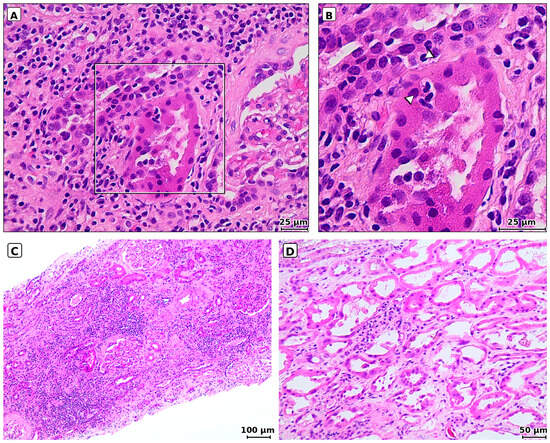
Introduction: Simultaneous liver–kidney (SLK) transplant recipients are considered at lower immunologic risk than kidney-alone recipients, so steroid-only induction is often used. However, some centers continue to include basiliximab induction in their protocols. This study compared graft and infectious outcomes in SLK recipients receiving basiliximab (Bas) induction versus those without basiliximab (No Bas). Methods: Using TriNetX, we conducted a retrospective, propensity-score-matched study of SLK recipients comparing 3-, 6-, and 12-month graft and infectious outcomes. Patients receiving alemtuzumab or anti-thymocyte globulin were excluded; steroid induction was permitted but not required in either cohort. Maintenance immunosuppression included tacrolimus, mycophenolate, and prednisone. Cohorts were matched on 71 variables, including demographics, disease etiology, severity markers, and cPRA. Results: After matching, 292 patients were included per cohort (mean age 56.9 ± 10.1 years; 61% male). Kidney and liver rejection rates were similar. The No Bas cohort had more liver biopsies (25.5% vs. 18.2% at 1 year, p = 0.04). Kidney biopsy, graft failure, re-transplantation, delayed graft function, and mortality were comparable. Liver primary non-function was more frequent in Bas (2.8% vs. 0.4%, p = 0.04). The No Bas cohort had higher CMV at 3 months (13.4% vs. 6.7%, p = 0.008) and higher EBV at all time points (4.0% vs. 0.4% at 1 year, p = 0.004). Conclusions: SLK recipients without basiliximab induction had comparable rejection outcomes but more viral infections, potentially from greater steroid exposure, and more liver biopsies, which may reflect higher clinical suspicion for rejection or incomplete capture of rejection events in EMR data.
Full article
(This article belongs to the Special Issue Antibody-Mediated Rejection in Kidney Transplantation)
►▼
Show Figures

Figure 1
Open AccessArticle
Evaluating the Therapeutic Efficacy of an Anti-BAFF Receptor Antibody Using a Rheumatoid Arthritis Mouse Model
by
Adi Aharon, Rachel Birnboim-Perach, Omer Grotto, Adi Amir, Daniel Diadko, Nitzan Beltran, Limor Nahary and Itai Benhar
Antibodies 2025, 14(4), 90; https://doi.org/10.3390/antib14040090 - 20 Oct 2025
Abstract
Background: Rheumatoid arthritis (RA) is a chronic autoimmune disease characterized by joint inflammation that leads to tissue damage and disability. RA affects approximately 0.5–1% of the global population and is driven by a complex interplay of genetic susceptibility, environmental factors, and immune dysregulation.
[...] Read more.
Background: Rheumatoid arthritis (RA) is a chronic autoimmune disease characterized by joint inflammation that leads to tissue damage and disability. RA affects approximately 0.5–1% of the global population and is driven by a complex interplay of genetic susceptibility, environmental factors, and immune dysregulation. While biologic and targeted synthetic DMARDs improved RA treatment, they have limitations in efficacy, safety, and accessibility. B-cell-targeting therapies, such as anti-CD20, have shown effectiveness, but only with broad immunosuppression, which can increase infection risk and compromise humoral immunity. Therefore, there is an unmet need for more selective therapeutic strategies that modulate pathogenic immune pathways while preserving protective immune functions. It has been suggested that targeting the BAFF pathway may offer a more favorable therapeutic approach compared to targeting CD20. Objectives: In this study, we evaluated the therapeutic potential of V3-46s mIgG2a, an anti-BAFF-R (BR3) antibody in a mouse RA model, hypothesizing that it would offer a more selective and effective strategy. Methods: We expressed and purified four antibody variants and assessed their binding and neutralizing activity in vitro. V3-46s mIgG2a was selected for in vivo evaluation in a collagen-induced arthritis (CIA) model. Results: Treatment with this antibody delayed disease onset and reduced arthritis severity, spleen index, and B-cell populations. Conclusions: These findings highlight the potential of BAFF-R-targeting antibodies as a therapeutic approach for RA treatment. This preclinical work lays the groundwork for future development of BAFF-R blockade as a complementary or alternative strategy to current biologic treatments.
Full article
(This article belongs to the Section Antibody-Based Therapeutics)
►▼
Show Figures

Figure 1

Open AccessArticle
Enhanced ADCC Activity of a C-Terminal Lysine Variant of an IgG1 Antibody Driven by N-Linked MAN5 Glycan Using a Reporter Gene Assay
by
Ming-Ching Hsieh, Kristiina Dorofejeva, Jingming Zhang, Diane L. Vy, Jun Qian, Alice M. Matathia, Timothy Blanc, Chao Richard Li and Babita S. Parekh
Antibodies 2025, 14(4), 89; https://doi.org/10.3390/antib14040089 - 17 Oct 2025
Abstract
Background: Antibody-dependent cellular cytotoxicity (ADCC) is an immune response where antibodies bind to target cells and activate effector cells through Fcγ receptors, ultimately leading to the destruction of the target cells. Methods: This study examined the ADCC activities of charge variants of a
[...] Read more.
Background: Antibody-dependent cellular cytotoxicity (ADCC) is an immune response where antibodies bind to target cells and activate effector cells through Fcγ receptors, ultimately leading to the destruction of the target cells. Methods: This study examined the ADCC activities of charge variants of a therapeutic IgG1, MAB1, using an internally developed reporter gene assay. In this assay, the proprietary target was expressed on DiFi cells, while FcγRIIIa was expressed on Jurkat effector cells. Results: The results revealed that different charge variants had varying levels of ADCC activity, with variants containing C-terminal lysine residues showing enhanced activity. The charge variants arose from modifications such as the presence of sialic acid at the glycan moiety, deamidation, and C-terminal lysine truncation, including K2 (two C-terminal lysine residues), K1 (one C-terminal lysine residue), and K0 (no C-terminal lysine residues) variants. Notably, the K1 and K2 variants demonstrated higher ADCC activity compared to the K0 and acidic variants. However, the observed increase was attributed not to the lysine residue itself, but rather to the MAN5 glycan associated with the lysine-containing variants. Conclusion: These findings challenge previous assumptions about the role of C-terminal lysine in ADCC, suggesting a shift in understanding the functional significance of charge variants and emphasizing the critical influence of glycan composition in therapeutic antibody efficacy.
Full article
(This article belongs to the Section Antibody-Based Therapeutics)
►▼
Show Figures

Graphical abstract
Open AccessArticle
Modulating Subcellular Localization to Preserve the Stability and Functionality of Intracellular Nanobodies
by
Wenli Sun, Keke Huang, Yaping Cheng, Ailing Huang, Yu Kong, Jun Lu, Tianlei Ying and Yanling Wu
Antibodies 2025, 14(4), 88; https://doi.org/10.3390/antib14040088 - 16 Oct 2025
Abstract
Background: Antibodies have revolutionized therapeutics and diagnostics, but their applications are largely restricted to extracellular targets due to challenges in intracellular delivery and stability. Nanobodies, with their small size and lack of disulfide bonds, hold great promise for intracellular use but face challenges
[...] Read more.
Background: Antibodies have revolutionized therapeutics and diagnostics, but their applications are largely restricted to extracellular targets due to challenges in intracellular delivery and stability. Nanobodies, with their small size and lack of disulfide bonds, hold great promise for intracellular use but face challenges such as aggregation and rapid degradation in the cytosol. Methods: To overcome this, we engineered nanobodies by fusing them with subcellular localization motifs to redirect their localization within cells, including the mitochondrial surface, endoplasmic reticulum surface, endomembrane system, and cytoskeleton. Results: Our results demonstrate that nanobodies located in the cytoskeleton or endomembrane exhibit significantly reduced degradation rates and enhanced stability, while maintaining their target-binding capacity. Mechanistically, these modifications lowered ubiquitination levels and prolonged functional activity. Conclusions: This work provides a novel strategy to enhance the intracellular stability and efficacy of nanobodies, expanding their potential applications in functional proteomics, disease research, and therapeutic development.
Full article
(This article belongs to the Section Antibody Discovery and Engineering)
►▼
Show Figures

Graphical abstract
Journal Menu
► ▼ Journal Menu-
- Antibodies Home
- Aims & Scope
- Editorial Board
- Topical Advisory Panel
- Instructions for Authors
- Special Issues
- Topics
- Sections & Collections
- Article Processing Charge
- Indexing & Archiving
- Editor’s Choice Articles
- Most Cited & Viewed
- Journal Statistics
- Journal History
- Journal Awards
- Conferences
- Editorial Office
Journal Browser
► ▼ Journal BrowserHighly Accessed Articles
Latest Books
E-Mail Alert
News
Topics
Topic in
Cancers, CIMB, Current Oncology, Sci. Pharm., Antibodies, IJMS, IJTM
Antibody-Mediated Therapy and Other Emerging Therapies in Cancer Treatment
Topic Editors: Won Sup Lee, Yaewon Yang, Seil GoDeadline: 31 July 2026
Conferences
Special Issues
Special Issue in
Antibodies
Therapeutic Antibodies: New Trends in Discovery, Developability and Characterization
Guest Editors: Anne Zeck, David J VanceDeadline: 15 December 2025
Special Issue in
Antibodies
Antiviral Antibody Immune Responses in the Context of Vaccination and Infection
Guest Editors: Jagadeesh Bayry, Guglielmo LuccheseDeadline: 15 December 2025
Special Issue in
Antibodies
Recombinant Binding Proteins and Genetically Engineered T-cells Targeting Intracellular Neoantigens
Guest Editors: Thomas Böldicke, Ana Maria Waaga-GasserDeadline: 25 February 2026
Special Issue in
Antibodies
Selected Papers from The 1st International Online Conference by Antibodies 2025
Guest Editor: Arne SkerraDeadline: 28 February 2026
Topical Collections
Topical Collection in
Antibodies
Computational Antibody and Antigen Design
Collection Editor: Buyong Ma