- Article

We present a computational pipeline, along with two layers of formal verification, for the exhaustive
11 November 2026

A global leader in open access publishing, supporting research communities and accelerating scientific discovery

We present a computational pipeline, along with two layers of formal verification, for the exhaustive
11 November 2026
Objectives: Acute coronary syndrome (ACS), pulmonary embolism (PE), and aortic dissection (AD) present with overlapping symptoms but require markedly different treatments. We investigated whether cardiac quantitative parameters obtained by automated segmentation of non-contrast and contrast-enhanced chest CT can support machine learning-based multiclass differentiation of these conditions. Materials and Methods: This single-center retrospective study included 628 patients who underwent triple rule-out CT angiography (147 negative controls, 193 ACS, 147 PE, and 141 AD). Twenty-six features were extracted separately from automated cardiac segmentation of non-contrast and contrast-enhanced images. Five classifiers—multivariable logistic regression, random forest, XGBoost, LightGBM, and support vector machine—were developed with a 7:3 stratified train–test split and five-fold cross-validation. Performance was evaluated by accuracy, macro-averaged F1 score, and macro-averaged area under the receiver operating characteristic curve (AUC), and feature importance was assessed with SHapley Additive exPlanations (SHAP). Results: Multivariable logistic regression showed the most balanced performance for both modalities. The non-contrast model achieved an accuracy of 0.635, a macro-averaged F1 score of 0.637, and a macro-averaged AUC of 0.840, with class-specific AUCs of 0.814 for ACS, 0.878 for PE, and 0.887 for AD. The contrast-enhanced model achieved 0.683, 0.673, and 0.861, with AUCs of 0.881, 0.876, and 0.919. Recall for ACS increased from 58.6% to 70.7% and for AD from 74.4% to 83.7%, while AD cases misclassified as negative decreased from 11.6% to 2.3%. Left ventricular mass index and right-heart parameters ranked among the most contributory features in both models. Conclusion: Machine learning models built on automatically segmented cardiac parameters showed moderate discriminatory potential for differentiating ACS, PE, and AD. The contrast-enhanced model outperformed the non-contrast model, whereas non-contrast CT still carried complementary structural information that may support risk stratification before contrast administration.
11 November 2026
Background/Objectives: Real-world data on the effectiveness, safety, and utilization of topical ruxolitinib in non-segmental vitiligo (NSV) remain limited. The aim of this study was to evaluate the clinical outcomes and safety of ruxolitinib cream in patients with NSV, characterize real-world treatment utilization based on pharmacy dispensing data, and explore its association with disease severity and clinical improvement. Methods: This retrospective observational study included patients with NSV treated with ruxolitinib cream for at least 24 weeks. Disease severity was assessed at baseline and after 12 and 24 weeks using total and facial body surface area (T-BSA and F-BSA) and Vitiligo Area Scoring Index (T-VASI and F-VASI). Treatment utilization was estimated from monthly pharmacy dispensing data. Results: Forty-one patients were included. Mean age was 48.3 years and 65.9% of patients were female. The mean amount of ruxolitinib cream dispensed was 151 ± 134 g/month. Significant reductions were observed in F-BSA and F-VASI (both p < 0.001), T-BSA (p = 0.02), and T-VASI (p < 0.001). No statistically significant association was detected between monthly dispensed quantity and baseline disease severity or clinical improvement at 12 or 24 weeks (all p > 0.50). Adverse events were mild and predominantly local. Conclusions: Ruxolitinib cream was associated with significant clinical improvement in real-world NSV, particularly in facial involvement. No statistically significant association was detected between dispensed quantity and clinical improvement.
11 November 2026
Clubroot, a devastating disease affecting cabbage worldwide, is caused by the soilborne protist Plasmodiophora brassicae. From a cross between the resistant line ‘20CR01’ and the susceptible line ‘27-3-1’, we developed an F2 population to investigate the genetic basis of resistance to P. brassicae pathotype 4. Population-level disease responses were broadly comparable across three consecutive field evaluations. Using whole-genome resequencing of 150 F2 individuals, we constructed a high-density genetic map comprising 2266 bin markers spanning 932.25 cM and detected two QTLs: a major QTL, qBoCR2, on chromosome C02, and a putative minor-effect QTL, qBoCR8, on chromosome C08, whose reproducibility requires further confirmation. qBoCR2 explained 24.0% of the phenotypic variance and, together with BSA-seq evidence, was refined to a 0.42 Mb candidate interval (62.16–62.58 Mb) containing 60 annotated genes. Among five non-redundant candidate genes prioritized within this interval, BolC02g058940.2J, annotated as encoding an endogenous PR5-family thaumatin-like protein, was distinguished by the combination of parental coding polymorphisms and resistant-parent-biased induction following P. brassicae inoculation. Overexpression of BolC02g058940.2J in cabbage hairy roots increased transcript abundance and was associated with reduced P. brassicae accumulation and root gall weight, without a significant effect on hairy-root fresh weight. Overall, BolC02g058940.2J emerges as a prioritized candidate gene potentially contributing to resistance against P. brassicae pathotype 4 in cabbage. These polymorphisms identified here may be useful for marker development, but they require validation in segregating populations and diverse breeding materials.
11 November 2026
Coronary intervention in the cardiac intensive care unit (CICU) demands rapid, accurate diagnosis and real-time hemodynamic monitoring to guide revascularization decisions. The 12-lead electrocardiogram (ECG) remains the most immediately available diagnostic tool in this setting; however, conventional interpretation is limited by inter-observer variability, ventilator-induced artifact, and inherent insensitivity for atypical coronary occlusion presentations. Artificial intelligence (AI)-powered ECG analysis has emerged as a promising adjunct to interventional cardiology practice, with the potential to support automated detection of occlusion myocardial infarction (OMI)—including cases missed by conventional STEMI criteria—while simultaneously providing multiparametric assessment of left ventricular function, hemodynamic status, and electrolyte derangements relevant to procedural safety. This narrative review synthesizes current evidence on the clinical utility of AI-ECG with direct relevance to coronary intervention decision-making, focusing on: (1) OMI and STEMI detection and the potential reduction in false catheterization laboratory activations; (2) pre- and peri-procedural risk stratification using AI-ECG-derived ventricular function and diastolic dysfunction parameters; (3) periprocedural arrhythmia monitoring; and (4) electrolyte derangement screening relevant to procedural safety. Composite illustrative scenarios based on the authors’ CICU experience describe how the ECG Buddy AI-ECG system (QCG platform, Korean Ministry of Food and Drug Safety-approved) may support the recognition of acute myocardial infarction (AMI) and the decision to proceed with percutaneous coronary intervention (PCI) in mechanically ventilated patients with septic shock—a scenario in which conventional diagnostic pathways are often confounded. These scenarios are presented for illustration only and do not constitute evidence of clinical benefit. Retrospective single-center studies in large unselected CICU populations (n > 9000, Mayo Clinic series) have shown that AI-ECG is independently associated with mortality beyond conventional echocardiographic parameters, supporting its potential role as a decision-support tool. Whether AI-ECG-assisted decision-making improves clinical outcomes in coronary intervention remains to be established in prospective studies.
11 November 2026
Background: Instruments measuring autism-related knowledge, attitudes and self-efficacy are widely used with health professionals, but their measurement properties remain unclear when individual scores are considered separately. Methods: We mapped instruments evaluated in health-professional populations and appraised them using COSMIN, treating each total score, subscale and translation as a separate unit of appraisal. Certainty and recommendation categories were then assigned. Results: Across 126 instrument–property cells for fourteen instruments, the 140 rating codes included eight sufficient, three insufficient, thirty-seven indeterminate and seventy-five not-evaluated codes. All appraised instruments were category B in the primary analysis, indicating that evidence supports neither a positive nor a negative recommendation. A reflective-model sensitivity reading placed the Greek KCAHW in category C. The dominant finding is absence rather than inadequacy: measurement error and responsiveness were examined for none, and cross-cultural validity and test–retest reliability for few. Where a result exists it usually cannot be interpreted, because the dimensionality of the score was never established. Content validity was independently examined for a minority of instruments, addressing expert agreement with answer keys rather than comprehensiveness or comprehensibility. Conclusions: Establishing structural validity in the population of use, and evaluating content validity with intended respondents, would address the principal evidence gaps.
11 November 2026
Accurate monthly runoff prediction remains challenging because precipitation exhibits substantial spatial heterogeneity within a watershed. Conventional basin-averaged rainfall may obscure spatial differences, whereas direct use of grid-cell rainfall can introduce high-dimensional and redundant inputs. This study develops a pattern-guided spatial attention gated recurrent unit (PG-SA-GRU) model to better represent and utilize spatial precipitation information for monthly runoff prediction. Principal component analysis and spatiotemporal spectral clustering were first employed to identify spatial precipitation patterns by jointly considering precipitation variability and spatial proximity. Pattern-guided aggregation was then used to organize regional precipitation features, while spatial attention adaptively learned their relative contributions, followed by GRU-based temporal dependency modeling. Application to Yichang station in the Upper Yangtze River Basin identified five spatial precipitation regions with distinct precipitation characteristics and different lagged correlations with runoff. A ten-month historical input window yielded the best prediction performance, with an NSE of 0.905, R of 0.962, RMSE of 5.926 mm/month, and MAE of 3.967 mm/month. PG-SA-GRU outperformed seven benchmark models under identical evaluation conditions. Compared with the standard GRU, it increased NSE and R by 14.70% and 5.71%, respectively, while reducing RMSE and MAE by 32.54% and 44.21%. These results demonstrate the value of spatial precipitation pattern identification and regional information organization for monthly runoff prediction.
11 November 2026
Effective renewable energy policy requires benchmarks that reflect countries’ structural energy characteristics rather than generic performance rankings. This study develops an explainable machine-learning framework that identifies structurally comparable peers and derives peer-relative priorities, using annual World Bank data for 37 Organisation for Economic Co-operation and Development (OECD) countries over 2010–2021. Thirteen energy, economic and demographic indicators are standardized and analysed with principal component analysis, Ward hierarchical clustering and cosine similarity, supported by bootstrap, density-based, temporal, scaling and leave-one-country-out robustness checks. Random Forest with Gini, permutation and SHAP importance is used descriptively to characterize the clusters, and directionally filtered standardized gaps between Türkiye and its closest peer form a Strategic Gap Priority Index (SGPI). Three weakly separated regimes emerge: renewable-intensive economies, larger urbanized fossil-based economies, and less urbanized lower-income economies. Under historical averages, Türkiye and the United Kingdom are mutually closest peers, and coal-based electricity generation and net energy import dependence are the two leading SGPI priorities under all weighting schemes tested. These results are conditional on the profile definition: adding annual trends makes Hungary the closest peer, and excluding hydropower makes non-hydro renewable generation the second priority.
11 November 2026
Societies

Institutional Open Access Program

Deadline: 12 November 2026
Deadline: 12 November 2026
Deadline: 12 November 2026
Deadline: 12 November 2026
Deadline: 14 November 2026
Deadline: 15 November 2026
Deadline: 16 November 2026
Deadline: 20 November 2026
I argue that the emerging sciences of synthetic morphology and diverse intelligence suggest non-physicalist models of mind and show how they can be empirically investigated. Whence the anatomical, physiological, molecular-biological, and behavioral properties of engineered new beings that have never before existed, and do not have a history of selection? Understanding, predicting, and guiding new forms of life and mind requires characterizing a structured latent space of patterns. Developmental, synthetic, and behavioral biology should take seriously, and exploit, the kinds of non-physicalist ideas that are already a staple of Platonist mathematics. I propose the following hypotheses. (1) Patterns in this space span a highly variable degree of agency, comprising a spectrum ranging from static truths studied by mathematicians to active ones studied by behavioral scientists (i.e., some patterns on the same spectrum as mathematical truths are kinds of minds). (2) The relationship between mind and body is the same as the relationship between causally instructive mathematical facts and physics. (3) Living beings have no monopoly on the “free lunches” provided by the ingression of these patterns into the physical world. While traditional computationalist views of living and cognitive systems are insufficient, my framework erases artificial distinctions between organisms and machines, framing all physical constructs (natural or engineered) as being, to various degrees, in-formed by patterns from the latent space. I sketch a research program, already begun, inspired by these ideas. Such frameworks, while contradicting long-held assumptions of both mechanists and organicists, could have many implications for evolutionary biology, regenerative medicine, AI, and the ethics of synthbiosis with the forthcoming immense diversity of morally important beings.
9 September 2026
80,621 Views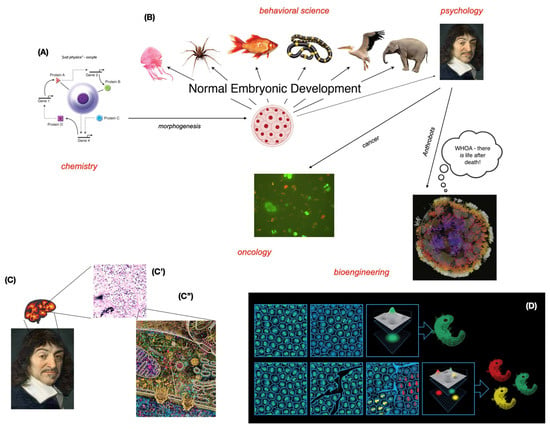
Background: Chlorine dioxide (ClO2), formulated as an aqueous solution (CDS), has been proposed as a therapeutic agent, yet its classification among oxidizing compounds is frequently confounded with chemically distinct species—sodium chlorite (NaClO2) and sodium hypochlorite (NaOCl). Objective: This study aimed to synthesize the physicochemical, mechanistic and cellular basis of ClO2 action and to delineate the distinctions between ClO2 and related oxidants, with explicit separation of established data from hypothesized data. Methods: The methodology includes a narrative synthesis of electrochemical data, primary toxicological and clinical literature (PubMed) and the redox-biology literature on low-dose oxidant signaling. Results: ClO2 is a neutral free radical that acts via one-electron transfer (E°′ = +0.95 V vs. SHE for the half-reaction ClO2 + e− → ClO2−, essentially pH-independent over pH 4–8, pH-independent) without chlorination. Its antimicrobial action is attributable to oxidation of thiol-dependent enzymes and membrane constituents and to the inhibition of bacterial respiratory metabolism; host-cell sparing is consistent with differential glutathione-dependent buffering. Controlled human ingestion studies at low concentrations report a favorable short-term safety profile; conversely, the principal metabolite (chlorite) is associated with documented developmental toxicity in animals and regulatory caution by EPA/WHO. Low-dose ClO2 exposure is hypothesized—but not yet directly demonstrated—to elicit dose-dependent adaptive redox responses and redox-regulatory modulation. Conclusions: The one-electron, non-chlorinating chemistry of ClO2 provides a coherent mechanistic framework. The translation of this framework into clinical application requires prospective trials and direct mechanistic measurement, ideally conducted by independent investigators. The following mechanisms are hypothesized and have not yet been directly demonstrated in vivo: modulation of oxidative phosphorylation, mitochondrial oxygenation, and associated redox-regulatory signaling. Reported antimicrobial efficacy typically occurs in the low-ppm range (0.1–5 ppm), whereas adverse effects on mammalian cells in the reviewed literature are reported at concentrations at least one order of magnitude higher; direct head-to-head cytotoxicity comparisons remain scarce and are identified as a priority for future work. This differential thiol buffering—in particular, the higher glutathione content of many mammalian cells relative to many pathogens—has been proposed as a contributing basis for host-cell sparing; direct quantitative confirmation in vivo is not yet available. Bacterial species possess their own thiol-based defense systems (e.g., mycothiol in actinomycetes, bacillithiol in Firmicutes), and the interplay between ClO2 and these systems requires further investigation.
21 September 2026
15,878 Views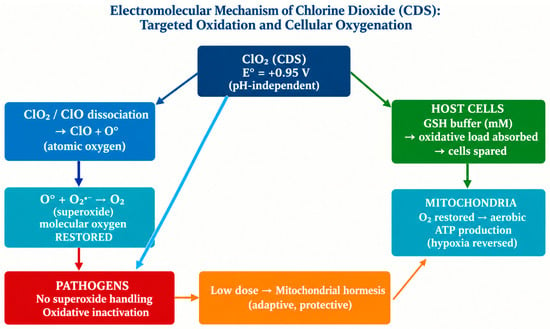
Background/Objectives: Understanding genomic responses to environmental contamination is essential for assessing long-term ecological and genetic risk. The free-breeding dogs inhabiting the Chornobyl Exclusion Zone (CEZ) offer a unique, multigenerational model for investigating these responses within a chronically contaminated landscape. Following the 1986 radioecological disaster at the Chornobyl Nuclear Power Plant, and subsequent remediation activities, the surrounding environment was contaminated by ionizing radiation, heavy metals, organic compounds, and other environmental toxicants. Our previous work identified significant genetic differentiation between two distinct but geographically proximate dog populations within the CEZ, a pattern not explained by breed composition, spatial isolation, or increased mutation rates. Methods: In this study, we tested the hypothesis that the dogs residing at the nuclear power plant show genomic signatures consistent with adaptive evolution in response to chronic environmental stressors. This work extends prior population-genetic analyses by integrating whole-genome selection scans with estimates of effective population size and comparative measures of population divergence, providing a framework to evaluate whether the observed genomic differentiation is more consistent with selection than demography. Using these whole genomic data, we evaluated chromosome-level FST metrics, estimated effective population size (Ne), and analyzed a geographically isolated island dog population as a comparative reference for genetic divergence. Results: We continued to find that the levels of genetic differentiation are not comparable to other free-breeding dog populations. Genome-wide outlier analyses identified candidate loci showing evidence of positive selection across multiple metrics. Conclusions: Genes associated with these loci were enriched for biological functions related to DNA replication and repair, cell death and survival, cellular compromise, immune response, and cancer-associated pathways, suggesting biologically plausible mechanisms through which chronic environmental stress could influence fitness. These findings are consistent with directional selection in the nuclear power plant population, which could potentially be associated with the environmental variables present, and advance our understanding of local adaptation and genomic resilience under chronic environmental contamination.
27 September 2026
8,788 Views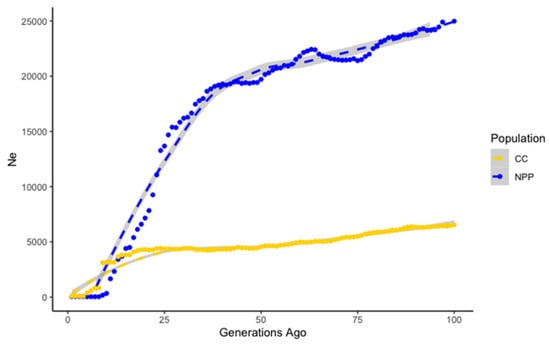
Neglected tropical diseases (NTDs) caused by Leishmania and Schistosoma species continue to impose a significant health burden in endemic regions, largely due to limited therapeutic options, drug resistance, and incomplete understanding of parasite biology at the molecular level. A major restriction in the development of targeted interventions is the structural inaccessibility of parasite membrane-associated proteins, which are central to host invasion, nutrient transport, immune evasion, and survival. Recent advances in cryogenic electron microscopy (cryo-EM) have expanded the structural biology toolkit available for studying difficult parasite proteins, particularly large and membrane-associated macromolecular assemblies. However, experimentally resolved cryo-EM structures remain limited for many of the Leishmania and Schistosoma targets relevant to therapeutic and vaccine development. This review therefore distinguishes experimentally determined structures from partial structural information and computational models and examines how potential cryo-EM approaches may address unresolved structural questions. We discuss current structural knowledge of selected parasite targets, approaches for recombinant expression and membrane-protein stabilization, membrane-mimetic systems for structural characterization, and computational methods that complement experimental structural biology. We further examine how experimentally supported structural information, complemented by computational predictions where appropriate, could contribute to structure-guided drug discovery, vaccine design, and targeted nanomedicine. At present, however, the direct translation of parasite structural information into rational nanotherapeutic design remains limited. Key gaps include the scarcity of experimentally resolved parasite membrane protein structures, challenges in their expression and structural characterization, and limited integration of structural biology with nanoparticle engineering. Resolving these gaps may improve the prospects for structure-informed therapeutic and nanomedicine applications against leishmaniasis, schistosomiasis, and other NTDs.
30 September 2026
8,225 Views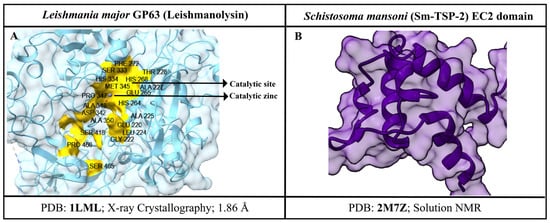
Professional networking platform that connects researchers, academics, and scientific professionals, enabling them to showcase their publications, track citations, and collaborate with peers across disciplines worldwide.
Discover
Scientific literature tracking and analysis tool for researchers and institutions. Providing insights on publication trends, citations, and collaborative opportunities.
Discover
Open access book publishing platform for comprehensive scientific works. Offering wide distribution of monographs, edited volumes, and reference works.
Discover
Early sharing of research papers before peer review. Enabling rapid dissemination of findings and community feedback on preliminary work.
Discover
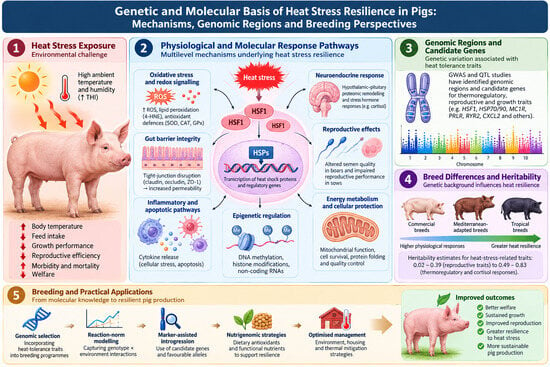
Background/Objectives: Heat stress is one of the most economically and physiologically important constraints on pig (Sus scrofa domesticus) production, affecting welfare, reducing feed intake, growth, and reproductive efficiency, while increasing morbidity and mortality; because pigs lack functional eccrine sweat glands and have a limited capacity for evaporative heat dissipation, their ability to cope with high ambient temperature depends heavily on behavioral, physiological, and cellular stress-response mechanisms, which vary among individuals and genetic backgrounds. This review synthesizes current knowledge of the genetic and molecular pathways underlying the pig heat-stress response, spanning the HSF1–heat shock protein axis and epigenetic regulation, as well as genomic regions, candidate genes, nutrigenomic modulation, and reproductive consequences in boars and sows. Methods: A narrative literature review, informed by key principles of the PRISMA 2020 statement, synthesized 58 peer-reviewed transcriptomic, genomic, epigenomic, proteomic, and physiological studies published mainly between 1998 and 2026. Results: Heat exposure activates HSF1-driven heat shock protein transcription, oxidative stress, gut tight-junction disruption, hypothalamic–pituitary proteomic remodeling, and sex-dimorphic apoptotic/inflammatory transcriptional programs that also compromise boar semen quality. GWAS and QTL studies have mapped genomic regions and candidate genes for thermoregulatory, reproductive, and growth traits. At the same time, breed comparisons suggest, but do not prove on their own, a genetic contribution to the smaller physiological responses observed in some tropical and Mediterranean-adapted breeds. Heritability estimates for individual heat-stress-related traits, rather than for heat tolerance as a composite phenotype, range from low (0.02–0.20) for reproductive traits, to moderate (0.35–0.39) for thermoregulatory traits in lactating sows, to moderate-to-high (0.49–0.83) for physiological responses to acute heat challenge in gilts; circulating cortisol (h2 ≈ 0.68) is a heritable biomarker of the stress response rather than a measure of heat tolerance itself. Conclusions: Several traits associated with the response to heat stress in pigs are heritable and polygenic, supporting the potential of genomic selection, reaction-norm modeling, and marker-assisted introgression, although functional validation of candidate genes and larger multi-population studies, together with an explicit definition of heat tolerance as a composite selection objective, remain priorities.
5 November 2026
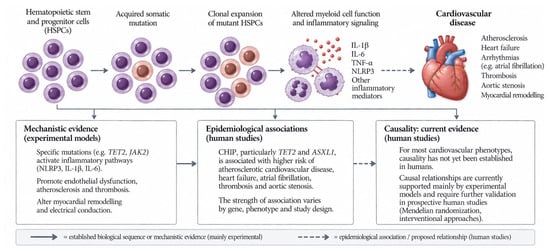
Somatic hematopoietic mutations, particularly clonal hematopoiesis of indeterminate potential (CHIP), represent an emerging link between aging, inflammation and cardiovascular disease beyond their established relevance in hematology. This narrative review examines how acquired mutations in hematopoietic stem and progenitor cells contribute to cardiovascular pathogenesis and how this knowledge may inform precision prevention and therapy. Evidence from experimental, clinical and population studies was synthesized with emphasis on clonal expansion, variant allele fraction, gene-specific mechanisms and cardiovascular phenotypes. The reviewed data indicate that driver mutations in DNMT3A, TET2, ASXL1, JAK2, TP53 and PPM1D can promote chronic myeloid inflammation, NLRP3/IL-1β and IL-6 signaling, endothelial dysfunction, atherosclerotic plaque instability, myocardial fibrosis, adverse remodeling, thrombosis, arrhythmias and cardio-oncology complications. The cardiovascular impact of CHIP appears heterogeneous and depends on the mutated gene, clone size, inflammatory phenotype, age, sex, treatment exposures and traditional risk factors. Anti-inflammatory, antithrombotic and mutation-oriented strategies, including IL-1β/NLRP3 blockade and pathway-specific approaches, are promising but remain incompletely validated. Somatic hematopoietic mutations should be considered cardiovascular risk modifiers rather than uniform disease entities. Future studies are needed to define screening thresholds, clinical utility and safety of CHIP-guided risk stratification and targeted therapy.
3 November 2026
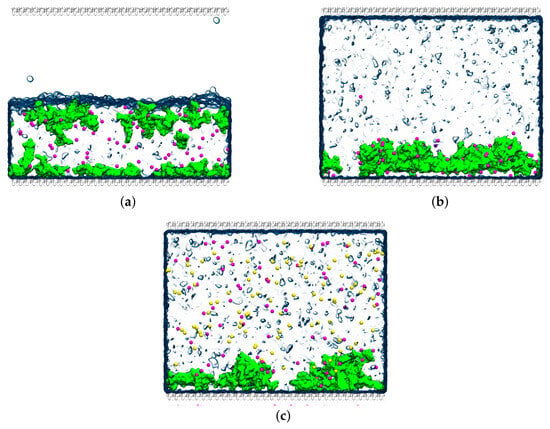
The behavior of ions at the electric double layer interfacial region between solid and liquid phases is well known in surface and material science. However, this is not fully the case in soil science, where the electric double layer develops due to the inherent complexity and diversity of negatively charged soil organic matter molecules that sorb at the mineral surface. This lack of knowledge opens questions regarding the interaction mechanisms at the molecular scale that lead to the stabilization of such soil building blocks, the so-called organo-mineral aggregates. By using classical molecular dynamics simulations, we studied the interactions between Kaolinite and four standardized soil organic matter samples with different aromatic and carboxylic content and Ca2+ cations clustering OM molecules and stabilizing them to the surface. We assessed the influence of (i) organic content, (ii) water content, and (iii) competing Cl− ions. Cluster aggregates are favored in soils with a high aliphatic fraction at low-water content, whereas aggregation is favored in soils with high aromatic fraction at high-water content and in the presence of Cl− ions. Moreover, samples with a low acid fraction favor clustering due to non-bonded interactions and hydrogen bonds. All of these environments are reflected as unique charge-density “fingerprints” and surface coverage for each OM sample. This work represents a step towards the characterization and study of natural soils tunable to specific local conditions.
30 October 2026
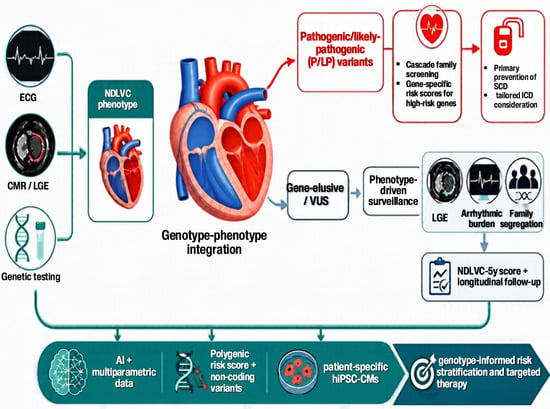
Non-dilated left ventricular cardiomyopathy (NDLVC) presents a unique clinical paradox: patients with nearly identical phenotypes can face radically different clinical outcomes. NDLVC has been recently recognized as a distinct dynamic phenotype within the spectrum of non-ischemic cardiomyopathies, linked by a high risk of life-threatening arrhythmias. Recent advances in genetics have overcome clinical phenotyping in prognostic accuracy. Specifically, gene-specific scores have been introduced to guide primary prevention ICD in high-risk gene carriers. On the other hand, while gene-elusive cases present a more favourable arrhythmic profile, their long-term clinical outcome is more challenging to predict. Despite advancements in therapeutic strategies, the heterogeneity of the disease represents an ongoing dilemma for risk stratification and long-term surveillance. This review offers a comprehensive analysis of NDLVC management in clinical practice, highlighting the profound prognostic divergence between genetic (both in actionable and VUS carriers) and gene-elusive cohorts. By synthesizing current evidence, we aim to clarify how genotype–phenotype correlations influence clinical outcomes and to provide a framework for more personalized approaches in the follow-up and treatment of these distinct patient populations. Furthermore, we address the current lack of standardized guidelines specifically tailored to gene-elusive phenotypes. In conclusion, NDLVC management requires a paradigm shift towards a multi-parametric, genotype-directed framework, where cardiac magnetic resonance tissue characterisation and personalized risk scores are essential to optimize sudden cardiac death prevention. Future research must leverage artificial intelligence and polygenic risk scores (PRSs) to integrate multi-parametric clinical-imaging data and refine risk stratification beyond traditional binary models. Concurrently, human induced pluripotent stem cell-derived cardiomyocytes (hiPSC-CMs) will be pivotal as a translational platform to clarify VUS pathogenicity, unravel gene-specific arrhythmic mechanisms, and accelerate targeted therapeutic interventions.
30 October 2026