
Testosterone Replacement Therapy in Women Is Associated with Improved Symptom Burden and Favorable Biomarker Changes: A Retrospective Observational Study

 , ,
, , 

Abstract
1. Introduction
2. Materials and Methods
2.1. Study Design
2.2. Participants
2.3. Clinical Exposure
2.4. Symptom Assessment
2.5. Biomarker Assessment
2.6. Data Analysis
2.7. Ethical Considerations
3. Results
3.1. Participant Characteristics
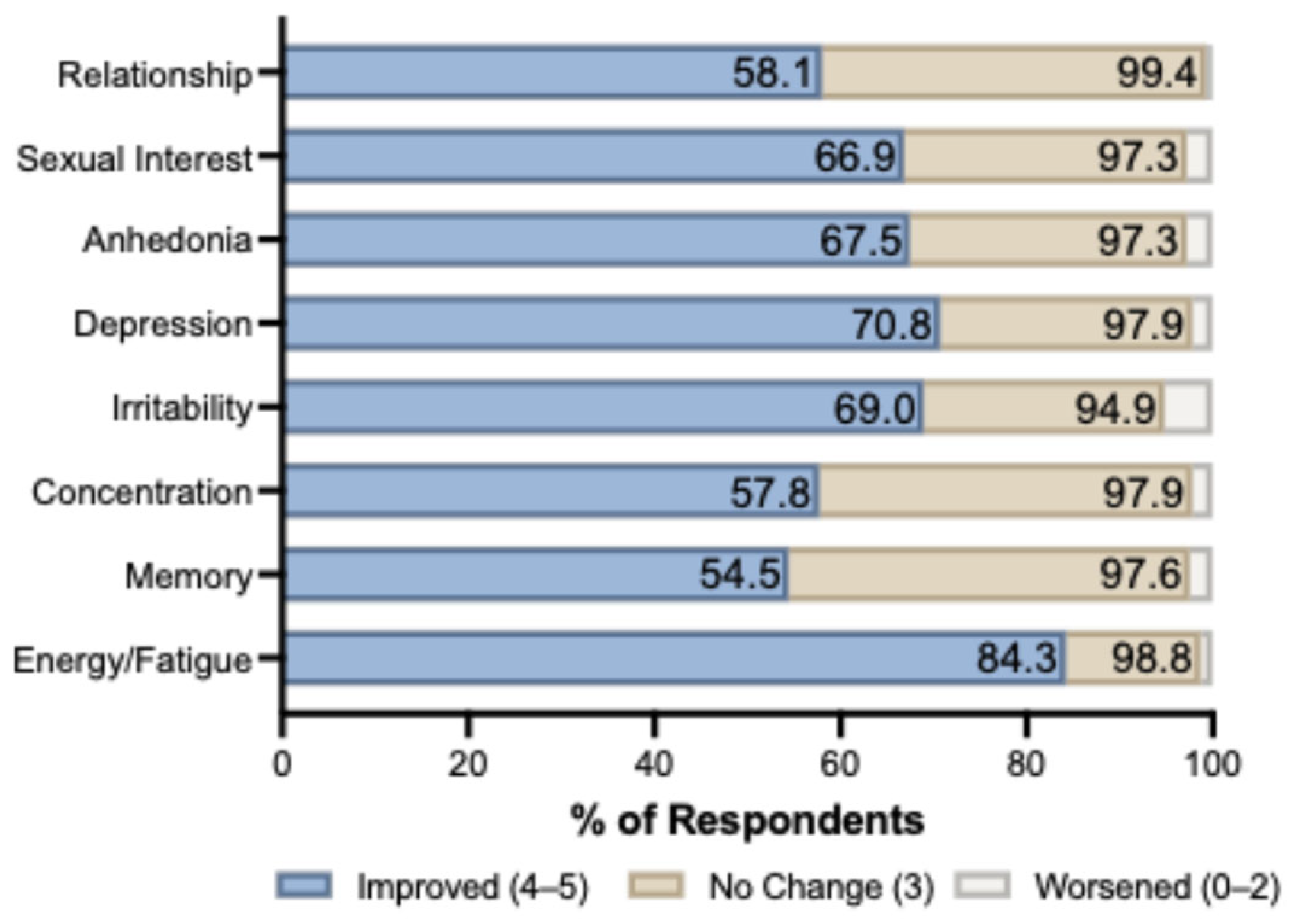
3.2. Symptom Outcomes
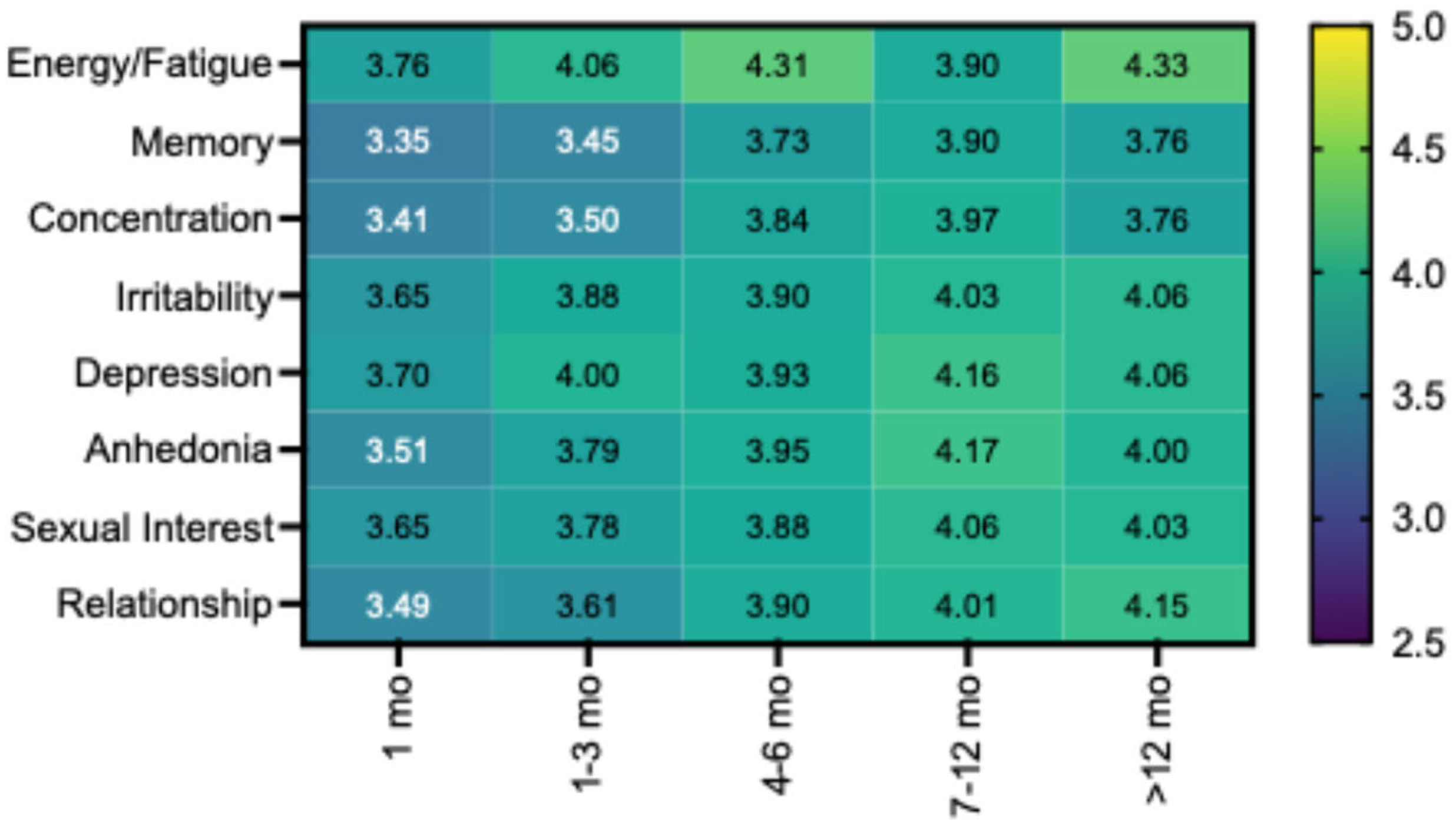
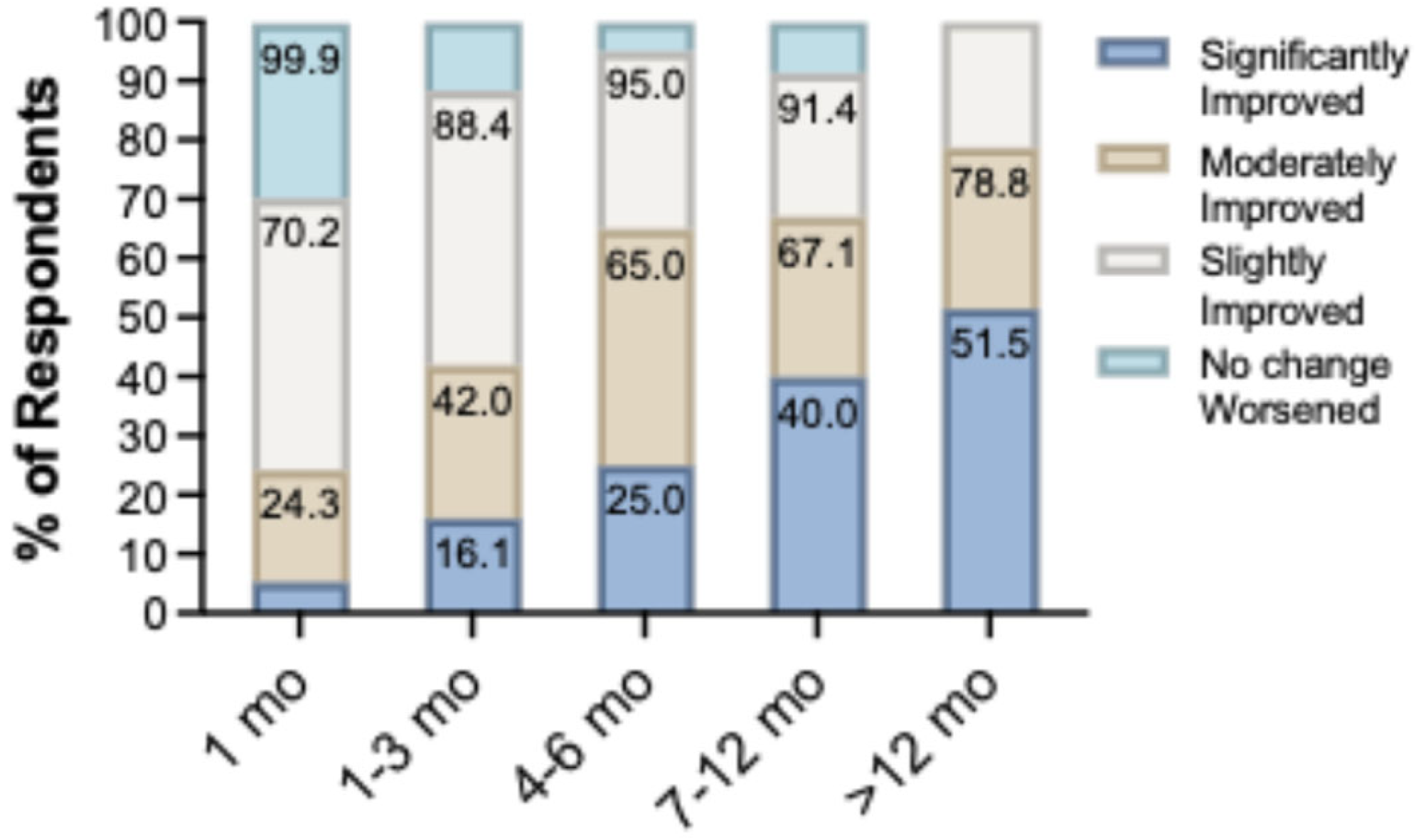
3.3. Duration-Response Relationships
3.4. Quality of Life (QoL)
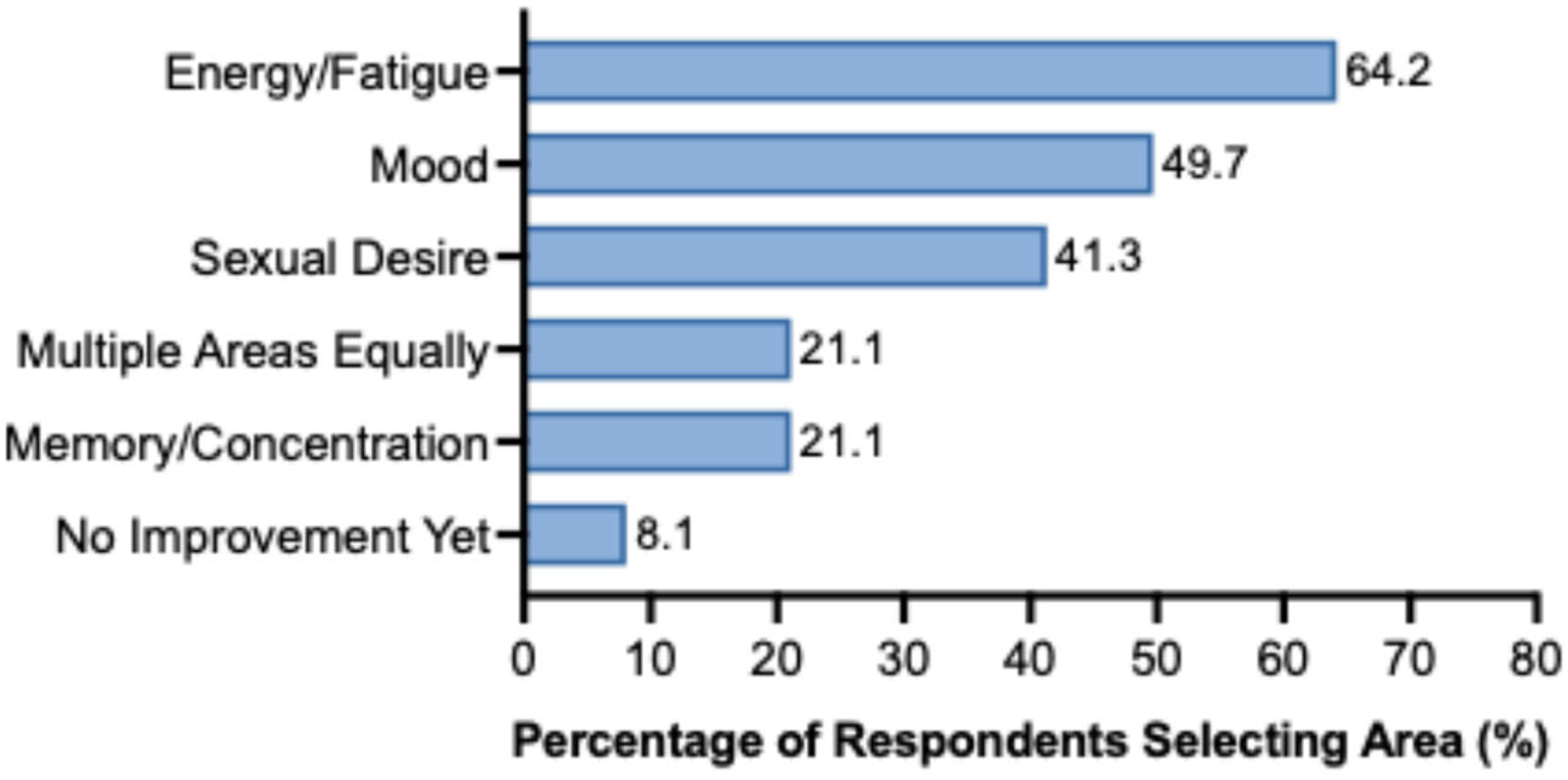
3.5. Self-Identified Improvement Areas
3.6. Biomarker Analyses
4. Discussion
4.1. Symptomatic Outcomes
4.2. Biomarker Outcomes
4.3. Duration-Response Implications
4.4. The Role of Personalized, Biomarker-Guided Hormone Optimization
4.5. Limitations
5. Conclusions
Author Contributions
Funding
Institutional Review Board Statement
Informed Consent Statement
Data Availability Statement
Acknowledgments
Conflicts of Interest
References
- Abraham, G.E. Ovarian and adrenal contribution to peripheral androgens during the menstrual cycle. J. Clin. Endocrinol. Metab. 1974, 39, 340–346. [Google Scholar] [CrossRef] [PubMed]
- Burger, H.G. Androgen production in women. Fertil. Steril. 2002, 77, 3–5. [Google Scholar] [CrossRef] [PubMed]
- Davis, S.R.; Wahlin-Jacobsen, S. Testosterone in women--the clinical significance. Lancet Diabetes Endocrinol. 2015, 3, 980–992. [Google Scholar] [CrossRef] [PubMed]
- Traish, A.M.; Vignozzi, L.; Simon, J.A.; Goldstein, I.; Kim, N.N. Role of Androgens in Female Genitourinary Tissue Structure and Function: Implications in the Genitourinary Syndrome of Menopause. Sex. Med. Rev. 2018, 6, 558–571. [Google Scholar] [CrossRef]
- Davison, S.L.; Bell, R.; Donath, S.; Montalto, J.G.; Davis, S.R. Androgen levels in adult females: Changes with age, menopause, and oophorectomy. J. Clin. Endocrinol. Metab. 2005, 90, 3847–3853. [Google Scholar] [CrossRef]
- Burger, H.G.; Dudley, E.C.; Cui, J.; Dennerstein, L.; Hopper, J.L. A prospective longitudinal study of serum testosterone, dehydroepiandrosterone sulfate, and sex hormone-binding globulin levels through the menopause transition. J. Clin. Endocrinol. Metab. 2000, 85, 2832–2838. [Google Scholar] [CrossRef]
- Shifren, J.L.; Braunstein, G.D.; Simon, J.A.; Casson, P.R.; Buster, J.E.; Redmond, G.P.; Burki, R.E.; Ginsburg, E.S.; Rosen, R.C.; Leiblum, S.R.; et al. Transdermal testosterone treatment in women with impaired sexual function after oophorectomy. N. Engl. J. Med. 2000, 343, 682–688. [Google Scholar] [CrossRef]
- Goldstat, R.; Briganti, E.; Tran, J.; Wolfe, R.; Davis, S.R. Transdermal testosterone therapy improves well-being, mood, and sexual function in premenopausal women. Menopause 2003, 10, 390–398. [Google Scholar] [CrossRef]
- Simon, J.A.; Davis, S.R.; Althof, S.E.; Chedraui, P.; Clayton, A.H.; Kingsberg, S.A.; Nappi, R.E.; Parish, S.J.; Wolfman, W. Sexual well-being after menopause: An International Menopause Society White Paper. Climacteric 2018, 21, 415–427. [Google Scholar] [CrossRef]
- Santoro, N.; Epperson, C.N.; Mathews, S.B. Menopausal Symptoms and Their Management. Endocrinol. Metab. Clin. N. Am. 2015, 44, 497–515. [Google Scholar] [CrossRef]
- Brand, J.S.; van der Schouw, Y.T. Testosterone, SHBG and cardiovascular health in postmenopausal women. Int. J. Impot. Res. 2010, 22, 91–104. [Google Scholar] [CrossRef] [PubMed]
- Islam, R.M.; Bell, R.J.; Green, S.; Page, M.J.; Davis, S.R. Safety and efficacy of testosterone for women: A systematic review and meta-analysis of randomised controlled trial data. Lancet Diabetes Endocrinol. 2019, 7, 754–766. [Google Scholar] [CrossRef] [PubMed]
- Bianchi, V.E. The Anti-Inflammatory Effects of Testosterone. J. Endocr. Soc. 2019, 3, 91–107. [Google Scholar] [CrossRef] [PubMed]
- Traish, A.; Bolanos, J.; Nair, S.; Saad, F.; Morgentaler, A. Do Androgens Modulate the Pathophysiological Pathways of Inflammation? Appraising the Contemporary Evidence. J. Clin. Med. 2018, 7, 549. [Google Scholar] [CrossRef]
- Ferrucci, L.; Fabbri, E. Inflammageing: Chronic inflammation in ageing, cardiovascular disease, and frailty. Nat. Rev. Cardiol. 2018, 15, 505–522. [Google Scholar] [CrossRef]
- Furman, D.; Campisi, J.; Verdin, E.; Carrera-Bastos, P.; Targ, S.; Franceschi, C.; Ferrucci, L.; Gilroy, D.W.; Fasano, A.; Miller, G.W.; et al. Chronic inflammation in the etiology of disease across the life span. Nat. Med. 2019, 25, 1822–1832. [Google Scholar] [CrossRef]
- Wekker, V.; van Dammen, L.; Koning, A.; Heida, K.Y.; Painter, R.C.; Limpens, J.; Laven, J.S.E.; Roeters van Lennep, J.E.; Roseboom, T.J.; Hoek, A. Long-term cardiometabolic disease risk in women with PCOS: A systematic review and meta-analysis. Hum. Reprod. Update 2020, 26, 942–960. [Google Scholar] [CrossRef]
- Tay, C.T.; Mousa, A.; Vyas, A.; Pattuwage, L.; Tehrani, F.R.; Teede, H. 2023 International Evidence-Based Polycystic Ovary Syndrome Guideline Update: Insights From a Systematic Review and Meta-Analysis on Elevated Clinical Cardiovascular Disease in Polycystic Ovary Syndrome. J. Am. Heart Assoc. 2024, 13, e033572. [Google Scholar] [CrossRef]
- Aflatounian, A.; Edwards, M.C.; Rodriguez Paris, V.; Bertoldo, M.J.; Desai, R.; Gilchrist, R.B.; Ledger, W.L.; Handelsman, D.J.; Walters, K.A. Androgen signaling pathways driving reproductive and metabolic phenotypes in a PCOS mouse model. J. Endocrinol. 2020, 245, 381–395. [Google Scholar] [CrossRef]
- Abdalla, M.A.; Deshmukh, H.; Atkin, S.; Sathyapalan, T. A review of therapeutic options for managing the metabolic aspects of polycystic ovary syndrome. Ther. Adv. Endocrinol. Metab. 2020, 11, 2042018820938305. [Google Scholar] [CrossRef]
- Davis, S.R.; Baber, R.; Panay, N.; Bitzer, J.; Perez, S.C.; Islam, R.M.; Kaunitz, A.M.; Kingsberg, S.A.; Lambrinoudaki, I.; Liu, J.; et al. Global Consensus Position Statement on the Use of Testosterone Therapy for Women. J. Clin. Endocrinol. Metab. 2019, 104, 4660–4666. [Google Scholar] [CrossRef] [PubMed]
- Parish, S.J.; Simon, J.A.; Davis, S.R.; Giraldi, A.; Goldstein, I.; Goldstein, S.W.; Kim, N.N.; Kingsberg, S.A.; Morgentaler, A.; Nappi, R.E.; et al. International Society for the Study of Women’s Sexual Health Clinical Practice Guideline for the Use of Systemic Testosterone for Hypoactive Sexual Desire Disorder in Women. J. Sex. Med. 2021, 18, 849–867. [Google Scholar] [CrossRef] [PubMed]
- Roeth, E.; Morris, M.; Reynolds, A.P.; Reynolds, E.M.; Hungerford, R.; Livingston, E.J.; Richardson, A.W.; Bikman, B.T.; Reynolds, P.R. Personalized Supplementation Is Associated with Reduced Inflammatory Biomarkers: A 12-Week Observational Study. Life 2025, 15, 1887. [Google Scholar] [CrossRef] [PubMed]
- Madsen, M.C.; van Dijk, D.; Wiepjes, C.M.; Conemans, E.B.; Thijs, A.; den Heijer, M. Erythrocytosis in a Large Cohort of Trans Men Using Testosterone: A Long-Term Follow-Up Study on Prevalence, Determinants, and Exposure Years. J. Clin. Endocrinol. Metab. 2021, 106, 1710–1717. [Google Scholar] [CrossRef]
- McHenry, J.; Carrier, N.; Hull, E.; Kabbaj, M. Sex differences in anxiety and depression: Role of testosterone. Front. Neuroendocrinol. 2014, 35, 42–57. [Google Scholar] [CrossRef]
- Zarrouf, F.A.; Artz, S.; Griffith, J.; Sirbu, C.; Kommor, M. Testosterone and depression: Systematic review and meta-analysis. J. Psychiatr. Pract. 2009, 15, 289–305. [Google Scholar] [CrossRef]
- Davis, S.R.; Moreau, M.; Kroll, R.; Bouchard, C.; Panay, N.; Gass, M.; Braunstein, G.D.; Hirschberg, A.L.; Rodenberg, C.; Pack, S.; et al. Testosterone for low libido in postmenopausal women not taking estrogen. N. Engl. J. Med. 2008, 359, 2005–2017. [Google Scholar] [CrossRef]
- Brinton, R.D. Neurosteroids as regenerative agents in the brain: Therapeutic implications. Nat. Rev. Endocrinol. 2013, 9, 241–250. [Google Scholar] [CrossRef]
- Mahmoud, R.; Wainwright, S.R.; Galea, L.A. Sex hormones and adult hippocampal neurogenesis: Regulation, implications, and potential mechanisms. Front. Neuroendocrinol. 2016, 41, 129–152. [Google Scholar] [CrossRef]
- Cherrier, M.M.; Matsumoto, A.M.; Amory, J.K.; Asthana, S.; Bremner, W.; Peskind, E.R.; Raskind, M.A.; Craft, S. Testosterone improves spatial memory in men with Alzheimer disease and mild cognitive impairment. Neurology 2005, 64, 2063–2068. [Google Scholar] [CrossRef]
- Bachman, E.; Travison, T.G.; Basaria, S.; Davda, M.N.; Guo, W.; Li, M.; Connor Westfall, J.; Bae, H.; Gordeuk, V.; Bhasin, S. Testosterone induces erythrocytosis via increased erythropoietin and suppressed hepcidin: Evidence for a new erythropoietin/hemoglobin set point. J. Gerontol. A Biol. Sci. Med. Sci. 2014, 69, 725–735. [Google Scholar] [CrossRef] [PubMed]
- Bhasin, S.; Woodhouse, L.; Casaburi, R.; Singh, A.B.; Bhasin, D.; Berman, N.; Chen, X.; Yarasheski, K.E.; Magliano, L.; Dzekov, C.; et al. Testosterone dose-response relationships in healthy young men. Am. J. Physiol. Endocrinol. Metab. 2001, 281, E1172–E1181. [Google Scholar] [CrossRef]
- Zang, H.; Carlström, K.; Arner, P.; Hirschberg, A.L. Effects of treatment with testosterone alone or in combination with estrogen on insulin sensitivity in postmenopausal women. Fertil. Steril. 2006, 86, 136–144. [Google Scholar] [CrossRef]
- El Khoudary, S.R.; Aggarwal, B.; Beckie, T.M.; Hodis, H.N.; Johnson, A.E.; Langer, R.D.; Limacher, M.C.; Manson, J.E.; Stefanick, M.L.; Allison, M.A. Menopause Transition and Cardiovascular Disease Risk: Implications for Timing of Early Prevention: A Scientific Statement From the American Heart Association. Circulation 2020, 142, e506–e532. [Google Scholar] [CrossRef]
- Mauvais-Jarvis, F.; Lindsey, S.H. Metabolic benefits afforded by estradiol and testosterone in both sexes: Clinical considerations. J. Clin. Investig. 2024, 134. [Google Scholar] [CrossRef]
- Hirschberg, A.L. Hyperandrogenism and Cardiometabolic Risk in Pre- and Postmenopausal Women-What Is the Evidence? J. Clin. Endocrinol. Metab. 2024, 109, 1202–1213. [Google Scholar] [CrossRef]
- Pokushalov, E.; Ponomarenko, A.; Shrainer, E.; Kudlay, D.; Miller, R. Biomarker-Guided Dietary Supplementation: A Narrative Review of Precision in Personalized Nutrition. Nutrients 2024, 16, 4033. [Google Scholar] [CrossRef]



| Characteristic | Value |
|---|---|
| Age (years) | |
| Mean ± SD | 45.7 ± 7.1 |
| Median (range) | 45 (27–78) |
| Age Distribution, n (%) | |
| <40 years | 50 (16.6) |
| 40–49 years | 166 (50.0) |
| 50–59 years | 88 (26.5) |
| ≥60 years | 23 (6.9) |
| TRT Duration, n (%) | |
| 1 month | 37 (11.1) |
| 1–3 months | 112 (33.7) |
| 4–6 months | 80 (24.1) |
| 7–12 months | 70 (21.1) |
| >12 months | 33 (9.9) |
| Marker | Baseline Mean ± SD | 3-mo Mean ± SD | Mean Change | % Change | 95% CI (Change) | Cohen’s d |
|---|---|---|---|---|---|---|
| Total Testosterone (ng/dL) | 16.8 ± 4.4 | 42.3 ± 8.7 | +25.52 | +151.80% | (24.25, 26.79) | 3.60 |
| Free Testosterone (pg/mL) | 1.2 ± 0.3 | 3.8 ± 0.9 | +2.55 | +216.70% | (2.40, 2.70) | 3.01 |
| SHBG (nmol/L) | 74.4 ± 15.5 | 64.5 ± 15.9 | −10.94 | −13.30% | (−11.6, −8.81) | 1.57 |
| Hemoglobin (g/dL) | 12.7 ± 0.6 | 13.4 ± 0.7 | +0.67 | +5.50% | (0.61, 0.73) | 2.03 |
| Triglycerides (mg/dL) | 159.6 ± 30.5 | 139.5 ± 34.5 | −20.4 | −12.60% | (−22.84, −17.25) | 1.28 |
Disclaimer/Publisher’s Note: The statements, opinions and data contained in all publications are solely those of the individual author(s) and contributor(s) and not of MDPI and/or the editor(s). MDPI and/or the editor(s) disclaim responsibility for any injury to people or property resulting from any ideas, methods, instructions or products referred to in the content. |
© 2026 by the authors. Licensee MDPI, Basel, Switzerland. This article is an open access article distributed under the terms and conditions of the Creative Commons Attribution (CC BY) license.
Share and Cite
Elggren, C.W.; Iverson, C.H.; Morris, M.D.; Cooper-Leavitt, E.F.; Parker, G.; Richardson, A.W.; Reynolds, A.P.; Cortes, P.M.; Bikman, B.T.; Reynolds, P.R. Testosterone Replacement Therapy in Women Is Associated with Improved Symptom Burden and Favorable Biomarker Changes: A Retrospective Observational Study. J. Pers. Med. 2026, 16, 231. https://doi.org/10.3390/jpm16050231
Elggren CW, Iverson CH, Morris MD, Cooper-Leavitt EF, Parker G, Richardson AW, Reynolds AP, Cortes PM, Bikman BT, Reynolds PR. Testosterone Replacement Therapy in Women Is Associated with Improved Symptom Burden and Favorable Biomarker Changes: A Retrospective Observational Study. Journal of Personalized Medicine. 2026; 16(5):231. https://doi.org/10.3390/jpm16050231
Chicago/Turabian StyleElggren, Carter W., Charles H. Iverson, Madeline D. Morris, Ella F. Cooper-Leavitt, Genevieve Parker, Andrew W. Richardson, Asher P. Reynolds, Paul M. Cortes, Benjamin T. Bikman, and Paul R. Reynolds. 2026. "Testosterone Replacement Therapy in Women Is Associated with Improved Symptom Burden and Favorable Biomarker Changes: A Retrospective Observational Study" Journal of Personalized Medicine 16, no. 5: 231. https://doi.org/10.3390/jpm16050231
APA StyleElggren, C. W., Iverson, C. H., Morris, M. D., Cooper-Leavitt, E. F., Parker, G., Richardson, A. W., Reynolds, A. P., Cortes, P. M., Bikman, B. T., & Reynolds, P. R. (2026). Testosterone Replacement Therapy in Women Is Associated with Improved Symptom Burden and Favorable Biomarker Changes: A Retrospective Observational Study. Journal of Personalized Medicine, 16(5), 231. https://doi.org/10.3390/jpm16050231