Article

Behavioral Characteristics of French Bulldogs in Italy: A Pilot Study Using the C-BARQ Questionnaire


1
Department of Veterinary Sciences, University of Pisa, 56124 Pisa, Italy
2
Department of Clinical Sciences and Translational Medicine, University of Rome Tor Vergata, 00133 Rome, Italy
*
Author to whom correspondence should be addressed.
Submission received: 24 February 2026 / Revised: 6 May 2026 / Accepted: 8 May 2026 / Published: 12 May 2026

Abstract

French Bulldogs are one of the most popular companion dog breeds worldwide, yet breed-specific behavioral data remain limited. This study aimed to characterize the behavioral profile of French Bulldogs in Italy using the Canine Behavioral Assessment and Research Questionnaire (C-BARQ) and to explore the relationships among sex, neuter status, coat color, and behavioral traits. An online survey was completed by 206 owners of French Bulldogs aged one year or older residing in Italy. Behavioral items were analyzed using ordinal logistic regression with sex, neuter status, and coat color as simultaneous predictors. French Bulldogs showed low aggression and fear-related behaviors, high attachment and attention-seeking tendencies, and moderate excitability and trainability. Sex was the most consistently associated predictor (17 items), with females showing lower odds for sexually dimorphic, fear-related, excitability, and separation-related behaviors. Neuter status showed limited, behavior-specific associations (4 items) involving leash-pulling, separation-related behaviors, and play-related excitability. Coat color was associated with ten behavioral items, including coprophagia, food stealing, hyperactivity, and submissive urination. Most pseudo-R2 values were low (range: 0.009–0.059), reflecting the multifactorial nature of canine behavior. These findings offer a preliminary behavioral characterization of French Bulldogs in Italy and suggest that sex, neuter status, and coat color represent relevant sources of within-breed variation, warranting further research.

1. Introduction

The French Bulldog (Bouledogue Français) is a small brachycephalic molossoid breed that developed mainly during the nineteenth century. Despite its name, the breed originated from small Bulldogs kept by English artisans during the Industrial Revolution [1,2].
In the mid-nineteenth century, the migration of English workers to France led to the introduction of these dogs into urban centers, particularly Paris. Subsequent selective breeding and probable crosses with local terrier-type dogs resulted in the characteristic morphology of the breed, including erect “bat ears,” a compact body, and a markedly brachycephalic skull, a term referring to the disproportionate shortening of the facial skeleton relative to the cranium, resulting in a flattened facial appearance [3].
During the twentieth century, breeding increasingly emphasized exaggerated conformational traits, especially brachycephaly, which has been associated with a high prevalence of inherited disorders such as brachycephalic obstructive airway syndrome, dermatological diseases, and reproductive difficulties [4,5,6,7,8]. As a result, the French Bulldog has become an important model for studies on canine genetics, morphology, and animal welfare [9,10,11].
Despite serious concerns about health and longevity, small brachycephalic breeds are becoming increasingly popular among pet owners [12], including in Italy, where French Bulldog registrations with the Ente Nazionale della Cinofilia Italiana (ENCI) have shown a consistent upward trend over the past decade [13]. This is mainly due to the fact that they are considered breeds suitable for a sedentary lifestyle with limited space and families with children and with behavioral characteristics considered positive for a companion dog [14]. Their rise in popularity despite numerous health problems constitutes the brachycephalic paradox: the phenomenon whereby people continue to acquire and recommend breeds with well-documented conformation-related disorders, driven by strong emotional attachment, aesthetic appeal, and perceived positive behavioral traits [15,16].
Despite its growing popularity, breed-specific behavioral data for the French Bulldog remain limited. Existing studies have largely focused on owner motivations for acquisition, breed loyalty [14], and selected aspects of the dog–owner relationship or cognitive performance in small experimental samples [17,18]. No previous study has systematically characterized the behavioral profile of French Bulldogs using a validated standardized instrument across a wide range of everyday situations. This gap is particularly relevant given that behavioral expectations directly influence owner satisfaction, management decisions, and animal welfare outcomes, and that breed-typical behavioral tendencies in this breed remain largely based on anecdotal accounts rather than empirical data.
With more than 350 breeds, the canine species has undergone the most rigorous selection process by humans [19]. This selective breeding [20] has led to the creation of breeds that differ not only in morphology but also in behavior, an essential factor in producing animals useful for performing various human activities [21]. The creation of the Canine Behavioral Assessment and Research Questionnaire (C-BARQ) has provided an important tool for assessing canine behavior and allows us to develop a “portrait” of different breeds, filling gaps in breed standards. The C-BARQ was originally developed by Serpell and Hsu [22] at the University of Pennsylvania School of Veterinary Medicine as a standardized, owner-completed instrument for assessing behavioral tendencies in companion dogs. Subsequent validation studies confirmed its reliability and factorial structure across a wide range of breeds [23,24], promoting its large-scale use [25,26,27]. The questionnaire has since been translated and validated in several languages, including Italian [28].
Although it is a validated questionnaire, it has important limitations, for example, because it does not take into account any training activities the animals may have undertaken, the presence of co-specifics, the particularities of the animal’s environment or the bond and relationship between the dog and its owner or caregiver. Despite these limitations, the C-BARQ remains the most valid tool for investigating and identifying stable behavioral characteristics of different dog breeds. This tool can also be applied to the study of possible associations between behavior, sex, reproductive status, and coat color of animals. The potential influence of these demographic variables on behavior has not been systematically examined in French Bulldogs.
It has long been known that males and females exhibit behavioral differences that are motivated by different hormonal patterns. Male dogs, for instance, show more interest in other dogs and playing with humans. They also tend to be more aggressive, less fearful, and less trainable compared to females [29]. Moreover, males of different purebreds showed less dog and stranger-directed fear [29]. German Shepherd [30] and Beagle [31] females, instead, scored higher in sociability, making more physical contact with a human.
Considering the importance of the hormonal component in the manifestation or otherwise of a behavior, castration obviously substantially influences the dog’s behavior. Gonadectomy can reduce several sexually dimorphic, hormone-linked behaviors in male dogs, most consistently roaming, mounting, and urine marking, although the magnitude of improvement varies across individuals and contexts [32,33,34,35,36]. Evidence for effects on aggression and fear/anxiety is mixed: large questionnaire datasets and recent analyses report small increases in certain aggression dimensions (e.g., stranger-directed) and/or stress-related traits in subsets of neutered dogs, while other outcomes show no clear benefit and may depend on age at neutering, baseline temperament, and population sampled [33,34,35].
Coat color is another demographic variable that deserves to be considered. The French bulldog exhibits four coat color variations: brindle, fawn, white and fawn, and pied, officially recognized by the Fédération Cynologique Internationale (FCI) breed standard [37], classified according to the presence or absence of extensive white markings. According to the FCI standard, we use ‘pied’ strictly for brindle coats with extensive white spotting, and ‘fawn-and-white’ for fawn coats with extensive white spotting, although genetically both patterns correspond to piebald white spotting on brindle or fawn backgrounds. Across all coat varieties, correct pigmentation requires a black nose. Completely white individuals are permitted only when nasal and eyelid pigmentation is black; however, they are generally discouraged due to the increased risk of congenital sensorineural deafness associated with extensive white spotting [38,39,40,41].
Coat color has been investigated as a phenotypic trait potentially associated with behavioral tendencies in domestic dogs. Several observational and questionnaire-based studies suggest that certain coat colors may correlate with differences in aggression, fearfulness, or trainability, although causality remains unclear. For example, darker coat colors, particularly black, have been associated with higher scores for aggression or excitability in some breeds and mixed-breed populations, while lighter colors have been linked to increased sociability in specific contexts [42]. These associations are thought to arise not merely from phenotypic correlation but from pleiotropic effects of pigmentation genes, particularly those regulating the melanocortin system, such as MC1R and ASIP, which share signaling pathways with neurobiological systems influencing stress reactivity, aggression, and temperament [43], although we cannot exclude a bias derived from the owner’s perception and reporting. In fact, the results of some studies show that people attribute different personality traits to dogs based exclusively on the animal’s physical characteristics, impacting the way people judge personality traits in dogs [44]. Overall, current evidence supports a weak but measurable association between coat color and behavior [27], emphasizing the importance of considering breed, genetics, and environmental factors when interpreting such findings [45].
Starting from the evidence reviewed above, the aim of this research was to characterize the behavioral profile of French Bulldogs in Italy using the C-BARQ questionnaire and to explore possible relations among sex, reproductive status, and coat color on behavioral traits. Based on the evidence reviewed above, we predicted that sex would be the most consistent predictor of behavioral variation, with males showing higher scores for sexually dimorphic behaviors; that neutered dogs would show reduced sexually dimorphic behaviors with limited effects on aggression and fear; and that coat color could show detectable associations with selected behavioral traits. The present study is considered a pilot investigation due to the limited number of subjects enrolled, but it is nevertheless important because it represents one of the first systematic behavioral characterizations of French Bulldogs using the C-BARQ.

2. Materials and Methods

2.1. Participants and Procedure

Invitations to participate were distributed online through social media channels and breed club websites and were further circulated among French Bulldog breeders and owners via informal personal networks. The questionnaire was hosted on Google Forms (Google LLC, Mountain View, CA, USA; https://forms.google.com, accessed on 1 September 2025), a web-based survey platform accessible via a dedicated link shared with potential participants. Respondents were not asked to identify themselves as breeders or owners; therefore, the number of breeders who participated cannot be determined. No personally identifiable information was collected from participants; respondents were identified solely by a progressive anonymous code assigned at data entry. Prior to participation, all respondents were informed of the general objectives of the study and guaranteed anonymity. Informed consent was obtained digitally from each participant through an explicit agreement checkbox displayed at the beginning of the questionnaire, which participants were required to confirm before proceeding. Data were stored on the Google Forms platform, accessible only to the research team via password-protected institutional accounts. The questionnaire required approximately 10 min to complete. Data collection took place over a two-month period (September–October 2025); given the limited and homogeneous time window, time was not included as a variable in the analyses. The study was conducted in accordance with Italian legislation on the protection of animals used for scientific purposes (D.Lgs. 26/2014), which exempts observational studies based on anonymous owner-reported questionnaires from formal ethical approval. No animals were handled or subjected to any experimental procedure during data collection.
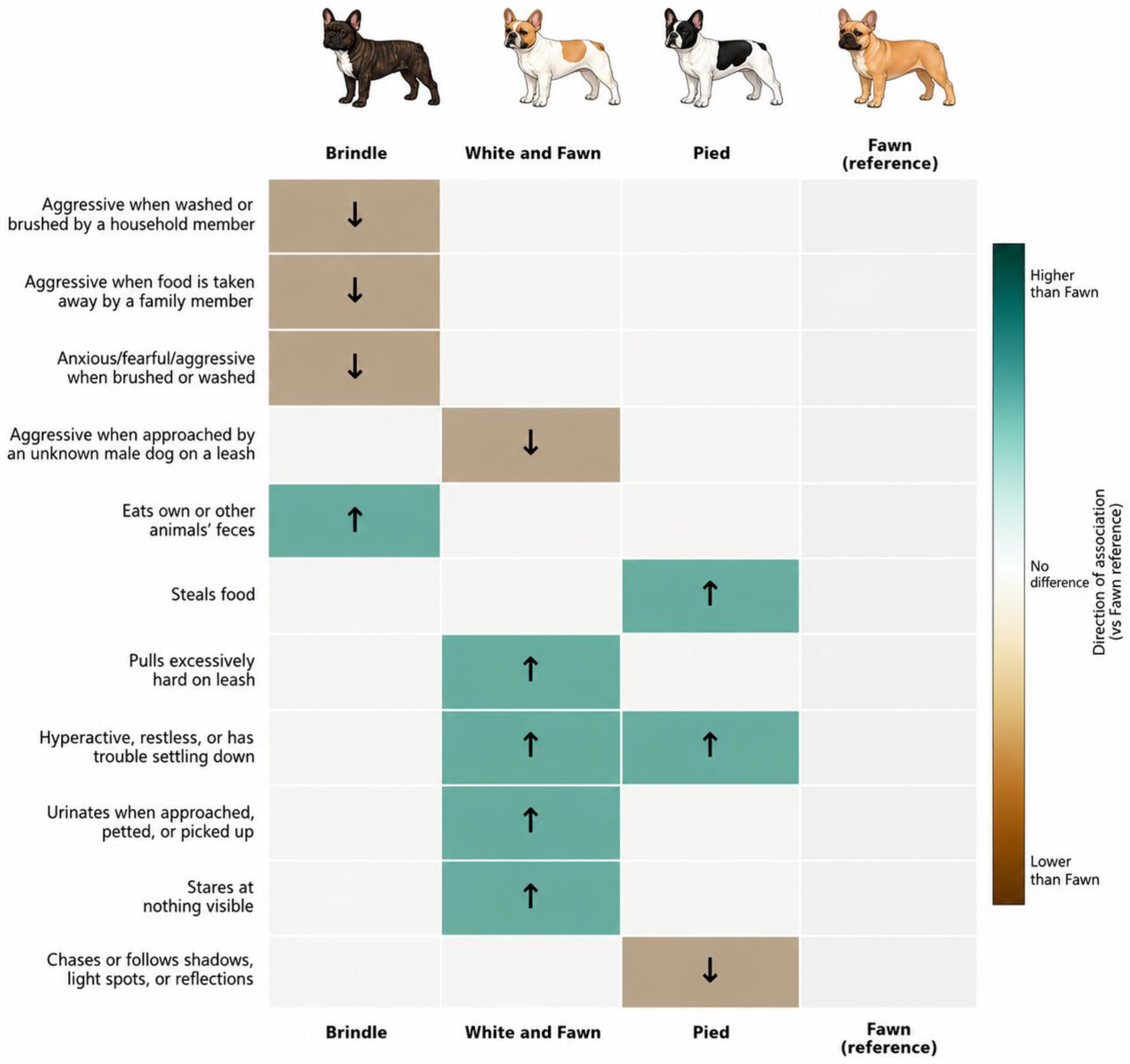
The image shown in Figure 1 was generated using an artificial intelligence (GenAI) tool solely for illustrative purposes. The use of GenAI was limited to image generation and did not involve any aspect of study design, data collection, data analysis, or interpretation of the results.

2.2. Instrument

For the purposes of the present study, the validated Italian translation of the C-BARQ [28] was used. The questionnaire consists of 100 items, beyond a preliminary section for collecting demographic data on the dog, including name, breed, date of birth, sex, and coat color. Owners with more than one French Bulldog were instructed to complete an individual questionnaire for each animal.
The 100 items are organized into seven broad sections: Trainability, Aggression, Fear, Separation-Related Behaviors, Excitability, Attachment/Attention-Seeking, and Miscellaneous, and employ two distinct response formats depending on the behavioral domain assessed. Items belonging to the Trainability, Separation-Related Behaviors, Excitability, Attachment/Attention-Seeking, and Miscellaneous sections evaluate the frequency of specific behaviors using a six-point ordinal scale (0 = not applicable/not observed, indicating that the dog has never been exposed to the described situation; 1 = never, indicating exposure to the situation without expression of the behavior; 2 = rarely; 3 = sometimes; 4 = often; 5 = always).
Items belonging to the Aggression and Fear sections assess the intensity or severity of behaviors using a five-point scale (0 = none; 1 = mild; 2 = moderate; 3 = intense; 4 = severe).
Across all items and subscales, higher scores reflect a greater level of behavioral concern, except for the Trainability subscale, for which higher scores indicate more desirable behavioral characteristics.
Following the scoring procedure described by Serpell and Duffy [23], items were grouped into 15 behavioral subscales.
The Aggression section is divided into four subscales: Stranger-Directed Aggression, Owner-Directed Aggression, Dog Rivalry, and Dog-Directed Aggression.
The Fear section is divided into four subscales: Stranger-Directed Fear, Non-Social Fear, Dog-Directed Fear, and Touch Sensitivity.
The remaining five sections, Trainability, Separation-Related Behaviors, Excitability, Attachment/Attention-Seeking, and Miscellaneous, each correspond to a single subscale, with the Miscellaneous section further comprising three additional subscales: Chasing, Energy Level, and Miscellaneous Behaviors. These 15 subscales form the basis of the analyses reported in the Results Section.

2.3. Statistical Analysis

Descriptive statistics including mean, median, standard deviation, and coefficient of variation were calculated for each C-BARQ subscale score. Subscale scores were computed as the average of the constituent item scores, as recommended by Serpell and Duffy [23]. The internal consistency of each subscale was assessed using Cronbach’s alpha coefficient.
For frequency-scale items (0–5), responses coded as 0 (“not applicable/not observed”) were excluded to avoid conflating a lack of exposure with the absence of behavior. Analyses were therefore conducted using responses from 1 (“never”) to 5 (“always”). Subsequently, ordinal logistic regression models were fitted to evaluate the associations between demographic variables, sex, neuter status, and coat color, and individual behavioral item scores. Sex, neuter status, and coat color were simultaneously included as independent variables in a single model for each behavioral item, allowing the estimation of the unique contribution of each predictor while controlling for the others.
Sex and neuter status were coded as binary factors, while coat color was treated as a categorical variable with the fawn phenotype as the reference category. Model fit was assessed using likelihood ratio chi-square tests comparing each full model with its corresponding null model, and omnibus tests were used to assess the overall contribution of each predictor. Regression coefficients were estimated using maximum likelihood methods and are presented as odds ratios (OR) with corresponding 95% confidence intervals (CI). Statistical significance was set at p < 0.05. All analyses were conducted using Jamovi (version 2.7.14.0; The Jamovi Project, Sydney, Australia; https://www.jamovi.org).

3. Results

For the present study, a total of 312 questionnaires completed by owners of one-year-old or older French Bulldogs and cohabiting with the dog for at least six months were collected. Of these, 23 dogs showed coat colors not accepted by the breed standard, 70 dogs were affected by one or more ongoing pathologies, and 13 dogs met both exclusion criteria simultaneously. These subjects were excluded from the analysis. The final study population therefore consisted of 206 dogs, including 105 males (10% neutered) and 101 females (49.5% neutered). The age of the dogs ranged from 1 to 13 years, with a mean (±SD) of 4.69 ± 2.36 years. Regarding coat color, the study population included brindle dogs (n = 87), fawn dogs (n = 68), pied dogs (n = 36), and fawn-and-white dogs (n = 15).
Overall, French Bulldogs showed low to moderate scores across most C-BARQ subscales. Across items, model fit was variable and pseudo-R2 values were generally low (approximately 0.009–0.06), indicating limited explanatory power, as commonly reported for owner-reported behavioral questionnaires [46,47]. Nevertheless, several statistically significant associations emerged, particularly for sex and, in a more item-specific manner, for coat color and neuter status.
Descriptive statistics, including mean, standard deviation, and median, for all 100 C-BARQ questions (Q1–Q100) are reported in Supplementary Tables (Tables S1–S15). The following sections present the results of the ordinal logistic regression analyses, reporting only statistically significant associations (p < 0.05).

3.1. Behavioral Results

3.1.1. Trainability (Mean ± SD = 3.41 ± 0.68)

The trainability subscale described French Bulldogs as generally cooperative but moderately distractible animals. Sex-related differences were identified for specific items. For Q1 (“When off leash, the dog immediately returns when called”), ordinal logistic regression revealed that sex was the only significant predictor, with females showing higher odds of being classified in higher response categories, compared with males (OR = 2.31, 95% CI: 1.30–4.11, p = 0.004). Neuter status and coat color were not significantly associated with this behavior. For Q7 (“The dog is easily distracted by noises, smells, or the sight of interesting stimuli”), sex again emerged as a significant factor, with females showing lower odds of higher distractibility scores compared with males (OR = 0.46, 95% CI: 0.26–0.81, p = 0.007). No significant associations of neuter status or coat color were detected. Internal consistency for this subscale was good (Cronbach’s α = 0.74).

3.1.2. Stranger-Direct Aggression (Mean ± SD = 0.40 ± 0.80)

Regarding behavior toward strangers, the mean scores across all items were consistently low, all below 1.0 on a 0–4 scale, indicating that most dogs showed no or negligible aggressive responses toward strangers in any of the described contexts. No significant associations with sex, neuter status or coat color were identified for individual items. Internal consistency was high (Cronbach’s α = 0.88).

3.1.3. Owner-Directed Aggression (Mean ± SD = 0.19 ± 0.55)

Aggressive behaviors directed toward owners were rare and generally of very low intensity, with all scores well below the mean value of 0.5. Despite the overall low frequency of these behaviors, some sex- and coat color-related differences emerged for specific items.
For Q22 (“The dog acts aggressively when washed or brushed by a member of the household”), Q24 (“The dog acts aggressively when food is taken away by a family member”), and Q27 (“The dog acts aggressively when you or another household member takes back food or items previously stolen by the dog”), ordinal logistic regression analyses showed a consistent pattern of results. The models for Q22 and Q24 were statistically significant (Q22: χ2 = 11.4, df = 5, p = 0.045; pseudo-R2 = 0.059; Q24: χ2 = 11.5, df = 5, p = 0.042; pseudo-R2 = 0.052), while the model for Q27 reached marginal significance (χ2 = 10.6, df = 5, p = 0.061; pseudo-R2 = 0.044). In all three items, coat color showed a significant overall effect, whereas sex and neuter status were not significantly associated with the outcomes. At the category level, brindle-coated dogs exhibited significantly lower odds of being classified in higher behavioral response categories compared with fawn dogs for Q22 (OR = 0.22, 95% CI: 0.06–0.72, p = 0.013) and Q24 (OR = 0.21, 95% CI: 0.06–0.67, p = 0.009). No significant pairwise differences among coat color categories were detected for Q27. Across all models, threshold parameters were highly significant (p < 0.001), supporting the ordinal structure of the response variables. The owner-directed aggression subscale showed good internal consistency (Cronbach’s α = 0.73).

3.1.4. Dog Rivalry (Mean ± SD = 0.44 ± 0.82)

Aggression toward cohabiting dogs was infrequent across all groups. Mean scores remained below 1, and no significant differences related to coat color were detected. The reliability of the sub-section was high (Cronbach’s α = 0.86).

3.1.5. Stranger-Directed Fear (Mean ± SD = 0.24 ± 0.61)

In this sub-section, mean scores were very low (all below 0.3), reflecting that responses were almost entirely concentrated in the 0 (‘none’) and 1 (‘mild’) categories, indicating that the vast majority of dogs showed no or negligible fear responses toward strangers. Nevertheless, some differences emerged for Q34 (“Dog acts anxious or fearful when approached directly by an unknown adult person, not at home”). Applying the ordinal logistic regression model to investigate the relation among sex, neuter status, and coat color, sex was the only significant predictor: females showed significantly lower odds of being classified in higher outcome categories compared to males (OR = 0.42, 95% CI: 0.24–0.73, p = 0.002). Neuter status and coat color were not significantly associated with the outcome. All threshold parameters were statistically significant except for the 2|3 threshold, suggesting limited discrimination between these adjacent categories. Overall, the results highlight a clear effect of sex, while other examined variables showed no meaningful influence. Internal consistency was acceptable (Cronbach’s α = 0.69).

3.1.6. Non-Social Fear (Mean ± SD = 0.54 ± 0.85)

Non-social fear scores were very low, and no significant differences emerged for specific stimuli.
Cronbach’s α for this sub-section was acceptable (α = 0.69).

3.1.7. Dog-Directed Fear (Mean ± SD = 0.47 ± 0.87)

Fear responses toward other dogs were generally low, but ordinal logistic regression revealed significant associations for selected items.
For item Q42 (“Dog acts anxious or fearful when approached directly by an unknown dog of the same size or larger”), the overall model showed a significant fit (χ2 (5) = 12.2, p = 0.033; pseudo-R2 = 0.033). Sex was significantly associated with the response, with male dogs showing lower odds of being classified in higher response categories compared to females (OR = 0.33, 95% CI: 0.15–0.69, p = 0.003). Neuter status showed a marginal association (OR = 1.96, 95% CI: 0.88–4.34, p = 0.098), and coat color was not significantly associated with the outcome.
For item Q44 (“Dog acts anxious or fearful when unknown dogs come to your house”), the overall model did not reach conventional statistical significance (χ2(5) = 10.10, p = 0.073; pseudo-R2 = 0.023), although a significant effect of sex was observed at the predictor level, with male dogs showing lower odds of higher response categories compared to females (OR = 0.37, 95% CI: 0.18–0.73, p = 0.004). Neuter status showed a borderline association (OR = 2.04, 95% CI: 1.00–4.19, p = 0.051), and coat color was not significantly associated with the outcome.
For item Q45 (“Dog acts anxious or fearful when an unknown dog barks, growls, or lunges at him”), the overall model was statistically significant (χ2(5) = 11.6, p = 0.041; pseudo-R2 = 0.025). Sex was the only significant predictor, with females showing lower odds of higher response categories compared to males (OR = 0.48, p = 0.020). Neuter status and coat color were not significantly associated with the outcome.
Overall, sex emerged as the most consistent predictor of fear responses toward unfamiliar dogs, with males consistently showing lower odds of higher scores. Internal consistency for this subscale was good (Cronbach’s α = 0.87).

3.1.8. Touch Sensitivity (Mean ± SD = 0.47 ± 0.87)

Regarding touch sensitivity, overall scores were very low across items. Ordinal logistic regression analysis for Q48 (“The dog acts anxious, fearful, or aggressive when brushed or washed by a member of the household”) indicated that coat color was the only variable associated with the frequency of the behavior, whereas sex and neuter status showed no significant effects. Specifically, brindle-coated dogs exhibited significantly lower odds of being classified in higher response categories compared with fawn dogs (OR = 0.22, 95% CI: 0.06–0.72, p = 0.013), while no significant differences were observed for white-and-fawn or pied coats. The significance of threshold parameters supported the ordinal structure of the response variable. Internal consistency for this subscale was acceptable (Cronbach’s α = 0.73).

3.1.9. Dog-Directed Aggression (Mean ± SD = 0.72 ± 1.08)

Aggressive behaviors toward unfamiliar dogs showed moderate variability, and the internal consistency of the subscale was good (Cronbach’s α = 0.83). Ordinal logistic regression analysis for Q50 (“Dog acts aggressively when approached directly by an unknown male dog while out walking on a leash”) indicated a statistically significant model with modest explanatory power (pseudo-R2 = 0.0465). Sex emerged as the only significant predictor, with males displaying lower odds of being classified in higher aggression categories compared with females (OR = 0.31, 95% CI: 0.16–0.61, p < 0.001). Neuter status and coat color were not significantly associated with the outcome; however, a borderline reduction in odds was observed for white–fawn dogs relative to fawn dogs (OR = 0.12, p = 0.050). The significance of threshold parameters supported the ordinal structure of the response variable.

3.1.10. Separation-Related Behaviors (Mean ± SD = 1.54 ± 0.19)

In this sub-section, for item Q54 “The dog shakes, shivers, or trembles when left or about to be left on its own”), both sex and neuter status were significantly associated with the response (pseudo-R2 = 0.033). Females showed lower odds of being classified in higher response categories compared to males (OR = 0.47, 95% CI: 0.23–0.97, p = 0.040), while neutered dogs showed substantially higher odds compared to intact dogs (OR = 3.11, 95% CI: 1.48–6.51, p = 0.003). No significant associations with coat color were detected. A similar, though less pronounced, pattern was observed for item Q57 (“the dog whimpers when left or about to be left on its own”), for which neuter status emerged as a significant predictor (pseudo-R2 = 0.027). Neutered dogs showed higher odds of increased whining compared to intact dogs (OR = 2.10, 95% CI: 1.05–4.21, p = 0.036), whereas sex and coat color were not significantly associated with this behavior. Internal consistency for this subscale was good (Cronbach’s α = 0.78).

3.1.11. Excitability (Mean ± SD = 2.44 ± 0.21)

The scores across all items in this sub-section ranged from 2.12 to 2.62, reflecting moderate excitability levels in the sample.
For item Q62 (“When you or another household member returns home after a short period of absence”), sex was significantly associated with the response (pseudo-R2 = 0.014), with females showing lower odds of being classified in higher excitability categories compared to males (OR = 0.46, 95% CI: 0.26–0.81, p = 0.008). No significant associations with neuter status or coat color were detected.
For item Q63 (“When playing with you or other household members”), both sex and neuter status were significantly associated with the response (pseudo-R2 = 0.013). Females showed lower odds of higher excitability scores compared to males (OR = 0.54, 95% CI: 0.31–0.94, p = 0.033), while neutered dogs showed higher odds compared to intact dogs (OR = 1.93, 95% CI: 1.03–3.61, p = 0.041). No significant associations with coat color were observed.
For item Q64 (“When the intercom or doorbell rings”), sex was the only significant predictor (pseudo-R2 = 0.015), with females showing lower odds of higher excitability scores compared to males (OR = 0.45, 95% CI: 0.26–0.77, p = 0.006). No significant associations with neuter status or coat color were detected.
For item Q65 (“Just before being taken for a car ride”), sex again emerged as a significant predictor (pseudo-R2 = 0.009), with females showing lower odds of higher excitability scores compared to males (OR = 0.54, 95% CI: 0.31–0.95, p = 0.031). No significant associations with neuter status or coat color were observed.
For item Q67 (“When people come home”), sex showed the strongest association in this sub-section (pseudo-R2 = 0.018), with females displaying lower odds of higher excitability scores compared to males (OR = 0.42, 95% CI: 0.24–0.73, p = 0.002). No significant associations with neuter status or coat color were detected.
Overall, sex emerged as the most consistent predictor of excitability across items, with females consistently showing lower odds of higher excitability scores compared to males. Neuter status showed a limited association restricted to play-related excitability. Internal consistency for this subscale was excellent (Cronbach’s α = 0.98).

3.1.12. Attachment/Attention-Seeking (Mean ± SD = 3.54 ± 0.69)

Attachment-related behaviors were generally rated very highly across all items in this sub-section. Within this sub-section, only one significant association was identified: for item Q71 (“The dog nudges or paws to get attention when you or others are seated”), sex was significantly associated with the response, with females showing lower odds of higher scores compared with males (OR = 0.53, 95% CI: 0.30–0.94, p = 0.032). No significant associations with neuter status or coat color were detected for any item. Internal consistency for this subscale was excellent (Cronbach’s α = 0.97).

3.1.13. Chasing (Mean ± SD = 2.56 ± 0.51)

No statistically significant associations with sex, neuter status, or coat color were detected for any item in the Chasing sub-section. Internal consistency for this subscale was excellent (Cronbach’s α = 0.95).

3.1.14. Energy Level (Mean ± SD = 3.03 ± 0.30)

Analysis of the Energy Level sub-section revealed a limited association with sex. For item Q78 (“The dog is playful, puppyish, and boisterous”), the overall model was not statistically significant (χ2(5) = 5.53, p = 0.355; pseudo-R2 = 0.009). Despite this, sex showed a significant individual effect, with females displaying lower odds of being classified in higher outcome categories compared to males (OR = 0.53, 95% CI: 0.30–0.94, p = 0.030). Neuter status and coat color were not significantly associated with the outcome. Internal consistency for this subscale was excellent (Cronbach’s α = 0.95).

3.1.15. Miscellaneous (Mean ± SD = 1.76 ± 0.50)

This section included several items showing associations with demographic variables, particularly coat color. For Q82 (“The dog eats own or other animals’ droppings or feces”), coat color was the only significant predictor, with brindle-coated dogs displaying higher odds of more severe coprophagic behavior compared with fawn dogs (OR = 1.94, p = 0.044). Sex and neuter status were not associated with this behavior.
For Q86 (“The dog steals food”), coat color again emerged as a significant predictor, with pied-coated dogs showing higher odds compared with fawn dogs (OR = 2.82, p = 0.008). Sex and neuter status were not significantly associated with the outcome.
For Q84 (“The dog mounts objects, furniture, or people”), sex was the only significant predictor, with females showing lower odds compared with males (OR = 0.40, p = 0.004). Neuter status and coat color did not contribute significantly to the model.
For Q88 (“The dog pulls excessively hard when on the leash”), all three predictors were significantly associated. Females showed lower odds compared with males (OR = 0.40, p = 0.002), neutered dogs showed higher odds compared with intact dogs (OR = 1.99, p = 0.025), and white-and-fawn dogs showed higher odds compared with fawn dogs (OR = 3.08, p = 0.030).
For Q89 (“The dog urinates against objects or furnishings in the home”), sex was the only significant predictor, with females displaying lower odds compared with males (OR = 0.43, p = 0.034). Neuter status and coat color were not associated.
For Q93 (“The dog is hyperactive, restless, or has trouble settling down”), white-and-fawn dogs (OR = 3.53, p = 0.024) and pied dogs (OR = 2.91, p = 0.006) exhibited higher odds compared with fawn dogs. Sex and neuter status were not significantly associated.
For Q90 (“The dog urinates when approached, petted, handled, or picked up”), coat color showed a significant effect, with white-and-fawn dogs displaying approximately five times higher odds compared with fawn dogs (OR = 5.81, p = 0.026). Sex and neuter status were not significantly associated with this behavior.
For Q94 (“The dog stares at nothing visible”), females showed lower odds compared with males (OR = 0.53, p = 0.035), and white-and-fawn dogs showed higher odds compared with fawn dogs (OR = 2.92, p = 0.043). Neuter status was not significantly associated with this behavior.
For Q97 (“The dog chases or follows shadows, light spots, or reflections”), pied-coated dogs showed reduced odds compared with fawn dogs (OR = 0.26, p = 0.018). No significant associations with sex or neuter status were detected.
Internal consistency for this subscale was high (Cronbach’s α = 0.97).
A summary of items showing significant demographic associations is reported in Table 1, while significant associations with coat color are illustrated in Figure 1.

4. Discussion

The present study provides a behavioral characterization of the French Bulldog using the C-BARQ and examines the relationship of sex, neuter status, and coat color with a wide range of owner-reported behaviors. The use of the C-BARQ, a widely adopted and validated instrument for canine behavioral assessment, allows for robust comparisons with previous studies and supports the reliability of the results obtained [25,26].
Overall, the findings depict the French Bulldog as a companion-oriented breed, characterized by low levels of aggression and fear-related behaviors, high attachment and attention-seeking tendencies, and moderate activity and excitability levels. This behavioral profile is consistent with the historical selection of the breed for close human companionship and suitability for urban living [14].
Across most subscales, mean scores were low to moderate, particularly for aggression- and fear-related domains. Stranger-directed aggression (Mean ± SD = 0.40 ± 0.80), owner-directed aggression (Mean ± SD = 0.19 ± 0.55), dog rivalry (Mean ± SD = 0.44 ± 0.82), and fear responses toward strangers (Mean ± SD = 0.24 ± 0.61), non-social stimuli (Mean ± SD = 0.54 ± 0.85), and other dogs (Mean ± SD = 0.47 ± 0.87) were generally infrequent and of low intensity. This pattern supports previous large-scale survey studies describing French Bulldogs and other brachycephalic breeds as sociable, relatively non-reactive, and well-suited to family environments [16].
In contrast, attachment and attention-seeking behaviors (Mean ± SD = 3.54 ± 0.69) were rated very highly, indicating a strong tendency to maintain close proximity to owners and to actively seek social interaction. Our results on French Bulldogs, showing high owner-directed sociability and attention-seeking, are in line with previous experimental work on brachycephalic dogs, including French Bulldogs, reporting no clear differences between breeds selected for companionship versus utility in human-directed gazing during insoluble problem-solving tasks [17].
While these traits are desirable in companion dogs, they may also predispose individuals to frustration or stress in situations involving social isolation, even though separation-related behaviors were generally mild in the present sample. Strong owner-directed attachment in French Bulldogs has also been linked to enhanced responsiveness to human social cues, highlighting the centrality of the dog–owner relationship in this breed [48].
Sex emerged as the most consistent factor associated with behavioral variation. Females generally showed lower odds of higher scores across several fear-related, excitability, and miscellaneous behaviors, including mounting, urine marking, leash pulling, excessive licking, and attention-seeking behaviors. At the same time, females showed more favorable outcomes in selected trainability-related items, such as recall and lower distractibility. Importantly, these effects were not uniform across entire subscales but were specific to individual behaviors, suggesting that sex influences distinct behavioral components rather than broad domains. These findings are consistent with previous research reporting higher expression of sexually dimorphic behaviors, including marking and mounting, in male dogs [24,49]. The observed sex differences likely reflect the interplay of hormonal factors, such as the role of testosterone and estrogens in shaping sexually dimorphic behaviors, sex-linked genetic influences, and intrinsic differences in social behavior between males and females [50,51,52,53], as well as potential differences in owner perception and reporting canine behavior [54].
Neuter status showed a more modest and behavior-specific pattern of association. Significant associations were observed for leash pulling, selected separation-related behaviors, including trembling and whining when left alone, and excitability during play, with neutered dogs showing higher odds of higher scores in these items. These findings suggest that neutering is not associated with a general reduction in undesirable behaviors, but rather with specific behavioral tendencies that may reflect underlying temperament, management, or life-history factors. Given the cross-sectional design of the study, these associations should not be interpreted as causal. Instead, they support the view that the behavioral correlates of neutering are modest, context-dependent, and influenced by multiple interacting variables [35]. The limited and item-specific pattern observed in our sample is consistent with the findings of Espinosa et al. [55], who reported that neuter status had at most small associations with fear and aggression in a large multi-breed sample of 4497 dogs, compared with other factors such as breed ancestry, body size, and early-life adversity. These results support growing evidence that the behavioral correlates of neutering are modest, context-dependent, and influenced by multiple interacting variables [35], contrasting with the common belief that neutering uniformly reduces undesirable behaviors. The uneven distribution of neutered individuals between sexes in the present sample should be taken into account when interpreting these results.
Coat color was associated with several specific behaviors, particularly within the miscellaneous subscale. Associations were observed for coprophagia, food stealing, hyperactivity/restlessness, submissive urination, staring at nothing visible, and shadow- or light-chasing behaviors. In line with the FCI breed standard [37], we referred to brindle-pied dogs as ‘pied’ and fawn-pied as ‘fawn-and-white’ in the main analyses, despite their shared piebald spotting genotype at the S-locus (Microphthalmia-Associated Transcription Factor, MITF), a choice imposed by the official, non-scientific, phenotype-based nomenclature rather than genetic classification. Indeed, both population-based linkage/association studies and functional promoter assays have demonstrated that white spotting and piebald patterns in dogs, including French Bulldogs, are regulated by MITF S-locus variants, which act as key determinants of piebald and extreme white phenotypes across multiple breeds [56].
Although the present study was not designed to disentangle specific genetic mechanisms, the item-specific associations between coat color and behavior observed in French Bulldogs are consistent with hypotheses suggesting that genes involved in pigmentation may be linked, directly or indirectly, to neurobehavioral traits through pleiotropic mechanisms [57,58]. In Labrador Retrievers, for instance, coat color variation has been associated with subtle differences in owner-reported trainability and familiar dog-directed aggression [42]. Beyond pigmentation genes, polymorphisms in other neurobiological systems have also been linked to behavioral variation in dogs, providing further evidence of a complex, but detectable, connection between genetic variants and behavioral phenotypes [59]. Coat color should therefore not be interpreted as a general determinant of behavior, but rather as a phenotypic variable associated with selected behavioral tendencies. Because we used phenotypic coat color as a proxy rather than directly genotyping pigmentation loci, the biological interpretation of color–behavior associations remains tentative; future studies should integrate objective behavioral measures with genotype-based classification of both coat-color loci and selected behavior-related genes in this breed.
Most ordinal logistic regression models explained only a small proportion of the variance, as reflected by low pseudo-R2 values. This outcome is common in behavioral research based on owner-reported questionnaires and underscores the multifactorial nature of canine behavior, which arises from complex interactions among genetics, environment, learning history, and the owner–dog relationship [23].
The detection of statistically significant predictors despite low explained variance is not contradictory: it indicates that the demographic variables examined have a real but modest influence on behavioral expression, while the large proportion of unexplained variance reflects the contribution of individual-level factors not assessed in the present study, such as training history, living environment, and the quality of the owner–dog relationship.
The Cronbach’s alpha, in several subscales, demonstrated excellent internal consistency, particularly those assessing excitability, attachment and attention-seeking, chasing, energy level, miscellaneous behaviors, dog rivalry, dog-directed fear, and dog-directed aggression. These results indicate strong internal coherence among items intended to measure homogeneous behavioral constructs and are consistent with previous validation studies of the C-BARQ, supporting the reliability of these subscales when applied to French Bulldogs. Slightly lower alpha values, though still at or near the conventionally accepted threshold of 0.70, were observed for subscales such as trainability, the fear-related domains, owner-directed aggression, and touch sensitivity. This finding likely reflects the inherently multidimensional nature of these constructs, which encompass heterogeneous behavioral components rather than a single latent trait.
Several limitations should be acknowledged. The study relied on owner-reported data, which may be influenced by subjective perception and reporting bias. This limitation is intrinsic to questionnaire-based methodology and cannot be fully overcome within the current study design; future studies combining owner-reported instruments with objective behavioral observations would help address this constraint. Because participation was voluntary and recruitment occurred via online channels and breeder networks, selection bias cannot be excluded; owners of dogs with more severe behavioral issues may have been less likely to participate. Moreover, respondent type was not systematically recorded, making it impossible to disaggregate responses from breeders and owners, which may have introduced variability in the familiarity of respondents with their dogs’ behavior. Furthermore, as the questionnaire was administered anonymously, it was not possible to identify owners who completed multiple questionnaires for different dogs. Consequently, potential effects of data nesting, whereby dogs belonging to the same owner may share environmental and management factors, could not be accounted for in the statistical analyses, which represents a further methodological limitation.
The cross-sectional design precludes causal inference, and the exclusion of dogs with non-standard coat colors may limit generalizability.
The uneven distribution of neutered dogs between sexes and the relatively small sample size for some coat color categories, particularly fawn-and-white (n = 15), may have reduced statistical power for certain analyses. In addition, the exclusion of “not applicable” responses for items assessing the frequency of behavior may have resulted in less precise parameter estimates, wider confidence intervals, and a reduced ability to detect true associations of small to moderate effect size.
The exclusion of dogs with ongoing pathologies, while necessary to minimize confounding effects, precludes any evaluation of the potential influence of brachycephalic-related health conditions on behavioral expression, which represents an interesting direction for future investigation.
Further methodological consideration concerns the use of the full 100-item C-BARQ. Although the Italian validation by Broseghini and colleagues [28] identified a reduced 62-item, 13-factor structure, all 100 items of the Italian translation were validated on an Italian-speaking population. Since our sample consists exclusively of Italian owners residing in Italy, the use of the full questionnaire is appropriate and consistent with the validated instrument. In addition, the C-BARQ was originally designed to assess behavioral problems in companion dogs and is therefore less suited to capturing positive or adaptive traits. Future studies would benefit from complementing the C-BARQ with strengths-based instruments, such as personality questionnaires assessing sociability, playfulness, and adaptability, to obtain a more comprehensive behavioral profile of the French Bulldog.
The present findings should also be interpreted within the specific context of Italian dog ownership, as cultural and environmental factors, such as housing conditions, exercise routines, and socialization opportunities, may influence owner-reported behavior. Cross-country comparisons are currently limited by the absence of equivalent C-BARQ datasets for French Bulldogs in other populations. Replication in different national contexts would therefore be valuable to assess the generalizability of these results.
Future research, integrating behavioral, environmental, and genetic approaches, will be essential to clarify the mechanisms underlying these associations by integrating owner-reported data with objective behavioral observations, expanding sample sizes, particularly for underrepresented coat color categories, and including dogs with ongoing health conditions. Such approaches would help clarify the relative contributions of demographic, environmental, and biological factors to behavioral variation in this breed.

5. Conclusions

This study provides a quantitative behavioral profile of French Bulldogs using the C-BARQ questionnaire, confirming a generally sociable and companion-oriented breed characterized by low aggression and fear, high attachment, and moderate excitability.
Sex emerged as the most consistent factor associated with behavioral variation, with females showing lower odds of higher scores across several fear-related, excitability, and miscellaneous behaviors, as well as more favorable outcomes in selected trainability-related items. Neuter status showed limited, behavior-specific associations, particularly involving leash pulling, separation-related responses, and play-related excitability.
Coat color was associated with selected behaviors in an item-specific manner, mainly within the miscellaneous domain, although these effects were highly item-specific and should be interpreted cautiously.
Overall, these findings indicate that behavioral variation in French Bulldogs is influenced by demographic factors in a selective and context-dependent manner, while environmental and management factors likely play a substantial role. These results may inform more individualized behavioral management and guide future research integrating behavioral, environmental, and genetic data.

Supplementary Materials

The following supporting information can be downloaded at: https://www.mdpi.com/article/10.3390/pets3020021/s1. Tables S1–S15: Item-level descriptive statistics (mean ± SD, median) for each of the 15 C-BARQ behavioral subscales (S1: Trainability; S2: Stranger-Directed Aggression; S3: Owner-Directed Aggression; S4: Dog Rivalry; S5: Stranger-Directed Fear; S6: Non-Social Fear; S7: Dog-Directed Fear; S8: Touch Sensitivity; S9: Dog-Directed Aggression; S10: Separation-Related Behavior; S11: Excitability; S12: Attachment/Attention-Seeking; S13: Chasing; S14: Energy Level; S15: Miscellaneous).

Author Contributions

Conceptualization, V.G., C.C., F.C. and A.G.; methodology, V.G., C.C. and M.C.C.; software, V.G. and A.G.; validation, P.B. and A.O.; formal analysis, V.G. and C.C.; investigation, C.C.; resources, A.G.; data curation, A.O. and P.B.; writing—original draft preparation, V.G. and C.C.; writing—review and editing, A.O. and P.B.; supervision, A.G. and F.C.; project administration, M.C.C.; funding acquisition, A.G. All authors have read and agreed to the published version of the manuscript.

Funding

This research received no external funding.

Institutional Review Board Statement

The study was conducted in accordance with Italian legislation on the protection of animals used for scientific purposes (D.Lgs. 26/2014), which exempts observational studies based on anonymous owner-reported questionnaires from formal ethical approval. No animals were handled or subjected to any experimental procedure during data collection.

Informed Consent Statement

This study has obtained informed consent from dog owners.

Data Availability Statement

The original contributions presented in this study are included in the article/Supplementary Material. Further inquiries can be directed to the corresponding author.

Acknowledgments

We sincerely thank all the owners who kindly completed the questionnaire. We gratefully acknowledge James A. Serpell (School of Veterinary Medicine, University of Pennsylvania, Penn Vet) for the development of the questionnaire instrument utilized in this study. During the preparation of this manuscript, the authors employed ChatGPT (GPT-5.5) exclusively for the generation of illustrative images.

Conflicts of Interest

The authors declare no conflicts of interest.

References

  1. Houston, M. The French Bulldog; T.F.H. Publications: Neptune City, NJ, USA, 1997. [Google Scholar]
  2. Clutton-Brock, J. Origins of the Dog: Domestication and Early History. In The Domestic Dog: Its Evolution, Behaviour and Interactions with People; Serpell, J., Ed.; Cambridge University Press: Cambridge, UK, 1995; pp. 8–20. [Google Scholar]
  3. Denis, B. Races de Chiens; Éditions Artémis: Barr, France, 2011. [Google Scholar]
  4. O’Neill, D.G.; Pegram, C.; Crocker, P.; Brodbelt, D.C.; Church, D.B.; Packer, R.M.A. Unravelling the Health Status of Brachycephalic Dogs in the UK Using Multivariable Analysis. Sci. Rep. 2020, 10, 17251. [Google Scholar] [CrossRef]
  5. Krainer, D.; Dupré, G. Brachycephalic Obstructive Airway Syndrome. Vet. Clin. N. Am. Small Anim. Pract. 2022, 52, 749–780. [Google Scholar] [CrossRef] [PubMed]
  6. Proschowsky, H.F.; Springer, S.; Lotze, S.; Rafn, F.; Sandahl, Z.; Bruun, C.S.; Fredholm, M.; Lund, T.B.; Willesen, J.L.; Sandøe, P. Perception of Dog Health and Attitudes towards BOAS Grading among Danish Owners of French Bulldog. Front. Vet. Sci. 2025, 12, 1605505. [Google Scholar] [CrossRef]
  7. Cannas, S.; Palestrini, C.; Boero, S.; Garegnani, A.; Mazzola, S.M.; Prato-Previde, E.; Berteselli, G.V. Italians Can Resist Everything, Except Flat-Faced Dogs! Animals 2025, 15, 1496. [Google Scholar] [CrossRef] [PubMed]
  8. O’Neill, D.G.; Packer, R.M.A.; Francis, P.; Brodbelt, D.C.; Pegram, C. French Bulldogs Differ to Other Dogs in the UK in Propensity for Many Common Disorders: A VetCompass Study. Canine Med. Genet. 2021, 8, 13. [Google Scholar] [CrossRef]
  9. Asher, L.; Diesel, G.; Summers, J.F.; McGreevy, P.D.; Collins, L.M. Inherited Defects in Pedigree Dogs. Part 1: Disorders Related to Breed Standards. Vet. J. 2009, 182, 402–411. [Google Scholar] [CrossRef]
  10. O’Neill, D.G.; Baral, L.; Church, D.B.; Brodbelt, D.C.; Packer, R.M.A. Demography and Disorders of the French Bulldog Population under Primary Veterinary Care in the UK in 2013. Canine Genet. Epidemiol. 2018, 5, 3. [Google Scholar] [CrossRef] [PubMed]
  11. Ekenstedt, K.J.; Crosse, K.R.; Risselada, M. Canine Brachycephaly: Anatomy, Pathology, Genetics and Welfare. J. Comp. Pathol. 2020, 176, 109–115. [Google Scholar] [CrossRef]
  12. Ujfalussy, D.J.; Bognár, Z.; Molnár, M.; Miklósi, Á.; Kubinyi, E. The Difference between Two Brachycephalic and One Mesocephalic Dog Breeds’ Problem-Solving Performance Suggests Evidence for Paedomorphism in Behaviour. Sci. Rep. 2023, 13, 14284. [Google Scholar] [CrossRef]
  13. ENCI—Ente Nazionale della Cinofilia Italiana. Bouledogue Francese: Statistiche Iscrizioni Ultimi 10 Anni. Available online: https://www.enci.it/libro-genealogico/razze/bouledogue-francese (accessed on 15 April 2026).
  14. Packer, R.M.A.; O’Neill, D.G.; Fletcher, F.; Farnworth, M.J. Come for the Looks, Stay for the Personality? A Mixed Methods Investigation of Reacquisition and Owner Recommendation of Bulldogs, French Bulldogs and Pugs. PLoS ONE 2020, 15, e0237276. [Google Scholar] [CrossRef]
  15. Bognár, Z.; Kubinyi, E. The Brachycephalic Paradox: The Relationship between Attitudes, Demography, Personality, Health Awareness, and Dog-Human Eye Contact. Appl. Anim. Behav. Sci. 2023, 264, 105948. [Google Scholar] [CrossRef]
  16. Packer, R.M.A.; Hendricks, A.; Tivers, M.S.; Burn, C.C. Impact of Facial Conformation on Canine Health: Brachycephalic Obstructive Airway Syndrome. PLoS ONE 2015, 10, e0137496. [Google Scholar] [CrossRef]
  17. Zilocchi, M.; Giordano, M.; Ogi, A.; Sighieri, C. Dog Attention towards the Owner in Two Insoluble Problem-Solving Tasks: A Pilot Study about the Effect of Skull Conformation and Selection to Cooperate with Man. Dog Behav. 2017, 3, 13–16. [Google Scholar] [CrossRef]
  18. Peterca, L.; Gobbo, E.; Zupan Šemrov, M. Dog–Owner Relationship and Its Association with Social Cognition in French Bulldogs. Animals 2025, 15, 17. [Google Scholar] [CrossRef]
  19. Lord, K.; Schneider, R.; Coppinger, R. Evolution of Working Dogs. In The Social Dog: Behavior and Cognition; Kaminski, J., Marshall-Pescini, S., Eds.; Academic Press: San Diego, CA, USA, 2014; pp. 42–66. [Google Scholar]
  20. Berg, L. Genetics of Dog Behavior. In The Social Dog: Behavior and Cognition; Kaminski, J., Marshall-Pescini, S., Eds.; Academic Press: San Diego, CA, USA, 2014; pp. 69–92. [Google Scholar]
  21. Akey, J.M.; Ruhe, A.L.; Akey, D.T.; Wong, A.K.; Connelly, C.F.; Madeoy, J.; Nicholas, T.J.; Neff, M.W. Tracking Footprints of Artificial Selection in the Dog Genome. Proc. Natl. Acad. Sci. USA 2010, 107, 1160–1165. [Google Scholar] [CrossRef] [PubMed]
  22. Serpell, J.A.; Hsu, Y. Development and Validation of a Novel Method for Evaluating Behavior and Temperament in Guide Dogs. Appl. Anim. Behav. Sci. 2001, 72, 347–364. [Google Scholar] [CrossRef]
  23. Serpell, J.A.; Duffy, D.L. Dog Breeds and Their Behavior. In Domestic Dog Cognition and Behavior: The Scientific Study of Canis familiaris; Horowitz, A., Ed.; Springer: Berlin/Heidelberg, Germany, 2014; pp. 31–57. [Google Scholar]
  24. Hsu, Y.; Serpell, J.A. Development and Validation of a Questionnaire for Measuring Behavior and Temperament Traits in Pet Dogs. J. Am. Vet. Med. Assoc. 2003, 223, 1293–1300. [Google Scholar] [CrossRef] [PubMed]
  25. Clovis, G. Behavioral Analysis of the Czechoslovakian Wolfdog Using the C-BARQ Questionnaire. Dog Behav. 2025, 10, e199. [Google Scholar] [CrossRef]
  26. Palagi, M. Behavioral Characteristics of the Apuan Alps Dog: A Pilot Study. Dog Behav. 2025, 11, 53–56. [Google Scholar] [CrossRef]
  27. Gazzano, V.; Alessi, S.M.; Santoni, C.; Curadi, M.C.; Cecchi, F.; Cavallo, S.; Sacchettino, L.; D’Angelo, D.; Napolitano, F.; Giannessi, E.; et al. Behavior in Australian Shepherd Dogs Assessed Using the C-BARQ: A Preliminary Study of Associations with Coat Color, Sex, and Neutering Status. Vet. Sci. 2026, 13, 299. [Google Scholar] [CrossRef] [PubMed]
  28. Broseghini, A.; Guérineau, C.; Lõoke, M.; Mariti, C.; Serpell, J.; Marinelli, L.; Mongillo, P. Canine Behavioral Assessment and Research Questionnaire (C-BARQ): Validation of the Italian Translation. Animals 2023, 13, 1254. [Google Scholar] [CrossRef]
  29. Eken Asp, H.; Fikse, W.F.; Nilsson, K.; Strandberg, E. Breed Differences in Everyday Behaviour of Dogs. Appl. Anim. Behav. Sci. 2015, 169, 69–77. [Google Scholar] [CrossRef]
  30. Foyer, P.; Wilsson, E.; Wright, D.; Jensen, P. Early Experiences Modulate Stress Coping in a Population of German Shepherd Dogs. Appl. Anim. Behav. Sci. 2013, 146, 79–87. [Google Scholar] [CrossRef]
  31. Persson, M.E.; Roth, L.S.V.; Johnsson, M.; Wright, D.; Jensen, P. Human-Directed Social Behaviour in Dogs Shows Significant Heritability. Genes Brain Behav. 2015, 14, 337–344. [Google Scholar] [CrossRef]
  32. Kriese, M.; Kuźniewska, E.; Gugołek, A.; Strychalski, J. Reasons for and Behavioral Consequences of Male Dog Castration—A Questionnaire Study in Poland. Animals 2022, 12, 1883. [Google Scholar] [CrossRef] [PubMed]
  33. Kolkmeyer, C.A.; Zambrano Cardona, A.M.; Gansloßer, U. Personality Unleashed: Surveying Correlation of Neuter Status and Social Behaviour in Mixed-Breed Male Dogs across Weight Classes. Animals 2024, 14, 2445. [Google Scholar] [CrossRef] [PubMed]
  34. Arroube, A.; Pereira, A.F. Dog Neuter, Yes or No? A Summary of the Motivations, Benefits, and Harms, with Special Emphasis on the Behavioral Aspect. Animals 2025, 15, 1063. [Google Scholar] [CrossRef]
  35. Farhoody, P.; Mallawaarachchi, I.; Tarwater, P.M.; Serpell, J.A.; Duffy, D.L.; Zink, C. Aggression toward Familiar People, Strangers, and Conspecifics in Gonadectomized and Intact Dogs. Front. Vet. Sci. 2018, 5, 18. [Google Scholar] [CrossRef]
  36. Neilson, J.C.; Eckstein, R.A.; Hart, B.L. Effects of Castration on Problem Behaviors in Male Dogs with Reference to Age and Duration of Behavior. J. Am. Vet. Med. Assoc. 1997, 211, 180–182. [Google Scholar] [CrossRef]
  37. Fédération Cynologique Internationale. FCI-Standard N° 101—Bouledogue Français (French Bulldog). Available online: https://www.fci.be/Nomenclature/Standards/101g09-en.pdf (accessed on 19 January 2026).
  38. Strain, G.M. Deafness Prevalence and Pigmentation and Gender Associations in Dog Breeds at Risk. Vet. J. 2004, 167, 23–32. [Google Scholar] [CrossRef] [PubMed]
  39. Strain, G.M. Canine Deafness. Vet. Clin. N. Am. Small Anim. Pract. 2012, 42, 1209–1224. [Google Scholar] [CrossRef]
  40. Körberg, I.B.; Sundström, E.; Meadows, J.R.S.; Rosengren Pielberg, G.; Gustafson, U.; Hedhammar, Å.; Karlsson, E.K.; Seddon, J.; Söderberg, A.; Vilà, C.; et al. A Simple Repeat Polymorphism in the MITF-M Promoter Is a Key Regulator of White Spotting in Dogs. PLoS ONE 2014, 9, e104363. [Google Scholar] [CrossRef]
  41. Little, C.C. The Inheritance of Coat Color in Dogs; Comstock Publishing Associates: Ithaca, NY, USA, 1957. [Google Scholar]
  42. van Rooy, D.; Wade, C.M. Association between Coat Colour and the Behaviour of Australian Labrador Retrievers. Canine Genet. Epidemiol. 2019, 6, 10. [Google Scholar] [CrossRef] [PubMed]
  43. Reissmann, M.; Ludwig, A. Pleiotropic Effects of Coat Colour-Associated Mutations in Humans, Mice and Other Mammals. Semin. Cell Dev. Biol. 2013, 24, 576–586. [Google Scholar] [CrossRef]
  44. Fratkin, J.L.; Baker, S.C. The Role of Coat Color and Ear Shape on the Perception of Personality in Dogs. Anthrozoös 2013, 26, 125–133. [Google Scholar] [CrossRef]
  45. Pérez-Guisado, J.; Lopez-Rodríguez, R.; Muñoz-Serrano, A. Heritability of Dominant-Aggressive Behaviour in English Cocker Spaniels. Appl. Anim. Behav. Sci. 2006, 100, 219–227. [Google Scholar] [CrossRef]
  46. Lord, M.S.; Casey, R.; Kinsman, R.; Tasker, S.; Knowles, T.; Da Costa, R.; Woodward, J.; Murray, J. Owner Perception of Problem Behaviours in Dogs Aged 6 and 9-Months. Appl. Anim. Behav. Sci. 2020, 232, 105147. [Google Scholar] [CrossRef]
  47. Lit, L.; Schweitzer, J.; Iosif, A.; Oberbauer, A. Owner Reports of Attention, Activity, and Impulsivity in Dogs: A Replication Study. Behav. Brain Funct. 2010, 6, 1. [Google Scholar] [CrossRef]
  48. Kujala, M.V.; Imponen, N.; Pirkkala, A.; Silfverberg, T.; Parviainen, T.; Tiira, K.; Kiuru, N. Modulation of Dog–Owner Relationship and Dog Social and Cognitive Behavior by Owner Temperament and Dog Breed Group. Sci. Rep. 2023, 13, 14739. [Google Scholar] [CrossRef]
  49. McGreevy, P.; Wilson, B.; Starling, M.; Serpell, J. Behavioural Risks in Male Dogs with Minimal Lifetime Exposure to Gonadal Hormones May Complicate Population-Control Benefits of Desexing. PLoS ONE 2018, 13, e0196284. [Google Scholar] [CrossRef]
  50. Pongrácz, P.; Dobos, P. Behavioural Differences and Similarities between Dog Breeds: Proposing an Ecologically Valid Approach for Canine Behavioural Research. Biol. Rev. 2025, 100, 68–84. [Google Scholar] [CrossRef]
  51. Beach, F.A. Hormonal Modification of Sexually Dimorphic Behavior. Psychoneuroendocrinology 1975, 1, 3–23. [Google Scholar] [CrossRef]
  52. Junttila, S.; Huohvanainen, S.; Tiira, K. Effect of Sex and Reproductive Status on Inhibitory Control and Social Cognition in the Domestic Dog (Canis familiaris). Animals 2021, 11, 2448. [Google Scholar] [CrossRef]
  53. Scandurra, A.; Alterisio, A.; Di Cosmo, A.; D’Aniello, B. Behavioral and Perceptual Differences between Sexes in Dogs: An Overview. Animals 2018, 8, 151. [Google Scholar] [CrossRef]
  54. Powell, L.; Duffy, D.L.; Kruger, K.A.; Watson, B.; Serpell, J.A. Relinquishing Owners Underestimate Their Dog’s Behavioral Problems: Deception or Lack of Knowledge? Front. Vet. Sci. 2021, 8, 734973. [Google Scholar] [CrossRef]
  55. Espinosa, J.; Zapata, I.; Alvarez, C.E.; Serpell, J.A.; Kukekova, A.V.; Hecht, E.E. Influence of Early Life Adversity and Breed on Aggression and Fear in Dogs. Sci. Rep. 2025, 15, 18226. [Google Scholar] [CrossRef]
  56. Karlsson, E.K.; Baranowska, I.; Wade, C.M.; Salmon Hillbertz, N.H.; Zody, M.C.; Anderson, N.; Biagi, T.M.; Patterson, N.; Pielberg, G.R.; Kulbokas, E.J.; et al. Efficient Mapping of Mendelian Traits in Dogs through Genome-Wide Association. Nat. Genet. 2007, 39, 1321–1328. [Google Scholar] [CrossRef]
  57. Ducrest, A.L.; Keller, L.; Roulin, A. Pleiotropy in the Melanocortin System, Coloration and Behavioural Syndromes. Trends Ecol. Evol. 2008, 23, 502–510. [Google Scholar] [CrossRef] [PubMed]
  58. Platzer, J.M.; Gunter, L.M.; Feuerbacher, E.N. Exploring the Domestication Syndrome Hypothesis in Dogs: Pigmentation Does Not Predict Cortisol Levels. Animals 2023, 13, 3095. [Google Scholar] [CrossRef] [PubMed]
  59. Ogi, A.; Naef, V.; Santorelli, F.M.; Mariti, C.; Gazzano, A. Oxytocin Receptor Gene Polymorphism in Lactating Dogs. Animals 2021, 11, 3099. [Google Scholar] [CrossRef] [PubMed]
Figure 1. Summary of significant associations between coat color and selected behavioral items in French Bulldogs (n = 206), with Fawn as the reference category. Colored cells indicate statistically significant associations identified by ordinal logistic regression (p < 0.05): teal cells indicate higher odds of more intense behavioral responses compared to Fawn dogs (↑), while tan cells indicate lower odds (↓). White cells indicate no significant association.
Pets 03 00021 g001
Table 1. Table providing a summary overview of the C-BARQ items showing significant associations with sex and neuter status. Detailed statistical estimates are reported in the main text and in the corresponding tables.
ItemBehavioral ItemSexNeuter Status
Q1The dog returns immediately when called (off leash)F ↑n.s.
Q7The dog is easily distracted by noises, smells, or stimuliF ↓n.s.
Q34The dog is anxious or fearful when approached by unfamiliar adultF ↓n.s.
Q42The dog is anxious or fearful when approached by unknown dog (same size or larger)M ↓n.s.
Q44The dog is anxious or fearful when unknown dogs come to houseM ↓
Q45The dog is anxious or fearful when unknown dog barks or lungesF ↓n.s.
Q50The dog is aggressive toward unknown male dog on leashM ↓n.s.
Q54The dog shakes, shivers, trembles when left aloneF ↓
Q57The dog whimpers when left alonen.s.
Q62The dog is excited when a household member returns homeF ↓n.s.
Q63The dog is excited when playing with a household memberF ↓
Q64The dog is excited when intercom or doorbell ringsF ↓n.s.
Q65The dog is excited just before being taken for a car rideF ↓n.s.
Q67The dog is excited when people come homeF ↓n.s.
Q71The dog nudges or paws to get attention when owner is seatedF ↓n.s.
Q78The dog is playful, puppyish, and boisterousF ↓n.s.
Q84The dog mounts objects, furniture, or peopleF ↓n.s.
Q88The dog pulls excessively hard on leashF ↓
Q89The dog urinates against objects or furnishings in homeF ↓n.s.
Q94The dog stares at nothing visibleF ↓n.s.
F = female; M = male; ↑ = higher odds; ↓ = lower odds. For sex, direction refers to the sex showing a significant association relative to the opposite sex. For neuter status, ↑ indicates higher odds in neutered compared to intact dogs. n.s. = not significant (p > 0.05).
Disclaimer/Publisher’s Note: The statements, opinions and data contained in all publications are solely those of the individual author(s) and contributor(s) and not of MDPI and/or the editor(s). MDPI and/or the editor(s) disclaim responsibility for any injury to people or property resulting from any ideas, methods, instructions or products referred to in the content.