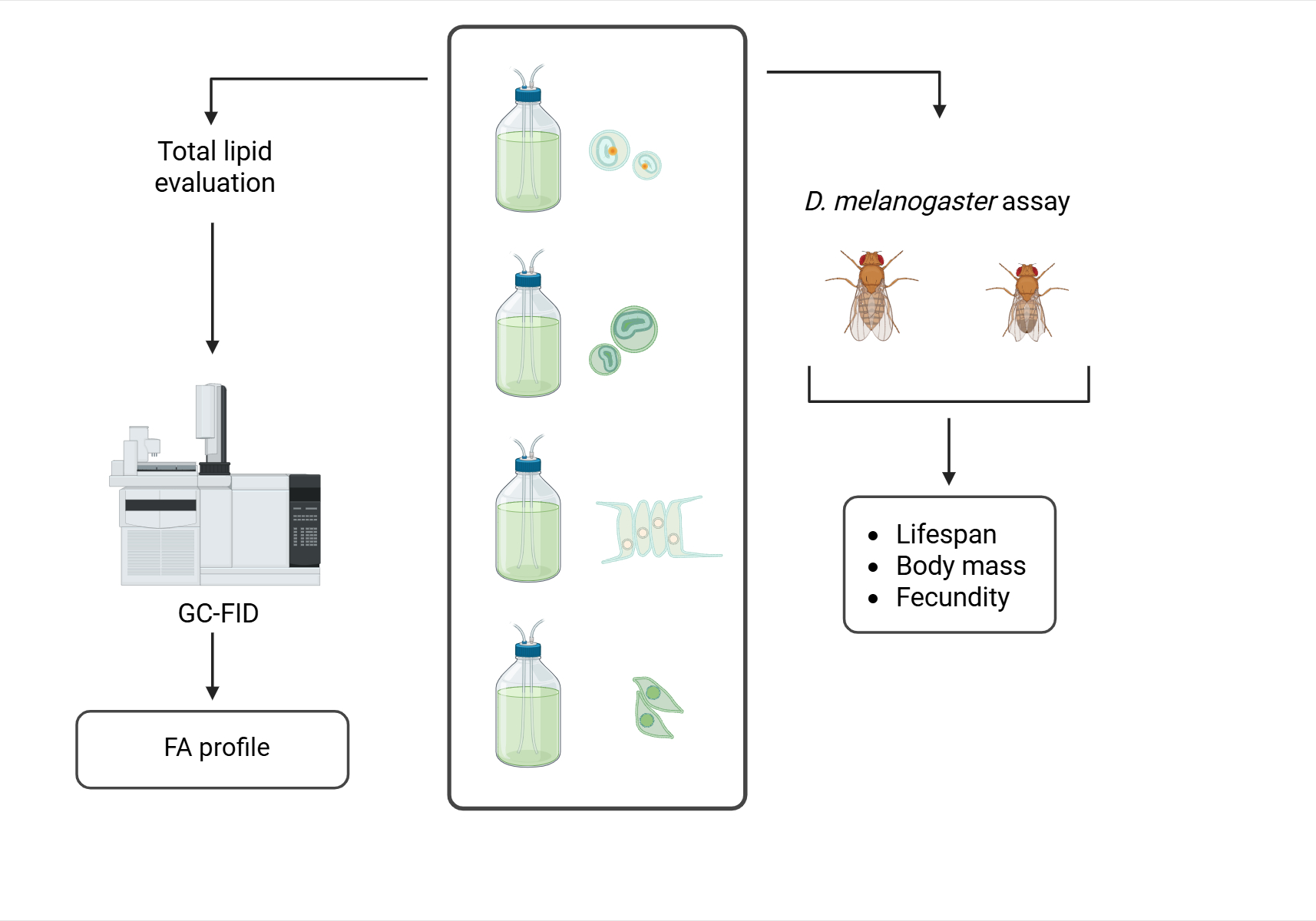

Microalgal Lipid Profile and Their Dietary Impact on Drosophila melanogaster
Abstract
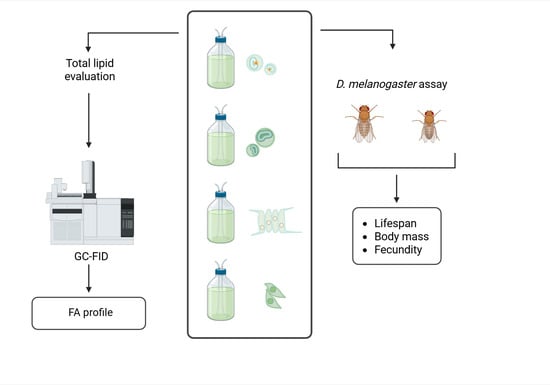
1. Introduction
2. Materials and Methods
2.1. Microalgae Species and Growth Conditions
2.2. Total Lipid Content and Fatty Acid Analysis
2.3. Determination of Antioxidant Activity and Total Phenolic Content of Microalgae
2.3.1. DPPH Radical Scavenging Assay
2.3.2. Ferric Reducing Antioxidant Power (FRAP)
2.3.3. Total Phenolic Content (TPC)
2.4. D. melanogaster Assay
2.5. Statistical Analysis
3. Results
3.1. Total Lipid and Fatty Acid Profile
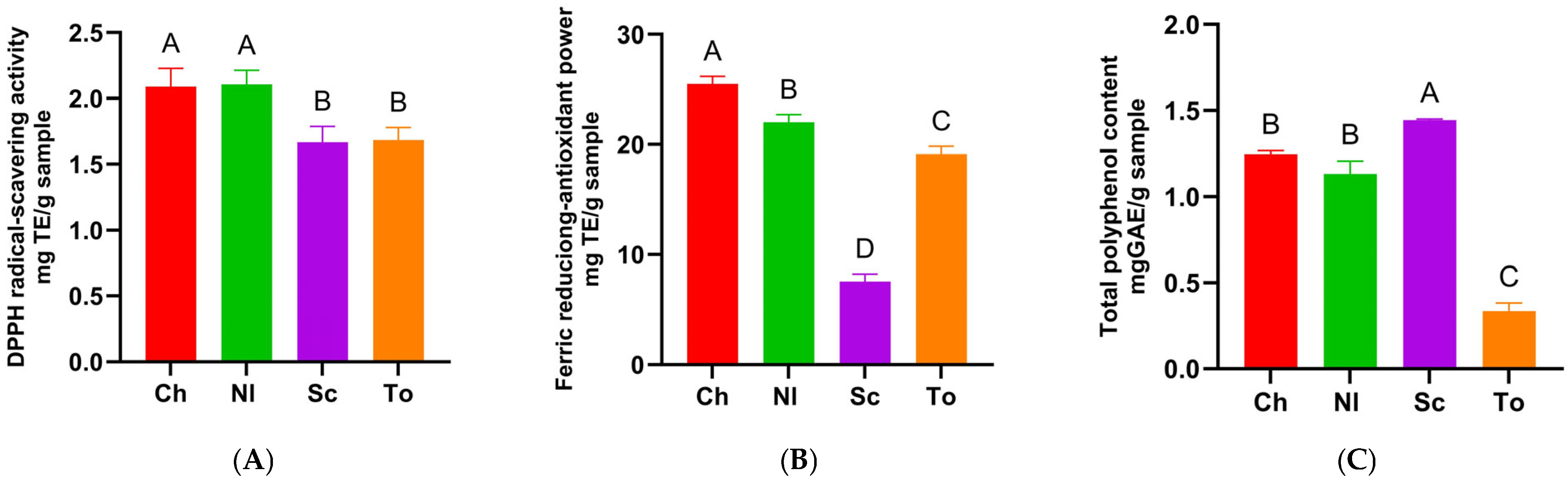
3.2. Antioxidant Activity and Total Phenolic Content of Microalgae
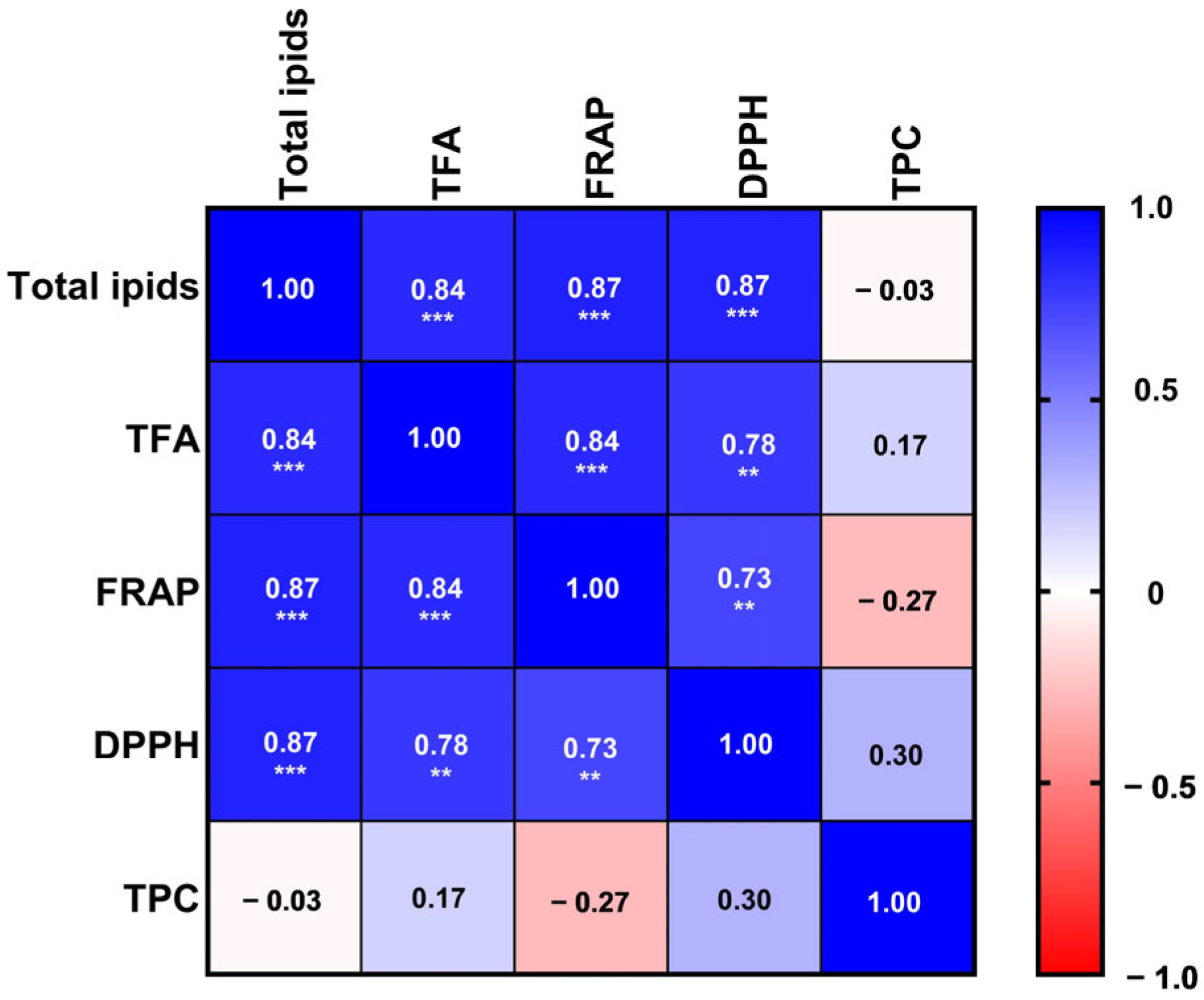
3.3. Correlation Between Antioxidant Activity and Lipid Content
3.4. Effect of Microalgae-Treated Food on D. melanogaster Physiological Parameters
3.4.1. Lifespan
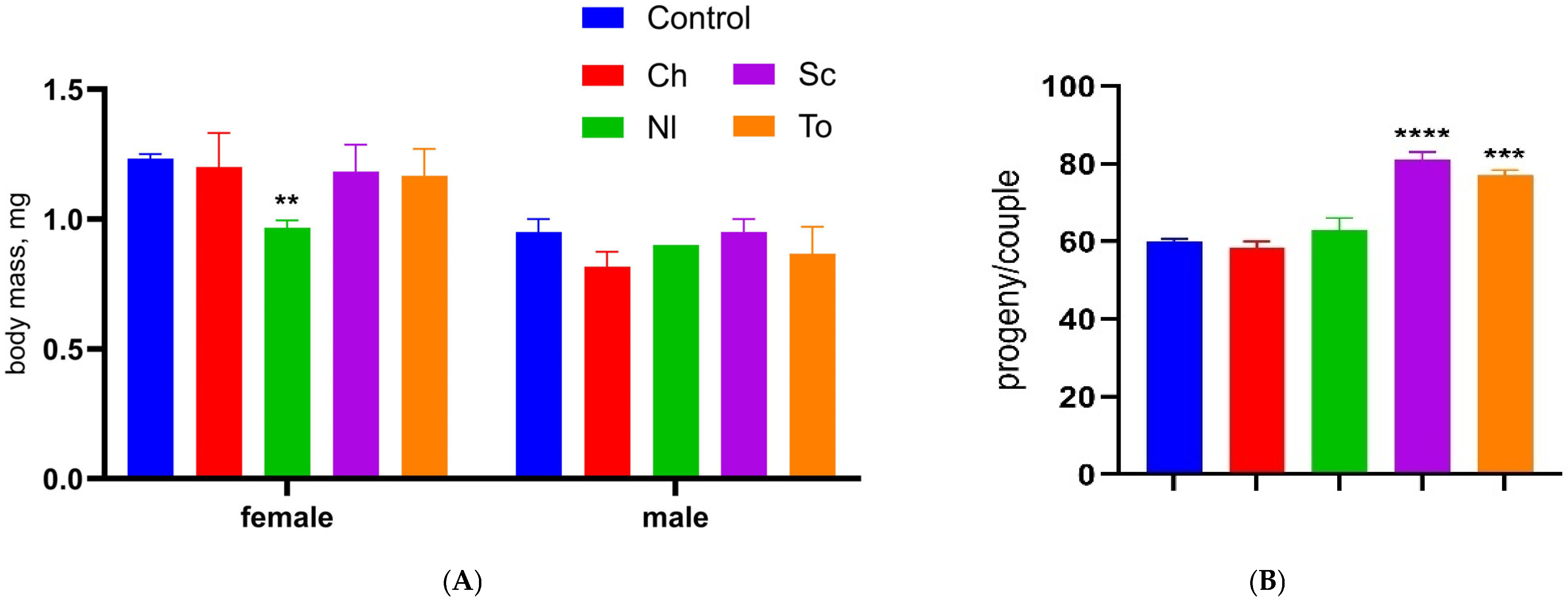
3.4.2. Body Mass and Fertility
4. Discussion
5. Conclusions
Supplementary Materials
Author Contributions
Funding
Institutional Review Board Statement
Informed Consent Statement
Data Availability Statement
Acknowledgments
Conflicts of Interest
References
- Krienitz, L.; Wirth, M. The High Content of Polyunsaturated Fatty Acids in Nannochloropsis limnetica (Eustigmatophyceae) and Its Implication for Food Web Interactions, Freshwater Aquaculture and Biotechnology. Limnologica 2006, 36, 204–210. [Google Scholar] [CrossRef]
- Ferreira De Oliveira, A.P.; Bragotto, A.P.A. Microalgae-Based Products: Food and Public Health. Future Foods 2022, 6, 100157. [Google Scholar] [CrossRef]
- Morales, M.; Aflalo, C.; Bernard, O. Microalgal Lipids: A Review of Lipids Potential and Quantification for 95 Phytoplankton Species. Biomass Bioenergy 2021, 150, 106108. [Google Scholar] [CrossRef]
- Shivakumar, S.; Serlini, N.; Esteves, S.M.; Miros, S.; Halim, R. Cell Walls of Lipid-Rich Microalgae: A Comprehensive Review on Characterisation, Ultrastructure, and Enzymatic Disruption. Fermentation 2024, 10, 608. [Google Scholar] [CrossRef]
- Uthaiah, N.M.; Venkataramareddy, S.R.; Sheikh, A.Y. Oleaginous Microalgae Nannochloropsis sp. as a Potential Source of EPA and Bioactive Metabolites: Bottlenecks in the Downstream Processing and Unravelling the Challenges in Its Food, Feed and Therapeutic Application. Algal Res. 2025, 86, 103897. [Google Scholar] [CrossRef]
- Kapoor, R.T. Oleaginous Microalgae—A Potential Tool for Biorefinery-Based Industry. In Nutraceutical Fatty Acids from Oleaginous Microalgae; Patel, A.K., Matsakas, L., Eds.; Wiley: Hoboken, NJ, USA, 2020; pp. 299–329. ISBN 978-1-119-63171-2. [Google Scholar]
- Tiwari, B.K.; Garcia-Vaquero, M. Nutraceuticals from Algae: Current View and Prospects from a Research Perspective. Mar. Drugs 2022, 20, 671. [Google Scholar] [CrossRef]
- Brooke, F.J.; Eckhardt, H.-G.; Halim, R. Marine and Freshwater Nannochloropsis for the Bioremediation of Brewery Wastewater, CO2 Capture, and CO-Production of Omega-3 Lipids. Algal Res. 2025, 90, 104194. [Google Scholar] [CrossRef]
- Rahimi, M.; Webley, P.A.; Martin, G.J.O.; Halim, R. Nitrogen Starvation for Fuel Production from Nannochloropsis: A Trade-off between Calorific Lipid Accumulation and Energy Loss for Cell Disruption. Chem. Eng. J. Adv. 2025, 23, 100812. [Google Scholar] [CrossRef]
- Arora, N.; Philippidis, G.P. Insights into the Physiology of Chlorella vulgaris Cultivated in Sweet Sorghum Bagasse Hydrolysate for Sustainable Algal Biomass and Lipid Production. Sci. Rep. 2021, 11, 6779. [Google Scholar] [CrossRef]
- Kusmayadi, A.; Leong, Y.K.; Yen, H.-W.; Huang, C.-Y.; Chang, J.-S. Microalgae as Sustainable Food and Feed Sources for Animals and Humans—Biotechnological and Environmental Aspects. Chemosphere 2021, 271, 129800. [Google Scholar] [CrossRef]
- Adarme-Vega, T.C.; Lim, D.K.Y.; Timmins, M.; Vernen, F.; Li, Y.; Schenk, P.M. Microalgal Biofactories: A Promising Approach towards Sustainable Omega-3 Fatty Acid Production. Microb. Cell Fact. 2012, 11, 96. [Google Scholar] [CrossRef]
- Wang, C.; Onyeaka, H.; Miri, T.; Soltani, F. Chlorella vulgaris as a Food Substitute: Applications and Benefits in the Food Industry. J. Food Sci. 2024, 89, 8231–8247. [Google Scholar] [CrossRef]
- Freitas, H.R. Chlorella vulgaris as a Source of Essential Fatty Acids and Micronutrients: A Brief Commentary. Open Plant Sci. J. 2017, 10, 92–99. [Google Scholar] [CrossRef][Green Version]
- Scoculi De Lira, G.; Severo, I.A.; Ferraz, F.A.; Costa, I.G.; Guimarães, M.M.; Zattoni, I.F.; Bianchini, L.F.; Vargas, J.V.C.; Taher, D.M.; Mariano, A.B. Multiparametric Evaluation of Tetradesmus obliquus Biomass: An Integrated Approach Including Antioxidant, Nutritional, and Energy Properties. Microorganisms 2025, 13, 1583. [Google Scholar] [CrossRef] [PubMed]
- Ma, Y.; Zhou, W.; Chen, P.; Urriola, P.E.; Shurson, G.C.; Ruan, R.; Chen, C. Metabolomic Evaluation of Scenedesmus Sp. as a Feed Ingredient Revealed Dose-Dependent Effects on Redox Balance, Intermediary and Microbial Metabolism in a Mouse Model. Nutrients 2019, 11, 1971. [Google Scholar] [CrossRef] [PubMed]
- Staats, S.; Lüersen, K.; Wagner, A.E.; Rimbach, G. Drosophila melanogaster as a Versatile Model Organism in Food and Nutrition Research. J. Agric. Food Chem. 2018, 66, 3737–3753. [Google Scholar] [CrossRef]
- Musselman, L.P.; Kühnlein, R.P. Drosophila as a Model to Study Obesity and Metabolic Disease. J. Exp. Biol. 2018, 221, jeb163881. [Google Scholar] [CrossRef]
- Qiu, S.; Shen, Y.; Zhang, L.; Ma, B.; Amadu, A.A.; Ge, S. Antioxidant Assessment of Wastewater-Cultivated Chlorella sorokiniana in Drosophila melanogaster. Algal Res. 2020, 46, 101795. [Google Scholar] [CrossRef]
- Qiu, S.; Wang, S.; Xiao, C.; Ge, S. Assessment of Microalgae as a New Feeding Additive for Fruit Fly Drosophila melanogaster. Sci. Total Environ. 2019, 667, 455–463. [Google Scholar] [CrossRef]
- Bischoff, H.W.; Bold, H.C. Phycological Studies IV. Some Soil Algae from Enchanted Rock and Related Algal Species; Department of Biology, Texas Lutheran College: Seguin, TX, USA, 1963; Volume 6318. [Google Scholar]
- Breuer, G.; Evers, W.A.C.; De Vree, J.H.; Kleinegris, D.M.M.; Martens, D.E.; Wijffels, R.H.; Lamers, P.P. Analysis of Fatty Acid Content and Composition in Microalgae. J. Vis. Exp. 2013, 80, 50628. [Google Scholar] [CrossRef]
- Lepage, G.; Roy, C.C. Direct Transesterification of All Classes of Lipids in a One-Step Reaction. J. Lipid Res. 1986, 27, 114–120. [Google Scholar] [CrossRef]
- Lewis, T.; Nichols, P.D.; McMeekin, T.A. Evaluation of Extraction Methods for Recovery of Fatty Acids from Lipid-Producing Microheterotrophs. J. Microbiol. Methods 2000, 43, 107–116. [Google Scholar] [CrossRef]
- Kiani, H.; Ma, Q.; Xiao, M.; Li, Y.; Brooke, F.J.; Mulcahy, S.; Miros, S.; Halim, R. Growth and Fatty Acid Profile of Nannochloropsis oceanica Cultivated on Nano-Filtered Whey Permeate. J. Appl. Phycol. 2024, 36, 2503–2516. [Google Scholar] [CrossRef]
- Brand-Williams, W.; Cuvelier, M.E.; Berset, C. Use of a Free Radical Method to Evaluate Antioxidant Activity. LWT-Food Sci. Technol. 1995, 28, 25–30. [Google Scholar] [CrossRef]
- Singh, J.P.; Kaur, A.; Singh, N.; Nim, L.; Shevkani, K.; Kaur, H.; Arora, D.S. In Vitro Antioxidant and Antimicrobial Properties of Jambolan (Syzygium cumini) Fruit Polyphenols. LWT 2016, 65, 1025–1030. [Google Scholar] [CrossRef]
- Wrolstad, R.E.; Acree, T.E.; Decker, E.A.; Penner, M.H.; Reid, D.S.; Schwartz, S.J.; Shoemaker, C.F.; Smith, D.; Sporns, P. Handbook of Food Analytical Chemistry, 1st ed.; Wiley: Hoboken, NJ, USA, 2004; ISBN 978-0-471-72187-1. [Google Scholar]
- Liubertas, T.; Poderys, J.; Vilma, Z.; Capkauskiene, S.; Viskelis, P. Impact of Dietary Potassium Nitrate on the Life Span of Drosophila melanogaster. Processes 2021, 9, 1270. [Google Scholar] [CrossRef]
- Viegas, C.V.; Mendes, L.B.B.; João, R.R.; Díaz, G.C.; Aranda, D.A.G.; Cruz, Y.R. Quantification of Lipid Content and Identification of the Main Lipid Classes Present in Microalgae Extracts Scenedesmus sp. for Obtaining Fatty Compounds for Biofuel Production. Energy Power Eng. 2020, 12, 273–287. [Google Scholar] [CrossRef]
- Vendruscolo, R.G.; Fagundes, M.B. Lipids, Fatty Acids, and Sterols from Microalgae. In Microalgae and One Health; Elsevier: Amsterdam, The Netherlands, 2025; pp. 121–132. ISBN 978-0-443-22080-7. [Google Scholar]
- Petkov, G.; Garcia, G. Which Are Fatty Acids of the Green Alga Chlorella? Biochem. Syst. Ecol. 2007, 35, 281–285. [Google Scholar] [CrossRef]
- Patel, A.; Karageorgou, D.; Rova, E.; Katapodis, P.; Rova, U.; Christakopoulos, P.; Matsakas, L. An Overview of Potential Oleaginous Microorganisms and Their Role in Biodiesel and Omega-3 Fatty Acid-Based Industries. Microorganisms 2020, 8, 434. [Google Scholar] [CrossRef]
- Freire, I.; Cortina-Burgueño, A.; Grille, P.; Arizcun Arizcun, M.; Abellán, E.; Segura, M.; Witt Sousa, F.; Otero, A. Nannochloropsis limnetica: A Freshwater Microalga for Marine Aquaculture. Aquaculture 2016, 459, 124–130. [Google Scholar] [CrossRef]
- Krienitz, L.; Hepperle, D.; Stich, H.-B.; Weiler, W. Nannochloropsis limnetica (Eustigmatophyceae), a New Species of Picoplankton from Freshwater. Phycologia 2000, 39, 219–227. [Google Scholar] [CrossRef]
- Converti, A.; Casazza, A.A.; Ortiz, E.Y.; Perego, P.; Del Borghi, M. Effect of Temperature and Nitrogen Concentration on the Growth and Lipid Content of Nannochloropsis oculata and Chlorella vulgaris for Biodiesel Production. Chem. Eng. Process. Process Intensif. 2009, 48, 1146–1151. [Google Scholar] [CrossRef]
- Mukta, F.A.; Khatoon, H.; Rahman, M.R.; Acharjee, M.R.; Newase, S.; Nayma, Z.; Sultana, R.; Hasan, S.J. Effect of Different Nitrogen Concentrationson the Growth, Proximate and Biochemical Composition of Freshwater Microalgae Scenedesmus Communis. J. Energy Environ. Sustain. 2022, 11 & 12, 36–42. [Google Scholar]
- Xiao, Y.; Zhang, J.; Cui, J.; Feng, Y.; Cui, Q. Metabolic Profiles of Nannochloropsis oceanica IMET1 under Nitrogen-Deficiency Stress. Bioresour. Technol. 2013, 130, 731–738. [Google Scholar] [CrossRef] [PubMed]
- Guschina, I.A.; Harwood, J.L. Lipids and Lipid Metabolism in Eukaryotic Algae. Prog. Lipid Res. 2006, 45, 160–186. [Google Scholar] [CrossRef] [PubMed]
- Yeh, K.; Chang, J. Nitrogen Starvation Strategies and Photobioreactor Design for Enhancing Lipid Content and Lipid Production of a Newly Isolated Microalga Chlorella vulgaris ESP-31: Implications for Biofuels. Biotechnol. J. 2011, 6, 1358–1366. [Google Scholar] [CrossRef]
- Abdelkarim, O.H.; Wijffels, R.H.; Barbosa, M.J. Microalgal Lipid Production: A Comparative Analysis of Nannochloropsis and Microchloropsis Strains. J. Appl. Phycol. 2025, 37, 15–34. [Google Scholar] [CrossRef]
- Ma, Y.; Wang, Z.; Yu, C.; Yin, Y.; Zhou, G. Evaluation of the Potential of 9 Nannochloropsis Strains for Biodiesel Production. Bioresour. Technol. 2014, 167, 503–509. [Google Scholar] [CrossRef]
- Ma, X.-N.; Chen, T.-P.; Yang, B.; Liu, J.; Chen, F. Lipid Production from Nannochloropsis. Mar. Drugs 2016, 14, 61. [Google Scholar] [CrossRef]
- Woo, S.-G.; Yoo, K.; Lee, J.; Bang, S.; Lee, M.; On, K.; Park, J. Comparison of Fatty Acid Analysis Methods for Assessing Biorefinery Applicability of Wastewater Cultivated Microalgae. Talanta 2012, 97, 103–110. [Google Scholar] [CrossRef] [PubMed]
- Niemi, C.; Lage, S.; Gentili, F.G. Comparisons of Analysis of Fatty Acid Methyl Ester (FAME) of Microalgae by Chromatographic Techniques. Algal Res. 2019, 39, 101449. [Google Scholar] [CrossRef]
- Moradi-Kheibari, N.; Ahmadzadeh, H.; Lyon, S.R. Correlation of Total Lipid Content of Chlorella vulgaris with the Dynamics of Individual Fatty Acid Growth Rates. Front. Mar. Sci. 2022, 9, 837067. [Google Scholar] [CrossRef]
- Adlerstein, D.; Bigogno, C.; Khozin, I.; Cohen, Z. The Effect of Growth Temperature and Culture Density on the Molecular Species Composition of the Galactolipids in the Red Microalga Porphyhdium cruentum (Rhodophyta)1. J. Phycol. 1997, 33, 975–979. [Google Scholar] [CrossRef]
- Shetty, V.; Mokashi, K.; Sibi, G. Variations among Antioxidant Profiles in Lipid and Phenolic Extracts of Microalgae from Different Growth Medium. J. Fish. Aquat. Sci. 2015, 10, 367–375. [Google Scholar] [CrossRef][Green Version]
- Lints, F.A.; Bourgois, M.; Delalieux, A.; Stoll, J.; Lints, C.V. Does the Female Life Span Exceed That of the Male. Gerontology 1983, 29, 336–352. [Google Scholar] [CrossRef] [PubMed]
- Regan, J.C.; Khericha, M.; Dobson, A.J.; Bolukbasi, E.; Rattanavirotkul, N.; Partridge, L. Sex Difference in Pathology of the Ageing Gut Mediates the Greater Response of Female Lifespan to Dietary Restriction. eLife 2016, 5, e10956. [Google Scholar] [CrossRef][Green Version]
- Bak, N.K.; Rohde, P.D.; Kristensen, T.N. Strong Sex-Dependent Effects of Malnutrition on Life- and Healthspan in Drosophila melanogaster. Insects 2023, 15, 9. [Google Scholar] [CrossRef]
- Zanco, B.; Mirth, C.K.; Sgrò, C.M.; Piper, M.D. A Dietary Sterol Trade-off Determines Lifespan Responses to Dietary Restriction in Drosophila melanogaster Females. eLife 2021, 10, e62335. [Google Scholar] [CrossRef]
- Teleman, A.A. Molecular Mechanisms of Metabolic Regulation by Insulin in Drosophila. Biochem. J. 2010, 425, 13–26. [Google Scholar] [CrossRef]
- Oldham, S. Obesity and Nutrient Sensing TOR Pathway in Flies and Vertebrates: Functional Conservation of Genetic Mechanisms. Trends Endocrinol. Metab. 2011, 22, 45–52. [Google Scholar] [CrossRef]
- Skorupa, D.A.; Dervisefendic, A.; Zwiener, J.; Pletcher, S.D. Dietary Composition Specifies Consumption, Obesity, and Lifespan in Drosophila melanogaster. Aging Cell 2008, 7, 478–490. [Google Scholar] [CrossRef]
- Partridge, L.; Alic, N.; Bjedov, I.; Piper, M.D.W. Ageing in Drosophila: The Role of the Insulin/Igf and TOR Signalling Network. Exp. Gerontol. 2011, 46, 376–381. [Google Scholar] [CrossRef]
- Broughton, S.J.; Piper, M.D.W.; Ikeya, T.; Bass, T.M.; Jacobson, J.; Driege, Y.; Martinez, P.; Hafen, E.; Withers, D.J.; Leevers, S.J.; et al. Longer Lifespan, Altered Metabolism, and Stress Resistance in Drosophila from Ablation of Cells Making Insulin-like Ligands. Proc. Natl. Acad. Sci. USA 2005, 102, 3105–3110. [Google Scholar] [CrossRef]
- Sieber, M.H.; Spradling, A.C. Steroid Signaling Establishes a Female Metabolic State and Regulates SREBP to Control Oocyte Lipid Accumulation. Curr. Biol. 2015, 25, 993–1004. [Google Scholar] [CrossRef]



| Component, % DW | C. vulgaris | N. limnetica | S. communis | T. obliquus |
|---|---|---|---|---|
| Total Lipids | 27.3 ± 1.9 A | 28.1 ± 1.7 A | 17.3 ± 2.1 B | 21.9 ± 1.1 B |
| Total Fatty Acids | 15.7 ± 0.5 A | 25.6 ± 0.5 AB | 4.7 ± 0.4 B,C | 7.3 ± 0.2 C |
| Fatty acids, (% TFA) | ||||
| Saturated | ||||
| C14:0 | – | 1.7 ± 0.1 | – | – |
| C16:0 | 20.4 ± 0.2 | 17.6 ± 0.3 | 22.2 ± 4.2 | 16.7 ± 2.5 |
| C18:0 | 4.5 ± 0.2 | 3.4 ± 0.3 | – | – |
| Monounsaturated | ||||
| C16:1 | 5.7 ± 0.1 | 4.3 ± 0.2 | – | – |
| C18:1n-9 Polyunsaturated | 55.4 ± 4.1 | 52.5 ± 3.4 | 50.8 ± 3.2 | 59.2 ± 1.9 |
| C18:2n-6c | 19.1 ± 0.8 | 25.4 ± 0.2 | 26.9 ± 1.0 | 24.1 ± 4.5 |
| Variant | Females | Males | ||||||
|---|---|---|---|---|---|---|---|---|
| Survival Days | Median Lifespan Change (% vs. Control) | Survival Days | Median Lifespan Change (% vs. Control) | |||||
| Median | Mean | Max | Median | Mean | Max | |||
| Control | 18.5 | 17.2 | 35 | 0 A | 12.0 | 13.8 | 30 | 0 A |
| C. vulgaris | 27.0 | 24.5 | 41 | +45.9 B | 21.0 | 18.9 | 32 | +75.0 B |
| N. limnetica | 18.5 | 18.9 | 32 | 0.0 A | 15.0 | 15.3 | 30 | +25.0 B |
| S. communis | 20.0 | 20.0 | 36 | +8.1 B | 15.5 | 15.0 | 29 | +29.2 B |
| T. obliquus | 23.5 | 24.1 | 44 | +27.0 B | 18.0 | 16.8 | 31 | +50.0 B |
Disclaimer/Publisher’s Note: The statements, opinions and data contained in all publications are solely those of the individual author(s) and contributor(s) and not of MDPI and/or the editor(s). MDPI and/or the editor(s) disclaim responsibility for any injury to people or property resulting from any ideas, methods, instructions or products referred to in the content. |
© 2026 by the authors. Licensee MDPI, Basel, Switzerland. This article is an open access article distributed under the terms and conditions of the Creative Commons Attribution (CC BY) license.
Share and Cite
Miros, S.; Bilokon, S.; Han, Y.; Halim, R. Microalgal Lipid Profile and Their Dietary Impact on Drosophila melanogaster. Lipidology 2026, 3, 17. https://doi.org/10.3390/lipidology3020017
Miros S, Bilokon S, Han Y, Halim R. Microalgal Lipid Profile and Their Dietary Impact on Drosophila melanogaster. Lipidology. 2026; 3(2):17. https://doi.org/10.3390/lipidology3020017
Chicago/Turabian StyleMiros, Svitlana, Svitlana Bilokon, Yiting Han, and Ronald Halim. 2026. "Microalgal Lipid Profile and Their Dietary Impact on Drosophila melanogaster" Lipidology 3, no. 2: 17. https://doi.org/10.3390/lipidology3020017
APA StyleMiros, S., Bilokon, S., Han, Y., & Halim, R. (2026). Microalgal Lipid Profile and Their Dietary Impact on Drosophila melanogaster. Lipidology, 3(2), 17. https://doi.org/10.3390/lipidology3020017