1. Introduction
Global food and beverage industries generate vast quantities of organic waste every year, posing both environmental and economic challenges. Among these by-products, brewer’s spent grain (BSG) represents nearly 85% of the total residues from beer production [
1,
2]. Rich in proteins, fibers, and carbohydrates, BSG is highly biodegradable yet often discarded or underutilized, resulting in greenhouse gas emissions and nutrient loss [
3,
4]. Growing concerns over waste management and soil degradation have therefore intensified the demand for circular, low-cost strategies that convert organic residues into valuable products [
5,
6].
Fermentation and composting have emerged as promising approaches for transforming agri-food waste into bioproducts, including biofuels, bioplastics, and fertilizers [
7,
8,
9,
10]. Within these approaches, solid-state fermentation (SSF) offers distinct advantages such as low energy requirements, reduced contamination risk, and compatibility with heterogeneous organic substrates [
11]. However, maintaining aerobic conditions and adequate heat retention in small-scale bioreactors remains challenging, especially when low-cost plastic containers are used, as these materials typically provide insufficient thermal insulation [
12]. Because metabolic heat generated by microbial activity must be conserved to maintain optimal fermentation conditions, heat loss can substantially reduce system performance [
13]. Aerobic processes further depend on maintaining appropriate temperature ranges that directly influence microbial growth and metabolism [
14].
Thermal management challenges increase due to the limitations of low-cost materials and simple reactor configurations. Although plastics exhibit some insulating properties, they generally fail to prevent heat loss through conduction, radiation, and convection during fermentation [
14]. Advanced insulation approaches—such as multilayered barriers or heat-retentive materials—may address these shortcomings but typically increase system complexity and cost [
15]. Prior studies highlight that effective heat retention is essential for microbial processes, as even small temperature fluctuations can reduce metabolic efficiency or cause failure of the bioprocess [
13,
16]. As a result, bioreactor designs for small-scale applications must achieve a balance between material cost, thermal stability, and effective aeration [
17,
18,
19].
Additional improvements in small-scale aerobic systems can be achieved through real-time monitoring of temperature and oxygen levels, coupled with strategic material selection. These strategies have been shown to enhance overall performance of food-waste fermentation, where maintaining metabolic heat and adequate oxygen saturation are essential for consistent microbial activity [
20,
21]. Recent developments in advanced composting and fermentation systems demonstrate that controlled aeration and thermophilic inoculation can significantly accelerate BSG degradation and achieve compost maturity within 15 to 25 days [
22]. Yet such systems often rely on specialized infrastructure and energy inputs that are inappropriate for household or community-scale use.
Maintaining aerobic conditions is especially critical in small-scale composting, as inadequate aeration can promote anaerobic fermentation, leading to methane production and reduced degradation efficiency [
23]. Small systems also frequently require specific microbial inocula or external energy sources that may not be economically accessible to domestic or community users [
22]. Although anaerobic digestion of BSG has been explored as a means of producing biogas, the operational complexity of thermophilic digesters and their maintenance requirements limit their applicability in home composting settings [
23].
These constraints underscore the need for innovative composting technologies that balance efficiency, thermal stability, and accessibility. Passive heating strategies, improved natural insulation, and the use of Indigenous microorganisms have been proposed as low-cost methods for improving composting performance in small-scale systems [
24]. Similarly, community composting initiatives have shown that locally sourced inoculants can enhance compost quality and accelerate decomposition [
25]. However, few studies have evaluated low-cost, small-scale aerobic systems that combine intermittent forced aeration with practical insulation strategies to support stable microbial activity using household-available materials.
While fermentation and composting studies often emphasize biochemical pathways and end-product characteristics, the practical deployment of small-scale systems is frequently constrained by hardware-level limitations, including aeration topology, thermal losses, power demand, and material selection. In decentralized or indoor settings, these engineering factors often dominate system performance and user adoption. Accordingly, this work positions the BSG-2 system primarily as a low-cost fermentation hardware platform, where sustainability metrics and substrate chemistry are employed as verification and validation tools to assess whether the physical design supports stable, repeatable biological operation. While numerous studies have investigated small-scale composting and solid-state fermentation systems, relatively few have explicitly documented the underlying hardware architecture using defined engineering design requirements and corresponding verification and validation (V & V) metrics. Existing work often emphasizes biological performance or process outcomes, with limited focus on the systematic evaluation of physical design parameters such as aeration topology, thermal behavior, and reproducibility. This gap motivates the present work, which frames the system as a hardware platform and evaluates its performance through explicitly defined design criteria.
This study introduces and evaluates the BSG-2 fermenter, a small-scale, batch-mode aerobic system constructed from food-grade plastic. The system is open-hardware in the sense of a reproducible and accessible design based on commercially available components. The system was designed to determine whether limited forced aeration, combined with nutrient-rich substrates (BSG and vegetable waste), can sustain microbial activity and achieve meaningful bio-thermal and composting performance with minimal energy input. The objectives were to: (i) monitor the thermal behavior of the fermenter and assess microbial activity indirectly through temperature, pH, and substrate degradation; (ii) evaluate substrate degradation efficiency; and (iii) identify operational constraints and propose design improvements. The findings contribute to ongoing efforts to develop simple, low-cost technologies for organic waste valorization and sustainable resource recovery.
While small-scale composting systems are widely reported, relatively few studies frame these systems as reproducible hardware platforms with explicit engineering design requirements and validation metrics. The BSG-2 system distinguishes itself by combining a bottom-distributed aeration manifold with a central chimney topology and an intermittent low-power aeration strategy, while maintaining full reproducibility using off-the-shelf components. This work therefore emphasizes the relationship between hardware design and biological performance, rather than biochemical optimization alone.
2. Design
2.1. Hardware-First Framing and Scope Definition
The BSG-2 system is a low-cost indoor aerobic fermentation reactor designed for small-scale organic waste processing. System adoption and performance are governed primarily by hardware-level characteristics, including aeration distribution, odor containment, thermal stability, power demand, and ease of replication. Biological and sustainability-related outputs are therefore used as verification and validation (V & V) metrics to assess whether the physical architecture supports stable and repeatable aerobic operation, rather than to optimize biochemical yields. Explicit engineering design requirements were defined a priori and evaluated using operational performance metrics, as summarized in
Table 1.
2.2. Substrate and Operating Envelope Definition
The experimental work was conducted using two primary organic substrates: brewer’s spent grain (BSG) and vegetable waste. BSG and vegetable waste were selected as a stress-test feedstock representative of high-moisture, easily compacted organics, used here to verify aeration distribution, odor control, and thermal behavior.
The BSG, obtained fresh from a nearby microbrewery immediately after the brewing process, was selected for its high nutritional density and moisture content, which together provide an excellent environment for microbial growth. The second substrate consisted of mixed vegetable residues, primarily peels, leaves, and stems from produce such as cabbage, carrots, broccoli, onions and cucumbers. These materials were chosen for their complementary carbon-to-nitrogen composition and readily biodegradable structure.
Both materials were used in their natural state without any chemical pretreatment. The ratio of BSG to vegetable waste was adjusted based on preliminary trials to achieve a moist, friable mixture that would support aerobic fermentation without waterlogging. This combination represents a challenging or “stress-test” feedstock, as it initially exhibits relatively high porosity due to coarse vegetable structure, while simultaneously tending to compact under elevated moisture conditions, thereby increasing resistance to airflow and testing the effectiveness of the aeration design. These preliminary trials were used to identify a mixture that maintained structural porosity, avoided excessive compaction, and achieved a target moisture level compatible with aerobic operation (approximately 55–65%), based on qualitative assessment of airflow resistance, moisture retention, and substrate handling characteristics. This combination not only ensured a balanced nutrient profile for the developing microbial community but also reflected realistic conditions for small-scale organic waste recycling systems that rely on locally available materials.
2.3. Reactor Architecture and Hardware Design Rationale
The experimental system—designated as the BSG-2 fermenter—was conceived as a simple, low-cost apparatus suitable for small-scale aerobic fermentation. The primary design goal was to enable efficient microbial decomposition of organic waste using locally available materials and minimal external energy input. The fermenter body was based on a 20-L food-grade polypropylene container, selected for its affordability, chemical resistance, and ease of handling. Its relatively thin plastic wall provided a lightweight structure but limited thermal insulation, a characteristic later identified as a design constraint.
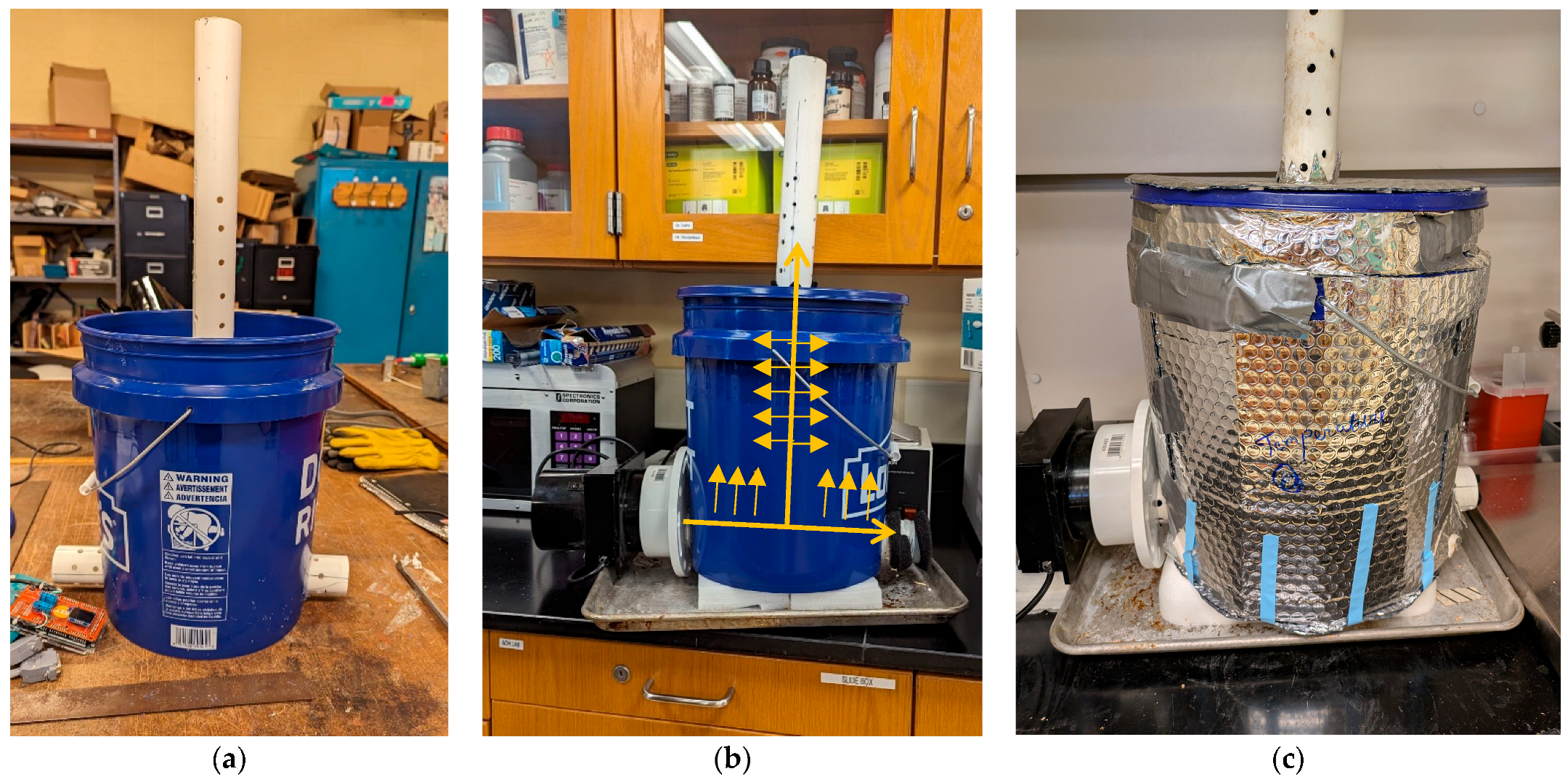
The reactor employs an active aeration topology designed to provide uniform oxygen delivery across the full substrate depth while limiting anaerobic pocket formation. The architecture is based on a central vertical chimney coupled with a bottom-distributed horizontal aeration network, establishing a predominantly bottom-up airflow path. Air supplied to the lower region of the reactor is distributed laterally through the substrate and directed upward through the central chimney via combined forced and convective transport (
Figure 1a,b).
Odor mitigation is incorporated at the system level through activated-carbon filtration at atmospheric outlets, enabling indoor operation without nuisance emissions. Forced airflow is supplied by a low-power blower operating under intermittent control, with the aeration topology designed to maintain substrate depths within effective oxygen diffusion distances reported in compost aeration literature [
26]. This configuration prioritizes aerobic stability, odor control, and low energy demand within a simple, replicable hardware architecture.
The system thus combined positive (bottom-up) airflow with a vertical rise path to promote even oxygen distribution and heat removal from the compost mass. The blower was operated on an intermittent schedule (e.g., 3 min on/20 min off) early in the process when microbial activity was highest, then transitioned to longer off periods as the substrate stabilized. The chimney effect was intended to reduce stratification and promote more consistent thermal behavior throughout the substrate. The diameter of the central chimney was selected to provide sufficient airflow capacity while minimizing displacement of the working substrate volume, representing a practical balance between aeration effectiveness and usable reactor space. The blower was specified based on nominal flow rate, and static pressure characteristics were not explicitly measured or controlled; therefore, actual airflow within the compacted substrate may differ from nominal values due to resistance effects.
To minimize heat loss during aeration and sustain microbial activity, the BSG-2 fermenter was fitted with an external thermal insulation jacket composed of reflective bubble-foil insulation (commonly used for HVAC ducting). The insulation layer was applied externally to the vessel to reduce radiative and convective heat losses during intermittent aeration and to maintain thermal stability of the composting mass (
Figure 1c). This reflective layer provided both radiant and convective heat resistance, reducing temperature fluctuations caused by intermittent airflow.
The design philosophy emphasized functional simplicity and replicability. All materials are easily obtainable through retail suppliers, making the system accessible for educational, community, or household applications. This approach also facilitated the evaluation of fundamental process dynamics without interference from complex mechanical or electrical controls. The BSG-2 fermenter therefore served as both a proof of concept for decentralized organic waste valorization and a baseline for future design improvements, such as integrated insulation or automated aeration.
3. Build Instructions
The BSG-2 fermenter was constructed using a standard 20 L (≈5-gallon) food-grade polypropylene bucket and readily available PVC and HVAC components listed in
Table 2. All dimensions and materials reported below were selected to ensure reproducibility using common tools and retail-sourced parts, while allowing limited tolerance without compromising system performance.
The bucket was first prepared by creating three pipe pass-through openings. Two holes were cut on the lower sidewall of the bucket, positioned near the base and aligned to accommodate the horizontal aeration manifolds. A third hole was cut at the center of the bucket lid to allow passage of the vertical aeration chimney. The aeration piping was fabricated using nominal 2½-inch PVC pipe (Schedule 40), which has an outside diameter of approximately 73 mm (2.875 in). Accordingly, all three bucket openings were cut to this diameter to provide a snug mechanical fit between the pipe and the vessel wall. Minor adjustments were made using sanding or trimming to ensure close tolerances. All pipe penetrations were sealed using silicone caulk applied around the circumference of each opening to prevent air leakage and odor escape during operation.
The aeration assembly consisted of a vertical perforated PVC pipe acting as a central chimney and two horizontal perforated PVC pipes forming a bottom-distributed manifold. The vertical pipe was positioned at the center of the bucket and extended from near the base of the vessel upward through the lid. At the base of this pipe, a PVC T-junction connected the vertical chimney to the two horizontal branches, which were positioned close to the bottom of the bucket and extended laterally toward the sidewalls. Prior to assembly, the pipes were perforated with a regular grid of holes spaced approximately 25 mm (1 inch) apart. Each perforation had a diameter of 8 mm (5/16 in), providing distributed airflow while maintaining sufficient structural integrity of the pipe. The perforations were deburred to avoid obstruction and to prevent plastic debris from entering the substrate. The perforations were arranged in an alternating linear pattern along the pipe length, resulting in an approximately helical distribution around the circumference. This configuration promotes more uniform radial air distribution without requiring complex drilling patterns.
Once assembled, the horizontal manifolds were routed through the two lower sidewall openings as required by the configuration shown in
Figure 1a, while the vertical chimney passed through the lid opening. A small electrically powered blower was connected to the intake port on the exterior of the bucket to provide intermittent forced aeration, directing air into the horizontal manifold and upward through the substrate and central chimney. Electrical components, including the blower and associated wiring, were positioned and protected to minimize exposure to moisture. Connections were kept external to the reactor where possible, and standard insulated wiring and sealed interfaces were used to reduce the risk of splash or condensation-related damage. These precautions are recommended for safe operation in humid environments.
Activated-carbon filters were installed at all atmospheric outlet points associated with the aeration pathway to control odor emissions during indoor operation. The activated carbon filter consisted of a commercially available cut-to-fit carbon-infused pad (Aquarium Carbon Pad, 3/8″–1/2″ thickness). While the material provides effective odor adsorption in practical use, specific porosity (PPI) was not characterized, and performance is described in terms of general functionality rather than precise material properties.
After completing the aeration hardware, the fermenter was insulated externally to improve thermal stability during intermittent airflow. The reactor was insulated using a commercially available double-sided reflective bubble insulation (US Energy Products, approximately 1/4 inch thickness, nominal R-value of R8). This material provides combined radiant and convective resistance and was selected for its low cost, flexibility, and ease of application. The reported R-value corresponds to manufacturer specifications and was not independently verified in this study. The insulation was wrapped around the lateral surface of the bucket and secured using aluminum tape, with duct tape applied as mechanical reinforcement. The insulation was also applied over the top surface of the lid, with openings cut to accommodate the vertical chimney and any service ports, ensuring continuous coverage while maintaining accessibility. This configuration reduced both radiative and convective heat losses without interfering with normal operation.
A complete list of components, materials, and representative costs required to reproduce the BSG-2 fermenter is provided in
Table 2 (Bill of Materials).
6. Discussion
6.1. Observed Biothermal Performance vs. Literature
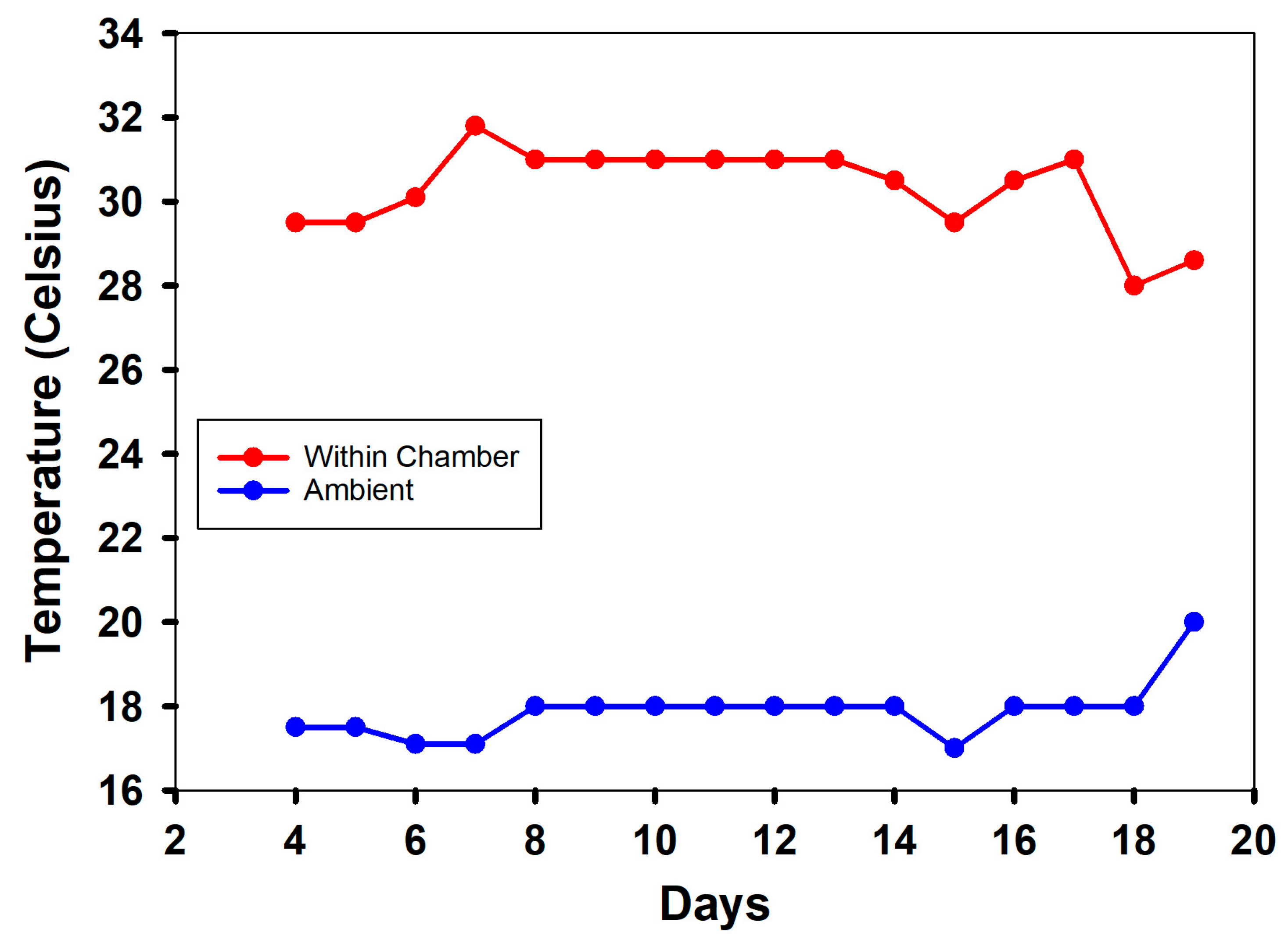
The bio-thermal performance of the BSG-2 fermenter demonstrates that small-scale, low-cost systems can successfully sustain active microbial metabolism, though they face distinct thermodynamic limitations compared to industrial composting. The system consistently maintained internal temperatures of 29–32 °C, approximately 10–13 °C above ambient conditions, indicating a robust mesophilic fermentation process driven by the metabolic breakdown of the nutrient-rich BSG and vegetable substrate [
30]. However, the system did not reach the thermophilic range (>45 °C) typically required for rapid pathogen inactivation and accelerated hydrolysis of recalcitrant fibers [
31]. Studies such as those by [
32] indicate that while maintaining temperatures near 45 °C can effectively inactivate some bacterial populations, such as E. coli, these findings typically apply to specific pathogens and are dependent on retention times. Variable temperature thresholds across different pathogen types are observed; hence, the absence of a sustained thermophilic phase may require extended composting durations to adequately ensure safety [
32]. The origin of this temperature plateau can be understood by considering the physical and geometric constraints of the reactor design.
While thermophilic conditions (>45 °C) are commonly associated with rapid pathogen inactivation and accelerated compost maturation, the intended scope of the BSG-2 system is decentralized, small-scale organic waste processing rather than certified sanitary compost production. Within this context, sustained mesophilic operation provides a stable and energy-efficient regime for organic matter degradation and volume reduction.
The results obtained in this study indicate that meaningful substrate stabilization can be achieved without reaching thermophilic temperatures, as evidenced by consistent pH behavior, absence of anaerobic conditions, and significant volume reduction. However, it is acknowledged that mesophilic operation alone may not ensure full pathogen inactivation. While the 19-day process was sufficient to achieve partial stabilization of the substrate, the mesophilic operating range observed in this study does not support a claim of sanitization. Accordingly, the resulting material should not be considered sanitized for use in raw food crop applications without additional treatment or extended curing.
6.2. Explanation of the Thermal Ceiling
The thermal ceiling observed in the 20-L BSG-2 fermenter can be attributed to its high surface-area-to-volume ratio, which facilitates heat loss despite the application of reflective insulation. This effect, combined with the cooling influence of forced aeration cycles, likely counterbalances the metabolic heat generated by microbial activity.
The use of polypropylene containers was selected for cost and accessibility; however, their limited thermal resistance and relatively high heat loss contribute to the observed temperature ceiling. Alternative configurations, such as thicker-walled or double-walled containers, could improve thermal retention and potentially increase operating temperatures. Such modifications would introduce a trade-off between improved performance and increased initial cost, and are identified as a direction for future optimization. The result is a system that, while capable of supporting active microbial metabolism, does not reach the thermophilic temperatures above 45 °C typically needed for rapid pathogen inactivation and enhanced hydrolysis of recalcitrant fibers [
33,
34]. While thermophilic operation is often emphasized in composting literature, prior studies indicate that effective degradation is not strictly limited to high-temperature regimes.
6.3. Mesophilic Operation as a Valid Design Space
Previous research emphasizes the importance of maintaining high thermal conditions during the composting process to ensure not only pathogen destruction but also the optimal breakdown of complex organic materials [
33]. Larger reactor volumes are often posited as a necessary parameter for achieving self-sustaining thermophilic conditions, mainly due to their enhanced capacity to retain heat generated during microbial activity [
35]. However, the results from the BSG-2 system indicate that effective management of insulation and aeration practices can still yield significant biodegradation rates within the mesophilic temperature range [
36]. At the microbial level, this distinction between thermophilic and mesophilic operation is reflected in microbial community structure and enzymatic activity.
6.4. Microbial Community Perspective
The findings of microbial community dynamics during composting further reinforce this perspective. For instance, it has been shown that while thermophilic microorganisms are critical during the high-temperature phases for rapid decomposition, mesophilic conditions can support diverse microbial communities that also significantly contribute to biomass breakdown [
37]. The cellulolytic and amylolytic activities identified in various composting studies indicate that mesophilic temperatures can still facilitate substantial organic matter decomposition, albeit at potentially slower rates than those achieved under thermophilic conditions [
38]. These microbial processes are reflected in the macroscopic degradation and stability metrics observed during reactor operation.
A commercial microbial consortium was used in this study to promote rapid process initiation and stability. However, it is expected that the system could also operate using the native microbiota present in brewer’s spent grain and vegetable waste, as these substrates are naturally rich in microbial communities capable of aerobic degradation. The use of an inoculum in this context is therefore considered an acceleration strategy rather than a strict requirement. A direct comparison between inoculated and non-inoculated operation was not performed and is identified as an area for future investigation.
6.4.1. Microbial Consortium
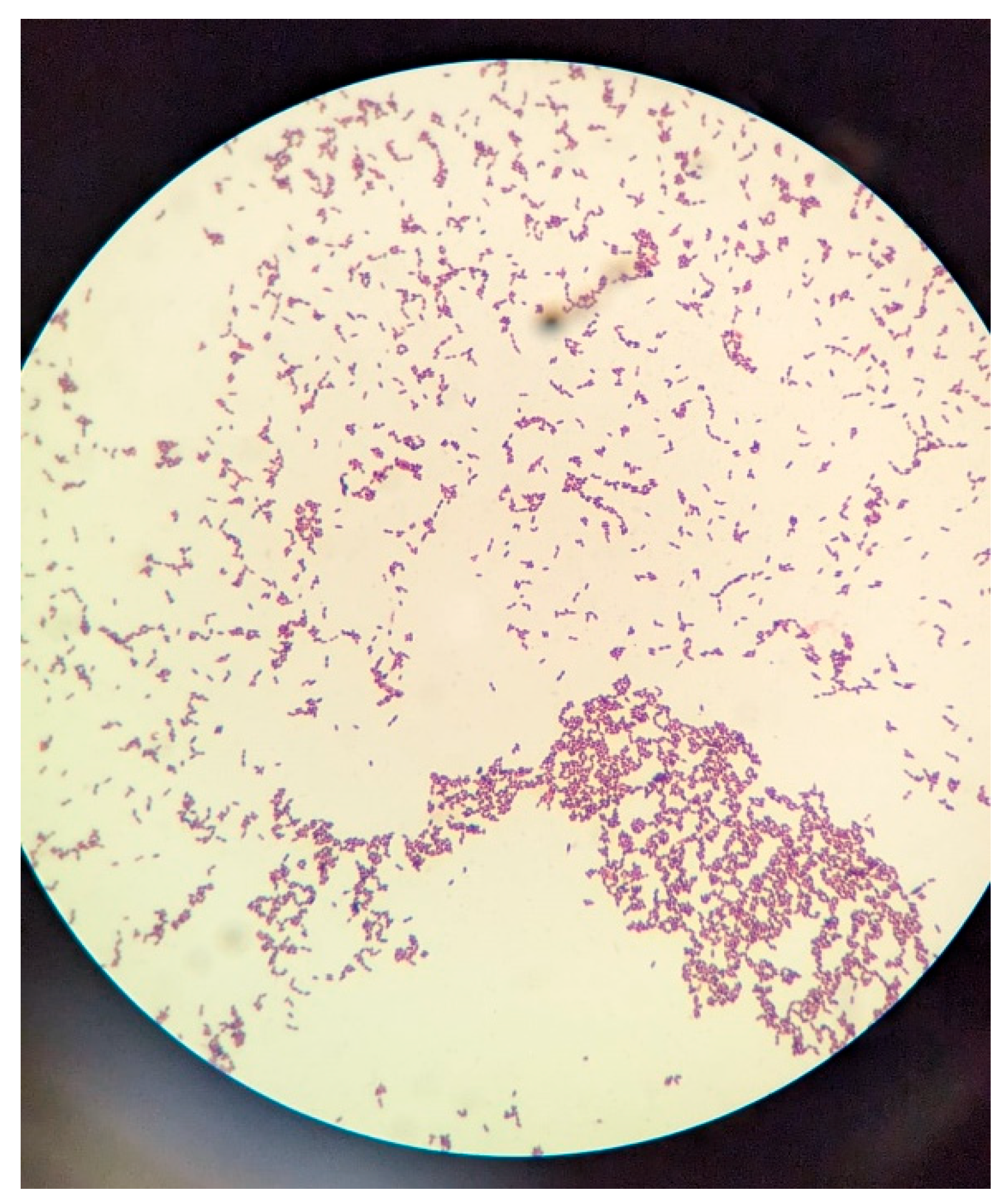
The microbial composition within the reactor was not quantitatively or taxonomically characterized in this study; however, qualitative observations of microbial presence were obtained through visual inspection and imaging (
Figure 3). These observations provide general evidence of microbial activity but do not support identification or quantification of specific species or functional groups. No direct microbiological or pathogen-specific testing was performed in this study. The microbial composition within the reactor was not directly characterized in this study and is therefore inferred based on commonly reported communities in brewer’s spent grain and vegetable waste substrates.
At the beginning of the experiment, the moisture and nutrient conditions likely favored the proliferation of mesophilic aerobic bacteria typically associated with these materials, including genera such as Bacillus and Pseudomonas, which are known for their enzymatic degradation of proteins, starches, and lipids. As the internal temperature increased due to metabolic heat production, thermotolerant microbial populations may have become more prominent within the system.
Fungal species, likely including genera such as Aspergillus and Penicillium as commonly reported in similar composting environments, may have contributed to the decomposition of lignocellulosic components by breaking down fibers and structural carbohydrates derived from vegetable matter. This evolving microbial community is consistent with the sustained bio-thermal activity observed during operation. The temperature progression—from ambient levels to peaks around 31.0–31.8 °C—provides indirect evidence of active microbial metabolism under aerobic conditions.
6.4.2. Macroscopic Degradation and DR-Level Validation
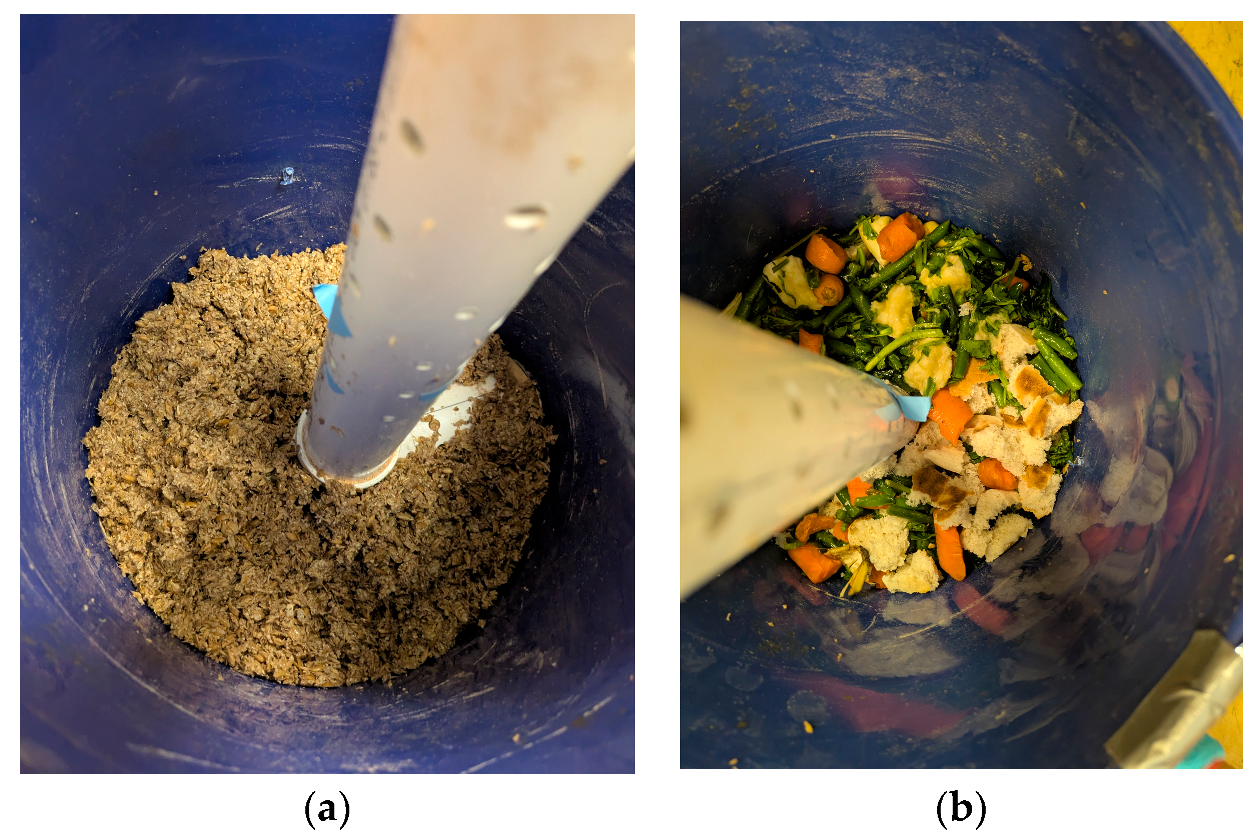
Despite the absence of thermophilic temperatures, the observed volume reduction of 30–40% over 19 days indicates high degradation efficiency, comparable to results reported in similar small-scale aerobic digesters. The physical layering strategy—alternating dense BSG with porous vegetable waste—proved effective in preventing compaction, allowing forced air to permeate the biomass and facilitating the oxidation of readily available carbon sources. The transition of the substrate to a dark, crumbly material with an earthy odor suggests that the initial phase of composting was completed successfully. Furthermore, the stability of the pH, which neutralized to 6.5–7.5, confirms that the system avoided acidification, a common failure mode in domestic composting caused by anaerobic conditions. The microbial consortium, initiated by the Saccharomyces and Bacillus species present in the initial mixture, successfully navigated the substrate transition without the need for chemical buffering. Taken together, the observed degradation efficiency, odor control, moisture stability, and temperature profile indicate that DR3, DR4, and DR5 are simultaneously satisfied within the constraints imposed by a low-cost, small-scale reactor architecture. From a design standpoint, these outcomes highlight the importance of balancing oxygen delivery with thermal retention in small-scale systems.
6.5. Aeration vs. Heat-Retention Tradeoff
A critical challenge in small-scale composting is balancing oxygen supply with heat retention, and the specific design choices of the BSG-2 fermenter addressed this with mixed results. The central chimney and manifold aeration design successfully mitigated anaerobic pocket formation, as evidenced by the lack of foul odors and consistent degradation across the substrate depth. The integration of activated charcoal filters further validated the system’s suitability for domestic or indoor environments by addressing potential odor nuisances. However, the intermittent duty cycle of the blower, while sufficient to replenish oxygen, also acted as a heat removal mechanism. The reflective bubble-foil insulation minimized radiant heat loss, but the data suggests that for a 20 L system, thicker insulation or a double-walled vacuum design might be necessary to retain enough heat to breach the thermophilic threshold. Within this context, the BSG-2 system can be interpreted as a deliberate set of engineering tradeoffs rather than an attempt to maximize any single performance metric.
6.6. System-Level Synthesis and Future Iterations
From a system-level perspective, the BSG-2 fermenter satisfies the core functional design requirements (DR1–DR6), while deliberately prioritizing simplicity, low cost, and indoor compatibility over maximum thermal intensity. This makes the design particularly suitable for processing food waste where pathogen loads are low compared to manure-based composts. Future iterations of this design should focus on optimizing the balance between aeration and thermal retention, potentially using microcontroller-based feedback loops to regulate airflow based on real-time internal temperature readings. Such automation would prevent over-aeration and allow for the potential recovery of excess thermal energy, further enhancing the system’s contribution to circular economic strategies. In a low-cost implementation, compatible sensors could include commercially available digital temperature and humidity sensors (e.g., DHT22, Adafruit, New York, NY, USA), simple soil moisture probes, and low-cost pH sensors, which can be readily interfaced with microcontroller platforms such as Arduino or similar systems. A detailed feasibility analysis of such automation strategies is beyond the scope of the present study.
The present study reports results from a single experimental run intended as a proof-of-concept validation of the hardware architecture. While the observed trends are consistent with expected aerobic composting behavior and align with the defined design requirements, variability associated with feedstock composition, moisture distribution, and manual operation is expected in practical use.
Future work will include replicated trials and controlled parametric studies to quantify variability and assess robustness across different operating conditions. Nevertheless, the current results provide a consistent baseline demonstrating that the proposed hardware configuration can sustain stable aerobic operation under realistic conditions.
7. Conclusions
This study presented the design, construction, operation, and validation of the BSG-2 fermenter, a low-cost, small-scale aerobic fermentation reactor developed with a hardware-first design philosophy. The system was intentionally constrained to use off-the-shelf components, minimal electrical power, and manual operation, with the goal of enabling reproducible indoor deployment rather than biochemical optimization. Biological and thermal responses were therefore treated as system-level validation metrics of the physical architecture.
Experimental operation under controlled indoor conditions demonstrated that the BSG-2 reactor satisfies its primary engineering design requirements. Intermittent forced aeration supported sustained aerobic microbial activity with negligible electrical energy input, confirming low-power operation and manufacturability using commercially available components (DR1–DR2). The combined bottom-distributed manifold and central chimney aeration topology effectively limited anaerobic pocket formation and enabled odor-controlled indoor use (DR3–DR4). Despite its small volume and high surface-area-to-volume ratio, the reactor maintained internal temperatures consistently 10–13 °C above ambient conditions throughout the active fermentation phase, validating thermal stability under intermittent aeration when combined with reflective insulation (DR5). Manual loading, mixing, and monitoring were sufficient to complete a full fermentation cycle without specialized instrumentation or automation, demonstrating operational robustness and ease of maintenance (DR6).
The system did not reach thermophilic temperatures typically associated with industrial composting; however, the observed mesophilic temperature plateau reflects a hardware-imposed thermal ceiling rather than a biological limitation. Within this operating regime, substantial macroscopic degradation was achieved, with significant volume reduction, stable moisture and pH profiles, and uniform substrate breakdown. The results of this study demonstrate that the proposed BSG-2 system can achieve effective aerobic processing under low-technology design constraints, supporting its potential for decentralized organic waste management. Avoiding anaerobic disposal pathways may also reduce greenhouse gas emissions associated with methane generation; however, a quantitative assessment of CO2-equivalent savings would require a life-cycle analysis and is beyond the scope of the present study.
Overall, the BSG-2 fermenter serves as a validated reference architecture for decentralized organic waste processing, emphasizing simplicity, low cost, and indoor compatibility over maximum thermal intensity. The findings highlight key engineering tradeoffs inherent to small-scale reactors and provide a baseline for future design iterations, including improved thermal insulation, alternative aeration strategies, or feedback-controlled airflow. More broadly, this work demonstrates how explicit hardware design requirements, coupled with system-level validation metrics, can guide the development and assessment of accessible fermentation and composting technologies.