Review

Organophosphate Insecticides: A Brief Overview of Global Use and Their Treatment with Short-Duration Isoflurane


by
Jishnu K. S. Krishnan
,
John R. Moffett
and
Aryan M. Namboodiri
*
Neuroscience Program, Anatomy, Physiology and Genetics Department, Uniformed Services University of the Health Sciences, Bethesda, MD 20814, USA
*
Author to whom correspondence should be addressed.
Agrochemicals 2025, 4(4), 22; https://doi.org/10.3390/agrochemicals4040022
Submission received: 10 June 2025 / Revised: 11 November 2025 / Accepted: 27 November 2025 / Published: 10 December 2025
(This article belongs to the Section Pesticides)

Abstract

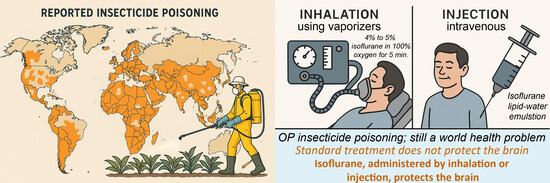
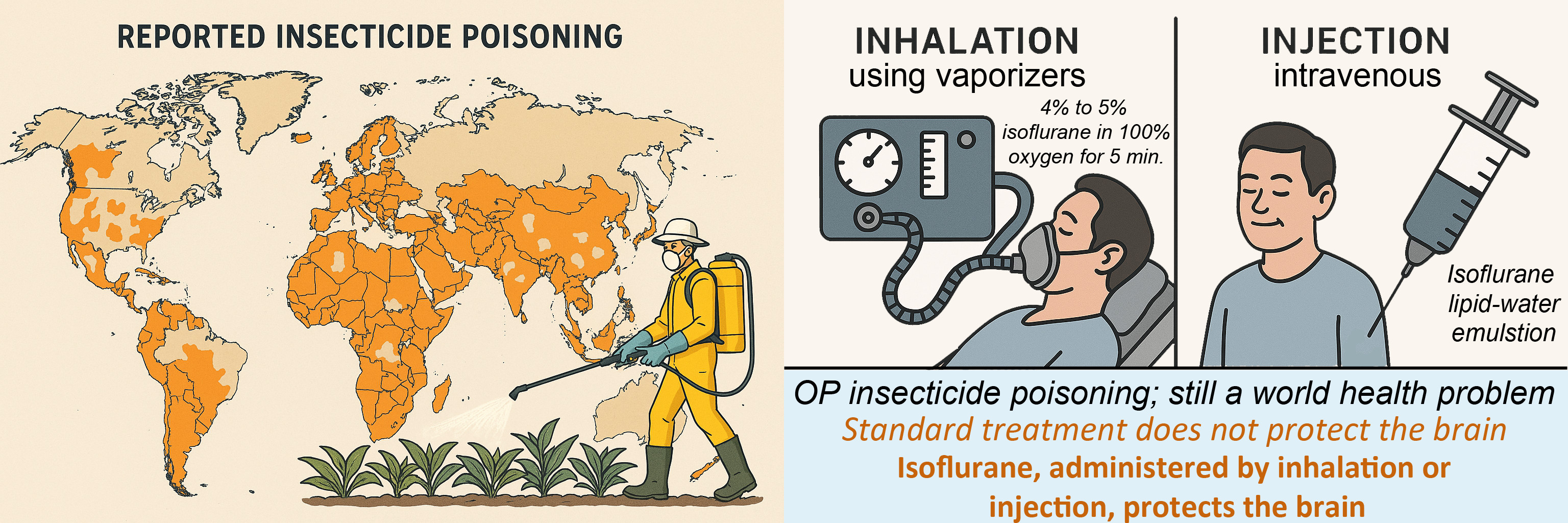
Organophosphate (OP) insecticide poisoning remains a significant world health issue. Despite attempts to reduce OP insecticide use in some countries, they continue to be used extensively in many regions, putting agricultural workers at risk of excess exposure. Furthermore, the high toxicity and ready availability of OP insecticides in agricultural settings have created an additional public health issue due to their use in attempted suicides. Tens of thousands of people are admitted to hospitals every year after intentional ingestion of OP insecticides. The standard treatment regimen for OP poisoning can prevent mortality, even in some severe cases, but these treatments do not protect the central nervous system (CNS) from excitotoxic damage, and therefore, additional neuroprotective treatments are needed. One promising treatment is the use of halogenated ether anesthetics, including isoflurane, a common anesthetic available in hospitals throughout the world. Isoflurane can be administered by inhalation using vaporizer equipment, or it can be injected intravenously as a lipid–water emulsion. In both cases, excellent neuroprotection has been observed in preclinical models, even when administered up to 1 h after the onset of OP insecticide poisoning. Prolonged administration was not necessary for neuroprotective efficacy, with administration times of only 5 min being sufficient. Including inhalational anesthetics as an adjunct to the standard treatment for OP poisoning could significantly reduce chronic morbidities, especially long-term CNS damage. Research is ongoing to bring this promising treatment to human trials.

Graphical Abstract

1. Introduction

The agricultural use of organophosphate (OP) insecticides to control crop insect infestations has been reduced in some countries due to the human toxicity of these compounds. OPs like malathion may still be used to control disease vectors, such as mosquitoes, but pyrethroid-based insecticides are now preferred due to lower human toxicity. However, many regions of the world still employ OP insecticides due to their effectiveness and low cost [1]. Global pesticide use, especially in low- and middle- income countries (LMIC), has increased substantially in the last decade [2].
Hundreds of different OP insecticides have been synthesized, including acephate (active metabolite; methamidophos), chlorpyrifos, diazinon (active metabolite; diazoxon), dimethoate, fenthion (active metabolite; fenoxon), malathion (active metabolite; malaoxon), methamidophos, naled, phorate, phosmet, and parathion (active metabolite; paraoxon). Many of these insecticides are still used in agriculture and mosquito control. OP insecticides, such as chlorpyrifos, are still permitted for use on certain food crops in the US by the Environmental Protection Agency (https://www.epa.gov/pesticide-worker-safety/epa-update-use-pesticide-chlorpyrifos-food (accessed on 5 August 2025)). Estimates of OP insecticide use in the US can be found here: https://earthjustice.org/feature/organophosphate-pesticides-maps#define (accessed on 5 August 2025). These maps were generated using data from the United States Geological Survey found here: https://water.usgs.gov/nawqa/pnsp/usage/maps/county-level/ (accessed on 5 August 2025). Usage in many lower income nations is often much higher than in the US.
Parathion is one of the most toxic of these insecticides to humans. While parathion has been banned for use in some countries, it continues to be used in developing countries due to its low cost and high effectiveness. Parathion by itself is not highly toxic to humans, but once in the body, it is converted into paraoxon, a potent acetylcholinesterase (AChE) inhibitor, by the enzymatic action of the P450 system in tissues such as the liver [3]. Paraoxon acts to block the action of AChE, the enzyme responsible for deactivating the neurotransmitter acetylcholine at synapses in the brain, as well as at the neuromuscular junction. Excess acetylcholine at the neuromuscular junction results in overactivation and eventual exhaustion of muscular contraction, which can disrupt or halt respiration, leading to death. The standard treatment for OP poisoning involves the use of atropine sulfate to block the action of acetylcholine at muscarinic acetylcholine receptors. This prevents the overactivation of the acetylcholine receptors at the neuromuscular junction. In addition, the standard treatment also involves the administration of an oxime such as pralidoxime or obidoxime, which can reverse the action of OPs at the active site of the AChE enzyme, thus bringing acetylcholine levels at the neuromuscular junction under control.
In addition to OP-based insecticides, carbamate insecticides are also AChE enzyme inhibitors [4,5]. Unlike OP-based insecticides, which are irreversible cholinesterase inhibitors, carbamates are reversible cholinesterase inhibitors. The treatment for carbamate poisoning, therefore, only involves atropine sulfate to block muscarinic acetylcholine receptors, but does not include pralidoxime because carbamates bind reversibly to the AChE enzyme binding site [6]. We will refer to OP-insecticides, including those that require metabolic activation, as well as carbamates, as AChE-inhibiting insecticides.
The current treatment regimen for AChE-inhibiting insecticide poisoning is not sufficient to prevent all mortality and long-term morbidity, indicating that new treatments are needed [7]. Atropine sulfate and pralidoxime control the overactivation of neuromuscular junctions and can prevent death, even in some cases of severe OP insecticide poisoning, if they are administered promptly and repeatedly. However, these treatments do not cross the blood–brain barrier and therefore cannot counteract the CNS effects of AChE-inhibiting insecticides. In the CNS, OPs set off a cascade of pathological effects, starting with the overactivation of nicotinic acetylcholine receptors. Continuous acetylcholine action drives uncontrolled release of glutamate at glutamatergic synapses, which in turn leads to seizures and excitotoxic neuronal damage if not brought under control. The current treatment for convulsions and seizures includes benzodiazepines such as diazepam or midazolam, but this treatment does not fully control the excessive glutamatergic action [8]. As such, additional treatments are needed to protect the CNS from excitotoxic damage.
During the course of experiments to determine if the oxime obidoxime could be administered intranasally to bypass the blood–brain barrier and protect the CNS from excitotoxic damage [9], we noticed that the animals given paraoxon but not treated with intranasal obidoxime did not have any neuronal damage. This finding was difficult to explain because we were using very high doses of paraoxon. Additional work showed that the very brief (5 min) administration of isoflurane, used to facilitate intranasal delivery of obidoxime, exerted powerful neuroprotective effects [10]. Further investigation demonstrated that brief (5 min) isoflurane administration was very effective at protecting the CNS from damage, even when administration was delayed for 1 h after paraoxon administration [11]. In this review, we give a brief overview of AChE-inhibiting insecticide use and examine the evidence in support of short-duration administration of isoflurane and other halogenated ether anesthetics as adjunct anticonvulsant and neuroprotective treatments for OP poisoning.

2. AChE-Inhibiting Insecticides Are Still a World Health Problem

Despite declining worldwide use of AChE-inhibiting insecticides, they continue to be used in developing countries where alternatives may not be available or affordable. It has been estimated that as many as 3 million people worldwide are exposed to OP compounds every year [12,13,14,15,16,17]. In countries where AChE-inhibiting insecticides are still in use, OP poisoning is the most common emergency treated at poisoning control centers [18]. OP insecticides have been associated with tens of thousands of suicide attempts by farmers and agricultural workers in developing countries each year. Countries where AChE-inhibiting insecticides are associated with a large number of suicide attempts have large agriculture populations, including India, Pakistan, and China [19]. A review of all reported pesticide poisoning cases in Pakistan up to 2021 indicated that in poisoning cases involving suicide attempts, OP insecticides accounted for the largest number of poisonings [16]. A total of 53,323 cases of poisoning were identified, of which 24,546 [46.0%] were due to pesticides. OP insecticides were responsible for 13,816 (56.2%) of the total pesticide poisoning cases. There is evidence that occupational exposure to OP insecticides is associated with increased risk of depression [20,21] and thus increase the likelihood that farmers and workers might then attempt suicide [22,23].
OP insecticides continue to be widely used in agriculture, particularly in LMICs. Despite restrictions or bans in many high-income nations due to their acute neurotoxicity and environmental persistence, OPs remain prevalent elsewhere due to their affordability and effectiveness. However, pesticide use trends in LMICs have been substantially underestimated due to incomplete reporting and poor data transparency, complicating both risk assessment and intervention planning [2].
This continued use of OP insecticides is not solely a matter of preference but reflects broader disparities in access to safer alternatives, limited regulatory enforcement, and agricultural dependence. OP insecticides such as chlorpyrifos, dimethoate, and malathion remain widely utilized in global agriculture due to their cost-effectiveness, broad-spectrum activity, and limited availability of safer substitutes, particularly in LMICs [24]. In many areas, these compounds are readily accessible without adequate professional oversight, safety training, or labeling, which increases the risk of both occupational exposure and intentional misuse [25]. Sale of banned or restricted OPs is widespread in some informal or rural markets, where enforcement of chemical regulations is often under-resourced or inconsistently applied [24]. Moreover, widespread unsafe storage and pesticide-handling practices among small landholder and subsistence farmers, particularly in regions lacking centralized training infrastructure, have been consistently reported in global analyses of occupational pesticide exposure [25,26,27]. These intersecting gaps in enforcement, oversight, and education continue to drive OP-related health risks across diverse agricultural economies.
Reports from rural agricultural regions have documented widespread circulation of counterfeit and unregistered pesticide products, often purchased unknowingly by farmers, which substantially heightens the risk of unregulated OP exposure [24,28]. According to a technical report by the United Nations Interregional Crime and Justice Research Institute (UNICRI), the illegal manufacturing and distribution of illicit pesticides, including OP-based formulations, has become increasingly tied to transnational organized crime and continues to undermine global chemical safety efforts [29]. Although empirical data are limited, some reports suggest that access to precursor chemicals may allow for the synthesis of OPs in unregulated sectors, further complicating enforcement in regions with poor oversight (https://anti-fraud.ec.europa.eu/document/download/38e8dee1-1665-4e31-ad21-29c9ce9fa598_en (accessed on 5 August 2025)).
It is difficult to accurately estimate the extent to which intentional and unintentional AChE-inhibiting insecticide poisoning still accounts for annual deaths throughout the world. In 2015, it was estimated that 1 out of every 7 suicides was due to insecticide self-poisoning [30]. Suicides using insecticides are not evenly distributed around the world but concentrated in countries with large rural agricultural workforces, such as China and India. Suicide poisonings in Jiangsu province in China decreased steadily from the year 2006 to 2018 [14]. During this time period in Jiangsu province, suicides committed with OP and carbamate insecticides were the most common, with a total of 10,303 cases, accounting for 42.02% of all suicide deaths. India has a very high rate of suicide relative to other countries, accounting for 36.5% of deaths among women and 20.9% among men aged 15 to 39 years old in 2019 [31]. Intentional pesticide self-poisoning was the second leading cause of death in these suicides. Available data indicate that rates have been declining but have by no means been eliminated, despite decades of intervention efforts. Sri Lanka’s success in reducing suicide rates through aggressive OP regulation demonstrates that targeted policy actions can yield measurable impact if enforcement is diligently followed [32]. Sri Lanka provides a notable example of successful regulatory intervention. Once among the countries with the highest rates of pesticide suicides, Sri Lanka implemented strict bans on highly hazardous pesticides, including several OPs. This led to a marked decline in suicide rates without negatively impacting crop yields [32]. This experience demonstrates that public health gains can be achieved through carefully targeted pesticide policies, though such strategies have yet to be widely replicated in many LMICs.
The public health implications of continued OP usage are considerable. Chronic occupational exposure can lead to cumulative neurotoxic effects, even without overt symptoms. Long-term occupational OP exposure has been significantly associated with increased risk of depression among agricultural workers [20], and suicidal ideation in broader exposed populations [22]. It has been proposed that rural agricultural workers, who face many hardships including indebtedness, are often exposed chronically to OP insecticides, which can induce sufficient brain pathology over time to cause severe depression, potentially leading to increased suicide attempts [33]. On the other end of the spectrum, acute poisoning, particularly via intentional ingestion, remains a persistent crisis in rural regions. Self-poisoning using OPs accounts for a substantial proportion of pesticide-related deaths in LMICs [19].
Beyond acute poisoning and occupational exposure, chronic low-level exposure to OP pesticides through environmental and dietary routes poses significant public health concerns. OP residues are frequently detected on food crops, with recent analyses showing that over 50% of tested produce samples contained pesticide residues, many exceeding safety thresholds, with OPs among the most prevalent [34]. Such residues contribute to widespread exposure among the general population, not just agricultural workers. Biomonitoring studies have revealed detectable levels of OP metabolites in urine samples from children living in agricultural communities, underscoring early-life exposure in rural environments and highlighting the pervasive nature of background exposure [35].
Children are particularly vulnerable to these low-level exposures, as several studies have linked prenatal and early-life OP contact to cognitive deficits, neurodevelopmental delays, and behavioral disorders [36,37]. These adverse effects are believed to result from OP-induced disruption of AChE activity and neurotransmitter function during critical windows of brain development [38]. In addition, OPs have been identified as endocrine-disrupting chemicals, capable of altering hormonal signaling and affecting reproductive and developmental health [39]. Collectively, these findings underscore the need for upstream interventions, not only to restrict OP access but also to mitigate chronic environmental exposure risks that extend beyond the occupational setting.
Although some regulatory improvements have been implemented globally, the persistence of OP use in LMICs, combined with inadequate access to medical care and antidotes, continues to impose a heavy health burden. In many rural settings, antidotal therapy is delayed due to limitations in infrastructure, transportation, and trained personnel, reducing the effectiveness of standard interventions. These systemic gaps contribute significantly to mortality and long-term morbidity from OP poisoning and underscore the need for adjunct therapies that mitigate irreversible CNS injury [32].

3. Inhalation Administration of Halogenated Anesthetics

The halogenated ether anesthetics include halothane, isoflurane, desflurane, and sevoflurane. Halothane is no longer used in most countries due to its hepatotoxicity and association with cardiac arrhythmias but is still in use where newer alternatives are not readily available [40]. These anesthetics are administered through the use of specialized vaporizer equipment that mixes the anesthetic vapors with oxygen at specified concentrations. Vaporizers and trained staff are available at most hospitals throughout the world, making this treatment option the preferred method of administration in most circumstances.
OP-induced seizures are a major cause of long-term neurological deficits in severely poisoned patients. Isoflurane was proposed as a potential treatment for status epilepticus as early as 1989 [41]. The authors suggested using isoflurane when other anticonvulsants fail to control seizures. Several later studies on the use of inhalational isoflurane for the treatment of OP poisoning indicated that this method might provide an anticonvulsant and neuroprotective adjunct to benzodiazepines for controlling OP-induced seizures [10,11,42,43,44,45]. These studies involved the OP paraoxon and the nerve agent soman and demonstrated that isoflurane reduced convulsions and seizures, prevented blood–brain barrier damage and edema and reduced neuronal loss and astrogliosis. Three of these studies used isoflurane in an anesthetic mode, with long duration administration at a dose of 1% to 2%. The other two studies used higher doses of inhalational isoflurane at 3.5% to 5%, delivered for only 5 min. Results using the two administration regimens were very similar. The outlines of these studies are given in Table 1.
One early study conducted by Sawyer et al. in 2012 investigated the use of inhaled isoflurane for treating poisoning with the OP nerve agent sarin in pigs [45]. In this study, 2% isoflurane was delivered in 100% oxygen continuously for 6 h, starting before sarin was administered. Sawyer and colleagues examined how several anesthetics affected the LD50 of sarin when they were combined with either 30% oxygen or 100% oxygen. Under isoflurane anesthesia with oxygen at a concentration of 30%, the LD50 of sarin was similar to the literature values in unanesthetized pigs. Switching from 30% oxygen to 100% oxygen increased the LD50 of sarin over 33-fold, indicating that the increased oxygen tension was essential for protection against sarin poisoning under isoflurane anesthesia. This was an early example of using isoflurane in an anesthetic mode during OP exposure, with very long administration times.
In a study carried out 4 years later by Bar-Klein and colleagues [42], rats were subjected to an epileptogenic dose of paraoxon (0.45 mg/kg, IM), which was sufficient to develop recurrent seizures as a model for epilepsy. For their isoflurane treatment protocol, Bar-Klein et al. used multiple 1 h administrations of 1–2% isoflurane delivered in 100% oxygen, and this treatment was given at 1, 6, and 12 h, and then again over multiple days (1, 2, 3, 7, and 30 days) after paraoxon administration. This use of isoflurane was carried out to mimic its use as an anesthetic, employing lower doses delivered over extended administration times. They observed several therapeutic effects of this isoflurane regimen in their paraoxon model of epilepsy. Isoflurane treatment prevented the development of epilepsy caused by paraoxon poisoning and prevented blood–brain barrier damage and neuroinflammation, as shown by magnetic resonance imaging. It also prevented delayed neurodegeneration and astrogliosis. The authors noted that isoflurane had anti-epileptic effects that were far more pronounced than they had observed with any other agent up to that time. They hypothesized that isoflurane’s protective effects involved multiple mechanisms, possibly including inhibition of calcium influx into endothelial cells, reduced neutrophil adhesion to endothelial cells, preservation of tight junction expression, and inhibition of neuroinflammation.
Another study conducted by the same laboratory focused on discovering a biomarker for early brain injury that would identify patients at higher risk for developing post-injury epilepsy [44]. Paraoxon was again administered at 0.45 mg/kg, followed by a standard treatment protocol, including atropine, obidoxime, and midazolam. Paraoxon at this dose produced status epilepticus. Isoflurane was repeatedly administered at a concentration of 1–2% in pure oxygen for one hour at four time points: 1 h, 6 h, 12 h, and 24 h after paraoxon, for a total of 4 h of isoflurane exposure. The rats were examined by ex vivo magnetic resonance imaging (MRI) to assess the degree of T2-weighted hyperintensity, which indicates significant tissue damage. Untreated paraoxon-poisoned animals showed T2 hyperintensity in the amygdala, corpus callosum, neocortex, pallidum, piriform network, septum, and striatum. In contrast, the isoflurane-anaesthetized rats showed a significant reduction in T2-weighted hyperintense signals in the amygdala, corpus callosum, neocortex, pallidum, piriform network, septum, and striatum at Day 2 after injury. Isoflurane anesthesia also normalized the T2-weighted signals at the 1-week time point in the piriform network, septum, and striatum, and at the 1-month time point in the amygdala, piriform network, and striatum.
In a later follow-up study, Bar-Klein et al. administered a 3.2× higher dose of paraoxon (1.45 mg/kg, IM) to assess the efficacy of several anti-epileptic and neuroprotective drugs in reducing long-term brain damage [43]. All animals received atropine and obidoxime at 1 min and 5 min after seizure onset and 1 mg/kg midazolam at 30 min. The drugs tested included lorazepam, valproic acid, phenytoin, and losartan. They also used isoflurane in an anesthetic mode, given in an anesthesia chamber with 2% isoflurane/98% oxygen delivered at 1 L per min. for 1 h. All animal groups were given midazolam, and therefore, the listed drugs were all tested in conjunction with midazolam. To assess long-term brain damage, the animals were perfused with paraformaldehyde 30 days after injury, and their brains subjected to ex vivo MRI imaging. Damage was assessed by analyzing the degree of hyperintensity of T2-weighted images. Several brain regions were quantified, including the piriform region, septum, striatum, and amygdala. Among all of the drugs tested, only isoflurane protected all four regions from significant brain damage, as measured at the 30-day post-injury time point [43].
Another study, carried out in our laboratory [10], was the result of a serendipitous discovery during experiments to determine if the obidoxime could be efficiently delivered to the brain using intranasal administration [9]. During the course of these experiments, we found that the rats given a lethal dose of paraoxon but not treated with intranasal obidoxime had minimal convulsions and did not have any delayed neuronal damage. The only treatment they had received was 4–5% isoflurane given until the animals were unconscious (3 to 4 min), which was administered to prevent head movement and facilitate accurate intranasal delivery of obidoxime to the brain. After reviewing the results, we concluded that brief, high-dose isoflurane showed exceptional therapeutic properties in OP poisoning.
The discovery that brief isoflurane administration had powerful anticonvulsant and neuroprotective effects led us to investigate the phenomenon in more detail. For these experiments, we used a very high dose of paraoxon (4 mg/kg) [10], which was approximately nine times higher than that used by Bar-Klein and colleagues in their 2016 study [42]. Immediately after paraoxon administration, rats were given atropine sulfate and pralidoxime to allow a sufficient number of rats to survive the duration of the experiments (24 h).
In time course studies [10], we used our standard protocol for anesthesia induction in rats, which involved delivering 2% isoflurane in 100% oxygen for 3 min, followed by 5% isoflurane in 100% oxygen for 1 min. This treatment was administered to different groups of animals at multiple time points to determine the window of opportunity for isoflurane’s actions, including 10, 20, 30, 45, 60, and 120 min after paraoxon poisoning. Convulsions were scored using a modified Racine scale [9], which showed that the brief exposure to isoflurane was most effective at halting convulsions when administered at 20 or 30 min after paraoxon. Lower but significant reductions in convulsion severity were also seen when isoflurane was given at all the other time points. We used Fluoro-Jade C (FJC) staining to assess neuronal damage 24 h after paraoxon with and without isoflurane administration. In rats that did not receive isoflurane, extensive FJC staining was observed throughout the forebrain, including the amygdala, hippocampus, and central thalamus, at 24 h. Animals treated with isoflurane 30 min after paraoxon (2% isoflurane for 3 min, followed by 5% isoflurane for 1 min) had little to no FJC staining in any region, demonstrating robust neuroprotection.
We also performed dose–response studies with isoflurane [10]. When we administered isoflurane 30 min after paraoxon, we found that 1% or 2% isoflurane given for 4 min did not block convulsions and did not reduce neuropathology, as shown by FJC staining. When the concentration was increased to 2% for 3 min, followed by 3.5% for 1 min, convulsions were successfully blocked and FJC staining was prevented. This indicates that a dose of 3.5% or higher is needed for effectiveness with brief administration times. Because many studies limit the isoflurane concentration to 1 or 2%, many of the potentially protective effects may not have been achieved.
More recently, we investigated the effectiveness of brief isoflurane in blocking convulsions, protecting neurons and preventing brain edema and astrogliosis after paraoxon poisoning [11]. In this later study, we also determined if a higher dose of isoflurane (4% to 5% for 5 min) would extend the effective window of opportunity beyond the 30 min post-exposure time point. In this study, convulsions were again assessed according to a modified Racine scale of convulsion severity [10]. Rats were treated 1 h after paraoxon administration with 4%, 4.5%, or 5% isoflurane in 100% oxygen for 5 min. Paraoxon injury groups were treated with pralidoxime and atropine sulfate but not treated with isoflurane. Animals treated for 5 min with isoflurane at the 1 h post-exposure time point regained consciousness within 8 to 10 min after cessation of isoflurane and only exhibited stage 1 convulsive activity afterwards, typically chewing motions without any other signs of convulsive activity. These animals remained awake, but mostly motionless, for up to 1 h after isoflurane treatment and then displayed low locomotor activity for the next several hours. Unlike the isoflurane-treated groups, the paraoxon-poisoned, untreated group continued variable convulsive activity up to 8 h, the latest time point examined. At 24 h, the surviving rats that were not treated with isoflurane continued to show mild convulsive activity and were extremely lethargic. The animals in the isoflurane treatment groups appeared normal, with normal locomotor activity at this time point. We did not observe any differences in the anticonvulsant effectiveness among the three doses of isoflurane used, indicating that 4% isoflurane was sufficient to stop convulsions without the need for re-administration.
MRI was used to quantify brain edema 24 h after paraoxon administration. Isoflurane was administered at a concentration of 5% for 5 min, starting 1 h after paraoxon administration. Then, 24 h later, the animals were assessed by in vivo MRI to visualize brain edema using T2-weighted images and tissue damage using mean diffusivity measurements. Rats poisoned with paraoxon, but not treated with isoflurane, had hyperintense T2-weighted signals in several brain regions, including the neocortex, hippocampus, and amygdala, which is indicative of widespread brain edema. In contrast, in the rats given isoflurane (5% for 5 min) 1 h after paraoxon, the T2 MRI values were comparable to the uninjured control group, demonstrating that isoflurane blocked brain edema completely, even when administration was delayed for 1 h. Similarly, mean diffusivity measurements, wherein low values are indicative of tissue damage, were significantly lower in the injured group not treated with isoflurane, but were normal in the rats treated with isoflurane 1 h after paraoxon. This finding further supports the conclusion that isoflurane, when administered at 5% for 5 min, prevents brain tissue damage, even when delayed for 1 h after paraoxon.
The effective window of opportunity for brief isoflurane administration was examined by administering isoflurane (5% for 5 min) at 60, 90, 120, and 180 min after paraoxon poisoning, and neuronal damage was then assessed by Fluoro-Jade B (FJB) staining. In rats that had been poisoned with paraoxon, but not treated with isoflurane, staining was extensive throughout the forebrain. Regions with high levels of neuronal damage included the neocortex, thalamus, and amygdala. Isoflurane administration at the 60 min time point resulted in significant reductions in FJB staining in the neocortex, thalamus, and amygdala. At the 90 min time point, significant reductions were observed in the amygdala, with non-significant but notable reductions observed in the other regions. Only minor non-significant reductions were observed at the 120 min time point, and no improvement was observed at the 180 min time point. These findings indicate that achieving full neuroprotective effectiveness requires that isoflurane is given within 1 h of the onset of OP poisoning.
Astrogliosis is the defensive reaction of astrocytes to any type of brain injury. We examined astrogliosis in our paraoxon animal model using immunohistochemistry. In uninjured control rats, astrocytes had small cell bodies with very light staining, indicating a non-reactive condition. In the paraoxon-poisoned rats, strong staining for astrocytes was extensive throughout the brain, and the astrocytes were enlarged, demonstrating a strong astrogliosis response to the tissue damage. When isoflurane (5% for 5 min) was administered 1 h after paraoxon, astrogliosis was substantially attenuated, further demonstrating isoflurane’s effectiveness in protecting the brain from the excitotoxic damage caused by OP poisoning.
Taken together, these data reveal a previously unrecognized off-label use of brief isoflurane administration as a widely available, safe, and effective anticonvulsant and neuroprotectant for the treatment of OP poisoning that is compatible with the standard treatment regimen.

4. Intravenous Administration of Isoflurane Emulsions

Halogenated ether anesthetics, including isoflurane, desflurane, and sevoflurane, along with the vaporizer equipment needed to administer them, are widely available in hospitals and clinics throughout much of the world. This makes these anesthetics well suited for the treatment of patients who arrive at medical facilities after intentional or unintentional exposure to OP toxins or carbamates. Brief treatment using vaporizers offers a rapid and practical treatment option for OP poisoning in many countries, but there are many rural and under developed regions where vaporizers may not be available. Therefore, it would be desirable to develop an alternative administration method that did not require vaporizer equipment and trained personnel to administer.
Injectable isoflurane lipid–water emulsions (ILE) have been proven safe and effective for anesthesia in humans [46,47,48]. In clinical trials, loss of consciousness (LOC) was observed in all human subjects who were given an ILE dose containing at least 22.6 mg/kg of isoflurane [48]. The onset of LOC occurred approximately 40 s after the initiation of the ILE intravenous infusion. A single bolus injection of 4 mL of ILE, with a dose of 36.8 mg/kg, delivered over the course of 10 s led to LOC that persisted for approximately 7 min [48]. The outlines of these studies are given in Table 1.
Based on published studies on the safety and efficacy of ILE [46,47,48], we hypothesized that an intravenous administration method could be developed for the use of halogenated anesthetics to treat OP poisoning. We tested this hypothesis in rats using a micro-infusion pump to deliver ILE with varying concentrations of isoflurane via implanted jugular cannulas [49]. The ILE were prepared by mixing isoflurane at several different concentrations with an IV-compatible, pre-made lipid–water emulsion—Intralipid-30. According to the manufacturer, Intralipid-30 is a sterile, non-pyrogenic, homogenous lipid emulsion for intravenous infusion as a source of calories and essential fatty acids for use in a pharmacy admixture program. The lipid content of Intralipid-30 is 30%, and it contains approximately 30 g of soybean oil, 1.2 g of egg yolk phospholipids, 1.7 g of glycerin, water for injection, and sodium hydroxide to adjust the pH.
To prepare ILE, we mixed varying ratios of isoflurane with Intralipid-30 (v/v) and tested these on rats. Based on the known solubility of isoflurane in Intralipid-30 [50] and our results in achieving LOC in rats via jugular infusion, we chose a concentration of 10% isoflurane by volume. We then tested different flow rates for the ILE infusions in rats that had been given paraoxon (4 mg/kg) 30 min earlier and found that an ILE containing 10% isoflurane could be used to stop convulsions when given to ~300 gm rats at a flow rate of 200 µL/min for 5 min. This translates to an infusion rate of 40 microliters of isoflurane per minute. Prior to administration of the ILE, all rats given paraoxon exhibited severe convulsions. Once ILE infusion was initiated, LOC was achieved in less than one minute, and the animals remained unconscious for 8 to 10 min. Upon awakening, the paraoxon-poisoned animals showed only very minor convulsion symptoms, such as chewing motions, but otherwise exhibited very low activity levels for approximately 1 h. This depressed activity period was not observed in uninjured control animals that were not given paraoxon prior to administration of the ILE. They demonstrated normal activity levels within 5 to 10 min after awakening. It is noteworthy that the paraoxon-poisoned animals did not resume any convulsive activity other than chewing motions for the remainder of the observation period of 4 h.
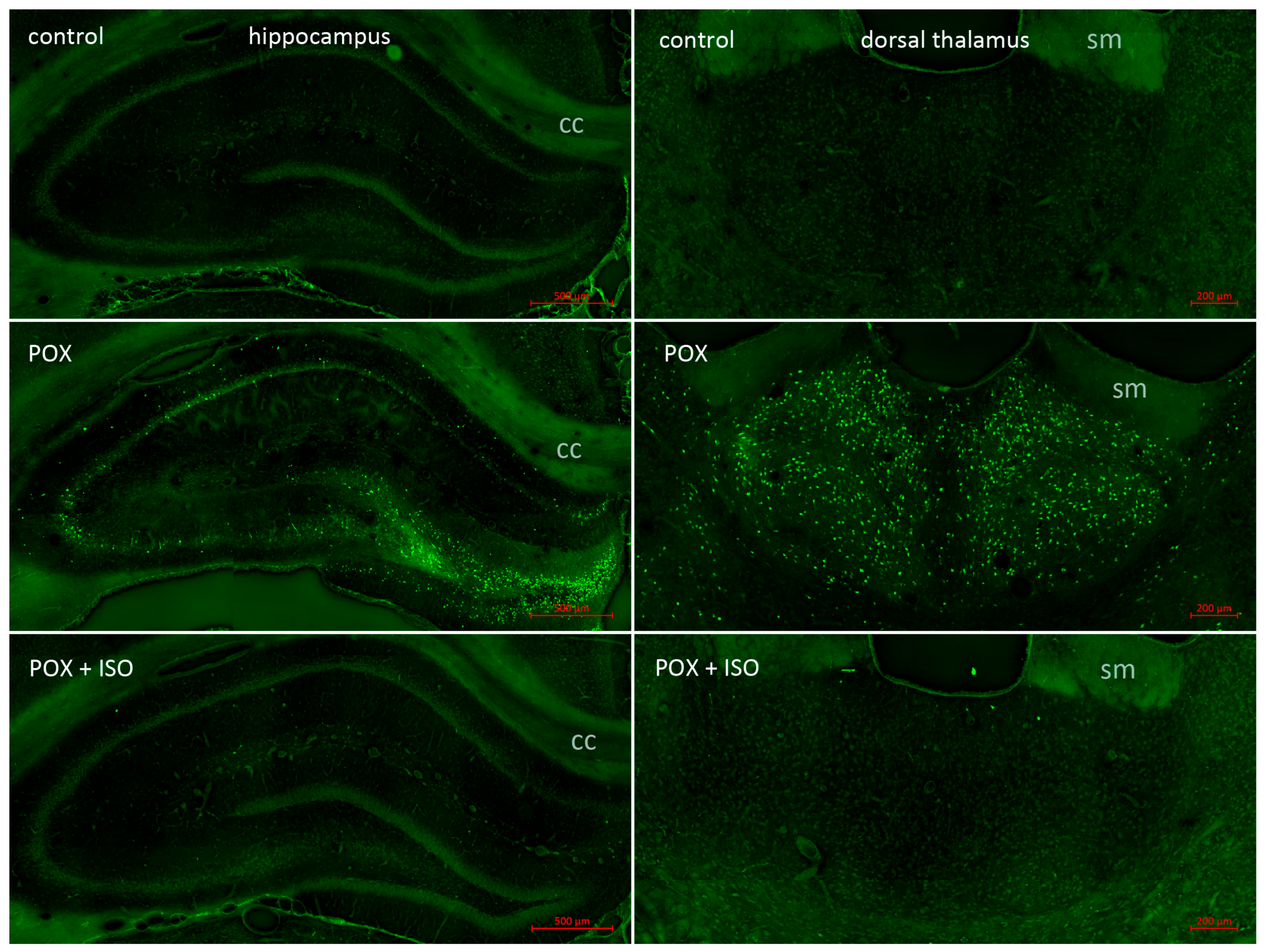
Neuropathology was assessed 24 h after paraoxon poisoning using FJB staining to visualize damaged neurons (Figure 1). No neuronal FJB staining was observed in any brain region in the uninjured control rats that did not receive paraoxon. The group that was given paraoxon but not treated with the ILE had extensive FJB staining in many brain regions, including the neocortex, thalamus, hippocampus, piriform cortex, and amygdala. In the animals who were treated with the ILE (10% isoflurane delivered at 200 microliters per minute for 5 min), only minor FJB staining was observed in some of the vulnerable regions. No FJB-stained neurons were observed in the neocortex or the hippocampus, and only a few scattered FJB stained neurons were observed in the thalamus (see Figure 1, bottom right panel) and amygdala. These findings indicate that ILE have potent neuroprotective effects in the treatment of OP poisoning that are not seen with other anticonvulsants, such as benzodiazepines. It is noteworthy that reports indicate that lipid–water emulsions have protective effects by themselves in the treatment of organophosphate poisoning [51]. Recently, Li and Hu showed that when the standard treatment regimen of atropine sulfate and pralidoxime was combined with the IV infusion of a 20% lipid–water emulsion (20% lipid by volume), tissue damage in multiple organ systems was significantly reduced [52]. Such findings indicate that ILE may be more effective in treating OP poisoning than inhaled isoflurane, while also negating the need for vaporizer equipment for administration.

5. Discussion

Tens of thousands of people are poisoned with OP insecticides every year, and the standard treatment regimen of atropine plus oxime to mitigate cholinergic overactivation and benzodiazepines to block convulsions does not protect the CNS from permanent damage. Any adjunct treatment that helps protect the brain from the sequelae of OP poisoning would be desirable. Brief isoflurane administration provides a rapid and effective method for treating the convulsions associated with severe OP poisoning and for protecting the CNS from long-term injury. Halogenated ether anesthetics and the vaporizer equipment needed to administer them are widely available in most hospitals throughout the world. However, in rural areas of under-developed countries, such access to hospitals may not be available, even though it is in these countries that there may be a more urgent need for improved treatments for patients with OP poisoning. The pharmaceutical development of an ILE for intravenous administration to patients with OP or carbamate poisoning would allow for administration in circumstances where vaporizer equipment is not available. Intralipid-30 is supplied from the manufacturer in IV drip bags for infusion into patients requiring parenteral nutritional support. A similar product could be made containing 5% to 10% isoflurane for IV drip administration to patients diagnosed with OP poisoning.
Investigations into non-cholinergic interventions for treating OP poisoning with the nerve agent sarin in swine showed that the oxygen concentration used may be important for neuroprotection. Sawyer et al. showed that the effectiveness of isoflurane was dramatically increased when the oxygen concentration was increased from 30% oxygen to 100% [45]. All of our neuroprotective results were achieved with the use of 3.5% to 5% isoflurane mixed with 100% oxygen. As such, it is important to administer isoflurane in conjunction with 100% oxygen when using anesthesia vaporizers, in order to maximize effectiveness.
The use of halogenated ether anesthetics at low doses for extended periods during surgical procedures is in sharp contrast to our delivery of 3.5–5% isoflurane administered in 100% oxygen for 5 min in a single dose sufficient to induce LOC for 8 to 10 min. The novelty of our approach was the discovery that longer duration administrations and repeated applications of isoflurane were not necessary to achieve its potent anticonvulsant and neuroprotective effects. In their investigation into the use of isoflurane to treat paraoxon poisoning in rats, Bar-Klein and colleagues used repeated 1 h sessions of 1% to 2% isoflurane over the course of days and found significant neuroprotection. Our results using a single, brief, high-dose administration of isoflurane are in excellent agreement with their findings, indicating that the long-duration administration and repeated doses are not necessary for the protective effects of isoflurane.
The administration of short-duration isoflurane inhalation or single-dose ILE injection maximizes effectiveness while minimizing any potential side effects. Previous studies have shown that short-duration isoflurane can have powerful effects. In an animal model of endotoxemia, a very brief, 50 s exposure to isoflurane led to reductions of TNFα by 69.3%, IL-1β by 61.8%, and RANTES (Chemokine ligand 5) by 43.1% [53]. In another series of experiments, a 15 min exposure to 2% isoflurane in 100% oxygen resulted in a two-fold or greater change in the expression of 23 genes in the brain [54]. When viewed in conjunction with our findings, it is apparent that long duration administration times may not be necessary for many of the protective effects of isoflurane. The importance of using short-duration administration times is emphasized by the fact that isoflurane can induce rare side effects, such as malignant hyperthermia, which affects between 1:10,000 and 1:250,000 people [55]. Malignant hypothermia onset is dependent on the duration of anesthesia and is more common in patients given succinylcholine [56]. Brief exposure to isoflurane would limit any side effects or pathological responses in sensitive patients.
The long-term neurological consequences of excessive organophosphate insecticide exposure are not fully understood. Studies have linked pesticide exposure to the development of Parkinson’s disease [57,58,59,60], including exposure to OP insecticides. Additional associations have been made between pesticide exposure and cancer risk [61,62]. An Institute of Medicine report published in 2000 briefly addressed the issue of the long-term neurological consequences of OP insecticide poisoning [63]. They concluded, “Taken together, these cross-sectional studies report a consistent tendency toward poorer neuropsychological performance and increased rates of neuro-logical or psychiatric symptoms among persons with prior acute OP poisoning. The time from poisoning until evaluation in these studies is poorly documented but is typically on the order of years. … There is consistent evidence that OP pesticide exposures sufficient to produce acute symptoms requiring medical care or reporting are associated with longer-term (1–10 years) increases in reports of neuropsychiatric symptoms and poorer performance on standardized neuropsychological tests” (Appendix E in [63]). Considering the potential for long-term neurological damage associated with OP insecticide poisoning, improved neuroprotective treatments are needed. Brief, high-dose isoflurane treatment offers a promising neuroprotective adjunct to the current treatment standard and should be considered when patients are admitted to hospitals with clear signs of OP poisoning.
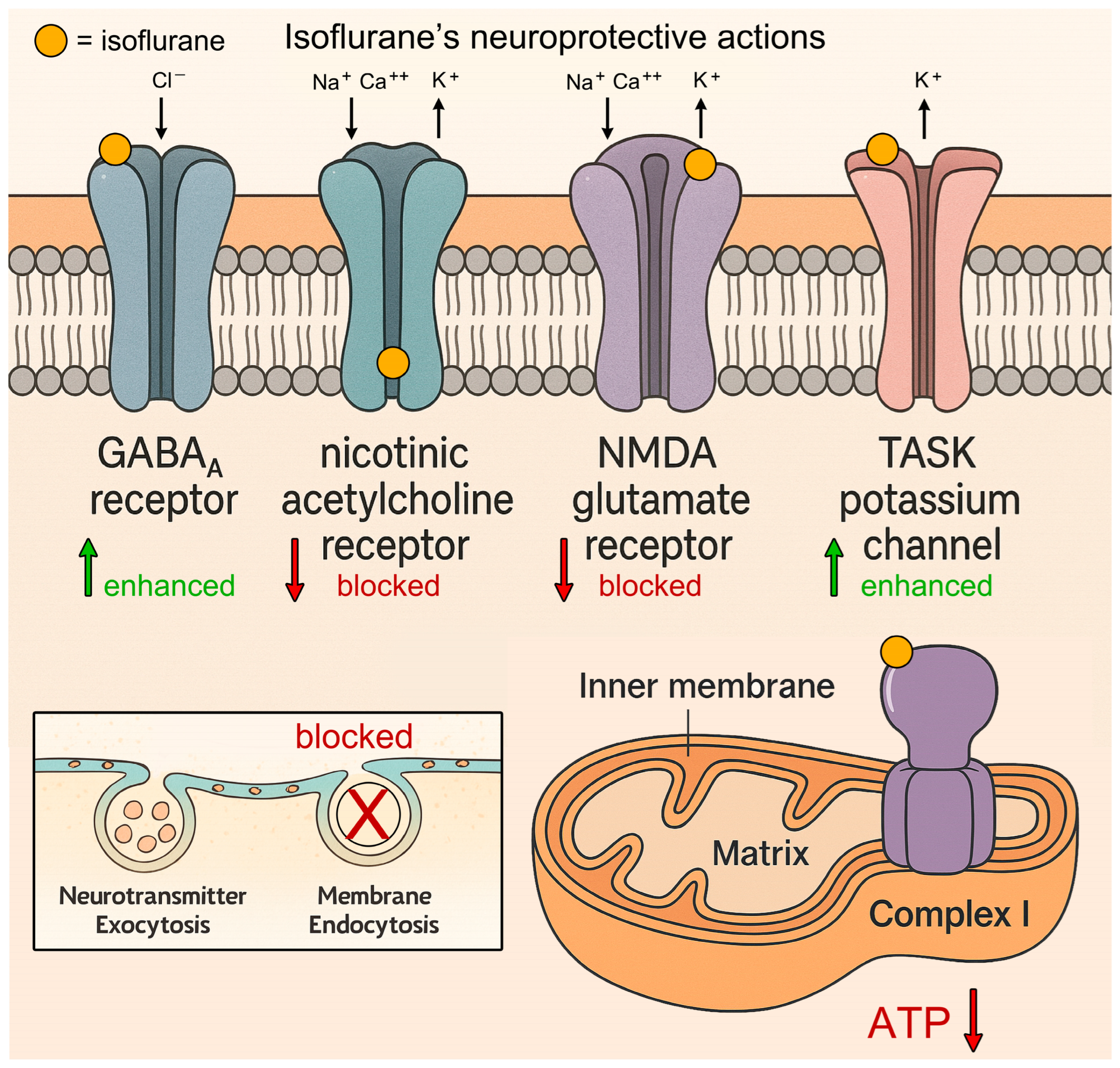
In contrast to most treatments for OP poisoning, isoflurane exerts actions on multiple distinct receptor and channel systems [64,65,66,67,68,69,70]. The nicotinic acetylcholine receptor controls a cationic pore that responds to acetylcholine binding by opening to allow sodium, calcium, and potassium ions to flow across the cellular membrane, typically with sodium and calcium entering the cell and potassium leaving the cell. Molecular modeling studies have shown that isoflurane binds to several sites on the nicotinic acetylcholine receptor, including the cation pore through which sodium, calcium, and potassium ions flow when it is open [71]. As such, isoflurane may directly interfere with ion movement through the acetylcholine-gated cation channel, which would limit the actions of acetylcholine at post-synaptic sites. Isoflurane is reported to produce hyperalgesia by antagonizing nicotinic acetylcholine receptors. This effect was prevented by a nicotinic agonist and was mimicked and potentiated by nicotinic antagonists, indicating that isoflurane inhibits nicotinic acetylcholine receptors [72]. In the amygdala, the strength of synaptic signaling mediated by glutamate receptors (NMDA and non-NMDA) and GABAB receptors was decreased by isoflurane, while GABAA receptor action was increased [73]. GABA has multiple inhibitory actions through GABAA receptors, including fast and slow synaptic inhibition. Isoflurane strongly enhances slow GABAA-gated inhibition while having little effect on fast and tonic inhibition [74]. Isoflurane, desflurane, and sevoflurane all enhance the response at the GABAA receptor to endogenous GABA and prolong the duration of GABA-mediated synaptic inhibition [75]. In a study of NMDA glutamate receptors expressed in Xenopus oocytes, all three inhalational anesthetics inhibited NMDA receptor signaling reversibly, dose-dependently, and equipotently [76]. In brain slice preparations, isoflurane strongly reduced synaptic transmission, network oscillations, and calcium influx into neurons, reducing the cerebral metabolic rate [77]. Furthermore, it has been reported that isoflurane reduces ischemia-induced glutamate release [78]. Isoflurane also inhibits mitochondrial complex I, which reduces presynaptic ATP levels and inhibits synaptic vesicular endocytosis, thus reducing synaptic activity [79]. Several studies have found that isoflurane has neuroprotective and cardioprotective properties in various injury models through actions on TWIK-related acid-sensitive potassium (TASK) channels [80,81,82,83,84,85]. Studies using TASK-1 and TASK-3 channel knockout mice suggest that TASK-3 channels are the potassium channels most involved in the anesthetic actions of halogenated ethers, including halothane and isoflurane [86]. These potassium channels act to repolarize neuronal membranes by moving potassium along its concentration gradient out of the cell, thus reducing action potentials and protecting neurons from overactivation. Isoflurane has also been reported to act on glycine receptors to inhibit neurotransmission [69,87,88,89], exhibiting significant anti-inflammatory properties [53,90]. All of the above actions would have neuroprotective effects following OP poisoning (see Table 2 and Figure 2).
To our knowledge, isoflurane has only been tested as a treatment against paraoxon and sarin poisoning. At least five studies have demonstrated isoflurane’s effectiveness in either blocking seizures and convulsions or reducing CNS damage when administered after paraoxon poisoning [10,11,42,44,49]. One study has shown effectiveness against sarin poisoning [45]. There are no available data on isoflurane’s effectiveness in the treatment of poisoning with other AChE-inhibiting insecticides, including carbamates. Both organophosphates and carbamates act through inhibition of AChE, and therefore, it is likely that some or all of isoflurane’s beneficial effects will translate to any insecticides that utilize this mechanism of action. This needs to be confirmed in the future. However, paraoxon is one of the most potent among the many cholinesterase-blocking insecticide metabolites, and sarin is among the most potent nerve agents. Therefore, it is very likely that isoflurane will be found to be an effective anticonvulsant and neuroprotectant for the treatment of poisoning with all of these AChE-inhibiting agents.
Another unknown is whether the effectiveness of short-duration isoflurane administration would be improved if given repeatedly over time. Repeated administration has been tested with long-duration exposure, but never with short-duration administration times. Studies designed to investigate this possibility should be conducted. We found excellent neuroprotection when a single administration was given for only 5 min, between 30 min and 1 h after paraoxon. Effectiveness of the single dose was reduced at 90 min after paraoxon, and was mostly absent by 180 min after paraoxon. It is possible that effectiveness at later post-injury time points could be enhanced with several repeated brief administrations over the course of the first 6 h after injury. This also needs to be investigated in the future.

Practical Applications

OP and carbamate compounds are inexpensive and readily available in many parts of the world, making them some of the most often used toxins in attempted suicides [91]. The greatest number of poisoning patients arriving at hospitals and clinics involve incidents with OP or carbamate insecticides. A major obstacle to treating these patients successfully is the delay in onset of treatment. Seizures resulting from overactivation of cholinergic systems in the CNS put extreme stress on other pathways in the brain, including glutamatergic target areas. Prolonged overactivation of glutamate synapses leads to excitotoxic damage that is proportional to the degree and duration of the excess glutamate signaling. One primary treatment avenue, therefore, involves blocking the excitotoxic actions of excess glutamate release during seizures, before excitotoxic damage occurs. Benzodiazepines enhance inhibitory GABA actions, which can counteract some of the effects of excessive, excitatory glutamate signaling, but the effectiveness of benzodiazepines wanes quickly in severely poisoned patients, and seizures accompanied by convulsions can recur. Convulsions are an outward sign of severe CNS seizures. Not all seizures result in convulsions, but severe seizures will often result in uncontrolled activity in motor cortex and other motor-related brain regions, resulting in convulsions.
Most or all patients who have been severely poisoned with OP or carbamate insecticides will exhibit convulsions, and benzodiazepines, including diazepam and midazolam, are the standard treatment. Adjunct anticonvulsant treatments that complement benzodiazepine’s inhibitory actions, especially those that counteract glutamatergic overactivation, would be a welcome addition to the current treatment regimen. Isoflurane, and other halogenated ether-based anesthetics, such as sevoflurane and desflurane, provide a novel adjunct anticonvulsant to benzodiazepines. These anesthetics are widely available in hospitals and other medical facilities throughout much of the world. Facilities that are equipped for surgery will most likely have the equipment and staff for the administration of these anesthetics.
Upon admission to medical facilities, patients showing signs of cholinergic overactivation, especially patients with severe convulsions, would immediately be administered the standard treatment, including atropine sulfate, and if available, pralidoxime or other cholinesterase re-activating oxime. These treatments are repeated over the next several hours, as indicated by patient status. Patients with convulsions are administered diazepam or midazolam as needed to control convulsions, often being readministered every hour for several hours. In severely poisoned patients, convulsions become refractory to further attempts to enhance GABA action with benzodiazepines. As such, we propose the use of short-duration (5 to 10 min) high-dose isoflurane (3.5% to 4%) as a secondary anticonvulsant to be used shortly after benzodiazepine administration, especially in patients whose convulsions were refractory to benzodiazepine treatment. Benzodiazepines are routinely used in presurgical settings, prior to the administration of inhalation anesthetics. The same procedures would apply in the case of treating OP and carbamate poisoning patients. Because these are routine activities in any medical facility equipped for surgery, they could easily be employed in patients suffering from OP poisoning. However, isoflurane administration can be relatively brief relative to its use as a surgical anesthetic. Newer halogenated ether anesthetics, such as sevoflurane and desflurane, have become increasingly prevalent in many hospitals due to several desirable attributes. These anesthetics would be administered at higher doses than isoflurane due to their lower relative potency. Isoflurane is the most potent, followed by sevoflurane, with desflurane being the least potent, requiring approximately five times the concentration of isoflurane to achieve the same effect. Because isoflurane has more neuroprotective effects than benzodiazepines [44], it may be advisable to administer isoflurane immediately after benzodiazepines in patients with severe poisoning. In rural areas where anesthesia equipment is not available, an injectable form of isoflurane [47] would be the most practical alternative. Such preparations are currently not commercially available, but this may change after further safety and efficacy testing is performed.

6. Conclusions

The use of AChE-inhibiting insecticides continues to present health risks, especially in developing countries where alternative insecticides may not be readily available. Halogenated ether anesthetics, such as isoflurane, provide an adjunct anticonvulsant for use in the treatment of OP insecticide poisoning while also protecting the brain from excitotoxic damage and brain edema. Inhalation anesthetics are available widely in clinics and hospitals throughout the world, providing a simple method for halting OP-induced convulsions and protecting the CNS from irreversible damage. The use of halogenated ether anesthetics is compatible with the current OP treatment regimen of atropine sulfate and an oxime such as pralidoxime. It can also be administered after benzodiazepine treatment if benzodiazepines fail to control convulsions. Administration times can be as brief as 5 min and still confer excellent control of convulsions and superior neuroprotection to existing treatments if administered within 1 h of poisoning.
The current evidence supports the addition of volatile anesthetics to the treatment regimen for OP poisoning. Isoflurane is fully compatible with the current treatment protocol, including atropine, oxime, and midazolam. Both inhalation and IV injection administration routes have been found to be effective for improved neuroprotection compared to benzodiazepines. Isoflurane lipid–water emulsions could be delivered by IV drip or injection if suitable formulations are produced for human use. This may permit use in rural settings where hospitals and vaporizer equipment are not available to treat patients in a timely manner. These applications of isoflurane repurpose an FDA-approved anesthetic as a single-dose anticonvulsant and neuroprotective drug for the treatment of OP poisoning.

7. Patents

The investigators A.M.N., J.K.S.K., and J.R.M., in conjunction with the Henry Jackson Foundation for Military Medicine, have been awarded a US patent (US 11,291,637 B2) for the use of halogenated ethers to treat OP poisoning.

Author Contributions

A.M.N., J.K.S.K. and J.R.M. conceived the study, A.M.N., J.K.S.K. and J.R.M. wrote the manuscript, and A.M.N. acquired the funding. All authors have read and agreed to the published version of the manuscript.

Funding

USUHS Short-Term Discovery Grant APG-70-12933 and USUHS grant HU0001-22-2-00662.

Institutional Review Board Statement

Not Applicable.

Informed Consent Statement

Not Applicable.

Data Availability Statement

No new data were created or analyzed in this study.

Conflicts of Interest

The investigators AMN, JKSK and JRM, in conjunction with the Henry Jackson Foundation for Military Medicine, have been awarded a US patent (US 11,291,637 B2) for the use of halogenated ethers to treat OP poisoning. Author disclaimer: The opinions and assertions expressed herein are those of the authors and do not necessarily reflect the official policy or position of the Uniformed Services University or the DoW.

Abbreviations

The following abbreviations are used in this manuscript:
AChEacetylcholinesterase
AMPAα-amino-3-hydroxy-5-methyl-4-isoxazolepropionic acid
AtSO4atropine sulfate
BBBblood–brain barrier
CA1/CA2/CA3cornu ammonis fields 1, 2, and 3 of the hippocampus
CNScentral nervous system
ECoGelectrocorticogram
FJBFluoro-Jade B
FJCFluoro-Jade C
GABAgamma-aminobutyric acid
GFAPglial fibrillary acidic protein
H&Ehematoxylin and eosin
ILEisoflurane lipid–water emulsion
IMintramuscular
INintranasal
ISOisoflurane
IVintravenous
LD50median lethal dose
LFPlocal field potential
LMIClow- to moderate-income countries
LOCloss of consciousness
MRImagnetic resonance imaging
NDnot determined
NMDAN-methyl-D-aspartate
OBIobidoxime
OPorganophosphate
OXoxime
PAM-2/2-PAMpralidoxime
POXparaoxon
RBCred blood cell
SEstatus epilepticus
SMstria medullaris
T2T2-weighted magnetic resonance

References

  1. Costa, L.G. Organophosphorus Compounds at 80: Some Old and New Issues. Toxicol. Sci. 2018, 162, 24–35. [Google Scholar] [CrossRef] [PubMed]
  2. Shattuck, A.; Werner, M.; Mempel, F.; Dunivin, Z.; Galt, R. Global pesticide use and trade database (GloPUT): New estimates show pesticide use trends in low-income countries substantially underestimated. Glob. Environ. Change 2023, 81, 102693. [Google Scholar] [CrossRef]
  3. Jan, Y.H.; Richardson, J.R.; Baker, A.A.; Mishin, V.; Heck, D.E.; Laskin, D.L.; Laskin, J.D. Novel approaches to mitigating parathion toxicity: Targeting cytochrome P450-mediated metabolism with menadione. Ann. N. Y. Acad. Sci. 2016, 1378, 80–86. [Google Scholar] [CrossRef] [PubMed]
  4. Casida, J.E.; Durkin, K.A. Anticholinesterase insecticide retrospective. Chem. Biol. Interact. 2013, 203, 221–225. [Google Scholar] [CrossRef]
  5. Fukuto, T.R. Mechanism of action of organophosphorus and carbamate insecticides. Environ. Health Perspect. 1990, 87, 245–254. [Google Scholar] [CrossRef]
  6. Rosman, Y.; Makarovsky, I.; Bentur, Y.; Shrot, S.; Dushnistky, T.; Krivoy, A. Carbamate poisoning: Treatment recommendations in the setting of a mass casualties event. Am. J. Emerg. Med. 2009, 27, 1117–1124. [Google Scholar] [CrossRef]
  7. Eddleston, M. Novel Clinical Toxicology and Pharmacology of Organophosphorus Insecticide Self-Poisoning. Annu. Rev. Pharmacol. Toxicol. 2019, 59, 341–360. [Google Scholar] [CrossRef]
  8. Morgan, J.E.; Wilson, S.C.; Travis, B.J.; Bagri, K.H.; Pagarigan, K.T.; Belski, H.M.; Jackson, C.; Bounader, K.M.; Coppola, J.M.; Hornung, E.N.; et al. Refractory and Super-Refractory Status Epilepticus in Nerve Agent-Poisoned Rats Following Application of Standard Clinical Treatment Guidelines. Front. Neurosci. 2021, 15, 732213. [Google Scholar] [CrossRef]
  9. Krishnan, J.K.; Arun, P.; Appu, A.P.; Vijayakumar, N.; Figueiredo, T.H.; Braga, M.F.; Baskota, S.; Olsen, C.H.; Farkas, N.; Dagata, J.; et al. Intranasal Delivery of Obidoxime to the Brain Prevents Mortality and CNS Damage from Organophosphate Poisoning. Neurotoxicology 2016, 53, 64–73. [Google Scholar] [CrossRef]
  10. Krishnan, J.K.S.; Figueiredo, T.H.; Moffett, J.R.; Arun, P.; Appu, A.P.; Puthillathu, N.; Braga, M.F.; Flagg, T.; Namboodiri, A.M. Brief isoflurane administration as a post-exposure treatment for organophosphate poisoning. Neurotoxicology 2017, 63, 84–89. [Google Scholar] [CrossRef]
  11. Puthillathu, N.; Moffett, J.R.; Korotcov, A.; Bosomtwi, A.; Vengilote, R.; Krishnan, J.K.S.; Johnson, E.A.; Arun, P.; Namboodiri, A.M. Brief isoflurane administration as an adjunct treatment to control organophosphate-induced convulsions and neuropathology. Front. Pharmacol. 2023, 14, 1293280. [Google Scholar] [CrossRef]
  12. Sontakke, T.; Kalantri, S. Predictors of Mortality in Hospitalized Patients With Pesticide Poisoning. Cureus 2023, 15, e41284. [Google Scholar] [CrossRef] [PubMed]
  13. Gunnell, D.; Eddleston, M.; Phillips, M.R.; Konradsen, F. The global distribution of fatal pesticide self-poisoning: Systematic review. BMC Public Health 2007, 7, 357. [Google Scholar] [CrossRef] [PubMed]
  14. Wang, B.; Han, L.; Wen, J.; Zhang, J.; Zhu, B. Self-poisoning with pesticides in Jiangsu Province, China: A cross-sectional study on 24,602 subjects. BMC Psychiatry 2020, 20, 545. [Google Scholar] [CrossRef] [PubMed]
  15. Buckley, N.A.; Fahim, M.; Raubenheimer, J.; Gawarammana, I.B.; Eddleston, M.; Roberts, M.S.; Dawson, A.H. Case fatality of agricultural pesticides after self-poisoning in Sri Lanka: A prospective cohort study. Lancet Glob. Health 2021, 9, e854–e862. [Google Scholar] [CrossRef]
  16. Dabholkar, S.; Pirani, S.; Davis, M.; Khan, M.; Eddleston, M. Suicides by pesticide ingestion in Pakistan and the impact of pesticide regulation. BMC Public Health 2023, 23, 676. [Google Scholar] [CrossRef]
  17. Wu, H.; Li, K.; Wang, Y.; Huang, R.; Jin, X.; Li, X.; Wang, H.; Li, B. Suicide and suicidality in people exposed to pesticides: A systematic review and meta-analysis. Environ. Pollut. 2023, 327, 121542. [Google Scholar] [CrossRef]
  18. Amir, A.; Raza, A.; Qureshi, T.; Mahesar, G.B.; Jafferi, S.; Haleem, F.; Ali Khan, M. Organophosphate Poisoning: Demographics, Severity Scores and Outcomes From National Poisoning Control Centre, Karachi. Cureus 2020, 12, e8371. [Google Scholar] [CrossRef]
  19. Albano, G.D.; Malta, G.; La Spina, C.; Rifiorito, A.; Provenzano, V.; Triolo, V.; Vaiano, F.; Bertol, E.; Zerbo, S.; Argo, A. Toxicological Findings of Self-Poisoning Suicidal Deaths: A Systematic Review by Countries. Toxics 2022, 10, 654. [Google Scholar] [CrossRef]
  20. Frengidou, E.; Galanis, P.; Malesios, C. Pesticide Exposure or Pesticide Poisoning and the Risk of Depression in Agricultural Populations: A Systematic Review and Meta-Analysis. J. Agromedicine 2024, 29, 91–105. [Google Scholar] [CrossRef]
  21. Freire, C.; Koifman, S. Pesticides, depression and suicide: A systematic review of the epidemiological evidence. Int. J. Hyg. Environ. Health 2013, 216, 445–460. [Google Scholar] [CrossRef] [PubMed]
  22. Tan, M.-Y.; Wu, S.; Zhu, S.-X.; Jiang, L.-H. Association between exposure to organophosphorus pesticide and suicidal ideation among U.S. adults: A population-based study. Ecotoxicol. Environ. Saf. 2024, 281, 116572. [Google Scholar] [CrossRef] [PubMed]
  23. Barbosa Junior, M.; Ramos Huarachi, D.A.; de Francisco, A.C. The link between pesticide exposure and suicide in agricultural workers: A systematic review. Rural. Remote Health 2024, 24, 8190. [Google Scholar] [CrossRef] [PubMed]
  24. Rother, H.-A. Falling through the regulatory cracks: Street selling of pesticides and poisoning among urban youth in South Africa. Int. J. Occup. Environ. Health 2010, 16, 202–213. [Google Scholar] [CrossRef]
  25. Desye, B.; Tesfaye, A.H.; Daba, C.; Alemseged, E.A.; Angaw, Y.; Ebrahim, A.M.; Natnael, T.; Hassen, S.; Woretaw, L. Pesticide safe use practice and acute health symptoms, and associated factors among farmers in developing countries: A systematic review and meta-analysis of an epidemiological evidence. BMC Public Health 2024, 24, 3313. [Google Scholar] [CrossRef]
  26. Mequanint, C.; Getachew, B.; Mindaye, Y.; Amare, D.E.; Guadu, T.; Dagne, H. Practice towards pesticide handling, storage and its associated factors among farmers working in irrigations in Gondar town, Ethiopia, 2019. BMC Res. Notes 2019, 12, 709. [Google Scholar] [CrossRef]
  27. Knapke, E.T.; Magalhaes, D.d.P.; Dalvie, M.A.; Mandrioli, D.; Perry, M.J. Environmental and occupational pesticide exposure and human sperm parameters: A Navigation Guide review. Toxicology 2022, 465, 153017. [Google Scholar] [CrossRef]
  28. Kassem, H.S.; Hussein, M.A.; Ismail, H. Toward Fraudulent Pesticides in Rural Areas: Do Farmers’ Recognition and Purchasing Behaviors Matter? Agronomy 2021, 11, 1882. [Google Scholar] [CrossRef]
  29. United Nations Interregional Crime and Justice Research Institute. Illicit Pesticides, Organized Crime and Supply Chain Integrity; United Nations Interregional Crime and Justice Research Institute: Turin, Italy, 2020. [Google Scholar]
  30. Mew, E.J.; Padmanathan, P.; Konradsen, F.; Eddleston, M.; Chang, S.S.; Phillips, M.R.; Gunnell, D. The global burden of fatal self-poisoning with pesticides 2006-15: Systematic review. J. Affect. Disord. 2017, 219, 93–104. [Google Scholar] [CrossRef]
  31. Vijayakumar, L.; Chandra, P.S.; Kumar, M.S.; Pathare, S.; Banerjee, D.; Goswami, T.; Dandona, R. The national suicide prevention strategy in India: Context and considerations for urgent action. Lancet Psychiatry 2022, 9, 160–168. [Google Scholar] [CrossRef]
  32. Gunnell, D.; Fernando, R.; Hewagama, M.; Priyangika, W.D.D.; Konradsen, F.; Eddleston, M. The impact of pesticide regulations on suicide in Sri Lanka. Int. J. Epidemiol. 2007, 36, 1235–1242. [Google Scholar] [CrossRef]
  33. London, L.; Flisher, A.J.; Wesseling, C.; Mergler, D.; Kromhout, H. Suicide and exposure to organophosphate insecticides: Cause or effect? Am. J. Ind. Med. 2005, 47, 308–321. [Google Scholar] [CrossRef] [PubMed]
  34. Beyuo, J.; Sackey, L.N.A.; Yeboah, C.; Kayoung, P.Y.; Koudadje, D. The implications of pesticide residue in food crops on human health: A critical review. Discov. Agric. 2024, 2, 123. [Google Scholar] [CrossRef]
  35. Lambert, W.E.; Lasarev, M.; Muniz, J.; Scherer, J.; Rothlein, J.; Santana, J.; McCauley, L. Variation in organophosphate pesticide metabolites in urine of children living in agricultural communities. Environ. Health Perspect. 2005, 113, 504–508. [Google Scholar] [CrossRef] [PubMed]
  36. Eskenazi, B.; Marks, A.R.; Bradman, A.; Harley, K.; Barr, D.B.; Johnson, C.; Morga, N.; Jewell, N.P. Organophosphate pesticide exposure and neurodevelopment in young Mexican-American children. Environ. Health Perspect. 2007, 115, 792–798. [Google Scholar] [CrossRef]
  37. Rauh, V.A.; Perera, F.P.; Horton, M.K.; Whyatt, R.M.; Bansal, R.; Hao, X.; Liu, J.; Barr, D.B.; Slotkin, T.A.; Peterson, B.S. Brain anomalies in children exposed prenatally to a common organophosphate pesticide. Proc. Natl. Acad. Sci. USA 2012, 109, 7871–7876. [Google Scholar] [CrossRef]
  38. Slotkin, T.A.; Bodwell, B.E.; Ryde, I.T.; Levin, E.D.; Seidler, F.J. Exposure of neonatal rats to parathion elicits sex-selective impairment of acetylcholine systems in brain regions during adolescence and adulthood. Environ. Health Perspect. 2008, 116, 1308–1314. [Google Scholar] [CrossRef]
  39. Matisová, E.; Hrouzková, S. Analysis of endocrine disrupting pesticides by capillary GC with mass spectrometric detection. Int. J. Environ. Res. Public Health 2012, 9, 3166–3196. [Google Scholar] [CrossRef]
  40. Gelb, A.W.; Vreede, E. Availability of halothane is still important in some parts of the world. Can. J. Anaesth. 2024, 71, 1427–1428. [Google Scholar] [CrossRef]
  41. Kofke, W.A.; Young, R.S.; Davis, P.; Woelfel, S.K.; Gray, L.; Johnson, D.; Gelb, A.; Meeke, R.; Warner, D.S.; Pearson, K.S.; et al. Isoflurane for refractory status epilepticus: A clinical series. Anesthesiology 1989, 71, 653–659. [Google Scholar] [CrossRef]
  42. Bar-Klein, G.; Klee, R.; Brandt, C.; Bankstahl, M.; Bascunana, P.; Tollner, K.; Dalipaj, H.; Bankstahl, J.P.; Friedman, A.; Loscher, W. Isoflurane prevents acquired epilepsy in rat models of temporal lobe epilepsy. Ann. Neurol. 2016, 80, 896–908. [Google Scholar] [CrossRef] [PubMed]
  43. Bar-Klein, G.; Lublinsky, S.; Kamintsky, L.; Noyman, I.; Veksler, R.; Dalipaj, H.; Senatorov, V.V., Jr.; Swissa, E.; Rosenbach, D.; Elazary, N.; et al. Imaging blood-brain barrier dysfunction as a biomarker for epileptogenesis. Brain 2017, 140, 1692–1705. [Google Scholar] [CrossRef] [PubMed]
  44. Swissa, E.; Bar-Klein, G.; Serlin, Y.; Weissberg, I.; Kamintsky, L.; Eisenkraft, A.; Statlender, L.; Shrot, S.; Rosman, Y.; Prager, O.; et al. Midazolam and isoflurane combination reduces late brain damage in the paraoxon-induced status epilepticus rat model. Neurotoxicology 2020, 78, 99–105. [Google Scholar] [CrossRef] [PubMed]
  45. Sawyer, T.W.; Mikler, J.; Tenn, C.; Bjarnason, S.; Frew, R. Non-cholinergic intervention of sarin nerve agent poisoning. Toxicology 2012, 294, 85–93. [Google Scholar] [CrossRef]
  46. Li, Q.; Yang, D.; Liu, J.; Zhang, H.; Zhang, J. Intravenous lipid emulsion improves recovery time and quality from isoflurane anaesthesia: A double-blind clinical trial. Basic. Clin. Pharmacol. Toxicol. 2014, 115, 222–228. [Google Scholar] [CrossRef]
  47. Yang, H.; Yin, Q.; Huang, L.; Zhang, M.; Zhang, X.; Sun, Q.; Liu, X.; Wang, Q.; Yang, X.; Tan, L.; et al. The Bioequivalence of Emulsified Isoflurane With a New Formulation of Emulsion: A Single-Center, Single-Dose, Double-Blinded, Randomized, Two-Period Crossover Study. Front. Pharmacol. 2021, 12, 626307. [Google Scholar] [CrossRef]
  48. Huang, H.; Li, R.; Liu, J.; Zhang, W.; Liao, T.; Yi, X. A phase I, dose-escalation trial evaluating the safety and efficacy of emulsified isoflurane in healthy human volunteers. Anesthesiology 2014, 120, 614–625. [Google Scholar] [CrossRef]
  49. Krishnan, J.K.S.; Moffett, J.R.; Puthillathu, N.; Johnson, E.A.; Namboodiri, A.M. Isoflurane-lipid emulsion injection as an anticonvulsant and neuroprotectant treatment for nerve agent exposure. Front. Pharmacol. 2024, 15, 1466351. [Google Scholar] [CrossRef]
  50. Zhou, J.X.; Luo, N.F.; Liang, X.M.; Liu, J. The efficacy and safety of intravenous emulsified isoflurane in rats. Anesth. Analg. 2006, 102, 129–134. [Google Scholar] [CrossRef]
  51. Eisenkraft, A.; Falk, A. The possible role of intravenous lipid emulsion in the treatment of chemical warfare agent poisoning. Toxicol. Rep. 2016, 3, 202–210. [Google Scholar] [CrossRef]
  52. Li, G.; Hu, H. Protective effects of lipid emulsion on vital organs through the LPS/TLR4 pathway in acute organophosphate poisoning. BMC Pharmacol. Toxicol. 2025, 26, 71. [Google Scholar] [CrossRef] [PubMed]
  53. Hofstetter, C.; Flondor, M.; Boost, K.A.; Koehler, P.; Bosmann, M.; Pfeilschifter, J.; Zwissler, B.; Muhl, H. A brief exposure to isoflurane (50 s) significantly impacts on plasma cytokine levels in endotoxemic rats. Int. Immunopharmacol. 2005, 5, 1519–1522. [Google Scholar] [CrossRef] [PubMed]
  54. Lowes, D.A.; Galley, H.F.; Moura, A.P.; Webster, N.R. Brief isoflurane anaesthesia affects differential gene expression, gene ontology and gene networks in rat brain. Behav. Brain Res. 2017, 317, 453–460. [Google Scholar] [CrossRef] [PubMed]
  55. Smith, J.L.; Tranovich, M.A.; Ebraheim, N.A. A comprehensive review of malignant hyperthermia: Preventing further fatalities in orthopedic surgery. J. Orthop. 2018, 15, 578–580. [Google Scholar] [CrossRef]
  56. Visoiu, M.; Young, M.C.; Wieland, K.; Brandom, B.W. Anesthetic drugs and onset of malignant hyperthermia. Anesth. Analg. 2014, 118, 388–396. [Google Scholar] [CrossRef]
  57. Santos-Lobato, B.L. New Insights into the Association of Pesticide Exposure and Parkinson’s Disease. Mov. Disord. 2025, 40, 579–580. [Google Scholar] [CrossRef]
  58. Samareh, A.; Pourghadamyari, H.; Nemtollahi, M.H.; Ebrahimi Meimand, H.A.; Norouzmahani, M.E.; Asadikaram, G. Pesticide Exposure and Its Association with Parkinson’s Disease: A Case-Control Analysis. Cell Mol. Neurobiol. 2024, 44, 73. [Google Scholar] [CrossRef]
  59. Wendt, A. Pesticide exposure and Parkinson’s disease in the AGRICAN study. Int. J. Epidemiol. 2018, 47, 1006. [Google Scholar] [CrossRef]
  60. Santos, J.R.; Mendes, M.C.; Dallabrida, K.G.; Goncalves, R.; Sampaio, T.B. Pesticide exposure and the development of Parkinson disease: A systematic review of Brazilian studies. Cad. Saude Publica 2025, 41, e00011424. [Google Scholar] [CrossRef]
  61. Wang, Y.; Yang, J.; Hu, X.; Shi, J.; Deng, J. Different types of pesticide exposure and lung cancer incidence in the Agricultural Health Study cohort: A systematic review and meta-analysis. Arch. Env. Occup. Health 2024, 79, 263–272. [Google Scholar] [CrossRef]
  62. Ataei, M.; Abdollahi, M. A systematic review of mechanistic studies on the relationship between pesticide exposure and cancer induction. Toxicol. Appl. Pharmacol. 2022, 456, 116280. [Google Scholar] [CrossRef]
  63. Institute of Medicine (US) Committee on Health Effects Associated with Exposures During the Gulf War. Gulf War and Health: Volume 1. Depleted Uranium, Sarin, Pyridostigmine Bromide, Vaccines; Fulco, C.E., Liverman, C.T., Sox, H.C., Eds.; National Academies Press: Washington, DC, USA, 2000. [Google Scholar]
  64. Neag, M.A.; Mitre, A.O.; Catinean, A.; Mitre, C.I. An Overview on the Mechanisms of Neuroprotection and Neurotoxicity of Isoflurane and Sevoflurane in Experimental Studies. Brain Res. Bull. 2020, 165, 281–289. [Google Scholar] [CrossRef]
  65. Xiao, Z.; Ren, P.; Chao, Y.; Wang, Q.; Kuai, J.; Lv, M.; Chen, L.; Gao, C.; Sun, X. Protective role of isoflurane pretreatment in rats with focal cerebral ischemia and the underlying molecular mechanism. Mol. Med. Rep. 2015, 12, 675–683. [Google Scholar] [CrossRef] [PubMed]
  66. Nishikawa, K.; MacIver, M.B. Excitatory synaptic transmission mediated by NMDA receptors is more sensitive to isoflurane than are non-NMDA receptor-mediated responses. Anesthesiology 2000, 92, 228–236. [Google Scholar] [CrossRef] [PubMed]
  67. Li, J.T.; Wang, W.Q.; Wang, L.; Liu, N.N.; Zhao, Y.L.; Zhu, X.S.; Liu, Q.Q.; Gao, C.F.; Yang, A.G.; Jia, L.T. Subanesthetic isoflurane relieves zymosan-induced neutrophil inflammatory response by targeting NMDA glutamate receptor and Toll-like receptor 2 signaling. Oncotarget 2016, 7, 31772–31789. [Google Scholar] [CrossRef] [PubMed]
  68. Sun, M.; Deng, B.; Zhao, X.; Gao, C.; Yang, L.; Zhao, H.; Yu, D.; Zhang, F.; Xu, L.; Chen, L.; et al. Isoflurane preconditioning provides neuroprotection against stroke by regulating the expression of the TLR4 signalling pathway to alleviate microglial activation. Sci. Rep. 2015, 5, 11445. [Google Scholar] [CrossRef]
  69. Zhang, Y.; Laster, M.J.; Hara, K.; Harris, R.A.; Eger, E.I., 2nd; Stabernack, C.R.; Sonner, J.M. Glycine receptors mediate part of the immobility produced by inhaled anesthetics. Anesth. Analg. 2003, 96, 97–101, table of contents. [Google Scholar] [CrossRef]
  70. Grasshoff, C.; Rudolph, U.; Antkowiak, B. Molecular and systemic mechanisms of general anaesthesia: The ‘multi-site and multiple mechanisms’ concept. Curr. Opin. Anaesthesiol. 2005, 18, 386–391. [Google Scholar] [CrossRef]
  71. Brannigan, G.; LeBard, D.N.; Henin, J.; Eckenhoff, R.G.; Klein, M.L. Multiple binding sites for the general anesthetic isoflurane identified in the nicotinic acetylcholine receptor transmembrane domain. Proc. Natl. Acad. Sci. USA 2010, 107, 14122–14127. [Google Scholar] [CrossRef]
  72. Flood, P.; Sonner, J.M.; Gong, D.; Coates, K.M. Isoflurane hyperalgesia is modulated by nicotinic inhibition. Anesthesiology 2002, 97, 192–198. [Google Scholar] [CrossRef]
  73. Ranft, A.; Kurz, J.; Deuringer, M.; Haseneder, R.; Dodt, H.U.; Zieglgansberger, W.; Kochs, E.; Eder, M.; Hapfelmeier, G. Isoflurane modulates glutamatergic and GABAergic neurotransmission in the amygdala. Eur. J. Neurosci. 2004, 20, 1276–1280. [Google Scholar] [CrossRef] [PubMed]
  74. MacIver, M.B. Anesthetic agent-specific effects on synaptic inhibition. Anesth. Analg. 2014, 119, 558–569. [Google Scholar] [CrossRef] [PubMed]
  75. Philip, A.B.; Brohan, J.; Goudra, B. The Role of GABA Receptors in Anesthesia and Sedation: An Updated Review. CNS Drugs 2025, 39, 39–54. [Google Scholar] [CrossRef] [PubMed]
  76. Hollmann, M.W.; Liu, H.T.; Hoenemann, C.W.; Liu, W.H.; Durieux, M.E. Modulation of NMDA receptor function by ketamine and magnesium. Part II: Interactions with volatile anesthetics. Anesth. Analg. 2001, 92, 1182–1191. [Google Scholar] [CrossRef]
  77. Berndt, N.; Kovacs, R.; Schoknecht, K.; Rosner, J.; Reiffurth, C.; Maechler, M.; Holzhutter, H.G.; Dreier, J.P.; Spies, C.; Liotta, A. Low neuronal metabolism during isoflurane-induced burst suppression is related to synaptic inhibition while neurovascular coupling and mitochondrial function remain intact. J. Cereb. Blood Flow. Metab. 2021, 41, 2640–2655. [Google Scholar] [CrossRef]
  78. Ritz, M.F.; Schmidt, P.; Mendelowitsch, A. Effects of isoflurane on glutamate and taurine releases, brain swelling and injury during transient ischemia and reperfusion. Int. J. Neurosci. 2006, 116, 191–202. [Google Scholar] [CrossRef]
  79. Jung, S.; Zimin, P.I.; Woods, C.B.; Kayser, E.B.; Haddad, D.; Reczek, C.R.; Nakamura, K.; Ramirez, J.M.; Sedensky, M.M.; Morgan, P.G. Isoflurane inhibition of endocytosis is an anesthetic mechanism of action. Curr. Biol. 2022, 32, 3016–3032 e3013. [Google Scholar] [CrossRef]
  80. Taheri, S.; Shunmugavel, A.; Clark, D.; Shi, H. Isoflurane reduces the ischemia reperfusion injury surge: A longitudinal study with MRI. Brain Res. 2014, 1586, 173–183. [Google Scholar] [CrossRef]
  81. Khatibi, N.H.; Ma, Q.; Rolland, W.; Ostrowski, R.; Fathali, N.; Martin, R.; Applegate, R.; Stier, G.; Tang, J.; Zhang, J.H. Isoflurane posttreatment reduces brain injury after an intracerebral hemorrhagic stroke in mice. Anesth. Analg. 2011, 113, 343–348. [Google Scholar] [CrossRef]
  82. Altay, O.; Suzuki, H.; Altay, B.N.; Calisir, V.; Tang, J.; Zhang, J.H. Isoflurane versus sevoflurane for early brain injury and expression of sphingosine kinase 1 after experimental subarachnoid hemorrhage. Neurosci. Lett. 2020, 733, 135142. [Google Scholar] [CrossRef]
  83. Zhai, J.; Li, N.; Zhang, X.; Li, Y.; Ma, K.; Wang, R.; Qin, X.; Yin, J.; Wang, S. Isoflurane Enhances Autophagy by Activating AMPK/ULK1, Inhibits NLRP3, and Reduces Cognitive Impairment After Cerebral Ischemia-Reperfusion Injury in Rats. J. Mol. Neurosci. 2023, 73, 549–562. [Google Scholar] [CrossRef] [PubMed]
  84. Park, H.P.; Jeon, Y.T.; Hwang, J.W.; Kang, H.; Lim, S.W.; Kim, C.S.; Oh, Y.S. Isoflurane preconditioning protects motor neurons from spinal cord ischemia: Its dose-response effects and activation of mitochondrial adenosine triphosphate-dependent potassium channel. Neurosci. Lett. 2005, 387, 90–94. [Google Scholar] [CrossRef] [PubMed]
  85. Liu, C.; Cotten, J.F.; Schuyler, J.A.; Fahlman, C.S.; Au, J.D.; Bickler, P.E.; Yost, C.S. Protective effects of TASK-3 (KCNK9) and related 2P K channels during cellular stress. Brain Res. 2005, 1031, 164–173. [Google Scholar] [CrossRef] [PubMed]
  86. Pang, D.S.; Robledo, C.J.; Carr, D.R.; Gent, T.C.; Vyssotski, A.L.; Caley, A.; Zecharia, A.Y.; Wisden, W.; Brickley, S.G.; Franks, N.P. An unexpected role for TASK-3 potassium channels in network oscillations with implications for sleep mechanisms and anesthetic action. Proc. Natl. Acad. Sci. USA 2009, 106, 17546–17551. [Google Scholar] [CrossRef] [PubMed]
  87. Grasshoff, C.; Antkowiak, B. Effects of isoflurane and enflurane on GABAA and glycine receptors contribute equally to depressant actions on spinal ventral horn neurones in rats. Br. J. Anaesth. 2006, 97, 687–694. [Google Scholar] [CrossRef]
  88. Yang, L.; Sonner, J.M. The anesthetic-like effects of diverse compounds on wild-type and mutant gamma-aminobutyric acid type A and glycine receptors. Anesth. Analg. 2008, 106, 838–845, table of contents. [Google Scholar] [CrossRef]
  89. Kirson, D.; Todorovic, J.; Mihic, S.J. Single Channel Analysis of Isoflurane and Ethanol Enhancement of Taurine-Activated Glycine Receptors. J. Pharmacol. Exp. Ther. 2018, 364, 70–76. [Google Scholar] [CrossRef]
  90. Altay, O.; Suzuki, H.; Hasegawa, Y.; Ostrowski, R.P.; Tang, J.; Zhang, J.H. Isoflurane on brain inflammation. Neurobiol. Dis. 2014, 62, 365–371. [Google Scholar] [CrossRef]
  91. King, A.M.; Aaron, C.K. Organophosphate and Carbamate Poisoning. Emerg. Med. Clin. N. Am. 2015, 33, 133–151. [Google Scholar] [CrossRef]
Figure 1. FJB staining in the rat hippocampus and dorsal thalamus demonstrated neuroprotective effects of ILE in the treatment of OP poisoning. FJB-stained neurons appear as bright green dots under fluorescence microscopy. Bright FJB fluorescence in neurons indicates serious neuronal damage. No neuronal FJB staining was observed in the uninjured control brains (top panels). In the animals given paraoxon (POX) but not treated with ILE (ISO), neuronal FJB staining in the hippocampus was observed in pyramidal cells in CA1, CA2, and CA3 of the hippocampus, as well as in neurons in the polymorph layer ((center left panel); cc = corpus callosum). No neuronal FJB staining was observed in the hippocampus of any of the animals treated with ILE 30 min after paraoxon (bottom left panel). The dorsal thalamus was another site of extensive neuronal FJB staining in the animals given paraoxon but not treated with the ILE ((center right panel); sm = stria medullaris). Very minimal neuronal FJB staining was observed in the dorsal thalamus of all of the ILE-treated animals (bottom right panel). Figure reprinted with permission from [49].
Agrochemicals 04 00022 g001
Figure 2. Isoflurane has multiple actions that confer anticonvulsant and neuroprotectant properties. Isoflurane’s unique qualities derive from its multiplicity of action on neuronal transmission and inflammatory processes. Three major neurotransmitter systems that isoflurane is reported to act on include the nicotinic acetylcholine receptor, the GABAA receptor, and glutamate receptors, including the NMDA type. In addition, TASK potassium channels, which act to extrude potassium and repolarize neuronal membranes, are activated by isoflurane, which reestablishes the membrane potential. The net effect of isoflurane on neuronal membrane ion flows is to extrude K+ from the cell while also increasing Cl uptake to restore membrane potential, and to reduce Ca+2 and Na+ influx to reduce excitability. Furthermore, isoflurane reduces ATP synthesis presynaptically by reducing mitochondrial complex I activity, which then blocks membrane endocytosis, thus reducing synaptic transmission. Isoflurane also has anti-inflammatory actions that reduce brain edema after OP poisoning. Additional actions have also been reported, including on glycine receptors, as well as reductions in cytokine production.
Agrochemicals 04 00022 g002
Table 1. Outline of the studies performed using isoflurane to treat OP poisoning. Acronyms: 2-PAM; pralidoxime, AChE; acetylcholinesterase, AED; antiepileptic drugs, BChE; butyrylcholinesterase, BBB; blood brain barrier, ECG; electrocardiography, ECoG; Electrocorticography, ET; end tidal, FJB; Fluoro-Jade B, FJC, FiO2; fraction of inspired oxygen, Fluoro-Jade C, GFAP; glial fibrillary acidic protein, IHC; immunohistochemistry, IM; intramuscular, IP; intraperitoneal, ISO; isoflurane, LOS; losartan, MD; mean diffusivity, PHT; phenytoin, OP; organophosphate, SE; status epilepticus, SRS; spontaneous recurrent seizures, T1CE; contrast enhanced T1 MRI signal, T2w; T2 weighted MRI signal, VPA; valproic acid.
SpeciesOPIsoflurane TreatmentIsoflurane Timing Relative to OP AdministrationCo-Therapies (with Dose If Stated)Outcomes MeasuredFindings Effect Size/DirectionReference Number from Text
(PMID, First Author, Year)
Rat (Sprague–Dawley ♂, 250 ± 40 g)Paraoxon
4 mg/kg (~9 × LD50)
SC
2% × 3 min → 5% × 1 min in 100% O2 (4 min total)Exposure at 10, 20, 30, 45, 60, or 120 min after paraoxon (brief 4 min ISO each time); maximal efficacy at 20–30 min after exposureAtropine sulfate (2 mg/kg IM) + 2-PAM (25 mg/kg IM), given immediately after paraoxon in all groupsConvulsion severity (Racine scale); mortality (24 h); neurodegeneration (Fluoro-Jade C staining of hippocampus, amygdala, thalamus, and piriform cortex)Brief ISO given 20–30 min post-exposure → stopped convulsions within 10 min, produced 100% survival, and prevented FJC-positive neuronal degeneration; ineffective at 120 min and partially effective at 10, 45, 60 min post100% survival (0/36 deaths ISO vs. 7/11 control, p = 0.002); convulsion score ↓ to stage 0 within 10 min for 20–30 min ISO; neurodegeneration ↓ to 0/6 rats vs. 6/7 controls positive for FJC[10]
Rat (Sprague–Dawley ♂, 7 wk; 250 ± 40 g)Paraoxon
4 mg/kg (~9 × LD50)
SC
5% in 100% O2 for 5 min (single exposure)Exposure at 60, 90, 120, and 180 min after paraoxon (single ISO per rat); maximal efficacy at 60 min afterAtropine sulfate (2 mg/kg IM) + 2-PAM (25 mg/kg IM), given immediately after paraoxonConvulsion severity (Racine scale 0–6); MRI (T2, MD) for edema/tissue damage; FJB staining (neuronal loss); GFAP immunohistochemistry (astrogliosis)ISO (5% × 5 min) at 1 h post-exposure → halted convulsions within minutes, prevented edema and neuronal loss, reduced astrogliosis; efficacy declined ≥ 90 min100% elimination of convulsions ≤ 8 h; FJB score ↓ > 80% vs. untreated; T2 and MD normalized to control (p < 0.05); GFAP ↓ ~70% qualitative[11]
Rat (Sprague–Dawley ♂, 11–13 wk)Paraoxon
0.45 mg/kg
IM
1–2% ISO in 99% O2 for 1 h per session (repeated)Exposure at 1, 6, and 12 h, 1–3, and 7 days, and 1 month after SE (“recurrent isoflurane”)Atropine 3 mg/kg + obidoxime 20 mg/kg IM (1 min after OP); midazolam 1 mg/kg IM (30 min post-OP)ECoG (SE severity + SRS frequency); MRI (T1w/T2w BBB integrity); GFAP IHC (astrocytosis); histopathology (ventricle area)Repeated ISO after SE → prevented development of spontaneous recurrent seizures and blocked BBB damage and astrocytosis. 56.7% → 16.7% epileptic seizures (p = 0.02); reduced GFAP by ~85% (p < 0.0001); prevented ventricular enlargement (p = 0.038)SRS incidence ↓ ~70–T1CE/T2w BBB lesion volume ↓ 40–80% (p < 0.01); GFAP immunoreactivity ↓ ~85%[42]
Rat (Sprague–Dawley ♂, 300–325 g)Paraoxon
0.45 mg/kg
IM
1–2% ISO in 99% O2 for 1 h per session × 4 sessionsExposure at 1, 6, 12, and 24 h after paraoxon; repetitive sessions within first 24 hAtropine 3 mg/kg IM + obidoxime 20 mg/kg IM (1 min post-OP); midazolam 1 mg/kg IM (30 min post-OP)MRI (T1/T2/ADC); ECoG (seizure frequency during Weeks 5–7); Evans blue extravasation; IHC (GFAP, albumin, IgG, IBA-1)Early ISO anesthesia prevented vasculopathy and epileptogenesis → normalized BBB MRI signals in amygdala/piriform/striatum; reduced epileptic incidence to 16.7% vs. 59.1% in untreatedEpilepsy ↓ ~72% (p = 0.02); T2 abnormal signal ↓ to baseline by Day 2 and Week 1; BBB lesion volume ↓ > 70% in ISO group[43]
Rat (Sprague–Dawley ♂, 300–350 g)Paraoxon
0.45 mg/kg
IM
2% ISO in 98% O2 for 1 h (single exposure)Exposure 6 h after SE onset; post-exposure, single administrationAtropine 3 mg/kg IM + obidoxime 20 mg/kg IM (1 and 5 min post-OP) + midazolam 1 mg/kg IM (30 min post OP) ± AEDs (lorazepam 0.94 mg/kg IP, valproate 400 mg/kg IP, phenytoin 50 mg/kg IP)ECoG (SE duration, recurrent seizures, epileptiform activity); MRI (T2-weighted, 1-month post-exposure, 14 regions)ISO (2% × 1 h at 6 h post-SE) did not change seizure recurrence but significantly reduced late brain damage (esp. striatum, amygdala, piriform, septum); VPA/PHT reduced SE duration but not MRI lesionsWhole-brain damage ↓ (p = 0.0049–0.017 vs. AEDs); striatal lesions ↓ vs. midazolam, VPA, LOS (p < 0.05); septal lesions ↓ vs. VPA/LOS (p < 0.02)[44]
Castrated male York–Landrace cross pigsSarin (GB)
100 µg/kg)
IV infusion
1.2 MAC (≈1.5–2%) ISO in O2 for 30 min pre-exposure + maintained ≥ 60 min postEndotracheal ventilation (Dräger vaporizer; FiO2 0.3 or 1.0; ET CO2 monitored)Isoflurane was administered prior to, during, and after exposure for 6 h Survival in dose response with 30% or 100% oxygen; MAP; ECG; respiratory recovery; blood AChE/BChE activityAnesthetization with isoflurane + 30% oxygen did not significantly change the LD50 of sarin, whereas isoflurane + 100% oxygen raised the LD50 by over 33-fold Isoflurane anesthesia (1.5–2% for 6 h) with 100% O2 increased the LD50 of sarin > 33-fold from 10.1 µg/kg sarin to 336 µg/kg sarin[45]
Rat (Sprague–Dawley ♂, 300–350 g)Paraoxon
4 mg/kg (~9 × LD50)
SC
10% intravenous isoflurane in Intralipid-30; single jugular infusion at 200 µL/min for 5 min.Exposure 30 min after paraoxonAtropine sulfate (2 mg/kg IM) + 2-PAM (25 mg/kg IM), given immediately after OPNeuronal degeneration, as shown by Fluro-Jade-B staining in the brain10% isoflurane-lipid emulsion prevented almost all neurodegeneration when given 30 min after a highly lethal dose of paraoxon, as shown by Fluro-Jade-B stainingNearly 100% protection against neuronal loss in all areas examined, including neocortex, thalamus, hippocampus, and amygdala[49]
Table 2. List of some of the possible protective actions of isoflurane in the treatment of poisoning with AChE-inhibiting agents, including OP-based insecticides, carbamates, and nerve agents, such as sarin.
Target of IsofluraneActionReferences
GABAA receptorEnhanced inhibitory effect[72,73,74]
NMDA glutamate receptorReduced glutamate signaling[72,75]
Nicotinic ACh receptorInhibits channel activity[70,71]
TASK potassium channelsHyperpolarizes neuronal membranes[79,80,81,82,83,84,85]
Mitochondrial complex IInhibits complex I and reduces ATP production[78]
Synaptic endocytosisInhibits neurotransmission[78]
Glycine receptors Enhanced inhibitory effect[68,86,87,88]
Immune functionAnti-inflammatory actions[52,89]
Disclaimer/Publisher’s Note: The statements, opinions and data contained in all publications are solely those of the individual author(s) and contributor(s) and not of MDPI and/or the editor(s). MDPI and/or the editor(s) disclaim responsibility for any injury to people or property resulting from any ideas, methods, instructions or products referred to in the content.