


Abstract
Obesity is a growing public health concern linked to poor dietary habits, physical inactivity, and metabolic disturbances, which can be evaluated using complementary laboratory tests. Among pharmacological interventions, semaglutide, a GLP-1 receptor agonist, has shown promise by acting on the central nervous system to reduce appetite and stimulate insulin secretion, thereby improving the lipid profile and reducing inflammation biomarkers. This review focused on changes in lipid parameters and C-reactive protein (CRP) levels in overweight or obese individuals treated with semaglutide, based on phase 3 studies from the STEP program (“Semaglutide Treatment Effect in People with Obesity”). The STEP clinical trial program was conducted across 36 countries, reflecting a broad and diverse geographic representation. Key findings include significant reductions between placebo vs. semaglutide in body weight (−1.3 vs. −13.0 Kg), body mass index (−0.69 vs. −4.72 kg/m2), and waist circumference (−2.79 × −11.81 cm). Additionally, there were notable decreases in triglycerides (−0.67 vs. −20.89%), VLDL-C (−0.99 vs. 20.82%), and CRP levels (−15.45 vs. −55.55%). These changes reflect improvements in both inflammatory and metabolic markers. The observed benefits suggest that semaglutide may contribute to reducing comorbidities associated with metabolic syndrome and to the prevention of cardiovascular disease. Current evidence also supports its potential role in individualized treatment strategies based on patients’ clinical and biochemical profiles. However, despite these promising findings, further long-term studies are required to confirm the efficacy and safety of semaglutide across diverse populations.
1. Introduction
The World Health Organization (WHO) defines obesity as a non-communicable, chronic, complex, and multifactorial disease, characterized by abnormal or excessive fat accumulation that poses health risks [1]. The adverse health effects of obesity include increased risks of cardiovascular diseases (CVD) and metabolic disorders such as type 2 diabetes mellitus (T2DM) [2].
The development of obesity is influenced by a complex interplay of genetic, behavioral, metabolic/hormonal factors and drugs. Consequently, obesity is associated with a wide spectrum of comorbidities, such as dyslipidemia, hepatic steatosis, microvascular complications (e.g., nephropathy, retinopathy, neuropathy and cerebral microvascular dysfunction), cardiovascular conditions (e.g., hypertension, ischemic heart disease), and even certain neoplasms [3,4].
Current obesity rates are alarming. Between 1975 and 2016, the global prevalence of obesity nearly tripled (an increase of approximately two percentage points per decade), reaching what is now considered pandemic proportions. In the WHO European Region, overweight and obesity affect nearly 60% of adults, and approximately one in three children is also impacted [5,6].
Body mass index (BMI) is widely used as a clinical indicator of obesity, with values of 30 kg/m2 or higher signaling this condition [1]. However, BMI has limitations, as it does not account for the distribution of body fat, which can lead to inaccurate classifications, especially in individuals with shorter stature or significant muscle composition. This inaccuracy is even more pronounced in children, whose growth patterns can vary widely. For a more precise assessment of obesity-related health risks, waist circumference is often used, along with growth curves and reference standards from the CDC, which help to identify weight issues more effectively [2,7].
Achieving and maintaining sustainable, clinically significant weight loss through lifestyle interventions alone has proven to be a considerable challenge. Many individuals struggle to sustain changes in dietary behavior and physical activity over the long term. However, the introduction of weight-management medications that modify appetite has provided new opportunities [7]. Among the available pharmacological strategies, glucagon-like peptide-1 (GLP-1) receptor agonists stand out for promoting more substantial and sustained weight loss. Key examples approved for the treatment of individuals with overweight or obesity include liraglutide (approved in 2014) and semaglutide (approved in 2021), both GLP-1 receptor agonists, as well as tirzepatide, a dual GIP/GLP-1 receptor agonist approved in 2023. These medications not only support weight reduction but also improve metabolic health, reinforcing the role of pharmacotherapy in the comprehensive management of obesity [8,9].
Given the growing evidence that semaglutide exerts metabolic and anti-inflammatory effects beyond weight reduction, this review aimed to critically evaluate and compare anthropometric, metabolic, and inflammatory outcomes across the STEP clinical trial program (STEP 1–8, STEP 10, and STEP TEENS) (Table 1), including adult and adolescent populations, in order to determine the consistency of semaglutide-associated improvements in obesity-related parameters, including body weight, waist circumference, body mass index, lipid profile, and C-reactive protein (CRP) levels.
Table 1.
Overview of the STEP clinical trials included in the review.
1.1. Lipid Metabolism
Obesity is commonly associated with alterations in lipid profiles, including elevated levels of total cholesterol (TC), low-density lipoprotein cholesterol (LDL-C), and triglycerides (TG), as well as reduced levels of high-density lipoprotein cholesterol (HDL-C). These dyslipidemias are strongly associated with an increased CVD risk [10].
Elevated LDL-C is particularly concerning, as it contributes to the formation of lipid-rich plaques (atheromas) within the arterial walls, leading to vessel narrowing and reduced blood flow. The rupture of these plaques may result in partial or complete vascular occlusion, causing myocardial infarction or stroke. In contrast, HDL-C plays a protective role by facilitating reverse cholesterol transport, returning excess cholesterol to the liver for elimination, thereby preventing plaque development and reducing CVD risk. Elevated triglyceride (TG) levels also increase vascular risk and are commonly associated with insulin resistance, type 2 diabetes mellitus (T2DM), and metabolic syndrome [11].
Excess adipose tissue, particularly visceral fat, plays a key role in lipid dysregulation among individuals with obesity. Its expansion fosters a pro-inflammatory environment through adipocyte hypertrophy and the recruitment of immune cells such as macrophages, which release pro-inflammatory cytokines. This process, known as meta-inflammation, is further intensified by metabolic stress, hypoxia, and adipocyte death, ultimately resulting in endothelial dysfunction and vascular stiffness, both of which are closely linked to CVD. The association between obesity and lipid abnormalities contributes to a state of chronic low-grade inflammation, characterized by elevated levels of pro-inflammatory cytokines and markers such as tumor necrosis factor-alpha (TNF-α), interleukin-6 (IL-6), and C-reactive protein (CRP) [12].
1.2. C-Reactive Protein (CRP)
CRP is a positive acute-phase protein produced in response to inflammation, injury, or infection, which may be involved in both acute and chronic conditions. CRP is widely recognized as a biomarker of systemic inflammation due to its rapid responsiveness in non-critical patients and is commonly used to monitor clinical progression through changes in plasma concentration [13]. Beyond its diagnostic utility, CRP also contributes mechanistically to the development of atherosclerosis by promoting monocyte adhesion and transmigration across the vascular endothelium, an early and critical step in plaque formation. High-sensitivity CRP (hs-CRP) levels greater than 3 mg/L have been associated with a 60% increased risk of developing CVD compared to levels below 1 mg/L. Notably, reductions in body fat are linked to decreases in CRP levels, underscoring its value as a prognostic inflammatory marker in cardiometabolic conditions [14].
1.3. Glucagon-Like Peptide-1 Receptor and Its Agonists
In recent years, GLP-1 receptors (GLP-1R) and their agonists have attracted growing interest due to their multifaceted metabolic effects. GLP-1R, a member of the G protein-coupled receptor (GPCR) family, is expressed in several tissues, including the pancreas, gastrointestinal tract, and central nervous system. Its endogenous ligand, glucagon-like peptide-1 (GLP-1), is an incretin hormone secreted by L cells in the ileum and colon in response to nutrient intake. GLP-1 enhances glucose-dependent insulin secretion, suppresses glucagon release, delays gastric emptying, improves insulin sensitivity, and promotes satiety, collectively contributing to reduced caloric intake and lower postprandial glycemia [15,16].
The pharmacological development of GLP-1 receptor agonists (GLP-1 RAs) began in the 1990s with the discovery of exendin-4, a peptide isolated from the saliva of the Gila monster (Heloderma suspectum). Native human GLP-1 has a very short half-life of approximately 1–2 min, as it is rapidly degraded by the enzyme dipeptidyl peptidase-4 (DPP-4), which limits its therapeutic potential. Exendin-4, later developed as exenatide, shares approximately 53% sequence homology with human GLP-1 and exhibits similar insulinotropic properties, but with marked resistance to DPP-4 degradation, resulting in a substantially longer duration of action [17].
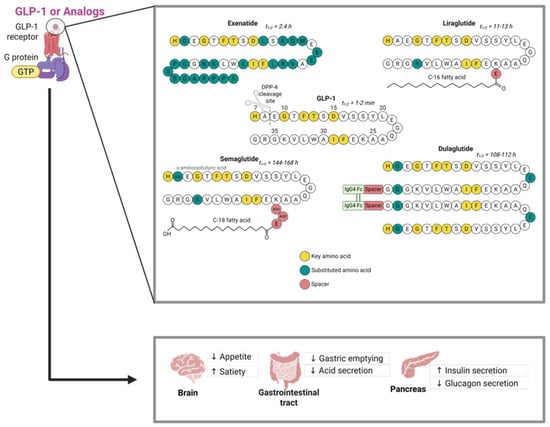
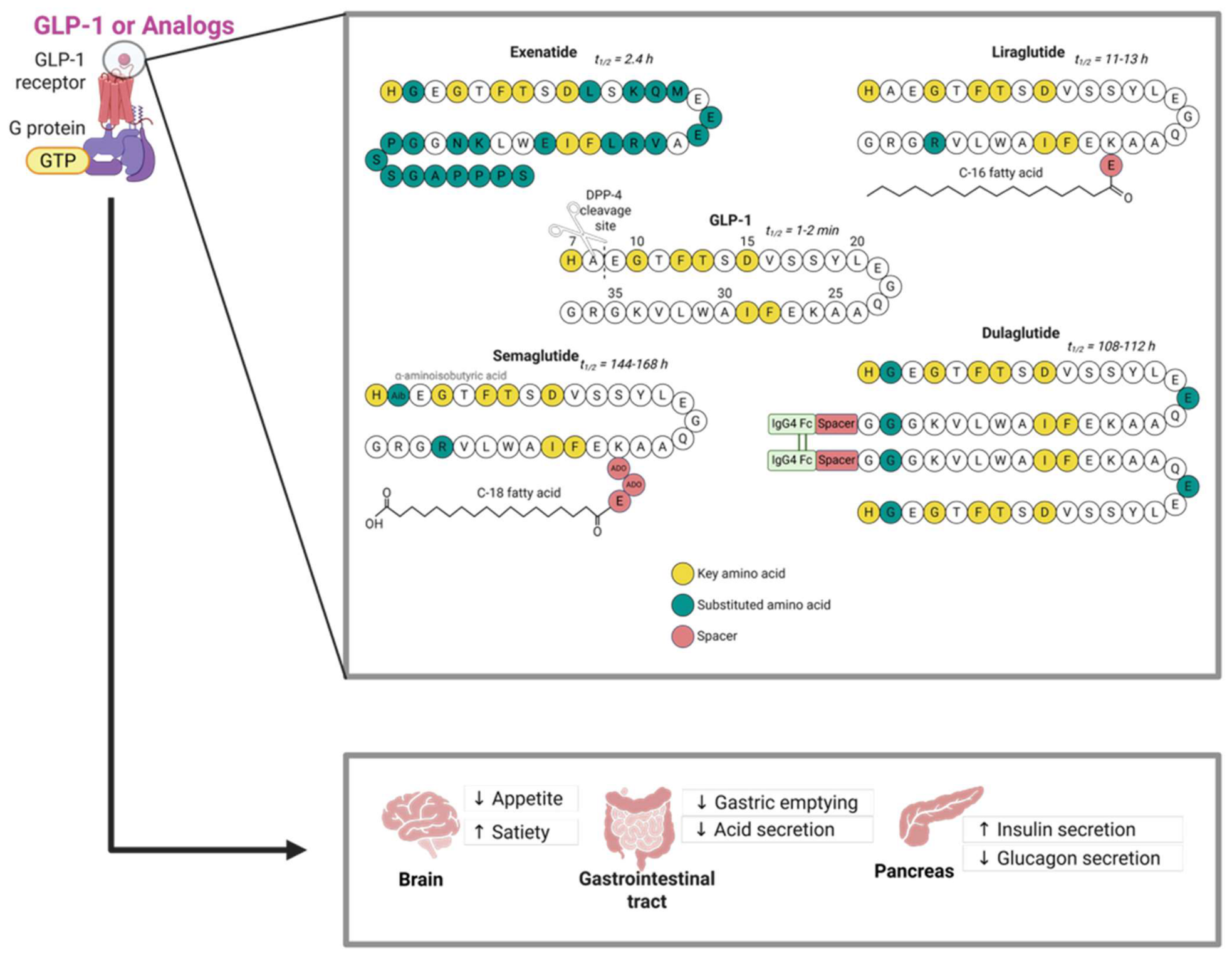
Originally introduced for the treatment of T2DM, GLP-1 RAs demonstrated potent efficacy in improving glycemic control with minimal risk of hypoglycemia, while also promoting weight reduction. This success paved the way for next-generation, long-acting analogs such as liraglutide, semaglutide, and dulaglutide (Figure 1), which exhibit enhanced molecular stability, prolonged half-lives, and greater overall therapeutic efficacy in glucose and weight management [18,19]. Understanding these mechanisms has played a pivotal role in the development of pharmacotherapies targeting obesity and metabolic syndrome.
Figure 1.
Structural characteristics and mechanism of action of GLP-1 and GLP-1 receptor agonists. Amino acid sequences of native GLP-1 and its receptor agonists (exenatide, liraglutide, semaglutide, and dulaglutide) are shown, highlighting conserved residues, amino acid substitutions, and spacer regions. The dipeptidyl peptidase-4 (DPP-4) cleavage site in native GLP-1 is indicated. Structural modifications, including amino acid substitutions, fatty acid acylation, and IgG4 Fc fusion, confer resistance to DPP-4 degradation, enhance molecular stability, and prolong pharmacokinetic profiles. Insets illustrate GLP-1 receptor (GPCR) activation and the main physiological effects in target tissues, including appetite regulation, delayed gastric emptying, and modulation of insulin and glucagon secretion. Created in BioRender. Berto-junior, C. (2026) https://BioRender.com/cptq3ch (accessed on 13 January 2026).
2. Clinical Trials
In this review, after applying the predefined inclusion and exclusion criteria, a total of 10 clinical trials were included for analysis. The Semaglutide Treatment Effect in People with Obesity (STEP) clinical trial program entails studies conducted across 36 countries, providing broad geographic and population diversity.
To ensure methodological consistency and comparability across trials, only treatment arms receiving the maintenance dose of semaglutide 2.4 mg were considered eligible for analysis. Consequently, the following intervention arms were excluded: semaglutide 1.0 mg in STEP 2, semaglutide 1.7 mg in STEP 6, and liraglutide 3.0 mg in STEP 8. With respect to treatment duration, STEP 1–4, STEP 6, STEP 8, and STEP TEENS followed a similar study design with a total intervention period of 68 weeks. This period included a standardized dose-escalation phase (0.25, 0.5, 1.0, 1.7, and 2.4 mg), with dose increments occurring every four weeks until the maintenance dose of semaglutide 2.4 mg was achieved. In contrast, STEP 5 incorporated an extended treatment and follow-up period of 104 weeks, whereas STEP 7 and STEP 10 employed shorter intervention durations of 44 and 52 weeks, respectively. These variations in treatment duration were taken into account during the interpretation and comparison of outcomes across studies. Regarding the placebo arms, particular attention was given to STEP 4 and STEP 10. In these trials, participants allocated to the placebo group underwent a dose escalation identical to that of semaglutide treatment, and after this phase they were randomized to receive the placebo, which represents a relevant methodological distinction compared to other STEP trials. In all trials, the pharmacological intervention or placebo were administered as an adjunct to standardized lifestyle modifications, including a reduced-calorie diet and increased physical activity.
In STEP 1, semaglutide 2.4 mg produced marked reductions in anthropometric measures, corresponding to approximately 15% reduction in body weight, 14% reduction in waist circumference, and 5.5 kg/m2 reduction in BMI, compared with modest changes in the placebo group (Table 2). Metabolic improvements included a 22% reduction in triglycerides and VLDL cholesterol, a 17% decrease in free fatty acids, and a 53% reduction in C-reactive protein, indicating a pronounced anti-inflammatory effect relative to placebo (15%). No significant difference was observed between the HDL dosage values between the placebo and semaglutide groups (Table 3). Phase 3 trial was published by Wilding et al. (2021) [20].
Table 2.
Effects of semaglutide 2.4 mg on anthropometric parameters across STEP clinical trials.
Table 3.
Effects of semaglutide 2.4 mg on lipid profile and C-reactive protein across STEP clinical trials.
In STEP 2, which included participants with type 2 diabetes mellitus, semaglutide 2.4 mg produced greater reductions in anthropometric measures than placebo (Table 2). Metabolic improvements included increased HDL cholesterol and significant reductions in triglycerides, VLDL cholesterol, free fatty acids, and C-reactive protein, while LDL cholesterol remained unchanged in both groups (Table 3). Phase 3 trial was published by Davies et al. (2021) [21]. In addition to the beneficial anthropometric and metabolic effects observed in lipid profile parameters and C-reactive protein levels, treatment with semaglutide was also associated with significant improvements in glycemic control. As previously reported by Frias et al. (2021) [22], in the STEP 2 study, HbA1c levels decreased from 8.1% at baseline to 6.4% at week 68 in the group receiving 2.4 mg of semaglutide, while the placebo group showed a reduction from 8.1% to 7.8%. Furthermore, reductions in concomitant use of hypoglycemic medications, including dose reduction, medication switching, or treatment interruption, were reported in 106 (28.6%) of the 371 participants treated with 2.4 mg of semaglutide, compared with 26 (7.1%) of the 364 participants who received placebo [21].
In STEP 3, semaglutide combined with intensive behavioral therapy led to pronounced reductions in body weight, waist circumference, and body mass index compared with placebo (Table 2). Semaglutide treatment was associated with significant decreases in triglycerides, VLDL cholesterol, free fatty acids, and C-reactive protein, whereas metabolic changes in the placebo group were modest (Table 3). Phase 3 trial was published by Wadden et al. (2021) [23].
In STEP 4, employing a randomized withdrawal design, continuation of semaglutide from week 20 to week 68 was associated with maintenance of weight loss. An important finding was the marked reversal of anthropometric improvements following withdrawal of semaglutide therapy. Participants switched to placebo after the dose-escalation period exhibited mean increases of 6.1 kg in body weight, 2.2 kg/m2 in body mass index, and 3.3 cm in waist circumference between weeks 20 and 68, whereas participants who continued semaglutide treatment maintained reductions of 7.1 kg, 2.6 kg/m2, and 6.4 cm, respectively (Table 2). These findings reinforce the chronic and relapsing nature of obesity and are consistent with recent evidence demonstrating that the discontinuation of GLP-1 receptor agonists and other anti-obesity therapies is frequently associated with weight regain and partial reversal of metabolic improvements [24]. Semaglutide continuation was also associated with reductions in triglycerides, VLDL cholesterol, and free fatty acids, whereas placebo was associated with unfavorable lipid changes. HDL cholesterol increased similarly in both groups, and C-reactive protein data were not reported (Table 3). This phase 3 trial was published by Rubino et al. (2021) [25].
In the STEP 5, which evaluated long-term treatment over 104 weeks, semaglutide 2.4 mg demonstrated sustained reductions in body weight, waist circumference, and body mass index compared with placebo (Table 2). Favorable metabolic effects were maintained over the extended follow-up, including reductions in triglycerides, VLDL cholesterol, and C-reactive protein, supporting the durability of both metabolic and anti-inflammatory benefits with prolonged semaglutide therapy (Table 3). Phase 3 trial was published by Wharton et al. (2022) [26].
The STEP 6 involved an Asian population, with or without T2DM. Results indicated that semaglutide led to reductions of 11.3 kg in BW, 11.2 cm in ΔWC, 4.3 kg/m2 in BMI and placebo group presented 1.7 kg, 1.8 cm, 0.6 kg/m2, respectively (Table 2). The semaglutide group increased 8.0% in HDL and decreased 14% in LDL, 21% in VLDL and TG, 4% in FFA and 61% in CRP. Otherwise, the placebo group increased 6% in HDL, 5% in VLDL and TG, and 28% in FFA and decreased 5% in LDL and 8% in CRP (Table 3). Phase 3 trial was published by Kadowaki et al. (2022) [27,28].
In STEP 7, study patients administered subcutaneously semaglutide once-weekly, gradually increasing to 2.4 mg for 44 weeks. Therefore, semaglutide group demonstrated significant mean reductions of 11.5 kg in BW, 10.7 cm in ΔWC, 4.16 kg/m2 in BMI and placebo group presented reduced 3.4 kg in BW, 3.9 cm in ΔWC, 1.2 kg/m2, respectively (Table 2). The semaglutide group increased 5.1% in HDL and decreased 2.2% in LDL, 7.4% in VLDL, 6.9% in FFA and 28% in TG whereas the placebo group increased 3.2% in LDL, 6.6% in HDL, 0.5% in FFA and decreased 4.2% in VLDL and 4.5% in TG (Table 3). Phase 3 trial was published by Mu et al. (2024) [29].
STEP 8 compared once-weekly semaglutide to daily liraglutide in adults without T2DM. The semaglutide group resulted in mean reductions of 15.8 kg in BW and 13.6 cm in ΔWC and the placebo group presented reduced 1.4 kg and 2.0 cm, respectively (Table 2). The semaglutide group decreased all biomarkers evaluated, 7% in LDL, 1% in HDL, 21% in VLDL, 10% in FFA and 20% in TG and 54% in CRP whereas the placebo group increased 1% in FFA and decreased 1% in HDL and LDL, 3% in VLDL, 2% in TG and 22% in CRP (Table 3). Phase 3 trial was published by Rubino et al. (2022) and Snitker et al. (2022) [30,31].
In STEP 10, semaglutide 2.4 mg led to mean reductions of 15.3 kg in body weight and 12.7 cm in waist circumference, compared with 2.4 kg and 0.6 cm, respectively, in the placebo group (Table 2). Improvements in lipid parameters included reductions of 28% in triglycerides and 28% in VLDL cholesterol, while CRP and free fatty acid data were not reported (Table 3). Phase 3 trial was published by MacGowan et al. (2024) [32].
In STEP TEENS, 201 adolescents participated. Semaglutide group resulted mean reductions of 15.3 kg in BW, 12.4 cm in ΔW.C. and 5.8 kg/m2 and placebo group reduced 2.0 cm in ΔW.C. and increased 2.4 kg in BW and 0.1 kg/m2 (Table 2). The semaglutide group increased 8% in HDL and decreased 12% in LDL and 28.4% in VLDL and TG whereas the placebo group increased 3.2% in HDL, 1.6% in VLDL and 2.6% in TG and decreased 3.4% in LDL. Data from FFA and CRP were not presented (Table 3). Phase 3 trial was published by Weghuber et al. (2022) [33].
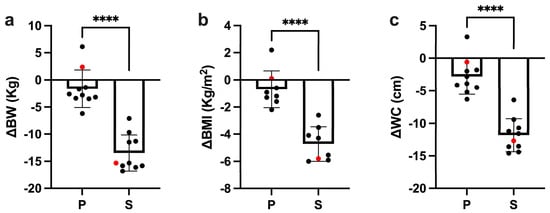
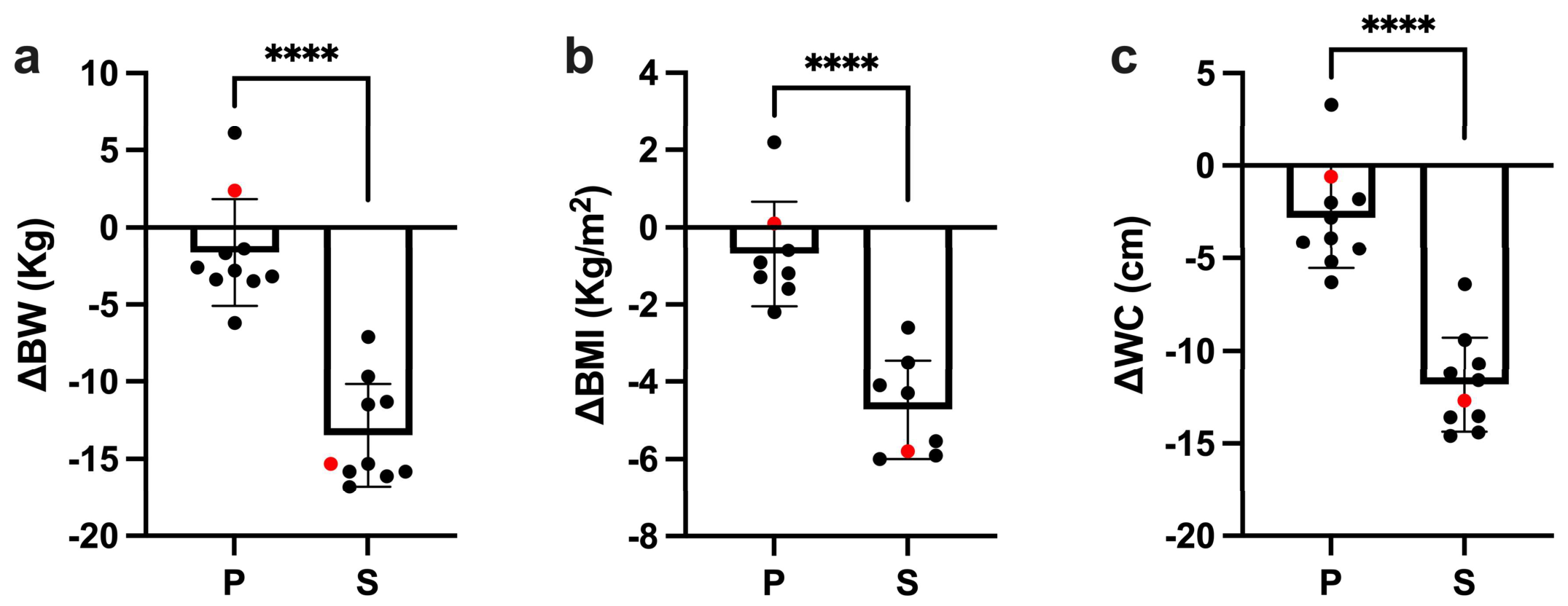
Across the STEP clinical trial program, treatment with semaglutide 2.4 mg consistently resulted in clinically meaningful improvements in anthropometric, metabolic, and inflammatory parameters compared with placebo. A total of 5790 patients were evaluated in this review. Reductions in body weight −13.0 ± 3.3 vs. −1.6 ± 3.5 Kg, accompanied by decreases in waist circumference −11.81 ± 2.54 vs. −2.79 ± 2.74 cm and in body mass index −4.72 ± 1.27 vs. −0.6 ± 1.35 kg/m2, depending on study design and duration (Table 2; Figure 2).
Figure 2.
Analysis of anthropometric characteristics of selected studies. (a) ΔBW: Change in body weight in kg; (b) ΔBMI: Change in body mass index (BMI) in kg/m2; (c) ΔWC: Change in waist circumference in cm; P: Placebo group; S: Semaglutide group. Black symbols represent adult populations, whereas red symbols represent the STEP TEENS adolescent population. The means and standard deviations were calculated by the authors of this work considering the values obtained in each STEP as if it were an individual. **** p < 0.0001.
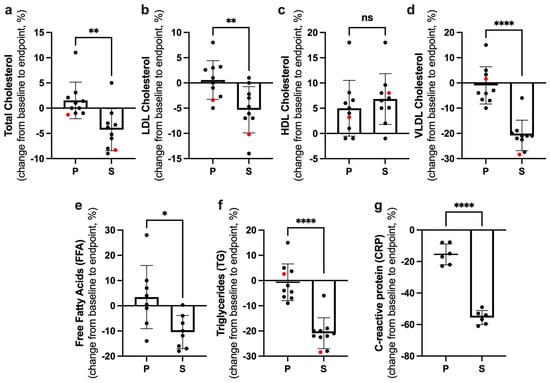
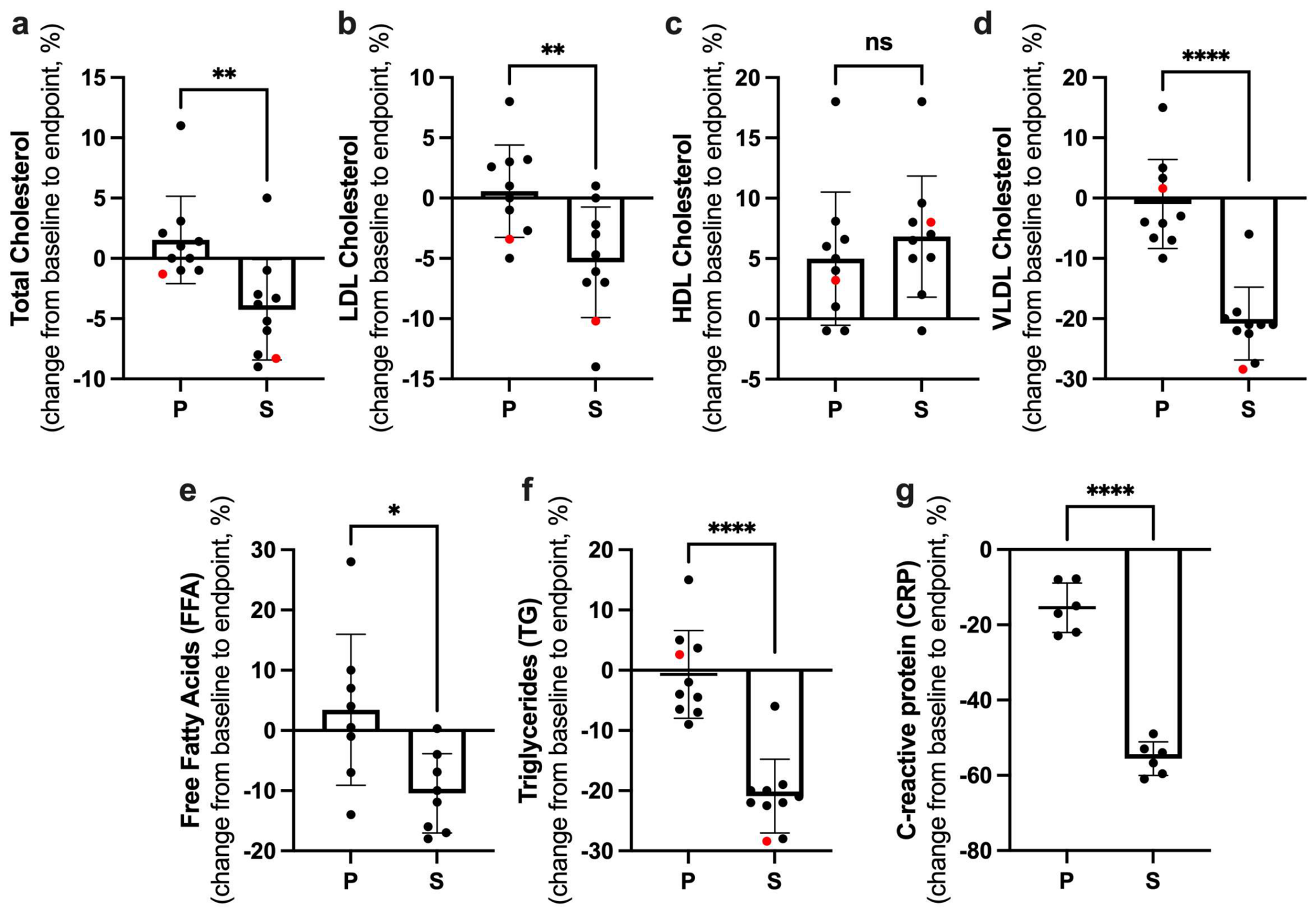
Regarding metabolic outcomes, semaglutide treatment was associated with consistent reductions in triglycerides (−20.89 ± 6.14%) and VLDL cholesterol (−20.82 ± 6.05%), along with reductions in free fatty acids of −10.44 ± 6.57%. Changes in LDL cholesterol were generally modest, while HDL showed no significant change between semaglutide and placebo cholesterol (Table 3; Figure 3). Importantly, semaglutide treatment was associated with substantial reductions in systemic inflammation, as reflected by decreases in C-reactive protein −55.55 ± 4.45% in studies where this biomarker was reported (Figure 3). Collectively, these findings demonstrate a consistent pattern of weight loss accompanied by favorable lipid modulation and marked anti-inflammatory effects across diverse populations and trial designs within the STEP program.
Figure 3.
Effects of semaglutide 2.4 mg on lipid profile parameters and C-reactive protein across STEP clinical trials. Comparative analysis of percentage changes in lipid parameters: (a)Total Cholesterol; (b) LDL Cholesterol; (c) HDL Cholesterol; (d) VLDL Cholesterol; (e) Free Fatty Acids; (f) Triglycerides and (g) C-reactive protein (CRP) in placebo (P) and semaglutide (S) groups across the selected STEP trials. Black symbols represent adult populations, whereas red symbols represent the STEP TEENS adolescent population. Data are expressed as percentage changes from baseline to end of treatment. Each data point represents trial-level outcomes from an individual STEP study. Mean values and standard deviations were calculated by the authors of the present review by pooling results at the study level. This figure provides an overview of the magnitude and direction of lipid and inflammatory marker changes associated with semaglutide 2.4 mg compared with placebo. ns: not significant, * p < 0.05, ** p < 0.01 and **** p < 0.0001.
Analysis of lipid profile and CRP levels across the selected STEP clinical trials. P: Placebo group; S: Semaglutide group. Black symbols represent adult populations, whereas red symbols represent the STEP TEENS adolescent population. The means and standard deviations were calculated by the authors of this work, considering the values obtained in each STEP trial as independent datasets. It should be noted that not all STEP trials evaluated all anthropometric, metabolic, and inflammatory parameters included in this analysis.
Because of the experimental design applied in the studies, primarily changes were caused by lifestyle changes such as regular physical activity and healthy eating habits in the placebo group. The change in these levels demonstrates how physical exercise and a balanced diet contribute to improvements in laboratory parameters. The reduction in CRP and the increase in HDL are desirable, since they lead to an improvement in the anti-inflammatory and cardiovascular condition of patients. The findings reinforce that once-weekly semaglutide at a dose of 2.4 mg should be considered a viable and effective option for obesity management, offering benefits that go beyond simple weight loss by contributing to overall metabolic health improvement.
3. Materials and Methods
In summary, this review was based on a search of the ClinicalTrials.gov database to identify clinical trials evaluating semaglutide in overweight or obese individuals. The search strategy employed the terms Condition/Disease: “Obesity” OR “Overweight” and Intervention/Treatment: “Semaglutide”, with filters applied to phase 3 clinical studies, with results and Sponsor (Lead): Novo Nordisk A/S. Thirteen clinical trials were initially identified. Studies addressing conditions other than obesity or type 2 diabetes were excluded, resulting in 10 eligible trials (Table 1). Clinical data and biochemical parameters were summarized and analyzed descriptively. Where applicable, exploratory statistical analyses were performed using GraphPad Prism software version 9.0 with the unpaired Student’s t-test, with a significance threshold set at p < 0.05.
4. Conclusions
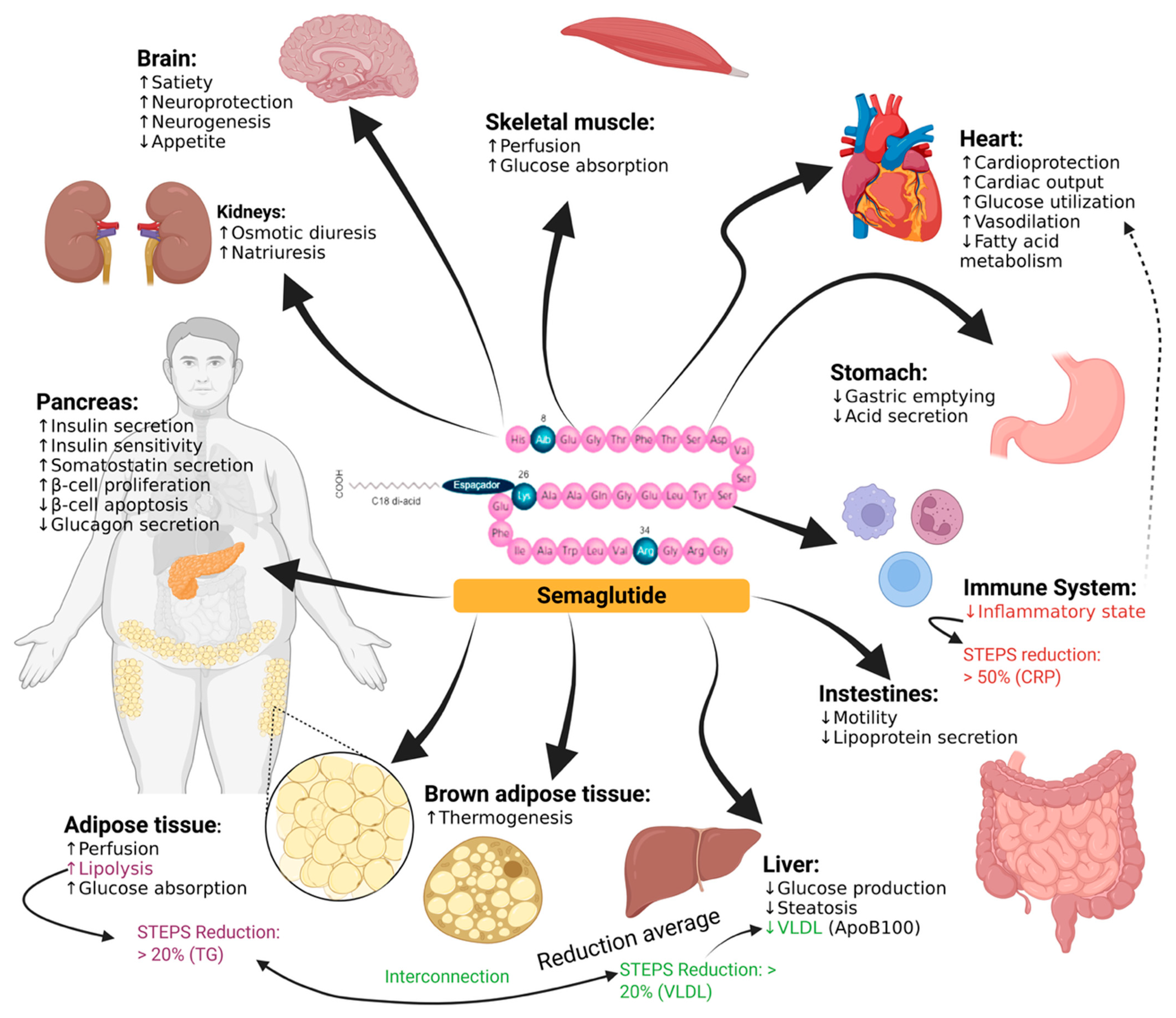
In conclusion, the STEP clinical trial program consistently demonstrated that semaglutide promotes significant improvements in anthropometric, metabolic, and inflammatory parameters in individuals with overweight or obesity, including adult, adolescent, and diabetic populations. Beyond substantial reductions in body weight, waist circumference, and body mass index, semaglutide treatment was associated with favorable modulation of lipid profile parameters and marked reductions in C-reactive protein levels, reinforcing its potential cardiometabolic and anti-inflammatory benefits (Figure 4). Similar trends were observed in STEP TEENS, suggesting that these therapeutic effects are also maintained in adolescent populations. In individuals with type 2 diabetes mellitus, semaglutide additionally improved glycemic control and reduced the need for concomitant glucose-lowering medications. Importantly, findings from STEP 4 demonstrated that discontinuation of semaglutide therapy may lead to partial reversal of anthropometric and metabolic improvements, supporting the concept that obesity is a chronic and relapsing disease that may require long-term pharmacological management. Collectively, these findings highlight semaglutide as an important therapeutic strategy not only for weight reduction but also for broader metabolic and inflammatory regulation in obesity-related conditions.
Figure 4.
Overview of the pleiotropic effects of semaglutide across multiple organs and tissues. Through GLP-1 receptor activation, semaglutide promotes increased satiety and reduced appetite, delays gastric emptying, enhances insulin secretion and sensitivity, and improves glucose uptake in peripheral tissues. In the liver and intestine, semaglutide reduces lipoprotein production and secretion, contributing to clinically relevant reductions in TG and VLDL-C observed in the STEP trials. In parallel, semaglutide exerts cardioprotective effects and markedly reduces systemic inflammation, as reflected by substantial decreases in CRP, highlighting its integrated cardiometabolic benefits beyond weight loss. Created in BioRender. Berto-junior, C. (2026) https://BioRender.com/nrbaa7n (accessed on 13 January 2026).
Author Contributions
G.G.R.B., L.V.M., G.T.R. and N.d.C.d.S.M. contributed to conceptualization, methodology, validation, investigation and data curation. C.B.-J., L.P.C. and E.F.d.C.-J. contributed to conceptualization, methodology, validation, writing—original draft preparation and—review and editing, supervision, project administration and funding acquisition. All authors have read and agreed to the published version of the manuscript.
Funding
This research received no external funding.
Institutional Review Board Statement
Not applicable.
Informed Consent Statement
Not applicable.
Data Availability Statement
No new data were created or analyzed in this study. Data sharing is not applicable to this article.
Conflicts of Interest
The authors declare no conflicts of interest.
Abbreviations
| CRP | C-reactive protein |
| WHO | World Health Organization |
| CVD | cardiovascular diseases |
| T2DM | type 2 diabetes mellitus |
| GLP-1 | glucagon-like peptide-1 |
| TC | total cholesterol |
| STEP | Semaglutide Treatment Effect in People with Obesity |
| BMI | body mass index |
| TG | triglycerides |
| LDL-C | low-density lipoprotein cholesterol |
| HDL-C | high-density lipoprotein cholesterol |
| VLDL-C | very low-density lipoprotein cholesterol |
| NSAIDs | non-steroidal anti-inflammatory drugs |
| AOMs | anti-obesity medications |
| FDA | Food and Drug Administration |
| EMA | European Medicines Agency |
| A.C. | abdominal circumference |
| B.W | body weight |
References
- Obesity and Overweight. Available online: https://www.who.int/news-room/fact-sheets/detail/obesity-and-overweight (accessed on 24 June 2025).
- Angi, A.; Chiarelli, F. Obesity and Diabetes: A Sword of Damocles for Future Generations. Biomedicines 2020, 8, 478. [Google Scholar] [CrossRef] [Scilit]
- Ullah, M.I.; Tamanna, S. Obesity: Clinical Impact, Pathophysiology, Complications, and Modern Innovations in Therapeutic Strategies. Medicines 2025, 12, 19. [Google Scholar] [CrossRef] [Scilit]
- Abdelaal, M.; le Roux, C.W.; Docherty, N.G. Morbidity and Mortality Associated with Obesity. Ann. Transl. Med. 2017, 5, 161. [Google Scholar] [CrossRef] [Scilit]
- World Health Organization. WHO European Regional Obesity Report 2022; Kluge, H.H.P., Weltgesundheitsorganisation, Eds.; World Health Organization: Copenhagen, Denmark, 2022; ISBN 978-92-890-5773-8.
- Boutari, C.; Mantzoros, C.S. A 2022 Update on the Epidemiology of Obesity and a Call to Action: As Its Twin COVID-19 Pandemic Appears to be Receding, the Obesity and Dysmetabolism Pandemic Continues to Rage on. Metabolism 2022, 133, 155217. [Google Scholar] [CrossRef] [Scilit]
- Use of World Health Organization and CDC Growth Charts for Children Aged 0–59 Months in the United States. Available online: https://www.cdc.gov/mmwr/preview/mmwrhtml/rr5909a1.htm (accessed on 8 July 2025).
- Lu, J.; Liu, P.; Cai, M.; Lv, T.; Zhang, M.; Yin, K.; Cheng, J.; Zhang, G. Recent Progress in the Pharmacotherapy for Obesity. Eur. J. Pharmacol. 2025, 1002, 177850. [Google Scholar] [CrossRef] [Scilit] [PubMed]
- Moiz, A.; Filion, K.B.; Tsoukas, M.A.; Yu, O.H.Y.; Peters, T.M.; Eisenberg, M.J. Mechanisms of GLP-1 Receptor Agonist-Induced Weight Loss: A Review of Central and Peripheral Pathways in Appetite and Energy Regulation. Am. J. Med. 2025, 138, 934–940. [Google Scholar] [CrossRef] [Scilit] [PubMed]
- Bays, H.E.; Kirkpatrick, C.F.; Maki, K.C.; Toth, P.P.; Morgan, R.T.; Tondt, J.; Christensen, S.M.; Dixon, D.L.; Jacobson, T.A. Obesity, Dyslipidemia, and Cardiovascular Disease: A Joint Expert Review from the Obesity Medicine Association and the National Lipid Association 2024. J. Clin. Lipidol. 2024, 18, e320–e350. [Google Scholar] [CrossRef] [Scilit] [PubMed]
- Libby, P.; Buring, J.E.; Badimon, L.; Hansson, G.K.; Deanfield, J.; Bittencourt, M.S.; Tokgözoğlu, L.; Lewis, E.F. Atherosclerosis. Nat. Rev. Dis. Primers 2019, 5, 56. [Google Scholar] [CrossRef] [Scilit]
- Dai, W.; Liu, Z.; Yang, S.; Kong, J. Inflamed Adipose Tissue: Therapeutic Targets for Obesity-Related Endothelial Injury. Endocrinology 2023, 164, bqad094. [Google Scholar] [CrossRef] [Scilit]
- Aguiar, F.J.B.; Ferreira-Júnior, M.; Sales, M.M.; Cruz-Neto, L.M.; Fonseca, L.A.M.; Sumita, N.M.; Duarte, N.J.C.; Lichtenstein, A.; Duarte, A.J.S. C-Reactive Protein: Clinical Applications and Proposals for a Rational Use. Rev. Assoc. Med. Bras. 2013, 59, 85–92. [Google Scholar] [CrossRef] [Scilit]
- Rana, M.N.; Neeland, I.J. Adipose Tissue Inflammation and Cardiovascular Disease: An Update. Curr. Diab Rep. 2022, 22, 27–37. [Google Scholar] [CrossRef] [Scilit]
- Smith, N.K.; Hackett, T.A.; Galli, A.; Flynn, C.R. GLP-1: Molecular Mechanisms and Outcomes of a Complex Signaling System. Neurochem. Int. 2019, 128, 94–105. [Google Scholar] [CrossRef] [Scilit]
- Drucker, D.J. GLP-1 Physiology Informs the Pharmacotherapy of Obesity. Mol. Metab. 2022, 57, 101351. [Google Scholar] [CrossRef] [Scilit]
- Drucker, D.J.; Nauck, M.A. The Incretin System: Glucagon-like Peptide-1 Receptor Agonists and Dipeptidyl Peptidase-4 Inhibitors in Type 2 Diabetes. Lancet 2006, 368, 1696–1705. [Google Scholar] [CrossRef] [Scilit]
- Drucker, D.J. GLP-1-Based Therapies for Diabetes, Obesity and Beyond. Nat. Rev. Drug Discov. 2025, 24, 631–650. [Google Scholar] [CrossRef] [Scilit]
- Tran, K.L.; Park, Y.I.; Pandya, S.; Muliyil, N.J.; Jensen, B.D.; Huynh, K.; Nguyen, Q.T. Overview of Glucagon-Like Peptide-1 Receptor Agonists for the Treatment of Patients with Type 2 Diabetes. Am. Health Drug Benefits 2017, 10, 178–188. [Google Scholar]
- Wilding, J.P.H.; Batterham, R.L.; Calanna, S.; Davies, M.; Van Gaal, L.F.; Lingvay, I.; McGowan, B.M.; Rosenstock, J.; Tran, M.T.D.; Wadden, T.A.; et al. Once-Weekly Semaglutide in Adults with Overweight or Obesity. N. Engl. J. Med. 2021, 384, 989–1002. [Google Scholar] [CrossRef] [Scilit] [PubMed]
- Davies, M.; Færch, L.; Jeppesen, O.K.; Pakseresht, A.; Pedersen, S.D.; Perreault, L.; Rosenstock, J.; Shimomura, I.; Viljoen, A.; Wadden, T.A.; et al. Semaglutide 2·4 Mg Once a Week in Adults with Overweight or Obesity, and Type 2 Diabetes (STEP 2): A Randomised, Double-Blind, Double-Dummy, Placebo-Controlled, Phase 3 Trial. Lancet 2021, 397, 971–984. [Google Scholar] [CrossRef] [Scilit] [PubMed]
- Frías, J.P.; Auerbach, P.; Bajaj, H.S.; Fukushima, Y.; Lingvay, I.; Macura, S.; Søndergaard, A.L.; Tankova, T.I.; Tentolouris, N.; Buse, J.B. Efficacy and Safety of Once-Weekly Semaglutide 2·0 Mg versus 1·0 Mg in Patients with Type 2 Diabetes (SUSTAIN FORTE): A Double-Blind, Randomised, Phase 3B Trial. Lancet Diabetes Endocrinol. 2021, 9, 563–574. [Google Scholar] [CrossRef] [Scilit] [PubMed]
- Wadden, T.A.; Bailey, T.S.; Billings, L.K.; Davies, M.; Frias, J.P.; Koroleva, A.; Lingvay, I.; O’Neil, P.M.; Rubino, D.M.; Skovgaard, D.; et al. Effect of Subcutaneous Semaglutide vs. Placebo as an Adjunct to Intensive Behavioral Therapy on Body Weight in Adults with Overweight or Obesity: The STEP 3 Randomized Clinical Trial. JAMA 2021, 325, 1403–1413. [Google Scholar] [CrossRef] [Scilit]
- Kolli, R.T.; Aoutla, S.; Jyothi, N.; Mohamed Kalifa, M.R.H.; Raju, A.; Cheenikkal Muralidharan, K. Rebound or Retention: A Meta-Analysis of Weight Regain After the Discontinuation of Glucagon-Like Peptide-1 (GLP-1) Receptor Agonists and Other Anti-Obesity Drugs. Cureus 2025, 17, e94926. [Google Scholar] [CrossRef] [Scilit]
- Rubino, D.; Abrahamsson, N.; Davies, M.; Hesse, D.; Greenway, F.L.; Jensen, C.; Lingvay, I.; Mosenzon, O.; Rosenstock, J.; Rubio, M.A.; et al. Effect of Continued Weekly Subcutaneous Semaglutide vs. Placebo on Weight Loss Maintenance in Adults with Overweight or Obesity: The STEP 4 Randomized Clinical Trial. JAMA 2021, 325, 1414–1425. [Google Scholar] [CrossRef] [Scilit]
- Wharton, S.; Batterham, R.L.; Bhatta, M.; Buscemi, S.; Christensen, L.N.; Frias, J.P.; Jódar, E.; Kandler, K.; Rigas, G.; Wadden, T.A.; et al. Two-Year Effect of Semaglutide 2.4 Mg on Control of Eating in Adults with Overweight/Obesity: STEP 5. Obesity 2023, 31, 703–715. [Google Scholar] [CrossRef] [Scilit] [PubMed]
- Kadowaki, T.; Nishida, T.; Ogawa, W.; Overvad, M.; Tobe, K.; Yamauchi, T. Effect of Once-Weekly Subcutaneous Semaglutide on Abdominal Visceral Fat Area in Japanese Adults with Overweight and Obesity: A Post Hoc Analysis of the STEP 6 Trial. Obes. Res. Clin. Pract. 2025, 19, 146–153. [Google Scholar] [CrossRef] [Scilit]
- Kadowaki, T.; Isendahl, J.; Khalid, U.; Lee, S.Y.; Nishida, T.; Ogawa, W.; Tobe, K.; Yamauchi, T.; Lim, S.; STEP 6 investigators. Semaglutide Once a Week in Adults with Overweight or Obesity, with or without Type 2 Diabetes in an East Asian Population (STEP 6): A Randomised, Double-Blind, Double-Dummy, Placebo-Controlled, Phase 3a Trial. Lancet Diabetes Endocrinol. 2022, 10, 193–206. [Google Scholar] [CrossRef] [Scilit]
- Mu, Y.; Bao, X.; Eliaschewitz, F.G.; Hansen, M.R.; Kim, B.T.; Koroleva, A.; Ma, R.C.W.; Yang, T.; Zu, N.; Liu, M.; et al. Efficacy and Safety of Once Weekly Semaglutide 2·4 Mg for Weight Management in a Predominantly East Asian Population with Overweight or Obesity (STEP 7): A Double-Blind, Multicentre, Randomised Controlled Trial. Lancet Diabetes Endocrinol. 2024, 12, 184–195. [Google Scholar] [CrossRef] [Scilit]
- Rubino, D.M.; Greenway, F.L.; Khalid, U.; O’Neil, P.M.; Rosenstock, J.; Sørrig, R.; Wadden, T.A.; Wizert, A.; Garvey, W.T.; STEP 8 Investigators. Effect of Weekly Subcutaneous Semaglutide vs. Daily Liraglutide on Body Weight in Adults with Overweight or Obesity Without Diabetes: The STEP 8 Randomized Clinical Trial. JAMA 2022, 327, 138–150. [Google Scholar] [CrossRef] [Scilit]
- Snitker, S.; Egebjerg, C.; Frederiksen, M.; Sparre, T. Ease-of-Use and Acceptability of the Novel Semaglutide 2.4 Mg Single-Dose Pen-Injector in People with Overweight or Obesity in the STEP 8 Phase III Trial. Diabetes Obes. Metab. 2022, 24, 2273–2276. [Google Scholar] [CrossRef] [Scilit]
- McGowan, B.M.; Bruun, J.M.; Capehorn, M.; Pedersen, S.D.; Pietiläinen, K.H.; Muniraju, H.A.K.; Quiroga, M.; Varbo, A.; Lau, D.C.W.; STEP 10 Study Group. Efficacy and Safety of Once-Weekly Semaglutide 2·4 Mg versus Placebo in People with Obesity and Prediabetes (STEP 10): A Randomised, Double-Blind, Placebo-Controlled, Multicentre Phase 3 Trial. Lancet Diabetes Endocrinol. 2024, 12, 631–642. [Google Scholar] [CrossRef] [Scilit] [PubMed]
- Weghuber, D.; Barrett, T.; Barrientos-Pérez, M.; Gies, I.; Hesse, D.; Jeppesen, O.K.; Kelly, A.S.; Mastrandrea, L.D.; Sørrig, R.; Arslanian, S.; et al. Once-Weekly Semaglutide in Adolescents with Obesity. N. Engl. J. Med. 2022, 387, 2245–2257. [Google Scholar] [CrossRef] [Scilit] [PubMed]

Disclaimer/Publisher’s Note: The statements, opinions and data contained in all publications are solely those of the individual author(s) and contributor(s) and not of MDPI and/or the editor(s). MDPI and/or the editor(s) disclaim responsibility for any injury to people or property resulting from any ideas, methods, instructions or products referred to in the content. |
© 2026 by the authors. Licensee MDPI, Basel, Switzerland. This article is an open access article distributed under the terms and conditions of the Creative Commons Attribution (CC BY) license.