Article

Standardization of Extracts Obtained from Achillea millefolium Flowers Using High-Performance Liquid Chromatography and Correlation with Relaxant Effects of Leucodin and Achillin


by
Monserrat Hernández-Morales
1,†,
Sergio Alcalá-Alcalá
1,*,
Luis Arias-Durán
2,
Jaime Escalante-García
3,
Jorge Alberto Barrios-Payán
4,
Rogelio Hernández-Pando
4 and
Samuel Estrada-Soto
1,*
1
Facultad de Farmacia, Universidad Autónoma del Estado de Morelos, Cuernavaca 62209, Morelos, Mexico
2
Laboratorio de Farmacología, Departamento de Ciencias de la Salud, Universidad Autónoma Metropolitana-Iztapalapa, Mexico City 09340, Mexico
3
Centro de Investigaciones Químicas, Universidad Autónoma del Estado de Morelos, Cuernavaca 62209, Morelos, Mexico
4
Departamento de Patología y Anatomía Patológica, Instituto Nacional de Ciencias Médicas y Nutrición Salvador Zubirán, Mexico City 14080, Mexico
*
Authors to whom correspondence should be addressed.
Taken in part from the PhD thesis of M. Hernández-Morales.
Drugs Drug Candidates 2026, 5(2), 32; https://doi.org/10.3390/ddc5020032
Submission received: 19 March 2026 / Revised: 18 April 2026 / Accepted: 6 May 2026 / Published: 14 May 2026
(This article belongs to the Section Drug Candidates from Natural Sources)

Abstract

Background/Objectives: Achillea millefolium is a well-known plant used in traditional medicine for the treatment of inflammation, gastrointestinal disorders, respiratory diseases, hypertension, and diabetes, among others. These effects are attributed to the metabolite content of flavonoids and terpenes such as achillin (1) and leucodin (2). Thus, the current investigation aims to standardize the extracts from A. millefollium based on the presence of 1 and 2 and relate them to their relaxant effect in ex vivo assays. Methods: A validated High-Performance Liquid Chromatography (HPLC) method was used to determine the concentration of the main compounds, employing standard molecules previously isolated from the same species and characterized by nuclear magnetic resonance (NMR) and X-ray diffraction. Also, the relaxant effects of both compounds and their combinations were assayed on aortic and tracheal rat rings in an organ bath. Results: Compounds (1) and (2) are the main compounds in hexane, dichloromethane, and hydroalcoholic extracts, present in different proportions. The relaxant effects in ex vivo models of the aorta and trachea showed that the sesquiterpene lactones achillin (1) [Trachea, maximum effect (Emax): 67.67 ± 5.01%, medium effective concentration (EC50): 304.44 ± 2.61 µM; Aorta: Emax: 63.94 ± 6.28%, EC50: 225.73 ± 4.49 µM)] and leucodin (2) (Trachea: Emax: 76.71 ± 4.73%, EC50: 266.40 ± 2.05 µM; Aorta, Emax: 72.96 ± 1.73%, EC50: 163.29 ± 2.99 µM) are responsible for the relaxant effects shown by the extracts. The observed effect is proportional to the concentration of these molecules, with hexane extracts being more active. Additionally, we demonstrate the safety of molecules 1 and 2 through toxicological studies recommended by the OECD. Conclusions: The isolated compounds achillin and leucodin are the primary constituents in the flowers of A. millefolium, with higher concentrations found in hexane extracts, particularly of achillin, which shows a correlation of 2.33 with respect to leucodin. This correlation is closely related to their relaxant effect, as these compounds are the main contributors to the relaxant response in the trachea and aorta, being more effective when used together.

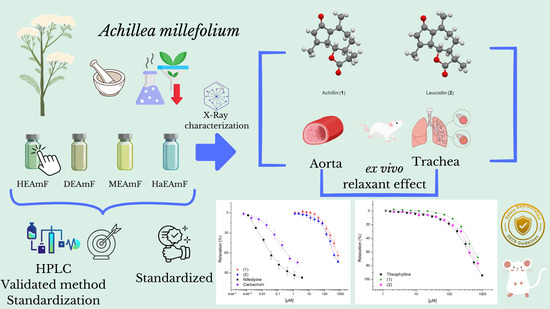
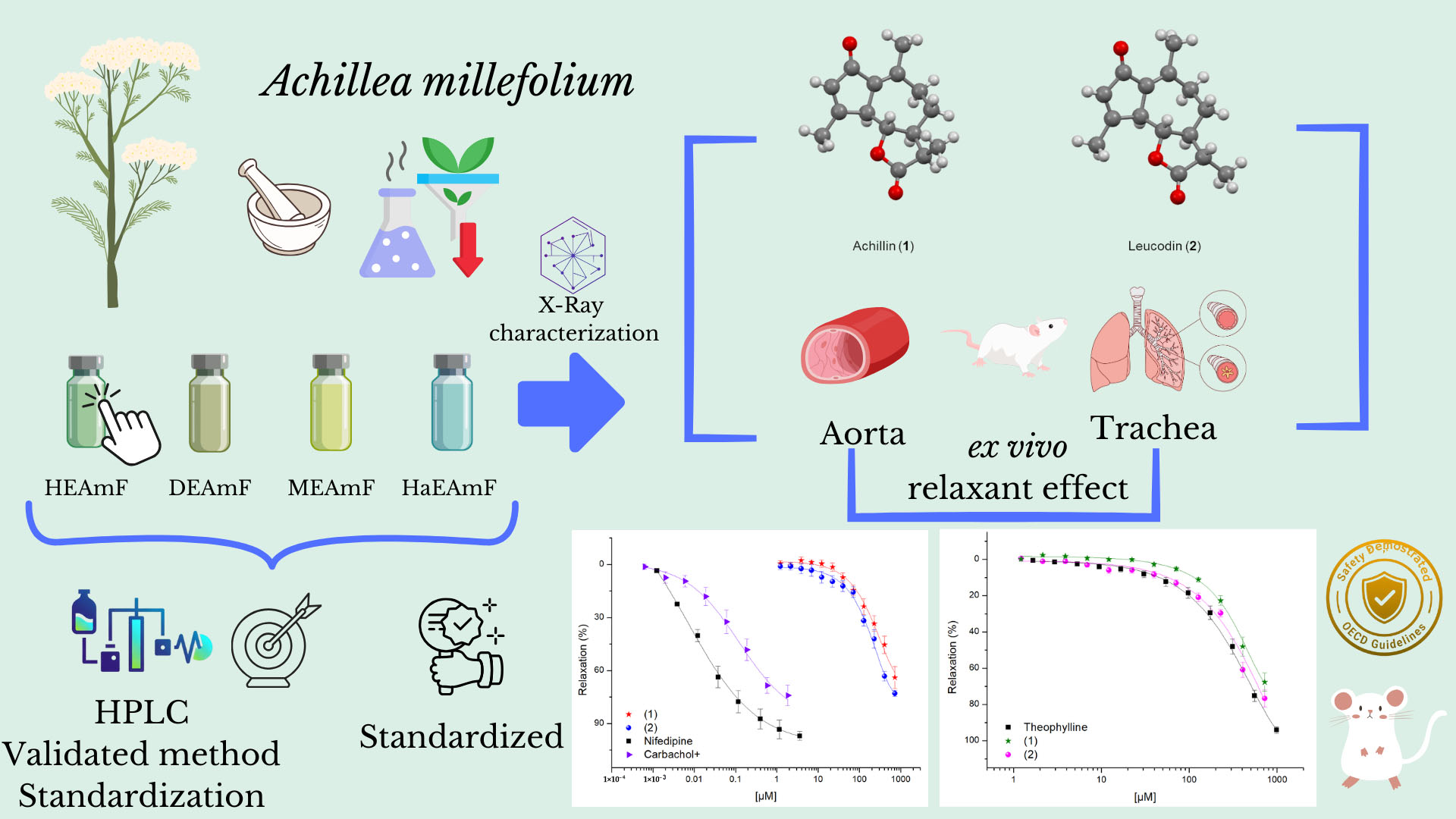
Graphical Abstract

1. Introduction

Traditional medicine remains an important resource for managing chronic and acute conditions such as cardiovascular diseases, depression, and inflammation, among others. Herbal remedies are widely used in various forms (essential oils, teas, ointments, capsules, and tablets), often made from raw or extracted plant materials. However, the natural variability of plants, combined with the complexity of their active compounds, presents major challenges for ensuring consistent quality, safety, and efficacy.
Despite its popularity, herbal medicine is often presumed safe without solid scientific evidence. Many products vary widely in composition due to differences in plant species, growing environments, and processing techniques. Moreover, herbal extracts can be contaminated, adulterated, or contain toxic substances. Therefore, quality control is essential to safeguard public health and ensure treatment effectiveness [1,2].
A major obstacle is the lack of standardized methods for evaluating herbal mixtures, which are not easily accommodated within current drug approval systems. The isolation of individual compounds is time-consuming and costly, making it impractical for many manufacturers. Consequently, the development of regulatory frameworks and research methodologies tailored to traditional medicines is urgently needed [3,4]. Standardization is crucial for ensuring the safe and effective use of herbal drugs and facilitating their integration into modern, evidence-based healthcare systems.
Achillea millefolium is a perennial species of the Asteraceae family, commonly known as yarrow or millefolium, and is widely distributed worldwide, mainly in Europe, West Asia, and México [5]. It has been used in traditional medicine for injuries and external inflammation [6]. Scientific evidence has demonstrated its pharmacological properties, which are beneficial for the treatment of gastrointestinal issues [7], and exert antioxidant [8], anti-inflammatory [9], vasorelaxant, tracheorelaxant, and antidiabetic effects, among others [10,11,12].
The chemical composition of the aerial parts of A. millefolium predominantly comprises essential oils, monoterpenes, and sesquiterpenes [13]. Reports also document the presence of macronutrients, such as linoleic and oleic acids, and flavonoids, including quercetin and its derivatives [14], apigenin, luteolin, kaempferol [15], rutin, and chlorogenic acid [16], which exhibit significant smooth muscle-relaxant effects [17,18,19,20,21,22,23,24]. Sesquiterpene lactones are chemotaxonomic markers of the genus Achillea. In A. millefolium, the compounds achillin (1) and leucodin (2) (Figure 1) have been previously described and isolated and are predominantly found in the flowers.
Among the sesquiterpene lactones identified in this species, those of the guaianolide type, such as achillin and leucodin, stand out for their significant pharmacological potential. Achillin and its deacylated derivative, leucodin, are key chemical markers for the Achillea genus and serve as fundamental subjects of study in phytochemistry and pharmacology. The biological importance of these compounds lies in their specific chemical structure, characterized by a lactone ring coupled to a carbocyclic skeleton, which allows them to interact with various cellular targets. From a pharmacological perspective, achillin and leucodin have demonstrated remarkable properties, including anti-inflammatory, antioxidant, and smooth muscle-relaxant effects, suggesting a blockade of calcium channels and the release of nitric oxide (NO). Research has shown that these compounds can modulate smooth muscle contraction in organs such as the aorta and trachea, making them candidates for developing therapeutic agents for cardiovascular and respiratory disorders [10,11,25].
Therefore, focusing on these two compounds in the present work is crucial to better understand the therapeutic profile of Achillea millefolium and establish a clearer relationship between their chemical structure and biological efficacy.
The relevance of studying achillin and leucodin also extends to their role in the plant’s survival and its interaction with the environment. As metabolites of the guaianolide pathway, their synthesis is intrinsically linked to the plant’s defensive mechanisms against biotic and abiotic stressors, such as drought and herbivory. In the context of pharmaceutical standardization, the quantification of these specific lactones is crucial, as they determine the quality and therapeutic efficacy of the raw material. Despite their known benefits, there is a lack of comprehensive data regarding the stability of these compounds across different collection years, their relaxant effects in ex vivo models, and their oral safety in murine models. Therefore, a deeper characterization of achillin and leucodin is not only essential for validating traditional medicinal uses but also for ensuring the reproducibility of pharmacological assays and the industrial application of A. millefolium extracts in cosmetic and pharmaceutical formulations.
Although the content of secondary metabolites in A. millefolium has been previously described, quantification of such metabolites is limited and cannot be related to the reported effects. This study aims to correlate the amount of the main compounds in different organic and hydroalcoholic extracts from A. millefolium with their relaxant effect in an ex vivo model by employing a validated analytical method and to assess oral safety in murine models.

2. Results and Discussion

As previously described, A. millefolium has various uses in folkloric medicine for treating several diseases. Its medicinal role is supported by pharmacological and phytochemical studies, which suggest a significant content of flavonoids and sesquiterpenes. Recent studies have enabled the isolation and characterization of two sesquiterpene lactones, achillin (1) and leucodin (2), which are recognized as the primary bioactive compounds with tracheorelaxant and vasorelaxant activities. Although these compounds have been detected, there are no reports on their quantification in A. millefolium, potential changes in their content over time, their presence in organic and hydroalcoholic extracts, or their correlation with the relaxant effect. Extract standardization will enable the monitoring of variations in the content of key metabolites over time and the identification of biological and ecological changes associated with them.
Thus, chromatographic techniques (such as HPLC) permit the quantification of the main metabolites in A. millefolium; the effectiveness of this method can be demonstrated through various validation criteria established by international and national institutes. The parameters that determine the reliability, adequacy, and reproducibility of the selected analytical method for quantifying and standardizing the lactones present in A. millefolium extracts are in accordance with national guidelines and the International Council for Harmonization [ICH Q2 (R1)] for validation of analytical procedures [26]. In our study, we focused on linearity, reproducibility, and accuracy.
Linearity refers to the ability to ensure that the results obtained directly or by a mathematical transformation are proportional to the concentration of the analyte [27]. The values should remain constant and fulfill a scaling function, demonstrating homogeneity. The linear regression obtained from compound 1 is shown in Figure S1A (Supplementary Materials), with the equation of the line y = 50,694.55596x + 8035.90007 and an R-squared (R2) value of 0.98504. For compound 2 (Supplementary Materials, Figure S1B), the equation is y = 62,332.49901x + 13,069.36935 with an R2 of 0.98786. In both cases, the R2 values exceed the threshold established in the guidelines (≥0.98). Statistical analysis of the slope–intercept of the line indicates that the p-value is above 0.05 (p < 0.05), demonstrating that the slope is different from zero and has a positive value. This result indicates that the data comply with linearity.
The equation of the line enables us to establish the limit of detection (LOD) and the limit of quantification (LOQ). The LOD indicates the amplitude of the background noise, representing the lowest concentration at which the instrument can clearly distinguish the analyte without confusing it with noise. The LOQ, on the other hand, indicates the smallest amount of the analyte that can be reliably quantified, as determined by the equipment used. The LOD calculated for 1 is 0.3183 µg/mL, while the LOQ is 0.964 µg/mL. On the other hand, compound 2 has an LOD of 0.3105 µg/mL and an LOQ of 0.9410 µg/mL. These data will allow us to establish the amount of each compound that can be detected and quantified with certainty. Table 1 presents the different parameters calculated and considered for linearity acceptance.
Precision is the proximity or degree of coincidence in the results obtained from the analyte when carrying out different measurements, and it is an exclusive function of accidental errors. The ICH establishes different levels to determine precision, including repeatability and reproducibility. Repeatability is the agreement among measurements taken in a short period under the same analysis conditions. On the other hand, reproducibility establishes the coincidence that exists in different measurements if a change in the conditions is generated in the analysis. As shown in Table 2, the repeatability analysis indicates that the concentrations recovered at three different levels (0.75, 4.00, and 7.50 µg/mL) for each compound have a standard deviation of less than 2%. This result is below the limit established by the guidelines, demonstrating that the method is repeatable. Reproducibility analysis (Table 3) shows that, despite measurements being taken on two different days, the recovered concentrations, considering the standard deviation, demonstrate values that are below the thresholds established by ICH guidance. The method satisfies the criteria for both repeatability and reproducibility, indicating that the technique used is precise. Accuracy measures the approximation of the data obtained to a known reference value. The method used in this study demonstrates accuracy, as the recovered concentrations for both lactones show a standard deviation of less than 2%, in accordance with ICH guidance. Additionally, the recovery percentages include a value of 100% (Table 4).
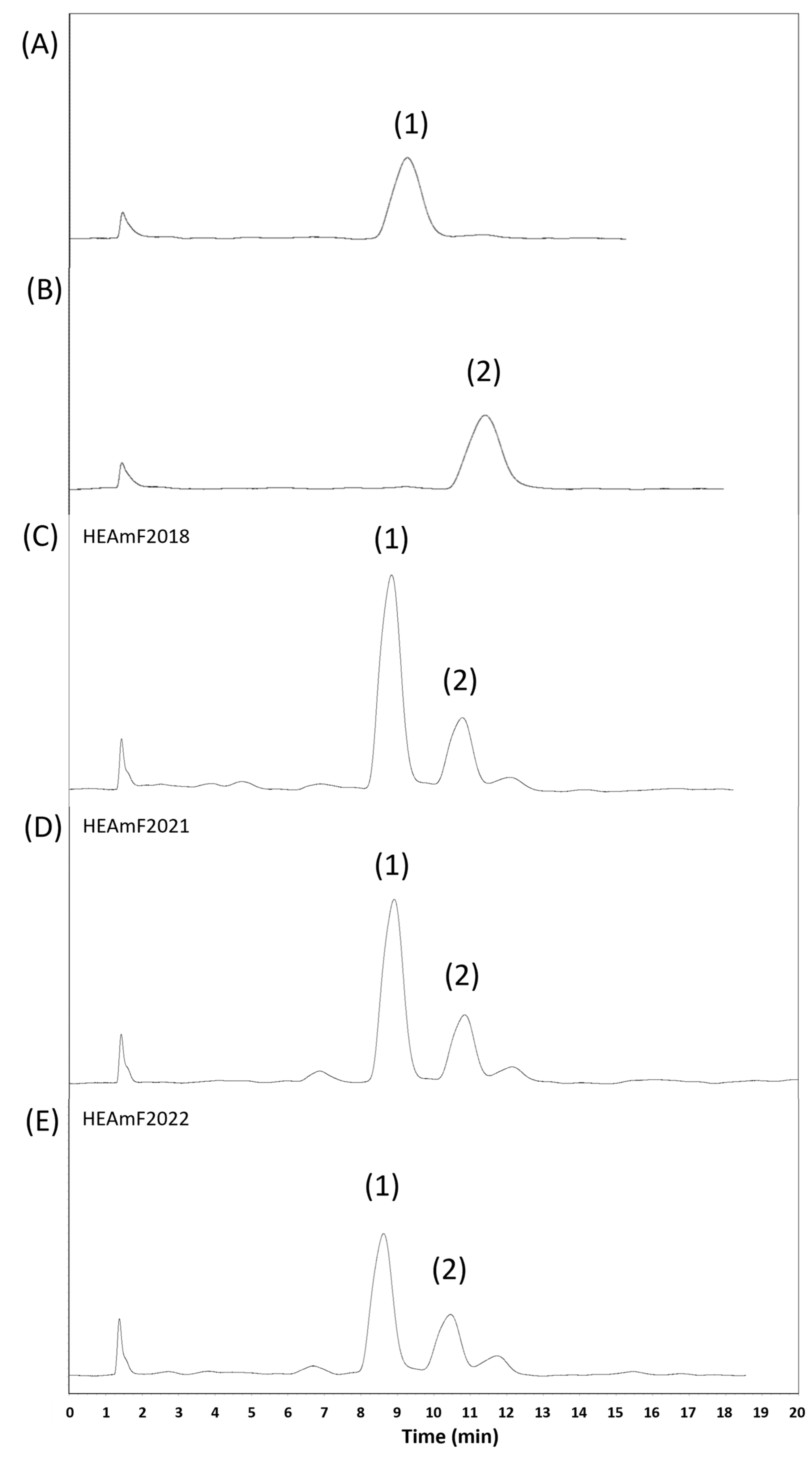
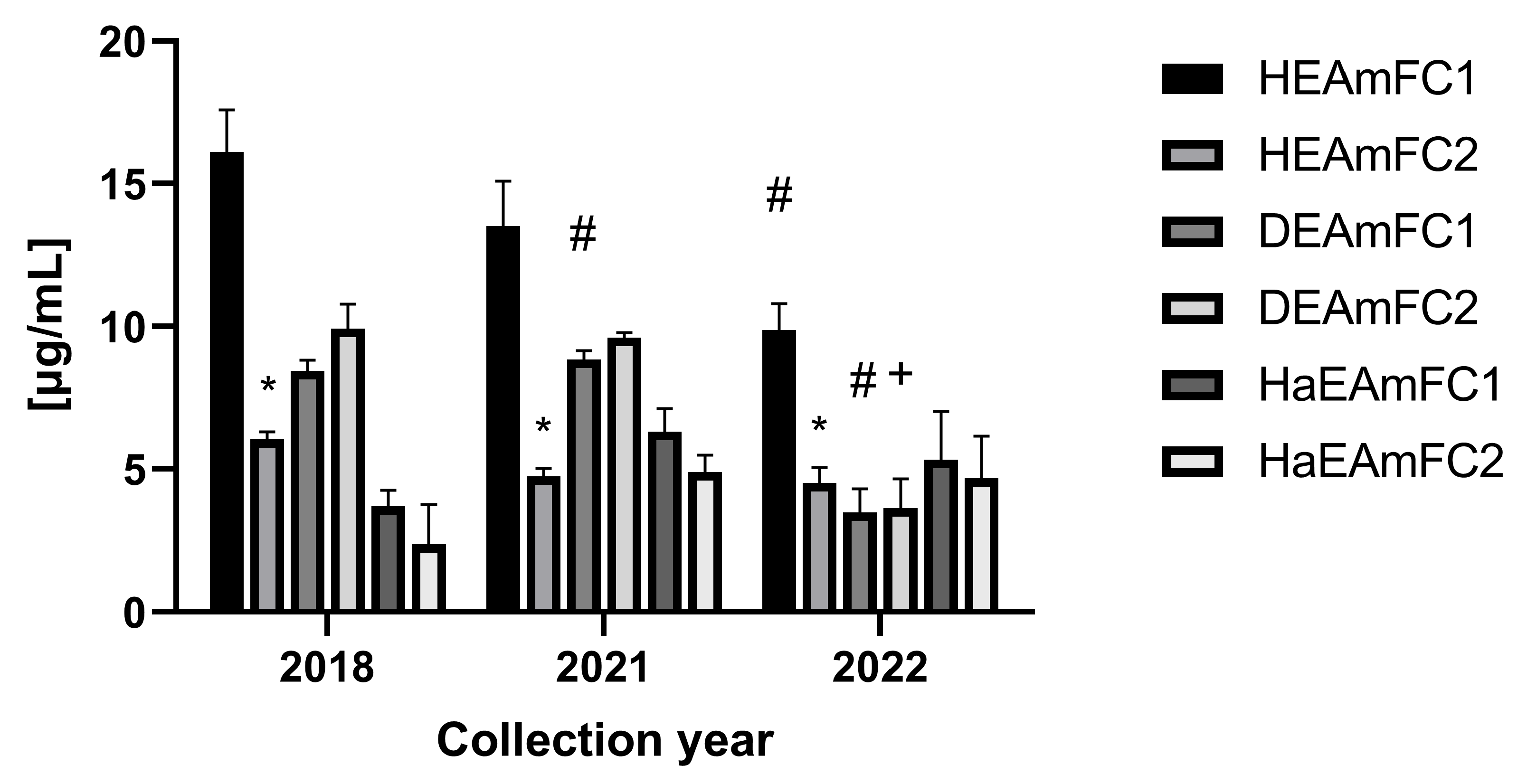
The validated HPLC method was used to quantify compounds 1 and 2 in the different organic and hydroalcoholic extracts of A. millefolium collected across three years (2018, 2021, and 2022). As observed in thin-layer chromatography, compounds 1 and 2 predominated in all extracts, except the methanolic extracts (Figure S2). The hexane extract (HEAmF) showed the presence of both compounds in all three years of collection, with the compounds being most abundant in the hexane extracts. As indicated in the chromatogram in Figure 2, compound 1 is the major component. Quantification of these molecules is expressed as a percentage according to the stock solution prepared at 100 µg/mL. In 2018, the quantification for compound 1 was 16.11 ± 1.48 µg/mL (16.11 ± 1.48%), while for compound 2 it was 6.03 ± 0.28 µg/mL (6.03 ± 0.28%). In 2021, the amounts were 13.51 ± 1.57 µg/mL (13.51 ± 1.57%) for 1 and 4.74 ± 0.28 µg/mL (4.74 ± 0.28%) for 2. In the hexane extract from 2022, the amount of compound 1 was 9.87 ± 0.91 µg/mL (9.87 ± 0.91%), and the amount of 2 was 4.5 ± 0.55 µg/mL (4.5 ± 0.55%). The content of compound 2 remained consistent over the three years, while compound 1 showed a decrease in concentration in the last year. This reduction may be related to a decrease in rainfall; according to the “Comisión Nacional del Agua (CONAGUA)” [28], 2022 saw only 552.8 mm of rainfall, whereas in previous years rainfall was measured at 786.2 mm in 2018 and 637.1 mm in 2021. This suggests that rainfall may influence the synthesis of sesquiterpene lactones. Even though compound 1 is present in low concentrations in samples from each year, the ratio of both lactones remains around 2.33 (Figure S3).
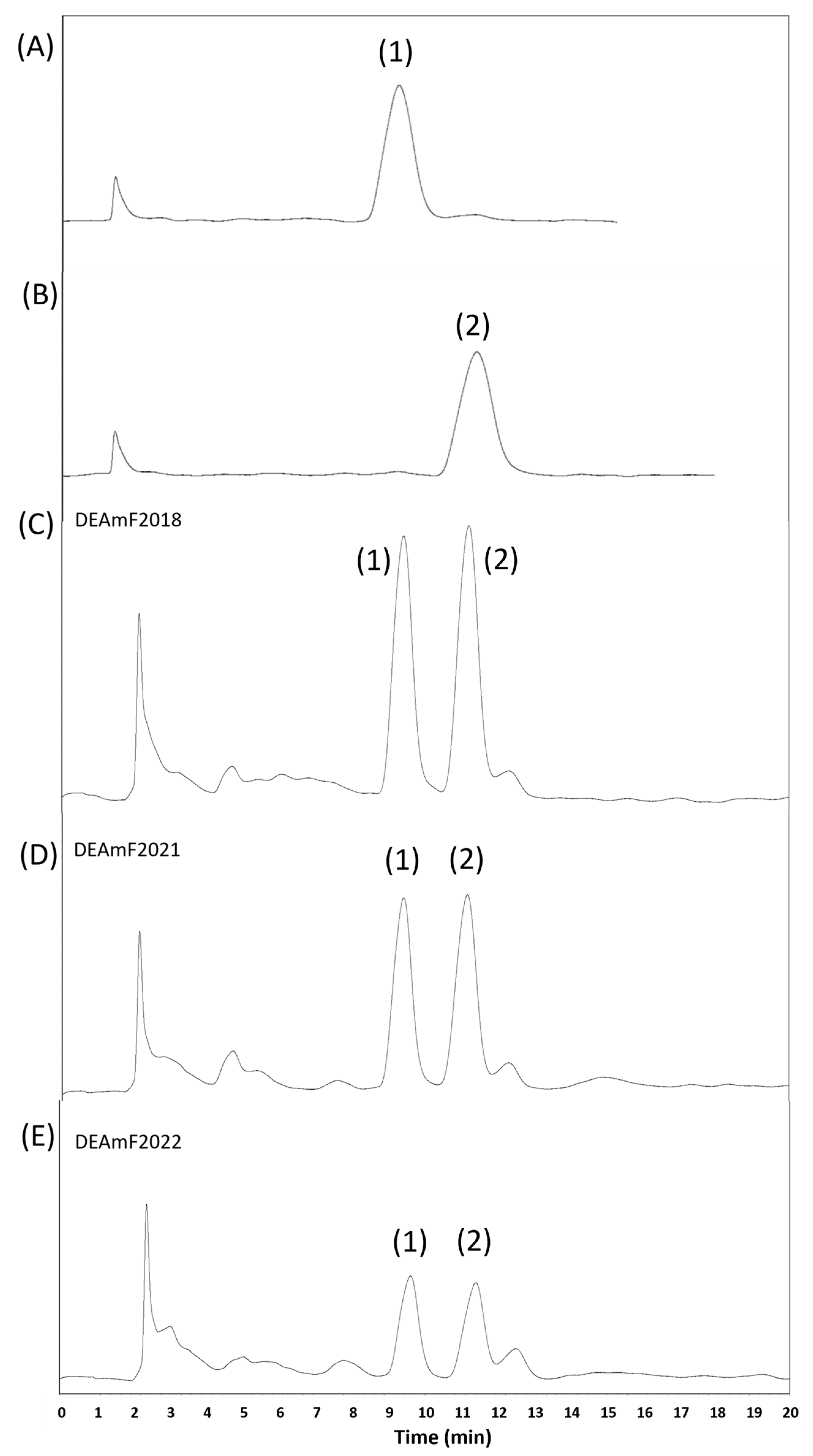
Quantification of the main lactones in the dichloromethane extracts (DEAmF) is lower than that in the hexane extracts (Figure 3). The concentration of compound 1 is 8.44 ± 0.38 µg/mL, while the concentration of compound 2 is 9.93 ± 0.85 µg/mL. The amounts of these compounds did not change significantly in the following year, with the concentration recorded at 8.84 ± 0.31 µg/mL for 1 and 9.60 ± 0.19 µg/mL for 2. However, in 2022, we observed a significant decrease in the concentration of these compounds, by nearly half, with the concentration of compound 1 recorded at 3.47 ± 0.84 µg/mL and that of compound 2 at 3.62 ± 1.02 µg/mL. This can be explained by the same reasons mentioned above regarding the HEAmF. In the DEAmF, the ratio of the quantified compounds is nearly 1. We also observed the presence of two other polar compounds, although they are present in lower amounts than compounds 1 and 2.
Identification of the sesquiterpene lactones in the methanolic extracts (MEAmF) was not possible, as shown in Figure S4; no signals were observed at the retention times of the compounds. However, other molecules with high polarity were detected.
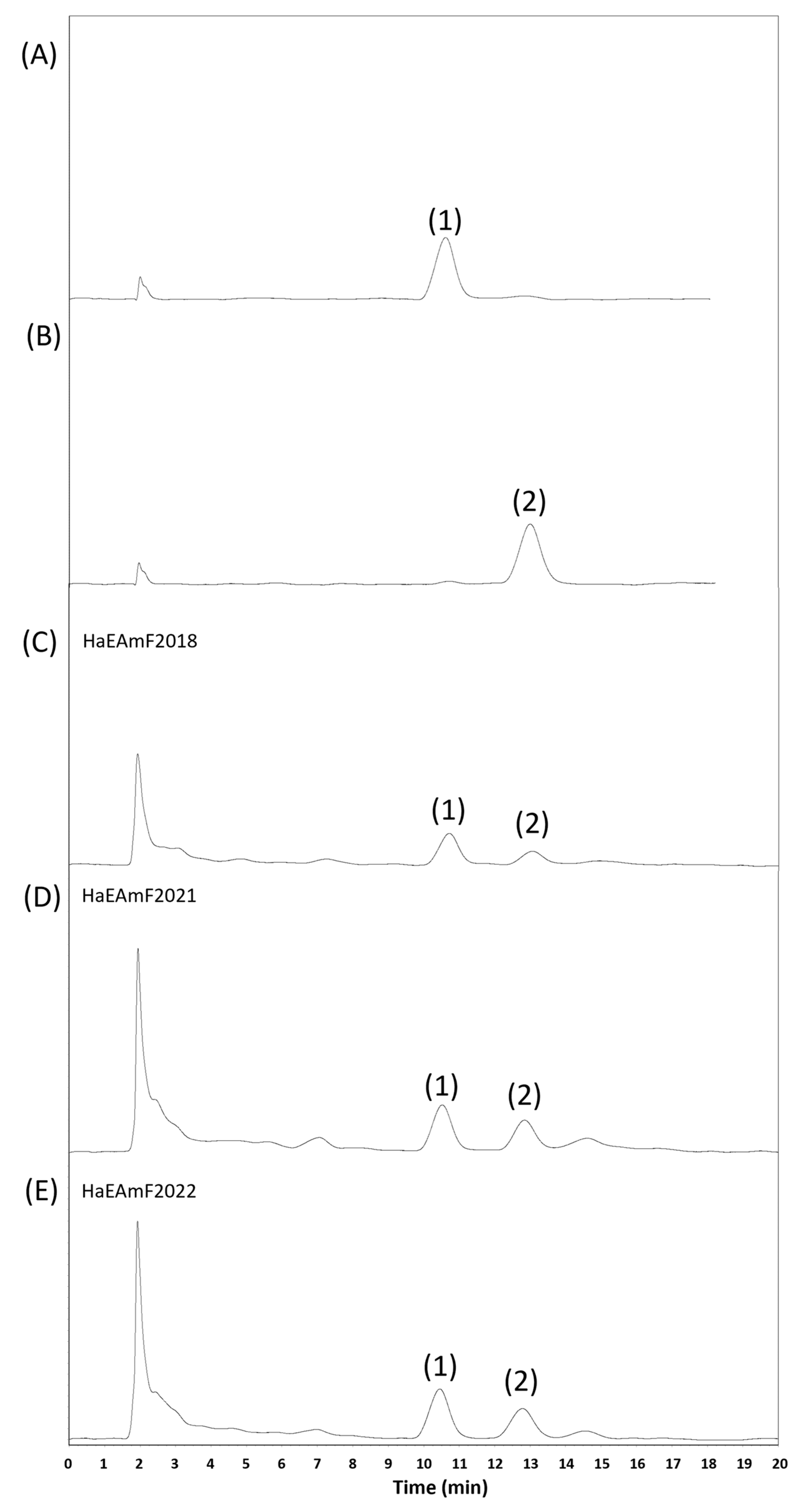
In the hydroalcoholic extract (HaEAmF), signals for the sesquiterpene lactones were identified (Figure 4), along with other less intense signals. The concentrations of these compounds are lower than those in the HEAmF and the DEAmF, as summarized in Figure 5. The concentrations in the HaEAmF are 3.69 ± 0.56 µg/mL for compound 1 and 2.36 ± 1.39 µg/mL for compound 2 for the plant material collected in 2018. However, the concentrations of these compounds in the plant material collected in 2021 are 6.30 ± 0.82 µg/mL for compound 1 and 4.89 ± 0.59 µg/mL for compound 2. In the plant material collected in the most recent year, 2022, the concentrations are 5.32 ± 1.69 µg/mL for compound 1 and 4.67 ± 1.47 µg/mL for compound 2. Over the three years, the ratio of the lactones remains close to 1, with no significant variability in the concentration of the compounds (Supplementary Materials, Figure S3). Based on these results, we conclude that the HEAmF contains the highest concentration of the lactones that have been isolated and characterized. The other extracts contain lower amounts of these lactones, as well as other compounds that may contribute to the relaxant effect. Moreover, we found that rainfall affects the quantity of these compounds, which could be related to the biosynthesis pathway and the involvement of enzymatic reactions required for their synthesis. The reduction in sesquiterpene lactone content observed in the 2022 collection suggests a potential impact of water stress on the plant’s secondary metabolism. The cytochrome P450 enzymatic complex plays a crucial role in plant adaptation and specialized metabolism [29], including the biosynthetic pathway of sesquiterpene lactones [30]. However, it is important to note that our findings represent an observational correlation. While the decreased rainfall coincides with lower sesquiterpene lactone concentrations, further research—such as transcriptomic or enzymatic activity assays—is necessary to confirm the specific mechanistic role of P450 hydroxylation in this environmental response.
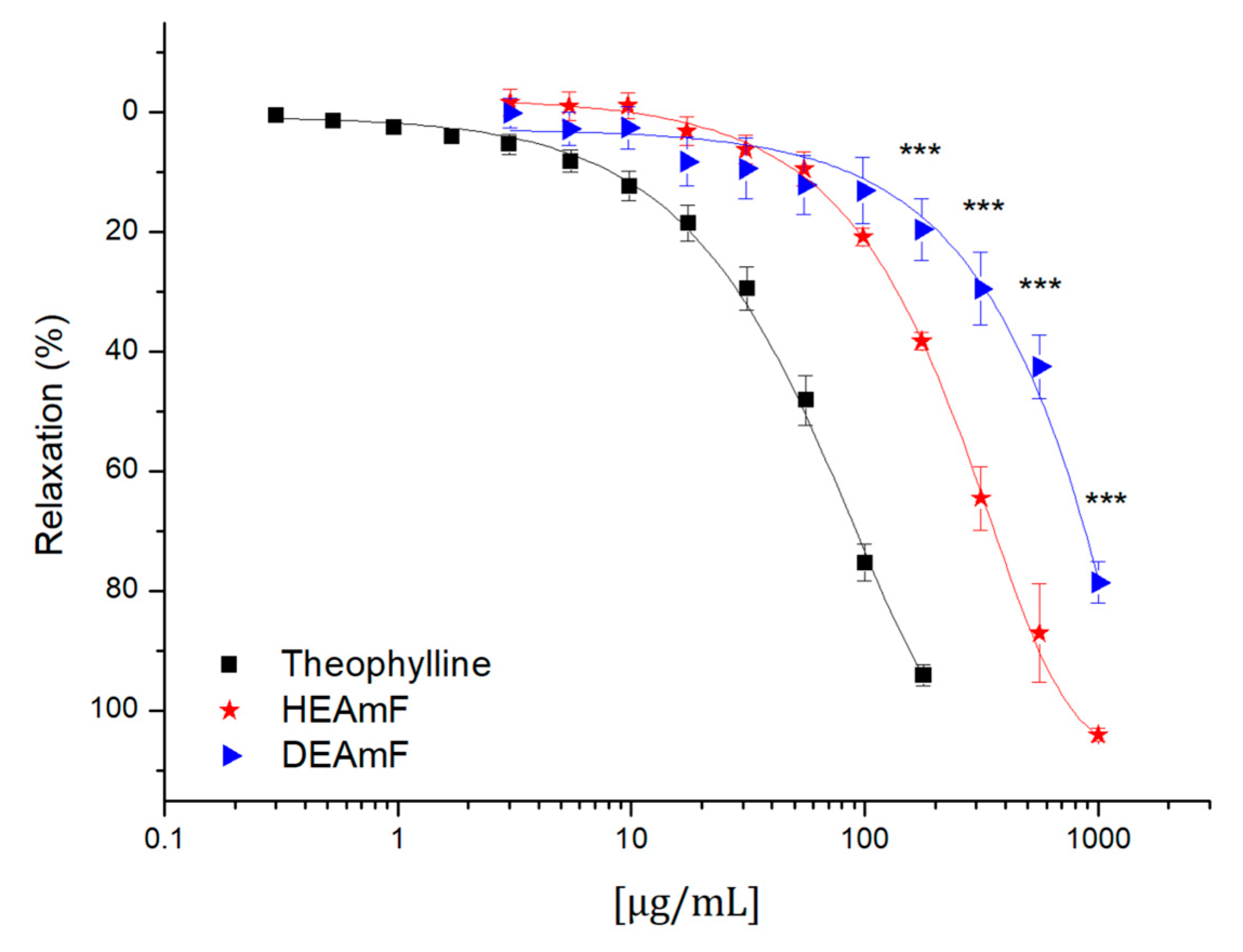
Previous investigations indicate that the HEAmF exhibits superior potency compared to other organic and hydroalcoholic extracts [10,31]. Based on these findings, we assessed our extracts at the half-maximal effective concentration (EC50: 412 ± 5.82 µg/mL), as established in previous tracheal studies [31]. The relaxant effect of the different organic and hydroalcoholic extracts from flowers of A. millefolium (Figure S5) suggests that the HEAmF is more efficient and potent than the other extracts, achieving a 100% effect at the evaluated concentration. For this reason, a Concentratio-Response Curve (CRC) was generated for the HEAmF (Figure 6), determining a maximum effect (Emax) of 104.01 ± 1.05% and an EC50 of 236 ± 5.29 µg/mL. Although more efficient, the HEAmF is less potent than the positive control theophylline (Emax: 94.1 ± 1.8%; EC50: 4.2 µg/mL). Moreover, though the DEAmF exhibited a lower effect than the hexanic extract, it contains a diversity of compounds, as revealed in the chromatographic characterization. Therefore, the CRC was evaluated, demonstrating an Emax: 78.54 ± 3.48% and EC50: 465.35 ± 5.32 µg/mL; this confirms that DEAmF is less effective and potent than HEAmF but still has a significant relaxant effect.
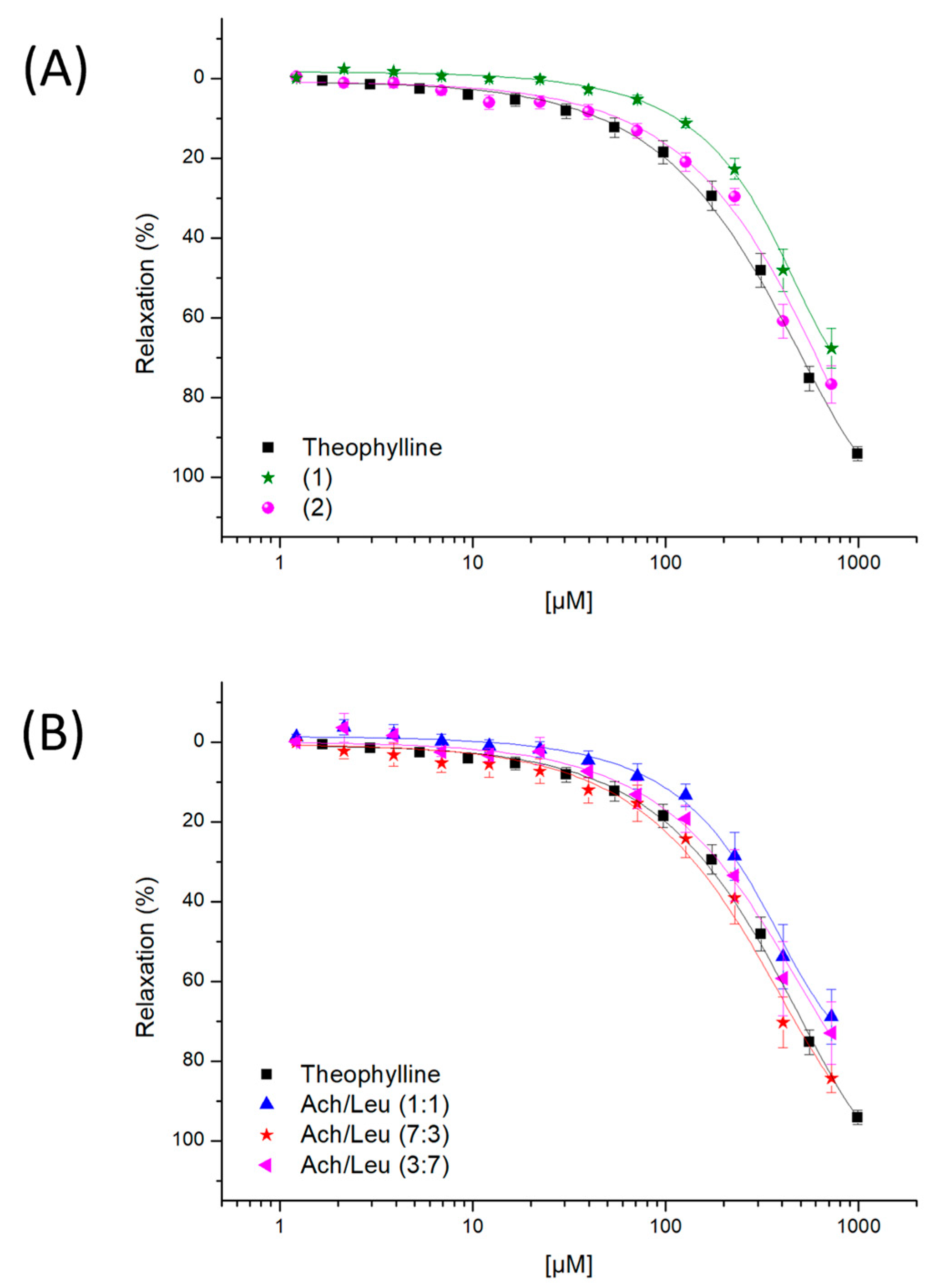
Furthermore, previous studies have indicated that the main compounds responsible for the tracheo- and vasorelaxant effects are 1 and 2 [10,31]. This explains why the quantification results established that the proportion of the lactones is approximately 7:3 (ratio of 2.33) for achillin (1)–leucodin (2) in the hexanic extracts. Hence, we evaluated these compounds separately and in three different proportions: the established 7:3 proportion, 1:1, and 3:7 for 1 and 2. The compounds and their respective proportions were prepared from the previously isolated lactones and evaluated at different proportions on the aorta and trachea isolated from Wistar rats. The relaxant effect on the trachea (Figure 7A) demonstrates that there is no significant difference in the effects of compound 1 (Emax: 67.67 ± 5.01%; EC50: 304.44 ± 2.61 µM) and compound 2 (Emax: 76.71 ± 4.73%; EC50: 266.40 ± 2.05 µM). Moreover, achillin/leucodin (7:3) (Emax: 72.93 ± 7.82%; EC50: 182.57 ± 6.44 µM), achillin (1)–leucodin (2) (1:1) (Emax: 68.83 ± 6.84%; EC50: 274.37 ± 5.99 µM), Ach/Leu (3:7) (Emax: 84.33 ± 3.49%; EC50: 285.53 ± 6.35 µM) did not show statistical differences (Figure 7B). The obtained results suggest that the effect remains consistent across the proportions, but the combined lactones are more effective than the individual compounds.
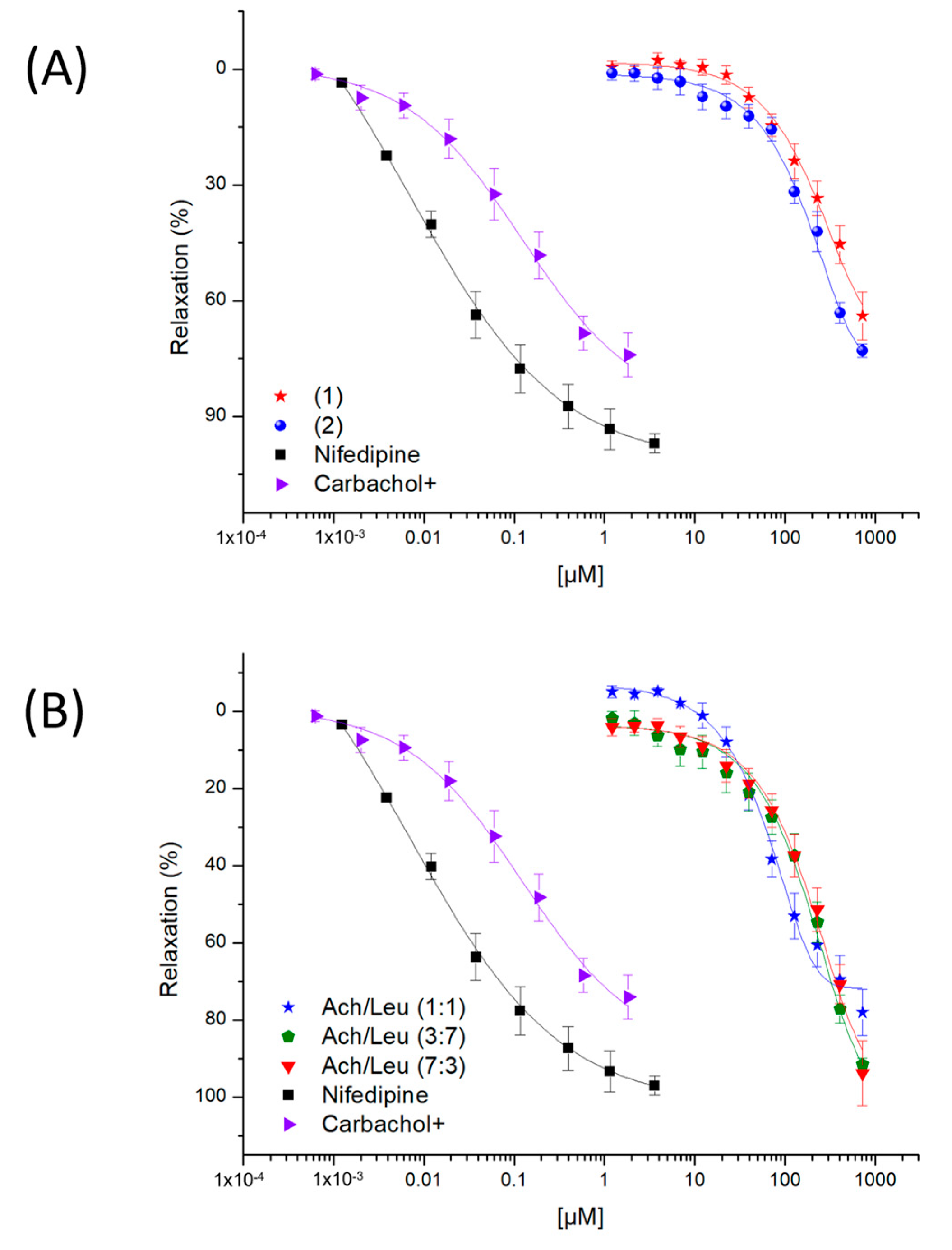
Regarding the vasorelaxant effect, the same efficacy and potency are observed for lactones 2 (Emax: 72.96 ± 1.73%; EC50: 163.29 ± 2.99 µM) and 1 (Emax: 63.94 ± 6.28%; EC50: 225.73 ± 4.49 µM) (Figure 8A). However, when compounds 1 and 2 are combined, their effectiveness is significantly enhanced. Specifically, Ach/Leu (7:3) demonstrates slightly increased effectiveness (Emax: 93.84 ± 8.1%; EC50: 184.54 ± 5.53 µM) compared to the 3:7 proportion (Emax: 91.52 ± 1.59%; EC50: 156.96 ± 5.59 µM) and the 1:1 proportion (Emax: 78.01 ± 5.99%; EC50: 82.13 ± 5.97 µM) (Figure 8B) without statistical differences. It is important to mention that these studies provide the basis for developing phytomedicine for the oral treatment of hypertension and/or obstructed respiratory diseases starting from standardized hexanic extracts from Achillea millefollium flowers. However, it is necessary to conduct other preclinical studies, such as in vivo antihypertensive and antiasthmatic evaluations as well as pharmacokinetic and in vivo toxicological studies, among others.
In this context, we decided to determine the safety profile of these compounds. In an acute toxicity study, mice did not exhibit physical or behavioral changes at any of the evaluated doses. This classifies the molecules into category 4 according to the GHS, indicating that they do not cause toxic damage at doses of 2000 mg/Kg or less. Administration over 28 consecutive days did not produce any physical or behavioral alterations in any of the groups evaluated. However, the vehicle and treatment groups exhibited a significant weight decrease of approximately 6–9% on day 21 compared to the control group (Supplementary Materials, Figure S6). At the end of the study, the organs were weighed, and only the liver from the vehicle group showed a significant increase in weight (Supplementary Materials, Figure S7). In addition, aminotransferases are important enzymes in synthesizing amino acids, catalyzing the transfer of an amino group from a donor to a keto group on an acceptor substrate. The specificity depends on the reactants involved [32]. The most clinically significant aminotransferases are aspartate transaminase (AST) and alanine transaminase (ALT). Elevated serum levels of these transaminases are indicative of liver damage, but they can also indicate injury to other tissues [33]. ALT is primarily concentrated in the cytoplasm of hepatocytes, but it can also be found at lower levels in the cytoplasm of the kidneys, myocardium, skeletal muscle, pancreas, spleen, lungs, and erythrocytes. AST exists as two isoenzymes: one in the cytoplasm and the other in the mitochondria. Its concentration decreases in the following order: heart, liver, skeletal muscle, kidney, pancreas, spleen, lungs, erythrocyte, and brain [34].
The ALT quantifications suggest no significant change in the treatment group (29.64 ± 1.66 U/L) and the vehicle group (45.70 ± 5.69 U/L) when compared to the control group (28.91 ± 4.30 U/L) (Figure S8). Additionally, the value obtained falls within the clinical chemistry reference range for this mouse strain published by Charles Rivers Laboratories (28–64 U/L).
The levels of AST in the treatment group (189.2 ± 13.57 U/L) and the vehicle group (232.45 ± 30.59 U/L) were higher than those in the control group (107.94 ± 12.51 U/L) (Figure S8) and exceeded the clinical chemistry reference range (47–120 U/L). These results indicate an increase in AST levels in both groups, with the vehicle group showing significantly higher levels than the treatment group. This suggests that the vehicle may cause hepatocyte damage, correlating with weight gain. This effect could be related to the toxicity of PS-80, which has been previously described to induce alterations in intestinal epithelial integrity at concentrations of 0.1–1%, leading to a proinflammatory response [35], low-grade inflammation, obesity/metabolic syndrome, increased intestinal permeability, behavioral changes [36], and alterations in the microbiota [37].
Furthermore, cholestatic lesions are associated with elevated ALT levels [36]. Elevated ALT can result from acute myocardial infarction, cardiac disease, and liver damage due to exposure to toxic substances, such as mercury and selenium, as well as certain drugs, including opiates, salicylates, papaverine, penicillin, isoquinoline alkaloids, etc. The degree of hepatotoxicity is dependent on the magnitude of ALT elevation, which can range from slight increases (five to tenfold above the upper limit) to very high levels [38]. As can be seen, ALT levels were not elevated in the treatment group, which indicates no liver damage.
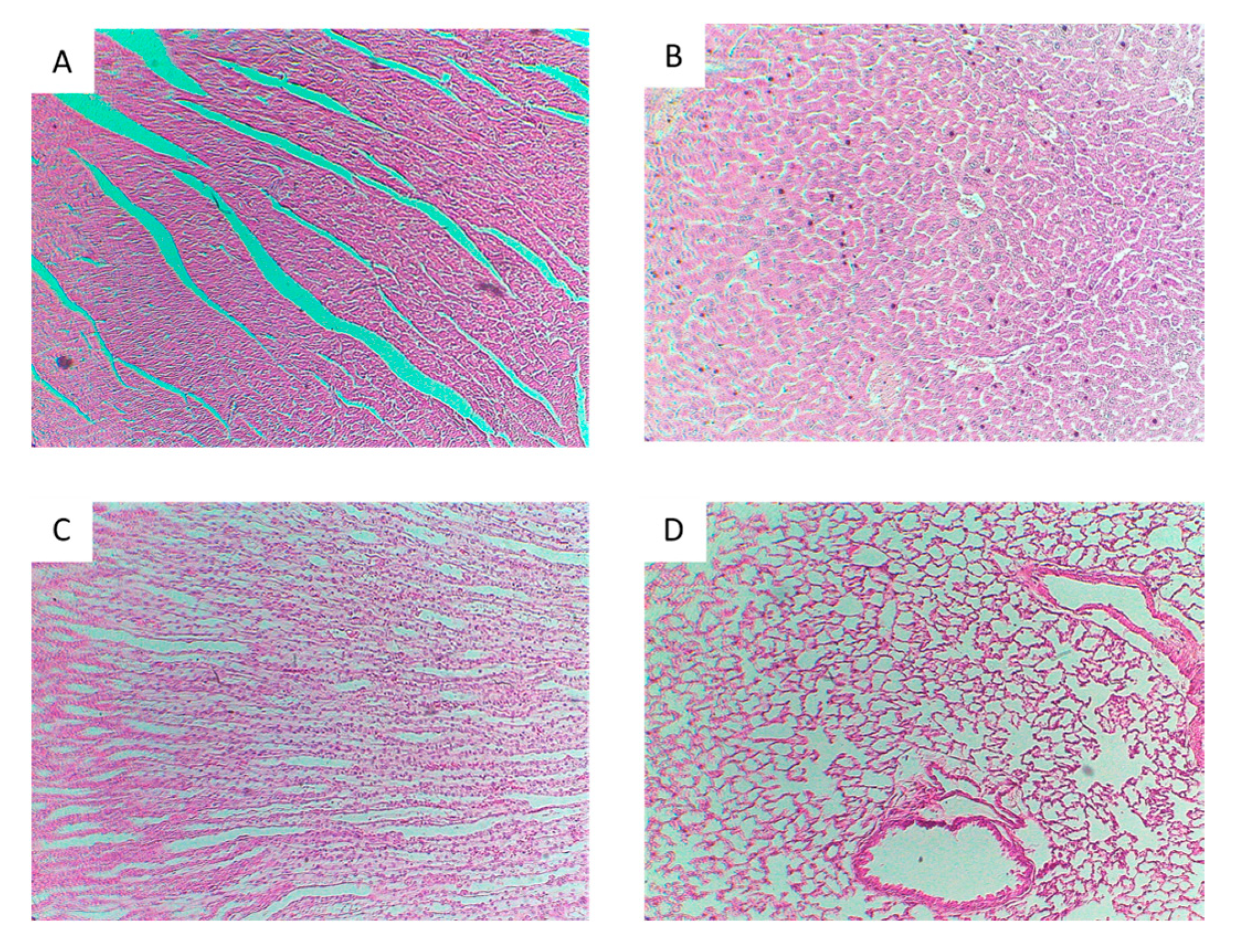
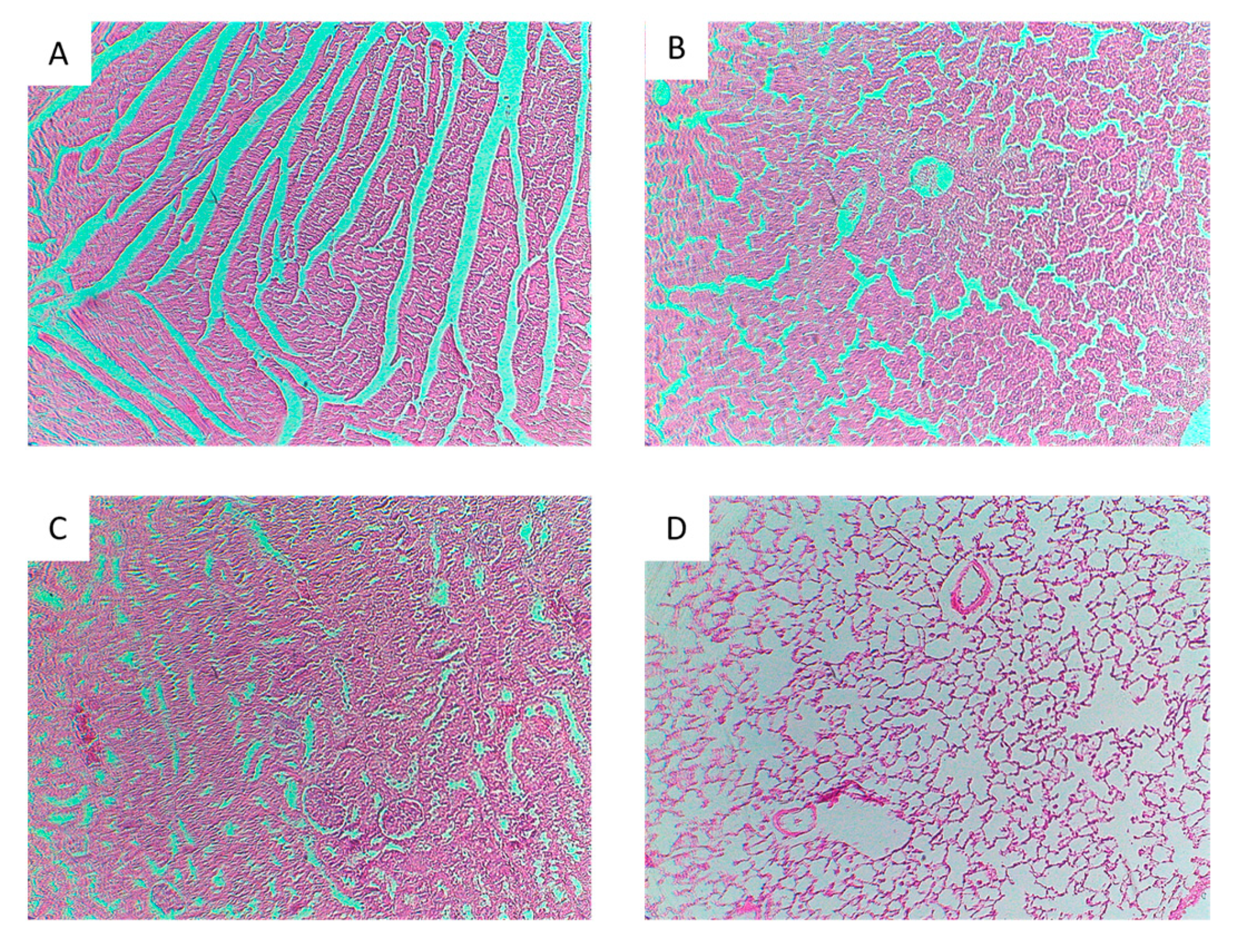
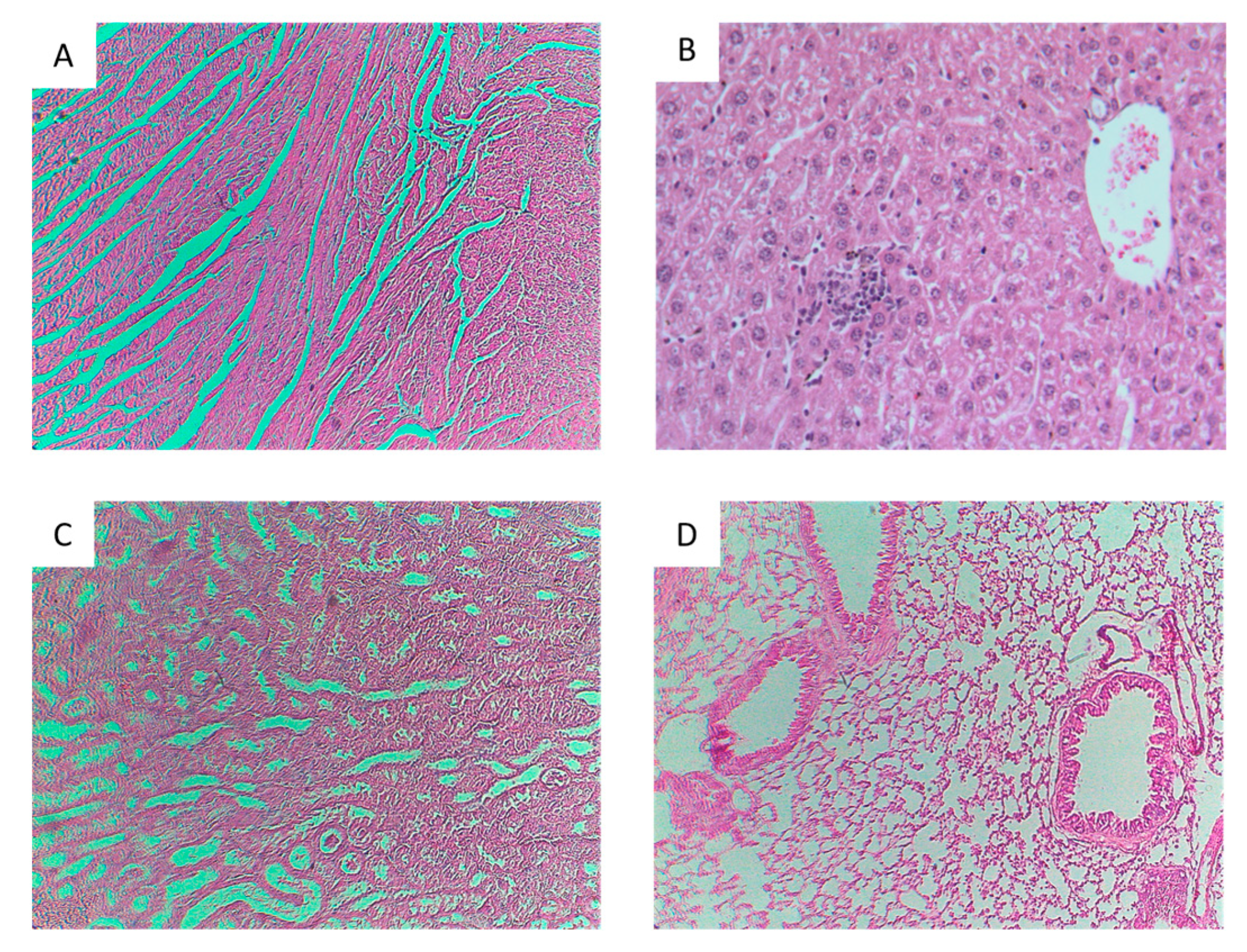
Finally, tissues obtained from the treated and untreated animals were subjected to pathological analysis. Histological evaluation of the liver, kidney, heart, and lungs showed no evidence of tissue damage in any of the organs studied, such as infiltration, necrosis, or inflammation (Figure 9, Figure 10 and Figure 11). These findings substantiate the oral safety profile of the molecules and indicate that, despite documented structure-related toxicities of sesquiterpene lactones [39], the compounds may constitute an exception to this general toxicological paradigm.
The only alteration detected was hepatic microabscesses in the vehicle group but not in the negative control or treatment groups. This suggests that the lesions are attributable to the vehicle rather than the molecules, consistent with the increase in liver weight in the vehicle group. Such microabscesses may arise from mild inflammatory responses to irritant components, contaminants, or an unintended microbial load within the vehicle. The liver’s key role in metabolizing and clearing exogenous substances, along with Kupffer cell activity, may contribute to the localization of focal inflammatory reactions [40,41]. Several investigations support that long-term exposure to PS-80 in mice drives low-grade liver inflammation and lipid accumulation and perturbs liver enzyme levels [35,42]. Moreover, PS-80 can disrupt the gut barrier by altering microbial composition and increasing permeability, leading to systemic exposure to microbial products that may trigger hepatic immune cell activation, perhaps contributing to localized clustering of macrophages or neutrophils [36,37,43]. However, more specific studies are needed to establish the mechanism responsible for the generation of the microabscesses.

3. Materials and Methods

3.1. Chemicals and Reagents

Noradrenaline hydrochloride (NA) ≥ 98%, carbamoylcholine chloride (carbachol) ≥98%, theophylline, dimethylsulphoxide (DMSO), nifedipine, polysorbate 80, HPLC solvents, and Krebs solution reagents were purchased from Sigma–Aldrich Co., (St. Louis, MO, USA). All other substances were of analytical grade and obtained from local sources. Achillin (1) and leucodin (2) (Figure 1) were previously isolated from Achillea millefolium [10] and used as reference standards.

3.2. Plant Material

Achillea millefolium flowers were collected in September of three subsequent years (2018, 2021, and 2022) in Tres Marias, Huitzilac, Morelos, Mexico. Plant material was identified by Dr. Irene Perea-Arango (CEIB, UAEM) and deposited at the Herbarium (HUMO Herbarium, UAEM) under code number 34332.

3.3. Extract Preparation

The flowers of A. millefolium were cleaned and dried at room temperature in the shade. Dried and ground material (100 g) was subjected to successive macerations with hexane, dichloromethane, and methanol for 72 h, three times each, at room temperature. The hydroalcoholic extract was obtained by macerating the ground material (100 g) with 1000 mL of 70% ethanol for 72 h three times. Once the extracts were filtered, the solvent was removed in vacuo at 40 °C and 80 rpm using a Rotavapor (Buchi® R-200, Labortechnik AG, Flawil, Switzerland). All organic and hydroalcoholic extracts and stocks were dissolved in methanol (1 mg/mL) and filtered before being injected into the HPLC system using a nylon membrane (0.45 µm).

3.4. Chromatographic Conditions

The analytical method was performed on an HPLC system (Perkin Elmer Series 200 system, Waltham, MA, USA) with a quaternary pump, UV–visible detector, and injector with a loop of 20 µL, using the N2000 Chromatography software (v4.0, Zhejiang University, Hangzhou, China) system for data acquisition. An LC Gemini® (Phenomenex, Torrance, CA, USA) 3 µm NX-C18 110 Å (75 × 4.6 mm) reverse-phase column was used. An isocratic mobile phase of water–methanol (60:40) was managed at a flow rate of 0.8 mL/min. Peak areas were determined at 238 nm to quantify the amount of compounds 1 and 2 in organic and hydroalcoholic extracts.

3.5. Validation of HPLC Method

Stock solutions of compounds 1 and 2 were prepared at 1 mg/mL in methanol. Linearity was determined separately from the stock solutions using a calibration curve of 7 concentrations (0.125–10 µg/mL) diluted in methanol. To ensure precision (repeatability and reproducibility) and accuracy, three different concentrations within the curve range (0.75, 4.00, and 7.5 µg/mL) were prepared and injected in triplicate. The limit of detection (LOD) and limit of quantification (LOQ) were calculated for each compound, respectively, at a signal/noise ratio of 3 and 10.

3.6. Standardization of the Extracts Obtained from the Flowers of A. millefolium

The test samples of organic and hydroalcoholic extracts were diluted with methanol to a concentration of 100 µg/mL and injected into the HPLC system in triplicate. Identification and quantification of the compounds were determined according to the retention time of the references of compounds 1 and 2 and from the linear regression.

3.7. Pharmacological Evaluations

3.7.1. Animals

Male Wistar rats (Rattus norvegicus albinus) and CD1 mice (Mus musculus albinus) were housed under standard laboratory conditions, with a standard pellet diet and water available ad libitum. All animal procedures were carried out in accordance with a protocol approved by the local Animal Ethics Committee (approval code PRO-CICUAL-005/2025, Supplementary Materials), based on national (SAGARPA, NOM-062-ZOO-1999) and international guidelines on the care and use of laboratory animals (NIH Publication No. 85–23, revised 1985). For all experiments, six animals per group were used.
Wistar rats and CD1 mice were provided by F.E.S. Iztacala from Universidad Nacional Autónoma de México.

3.7.2. Krebs Solutions

The composition of the Krebs solution was as follows (in mM): NaCl, 118.0; KCl, 4.7; CaCl2.H2O, 2.5; MgSO4.H2O, 1.2; NaHCO3, 25.0; KH2PO4.H2O, 1.2; EDTA, 0.026; and glucose, 11.1, pH 7.4. This physiological solution was prepared just before being used.

3.7.3. Obtention of the Rat Aorta and Trachea Rings

Male Wistar rats weighing 250–300 g were euthanized by CO2 fill rate of 30–70% of the chamber volume per minute, and the thoracic aorta and trachea were isolated. In both cases, the tissues were cleaned of connective tissue and cut into 4–5 mm long segments. The aortic sections remained with the endothelium intact. Stainless steel hooks held the tissue segments at an optimal tension of 3 g for the aorta and 2 g for the trachea. The tissues were maintained in a 10 mL organ bath containing warmed (37 °C) and oxygenated (O2/CO2, 95:5) Krebs solution. Tension changes were recorded with Grass-FT03 force transducers (Astromed, West Warwick, RI, USA) connected to an MP100 Analyzer (Biopac® Instruments, Santa Barbara, CA, USA). After the stabilization period, the aorta was contracted with NA (0.1 µM) and the trachea with carbachol (1 µM) for 10 min, then washed with Krebs solution. This process was repeated two times for the aorta and once for the trachea at 30 min intervals before starting the experiment. Finally, all tissues were contracted with their respective contractile agents, followed by the addition of 100 µL of test samples (extracts: 3.03–1000 µg/mL, pure compounds: 0.3–100 µg/mL, and positive controls) to the bath in quarter-log cumulative concentrations. The relaxing effect of the samples (n = 6) was determined by their ability to inhibit the maximal contraction induced by the contractile agents. The vehicle for the test samples was 1% dimethyl sulfoxide (DMSO diluted with water).

3.8. Toxicological Assays

Acute toxicity was evaluated using CD1 strain mice, following Organization for Economic Cooperation and Development (OECD) guideline 423, and classified according to the Global Harmonized System (GHS). Three groups of animals were studied (n = 3): the vehicle group, where animals received an oral administration of 5% polysorbate 80 (PS-80); the treatment group, where animals were administered compounds 1 and 2 combined at a proportion of 7:3 at doses of 5, 50, 300, and 2000 mg/Kg; and the control group, animals that did not receive any treatment.
A repeated dose of oral toxicity was administered for 28 days according to OECD guideline 407. Three groups of animals were studied (n = 7): the control group, where animals did not receive an oral administration; the vehicle group, where animals received an oral administration of 5% polysorbate 80 (PS-80); and the treatment group, where animals were administered compounds 1 and 2 combined at a proportion of 7:3 at a dose of 56 mg/Kg. On day 29, animals were anesthetized with sodium pentobarbital (25 mg/Kg). Blood was collected via cardiac puncture, and serum was separated by centrifugation. Organs were immediately removed and prepared for histological analysis. We assessed changes in body weight, the weight of certain organs (liver, kidney, heart, lung, and brain), and serum levels of aspartate aminotransferase (AST) and alanine aminotransferase (ALT). Transaminases were quantified using the UV-enzymatic kinetic method at a wavelength of 340 nm, following international standardized protocols.
The harvested organs were used for histological assays and stained with hematoxylin–eosin staining.

3.9. Statistical Analysis

All experimental results are expressed as the mean of six replicates ± standard error of the mean (S.E.M.). Statistical analysis for the ex vivo assays was performed using a two-way analysis of variance (ANOVA) followed by a Bonferroni test. Extract standardization was analyzed using a one-way ANOVA followed by Tukey’s test. Before analysis, the Shapiro–Wilk and Levene’s tests were employed to confirm normality and homogeneity of variances. A p-value less than 0.05 was considered statistically significant.

4. Conclusions

The isolated compounds leucodin and achillin are the primary constituents in the flowers of Achillea millefolium, with higher concentrations in hexane extracts, particularly achillin, which shows a correlation of 2.33 with respect to leucodin. This correlation is closely related to their relaxant effect, as these compounds are the main contributors to the relaxant response in the trachea and aorta, and are more effective when used together. Furthermore, the analytical method used for the identification and quantification of achillin and leucodin meets the validation criteria established by the ICH, ensuring its reliability and adequacy. Additionally, the sesquiterpene lactones demonstrate safety when administered orally in acute and sub-chronic toxicological assays based on behavioral and physical observation and the analysis of histological images.

Supplementary Materials

The following supporting information can be downloaded at https://www.mdpi.com/article/10.3390/ddc5020032/s1: Figure S1: Linear regression of (A) achillin (1) and (B) leucodin (1); Figure S2: Thin-layer chromatography of the (A) hexanic, (B) dichloromethane, (C) methanolic, and (D) hydroalcoholic extracts of A. millefolium from different years of collection—(1) 2018, (2) 2021, and (3) 2022—at a concentration of 1 mg/mL, viewed under UV 254 nm; Figure S3: Correlation between the two compounds in the hexanic extracts from the different collections (2018, 2021, 2022), expressed as a ratio. One-way ANOVA with Tukey post hoc comparison (p < 0.05); Figure S4: HPLC analysis of methanolic extracts from A. millefolium flowers. Overlay of chromatograms from (C) 2018, (D) 2021, and (E) 2022 collections alongside reference standards (A) 1 and (B) 2; Figure S5: The comparative relaxant effect of A. millefolium flower extracts on isolated rat trachea. Data represent the percentage of relaxation induced by organic and hydroalcoholic extracts tested at the previously established EC50 [31]. Each bar represents the mean ± SEM (n = 6). Statistical significance was determined by one-way ANOVA with Tukey’s multiple comparison (p < 0.05); Figure S6: The variation in the weight of the mice from the different groups during the toxicity study according to a two-way ANOVA with Tukey’s multiple comparison test (* p > 0.05); Figure S7: The variation in weight of the different organs extracted from the toxicity study. A two-way ANOVA with Tukey’s multiple comparison test: * p > 0.05; Figure S8: The effect of compounds 1 and 2 on serum transaminase levels in the sub-acute toxicity study. The data represent the concentrations of AST and ALT across different treatment groups. Values are expressed as the mean ± SD (n = 6). Statistical analysis was performed using two-way ANOVA followed by Tukey’s post hoc test; no significant differences were observed compared to the control group (* p < 0.05). The crystal structures of leucodin and achillin were solved with SHELXT structure solution program using Intrinsic Phasing and refined with the SHELXL refinement package using Least Squares minimization within the Olex2 GUI (v1.5, OlexSys Ltd., Durham University, Durham, UK). Molecular graphics were generated with Mercury (v2022.3.0) or Olex2. Final validation was confirmed using the CheckCIF service of the International Union of Crystallography.

Author Contributions

Conceptualization, S.E.-S. and S.A.-A.; methodology, M.H.-M., L.A.-D. and J.A.B.-P.; validation, M.H.-M., J.E.-G. and R.H.-P.; formal analysis, M.H.-M., S.E.-S. and S.A.-A.; investigation, M.H.-M., L.A.-D., J.A.B.-P., R.H.-P. and J.E.-G.; resources, S.E.-S. and S.A.-A.; data curation, M.H.-M., L.A.-D. and J.A.B.-P.; writing—original draft preparation, M.H.-M. and S.E.-S.; writing—review and editing, M.H.-M., S.E.-S., R.H.-P., J.E.-G. and S.A.-A.; visualization, M.H.-M. and L.A.-D.; supervision, S.E.-S. and S.A.-A.; project administration, S.E.-S.; funding acquisition, S.E.-S. All authors have read and agreed to the published version of the manuscript.

Funding

This research was funded by CONAHCYT FORDECYT-PRONACES (Ciencia de Frontera 377882/2020).

Institutional Review Board Statement

The animal study protocols were approved by the Ethics Committee of the Facultad de Farmacia, Universidad Autónoma del Estado de Morelos, México (approval code PRO-CICUAL-005/2025).

Data Availability Statement

The dataset supporting this study is included in the Supplementary Materials. Further inquiries can be directed to the corresponding author.

Acknowledgments

M. Hernández Morales acknowledges the fellowship awarded by CONAHCyT (966369) to carry out graduate studies. The authors are indebted to Hugo Tlahuext from CIQ-UAEM for obtaining the X-ray crystallographic data.

Conflicts of Interest

The authors declare no conflicts of interest.

Abbreviations

The following abbreviations are used in this manuscript:
CEIBCentro de Investigación en Biotecnología
DMSODimethylsulphoxide
HEAMFHexane extract of Achillea millefolium from flowers
EmaxMaximum effect
EC50Half-maximal effective concentration
NONitric oxide
DEAmFDichloromethane extract of Achillea millefolium from flowers
MEAmFMethanolic extract of Achillea millefolium from flowers
HaEAmFHydroalcoholic extract of Achillea millefolium from flowers
LODLimit of detection
LOQLimit of quantification
CRCConcentration–response curve
CVCoefficient of variation
HPLCHigh-Performance Liquid Chromatography
ALTAlanine aminotransferase
ASTAspartate aminotransferase

References

  1. Ernst, E.; Schmidt, K.; Wider, B. Herbal Medicine: A Guide for Healthcare Professionals; Elsevier Health Sciences: Amsterdam, The Netherlands, 2005. [Google Scholar]
  2. Zhang, J.; Onakpoya, I.J.; Posadzki, P.; Eddouks, M. The Safety of Herbal Medicine: From Prejudice to Evidence. Evid.-Based Complement. Altern. Med. 2015, 2015, 316706. [Google Scholar] [CrossRef]
  3. Word Health Organization (WHO). Legal Status of Traditional Medicine and Complementary/Alternative Medicine: A Worldwide Review. WHO. 2001. Available online: https://iris.who.int/server/api/core/bitstreams/7239cdb2-c154-4e88-bf2f-fbca82208a6c/content (accessed on 16 December 2025).
  4. Bauer, B.A. Herbal therapy: What a clinician needs to know to counsel patients effectively. Mayo Clin. Proc. 2000, 75, 835–841. [Google Scholar] [CrossRef]
  5. Vélez Gabilán, J. Achillea millefolium (Yarrow). CABI Compend. 2016, 2636. [Google Scholar] [CrossRef]
  6. Mitich, L.W. Yarrow—The herb of achilles. Weed Technol. 1990, 4, 451–453. [Google Scholar] [CrossRef]
  7. Ali, S.I.; Gopalakrishnan, B.; Venkatesalu, V. Pharmacognosy, phytochemistry and pharmacological properties of Achillea millefolium L.: A review. Phytother. Res. 2017, 31, 1140–1161. [Google Scholar] [CrossRef]
  8. Baggio, C.H.; Otofuji, G.d.M.; Freitas, C.S.; Mayer, B.; Marques, M.C.; Mesia-Vela, S. Modulation of antioxidant systems by subchronic exposure to the aqueous extract of leaves from Achillea millefolium L. in rats. Nat. Prod. Res. Former. Nat. Prod. Lett. 2015, 30, 613–615. [Google Scholar] [CrossRef]
  9. Benedek, B.; Kopp, B.; Melzig, M.F. Achillea millefolium L. s.l.—Is the anti-antinflamatory activity mediated by protease inhibition? J. Ethnopharmacol. 2007, 113, 312–317. [Google Scholar] [CrossRef] [PubMed]
  10. Arias-Duran, L.; Estrada-Soto, S.; Hernández-Morales, M.; Millán-Pacheco, C.; Navarrete-Vázquez, G.; Villalobos-Molina, R.; Almanza-Pérez, J.C. Antihypertensive and vasorelaxant effect of leucodin and achillin isolated from Achillea millefolium through calcium blockade and NO production: In vivo, functional ex vivo and in silico studies. J. Ethnopharmacol. 2021, 12, 273. [Google Scholar] [CrossRef]
  11. Khan, A.; Gilani, A.H. Blood pressure lowering, cardiovascular inhibitory and bronchodilatory actions of Achillea millefolium. Phytother. Res. 2011, 25, 577–583. [Google Scholar] [CrossRef]
  12. Chávez-Silva, F.; Cerón-Romero, L.; Arias-Durán, L.; Navarrete-Vázquez, G.; Almanza-Pérez, J.; Román-Ramos, R.; Ramírez-Ávila, G.; Perea-Arango, I.; Villalobos-Molina, R.; Estrada-Soto, S. Antidiabetic effect of Achillea millefolium through multitarget interactions: α-glucosidases inhibition, insulin sensitization and insulin secretagogue activities. J. Ethnopharmacol. 2018, 212, 1–7. [Google Scholar] [CrossRef]
  13. Verma, R.S.; Joshi, N.; Padalia, R.C.; Goswami, P.; Singh, V.R.; Chauhan, A.; Verma, S.K.; Iqbal, H.; Verma, R.K.; Chanda, D.; et al. Chemical composition and allelopathic, antibacterial, antifungal and in vitro acetylcholinesterase inhibitory activities of yarrow (Achillea millefolium L.) native to India. Ind. Crops Prod. 2017, 104, 144–155. [Google Scholar] [CrossRef]
  14. Dias, M.I.; Barros, L.; Dueñas, M.; Pereira, E.; Carvalho, A.M.; Alves, R.C.; Oliveira, M.B.P.P.; Santos-Buelga, C.; Ferreira, I.C. Chemical composition of wild and commercial Achillea millefolium L. and bioactivity of the methanolic extract, infusion and decoction. Food Chem. 2013, 141, 4152–4160. [Google Scholar] [CrossRef]
  15. Ayoobi, F.; Shamsizadeh, A.; Fatemi, I.; Vakilian, A.; Allahtavakoli, M.; Hassanshahi, G.; Moghadam-Ahmadi, A. Bio-effectiveness of the main flavonoids of Achillea millefolium in the pathophysiology of neurodegenerative disorders—A review. Iran. J. Basis Med. Sci. 2017, 20, 604–612. [Google Scholar] [CrossRef]
  16. Vasconcelos, A.A.; Alves-Filho, E.G.; Rodrigues, T.H.S.; Vieira, A.F.; Inneco, R.; Silva, G.S.; Zocolo, G.J. Variability of the volatile organic compounds of Achillea millefolium L. according to the collection time, type of polyethylene packaging and storage period. J. Braz. Chem. Soc. 2020, 31, 1021–1029. [Google Scholar] [CrossRef]
  17. Jing, Y.; Chen, R.; Dong, M.; Liu, Y.; Hou, X.; Guo, P.; Li, W.; Lv, J.; Zhang, M. Apigenin relaxes rat intrarenal arteries, depresses Ca2+-activated Cl- currents and augments voltage-dependent K+ currents of the arterial smooth muscle cells. Biomed. Pharmacother. 2019, 115, 108926. [Google Scholar] [CrossRef] [PubMed]
  18. Zhang, Y.H.; Park, Y.S.; Kim, T.J.; Fang, L.H.; Ahn, H.Y.; Hong, J.T.; Kim, Y.; Lee, C.K.; Yun, Y.P. Endothelium-dependent vasorelaxant and antiproliferative effects of apigenin. Gen. Pharmacol. 2000, 35, 341–347. [Google Scholar] [CrossRef]
  19. Duarte, J.; Pérez Vizcaíno, F.; Utrilla, P.; Jiménez, J.; Tamargo, J.; Zarzuelo, A. Vasodilatory effects of flavonoids in rat aortic smooth muscle. Structure-activity relationships. Gen. Pharmacol. 1993, 24, 857–862. [Google Scholar] [CrossRef]
  20. Ko, W.C.; Shih, C.M.; Leu, I.J.; Chen, T.T.; Chang, J.P. Mechanisms of relaxant action of luteolin in isolated guinea pig trachea. Planta Medica 2005, 71, 406–411. [Google Scholar] [CrossRef]
  21. Morales, M.A.; Lozoya, X. Calcium-antagonist effects of quercetin on aortic smooth muscle. Planta Medica 1994, 60, 313–317. [Google Scholar] [CrossRef] [PubMed]
  22. Flores-Soto, E.; Romero-Martínez, B.S.; Solís-Chagoyán, H.; Estrella-Parra, E.A.; Avila-Acevedo, J.G.; Gomez-Verjan, J.C.; Reyes-García, J.; Casas-Hernández, M.F.; Sommer, B.; Montaño, L.M. Chamaecyparis lawsoniana and Its Active Compound Quercetin as Ca2+ Inhibitors in the Contraction of Airway Smooth Muscle. Molecules 2024, 29, 2284. [Google Scholar] [CrossRef]
  23. Mata, R.; Rojas, A.; Acevedo, L.; Estrada, S.; Calzada, F.; Rojas, I.; Bye, R.; Linares, E. Smooth muscle relaxing flavonoids and terpenoids from Conyza filaginoides. Planta Medica 1997, 63, 31–35. [Google Scholar] [CrossRef]
  24. Tom, E.N.; Girard-Thernier, C.; Demougeot, C. The Janus face of chlorogenic acid on vascular reactivity: A study on rat isolated vessels. Phytomed. Int. J. Phytother. Phytopharm. 2016, 23, 1037–1042. [Google Scholar] [CrossRef]
  25. Glasl, S.; Mucaji, P.; Werner, I.; Presser, A.; Jurenitsch, J. Sesquiterpenes and flavonoid aglycones from a hungarian taxon of the Achillea millefolium group. Verl. Z. Naturforschung 2002, 57, 976–982. [Google Scholar] [CrossRef]
  26. European Medicines Agency. ICH Topic Q2 (R1) Validation of Analytical Procedures: Text and Methodology. European Medicines Agency. 1995. Available online: https://www.ema.europa.eu/en/documents/scientific-guideline/ich-guideline-q2r1-validation-analytical-procedures-text-methodology-step-5-first-version_en.pdf (accessed on 10 February 2023).
  27. Colegio Nacional de Químicos Farmacéuticos Biólogos México, A.C. Guía de Validación de Métodos Analíticos; CNQFBM: México City, Mexico, 2002. [Google Scholar]
  28. Comisión Nacional del Agua. Resúmenes Mensuales de Temperaturas y lluvia; Mexico City, Mexico. 2023. Available online: https://smn.conagua.gob.mx/es/climatologia/temperaturas-y-lluvias/resumenes-mensuales-de-temperaturas-y-lluvias (accessed on 5 December 2023).
  29. González-Mendoza, D. El complejo enzimático citocromo p450 en las plantas. Rev. Int. Contam. Ambient. 2007, 23, 177–183. [Google Scholar]
  30. Perassolo, M.; Cardillo, A.B.; Busto, V.D.; Giulietti, A.M.; Talou, J.R. Biosynthesis of Sesquiterpene Lactones in Plants and Metabolic Engineering for Their Biotechnological Production. In Sesquiterpene Lactones; Sülsen, V., Martino, V., Eds.; Springer: Cham, Switzerland, 2018; pp. 47–91. [Google Scholar] [CrossRef]
  31. Arias-Durán, L.; Estrada-Soto, S.; Hernández-Morales, M.; Chávez-Silva, F.; Navarrete-Vázquez, G.; León-Rivera, I.; Perea-Arango, I.; Villalobos-Molina, R.; Ibarra-Barajas, M. Tracheal relaxation through calcium channel blockade of Achillea millefolium hexanic extract and its main bioactive compounds. J. Ethnopharmacol. 2020, 253, 112643. [Google Scholar] [CrossRef] [PubMed]
  32. Koper, K.; Han, S.-W.; Casas Pastor, D.; Yoshikuni, Y.; Maeda, H.A. Evolutionary origin and functional diversification of aminotransferases. J. Biol. Chem. 2022, 298, 102122. [Google Scholar] [CrossRef]
  33. Boison, D. Transaminases. In xPharm: The Comprehensive Pharmacology Reference; Enna, S., Bylund, D.B., Eds.; Elsevier: Amsterdam, The Netherlands, 2007; pp. 1–2. [Google Scholar] [CrossRef]
  34. Vroon, D.H.; Israili, Z. Aminotransferases. In Clinical Methods: The History, Physical, and Laboratory Examinations, 3rd ed.; Walker, H.K., Hall, W.D., Hurst, J.W., Eds.; Butterworths: Boston, MA, USA, 1990; pp. 492–493. Available online: https://www.ncbi.nlm.nih.gov/books/NBK425/ (accessed on 15 August 2025).
  35. Ogulur, I.; Yazici, D.; Pat, Y.; Bingöl, E.N.; Babayev, H.; Ardicli, S.; Heider, A.; Rücket, B.; Sampath, V.; Dhir, R.; et al. Mechanisms of gut epithelial barrier impairment caused by food emulsifiers polysorbate 20 and polysorbate 80. Allergy 2023, 78, 2441–2455. [Google Scholar] [CrossRef]
  36. Chassaing, B.; Koren, O.; Goodrich, J.K.; Poole, A.C.; Srinivasan, S.; Ley, R.E.; Gewirtz, A.T. Dietary emulsifiers impact the mouse gut microbiota promoting colitis and metabolic syndrome. Nature 2015, 519, 92–96. [Google Scholar] [CrossRef] [PubMed]
  37. Naimi, S.; Viennois, E.; Gewirtz, A.T.; Chassaing, B. Direct impact of commonly used dietary emulsifiers on human gut microbiota. Microbiome 2021, 9, 66. [Google Scholar] [CrossRef]
  38. Rej, R. Measurement of aminotransferases: Part 1. Aspartate aminotransferase. Crit. Rev. Clin. Lab. Sci. 1984, 21, 99–186. [Google Scholar] [CrossRef] [PubMed]
  39. Amorim, M.H.R.; Gil da Costa, R.M.; Lopes, C.; Bastos, M.M. Sesquiterpene lactones: Adverse health effects and toxicity mechanisms. Crit. Rev. Toxicol. 2013, 43, 559–579. [Google Scholar] [CrossRef]
  40. You, Q.; Holt, M.; Yin, H.; Li, G.; Hu, C.-J.; Ju, C. Role of hepatic resident and infiltrating macrophages in liver repair after acute injury. Biochem. Pharmacol. 2013, 86, 836–843. [Google Scholar] [CrossRef]
  41. Tsutsui, H.; Nishiguchi, S. Importance of Kupffer Cells in the Development of Acute Liver Injuries in Mice. Int. J. Mol. Sci. 2014, 15, 7711–7730. [Google Scholar] [CrossRef]
  42. Xie, E.; Chen, Y.; Yang, W.; Pan, Q.; Shen, J.Z.; Zhou, F.; Shen, J.; Li, T.; Li, Q.; Li, X. Long-term exposure to dietary emulsifier Tween 80 promotes liver lipid accumulation and induces different-grade inflammation in young and aged mice. Food Res. Int. 2024, 184, 114205. [Google Scholar] [CrossRef]
  43. Singh, R.K.; Wheildon, N.; Ishikawa, S. Food Additive P-80 Impacts Mouse Gut Microbiota Promoting Intestinal Inflammation, Obesity and Liver Dysfunction. SOJ Microbiol. Infect. Dis. 2016, 4, 1–10. [Google Scholar] [CrossRef]
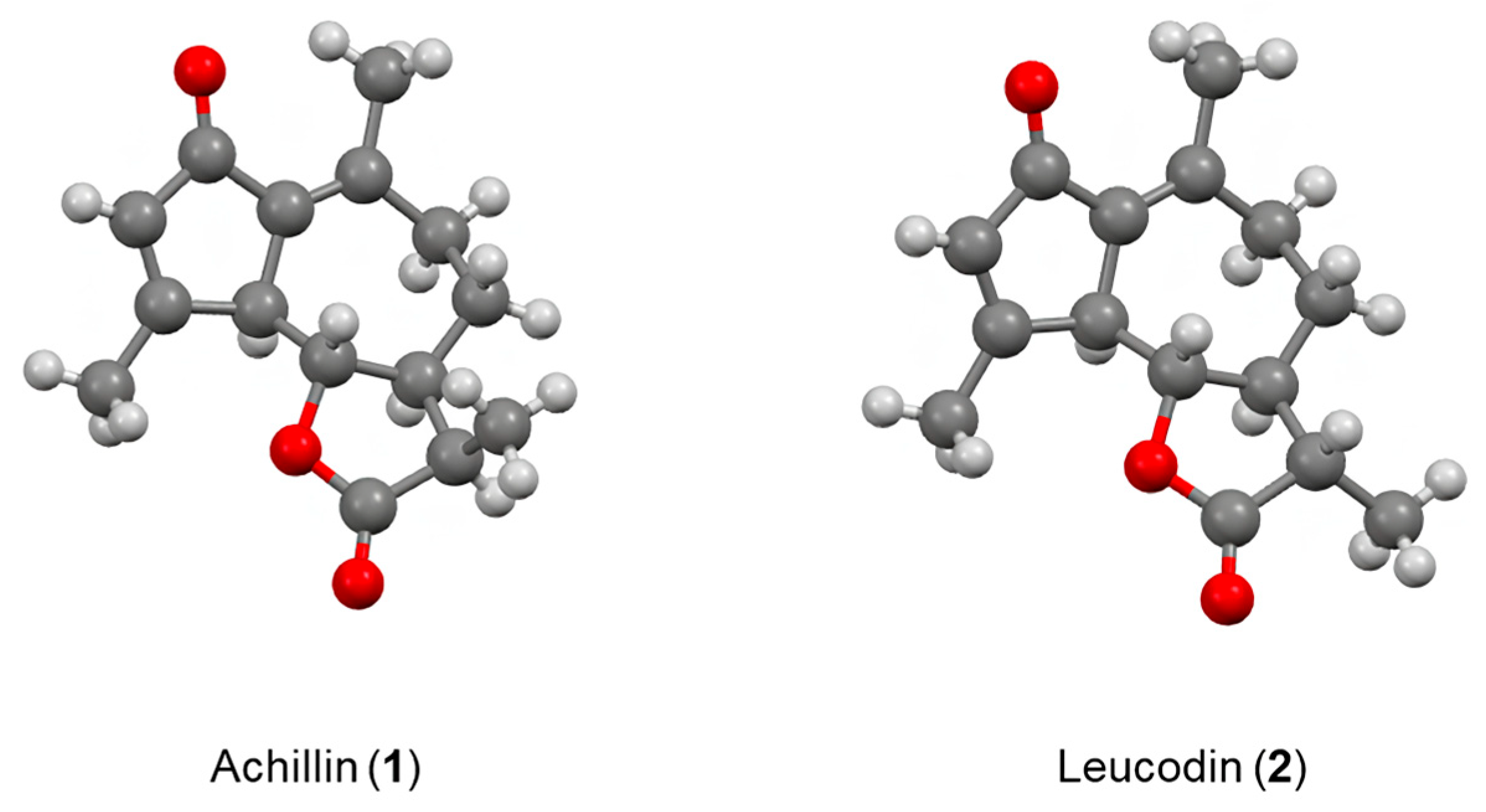
Figure 1. The structure of the isolated compounds achillin (1) and leucodin (2) previously obtained from hexanic extract of Achillea millefollium flowers (HEAmF) and characterized by X-ray diffraction (Supplementary Materials).
Ddc 05 00032 g001
Figure 2. Comparative HPLC-UV chromatograms (λ = 254 nm) of hexane extracts from A. millefolium flowers (HEAmF). Profiles correspond to different harvest years, (C) 2018, (D) 2021, and (E) 2022, illustrating chemical consistency across different collection periods, compared with standards (A) achillin (1) and (B) leucodin (2).
Ddc 05 00032 g002
Figure 3. HPLC profiles of dichloromethane extracts from A. millefolium flowers (DEAmF). Comparison of extracts from different harvest years—(C) 2018, (D) 2021, and (E) 2022—with isolated standards (A) achillin (1) and (B) leucodin (2) for peak identification (λ = 254 nm).
Ddc 05 00032 g003
Figure 4. Comparative HPLC-UV profiles (λ = 254 nm) of hydroalcoholic extracts from A. millefolium flowers (HaEAmF). Chromatograms of hydroalcoholic extracts from (C) 2018, (D) 2021, and (E) 2022, showing the presence of (A) achillin (1) and (B) leucodin (2).
Ddc 05 00032 g004
Figure 5. Quantitative determination of 1 and 2 across various A. millefolium flower extracts. Concentrations are expressed as mg/g of dry extracts from hexane, dichloromethane, and hydroalcoholic fractions across three collection years (2018, 2021, and 2022). Significant differences (p < 0.05) were determined by one-way ANOVA followed by Tukey’s post hoc test. * Indicates significant inter-group differences (C1 vs. C2) for each year. Significant intra-group longitudinal differences across the three-year period are indicated by # (for C1) and + (for C2).
Ddc 05 00032 g005
Figure 6. Concentration–response curves of the HEAmF and DEAMF applied to isolated rat trachea. The relaxant effect is expressed as a percentage of inhibition against carbachol-induced contraction. Concentrations are shown in µg/mL. Data represent the mean ± SEM (n = 6). Statistical significance between fractions was determined by two-way ANOVA followed by Bonferroni’s post hoc test (*** p < 0.001).
Ddc 05 00032 g006
Figure 7. Tracheo-relaxant profiles of sesquiterpene lactones and their mixtures. (A) Individual effects of compounds 1 and 2; (B) synergistic/additive evaluation of various proportions of 1 and 2 versus theophylline as positive control. Each point represents mean ± SEM (n = 6). Data analysis via two-way ANOVA and Bonferroni’s multiple comparison test.
Ddc 05 00032 g007
Figure 8. Vasorelaxant effects on isolated rat aorta rings. (A) Concentration–response curves for isolated compounds 1 and 2; (B) evaluation of various proportions of 1 and 2 compared to reference standards carbachol and nifedipine. Results are expressed as mean percentage of relaxation ± SEM (n = 6). Statistical significance was determined by two-way ANOVA followed by Bonferroni’s post hoc test.
Ddc 05 00032 g008
Figure 9. Representative histological sections of organs from treated animals. Micrographs show normal tissue architecture in (A) heart, (B) liver, (C) kidney, and (D) lungs. No morphological alterations or signs of toxicity were observed (hematoxylin and eosin stain; magnification 100×).
Ddc 05 00032 g009
Figure 10. Representative histological sections of organs from control animals. Micrographs show normal tissue architecture in (A) heart, (B) liver, (C) kidney, and (D) lungs. No morphological alterations or signs of toxicity were observed (hematoxylin and eosin stain; magnification 100×).
Ddc 05 00032 g010
Figure 11. Representative histological sections of organs from vehicle (polysorbate 80 at 5%) animals. Micrographs show normal tissue architecture in (A) heart, (B) liver, (C) kidney, and (D) lungs. Microabscesses observed on the liver (hematoxylin and eosin stain; magnification 100×).
Ddc 05 00032 g011
Table 1. Statistical parameters of linearity for the determination of 1 and 2. The data represent the linear range, the regression equation (y = mx + b), and the coefficient of determination (R2) obtained across three independent replicates.
Compound 1Compound 2Acceptance Requirements
p-value (b1)1.49635 × 10248.73502 × 1023≤0.05
p-value (b0)0.11280.0364Includes 0
b150,594.56 ± 1224.83462,332.50 ± 1440.306≠0, >0
b08035.90 ± 4889.75813,069.37 ± 5865.766Includes 0
R20.98560.9884≥0.98
R0.99280.9942≥0.99
IC(b1)95%10,127.219011,227.7159≠0
IC(b0)95%40,429.679745,725.8121Includes 0
LD0.3183 µg/mL0.3105 µg/mL
LC0.9645 µg/mL0.9410 µg/mL
Table 2. An evaluation of method accuracy through recovery studies of compounds 1 and 2. The data represent the mean recovery (%) and relative standard deviation (SD) for three distinct concentration levels (low, medium, and high).
Repeatability Day 1Repeatability Day 2
[µg/mL][µg/mL] RecoveryStandard DeviationCV (%)[µg/mL] RecoveryStandard DeviationCV (%)
Compound 1
0.750.75470.00680.900.75420.01311.74
4.004.03190.07091.764.04710.03040.75
7.507.51410.03950.537.36810.13681.86
Compound 2
0.750.79320.00720.910.77020.01341.75
4.004.00030.02450.614.08390.05921.45
7.507.54290.07521.007.43950.14521.95
Table 3. Intermediate precision (inter-day) for the quantification of compounds 1 and 2. The results represent the recovery and repeatability across three concentration levels evaluated over two consecutive days.
Reproducibility
Compound 1Compound 2
[µg/mL][µg/mL] RecoveredStandard DeviationCV (%)[µg/mL]
Recovered
Standard
Deviation
CV (%)
0.750.75440.01101.460.78580.01051.34
4.004.03880.05951.474.04210.06451.60
7.507.46520.12141.637.48650.13351.78
Table 4. The accuracy and recovery results for compounds 1 and 2 were determined using High-Performance Liquid Chromatography (HPLC). The data represent the mean recovered concentration and percentage recovery (±SD) at three levels.
[µg/mL] RecoveredCV (%)Acceptance Requirements
(1)(2)(1)(2)
0.75 ± 0.0160.78 ± 0.0111.461.34CV ≤ 2%
4.04 ± 0.0574.04 ± 0.0591.471.60
7.47 ± 0.1277.49 ± 0.1211.631.78
Recovery (%)
100.62 ± 1.015102.70 ± 2.0041.011.95Recovery includes 100%
100.47 ± 1.130101.54 ± 0.6131.131.23
100.25 ± 0.62398.62 ± 1.7880.621.81
Disclaimer/Publisher’s Note: The statements, opinions and data contained in all publications are solely those of the individual author(s) and contributor(s) and not of MDPI and/or the editor(s). MDPI and/or the editor(s) disclaim responsibility for any injury to people or property resulting from any ideas, methods, instructions or products referred to in the content.