Systematic Review

Absence of Palmaris Longus Muscle and Its Clinical Significance in Africa Cadaveric and Clinical Studies: Systematic Review and Meta-Analysis


1
Department of Biomedical Sciences, School of Medicine, Debre Markos University, Debre Markos P.O. Box 269, Ethiopia
2
Department of Nursing, College of Health Sciences, Debark University, Debark P.O. Box 90, Ethiopia
3
Department of Medical Laboratory Sciences, College of Medicine and Health Science, Debre Markos University, Debre Markos P.O. Box 269, Ethiopia
4
Department of Health Informatics, College of Medicine and Health Sciences, Debre Markos University, Debre Markos P.O. Box 269, Ethiopia
5
Department of Pediatrics and Child Health Nursing, College of Medicine and Health Science, Debre Markos University, Debre Markos P.O. Box 269, Ethiopia
*
Author to whom correspondence should be addressed.
Anatomia 2026, 5(2), 14; https://doi.org/10.3390/anatomia5020014
Submission received: 2 February 2026 / Revised: 18 February 2026 / Accepted: 28 February 2026 / Published: 6 May 2026

Abstract

Background: Among the superficial flexor muscles of the upper limb, the Palmaris longus muscle is the most susceptible to anatomical variation. The most common anatomical variant is complete bilateral absence, followed by unilateral absence. Although considerable study has been conducted on the frequency of Palmaris longus muscle absences in Africa, much of it has been conducted at the national level. The pooled prevalence of Palmaris longus absence in Africa has not been established. Objectives: To assess the absence of Palmaris longus muscle and its clinical significance in Africa cadaveric and clinical studies: systematic review and meta-analysis. Methods: We thoroughly examined Google Scholar, PubMed/med line, Science Direct, Hinari, African online journals, Web of Sciences, Central, Embase, Scopus, Cochrane, and institutional repositories. The studies’ quality were assessed using the Newcastle–Ottawa Scale. The pooled prevalence of Palmaris longus muscle absences was estimated using a random-effects meta-analysis model. Data analysis was conducted using STATA 17; heterogeneity, funnel plots, and meta-regression were examined. Sensitivity analyses, publication bias, and subgroup analysis by study time code, location code, and sample size code were also carried out. Result: A total of 23 studies were included in the meta-analysis. The pooled prevalence of Palmaris longus absence in Africa was 14.0% (95% CI: 10.0–18.0). However, there was significant variation in reported prevalence rates, as seen by the significant heterogeneity found across studies (I2 = 99.13%). The results were not significantly changed by sensitivity analysis. Conclusions and recommendation: This study found that the Palmaris longus muscle is absent in 14% of African populations. Comparison with international studies revealed both similarities and differences, influenced by methodology and genetic factors. Clinicians should consider this prevalence when advising patients requiring tendon grafts. Further long-term studies using imaging techniques (MRI; ultrasound) are recommended to improve understanding in African populations and globally.

1. Introduction

The Palmaris longus (PL) muscle is a thin, superficial flexor muscle in the forearm that originates from the humerus’s medial epicondyle [1,2]. It attaches to the distal anterior forearm and the palmar aponeurosis via a long tendon with a short muscle belly that passes superficial to the transverse carpal ligament [3]. The PL tendon is situated in the distal middle ventral side of the forearm between the flexor carpi radialis (laterally) and flexor carpi ulnaris (medially) tendons. When present, it tenses the palmar aponeurosis and weakly flexes the wrist joint in concert with the flexor carpi radials, flexor carpi ulnaris, and flexor digitorum superficialis muscles. It is innervated by a branch of the median nerve [4]. It also acts as an anchor for the hand’s fascia and skin, reducing distal shearing forces [5]. PL develops during embryonic limb formation when a subset of mesenchymal cells in the lateral plate mesoderm is activated. The limb buds are formed when the ventrolateral body wall rises around the end of the fourth week of growth. A clump of mesenchyme encircled by ectoderm makes up each limb bud [6].
The PL tendon is widely recognized for its clinical value. Its length, diameter, and superficial position make it a preferred graft in reconstructive surgery [5]. For hand procedures, ptosis correction, facial paralysis, and lip augmentation, orthopedic and plastic surgeons harvest the tendon [2]. Additionally, oncologic deformities of the head and neck, thumb arthritis, and lip and chin defects have all been repaired with it [6]. The most prevalent musculoskeletal variation in the human body has been identified as PL [7]. The first three-headed inverted Palmaris longus muscle was noted by Yildiz et al. [8], and it is frequently lacking on one or both sides. Its incidence varies depending on the ethnicity and geographic location [9]. Several studies have reported that PL variants may contribute to diverse clinical conditions. A clinical example of a bitendinous PL compressing the median nerve during a routine carpal tunnel release was described in a study [10].
About 15% of people are thought to have a congenitally missing PL tendon. The prevalence of the PL’s absence varies greatly among populations, ranging from 0.6 to 3.2% in Koreans, 1.02% in Ugandans, 3 to 4.2% in Japanese, 3.3 to 17.2% in Brazilians, 4.5 to 22.5% in African Americans, 4.5 to 55.2% in Egyptians, 3.8 to 5.6% in Chinese, 4.4 to 32.2% in Hungarians, 5.8 to 15.2% in Canadians, 6.7 to 25% in Nigerians, 6.1 to 11.7% in Malaysians, 11.6% in Czechs, 13.2 to 33.7% among Iranians, 12.8 to 18.3% among Iraqis, 11.7% among Ethiopians, 24% among Caucasians in North America, 16.8% in the UK, 16.7 to 27.9% among Saudis and Bahrainis, and 14.5 to 64% among [11,12,13,14,15,16,17,18,19,20,21,22].
Although the prevalence of Palmaris longus absence has been recorded in a number of national studies, the results vary greatly between nations and ethnic groups. Therefore, a continental synthesis is required to combine divergent country data, lessen the impact of small sample sizes, and offer more comprehensive clinical recommendations pertinent to surgeons and anatomists operating throughout Africa. Our technique provides a more thorough estimate of prevalence and variation by combining data, which improves its application for clinical practice and anatomical education outside of specific country contexts.
Therefore, the goal of this systematic review and meta-analysis is to thoroughly assess the prevalence of Palmaris longus muscle absence in African populations. This work aims to (1) establish continent-wide prevalence estimates, (2) highlight regional variation within Africa, and (3) identify methodological gaps for future anatomical and embryological research by combining evidence from cadaveric and clinical studies, stratifying by country, modality, and definition, and comparing findings with global data. In the end, this synthesis will help improve clinical knowledge of Palmaris longus muscle absence in African settings and standardize reporting protocols.

2. Clinical Examination

Several methods are used to examine the PL muscle physically. The presence, absence, or variation of the PL muscle was determined using clinical tests [23,24]. The literature has so far mentioned eleven distinct clinical tests [25] These are the most often used tests:
(1) The standard test, also known as Schaeffer’s test: in this test, the subject flexes their wrist after opposing their thumb to their little finger; (2) Mishra’s I test: the subject is instructed to flex their wrist after having their fingers’ meta carpao phalangeal joints passively hyperextended. (3) Thompson’s test: the subject forms a fist and then flexes the wrist while opposing and flexing the thumb over the fingers [26]. (4) Mishra’s II test: the subject is requested to abduct the thumb against resistance while having the wrist in palmar flexion [27]. (5) Pushpakumar’s test, often known as the “two-finger sign” approach, involves fully extending the index and middle fingers while flexing the wrist and other fingers and opposing and flexing the thumb over the flexed [28,29,30]. Physical examination, however, can be difficult, particularly for people who have a high body mass index. However, when determining whether the PL tendon is present, radiological imaging techniques are more accurate than a physical examination [31,32].

3. Methods

3.1. Study Design

Systematic review and meta-analysis.

3.2. Study Setting

The included primary studies were conducted among populations in countries in Africa.

3.3. Protocol Registration

To provide comprehensive information, we conducted a systematic review and meta-analysis on the prevalence of Palmaris longus muscle absences in Africa. This review was conducted following a registered protocol in the International Prospective Register of Systematic Reviews (PROSPERO) under the registration CRD 420261293643, ensuring transparency and reproducibility of the methodology.

3.4. Inclusion and Exclusion Criteria

The studies included in this review were selected according to predefined criteria, focusing on the study population, exposure, and outcomes of interest. To ensure the review reflects contemporary research, full-text, published studies, and gray literature were considered.
The inclusion criteria for this study were the following: (1) Studies reported at least one of the following: prevalence of Palmaris longus muscle absence. (2) Study free full text and, if possible, subscription-based; (3) studies have been performed in African countries; (4) observational designs such as cross-sectional or cohort studies; (5) published and gray literatures; (6) studies on human populations of all ages (for clinical) and cadaveric were included. The exclusion criteria of the study were the following: (1) studies were conducted in Africa with no prevalence of Palmaris longus muscle absence results being missed, (2) studies conducted outside Africa, and (3) non-human anatomical studies and case reports. The articles incorporated in this review were exclusively written in English. Three expert anatomists (FA, WA, and TB) evaluated each study to assess methodology and potential biases in design, implementation, and analysis. The methodological quality and risk of bias of each included article were assessed by two authors (DSN, HMG) independently using the NOS critical appraisal checklist.

3.5. Search Approach and Appraisal of Studies

For our review procedure, we used the most recent version of the 2020 Preferred Reporting Items for Systematic Reviews and Meta-Analyses checklist [33]. The PRISMA 2020 Checklist is provided in the Supplementary Materials to ensure transparency and completeness of reporting. Three authors (TB, MG, and FA) independently conducted separate searches for relevant studies to include in this meta-analysis and systematic review. The databases Google Scholar, PubMed, Hinari, Web of Science, African Online Journals, Medline, Central, Embase, Scopus, Science Direct, and Cochrane were searched extensively, and documents were retrieved in order to locate potentially pertinent published and unpublished papers with no time restrictions. Additionally, all included articles’ reference lists were examined and searched. For gray literature (including theses, conference abstracts, and institutional repositories), a manual search (hand-searching reference lists of relevant articles) and a Google Scholar search were performed. Palmaris Longus Muscle [Mesh Terms] OR Palmaris longus [Title/Abstract] AND Prevalence [Mesh Terms] OR Prevalence [Title/Abstract] OR Absence [Title/Abstract] OR Agenesis [Title/Abstract] OR Variation [Title/Abstract] AND Africa [Mesh Terms] OR Africa [Title/Abstract] OR Nigeria [Title/Abstract] OR Ethiopia [Title/Abstract] OR Uganda [Title/Abstract] OR South Africa [Title/Abstract] OR Kenya [Title/Abstract] are the search terms that were used in the entire electronic search strategy. The right Boolean operators (AND, OR) were combined with truncation. Selected studies were managed using EndNote X7.

3.6. Study Selection

After conducting an online search, three independent reviewers (AAA, AN, and BW) evaluated the abstracts of all the papers that were found. Those that are thought to meet the requirements for inclusion in a systematic review were retrieved in full text for the reviewers’ thorough assessment. At any point during the article selection process, conflicts between reviewers were settled by discussion or, if necessary, by consulting a third reviewer. To further enhance transparency, we included a PRISMA flow chart [33] that illustrates the number of records identified, screened, excluded (with reasons), and finally included in the meta-analysis. The reasons for the exclusion of studies at each stage were documented throughout the full-text review.

3.7. Condition

The condition under investigation was the absence of the Palmaris longus muscle, a common anatomical variation with clinical and surgical relevance.

3.8. Context

This review focused on African people and included research from various nations and areas, paying special emphasis to variations in prevalence reporting and methodology.

3.9. Outcomes

The pooled prevalence of Palmaris longus muscle absence, stratified by study type (clinical vs. cadaveric), diagnostic method (clinical examination vs. imaging), and geographic location (North, East, West, Southern, and Central Africa), was the main result. The GRADE framework’s assessment of the overall certainty of the evidence, regional data gaps (such as those in Central Africa), and methodological constraints were among the secondary results.

4. Population

4.1. Cadaveric and Clinical Studies

Data Extraction Process and Main Data Items

Using the Newcastle–Ottawa Scale (NOS) data extraction form, the three reviewers (TB, ASA, and FA) separately extracted the data. During the data extraction process, disagreements were settled by consensus and debate. The following study characteristics were extracted from the included studies: names of the first authors, countries, study year, study type, study setting, participants, sample size, and outcome measures (prevalence of Palmaris longus muscle absence). Data were extracted manually and organized in Microsoft Excel, which facilitated tabulation and subsequent statistical analysis.

4.2. Risk of Bias Assessment (Methodology)

The risk of bias was assessed for each of the included studies using the Newcastle–Ottawa Scale (NOS), which is widely used in observational research. Each of the three NOS domains—participant selection, research group comparability, and outcome ascertainment—was evaluated separately by two reviewers (TB; DSN) for each study. A lower likelihood of bias was indicated by higher ratings, and scores were assessed using pre-established criteria. Reviewers debated and resolved any differences by reaching a consensus. Studies with NOS values lower than five were deemed to have a higher risk of bias, according to the synthesis and interpretation of the results. Sensitivity analyses were used to examine the impact of lower-quality studies on pooled prevalence estimates in order to guarantee transparency and robustness in the conclusions.

4.3. Effect Measures

Estimates of prevalence were presented as percentages with 95% confidence intervals (CIs). Prevalence was stratified for subgroup analysis by study year, sample size categories, and area (North, East, West, and Southern Africa). Since the included studies were primarily cross-sectional and descriptive in nature, concentrating on anatomical variation rather than exposure–outcome correlations, odds ratios (ORs) and risk ratios (RRs) were not computed.

4.4. Statistical Analysis

Data from each original study was extracted using an Excel spreadsheet and subsequently imported into STATA version 17.1 for comprehensive analysis. These meta-analyses were performed for the pooled prevalence of Palmaris longus muscle absence. The meta-analyses adhered to standard methodological guidelines to mitigate challenges arising from the variability of individual studies in terms of population characteristics, study types, and measured outcomes. A summary table was used to provide a concise description of each primary study. I2 was used to identify heterogeneity between the studies, and the results were displayed graphically as a forest plot with 95% CIs. Furthermore, a subgroup and sensitivity analysis was conducted to identify potential sources of variations, taking into account the observed heterogeneity between included studies. The weighted Egger’s regression test and funnel plot asymmetry were used to check for evidence of publication bias, with a p-value of less than 0.05 serving as a cutoff point to declare the presence of publication bias.

4.5. Certainty of Evidence

The grade method, which takes into account bias risk, inconsistency, indirectness, imprecision, and possible reporting bias, was used to assess the certainty of the evidence. Each domain was assessed for the included studies, and the overall certainty of evidence for the pooled prevalence estimates was classified as high, moderate, low, or very low. This evaluation offered a clear framework for evaluating the validity and consistency of the results.

5. Result

5.1. Selection Results

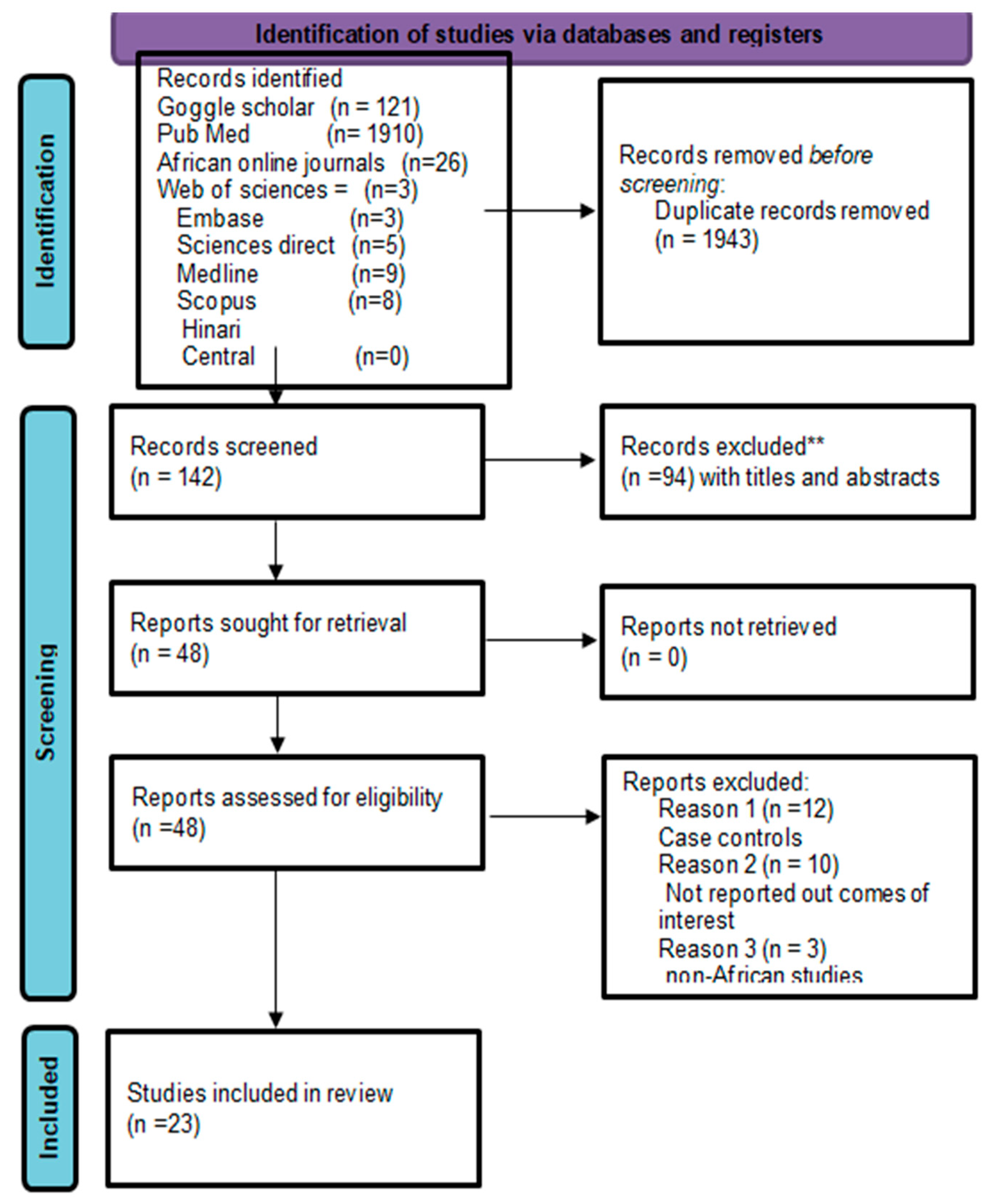
A total of 2085 articles were retrieved from the online database. After being exposed to EndNote 7 citation management, 1943 articles were removed with duplications, and 142 articles remained. Following title and abstract screening, 94 articles were excluded, leaving 48 for full-text review. Of these, 25 were excluded due to eligibility criteria (case reports, not reporting the outcome of interest, and non-African studies), and 23 articles met the inclusion criteria and were synthesized in the meta-analysis. The detailed process is illustrated in the PRISMA flow chart (Figure 1).

5.2. Characteristics of the Included Studies

Twenty-three (23) cross-sectional studies with a total of 14,894 individuals were involved in this review. The data includes all published data and repositories across Africa as possible. Many studies were conducted in Nigeria relative to other African countries with sample sizes ranging from very small [5] to 3000 participants. Most studies used physical examination to assess PL presence, while fewer employed cadaveric techniques. Methodological quality was appraised using the Newcastle–Ottawa Scale (NOS), with scores ranging from 4 to 8. This diversity in geographic setting, sample size, and assessment modality highlights the heterogeneity of the available evidence. Furthermore, prevalence rates of Palmaris longus absence have been found to range from 1% to 34% in a number of investigations carried out in Uganda, Nigeria, Ethiopia, Somalia, Libya, Rwanda, and Sudan [34,35,36,37,38,39,40,41,42] (Table 1).

5.3. Risk of Bias Assessment (Result)

The methodological quality of the included studies was assessed using the Newcastle–Ottawa Scale, which evaluates three domains with a total maximum score of 9. Out of the 23 assessed studies, 15 studies (65.2%) were classified as having a low risk of bias, 7 studies (30.4%) had a moderate risk of bias, and 1 study (4.4%) was found to have a high risk of bias. These findings indicate that while the majority of studies demonstrated acceptable methodological rigor, a considerable number still exhibited moderate risk, suggesting variability in study quality across the included literature.

5.4. Results of Individual Studies

Prevalence estimates ranged from 34.3% in Egypt to 1.02% in Uganda. The majority of research did not provide confidence intervals. Estimates from individual studies are summarized in (Table 2).

5.5. Pooled Prevalence of Palmaris Longus Muscle Absences in Africa

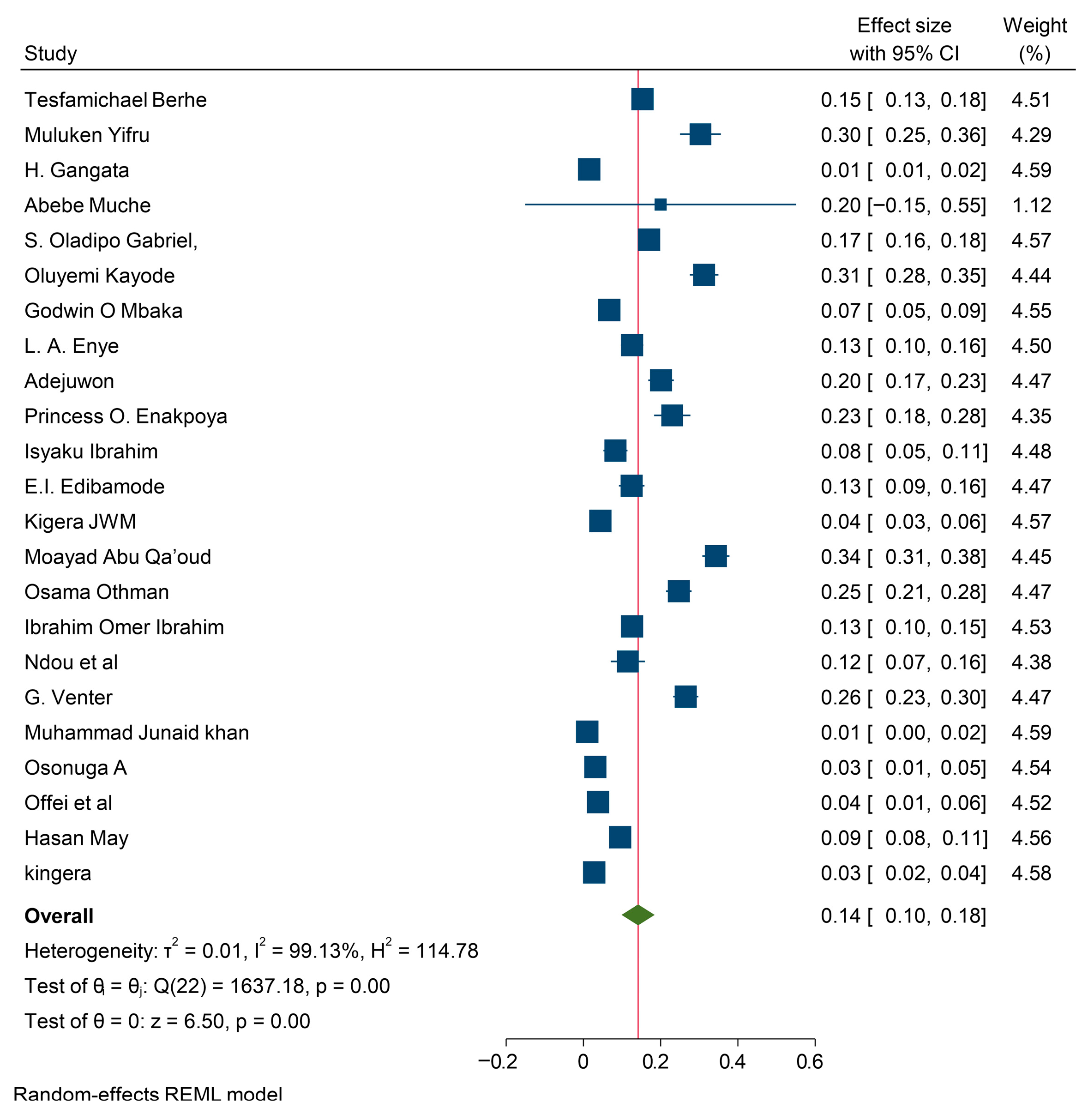
A total of 23 studies have been included in this meta-analysis and systematic review. This study showed that the pooled prevalence of Palmaris longus muscle absence was 14.00% (95% CI: 10.00–18.00). The random effect model was used to estimate the prevalence of Palmaris longus muscle absence in Africa. Significant heterogeneity among included studies was observed (I2 = 99.13%, p = 0.00) (Figure 2).

5.6. Subgroup Analysis

We also conducted subgroup analysis on the basis of the study period by <2016 and ≥2016; by a sample size of less than or equal to 648 or greater than 648; and by country location as North Africa, South Africa, East Africa, West Africa, or multiple regions, respectively, by giving a code for each. Hence, the pooled prevalence of Palmaris longus muscle absence did significantly differ by study period, sample size, and region location. This study shows that the highest pooled prevalence of Palmaris longus muscle absence was observed in studies published during and after 2016 (17%), with a sample size less than or equal to 648 (15%), and in North Africa (34.00) (Table 2).

5.7. Publication Bias and Heterogeneity Test

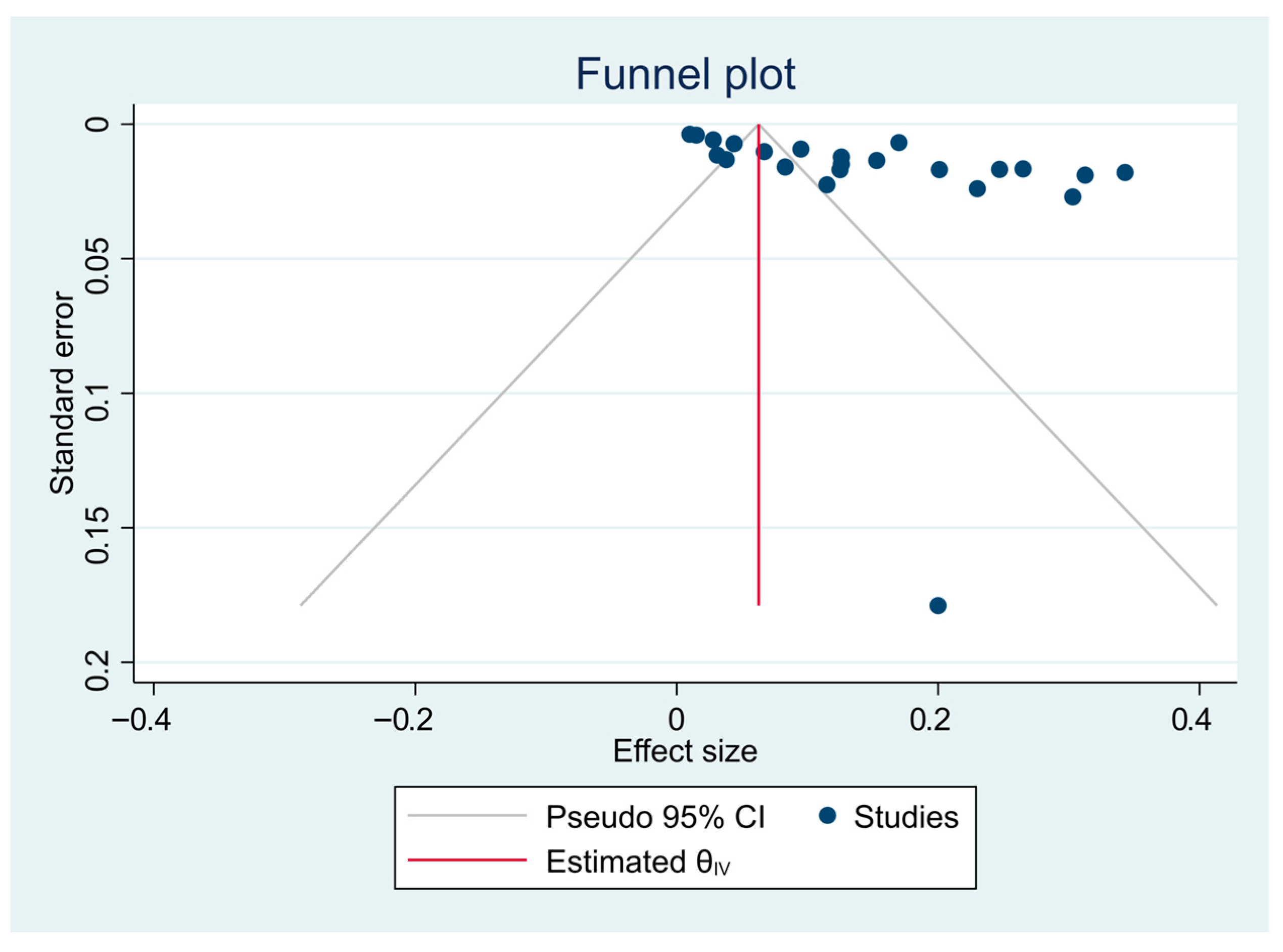
Publication bias was assessed using a funnel plot and Eggers test for the prevalence of Palmaris longus muscle absence in Africa. Even though the funnel plot showed asymmetric distribution, Egger’s regression analysis produced a p-value of 0.1359 for Palmaris longus muscle absence, suggesting no evidence of publication bias among the studies (Figure 3).
Furthermore, we also conducted the nonparametric trim-and-fill analysis using a random-effects model with REML estimation and did not impute any additional studies, yielding the same pooled effect size (observed = 0.142, 95% CI: 0.099–0.184; observed + imputed = 0.142, 95% CI: 0.099–0.184). These findings suggest that the overall results are robust and unlikely to be substantially influenced by publication bias (Table 3).

5.8. Meta Regression

We conducted an analysis of meta-regression using study year code, sample size code, and location code (north, south, east, or west) for prevalence as covariates to explore potential sources of heterogeneity. The source of heterogeneity is location (north, south, east, or west) (Table 4).

5.9. Sensitivity Analysis

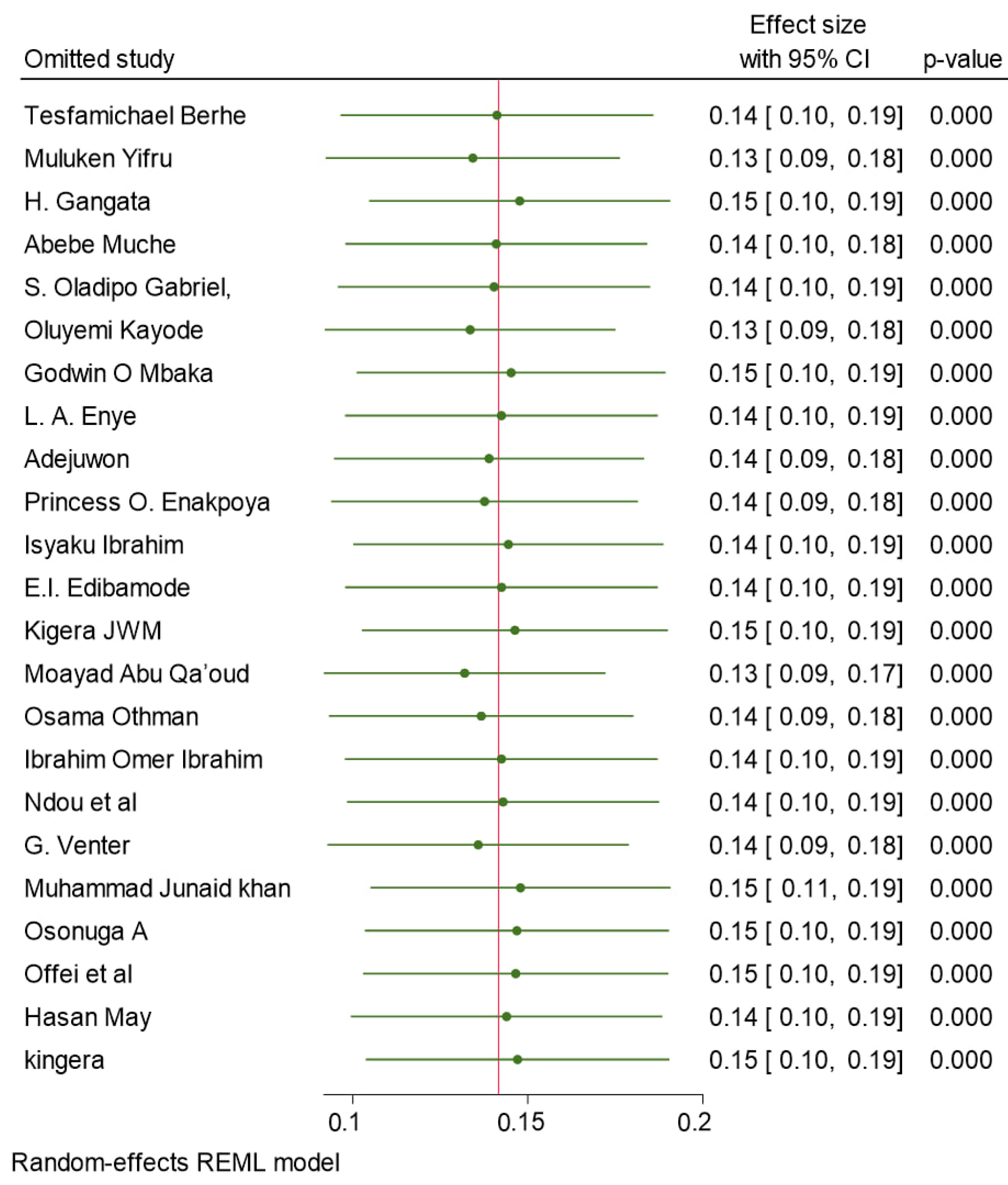
We conducted a leave-one-out sensitivity analysis to evaluate the influence of individual studies on the pooled prevalence of Palmaris longus absence. Sequential exclusion of each study yielded consistent effect sizes (0.13–0.15) with overlapping confidence intervals and identical statistical significance. These findings indicate that no single study materially affected the overall pooled estimate. Furthermore, sensitivity analysis showed that the pooled prevalence estimate, which consistently stayed between 0.13 and 0.15 with narrow confidence intervals, was not significantly affected by the elimination of specific small studies. A visual examination of the funnel plot revealed considerable asymmetry, but Egger’s regression test did not show statistical support for modest study effects (p > 0.05). Additionally, there was no difference between the observed and imputed values when the trim-and-fill procedure was applied, indicating that the pooled effect size was resistant to potential publication bias. When combined, these data show that small study effects are unlikely to have affected the meta-analysis’ main conclusions (Figure 4).

5.10. Certainty of Evidence Assessments

Using the GRADE framework, the pooled prevalence estimate’s certainty of evidence was assessed as low to moderate. Although Egger’s test did not approach statistical significance, the very high heterogeneity across studies (I2 = 99.13), the very broad confidence interval (10–18%), and the presence of funnel plot asymmetry suggesting potential small-study effects were the main factors driving this ranking. Only two studies scored lower than 5 on the Newcastle–Ottawa Scale, indicating that the risk of bias was typically acceptable. The external validity and generalizability of the results are significantly improved by the addition of research from the North, South, East, and West of Africa; however, the lack of data from Central Africa continues to be a drawback. Although methodological and statistical issues limit the certainty, the evidence was deemed to produce a very consistent estimate of Palmaris longus absence across the continent overall.

6. Discussion

The PL muscle is one of the most variable muscles in the human body, both in percentage and form [7]. The previously published literature has demonstrated that absence prevalence ranges between 1.5% and 63.9%. The lowest absence was observed in Zimbabwe (1.5%), with unilateral and bilateral agenesis being 0.9% and 0.6%, and the highest absences were in Europe and Turkey (63.9%) [25]. There have been 23 studies that have been included in our study on PL muscle absences in Africa, which includes the lowest prevalence in Uganda (1.02) [34] and the highest absences in studies conducted in Egypt (34.3%) [3].
The finding of this systematic review and meta-analysis revealed that 14.00% (95% CI: 10.00–18.00) of study participants had no Palmaris longus muscles in Africa. This result is in line with a USA (Caucasians) study that found that 14.9% of people have no Palmaris longus muscles [25]. Compared to the individual studies worldwide in Asia, (17.4%) [10], Turkey (37.8) [43], Nepal (26.65) [44], India (27%), Brazil (26.5%), Turkey (20%), Bahrain (36.5%), and Serbia (37.5%) [25], the results of this study are lower. The disparity in prevalence between the aforementioned result and the current study was most likely caused by variations in radiological imaging advancements, cadaver availability, sample size, study type, study population, and embryological diversity.
The current study is a systematic meta-analysis combining data from the previous literature in Africa, and the above comparative study is conducted by institution-based cross-sectional studies in a single institution. Furthermore, previous institution-based comparative research was conducted, including mostly either clinical or cadaveric studies, but the current study conducted pooled prevalence by combining the clinical and cadaveric studies for an analysis of the pooled prevalence of Palmaris longus muscle absence, which might be the result of a difference in the prevalence of Palmaris longus muscle relative to the other above-mentioned studies. The finding of this study, however, is higher than studies previously conducted in Malaysia (11.3%), China (4.6%), Caucasians (5.5%), and South Korea (4.1%) [25]. The difference in prevalence might be due to the type of study, sample size, or embryological variation in the study population.
Despite synthesizing 23 studies with almost 15,000 individuals, the precision of pooled estimates may be limited by the small sample sizes of several included studies. This emphasizes the necessity of more extensive, multicenter research throughout Africa in order to improve the accuracy of prevalence data.
Even though our prevalence finding on Palmaris longus absences is less than the worldwide prevalence of Palmaris longus agenesis, which reached 20.25% in the world, as well as less than subgroup analysis in south and south-east Asians (19.79%), Caucasians (26.3), and Arab middle eastern populations (41.7) [45] it is significantly higher than studies reported on the worldwide prevalence of Palmaris longus (PL) muscle absence in subgroup analyses including some countries of Africa (11.3%), east Asians (4.5%), and south Americans (3.7%) [45]. Palmaris longus muscles manifested ethnic heterogeneity in the African continent with immense ethnic diversity, and this diversity likely contributes to the variability in reported prevalence of Palmaris longus absence. For example, Nigerian studies alone show wide ranges (6.7% to 31.25%), which may reflect differences among ethnic subgroups rather than methodological error.
The pooled prevalence of Palmaris longus muscle absence did significantly differ by study period, sample size, and region location. This study shows that the highest pooled prevalence of Palmaris longus muscle absence was observed in studies published during and after 2016 (17%), with a sample size less than or equal to 648 (15%) located in North Africa (34.00) (Table 2).
Since the North African pooled prevalence (34%) is based on a single Egyptian study, it should be regarded cautiously. In the larger North African region, where methodological variations and demographic diversity may produce disparate findings, this single-point estimate could not be representative. The findings’ dependability and generalizability are restricted by the small number of studies from this area. Firm conclusions cannot be drawn due to the lack of many independent investigations, even though methodological or genetic variables may contribute to the observed discrepancy. This emphasizes the necessity of conducting additional research in North African communities using standardized assessment techniques to verify if the observed prevalence represents actual anatomical variance or to investigate particular variables.
High heterogeneity (I2 = 99.13%) was found in this meta-analysis, showing significant variation among the included studies. The pooled prevalence should be regarded cautiously, even though the random effects model takes study differences into account. High heterogeneity highlights the significance of subgroup analyses and lowers the trustworthiness of a single summary estimate. Rather than depending only on the pooled figure, readers can have a better understanding of the range of prevalence figures by looking at regional and methodological variations.
The discovery that the Palmaris longus tendon is absent in 14% of the African population has immediate clinical ramifications. Surgeons cannot assume this tendon is always available because it is frequently taken for grafting in plastic and reconstructive surgery. To prevent intraoperative surprises, tendon existence must be confirmed prior to surgery. Alternative donor tendons, such as the plantaris or toe extensors, must be taken into consideration when the tendon is lacking. Thus, by directing graft selection procedures, prevalence data helps to enhance patient outcomes and influence surgical preparation.
Studies conducted in Africa have shown that Palmaris longus absence is common, but none of them have specifically examined the impact of this anatomical variation on the incidence of surgical complications. This highlights the importance of preoperative assessment rather than assuming surgical risk. Although the pooled prevalence offers insightful information, the findings’ generalizability was limited by the low to moderate certainty of the evidence.
According to the GRADE framework, the overall certainty of the evidence was rated as low to moderate. This is a reflection of the small sample sizes, methodological variation among African groups, and the paucity of investigations. Future studies should use more rigorous designs to raise the level of evidence confidence. More representative data would come from larger multicenter studies carried out in many African regions. When compared to clinical testing alone, imaging-based techniques like ultrasound, MRI, or Anatomage Table assessments may increase diagnosis accuracy. Standardized clinical evaluation procedures should also be used to lessen study variability. Lastly, including different people from under-represented areas—especially Central and North Africa—would improve the overall quality of the evidence and increase the conclusions’ generalizability.
Regional variation in PL absence, ranging from 9.5% to 30.3%, is confirmed by recent research from Ethiopia [24] Libya [35] and Somalia [36]. Although these results are consistent with previous research, they highlight the fact that prevalence varies among African populations. Compared to clinical testing alone, using imaging modalities, as advised by recent anatomical research, may increase accuracy and lessen diagnostic bias.

6.1. Limitation of This Study

There may be a lack of continent representativeness because there is no existing literature in most parts of the countries of Africa. In spite of using the random effects model, the included studies showed a considerable degree of heterogeneity. We have included studies written only in English, so additional evidence written in other languages may be missed.
Clinical research makes up the great majority of African studies; cadaveric data is rare and frequently restricted to tiny sample numbers. The accuracy of cadaveric subgroup analysis is limited by this imbalance. The lack of research linking Palmaris longus absence to surgical complication rates in Africa is a drawback of this review that limits the capacity to make conclusions based on the results. The absence of consistent diagnostic procedures among the included research is a limitation of this evaluation. Examiner variability may have affected the majority of studies, which relied on clinical techniques like Schaeffer’s, Thompson’s, or Mishra’s tests, which vary in sensitivity and specificity.
Visual inspection of the funnel plot suggested some asymmetry, raising the possibility of small-study effects or publication bias. However, Egger’s test did not reach statistical significance. This discrepancy underscores the limitations of relying on a single statistical test, particularly when heterogeneity is high. We therefore acknowledge the potential for bias but emphasize that the evidence is inconclusive. Transparency in reporting both the visual and statistical findings strengthens the credibility of the analysis. Despite the fact that the majority of the included studies had acceptable methodological quality, one of them had a Newcastle–Ottawa Scale score of less than five, suggesting a possible bias risk. The data includes most parts of Africa but no available research was included from Central Africa.

6.2. Implications of This Study

This study offers the most recent pooled prevalence of Palmaris longus muscle absence in Africa, which can progress clinical and cadaveric studies, enhance health care services by offering up-to-date information on the Palmaris longus muscle, and offer evidence-based health practices. The requirement for surgeons to verify Palmaris longus absence prior to tendon grafting surgeries is highlighted by the pooled prevalence of this condition in African populations. It also helps to prevent intraoperative surprises and improve surgical results; African surgeons should be aware of population-specific prevalence. Furthermore, the findings of these studies will help in curriculum integration in anatomy teaching for the students. This study highlights the gaps in the literature on the prevalence of Palmaris longus muscle absence in the majority of African nations. As the first meta-analysis on prevalence of Palmaris longus muscle absence, this will provide a base for future researchers.

6.3. Future Directions

Research should be expanded to cover the prevalence of Palmaris longus muscle absence in African countries where the literature is still limited. Many regions remain under-represented, and comprehensive studies across these populations are essential to provide a more accurate continental estimate. Future investigations should particularly emphasize cadaveric and imaging-based approaches, conducted with large sample sizes, to overcome the limitations of small-scale clinical studies and improve diagnostic accuracy.
In addition, studies should explore correlations between Palmaris longus absence and demographic or functional factors such as sex, handedness, ethnicity, and clinical outcomes. Standardized evaluation procedures must be prioritized to ensure comparability of results across diverse African populations. This will allow findings to be synthesized more effectively and reduce methodological inconsistencies that currently hinder meta-analyses.
Genetic research is also necessary to investigate hereditary variables that may contribute to the observed variation in prevalence. Such studies could provide insights into embryological development and population-specific differences, strengthening the biological basis for clinical observations. Moreover, extensive multicenter research conducted across multiple African locations would yield more representative data, minimize the drawbacks of small sample sizes, and enhance the generalizability of findings.
Priority should be given to countries such as Cameroon, the Democratic Republic of Congo, and Gabon, given their large and diverse populations. Similarly, future research in North African nations—including Morocco, Algeria, and Tunisia—would bolster the evidence base for the continent. Ideally, these studies should be extensive, multicenter projects employing imaging-based methods or standardized clinical evaluations to ensure methodological rigor and comparability.

7. Conclusions

This meta-analysis and systematic review combined data from 23 clinical and cadaveric investigations conducted throughout Africa with around 15,000 participants. With significant variation between geographies and research methods, the pooled prevalence of Palmaris longus muscle absence was 14% (95% CI: 10–18%). While East and Southern Africa reported lower rates, North Africa had the highest incidence. Publication bias was not apparent, and sensitivity tests validated the pooled estimate’s robustness. Since the Palmaris longus tendon is commonly extracted for tendon transplants in reconstructive and plastic surgery, its loss has significant clinical ramifications. When planning treatments, surgeons working with African populations should be mindful of this anatomical variance, especially in areas where it is more common.
In terms of methodology, the results emphasize the necessity of bigger multicenter studies, defined definitions, and the use of imaging modalities to increase diagnosis accuracy beyond physical examination. Future studies should address regional gaps, particularly in Central Africa, as they continue to be a limitation. In conclusion, almost one in seven people in Africa lack the Palmaris longus muscle. Clinical practice must be aware of this variance, and further imaging-based studies across the continent are advised to improve prevalence estimates and direct surgical planning.

Supplementary Materials

The following supporting information can be downloaded at: https://www.mdpi.com/article/10.3390/anatomia5020014/s1, PRISMA 2020 Checklist.

Author Contributions

T.B., M.G., A.S.A., F.A., and H.M.G. searched articles using different search engines, extracted data, and checked for eligibility. A.A., A.A.A., B.W., D.S.N., and W.A.L. checked the quality of articles and controlled bias using NOS. Then, all authors participated in analysis and write-up. All authors have read and agreed to the published version of the manuscript.

Funding

This research received no external funding.

Institutional Review Board Statement

Not applicable.

Informed Consent Statement

Not applicable.

Data Availability Statement

Data is provided within this manuscript.

Acknowledgments

We would like to thank all the authors of the studies included in this systematic review and meta-analysis.

Conflicts of Interest

The authors declare no competing interests.

Abbreviations

The following abbreviations are used in this manuscript:
CIConfidence interval
PLMPalmaris longus muscles
NOSNewcastle–Ottawa Scale
PRISMAPreferred Reporting Items for Systematic Review and Meta-analysis

References

  1. Enakpoya, P.O.; Ominde, B.S.; Destiny, E.O.; Ebeye, O.A.; Igbigbi, P.S. Prevalence of palmaris longus agenesis among the Urhobo of Delta State, Nigeria. Amrita J. Med. 2023, 19, 131–135. [Google Scholar] [CrossRef]
  2. Enye, L.A.; Saalu, L.C.; Osinubi, A.A. The prevalence of agenesis of Palmaris longus muscle amongst students in two Lagos-Based Medical schools. Int. J. Morphol. 2010, 28, 849–854. [Google Scholar] [CrossRef]
  3. Qa’oud, M.A.; Al-Zoubi, A.; Jaradat, M.; Al-Hasan, M.; Abaza, Y. Palmaris longus tendon absence prevalence in an Egyptian population. Middle East J. Fam. Med. 2019, 7, 14. [Google Scholar] [CrossRef]
  4. Berhe, T.; Bekele, A. Agenesis of palmaris longus muscle among selected Ethiopian students. Anat. Physiol. 2014, 4, 1319. [Google Scholar]
  5. Osonuga, A.; Mahama, H.M.; Brown, A.A.; Osonuga, O.A.; Serbeh, G.; Harding, A.N.; Hormeku, A.K. The Prevalence of Palmaris longus agenesis among the Ghanaian population. Asian Pac. J. Trop. Dis. 2012, 2, S887–S889. [Google Scholar] [CrossRef]
  6. Park, M.J.; Namdari, S.; Yao, J. Anatomic variations of the palmaris longus muscle. Am. J. Orthop. 2010, 39, 89–94. [Google Scholar]
  7. Kigera, J.; Mukwaya, S.; Katusiime, A. The relationship between functional absence of the flexor digitorum superficialis to the fifth digit and absence of the palmaris longus. East Afr. Orthop. J. 2013, 7, 11–13. [Google Scholar]
  8. Oluyemi Kayode, A.; Adesanya Olamide, A.; Odion Blessing, I.; Ukwenya Victor, O. Incidence of palmaris longus muscle absence in Nigerian population. Int. J. Morphol. 2008, 26, 305–308. [Google Scholar] [CrossRef][Green Version]
  9. Wafa, Y.A.; Abumosamah, M.; Gasibat, Q. Prevalence of Palmaris Longus Muscle Agenesis Among Students Assessed Using Various Clinical Assessment Tests. Int. J. Anat. Res. 2023, 11, 8550–8558. [Google Scholar] [CrossRef]
  10. Alıyu, M.N.; Tıryakıoglu, M. The palmaris longus muscle: A surface study of the population of North Cyprus. Marmara Med. J. 2021, 34, 267–273. [Google Scholar] [CrossRef]
  11. Kyung, D.S.; Lee, J.H.; Choi, I.J.; Kim, D.K. Different frequency of the absence of the palmaris longus according to assessment methods in a Korean population. Anat. Cell Biol. 2012, 45, 53–56. [Google Scholar] [CrossRef]
  12. Feril, L.B.; Ogawa, K.; Yutaka, I.; Endo, H.; Tsutsui, Y.; Tachibana, K. Palmaris longus: Self-identification and through dissection. J. Anat. Forecast 2018, 1, 1001. [Google Scholar]
  13. Kitagaki, D.P.; Fernandes, C.H.; Meirelles, L.M.; Nakachima, L.R.; Santos, J.B.; Faloppa, F. Prevalence of absence of palmaris longus tendon in a population sample from a multiethnic Brazilian city. Rev. Bras. Ortop. 2023, 58, e891–e895. [Google Scholar]
  14. Oltani, A.M.; Peric, M.; Francis, C.S.; Nguyen, T.T.; Chan, L.S.; Ghiassi, A.; Stevanovic, M.V.; Wong, A.K. The variation in the absence of the palmaris longus in a multiethnic population of the United States: An epidemiological study. Plast. Surg. Int. 2012, 2012, 282959. [Google Scholar] [CrossRef] [PubMed]
  15. Sebastian, S.J.; Lim, A.Y.; Wong, H.B. Clinical assessment of absence of the palmaris longus and its association with other anatomical anomalies—A Chinese population study. Ann. Acad. Med. Singap. 2005, 34, 252–255. [Google Scholar]
  16. Vučinić, N.; Novaković, A.D.; Erić, M.; Pupovac, N. Testing the inheritance pattern of palmaris longus muscle absence. Surg. Radiol. Anat. 2025, 47, 131. [Google Scholar] [CrossRef]
  17. Eric, M.; Krivokuća, D.; Savović, S.; Lekšan, I.; Vučinić, N. Prevalence of the palmaris longus through clinical evaluation. Surg. Radiol. Anat. 2010, 32, 357–361. [Google Scholar] [CrossRef]
  18. Roohi, S.A.; Choon-Sian, L.; Shalimar, A.; Tan, G.H.; Naicker, A.S. A study on the absence of palmaris longus in a multi-racial population. Med. J. Malays. 2007, 62, 353–355. [Google Scholar] [CrossRef]
  19. Forouzesh, M.; Barzegar, A.; Fallah, F. The prevalence and patterns of palmaris longus muscle absence in an Iranian population. Int. J. Med. Toxicol. Forensic Med. 2019, 9, 279–282. [Google Scholar] [CrossRef]
  20. Troha, F.; Baibak, G.J.; Kelleher, J.C. Frequency of the palmaris longus tendon in North American Caucasians. Ann. Plast. Surg. 1990, 25, 477–478. [Google Scholar] [CrossRef]
  21. Sater, M.S.; Dharap, A.S.; Abu-Hijleh, M.F. The prevalence of absence of the palmaris longus muscle in the Bahraini population. Clin. Anat. 2010, 23, 956–961. [Google Scholar] [CrossRef]
  22. Deniz, M.; Yildiz, E. The prevalence and familial tendency of absence of the palmaris longus muscle in Turkish population. Anat. Cell Biol. 2011, 44, 237–240. [Google Scholar]
  23. Venter, G.; Van Schoor, A.-N.; Bosman, M.C. Degenerative trends of the palmaris longus muscle in a South African population. Clin. Anat. 2014, 27, 222–226. [Google Scholar] [CrossRef] [PubMed]
  24. Yifru, M. Anatomical Variations of the Palmaris Longus in Ethiopia: A Clinical and Cadaveric Study. Master’s Thesis, University of Gondar, Gondar, Ethiopia, 2024. [Google Scholar]
  25. Ioannis, D.; Anastasios, K.; Konstantinos, N.; Lazaros, K.; Georgios, N. Palmaris longus muscle’s prevalence in different nations and interesting anatomical variations: Review of the literature. J. Clin. Med. Res. 2015, 7, 825. [Google Scholar] [CrossRef]
  26. Yong, M.W.; Yusof, N.; Rampal, L.; Arumugam, M. Prevalence of absence of palmaris longus and its association with gender, hand dominance and absence of FDS tendon to little finger among Malay population. J. Hand. Surg. Asian Pac. Vol. 2017, 22, 484–489. [Google Scholar] [CrossRef]
  27. Shenoy, R.M. Assessing the accuracy of common clinical tests for detecting palmaris longus: A prospective study in a tertiary center. Indian J. Plast. Surg. 2019, 52, 231–236. [Google Scholar]
  28. Kigera, J.W.M.; Mukwaya, S. Frequency of Agenesis of Palmaris Longus through Clinical Examination in an East African Population. PLoS ONE 2011, 6, e28997. [Google Scholar] [CrossRef]
  29. Offei, E.B.; Abledu, J.K. Prevalence of agenesis of palmaris longus muscle and its association with sex, body side, handedness and other anomalies of the forearm in a student population in Ghana. Rawal Med. J. 2014, 39, 203–207. [Google Scholar]
  30. Yusuf, I.; Ibrahim, I.; Jibril, A.; Umar, M.A.; Datti, S.; Sadiq, H.A.; Idris, W.A. Prevalence of palmaris longus muscle absence among the Hausa ethnic group in Northern Nigeria. Sahel. J. Life Sci. 2025, 3, 448–454. [Google Scholar] [CrossRef]
  31. Ozturk, K.; Ozturk, S.; Taflan, S.S. Palmaris longus tendon and its relationship with the median nerve: A population-based morphometric magnetic resonance imaging study. Quant. Imaging Med. Surg. 2025, 15, 9125–9132. [Google Scholar] [CrossRef]
  32. Ndou, R. The frequency of absence of palmaris longus in a South African population of mixed race. Clin. Anat. 2010, 23, 437–442. [Google Scholar] [CrossRef]
  33. Page, M.J.; McKenzie, J.E.; Bossuyt, P.M.; Boutron, I.; Hoffmann, T.C.; Mulrow, C.D.; Shamseer, L.; Tetzlaff, J.M.; Akl, E.A.; Brennan, S.E.; et al. The PRISMA 2020 statement: An updated guideline for reporting systematic reviews. BMJ 2021, 29, 372. [Google Scholar]
  34. Azad, M.Z.-u.-D.A.; ZohaibIlyas, K.; Amina Kanwal, R.; Nimrah Masood, S.R.; FahimaShoukat, A.L. Prevalence of Absence of Palmaris Longus Muscle in Kashmiri Population. J. Rawalpindi Med. Coll. (JRMC) 2016, 20, 124–128. [Google Scholar]
  35. Ambarak, O.O.M.; Annaas, A.H.; Elzeadani, M.H.; Abugila, N.A.; Zarouk, H.S. The prevalence of absence of the palmaris longus muscle among medical students in Benghazi, Libya. Procedia Eng. Med. Sci. 2024, 9, 10–18. [Google Scholar]
  36. May, H.; Mohamed, A.Y. Clinical Detection of Presence and Absence of Palmaris Longus Tendon in Somali Population. Acta Medica Alanya 2023, 7, 178–183. [Google Scholar] [CrossRef]
  37. Muche, A.; Bekele, A. Anatomic variation of the Palmaris longus muscle: A study using the Anatomage Table. Ethiop. J. Health Biomed. Sci. 2024, 14, 23–30. [Google Scholar]
  38. Edibamode, E.I.; Osaat, R.S.; Bekibele, E.B. Prevalence of Palmaris Longus Tendon in the Ikwerre Ethnic Group of Aluu Community in Rivers State. Hum. Biol. Rev. 2025, 14, 149–159. [Google Scholar]
  39. Abdallah, I.O.; Abdelaziz, O.A.; Abdelmotalab, M.A.; Mohammed, A. Anatomical Variations of the Palmaris Longus Muscle. Majmaah J. Health Sci. 2025, 13, 1–14. [Google Scholar] [CrossRef]
  40. Adejuwon, S.A.; Salawu, O.T.; Ajibola, B. Agenesis of palmaris longus muscle in selected population of school children in Nigeria. Int. J. Morphol. 2012, 30, 1593–1596. [Google Scholar] [CrossRef]
  41. Oladipo, G.S.; Oidia, B.C.; Ugboma, A. Frequency of Agenesis Of The Palmaris Longus Muscle In Nigerians. Internet J. Biol. Anthropol. 2009, 3. Available online: https://scispace.com/pdf/frequency-of-agenesis-of-the-palmaris-longus-muscle-in-on38vwusmq.pdf (accessed on 27 February 2026).
  42. Mbaka, G.O.; Ejiwunmi, A.B. Prevalence of palmaris longus absence–a study in the Yoruba population. Ulst. Med. J. 2009, 78, 90–93. [Google Scholar]
  43. Karacan, K.; Akcaalan, M.; Baylan, H. Evaluation of Relationship Between Prevalence of Palmaris Longus Muscle and Handedness in Turkish Population. Int. J. Morphol. 2017, 35, 1026–1030. [Google Scholar] [CrossRef][Green Version]
  44. Mehta, D.K.; Shrestha, R.; Mansur, D.; Shah, S.; Timalsina, B. Prevalence of the absence of palmaris longus muscle in the students of Kathmandu University. Int. J. Biomed. Res. 2015, 6, 953–957. [Google Scholar]
  45. Yammine, K. Clinical prevalence of palmaris longus agenesis: A systematic review and meta-analysis. Clin. Anat. 2013, 26, 709–718. [Google Scholar] [CrossRef] [PubMed]
Figure 1. PRISMA 2020 flow diagram illustrating the identification, screening, eligibility assessment, and inclusion of studies on the absence of the Palmaris longus muscle and its clinical significance in African cadaveric and clinical studies: systematic review and meta-analysis, 2025 (adapted from [33]). ** indicates records excluded during title and abstract screening.
Anatomia 05 00014 g001
Figure 2. Forest plot showing the pooled prevalence of palmaris longus muscle absence and its clinical significance in African cadaveric and clinical studies: systematic review and meta-analysis, Africa, 2025. Study: Tesfamichael Berhe [4], Muluken Yifru [24]. H. Gangata [25], Abebe Muche [37], S. Oladipo Gabriel [41], Oluyemi Kayode [8], Godwin O. Mbaka [42], L. A. Enye [2], Adejuwon [40], Princess O. Enakpoya [1], Isyaku Ibrahim [30], E. I. Edibamode [38], Kigera JWM [7], Moayad Abu Qa’oud [3], Osama Othman [35], Ibrahim Omer Ibrahim [39] Ndou et al. [32], G. Venter [23], Muhammad Junaid Khan [34], Osonuga A [5], Offei et al. [29], Hasan May [36], Kingera [28].
Anatomia 05 00014 g002
Figure 3. Funnel plot test for absence of Palmaris longus muscle and its clinical significance in Africa cadaveric and clinical studies: systematic review and meta-analysis in Africa, 2025.
Anatomia 05 00014 g003
Figure 4. Sensitivity analysis of the absence of the Palmaris longus muscle across African cadaveric and clinical studies (2008–2025). Study: Tesfamichael Berhe [4], Muluken Yifru [24]. H. Gangata [25], Abebe Muche [37], S. Oladipo Gabriel [41], Oluyemi Kayode [8], Godwin O. Mbaka [42], L. A. Enye [2], Adejuwon [40], Princess O. Enakpoya [1], Isyaku Ibrahim [30], E. I. Edibamode [38], Kigera JWM [7], Moayad Abu Qa’oud [3], Osama Othman [35], Ibrahim Omer Ibrahim [39] Ndou et al. [32], G. Venter [23], Muhammad Junaid Khan [34], Osonuga A [5], Offei et al. [29], Hasan May [36], Kingera [28].
Anatomia 05 00014 g004
Table 1. Characteristics of the included studies on the absence of the Palmaris longus muscle and its clinical significance in African cadaveric and clinical studies: systematic review and meta-analysis, 2025.
IDAuthor NameStudy YearCountriesLocation in the RegionStudy TypeSample SizePrevalenceProportionSE ProportionNOS
Scale
References
1Oluyemi Kayode2008NigeriaWestclinical60031.30.310.0189228157[8]
2S. Oladipo Gabriel,2008NigeriaWestclinical3000170.170.0068580857[41]
3H. Gangata2009ZimbabweSouthclinical8901.50.020.0040744488[25]
4Godwin O Mbaka2009NigeriaWestclinical6006.70.070.0102071057.5[42]
5L. A. Enye2010NigeriaWestclinical50012.60.130.0148407558[2]
6Ndou et al.2010South AfricaSouthclinical20111.50.120.0225020737[32]
7Tesfamichael Berhe2010EthiopiaEastclinical71215.30.150.0134911027[4]
8Kingera2011multiple Africamultiple AfricaClinical8002.80.030.0058326676[28]
9Adejuwon 2012NigeriaWestclinical56420.10.200.0168745377[40]
10Osonuga A2012GhanaWestclinical2263.10.030.0115289177[5]
11Kigera JWM2012KenyaEastclinical8004.40.040.0072512078[7]
12Muhammad Junaid khan2012UgandaEastclinical7001.00.010.0037606996[34]
13Offei et al.2014GhanaWestclinical2103.80.040.0131937946.5[29]
14Moayad Abu Qa’oud2014EgyptNorthclinical70034.30.340.0179424086[3]
15G. Venter2014South AfricaSouthclinical70626.50.270.0166097945[23]
16Hasan May2022SomaliaEastclinical10009.50.090.009272278[36]
17O. Enakpoya2023NigeriaWestclinical30922.80.230.0239403257.5[1]
18Osama Othman2023–2024LibyaWestclinical66024.70.250.0167870356[35]
19Abebe Muche2024RwandaEastcadaveric5200.20.1788854385[37]
20Ibrahim Omer Ibrahim2024SudanEastclinical73712.60.130.0122238284[39]
21Muluken Yifru2024EthiopiaEastclinical29030.30.300.0269860127[24]
22Isyaku Ibrahim2025NigeriaWestclinical3008.30.080.0159280678[30]
23E.I. Edibamode2025NigeriaWestclinical38412.50.1250.0168769297.5[38]
Notes: NOS: (Newcastle–Ottawa Scale).
Table 2. Subgroup analysis results by study period, sample size, and countries’ location for absence of Palmaris longus muscle and its clinical significance in Africa cadaveric and clinical studies: systematic review and meta-analysis in Africa, 2025.
SubgroupNumber of StudiesPrevalence
<20161513.00 (7.00–18.00)
≥2016817.00 (11.0–23.00)
≤6481215.00 (9.00–21.00)
>6481114.00 (7.00–20.00)
North Africa134.00 (31.0–38.0)
South Africa313.00 (10.00–23.00)
East Africa712.00 (5.00–20.00)
West Africa1115.00 (9.00–20.9)
Multiple regions13.00 (2.00–4.00)
Table 3. Non-parametric trim-and-fill analysis for absence of Palmaris longus muscle and its clinical significance in Africa cadaveric and clinical studies: systematic review and meta-analysis in Africa, 2025 (Table 3).
Analysis TypeEffect Size95% Confidence IntervalNotes
Random effect (Observed)0.1420.099–0.184Based on 23 studies
Random effect (Observed + Imputed)0.1420.099–0.184No studies imputed; adjusted estimate identical
Table 4. Meta-regression analysis of heterogeneity among studies of absence of Palmaris longus muscle and its clinical significance in Africa cadaveric and clinical studies: systematic review and meta-analysis in Africa.
CovariatesCoefficientStandard Errorp Value
Study year code0.0450.0470.330
Location code−0.0350.0190.043
Sample size code0.0170.0450.701
Disclaimer/Publisher’s Note: The statements, opinions and data contained in all publications are solely those of the individual author(s) and contributor(s) and not of MDPI and/or the editor(s). MDPI and/or the editor(s) disclaim responsibility for any injury to people or property resulting from any ideas, methods, instructions or products referred to in the content.