Case Report

A Case of Double Superior Vena Cava with a Rare Accessory Hemiazygos Arch Crossing over the Descending Aorta in a Male Body Donor


by
Sandeep Silawal
1,*,
Mustafa Kandemir
1,
Franz Stelzl
1,
Valentina Oberguggenberger
1,
Kristinko Martinovic
2,
Maria Kokozidou
1,
Niels Hammer
3,4,5 and
Gundula Schulze-Tanzil
1
1
Institute of Anatomy and Cell Biology, Paracelsus Medical University, General Hospital Nuremberg, 90419 Nuremberg, Germany
2
Department of Cardiology, Paracelsus Medical University, General Hospital Nuremberg, 90471 Nuremberg, Germany
3
Division of Macroscopic and Clinical Anatomy, Gottfried Schatz Research Center, Medical University of Graz, 8035 Graz, Austria
4
Department of Orthopedic and Trauma Surgery, University of Leipzig, 04109 Leipzig, Germany
5
Division of Biomechatronics, Fraunhofer Institute for Machine Tools and Forming Technology (IWU), 01187 Dresden, Germany
*
Author to whom correspondence should be addressed.
Anatomia 2026, 5(1), 2; https://doi.org/10.3390/anatomia5010002
Submission received: 22 October 2025 / Revised: 23 December 2025 / Accepted: 29 December 2025 / Published: 2 January 2026

Abstract

While performing a routine anatomical dissection on a male donor, undergraduate medical students observed an uncommon vascular anomaly: a persistent left superior vena cava (LSVC). Prior to the anatomical dissection, computed tomography (CT) images were obtained in an embalmed condition. Relevant anatomical structures were measured using the JiveX DICOM Viewer. The left brachiocephalic vein (LBV) was present as a communicating vessel with a markedly reduced diameter between the LSVC and the right superior vena cava (RSVC). The diameters of RSVC and LSVC averaged 19.4 mm and 15.2 mm, respectively. The LSVC drained into a dilated coronary sinus (CS), which measured 22.7 mm in diameter. In addition, the left accessory hemiazygos vein collected the 2nd to 5th left intercostal veins, forming a small-caliber venous arch (2.1 mm in diameter) at the T5 vertebral level, which crossed anterior to the thoracic aorta, before draining into the LSVC. In comparison, the azygos venous arch on the right side is connected to the RSVC at T4. Knowledge of such venous variations through preoperative imaging—such as CT, MRI, or echocardiography—can be essential for procedural planning and for minimizing inadvertent complications. This case also highlights a dual approach, combining anatomical dissection with detailed CT analysis of the same specimen, which can both enhance undergraduate anatomical education and contribute to high-quality morphological research.

1. Introduction

The superior vena cava (SVC) is one of the two prominent veins, along with the inferior vena cava (IVC), responsible for draining the deoxygenated blood from the body to the right atrium. It is formed by the confluence of the left and the right brachiocephalic veins (LBV and RBV), after the LBV crosses the midline to join the RBV. The SVC descends through the right superior mediastinum to the middle mediastinum [1]. In addition to draining blood from the head, neck, and upper extremities, the SVC communicates with the azygos venous system, which contributes to venous blood return from the posterior thoracic wall and the mediastinum.
Embryological Background: At the early stage of embryological development, three pairs of vein stems drain into the heart tube of a 4-week-old embryo: the vitelline veins, umbilical veins, and common cardinal veins [2,3]. The anterior and posterior cardinal veins collect venous blood flow from the superior/cephalic region and the inferior/caudal regions of the embryo, respectively, and converge into the common cardinal veins, which subsequently empty into the sinus venosus [3,4]. During the 8th week of gestation, anastomosis develops between the right and left anterior cardinal veins, allowing blood to be shunted from the left to the right side [4]. Concurrently, the caudal portion of the left anterior cardinal vein regresses [5]. As a remnant, the “ligament of Marshall” and the oblique vein of the left atrium (vena obliqua atrii sinistri, vein of Marshall) persist, remaining connected to the coronary sinus (CS) as a 2–3 cm long and approximately 1 cm wide muscular structure enclosed within a sheath of atrial myocardium, located in the inferior atrioventricular (coronary) sulcus between the left atrium and ventricle [6,7]. Following regression, the previously formed anastomosis representing the left brachiocephalic vein (LBV) assumes the drainage from the left side and directs it toward the right SVC (RSVC) [2]. However, when both common cardinal veins persist, a double SVC may develop. In such cases, the transverse anastomosis that normally forms the LBV is either hypoplastic or absent [6]. Variants include a double SVC with or without anastomosis, or a left-sided SVC (LSVC) with an absent RSVC, representing the main anatomic types of the persistent LSVC (Figure 1) [8].

2. Materials and Methods

The dissection was performed by undergraduate medical students at the Paracelsus Medical University, Nuremberg, Germany, during a routine anatomical dissection class under the supervision of experienced anatomists. The male donor had provided written informed consent for the use of his body in teaching and research prior to death.
A whole-body computed tomography (CT) X-ray (device: SOMATOM Definition AS+, serial number 65806, SIEMENS Healthineers AG, Forchheim, Germany) was conducted post-mortem and post-fixation on the ethanol-glycerin-embalmed [9,10], 78-year-old male body donor at the Medical University of Graz, Graz, Austria, prior to dissection. Image visualization was performed using JiveX DICOM Viewer, Version 5.6.0.6 RC04 (VISUS Health IT GmbH, Gesundheitscampus-Süd 15, 44801 Bochum, Germany), and measurements of relevant anatomical structures were obtained using the integrated tools of the software.

3. Findings

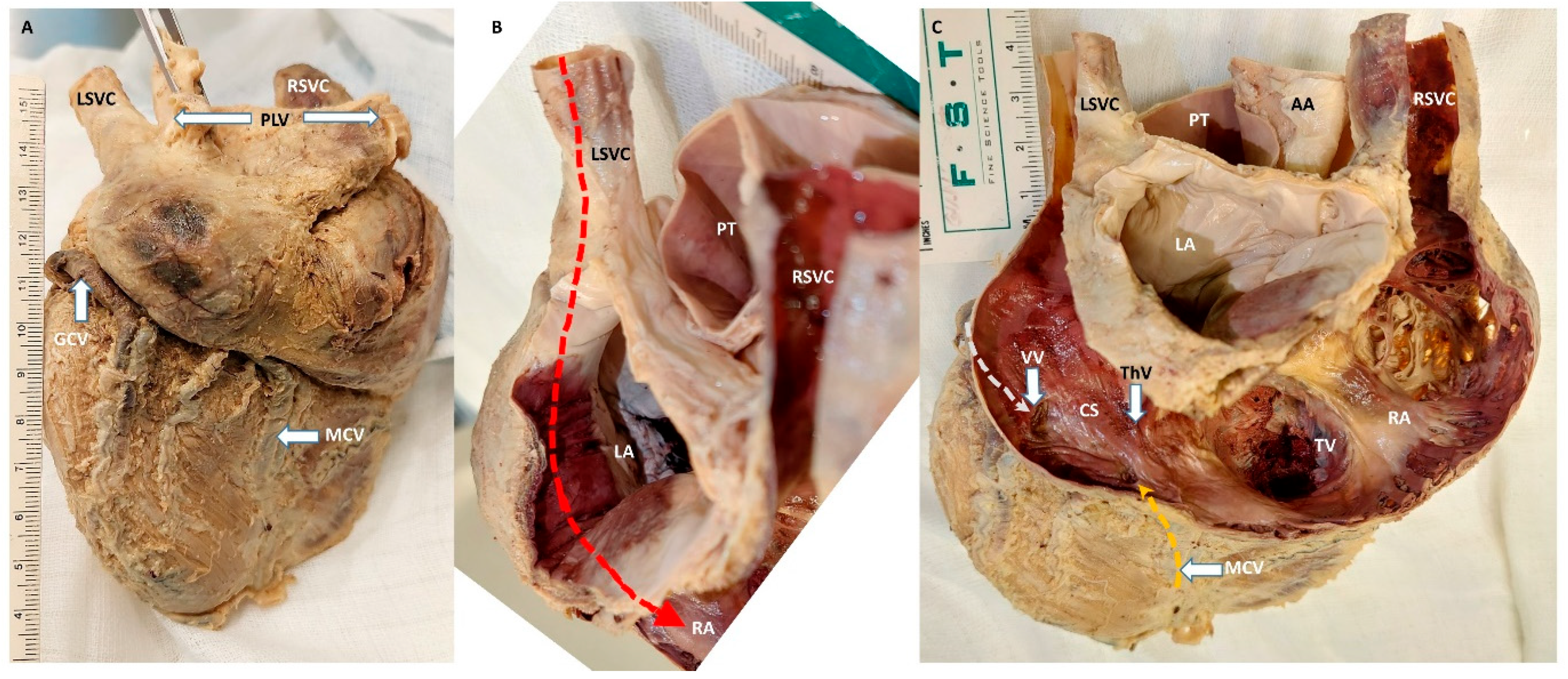
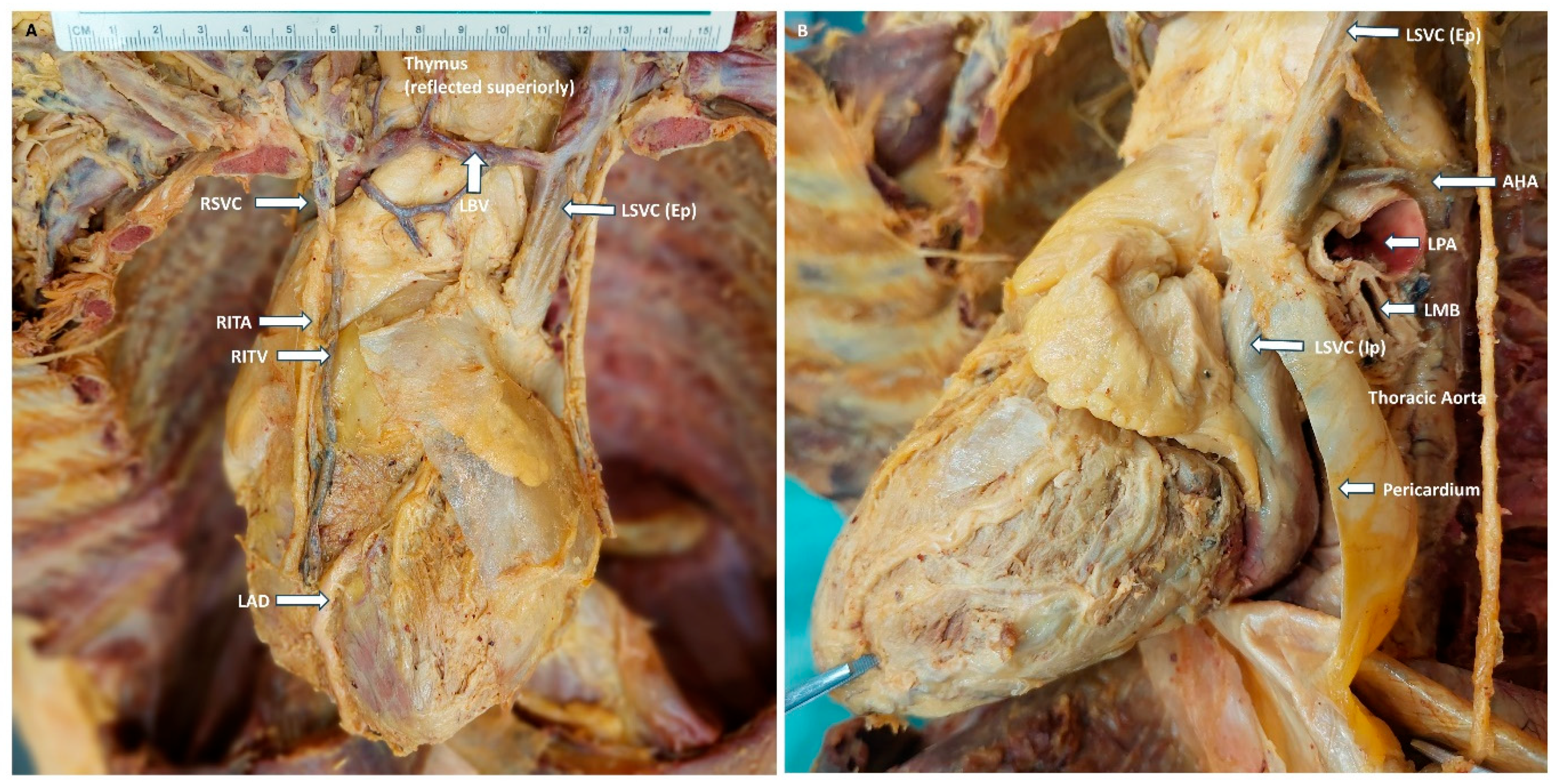
During anatomical dissection of a male body donor at the Paracelsus Medical University, Nuremberg, a double SVC was identified, with the left and right SVC connected by a small communicating vein, the LBV (Figure 2). The LBV measured 65 mm in length and 3.8 mm in diameter, exhibiting a horizontal orientation. Image analysis revealed a leftward slant, differing from the normal course of the LBV, which typically runs obliquely from the left superior to the right inferior direction. Several small thymic veins drained into the LBV, visible in Figure 2, where the thymus was reflected upwards. Both the right and left SVC were examined from anterior, lateral, and posterior perspectives (Figure 2 and Figure 3). Upon opening the right atrial wall, an oval-shaped CS orifice was observed, measuring 22 mm at its longest diameter (Supplementary Figure S1). Removal of the posterior CS wall exposed the overall course of the LSVC and CS (Figure 3). The Vieussens valve (VV) was identified at the orifice of the great cardiac vein, measuring 6 mm, demarcating the proximal boundary of the CS (Supplementary Figure S1). The Thebesian valve (ThV) defined the atrial end of the approximately 2 cm-long CS. The opening of the small cardiac vein was located 2 mm proximal to the ThV.
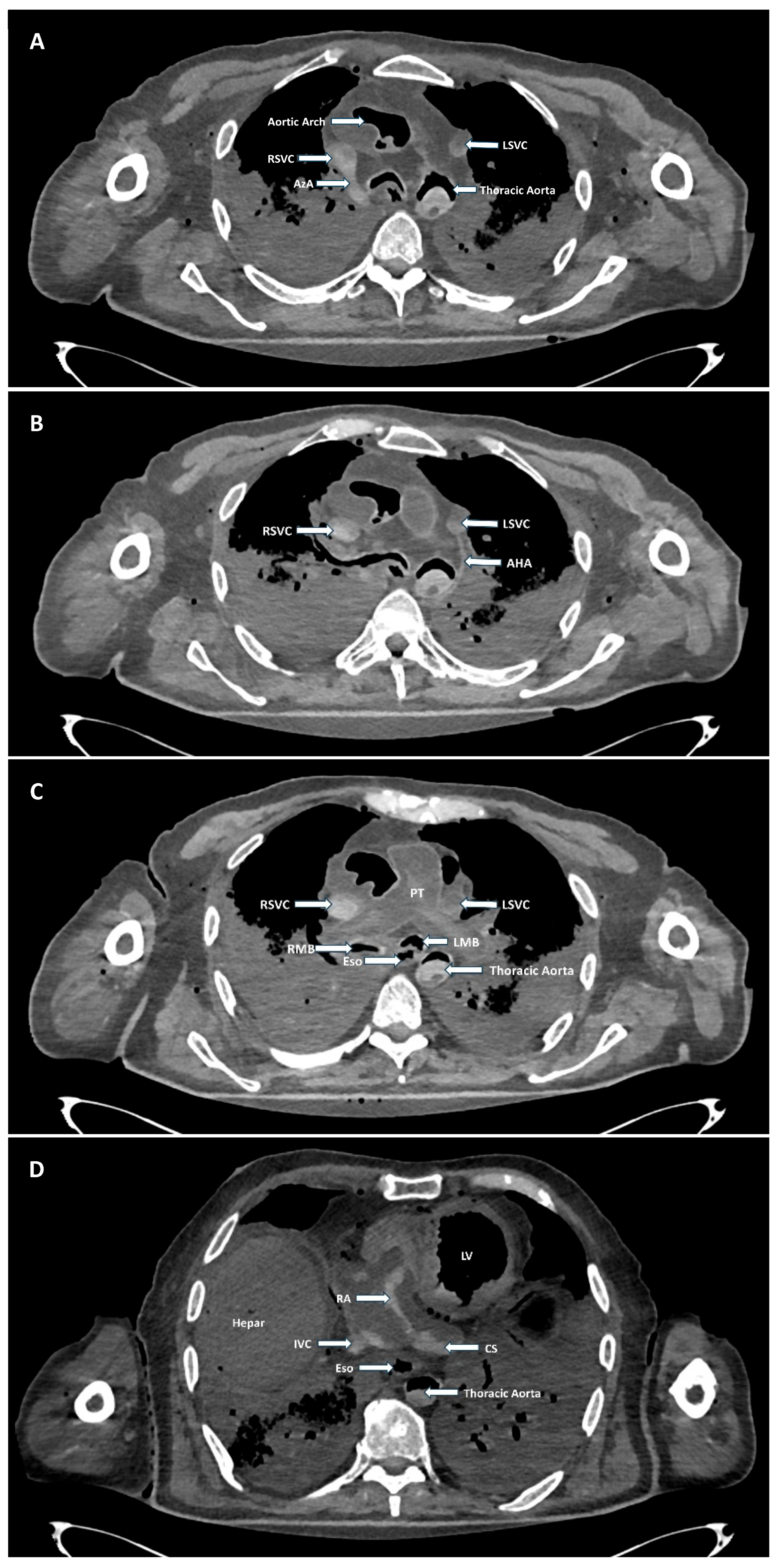
The measurements were obtained using the integrated tools of the JiveX DICOM Viewer and subsequently verified by anatomical dissection. Representative axial CT-scan axial images are presented in Figure 4, corresponding to vertebral levels T4 (A), T5 (B), T6 (C), and T9 (D). The measurements were derived from sequential axial slices at 6 mm intervals from a single donor, extending from vertebral level T2 to T7 for the RSVC, and T2 to T8 for the LSVC, as the LSVC extended one vertebral level lower than the RSVC. The RSVC diameter ranged from 14.6 mm to 24.5 mm, with an average value of 19.4 mm, and the LSVC ranged from 11.0 mm to 18.1 mm, averaging 15.2 mm. Consistent with normal anatomy, the RSVC drained directly into the right atrium, while the LSVC drained into a dilated CS, which exhibited an average diameter of 22.7 mm. Ultimately, the dilated CS also opened into the right atrium, as previously noted.
During the dissection, an arch-like venous structure was identified coursing anterior to the thoracic aorta. This vessel, formed by the confluence of the 2nd to the 5th left intercostal veins, represented the left accessory hemiazygos venous arch (measuring 2.1 mm in diameter). It crossed anterior to the thoracic aorta and drained into the LSVC at the vertebral level of T5 (Figure 2 and Figure 4). The 6th and 7th left intercostal veins drained independently into the azygos vein, while the 8th and 9th intercostal veins united with the hemiazygos vein on the left side before joining the azygos vein on the right. On the right side, the azygos venous system exhibited normal anatomy. The 2nd and 3rd right intercostal veins formed the superior intercostal vein, which drained into the azygos vein. The lower right intercostal veins entered the azygos vein independently and directly. The azygos vein measured 11.4 mm in diameter at the level of T5. The azygos arch, measuring 7 mm in diameter, coursed above the right main bronchus in a posterior-to-anterior orientation and terminated into the RSVC at the T4/5 vertebral level (Figure 4).

4. Discussion

The persistence of the LSVC represents the most common thoracic vein anomaly, with an estimated prevalence of 0.3–0.5% in the general population and up to 10% in patients with congenital heart disease [11,12]. This case report describes a persistent LSVC measuring 15.2 mm in diameter, which continued its course into the CS. Comparable LSVC dimensions of 17 mm, along with an RSVC measuring 25 mm, have been reported by Umamaheswaran et al. [13]. In contrast, the communicating vein, identified as LBV, was markedly smaller than previously reported. In contrast, the communicating vein, identified as LBV, was markedly smaller than previously reported. Therefore, this case report describes an anatomical variation that is very similar to the one shown in Figure 1B, but with a drastically reduced caliber. Complete agenesis of the brachiocephalic vein may also occur, leaving the RSVC and LSVC entirely separate [14]. The presence of this vein in varying calibers can have hemodynamic significance for the LSVC and RSVC. Consequently, the degree of CS dilation was greater in our specimen, measuring 22.7 mm in diameter, compared to the previously reported value of 17 mm. This observation suggests that the size of the LBV, when present, modulates the volume of venous return directed to the CS, thereby determining the extent of its dilation in cases of persistent LSVC [13,15]. A twofold increase in CS diameter, relative to the normal average diameter of approximately 10 mm, was clearly evident in the present case, representing a direct anatomical correlation with the persistent LSVC [16]. Hence, CS dilation detected on echocardiography should be considered a reliable indicator of a persistent LSVC [17].
Although the CS normally opens into the lower posterior aspect of the right atrium, an unroofed CS may occur due to the proximity to the left atrium and partial or complete absence of the CS roof, resulting in interatrial shunting [18,19]. Unroofed CS have also been reported in the absence of persistent LSVC, although they are more frequently observed in the presence of a persistent LSVC [19,20]. In our case, the CS wall was intact and anatomically fully separated from the left atrium (Figure 3). Also, direct drainage of the LSVC into the left atrium has been reported before [21]. Raghib et al. introduced this vascular anomaly as part of a developmental complex in which a persistent LSVC drains into the left atrium, accompanied by the absence of the CS and a defect in the posterior-inferior angle of the atrial septum [22]. LSVC drainage into the left atrium, with or without an associated ASD, can result in a right-to-left shunt, which may increase the risk of cyanosis, heart failure, disseminated infection, or cerebrovascular events [23].
Lendzian et al. analyzed heart catheter records of 1631 patients, of whom 97.7% had a cardiovascular malformation [24]. Among 92 patients with a malformation of the superior or inferior vena cava, only one case exhibited a persistent LSVC without any additional congenital heart disease. Approximately 25% of cases were associated with simple congenital heart defects, while the remainder presented with complex anomalies. In our cadaveric study, no additional cardiac malformations were observed. However, a variation in the azygos-hemiazygos venous system was identified: the left accessory hemiazygos venous arch crossed anterior to the thoracic aorta before draining into the LSVC. In general, the hemiazygos venous system—comprising the hemiazygos and accessory hemiazygos veins from the left side of the vertebral column—drains into the azygos vein on the right, which then terminates most commonly in the SVC at approximately the T3 vertebral level [25]. The connection is frequently found retroaortic; however, mixed or preaortic connections between the hemiazygos and azygos systems also exist and have been previously reported [26,27]. A case report very similar to our study described a preaortic hemiazygos arch directly draining into a persistent LSVC [28]. The referred case demonstrated that the hemiazygos arch is a continuation of the hemiazygos vein, with no direct connection to the azygos vein on the right side. In our case report, the preaortic venous arch was formed by the accessory hemiazygos vein, which resulted from the union of the 2nd to 5th left intercostal veins, rather than the hemiazygos vein as reported before. The hemiazygos vein itself changed direction from left to right and connected to the azygos vein at the T8 vertebral level. Interestingly, the 6th and 7th left intercostal veins did not connect to either the hemiazygos or accessory hemiazygos vein but instead drained independently into the azygos vein. The variations in the azygos and, even more so, in the hemiazygos venous system show a high degree of diversity, a phenomenon that has been well documented in anatomical literature for a very long time [29].
The presence of persistent LSVC is clinically significant, as several cases of malpositioned central venous catheters entering the CS via the persistent LSVC have been reported [30,31,32]. If a connection exists between the persistent LSVC and the hemiazygos system, as in our study, malposition of the catheter into the accessory hemiazygos vein or even further into the left superior intercostal vein may occur [33,34]. Additional vascular anomalies have been reported in association with persistent LSVC. For example, a 5-year-old South Asian male with a double outlet right ventricle and an unbalanced atrioventricular canal defect presented with total anomalous pulmonary venous connection to a persistent LSVC and complaints of dyspnea [35]. Similarly, a 4-year-old girl with tetralogy of Fallot and dextrocardia exhibited a complex constellation of anomalies, including polysplenia, right-sided descending aorta, inferior vena cava defect, partial anomalous pulmonary venous return, and a double SVC [36]. In this patient, due to dextrocardia, the persistent RSVC drained into the coronary sinus and right atrium, while the left IJV, confluent with the hemiazygos vein, drained into the left-sided SVC.
Clinically, knowledge of a persistent LSVC is essential in interventional cardiology and electrophysiology for cardiac device implantation. For instance, a report described the placement of the atrial lead of a dual-chamber implantable cardioverter-defibrillator (ICD) in a 46-year-old Brugada syndrome patient, following the course via the LSVC [37]. The ventricular lead, on the other hand, was inserted into the right ventricle via the brachiocephalic vein, before entering the right SVC. Moreover, the aberrant venous pathway may complicate catheter advancement or lead positioning due to the altered venous drainage route through the LSVC and the dilated CS [38,39]. Furthermore, the close anatomical relationship between the LSVC, the ligament of Marshall, and the left atrial myocardium has been associated with arrhythmogenic foci, particularly in cases of atrial fibrillation [40,41]. Awareness of persistent LSVC anatomy can therefore guide central venous catheterization or pacemaker/ICD lead placement, reducing procedural complications [42].
From both clinical and procedural perspectives, the presence of a persistent LSVC is significant in cardiovascular interventions, including central venous catheterization, pacemaker or defibrillator lead placement, and cardiac resynchronization therapy. Recognition of such venous variants through preoperative imaging—notably CT, MRI, or echocardiography—is therefore essential for procedural planning and avoiding inadvertent complications. In summary, awareness of a persistent LSVC is crucial not only for accurate anatomical interpretation but also for ensuring the safety and efficacy of interventional cardiologic and electrophysiologic procedures.

5. Limitations

The case report presents findings from a single specimen, a limitation inherent to this research format that restricts the generalizability of the results. Furthermore, the measurements of the given vessels in this study were obtained from an anatomically fixated specimen and, therefore, may deviate from those reported in vivo in radiological or surgical studies due to tissue shrinkage or distortion. Another limitation is the lack of additional clinical or electrophysiological data concerning the cardiac status of the body donor. Consequently, it was not possible to verify whether the persistent LSVC coexisted with any other congenital heart disease.

6. Conclusions

A persistent left superior vena cava (LSVC) was identified during a classical anatomical dissection and confirmed via post-mortem, post-fixation CT imaging of the same specimen. Both the LSVC and the right superior vena cava (RSVC) were present, connected by a small-caliber communicating vein. The LSVC drained into a dilated coronary sinus (CS), which opened into the right atrium. Additionally, the accessory hemiazygos vein received the left intercostal veins, forming a small-caliber venous arch at the T5 vertebral level, crossing anterior to the thoracic aorta. This dual approach, combining anatomical dissection with detailed CT imaging, not only enhances undergraduate anatomical education but also contributes to high-quality morphological research, providing valuable insights into venous variants and their clinical relevance.

Supplementary Materials

The following supporting information can be downloaded at: https://www.mdpi.com/article/10.3390/anatomia5010002/s1, Figure S1: (A) Oval-shaped coronary sinus (CS) orifice observed after the removal of the posterior atrial wall. Dorsolateral view. (B) The posterior wall of the CS has been removed. Vieussens valve (VV) is identified at the orifice of the great cardiac vein, demarcating the proximal boundary of the CS, and the Thebesian valve (ThV) at the distal end of the CS before opening into the right atrium (RA). The yellow dotted line indicates the middle cardiac vein (MCV), draining into the CS. Compare Figure 3C. RSVC = Right superior vena cava, TV = Tricuspid valve.

Author Contributions

Conceptualization, S.S. and G.S.-T.; methodology, S.S. and G.S.-T.; software, S.S. and G.S.-T.; validation, S.S., K.M. and G.S.-T.; formal analysis, S.S., M.K. (Mustafa Kandemir), F.S., V.O., K.M. and M.K. (Maria Kokozidou); investigation, S.S., M.K. (Mustafa Kandemir), F.S., V.O. and M.K. (Maria Kokozidou); resources, N.H. and G.S.-T.; data curation, S.S. and G.S.-T.; writing—original draft preparation, S.S.; writing—review and editing, M.K. (Mustafa Kandemir), F.S., V.O., K.M., M.K. (Maria Kokozidou), N.H. and G.S.-T.; visualization, S.S. and G.S.-T.; supervision, G.S.-T.; project administration, S.S. All authors have read and agreed to the published version of the manuscript.

Funding

This research received no external funding.

Institutional Review Board Statement

The study was approved by the Institutional Review Board of Klinikum Nuremberg, Germany on 10 November 2025. Registration Number: IRB-2025-13.

Informed Consent Statement

The consent statement of the body donor was taken prior to their demise.

Data Availability Statement

Data is contained within the article. Additional information is available from the corresponding author upon request.

Acknowledgments

We are deeply grateful to the body donors for their invaluable contributions to student education, clinicians’ training, and anatomical research. The language optimization in certain sections of the manuscript was performed using artificial intelligence tools. The optimization was manually reviewed.

Conflicts of Interest

The authors declare no conflicts of interest.

Abbreviations

The following abbreviations are used in this manuscript:
AAAscending aorta
AHAAccessory hemiazygos arch
AzAAzygos arch
CSCoronary sinus
CTComputed tomography
GCVGreat cardiac vein
ICDImplantable cardioverter-defibrillator
IVCInferior vena cava
LADLeft anterior descending artery
LBVLeft brachiocephalic vein
LMBLeft main bronchus
LPALeft pulmonary artery
LSVC (Ip)Left superior vena cava (intrapericardial)
LSVC(Ep)Left superior vena cava (extrapericardial)
MCVMiddle cardiac vein
PLVsPulmonary veins
PTPulmonary trunk
RARight atrium
RBVLeft brachiocephalic vein
RITARight internal thoracic artery
RITVRight internal thoracic vein
RSVCRight superior vena cava
SVCSuperior vena cava
ThVThebesian valve
TVTricuspid valve
VVVieussens valve

References

  1. Standring, S. (Ed.) Thorax: Overview and Surface Anatomy. In Gray’s Anatomy; Elsevier: Amsterdam, The Netherlands, 2021; pp. 990–996.e2. [Google Scholar]
  2. Moore, K.L.; Persaud, T.V.N.; Torchia, M.G. (Eds.) Embryologie: Entwicklungsstadien, Frühentwicklung, Organogenese, Klinik, 6th ed.; Elsevier, Urban & Fischer: München, Germany, 2013. [Google Scholar]
  3. Couvreur, T.; Benoît, G. Left Superior Vena Cava. In Integrated Cardiothoracic Imaging with Mdct; Rémy-Jardin, M., Rémy, J., Eds.; Springer: Berlin/Heidelberg, Germany, 2009; pp. 289–305. [Google Scholar]
  4. Persaud, T.V.N.; Torchia, M.G. (Eds.) Cardiovascular System. In The Developing Human; Saunders: Philadelphia, PA, USA, 2025; pp. 265–316. [Google Scholar]
  5. Carlson, B.M. Development of the Vascular System. In Reference Module in Biomedical Sciences; Elsevier: Amsterdam, The Netherlands, 2014. [Google Scholar]
  6. Standring, S. (Ed.) Heart. In Gray’s Anatomy; Elsevier: Amsterdam, The Netherlands, 2021; pp. 1068–1096.e1. [Google Scholar]
  7. D’Cruz, I.A.; Shala, M.B.; Johns, C. Echocardiography of the Coronary Sinus in Adults. Clin. Cardiol. 2000, 23, 149–154. [Google Scholar] [CrossRef]
  8. Demșa, I.; Crișu, D.; Haba, C.M.Ș.; Ursaru, A.M.; Afrăsânie, V.-A.; Costache, I.I.; Petriș, A.O.; Tesloianu, D.N. Persistent Left Superior Vena Cava with Absent Right Superior Vena Cava and Discrete Subaortic Stenosis Diagnosed in a Patient with Sick Sinus Syndrome: A Case Report and Brief Review of the Literature. Diagnostics 2020, 10, 847. [Google Scholar] [CrossRef]
  9. Hammer, N.; Löffler, S.; Feja, C.; Sandrock, M.; Schmidt, W.; Bechmann, I.; Steinke, H. Ethanol-Glycerin Fixation with Thymol Conservation: A Potential Alternative to Formaldehyde and Phenol Embalming. Anat. Sci. Educ. 2012, 5, 225–233. [Google Scholar] [CrossRef] [PubMed]
  10. Silawal, S.; Bucher, P.; Kursawe, S.; Hammer, N.; Werner, C.; Shrestha, R.; Schulze-Tanzil, G. Unilateral Subclavian Vein Fenestration Featuring a Traversing Brachial Plexus Nerve Branch and Associated Vascular Dysgeneses in a Female Body Donor. Anatomia 2025, 4, 3. [Google Scholar] [CrossRef]
  11. Tyrak, K.W.; Holda, J.; Holda, M.K.; Koziej, M.; Piatek, K.; Klimek-Piotrowska, W. Persistent Left Superior Vena Cava. Cardiovasc. J. Afr. 2017, 28, e1–e4. [Google Scholar] [CrossRef] [PubMed]
  12. Sarodia, B.D.; Stoller, J.K. Persistent Left Superior Vena Cava: Case Report and Literature Review. Respir Care 2000, 45, 411–416. [Google Scholar] [PubMed]
  13. Umamaheswaran, D.; Sakkarai, J.; Devi, R. Case Report of Persistent Left Superior Vena Cava with Absent Papillary Muscle—Unusual Coexistence. J. Anat. Soc. India 2022, 71, 324–328. [Google Scholar] [CrossRef]
  14. Steckiewicz, R.; Stolarz, P.; Marchel, M.; Michalak, M.; Konecki, D.; Szczerba, E.; Kowara, M.; Grabowska-Derlatka, L.; Grabowski, M. Double Superior Vena Cava and Left Brachiocephalic Vein Agenesis: A Rare Systemic Vein Anomaly and Potential Source of Cardiac Implantable Electronic Device and Central Venous Catheter Placement Complications. Folia Morphol. 2022, 81, 1066–1071. [Google Scholar] [CrossRef]
  15. Dave, V.; Sesham, K.; Mehra, S.; Roy, T.; Ahuja, M. Persistent Left Superior Vena Cava: An Anatomical Variation. Med. J. Armed Forces India 2022, 78, S277–S281. [Google Scholar] [CrossRef]
  16. Prasanna, L.C.; Thomas, H.R.; Das, A.; Kumar, R. Left-Sided Persistent Superior Vena Cava with Superior Hemiazygos Arch. J. Clin. Diagn. Res. 2016, 10, AD03–AD05. [Google Scholar] [CrossRef]
  17. Kowalski, M.; Maynard, R.; Ananthasubramaniam, K. Imaging of Persistent Left Sided Superior Vena Cava with Echocardiography and Multi-Slice Computed Tomography: Implications for Daily Practice. Cardiol. J. 2011, 18, 332–336. [Google Scholar] [PubMed]
  18. Murli, L.; Ranjit, M.S.; Shah, P. Unroofed Coronary Sinus: An Unusual Interatrial Communication and a Rare Childhood Entity. Ann. Pediatr. Cardiol. 2019, 12, 64–65. [Google Scholar] [CrossRef] [PubMed]
  19. Ootaki, Y.; Yamaguchi, M.; Yoshimura, N.; Oka, S.; Yoshida, M.; Hasegawa, T. Unroofed Coronary Sinus Syndrome: Diagnosis, Classification, and Surgical Treatment. J. Thorac. Cardiovasc. Surg. 2003, 126, 1655–1656. [Google Scholar] [CrossRef] [PubMed]
  20. Catanchin, A.; Castellanos, E.; Marjan, J.; Ward, D. Wolff-Parkinson-White Syndrome with an Unroofed Coronary Sinus without Persistent Left Superior Vena Cava Treated with Catheter Cryoablation. Indian Pacing Electrophysiol. J. 2008, 8, 227–233. [Google Scholar]
  21. Bisbee, C.R.; Sherard, C.; Rajab, T.K. Left Superior Vena Cava Draining to Left Atrium: A Case Report, Review of the Literature, and Classification. Pediatr. Cardiol. 2024, 45, 1838–1840. [Google Scholar] [CrossRef]
  22. Raghib, G.; Ruttenberg, H.D.; Anderson, R.C.; Amplatz, K.; Adams, P., Jr.; Edwards, J.E. Termination of Left Superior Vena Cava in Left Atrium, Atrial Septal Defect, and Absence of Coronary Sinus; a Developmental Complex. Circulation 1965, 31, 906–918. [Google Scholar] [CrossRef]
  23. Tobbia, P.; Norris, L.A.; Lane, T. Persistent Left Superior Vena Cava Draining into the Left Atrium. BMJ Case Rep. 2013, 2013, 010167. [Google Scholar] [CrossRef]
  24. Lendzian, T.; Vogt, J.; Krasemann, T. Are Anomalies of the Caval Veins More Common in Complex Congenital Heart Disease? Herz Kardiovaskuläre Erkrank. 2007, 32, 657–664. [Google Scholar] [CrossRef]
  25. Dahran, N.; Soames, R. Anatomical Variations of the Azygos Venous System: Classification and Clinical Relevance. Int. J. Morphol. 2016, 34, 1128–1136. [Google Scholar] [CrossRef]
  26. Sahai, A.N.; D’Alesio, L.M.; Dugaesescu, A.L.; Bauman, J.M. The Interazygos Vein: A Case Report and Review of Preaortic Hemiazygos Anastomoses. Cureus 2025, 17, e83800. [Google Scholar] [CrossRef]
  27. Shiri, E.; Madadi, S. An Abnormal Course of the Interazygos Vein: A Case Report. J. Med. Case Rep. 2020, 14, 232. [Google Scholar] [CrossRef]
  28. Liu, F.; Ruze, A.; Amuti, S.; Wang, S.; Chen, S.; Yiming, A.; Xiong, K. A Rare Variation of the Hemiazygos Vein Draining into the Persistent Left Superior Vena Cava. Anat. Sci. Int. 2019, 94, 269–273. [Google Scholar] [CrossRef]
  29. Seib, G.A. The Azygos System of Veins in American Whites and American Negroes, Including Observations on the Inferior Caval Venous System. Am. J. Phys. Anthr. 1934, 19, 39–163. [Google Scholar] [CrossRef]
  30. Syska, B.; Veer, A.S.; Matusik, P.S.; Jarczewski, J.D.; Krzanowska, K.; Popiela, T.J. Malposition of Central Venous Catheter into Coronary Sinus Throughout the Persistent Left Superior Vena Cava and Other Complications Related to Catheterization. Diagnostics 2024, 14, 1038. [Google Scholar] [CrossRef]
  31. Shakhshir, A.; Abdul-Hafez, H.A.; Takhman, M.; Qasrawi, H.; Kittaneh, M.; Saada, S. Double Superior Vena Cava Incidentally Found During Permanent Catheter Placement: A Case Report and Literature Review. Radiol. Case Rep. 2025, 20, 442–448. [Google Scholar] [CrossRef]
  32. Van Walleghem, J.; Depuydt, S.; Schepers, S. Insertion of a Totally Implantable Venous Access Port in a Patient with Persistent Left Superior Vena Cava (Plsvc). Acta Chir. Belg. 2018, 118, 68–71. [Google Scholar] [CrossRef]
  33. Hajeh, H.; Garcia, A.; Mishra, S.; Radicic, K. Malposition of the Central Venous Catheter Secondary to Accessory Hemiazygos Vein Variant. J. Vasc. Access 2024, 25, 995–997. [Google Scholar] [CrossRef]
  34. Padovan, R.S.; Paar, M.H.; Aurer, I. (Mis)Placed Central Venous Catheter in the Left Superior Intercostal Vein. Radiol. Oncol. 2011, 45, 27–30. [Google Scholar] [CrossRef] [PubMed]
  35. Tej, U.; Mishra, A.K.; Mittal, A.; Saini, K.; George, A. Surgical Correction of Total Anomalous Pulmonary Venous Connection to Persistent Left-Sided Superior Vena Cava: A Case Report. Eur. Heart J. Case Rep. 2024, 8, ytae290. [Google Scholar] [CrossRef]
  36. Kayashima, K.; Imai, K.; Murashima, K. Internal Jugular Vein Duplication with Absent Carotid Sheath Detected During Ultrasound-Guided Pediatric Central Venous Catheter Placement. J. Anesth. 2013, 27, 972–973. [Google Scholar] [CrossRef] [PubMed]
  37. Sondermeijer, B.M.; MacGillavry, M.R.; Tan, H.L. Left Superior Vena Cava, a Remnant of Embryological Development. Neth. Heart J. 2008, 16, 173–174. [Google Scholar] [CrossRef] [PubMed]
  38. Jeong, E.R.; Kang, E.-J.; Jeun, J.H. Pictorial Essay: Understanding of Persistent Left Superior Vena Cava and Its Differential Diagnosis. J. Korean Soc. Radiol. 2022, 83, 846–860. [Google Scholar] [CrossRef]
  39. Azizova, A.; Onder, O.; Arslan, S.; Ardali, S.; Hazirolan, T. Persistent Left Superior Vena Cava: Clinical Importance and Differential Diagnoses. Insights Imaging 2020, 11, 110. [Google Scholar] [CrossRef]
  40. Hsu, T.Y.-T.; D’SIlva, K.M.; Patel, N.J.; Fu, X.; Wallace, Z.S.; Sparks, J.A. Incident Systemic Rheumatic Disease Following COVID-19. Lancet Rheumatol. 2021, 3, e402–e404. [Google Scholar] [CrossRef] [PubMed]
  41. He, B.; Wang, X.; Zhao, F.; Guo, T.; Po, S.S.; Lu, Z. The Ligament of Marshall and Arrhythmias: A Review. Pacing Clin. Electrophysiol. 2021, 44, 792–799. [Google Scholar] [CrossRef] [PubMed]
  42. Sundhu, M.; Syed, M.; Gul, S.; Saqi, B.; Mosteller, R. Pacemaker Placement in Persistent Left Superior Vena Cava. Cureus 2017, 9, e1311. [Google Scholar] [CrossRef]
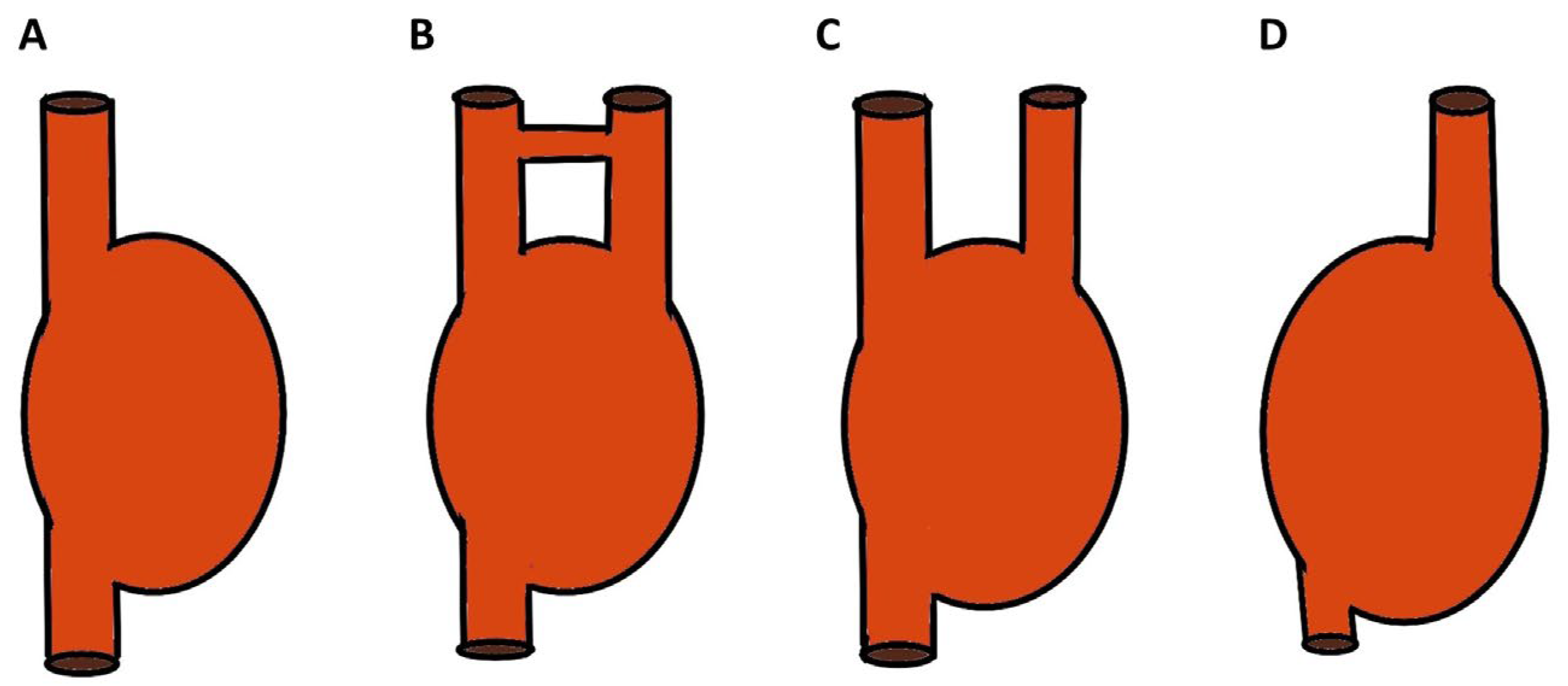
Figure 1. A schematic illustration of possible anatomical variants of the persistent superior vena cava [8]: (A) normal anatomical configuration with the right superior vena cava (RSVC); (B) presence of both RSVC and a persistent left superior vena cava (LSVC) connected by the left brachiocephalic vein (LBV); (C) double superior vena cava, similar to (B), but without the LBV; (D) persistent LSVC in the absence of the RSVC. Image: Prof. Schulze-Tanzil.
Anatomia 05 00002 g001
Figure 2. (A) Anterior view of the heart showing the right superior vena cava (RSVC) and the left superior vena cava (LSVC) connected by a small communicating vein, the left brachiocephalic vein (LBV). (B) The lateral view illustrates the LSVC in relation to the pericardium. The pulmonary vessels and the left main bronchus (LMB) have been transected at the level of the lung hilum. Other abbreviations: AHA = accessory hemiazygos arch, LAD = left anterior descending artery, LPA = left pulmonary artery, LSVC (Ip) = left superior vena cava (intrapericardial), LSVC (Ep) = left superior vena cava (extrapericardial), RITA = right internal thoracic artery, RITV = right internal thoracic vein.
Anatomia 05 00002 g002
Figure 3. (A) Posterior view of the heart after removal from the mediastinum. The left pulmonary vein (PLV) has been reflected upward to expose the left superior vena cava (LSVC). The right pulmonary vein (RPV) overlies the proximal portion of the right superior vena cava (RSVC) in the image (B). The posterior walls of the left atrium (LA), right atrium (RA), and RSVC have been removed. The red dotted line indicates the course of the LSVC and the coronary sinus (CS), which opens into the RA and remains enclosed behind the left atrial wall. (C) The anterior and inferior walls of the LSVC and CS remain intact, while the posterior wall has been removed to demonstrate the full course of both structures. The white dotted line marks the trajectory of the great cardiac vein (GCV), terminating at the Vieussens valve (VV) (see also Supplementary Figure S1), which denotes the proximal margin of the CS. The yellow dotted line indicates the middle cardiac vein (MCV), draining into the CS proximal to the Thebesian valve (ThV). Other abbreviations: AA = ascending aorta; PLV = pulmonary veins; PT = pulmonary trunk; TV = tricuspid valve.
Anatomia 05 00002 g003
Figure 4. Representative axial CT scan images at vertebral levels T4 (A), T5 (B), T6 (C), and T9 (D), illustrating the anatomical relationships of the right and left superior vena cava (RSVC and LSVC) and associated thoracic structures. Other abbreviations: AzA = azygos arch, AHA = accessory hemiazygos arch, CS = coronary sinus, Eso = esophagus, IVC = inferior vena cava, LMB = left main bronchus, LSVC = left superior vena cava, LV = left ventricle, PT = pulmonary trunk, RA = right atrium, RMB = right main bronchus, RSVC = right superior vena cava.
Anatomia 05 00002 g004
Disclaimer/Publisher’s Note: The statements, opinions and data contained in all publications are solely those of the individual author(s) and contributor(s) and not of MDPI and/or the editor(s). MDPI and/or the editor(s) disclaim responsibility for any injury to people or property resulting from any ideas, methods, instructions or products referred to in the content.