Article

Sustainability in Dentistry—Insights into Waste Impacts from a Carbon Footprint Comparison Between Conventional and Digital Impression Techniques


by
Andre Christian Daum
1,
Kara Johanna Drath
2,
Harald Weigand
3,
Maximiliane Amelie Schlenz
4,
Fabian Völker
1 and
Holger Rohn
1,*
1
Department of Industrial Engineering, Friedberg Campus, Technical University of Central Hesse, Wilhelm-Leuschner-Straße 13, 61169 Friedberg, Germany
2
Department of Prosthodontics, Justus Liebig University Giessen, University Hospital Giessen, Schlangenzahl 14, 35392 Gießen, Germany
3
Centre of Competence for Sustainable Engineering and Environmental Systems, Technical University of Central Hesse, Wiesenstraße 14, 35390 Gießen, Germany
4
Department of Prosthodontics, Christian Albrecht University of Kiel, University Hospital Schleswig-Holstein, Campus Kiel, Arnold-Heller-Strasse 3, 24105 Kiel, Germany
*
Author to whom correspondence should be addressed.
Submission received: 12 December 2025 / Revised: 17 February 2026 / Accepted: 19 February 2026 / Published: 23 February 2026

Abstract

Despite the significant environmental impact of the healthcare sector, with Germany’s system accounting for a large proportion of national emissions, quantitative sustainability research on specific medical procedures, such as those in dentistry, is critically scarce. This study aimed to address this issue by conducting a Life Cycle Assessment to quantify and compare the Global Warming Potential of the conventional analog and the digital (intraoral scanner) impression techniques for the manufacturing of single-tooth crowns in a German dental practice. The methodology employed a cradle-to-grave approach, defining a positive dental model as the functional unit and focusing on material consumption, waste streams, and equipment usage while excluding patient travel and facility energy. The results revealed that the digital impression procedure offers significant environmental advantages, with its average carbon footprint (approx. 550 CO2-eq) being nearly threefold lower than the analog impression (approx. 1620 g CO2-eq). This difference is primarily driven by the analog impression technique’s intensive use of disposable materials and the generation of contaminated waste requiring incineration. In contrast, the digital impression’s burden shifts to the manufacturing of the intraoral scanner, highlighting the importance of high clinical utilization to achieve the ecological benefit. This work concludes that the adoption of digital impression taking is a critical step towards more sustainable dentistry by promoting material avoidance and waste reduction, provided that high equipment utilization rates can be ensured. It should be noted that these results are specific to the regional context, particularly the German energy mix and national waste management standards, and may vary in different geographical settings

1. Introduction

Although sustainable product development and strategies have become standard practice in numerous industrial sectors, certain fields, notably healthcare, continue to suffer from a scarcity of robust research and reliable primary data. Yet, the healthcare sector contributes significantly to global environmental burdens and waste generation. In the area of climate change alone, it is responsible for around 4.4% of all greenhouse gas emissions [1,2]. For Germany, this share increases to 5.2%, thereby placing Germany’s healthcare system in tenth position on an international scale [2] (p. 24). As a source, the critical role of the supply chain is being emphasized, particularly its secondary stage, in driving these impacts, highlighting the energy demands of chemicals as a major contributor [2] (p. 5), [3] (p. 58). Consequently, the consumption and production processes of medical products are key determinants of environmental performance. Notably, the pharmaceutical industry stands out, emitting 48 Mt CO2-eq per million dollars, which is estimated to be 55% more intensive than emissions from the automotive sector [4] (p. 188).
In addition to climate change, the relevance of the healthcare sector for the environment is also reflected in the high demand for resources. According to a current research project, in Germany, about 8.3 kg of waste per patient is being created per hospital stay, with a high share of single-use products, partly due to hygiene regulations, which results in high resource demands [5]. In Germany, the environmental footprint of the healthcare sector accounts for approximately 5% of the nation’s total raw material consumption, according to the Federal Environment Agency’s resource report [3]. This is ultimately reflected in a high volume of waste, including about 15% of hazardous waste, which is treated by incineration [6]. To tackle this, circular economy principles are increasingly integrated into healthcare. Frameworks like the EU Green Deal and Germany’s National Circular Economy Strategy [7,8] prioritize resource efficiency, closing material cycles, and waste reduction across all sectors.
Research can create transparency and enable targeted optimization measures through analysis of the ecological impacts of medical devices and treatment procedures. Additionally, principles of the circular economy can be integrated into everyday practices. However, studies on environmental assessment using methods such as Life Cycle Assessment (LCA) or material flow cost accounting are scarce, particularly within the healthcare sector in Germany. This is confirmed by a systematic review of the environmental impacts of medical devices, which highlights that most available research focuses only on individual products and specific use cases, while more comprehensive assessments of entire healthcare systems are widely missing [9]. As a result, policymakers and industry decision-makers lack a solid basis for transitioning to more sustainable alternatives. As an example, a study on the status of resource efficiency, climate protection, and ecological sustainability in healthcare confirms this gap, particularly with regard to general measures in energy saving, reuse, or waste management. The study identifies the absence of sustainability as a key barrier at management levels within organizations, such as the lack of sustainability managers in staff positions [10] (pp. 96–98). To address management, ambulatory healthcare could prove particularly promising, as it often involves only a single individual per practice. In Germany, approximately 80% of medical practices, such as those of veterinarians or dentists, are owner-operated [10] (pp. 38–43). According to the Federal Chamber of Dentists of Germany (BZÄK), there are currently 45,541 practicing dentists in the country. These dentists account for 6.4% of the gross value added to the healthcare economy [11]. This research project targets those decision-makers by developing a methodological approach and an initial data framework within a pilot study. Secondly, the field of dental prostheses is a key driver of more sustainable dentistry. A total of €3870 million (around 23.1% of all statutory health insurance expenditure) is allocated to dental prostheses measures each year [12] (pp. 41,71).
Sustainable concepts in healthcare are further complicated by the necessity of prioritizing hygiene and patient safety. Although some LCA studies have addressed individual dental products or waste management, a comprehensive analysis of the German dental sector remains absent. Notably, national sectoral emissions data, detailed life cycle inventories, and medically relevant datasets are particularly scarce, underscoring the need for systematic research to record the environmental impact of dentistry in Germany.
The present study compares analog and digital impression techniques in dentistry within a Life Cycle Assessment framework. In contrast to previous studies, material consumption and process steps were measured directly in routine clinical workflows, enabling a realistic assessment of environmental impacts. While the analog impression technique relies on materials such as alginate, silicone, and gypsum, the digital approach is based on intraoral scanning systems. A key novel contribution of this study is the systematic classification and accounting of generated waste in accordance with German waste management regulations, ensuring regulatory and contextual relevance. Furthermore, the environmental burdens of digital impression techniques were allocated using a device amortization approach that considers the expected service life and utilization of intraoral scanners. By integrating in-practice measurements, waste classification, and equipment amortization into a unified LCA framework, this study provides a robust basis for evaluating ecological trade-offs and identifying opportunities to reduce material use, waste generation, and process complexity in dental practice.

1.1. Current Research on Sustainability in Dentistry

As outlined, there is a notable gap in quantitative research within the realm of sustainability in the medical sector—a deficiency that extends to the field of dentistry. This is particularly evident in Germany, as confirmed by the analysis of discovery systems such as PubMed and Google Scholar, which yield no results concerning carbon emissions, waste volumes or other environmental impacts that quantify dentistry in Germany as a whole. However, this topic is becoming increasingly important. The Federal Chamber of Dentists of Germany (BZÄK) has emphasized the importance of sustainability in its recommendations and is advocating for the stronger integration of this topic into future dental practices. Special attention is given to increasing the use of reusable products and promoting preventive measures [11].
Moving forward, it is desirable to place greater emphasis on the need for more in-depth quantitative studies to provide evidence-based recommendations for action. So far, the only comparable study pertains to the healthcare sector of the United Kingdom (UK), where a total of 675,000 tons of CO2-eq is attributed to all services provided by the British National Health Service (NHS), excluding nitrous oxide emissions [13] (p. 40). As a result, prominent environmental LCA databases such as Ecoinvent and GaBi, offer a limited number of datasets for the medical field, particularly in relation to medical processes or treatment methods.
Consequently, environmentalists find themselves obliged to create basic data sets before larger contexts, such as treatment methods or dental products, can be analyzed and evaluated. Martin et al. [14] conducted a scoping review regarding sustainability in dentistry. Within a total of 128 papers published before 30 April 2021 [14] (pp. 1–5), they identified key themes such as biomedical waste management (n = 49), CO2-eq, air and water (n = 21), materials (n = 20), research and education (n = 8), policy and guidelines (n = 5) as well as closely intertwined themes such as single use plastics (n = 6) and reduce/reuse/recycle/rethink (n = 17). Their review further highlights significant barriers to implementing sustainable practices in dentistry, including a lack of awareness among professionals and the public, high carbon emissions from patient and staff travel, challenges in recycling biomedical waste—especially single-use plastics—and insufficient education and policy frameworks to support environmentally friendly healthcare [14] (p. 15). However, when analyzing the individual research papers, it is notable that only a small number, mostly from the UK, quantify the environmental burden of dental products or procedures. Moreover, the emphasis is clearly placed on the assessment of carbon footprints. Consequently, categories such as human health or terrestrial ecotoxicity are only analyzed as part of a broader LCA. Despite this, some research in areas such as dental products, single-use items, waste, hygiene, treatment methods, and impression materials can still be identified. In relation to the analysis conducted by Martin et al., these can be broadly categorized into two distinct groups: quantitative studies pertaining to products and treatment methodologies, as well as waste management studies [14]. These will be discussed below.

1.2. Quantitative Studies on Dental Products and Treatment Procedures

Initial quantitative studies in the dentistry sector have been conducted on dental products, such as toothpaste and toothpaste tablets [15]. In their result, the Product Carbon Footprint (PCF) amounts to 2.92 kg CO2-eq for toothpaste, while brushing with tablets emits 4.2 kg CO2-eq. Furthermore, the authors identified other relevant impact categories such as terrestrial ecotoxicity and human non-carcinogenic toxicity. The results show that although toothpaste has an approx. 30% lower PCF, it has an almost 40% higher human non-carcinogenic toxicity [15] (p. 364). Studies also exist for interdental cleaning products like dental floss and brushes. Abed calculates a value of 2.11 kg CO2-eq for daily use of bamboo floss over a five-year period, while floss picks (small tools used to hold floss) have the highest value at 11.42 kg CO2-eq [16] (p. 63). In addition to carbon emissions, the environmental impact categories of freshwater ecotoxicity, water scarcity and land use show higher values. Similar studies have been done comparing electric and conventional toothbrushes, with conventional toothbrushes outperforming all variants when considering a five-year period [17].
With regard to medical devices, a review conducted by Sousa et al. analyzed studies published between 2000 and 2018, identifying seven papers that applied quantitative LCAs. However, none of these studies specifically examined medical devices used in dentistry. However, anesthetic breathing circuits, face masks, and laryngeal mask airways are exceptions, as they are commonly used for sedation in dental procedures [9]. Research by Eckelman et al. [1] and McGain et al. [18], included in the review, assessed the environmental impact of these devices, demonstrating the potential sustainability benefits of reusable alternatives over single-use products. These findings highlight the relevance of LCA approaches for evaluating environmental impacts from dental medical devices.
Most research on dental treatment methods has focused on the British or Irish healthcare systems. In Ireland, two studies, involving Trinity College Dublin, were published. Borglin et al. [19] conducted an LCA of a conventional routine dental examination in a hypothetical dental practice. They concluded that ’water scarcity’, ’freshwater eutrophication’, and ’human toxicity’ were key indicators of concern. Cleaning agents, disposable aprons, and stainless steel instruments were identified as major contributors to the overall impact. Notably, the study used a very pessimistic assumption of 500 usage cycles for stainless steel instruments and only 50 cycles for work clothing. In terms of greenhouse gas emissions, 60% were attributed to travel by patients and staff. The overall PCF of the routine examination was calculated to be 0.73 kg CO2-eq [19] (pp. 582–585). Another study focused on the environmental impact of root canal treatments, which have a PCF of 4.9 kg CO2-eq. Cleaning agents, disposable aprons, and stainless steel instruments were again identified as central emission sources, though travel activities were not considered in this study [20].
In the UK, PCFs were calculated for 17 different dental treatment techniques. Among them was the crown treatment, whose PCF range was quantified as 35 to 43 kg CO2-eq, depending on the material used. These calculations also included travel by patients, dentists, and staff, which contributed 19 to 23% to the total emissions. The largest share of the environmental impact, however, stemmed from the procurement and production of materials [13]. While the study examined three different crown treatments and allocated them about 4.5% of total emissions, other studies focused on the materials used [13] (p. 49). A UK study compared common crown materials, with amalgam at 0.125 kg CO2-eq, resin-based composite (RBC) at 0.189 kg CO2-eq, and glass ionomer cement with the lowest value at 0.06 kg CO2-eq [21] (p. 17).
A similar study from Brazil dealt with dental implants. It examined various ceramic and metallic materials, concluding that metals tend to have higher footprints. Aluminum oxide (Al2O3) ceramics have the lowest footprint per kg material at 2.81 kg CO2-eq, though they have lower bending strength, making zirconia ceramics (with a footprint of 4.83 kg CO2-eq) a more promising option. Stainless steel is considered relatively environmentally friendly, though titanium alloys, with footprints around 40 kg CO2-eq per kg, have significantly higher values [22] (p. 729). Unfortunately, the descriptions of the functional units and system boundaries in these studies are unclear, and material balances are missing. Additionally, the reference to a kg of implant is questionable, as implants of similar volume may vary in material density.
Studies on the PCF of impression materials such as alginate, silicone, or dental gypsum are currently lacking. For pure alginate, which is also used in the food industry, a material balance is available [23]. Ecoinvent and GaBi offer datasets for silicone and gypsum, though they are more relevant to the construction industry. For gypsum, where over 95% of the material is used in dental products, this is less of an issue, but for alginate (which often contains diatomaceous earth) or the addition of (A)-silicones (whose vinylpolysiloxane content may be under 50%), these datasets should not be used.
Several studies provide a quantitative comparison between single-use and reusable products. One study compares the LCAs of single-use and reusable dental drills, showing that reusable drills are up to 40% more environmentally friendly than their single-use counterparts. Yet this strongly depends on the loading capacity of the autoclave used for cleaning, resulting in impact categories such as human toxicity or eutrophication that favor disposable burs for lower capacities [24]. Another study investigated reusable and single-use sets for basic treatments, showing that single-use sets emit approximately 300% more CO2 than reusable ones. However, single-use sets have a greater impact in other categories, such as land use and freshwater toxicity [25] (pp. 322–324). Research has also discussed packaging wastes generated by single-use products, which in dental surgeries accounts for roughly one-third of the total waste [26]. In addition to packaging waste, significant amounts of contaminated waste are generated, which must be incinerated, posing environmental risks [27].

1.3. Studies on Waste Management

Figures regarding the quantity of general healthcare waste exist from the World Health Organization (WHO). Less is known about the waste amounts of the dentistry sector [6]. A review by Antoniadou et al. compared the amount and composition and of dental waste [28]. Regional differences were identified with dentists trained in Greece producing 51.2 ± 19.1 g/day/person, those in Turkey 64.0 ± 21.7 g/day/person, and dentists from other countries 54.3 ± 46.8 g/day/person [28] (pp. 579–580) [29].
Regarding composition, dental waste has a high share of infectious or hazardous waste, including about 1.7 million liters of sodium alginate and 1.0 million liters of polyvinyl siloxane that must be disposed of annually in the EU, yet the primary source stated by Antoniadou et al. is not available anymore [28] (p. 579). Other than this, the danger of hydrogen sulfide gas formation when landfilling gypsum, e.g., from dental impressions, is mentioned. In addition, dentistry generates hazardous waste through the use of metals and chemical substances, such as dental amalgam, which consists of a mixture of mercury and silver (over 70%) and poses particular environmental and health risks due to its mercury content. Another pollution source is the waste resulting from X-ray procedures, posing a high risk of ionizing radiation [28] (pp. 578–580). As a conclusion, the review mentions that the Council of European Dentists calls for clearer data reporting on hazardous waste management, emphasizing that dental waste management must evolve into a robust educational and administrative entity [28] (p. 586).
Reducing hazardous waste can mitigate climate change since its impact is approximately four times higher than that of incinerated municipal solid waste according to European Ecoinvent datasets. However, other environmental impact categories, such as ecotoxicity and human toxicity, can be substantially higher in non-hazardous municipal waste streams. This discrepancy may be attributable to the intrinsic differences in waste composition and treatment conditions. Municipal solid waste typically exhibits a heterogeneous composition, including a broad array of organic and inorganic materials, trace contaminants, and additives. During incineration, this diversity can lead to the formation of a wider range of toxic byproducts, some of which may be less effectively controlled by standard emissions abatement technologies. In contrast, hazardous waste incineration is generally conducted in very specialized facilities under even stricter regulation. Consequently, hazardous waste incineration may result in a higher climate change impact due to the concentration of energy-intensive compounds. Less controlled and more complex municipal solid waste incineration can lead to elevated levels of ecotoxicity and human toxicity.
In relation to the volume of the waste generated, hygiene regulations have to be observed in the healthcare sector. Their ecological impacts have been sporadically investigated within sustainability research. In a life cycle analysis, an Irish study examined the ecological footprint of hand hygiene measures by comparing the use of disinfectants with conventional handwashing over the course of one year. Overall, hand disinfection exhibited a lower environmental burden, with various disinfectants analyzed, and isopropanol-based products emerging as the most environmentally friendly option [30]. A 2022 LCA compared single-use and reusable wipes employed for the decontamination of clinical surfaces. Specifically, reusable cotton and microfibre wipes were evaluated against conventional disposable wipes, each in combination with three different compatible disinfectants. Isopropyl alcohol had the highest environmental impact, while the most ecologically advantageous method was the combination of microfibre wipes with an ammonium compound [31].
Overall, the greatest lever in the area of waste reduction remains the circular economy. Here, a German research team is focusing on the systematic exploitation of the circular economy potential of medical devices such as ventilation systems, also used in surgical dental treatments. This project analyses specific material compositions and construction methods so that conclusions can be drawn about the thermal usability of plastics or the possibility of separating them by type [32]. Due to hygiene regulations, approaches like this are well-suited to reduce the impact of single-use products that cannot be avoided.

2. Materials and Methods

As demonstrated in the introduction, a brief analysis of existing studies was applied in order to identify the research gap. The methodology involved a targeted search of the PubMed and Google Scholar databases using a matrix of German and English search terms. This strategy combined key methodological terms—including ’Life Cycle Assessment’, ’footprint’, and ’quantitative studies’—with practice-specific terms such as ‘dental’, ’waste’, and ’impression’ to systematically map existing literature. Furthermore, Generative Artificial Intelligence (GenAI) was utilized in the preparation of this manuscript to assist with English language translation and refinement of the text, ensuring grammatical accuracy and idiomatic coherence.

2.1. Goal and Scope Definition According to ISO 14044

With a gap in quantitative studies identified, the LCA method was chosen to carry out the case study. LCA is a standardized method for systematically assessing the environmental impacts of a product, process, or service throughout its entire life cycle, from raw material extraction to production, use, and end-of-life disposal. It quantifies resource consumption, emissions, and environmental effects across various impact categories, including Global Warming Potential, human health effects, and ecotoxicity. LCA follows a structured approach consisting of four main phases: goal and scope definition, life cycle inventory analysis, life cycle impact assessment, and interpretation. By identifying environmental hotspots, LCA supports decision-making for more sustainable product development and policy strategies. The method follows a precisely defined procedure that is specified in the ISO 14044 standard and, here, allows comparisons with studies on similar or alternative dental procedures [33]. With reference to the standardized procedure of the LCA and the previously explained aim of generating data for the healthcare system, as well as the re-evaluation of equivalent treatment procedures under environmental aspects, the next step is to define the scope of the study for which numerous sub-items must be defined.
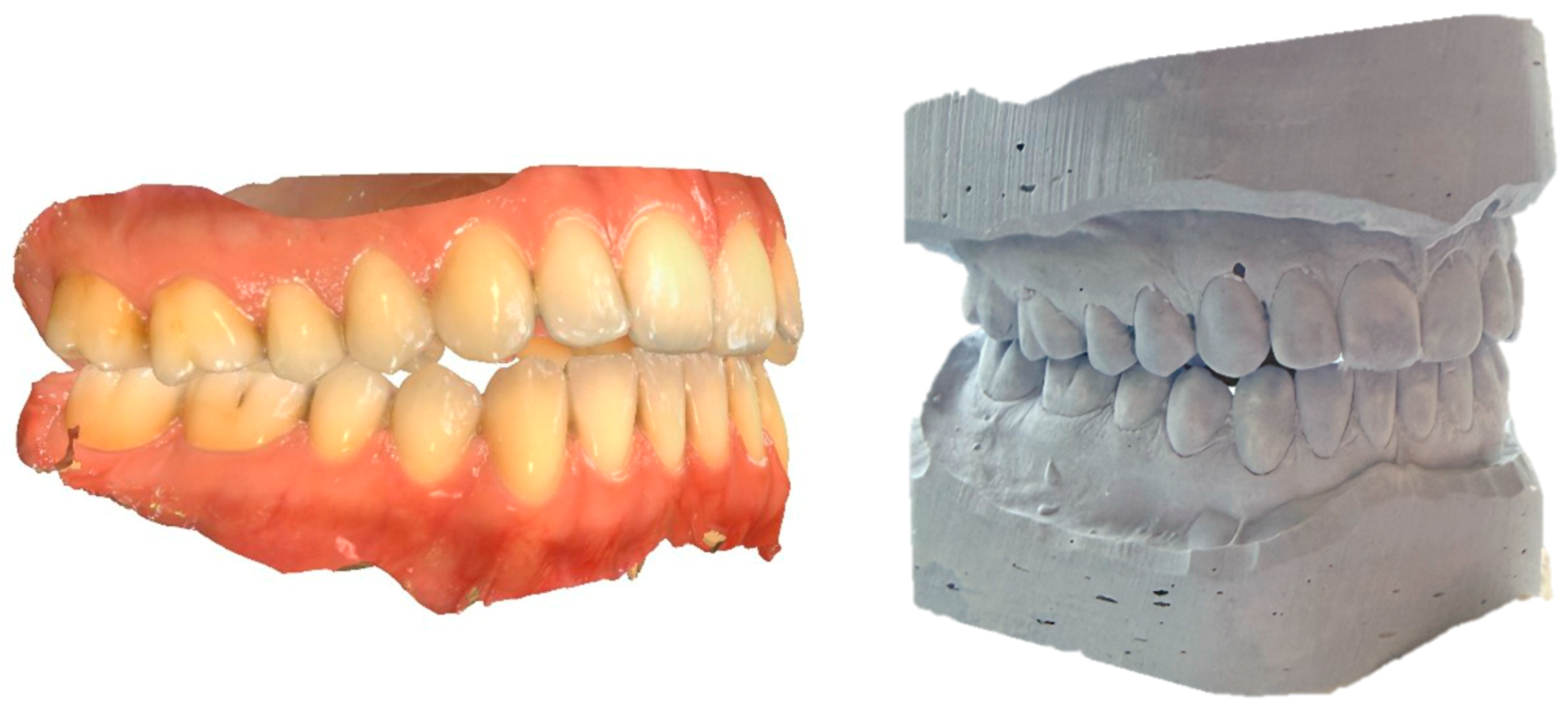
Starting with the product system, an exemplary dental practice with its own dental laboratory, as is common in university dental clinics, is defined. The impression process of a single-tooth crown in the molar region is further defined as a user case. The definition of a common functional unit is essential for comparability. The dental model, which can be seen as the product of the impression, is therefore used for both the analog and digital treatment options. Specifically, a positive model has been agreed upon, which is a dental stone cast for analog impressions and a virtual computer-aided design (CAD) model for digital impressions, as shown in Figure 1. Both models are functionally comparable, especially in cases where computer-aided manufacturing (CAM) is used to fabricate dental restorations directly on the basis of the CAD model.
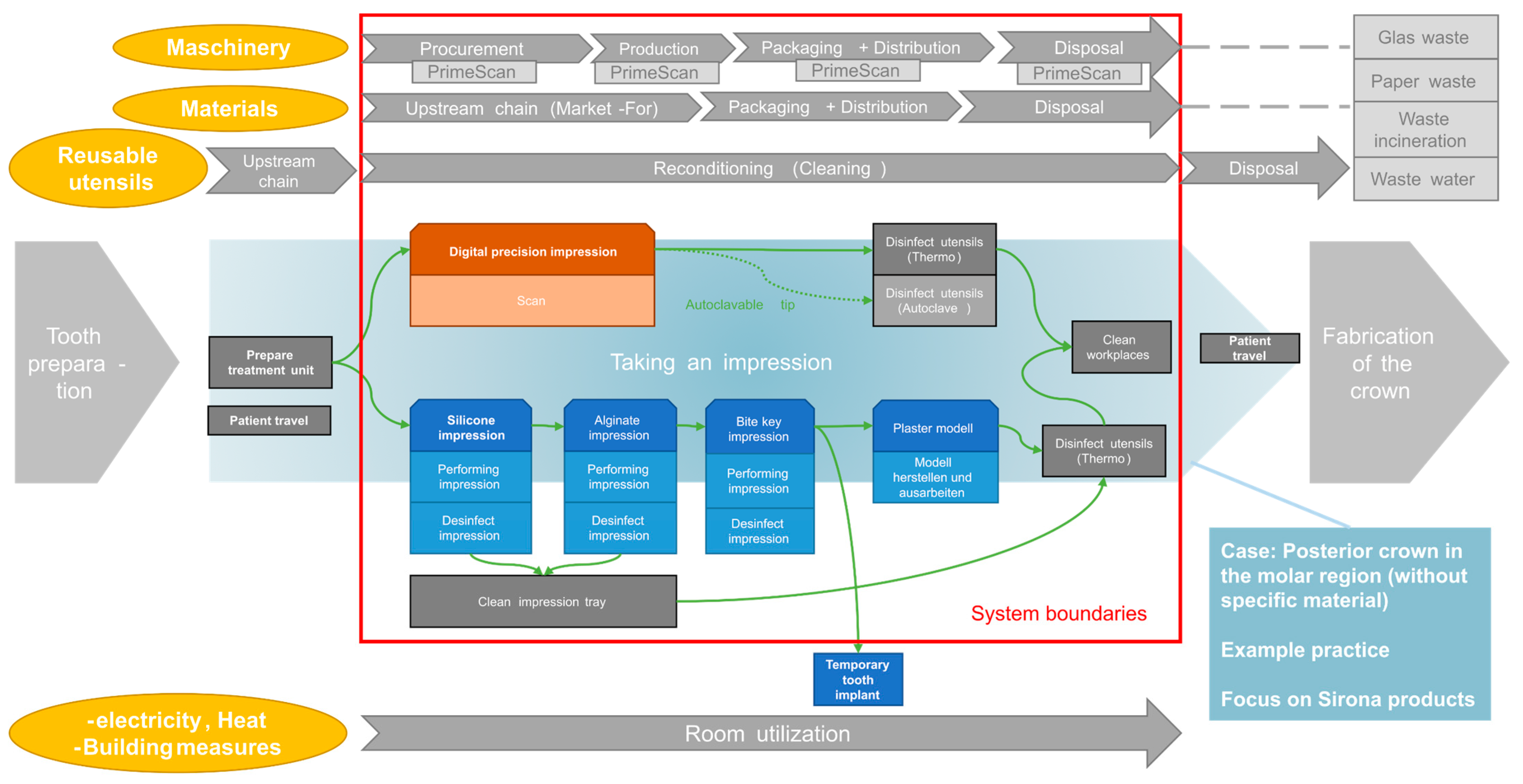
By selecting the positive model as the reference flow, the system boundary is simultaneously defined. Subsequent processing steps may vary depending on the materials chosen for the dental restoration, which may in turn be influenced by the selected impression technique. Hybrid workflows, such as the subsequent digitization of analog stone casts, were deliberately excluded, as they introduce additional process steps and material inputs that would compromise the functional equivalence of the defined reference flow. For instance, CAD/CAM fabrication inherently requires digital scan data, whereas traditional casting techniques for metal restorations typically rely on a physical positive model. In the present study, comparability is ensured by focusing exclusively on impression-taking workflows in which the respective technique directly generates the manufacturing-relevant output. Both workflows are routinely applied in both clinical and private dental practice. The system boundary starts with the impression-taking process, which follows tooth preparation. The subsequent process of tooth stump impression taking can then be represented as illustrated in Figure 2.
It has been assumed that the patient is already seated in the dental chair and that all instruments and equipment, including the chair itself, have been cleaned and are ready for use. As a result, travel activities, facility-related expenditures (such as heating and lighting), and the shared production of reusable instruments like probes, tweezers, or mouth mirrors are not considered. Patient travel in particular is known to represent a substantial share of the overall carbon footprint of dental care, which would disproportionately dominate the results and obscure differences between impression techniques. Although digitalization may reduce the number of appointments and thus indirectly lower travel- and facility-related energy demand, the present study deliberately focuses on the environmental impacts of impression-taking procedures themselves rather than on transport- or infrastructure-related effects. Therefore, this study focuses on the cleaning of reusable instruments, as many stainless steel tools have a lifespan of 20 years or more.
On the other hand, all single-use components were analyzed within a cradle-to-grave approach, including their packaging and waste management. Waste was categorized into cardboard, glass waste, wastewater, municipal waste, and hazardous waste, with the classification based on the German Waste Catalog (AVV). Disinfectants and contaminated waste were classified as hazardous under 180106*. The two Ecoinvent data sets ‘municipal solid waste (Germany), market for municipal solid waste, incineration’ and ‘hazardous waste, for incineration (Europe without Switzerland, market for)’ were used for this purpose, with the latter having a five times higher PCF than the municipal waste dataset. In this study, this classification applies only to materials in direct contact with the patient, specifically the soaked cloths and paper towels used to clean the scanner tips (digital) and impression trays (analog), as well as the disinfection solutions used for alginate and silicone models (analog). All other materials were disposed of as municipal solid waste, while their corresponding packaging materials were managed according to German recycling regulations.
For electrical devices, only the intraoral scanner Primescan AC (Dentsply Sirona, Bensheim, Germany)—where the computer, scanner, and screen are integrated into a single mobile unit—was considered in terms of shared production. Additionally, three different scanning tips with distinct cleaning processes were examined.
Allocating the manufacturing emissions was challenging. Whereas the total production expenses for manufacturing [ E t ] can be determined on the basis of the recycling pass document published on the manufacturer’s webpage, the share allocated to one single impression [ e i ] cannot be identified as simple, as the intraoral scanner can be used for multiple applications, such as orthodontics [34].
Therefore, a usage-dependent allocation was determined, assigning a proportion of its environmental impact to digital impressions for single-tooth crown restorations. This approach was chosen because economic allocation, based on cost shares, does not adequately reflect the physical wear and usage of the device, and functional allocation, which distributes impacts equally across all applications, would ignore differences in duration and frequency of use, which vary among dentists and dental practices focused on specific procedures, such as impressions. This allocation share [ α i ], was based on the average duration [ t i ] and frequency [ f i ] per impression, the total active operating time [ t d ], and the overall lifespan of the device [T]. Usually, this operating time is calculated solely on the basis of the total operating hours of an appliance. Yet, this has the disadvantage that premature decommissioning of the device before reaching its total expected operating hours is not accounted for. Instead, the lifespan of new technologies with short innovation cycles is often constrained by the duration of use or the timespan to release a new technology. Considering these, we calculated the share according to Equations (1) and (2)
e i [ i m p a c t   u n i t ] = E t   [ impact   unit ] × α i [ % ] f i   [ d 1 ] × T   [ d ]
w i t h                 α i [ % ] = f i   [ d 1 ] × t i   [ h ] t d   [   h d   ]
e i [ i m p a c t   u n i t ] = 1.095.116   g   C O 2 e q × 5.694 %   0.47   d 1 × 880   d = 150.8   g   C O 2 e q i m p r e s s i o n
α i allocation share to allocate device usage to impression taking%
t i average duration of impression takingh
f i frequency of impressions per day1/d
t d total active operating time of the deviceh/d
Toverall lifespan of the deviced
e i environmental impact per functional unitg CO2-eq/
impression
E T total environmental impact of the scanning deviceg CO2-eq
with an average duration t i of 0.164 h per impression (experimentally determined) and a frequency f i of 0.47 impression per day. The latter was determined according to the share of costs for single crown treatments. They amount to about €1853 million, when using the shares published in the 2023 yearbook of the National Association of Statutory Health Insurance Dentists [12] (pp. 98–99) and the total expenses of 16.8 billion Euros [35]. If a cost rate of €217.06 per treatment [36] is applied, this results in a total of 8,536,479 crowns. With 72,767 dentists in 2022 [13] (p. 156), this corresponds to 117 crowns per dentist per year, decreasing to 0.47 crowns per working day when assuming 250 working days. Assuming a device lifespan T of 880 days for a standard scenario, the environmental impact per functional unit is 150.8 g CO2-eq, which is about 0.014 percent of the total environmental impact of the scanning device E T . To account for uncertainty and variability in real-world usage, alternative scenarios were considered. A longer lifespan of up to 10 years ( e i = 60 CO2-eq) may be reasonable for smaller dental practices that aim to maximize equipment utilization, while shorter lifespans of only 2 years ( e i = 300 CO2-eq) may occur in larger clinics due to rapid technology updates or replacement cycles.
Apart from these allocated emissions, no further allocation is applied in the model, meaning that emissions are not distributed across different processes or products. For all data, the cut-off method was applied, which prescribes a defined allocation of recycling shares. Further details on this method are given by the database provider (www.ecoinvent.org). The ReCiPe 2016 (H) impact assessment method was employed, with the results reported here focusing on the GWP/PCF category as the primary indicator of environmental impact. Other categories were evaluated and showed consistent trends, confirming that the choice of GWP as the main reporting metric does not affect the overall conclusions.
When modeling the instruments and materials used, reference was made wherever possible to the manufacturer Dentsply Sirona (project partner and supplier of primary data). The environmental impact was calculated for each impact category by multiplying the impact indicator and the quantity of a corresponding input or output using the Ecoinvent 3.10 database. If a dataset was not available in the 3.10 version, earlier Ecoinvent versions were utilized. Additionally, PCFs of computers and monitors from Apple, HP, Dell, and Lenovo were incorporated to estimate the production-related impacts of the Primescan. Primary data were acquired by sampling and measurement. By doing so, all impression materials used were modeled according to the specifications provided by the supplier. All material quantities were determined through in-house gravimetric measurements, representing the mean value derived from 15 different patients. In terms of geographical relevance, global average datasets were used whenever available. However, datasets for waste disposal, electricity, and water consumption specifically refer to Germany. Waste-related datasets generally apply to Germany or, at the very least, to Europe. The accounting software Umberto, as well as Excel in combination with the Crystal Ball plug-in, served to assess uncertainty parameters, such as crucial inputs or waste streams, employing the Monte Carlo Simulation method. This computational technique relies on repeated random sampling to obtain numerical results. In this context, input variables, such as the measured material quantities, were assigned probability distribution functions (e.g., normal or triangular distributions, based on the collected mean and standard deviation). The model was then run 20,000 times, with the software randomly drawing a value from each input variable’s distribution for every iteration. This process generates a distribution of potential outcome values, here the PCF, providing a robust measure of the overall uncertainty in the final LCA results. The output was analyzed in terms of the mean and confidence intervals to clearly articulate the robustness and reliability of the calculated environmental impacts.

2.2. Life Cycle Inventories (LCI)

To quantify the environmental impact, the procedure was subdivided into several processes and individual life cycle inventories (LCI) with assigned inputs and outputs. In the following, the LCIs for both the digital and the analog impression taking are described.

2.2.1. LCIs of Analog Impression Taking

Impression taking (silicone): In the analog procedure, the affected side of the jaw is captured by means of a so-called precision impression, which is taken using an A-silicone impression material. This material is dispensed onto a stainless steel impression tray and pressed against the affected dental arch. The patient is seated in the prepared dental treatment unit, which has a power consumption ranging from 150 to 792 Watts, depending on the operational load [34]. Since only the air-water syringe is briefly used during the treatment, the power consumption is estimated based on an assumed blend of 90% minimum load and 10% maximum load. We observed an average impression taking time of 353 s. Additional power consumption arises from the use of the Pentamix 3 silicone mixing device (3M ESPE), which, according to measurement, consumes 1.5 Wh per application.
Regarding the required materials, the dental professional (dentist/hygienist) and the assistant each utilize one pair of medium-sized nitrile gloves, tray adhesive, and the impression silicones. Initially, a small amount of tray adhesive (specifically the Dentsply Sirona adhesive, which features a brush on the screw cap for application) is applied to the tooth crown. To minimize costs, the bulk of the impression is subsequently taken using a high-viscosity “putty” material (Aquasil Ultra + Soft Putty Regular Set DECA; Zhermack SpA, Bovazecchino street 100, 45021 Badia Polesine (RO), Italy, LOT: 1712281824). Following this, a lower-viscosity precision silicone (Aquasil Ultra + XLV; Zhermack SpA, Bovazecchino street 100, 45021 Badia Polesine (RO), Italy, LOT: 160317) is applied to the putty layer, which accurately registers the surface details of the affected dental arch. The PCFs for all impression materials used are determined and are detailed in Section 3. A single-use mixing tip mounted onto the silicone mixing device is used for both silicone materials. However, each silicone uses a different mixing tip, which significantly contributes to the overall waste. Proportional packaging quantities and their disposal were accounted for all materials.
Impression taking (alginate): Following the precision impression procedure, the opposing dental arch is also captured. For this step, the more cost-effective alginate material is used, which is mixed with water at a ratio of 7 to 15 (mass/mass). Mixing is performed by the Cavex Alginate Mixer II, which consumes 1 Wh per application. The remaining electricity consumption is attributed to the dental treatment unit, where the same load distribution is applied, but with an average occupancy time of 300 s assumed for this procedure. In terms of material consumption, only alginate (Blueprint X-crème; Zhermack SpA, LOT: 2306423911), water, and tray adhesive (for tooth crown preparation) are required for this step. Since no mixing tip is used for alginate, less waste is generated.
Impression taking (bite registration): Finally, the interdigitation of both dental arches is recorded as a bite key or bite registration, utilizing a specialized silicone material (Aquasil Bite; Zhermack SpA, LOT: 2305422716). This material is also processed using the silicone mixing device, which requires one additional single-use mixing tip. No tray adhesive is employed for this procedure. On average, this step takes 191 s, and the same load distribution factor is applied to the dental treatment unit.
Disinfect impression: All impression models must subsequently be disinfected by being placed in an immersion bath containing a disinfectant solution (Zeta 7 Solution; Zhermack SpA, LOT: 2501410 dissolved in water at 1%). In clinical practice, it is common for multiple impressions to be placed into the same bath. In modeling this, a 2.5 L bath was assumed, which is renewed weekly and accommodates 10 impressions per week. Please note that while the impression models are ultimately disposed of, the current modelling approach stipulates disposal immediately following the impression procedure. For this process, the disinfectant is disposed of as hazardous waste.
Fabrication of dental stone cast: In this step, a dental stone cast is finally fabricated based on the impression models. For this purpose, the dental stone (Elite Stone; Zhermack SpA, LOT: 2212328) is mixed with distilled water and processed using a vacuum mixing device (Multivac Compact, Wolfertschwenden, Germany) and a vibrator (BEGO), which consume 6 Wh and 1 Wh, respectively. Additionally, a battery-operated scale and compressed air are employed. With over 50% of the processes’ total PCF of 397 g CO2-eq, the disposal of the dental stone cast as municipal solid waste has the highest impact. Together with the manufacturing of the Elite Stone product, the cradle-to-grave contribution of only 350 g of product results in about 540 g CO2-eq.
Cleaning the impression tray: Following model fabrication, the impression trays used for the precision and opposing jaw impressions must be cleared of residual impression material. The cleaning agents used are water, paper towels, and an isopropanol-based disinfectant, specifically Sterillium. Again, it is important to underline that all contaminated cleaning utensils, such as the paper towels, are to be disposed of as hazardous waste.
Disinfect utensils (Thermo): Finally, all reusable instruments, such as the impression trays, mirrors, dental handpieces, and probes, are thermodisinfected. This process utilizes various cleaning agents, water, and heat. In this investigation, a Miele thermodisinfector was used. The consumption data were derived from the product data sheet and manufacturer specifications. Additionally, one further pair of gloves is consumed during the cleaning procedure. However, for all quantities used, only a proportional factor of 5.5% was applied based on the space requirement of the instruments being cleaned relative to the total loading capacity of the thermodisinfector.
Clean workplace (dental stone and unit): Finally, the cleaning of all workspaces was also included in the inventory. This encompasses both the treatment room unit used for the impression procedures and the dental laboratory. The materials utilized for this are water, paper towels, wet wipes, scouring milk, and gloves.

2.2.2. Digital Impression Taking

Impression taking: The core impression-taking process is identical regardless of the scanner tips used. The patient is seated in the dental treatment unit, allowing the dental professional (dentist/hygienist) and the assistant to perform the impression using the Primescan device. Both personnel use one pair of nitrile gloves each for this procedure. Furthermore, the patient’s oral cavity is kept open using a lip and cheek retractor (Optragate; Ivoclar Vivadent, LOT: ZL13XH) and isolated using DryTips. A wooden spatula is also employed. The average duration of this process was determined to be 590 s. The same load distribution factor applied in the analog impression procedure was used for the dental treatment unit. The electricity consumption of the Primescan device was measured. As opposed to the analog impression taking, which produces a total of 570 g of municipal solid waste, digital impression taking generates only 50 g (excluding scanning tip and device).
Clean workstations: In contrast to the analog impression procedure, only the treatment room is cleaned here, which is significantly less contaminated. Therefore, only wet wipes and gloves are consumed. Furthermore, the specific cleaning and processing methods for the scanner tips must be accounted for.
  • Single-Use Tip: The disposable tip is consumed within this process step.
  • Wipe-Disinfect Tip: The tip designated for wipe disinfection is cleaned using an additional wet wipe.
  • Autoclavable Tip: In a third variant, the tip is also wiped clean and subsequently autoclaved (using the Vacuclave 318 device, MELAG, Berlin, Germany), with the scanner window being replaced beforehand. For the autoclaving process, only 2% of the consumption data (electricity + water) for the autoclave are included, a percentage derived from the fraction of the loading capacity occupied by the tip. Following this, the autoclaved tip is packaged to maintain its sterility.
Proportional Production of the Primescan: As previously mentioned, the composition of the Primescan device is based on the recycling passport document provided by the manufacturer. A proportional share of 0.01377% per impression was applied (see calculation in Section 3). The procurement and disposal of all components were included. Regarding the downstream fabrication stages, the analysis explicitly includes processes such as CNC milling, casting, and injection molding. These were quantified based on the comprehensive material specifications provided in the official recycling pass documentation [34]. With regard to the different tip types, slightly lower manufacturing emissions resulted for the single-use tip variant, whereas the “Scanner Tip” component was omitted from the inventory.

3. Results

Overall, the PCF of the digital impression procedure was lower than that of the analog impression. Specifically, the analog PCF, at approximately 1620 g CO2-eq per analog impression, is nearly threefold higher than the average value of 550 g CO2-eq per digital impression.
Note: Readers should not compare absolute PCFs to studies without assessing the goal and scope definition.
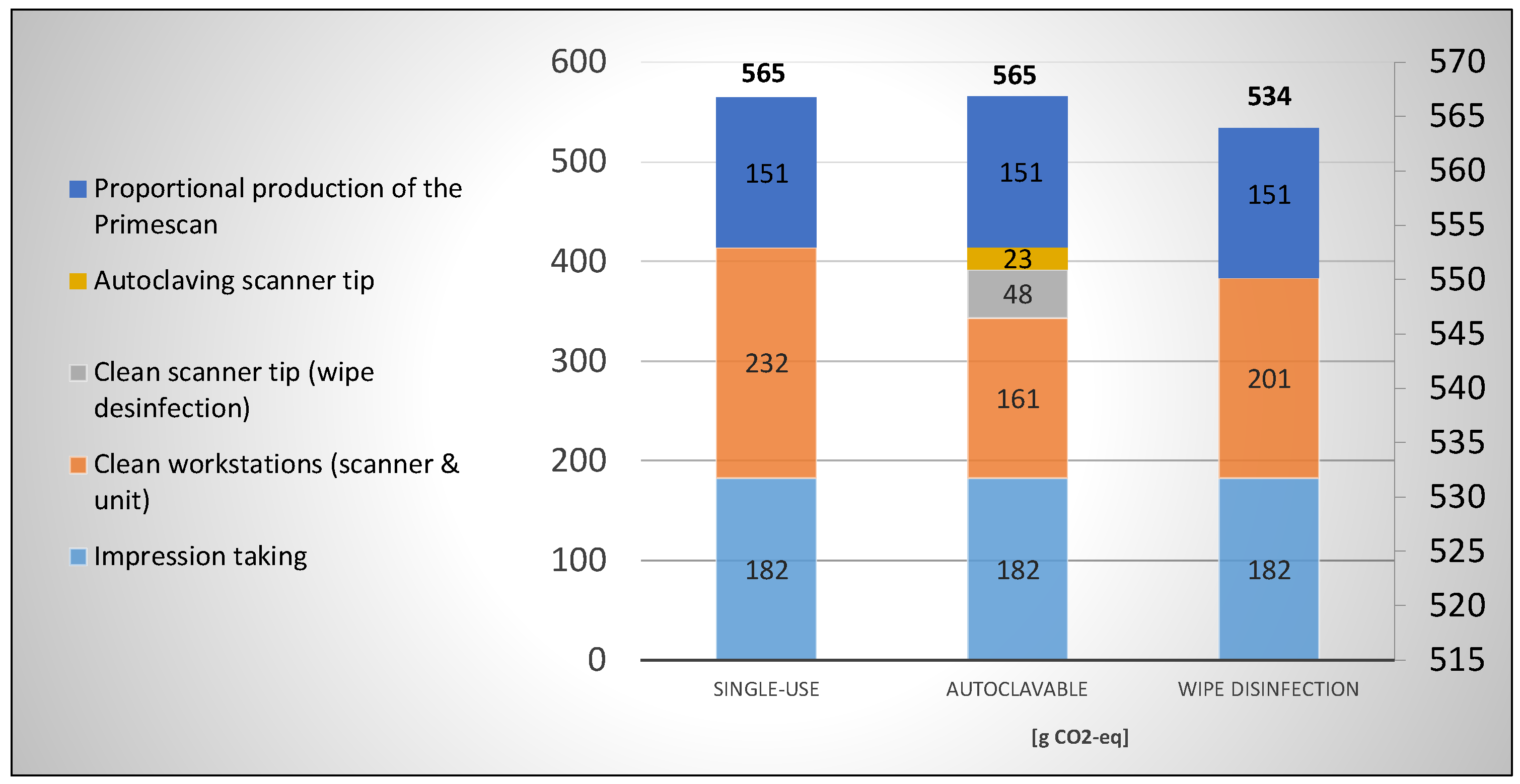
Among the different scanner tips, the wipe-disinfectable tip exhibited the lowest footprint. The additional efforts related to both the manufacturing and disposal of the single-use tips, as well as the cleaning requirements for the autoclavable tip, exceed the effort associated with wipe disinfection and are approximately equivalent at 565 g CO2-eq.
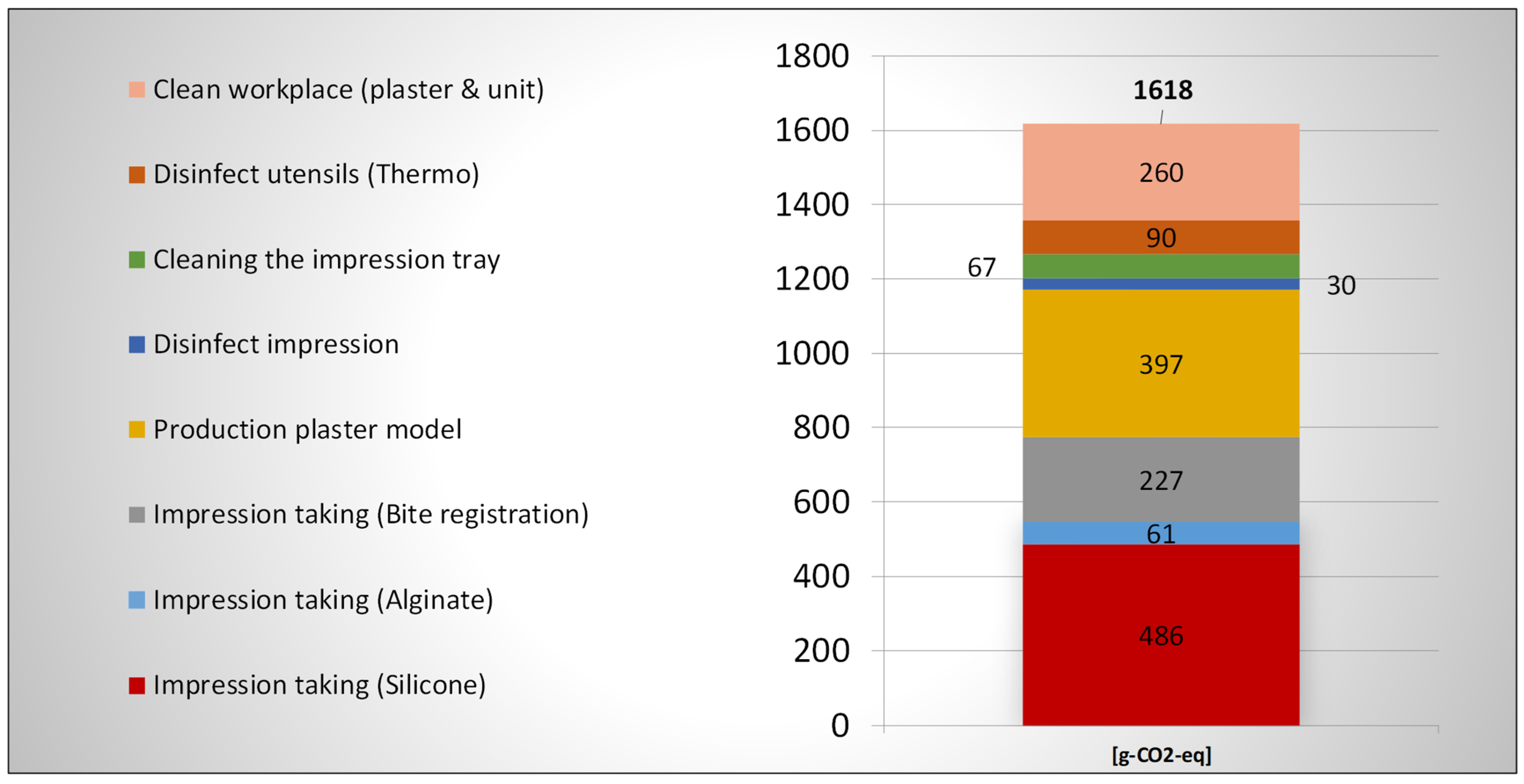
With regard to the individual processes (see Figure 3 and Figure 4), the cleaning of the workspaces contributes significantly to the total footprint in all cases, accounting for 28–41%, or 161–232 g CO2-eq. This figure is comparable to the cleaning effort for the analog impression (260 g CO2-eq).
Nevertheless, the analog impression requires additional cleaning of the reusable instruments, including the impression tray and dental tools (mirror and probe). The cleaning of the impression tray involved water, five paper towels, and an isopropanol-based disinfectant, while the instruments were cleaned in a thermodisinfector, accounting for a 5.5% filling capacity share. When these cleaning efforts are aggregated, the total analog cleaning contribution (417 g CO2-eq) exceeds its digital alternative by approximately a factor of two.
Comparing the impression taking procedures themselves, the digital impression results in a significantly lower Global Warming Potential (GWP) of only 182 g CO2-eq. The largest contribution to this figure comes from the nitrile gloves used, accounting for approximately 56%, followed by the electricity demand for the Primescan and the dental treatment unit at 15%, the OptraGate retractor (Ivoclar Vivadent, LOT: ZL13XH) at 12%, waste disposal at 7%, and the DryTips (Microbrush International, Heidelberg, Germany, LOT: 243504-1) at 6%. The remaining share is attributed to the wooden spatula and the resulting waste paper.
For the analog impression, the PCF comprises four distinct processes: the silicone impression (486 g CO2-eq), the alginate impression (61 g CO2-eq), the bite registration (227 g CO2-eq), and the final dental stone cast fabrication (397 g CO2-eq). This results in a total value of 1170 g CO2-eq. In all four cases, the impression materials are primarily responsible for the magnitude of the footprint. PCFs were applied to all these materials, determined in close consultation with the manufacturer.
Particularly noteworthy here are the contributions of Aquasil Bite (Zhermack SpA, LOT: 2305422716) and the Elite Stone (Zhermack SpA, LOT: 2212328). The small packaging size of Aquasil Bite (Zhermack SpA, LOT: 2305422716) results in a high contribution from its polypropylene cartridge of approximately 130 g CO2-eq (manufacturing and disposal). Conversely, the dental stone contributes 141 g CO2-eq due to its high mass fraction (350 g), but contributes an additional significant 186 g CO2-eq through disposal.
The proportional manufacturing of the intraoral scanner device contributes significantly to the total footprint of the digital impression procedure, with a share of approximately 150 g CO2-eq. As mentioned in Section 2.2.2, the total emissions of the Primescan manufacturing effort were calculated based on the Digital Product Passport at approximately 1095 kg CO2-eq. The computer (57%) and screen (28%) critically contribute to this, drawing on established PCFs for similar computing and display hardware from manufacturers like Apple, Dell, and Lenovo.
Crucially, the proportion of device usage attributable to the single-crown impression [ α i ], is considered to be only about 6%. This was calculated according to Equation (2) based on the average number of impressions per day [ f i ], multiplied by the impression duration. This method of calculation ensures that the majority of the device’s manufacturing footprint is amortized across other uses, such as digital documentation, orthodontics, sleep appliance therapy (mandibular advancement devices), and other implantology applications (bridges, inlays, veneers, or dental implants). Partial emissions were also attributed to inactivity or standby consumption when the device is switched on but not in active use. The calculated emissions that can be allocated to the single-crown impression are thus only 66 kg CO2-eq, meaning that 438 impressions must be conducted during the Primescan’s lifespan to yield the value of 150 g CO2-eq per impression. Consequently, the total emissions of the digital impression would exceed those of the analog impression if the digital proportion were to increase by a further 1070 g CO2-eq. This would be the case if the 6% usage or allocation share [ α i ], remained constant but only 50 impressions [ f i ], were performed, or if the number of impressions remained constant but the usage share reached 53%. If the allocation share [ α i ] were 100% (as might be the case in a specialist clinic), an ecological break-even would be reached after 830 impressions over the device’s entire lifespan. In other words, ecological amortization occurs after 830 impressions (see Table 1). In Table 1, the percentages in the leftmost column represent the proportion of total operating hours dedicated to single-crown impressions, while the top row indicates the increasing volume of total impressions. The data demonstrates that as the specialized usage share increases, typical for specialized clinics, the total number of impressions must also rise to ensure that the allocated GWP of the scanner production falls below the threshold of the conventional analog workflow’s total GWP (red).
Finally, the intensive inputs and outputs can be identified. Note that the modeling assumed disposal as a standalone output, as an input (such as gloves) did not include disposal emissions. Rather, these were assigned to the “Municipal waste” output. For comparison, Table 2 shows the top 10 intensive inputs and outputs and reveals that the municipal solid waste output ranks highest when the analog impression procedure is considered.
The municipal solid waste output significantly contributes to the high footprint, accounting for approximately 20.2 percent of the total analog emissions. This is primarily because a wide variety of materials (gloves, dental stone, impression materials, and disinfection wipes) must be disposed of as potentially contaminated clinical hazardous waste [37] (pp. 7–12).
The high waste amount, particularly due to the use of paper towels for cleaning, also has high relevance. Even excluding their disposal, these already contribute approximately 105 g CO2-eq to the total PCF footprint and must similarly be incinerated via the residual waste output. The same applies to the nitrile gloves, which, for this reason, occupy the top position in all three digital impression variants.
Among the digital input contributions, the use of chemicals for cleaning and disinfection accounts for 11.8 to 18.8% of the total footprint. Conversely, the electricity consumption during the impression procedure makes only a minor contribution of 4.9 to 7.4%. This finding is critical, as it implies that an impression error, and the associated partial or complete re-scan, would result in a lower environmental penalty in the digital variant than in the analog equivalent, where a renewed application of disposable impression materials is required.
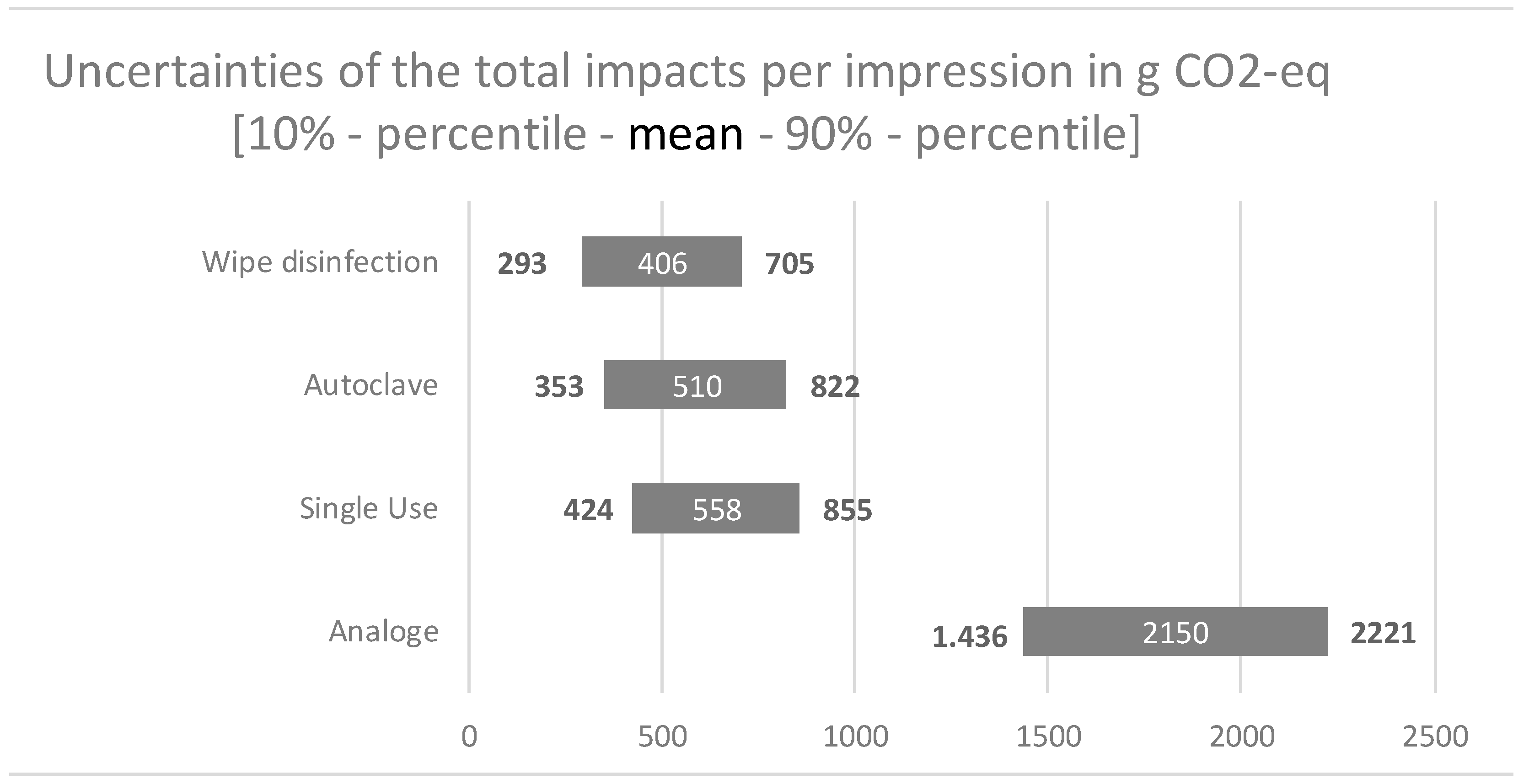
With regard to the uncertainty analysis, the Monte Carlo Simulation produced the following results:
Due to the chosen distribution functions not being symmetrical, the Monte Carlo simulations produce mean values that are different from the results in Figure 5. One result of the uncertainty analysis was the greater overall uncertainty associated with the analog model. This can be attributed to the substantially higher number of input parameters in the model, which leads to the accumulation of individual uncertainties. The largest source of uncertainty in the analog model arose from variations in jaw size, which in turn affected the required quantities of impression materials. For the digital variants, the greatest uncertainty was associated with the proportional allocation of manufacturing impacts. While Monte Carlo simulations were employed to quantify uncertainty in the PCF results arising from input data variability, additional sources of uncertainty remain. These include methodological choices, such as the selection of allocation rules, the classification of waste, and the choice of background LCI datasets.

4. Discussion

The findings of this PCF analysis clearly demonstrate that the adoption of digital impression-taking procedures offers significant environmental advantages over conventional analog impression-taking. The most compelling evidence lies in the difference in the calculated GWP, where the analog footprint (1620 g CO2-eq) is nearly threefold higher than the digital average (550 g CO2-eq). This outcome confirms a critical shift in the environmental burden from the consumption of disposable materials to energy and equipment manufacturing, a trend observed across various sectors of healthcare technology.
The most significant environmental advantage of digital impression taking is its inherent capacity for waste avoidance. This is true because material inputs are substituted, which also results in lower waste burdens. On top of that, in the event of a procedural error, the environmental consequences diverge drastically between the two methods. An error in the analog impression requires the complete repetition of the impression, or bite registration, and the fabrication of new dental stone casts. This results in an immediate and significant addition of new material inputs and the generation of large quantities of contaminated waste, substantially multiplying the penalty. Conversely, an error in the digital procedure merely requires a re-scan of the affected area, which consumes electricity with a low environmental impact contribution.
German regulation requires contaminated waste to be disposed of as “hazardous waste”. The two Ecoinvent data sets ‘municipal solid waste (Germany), market for municipal solid waste, incineration’ and ‘hazardous waste, for incineration (Europe without Switzerland, market for)’ were used for this purpose. However, it is questionable whether the hazardous waste dataset, which accounts for a five times higher PCF than the municipal waste dataset, is suitable for this. Since the collection and treatment method is equal, a difference in this magnitude seems unlikely and may relate to different average compositions of organic and inorganic matter that have been assumed for these datasets. This is critical because waste incineration directly releases carbon emissions, which underscores the necessity of establishing accurate, quantifiable datasets specifically for the healthcare waste management sector. To evaluate the impact of this factor, a sensitivity analysis was conducted by comparing two alternative cases.
As shown in Table 3, the relative environmental advantage of digital impression techniques remains consistent across different waste disposal scenarios. Even when applying the higher hazardous waste impact factors to all workflows, the analog technique remains the most carbon-intensive option by a significant margin.
The requirement to incinerate a wide range of contaminated materials, such as gloves and dental stone, which are classified under specific waste codes, highlights the fact that clinical waste is a significant environmental concern in dentistry. This aligns with findings that poor waste segregation increases incineration levels [27] and that dental waste contains substantial volumes of materials like sodium alginate and polyvinyl siloxane that require careful disposal [28].
Furthermore, the generalizability of these results is limited by the primary data collection, which was conducted on 15 patients within a single clinical setting. While these measurements provide a consistent baseline for comparing the two workflows, they may not fully capture the variability inherent in different practice types. Factors such as the specific clinical focus (e.g., prosthodontics vs. orthodontics), the individual routine of the dental staff, and varying levels of experience with digital tools could influence procedural times and material efficiency. Consequently, while our findings indicate a clear trend, further studies across diverse clinical environments are necessary to confirm the representativeness of these environmental advantages on a broader scale.
While the digital impression technique is superior per procedure, the significant manufacturing footprint introduces a classic LCA or PCF dilemma: the ecological break-even point. The calculation that impressions are required for amortization under a usage scenario indicates that the environmental benefit relies heavily on high utilization across multiple applications (orthodontics and implantology). This highlights a key challenge identified by Eckelman et al. [1] and McNeil et al. [18] regarding the potential benefits of reusable medical devices, where cleaning/sterilization cycles and machine utilization dictate the final outcome. Future quantitative research must therefore focus on benchmarking clinical utilization rates of intraoral scanners across different practice types (general practice vs. specialist clinic) to provide more realistic amortization models. To translate these findings into practice-oriented guidance, the ecological break-even point should be viewed as a benchmark for investment. For the average dental practice, our data suggests that prioritizing digital workflows for high-volume applications—such as orthodontics or routine prosthetics—is the most effective way to ensure environmental amortization. Practitioners can maximize this benefit by consolidating digital impressions within a multi-user setting (e.g., group practices). Beyond clinical efficiency, these quantitative results align with the EU Circular Economy Action Plan [7] and the German Circular Economy Act (KrWG) [8] by demonstrating that digital workflows directly support the core principle of waste prevention. Our data shows that by reducing the consumption of consumables like silicone, alginate, and gypsum, digital procedures contribute significantly to national resource productivity targets [3,10]. Specifically, the shift from high-impact single-use components to long-lived digital equipment provides a data-driven basis for clinical procurement guidelines, supporting the sustainability recommendations already issued by national dental chambers [11]. Furthermore, the identified discrepancies in ‘hazardous waste’ emission factors, particularly regarding specific waste codes, underscore the need for more granular waste regulations in the healthcare sector.
In addition, cleaning and disinfection processes are major contributors to the environmental impact in both workflows. While strict hygiene regulations limit the use of reusable materials, mitigation could be achieved through the use of validated, biodegradable disinfectants and the optimization of protocols. For instance, shifting from non-targeted ‘broad-area’ applications to precise, zone-specific disinfection—where clinically permissible—can reduce chemical consumption without compromising mandatory safety standards.
While this study focuses on GWP, it is important to acknowledge the omission of other impact categories—such as human toxicity, ecotoxicity, and water use—as a limitation. This focus was chosen to provide a clear benchmark for climate impact; however, the shift from material consumption to digital hardware involves potential trade-offs. Specifically, the production of electronics in scanners may increase toxicity and mineral resource depletion, even as GWP and physical waste are reduced. Future research should include a multi-criteria LCA to monitor potential burden-shifting between these categories. Furthermore, the robustness of the presented conclusions relies on two critical factors: (i) the specific assumptions regarding waste classification, particularly the high PCF associated with hazardous waste incineration, and (ii) the scanner utilization levels, which dictate the amortization of the device’s manufacturing footprint. Finally, it should be noted that the absolute GWP values are subject to country-specific factors, such as the German energy mix and national waste incineration standards, and may vary in different geographic contexts.

Author Contributions

Conceptualization, A.C.D., M.A.S., H.R., H.W.; methodology, A.C.D., K.J.D., H.W., M.A.S., F.V., H.R.; software, A.C.D., F.V., H.W.; validation, F.V.; formal analysis, A.C.D., F.V., K.J.D.; investigation, A.C.D., K.J.D.; data curation, A.C.D., F.V., K.J.D.; supervision, M.A.S., H.R., H.W.; project administration, M.A.S., H.R.; funding acquisition, M.A.S., H.R., H.W. All authors have read and agreed to the published version of the manuscript.

Funding

This research was partially supported by the Strategic Research Fund of the Technische Hochschule Mittelhessen (THM-University of Applied Sciences) under the funding line “Establishment and Expansion of Profile-Building Research Areas”, Module C, as well as the dental company Dentsply Sirona. Secondly, this study was partially supported by the dental company Dentsply Sirona Dental Systems (Fabrikstraße 31, 64625 Bensheim, Germany).

Institutional Review Board Statement

Not applicable.

Informed Consent Statement

Informed consent was obtained from all subjects involved in the study.

Data Availability Statement

The research data cannot be made publicly available due to internal company regulations of Dentsply Sirona. Access may be granted by the corresponding author upon reasonable request, subject to the company’s approval.

Conflicts of Interest

The authors declare no conflicts of interest. The funders had no role in the design of the study; in the collection, analyses, or interpretation of data; in the writing of the manuscript; or in the decision to publish the results. Instead, they provided detailed information about the formula of the impression-taking materials analyzed in this study.

Abbreviations

The following abbreviations are used in this manuscript:
AVVAbfallverzeichnis-Verordnung (Waste classification regulation)
BZÄKBundeszahnärztekammer (Federal Chamber of Dentists)
CADComputer-aided design
CAMComputer-aided manufacturing
CO2-eqCarbon dioxide equivalents
GWPGlobal Warming Potential
LCALife Cycle Assessment
PCFProduct Carbon Footprint
WHOWorld Health Organization

References

  1. Eckelman, M.J.; Huang, K.; Lagasse, R.; Senay, E.; Dubrow, R.; Sherman, J.D. Health Care Pollution and Public Health Damage in The United States: An Update: Study Examines Health Care Pollution and Public Health Damage in the United States. Health Aff. 2020, 39, 2071–2079. [Google Scholar] [CrossRef] [PubMed]
  2. Karliner, J.; Slotterback, S.; Boyd, R.; Ashby, B.; Steele, K.; Wang, J. Health Care’s Climate Footprint: The Health Sector Contribution and Opportunities for Action. Eur. J. Public Health 2020, 30, ckaa165-843. [Google Scholar] [CrossRef]
  3. Ostertag, K.; Bratan, T.; Gandenberger, C.; Hüsing, B.; Pfaff, M. Ressourcenschonung im Gesundheitssektor—Erschließung von Synergien Zwischen den Politikfeldern Ressourcenschonung und Gesundheit. Final Rerport. 2021. Available online: https://www.umweltbundesamt.de/sites/default/files/medien/5750/publikationen/2021-01-25_texte_15-2021_ressourcenschonung_gesundheitssektor.pdf (accessed on 4 November 2025).
  4. Belkhir, L.; Elmeligi, A. Carbon Footprint of the Global Pharmaceutical Industry and Relative Impact of Its Major Players. J. Clean. Prod. 2019, 214, 185–194. [Google Scholar] [CrossRef]
  5. Woidasky, J.; Zecha, F.; Vielsack, A. MeiK—Medizinische Einmalgebrauchsprodukte in der Kreislaufwirtschaft. 2025. Available online: https://www.hs-pforzheim.de/forschung/institute/institut_fuer_werkstoffe_und_werkstofftechnologien_prueflabor_fuer_materialuntersuchungen/aktuelle_projekte/werkstoffrecycling_und_nachhaltigkeit/meik (accessed on 4 November 2025).
  6. World Health Care Organisation (WHO). Health-Care Waste 2024. Available online: https://www.who.int/news-room/fact-sheets/detail/health-care-waste (accessed on 31 October 2025).
  7. European Commission. Circular Economy Act. 2025. Available online: https://environment.ec.europa.eu/strategy/circular-economy_en (accessed on 31 October 2025).
  8. Bundesministerium für Umwelt, Naturschutz, Nukleare Sicherheit und Verbraucherschutz (BMUV). Arbeitsgruppe Öffentlichkeitsarbeit, Online-Kommunikation, Trends & Analysen Nationale Kreislaufwirtschaftsstrategie 2024; Bundesministerium für Umwelt, Naturschutz, Nukleare Sicherheit und Verbraucherschutz (BMUV): Berlin, Germany, 2024; Available online: https://www.bundesumweltministerium.de/download/nationale-kreislaufwirtschaftsstrategie-nkws (accessed on 18 February 2026).
  9. Sousa, A.C.; Veiga, A.; Maurício, A.C.; Lopes, M.A.; Santos, J.D.; Neto, B. Assessment of the Environmental Impacts of Medical Devices: A Review. Environ. Dev. Sustain. 2021, 23, 9641–9666. [Google Scholar] [CrossRef]
  10. Loh, M. Ressourceneffizienz, Klimaschutz und Ökologische Nachhaltigkeit im Gesundheitswesen—Eine Bestandsaufnahme; Viamedica—Stiftung für Eine Gesunde Medizin: Freiburg, Germany, 2023. [Google Scholar]
  11. Bundeszahnärztekammer [BZÄK]. Nachhaltigkeit in der Zahnmedizin/Sustainability in Dentistry. Available online: https://www.bzaek.de/service/positionen-statements/einzelansicht/nachhaltigkeit-in-der-zahnmedizin-sustainability-in-dentistry.html (accessed on 6 November 2024).
  12. Kassenzahnärztlichen Bundesvereinigung [KZBV]. Jahrbuch 2023; Ed.; 2023; ISBN 978-3-944629-11-7. Available online: https://www.kzbv.de/kzbv2023-jahrbuch-web-ohnegoz.download.9083f41ba25e0a1dfbdf6b349f333c2b.pdf (accessed on 1 November 2025).
  13. Public Health England. Carbon Modelling Within Dentistry: Towards a Sustainable Future. Available online: https://www.gov.uk/government/publications/carbon-modelling-within-dentistry-towards-a-sustainable-future (accessed on 1 November 2025).
  14. Martin, N.; Sheppard, M.; Gorasia, G.; Arora, P.; Cooper, M.; Mulligan, S. Awareness and Barriers to Sustainability in Dentistry: A Scoping Review. J. Dent. 2021, 112, 103735. [Google Scholar] [CrossRef]
  15. Suppipat, S.; Hu, A.H.; Trinh, L.T.K.; Kuo, C.-H.; Huang, L.H. A Comparative Life Cycle Assessment of Toothpaste Cream versus Toothpaste Tablets. Sustain. Prod. Consum. 2022, 29, 357–369. [Google Scholar] [CrossRef]
  16. Abed, R.H. Environmental Sustainability of Oral Health Interventions Study. Ph.D. Thesis, UCL Eastman Dental Institute, London, UK, 2022. [Google Scholar]
  17. Lyne, A.; Ashley, P.; Saget, S.; Porto Costa, M.; Underwood, B.; Duane, B. Combining Evidence-Based Healthcare with Environmental Sustainability: Using the Toothbrush as a Model. Br. Dent. J. 2020, 229, 303–309. [Google Scholar] [CrossRef]
  18. MacNeill, A.J.; Hopf, H.; Khanuja, A.; Alizamir, S.; Bilec, M.; Eckelman, M.J.; Hernandez, L.; McGain, F.; Simonsen, K.; Thiel, C.; et al. Transforming the Medical Device Industry: Road Map to a Circular Economy: Study Examines a Medical Device Industry Transformation. Health Aff. 2020, 39, 2088–2097. [Google Scholar] [CrossRef] [PubMed]
  19. Borglin, L.; Pekarski, S.; Saget, S.; Duane, B. The Life Cycle Analysis of a Dental Examination: Quantifying the Environmental Burden of an Examination in a Hypothetical Dental Practice. Community Dent. Oral Epidemiol. 2021, 49, 581–593. [Google Scholar] [CrossRef]
  20. Duane, B.; Borglin, L.; Pekarski, S.; Saget, S.; Duncan, H.F. Environmental Sustainability in Endodontics. A Life Cycle Assessment (LCA) of a Root Canal Treatment Procedure. BMC Oral Health 2020, 20, 348. [Google Scholar] [CrossRef]
  21. Smith, L.; Ali, M.; Agrissais, M.; Mulligan, S.; Koh, L.; Martin, N. A Comparative Life Cycle Assessment of Dental Restorative Materials. Dent. Mater. 2023, 39, 13–24. [Google Scholar] [CrossRef]
  22. De Bortoli, L.S.; Schabbach, L.M.; Fredel, M.C.; Hotza, D.; Henriques, B. Ecological Footprint of Biomaterials for Implant Dentistry: Is the Metal-Free Practice an Eco-Friendly Shift? J. Clean. Prod. 2019, 213, 723–732. [Google Scholar] [CrossRef]
  23. Langlois, J.; Sassi, J.; Jard, G.; Steyer, J.; Delgenes, J.; Hélias, A. Life Cycle Assessment of Biomethane from Offshore-cultivated Seaweed. Biofuels Bioprod. Biorefining 2012, 6, 387–404. [Google Scholar] [CrossRef]
  24. Unger, S.R.; Landis, A.E. Comparative Life Cycle Assessment of Reused versus Disposable Dental Burs. Int. J. Life Cycle Assess. 2014, 19, 1623–1631. [Google Scholar] [CrossRef]
  25. Byrne, D.; Saget, S.; Davidson, A.; Haneef, H.; Abdeldaim, T.; Almudahkah, A.; Basquille, N.; Bergin, A.M.; Prida, J.; Lyne, A.; et al. Comparing the Environmental Impact of Reusable and Disposable Dental Examination Kits: A Life Cycle Assessment Approach. Br. Dent. J. 2022, 233, 317–325. [Google Scholar] [CrossRef] [PubMed]
  26. Avinash, B.; Shivalinga, B.; Jyothikiran, S.; Padmini, M. Going Green with Eco-Friendly Dentist. J. Contemp. Dent. Pract. 2013, 14, 766–769. [Google Scholar] [CrossRef]
  27. Richardson, J.; Grose, J.; Manzi, S.; Mills, I.; Moles, D.R.; Mukonoweshuro, R.; Nasser, M.; Nichols, A. What’s in a Bin: A Case Study of Dental Clinical Waste Composition and Potential Greenhouse Gas Emission Savings. Br. Dent. J. 2016, 220, 61–66. [Google Scholar] [CrossRef]
  28. Antoniadou, M.; Varzakas, T.; Tzoutzas, I. Circular Economy in Conjunction with Treatment Methodologies in the Biomedical and Dental Waste Sectors. Circ. Econ. Sustain. 2021, 1, 563–592. [Google Scholar] [CrossRef]
  29. Mandalidis, A.; Topalidis, A.; Voudrias, E.A.; Iosifidis, N. Composition, Production Rate and Characterization of Greek Dental Solid Waste. Waste Manag. 2018, 75, 124–130. [Google Scholar] [CrossRef] [PubMed]
  30. Duane, B.; Pilling, J.; Saget, S.; Ashley, P.; Pinhas, A.R.; Lyne, A. Hand Hygiene with Hand Sanitizer versus Handwashing: What Are the Planetary Health Consequences? Environ. Sci. Pollut. Res. 2022, 29, 48736–48747. [Google Scholar] [CrossRef]
  31. Maloney, B.; McKerlie, T.; Nasir, M.; Murphy, C.; Moi, M.; Mudalige, P.; Naser, N.E.; Duane, B. The Environmental Footprint of Single-Use versus Reusable Cloths for Clinical Surface Decontamination: A Life Cycle Approach. J. Hosp. Infect. 2022, 130, 7–19. [Google Scholar] [CrossRef] [PubMed]
  32. Woidasky, J.; Kern, M. Systematische Erschließung Des Kreislaufwirtschaftlichen Potenzials von Beatmungssystemen. Available online: https://www.hs-pforzheim.de/forschung/institute/institut_fuer_werkstoffe_und_werkstofftechnologien_prueflabor_fuer_materialuntersuchungen/aktuelle_projekte/werkstoffrecycling_und_nachhaltigkeit/seb (accessed on 31 October 2025).
  33. DIN EN ISO 14067; Treibhausgase—Carbon Footprint von Produkten—Anforderungen an und Leitlinien für Quantifizierung (ISO 14067:2018); Deutsche und Englische Fassung EN ISO 14067:2018. DIN Standards (Deutsche Institut für Normung e.V.): Berlin, Germany, 2019.
  34. Dentsply Sirona. Recycling Pass CEREC Primescan AC/CEREC Omnicam AC|DE, EN|2020-01-10. Available online: https://www.dentsplysirona.com/de-de/kundenservice/download-center/download-details.html (accessed on 25 February 2025).
  35. Rebmann Research. DSGV-Branchenreport 2023 Zeigt Umsatzentwicklung Zahnärzte. Available online: https://www.rebmann-research.de/zahnaerzteumsatz-2022-mit-ueber-31-mrd-euro-deutlich-ueber-vor-corona-niveau (accessed on 25 February 2025).
  36. Kassenzahnärztliche Vereinigung Bayerns (KZVB). Versorgung Eines Zahnes Durch Eine Vollkrone (Hohlkehle Oder Stufenpräparation). Available online: https://abrechnungsmappe.kzvb.de/gebuehrenordnung-fuer-zahnaerzte-goz/anlage-gebuehrenverzeichnis-fuer-zahnaerztliche-leistungen/konservierende-leistungen/versorgung-durch-vollkrone-hohlkehl-oder-stufenpraeparation (accessed on 31 January 2025).
  37. Remondis GmbH, R.M. Abfallschlüsselnummer 180106*—Abfallmanager Medizin. Available online: https://www.abfallmanager-medizin.de/abfall-abc/abfallschluesselnummer-180106/ (accessed on 8 November 2024).
Figure 1. Functional unit: CAD model (left) and dental stone cast (right). Source: Authors.
Waste 04 00005 g001
Figure 2. System boundary of the study. Source: Authors.
Waste 04 00005 g002
Figure 3. Process shares of the total PCF of digital impression taking. Source: Authors.
Waste 04 00005 g003
Figure 4. Process shares of the total PCF of analog impression taking. Source: Authors.
Waste 04 00005 g004
Figure 5. Monte Carlo results.
Waste 04 00005 g005
Table 1. Relation of the usage share and the ecological break-even point.
fi
αi1002003004005006007008009001000
5%5482741831371109178686155
10%1095548365274219183156137122110
15%1643821548411329274235205183164
20%21901095730548438365340298265238
25%27381369913684548456419342304274
30%328516431095821657548469411365329
35%383319161278958767639545479426383
40%4380219014601095876730626548487438
45%4928246416431232986821704616548493
50%54752738182513691095913782684608548
55%602330122008150612051004860753669602
60%657032852190164313141095939821730657
65%7118355923731780142411861017890791712
70%7666383325551916153312781095958852767
75%82134107273820531643136911731027913821
80%87614380292021901752146012521095973876
85%930846543103232718621551133011641034931
90%985649283285246419711643140812321096986
95%10,404520234682601208117341486130011561040
100%10,951547636502738219018251565136912171095
Table 2. Top 10 CO2 contributors to analog impression taking.
Analog Single Use Autoclave Wipe Disinfection
Inputg CO2-eqInputg CO2-eqInputg CO2-eqInputg CO2-eq
Municipal waste
(incineration)
326.7Pair of gloves
(Dr + Asst.)
102.8Pair of gloves
(Dr + Asst.)
102.8Pair of gloves
(Dr + Asst.)
102.8
Silicone
(high viscosity)
264.8Printed circuit boards (computer unit)85.9Hazardous chemicals100.4Hazardous chemicals100.4
A-Silicone (Bite)204.2Single-use tip67.0Printed circuit boards (computer unit)85.9Printed circuit boards (computer unit)85.9
Gypsum150.1Hazardous chemicals66.9Pair of gloves (Asst.)52.4Pair of gloves
(Cleaning)
51.4
Paper towel104.7Pair of gloves
(Cleaning)
51.4Soaked cloth 43.3Soaked cloth 43.3
Pair of gloves
(Dr + Asst.)
102.8LCD + membrane keypad41.8LCD + membrane keypad41.8LCD display +
membrane keypad
41.8
Hazardous chemicals69.4Soaked cloth 28.9Power37.9Power27.7
Power66.7Power27.7Optragate22.2Optragate22.2
Silicone
(low viscosity)
64.1Municipal waste
(incineration)
26.7Municipal waste
(incineration)
19.3Municipal waste
(incineration)
18.2
Pair of gloves (Asst.)54.2Optragate22.2Dry Tips11.7Dry Tips11.7
Others210.0Others43.7Others47.5Others28.5
=Total1617.8=Total565.1=Total565.3=Total533.9
Table 3. Sensitivity of alternative waste datasets.
g CO2-eq
AnalogSingle-UseAutoclavableWipe Disinfection
Case 1 (Only
municipal solid waste dataset):
1563.5512.7486.7455.3
Case 2 (Only
hazardous waste dataset):
2796.5661.6635.2599.7
Disclaimer/Publisher’s Note: The statements, opinions and data contained in all publications are solely those of the individual author(s) and contributor(s) and not of MDPI and/or the editor(s). MDPI and/or the editor(s) disclaim responsibility for any injury to people or property resulting from any ideas, methods, instructions or products referred to in the content.