3.1. Modeling
This comparative analysis examines the fundamental differences in strengthening mechanisms between two major classes of copper alloys: precipitation-hardened Cu-Ni-Si alloys and solid-solution-strengthened Cu low alloys.
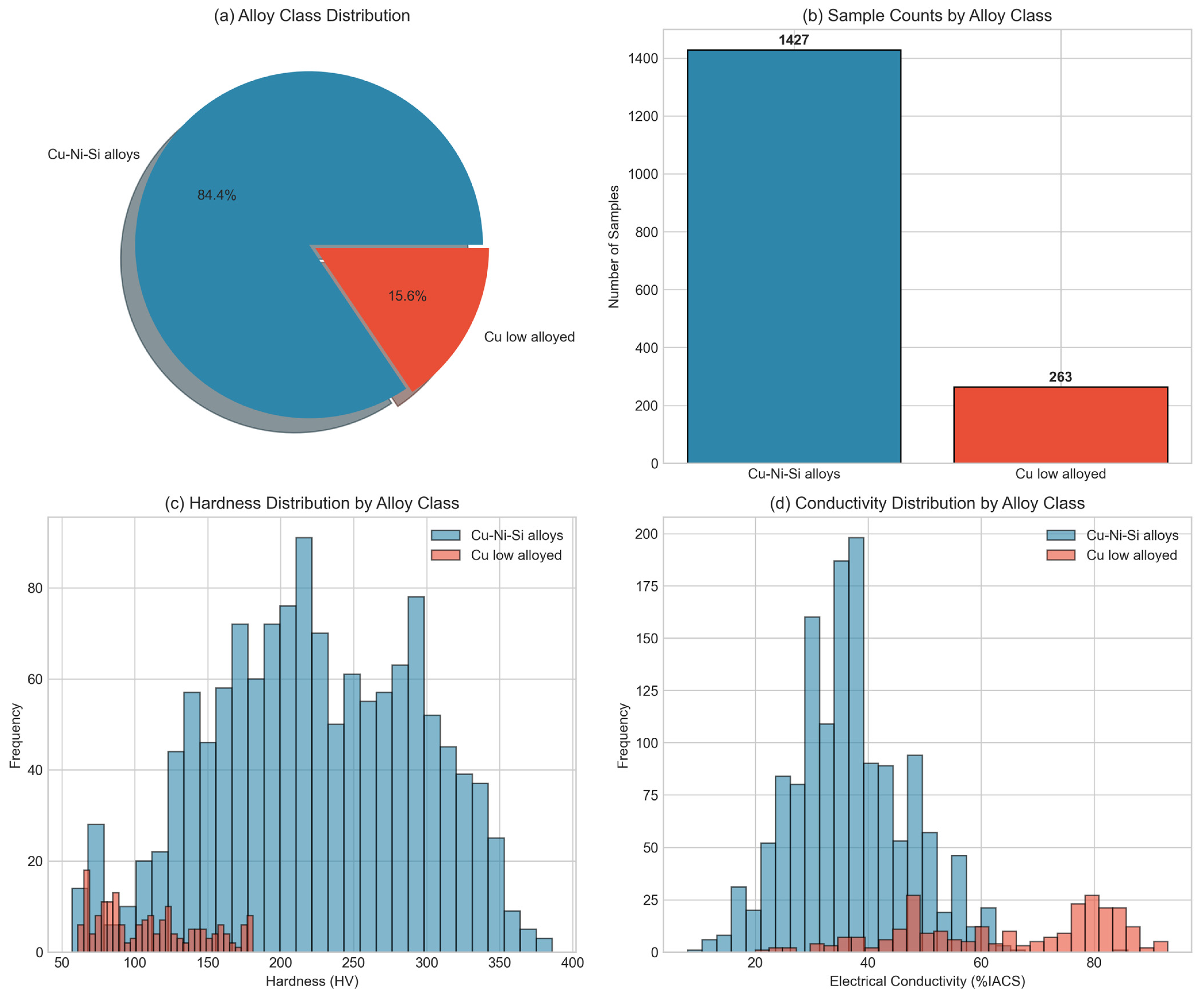
Table 1 summarizes the dataset distribution across these alloy classes. The dataset encompasses 1690 unique alloy compositions, with Cu-Ni-Si alloys representing 84.4% of the samples (1427 entries) and Cu low alloys comprising the remaining 15.6% (263 entries). This distribution reflects the industrial importance of Cu-Ni-Si alloys in applications requiring high strength combined with reasonable electrical conductivity, such as electronic connectors, lead frames, and automotive electrical systems. The Cu low-alloyed systems serve as an important contrasting baseline, representing alloys where conductivity preservation takes precedence over maximum strength. The sample distribution reveals an important aspect of the comparative analysis: Cu-Ni-Si alloys exhibit greater compositional and processing diversity than Cu low alloys. This diversity stems from the multiple degrees of freedom available in precipitation-hardened systems, where the strengthening response depends not only on alloy composition but also critically on the sequence and parameters of thermal and thermomechanical treatments. In contrast, Cu low alloys rely primarily on solid-solution strengthening and work hardening, mechanisms that are more directly linked to composition and deformation history.
Figure 1 presents the dataset overview, showing sample distribution across alloy classes and property histograms for hardness and electrical conductivity. The visualization reveals distinctly different property distributions for the two alloy systems. The hardness histogram shows a clear bimodal pattern, with Cu-Ni-Si alloys clustering at higher hardness values (typically 180–280 HV), while Cu low alloys concentrate at lower values (80–140 HV). This separation directly reflects the difference in strengthening mechanisms: precipitation hardening in Cu-Ni-Si alloys creates a high density of nanoscale Ni
2Si precipitates that act as formidable barriers to dislocation motion, whereas solid-solution strengthening in Cu low alloys provides only modest resistance through lattice distortion effects. The conductivity histogram shows the inverse pattern, with Cu low alloys maintaining higher conductivity due to their lower solute concentration in the copper matrix. Examining the bar chart components, Cu-Ni-Si samples with both hardness and conductivity measurements dominate the dataset, while Cu low alloys contribute proportionally fewer samples but provide crucial comparative data.
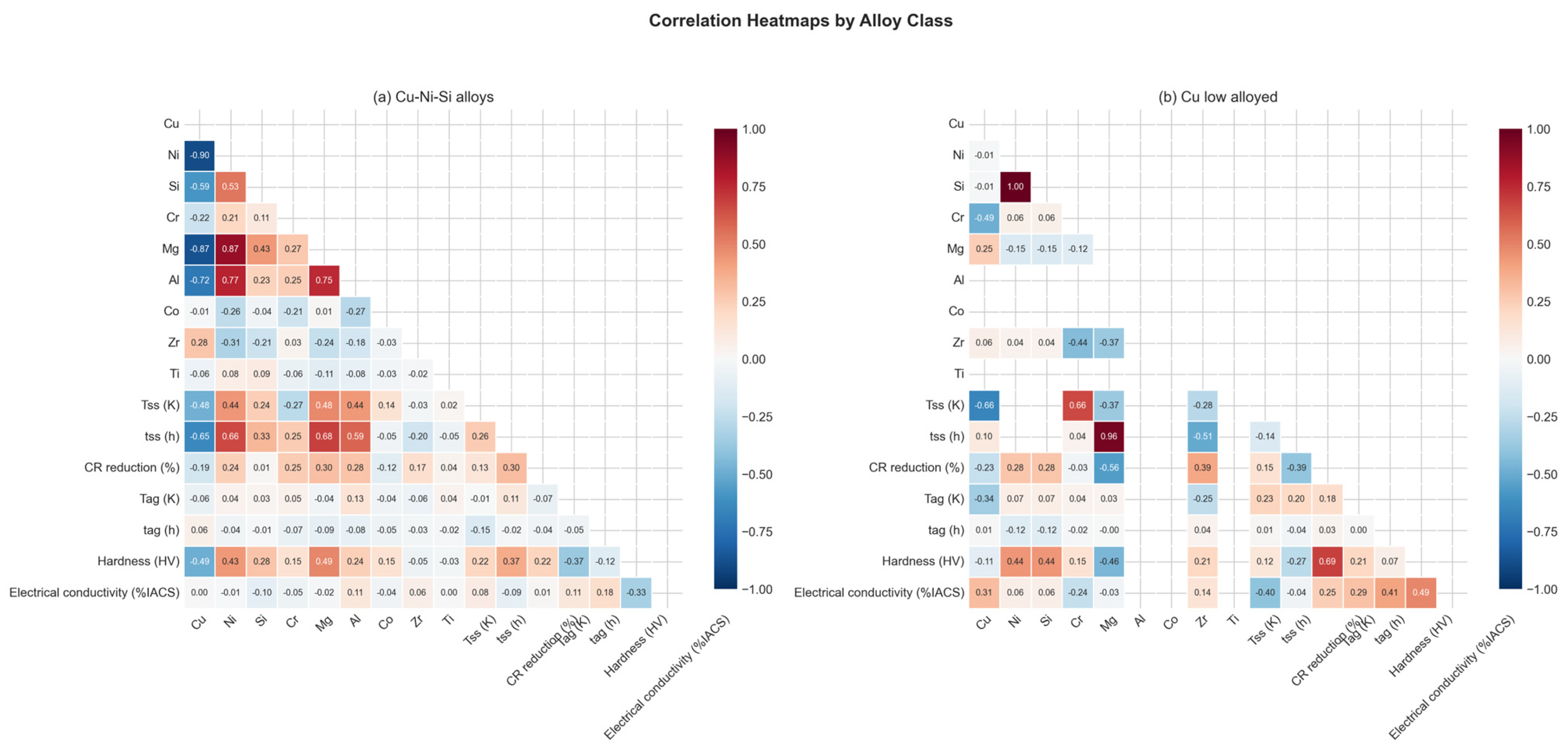
Figure 2 displays correlation heatmaps for Cu-Ni-Si alloys and Cu low alloys separately, revealing the underlying relationships between compositional and processing variables for each alloy class. In the Cu-Ni-Si correlation matrix, the strong positive correlation between nickel and silicon contents (visible as intense color in the Ni-Si cell) reflects the stoichiometric requirement for Ni
2Si precipitate formation, where the optimal Ni:Si atomic ratio approaches 2:1. This correlation is a direct manifestation of deliberate alloy design targeting maximum precipitation-hardening efficiency. The correlations with aging parameters (Tag(K) and tag(h)) further emphasize the critical role of thermal treatment in controlling precipitate nucleation, growth, and coarsening kinetics. Electrical conductivity appears both as a variable in the heatmap (showing Pearson correlations with other variables) and on the colorbar (indicating correlation magnitude/direction for all pairs). Negative correlations between copper content and other elements simply reflect that as alloying additions increase, pure copper content decreases. For Cu low alloys, the correlation structure is notably simpler and weaker, consistent with the more straightforward solid-solution strengthening mechanism, where each alloying element contributes somewhat independently to matrix strengthening and conductivity reduction. Comparing the two heatmaps directly, Cu-Ni-Si alloys show more intense and structured correlation patterns, indicating tighter compositional control requirements for optimal properties.
Table 2 provides the statistical comparison of hardness and electrical conductivity between the two alloy classes, quantifying the strength–conductivity dichotomy. Cu-Ni-Si alloys achieve a mean hardness of 222.61 HV with a standard deviation of 70.91 HV, twice the mean hardness of Cu low alloys (110.53 HV with a standard deviation of 35.46 HV). The wider hardness range observed in Cu-Ni-Si alloys (57–386 HV compared to 61–181 HV for Cu low alloys) reflects the sensitivity of precipitation hardening to aging conditions: underaging produces fewer, smaller precipitates, while overaging leads to precipitate coarsening and loss of coherency, both resulting in reduced hardness. The median values (219.0 HV for Cu-Ni-Si versus 107.0 HV for Cu low alloys) closely match the means, indicating relatively symmetric distributions within each class. For electrical conductivity, the comparison reverses dramatically. Cu low alloys maintain a mean conductivity of 64.88%IACS (standard deviation 17.77) versus 36.72%IACS (standard deviation 10.07) for Cu-Ni-Si. This conductivity advantage stems from the fundamental physics of electron scattering: solute atoms dissolved in the copper matrix act as scattering centers that reduce electron mean free path and hence conductivity. Cu-Ni-Si alloys, with their higher total alloying content (typically 2–6% Ni and 0.5–1.5% Si), present more scattering obstacles than the dilute Cu low alloys. Even after precipitation removes much of the solute from solid solution, the precipitates themselves and residual dissolved atoms continue to scatter electrons, preventing full conductivity recovery. The conductivity range for Cu-Ni-Si (8–86%IACS) spans wider than that for Cu low alloys (20–93%IACS), reflecting the variable degree of precipitation completion across different aging treatments.
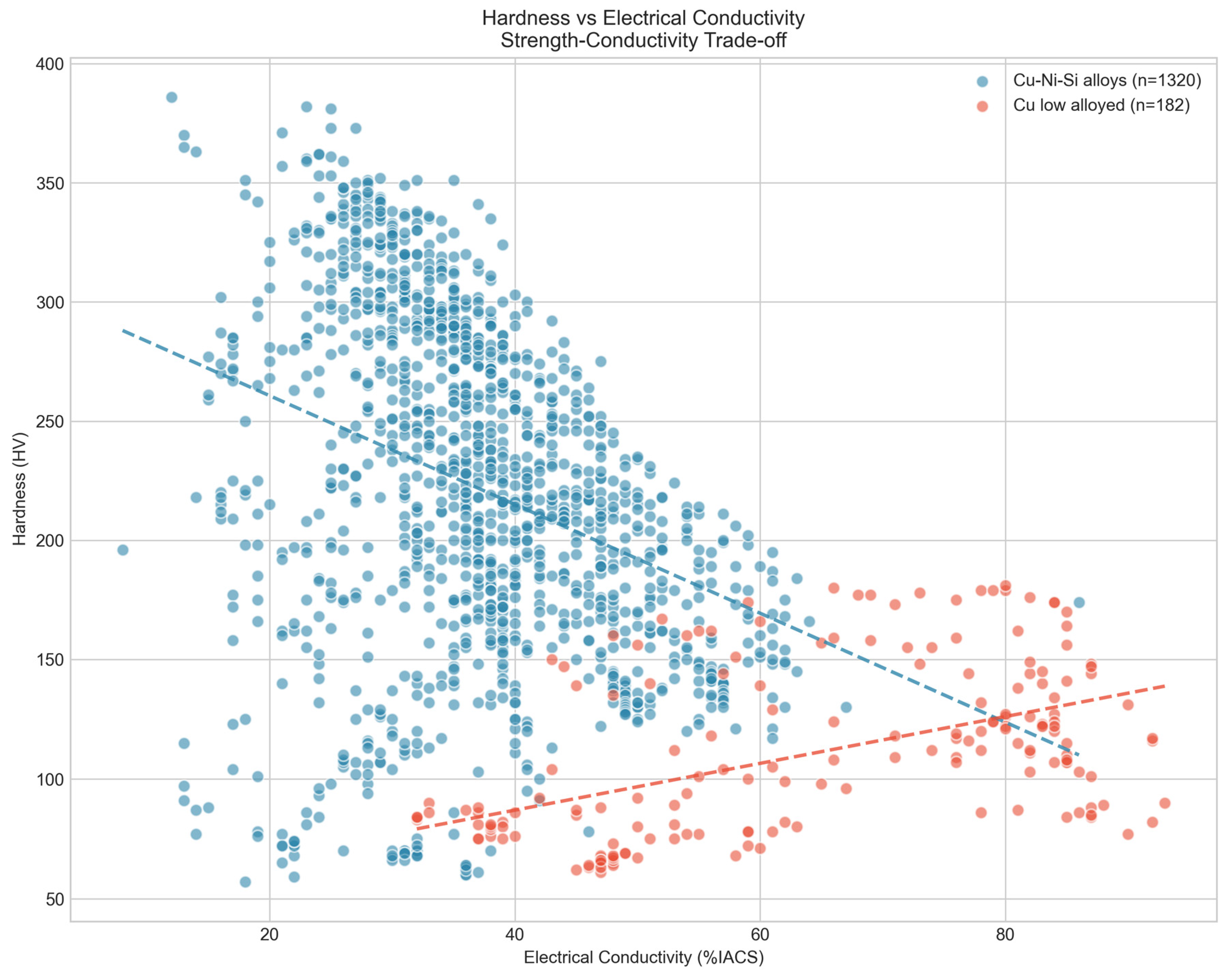
Figure 3 illustrates the hardness versus electrical conductivity relationship, visually demonstrating the fundamental trade-off that governs copper alloy design. The scatter plot clearly separates the two alloy classes into distinct regions of the property space. Linear trend lines are included as visual guides illustrating the slope and offset differences in the trade-off between the two families. Cu-Ni-Si alloys (shown in one color) cluster in the high-hardness, moderate-conductivity region (upper-left quadrant), while Cu low alloys (shown in contrasting color) occupy the moderate-hardness, high-conductivity domain (lower-right quadrant). The inverse relationship between these properties is not coincidental but reflects the competing effects of solute atoms and precipitates. This trade-off has profound implications for alloy selection and design. Applications requiring maximum current-carrying capacity with adequate mechanical strength, such as bus bars and power transmission components, favor Cu low alloys positioned toward the right side of the plot. Conversely, applications where mechanical durability under stress is paramount, such as electrical connectors subjected to repeated insertion cycles or springs in relay systems, benefit from the superior hardness of Cu-Ni-Si alloys despite the conductivity penalty (left side of the plot). The scatter observed within each alloy class is particularly instructive. Cu-Ni-Si alloys show substantial vertical spread at any given conductivity value, indicating that careful optimization of composition and processing can achieve different hardness levels while maintaining similar conductivity. Some data points deviate favorably from the average trade-off trend, approaching the upper-right region where both high hardness and good conductivity coexist. These outliers represent optimized compositions and processing conditions that partially overcome the inherent trade-off, providing targets for further alloy development.
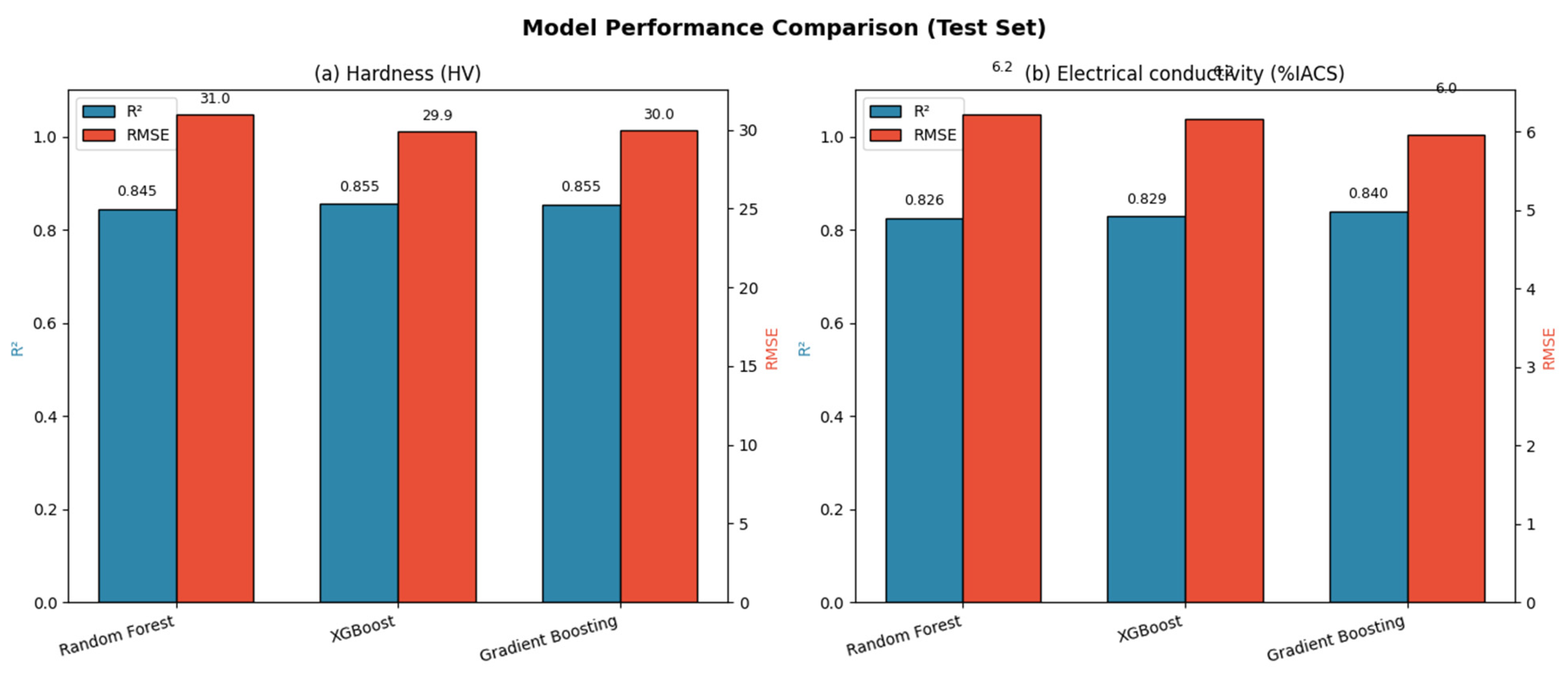
Table 3 presents the machine learning model performance metrics for predicting hardness and electrical conductivity. Three ensemble algorithms were evaluated: Random Forest, XGBoost, and Gradient Boosting. For hardness prediction, XGBoost achieves the highest test R-squared of 0.8554 with RMSE of 29.90 HV, meaning that the model explains 85.4% of the variance in hardness values across the diverse dataset spanning both alloy classes. Gradient Boosting follows closely with a test R-squared of 0.8546 and RMSE of 29.99 HV, while Random Forest achieves 0.8449 with RMSE of 30.97 HV. The training R-squared values (0.9111–0.9311) are moderately higher than the test values, indicating models with appropriate complexity that capture genuine patterns without severe overfitting. For electrical conductivity prediction, Gradient Boosting achieves the highest test R-squared of 0.8400 with the lowest RMSE of 5.96%IACS. XGBoost performs comparably (R-squared 0.8285, RMSE 6.17%IACS), and Random Forest shows slightly lower accuracy (R-squared 0.8256, RMSE 6.22%IACS). The training MAE values ranged from 9.68 to 14.81 HV, while the corresponding test MAE values ranged from 18.86 to 21.10 HV, indicating the expected generalization gap when predicting unseen compositions. To contextualize these results, linear regression and LASSO baselines achieved a test R
2 of 0.607/0.588 for hardness and 0.508/0.444 for conductivity, confirming that the ensemble methods capture significant nonlinear effects (delta R
2 = 0.25–0.39). The comparable performance across all three ensemble algorithms suggests that these relationships are robust and not artifacts of particular algorithmic approaches. This consistency suggests stable performance across the selected split; further validation using composition-grouped cross-validation is presented below.
Figure 4 provides a visual comparison of model performance across the three ensemble learning algorithms for both target properties. The bar chart format enables direct comparison of training versus testing R-squared values. All three algorithms demonstrate strong predictive capability, with test R-squared values exceeding 0.82 for both properties. The consistency across algorithms confirms that tree-based ensemble methods are particularly well-suited for this metallurgical application because they naturally handle the interaction effects that characterize precipitation hardening. Examining the chart details, the training R-squared bars (lighter shade) consistently exceed test R-squared bars (darker shade) by 0.06–0.11, a gap that indicates appropriate model complexity. If training and test performance were nearly identical, the models might be too simple to capture important relationships; if the gap were much larger (>0.15), overfitting concerns would arise. The observed gap falls within the acceptable range for machine learning models applied to materials science data, where inherent experimental variability limits achievable accuracy. This training–test R-squared gap of 0.07–0.10 is consistent with values reported in comparable machine learning studies for copper alloy property prediction: Kolev [
33] reported gaps of 0.05–0.08 for Cu-Ni-Si hardness models, while Zhang et al. [
17] observed gaps of 0.06–0.12 for precipitation-strengthened copper alloys. In the broader materials–informatics literature, training–test R-squared differences below 0.15 are generally considered acceptable for datasets derived from heterogeneous literature sources with inherent experimental variability [
38,
39]. The slight performance advantage of Gradient Boosting methods (XGBoost and Gradient Boosting) over Random Forest, visible as marginally taller test R-squared bars, may indicate the importance of modeling sequential, interactive effects in the strengthening mechanisms. Gradient Boosting builds trees sequentially, with each tree correcting errors from previous trees, potentially capturing subtle dependencies that Random Forest’s parallel ensemble misses. Seed sensitivity analysis (10 random seeds) confirmed representative performance: XGBoost hardness, R
2 = 0.845 ± 0.017; Gradient Boosting conductivity, R
2 = 0.850 ± 0.017.
To evaluate whether class imbalance (84.4% Cu-Ni-Si versus 15.6% Cu low alloys) affects prediction quality, model performance was assessed separately for each alloy class. For hardness prediction, all three models achieve substantially higher accuracy on Cu low alloys (R-squared = 0.932–0.977) compared to Cu-Ni-Si alloys (R-squared = 0.812–0.823, RMSE = 31.80–32.82 HV). This disparity reflects the greater compositional and processing diversity within the Cu-Ni-Si class, where the complex interplay between precipitation kinetics and thermomechanical history creates a more challenging prediction landscape. For electrical conductivity, the pattern is even more pronounced: Cu low alloys achieve R-squared values of 0.947–0.958 versus 0.594–0.624 for Cu-Ni-Si alloys. The lower per-class R-squared for Cu-Ni-Si conductivity predictions indicates that within-class variability in solute partitioning and precipitation completeness introduces prediction uncertainty not fully captured by the available input features. These per-class results confirm that the aggregate metrics in
Table 3, while accurate overall, mask significant differences in prediction quality between the two alloy families. Sample-weighted training using inverse class frequency weights did not improve Cu low alloy performance, suggesting the disparity reflects genuine prediction complexity rather than training bias.
Table 4 reports the 5-fold cross-validation results, providing crucial evidence of model stability and reliability. For hardness prediction, XGBoost achieves a mean CV R
2 of 0.8551 with a standard deviation of only 0.0172, indicating consistent performance across different random data partitions. The CV RMSE of 29.14 HV (standard deviation 1.60) confirms stable prediction accuracy. Random Forest shows lower mean performance (CV R-squared 0.8420) but comparable stability (standard deviation 0.0119). Gradient Boosting achieves intermediate values (R-squared 0.8524) with comparable variance (standard deviation 0.0152). For electrical conductivity, XGBoost achieved the highest mean CV R-squared (0.8610), while Gradient Boosting showed closely comparable cross-validation performance (CV R-squared = 0.8581). The conductivity models generally show slightly higher cross-validation variance than hardness models, possibly reflecting greater complexity in the conductivity–composition relationships or more variability in the underlying experimental data. The agreement between single test set R-squared (from
Table 3) and cross-validation mean R-squared (differences <0.02 for all models) confirms that the train–test split used for primary evaluation is representative of the overall data distribution.
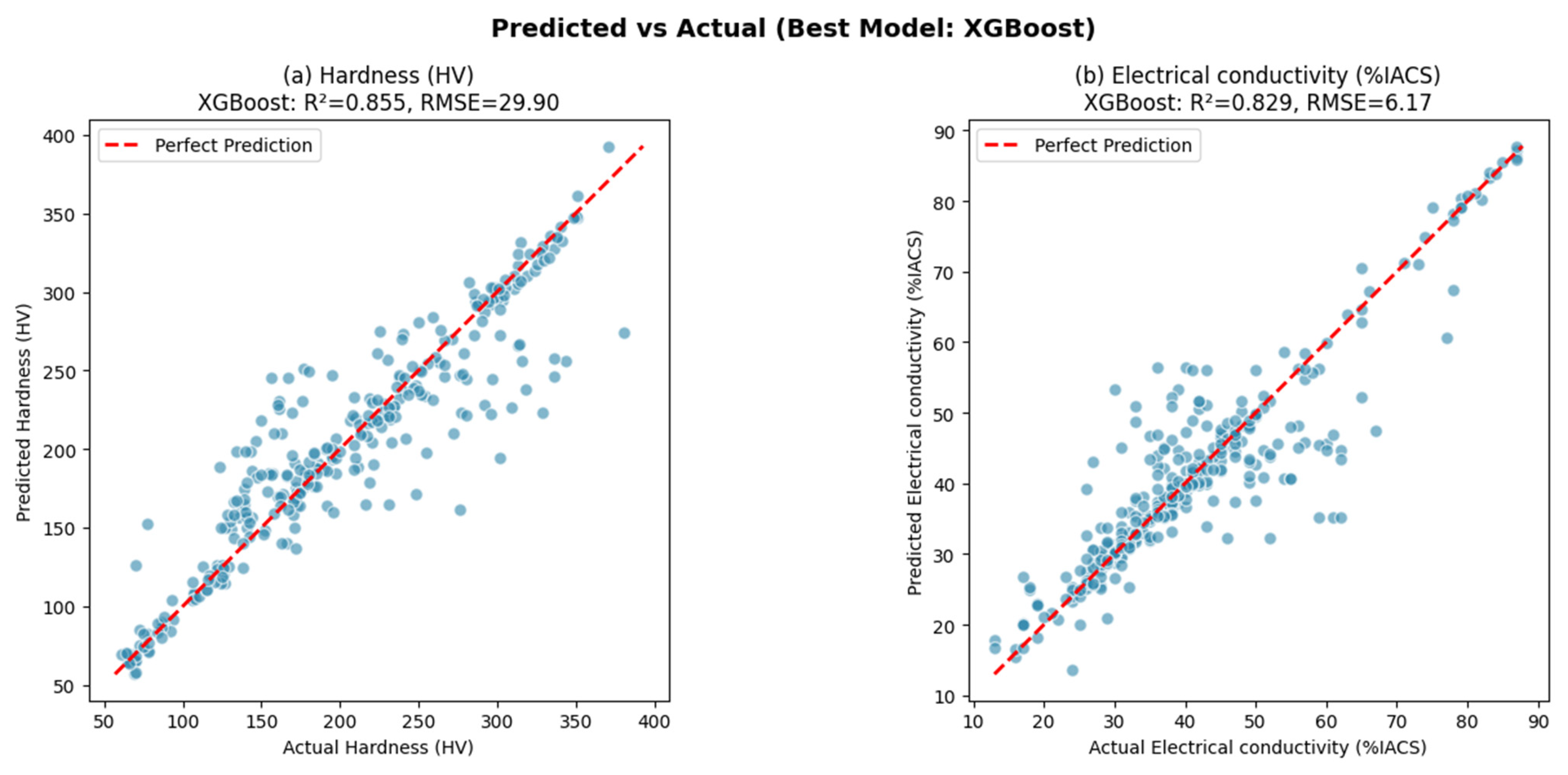
Figure 5 displays the predicted versus actual value plots for the best-performing models for each target property. The left panel shows hardness predictions (XGBoost model), where data points cluster tightly around the diagonal dashed line representing perfect prediction. Points span the full hardness range from 60 HV to 380 HV, demonstrating that the model maintains accuracy for both Cu low alloys at the lower end and highly strengthened Cu-Ni-Si alloys at the upper end. The scatter band around the diagonal has approximately constant width, indicating uniform prediction uncertainty across the property range without systematic over- or under-prediction at extremes. The right panel shows electrical conductivity predictions, again with points tightly clustered around the diagonal across the full range from 10%IACS to 90%IACS. The absence of prediction ceiling or floor effects confirms that the models have learned the underlying physical relationships rather than simply memorizing average values. Comparing the two panels, hardness predictions show slightly tighter clustering (consistent with the marginally higher R-squared for hardness), but both achieve excellent visual agreement between predicted and actual values. This uniform accuracy across property ranges is essential for the comparative analysis: the models reliably capture the behavior of both high-hardness Cu-Ni-Si alloys and moderate-hardness Cu low alloys, enabling meaningful comparison of the mechanisms controlling properties in each alloy class through feature importance analysis.
Table 5 consolidates all validation metrics into a comprehensive summary, combining training performance, test performance, and cross-validation statistics for each model-property combination. This table serves as the definitive reference for model reliability. For hardness, XGBoost shows the best balance with a test R-squared of 0.8554, closely matching the CV R-squared mean of 0.8551, confirming generalization capability. The training R-squared of 0.9307 indicates the model captures fine-grained patterns, while the test-CV agreement confirms these patterns generalize to unseen data. For conductivity, Gradient Boosting achieves a test R-squared of 0.8400, matching the CV R-squared of 0.8581 (slight positive difference suggesting the test set may be marginally easier than average cross-validation folds). The consistency between metrics across the table establishes confidence that subsequent feature importance analysis will reveal data-driven patterns consistent with metallurgical expectations rather than modeling artifacts. Examining the RMSE consistency, hardness test RMSE (29.90–30.97 HV) closely matches CV RMSE (29.14–30.48 HV), and conductivity test RMSE (5.96–6.22%IACS) matches CV RMSE (5.70–6.12%IACS). This metric alignment across validation approaches confirms robust model performance. With 84–86% of property variance explained by composition and processing variables, the models capture the major factors controlling hardness and conductivity while appropriately leaving room for experimental variability and unmeasured factors such as grain size distribution and precipitate morphology.
3.2. Feature Importance and Correlation Analysis
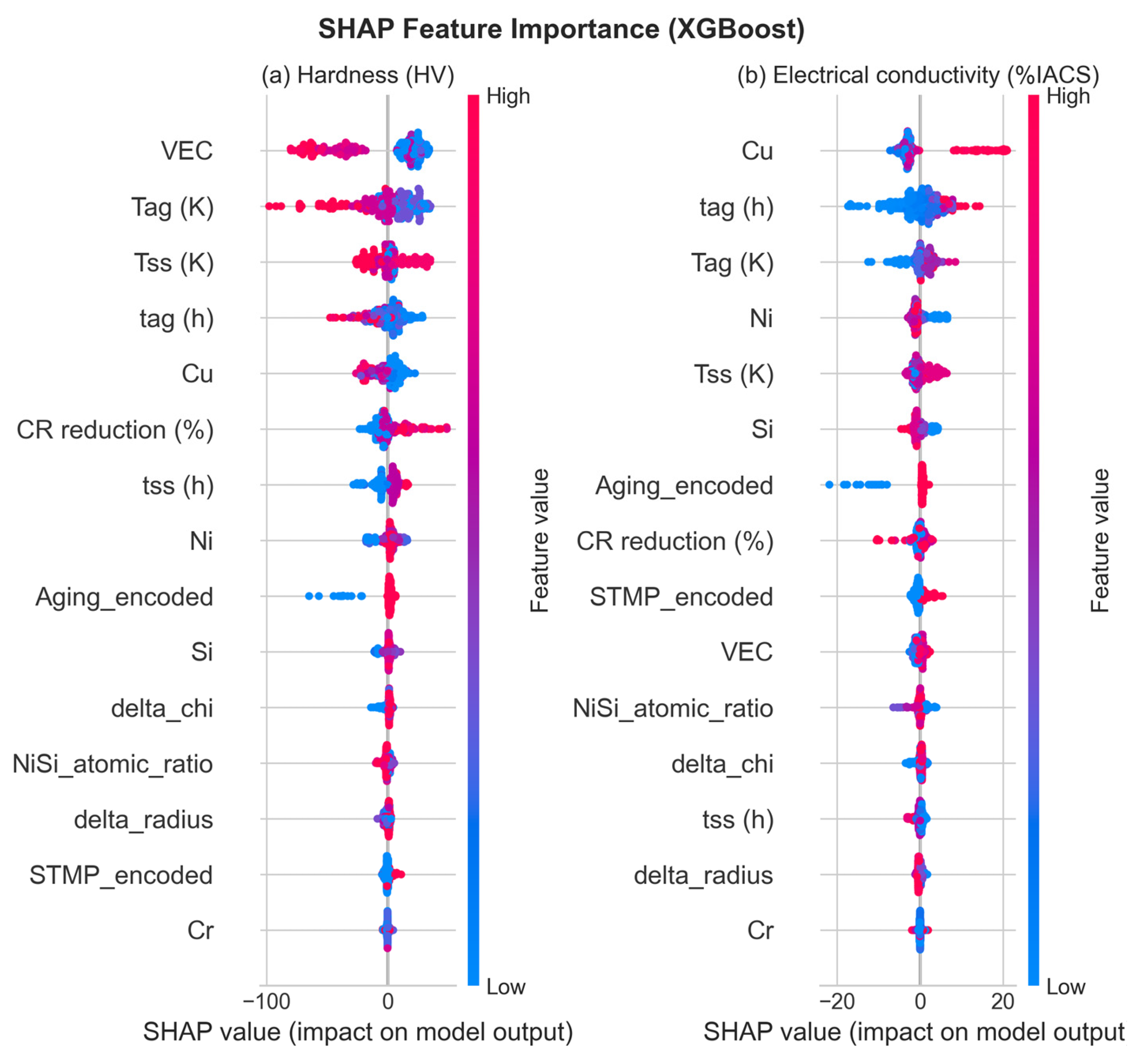
Understanding the relative importance of different compositional and processing factors is central to the comparative analysis of strengthening mechanisms. Two complementary interpretability approaches were employed. First, averaged tree-based feature importance scores, derived from impurity reduction across all three ensemble models, provide quantitative percentage rankings of each feature’s contribution to prediction accuracy. Second, SHAP analysis, implemented via TreeExplainer for the XGBoost model, provides a theoretically grounded framework for quantifying how each input feature contributes to individual predictions, accounting for complex feature interactions and providing directional information about how changing each feature affects predicted properties (
Figure 6 and
Figure 7).
Figure 6 presents the SHAP summary plots for hardness (left panel) and electrical conductivity (right panel), with each point representing a single alloy sample. Feature importance is ranked from top to bottom, and the horizontal position indicates the SHAP value (positive values increase the predicted property, while negative values decrease it). Point colors encode the actual feature value (high or low). For hardness, VEC emerges as the most important feature (ranked first), serving as a composite descriptor that captures the overall alloying level and its effect on electronic structure. The spread of points along the horizontal axis indicates VEC’s substantial impact on predictions. Aging temperature (Tag) ranks second, with the color gradient showing that intermediate aging temperatures are associated with positive SHAP contributions to hardness, consistent with optimal precipitate nucleation and growth kinetics. Solution temperature (Tss) ranks third, reflecting the critical role of dissolution conditions in establishing the supersaturated solid-solution prerequisite for subsequent precipitation. Aging time (tag) and copper content follow, with low copper values associated with higher predicted hardness due to higher alloying element concentrations. For conductivity, copper content dominates even more dramatically as the top-ranked feature, with high copper values strongly associated with positive conductivity predictions. The overwhelming importance reflects the fundamental physics of metallic conduction: a pure copper matrix provides electron transport, while all alloying additions introduce scattering. Aging time (tag) shows positive SHAP values with longer aging, consistent with conductivity recovery through solute precipitation.
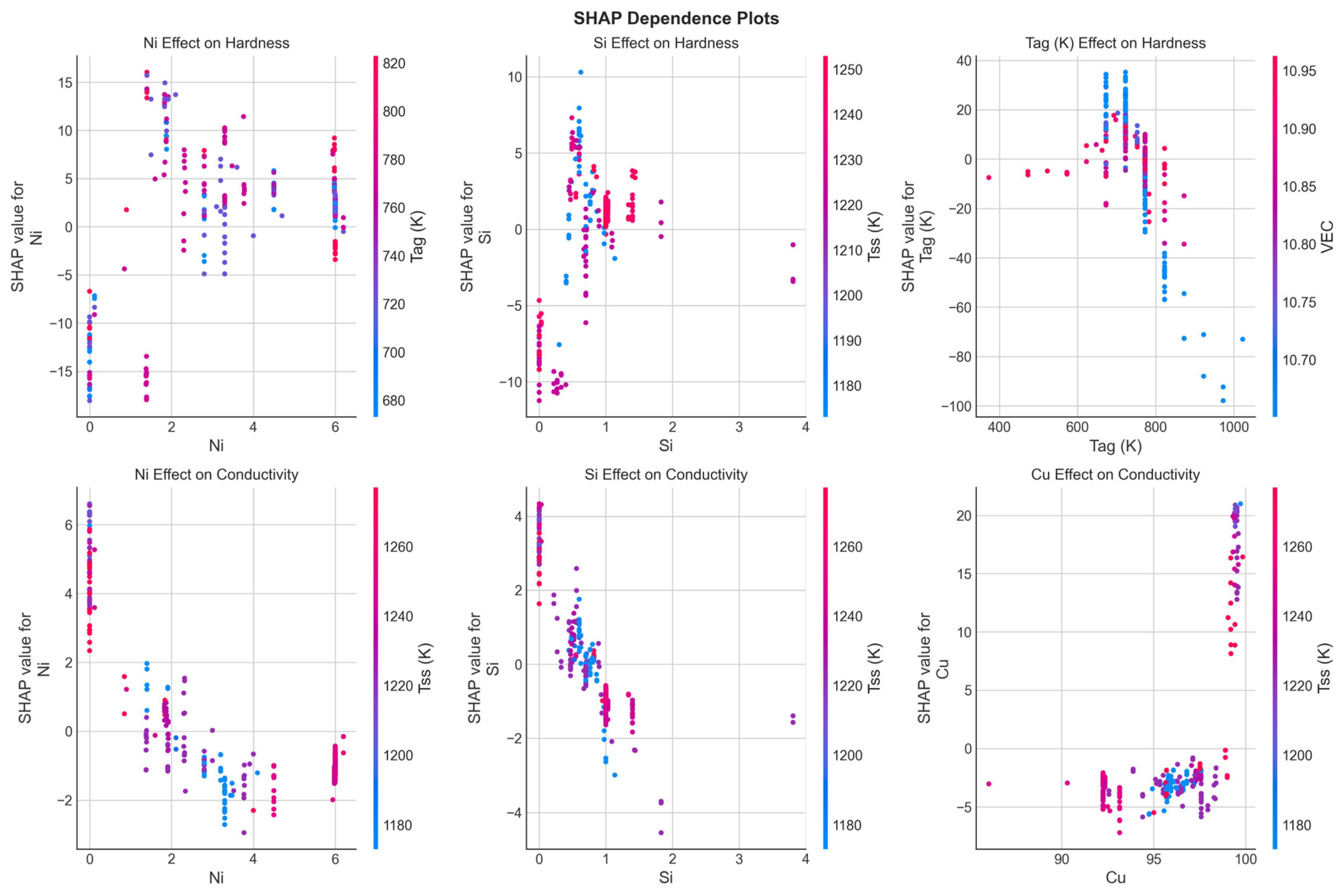
Figure 7 displays SHAP dependence plots revealing the detailed functional relationships between key features and target properties. These plots show how SHAP values (
y-axis) change as a function of feature values (
x-axis), with point colors encoding interaction effects from secondary features. The nickel-hardness dependence plot (top-left) shows that increasing Ni content from 0 to approximately 3 wt% generally produces positive SHAP contributions to hardness, with values reaching +15 HV at moderate concentrations. The color gradient (showing solution temperature, Tss, as the interacting variable) indicates that the Ni strengthening effect is modulated by dissolution conditions. At Ni contents above 3 wt%, the SHAP contribution plateaus, suggesting diminishing returns from additional nickel beyond the amount needed for efficient precipitate formation. The silicon-hardness dependence (top-center) reveals a peak SHAP contribution around 0.6–1.0 wt% Si, with values reaching approximately +20 HV. Below this range, insufficient silicon limits the volume fraction of Ni2Si precipitates; above approximately 1.5 wt%, the SHAP contribution declines sharply, indicating that excess silicon may partition to other phases or remain in solid solution without additional strengthening benefit. The color gradient shows aging temperature (Tag) as the interacting variable, confirming the coupled effect of precipitate-forming element concentration and thermal treatment on hardness. The aging temperature dependence (top-right) shows a peaked response for hardness, with maximum SHAP contribution of approximately +20 to +30 HV achieved at intermediate temperatures (700–800 K). Below 600 K, SHAP values become strongly negative (reaching −80 to −100 HV), reflecting insufficient thermal activation for precipitate nucleation and growth. At temperatures above 800 K, SHAP contributions decline moderately, consistent with precipitate coarsening that reduces strengthening effectiveness. The aluminum content appears as the interaction variable, indicating a minor modulating role. This peaked response is characteristic of precipitation-hardening kinetics, where an optimum aging window maximizes the density and coherency of strengthening precipitates. For conductivity (bottom panels), the nickel dependence (bottom-left) shows predominantly negative SHAP values at higher Ni concentrations, consistent with nickel’s role as an electron scatterer when dissolved in the copper matrix. Alloys with near-zero nickel (characteristic of Cu low alloys) show positive SHAP contributions of up to +6%IACS, with solution temperature (Tss) appearing as the interaction variable. The silicon-conductivity dependence (bottom-center) mirrors this pattern, with higher silicon content reducing predicted conductivity. The copper content appears as the interaction variable, confirming that the conductivity penalty from silicon is amplified in alloys with lower matrix purity. The copper-conductivity dependence (bottom-right) shows the strongest and most monotonic relationship among all panels: as Cu content increases from approximately 90% to nearly 100%, SHAP contributions rise from approximately −10 to +25%IACS, directly quantifying the dominant influence of matrix purity on electrical transport properties. The color gradient shows solution temperature as the interaction variable, with higher Tss values associated with slightly enhanced conductivity at equivalent copper levels.
To complement the SHAP dependence plots, SHAP interaction values were computed to quantify pairwise feature interaction effects. For hardness, the strongest interactions were between aging temperature and VEC (mean |interaction| = 3.65), aging temperature and aging time (3.58), and Cu and VEC (2.86), reflecting the coupled effects of composition, electronic structure, and thermal processing on precipitation kinetics. The prominence of VEC in the top interactions confirms that this composite descriptor captures alloy-level electronic structure effects that modulate the strengthening contribution of individual compositional and processing variables. For conductivity, Cu-aging time (0.76) and aging temperature–aging time (0.44) dominated the interactions, consistent with the mechanism of solute removal through time-dependent precipitation. Notably, the Ni-Si direct interaction ranked outside the top 10 for both properties, suggesting that the synergistic Ni-Si effect operates primarily through their individual contributions to precipitate formation rather than through a direct statistical interaction term. A systematic analysis of higher-order SHAP interaction values could provide additional data-driven insight but is beyond the scope of the present study.
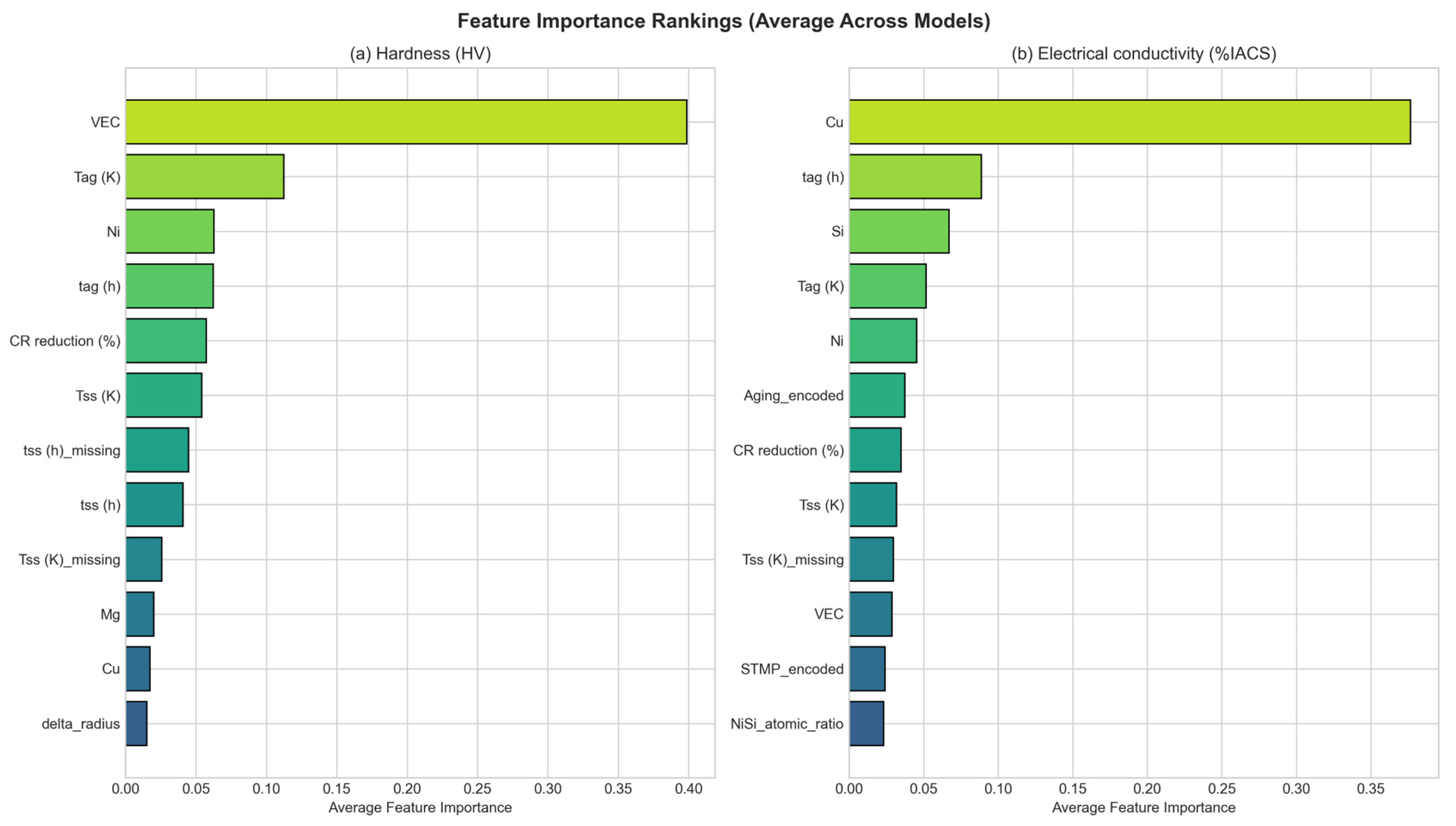
Table 6 presents the top 10 averaged tree-based feature importance rankings for both target properties, crystallizing the comparative analysis into quantitative form. For hardness, the ranking is: VEC (39.88%), Tag (K) (11.23%), Ni (6.28%), tag (h) (6.22%), CR reduction (5.73%), Tss (K) (5.42%), tss (h)_missing (4.46%), tss (h) (4.07%), Tss (K)_missing (2.57%), and Mg (2.00%). This hierarchy traces the cascade of influence: VEC, as a composition-weighted average of elemental valence electrons, serves as a powerful composite descriptor distinguishing alloy classes and capturing the overall electronic structure effect on strengthening; aging temperature governs precipitate nucleation and growth kinetics; nickel is essential for Ni2Si precipitate formation; aging time determines precipitate evolution; cold rolling provides work hardening and strain-induced precipitation enhancement; solution temperature and solution time establish the supersaturated solid solution; and missingness indicators capture data completeness effects. For electrical conductivity, the ranking shifts dramatically: Cu (37.66%), tag (h) (8.87%), Si (6.71%), Tag (K) (5.16%), Ni (4.54%), Aging_encoded (3.73%), CR reduction (3.47%), Tss (K) (3.18%), Tss (K)_missing (2.98%), and VEC (2.88%). Matrix purity dominates because conductivity is a bulk transport property limited by any scattering mechanism. The prominence of aging time (second importance) reflects conductivity recovery through solute depletion via precipitation. Silicon and nickel appear at moderate importance not because they directly affect conduction but because their precipitation during aging removes them from solid solution, reducing scattering. Comparing the rankings directly: VEC tops the hardness list while Cu tops conductivity, reflecting the distinct physical mechanisms. For hardness, VEC captures the alloying-level electronic structure effects that govern precipitation-strengthening potential; for conductivity, high Cu purity directly minimizes electron scattering. Aging time ranks fourth for hardness but second for conductivity, revealing that while precipitate nucleation kinetics (controlled by temperature) matter more for strength, precipitation completion (controlled by time) matters more for conductivity recovery. These divergent rankings quantify why optimizing one property often compromises the other.
Figure 8 compares averaged tree-based feature importance between hardness and conductivity models in a side-by-side format, enabling direct visualization of the differential sensitivity to various factors. The stark difference in copper importance is immediately apparent: the copper bar for conductivity is substantially taller than for hardness (37.7% versus a low ranking outside the top features), quantifying how much more sensitive conductivity is to matrix composition. This difference has practical implications: small compositional variations that negligibly affect hardness may significantly impact conductivity, requiring tighter compositional control when conductivity is critical. The relative heights of silicon and aging temperature bars reveal another key difference: for hardness, VEC dominates (bar reaching nearly 40% of total), while for conductivity, this descriptor shows a much smaller bar (about 3%). This pattern confirms that hardness responds strongly to precipitate-forming elements and aging kinetics, while conductivity is more responsive to overall alloying level and the simple presence or completeness of aging treatment. The aging time (tag) bar provides an interesting contrast: modest importance for hardness (about 6%) but higher importance for conductivity (about 9%). This suggests that for a given composition optimized for hardness through temperature control, conductivity can be independently improved through extended aging that more completely removes solutes from solution. The relative bar heights thus provide a visual guide for optimization strategy: optimize VEC-related composition and aging temperature to maximize hardness first, and then extend aging time to recover conductivity without substantially affecting the hardness already achieved.
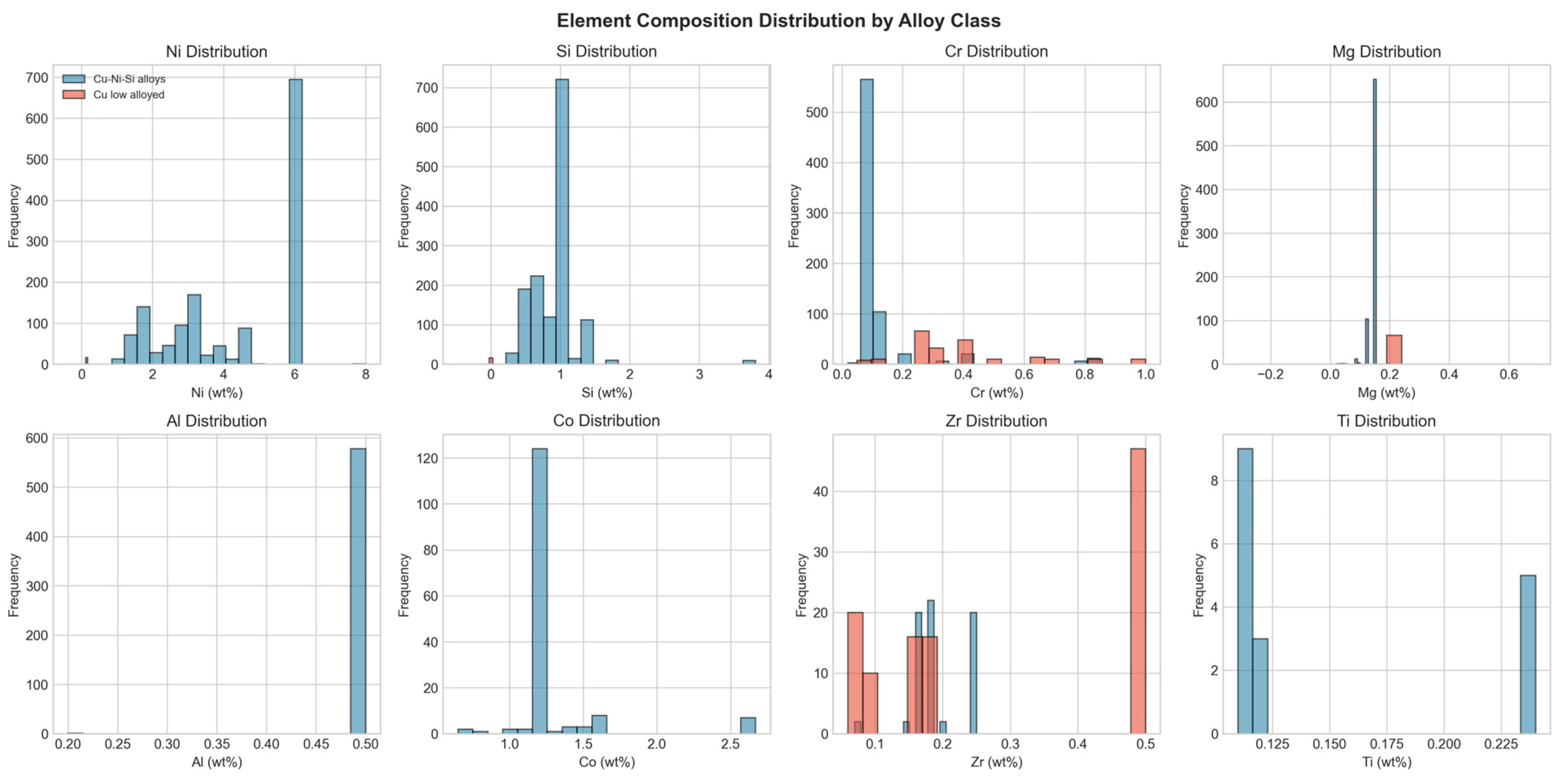
Figure 9 illustrates the elemental distribution comparison between Cu-Ni-Si and Cu low-alloyed systems, providing the compositional foundation for understanding the different strengthening mechanisms. The plots show the concentration ranges and distributions for key alloying elements across both alloy classes. For Cu-Ni-Si alloys, nickel content shows a characteristic distribution centered around 2–5 wt% with a relatively narrow interquartile range, reflecting the targeted compositional design for Ni2Si precipitate formation. Silicon content similarly clusters around 0.5–1.5 wt%, with the distribution shape confirming deliberate optimization near the stoichiometric requirement for efficient precipitation. The correlation between nickel and silicon distributions (both have similar shapes and relative spreads) further confirms that alloy designers jointly optimize these elements. Cu low alloys display a fundamentally different elemental profile. Nickel and silicon contents are much lower (often near zero or in trace amounts), while elements such as chromium, zirconium, silver, and tin appear at low but measurable concentrations. The broader distributions of these minor elements reflect the multiple strategies employed in Cu low alloys: each element offers different combinations of strengthening effect and conductivity penalty, allowing manufacturers to select compositions suited to specific application requirements. Magnesium appears in both alloy classes but with different roles: in Cu-Ni-Si alloys, magnesium provides supplementary solid-solution strengthening and may participate in secondary precipitate phases; in Cu low alloys, it serves as one of several available solid-solution strengtheners. This elemental distribution comparison is directly relevant to interpreting the ML model behavior: the distinct profiles explain why VEC and Cu content dominate predictions, as the two classes occupy different composition-space regions. The element distribution comparison explains the property differences observed in the statistical comparison and the distinct feature importance patterns: Cu-Ni-Si alloys concentrate strengthening through Ni-Si-based precipitation, while Cu low alloys distribute strengthening across multiple dilute solid-solution additions.
3.3. Practical Applications
The trained machine learning models enable several practical applications for alloy design and optimization. To ensure physical plausibility and scientific accuracy, optimization procedures incorporate metallurgical constraints, including Ni:Si stoichiometry requirements for Ni2Si precipitation, processing parameter bounds based on industrial practice, and compositional limits reflecting solubility constraints. Three key use cases are demonstrated below.
3.3.1. Property Prediction for New Alloy Compositions
The validated machine learning models enable practical applications that accelerate alloy development by replacing iterative experimental trials with computational predictions.
Table 7 demonstrates property prediction for representative compositions spanning the design space. Three example alloys illustrate different design strategies:
(i) The high-strength formulation (Cu-4.0Ni-1.0Si-0.15Mg) with Ni:Si atomic ratio of 1.91 and processing conditions (1223 K solution treatment, 60% cold rolling, and 723 K/4 h aging) achieves the predicted hardness of 250.0 HV. The near-optimal Ni:Si stoichiometry ensures efficient Ni2Si precipitate formation, while moderate cold rolling introduces dislocation density for strain-induced precipitation enhancement without excessive conductivity degradation. The corresponding conductivity of 38.2%IACS represents a favorable balance for high-stress electrical applications.
(ii) The high-conductivity formulation (Cu-0.5Cr-0.15Zr) with minimal total alloying (0.65 wt%) and no cold rolling achieves the predicted conductivity of 80.1%IACS with a hardness of 129.8 HV. The low alloying content preserves matrix purity essential for electron transport, while chromium and zirconium provide precipitation strengthening during aging without the conductivity penalty associated with higher solute content. This composition targets applications requiring superior current-carrying capacity, such as resistance welding electrodes and power transmission components.
(iii) The balanced formulation (Cu-2.5Ni-0.6Si-0.3Cr-0.1Mg) with Ni:Si atomic ratio of 1.99 demonstrates that intermediate properties (242.9 HV and 41.6%IACS) are achievable through judicious combination of precipitation-hardening elements with proper stoichiometry. The moderate processing (40% cold rolling and 748 K/3 h aging) optimizes the strength–conductivity trade-off for general-purpose applications.
3.3.2. Processing Parameter Optimization
Table 8 demonstrates processing optimization for a fixed Cu-3.0Ni-0.7Si-0.1Mg composition (Ni:Si atomic ratio = 2.05), showing how different processing routes shift properties along the strength–conductivity trade-off. The optimization algorithm searched the processing parameter space subject to metallurgical constraints: solution temperature (1173–1273 K), solution time (0.5–4.0 h), aging temperature (673–823 K), and aging time (0.5–12 h). Cold rolling bounds were adjusted based on the optimization target to reflect physical understanding of strengthening mechanisms. For maximum hardness (293.9 HV achieved), the optimizer selected: solution treatment at 1244 K for 4.0 h, 46% CR reduction, and aging at 712 K for 1.3 h. The moderate solution temperature ensures complete dissolution of Ni and Si into the matrix without excessive grain growth. The controlled cold rolling (46%) introduces dislocation networks that serve as heterogeneous nucleation sites for Ni
2Si precipitates. The relatively low aging temperature (712 K) favors nucleation of numerous fine precipitates over fewer coarse particles, maximizing dislocation–precipitate interaction frequency. The resulting conductivity (35.9%IACS) reflects the retained solute and precipitate scattering contributions. For maximum conductivity (45.7%IACS achieved), the optimizer selected: solution treatment at 1174 K for 1.9 h, 24% cold rolling, and aging at 777 K for 8.1 h. The lower cold rolling reduction (24%) minimizes residual dislocation density that would scatter electrons. The higher aging temperature (777 K) accelerates diffusion, promoting rapid and complete precipitation that removes solute from the matrix, while the extended aging time (8.1 h) ensures precipitation approaches completion. The resulting hardness (231.1 HV) remains adequate for many electrical applications while conductivity is substantially improved. The 62.8 HV hardness difference and 9.8%IACS conductivity difference between optimized conditions quantify the property range achievable from a single alloy composition through processing variation alone.
3.3.3. Inverse Design for Target Properties
Table 9 demonstrates the inverse design capability with stoichiometric constraints, where target properties are specified first and the algorithm identifies optimal composition and processing to achieve them while maintaining physical plausibility. The optimization enforces Ni:Si atomic ratio constraints (1.8–2.5) to ensure efficient Ni
2Si precipitation, preventing mathematically optimal but metallurgically unrealistic solutions.
For the balanced target of 220 HV hardness and 45%IACS conductivity, the constrained optimization converged on Cu-2.20Ni-0.53Si-0.45Cr-0.09Mg with processing parameters: solution treatment at 1223 K, tss = 2 h, 40% cold rolling, and aging at 770 K for 7.4 h. The identified composition maintains a Ni:Si atomic ratio of 2.00, which is optimal for Ni2Si stoichiometry. The total alloying content (3.27 wt%) falls within the typical Cu-Ni-Si alloy range, and the processing conditions align with industrial practice. The algorithm achieved predictions matching the target values (220.0 HV and 45.0%IACS), without deviations, indicating that this specific property combination lies within the achievable design space. Given the low per-class R2 for Cu-Ni-Si conductivity, conductivity targets carry substantial uncertainty, and these results should be treated as computational suggestions pending experimental validation.
An important consideration for practical alloy design is prediction uncertainty. The present models provide point predictions without explicit confidence intervals. To estimate prediction uncertainty, ensemble prediction ranges were computed from the three trained models for each test sample. The mean prediction range (maximum minus minimum across models) was 10.15 HV for hardness and 2.23%IACS for conductivity, indicating reasonable inter-model agreement. Additionally, 90th percentile prediction intervals derived from individual Random Forest tree predictions yielded mean interval widths of 55.98 HV for hardness and 13.76%IACS for conductivity, with empirical coverage rates of 70.2% and 79.5%, respectively. Per-class analysis revealed that prediction intervals for Cu low alloys were notably narrower for hardness (31.15 HV vs. 60.09 HV for Cu-Ni-Si) but wider for conductivity (21.56%IACS vs. 12.03%IACS for Cu-Ni-Si), in both cases with higher coverage rates (91.7% and 96.2% for Cu low alloys versus 66.5% and 76.8% for Cu-Ni-Si alloys). The narrower hardness intervals for Cu low alloys reflect their lower compositional complexity and more predictable solid-solution strengthening mechanism, while the wider conductivity intervals likely arise from the broader conductivity range and greater sensitivity of Cu low alloys to processing variations. These uncertainty estimates should be considered when interpreting the optimization and inverse design results in
Table 7,
Table 8 and
Table 9, as the predicted property values carry inherent uncertainty that could affect the practical realization of targeted properties.
A potential concern for model evaluation is data leakage arising from composition overlap between training and test sets. Because the dataset contains multiple entries for the same base composition processed under different thermomechanical conditions, 96.4% of hardness test samples and 97.9% of conductivity test samples share their rounded elemental composition (to 0.1 wt.%) with at least one training sample. This high overlap is inherent to the dataset structure, where the same alloy compositions are systematically studied under varying processing routes. Importantly, the model must still correctly predict the effect of different processing parameters on properties for these shared compositions, which constitutes a meaningful prediction task. Nonetheless, test performance on samples with unique compositions not seen during training was lower (R-squared = 0.358 for hardness, 0.715 for conductivity), indicating that extrapolation to entirely novel compositions is substantially less reliable than interpolation within the training composition space. This finding underscores that the models are most reliable when applied to compositions similar to those in the training database and should be used cautiously for genuinely novel alloy formulations. The grouped cross-validation results (R2 = 0.36–0.44 for hardness) further quantify this limitation.