Proceeding Paper

Evaluating Field Corn Yield and Plant and Soil Nutrient Concentrations Under Application of Synthetic Fertilizer and Dairy Manure †

by
Tajamul Hussain
1,* and
Muhammad Fraz Ali
2
1
College of Agricultural Science, Oregon State University, Corvallis, OR 97331, USA
2
College of Agronomy, Northwest A&F University, Xianyang 712100, China
*
Author to whom correspondence should be addressed.
Presented at the 5th International Electronic Conference on Agronomy (IECAG 2025), 15–18 December 2025; Available online: https://sciforum.net/event/IECAG2025.
Biol. Life Sci. Forum 2026, 57(1), 10; https://doi.org/10.3390/blsf2026057010
Published: 6 May 2026
(This article belongs to the Proceedings of The 5th International Electronic Conference on Agronomy (IECAG 2025))

Abstract

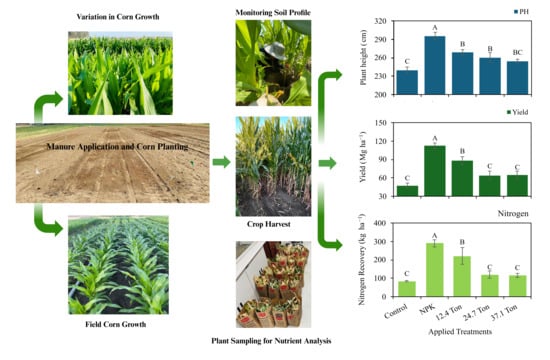
The application of manure to field corn has the potential to sustain corn yields and reduce nutrient leaching in the soil profile. A field trial with a randomized complete block design was conducted on Adkins fine sandy loam soil to evaluate the impact of application of manure and synthetic fertilizer on nutrient concentrations (N, P, K and S) in plant and soil as well as field corn yield. Experimental treatments included application of synthetic fertilizer (NPK: T1) and dairy manure application at 12.4-(T2), 24.7-(T3) and 37.1-(T4) tons ha−1 in addition to a non-fertilized control (CK). All manure was applied before planting. Corn was manually harvested, and plants were separated into leaves, stems and cobs to determine dry weights. Post-harvest soil sampling was performed at 0–30, 30–60 and 60–90 cm soil depths. The results indicated that in-season leaf nutrient concentration was significantly different among applied treatments. The application of synthetic fertilizer (T1) resulted in the highest plant height (295 cm) and produced a higher corn yield (112.3 Mg ha−1) compared to CK and application of dairy manure. Application of manure at 12.4 tons ha−1 produced higher corn yield (87.8 Mg ha−1) compared to manure application at 24.7 (64.0 Mg ha−1) and 37.1 tons ha−1 (64.5 Mg ha−1). A similar trend was observed for leaf, stem and cob fresh and dry weights. Nutrient recovery was higher under application of synthetic fertilizer, followed by application of manure at 12.4 tons ha−1. Soil nutrient analysis indicated no significant impact on N, P, K and S concentration among treatments except for NH4+–N. However, nutrient concentration significantly varied under different soil depths. These results suggest that a combination of synthetic fertilizer application and manure might be a practical approach for a balanced nutrient supply for field corn. Further investigations are necessary to explore the potential of manure application to ensure balanced nutrient supply, improved yields and reduced nutrient losses in field corn.

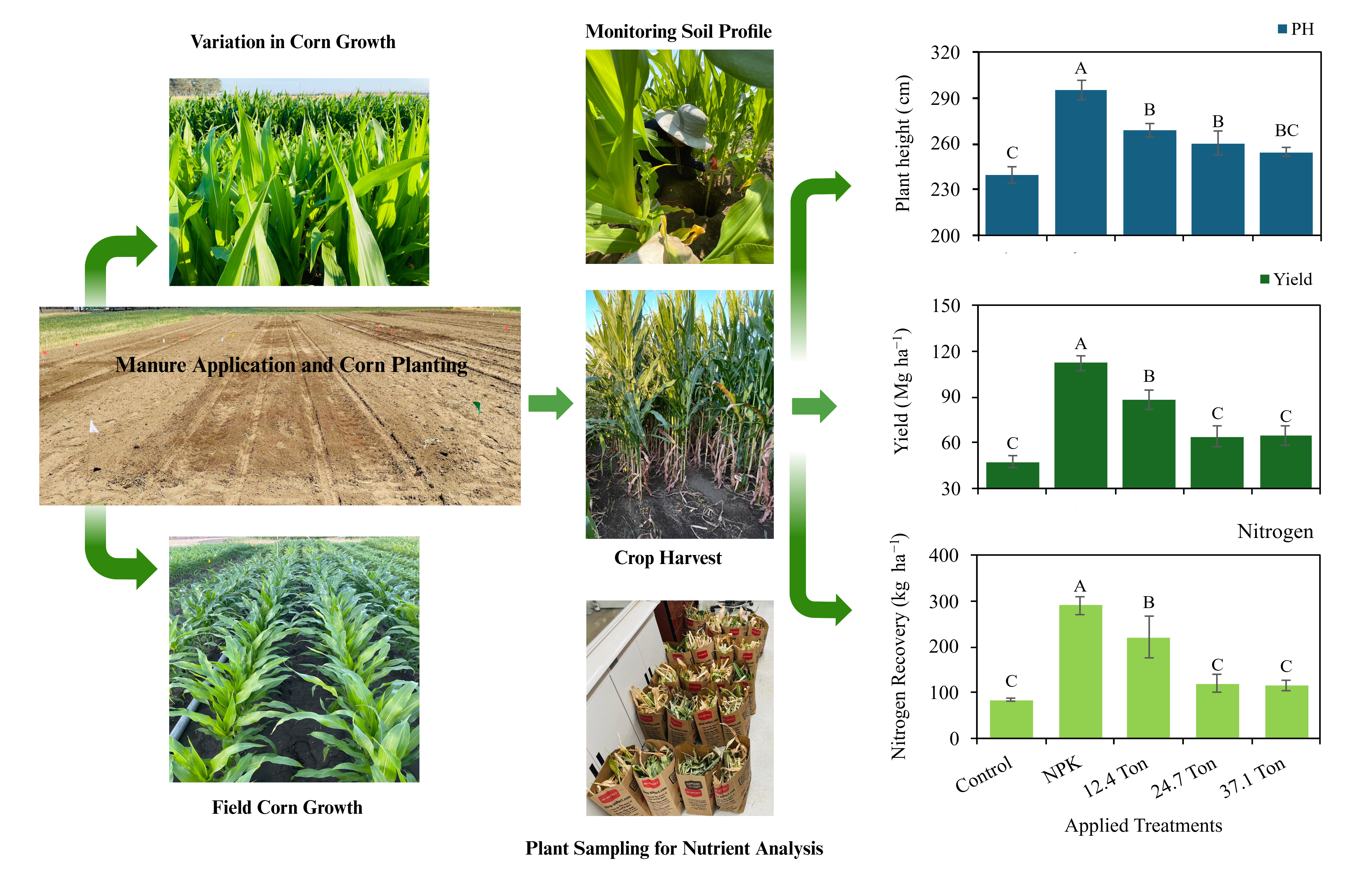
Graphical Abstract

1. Introduction

Corn silage is an important component of animal feed in the dairy industry across the United States, including in Oregon. Approximately 40% of total domestic corn is used in animal feed [1] and statistics indicate that silage corn was harvested from 6.1 million hectares of land [2]. Silage corn is considered a high-energy feed for dairy cattle due to its dry matter content and palatability [3]. Research has demonstrated that feeding corn silage to dairy cows helps improve feed intake, milk production, and milk protein content [4,5,6]. Efficient production of silage corn is linked to effective nutrient management to meet crop demands. However, the production potential of the Columbia Basin region is challenged by its coarse-textured soils, which exhibit low soil water and nutrient holding capacity and low soil organic matter. Synthetic fertilizers are the main source of nutrients for silage corn production [7]. To compensate for inherent soil limitations and achieve optimal yields, growers often apply large quantities of synthetic fertilizers. However, the application of these synthetic fertilizers may lead to soil degradation and nutrient leaching, posing a serious threat to agricultural productivity and sustainability [8,9,10].
Achieving and sustaining optimal corn yields depends heavily on effective crop nutrient management that aligns soil nutrient availability with crop uptake patterns. Corn has high demand for essential macronutrients like nitrogen (N), phosphorus (P) and potassium (K), which are critical for supporting key physiological processes and optimal plant growth and development [11,12]. Specifically, N is vital for leaf development and chlorophyll synthesis [13], P promotes root growth [14], and K regulates water utilization [15,16]. Corn silage has greater potential for nutrient recovery, and can remove 205, 32 and 192 lb N, P and K per acre, respectively [3]. Plant growth and yield potential can be significantly restricted by deficiencies or imbalances of these essential nutrients. To meet these intensive nutrient demands, growers have historically relied on synthetic inorganic and organic fertilizers [17,18,19]. However, the overuse of synthetic fertilizers to achieve maximized yields undermines the parallel goal of preserving long-term soil fertility [20]. The dependency on synthetic fertilizers also presents significant economic and environmental challenges, including nutrient leaching that contaminates groundwater and runoff that contributes to eutrophication of surface waters. Therefore, nutrient management strategies must not only ensure the timely availability of nutrients and improved crop yields but also promote soil health.
Manure management is also a substantial issue as managing the large volumes of manure generated by dairy farmers poses both economic and environmental challenges. The immense quantities of manure generated represent a valuable, renewable source of plant nutrients and organic matter [21,22]. In recent years, dairy farm manure has drawn significant attention in efforts towards sustainable agriculture, with potential to improve soil health, enhance crop yields and mitigate environmental impacts [21,23]. By recycling nutrients within the agricultural system, dairy manure application can reduce the dependence on synthetic fertilizers and transform a waste product into a resource, creating a more circular and sustainable nutrient economy. Manure is a valuable nutrient resource that helps build soil organic matter, improve soil health and enhance nutrient cycling when applied at the right time and rate [24]. Manure improves soil fertility and enhances microbial activity in the short term, which leads to improved soil structure, whereas in the long term it supplies nitrate and ammonium that facilitate crop productivity [25,26,27]. Despite these potential benefits of and research efforts on fertilizer and manure application in corn, a critical knowledge gap persists. There is a lack of comprehensive field-scale studies in the Columbia Basin that directly explain the efficiency of dairy manure compared to synthetic fertilizers by evaluating corn yield, nutrient recovery, soil nutrient dynamics and potential environmental impacts. Columbia Basin counties have a rich manure source, e.g., from dairy farms. The cost of the manure is meager (or no cost) as these farms are suffering from environmental regulations on disposing of the manure. Applying manure to agricultural fields would be a win-win strategy to help these farms lessen the environmental pressure and benefit field crop growers to improve soil quality. The use of manure in fields represents an opportunity to recycle an existing by-product capable of providing agronomic and environmental benefits. Although most manure typically contains lower concentrations of N, P, and K than commercial fertilizers, it can be a valuable source of organic matter and other essential macro-and micro-nutrients [28]. The short-term or long-term effects of manure application on key soil properties in the Columbia Basin remain unclear due to the limitations of brief study periods and limited experimental factors. Therefore, research evidence is needed to quantify whether dairy manure can be a viable substitute for synthetic fertilizers in achieving optimal corn yield while enhancing soil fertility and mitigating environmental risks in the Columbia Basin’s unique agroecosystem.
There is limited information available on how the application of dairy manure affects corn growth, nutrient uptake and nutrient dynamics in sandy soils. While manure provides valuable nutrients, a particular concern is that the gradual nutrient release from manure might not be able to meet crop requirements during the peak growing period. In addition, impact of the manure application on soil nutrient dynamics remains unexamined in the Columbia Basin. To fill this critical knowledge gap, this study aimed to provide a field-based evaluation of manure management strategies for silage corn. Therefore, the objectives of this research were (1) to assess the influence of synthetic fertilizer and dairy manure application on corn growth, yield and nutrient recovery, (2) to determine the effects of these nutrient sources on soil nutrient dynamics and mobility in the soil profile and (3) to identify the potential of dairy manure application to sustain high yield while reducing environmental risks. The current research provides critical insights for developing effective and sustainable manure and nutrient management for silage corn production in the Columbia Basin and similar regions, with implications for optimizing productivity, improving soil health and preserving the environment.

2. Material and Methods

2.1. Field Experiments

The field trial was conducted at the field research area of Hermiston Agriculture Research and Extension Center, Oregon State University (latitude: 45°49′1.63″ N, longitude: 119°16′51.24″ W) during the 2024 growing season. The soil of the experimental field is Adkins fine sandy loam. The experiment was conducted in a randomized complete block design with four replications, having a total of 20 plots. The field was prepared using a disc plough, disc harrow and rotary tiller twice. Experimental treatments included CK) a control (without fertilizer), (T1) chemical fertilizer application (NPK), (T2) dairy manure application at 12.4 tons ha−1 (5 tons acre−1), (T3) dairy manure application at 24.7 tons ha−1 (10 tons acre−1), (T4) dairy manure application at 37.1 tons ha−1 (15 tons acre−1). Each experimental treatment was designated for a 25 × 8 ft plot with four rows of corn, having 2.5 ft of row–row distance surrounded by a buffer area. Planting was performed on 23 May 2024, and corn was planted with a two-row mechanical planter at a plant-to-plant distance of 17.8 cm. All manure was applied after field preparation and before crop planting in the designated plots, whereas chemical fertilizer application was performed during the season. Irrigation was applied using a manually operated sprinkler irrigation system and the irrigation amount was based on the estimated evapotranspiration data provided by the local meteorological station (HRMO) at OSU-HAREC (AgriMet: https://www.usbr.gov/pn/agrimet/graphs.html, accessed on 30 September 2024). Weather data was also obtained from Agrimet. Mean minimum and maximum air temperature and relative humidity during the crop growth season ranged 5.3–24.3, 19.7–41.3 °C and 28–68%, respectively. The experiment received 588 mm of irrigation water with only 8.1 mm of rainfall. Standard practices were employed to control insects and pests.

2.2. Data Collection

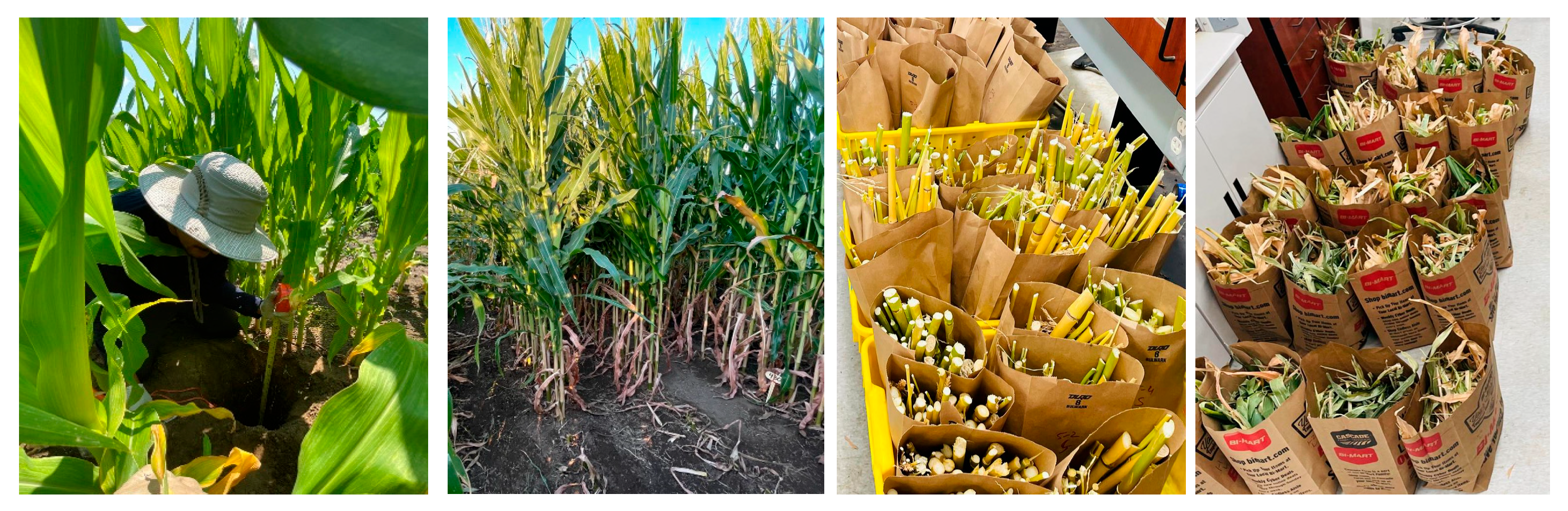
During the crop growth season, crop growth was monitored by taking four leaf samples from each plot. The plant samples were taken to evaluate the effect of various treatments on nutrient concentration. The crop was manually harvested during early September when the average soil moisture of the corn reached 65%. Plant height was measured from the base of the stem to the tip of the flag leaf. Plants in the 4 ft length range from the central two rows were harvested to determine total aboveground biomass, whereas three hills with two stalks per hill were selected to determine fresh and dry weights of plant parts including leaves, stems and cobs (Figure 1). Plant samples were dried in an oven at 65 °C to achieve a constant weight. Dried samples were then stored for laboratory analysis to determine the nutrient concentrations and recovery. Soil sampling was performed in all experimental plots to determine nutrient concentrations in the soil. Samples were obtained from the harvested area at 0–30, 30–60 and 60–90 cm soil depths in each plot.

2.3. Nutrient Concentration and Analysis

Dried plant samples including leaf, stem and cob were ground to pass through a 2 mm sieve. Soil was cleaned and samples were prepared and passed through a 2 mm sieve. NO3–N, NH4+–N, P2O5, K+ and SO4–S in samples were determined following the NAPT S-3.10, NAPT S-4.10, NAPT S-5.11 and NAPT S-6.12 standard analytical procedures for testing [29].

2.4. Statistics

Statistical analysis was performed using Statistix 8.1 software to evaluate the effects of various applied treatments on field corn growth, yield and plant and soil nutrients through conducting analysis of variance and mean comparisons using the least significant difference test. Means were considered significantly different at p values < 0.05.

3. Results and Discussion

3.1. In-Season Leaf Nutrient Concentration

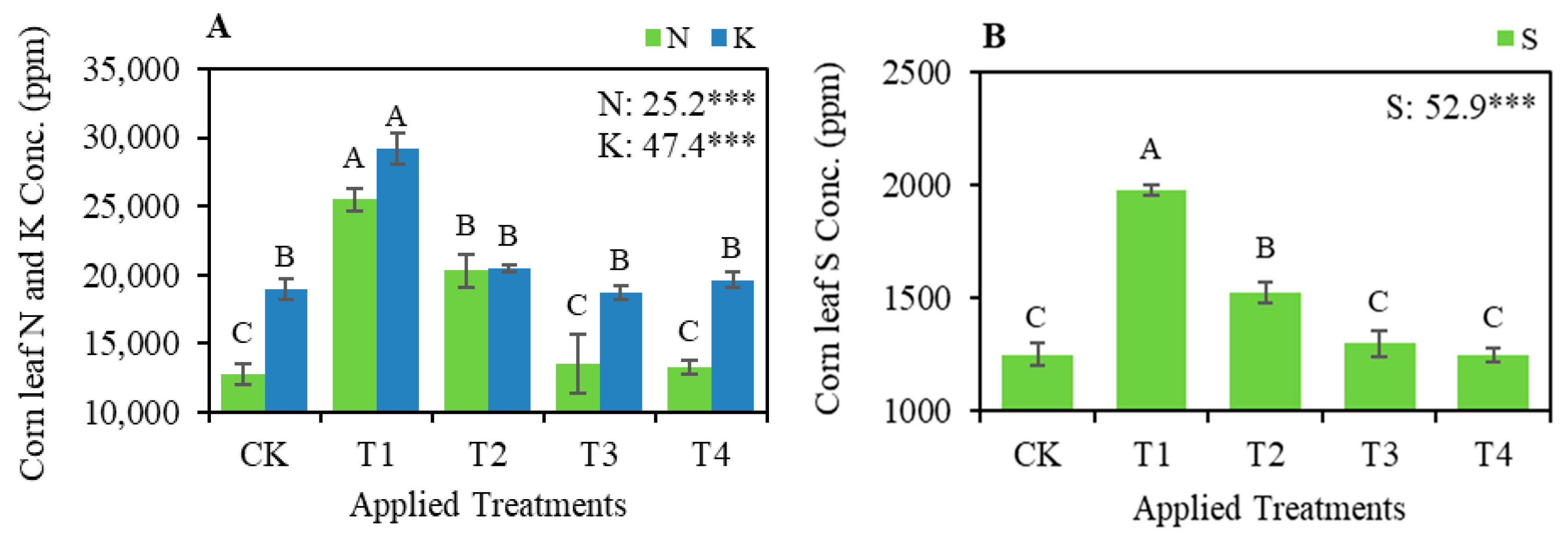
In-season leaf N, K (Figure 2A) and S (Figure 2B) concentration were significantly different, whereas no significant difference was observed for P concentration under the applied treatments. Leaf N, K and S concentrations were highest under the synthetic fertilizer treatment (T1). This indicates that the application of synthetic fertilizer directly influenced N, K and S in plants. Singh et al. [12] found that the nutrient concentration in corn could be influenced at different crop stages. Leaf N concentration was higher in manure application at 12.4 tons (T2) whereas it was statistically similar under 24.7 ton (T3) and 37.1 ton (T4) manure application and in the control treatment (CK). These findings suggest that the application of 12.4 tons of manure was sufficient to meet the crop’s in-season N, P, K and S demand and higher manure application could lead to higher nutrients in the soil profile that may be prone to leaching if not used by the crop in the remaining season. Leaf K concentration was statistically similar in all manure applications and control treatments. This suggests that, with the experimental conditions and native soil, K supply or K availability from manure treatments did not significantly influence leaf K. This is also possibly due to soil buffering capacity to maintain consistent levels or supply across different treatments. Leaf S concentration indicated a similar trend to leaf N concentration and higher manure application resulted in similar results as the control treatment (Figure 2B). A higher manure application rate enhanced soil organic matter and microbial activity, facilitating mineralization and sulfur availability. A similar trend with N and S concentration indicated a possible linkage in silage corn. This also suggests that the application of 12.4 tons (T2) of manure was sufficient to supply maximum sulfur for field corn, and sulfur contribution from higher manure application may have a limited impact on leaf S beyond certain thresholds.

3.2. Corn Growth and Yield

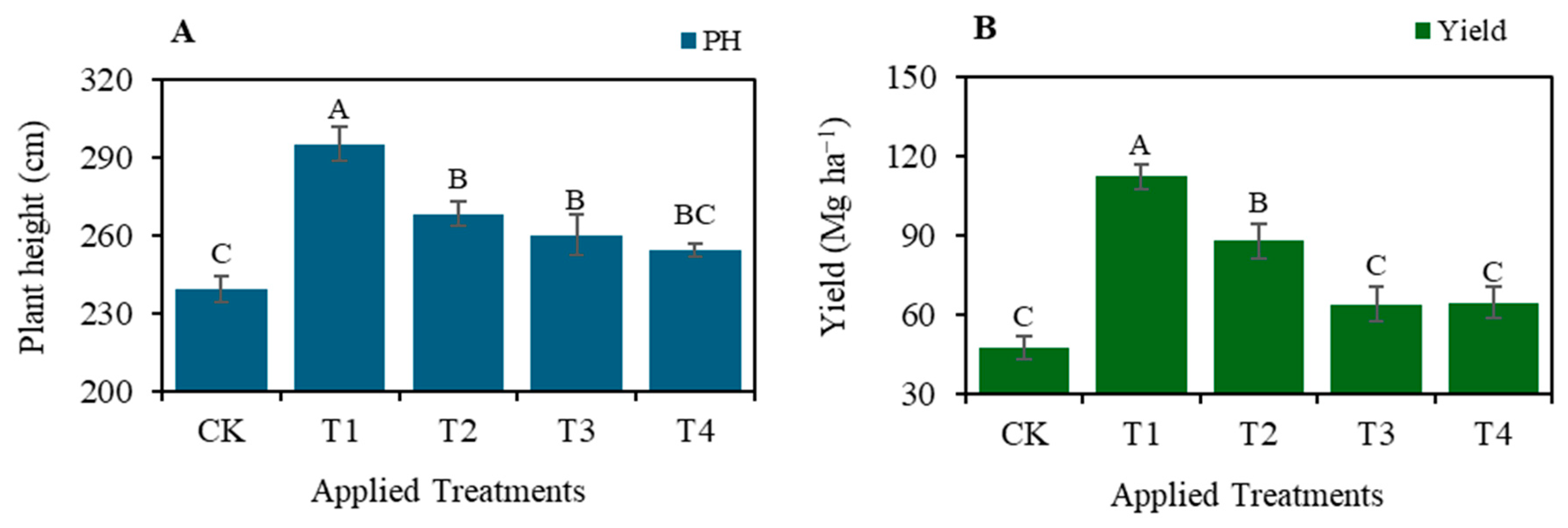
Corn growth and yield parameters including plant height, leaf, stem and cob fresh and dry weights were significantly different under the effect of the applied treatments (Table 1). The highest plant height was observed under T1, which was 23% (56 cm) higher than that of CK. Plant height under manure application was statistically similar and lower than the synthetic fetilizer application (T1); however, it was higher than CK by 6, 9 and 12% under 37.1 tons (T4), 24.7 tons (T3) and 12.4 tons (T2) of manure application, respectively (Figure 3A). The highest plant height in T1 followed by application of 12.4 tons of manure (T2) indicates that a balanced supply of readily available nutrients is critical for improved growth and application of manure may not adequately supply required nutrients due to complex interactions and processes in soils. Therefore, a combination of synthetic fertilizers and manure application may improve nutrient availability and ensure optimal plant growth. Syamsiyah et al. [30] suggested that the application of manure with inorganic fertilizer improved the growth and yield of sweet corn. Similarly, Baghdadi et al. [7], who tested chicken manure and chemical fertilizers, suggested practicing integrated application of manure and chemical fertilizers to achieve optimal yield and quality of corn silage.
Corn yield also indicated a similar trend with respect to synthetic fetilizer application (T1), where the highest yield, 112.3 Mg ha−1, was observed. Corn yield under T1 was 137% higher compared to CK, while under manure application it was higher by 36, 35 and 85% for 37.1 tons (T4), 24.7 tons (T3) and 12.4 tons (T2) respectively (Figure 3B). Under manure application, maximum corn yield was achieved at 12.4 tons, whereas yield was statistically similar under manure application at 24.7 and 37.1 tons and the control (Figure 3B). This trend indicates that application of synthetic fetilizer met the corn’s nutrient requirements, whereas application of manure alone did not sufficiently provide the required nutrition, and application of manure beyond 12.4 tons exacerbated negative impacts, possibly due to increased nutrient imbalance or soil microbial activity. This might also be attributed to field conditions and soil properties. Previous research conducted by Ramos Tanchez et al. [24] indicated that when a field had sufficient nutrient supply, corn silage did not respond to manure application. A suitable manure application rate combined with reduced synthetic fertilizer application may be a strategic approach to enhance the production efficiency of silage corn. A recent study conducted by Wang et al. [31] suggested that the yield and quality of maize improved under combined application of organic fertilizers and chemical nitrogen. Similarly, Qu et al. [32] concluded their recommendations stating that although manure application has the potential to enhance yields, it indicated poor yield stability whereas integrated manure application with mineral fertilizers enhanced yield stability and soil health.
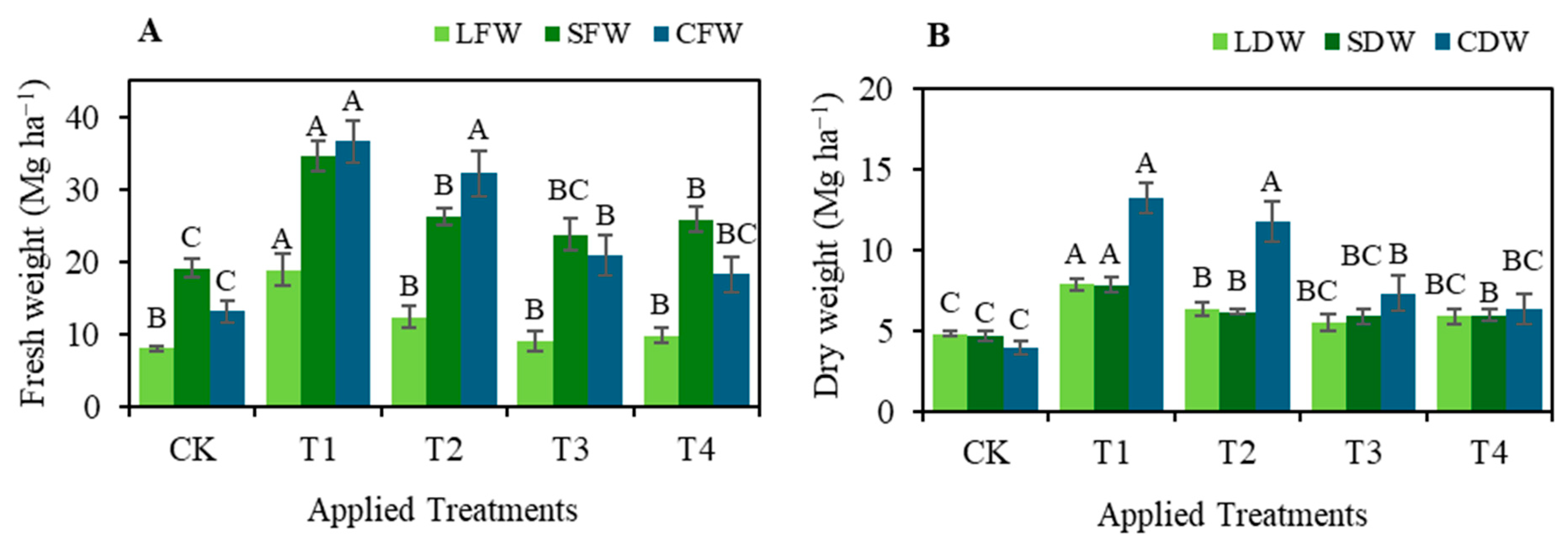
Leaf and stem fresh weight and dry weight indicated a similar trend, and maximum weights were observed under synthetic fetilizer application (T1) that were 134%/63% and 80%/68% higher than the control for leaf/stem fresh and dry weights, respectively (Figure 4A,B). Under manure application, leaf and stem fresh and dry weights were higher under 12.4 tons, followed by 37.1 tons and 24.7 tons. In comparison to the control, leaf/stem fresh and dry weights were 54%/31% and 37%/33% higher at 12.4 tons manure application, respectively, whereas they were 23%/23% and 35%/28% higher at 37.1 tons manure application. Leaf and stem fresh and dry weights were decreased under manure application; however, they were still higher than that of the control by 13%/14% and 24%/26%, respectively (Figure 4A,B). Cobs were also separated, and the results indicated a similar trend as with leaf and stem fresh and dry weights. The highest cob fresh and dry weights were observed under synthetic fetilizer application, 179% and 234% higher compared to CK. Under manure application, 12.4 tons of manure resulted in higher cob fresh and dry weights that were 145% and 197% higher than the control. Cob fresh and dry weights decreased under 24.7- and 37.1-ton manure applications; however, they were higher by 60%/84% and 39%/60% for 24.7 and 37.1 tons compared to CK (Figure 4A,B). A similar trend in fresh and dry weights of plant parts with corn yield indicated a similar corn response to the applied treatments. Therefore, it is critical to consider optimal manure application for balanced nutrient availability and optimal yields.

3.3. Plant Nutrient Concentration and Recovery

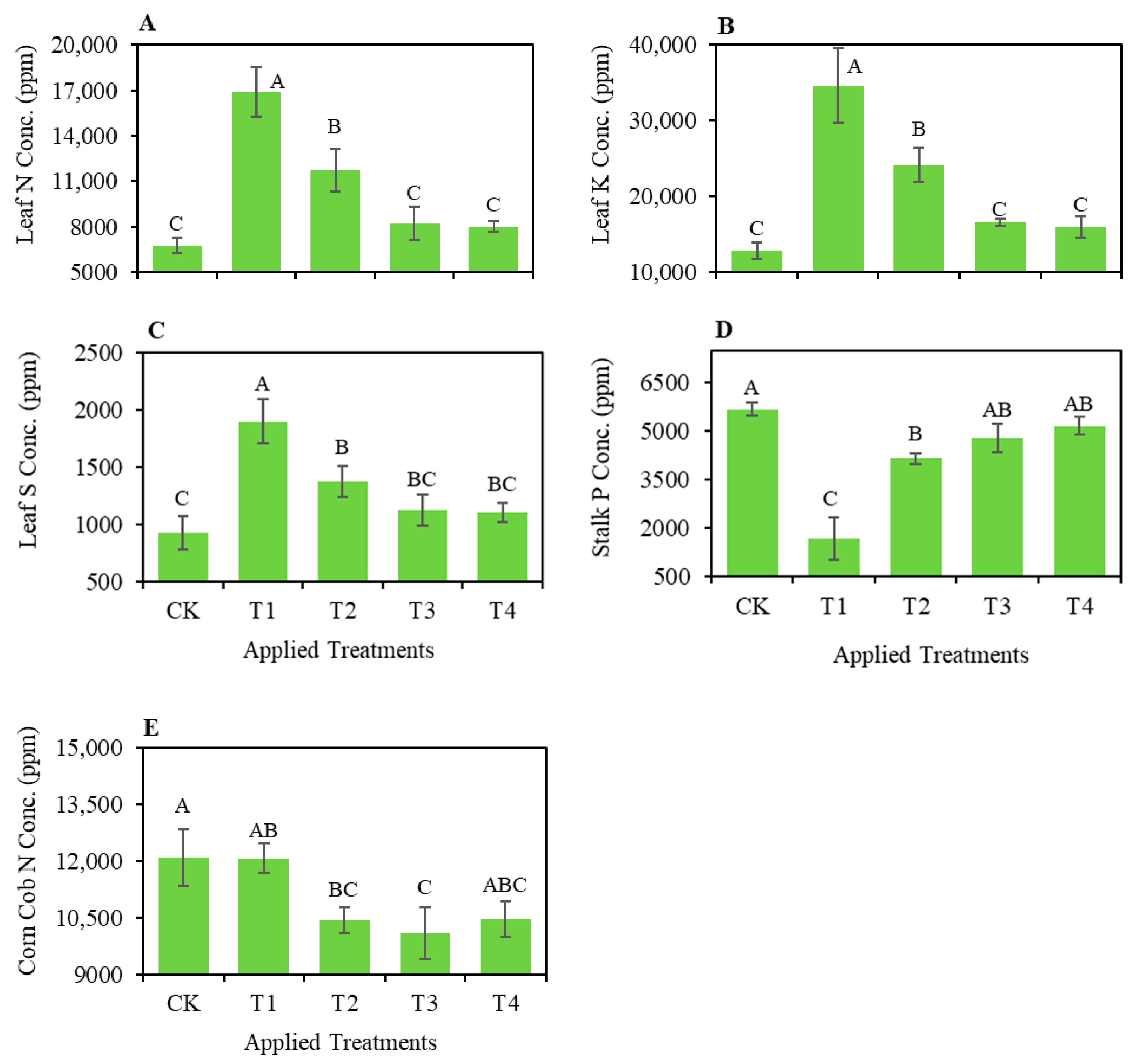
Application of synthetic fertilizer and dairy manure led to a distinct pattern of nutrient partitioning in plant parts. Total N, K and S concentrations were significantly different in leaves, whereas P concentration was not differed under the applied treatments. However, P concentration was significantly different in corn stalks whereas total N, K and S concentrations were similar among applied treatments in corn stalks. Highest leaf N (Figure 5A), K (Figure 5B) and S (Figure 5C) were observed under application of synthetic fertilizer, followed by application of manure at 12.4 tons. This aligns with the synthetic fertilizer response, which provides nutrients in readily available forms [33], and further indicates that readily available nutrients from synthetic fertilizer were rapidly mobilized to leaves, which are the primary site for photosynthesis [34]. The N, K and S concentrations in leaves were similar under higher manure applications and CK. Phosphorus concentration in stalks was highest under CK followed by higher manure applications at 24.7 and 37.1 tons, then 12.4 tons and synthetic fertilizer (Figure 5D). Nitrogen concentration was affected by the effect of the applied treatments, and was significantly different in corn cobs whereas no significant differences were observed for P, K and S concentrations in cobs (Table 2). Higher N concentrations were found in cobs under CK and application of synthetic fertilizer whereas they were statistically similar under manure application (Figure 5E). These findings suggest that the gradual mineralization of nutrients from higher manure applications failed to meet crop demand, leading to nutrient deficiency.
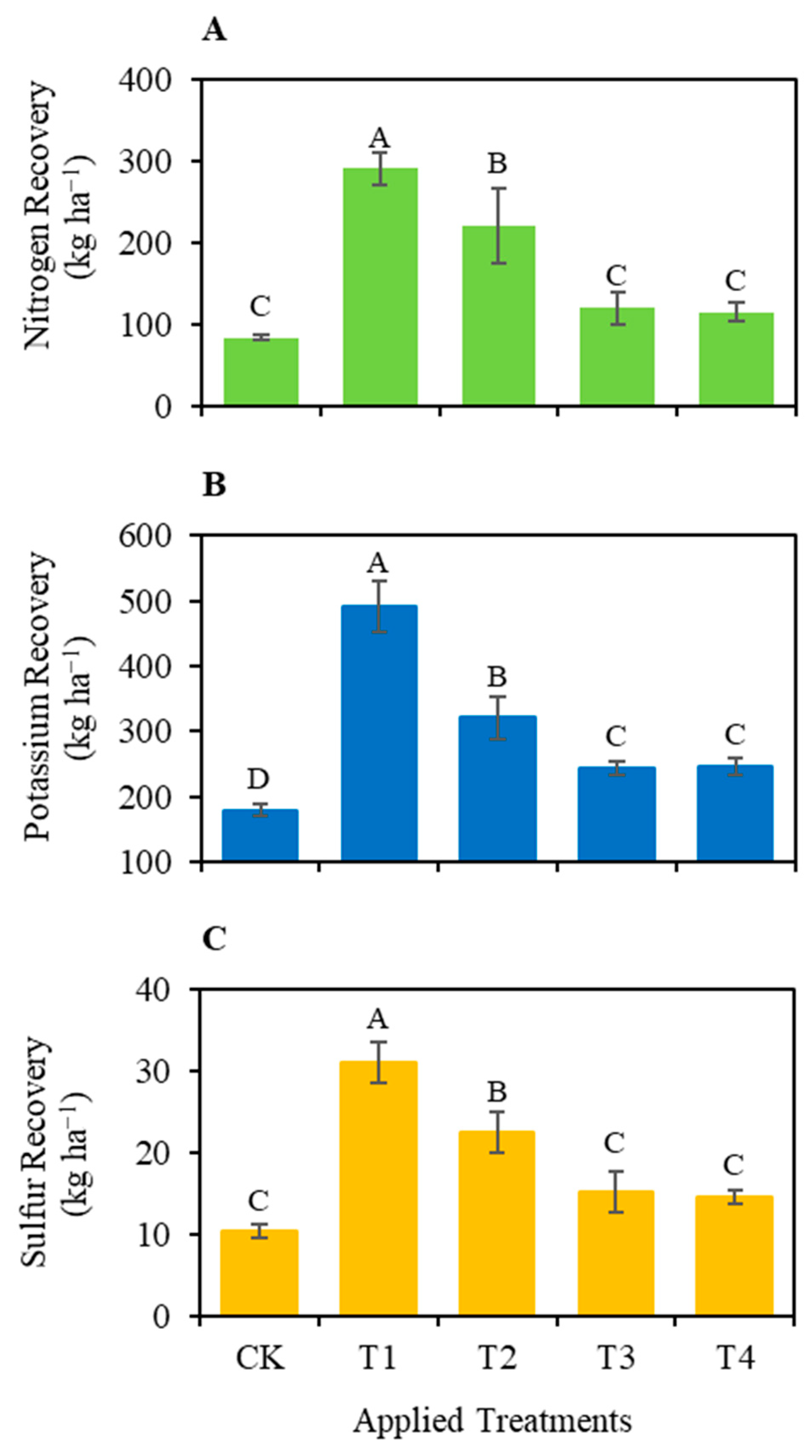
Nutrient recovery considering N, K and S was significantly different, whereas P recovery remained similar under the applied treatments (Table 2). Recovery for N, K and S in field corn was highest under the application of synthetic fertilizer, followed by manure application at 12.4 tons, 24.7 and 37.1 tons and CK (Figure 6). Nitrogen recovery was 291 and 221 kg ha−1 whereas potassium recovery was 490 and 321 kg ha−1 for synthetic fertilizer application and manure application at 12.4 tons, respectively. Sulfur recovery was 31 and 21 kg ha−1 for synthetic fertilizer application and manure application at 12.4 tons, respectively (Figure 6). These results also relate to synthetic fertilizer’s efficiency at providing readily available nutrients. A similar P response and recovery indicated low P mobility in the given experimental conditions and soils. Nutrient availability in soils and plant uptake cannot be overlooked, as various fertilizer types and soil properties impact overall nutrient dynamics [35]. While synthetic fertilizers provide readily available nutrients and meet crop nutrient demands, continuous use of these fertilizers impacts soil quality. Hence, a balanced approach such as integrating manure application would be beneficial.

3.4. Soil Nutrients

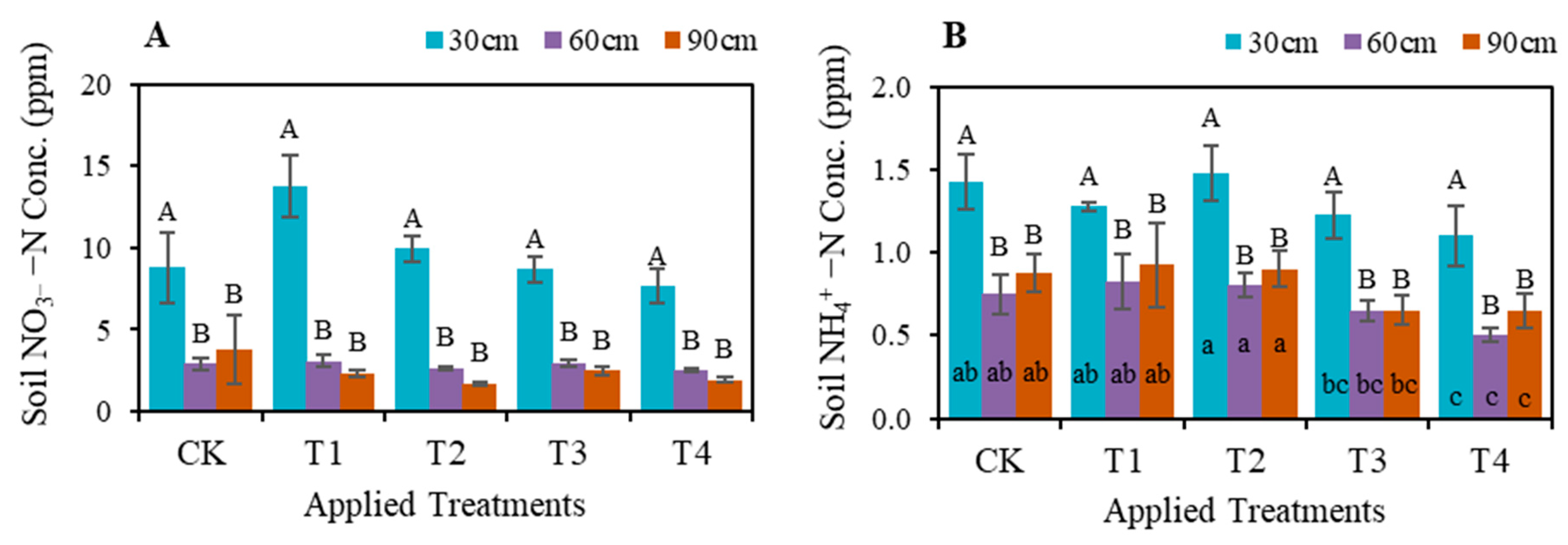
Soil nutrient analysis indicated no significant impact on soil nutrient concentration among treatments except for NH4+–N (Table 3). Nutrient concentration significantly varied under 0–30, 30–60 and 60–90 cm soil depths. Although non-significant, soil nitrate-N concentration was higher under synthetic fertilizer treatment whereas it was identical under CK and manure applications at 0–30 cm soil depths. This indicates that synthetic fertilizer application led to higher nitrate-N concentration in soil. Nitrate-N concentrations at 30–60 and 60–90 cm soil depths were similar in all treatments (Figure 7A). Soil NH4+–N concentration was significantly different among manure applications and depths (Figure 7B). NH4+–N concentration was higher in the upper layer (0–30 cm) whereas it was lower and statistically similar at the 30–60 and 60–90 cm soil depths. Under synthetic fertilizer and manure applications, the highest and lowest NH4+–N were observed in 12.4 and 37.1 tons manure application, respectively (Figure 7B). A meta-analysis conducted by O’Brien and Hatfield [18] indicated that soil N was not different under synthetic fertilizers or manure applications. The purpose of manure application is to match the N availability between synthetic fertilizer and manure applications. As the soil N pool is dependent upon sample timing and depth, we observed that NO3–N and NH4+–N concentrations were significantly different in upper and lower depths; however, they were statistically similar but numerically lower in manure application and synthetic fertilizer treatment. The meta-analysis conducted by O’Brien and Hatfield [18] also suggested that the nitrate leaching may be reduced in manure applications. This may be related to the fact that the higher C:N ratio in manure fertilized soils can result in great immobilization and less nitrate availability for losses [36]. Sampling at the end of season does not account for the post-harvest mineralization process; therefore, there are higher risks associated with manure application. This becomes critical if a second crop is not planted to utilize the excess nutrients [37].
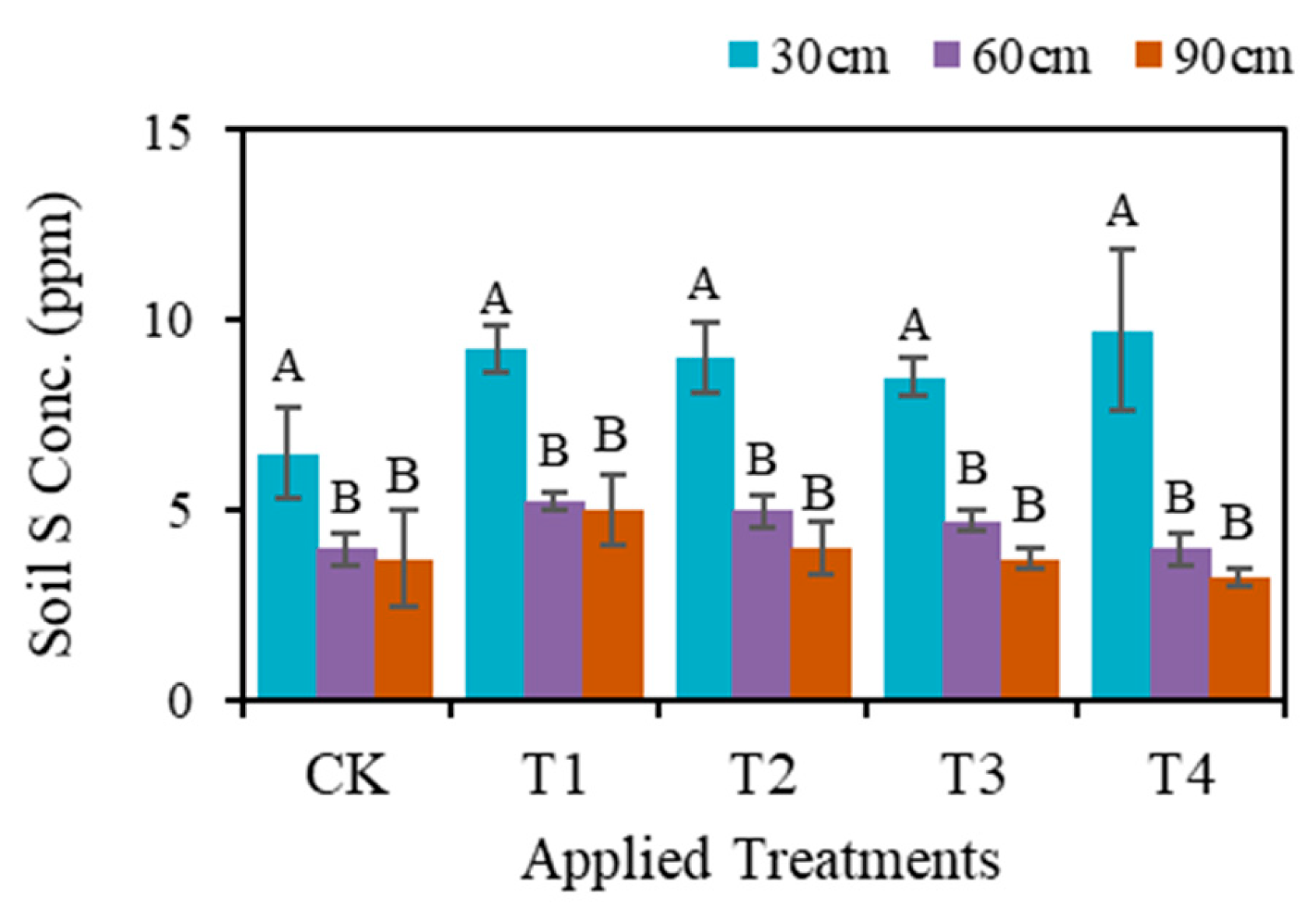
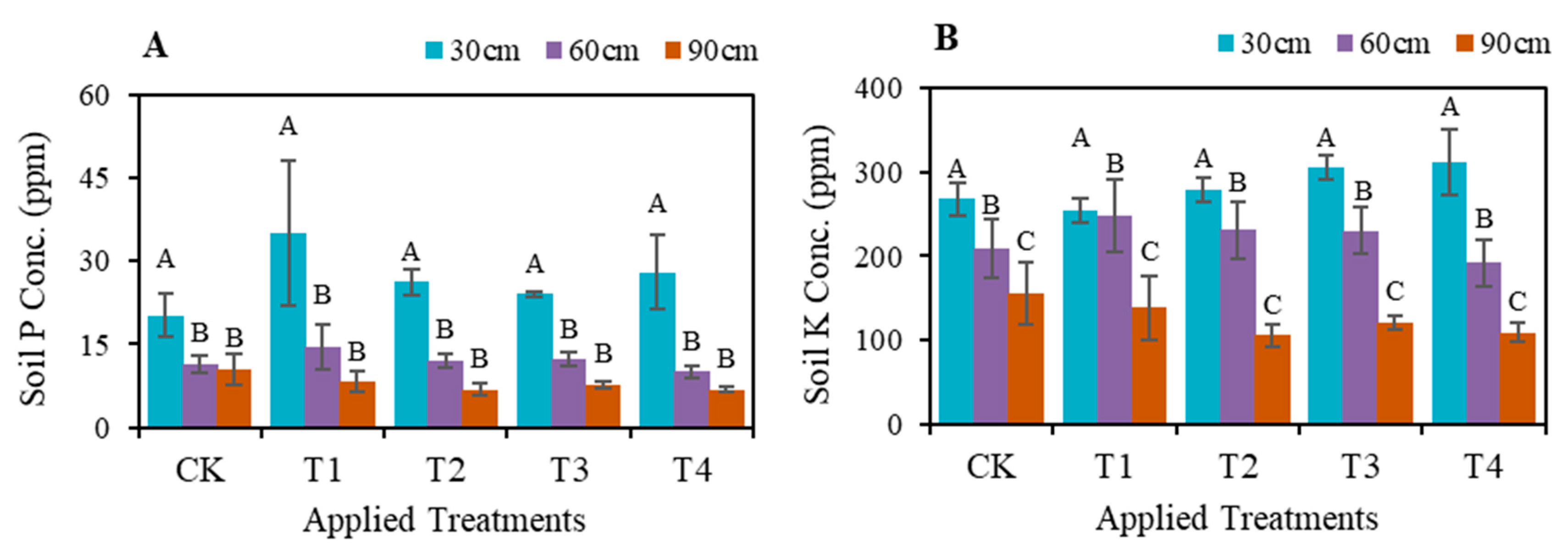
There were no significant effects involving P, K and S concentrations among different treatments; however, the concentrations of P, K and S were significantly higher in the upper soil layer (0–30 cm) and lower at 30–60 and 60–90 cm soil depths (Figure 8 and Figure 9). Soil K concentration was numerically higher under manure application and significantly different at 30–60 and 60–90 cm soil depths in all treatments (Figure 8B). Soil P (Figure 8A) and S (Figure 9) concentrations were statistically similar at 30–60 and 60–90 cm soil depths. Soil P was statistically similar synthetic fertilizer and manure applications. Although non-significant, soil P under 37.1-ton manure application was numerically higher compared to 12.4- and 24.7-ton manure applications. An increase in soil P under manure application has been reported in previous research O’Brien and Hatfield [18]. Higher soil P is also consistent with low soil P mobility in most soils. Phosphorous also tends to be absorbed by soil particles and organic matter, forming insoluble compounds that limit its downward movement [38]. These findings on higher soil P are consistent with previous studies [39,40,41]. The higher concentration of soil K at a 0–30 cm soil depth and significant differences between 60 cm and 90 cm soil depths indicate moderate K mobility and redistribution compared to soil P. The higher K in topsoil possibly resulted from direct application of synthetic fertilizer and manure. The numerically higher K in soil also suggests that manure could be a greater source for K availability that enriches the soil profile. Sulfur concentration also followed a similar pattern, and higher S was observed at 0–30 cm soil depth. Sulfur exists both in organic and inorganic forms, and organic S typically exists in surface layers, particularly under manure application [42]. Mineralization of organic matter releases sulfate-S, which is considered comparatively mobile and can be leached. The statistically similar response of soil S compared to P for 0–30, 30–60 and 60–90 cm soil depths suggests a balance of soil S and its downward mobility. While soil nutrients are influenced by several factors and soil processes, crop performance under different treatment applications may also influence overall plant uptake, thus impacting soil nutrient availability. This could be a reason for higher soil nutrients where the field corn yield was lowest, compared to synthetic fertilizer and manure applications.

4. Conclusions

In-season leaf nutrient concentration was significantly different among applied treatments, with the highest concentrations under synthetic fertilizer application. Application of synthetic fertilizer resulted in the highest plant height (239 cm) and produced higher corn yield (112.3 Mg ha−1) compared to non-fertilized control (CK) and application of dairy manure. Application of manure at 12.4 tons ha−1 produced a higher corn yield (87.8 Mg ha−1) compared to manure application at 24.7 (64.0 Mg ha−1) and 37.1 tons ha−1 (64.5 Mg ha−1). A similar trend was observed for leaf, stem and cob fresh and dry weights. Nutrient recovery was higher under application of synthetic fertilizer, followed by application of manure at 12.4 tons ha−1. Soil nutrient analysis indicated no significant impact on N, P, K and S concentrations among treatments except for NH4+–N. However, nutrient concentration significantly varied under different soil depths. Although non-significant, soil nitrate-N concentration was higher under application of synthetic fertilizer, whereas it was identical under control and manure applications at 0–30 cm soil depths. These results suggest that a combination of synthetic fertilizer application and manure might be a practical approach for balanced nutrient supply for field corn. The lower nutrient recovery and corn yield under excessive manure application indicate a nutrient imbalance or other factors impacting field corn performance. Further investigations are required to explore the potential of manure application to ensure balanced nutrient supply, improved yields and reduced nutrient losses in field corn.

Author Contributions

T.H.: Conceptualization; methodology; investigation; data collection, data curation; formal analysis; visualization; writing—original draft; funding acquisition; supervision; project management; M.F.A.: contribution in finalizing original draft, writing—review and editing. Authors agreed to the current version of manuscript. All authors have read and agreed to the published version of the manuscript.

Funding

This research was funded by the Agricultural Research Foundation for Oregon Dairy Farmers Association through the 2024 Competitive Grants Program. Administrative support from Ruijun Qin regarding funding is sincerely appreciated.

Institutional Review Board Statement

Not applicable.

Informed Consent Statement

Not applicable.

Data Availability Statement

All data presented in this paper are included within the article. Data-related questions can be directed to the corresponding author (T.H.).

Acknowledgments

This research is part of one of the postdoctoral fellowship requirements and associated project responsibilities at Oregon State University. Tajamul Hussain gratefully acknowledges Oregon State University for providing the platform and resources to carry out this work. The author also thanks temporary staff and HAREC field personnel for their assistance with field operations. Administrative support from Ruijun Qin regarding funding is sincerely appreciated.

Conflicts of Interest

The authors declare no conflict of interest.

References

  1. USDA Economic Research Service. Feed Grains Sector at a Glance. 2025. Available online: https://www.ers.usda.gov/topics/crops/corn-and-other-feed-grains/feed-grains-sector-at-a-glance/ (accessed on 28 September 2025).
  2. Villa, N.P. U.S. Area of Corn for Silage Harvested 2001–2024. 2025. Available online: https://www.statista.com/statistics/190890/area-of-corn-for-silage-harvested-in-the-us-since-2000/ (accessed on 28 September 2025).
  3. Sullivan, D.M.; Downing, T.W.; Brewer, L.J.; Hart, J.M. Silage Corn Nutrient Management Guide for Western Oregon; Oregon State University Extension Service: Corvallis, OR, USA, 2023; Available online: https://extension.oregonstate.edu/catalog/pub/em-8978-silage-corn-nutrient-management-guide-western-oregon (accessed on 11 December 2024).
  4. Kok, I.; Copani, G.; Bryan, K.A.; Witt, K.L.; van Straalen, W.M.; do Amaral, R.C.; Cappellozza, B.I. Effects of feeding an inoculated corn silage with or without a direct-fed microbial on dry matter intake, milk production, and nutrient digestibility of high-producing lactating Holstein cows. Transl. Anim. Sci. 2024, 8, txae010. [Google Scholar] [CrossRef]
  5. Tharangani, R.M.H.; Yakun, C.; Zhao, L.S.; Ma, L.; Liu, H.L.; Su, S.L.; Shan, L.; Yang, Z.N.; Kononoff, P.J.; Weiss, W.P.; et al. Corn silage quality index: An index combining milk yield, silage nutritional and fermentation parameters. Anim. Feed Sci. Technol. 2021, 273, 114817. [Google Scholar] [CrossRef]
  6. Bach, A.; Joulie, I.; Chevaux, E.; Elcoso, G.; Ragués, J. Milk performance and rumen microbiome of dairy cows as affected by the inclusion of corn silage or corn shredlage in a total mixed ration. Animal 2021, 15, 100014. [Google Scholar] [CrossRef] [PubMed]
  7. Baghdadi, A.; Halim, R.A.; Ghasemzadeh, A.; Ramlan, M.F.; Sakimin, S.Z. Impact of organic and inorganic fertilizers on the yield and quality of silage corn intercropped with soybean. PeerJ 2018, 6, e5280. [Google Scholar] [CrossRef] [PubMed]
  8. Hina, N.S. Global meta-analysis of nitrate leaching vulnerability in synthetic and organic fertilizers over the past four decades. Water 2024, 16, 457. [Google Scholar] [CrossRef]
  9. Tufail, M.A.; Ayyub, M.; Tariq, L.; Iltaf, J.; Asbat, A.; Bashir, I.; Umar, W. Nitrogen fertilizers and the future of sustainable agriculture: A deep dive into production, pollution, and mitigation measures. Soil Sci. Plant Nutr. 2024, 70, 457–477. [Google Scholar] [CrossRef]
  10. Singh, B.; Craswell, E. Fertilizers and nitrate pollution of surface and ground water: An increasingly pervasive global problem. SN Appl. Sci. 2021, 3, 518. [Google Scholar] [CrossRef]
  11. Cao, W.; Sun, H.; Shao, C.; Wang, Y.; Zhu, J.; Long, H.; Geng, X.; Zhang, Y. Progress in the Study of Plant Nitrogen and Potassium Nutrition and Their Interaction Mechanisms. Horticulturae 2025, 11, 930. [Google Scholar] [CrossRef]
  12. Singh, R.; Sawatzky, S.K.; Thomas, M.; Akin, S.; Zhang, H.; Raun, W.; Arnall, D.B. Nitrogen, phosphorus, and potassium uptake in rain-fed corn as affected by NPK fertilization. Agronomy 2023, 13, 1913. [Google Scholar] [CrossRef]
  13. Leghari, S.J.; Wahocho, N.A.; Laghari, G.M.; HafeezLaghari, A.; MustafaBhabhan, G.; HussainTalpur, K.; Bhutto, T.A.; Wahocho, S.A.; Lashari, A.A. Role of nitrogen for plant growth and development: A review. Adv. Environ. Biol. 2016, 10, 209–218. [Google Scholar]
  14. Liu, D. Root developmental responses to phosphorus nutrition. J. Integr. Plant Biol. 2021, 63, 1065–1090. [Google Scholar] [CrossRef]
  15. Xu, Q.; Fu, H.; Zhu, B.; Hussain, H.A.; Zhang, K.; Tian, X.; Duan, M.; Xie, X.; Wang, L. Potassium improves drought stress tolerance in plants by affecting root morphology, root exudates, and microbial diversity. Metabolites 2021, 11, 131. [Google Scholar] [CrossRef]
  16. Kandil, E.E.; Abdelsalam, N.R.; Mansour, M.A.; Ali, H.M.; Siddiqui, M.H. Potentials of organic manure and potassium forms on maize (Zea mays L.) growth and production. Sci. Rep. 2020, 10, 8752. [Google Scholar] [CrossRef] [PubMed]
  17. Wang, L.; Zhou, H.; Fei, C. Substituting partial chemical nitrogen fertilizers with organic fertilizers maintains grain yield and increases nitrogen use efficiency in maize. Front. Plant Sci. 2024, 15, 1442123. [Google Scholar] [CrossRef] [PubMed]
  18. O’Brien, P.L.; Hatfield, J.L. Dairy manure and synthetic fertilizer: A meta-analysis of crop production and environmental quality. Agrosystems Geosci. Environ. 2019, 2, 1–12. [Google Scholar] [CrossRef]
  19. Ciampitti, I.A.; Vyn, T.J. Nutrient sufficiency concepts for modern corn hybrids: Impacts of management practices and yield levels. Crop Manag. 2014, 13, 1–7. [Google Scholar] [CrossRef]
  20. Mustafa, G.; Hayat, N.; Alotaibi, B.A. How and why to prevent over fertilization to get sustainable crop production. In Sustainable Plant Nutrition; Academic Press: Cambridge, MA, USA, 2023; pp. 339–354. [Google Scholar] [CrossRef]
  21. Key, N.; Lim, T.; Massey, R.; McCann, L. Despite Challenges, Research Shows Opportunity to Increase Use of Manure as Fertilizer. In Amber Waves: The Economics of Food, Farming, Natural Resources, and Rural America; Amber Waves: Amagansett, NY, USA, 2023. [Google Scholar] [CrossRef]
  22. Park, J.; Cho, K.H.; Ligaray, M.; Choi, M.J. Organic matter composition of manure and its potential impact on plant growth. Sustainability 2019, 11, 2346. [Google Scholar] [CrossRef]
  23. Verma, P.; Singh, D.; Pathania, I.P.; Aggarwal, K. Strategies to improve agriculture sustainability, soil fertility and enhancement of farmers income for the economic development. In Soil Fertility Management for Sustainable Development; Springer: Singapore, 2019; pp. 43–70. [Google Scholar] [CrossRef]
  24. Ramos Tanchez, J.C.; Workman, K.; Wilder, A.; Degni, J.; Ketterings, Q. Manure Can Offset Nitrogen Fertilizer Needs and Increase Corn Silage Yield—Value of Manure Project 2022 Update; Cornell Field Crops: Ithaca, NY, USA, 2023. [Google Scholar]
  25. Dungan, R.S.; Acosta-Martinez, V.; Lehman, R.M.; Manter, D.K.; Mikha, M.M.; Reardon, C.L.; Tarkalson, D.D.; Veum, K.S.; Weyers, S.L.; White, P.M., Jr. Short-term effects of a heavy dairy manure application on soil chemical and biological indicators in an irrigated semiarid cropping system. Agron. J. 2025, 117, e21737. [Google Scholar] [CrossRef]
  26. Wang, J.; Wu, L.; Xiao, Q.; Huang, Y.; Liu, K.; Wu, Y.; Li, D.; Duan, Y.; Zhang, W. Long-term manuring enhances soil gross nitrogen mineralization and ammonium immobilization in subtropical area. Agric. Ecosyst. Environ. 2023, 348, 108439. [Google Scholar] [CrossRef]
  27. Khairunisa, B.H.; Loganathan, U.; Ogejo, J.A.; Mukhopadhyay, B. Nitrogen transformation processes catalyzed by manure microbiomes in earthen pit and concrete storages on commercial dairy farms. Environ. Microbiome 2023, 18, 32. [Google Scholar] [CrossRef]
  28. Timsina, J. Can organic sources of nutrients increase crop yields to meet global food demand? Agronomy 2018, 8, 214. [Google Scholar] [CrossRef]
  29. Miller, R.O.; Gavlak, R.; Horneck, D. Soil, Plant and Water Reference Methods for the Western Region, 4th ed.; Colorado State University: Fort Collins, CO, USA, 2013; pp. 1–155. [Google Scholar]
  30. Syamsiyah, J.; Suntoro, S.; Hartati, S.; Syah-Alfarizi, I.A.; Istnai-ni-Najibah, W.; Maro’ah, S.; Herdiansyah, G. Effect of Dif ferent Doses of NPK Fertilizer and Manure on N, P, K, Chlorophyll and Sweet Corn Yield in Vertisols. Rev. Terra Latinoam. 2024, 42., 1–12. [Google Scholar] [CrossRef]
  31. Wang, F.; Guo, Y.; Li, P.; Wu, X.; Qiu, H.; Yin, W.; Zhao, L.; Fan, Z.; Hu, F.; He, W.; et al. Organic fertilizer substitution enhances maize yield and quality under reduced irrigation. J. Integr. Agric. 2025. [Google Scholar] [CrossRef]
  32. Qu, M.; Chen, Y.; Khan, A.; Liu, P. Enhancing maize yield stability, soil health, and microbial diversity via long-term manure practices: Insights from a 14-year trial. Environ. Technol. Innov. 2025, 38, 104177. [Google Scholar] [CrossRef]
  33. Melara, F.; da Silva, L.K.; Martins Sanderi, D.; Dal Castel Krein, D.; Strieder Machado, T.; Dettmer, A.; Steffanello Piccin, J. Enhanced efficiency fertilizer: A review on technologies, perspectives, and research strategies. Environ. Dev. Sustain. 2024, 1–27. [Google Scholar] [CrossRef]
  34. Cakmak, I.; Engels, C. Role of mineral nutrients in photosynthesis and yield formation. In Mineral Nutrition of Crops; CRC Press: Boca Raton, FL, USA, 2024; pp. 141–168. [Google Scholar]
  35. Sistani, K.R.; Mikha, M.M.; Warren, J.G.; Gilfillen, B.; Acosta-Martinez, V.; Willian, T. Nutrient source and tillage impact on corn grain yield and soil properties. Soil Sci. 2010, 175, 593–600. [Google Scholar] [CrossRef]
  36. Fan, J.; Xiao, J.; Liu, D.; Ye, G.; Luo, J.; Houlbrooke, D.; Laurenson, S.; Yan, J.; Chen, L.; Tian, J.; et al. Effect of application of dairy manure, effluent and inorganic fertilizer on nitrogen leaching in clayey fluvo-aquic soil: A lysimeter study. Sci. Total Environ. 2017, 592, 206–214. [Google Scholar] [CrossRef] [PubMed]
  37. Thapa, R.; Mirsky, S.B.; Tully, K.L. Cover crops reduce nitrate leaching in agroecosystems: A global meta-analysis. J. Environ. Qual. 2018, 47, 1400–1411. [Google Scholar] [CrossRef] [PubMed]
  38. Muniya, A.; Dixit, B.K.; Tripath, P.N.; Gupta, V.; Tekam, Y.; Meravi, A.; Damor, J.S. Impact of Long-Term Use of Fertilizers and Manure on Distribution of Soil-Inorganic Phosphorus Fractions in A Vertisol; International Journal of Environment and Climate Change: West Bengal, India, 2023. [Google Scholar]
  39. Pan, J.; Yang, F.; Yang, W.; Zhang, M.; He, S.; Li, Z. Fertilizers and manures enhance the bioavailability of soil phosphorus fractions in karst grassland. Agronomy 2024, 14, 1429. [Google Scholar] [CrossRef]
  40. Anthonio, C.K.; Jing, H.; Jin, C.; Khan, M.N.; Jiangxue, D.; Garba, H.N.; Dongchu, L.; Guangrong, L.; Shujun, L.; Lisheng, L.; et al. Impact of long-term fertilization on phosphorus fractions and manganese oxide with their interactions in paddy soil aggregates. J. Environ. Manag. 2023, 333, 117440. [Google Scholar] [CrossRef] [PubMed]
  41. Wang, Q.; Qin, Z.; Zhang, W.; Chen, Y.H.; Zhu, P.; Peng, C.; Wang, L.; Zhang, S.X.; Colinet, G. Effect of long-term fertilization on phosphorus fractions in different soil layers and their quantitative relationships with soil properties. J. Integr. Agric. 2022, 21, 2720–2733. [Google Scholar] [CrossRef]
  42. Zhang, Y.; Sun, C.; Chen, Z.; Zhang, G.; Chen, L.; Wu, Z. Stoichiometric analyses of soil nutrients and enzymes in a Cambisol soil treated with inorganic fertilizers or manures for 26 years. Geoderma 2019, 353, 382–390. [Google Scholar] [CrossRef]
Figure 1. Monitoring the soil profile, plant sampling at harvest and sample preparation for nutrient analysis (Credit: Tajamul Hussain).
Blsf 57 00010 g001
Figure 2. Impact of synthetic fertilizer and manure application rates on in-season leaf nutrient concentrations including leaf N and K (A) and leaf S (B). F-values are given in the charts with significance. Vertical bars indicate ± standard errors for mean of four repetitions. Letters above the bars indicate significant (p < 0.05) differences among applied treatments. ***: p < 0.001; CK: control; T1: synthetic fertilizer application; T2, T3 and T4: application of manure at 12.4, 24.7 and 37.1 tons, respectively.
Blsf 57 00010 g002
Figure 3. Impact of synthetic fertilizer and manure application rates on plant height (A) and yield (B) of field corn. Vertical bars indicate ± standard errors for mean of four repetitions. Letters above the bars indicate significant (p < 0.05) differences among applied treatments. CK: control; T1: synthetic fertilizer application; T2, T3 and T4: application of manure at 12.4, 24.7 and 37.1 tons, respectively.
Blsf 57 00010 g003
Figure 4. Impact of synthetic fertilizer and manure application rates on leaf, stem and cob fresh (A) and dry (B) weights in field corn. Vertical bars indicate ± standard errors for mean of four repetitions. Letters above the bars indicate significant (p < 0.05) differences among applied treatments. CK: control; T1: synthetic fertilizer application; T2, T3 and T4: application of manure at 12.4, 24.7 and 37.1 tons, respectively.
Blsf 57 00010 g004
Figure 5. Leaf nitrogen (A), potassium (B) and sulfur (C), stalk phosphorus (D) and corn cob nitrogen (E) concentration under non-fertilized control, application of synthetic fertilizer and manure application. Vertical bars indicate ± standard errors for mean of four repetitions. Capital letters above the bars indicate significant (p < 0.05) differences among applied treatments. CK: control; T1: synthetic fertilizer application; T2, T3 and T4: application of manure at 12.4, 24.7 and 37.1 tons, respectively.
Blsf 57 00010 g005
Figure 6. Nitrogen (A), potassium (B) and sulfur (C) recovery under non-fertilized control, application of synthetic fertilizer and manure application. Vertical bars indicate ± standard errors for mean of four repetitions. Capital letters above the bars indicate significant (p < 0.05) differences among applied treatments. CK: control; T1: synthetic fertilizer application; T2, T3 and T4: application of manure at 12.4, 24.7 and 37.1 tons, respectively.
Blsf 57 00010 g006
Figure 7. Impact of synthetic fertilizer and manure application rates on soil nitrate-N (A) and ammonium-N (B) under different soil depths in field corn. Vertical bars indicate ± standard errors for mean of four repetitions. Capital letters above the bars indicate significant (p < 0.05) differences among depths within the same treatment, whereas small letters inside the bars indicate significant (p < 0.05) differences among different applied treatments. Bars without small letters indicate no significant differences. CK: control; T1: synthetic fertilizer application; T2, T3 and T4: application of manure at 12.4, 24.7 and 37.1 tons, respectively.
Blsf 57 00010 g007
Figure 8. Impact of synthetic fertilizer and manure application rates on soil P (A) and K (B) under different soil depths in field corn. Vertical bars indicate ± standard errors for mean of four repetitions. Capital letters above the bars indicate significant (p < 0.05) differences among depths within the same treatment, whereas no significant differences were observed among different applied treatments. CK: control; T1: synthetic fertilizer application; T2, T3 and T4: application of manure at 12.4, 24.7 and 37.1 tons, respectively.
Blsf 57 00010 g008
Figure 9. Impact of synthetic fertilizer and manure application rates on soil S under different soil depths in field corn. Vertical bars indicate ± standard errors for mean of four repetitions. Capital letters above the bars indicate significant (p < 0.05) differences among depths within the same treatment whereas no significant differences were observed among different applied treatments. CK: control; T1: synthetic fertilizer application; T2, T3 and T4: application of manure at 12.4, 24.7 and 37.1 tons, respectively.
Blsf 57 00010 g009
Table 1. F-values and significance obtained through analysis of variance of corn growth and yield parameters including plant height, silage yield, leaf fresh weight (LFW), leaf dry weight (LDW), stem fresh weight (SFW), stem dry weight (SDW), cob fresh weight (CFW) and cob dry weight (CDW).
SourcePHYieldLFWLDWSFWSDWCFWCDW
F-values12.317.78.97.59.37.615.615.9
Significance********************
Error (MSE)138.3144.68.40.713.30.724.93.8
CV4.516.024.913.714.113.420.622.8
***: p < 0.001, **: p < 0.01.
Table 2. F-values and significance obtained through analysis of variance of nutrient concentrations in corn leaves, stalks and cobs and nutrient recovery under different applied treatments.
Nutrient Concentration
Plant PartsNPKS
Leaves20.7 ***2.6 ns14.1 ***8.4 **
Stalks0.9 ns17.5 ***0.8 ns0.6 ns
Cobs3.3 *0.3 ns2.6 ns0.5 ns
Nutrient Recovery
NPKS
Treatments15.2 ***2.78 ns33.3 ***21.0 ***
***: p < 0.001, **: p < 0.01, *: p < 0.05, ns: non-significant difference at p ≥ 0.05.
Table 3. F-values and significance obtained through analysis of variance of nutrient concentrations under different applied treatments and at different soil depths.
SourceNO3–NNH4+–NP2O5K+SO4–S
Treatment2.1 ns3.7 **0.8 ns0.2 ns1.9 ns
Depth77.3 ***35.7 ***31.1 ***47.1 ***49.6 ***
Interaction1.9 ns0.3 ns0.7 ns1.0 ns0.9 ns
CV42.025.650.624.628.0
***: p < 0.001, **: p < 0.01, ns: non-significant difference at p ≥ 0.05.
Disclaimer/Publisher’s Note: The statements, opinions and data contained in all publications are solely those of the individual author(s) and contributor(s) and not of MDPI and/or the editor(s). MDPI and/or the editor(s) disclaim responsibility for any injury to people or property resulting from any ideas, methods, instructions or products referred to in the content.