1. Introduction
Two-Spirit, lesbian, gay, bisexual, transgender, queer, and questioning (2SLGBTQ+) youth are disproportionately represented among young people experiencing homelessness across Canada, accounting for approximately 25–40% of the homeless youth population (
Abramovich & Shelton, 2017;
Choi et al., 2015;
Quayum et al., 2023). The acronym 2SLGBTQ+ refers collectively to sexual and gender minority individuals and reflects the diversity of sexual orientations, gender identities, and expressions. Two-spirit is a term translated from the Anishinaabemowin “niizh manidoowag” (two spirits) and refers to Indigenous people who identify as having both a masculine and a feminine spirit (
Filice, 2025). The term is not limited to gender identity, and may also encompass sexual orientation and spiritual identity. The most frequently cited pathway into homelessness among 2SLGBTQ+ youth is sexual and gender identity-based family conflict (
Abramovich et al., 2024;
Abramovich & Shelton, 2017;
Goodyear et al., 2024;
Price et al., 2016). Compared to their cisgender and heterosexual counterparts, 2SLGBTQ+ youth experience homelessness at younger ages and for longer and more recurrent episodes (
Abramovich & Pang, 2020;
Gaetz et al., 2016). Experiencing homelessness at a younger age often exposes youth to obstacles that compound over time, making it exponentially more difficult to exit homelessness (
Gaetz et al., 2016;
Thulien et al., 2021). These challenges—in tandem with identity-based stigma and violence—often lead 2SLGBTQ+ youth to experience higher rates of mental health challenges, problematic alcohol and substance use, and suicidality (
Abramovich & Pang, 2020;
Abramovich & Shelton, 2017;
Choi et al., 2015;
Kinitz et al., 2022).
Family rejection, inadequate social services, institutional erasure, and discrimination within housing, employment, and education systems further underscores the structural barriers limiting access to safe and affirming housing for 2SLGBTQ+ youth (
Abramovich & Shelton, 2017;
Keuroghlian et al., 2014;
MacEntee et al., 2024). These barriers are especially pronounced for youth with intersecting marginalized identities, including racialized and transgender youth, who frequently encounter compounded forms of discrimination such as racism, transphobia, and homophobia (
Abramovich & Pang, 2020;
Shelton et al., 2018). Population-based housing programs specifically designed for 2SLGBTQ+ youth remain limited in availability, particularly in rural and suburban regions, since services are often centralized in urban areas. This geographic inequity restricts access to affirming supports and forces many youth to navigate between unsafe, unstable, or exploitative living arrangements. These realities highlight the urgent need for inclusive, accessible, and affirming housing programs tailored to the specific needs of 2SLGBTQ+ youth and young adults.
This study focuses on 2SLGBTQ+ youth homelessness in York Region, Ontario, Canada, a large and diverse municipality located north of Toronto with a population of over 1.2 million residents across nine urban, semi-rural, and rural local municipalities (
York Region, 2025a). Recent point-in-time count data found that 878 individuals experience homelessness in York Region, with approximately 14% aged 16–24 (
York Region, 2025b). Although point-in-time counts likely underestimate the true prevalence of homelessness, and do not capture the specific experiences of 2SLGBTQ+ individuals, they provide a useful snapshot of homelessness in the region. Despite relatively high median household incomes, the region’s infrastructure and housing market present significant barriers for individuals experiencing poverty. Transportation systems primarily accommodate private vehicle use, and housing tends to be privately owned, resulting in limited affordable rental options and insufficient public transit (
Noble et al., 2014;
Statistics Canada, 2022). These structural conditions make navigating daily life particularly challenging for youth experiencing homelessness, especially those who rely on public services and supports (
Abramovich & Pang, 2020).
Although awareness of youth homelessness in York Region has increased in recent years, there remains a critical gap in understanding the unique dynamics of suburban and rural youth homelessness in Ontario. Existing research indicates that many youth experience hidden homelessness, defined as reliance on temporary, unstable, and often unsafe living accommodations, such as couch surfing, motels, or short-term arrangements with sexual/romantic partners or acquaintances (
MacEntee et al., 2024;
Rodrigue, 2016). Hidden homelessness remains underrepresented in homelessness research and service provision, leading to systematic undercounting and limited program responsiveness. Prior studies have also identified significant service gaps and a lack of 2SLGBTQ+-inclusive and affirming services for youth across York Region (
Abramovich & Pang, 2020). In response, youth-serving organizations in the region recognized the need to better support 2SLGBTQ+ youth, leading to the development of York Region’s first population-based housing program for this population: the Blue Door INNclusion program. Blue Door is a registered charity and a not-for-profit organization that delivers housing, employment, and health programs aimed at addressing homelessness.
1.1. Blue Door INNclusion Program
In February 2021, Blue Door launched the INNclusion program, aiming to reduce chronic and episodic homelessness experienced by 2SLGBTQ+ youth (aged 16–26) across York Region. INNclusion was developed in response to research reporting disproportionate rates of homelessness among 2SLGBTQ+ youth in the region (
Abramovich & Pang, 2020), and is York Region’s first 2SLGBTQ+ population-based housing program. The program provides up to five youth with support to overcome barriers and retain independent housing. To be eligible for the program, youth must identify as 2SLGBTQ+, be experiencing or at risk of homelessness and housing instability, demonstrate compatibility with other youth living in the program, and be between the ages of 16 and 26, which reflects standard eligibility criteria for youth housing programs in Ontario. While this age range includes both minors and young adults, program eligibility and intake processes are designed to ensure appropriate fit and compatibility among residents within a shared living environment. As a supportive housing program, INNclusion promotes independent living, working with youth to budget an affordable percentage of their income to contribute as rent. While youths’ length of stay is typically one year, lease terms are flexible, and can be extended based on a given youth’s personal challenges and family experiences. Unlike many other housing programs, INNclusion operates with a high degree of independence, with staff checking in on youth periodically or as needed, rather than conducting daily check-ins, a structure that fosters a sense of privacy, security, and normalcy within the house.
Located in Newmarket—a town within York Region—INNclusion is a five-bedroom house that offers an innovative program structure that utilizes two key components—supportive housing and peer support—and additionally incorporates best practices from a Housing First approach, which emphasizes housing retention. The Housing First approach suggests that people are best able to improve their lives when they are housed, and prioritizes the quick, efficient, and non-conditional housing of those in need (
Tsemberis et al., 2004). This approach also aims to improve housing retention by providing access to services and supports which actively work to keep people housed—including mental healthcare, assistance accessing education, and employment support. While Housing First was originally developed for adults, adaptations such as the Housing First for Youth (HF4Y) model extend these principles to better reflect the developmental needs of young people. Alongside this, INNclusion adapted the peer support model, hiring a 2SLGBTQ+-identifying person with similar experiences to the clients as a peer support worker to act as a role model, and to connect with youth (
S. A. Kidd et al., 2019). Through these approaches, INNclusion aimed to equip and empower youth to exit homelessness and achieve independent living.
While some evaluations of transitional and supportive housing programs have been conducted (
Kirst et al., 2024;
Morin et al., 2024;
Pugliese & Mellow, 2025), relatively few focus on population-based programs. As such, there remains limited evidence regarding the appropriate objectives, indicators of success, and outcomes for population-based housing programs, particularly those designed for 2SLGBTQ+ youth. Currently, there is a minimal understanding of how 2SLGBTQ+ youth access and utilize housing programs, whether they actually lead to positive outcomes, and if they successfully help youth exit homelessness.
1.2. Supportive Environments, Identity Development, and Disclosure Among 2SLGBTQ+ Youth
A growing body of research highlights the critical role of supportive and affirming environments in shaping identity development and well-being among 2SLGBTQ+ youth. Identity development during adolescence and young adulthood is a complex and ongoing process, and for 2SLGBTQ+ youth, this process is often shaped by experiences of stigma, discrimination, and social exclusion (
Jankowska-Tvedten & Wiium, 2023). As a result, access to safe and supportive environments is particularly important in fostering positive identity development and psychological well-being. In particular, research shows that 2SLGBTQ+ youth benefit from environments in which they are able to explore their gender identity and sexual orientations without fear of judgement or harm (
Tyni et al., 2024). Supportive environments, including affirming housing programs and relationships with peers and staff, have been associated with reduced mental health challenges and improved well-being (
DelFerro et al., 2024). Social support also plays a key protective role, buffering against the negative effects of victimization and rejection, and increasing comfort with identity disclosure (
Kiperman et al., 2022). Despite this, many housing programs are not designed to meet the specific needs of 2SLGBTQ+ youth. Building on this literature, the present study examines how supportive housing environments shape the experiences and trajectories of 2SLGBTQ+ youth.
1.3. Socio-Ecological Model
The social–ecological model (SEM) is a framework used to understand how the interplay between personal, social, and environmental factors impacts the ways in which a person experiences their life (
Bronfenbrenner, 1977,
1979). A foundational tenet of the SEM is the interrelatedness of health, behaviour, and environment, highlighting how individual choices are influenced by broader societal factors (
DiClemente et al., 2019). The SEM addresses the limitations of the medical model—which focuses on individual factors and largely ignores external influences—by examining not only intrapersonal factors, but also how interpersonal, organizational, community, and public policy factors shape population health (
McLeroy et al., 1988). Comprehensive and flexible, the SEM adapts to fit the needs of the issue it is applied to, including housing concerns. For example, past research has found the SEM to be an incredibly useful lens through which to explore and understand the factors that impact 2SLGBTQ+ youths’ experiences of homelessness (
Abramovich et al., 2023).
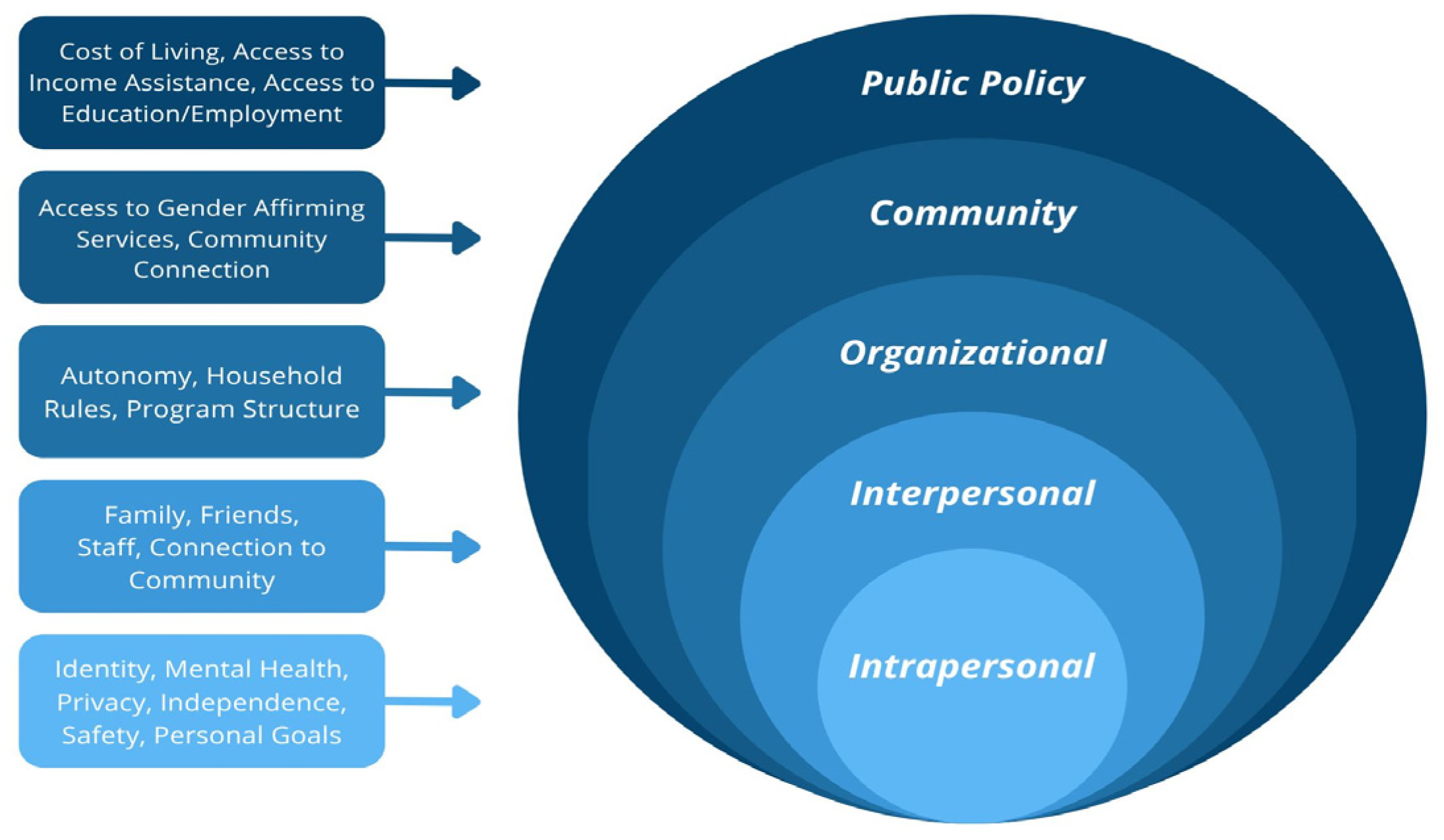
In this study, we draw on a SEM framework (
McLeroy et al., 1988), examining youth experiences across intrapersonal, interpersonal, organizational, community, and public policy levels. Guided by this framework, we conducted a qualitative study informed by a developmental evaluation approach to explore the experiences and needs of youth residents during their time in Blue Door’s INNclusion program. The broader study also examined the experiences of youth residents up to one year post-exit, as well as the perspectives of staff and individuals from similar housing programs. However, this paper focuses specifically on youth residents’ experiences during their time in the INNclusion program. Drawing on qualitative data, we examine changes in residents’ mental health, community participation, housing stability, employment, and educational engagement over time. These data are used to examine how youths’ experiences and developmental trajectories are shaped across socio-ecological contexts, and to address the following research questions:
How do youths’ life trajectories prior to entering the program shape their needs, experiences, and engagement during their participation in the INNclusion program?
How do factors across socio-ecological levels shape 2SLGBTQ+ youths’ experiences of safety, belonging, and access to supports in a transitional housing context?
How do youths’ experiences of mental health, social connections, employment, and education change over the course of their participation in the program?
2. Materials and Methods
2.1. Study Design
This study draws on data from a broader longitudinal mixed-methods study of the INNclusion program, which included surveys and in-depth one-on-one interviews (conducted virtually and in person). The present analysis focuses on qualitative interview data to explore the lived experiences and perspectives of youth residents. Survey data are used descriptively to characterize the study sample. Data were collected over approximately two years, during which the research team engaged with youth participants and program staff to support recruitment and data collection, and provide a contextual understanding of the program environment. While the broader study was informed by principles of Developmental Evaluation, the current analysis is guided by a qualitative, theory-driven approach, using the SEM to examine how intrapersonal, interpersonal, organizational, community, and policy factors shape youths’ experiences and housing trajectories.
This article focuses exclusively on data collected from youth residents during their participation in the INNclusion program. Ethics approval was obtained from the Centre for Addiction and Mental Health (CAMH) Research Ethics Board (#141/2021).
2.2. Participants
A rolling enrollment strategy was used to recruit participants as they entered the INNclusion program. To do this, we invited all current and new INNclusion residents to participate in the study through in-person and virtual information sessions—facilitated by a study team member on mutually agreed upon dates and times—and through email invites. Alongside this, INNclusion staff provided program residents with a brief verbal description of the project and shared a study flyer (in hard copy and/or via email), which provided an overview of the project.
Only residents at the INNclusion program were eligible to participate, which included individuals aged 16–26 (M = 21) who identified as 2SLGBTQ+ and were experiencing housing precarity or homelessness. Through these methods, seven young people were recruited. Participants represented diverse ethnoracial backgrounds, including Indigenous, Asian, mixed-background, and White. The majority of participants identified their gender as transgender (trans) or non-binary, and their sexual orientation as pansexual. Five participants identified as having a disability, while two participants preferred not to disclose whether or not they had a disability. When asked about the highest level of education completed, youth reported: all or some high school (n = 5), bachelor’s degree (n = 1), college diploma (n = 1). The majority of participants reported that their main source of income included social assistance, such as Ontario Works (OW), Ontario Disability Support Programs (ODSPs), and the Ontario Student Assistance Program (OSAP). Other sources of income included part-time employment. Participants reported first experiencing homelessness between the ages of 16 and 25 years (M = 19.33). Two participants reported prior involvement with child protective services, two were uncertain if it was child protective services or a different agency, and three reported no prior involvement. For those who had prior involvement with child protective services, they reported being under 15 at the time, and the level of frequency of involvement varied.
To protect participant confidentiality, participants were randomly assigned color designations to be used for data dissemination. This approach was intentionally chosen to avoid assigning names to participants, as names are deeply personal and could inadvertently cause harm if an inappropriate name were selected.
2.3. Data Collection
After confirming participant eligibility, the research team’s data analyst met virtually with youth over WebEx—a secure video-conferencing platform—to review the study’s consent form, which participants then signed through REDCap software (version 15). Informed consent was obtained from all participants, regardless of age. This approach is common in research where seeking parental consent would place minors at risk of harm, particularly where it may lead to unintended disclosure of sexual orientation or gender identity. In the Tri-Council Policy Statement—Canada’s federal policy regarding research with human participants—there is no specified age of consent for children; rather, their ability to consent is based on whether they have the capacity to do so (
Government of Canada, 2024). Capacity to consent was assessed based on participants’ understanding of the significance of the research, their role as a participant, and the implications of the risks and benefits to themselves.
Youth participated in semi-structured one-on-one interviews every three to six months. Interviews were conducted by gender- and sexually diverse members of the research team and took place at the INNclusion program, at Blue Door offices, and virtually using WebEx. Interviews were approximately 60–90 min in duration and focused on various aspects of residents’ experiences with homelessness and the INNclusion program, including: the trajectory of youths’ lives prior to moving into INNclusion, their pathways into homelessness, experiences accessing support services and housing programs, why they chose INNclusion, expectations and goals for living at INNclusion, and overall experiences while living at INNclusion. Examples of interview questions include: How has your life changed since moving into INNclusion?; Describe the group dynamics in the house; Describe any challenges and/or barriers you have experienced while living at INNclusion. Youth interview guides were iteratively revised in response to emergent themes that were identified throughout data collection. Participants received $30 Canadian dollars for honorarium upon completion of each interview.
Prior to each interview, participants also completed surveys on a tablet using REDCap software. Surveys collected demographic data, information on a variety of mental health variables, self-esteem, quality of life, stigma, resilience, and social support. Additionally, youth were sent monthly 5 min check-in surveys focused on their mental health and ongoing goals. For the purpose of this article, we will be focusing specifically on the one-on-one youth interview data.
2.4. Data Analysis
The analytic team comprised researchers with diverse sexual and gender identities and extensive experience working with 2SLGBTQ+ youth. To enhance analytic rigour, the team adopted a dialogical and collaborative approach, engaging in ongoing reflexive discussions about how their positionalities and lived experiences might shape data collection, interpretation, and analysis. Qualitative data were analyzed through thematic analysis, using Dedoose software (version 10) (
Dedoose, 2023). In order to thoroughly examine the data, we utilized both an inductive approach—which allowed us to explore what themes we might interpret from the data—and a deductive approach—in which we explored how the data fit into predetermined themes/categories (
Braun & Clarke, 2006,
2022). Through inductive thematic analysis, we investigated the emergent themes in youth interviews, and in turn used those themes to iteratively amend the interview guide (as needed). All interviews were transcribed verbatim to maximize transcription quality and avoid any error or miscommunication (
Poland, 1995). Any information that could potentially identify participants was removed from the interview transcripts. Descriptive analyses (e.g., frequencies, means) were performed using Excel to examine participants’ demographics (age, gender, race, sexual orientation).
To inform our deductive analysis, we utilized
McLeroy et al.’s (
1988) adapted SEM framework (see
Figure 1) to examine and categorize participant responses based on the factors at play in the youths’ experiences. Responses sorted into the intrapersonal level referenced characteristics of the residents themselves, including their attitudes, behaviours, self-concept, skills, and developmental history. For example, this level included discussion of residents’ mental health, well-being, and personal goals for the future. Responses categorized into the interpersonal level referenced the residents’ immediate social environments (e.g., residence, workplace, school), as well as their relationships to other people in their lives. This included discussion of residents’ relationships with family and friends, fellow residents and program staff, and their broader community (e.g., a resident discussing their experiences engaging with their local 2SLGBTQ+ community). Responses which focused on the residents’ experiences with social institutions, and the rules and regulations (formal and informal) of those institutions, were categorized into the organizational level. For example, this level included discussion of household rules, INNclusion’s program structure, and whether residents felt that the program was effectively 2SLGBTQ+-inclusive and affirming. Responses within the community level reflected the residents’ experiences navigating services, the connections between these organizations, and the ways in which residents connect to their broader communities. For example, this level included discussion of residents’ attempts to access 2SLGBTQ+-inclusive services. Responses which touched on the residents’ experiences with the impacts of regulatory policies, laws, and procedures were categorized into the public policy level. For example, this level included discussion of the cost of living, and the accessibility of governmental income assistance programs.
While these levels reflect different facets of social phenomena, they are not mutually exclusive. Many experiences—especially those as complex as navigating youth homelessness—cannot be sorted into only one level. With this in mind, responses were categorized across as many levels as they fit into, in order to ensure that the data were analyzed holistically. By organizing data in this way, we worked to comprehensively address youth residents’ experiences across all levels of the framework, and in turn, improve the quality of INNclusion’s support. Once data analysis was completed, participants were randomly assigned pseudonyms (i.e., colours) to be used in knowledge translation. We purposefully chose to use colours to avoid randomly assigning names to participants, a process that is not only personal, but could further perpetuate harm if the wrong name was chosen to represent a participant (e.g., a name which misgenders the participant, a deadname, the name of a parent). Given the small sample size, we chose not to ask participants to select their own pseudonyms, as they could have inadvertently chosen a name that could be used to identify them (by either readers or program staff). The use of pronouns throughout this manuscript matches those used by participants when interviews were conducted.
3. Results
Guided by
McLeroy et al.’s (
1988) SEM, findings on 2SLGBTQ+ youths’ experiences in the INNclusion program across intrapersonal, interpersonal, organizational, community, and public policy levels are presented. These findings draw on youth interview data collected over a two-year period.
3.1. Intrapersonal Factors
The most salient issues that youth discussed in this stage were (1) exploring their 2SLGBTQ+ identity and sense of belonging, (2) mental health, and (3) safety and privacy.
3.1.1. Exploration of 2SLGBTQ+ Identity and Sense of Belonging
Prior to joining the INNclusion program, numerous youth reported that exploring their gender identity and sexual orientation was met with hostility and disapproval from their parents. This resulted in the youth feeling constrained and conflicted. One youth described feeling sheltered and unable to express their authentic self while living at home. This familial pressure not only restricted their personal growth, but also contributed to increased mental health challenges, including anxiety and self-hatred. In contrast, the INNclusion program provided a supportive and affirming environment where youth could freely explore their sexual orientation and gender identity. For some, this marked a pivotal shift towards self-acceptance and independence. One youth shared that the program helped them establish that their self-worth is not contingent on their parents’ approval, allowing them to embrace their sexual orientation and rebuild their self-esteem.
The INNclusion program also helped youth feel a sense of belonging, by providing a space where they felt safe to explore their identities without fear of judgment. One youth shared how being in the program allowed them to open up and feel more comfortable than ever before, stating:
“I used to be a bit more closed in and not as open, but here I’m more open than I have been, especially because I can ask people that live here questions”.
(Green, Youth Participant)
This sense of shared understanding and common experiences among residents helped to alleviate the anxiety surrounding self-expression that many had reported feeling in other environments. Youth emphasized that living in a 2SLGBTQ+-inclusive and affirming residence was a key contributor to this sense of comfort.
3.1.2. Mental Health
Since moving into the INNclusion program, youth reported improvements to their mental health, in part due to the stable, safe, and supportive environment of the program; however, youth also reported that they continued to experience mental health challenges while in the program, including depression, anxiety, self-harm, and suicidality. Youth associated these challenges with various factors, including identity-based family conflict, housing instability, financial uncertainty, food insecurity, and isolation. One youth shared that they experienced challenges with anxiety and self-confidence surrounding social situations, which, in turn, prevented them from completing their educational, financial, and housing goals.
Youth also reported struggling with self-harm and suicidality; for example, one youth shared that living with their family had intensified their suicidality, due to experiences of gaslighting and manipulation that left them questioning their identity. Residents recognized that despite ongoing challenges, their mental health considerably improved while living in the program—with stability, safety, and separation from identity-based parental abuse contributing to this progress. When asked if their mental health had changed at INNclusion, one participant explained:
“Yes, totally for the better, you should have seen me with my parents. I was attempting every week. […] I haven’t [self-harmed] in a while now or like a month I think. […] My mental health has greatly improved. I’m no longer as suicidal. I still do self-harm and have self-harm tendencies but all in all, I can feel a great improvement in my mental health”.
(Yellow, Youth Participant)
3.1.3. Increased Sense of Safety
While living at INNclusion, youth felt an increased sense of safety as a result of the 2SLGBTQ+-inclusive and affirming environment and housing stability provided by the program. At the individual level, the housing stability and 2SLGBTQ+-affirming space of the INNclusion program cultivated a sense of security among youth, enabling them to shift their priorities beyond survival needs, such as finding stable housing or escaping identity-based discrimination. For instance, one youth shared that they felt safer to openly identify as 2SLGBTQ+ in the program. They also expressed relief at being able to embrace their identity publicly without fear of judgment or harm, a stark contrast to the distress many experienced in unsupportive family home environments. One participant emphasized the transformative impact of the program, explaining:
“If it wasn’t for this place, I’d likely be dead. It’s just very safe to be here. I can be myself; I can be openly trans. I can openly be ace or whatever my sexual orientation is […]. I can just be open and proud.”
(Yellow, Youth Participant)
Structural protections embedded within the residence, including surveillance measures, further enhanced youths’ perceptions of safety. As a means of ensuring residents’ safety while staying at INNclusion, surveillance cameras were installed in shared spaces (e.g., living room and kitchen) and outside of the house. While the cameras initially caused some discomfort, youth later reported that they played a role in enhancing their sense of safety by providing a security measure that could be relied upon in case of emergencies, conflict, break-ins, and/or theft. For example, one participant shared, “At first, it [the cameras] was very weird; it is kind of uneasy,” but described becoming more comfortable upon realizing that “if somebody would come in or break in or if there would be a fight […] they would need to check the cameras” (Purple, Youth Participant). For many, INNclusion marked the first time they had lived in a space where they no longer feared daily threats to their safety.
3.2. Interpersonal Factors
In the context of the INNclusion program, interpersonal factors included (1) family relationships, (2) housemate relationships, and (3) program staff relationships.
3.3. Family Relationships
The majority of youth reported experiencing identity-based family conflict and rejection, which adversely affected their familial relationships. Youth also reported a history of mental health challenges within their families, including mental illness, trauma, and substance use concerns. One youth reported an ongoing gender identity-related conflict, which resulted in their parents presenting them with an ultimatum to either stop taking hormone replacement therapy, or face eviction.
Since living in the INNclusion program, the majority of youth felt satisfied with their current level of familial contact and expressed no desire for support with family relationships or reunification. One youth reflected that although they still disagreed with their parents on many issues, and trust remained limited, there had been progress made towards a better understanding of the differences between them, which helped maintain boundaries. Moreover, keeping the location of the INNclusion program confidential from parents and/or family was highlighted as a critical factor in ensuring the safety of residents, particularly as it related to establishing healthy boundaries. One youth described:
“I feel really safe here. I didn’t tell my family that I moved or where I moved. And that has really—when I get scared I know to remind myself that they have no idea where I am.”.
(Red, Youth Participant)
3.3.1. Housemate Relationships
Relationship dynamics among housemates at INNclusion varied over time. Heightened tensions between youth were occasionally linked to difficulties in completing shared house cleaning duties. Youth who were directly involved in housemate conflicts, and those on the periphery of these disputes, reported a decline in their mental health, sense of safety, and desire to be in the house. For example, one participant shared:
“[Housemate A] and [housemate B] are really passive aggressive towards each other […] I come downstairs and [housemate A] rants to me about [housemate B], and we’re right below their room, so it’s very tense, and unpleasant and stressful”.
(Grey, Youth Participant)
This participant further noted that being in the middle of these conflicts impacted their depression and anxiety. Despite conflicts occurring within INNclusion, many youth developed positive relationships with their housemates, and were a source of support for one another. For instance, one youth shared that they had supported a housemate who was struggling with their mental health by regularly checking in on their well-being, ensuring they had eaten, helping them clean, and even visiting them at the hospital. They attributed this caregiving role to their friendship with their housemate, believing that they were a supportive person in their life. Another youth shared their appreciation for living with fellow trans youth, explaining that they valued not having to come out and/or explain their identity multiple times. They further explained that living with fellow 2SLGBTQ+ youth alleviated the pressure to behave a certain way, and the anxiety of how they are perceived by others.
3.3.2. Program Staff Relationships
Youth consistently reported that staff lacked training to adequately address severe mental health challenges during their stay in INNclusion. Many residents experienced episodes or crises that they did not feel comfortable discussing with staff, leading them to handle the issues independently. This lack of available onsite support contributed to feelings of isolation during mental health challenges, and left youth without reliable assistance during critical moments. One youth shared:
“I know for a fact that everyone here has had episodes and crises at this house that they don’t feel safe contacting the people that own this house to talk about and they have to deal with it alone or had to bus themselves to the hospital, stuff like that. That’s not right.”
(Grey, Youth Participant)
Youth also highlighted the lack of timely support from INNclusion staff; for instance, one youth mentioned that they had requested urgent housing support, but were met with ‘radio silence’, and noted that their appointment kept getting delayed. Another youth who was applying for financial support through Ontario Works requested assistance from INNclusion staff; however, due to limited staffing capacity, there were challenges in providing support, leaving the youth feeling confused.
Despite the challenges that youth experienced while trying to receive support from INNclusion staff, many expressed gratitude for the staff and their willingness to help with 2SLGBTQ+-related issues. For example, staff arranged a meeting with a resident and their friend to provide educational support on trans health and connect them to informative programs. Many youth appreciated the staff’s dedication, even acknowledging that this assistance did not fall within the staff’s typical responsibilities.
3.4. Organizational Factors
Among organizational factors, the youth discussed (1) the INNclusion program’s 2SLGBTQ+-inclusive and affirming space, and (2) the independent nature of the program.
3.4.1. 2SLGBTQ+-Inclusive and Affirming Space
The INNclusion program provided youth with a 2SLGBTQ+-inclusive and affirming space, an experience which many of the youth described as being overwhelmingly positive—highlighting the notable impact of the program’s social environment on their well-being. Youth appreciated how queerness was represented throughout the house, including queer art being displayed, and a book subscription to a 2SLGBTQ+ bookstore being provided. They also described their enjoyment in participating in the Toronto Pride Parade with the INNclusion program. Additionally, youth appreciated having trans staff working in the program and noted how valuable it was to be surrounded by professionals who were also “trudging their way through the homophobia and transphobia” (Red, Youth Participant). Through their shared lived experience, staff acted as role models for program residents, with one youth using the metaphor of ‘breaking the glass ceiling’ to symbolize how staff had overcome societal barriers, and in turn, worked to support the youth following in their footsteps. For many residents, the INNclusion program was the first time that they had been in “a supportive environment with queer people” (Grey, Youth Participant), which played a vital role in their ability to explore their identity, improve their well-being, and build a foundation of support.
Through the INNclusion program, trans and non-binary youth also gained transition-related support through referrals—which included financial aid for gender-affirming apparel, and assistance with changing their legal names and gender markers on identification documents. One youth shared:
“I got my name changed and like gender marker done and stuff with them, so that was kind of cool. […] The name change and the gender marker change, they helped pay for that. So that was very helpful, because it’s like $150 or something crazy like that.”
(Purple, Youth Participant)
3.4.2. Independent Nature of the INNclusion Program
The youth voiced their appreciation for the ‘hands-off approach’ of the INNclusion program, which enabled them to become more independent. As one resident noted, the program gave them the “independence and freedom to be [them]self”, noting that “[INNcluson] feels like home because I feel like I have a space” (Blue, Youth Participant).
Residents appreciated the absence of a curfew, the ability to spend nights elsewhere—such as weekends with family—and the lack of 24/7 staff onsite. They generally valued this level of autonomy over alternative housing models; however, youth also noted some challenges with the approach, including delays in scheduling staff for conflict mediation between housemates, and the irregularity of staff check-ins regarding their goals. They expressed that when these check-ins took place, they were often vague and unstructured. The youth also reported key concerns, such as feeling responsible for initiating and guiding goal-oriented meetings and figuring out the specific types of support to request from staff, which contributed to unmet needs.
3.5. Community Factors
The themes that emerged relating to the community factors were: (1) access to healthcare services, (2) access to mental health services, and (3) access to community connections.
3.5.1. Access to Healthcare Services
Youth discussed facing many challenges in accessing healthcare and 2SLGBTQ+-affirming care, highlighting a lack of timely support and resources catering to their specific needs; for example, one youth described difficulties finding a family doctor due to the limited number of available practitioners. Similarly, accessing gender-affirming healthcare remained difficult, with very few providers in York Region and Toronto accepting new patients. In addition, geographic disparities exacerbated this issue, as most services are located in larger, urban settings, which makes it difficult for youth in rural and suburban areas to access them. As one participant explained:
“I’ve talked to [staff member] about trying to get hormone support and all of that stuff, but it’s still taking a while to reach out to services that can provide them. And some of them are really far, like they’re all the way in Toronto as well”
(Indigo, Youth Participant)
3.5.2. Access to Mental Health Services
As previously mentioned, youth noted an improvement in their mental health during their stay in the INNclusion program. Alongside the program’s inclusive and affirming environment, another key contributor towards this improvement was INNclusion’s role in referring residents to mental health providers in their community. One youth shared that therapy helped them begin to heal and enabled them to leave an abusive relationship:
“I was able to get out of a pretty abusive relationship thing, which if I wasn’t living here I probably wouldn’t have been able to work on in therapy, and I entered some much healthier relationships.”
(Grey, Youth Participant)
Additionally, seeking professional care also helped youth unlearn maladaptive responses which developed through past trauma, and instead utilize healthier emotion regulation techniques during distressing situations.
Despite some improvements in youths’ mental health during their time in the INNclusion program, they continued to face barriers to accessing mental health services, including difficulties finding providers who were both 2SLGBTQ+-affirming and adequately trained to address their intersecting identities and experiences of complex trauma. For instance, youth felt frustrated with the quality of mental healthcare that they had received, having endured a lack of understanding and support from therapists. Another youth recounted an incident where a therapist made triggering and homophobic comments, which led them to switch providers. Reflecting on past experiences, the youth also expressed doubts about whether therapy could truly help them, citing instances where they were offered redundant advice, which the youth felt was dismissive of their concerns.
3.5.3. Access to Community Connections
At the beginning of the INNclusion program, youth reported having few friends, and not feeling connected to, or having a sense of, community. For some youth, this considerably impacted their mental health, as described by one participant:
“I don’t really know anyone. The closest people I have to friends, really acquaintances, outside of the INNclusion residence is at work. And even then, I wouldn’t really call them friends; I don’t really know how to get involved and develop relationships with people. […] I’m alone.”
(Blue, Youth Participant)
After some time in the program, many youth were able to build support networks through various organizations. One participant shared, “I think I get a lot of my social stuff out of CMHA [Canadian Mental Health Association]…they are like my huge support” (Red, Youth Participant), emphasizing the importance of accessible social outlets that cater to avoiding social isolation. Another youth reflected that since living in the INNclusion program, “I’m closer to my friends now, so I’m close to queer people that support me” (Grey, Youth Participant), showing how connection to the 2SLGBTQ+ community played an important role in fulfilling the youth’s social needs. Residents also sought out opportunities for connection by volunteering with local community organizations and joining clubs (e.g., board game club). The youth reflected that these groups allowed them to make meaningful connections, with one youth noting, “I’ve been able to make some…local friends, I suppose…that I can connect with on something that’s actually kind of relevant to my life.” (Blue, Youth Participant)
3.6. Public Policy
For INNclusion residents, the issues identified within public policy were: (1) the high cost of living, and (2) waitlists in healthcare services.
3.6.1. Cost of Living
Youth reported that government income assistance programs (e.g., OW, ODSP) did not match the current standards of living. For example, one youth shared that they only received $1300 every month, which was far lower than the average cost of rent for a one-bedroom unit in York Region, making it especially difficult for them to enter the rental market. The cost of living was a distinct challenge for many of the residents in INNclusion. Youth reported worrying about running out of food and struggling to afford balanced meals, and often cut meal sizes or skipped meals entirely. Youth identified that inflation and limited financial resources made it difficult to afford food, with many residents having relied on food banks and donated supplies. One youth shared:
“[Staff member]’s helping us get groceries from the food bank once a month, so that’s really good. We have four cupboards full of food right now. Which is awesome. […] Groceries are so expensive. Bread is $5. Like I used to go to the store when I was a kid and my mom—for like groceries. I just would walk down the street to the grocery store and it would be like $1.50.”
(Red, Youth Participant)
3.6.2. Structural Barriers to 2SLGBTQ+-Affirming Care: Waitlists and Privatization
Participants expressed frustration with systemic barriers to 2SLGBTQ+-affirming and inclusive healthcare, most commonly citing waitlists of six months or longer. For example, Indigo described challenges accessing gender-affirming hormone therapy, noting that despite receiving support from INNclusion staff, limited public provider availability and constrained service capacity hindered access to gender-affirming care. When asked about their experience of waitlists in the healthcare system, another participant shared:
“I tried to go to [youth shelter], they don’t know how to help me with my specific issues, and I tried to go through [mental health service], but the waitlist is really long. […] Another thing, I have a disability, and applying for these things is really confusing and overwhelming and I start panicking.”
(Grey, Youth Participant)
As a result of limited timely and essential public health options, youth were often compelled to turn to expensive private providers to access 2SLGBTQ+-specific healthcare more quickly. Financial barriers, however, were a common challenge, as many youth could not afford out-of-pocket private services. One participant noted that accessing private therapy can cost up to $200 per session. Another expressed uncertainty about whether disability benefits, such as ODSP, would adequately and sustainably cover the cost of private, gender-affirming care:
“I think if there was like somebody who was gender-affirming who was like a therapist or something, then I would see them. But depending on the budget. Like I don’t know what ODSP would cover for that.”
(Red, Youth Participant)
Together, these accounts highlight how long waitlists and limited private access reflect broader neoliberal policies that prioritize individual responsibility and the privatization of essential 2SLGBTQ+-affirming care, effectively transferring the burden of navigating and financing healthcare onto the youth themselves.
4. Discussion
This study applied the SEM to examine the multi-level factors shaping the experiences, needs, and housing trajectories of 2SLGBTQ+ youth residing in a transitional housing program. Focusing on youths’ pathways into homelessness, their experiences during program participation, and their transitions toward independent living, this study generated theoretically grounded insights into how intrapersonal, interpersonal, organizational, and broader structural factors influence housing stability and well-being.
Consistent with prior research, our findings reinforce that homelessness among 2SLGBTQ+ youth is not solely the result of individual-level factors, but rather stems from the accumulation of family rejection, discrimination, systemic barriers, and service exclusion (
Abramovich et al., 2023;
Abramovich & Shelton, 2017;
Gaetz & Dej, 2017). Participants’ narratives highlight how experiences of homophobia, transphobia, and identity-based violence in family homes, schools, shelters, and public spaces profoundly shaped their trajectories into homelessness, aligning with existing evidence that 2SLGBTQ+ youth disproportionately experience precarious and unsafe housing (
Abramovich et al., 2023;
Abramovich & Pang, 2020;
Choi et al., 2015). The observed improvements in residents’ mental well-being, feelings of safety, privacy, and identity-related self-acceptance were derived from thematic analysis of qualitative interview data, in which youth consistently reported reductions in psychological distress, increased emotional stability, enhanced feelings of personal security, and greater comfort expressing their sexual and gender identities following entry into the program. These perceived improvements align with prior qualitative and mixed-methods research, demonstrating that affirming housing environments promote positive mental health outcomes, identity development, and social connectedness among 2SLGBTQ+ youth (
Abramovich & Kimura, 2021;
Abramovich & Shelton, 2017;
Price et al., 2016).
Participants also reported that many of the positive outcomes and improvements they experienced depended on the availability of consistent, skilled, and structured program supports. Youth frequently described challenges related to staff capacity, program inconsistency, and limited organizational structure, suggesting that the existing program model may not be sufficiently equipped to respond to the complexity and severity of residents’ needs. These findings echo broader critiques within the homelessness literature that emphasize the importance of defined program models, standardized service delivery, and ongoing staff training to support housing and health outcomes (
Abramovich & Kimura, 2021;
Gaetz et al., 2016;
Noble et al., 2014;
Tsemberis et al., 2004). In particular, the HF4Y framework offers a well-established model that could strengthen the INNclusion program’s structure and effectiveness. While traditional Housing First models prioritize rapid access to housing and housing retention, HF4Y builds on these principles by incorporating youth-specific considerations, including developmental needs, family and natural supports, and a stronger emphasis on positive youth development. HF4Y emphasizes immediate access to housing, youth choice and self-determination, positive youth development, individualized supports, and social inclusion and community integration (
Gaetz et al., 2021). Embedding these core principles into the INNclusion program could strengthen service delivery and program oversight, clarify staff roles, and contribute to improved resident experiences and outcomes.
From an intrapersonal perspective, despite reported improvements in mental health, related challenges remained a dominant theme, reflecting broader evidence that 2SLGBTQ+ youth experiencing homelessness face elevated rates of depression, anxiety, trauma, and suicidality (
Abramovich & Shelton, 2017;
Abramovich et al., 2023;
Gaetz et al., 2016;
Price et al., 2016). While the program facilitated access to some mental health and gender-affirming supports, participants described long waitlists, limited availability of specialized providers, and financial challenges as ongoing barriers to care. These findings underscore the need for enhanced staff training in trauma-informed care, crisis intervention, and mental health first aid, alongside stronger partnerships with community-based mental health services. Investing in staff capacity-building aligns with evidence demonstrating that well-trained frontline workers play a pivotal role in improving housing retention, mental health outcomes, and service engagement among marginalized youth populations (
Abramovich & Shelton, 2017;
Gaetz et al., 2016;
Levesque et al., 2021;
Tsemberis, 2010).
At the interpersonal level, peer conflict within the housing program emerged as a significant source of distress, often contributing to mental health challenges and social isolation. Similar dynamics have been documented in other housing programs, particularly those serving youth with complex trauma histories and intersecting marginalization (
Abramovich & Shelton, 2017;
Gaetz et al., 2016;
S. Kidd, 2013;
Littman et al., 2025). Incorporating structured conflict resolution, peer mediation strategies, and facilitated group programming may foster healthier peer relationships, enhance social connectedness, and mitigate the psychological burden of interpersonal tensions.
Organizationally, participants identified gaps in life skills development and post-program planning, which are central components of successful youth housing interventions. Prior research emphasizes that without targeted supports in financial literacy, education, employment readiness, and independent life skills, youth exiting homelessness remain vulnerable to housing instability and financial insecurity (
Gaetz & Dej, 2017;
Lindquist-Grantz et al., 2022). Integrating structured life skills programming within a HF4Y-informed model could strengthen youths’ preparedness for independent living and support sustainable exits from homelessness.
At the community level, the limited availability of 2SLGBTQ+-affirming services in York Region represents a critical structural barrier. Participants’ difficulties accessing gender-affirming healthcare, 2SLGBTQ+-inclusive mental health services, and identity-affirming community spaces reflect findings across the Canadian and international literature (
Abramovich et al., 2023;
Abramovich & Shelton, 2017;
Gridley et al., 2016;
Strauss et al., 2017;
Veale et al., 2017). Strengthening partnerships across sectors may improve service coordination and continuity of care, while reducing risks from service gaps, particularly given 2SLGBTQ+ youths’ increased vulnerability to mental health challenges, including suicidality.
Lastly, at the public policy level, our findings highlight the broader structural inequities contributing to youth homelessness, including inadequate income supports, increased housing costs, and underfunding of youth-serving systems. In Ontario, social assistance rates remain below the poverty line, resulting in many youth being unable to attain housing (
MacEntee et al., 2024). These system-level failures perpetuate housing instability, food insecurity, and poor health (
The Lancet Public Health, 2022). Long waitlists for publicly funded mental health and transition-related care further increase distress and delay recovery (
Punton et al., 2022;
Siciliani et al., 2023). Addressing these challenges requires coordinated policy changes that prioritize affordable housing, stronger income supports, and greater investment in youth-focused mental health services.
Collectively, these findings underscore that while population-based housing programs, such as INNclusion, can significantly improve safety, identity affirmation, and psychological well-being for 2SLGBTQ+ youth, their impact is fundamentally shaped by program structure, staff capacity, and broader systemic conditions. This study advances understanding of how supportive housing interventions can be optimized to promote equity, stability, and long-term well-being among 2SLGBTQ+ youth experiencing homelessness. Future research should examine the feasibility and outcomes of adapting HF4Y principles specifically for population-based housing for 2SLGBTQ+ youth.
Limitations
The research team worked closely with the INNclusion program throughout the study, which facilitated in-depth insight into program processes and participants’ experiences over time. The study is limited by a small sample size and challenges related to maintaining participant anonymity. As a qualitative study situated within a specific program context, the findings are not intended to be generalizable but rather to offer theoretically informed insights into the multi-level factors shaping the experiences and housing trajectories of 2SLGBTQ+ youth.
As the INNclusion program is a five-bed supportive housing program and the only population-based housing program for 2SLGBTQ+ individuals in York Region, its limited capacity constrained the number of eligible participants (N = 7 over two years). While appropriate for in-depth qualitative inquiry, this sample size limits the transferability of findings to other housing contexts. Accordingly, the results should not be interpreted as broadly generalizable to all population-based or supportive housing programs; however, many of the challenges identified are consistent with those reported in the broader literature and may therefore have relevance beyond this setting.
Additionally, the small program size posed challenges in maintaining participant anonymity. Although identifying information was securely stored, and transcripts were anonymized, the limited number of residents and presence of a single dedicated staff member increased the risk of indirect identification. For example, feedback related to program operations or staffing could potentially be linked back to specific individuals. This limitation, which was largely unavoidable given the program structure, may have influenced participants’ comfort in sharing critical perspectives and should be considered when interpreting the findings.
5. Conclusions
This study highlights the critical role of population-based housing programs—such as Blue Door’s INNclusion program—in supporting and addressing the needs of 2SLGBTQ+ youth experiencing homelessness. Guided by a SEM framework, the findings illustrate how intrapersonal, interpersonal, organizational, community, and policy-level factors influence youths’ sense of safety, belonging, and identity development, as well as their access to resources and opportunities for stability. In particular, affirming and 2SLGBTQ+-inclusive environments emerged as significant in fostering well-being, while ongoing challenges related to interpersonal dynamics, service capacity, and structural barriers underscore the complexity of supporting youth in transitional housing contexts.
By examining youths’ pathways into homelessness, their experiences during program participation, and their changing needs over time, this study deepens understanding of how housing interventions are shaped by broader developmental and structural factors. These findings also highlight the importance of using a SEM lens to examine multi-level conditions influencing housing stability among 2SLGBTQ+ youth.
As most participants were still residing in the program at the time of data collection, post-exit housing outcomes were not assessed. Future research should prioritize longitudinal and comparative studies across diverse housing contexts to better understand how multi-level factors influence sustained housing outcomes over time. Overall, this study underscores the need for housing strategies that are not only accessible but also responsive to the intersecting social, institutional, and structural conditions shaping 2SLGBTQ+ youths’ lives. Strengthening affirming environments, enhancing service coordination, and addressing systemic inequities remain critical to supporting pathways toward housing stability, well-being, and social inclusion.



 ,
,