1. Introduction
Among renewable energy sources, solar energy represents one of the most reliable and sustainable alternatives to address the global challenges of fossil fuel depletion, rising electricity costs, and greenhouse gas emissions that contribute to climate change [
1,
2]. Its worldwide availability, low environmental impact, and potential for decentralized generation make it a promising solution for both domestic and industrial applications. The total solar energy received by the Earth is estimated to be nearly 5000 times greater than current global energy demand, underscoring its relevance as a primary renewable resource [
3,
4].
Solar energy can be converted into thermal or electrical energy through various technologies. Solar thermal systems are commonly classified according to their geometric concentration into point-focus collectors such as central receiver systems and parabolic dishes and linear-focus collectors, including PTSCs and linear Fresnel reflectors [
5]. Among the different types of solar thermal technologies, the parabolic trough collector (PTC) stands out as one of the most mature and commercially consolidated systems for medium-temperature applications [
6]. It operates efficiently within temperature ranges between 150 and 500 °C, which allows it to adapt to both household and industrial processes. One of its most widespread uses is in domestic hot-water production, where it provides a clean and cost-effective alternative for households and small industries, reducing dependence on fossil fuels and contributing to carbon-emission mitigation [
7].
In addition, PTCs have proven effective in space heating systems, where their ability to generate consistent thermal output under varying irradiance conditions offers advantages for temperate and highland climates [
8]. Another important field of application is desalination, where the high-temperature water produced by parabolic collectors feeds multi-effect or humidification–dehumidification systems, improving overall water recovery efficiency under solar conditions [
9].
Furthermore, PTC technology has been integrated into solar-driven cooling systems, providing the necessary heat for absorption chillers and demonstrating strong potential for replacing conventional air-conditioning units in tropical and arid regions [
10]. Beyond domestic and residential use, low temperature industrial processes such as pasteurization, drying, or preheating also benefit from the stable heat delivery and scalability of parabolic trough systems [
11]. This versatility explains why PTCS have become one of the key technologies in the current transition toward renewable thermal energy.
A PTC concentrates direct solar radiation along its focal line onto an absorber tube—typically made of copper or stainless steel, through which a heat-transfer fluid circulates. The absorbed energy is converted into heat, increasing the fluid’s temperature and enthalpy. Compared with flat-plate collectors, parabolic systems achieve higher temperatures and efficiencies due to their ability to concentrate radiation; however, they depend strongly on direct irradiance and solar tracking accuracy. Reported efficiencies for parabolic trough systems range between 65% and 70% under optimal radiation conditions [
12,
13], influenced by optical design, material reflectivity, and flow configuration.
The overall performance of parabolic trough collectors is strongly influenced by optical design parameters, material reflectivity, and fluid flow configuration, which together determine the effective heat transfer and overall system efficiency. Advances in geometry optimization such as the refinement of focal distance, aperture ratio, and rim angle have allowed researchers to achieve higher concentration ratios and reduce optical losses caused by mirror misalignment or surface deformation [
14]. Similarly, the development of automatic solar tracking systems has played a decisive role in maintaining optimal alignment between the collector and the solar path, ensuring maximum incident irradiance on the receiver throughout the day and thereby improving thermal efficiency and energy yield [
15,
16,
17].
Furthermore, the integration of thermal energy storage units including molten salts and phase change materials has expanded the operational flexibility of PTSCs, allowing continuous heat supply even under intermittent solar radiation and extending their applicability to industrial or residential heat-demand cycles [
18]. In parallel, innovations in surface coatings and receiver design have further enhanced system performance. Selective absorber coatings with high solar absorptance and low infrared emittance have minimized radiative losses, while improvements in glass envelope vacuum sealing and anti-reflective coatings have increased the overall optical efficiency [
19,
20].
Finally, the incorporation of dual-axis solar tracking mechanisms in parabolic systems has demonstrated efficiency gains of up to 25% compared to fixed- or single-axis collectors, particularly under variable irradiance conditions where the solar altitude changes rapidly throughout the day [
21]. Despite their advantages, parabolic trough collectors have intrinsic limitations when operating under diffuse radiation. Their geometry prevents the concentration of scattered light onto the receiver tube, reducing their efficiency in regions with variable cloud cover [
22]. Orientation also affects energy yield: north–south alignment provides better annual performance than east–west configurations due to seasonal solar angles [
23]. Several experimental and modeling studies have analyzed the thermal and optical performance of PTSCs under ideal sunny conditions, using both laboratory setups and field installations to evaluate parameters such as flow rate, heat-transfer efficiency, and receiver temperature distribution [
24,
25]. These investigations have contributed valuable insights into system dynamics, validating mathematical models that describe the relationship between solar irradiance, optical concentration, and useful thermal gain. Other researchers have focused on optimizing optical parameters, focal distances, and receiver materials to enhance energy conversion and reduce losses [
24,
26]. Nonetheless, most of these investigations have been conducted in arid or semi-arid regions with predominantly clear skies, leaving uncertainty about their behavior under cloudy, high-altitude tropical conditions.
In the Peruvian context, the implementation of renewable technologies is essential to supply energy to rural Andean communities that face limited access to electricity and fuel dependence. Regions such as Chachapoyas, located in the northern Andes of Peru, combine high solar potential with frequent cloud cover, creating unique microclimatic conditions that challenge solar-thermal efficiency [
27]. Understanding the performance of parabolic trough systems under such intermittent solar irradiance is crucial for promoting sustainable energy solutions and supporting decentralized applications for domestic hot-water generation.
Chachapoyas is characterized by frequent cloudiness and moderate solar irradiance throughout the year. Recent on-site measurements (2024–2025) show an average clearness index (Kt) of 0.45, corresponding to approximately 50–55% partly cloudy days, 25–30% cloudy days, and only 15–20% clear-sky conditions. Because this distribution has remained nearly constant over the past decade, similar atmospheric behavior can be assumed for 2021, the year of the experimental evaluation.
However, there is a notable gap in experimental evidence regarding the thermal behavior of PTSC in high Andean environments characterized by diffuse and variable solar radiation. Most existing research focuses on simulations or controlled laboratory tests, rather than on-field measurements under actual solar conditions typical of tropical mountain climates. Therefore, this study aims to experimentally evaluate the thermal behavior and efficiency of a compact PTSC operating under actual irradiance variability in Chachapoyas, Peru. The objective is to determine its suitability for domestic hot-water applications and to provide baseline experimental data that support the deployment of solar-thermal technologies in high-altitude tropical regions with frequent cloud cover.
Motivated by the lack of experimental evidence on the performance of parabolic trough solar collectors under diffuse-dominant and high-altitude tropical conditions, this study aims to address an important knowledge gap in solar thermal research. While most previous investigations have focused on arid or clear-sky environments, limited attention has been paid to cloudy Andean regions, where solar radiation is highly variable and diffuse radiation plays a significant role.
The main contribution of this work lies in providing the first systematic experimental evaluation of a compact parabolic trough solar collector operating under real outdoor conditions in the high-Andean city of Chachapoyas, Peru. By analyzing thermal behavior, outlet-water temperature stability, and collector efficiency over 30 consecutive days, this study offers valuable experimental data that support the feasibility of deploying concentrating solar technologies in cloudy highland environments.
The importance of this research is associated with its potential to support decentralized renewable heat applications, such as domestic hot-water supply and low-temperature agro-industrial processes, in rural and mountainous regions with limited access to conventional energy sources. The findings contribute to the design and adaptation of solar-thermal systems suitable for regions traditionally considered unfavorable for concentrating technologies.
Nevertheless, the study has certain limitations. The solar tracking system was manually adjusted at fixed time intervals, solar radiation was characterized using global irradiance without separating direct and diffuse components, and the experiments were conducted at a single operating mass flow rate. These limitations define the scope of the present analysis and provide a basis for future research focused on automated tracking, DNI/DHI measurements, multi-flow-rate operation, and system-level optimization.
2. Materials and Methods
2.1. Study Area
The thermal system equipped with parabolic trough solar collectors was installed on the campus of the National University Toribio Rodríguez de Mendoza of Amazonas (UNTRM), located in the district and province of Chachapoyas, Amazonas region, Peru. The implementation was carried out in the area assigned to the PROCICEA project, situated at the geographical coordinates 6°13′59.00″ S and 77°51′19.00″ W. The climatic conditions of the site are characterized by an average maximum temperature of 26 °C and a minimum of 11 °C, with monthly precipitation ranging from 13.6 to 20.1 mm, corresponding to a temperate climate typical of the Peruvian cloud forest zone.
2.2. Design of the Parabolic Trough Solar Collector
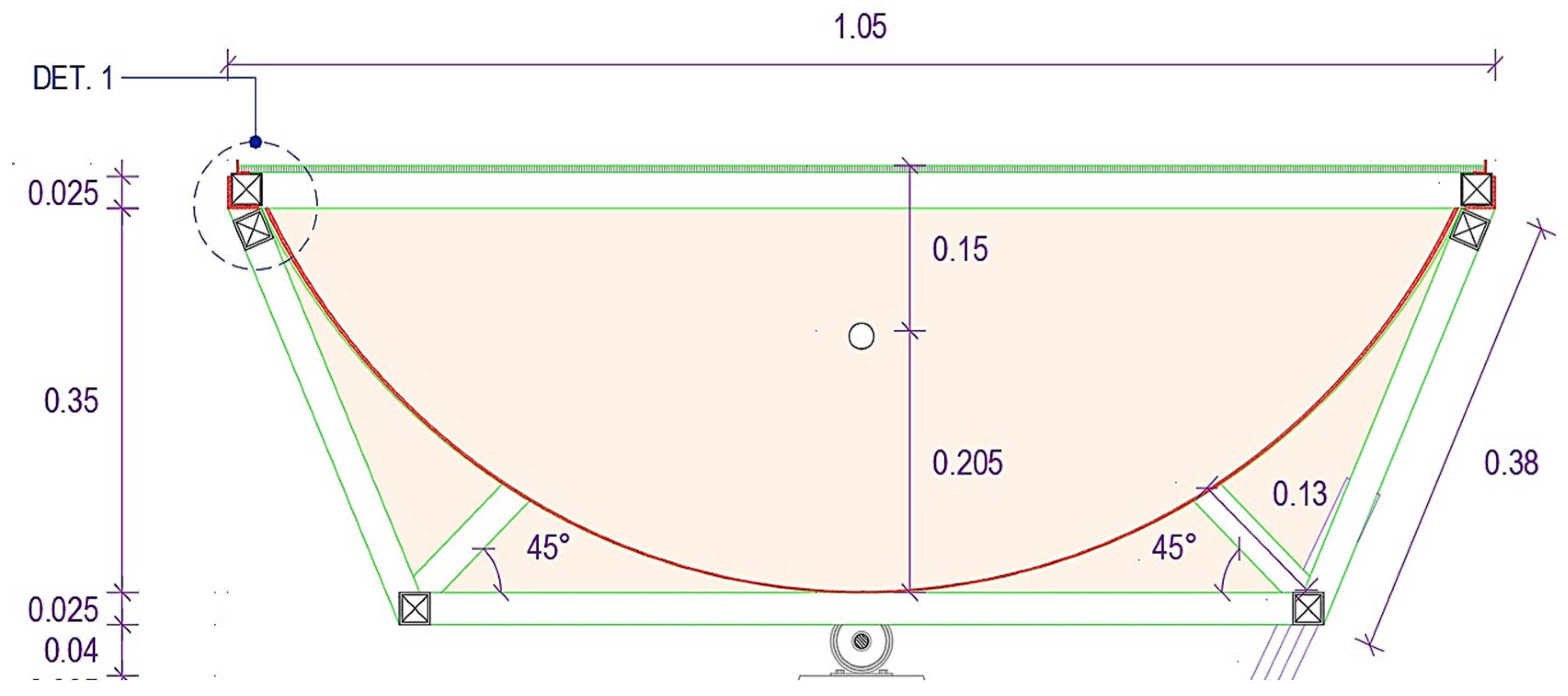
To facilitate understanding of the PTSC configuration and operating principles,
Figure 1,
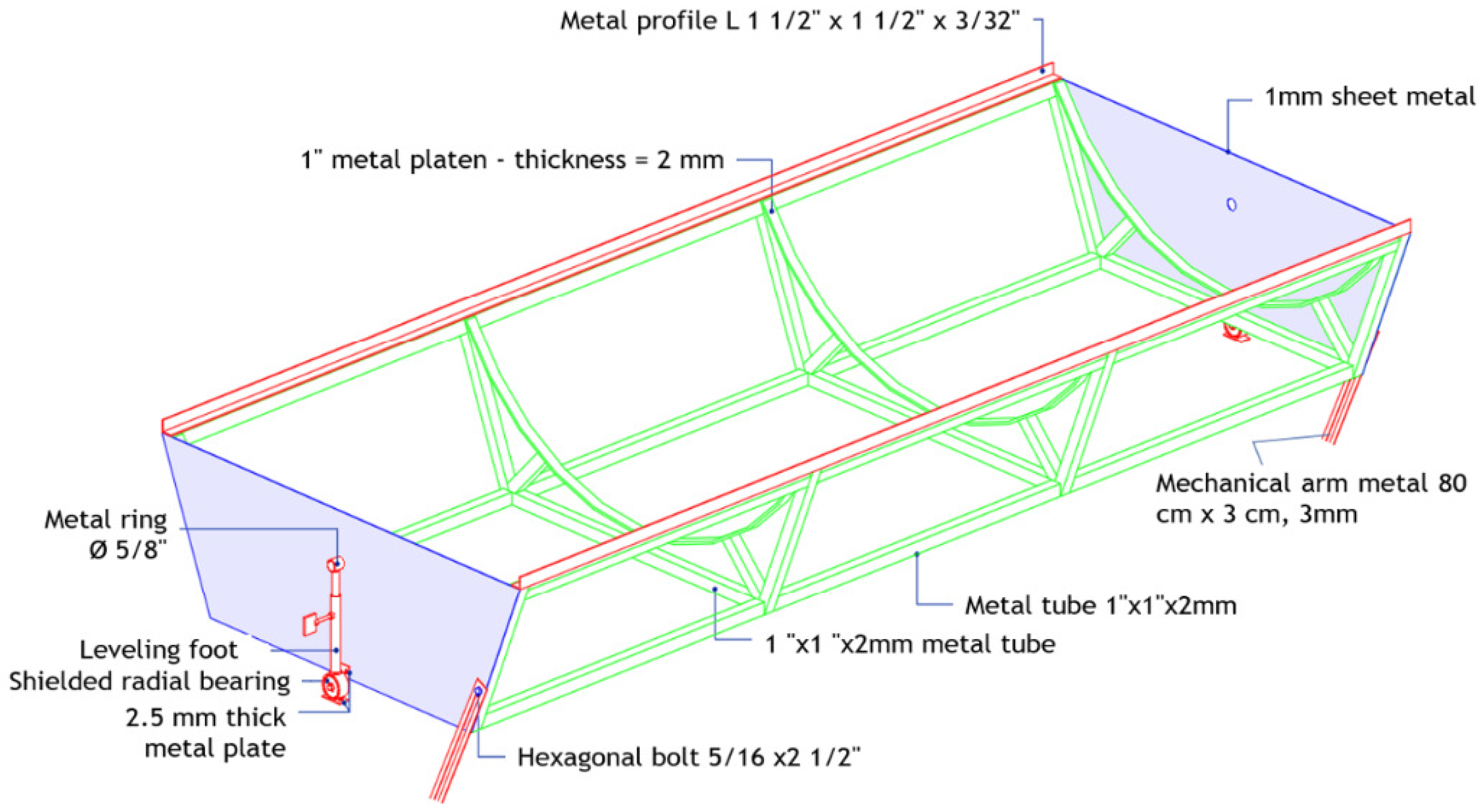
Figure 2,
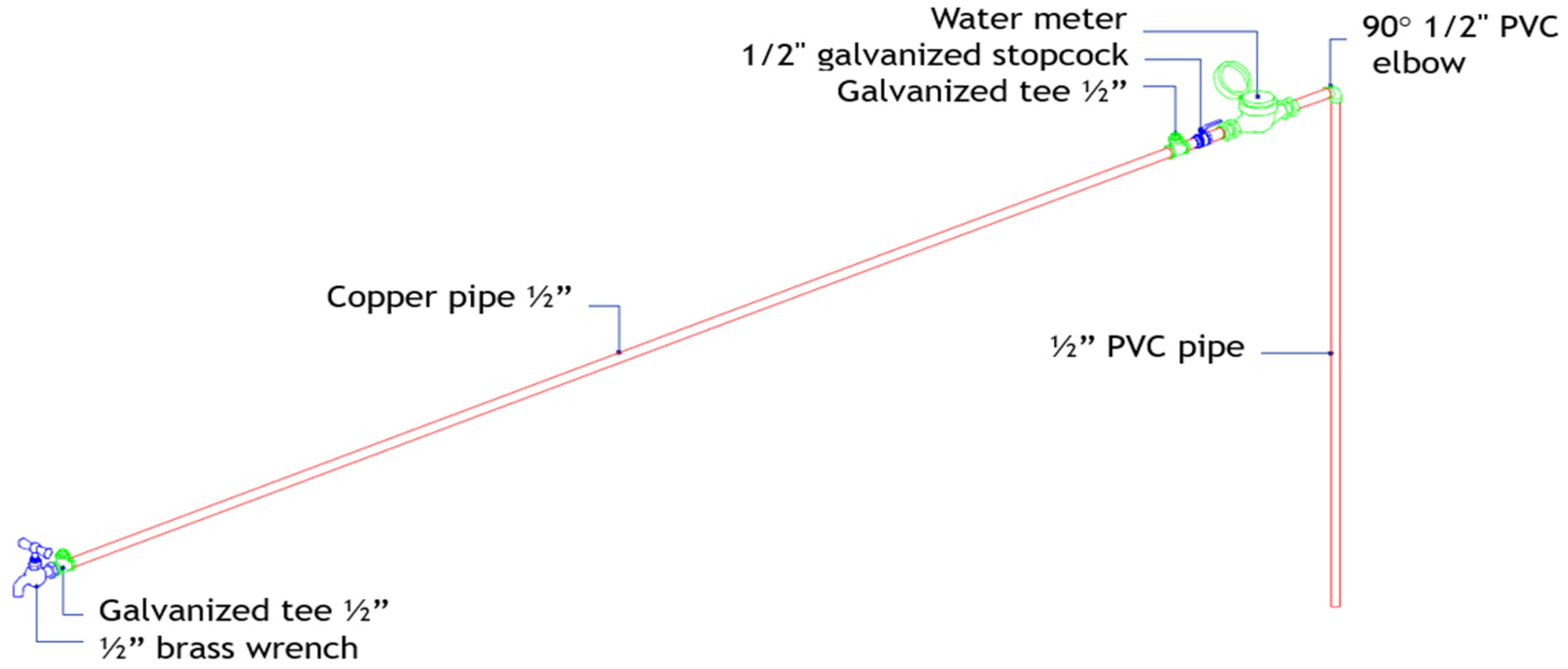
Figure 3 and
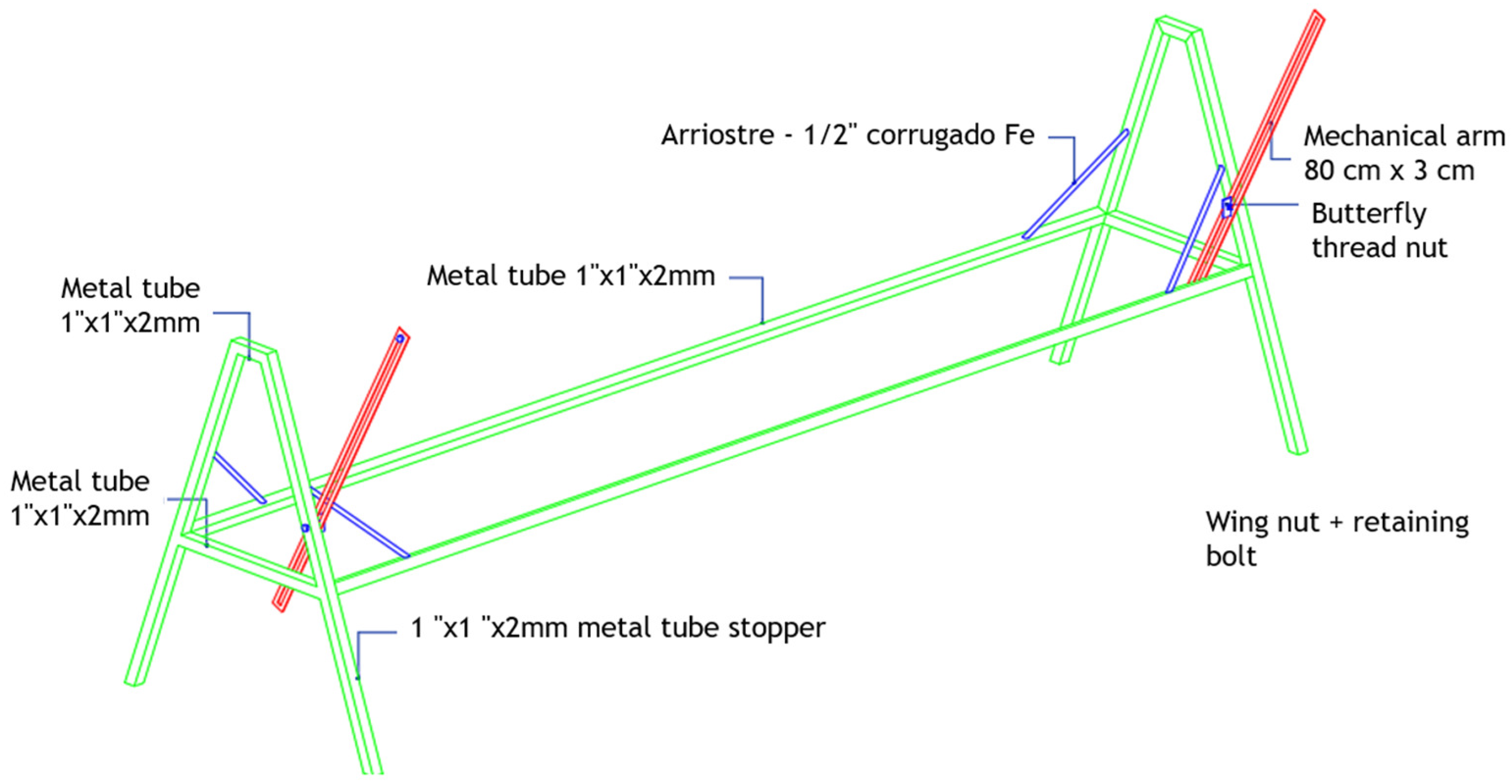
Figure 4 are presented as a progressive schematic description of the system.
Figure 1 introduces the geometric profile of the parabolic reflector, defining the aperture width and focal distance.
Figure 2 shows the structural arrangement of the collector frame and reflective surface.
Figure 3 details the absorber tube position along the focal line and the instrumentation used for temperature and flow control.
Figure 4 depicts the support structure and the manual tracking mechanism adopted for field operation. Together, these figures provide an integrated schematic overview of the PTSC prior to the experimental procedures.
The dimensions of the system were based on a compact and transportable design, suitable for experimental testing under real solar conditions. The geometry of the parabolic trough was determined analytically to define the focal distance (
a) and the curvature of the reflective surface. The relationship between the aperture width (
W), focal distance, and arc length (
L) of a parabolic reflector is given by Equation (1) [
28].
where
L = arc length of the parabola (m)
a = focal distance (m)
W = aperture width (m)
For the prototype, an aperture width of 1.05 m and a desired focal distance of 0.205 m were selected, providing a compact configuration with sufficient concentration ratio for water heating applications. Substituting these values into Equation (1), an arc length of approximately 1.22 m was obtained, corresponding to the actual size of the stainless-steel reflective sheet used in the collector.
The general equation describing the parabolic curve is given by Equation (2).
Assigning values for x from −0.53 m to +0.53 m in increments of 0.005 m, the corresponding (x, y) coordinates were plotted to obtain the parabolic profile, which represents the cross-section of the PTSC. The focus is located 0.205 m from the vertex and below the parabolic branches, allowing the aperture to be covered with a 4 mm-thick transparent glass sheet to minimize convective and radiative heat losses.
The resulting geometry served as a construction template for four identical iron frames, defining the curvature of the collector, as shown in
Figure 1. These frames were aligned longitudinally and connected by metal reinforcements to form the complete support structure (
Figure 2). A polished stainless-steel reflective sheet (1 mm thickness) was then mounted onto the parabolic frame to concentrate incident solar radiation onto the copper absorber tube positioned along the focal line of the parabola.
2.3. Absorption Tube
The absorber tube, positioned along the focal line of the parabolic reflector, was made of copper to ensure efficient heat conduction and resistance to corrosion under repeated thermal cycles. As shown in
Figure 3, the tube measured 3.0 m in length, 12.7 mm (½″) in external diameter, and 1.2 mm in wall thickness. Its outer surface was coated with matte black enamel paint to enhance solar absorptance and minimize reflection losses. The tube was installed at a focal height of 0.205 m from the vertex of the parabolic arc, coinciding with the calculated focus of the collector. At both ends, ½″ galvanized iron T-fittings were attached to accommodate thermometers for continuous temperature monitoring. A volumetric water flowmeter was placed at the cold-water inlet, while stop valves were installed at the inlet and outlet to regulate and isolate water flow during testing. This configuration ensured accurate measurement of temperature differences between the inlet and outlet, allowing precise calculation of the collector’s useful heat gain and thermal efficiency.
2.4. Support Structure and Manual Single-Axis Tracking
The PTSC support and tracking system was designed to balance thermal performance, portability, and low cost for high-Andean deployment. A compact collector geometry (aperture 1.05 m; focal distance 0.205 m; absorber length 3.0 m) was selected to facilitate transport and replication using locally available materials. The collector was mounted on a rigid rectangular frame (0.825 m height; 2.45 m length) built from welded square steel tubes (25.4 mm × 25.4 mm × 2 mm), providing mechanical stability under local wind variability (
Figure 4).
Manual single-axis tracking was implemented to follow the sun’s apparent east–west motion while maintaining a fixed north–south alignment. The collector angle was adjusted every 30 min using two parallel sliding rails and locked with a central bolt and butterfly nut. This configuration maintains adequate optical alignment under variable irradiance while avoiding the cost and maintenance requirements of automated tracking.
2.5. System Installation and Experimental Setup
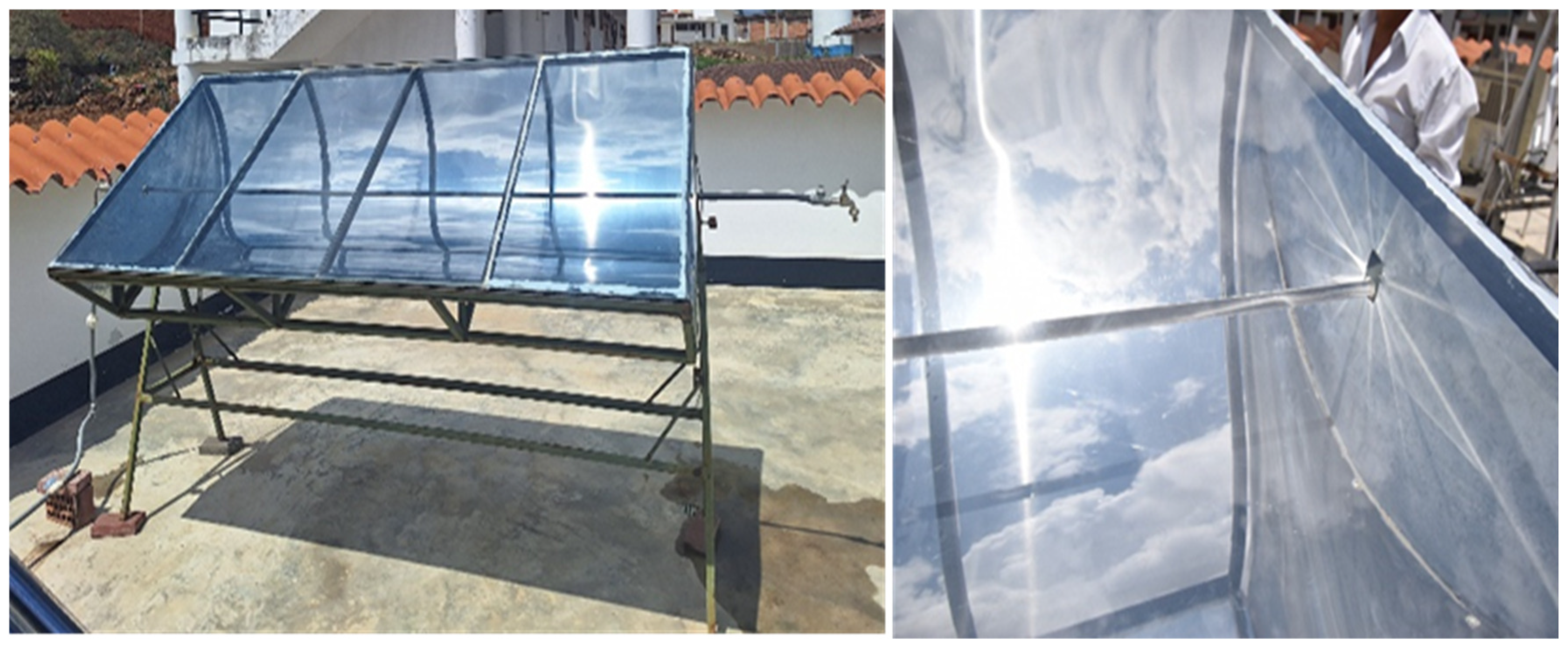
The PTSC was installed at the experimental platform of the Universidad Nacional Toribio Rodríguez de Mendoza de Amazonas under real outdoor conditions. The system was mounted on a fixed north–south axis and operated with manual east–west adjustments throughout the day to maintain solar focus on the absorber during testing (shown in
Figure 5).
Prior to data acquisition, the collector alignment and mechanical stability were verified to ensure consistent optical performance during operation. This setup enabled reliable thermal performance monitoring throughout the experimental campaign
2.6. Temperature and Solar Radiation Measurement
The thermal performance evaluation of the PTSC was conducted over 30 consecutive days (from 15 June to 15 July 2021) under real-sun operating conditions at the experimental site of the Universidad Nacional Toribio Rodríguez de Mendoza de Amazonas (UNTRM), Chachapoyas, Peru. Measurements were carried out daily from 08:00 to 17:00 h.
The water temperature at the collector inlet and outlet was recorded every 30 min using infrared thermometers (HAZET 1991-1, accuracy ±0.5 °C). To minimize reading variability, the emissivity of the instrument was set to 0.95 (corresponding to water), and the distance and angle between the sensor and the water surface were kept constant throughout the experiment. Cold and hot water were stored in insulated tanks to reduce environmental heat exchange.
Solar irradiance and ambient temperature were simultaneously measured and logged every 30 min by an automatic weather station (DAVIS Vantage Pro Plus) located 50 m from the collector. The station was equipped with a silicon pyranometer (400–1100 nm spectral range) and a shielded thermohygrometer, providing data in W·m−2 and °C, respectively.
The useful heat gained (Q) by the working fluid was determined from the temperature difference between the inlet and outlet using Equation (3) [
28].
where
useful heat gained by water (kJ),
mass of water circulated through the absorber tube (kg),
specific heat capacity of water = 4.184 kJ·kg−1·°C−1, and
temperature difference between outlet and inlet (°C).
The instantaneous thermal efficiency (η) of the collector was calculated using Equation (4).
The thermal efficiency of the system was calculated using Equation (4). The system’s efficiency is based on the effective area of the concentrator, which is the area that captures the solar radiation and reflects it onto the copper absorber tube located at the focal point. This was determined through the geometric design of the concentrator, which is based on the properties of the parabola [
28].
where
thermal efficiency (%),
mass flow rate of water (kg·s−1),
specific heat of water (kJ·kg−1·°C−1),
(Tout − Tᵢₙ) = temperature rise across the collector (°C),
Gt = global solar irradiance incident on the aperture (W/m−2), and
Aₐₚ = aperture area of the collector (m2).
The average daily efficiency was obtained by integrating the instantaneous efficiency over the 9 h operating period. The incident solar energy (Gt*Aₐₚ*Δt) was derived from irradiance data recorded by the weather station.
This formulation allows direct comparison of the collector’s performance under variable irradiance conditions, ensuring consistency between the measured thermal gain and the incident solar flux.
4. Discussion
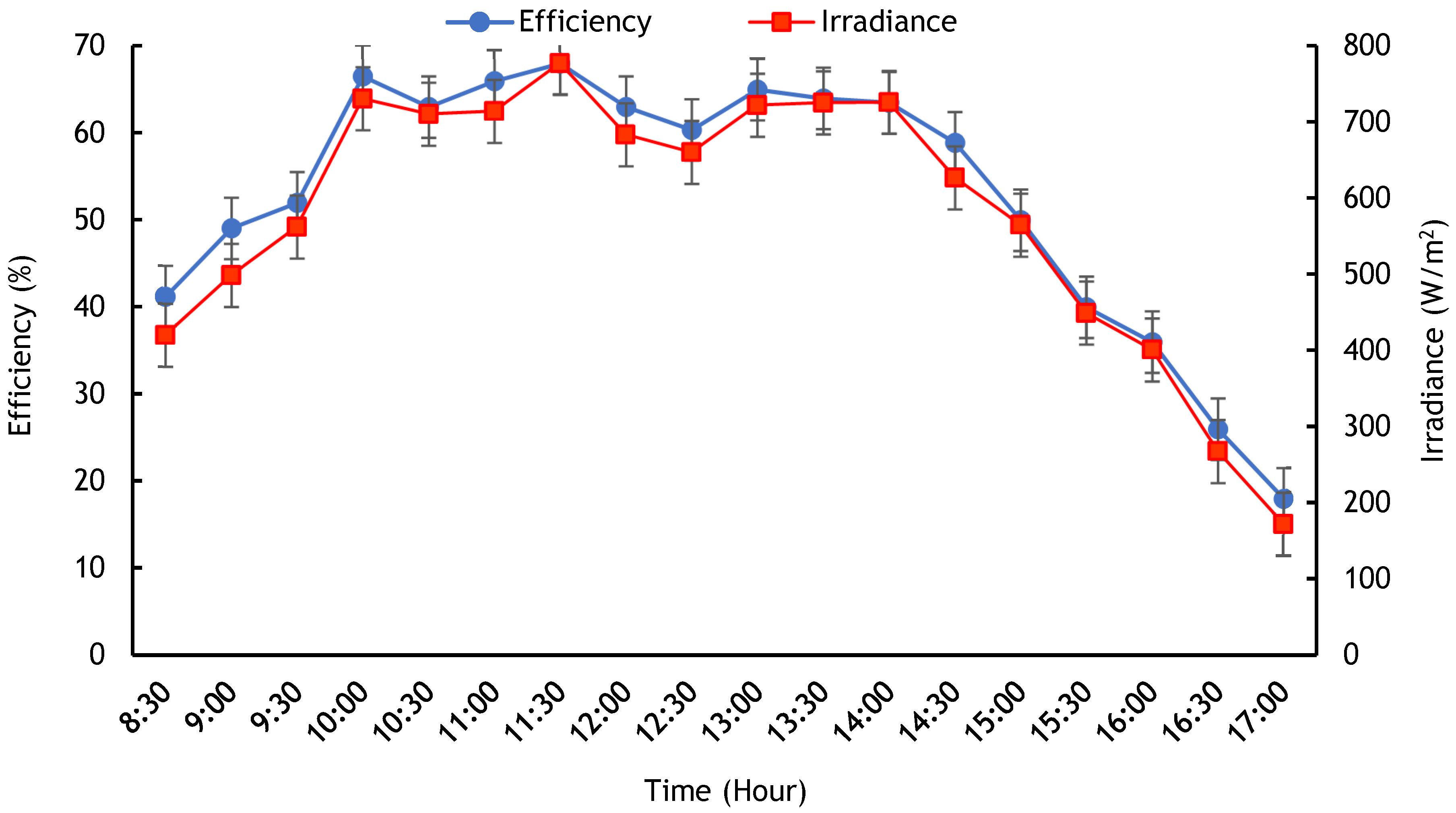
Under actual solar conditions in a high-altitude, cloud-prone site, the compact PTC achieved a maximum instantaneous efficiency of ~68% and daily mean efficiencies of ~61–65%, with outlet-water temperatures exceeding 70 °C for several hours on clear-sky days. These outcomes confirm that a properly aligned, manually tracked compact trough can deliver stable low-to-medium-temperature heat even when peak irradiance is moderated by intermittent cloud cover.
Unlike most PTSC experimental studies conducted under predominantly clear-sky or arid conditions, this work provides 30 consecutive days of field measurements in a high-altitude, cloud-prone tropical environment. The results demonstrate that a compact PTSC equipped with low-cost manual tracking can maintain high instantaneous efficiencies (~68%) and stable outlet-water temperatures suitable for domestic hot-water supply even under intermittent irradiance. In addition, the observed thermal buffering behavior under short-lived cloud events provides practical evidence of operational stability, which is rarely discussed in prior PTSC field studies focused on steady clear-sky conditions.
Relative to previous experimental works, the efficiencies obtained in this study fall within the upper range reported for small-scale or prototype PTC systems [
31]
Table 1. Typical tropical installations have achieved efficiencies of 38–58% depending on optical configuration and operating conditions [
32], whereas optimized collectors have experimentally reached up to 66% [
11]. The 68% peak efficiency measured here with manual north–south tracking and half-hourly adjustment aligns with these findings and confirms the benefits of solar tracking, which generally yields significant gains compared with fixed configurations [
18]. Long-term assessments have also shown that efficiency fluctuates seasonally between 60% and 70%, depending on solar altitude and ambient temperature [
12,
33]. In Chachapoyas, such variation is attenuated by persistent cloudiness, explaining the narrow efficiency range observed during the test period. This indicates that efficiency depends on several factors, including the level of solar irradiance, environmental conditions, the mass flow rate of the working fluid, the accuracy of the instrumentation and the geometry of the collector [
25,
34], in addition to seasonal and atmospheric conditions [
35].
The collector operated under partly cloudy conditions representative of the site’s typical solar regime (mean K
t ≈ 0.45), where diffuse irradiance accounts for nearly half of the total daily solar input. Under diffuse-dominant conditions typical of high-Andean climates, PTC performance can decrease because its geometry concentrates only direct normal irradiance [
22]. Nevertheless, the system maintained high outlet temperatures suitable for domestic hot-water production and low-temperature industrial applications such as pasteurization and drying [
7]. The combination of moderate but continuous solar input and frequent manual alignment likely reduced optical loss distribution [
24,
25]. For decentralized heat supply in mountainous regions with frequent cloudiness [
11], compact PTCs can complement flat-plate or evacuated-tube collectors by delivering higher outlet temperatures during favorable irradiance windows while maintaining reasonable efficiency under partial cloud cover [
35].
Several constraints qualify our findings. First, tracking was manual with 30 min adjustments, which introduces alignment uncertainty relative to automated dual-axis systems [
36,
37]. Second, the infrared thermometry (±0.5 °C) and single mass-flow setting limit a full uncertainty/parametric assessment of
η (ṁ, Tin, U-loss). Third, thermal-loss pathways (optical intercept, wind-driven convection, envelope emissivity) were not decomposed experimentally [
38]. Future work should (i) employ co-located DNI/DHI sensors or a shadow-band system to quantify diffuse-fraction effects, (ii) test automatic tracking and multiple flow-rate regimes to identify optimal operating points across seasons, (iii) perform an uncertainty propagation for
η including sensor calibration and repeatability, and (iv) integrate thermal storage (e.g., phase-change materials) to buffer short-term intermittency typical of high-Andean cloud dynamics.
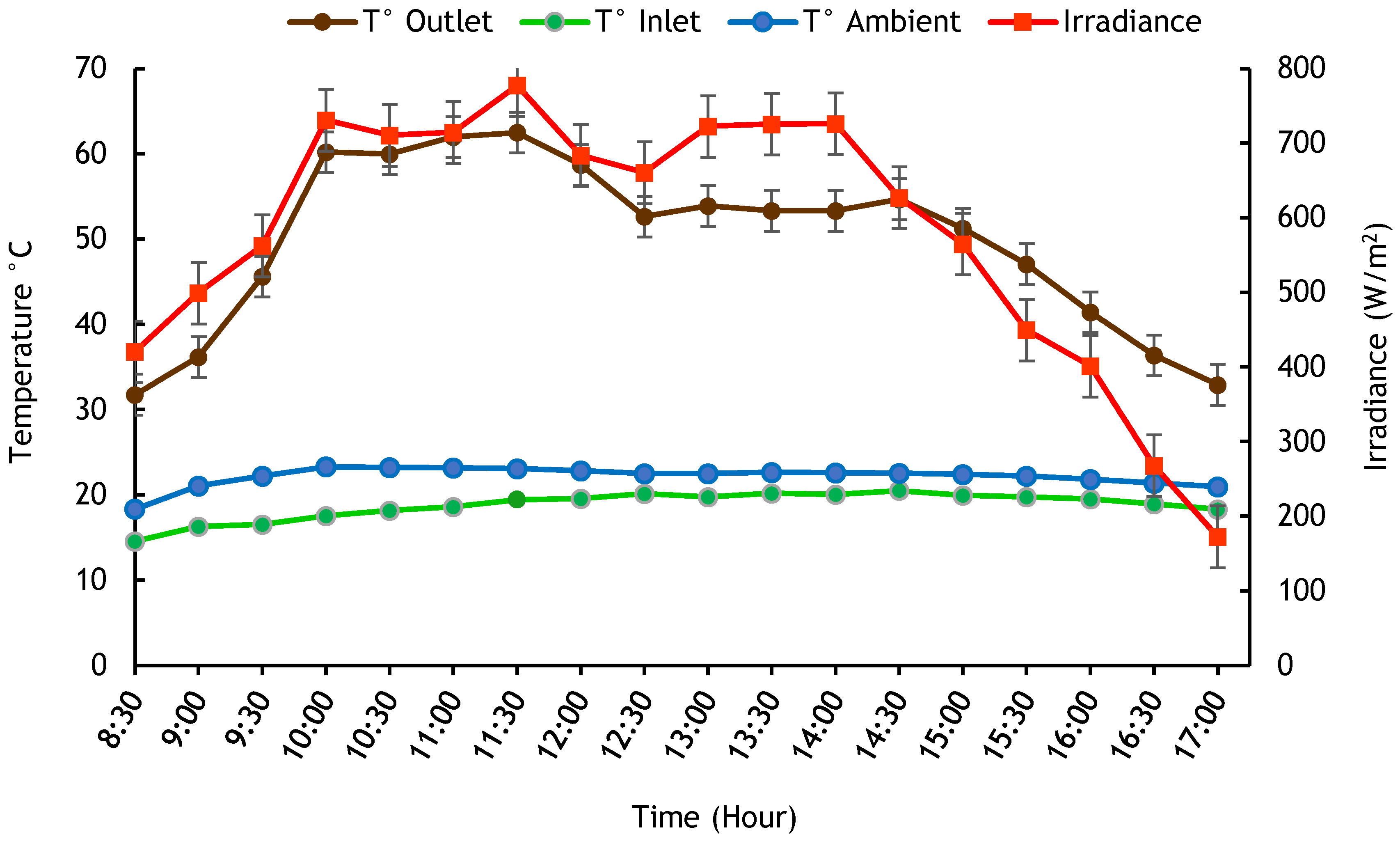
The slight reduction observed in the monthly-mean irradiance between 11:30 and 12:30 is consistent with the cloud-forest microclimate of Chachapoyas, where short-lived orographic and convective cloud formation frequently occurs near solar noon, temporarily increasing the diffuse radiation fraction and reducing the direct component available for optical concentration [
24]. Similar intra-daily irradiance depressions associated with cloud dynamics have been reported for tropical and high-altitude regions and are known to affect concentrating solar systems [
22,
28].
Despite this transient decrease in irradiance, the outlet-water temperature does not exhibit an immediate decline. This behavior can be attributed to the combined effects of thermal inertia in the copper absorber tube and the circulating water, together with the presence of a transparent glass cover enclosing the collector aperture. The glass cover reduces convective heat losses and promotes a greenhouse effect, allowing partial retention of absorbed thermal energy within the collector cavity [
37]. Once a quasi-steady thermal regime is established, short-term irradiance fluctuations are buffered by the sensible heat stored in the metallic components and the working fluid, resulting in a stable outlet temperature even under intermittent cloud cover [
31].
From a practical standpoint, the proposed compact configuration and manual tracking approach are aligned with decentralized heat supply needs in mountainous Andean regions. Nevertheless, limitations include the manual tracking resolution (30 min adjustments), the use of global irradiance without separating DNI/DHI, and the single operating flow regime, which constrain a full parametric and uncertainty propagation assessment. Future work should incorporate DNI/DHI measurements, test multiple flow rates, apply formal uncertainty propagation to η, and extend the analysis toward thermo-economic and exergy-based indicators to quantify irreversibilities and strengthen the basis for scaling decisions under cloudy highland conditions.
Table 1.
Summary of recent experimental studies on parabolic trough solar collectors (PTSCs).
Table 1.
Summary of recent experimental studies on parabolic trough solar collectors (PTSCs).
| Title | Main Outcome | Reference |
|---|
| Design and performance investigation of solar PTC for large-scale plants | Experimental thermal efficiency up to 66% | [32] |
| Optical, thermal and structural performance of a PTC | Coupled optical–thermal analysis | [35] |
| Alternative designs of parabolic trough collectors | Design improvements and efficiency gains | [24] |
| Experimental study of PTC receiver tubes in tropical regions | Receiver geometry reduces thermal losses | [31] |
| PTC–TEG hybrid solar system | Hybridization increases energy utilization | [12] |
| Thermo-economic evaluation of PTC integrated systems | High efficiency with optimized operation | [30] |
| Innovative cost-effective PTC designs | Performance improvement at lower cost | [25] |
| Parabolic trough solar collectors: sustainability review | Performance limits under diffuse radiation | [22] |
| Performance of PTC under variable irradiance | Cloud cover affects efficiency stability | [39] |
| Thermal performance of PTC at different flow rates | Flow rate strongly influences η | [11] |
| PTC integrated with thermal energy storage | Storage smooths intermittent radiation | [36] |
| Optical optimization of parabolic trough collectors | Monte Carlo ray tracing improves focus | [26] |
| Experimental analysis of compact PTC | Compact PTC suitable for low-temp heat | [40] |
| Thermal analysis of PTC in real outdoor conditions | Validation of on-field efficiency models | [41] |
| Solar tracking impact on PTC efficiency | Tracking increases efficiency by >20% | [42] |
| Performance of PTC with selective coatings | Reduced radiative losses | [43] |
| Experimental PTC for process heat | Suitable for industrial low-temp processes | [44] |
| PTC under diffuse-dominant climates | Efficiency degradation quantified | [45] |
| Performance assessment of small-scale PTC | Validated efficiency under real sun | [46] |
| Thermal behavior of PTC in high-altitude regions | Altitude and cloudiness impact heat gain | [47] |
5. Limitations and Future Perspectives
The study has several limitations that should be acknowledged. First, the solar tracking system was manually adjusted at 30 min intervals, which may introduce alignment deviations when compared to automated single- or dual-axis tracking systems. Second, solar radiation was characterized using global irradiance measurements, without separating direct normal irradiance (DNI) and diffuse horizontal irradiance (DHI), which constrains a detailed assessment of the collector’s optical response under diffuse-dominant conditions. Third, the test was conducted using a single operating mass flow rate, and therefore the influence of flow variation on thermal efficiency and heat losses could not be evaluated.
From an economic perspective, this study did not include a full techno-economic assessment. Capital investment costs, operation and maintenance expenses, and levelized cost of heat indicators were not quantified due to the experimental nature of the prototype and the absence of a long-term operational dataset. Future work should incorporate detailed cost inventories and local energy price scenarios to evaluate economic feasibility, payback periods, and competitiveness relative to conventional energy sources in high-Andean contexts.
Similarly, an exergy-based analysis was not performed in the present work. Although thermal efficiency provides valuable information on energy conversion, exergy analysis would allow quantification of irreversibilities associated with optical losses, heat transfer, and fluid friction within the PTSC. Future studies should therefore integrate exergy efficiency and destruction metrics to complement the energetic evaluation and support optimized design and scaling decisions.
Despite these limitations, the experimental results provide a robust baseline for assessing the applicability of compact parabolic trough collectors under cloudy high-altitude conditions. Future research should focus on implementing automatic tracking systems, measuring DNI/DHI components, testing multiple flow-rate regimes, and integrating thermal energy storage or advanced control strategies to improve performance stability and system-level efficiency.
6. Conclusions
The thermal performance of the parabolic trough solar collector (PTSC) was evaluated over a 30-day period, from 08:00 to 17:00 h, under real-sun conditions in Chachapoyas, Peru. The recorded variables included water temperature (inlet and outlet), ambient temperature, and solar irradiance. The average irradiance profile during the test period showed a progressive increase in the morning, reaching a maximum of 777 W·m−2 at noon, followed by a gradual decrease during the afternoon.
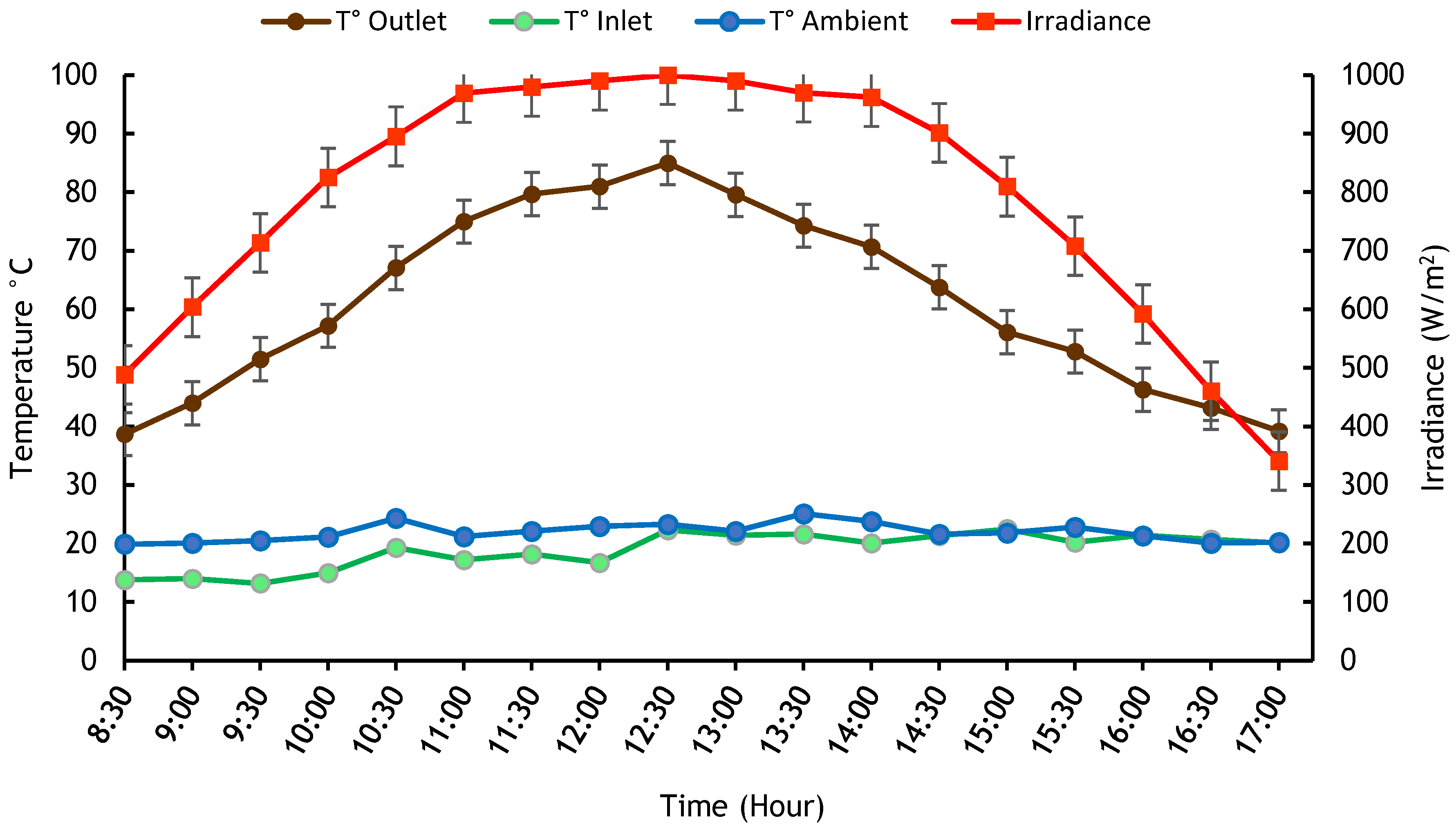
The outlet water temperature of the PTSC followed the same trend as irradiance, reaching a maximum of 62.5 °C under average daily conditions. On a clear-sky day, the irradiance peaked at approximately 1000 W/m−2 at noon, and the outlet temperature rose to 85 °C. The collector achieved a maximum thermal efficiency of 68% when operated with manual sun tracking.
These findings demonstrate that the evaluated compact PTSC system is effective for hot-water generation and other low-temperature thermal applications. Moreover, the results confirm the technical feasibility of implementing parabolic trough collectors in high-Andean regions, such as Chachapoyas, which are characterized by frequent cloud cover and moderate irradiance levels. The study also indicates that this technology can be adapted for similar climates in other cloudy or high-altitude areas with intermittent solar exposure, contributing to sustainable energy use and greenhouse gas emission reduction.



 ,
,