Article

Incorporation of Lignin Binder from Agricultural Waste to Enhance Sustainability and Performance of Asphalt Pavements

1
Department of Chemical Engineering, Louisiana Tech University, 600 Dan Reneau Drive, Ruston, LA 71272, USA
2
School of Civil & Environmental Engineering, Mississippi State University, 250 Hardy Rd., Room 2042, Starkville, MS 39762, USA
3
Department of Civil & Environmental Engineering, Louisiana State University, 3255 Patrick F. Taylor, Baton Rouge, LA 70803, USA
4
School of Civil Engineering and Environmental Science, The University of Oklahoma, 202 West Boyd St., Room 334, Norman, OK 73019, USA
5
Department of Micro and Nanoscale Systems Engineering, Louisiana Tech University, 600 Dan Reneau Drive, Ruston, LA 71272, USA
*
Author to whom correspondence should be addressed.
Biomass 2026, 6(2), 28; https://doi.org/10.3390/biomass6020028
Submission received: 25 February 2026 / Revised: 19 March 2026 / Accepted: 31 March 2026 / Published: 8 April 2026

Abstract

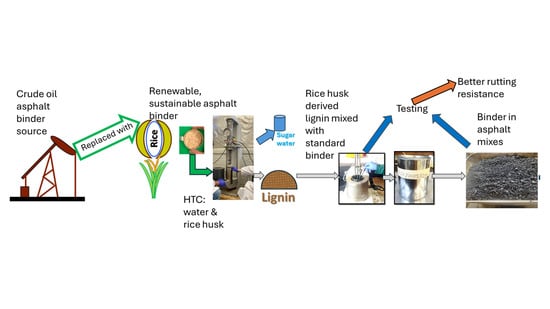
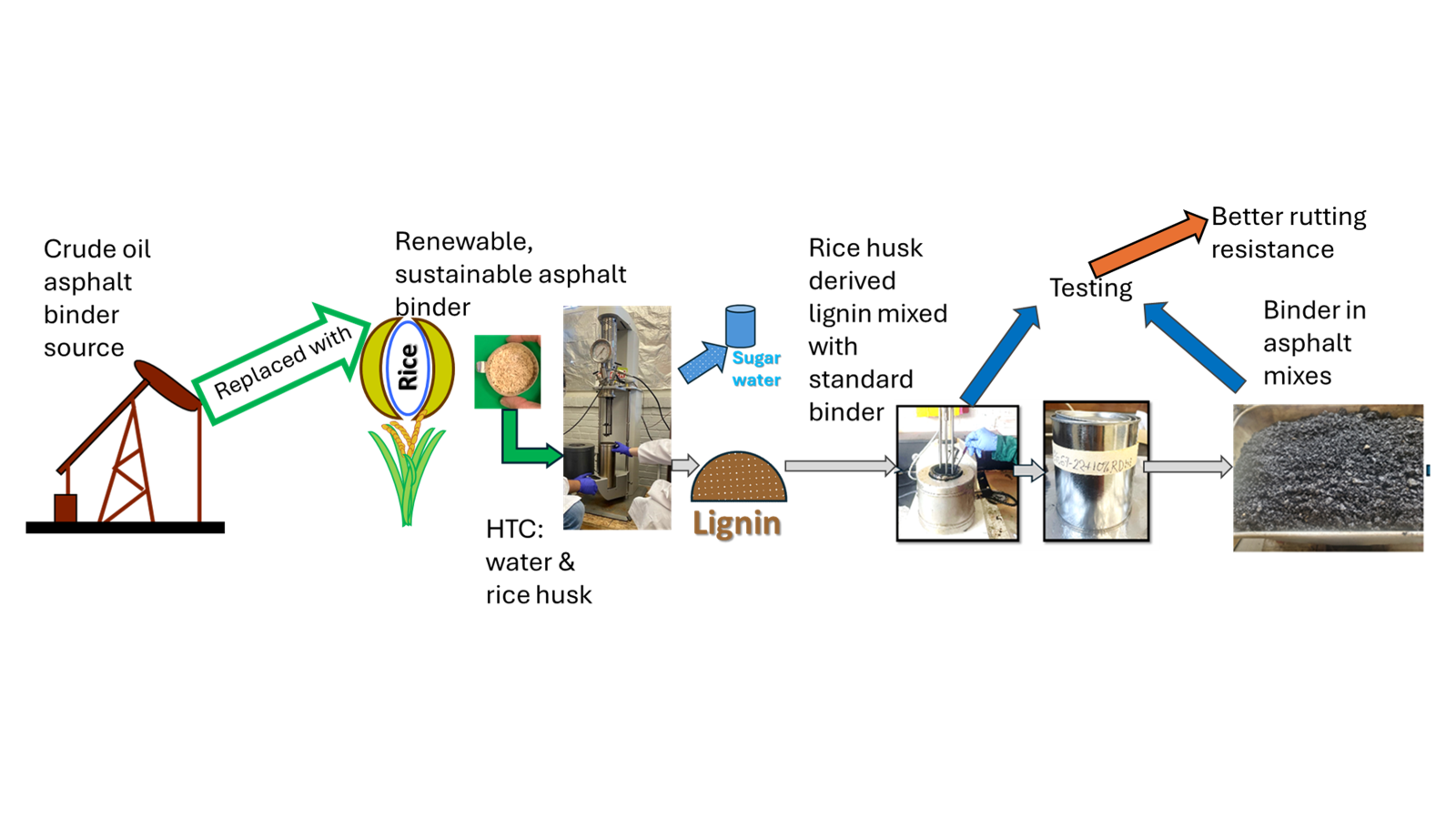
Utilizing lignin from agricultural wastes as a partial replacement for asphalt binder used in pavement presents a sustainable option, as it is abundant in nature. The effects of the addition of lignin on the properties and performance of asphalt binder and asphalt mixes were studied. Lignin was produced from rice husks, using a hydrothermal carbonization (HTC) treatment process. The rice husk-derived lignin was then mixed with a PG 67-22 binder at 0%, 5% and 10% of the mass of the total binder. The HTC treatment of rice husks at 250 °C created a powdery substance with an increased acid-insoluble lignin content and a reduced cellulose and hemicellulose content. The addition of 10% lignin was found to produce an unstable modified binder due to phase separation between the lignin and binder, thus requiring continuous stirring before use. Asphalt mixes prepared with 5% lignin exhibited better moisture-induced damage resistance compared to the control mix. Also, an improved rutting resistance of asphalt mixes was observed with the use of a lignin-modified binder. Lignin from rice husks may constitute a sustainable partial substitute for a crude-oil-based binder.

Graphical Abstract

1. Introduction

Approximately 94% of roadway pavements in the United States are constructed using asphalt mixes [1,2]. Asphalt binders used in asphalt mixes are generally obtained from the crude oil refining process. This process is unsustainable and detrimental to the environment because significant amounts of carbon dioxide and other pollutants are released into the atmosphere [3]. The International Renewable Energy Agency (IRENA) [4] has claimed that this prevailing challenge necessitates a global energy transformation aimed at ceasing the production of fossil fuels by the year 2050 [5]. With increased focus on renewable energy, the availability of fossil fuel-based asphalt binders will become an issue. Consequently, the costs of asphalt materials are expected to rise significantly. Therefore, the pavement industry is searching for viable alternatives to partially or totally replace fossil fuel-based asphalt binders. If sustainable binders can be found, such materials would have less of an environmental impact [6].
Several renewable alternatives to replace fossil fuel-based asphalt binders have been proposed by different researchers. Many of these alternatives include by-products from various industrial processes, everyday waste, and resources that are readily available in nature, such as microalgae, swine manure, waste wood, resin, and vegetable oils [7,8,9,10]. These bio-based alternatives offer both environmental and economic benefits by reducing landfilling requirements and promoting a sustainable circular economy [11]. In this context, utilizing lignin as a partial replacement for a fossil fuel-based binder presents a promising and environmentally conscious solution.
The use of lignin in asphalt pavements was first introduced in Europe at the beginning of the 1990s [5]. However, this topic gained significant interest in the pavement community in the last decade, due to the growing demand for renewable solutions. Lignin is recognized as the second most abundant form of biomass (plant) material present on Earth [1]. It is produced from various plant species, such as wood bark, pulp, hemp, jute, cotton, flax, and straw. It is a polymeric molecule characterized by a network of spatial structures and a chemical composition rich in reactive nucleophilic phenolic and alcoholic hydroxyl groups [12]. Approximately 50 million tons of lignin are generated annually worldwide as by-products of the pulp and paper industry, with production expected to grow further in the future [12]. However, only a small amount of lignin is currently recovered and being used in material applications [13].
Lignin from wood and black liquor from wood pulp and paper processing has been studied as an asphalt binder addition, but lignin from secondary agricultural biomass, such as rice husks, has only rarely been studied [14]. Rice husks represent an abundant and renewable source of lignin. Globally, 150 million tons of rice husk are generated annually, which can be used to produce lignin for pavement applications [15]. However, the feasibility of producing lignin from rice husks and its effects on the performance of asphalt mixtures need to be investigated.
The present study focused on investigating the feasibility of using lignin derived from the hydrothermal carbonization (HTC) of local agricultural waste, i.e., rice husks, to be a partial replacement for asphalt binder. Other biomass have been used in this type of work, but they are not secondary agricultural wastes that are already gathered at food production processing facilities. Also, HTC lignin from rice husks has not been previously used in asphalt binders where performances of actual mixes were tested, making this study novel. The specific objectives of the present study were to:
  • Evaluate the effects of the addition of rice husk-derived lignin on the properties of asphalt binder. A series of rheological assessments were performed to evaluate the high- and low-temperature properties, storage stability, and phase separation of the lignin-modified binder.
  • Find the performance of two asphalt mixes produced with lignin-modified binders. The resistance to rutting, fatigue cracking, and moisture-induced damage of two asphalt mixes produced with a lignin-modified binder were investigated.
Lignocellulose biomass is fractionated into cellulose, hemicellulose, and lignin compounds [16]. The processes involve three major steps: pretreatment, extraction, and purification [17]. Each of these processes involves a series of sub-steps for the production of lignin. HTC is a thermochemical process that turns biomass into a solid, coal-like product with a higher calorific value and more carbon, known as hydrochar. This process involves exposing the biomass to temperatures that are generally between 180 °C and 250 °C, facilitating the hydrolysis and decomposition of cellulose and hemicellulose elements. Previous studies have reported that hydrochar exhibits a superior heating value and elevated carbon content in comparison to biomass feedstock [18]. Dinjus et al. [19] reported that the HTC treatment only broke down the non-lignin components of the biomass, while the original structure of the lignin was mostly preserved. This finding likely resulted from the complex composition of lignin. Lignin units are interconnected through several ether and carbon–carbon linkages, with the β-O-4 ether bond being the predominant connection in plant materials. The β-O-4 linkage constitutes roughly 48 to 60% of the total interunit connections in native type lignin [20,21]. In a recent study, hydrochar derived from corn stalks was added to asphalt binder, using the wet process [22]. The interaction between the hydrochar and binder fractions was identified by chemical analysis, leading to low compatibility but satisfactory anti-aging properties. In another study, Walters et al. found that the inclusion of hydrochar, obtained through a filtration process following the production of bio-binder, could enhance both rheological properties and the aging resistance of asphalt [23]. Several researchers concluded that the miscibility of asphalt binder and biomass-derived lignin depends on the particle size, amount of biomass added, and the reaction temperature during the HTC process [24,25].
Several studies show that the integration of lignin within asphalt may enhance its performance characteristics [26,27], while simultaneously improving environmental sustainability through diminished dependence on fossil fuel-derived materials [28]. Rheological properties, such as high- and low-temperature properties, fatigue cracking, aging, and moisture-induced damage resistance of lignin-modified binders, were evaluated by several researchers [26,27,28,29,30]. Nahar et al. evaluated the effect of partial replacement of asphalt binder with unmodified and chemically modified lignin. It was found that the addition of lignin caused stiffening of the binder. The modified binder showed improvement in high-temperature properties and introduced greater flexibility into the low-temperature performance.
Ghabchi [27] evaluated the effect of three different lignin types on the rheological properties of the asphalt binder and its adhesion to different aggregates. The study reported that different lignin types have significantly different effects on the rheological, aging, and adhesion properties of the binder. Wu et al. [31] reported that the soda lignin addition significantly improved the rutting resistance and also fatigue performance of asphalt binder. A study conducted by Xu et al. [32] found that the addition of 5% lignin caused a large reduction in fatigue life.
The aging performance of lignin-modified binders was investigated by Batista et al. [33]. Their results indicated that the integration of lignin could improve the aging resistance of asphalt binders because of the low carbonyl index. Xu et al. performed the Bending Beam Rheometer (BBR) test and found that the addition of lignin from wood slightly worsened the low-temperature properties of asphalt binder [32]. One of the recent studies demonstrated that lignin significantly improved the moisture resistance properties of asphaltic materials. This improvement is related to modifications in the surface morphology and adhesive characteristics of the asphalt binder upon its modification with lignin [28].
Storage stability is generally viewed as a major hindrance to the promotion of lignin-modified binders. According to several studies, the compatibility of lignin and asphalt binder might be challenging and can result in phase separation and lower effectiveness [34,35]. This phenomenon is especially pronounced in instances where lignin remains chemically unchanged or when the molecular interactions are inadequately optimized [34,35]. Wu et al. [31] performed a separation analysis of lignin-modified binders and found that the lignin concentration was significantly different between the top and bottom parts. Pérez et al. [36] reported that the addition of 40% lignin, derived during the production of hardboard panels, resulted in a modified binder that was not suitable for storage.
Most current research has primarily focused on evaluating the properties of modified binders, while relatively few studies have concentrated on the performance of asphalt mixes. Arafat et al. evaluated the rutting, cracking, and moisture-induced damage resistance of an asphalt mix prepared with 6% lignin-modified binder, where the lignin was extracted with deep eutectic solvents. Improved rutting resistance was reported from the lignin-modified asphalt mix, without reducing moisture-induced damage resistance [1]. Zahedi et al. stated that the presence of lignin increased stability, reduced flow, and improved the rutting resistance. The fatigue life of the asphalt mix was found to be positively affected by adding 3 to 6% of lignin to the asphalt mix. However, increasing the amount of lignin lowered the fatigue life of the asphalt mix [37]. Pérez et al. conducted the repeated load axial test to find the resistance to rutting. The asphalt mixes prepared with 20% of industrial waste gave lower rutting than the control mix. Fatemi et al. evaluated the durability of asphalt mixes containing calcium lignosulfonate (CLS) powder as a binder modifier. The results suggested that the asphalt mixes became stiff due to the combination of CLS and binder, which greatly improved the rutting resistance of the asphalt mixes [38]. Gaudenzi et al. [39] reported that the presence of lignin did not compromise the bond strength between the binder and the aggregate. However, the fatigue cracking resistance was reduced with the addition of lignin.


2. Materials and Methods

2.1. Materials

2.1.1. Rice Husks and Binder

The lignin for this research was extracted from rice husks. Rice husks were donated from Falcon Rice Mill in Crowley, LA, USA for this purpose. The raw rice husks were dried for 24 h in an oven at 105 °C to eliminate moisture. The dried rice husks were subsequently stored in a refrigerator at about 4 °C until required. The sizes of the rice husk particles ranged from 850 to 1405 microns, having been sieved via No. 14 and No. 20 sieves, with the intermediate fraction chosen for HTC treatment. A PG 67-22 asphalt binder was collected from Amethyst Construction, located in Ruston, LA, USA, and was utilized in this research. Styrene–butadiene–styrene (SBS) polymer was purchased from Kraton Corporation (Houston, TX, USA). Lignin’s properties are discussed in Section 2.2.3, Section 2.2.4, Section 3.1 and Section 3.2.

2.1.2. Aggregates for Asphalt Mixes

Two different asphalt mixes were used in this study, one from Louisiana and another from Oklahoma. A Job Mix Formula (JMF) for asphalt mix with a Nominal Maximum Aggregate Size (NMAS) of 12.5 mm, approved by the Louisiana Department of Transportation and Development (LaDOTD), was selected as the Louisiana asphalt mix. The mix design included 36.3% of 0.5-inch (12.50 mm) Vulcan #78 aggregate, 29.7% of 3/16-inch (4.76 mm) Vulcan #11 aggregate, 15% of sand, and 19% Reclaimed Asphalt Pavement (RAP) by weight. All the aggregates were collected from Louisiana sources. The amount of asphalt binder was adjusted to incorporate 5% and 10% lignin in the asphalt mix.
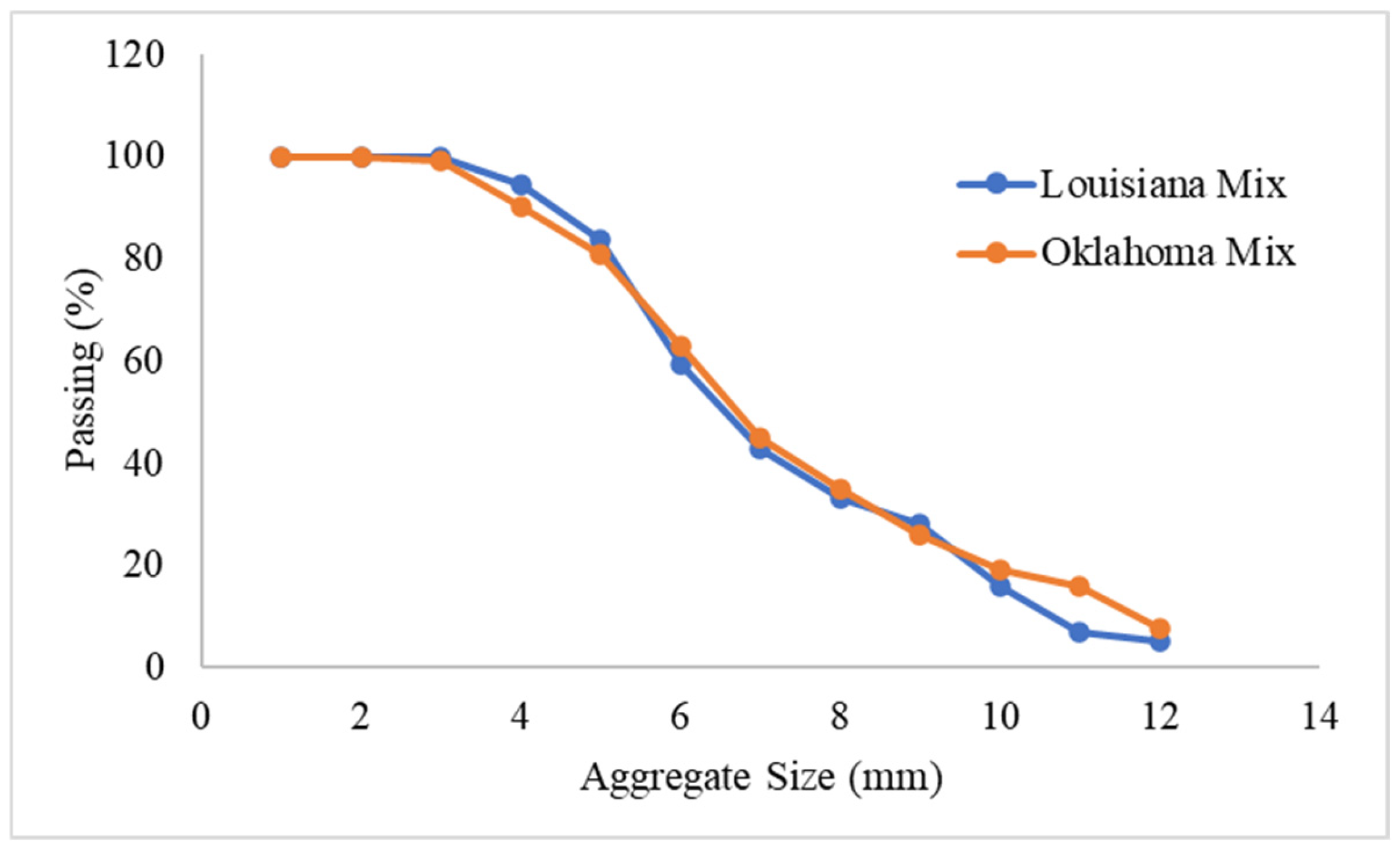
An approved Oklahoma Department of Transportation (ODOT) mix design with NMAS of 12.5 mm was chosen as the second mix. The mineral aggregates consisted of 28% of 5/8-inch (15.88 mm) crushed stone chips, 20% of manufactured sand, 22% of 3/16-inch (4.76 mm) screenings, and 10% local sand. In addition, 20% fine RAP was used in the asphalt mix. All the aggregates were collected from local Oklahoma sources. The amount of asphalt binder used in the ODOT-approved design was 5.2%. Gradations of both asphalt mixes are presented in Figure 1. A rejuvenator from a commercial source was collected for the purpose of this study.

2.2. Methods

2.2.1. Hydrothermal Carbonization Treatment of Rice Husks

In this study, the HTC treatment of rice husks was performed using a 2 L Parr reactor (Parr Instrument Co., Moline, IL, USA). For this purpose, 75 g of dried rice husk sample was mixed with 750 g of deionized water (solvent) in a glass liner. The temperature used for the HTC treatment was 250 °C. When the reactor reached the chosen set temperature, the reaction continued for 10 min. The biomass to water ratio, temperature, and time have previously been found to be optimal for lignin extraction (various biomass paper). The reactor vessel was then lowered into a cold-water bath to quench the reaction. The pressure and temperature were recorded every 10 min. The final product consisted of solid hydrochar, which is high in lignin, and a sugar solution. Once the biomass was cooled, it was separated from the solvent with nylon membrane filters of pore size 0.45 μm and a diameter of 90 mm, as well as a mesh filter membrane. The filtration unit comprised a Buchner funnel with a filter and a filtration flask connected to a vacuum pump. After drying at 105 °C for 24 h, to ensure the removal of moisture, the biomass was weighed. The lignin was then preserved in a refrigerator at temperatures around 4 °C.

2.2.2. Size Reduction in Lignin

Immediately after removing the sample from the refrigerator, the lignin was crushed using a hammer. This procedure was executed manually and required approximately 10 to 15 min. Upon the conclusion of the size reduction process, the lignin particles were sieved through a No. 80 (180 µm) and No. 200 (75 µm) sieve. The particles passing the No. 80 sieve and retained on the No. 200 (75 µm) sieve were used for this study.

2.2.3. Characterization of Lignin-Particle Size Distribution

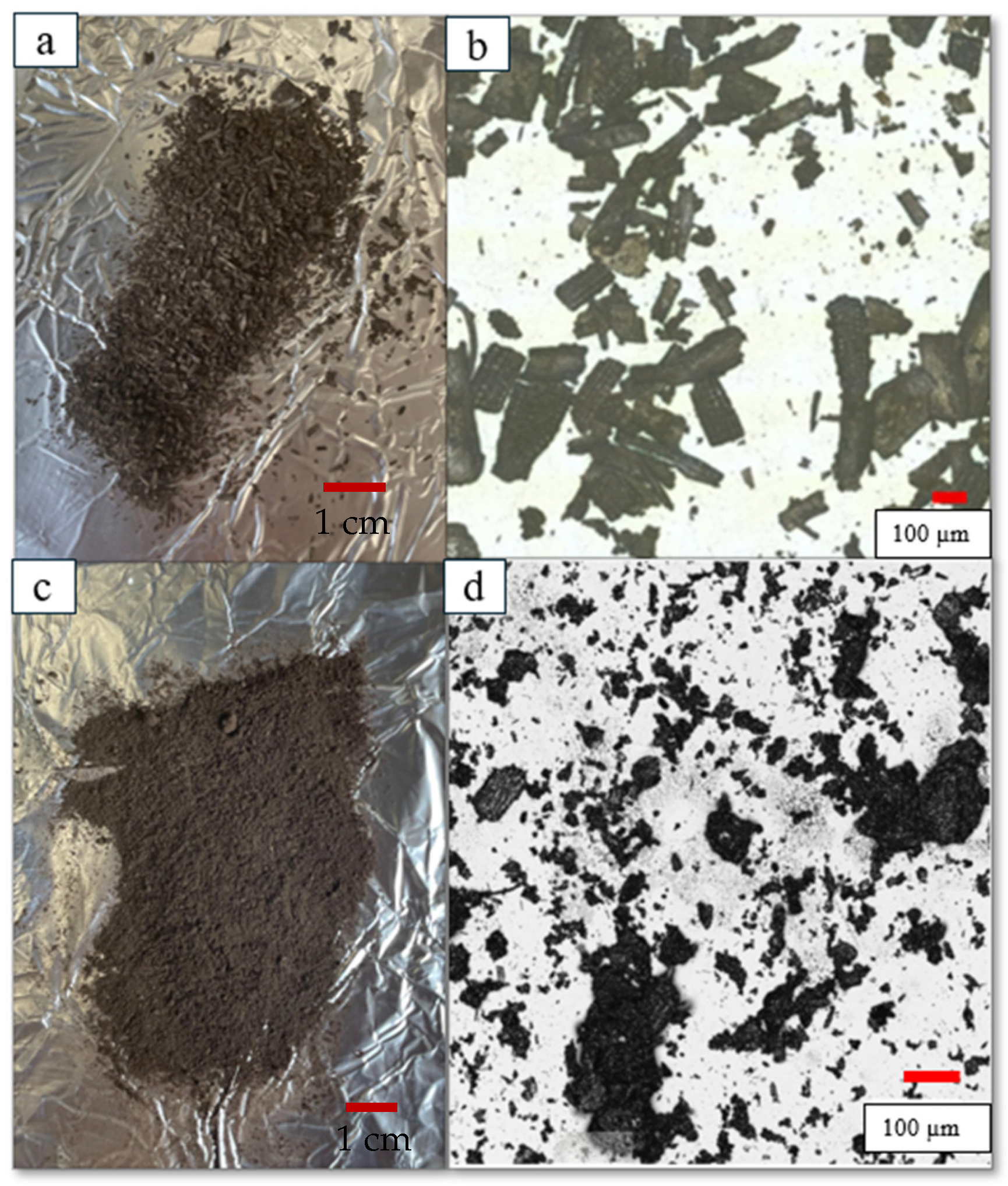
The particle size distributions of the lignin were characterized under a Laser Scanning Confocal Microscope (LSCM). Figure 2a,b show the photographic views of the lignin before and after size reduction, respectively. Figure 2c,d show images of the lignin before and after size reduction, obtained using the LSCM. The LSCM images indicate that prior to size reduction, the lignin particles were flat and elongated.

2.2.4. Fourier Transform Infrared Spectroscopy

The rice husk and rice husk-derived lignin samples were analyzed using a ThermoScientific Nicolet 6700 Fourier-transformed Infrared (FTIR) spectrometer (Thermo Fisher Scientific, Madison, WI, USA). The spectrometer collected spectra by running 32 scans with a resolution of 4 cm−1. The FTIR examined wavenumber ranged from 4000 to 400 cm−1. The spectrum of a pure potassium bromide (KBr) pellet was initially formed and used as the background for all subsequent samples. The rice husk and lignin samples were milled using a planetary ball mill prior to the FTIR analysis. Approximately 0.001 g of sample was combined with 0.100 g of KBr to make each KBr pellet. Three pellets were run for each sample. The spectra were analyzed with OMNIC software (version 8.2.0.387), with the area method.

2.2.5. Modification of Binder with Lignin

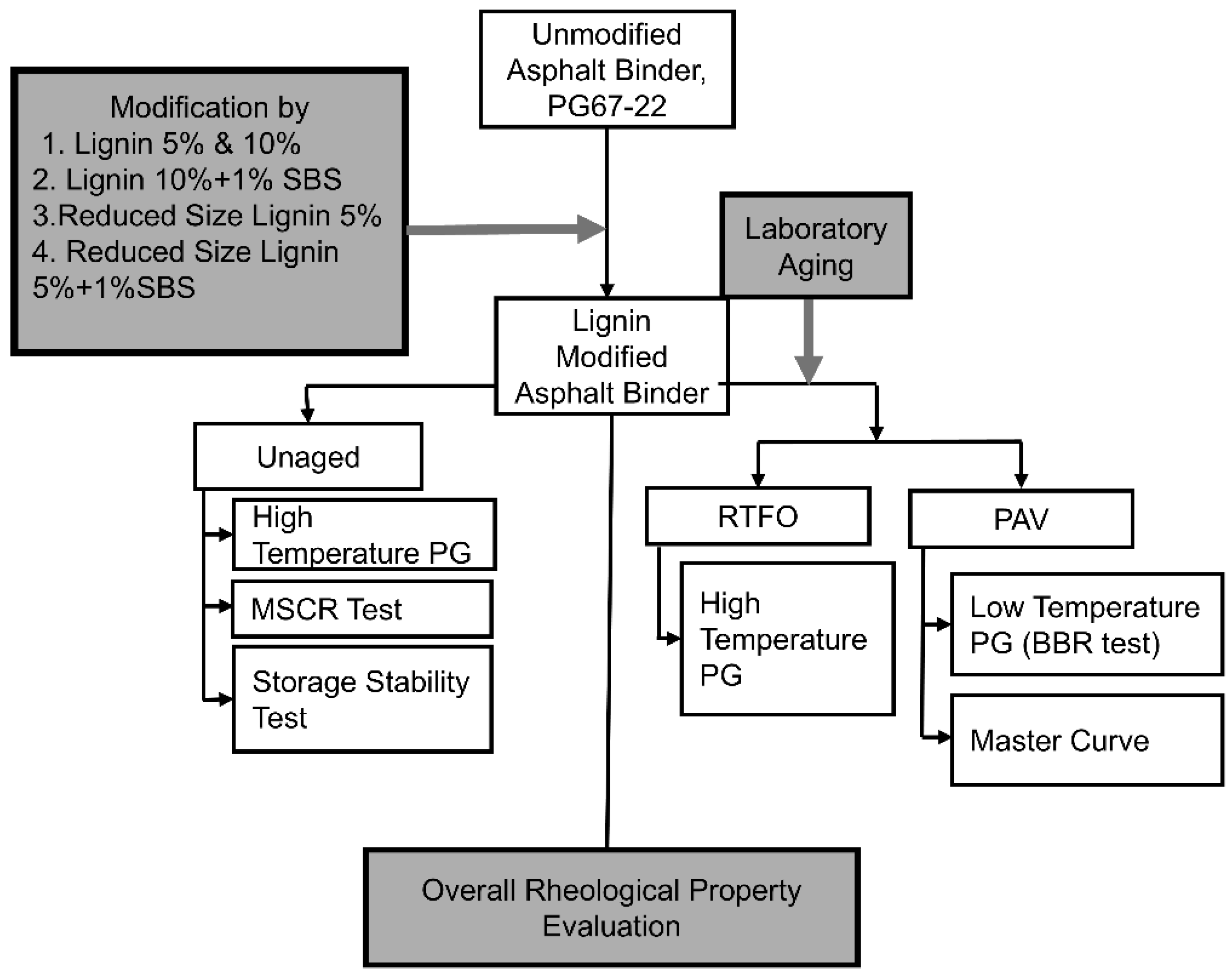
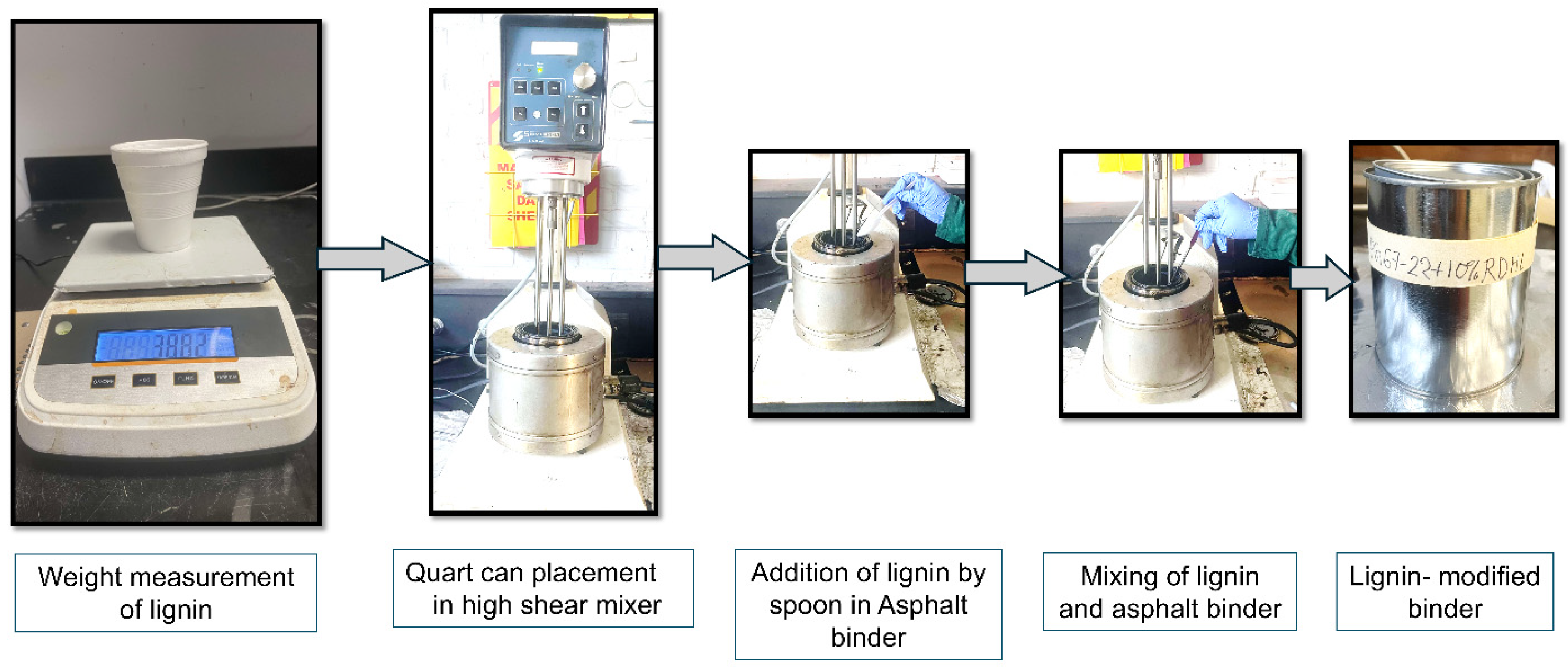
The workflow diagram for the production and characterization of lignin-modified binders is presented in Figure 3. In this study, a PG 67-22 binder was used as a base binder, and the lignin obtained from the HTC treatment was used as a modifier. Figure 4 shows the steps for the modification of the binder with lignin. At first, a quart can of binder was heated at 170 °C in a forced draft oven for approximately 2 h. The apparatus was then placed within a heating mantle to ensure a uniform temperature throughout the can. A thermometer was utilized to measure the temperature at 3 to 4 min intervals to maintain the temperature within the range of 160 °C to 170 °C, by changing the heating rate. A high shear mixer was then introduced inside the can to stir the base asphalt binder. The rotational velocity of the high shear mixer was increased gradually. The required amounts of lignin were then gradually added to the asphalt binder. The melting temperature of the lignin was higher than these temperatures, so the lignin would be expected to still be in particle form. To enhance the rate of dispersion while preventing agglomeration at the top, a spatula was dipped into the quart can and mixed by hand. During the initial 30 min, the rotational velocity was maintained at 4000 rpm. For the subsequent 20 min, it was increased to 8000 rpm. After 50 min of blending at a temperature between 160 °C and 170 °C, the lignin appeared to be thoroughly blended within the asphalt binder. The reduced particles of the lignin were mixed with the asphalt binder, following the same procedure as before. Furthermore, the effect of adding SBS polymer as a stabilizer to lignin-modified binder was investigated. For this purpose, 1% SBS polymer, by the weight of the binder, was added to the 10% lignin and 5% reduced-size lignin-modified binders, using the previously mentioned procedure.

2.2.6. Characterization of Lignin-Modified Binders: Performance Grade (PG)

Dynamic Shear Rheometer (DSR) tests were conducted on unaged and short-term aged binders to determine their Superpave PG, complex modulus (G*), and phase angle (δ), in accordance with the AASHTO T 315 (AASHTO, Standard Method of Test for Determining the Rheological Properties of Asphalt Binder Using a Dynamic Shear Rheometer (DSR). 2022, US Department of Transportation, Washington, DC, USA.) test method. The short-term aging of the binders was conducted using a Rolling Thin Film Oven (RTFO), in accordance with the AASHTO T 240 (AASHTO, Standard Method of Test for Effect of Heat and Air on a Moving Film of Asphalt Binder (Rolling Thin-Film Oven Test). 2018, US Department of Transportation, Washington, DC, USA.) method. The rheological properties (G* and δ) from the test were used to calculate the rutting factor (G*/sin δ) and the high-temperature PG.
Bending Beam Rheometer (BBR) tests were performed on long-term aged binders to evaluate their low-temperature properties. A Pressure Aging Vessel (PAV) simulated long-term aging of the binder in accordance with the AASHTO R 28 (AASHTO, Standard Practice for Accelerated Aging of Asphalt Binder Using a Pressurized Aging Vessel (PAV). 2022, US Department of Transportation, Washington, DC, USA.) test method. The flexural creep stiffness (S) and the rate of stress relaxation or m-value of the binder samples at low temperatures were determined as per the AASHTO T 313 (AASHTO, Method of Test for Determining the Flexural Creep Stiffness of Asphalt Binder Using the Bending Beam Rheometer (BBR). 2012, US Department of Transportation, Washington, DC, USA.) method. The S and m-values at 60 s quantified the thermal cracking resistance of the modified binders. Also, the low-temperature grade of blended binders was determined using the BBR results.

2.2.7. Multiple Stress Creep Recovery (MSCR) Test

To evaluate the elastic property of the lignin-modified binders at a high temperature, the % recovery and the non-recoverable creep compliance (Jnr) of the modified binders were assessed through the Multiple Stress Creep Recovery (MSCR) Test. The AASHTO T 350 (AASHTO, Standard Method of Test for Multiple Stress Creep Recovery (MSCR) Test of Asphalt Binder Using a Dynamic Shear Rheometer (DSR). 2022, US Department of Transportation, Washington, DC, USA.) test method was followed to conduct the MSCR test. The test was conducted at a temperature of 64 °C at two stress levels: namely, 0.1 kPa and 3.2 kPa. The Jnr and % recovery values were calculated from the MSCR test results.

2.2.8. Rheological Master Curve Method

In this study, the frequency sweep test was conducted using the DSR equipment to develop the phase angle, storage modulus, complex modulus, and loss modulus master curves of the lignin-modified binders. The test was conducted at 70 °C, 52 °C, 25 °C, 0 °C and 10 °C, with an angular frequency varying between 0.1 and 100 rad/s. A reference temperature of 25 °C was selected to construct the master curves.

2.2.9. Storage Stability Test

The storage stability test following the ASTM D7173 (ASTM, Standard Practice for Determining the Separation Tendency of Polymer from Polymer Modified Asphalt. 2022, ASTM International, West Conshohocken, PA, USA.) test method was used to evaluate the stability of the lignin-modified binders. For this purpose, the modified binders were poured into aluminum tubes of a diameter of 25.4 mm and a height of 139.7 mm. The tubes were then placed vertically, with a sealed opening, and placed inside an oven at 163 °C for 48 h. Then, the tubes were transferred to a freezer for 4 h to cool. Finally, the tubes were taken out and cut into three equal parts. The binders from the top and bottom segments were extracted, and the high-temperature rheological properties from the DSR test were compared to evaluate the stability of the lignin-modified binders during storage.

2.2.10. Preparation of Asphalt Mixes with Lignin-Modified Binder

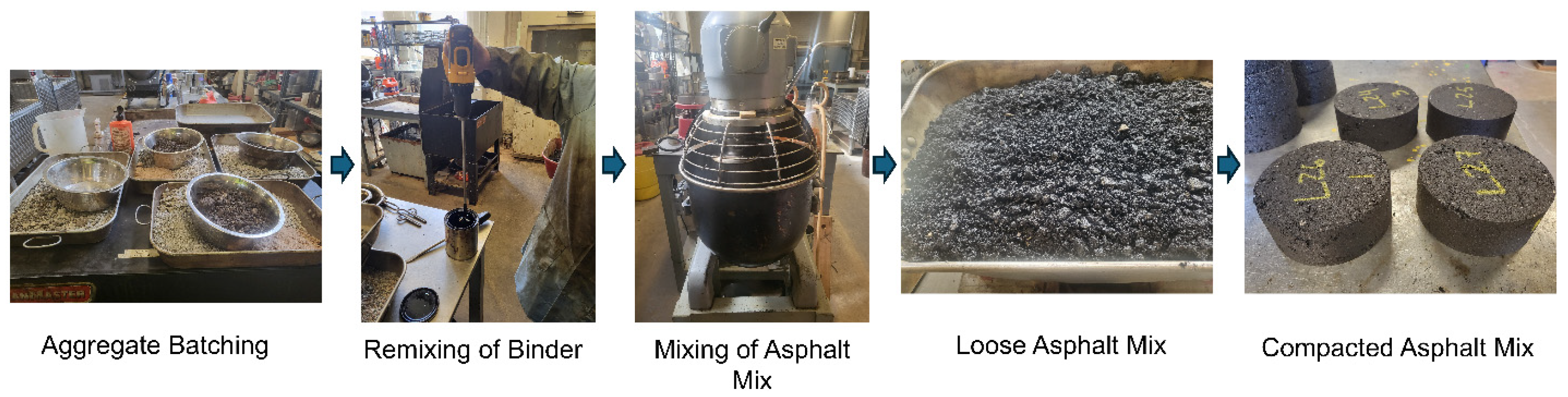
Figure 5 shows the preparation of asphalt mixes with a lignin-modified binder in the laboratory. In order to prepare the asphalt mixes, aggregate blends were prepared by combining the necessary amounts of different aggregates. The lignin-modified binder and aggregates were then heated at 163 °C in the oven for two hours. It was observed that the lignin settled at the bottom of the can during the heating process. Therefore, before adding to the aggregate blend, the binder was mixed for a few minutes, using a high-shear mixer to keep the lignin suspended in the asphalt binder. The heated aggregates were removed from the oven, and the required amount of heated binder was added to the aggregate blend and mixed. As mentioned earlier, asphalt mixes with 0% (control mix), 5%, and 10% lignin-modified binders were produced for the Louisiana and Oklahoma mixes.
For the Oklahoma mix, one of the asphalt mixes with 10% lignin-modified binder incorporated a rejuvenator. In that case, the rejuvenator was added to the asphalt binder before mixing with the aggregate blend. The amount of rejuvenator used in this asphalt mix was 2.1% of the weight of the binder. In this study, the target air void content for all prepared specimens was set at 7.0 ± 0.5%.

2.2.11. Performances of Asphalt Mixes with Lignin-Modified Binder

In this study, the Indirect Tensile Asphalt Cracking Test (IDEAL-CT) was conducted on both the Oklahoma and Louisiana asphalt mixes to determine the cracking tolerance index (CTindex) following the ASTM D8225 (ASTM, Standard Test Method for Determination of Cracking Tolerance Index of Asphalt Mixture Using the Indirect Tensile Cracking Test at Intermediate Temperature. 2022, ASTM International, West Conshohocken, PA, USA.) test method. Asphalt mix specimens with a diameter of 150 mm and height of 62 mm were produced in the laboratory, using the Superpave Gyratory Compactor (SGC). For this purpose, the loose mix was placed in the oven for 4 h at 135 °C. The loose mix was then heated at a compaction temperature (149 °C) for another 30 min, and the specimens were molded. In order to calculate the CT index of asphalt mixes, IDEAL-CT tests were conducted on the compacted samples by applying a vertical monotonic load at 50 mm/min until failure. The ITS was calculated by dividing the peak load by the cross-sectional area. The CTindex (Equation (1)) of the specimen was calculated as a function of the total failure energy (Gf) and the slope of the post-peak curve at 75% of the peak load (m75) (2022). The Gf used in the CTindex calculation was determined based on Equation (2). The higher the CT index, the better the cracking resistance of an asphalt mix.
C T i n d e x = t 62 × l 75 D G f m 75 10 6
G f = W f D t 10 6
where CTindex = cracking tolerance index, Gf = failure energy (Joules/m2), Wf = work of failure, area under the load–displacement curve (Joules), m75 = post-peak slope at 75% of peak load (N/m), l75 = displacement at 75% of peak load (mm), D = specimen diameter (mm), and t = specimen thickness (mm).

2.2.12. Rutting Performance of Asphalt Mixes

The Hamburg Wheel Test (HWT) was conducted in accordance with the AASHTO T 324 (AASHTO, Hamburg Wheel-Track Testing of Compacted Hot Mix Asphalt (HMA). 2022, US Department of Transportation, Washington, DC, USA.) test method to determine their rutting susceptibility. For this test, the loose mix was aged in the oven for two hours at the compaction temperature to simulate short-term oven aging conditions. The diameter and height of the compacted specimens were 150 mm and 62 mm, respectively. The HWTs were performed at 50 °C with a 52 passes/minute wheel pass frequency. The tests were terminated after reaching a maximum rut depth of 20 mm or 20,000 wheel passes, whichever was reached first. The HWT data were analyzed using both AASHTO T 324 (2022) and the Texas A&M University (TAMU) method to assess the rutting and moisture-induced damage resistance of the asphalt mixes.

2.2.13. Modified Lottman Test to Evaluate Resistance to Moisture-Induced Damage

The resistance of the mixes to moisture-induced damage was assessed using the modified Lottman test, as published in AASHTO T 283 (AASHTO, Standard Method of Test for Resistance of Compacted Asphalt Mixtures to Moisture-Induced Damage. 2022, US Department of Transportation, Washington, DC, USA.). This test determines the tensile strength ratio (TSR) by finding the ratio of the average indirect tensile strength (ITS) of three wet-conditioned specimens compared to the average ITS of three dry-conditioned specimens. One freezing and thawing cycle was applied for the wet-conditioning process. Both wet- and dry-conditioned samples were submerged in a water bath at 25 °C for two hours before testing. The TSR values of the asphalt mixes were calculated using Equation (3).
T S R = S t , w e t S t , d r y
where s t , w e t = the average indirect tensile strength of the wet-conditioned specimen, and s t , d r y = the average indirect tensile strength of the dry-conditioned specimen. The TSR of each mix was compared to the minimum recommended value of 0.8 specified in the Louisiana highway standards, providing a benchmark to predict the resistance to moisture-induced damage of the mixes prepared with lignin-modified binders.
Where error bars are shown, experiments were triplicated. Averages are shown in these figures with standard deviation error bars to allow for a comparison of results.

3. Results and Discussion

3.1. Results for Lignin-Particle Size Distribution

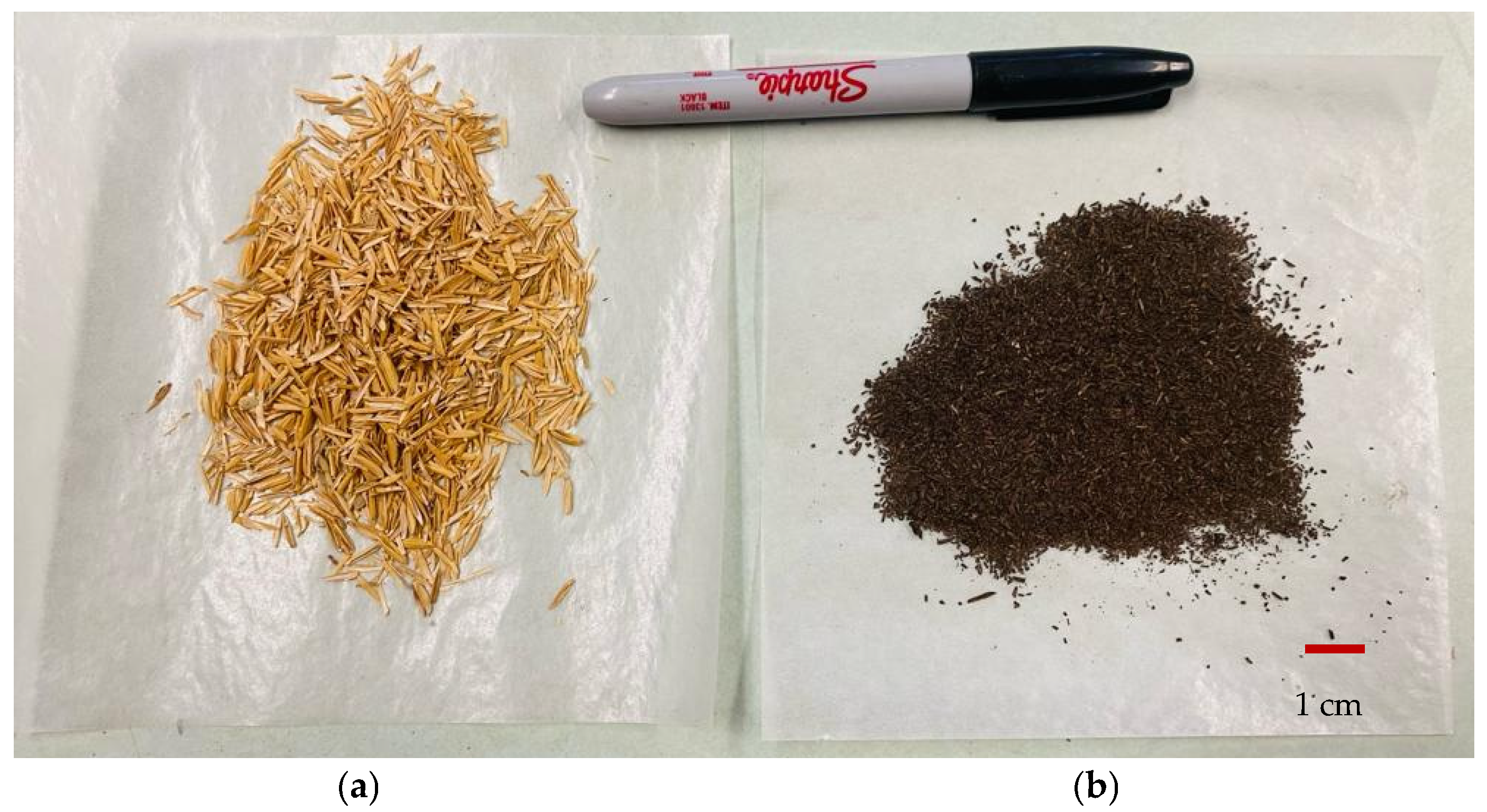
As mentioned earlier, the HTC treatment was used for this study to produce lignin from rice husks. It was found that, with HTC treatment, 75 g of raw rice husks can produce 30 to 35 g of lignin, resulting in a yield of 40 to 50%. Also, the HTC treatment process changed both the chemical and physical properties of the rice husk. Figure 6a,b show the photos of untreated rice husks and the lignin produced, respectively. The rice husks became a powder after the HTC treatment. The particle size distributions of the rice husk before and after the HTC treatment are shown in Table 1. It is evident that the size of the particles was reduced significantly after HTC treatment.

3.2. Fourier Transform Infrared (FTIR) Spectroscopy

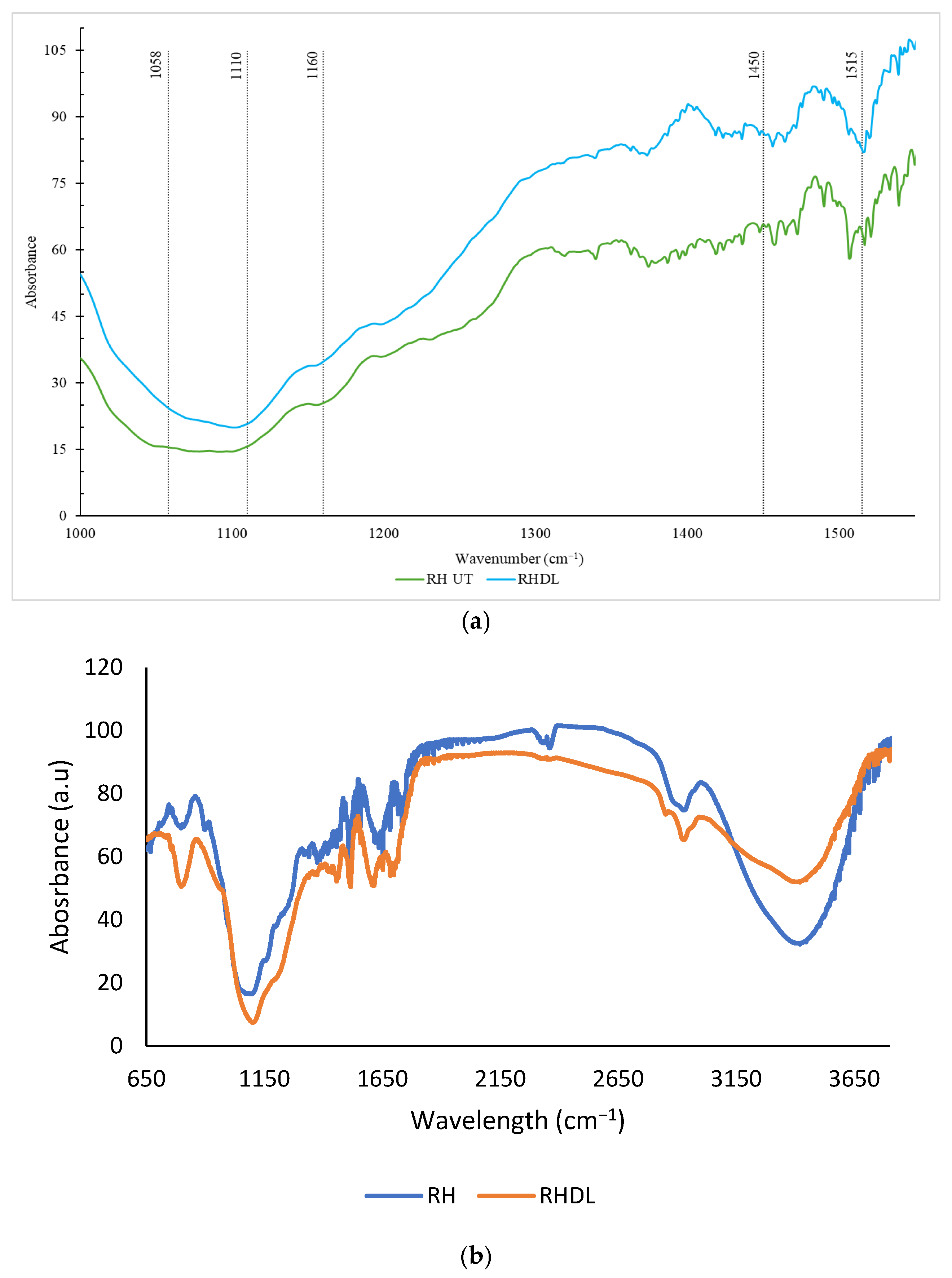
The FTIR spectra of untreated rice husk (RH) and rice husk-derived lignin reveal key functional groups that influence their potential as asphalt binder modifiers (Figure 7). For the fingerprint region (Figure 7a), the peak at 896 cm−1, associated with C1-H deformation in amorphous cellulose [40], suggests residual polysaccharides that may contribute to binder flexibility [41]. The C-O-C stretching vibration at 1162 cm−1 indicates the hemicellulose content [42], which could enhance aggregate adhesion in asphalt mixes. The lignin-specific peaks at 1515 cm−1 and 1600 cm−1, assigned to aromatic skeletal vibrations [40,43], are more pronounced in the extracted lignin than in RH, highlighting its concentrated aromatic structure. This structural feature is expected to enhance the binder performance by increasing stiffness (improving rutting resistance) and oxidative stability (delaying aging), as lignin’s rigid polymeric network reinforces the binder matrix [32]. The stronger lignin peaks confirm that the extracted sample is a richer source of lignin than the untreated rice husk. This higher lignin content provides a higher complex modulus that makes the binder stiffer and more resistant to deformation under load [41].
The full spectrum spectra (Figure 7b) indicates the changes in oxygen-containing group bonds. Hydroxy groups are typically found at a range of 3200–3600 cm−1 and may be seen to be less prominent for the RHDL (lignin) spectrum, possibly indicating less -OH content, as is found in lignin compared to cellulose. Ketone group bonds are often found near 1700 cm−1 and a comparative increase in the vibration for the RHDL spectra in Figure 7b may be seen, as expected, since lignin contains this bond. Ester bonds are often found at near 1730 cm−1, and little difference can be seen here between the spectra in Figure 7b.

3.3. Physical and Chemical Properties of Lignin

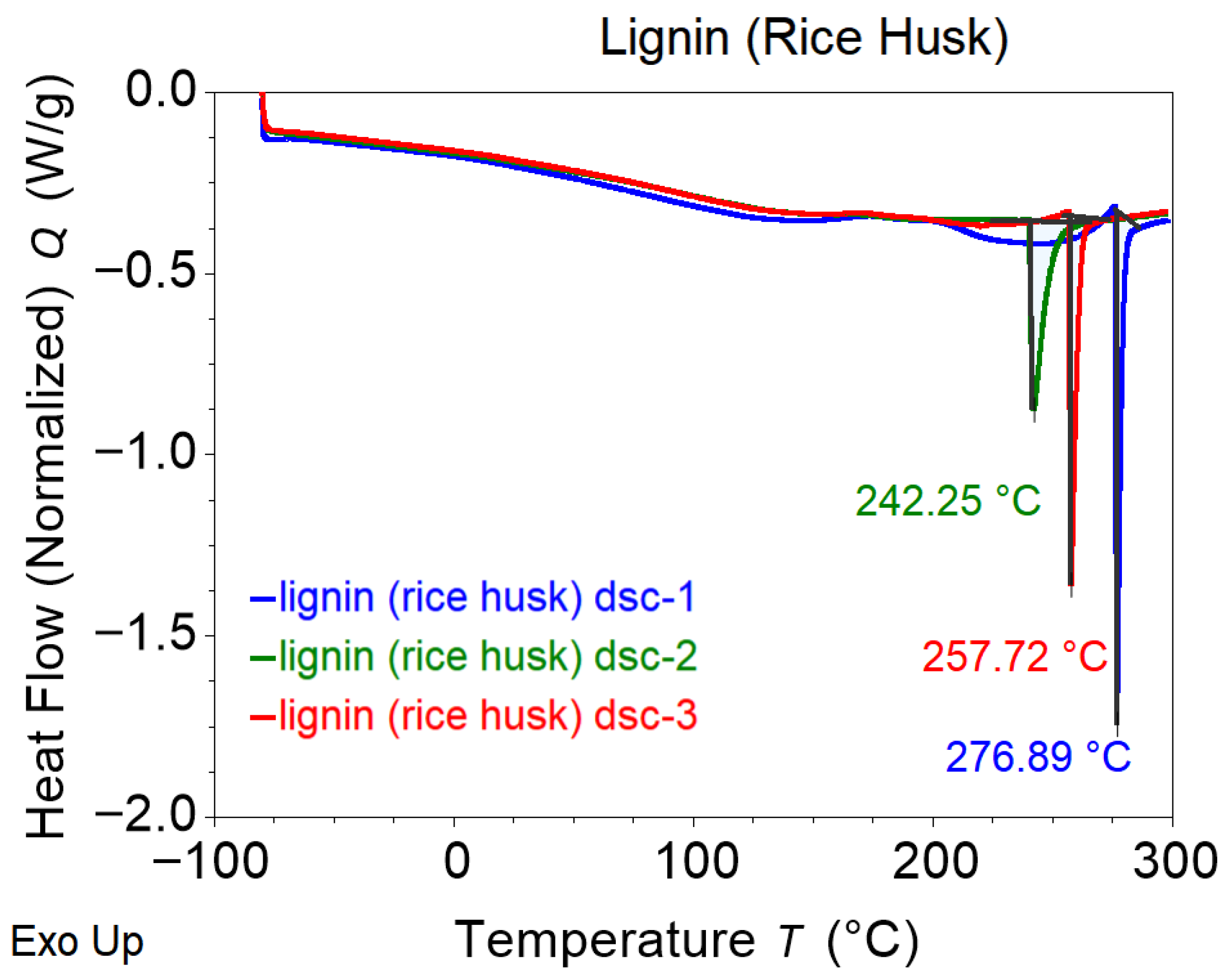
Table 2 shows the physical and chemical properties of untreated rice husk and rice husk-derived lignin. The National Laboratory of the Rockies (NREL) protocol was followed to calculate the acid-insoluble lignin, cellulose, and hemicellulose concentrations. Bomb calorimetry was used for higher heating value calculation. The detailed methods have been specified in previous works [18,44]. The bulk densities of rice husks and lignin were found to be 145 kg/m3 and 265 kg/m3, respectively. A differential scanning calorimeter (DSC) was utilized to measure the melting point of lignin. It was observed that its average melting point was 258.9 °C, with a standard deviation of 17.4 °C. The results indicate that the lignin is not expected to melt during mixing with the binder at 160 °C.
Figure 8 shows differential scanning calorimeter (DSC) measurements of rice husk-derived lignin. Three lignin samples were tested using DSC to determine its melting point. It was observed that the average melting point is 258.9 °C, with a standard deviation of 17.4 °C. The results indicate that the lignin is not expected to melt during mixing with binder at 170 °C.

3.4. Characterization of Lignin-Modified Asphalt Binder

3.4.1. High-Temperature Performance Grade

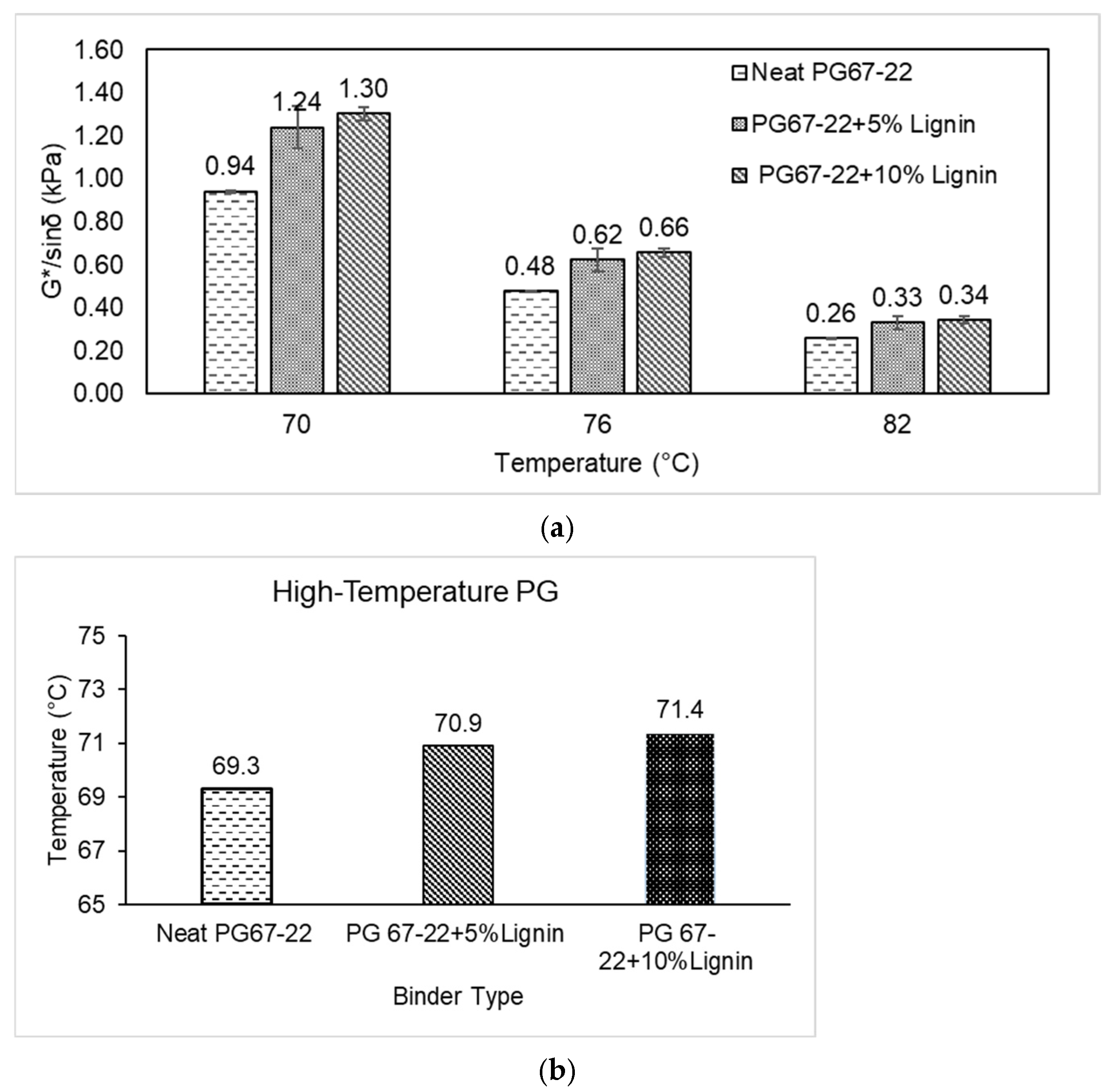
The high-temperature continuous grades of unaged and aged neat and lignin-modified binders were evaluated based on the results of the DSR tests. The values of the rutting factor, G*/sinδ, for neat PG 67-22 and lignin-modified PG 67-22 (5% and 10%) at 70 °C, 76 °C, and 82 °C temperatures are illustrated in Figure 9a. The G*/sinδ values were found to increase with an increasing percentage of lignin in the binder. For example, at 70 °C, G*/sinδ of PG 67-22 was 0.94 kPa and rose to 1.24 kPa and 1.30 kPa when 5% and 10% of lignin were added, respectively. This indicates better rut resistance of the binder with the lignin addition. One of the possible reasons for the improvement might be due to the highly aromatic macromolecular structure of lignin, which increases complex shear modulus G* and can reduce phase angle δ. The mechanism may involve the lignin fraction distributions in the binder matrix, where they can act as micro-fillers, helping to support loads and limiting viscous flow. Besides that, the mechanism may involve phenolic hydroxyl and methoxy groups of lignin reacting with aromatic fractions of the binder (resins and asphaltenes) to form hydrogen bonds and π–π interactions, hindering even further molecular mobility. Supramolecular association with limited mobility remained feasible. These effects helped to enhance the rutting resistance. The high-temperature performance grade (PG) of the neat and lignin-modified PG 67-22 binders is presented in Figure 9b. It was found that 5% and 10% lignin addition had enhanced the high-temperature PG of the neat binder. The continuous grade of the PG 67-22 binder with no lignin modification was 69.3 °C, whereas a 10% lignin addition had increased the continuous PG to 71.4 °C. Similar trends in properties at high temperatures with the addition of lignin were also observed in other research works [26,27,29].

3.4.2. Low-Temperature Performance Grade

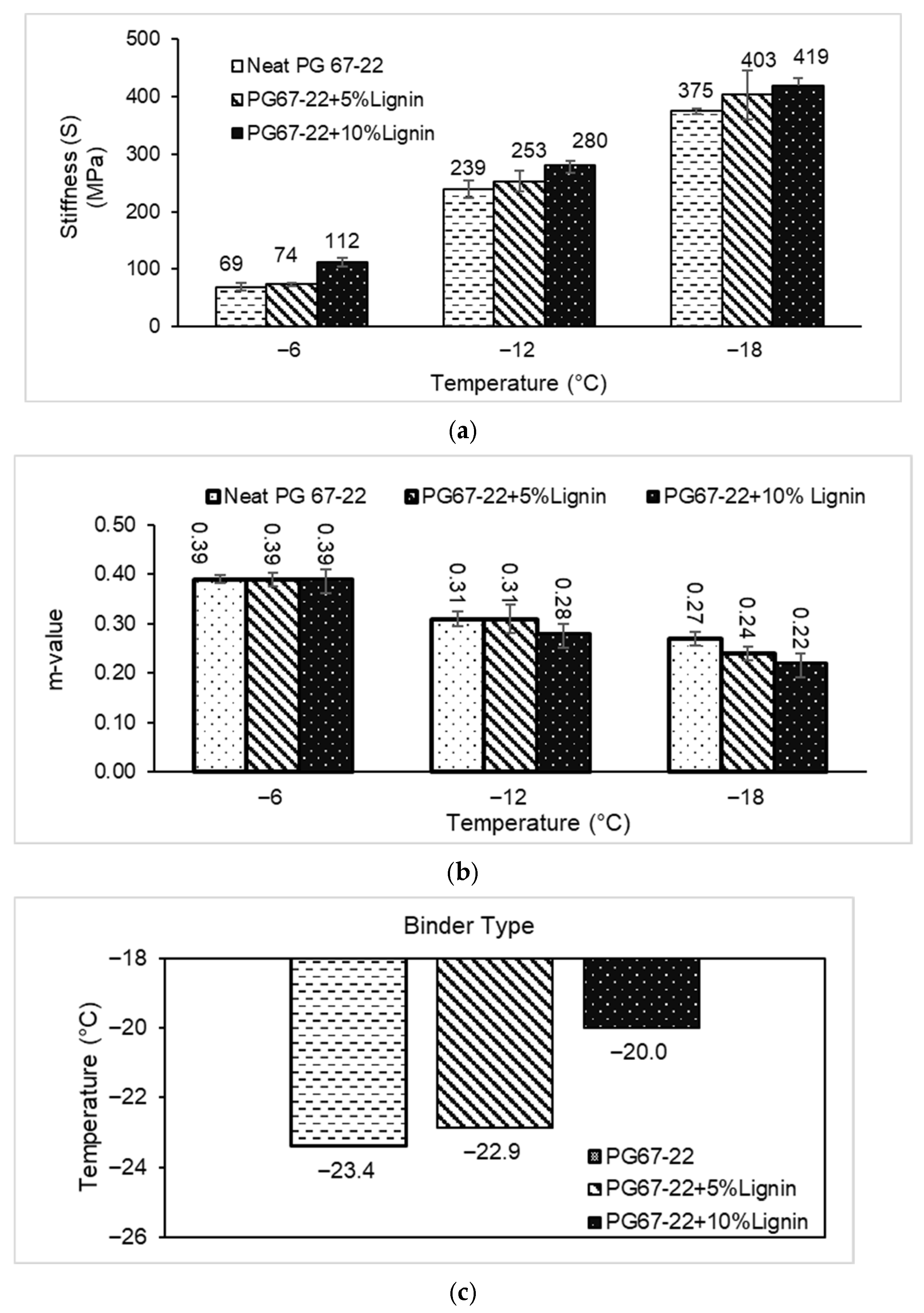
Figure 10a shows the stiffness (S) values of the lignin-modified binders from the BBR tests at −6 °C, −12 °C, and −18 °C. The S-value increased as the temperature was reduced from −6 °C to −18 °C. Also, from Figure 10a, it was found that with an increase in the lignin content, the stiffness of the binder increased. For example, at −6 °C, the S-value for the neat PG 67-22 binder was found to be 69 MPa, whereas the addition of 5% and 10% lignin increased the S-value to 74 and 112 MPa, respectively. Figure 10b presents the m-values of the lignin-modified binders from the BBR tests. At −6 °C, the m-values of the 5% and 10% lignin-modified binders were found to be same as the neat PG 67-22. However, m-values for the lignin-modified binders were found to be lower than the neat binder at −12 °C and −18 °C. A lower m-value indicates a slower relaxation of thermal stresses. This reduced rate of relaxation can negatively impact the performance of asphalt pavements at low temperatures.
The incorporation of lignin into asphalt binders hardens the overall matrix of modified binders and reduces viscoelastic relaxation at low temperatures. Unlike elastomeric polymers, lignin lacks flexible chain segments to dissipate strain energy, and its incorporation can raise the effective glass transition temperature of the binder, thereby decreasing the low-temperature ductility. Consequently, the combination of increased rigidity and reduced molecular mobility contributes to lower m-values and higher stiffness in the BBR test, negatively impacting the low-temperature performance grade.
Figure 10c shows the changes in the continuous low-temperature PG with the addition of lignin. It was observed that the addition of 5% and 10% lignin to the PG 67-22 binder changed the low-temperature PG from −23.4 °C to −22.9 °C and −20.0 °C, respectively. Similar trends in low-temperature properties for other types of lignin modification were observed by Xu et al. [32].

3.4.3. Non-Recoverable Creep Compliance, Known as Jnr and Percent Recovery

Table 3 shows the Jnr and % recovery of lignin-modified binders. It was observed that the addition of the lignin resulted in a slight improvement in the % recovery for both 0.1 kPa and 3.2 kPa stress levels. The 10% lignin-modified binder exhibited the highest % recovery values. Generally, a lower Jnr value indicates a better rutting resistance [34]. From Table 3, the lignin modification reduced the Jnr value at both stress levels compared to the neat binder, indicating better resistance to rutting with the addition of lignin to the neat binder. The decrease in Jnr with the incorporation of lignin is governed primarily by its rigid aromatic backbone, filler-type reinforcement, and possible hydrogen bonding with asphalt’s aromatic fractions. These mechanisms are responsible for the stiffening of the binder and also limiting the molecular mobility of the binder. As a result, under repeated traffic loading, enhanced resistance can be achieved. Table 3 shows the Jnr and % recovery of the lignin-modified binders at 64 °C.

3.4.4. Rheological Master Curve

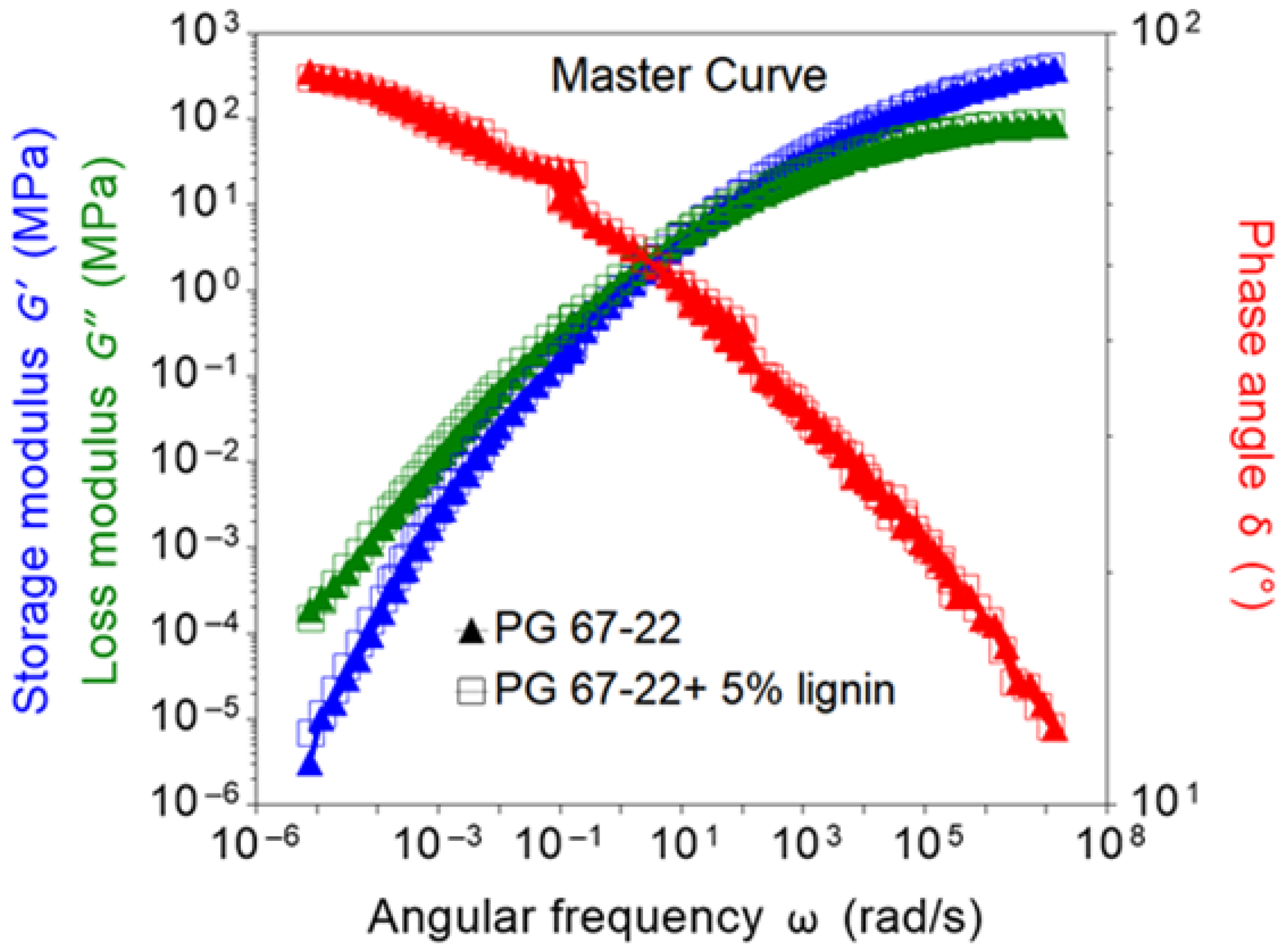
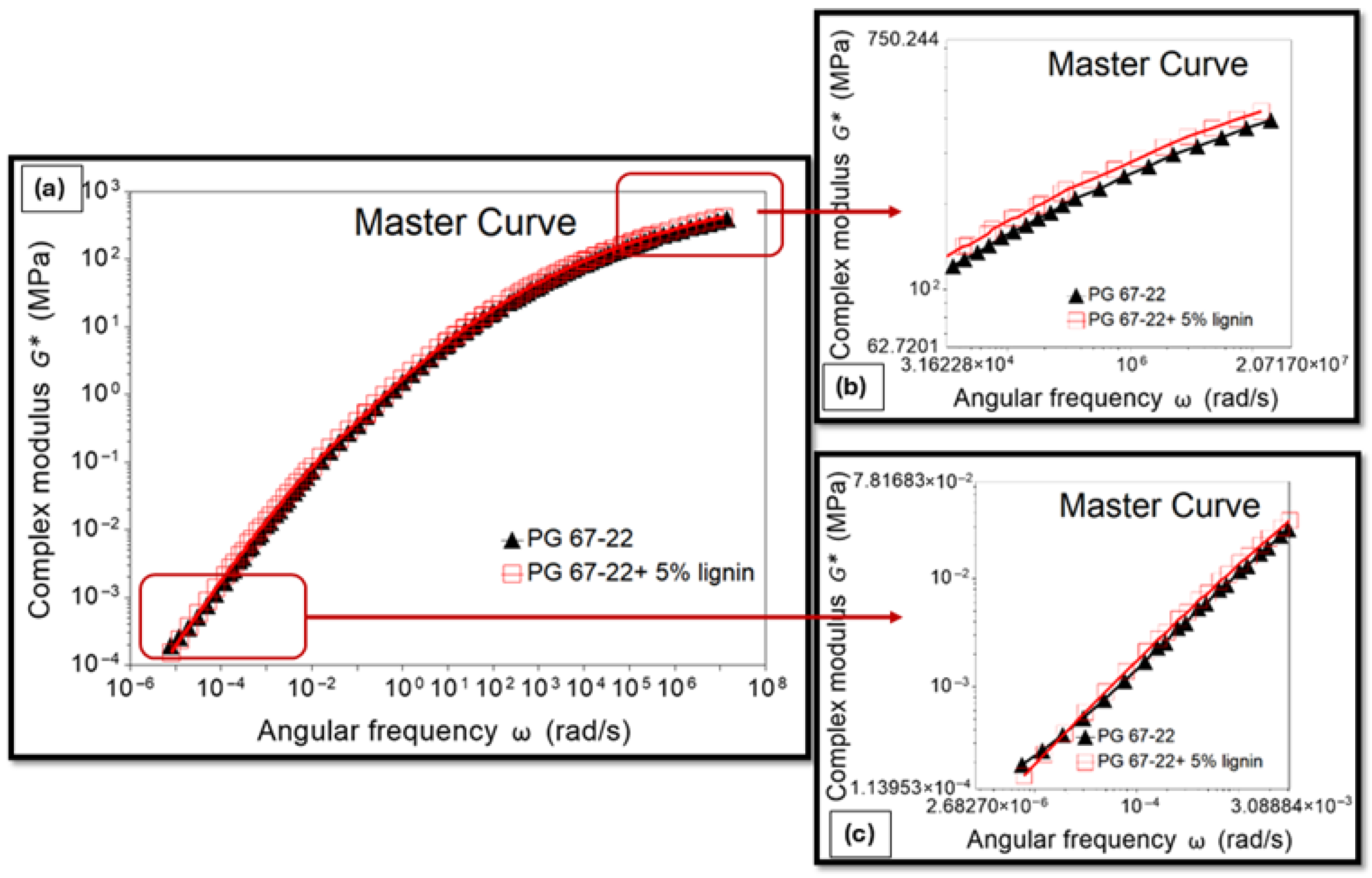
Rheological master curves were constructed to understand the effects of binder modification in broad temperature regions. Figure 11a shows the complex modulus master curves of the neat and 5% lignin-modified PG 67-22 binders. Also, the phase angle, storage modulus, and loss modulus master curves are presented in Figure 12. Figure 11a and Figure 12 indicate that the complex modulus, phase angle, storage modulus, and loss modulus values are similar to the neat binder over broad temperature ranges. Therefore, the properties of the lignin-modified binders are expected not to show significant rheological changes over broader temperature ranges compared to the neat binder.

3.4.5. Storage Stability of Lignin-Modified Binder

In this study, a stability index based on the ratio of the G* values of the top and bottom layer binder samples was determined to assess the stability of the binders [45]. A stability index closer to one indicates less variation and more favorable thermal stability. Table 4 presents the stability index of the binder samples at 70 °C, 76 °C, and 82 °C. From Table 4, it is evident that the addition of 10% lignin resulted in significantly poorer stability index values. The results indicate that the 10% lignin modification may result in phase separation between the binder and lignin and cause instability. Several studies have reported storage stability issues of binders modified with lignin from different sources [34,35,36]. The binder with 5% lignin modification exhibited better stability index values compared to the 10% lignin modification.
In this study, the effect of the reduction in lignin particle size on the stability of the binder was investigated and is presented in Table 4. The reduction in particle size was found to positively influence the stability of the lignin-modified binder. For 5% lignin modification, an increase in the stability index value from 0.68 to 0.76 at 76 °C was observed with reduced particle size. The results suggest a direct correlation between particle size and thermal stability. The phase separation of lignin from lignin produced from black liquor in asphalt binder has been found in the literature [37]. The reason for such separation may be the higher density of lignin compared to the binder. Smaller particles have a greater proportion of surface area compared to the volume, allowing for more interaction with the binder when compared to larger particles.
Also, to examine a possible solution to enhance the storage stability of the lignin-modified binder, 1% SBS polymer, by the weight of the binder, was incorporated, utilizing a high shear mixing method. The inclusion of SBS significantly improved the stability of the lignin-modified binder. Specifically, the 10% lignin modification with a 1% SBS resulted in an increase in the stability index value from 0.46 to 0.72 at 76 °C. Additionally, for the 5% reduced-size lignin-modified binder, the incorporation of 1% SBS increased the stability index value from 0.76 to 0.91 at 76 °C.
One of the possible mechanisms by which SBS interacts with lignin is that SBS swells maltene fractions of asphalt. During the swelling period of the maltene fraction, the lignin particles are entrapped within the SBS domain. Meanwhile, the polystyrene (PS) end blocks form rigid domains that act as physical crosslinks, generating a three-dimensional network [46]. In this network, the lignin particles can be fixed in their swollen crosslinked state, and therefore phase separation can be avoided. Whereas lignin alone gives hard particulate agglomerates settling under density gradients, the swollen polybutadiene (PB) chains can also entangle asphaltene and partially encapsulate the lignin particles. This dual action of physical entrapment within the SBS network and encapsulation by swollen PB chains reduces the mobility of lignin and inhibits sedimentation during high-temperature stability testing.
Based on the results of the storage stability test, it can be concluded that the combination of PG 67-22 with 5% reduced particle size lignin and 1% SBS is expected to exhibit the highest stability performance among all the binders. The binders were ranked from the most stable to the least stable in the following order of 67-22 +5% Lignin (Reduced Size) +1% SBS, PG 67-22 +5% Lignin (Reduced Size), PG 67-22 +1% SBS +10% Lignin, PG 67-22 +5% Lignin and PG 67-22 +10% Lignin. The addition of SBS, however, would be expected to increase cost.

3.5. Characterization of Asphalt Mixes

3.5.1. Rutting Resistance of Asphalt Mixes

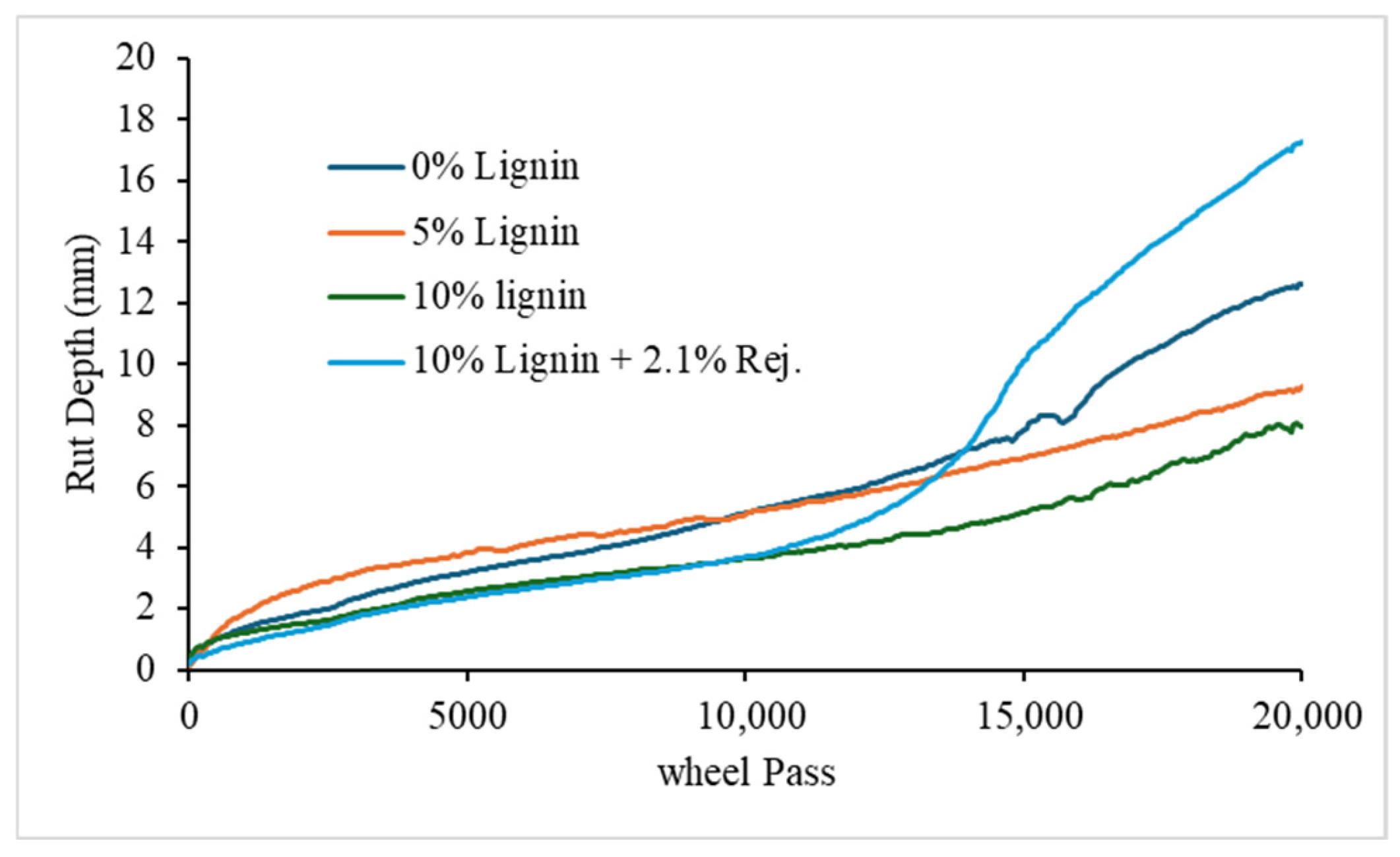
The Hamburg Wheel Tracking (HWT) test was conducted to determine the rutting resistance of the Oklahoma asphalt mixes with lignin-modified binders. The HWT results were analyzed using the AASHTO and Texas A&M University (TAMU) methods. Figure 13 shows the rut depths of the asphalt mixes from the HWT results. A summary of the test results using AASHTO and TAMU methods is presented in Table 5 and Table 6, respectively. At 10,000 passes, a rut depth of 12.5 mm or less is specified as being needed by the ODOT BMD Special Provision for a mix with the PG 64-22 binder.
All the mixes were observed to exhibit a satisfactory rutting resistance after 10,000 passes. Also, the rutting resistance was found to improve with the addition of lignin. For example, the mix with 0% lignin exhibited a rut depth of 5.68 mm after 10,000 wheel passes, whereas the mixes with 5% and 10% lignin-modified binder exhibited 5.00 mm and 4.17 mm rut depths after 10,000 passes, respectively. The addition of the rejuvenator was found to produce a similar rutting resistance to the asphalt mix with 10% lignin-modified binder. The result matches the binder test results, as an increase in the amount of lignin was found to improve the high-temperature PG as well as the rutting resistance of the asphalt binder. Similar findings were reported by other studies, although the mechanism is not fully confirmed [1,37].
In the AASHTO method, the stripping inflection point (SIP) from the HWT is used as an indicator of the moisture-induced damage resistance of an asphalt mix. A higher value generally indicates better resistance to moisture-induced damage. Both the mixes with 5% and 10% lignin-modified binders were observed to exhibit SIP at wheel passes higher than 15,000, indicating adequate resistance to moisture-induced damage. The viscoplastic strains at Stripping Number ( ε L C S N v p ) , Stripping Number (LCSN), and Stripping Life (LCST) from the HWTs were determined using the TAMU method and are presented in Table 6. The ε L C S N v p was found to decrease with the addition of lignin, indicating improved resistance to rutting. The incorporation of lignin increased the LCSN and LCST of asphalt mixes. Therefore, better moisture-induced damage resistance is expected for asphalt mixes with the addition of lignin. Overall, the mixes with lignin-modified binders satisfied the specifications for rutting and moisture-induced damage resistance for BMD mixes.

3.5.2. Moisture-Induced Damage of Asphalt Mixes Using Modified Lottman Tests

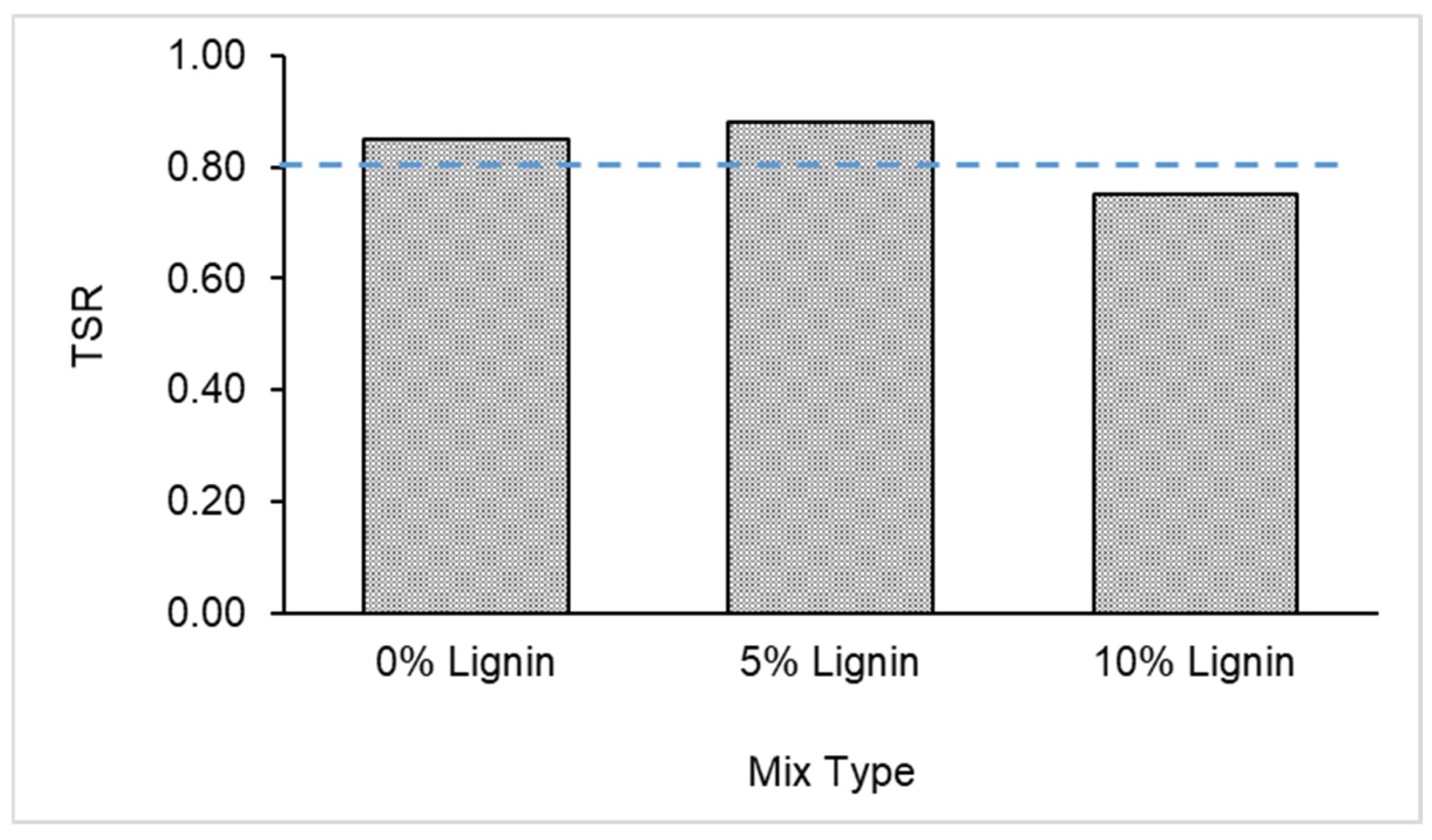
The resistance to moisture-induced damage of the Louisiana asphalt mixes was evaluated using the Modified Lottman test. Prepared specimens were tested in triplicate for asphalt mixes with modified binder with a lignin content of 0%, 5%, and 10%. The level of variability in the Lottman test ranged from 1.3 to 2.6%, with an average of 1.9%. Figure 14 presents the tensile strength ratio (TSR) for the test combinations (0%, 5%, and 10% lignin). As shown in Figure 14, the mixes prepared with 5% lignin performed adequately and slightly better than the control mix. The Louisiana-recommended requirement for TSR for surface mixes is 0.8, as shown by the dotted line in Figure 14. The control and the asphalt mix prepared with 5% lignin satisfied the requirement, whereas the mix with 10% lignin did not satisfy the requirement. This finding could relate to the dispersion quality.

3.5.3. Cracking Resistance of Asphalt Mixes

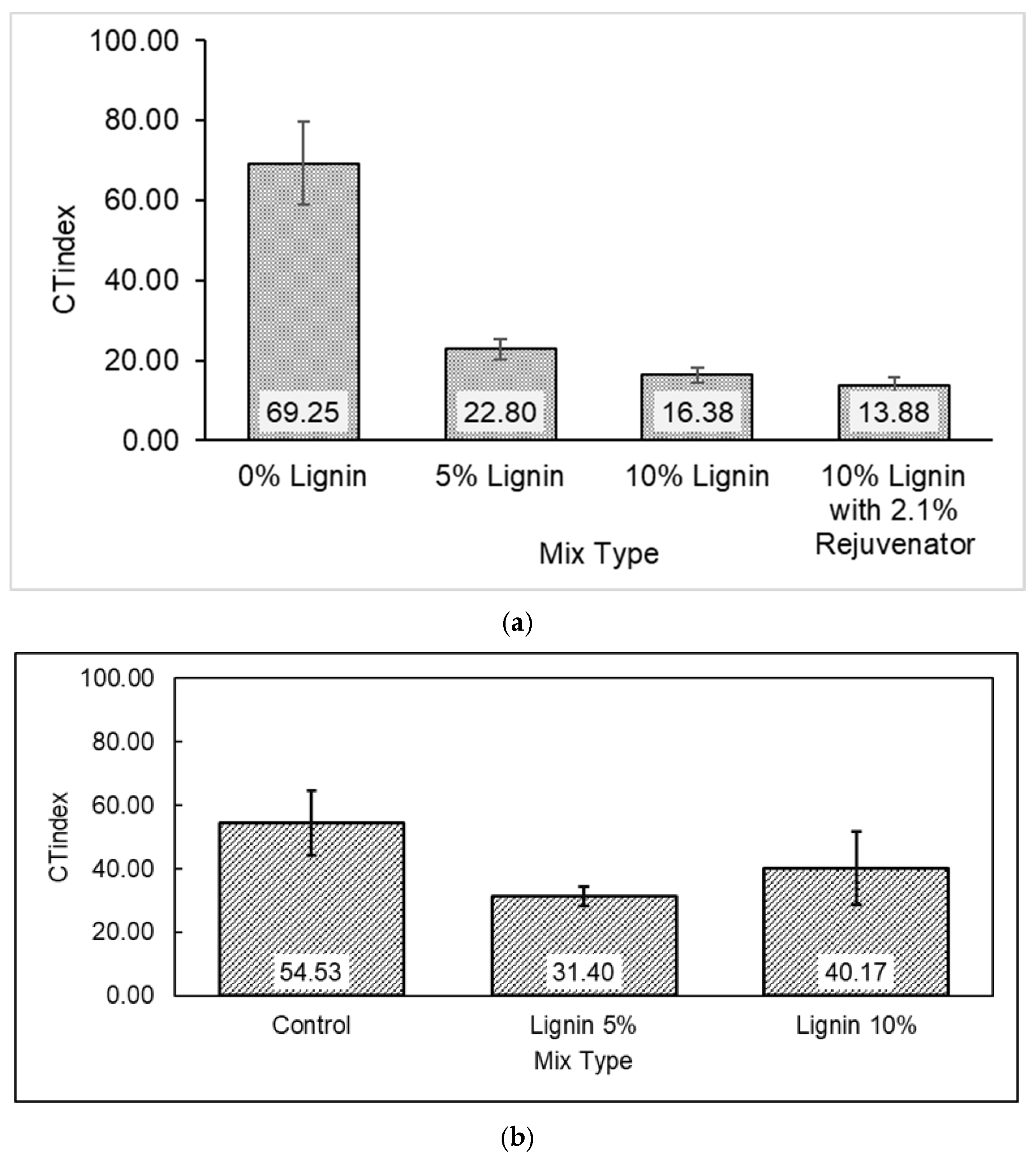
The cracking resistances of the Oklahoma and Louisiana asphalt mixes were evaluated with the CTindex values from the IDEAL-CT tests. A higher CTindex indicates that the evaluated mixture has a better cracking resistance. A summary of the IDEAL-CT test results of Oklahoma and Louisiana asphalt mixes are presented in Figure 15a and Figure 15b, respectively. The error bar in Figure 15a,b indicates one standard deviation from the average value. It was observed that the CTindex values were lowered with an increase in the lignin content. From Figure 15a, it was found that the Oklahoma asphalt mix with 0% lignin exhibited a CTindex value of 70, which then decreased to 43 and 17 with the addition of 5% and 10% lignin, respectively. From Figure 15b, for Louisiana mixes, the control mix (0% lignin) exhibited the highest CTindex. The control mix demonstrated superior cracking resistance compared to the mix with a lignin-modified binder. The mix containing 10% lignin achieved a moderate CTindex, while the mix containing 5% lignin showed the lowest CTindex. The reason for the decrease in cracking resistance may be due to increased stiffness with lignin addition [47].
The relatively low CTindex values for all mixes could be attributed to the use of an unmodified asphalt binder and the RAP content in the mixes, both of which are known to reduce the cracking resistance. The reduction in performance observed with the addition of lignin suggests a potential negative effect of lignin on the cracking resistance, possibly due to its interaction with the asphalt binder or its stiffening effect. These findings indicate that the optimization of the lignin dosage and further binder modifications may be necessary to improve the cracking resistance. A commonly used commercial rejuvenator was added to the Oklahoma asphalt mix to improve the cracking resistance of the asphalt mix. However, Figure 15a shows no improvement in the CTindex value with the addition of 2.1% rejuvenator to the asphalt mix with 10% lignin-modified binder. Further study on the addition of rejuvenators is needed for rice husk lignin addition to asphalt binder and its effects.

4. Conclusions

The objective of this study was to investigate the feasibility of using lignin separated by HTC from a local agricultural waste, i.e., rice husks, as a partial replacement for an asphalt binder. The following conclusions were obtained from the results of the experimental program:
  • The HTC treatment at 250 °C was found to be effective for lignin extraction. The treatment created a powdery substance from rice husks with an increased acid-insoluble lignin content and a reduced cellulose and hemicellulose content.
  • From DSC thermograms, the melting point of the lignin was found to be high enough to not melt during the production of a lignin-modified binder. Therefore, lignin particles are expected to be present in the modified binders.
  • The storage stability test indicated that the addition of 10% lignin may produce a highly unstable modified binder, due to the phase separation between the lignin and binder. Therefore, continuous stirring of the lignin-modified binder is recommended to reduce phase separation.
  • Addition of 1% SBS increased the stability ratio from 0.69 to 0.89 for 5% lignin modified binder and from 0.44 to 0.68 for 10% lignin modified binder. It was hypothesized that SBS reduced the mobility of lignin and inhibited sedimentation during the high-temperature stability test.
  • The modification of the asphalt binder with lignin gave an increase in the rutting resistance compared to the neat binder. Approximately 2 °C grade bumping at high-temperature continuous PG was observed with the addition of 10% lignin.
  • From MSCR testing, the lignin modification had lowered the Jnr value at both stress levels compared to the neat binder, indicating better resistance to rutting with the addition of lignin to the neat binder. Also, slight improvements in % recovery were observed for the lignin-modified binders.
  • The asphalt binder’s low-temperature properties were found to be negatively impacted by the addition of lignin, as it caused an increase in stiffness and a reduction in the m-value at low temperatures. The addition of 10% lignin was found to increase the low-temperature continuous grade by 3.4 °C.
  • Improved resistance to rutting was observed with the addition of lignin. The increase in stiffness with the use of lignin-modified binder is the reason for this improvement. Also, asphalt mixes prepared with 5% lignin exhibited slightly better moisture-induced damage resistance than the control mix.
  • Cracking resistance of the asphalt mixes with lignin-modified binders was found to reduce significantly with the addition of lignin. The use of an elastomeric polymer, such as SBS or other additives, needs to be investigated to enhance the cracking resistance of the lignin-modified asphalt binder.
The modification of a binder with lignin has the potential to improve the asphalt binder’s and asphalt mix’s properties and performances, except for the cracking resistance. Therefore, a partial replacement of fossil fuel-based binder with lignin is feasible with measures to improve the cracking resistance. Only one type of binder was investigated in this study, and future work is needed to incorporate other types of binders, vary lignin contents and add rejuvenators. The use of lignin from other unused secondary agricultural and forestry residues is recommended. Also, further optimization is needed to address the challenges in storage stability issues and phase separation at higher lignin contents. In addition, further research beyond accelerated aging tests is needed to assess the long-term practical relevance of lignin addition for asphalt paving. Future work should also include varying the HTC temperature/time and elemental analysis of the lignin.

Author Contributions

Conceptualization, J.G.L., N.W., M.A.E., M.Z. and S.A.A.; methodology, J.G.L., N.W., M.A.E., S.A.A., M.Z. and K.H.; software, M.R.I., N.T., M.A.E., S.A.A. and K.H.; validation, J.G.L., N.W., M.A.E., M.Z. and S.A.A.; formal analysis, M.R.I., N.T., M.A.E., S.A.A., M.Z. and K.H.; investigation, M.R.I., N.T. and M.Z.; resources, J.G.L., N.W., M.A.E., M.Z. and S.A.A.; data curation, M.R.I., N.T., M.A.E., S.A.A. and K.H.; writing—original draft preparation, M.R.I., N.T., M.A.E., S.A.A. and M.Z.; writing—review and editing, J.G.L., N.W., M.R.I., N.T., M.A.E., S.A.A. and M.Z.; visualization, M.R.I., N.T., M.A.E., S.A.A., K.H. and J.G.L.; supervision, J.G.L., N.W., M.A.E., M.Z. and S.A.A.; project administration, J.G.L., N.W., M.A.E., M.Z. and S.A.A.; funding acquisition, J.G.L., N.W., M.A.E., M.Z. and S.A.A. All authors have read and agreed to the published version of the manuscript.

Funding

This research was funded by the Southern Plains Transportation Center (SPTC) and the U.S. Department of Transportation (Award No.: 69A3552348306—CY1-LTU-OU-LSU-01).

Data Availability Statement

The raw data supporting the conclusions of this article will be made available by the authors upon request.

Acknowledgments

The authors would like to acknowledge the assistance of Shahjalal Selim of Louisiana Tech University and Mohammad Hadizadeh Pirbasti of Louisiana State University.

Conflicts of Interest

The authors declare no conflicts of interest. The funders had no role in the design of the study; in the collection, analyses, or interpretation of data; in the writing of the manuscript; or in the decision to publish the results.

Abbreviations

The following abbreviations are used in this manuscript:
HTCHydrothermal carbonization
BBRBending beam rheometer
CLSCalcium lignosulfonate
SBSStyrene–butadiene–styrene
JMFJob Mix Formula
NMASNominal Maximum Aggregate Size
LaDOTDLouisiana Department of Transportation and Development
ODOTOklahoma Department of Transportation
LSCMLaser Scanning Confocal Microscope
FTIRFourier-transformed infrared
KBrPotassium bromide
DSRDynamic shear rheometer
RTFORolling thin film oven
PAVPressure aging vessel
MSCRMultiple stress creep recovery
IDEAL-CTIndirect tensile asphalt cracking test
SGCSuperpave gyratory compactor
HWTHamburg Wheel Test
ITSAverage indirect tensile strength
TSRTensile strength ratio
RH UTUntreated rice husk
NRELNational Laboratory of the Rockies
DSCDifferential scanning calorimeter
JnrNon-recoverable creep compliance
SIPStripping inflection point

References

  1. Arafat, S.; Kumar, N.; Wasiuddin, N.M.; Owhe, E.O.; Lynam, J.G. Sustainable lignin to enhance asphalt binder oxidative aging properties and mix properties. J. Clean. Prod. 2019, 217, 456–468. [Google Scholar] [CrossRef]
  2. Copeland, A. Reclaimed Asphalt Pavement in Asphalt Mixtures: State of the Practice; Tech Report; United States Federal Highway Administration Office of Research, Development, and Technology: McLean, VA, USA, 2011.
  3. Thives, L.P.; Ghisi, E. Asphalt mixtures emission and energy consumption: A review. Renew. Sustain. Energy Rev. 2017, 72, 473–484. [Google Scholar] [CrossRef]
  4. Gielen, D.; Boshell, F.; Saygin, D.; Bazilian, M.D.; Wagner, N.; Gorini, R. The role of renewable energy in the global energy transformation. Energy Strategy Rev. 2019, 24, 38–50. [Google Scholar] [CrossRef]
  5. Elena, G.; Fabrizio, C.; Xiaohu, L.; Francesco, C. Chemical and rheological analysis of unaged and aged bio-extended binders containing lignin. J. Traffic Transp. Eng. 2023, 10, 947–963. [Google Scholar] [CrossRef]
  6. Elnaml, I.; Mohammad, L.N.; Baumgardner, G.; Cooper, S.; Cooper, S. Sustainability of Asphalt Mixtures Containing 50% RAP and Recycling Agents. Recycling 2024, 9, 85. [Google Scholar] [CrossRef]
  7. Chen, C.; Lu, J.; Ma, T.; Zhang, Y.; Gu, L.; Chen, X. Applications of vegetable oils and their derivatives as Bio-Additives for use in asphalt binders: A review. Constr. Build. Mater. 2023, 383, 131312. [Google Scholar] [CrossRef]
  8. Ji, J.; Suo, Z.; Xu, S.; Yao, H.; You, Z.; Li, H.; Sun, L. Effectiveness of vegetable oils as rejuvenators for aged asphalt binders. J. Mater. Civ. Eng. 2017, 29, D4016003. [Google Scholar] [CrossRef]
  9. Escobar-Medina, F.J.; Rivera-Armenta, J.L.; Salazar-Cruz, B.A.; Hernández-Zamora, G.; Zapién-Castillo, S.; Flores-Hernández, C.G. Sargassum-modified asphalt: Effect of particle size on its physicochemical, rheological, and morphological properties. Sustainability 2021, 13, 11734. [Google Scholar] [CrossRef]
  10. Wen, Y.; Wang, Y.; Zhao, K.; Sumalee, A. The use of natural rubber latex as a renewable and sustainable modifier of asphalt binder. Int. J. Pavement Eng. 2017, 18, 547–559. [Google Scholar] [CrossRef]
  11. Peralta, J.; Raouf, M.A.; Tang, S.; Williams, R.C. Bio-Renewable Asphalt Modifiers and Asphalt Substitutes. In Sustainable Bioenergy and Bioproducts: Value Added Engineering Applications; Springer: Berlin/Heidelberg, Germany, 2012; Volume 62, pp. 89–115. [Google Scholar]
  12. Peng, C.; Huang, S.; You, Z.; Xu, F.; You, L.; Ouyang, H.; Li, T.; Guo, C.; Ma, H.; Chen, P. Effect of a lignin-based polyurethane on adhesion properties of asphalt binder during UV aging process. Constr. Build. Mater. 2020, 247, 118547. [Google Scholar] [CrossRef]
  13. Christopher, L. Integrated Forest Biorefineries: Challenges and Opportunities; Royal Society of Chemistry: London, UK, 2012. [Google Scholar]
  14. Luo, Y.; Ge, G.; Yang, Y.; Ban, X.; Wang, X.; Zhang, Z.; Bai, B. A Review on the Preparation, Properties, and Mechanism of Lignin-Modified Asphalt and Mixtures. Sustainability 2026, 18, 1536. [Google Scholar] [CrossRef]
  15. Masoumeh, K.; Naser, F.; Martin, I.P.-C.; Asadollah, A. Rice Husk at a Glance: From Agro-Industrial to Modern Applications. Rice Sci. 2024, 31, 14–32. [Google Scholar] [CrossRef]
  16. Abdelaziz, O.Y.; Brink, D.P.; Prothmann, J.; Ravi, K.; Sun, M.; García-Hidalgo, J.; Sandahl, M.; Hulteberg, C.P.; Turner, C.; Lidén, G.; et al. Biological valorization of low molecular weight lignin. Biotechnol. Adv. 2016, 34, 1318–1346. [Google Scholar] [CrossRef] [PubMed]
  17. Tarasov, D.; Leitch, M.; Fatehi, P. Lignin–carbohydrate complexes: Properties, applications, analyses, and methods of extraction: A review. Biotechnol. Biofuels 2018, 11, 1–28. [Google Scholar] [CrossRef] [PubMed]
  18. Lynam, J.; Reza, M.T.; Yan, W.; Vásquez, V.; Coronella, C. Hydrothermal carbonization of various lignocellulosic biomass. Biomass Convers. Biorefinery 2015, 5, 173–181. [Google Scholar] [CrossRef]
  19. Dinjus, E.; Kruse, A.; Troeger, N. Hydrothermal carbonization: 1. Influence of lignin in lignocelluloses. Chem. Ing. Tech. 2011, 83, 1734–1741. [Google Scholar] [CrossRef]
  20. Edyta, M.; Aneta, L.; Marzena, N.; Marcin, D.; Piotr, B.; Piotr, P. Influences of Fiber and Pulp Properties on Papermaking Ability of Cellulosic Pulps Produced from Alternative Fibrous Raw Materials. J. Nat. Fibers 2021, 18, 1751–1761. [Google Scholar] [CrossRef]
  21. Wikberg, H.; Ohra-aho, T.; Pileidis, F.; Titirici, M.-M. Structural and Morphological Changes in Kraft Lignin during Hydrothermal Carbonization. ACS Sustain. Chem. 2015, 3, 2737–2745. [Google Scholar] [CrossRef]
  22. Wu, X.; Hu, C. Greener solution to waste corn stalks and shortage of asphalt resource: Hydrochar produced by hydrothermal carbonization as a novel performance enhancer for asphalt binder. Materials 2021, 14, 1427. [Google Scholar] [CrossRef]
  23. Walters, R.C.; Fini, E.H.; Abu-Lebdeh, T. Enhancing Asphalt Rheological Behavior and Aging Susceptibility Using Bio-Char and Nano-Clay. Am. J. Eng. Appl. Sci. 2014, 7, 66–76. [Google Scholar] [CrossRef]
  24. Ran, Z.; Qingli, D.; Zhanping, Y.; Hainian, W.; Chao, P. Rheological Performance of Bio-Char Modified Asphalt with Different Particle Sizes. Appl. Sci. 2018, 8, 1665. [Google Scholar] [CrossRef]
  25. Yang, X.; Mills-Beale, J.; You, Z. Chemical characterization and oxidative aging of bio-asphalt and its compatibility with petroleum asphalt. J. Clean. Prod. 2017, 142, 1837–1847. [Google Scholar] [CrossRef]
  26. Nahar, S.; van Vliet, D.; Slaghek, T.M.; Haaksman, I.K.; Gosselink, R.J.A. Mutual compatibility aspects and rheological assessment of (modified) lignin–bitumen blends as potential binders for asphalt. Road Mater. Pavement Des. 2023, 24, 2379–2392. [Google Scholar] [CrossRef]
  27. Ghabchi, R. Effect of Lignin Type as an Additive on Rheology and Adhesion Properties of Asphalt Binder. Solids 2022, 3, 603–619. [Google Scholar] [CrossRef]
  28. Zhang, E.; Liu, S.; Shan, L.; Wang, Y. Mechanism analysis of Lignin’s effect on Asphalt’s resistance to moisture damage. J. Clean. Prod. 2024, 434, 139425. [Google Scholar] [CrossRef]
  29. Yu, J.; Vaidya, M.; Su, G.; Adhikari, S.; Korolev, E.; Shekhovtsova, S. Experimental study of soda lignin powder as an asphalt modifier for a sustainable pavement material. Constr. Build. Mater. 2021, 298, 123884. [Google Scholar] [CrossRef]
  30. Zhang, Y.; Wang, X.; Ji, G.; Fan, Z.; Guo, Y.; Gao, W.; Xin, L. Mechanical performance characterization of lignin-modified asphalt mixture. Appl. Sci. 2020, 10, 3324. [Google Scholar] [CrossRef]
  31. Wu, J.; Liu, Q.; Wang, C.; Wu, W.; Han, W. Investigation of lignin as an alternative extender of bitumen for asphalt pavements. J. Clean. Prod. 2021, 283, 124663. [Google Scholar] [CrossRef]
  32. Xu, G.; Wang, H.; Zhu, H. Rheological properties and anti-aging performance of asphalt binder modified with wood lignin. Constr. Build. Mater. 2017, 151, 801–808. [Google Scholar] [CrossRef]
  33. Batista, K.B.; Padilha, R.d.P.L.; Castro, T.O.; Silva, C.; Araújo, M.; Leite, L.; Pasa, V.M.D.; Lins, V.d.F.C. High-temperature, low-temperature and weathering aging performance of lignin modified asphalt binders. Ind. Crops Prod. 2018, 111, 107–116. [Google Scholar]
  34. Cai, M.; Zhao, X.; Han, X.; Du, P.; Su, Y.; Cheng, C. Effect of Thermal Oxygen Aging Mode on Rheological Properties and Compatibility of Lignin-Modified Asphalt Binder by Dynamic Shear Rheometer. Polymers 2022, 14, 3572. [Google Scholar] [CrossRef] [PubMed]
  35. Xie, S.; Li, Q.; Karki, P.; Zhou, F.; Yuan, J.S. Lignin as renewable and superior asphalt binder modifier. ACS Sustain. Chem. Eng. 2017, 5, 2817–2823. [Google Scholar] [CrossRef]
  36. Pérez, I.P.; Pasandín, A.M.R.; Pais, J.C.; Pereira, P.A.A. Use of lignin biopolymer from industrial waste as bitumen extender for asphalt mixtures. J. Clean. Prod. 2019, 220, 87–98. [Google Scholar] [CrossRef]
  37. Zahedi, M.; Zarei, A.; Zarei, M. The effect of lignin on mechanical and dynamical properties of asphalt mixtures. SN Appl. Sci. 2020, 2, 1242. [Google Scholar] [CrossRef]
  38. Fatemi, S.; Bazaz, J.B.; Ziaee, S.A. Investigating the effect of calcium lignosulfonate on the durability and performance of asphalt mixtures. Adv. Mater. Sci. Eng. 2022, 2022, 5260159. [Google Scholar] [CrossRef]
  39. Gaudenzi, E.; Cardone, F.; Lu, X.; Canestrari, F. Performance assessment of asphalt mixtures produced with a bio-binder containing 30% of lignin. Mater. Struct. 2022, 55, 221. [Google Scholar] [CrossRef]
  40. Mood, S.H.; Golfeshan, A.H.; Tabatabaei, M.; Abbasalizadeh, S.; Ardjmand, M.; Jouzani, G.S. Comparison of Different Ionic Liquids Pretreatment for Corn Stover Enzymatic Saccharification. Prep. Biochem. Biotechnol. 2014, 44, 451–463. [Google Scholar] [CrossRef]
  41. Zhang, L.; Wang, M. Optimization of deep eutectic solvent-based ultrasound-assisted extraction of polysaccharides from Dioscorea opposita Thunb. Int. J. Biol. Macromol. 2017, 95, 675–681. [Google Scholar] [CrossRef]
  42. Shi, J.T.; Li, J. Metabolites and chemical group changes in the wood-forming tissue of pinus koraiensisunder inclided conditions. Bioresources 2012, 7, 3463–3475. [Google Scholar]
  43. Drame, K.; Likozar, B.; Tofani, G. Evaluation of Differences in Solubility in Organic Solvents of Softwood/Hardwood-Based Industrial Kraft Lignins Using Hansen Parameters and FTIR. Separations 2024, 11, 250. [Google Scholar] [CrossRef]
  44. Kumar, N.; Weldon, R.; Lynam, J.G. Hydrothermal carbonization of coffee silverskins. Biocatal. Agric. Biotechnol. 2021, 36, 102145. [Google Scholar] [CrossRef]
  45. Kumar, A.; Choudhary, R.; Kumar, A. Characterization of thermal storage stability of waste plastic pyrolytic char modified asphalt binders with sulfur. PLoS ONE 2021, 16, e0248465. [Google Scholar] [CrossRef]
  46. Lu, X.; Isacsson, U. Modification of road bitumens with thermoplastic polymers. Polym. Test. 2000, 20, 77–86. [Google Scholar] [CrossRef]
  47. Mohammadafzali, M.; Ali, H.; Musselman, J.A.; Sholar, G.A.; Massahi, A. The Effect of Aging on the Cracking Resistance of Recycled Asphalt. Adv. Civ. Eng. 2017, 2017, 7240462. [Google Scholar] [CrossRef]
Figure 1. Percentages of particles passing through sieves, indicating the aggregate sizes for the Oklahoma and Louisiana asphalt mixes.
Biomass 06 00028 g001
Figure 2. Lignin particles (a) before particle size reduction; (b) after particle size reduction; (c) Laser Scanning Confocal Microscope image before size reduction; and (d) Laser Scanning Confocal Microscope image after size reduction.
Biomass 06 00028 g002
Figure 3. Workflow diagram for the characterization of lignin-modified binder.
Biomass 06 00028 g003
Figure 4. Steps for binder modification with lignin.
Biomass 06 00028 g004
Figure 5. Aggregate batching, binder remixing, mixing aggregate and binder, resulting, asphalt and compacted asphalt steps in the process.
Biomass 06 00028 g005
Figure 6. Pictorial view of (a) untreated rice husk and (b) rice husk lignin with standard size marker.
Biomass 06 00028 g006
Figure 7. FTIR spectra of untreated rice husk (RH) and rice husk-derived lignin (RHDL): (a) in the biomass fingerprint region, and (b) for the full spectrum.
Biomass 06 00028 g007
Figure 8. Differential scanning calorimeter (DSC) thermograms of rice husk-derived lignin.
Biomass 06 00028 g008
Figure 9. (a) Variation in the rutting factor G*/sinδ with temperature, and (b) high-temperature performance grade of lignin-modified binders.
Biomass 06 00028 g009
Figure 10. Low-temperature (a) stiffness, (b) creep rate (m-value), and (c) performance grade of lignin-modified binders.
Biomass 06 00028 g010
Figure 11. Rheological master curves of (a) complex modulus of elasticity vs. angular frequency, (b) an enlarged view of the complex modulus vs. angular frequency at only higher frequencies, and (c) an enlarged view of complex modulus vs. angular frequency at only lower frequencies.
Biomass 06 00028 g011
Figure 12. Rheological master curves: the phase angle (time lag between stress and strain), elasticity (storage modulus), and loss modulus (viscous energy dissipation) for neat and lignin-modified binders.
Biomass 06 00028 g012
Figure 13. Hamburg Wheel Tracking test results of Oklahoma asphalt mixes with lignin-modified binder.
Biomass 06 00028 g013
Figure 14. Tensile strength ratio (TSR) of Louisiana asphalt mixes.
Biomass 06 00028 g014
Figure 15. Cracking resistance (CTindex) values of asphalt mixes with lignin-modified binders for (a) Oklahoma mix and (b) Louisiana mix.
Biomass 06 00028 g015
Table 1. Change in particle size distribution before and after HTC treatment.
US MeshParticle Size (mm)Before HTCAfter HTC
141.4178%5%
200.84121%13%
250.7071%16%
400.41%42%
800.1770%19%
Residue<0.1770%5%
Table 2. Physical and chemical properties of rice husk before and after HTC treatment.
Property (Unit)Untreated Rice HuskHTC Lignin
Acid-insoluble lignin (%)25.87 ± 0.9539.58 ± 1.68
Cellulose and hemi-cellulose concentration (ppm)2947.84 ± 98466.54 ± 21
Higher heating value (KJ/Kg)14,129.95 ± 13414,156.89 ± 385
Bulk density (Kg/m3)145265
Melting Point (°C)-258.9 ± 17.4
Table 3. The Jnr and % recovery of lignin-modified binders.
Binder Name% Recovery (kPa)Jnr (kPa−1)
0.13.20.13.2 kPa
PG 67-220.000.224.615.21
PG 67-22 + 5% Lignin0.110.533.303.51
PG 67-22 + 10% Lignin3.380.343.123.57
Table 4. Stability index of lignin-modified binders.
Name of BindersTemperature, °C
707682
PG 67-22 + 5% Lignin0.690.680.67
PG 67-22 + 10% Lignin0.440.460.46
PG 67-22 + 1% SBS + 10% Lignin0.680.720.72
PG 67-22 + 5% Lignin (Reduced Size)0.750.760.76
PG 67-22 + 5% Lignin (Reduced Size) + 1% SBS0.890.910.92
Table 5. Asphalt mixes rutting and moisture-induced damage resistance with the AASHTO method.
Properties (Depth in mm)0% Lignin5% Lignin10% Lignin10% Lignin + 2.1% Rejuvenator
Rut depth after 5000 passes3.693.633.002.79
Rut depth after 10,000 passes5.685.004.174.52
Rut depth after 15,000 passes9.656.596.5312.67
Rut depth after 20,000 passes13.348.929.27-
Stripping inflection point (SIP)15,750>20,00016,12513,929
Table 6. Rutting and moisture-induced damage resistance of asphalt mixes using TAMU method.
Properties0% Lignin5% Lignin10% Lignin10% Lignin + 2.1% Rejuvenator
Viscoplastic Strain at Stripping Number ( ε L C S N v p ) 4.97 × 10−64.35 × 10−6-8.43 × 10⁻⁶
Stripping Number (LCSN)4218723348521748
Stripping Life (LCST)18,25619,41013,47516,531
Disclaimer/Publisher’s Note: The statements, opinions and data contained in all publications are solely those of the individual author(s) and contributor(s) and not of MDPI and/or the editor(s). MDPI and/or the editor(s) disclaim responsibility for any injury to people or property resulting from any ideas, methods, instructions or products referred to in the content.