1. Introduction
The 5G and beyond technologies are opening a new horizon for telecommunication, enabling the connection not just between people but also between things [
1], with lower latencies than previous generation systems. To meet these new requirements and in response to the continuous growth in demand for higher data rates, 5G systems employ new approaches and technologies. In particular, the key novelties of 5G systems are the use of millimeter-wave (mm-Wave) spectrum, ultra-densification of cells and massiveMIMO (mMIMO) technology with beam steering and beamforming techniques [
2]. The mm-Wave spectrum, consisting of frequencies from 30 GHz to 300 GHz, allows the use of a wider bandwidth, enabling the connection of many devices with a high data transmission rate. However, moving to higher frequencies increases signal propagation losses due to the interaction between mm-Wave and the surrounding environment (building, vegetation, and vehicles) and to atmospheric phenomena, such as rainfall, fog or clouds [
3,
4,
5].
For this reason, to ensure adequate radio coverage, cell dimensions in 5G networks decrease from several kilometers in radius, as in previous generations’ systems, to about 100 m [
2,
6]. In addition, mMIMO techniques change base station characteristics, introducing many antennas that generate narrow and directional beams (beamforming technique). With the beam steering technique, it is also possible to sweep the beam direction and focus the transmitting power to a single connected user, guaranteeing a good connection to the base station. Several measurement campaigns have been carried out near 5G base stations [
7,
8,
9], assessing power levels in indoor and outdoor scenarios. However, measuring 5G signal is challenging due to variations in signal strength over time and space, together with the need for very complex equipment, such as vector spectrum analyzers. Experimental investigation on high-frequency 5G radio coverage is also limited by the low availability of deployed antennas operating in the FR2 band (24.25 GHz–52.6 GHz). Theoretical and numerical studies about 5G networks have gained significant improvement thanks to the deterministic technique of RT [
10,
11]. Indeed, due to the complexity of 5G systems and the many features they introduce, developing a highly accurate predictive method for assessing power levels is extremely important. Indeed, as an example, narrow beams, beam steering and different downtilts and azimuth angles usually complicate 5G network modeling since they make small geometric errors costly.
The aim of this work is to assess the potential and limitations of RT techniques for 5G system deployment scenarios, providing some useful insight for the practical use of different available RT tools. For this purpose, three different tools (Exact, Matlab and Sionna), representative of academic, commercial, and open-source solutions based on distinct algorithms, have been considered, and computational analysis has been carried out by independent laboratories. Matlab 5G toolbox is a commercial suite tool that is currently widely used in the literature for both radio coverage and exposure assessment [
12,
13,
14], while Exact is an academic tool developed by the University of Naples Federico II for research purposes [
15,
16]. Sionna, instead, is an open-source, recently introduced, GPU-accelerated toolbox that includes a ray tracing engine (Sionna RT) for site-specific propagation modeling in complex three-dimensional environments [
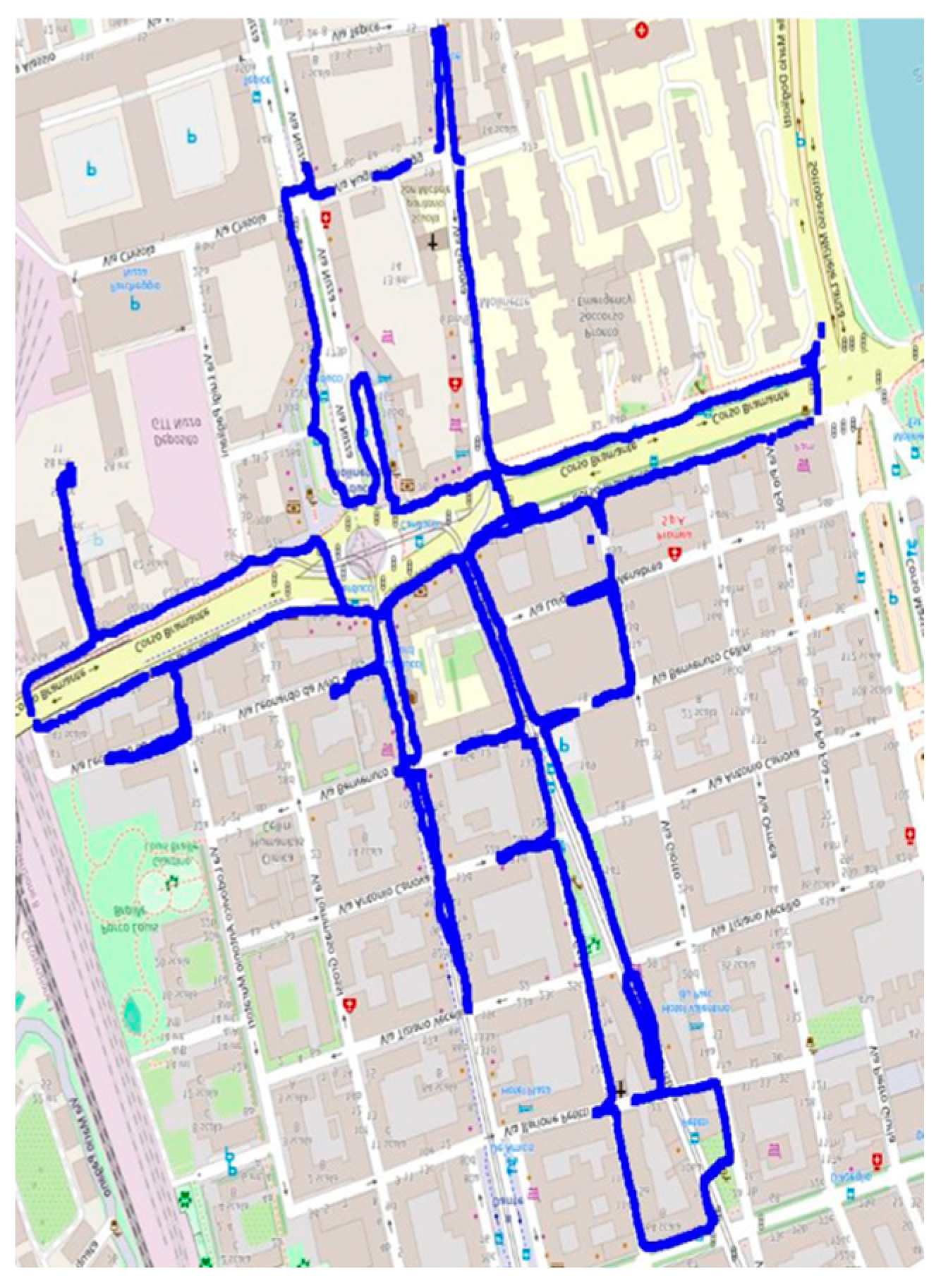
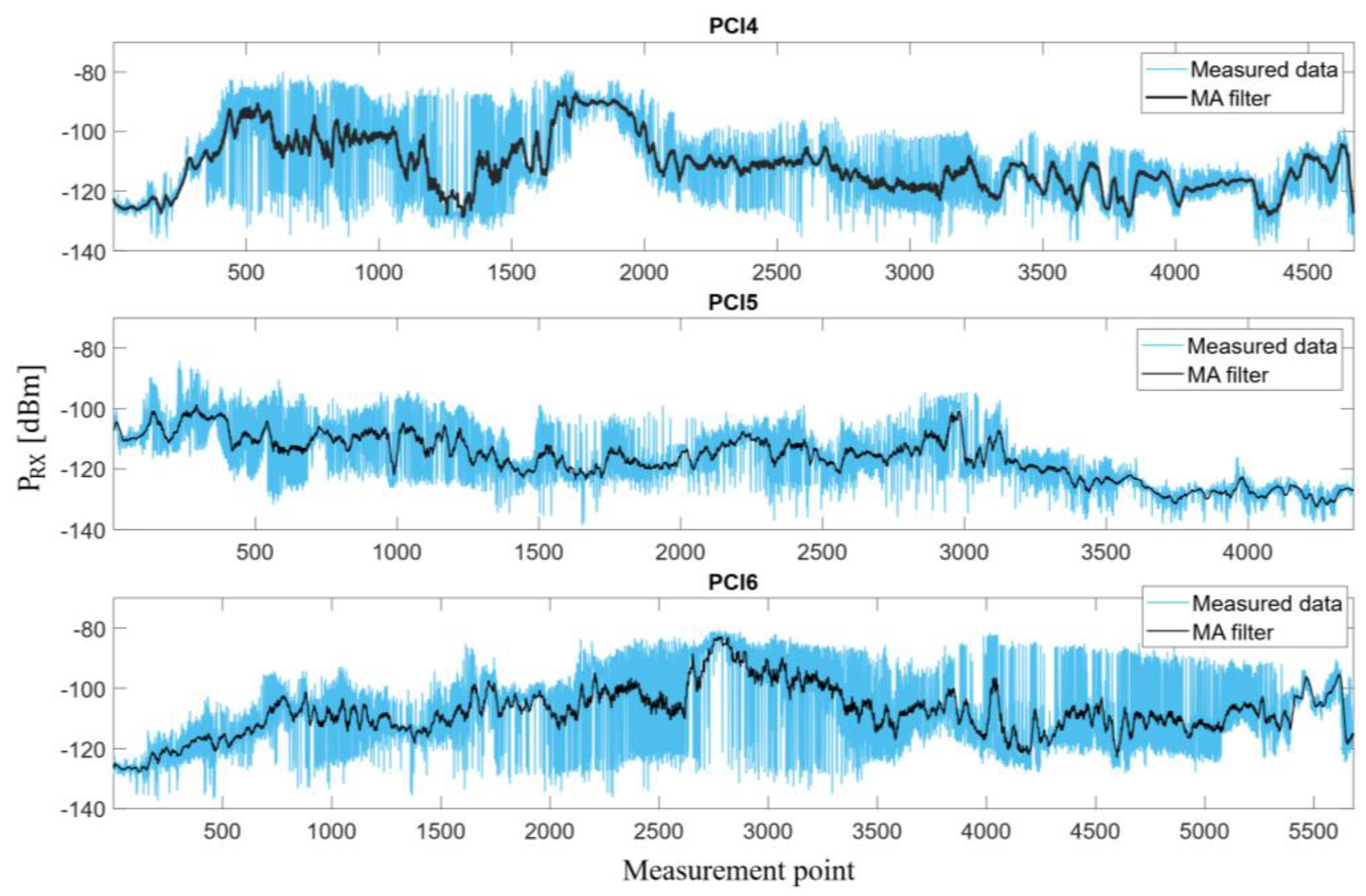
17]. Moreover, an extensive measurement campaign, with more than about 15,000 measurement points, has been carried out in collaboration with a mobile operator near a proprietary 27 GHz mMIMO antenna, located in a real complex urban electromagnetic environment. The antenna frequency is located in the 3GPP n258 frequency band and corresponds to the real commercial European deployments [
18].
Preliminary research on the currently published literature has highlighted that a comprehensive comparison of ray tracing tools in 5G FR2 band scenarios, including the comparison with measurements, has not been addressed. Moreover, most of the studies are focused on the FR1 band or at 28 GHz in controlled/indoor environments with only a few measured points. This study aims to address this gap with the following research questions: test the accuracy of ray-based tools, understand their practical usability for operators and define useful metrics for network design. Indeed, the extensive measurement campaign considered in this work represents added value to the analysis and comparison of the numerical simulation tools. An in-depth analysis of measured and simulated results is presented, considering different metrics to enhance the robustness of the comparison. Several challenges in the 5G network modeling are discussed, including boundary effects, accuracy in Line-of-Sight (LOS) and Non-Line-of-Sight (NLOS) regions, and coverage metrics. Outcomes showed a general good agreement between the predicted and measured values, despite the complexity of the selected scenario and the different features of the tools considered. This suggests that the RT technique, whatever algorithm is considered, represents valuable support for the actual deployment of 5G networks. Moreover, the coverage analysis introduced significant metrics that can be employed for practical network planning. Overall, the present work extends the current knowledge on radio propagation modeling at mm-Waves and supports the widespread deployment of 5G networks.
The paper is organized as follows:
Section 2 reports a literature review on different studies focused on ray tracing modeling combined with measurement campaigns; in
Section 3, the measurement campaign is presented, while
Section 4 introduces the ray-based algorithms employed in this work; and in
Section 5, the results are shown, while their discussion is contained in
Section 6. Finally,
Section 7 summarizes the main outcomes of this study and their impact.
2. Related Works
Several works on RT tools validation have been published, and most of them are based on the comparison between simulated results and measured values. Danping He et al. [
10] introduced a tutorial on how to calibrate and design RT tools for 5G applications. They presented different commercial and academic software tools based on RT techniques, and from measurement campaigns, made in two different locations at 3.5 GHz and 28 GHz, they recalibrated and validated the open-source CloudRT tool. However, they did not perform an intercomparison between the software tools introduced, and the measurement campaign accounted for around 4080 measured points collected in an area of around 300 m from the BS site. Tiago Osório et al. [
19] presented a comparison study on RT tools for the design of solar concentrating collectors. Seven tools were used, including one commercial, two open-source and four in-house software. From the comparison, it was possible to highlight the main capabilities and limitations of each software, understanding the best use case for each of them. Nevertheless, the comparison was not supported by any on-site measurement. Like in the previous case, S. Incerti et al. [
20] performed an intercomparison between three different RT software (two open-source and one in-house) to validate the reliability of a new tool, without any comparison with real measurements. Additionally, E. Aksoy et al. [
21] presented an intercomparison between two different RT tools (one commercial and one open-source) at THz frequencies, supported by indoor measurements too. However, channel (not field level) measurements were performed, and only 24 experimental points were considered. On the other hand, in [
22], Zhu et al. propose a benchmarking framework to compare the computational efficiency of heterogeneous ray-based simulation methods for urban wireless propagation in electromagnetic digital-twin scenarios at 28 GHz. They employed two commercial solutions (Wireless InSite and Matlab5G Toolbox) and one open-source model (Sionna RT). More recently, measurement-supported studies based on open-source RT frameworks have started to appear in the literature. In [
23], Li et al. investigated Sionna-based RF signal mapping in the CBRS band (3.55–3.7 GHz), validating the approach through an extensive real-world measurement campaign. In [
24], Lee et al. analyzed UAV coverage prediction in a rural foliage-dominated scenario at 3.3–3.4 GHz, comparing RT results with measurements collected on the AERPAW platform. In [
25], Manukyan et al. considered a dense urban scenario in Rome using real cellular measurements in low-to-mid bands, showing that the agreement with Sionna simulations strongly depends on antenna placement, orientation, and scene accuracy. These works confirm the growing interest in open-source RT tools validated against measurements. Additionally, in [
26], the authors presented a ray tracing analysis supported by on-site measurements in an indoor environment at 3.7 GHz. Two different commercial tools were considered (Narda EFC-400 and Matlab 5G ToolBox), and a few measurement spots were analyzed. Similarly, in [
27], one in-house RT software and one commercial software (Wireless InSite) are employed and compared with outdoor measurements at 3.5 GHz. Furthermore, in [
14], two commercial RT solutions are compared (Matlab ToolBox and Wireless InSite) in an outdoor environment at 3.5 GHz, without performing a measurement campaign.
An overview of the presented study is reported in
Table 1, with the corresponding tools involved. Among them, only NARDA EFC-400 and Matlab do not specify the GPU as a requirement. As can be seen, most of the works that rely on measurement data are conducted in the FR1 band due to the easier and more widespread availability of operating FR1 band antennas. On the other hand, studies that focus on the FR2 band are usually performed at 28 GHz and account for a few experimental points. Different from their approach, our work relies on about 15,000 measurement-based data and includes real antenna parameters at 27 GHz, in which material and scattering behavior are slightly different, to enhance model accuracy. The measurement campaign is carried out in a large, outdoor complex environment that is still uncommon in the 5G literature. Moreover, published works in some cases also consider a calibration procedure or add empirical corrections, while this study uses default RT model settings.
6. Discussion
The results presented in
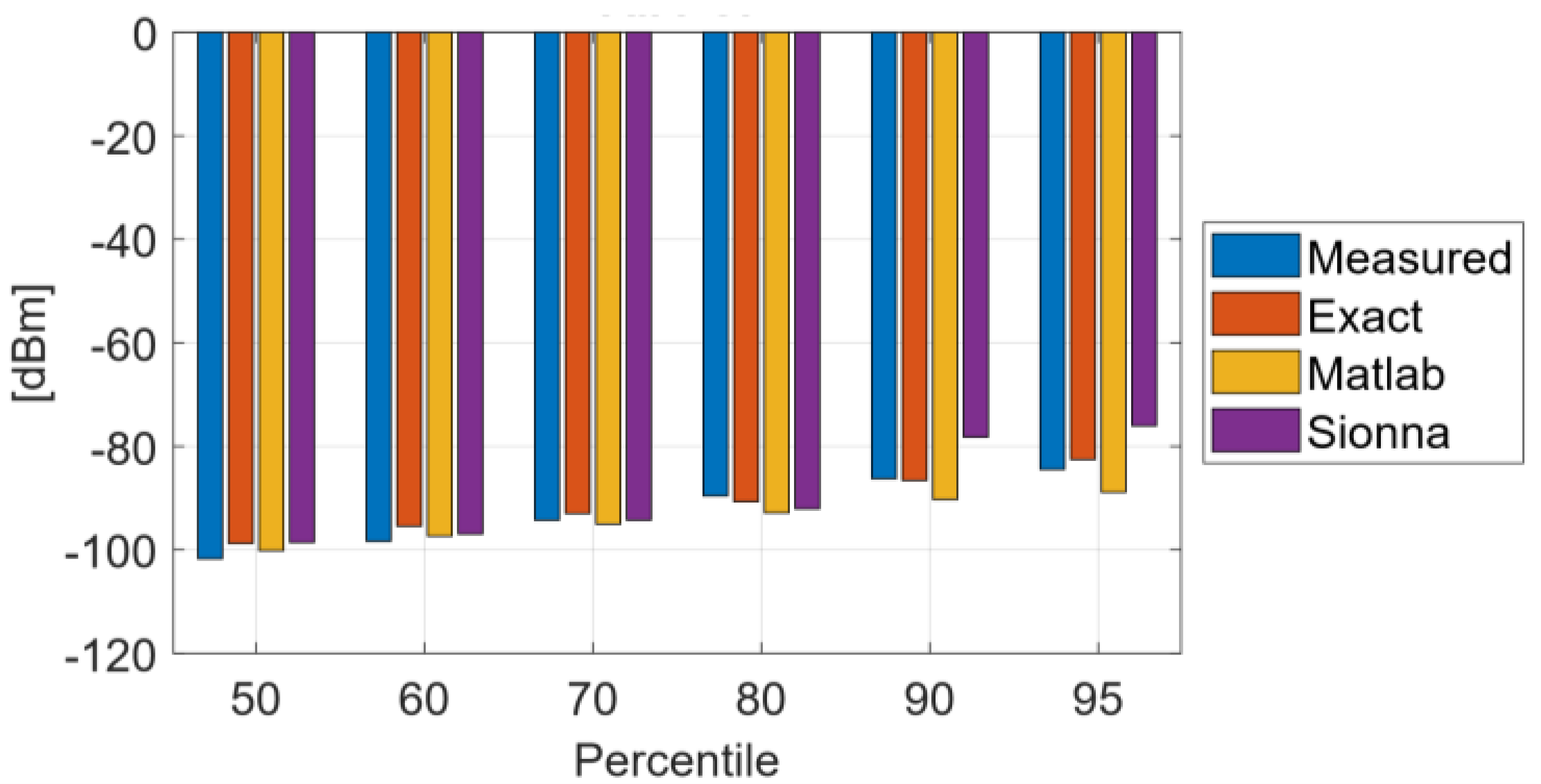
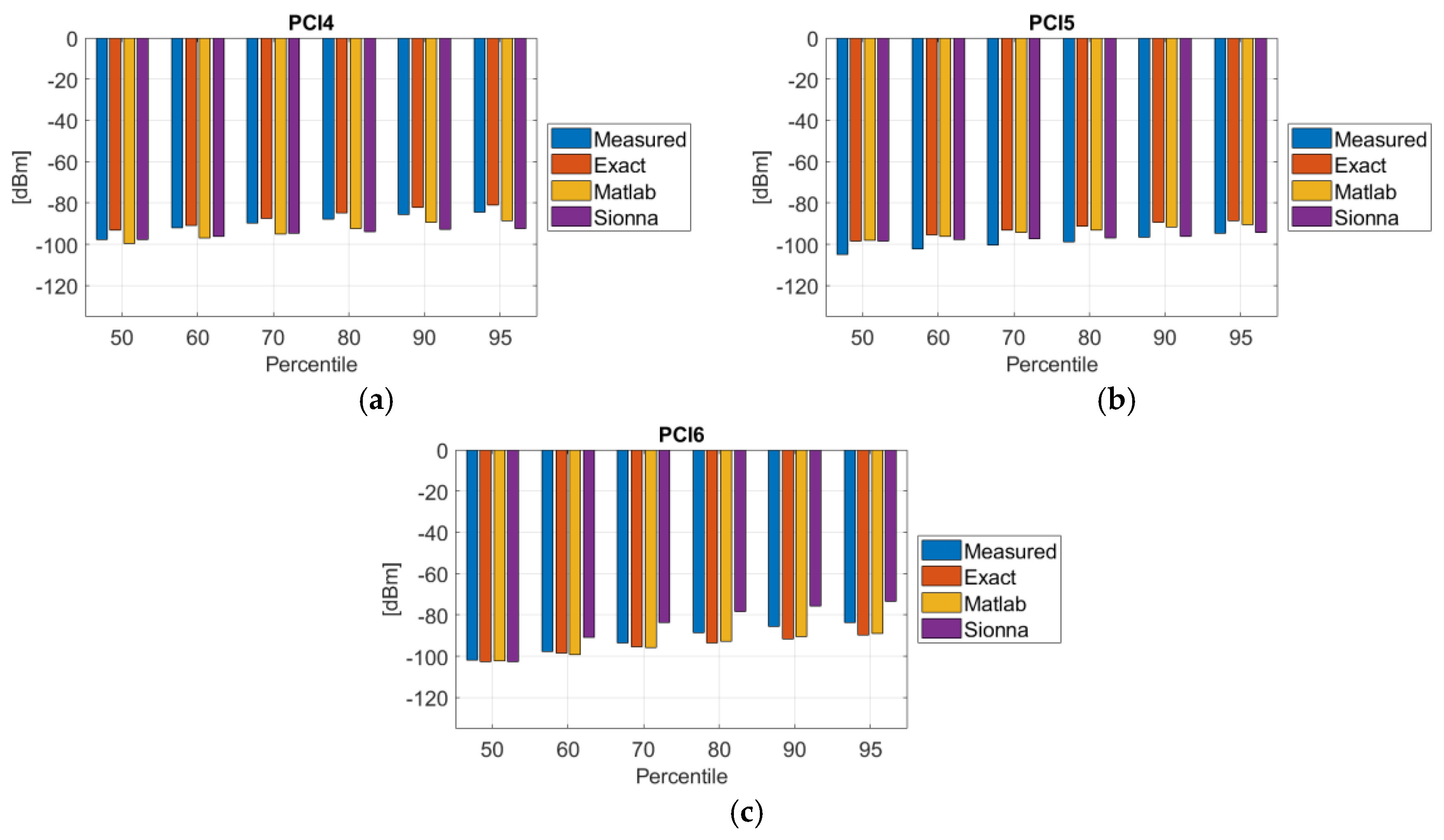
Section 5 demonstrate reasonable agreement between numerical simulations obtained with the three different ray tracing tools and measurement data collected across the entire BS coverage area, despite the complexity of the considered urban scenario. Indeed, as previously mentioned, it should be considered that the selected scenario is very challenging for radio propagation assessment due to dimensions, topology and frequencies involved. Nevertheless, all metrics highlight that, although some discrepancies exist, RT tools represent a flexible and useful method for 5G network design. Indeed, percentile analysis in
Figure 6 and
Table 5 confirms that differences between simulated and measured values remain predominantly within a few dB up to the 95th percentile, compatible with the estimated combined setup measurement uncertainty (below 1.5–2.4 dB up to 3.7 dB). Additionally, maximum discrepancies between simulated and measured results of around 8 dB are reasonable, compared to measurement uncertainties quantified as 7–10 dB in NLOS for scenarios with the same level of complexity [
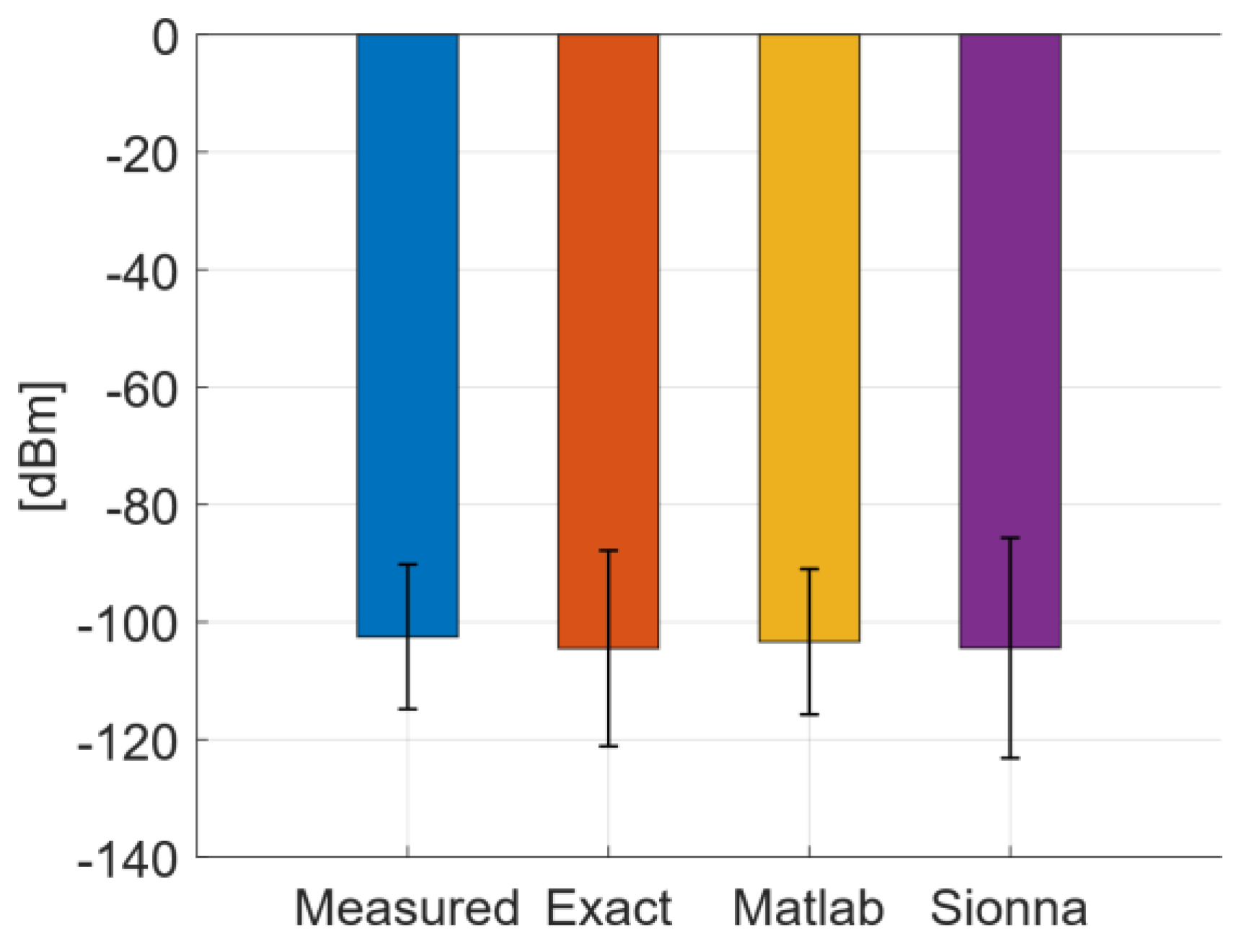
45]. This indicates that all three tools adequately capture the received power statistical distribution, particularly in the mid-to-high power regions relevant for 5G FR2 coverage KPIs (Key Performance Indicators) and QoS. Aggregate error metrics (mean, standard deviation, RMSE, and MAE shown in respective figures) align with percentile outcomes: mean values and standard deviations are acceptable and comparable among the different tools. Indeed, RMSE values of around 12 dB are in line with results reported in the literature for simpler, more controllable indoor scenarios in the FR1 band, where signal propagation is less critical [
43], and also for similar frequencies in the FR2 band in a walk-testing mode, specifically at 26 GHz, without calibration or empirical corrections [
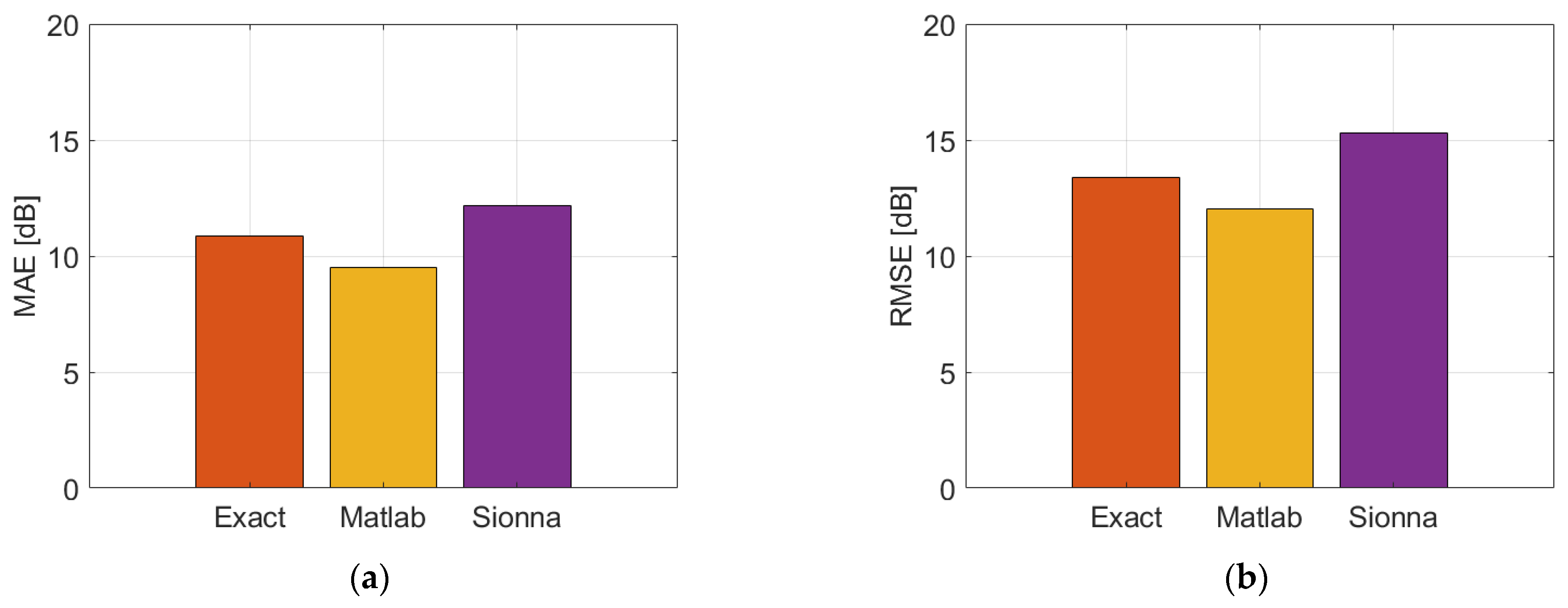
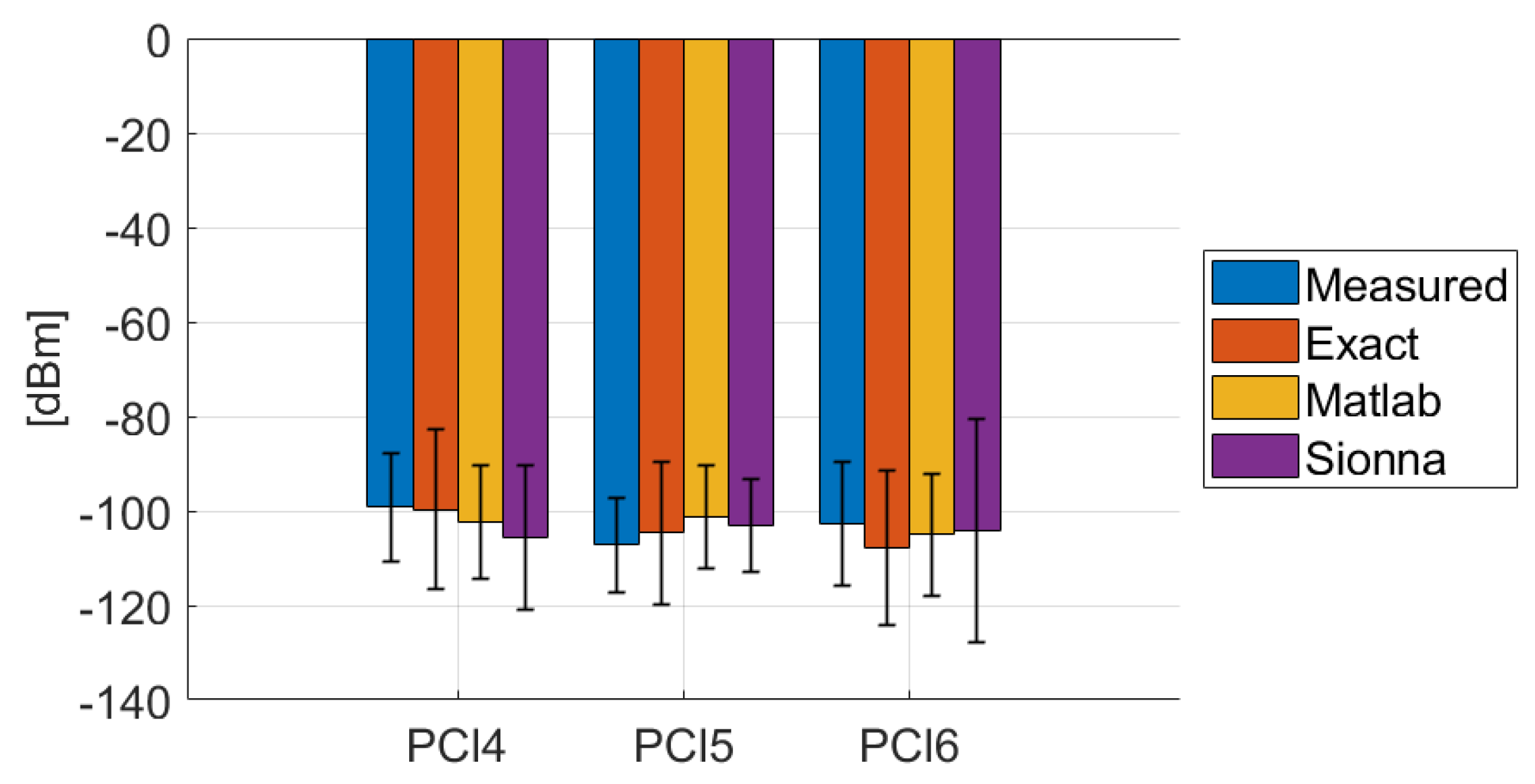
46]. In addition to this, the mean and standard deviation show symmetric error distributions with relatively contained tails, together with highly accurate predictions of average power levels. This metric also highlights that the three tools, compared to the measures, provide stable and consistent results, with similar deviations. Sionna exhibits a slight systematic tendency to overestimate power levels at higher percentiles compared to Exact and Matlab, visible both in the differences in
Table 5 and in the coverage estimates in
Table 6, where all tools slightly overestimate the serviceable area, but with deviations acceptable for practical planning. In addition to the aggregate metrics discussed above, the Pearson correlation coefficients indicate that all three tools capture the overall spatial trend of the received power with moderate and comparable agreement. The additional analyses reported in
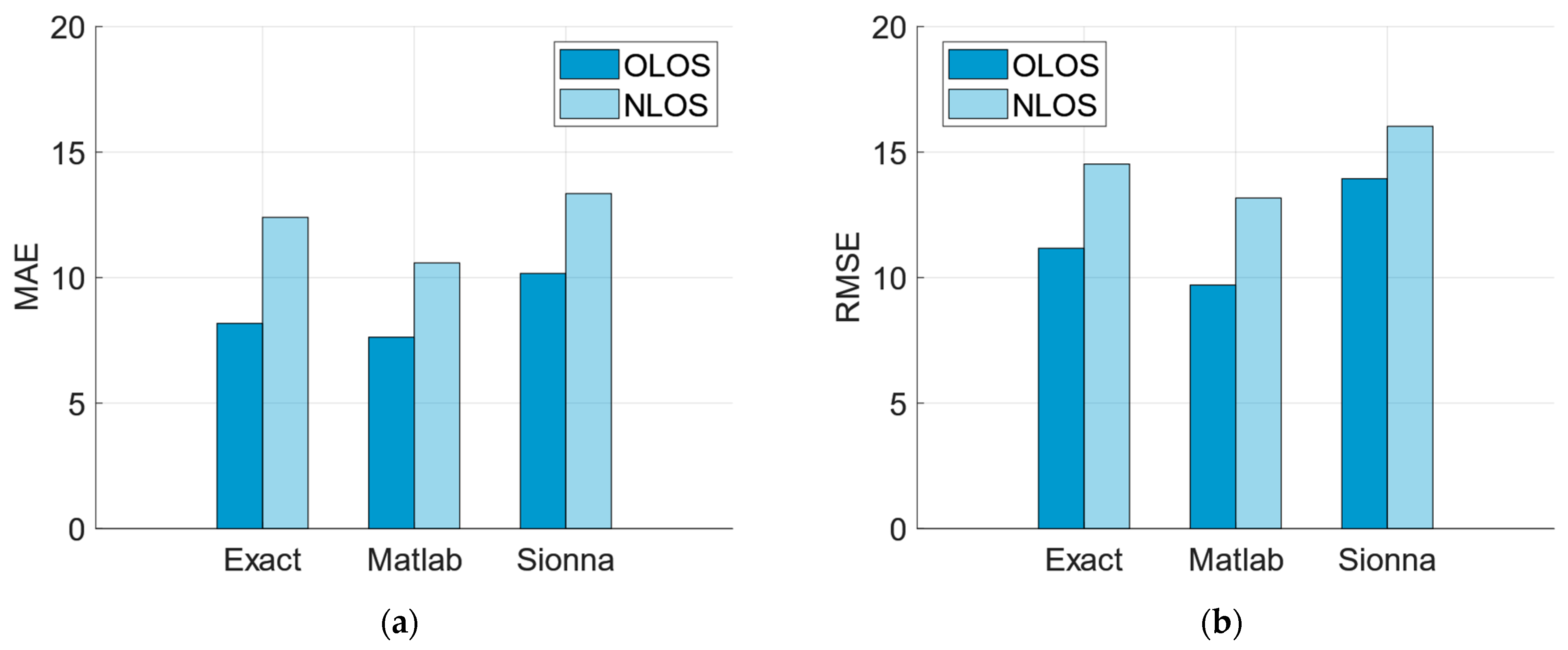
Table 8,
Table 9 and
Table 10 and
Figure 10,
Figure 11 and
Figure 12 further show that the residual mismatch is strongly scenario-dependent, since it does not vary monotonically with distance, and is consistently lower in OLOS than in NLOS conditions. Therefore, these complementary metrics suggest that local propagation features and sector-specific characteristics affect the agreement more than distance alone.
Overall, it should be noted that the measurement campaign was carried out during a sunny day, minimizing the effect of rain and atmospheric attenuation that could be very impactful at 27 GHz. Indeed, such critical weather conditions may introduce significant additional losses and noticeably underestimate actual measurement results, an aspect that should be considered in ray tracing tools. Moreover, the presence of dense vegetation is not accounted for in this scenario, since it is mainly composed of buildings. However, in heavily vegetated areas, the 5G signal would be susceptible to foliage attenuation, thus requiring accurate modeling of scattering effects within ray tracing simulators. In addition to this, the presence of random vehicles and obstacles is not considered in numerical simulations, since it is very challenging to accurately forecast the exact scenario configuration at the time of measurement. This aspect is also difficult to reproduce in determinist models; thus, to closely match real-world scenarios, it is most appropriate and meaningful to neglect such unpredictable elements. Clearly, this can lead to small discrepancies in experimental outcomes; therefore, this point should be taken into account when performing comparisons, and it should be considered that, for network design, simulation results may slightly overestimate the actual power levels due to the lack of stochastic effects.
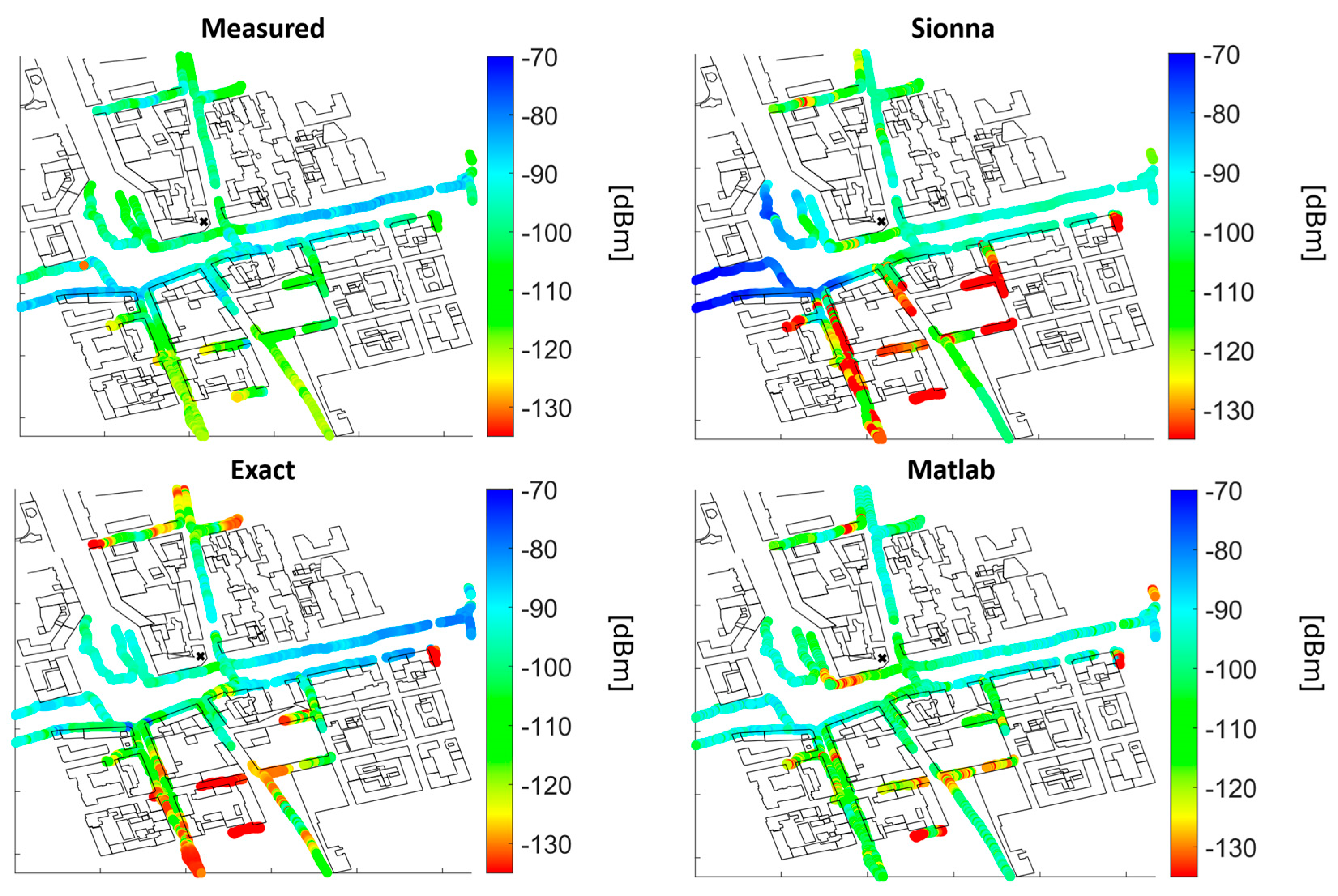
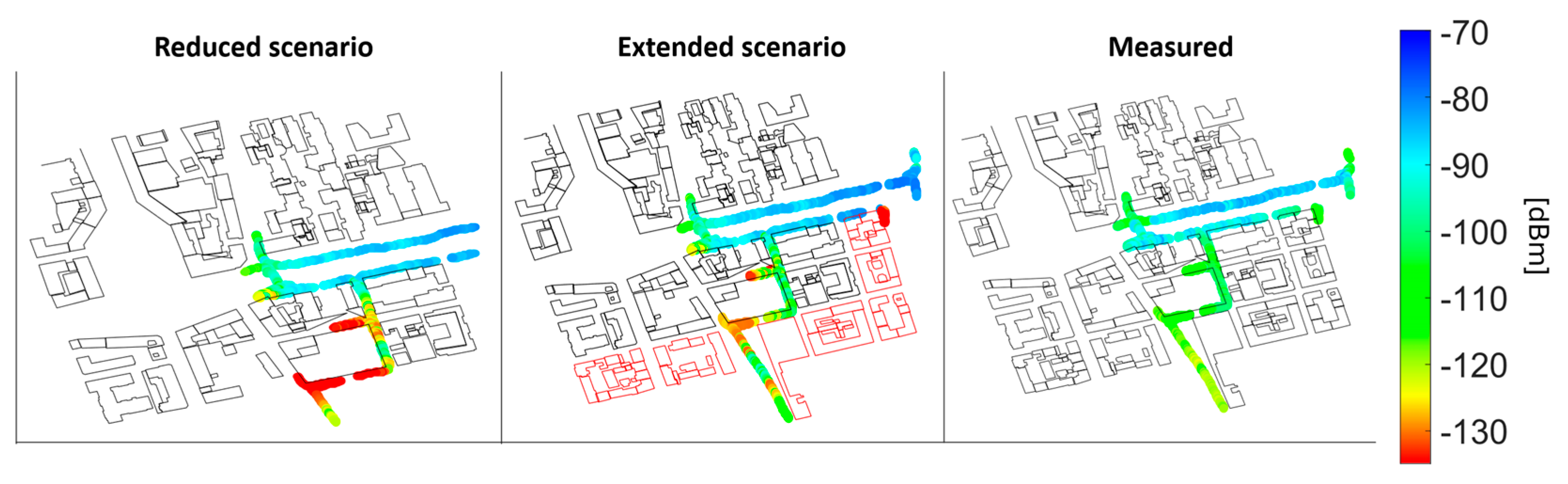
Spatial power maps along measurement routes reveal that RT simulations, as expected, faithfully reproduce local power variations under OLOS conditions, where direct path contributions dominate, while larger deviations emerge in NLOS regions and near simulated scenario boundaries. Most stable results are obtained with Matlab, which is less prone to underestimation of power levels. On the other hand, the main sources of discrepancies for the Exact tool are related to low power levels for measurements carried out near the boundaries of the simulated area. Indeed, as can be seen from
Figure 9, the main areas of discrepancy occur at the scenario boundaries. These discrepancies are related to the loss of reflection and diffraction contributions from buildings that are not considered due to scene clipping. To confirm this, we present the impact of buildings at the edge, slightly extending the scenario considered by Exact: in
Figure 13, a comparison between results in the extended and reduced scenarios is reported together with measurement results. It is evident that by increasing the number of buildings at the scene borders, the simulated power levels are much higher and closer to both measurements and predicted values by other tools. Indeed, the mean error between measured and simulated results decreases from 1.9 dB (in the reduced scenario) to 0.75 dB in the extended scenario.
Moreover, the comparison between measurements and Sionna simulations reveals a tendency of Sionna to overestimate received power levels, particularly evident in the percentile differences (
Table 5), coverage estimates (
Table 6) and power maps along measurement routes (
Figure 9). While Exact and Matlab exhibit limited bias across the full dynamic range (as confirmed by mean and standard deviation analyses in respective figures), Sionna shows larger positive deviations at higher percentiles (e.g., above 90th percentile) and consistently higher predicted power levels in several route segments (e.g., city square with trees), with differences reaching several dB. These discrepancies are consistent with recent validation studies on Sionna-based ray tracing, which indicate that simulation-to-measurement mismatches are often driven more by antenna configuration, scene accuracy, foliage/blockage representation, and uncertain system parameters than by solver settings alone. In particular, Manukyan et al. [
25] show that the agreement with measurements is weakly sensitive to several solver hyperparameters, while being much more affected by antenna placement and orientation. They also reuse a spatial subset of a public Rome low-to-mid-band dataset from a broader campaign, including outdoor walking measurements, whereas the present analysis compares Exact, Matlab 5G Toolbox, and Sionna RT under a common validation framework supported by urban walk-testing at 27 GHz in an FR2 scenario. Likewise, Lee et al. [
24] report that Sionna can reproduce the overall behavior of measured coverage in a foliage-dense rural scenario, although local deviations remain due to blockage, antenna modeling, and the dynamic environment. A similar interpretation is also consistent with [
23], where measurement-assisted calibration is introduced even for the Sionna-based baseline to compensate for uncertain system parameters, and where terrain, foliage, and human/vehicle blockage are explicitly recognized as relevant factors for path-gain prediction. Therefore, although our data do not allow us to attribute Sionna’s positive bias at high percentiles to a single mechanism, the observed mismatch is plausibly related to residual limitations in scenario representation and site-specific modeling rather than to one demonstrable solver-related factor.
Nevertheless, in our 27 GHz comparison results, the RMSE and MAE values for Sionna remain acceptable for practical planning but are consistently higher than those of Exact and Matlab, suggesting that site-specific calibration may be required for accurate mm-Wave network planning in mixed street-canyon/open-area urban deployments. Sionna’s contained systematic overestimation suggests the need for site-specific calibration when employing this GPU-accelerated platform in digital network planning or digital-twin workflows, particularly for sensitive coverage thresholds such as −95 dBm. From a practical usability perspective, Matlab 5G Toolbox provides a relatively direct workflow for engineering analyses, since ray tracing scenarios can be handled within the Matlab environment through Site Viewer and map-based urban scene support. By contrast, Sionna RT is more oriented toward flexible research workflows and typically requires a more articulated scene-preparation process, where the three-dimensional environment is generated or edited externally, for example, through OpenStreetMap-based data and Blender, before being used in the simulation pipeline. As a consequence, the learning curve of Matlab is generally lower for users already familiar with engineering simulation environments, whereas Sionna usually requires greater familiarity with Python-based workflows, 3D scene preparation, and GPU-oriented simulation settings. In this sense, Matlab appears more immediate for conventional engineering studies, while Sionna offers higher flexibility for customized research developments and advanced modeling extensions.
Overall, an important aspect in interpreting the observed mismatch is that the final error budget includes both measurement uncertainty and modeling uncertainty. In the present campaign, the scanner uncertainty is reported to be below 1.5 dB, while studies based on similar measurement setups indicate an overall experimental uncertainty of about 2.4–3.7 dB, so a representative value of approximately 3 dB can be reasonably assumed for the measurement contribution. Since the overall RMSE observed in this work is on the order of 10–12 dB, the residual discrepancy is mainly attributable to modeling uncertainty, including scene simplifications, imperfect material and antenna representation, and the static treatment of a dynamically varying urban environment. More in detail, the error related to the scenario modeling can be considered by looking at the analysis carried out in Exact, which showed an improvement of 1.2 dB by extending the number of buildings. Additionally, preliminary analysis in simplified scenarios with comparable frequencies showed that by varying the real part of permittivity from 2 to 7, discrepancies of around 2–3 dB can be found in simulated power levels.
Finally, the consistency of coverage rates among measurements and the three simulation tools represents a key factor for reliable network planning, since strong deviations in this parameter may lead to inaccurate predictions of service availability in 5G systems. This is particularly crucial at mm-Waves, where the signal attenuation is very high and may negatively impact the QoS. Overall, results confirm the practical utility of RT techniques for FR2 coverage prediction, despite complex scenario challenges such as obstacles and NLOS regions.
7. Conclusions
This work presented a comprehensive evaluation of RT tools in 5G FR2 scenarios, based on an extensive measurement campaign at 27 GHz performed in a complex urban area. Measurements were performed in terms of received power levels, recording the SSS-RSRP indicator emitted by the mMIMO BS. The performance of different RT-based tools was assessed by comparing simulation results from Sionna RT (open-source), Matlab 5G Toolbox (commercial), and Exact (in-house proprietary tool). All the analyzed tools achieve an overall good agreement between measured and simulated data. Indeed, our findings showed that simulation tools provide reliable and robust predictions, which are sufficiently accurate for most practical applications, such as coverage prediction and preliminary network design. The discrepancies are acceptable for 5G network design, considering the critical environment under investigation, particularly at mm-Waves. Furthermore, the analysis also revealed that precise characterization of the scenario, especially for buildings and obstacles at the simulation boundary, is relevant for achieving accurate RT-based power level results. In summary, our work confirms that RT can be a powerful and versatile method for evaluating 5G network performance, regardless of the specific algorithm employed. This means that these tools can effectively support 5G deployment strategies, with results not affected by the uncertainties that may arise from measurement campaigns, due to the variability of radio environments, especially at mm-Waves. The observed agreement between simulated and measured data can also help to reduce the number of measures necessary to ensure good coverage of the area and thereby minimize the associated operational costs and time requirements. Additionally, according to our findings, we can conclude that:
The Exact tool is generally more suitable when EMF levels must be calculated across a large number of discrete points (e.g., on a regular grid of points covering the whole scene);
The Matlab tool is suggested for a low number of evaluation points, to obtain more accurate punctual results;
Sionna is particularly attractive when an open-source, GPU-accelerated RT engine is desired, for example, to integrate site-specific propagation modeling with data-driven methods and digital-twin workflows.
These findings support the integration of RT tools into 5G network design and their deployment in complex urban environments, while also suggesting their potential use in 6G-oriented digital-twin workflows for site-specific network planning and performance evaluation. Future work may explore AI-assisted calibration and tuning of RT model parameters to further improve the agreement between simulated and measured power levels.




 ,
,