


Definition
This examines the development of the saltpeter industry in Chile after the War of the Pacific (1879–1883), a conflict between Chile and a Bolivian–Peruvian alliance. Chile’s victory meant the annexation of the territories of Antofagasta and Tarapacá, effectively controlling the production of sodium nitrate and the global saltpeter monopoly. Industrial development was reflected through changes in foreign and Chilean capitals, technologies, and work practices. In Tarapacá, the most important investments in the 19th century were British and German. In Antofagasta, Chilean, English, German, and Croatian investments were prominent in the 19th and 20th centuries. And since 1926, American capitals have occupied the spotlight. The dominant technologies were the Shanks system between 1880–1926, the Guggenheim from 1926–1954, and the introduction of Solar Evaporation in the 1950s. Work evolved from manual artisanal labor without legal protection to mechanization under social laws. Saltpeter represented, in the social and economic history of Chile, the rise of the proletariat, communal social movements, a strong labor press, and a series of strikes and massacres. From the saltpeter era sprouted powerful literature, poetry, and music throughout the 20th century until today. The nitrate industry reached its peak between 1881 and 1917. During this period, it had to confront competition from synthetic nitrate and ceased to be the main source of revenue for the national treasury of Chile. This was followed by a period of decline and crisis from 1918 to 1931, the latter intertwined with the global financial crisis. Various state and business measures made it possible for a small number of nitrate oficinas (processing plants and settlements) in Tarapacá and Antofagasta to continue operating until the nationalization of the nitrate industry in 1971. The nitrate industry took place during the first globalization of liberalism, one that brought flows of capital, migration from Europe to the American Continent, changes to marine navigation, and the opening of various markets in Asia, Europe, and Africa. Nitrate became the most effective fertilizer for agriculture and replaced guano in crop production. In order to analyze this topic, we will utilize the results of the main monographic studies, texts used for historical and political context, and works with interpretative theses about specific periods of nitrate production.
1. Origin of Nitrate, Cantons, and the Significance of the Nitrate Oficina
In Chile, the term caliche is used to refer to nitrate ore; that is, the mineral from which a metal of economic value is extracted. It is the raw material of sodium nitrate, known since ancient times by the Indigenous peoples of the Tarapacá ravines [1,2]. The study of sodium nitrate in modern Europe was introduced by French botanist Joseph Dombey, who described caliche from the Atacama Desert in 1776. Years later, it would be Mariano Eduardo de Rivero, a Peruvian scientist, who made it known in Spain in 1821.
Once its mining and commercialization began in Tarapacá, research into the origins of nitrate progressed. Nowadays, authors such as George Edward Ericksen [3], Guillermo Chong [4], and Juan J. Pueyo [5] have proposed the most accepted theories within the scientific community, in which multiple factors are considered: from marine elements, storms, and rock weathering to intrusive volcanic activity. These phenomena took place millions of years ago. However, the persistence of reasonable doubts has been noted, since “there is a clear disconnection between the knowledge of these deposits in the field and some results and observations gathered in laboratories” [6] (p. 38).
In the lands where the caliche deposits are found, it is possible to identify nitrate strata of varying thickness. These correspond to:
The chuca is a mixture of loose soil, sand, and clay; the costra is a harder mixture containing some calcium and magnesium sulfate; the tapa is a conglomerate of sand and clay, alongside gypsum and common lime; the caliche, which constitutes the valuable and exploitable part of the deposit, is what is scientifically known as sodium nitrate, and its thickness has extraordinarily reached up to two meters; the congelo is formed by sulfated and chlorinated salts bound together by clays; and finally, the coba consists of alluvial terrain where gypsum has often been found, resting upon the Andean bedrock characteristic of the region” [7] (p. 4).
The territorial demarcation of nitrate mining was initially known as nitrate districts. The German engineers Semper and Michels [8] discuss nitrate districts, identifying one general district for the entire region of Tarapacá and four for the region of Antofagasta: Toco, Antofagasta, Aguas Blancas, and Taltal. The terminology that ultimately prevailed was cantón (“canton”). Neither of them was adopted by Aníbal Echeverría y Reyes, who compiled the first text of Vocablos Salitreros in 1934. Oscar Bermúdez [2] (p. 152) used cantón and district when referring to the nitrate works of La Noria in 1860. Mario Bahamonde [9] (p. 83) defined cantón as a “territorial division made geographically over the nitrate lands, always in relation to their maritime transport routes for shipments”, and comprised several nitrate oficinas.
At times, a cantón could be comprised of several nitrate oficinas belonging to the same company, for example the Toco canton in the region of Antofagasta. In other cases, it included numerous nitrate oficinas that were not established at the same time and belonged to different owners, such as the Bolivian or Central canton in the Antofagasta region.
The cantons of Zapiga, Sal de Obispo, Del Rincón, Pampa Negra, Negreiros, La Peña y de Soledad, San Francisco, San Antonio, Yungay, La Noria, and Cocina were established in Tarapacá, where the railway network connected them with the ports [10]. In the case of Antofagasta, the cantons of Central or Bolivian or Antofagasta, Taltal, Toco, and Aguas Blancas were established. They were all connected to their respective ports, except for the Aguas Blancas canton, which was connected to the port of Coloso [11].
The establishment of nitrate activity was carried out through a nitrate oficina (oficina salitrera). A nitrate oficina constituted a “set of land, buildings, machinery, etc., forming a unit for the extraction of caliche and the production of nitrate” [12] (p. 24). However, this installation also implied the conjunction of workers’ and employees’ camps, the industrial plant, and the caliche yard. It was a place designed to isolate the labor force away from the cities. At the same time, it reflected a social division of labor, based on a class system. This was evident throughout the evolution of the principal technological-labor systems, such as Shanks and Guggenheim.
From an architectural perspective, it has been emphasized that the nitrate oficinas located in the Antofagasta region were conceived to combine a primary productive function, bringing together the maximum concentration of capital and labor. These were necessary factors for the extraction and processing of resources, organized autonomously and equipped with industrial facilities, infrastructure, housing, and a functional division of space [13]. The isolation made it possible to discipline the workforce, which has led to comparisons between the nitrate oficinas and company towns. Nevertheless, workers moved between cantons, and the railway network connected them to the nitrate ports [9,10].
2. War of the Pacific and the Chilean Monopoly of Nitrate
The War of the Pacific (1879–1883) was a conflict between Chile, Bolivia, and Peru. The conflict with Bolivia resulted from various factors: geographic, demographic, economic, and ideological. The formal cause was Bolivia’s violation of the Boundary Treaty of 1874 regarding taxation on Chilean capital investments. However, there were also significant underlying factors, such as the economic pressures exerted by the Chilean elite, which held investments in the Compañía de Salitres y Ferrocarril de Antofagasta, and the strong presence of Chilean migrants in the Atacama Desert.
Not only did Chilean migrants populate the principal coastal city, Antofagasta, under Bolivian administration since 1866, but they also established its urban institutions. Likewise, they were predominantly present in the important silver mining center of Caracoles in 1872, among other activities [14,15,16]. For Chile, Antofagasta represented a territorial claim [14], and enabled the addition of the Central and Toco cantons to the Taltal—the only Chilean nitrate canton before 1879.
The conflict with Peru, an ally of Bolivia [17], enabled the annexation of Tarapacá (and Tacna), thereby securing control over the most important territory for nitrate extraction of the 19th century.
Nitrate ownership in the Antofagasta region was clear, unlike that of Peru. Peruvian nitrate property, following the monopoly established by Manuel Pardo as part of a modernization policy [18], required reconsideration of ownership rights over the nitrate claims (estacas salitreras) under Chilean administration [19]. Thus began the “nitrate era”, coinciding with the globalization of economic liberalism [20].
From the International Context to the Transnational Dimension
British capitalist influence in Chile was first manifested through its dominance of trade in Valparaíso during the first half of the nineteenth century and, subsequently, through investments in the nitrate fields of Tarapacá and the Atacama Desert. These British investments coexisted with capital from other countries, particularly Germany, in the nitrate industry of Tarapacá. Consequently, Chilean historiography has frequently emphasized the country’s dependence on British capital.
According to J. Fred Rippy [21], British capitalism expanded vigorously into the Americas during the 1880s, making Britain the region’s principal foreign investor. By the outbreak of the First World War, however, Germany had emerged as Britain’s principal competitor in overseas investment. In Chile, British investments broadened during the early twentieth century to include the banking sector and the extension of loans to the Chilean government, as documented by Alejandro Soto Cárdenas [22].
The Industrial Revolution provided the technological advances that transformed nitrate production. The expansion of railroads, which became essential for nitrate transportation, together with innovations in maritime navigation, complemented developments in lixiviation processes. In this context, James Thomas Humberstone adapted the Shanks process to the nitrate industry, significantly improving production efficiency. Along these lines, Osvaldo Sunkel and Carmen Cariola argued that British influence contributed to Chile’s industrialization and urbanization, rejecting the interpretation that the nitrate boom produced only detrimental consequences for national development [23] (p. 66).
This interpretation has been challenged by Manuel Fernández [24], who contended that the nitrate industry functioned essentially as a British enclave economy, generating few lasting benefits for the Chilean national economy. Likewise, subsequent research has argued that, after 1914, the manufacturing sector—not nitrate production—became the principal engine of Chilean economic growth, thereby reducing the industry’s relative importance in the post-First World War period [25].
Darío Domínguez [26] has proposed a useful typology of the principal historiographical interpretations concerning the role of nitrate in Chile’s economic development. He distinguishes three major perspectives: (a) the nitrate region as an enclave economy; (b) the nitrate industry as an effective contributor to Chilean industrialization; and (c) interpretations emphasizing the structural problems that affected the nitrate industry itself.
As a fertilizer, nitrate gradually replaced guano in European agriculture. Guano had been of enormous economic importance to Peru between 1840 and 1879 and, according to Heraclio Bonilla [27], stimulated commercial expansion while providing the Peruvian state with substantial fiscal revenues during the so-called “Guano Era”. Nitrate, however, contained a higher concentration of nitrogen than guano, making it a more effective fertilizer for improving the productivity of Europe’s nutrient-deficient agricultural soils.
In addition to attracting British interests, the nitrate industry also drew substantial German investment into Tarapacá before the War of the Pacific. During the 1890s, German capital expanded its presence by investing in and controlling the Toco nitrate district (cantón) through Henry Sloman, while Folsch and Martin became the principal investors in the Taltal district, which also attracted Italian entrepreneurs such as José Devéscovi and Pedro Perfetti. Likewise, the Aguas Blancas district became a center of Spanish investment, represented by entrepreneurs such as Matías Granja.
The participation of foreign capital in Chile, and particularly in the nitrate industry, has led historians to distinguish between foreign direct investment and portfolio investment, making it possible to identify the cyclical fluctuations that characterized both forms of international capital. A comprehensive comparative interpretation of these investment patterns has been provided by Carlos Marichal [28].
During the First World War, British economic policies—especially the commercial boycott imposed on German interests—substantially reduced German influence in the Atacama Desert and accelerated the withdrawal of German capital from the nitrate industry. At the same time, the Croatian entrepreneur Pascual Baburizza [29] emerged as one of the industry’s leading figures. Between 1925 and 1926, he acquired the Compañía de Salitres de Antofagasta, thereby gaining control of the largest group of nitrate oficinas in northern Chile.
This same period also witnessed the arrival of American capital through the Guggenheim brothers, whose investments had already transformed Chile’s copper mining industry. Their entrance marked a new phase in the internationalization of the nitrate sector and accelerated the technological modernization associated with the Guggenheim process.
From a transnational perspective, the contributions of German and British engineers were among the most significant in the technological development of the nitrate industry in the Atacama Desert. Equally important was the substantial wave of European immigration to northern Chile between 1890 and 1925, which supplied skilled technicians, managers, merchants, and entrepreneurs who became deeply integrated into the nitrate economy. At the same time, the sustained presence of Bolivian and Peruvian migrant workers in the provinces of Tarapacá and Antofagasta shaped the industry’s labor force and reinforced the transnational character of the nitrate region, a dimension discussed throughout this chapter.
Taken together, these international flows of capital, technology, expertise, and labor demonstrate that the Chilean nitrate industry was not merely a national enterprise but part of a broader transnational network linking Europe, North America, and South America. Its development depended on the circulation of investment, technological knowledge, entrepreneurial initiatives, and migrant labor across national borders, making the nitrate economy one of the most internationally integrated extractive industries of the late nineteenth and early twentieth centuries.
3. The Contribution of Science and Technology to the Nitrate Industry: Leaching Methods
As Oscar Bermúdez observed, Chilean technicians made significant efforts to introduce technological innovations in the Tarapacá nitrate industry before the adoption of the Shanks process. Two major aspects deserve emphasis. First, the highest levels of technological expertise remained in the hands of European engineers, whose principal objective was not technological innovation but rather the efficient control of production and the maximization of profits under the Shanks system. Second, although Chilean entrepreneurs, acting through their business associations, promoted a number of technical improvements to the Shanks process, these modifications did not fundamentally transform the production system until the introduction of the Guggenheim process.
The mining technology that achieved the greatest level of development was associated with the nitrate industry, a field that saw little progress before 1872. The “Indian Pot” (Olla del indio) was replaced by the Paradas system, which used direct fire beneath the vats to heat the caliche. This system was later improved by Pedro Gamboni Vera through the introduction of steam power [30].
Alongside Chilean investors, transnational capital, mainly British and German, made it possible to experiment with a series of inventions intended to replace or reform the leaching system introduced by James Humberstone at the San Antonio de Zapiga oficina in 1876, based on the methods of the English industrialist James Shanks. Modified by the Italian engineer Eduardo Cavallero, this became the system adopted “in the majority of the oficinas” [2] (p. 277). Such technological momentum was especially evident in the cantons of the Antofagasta region. While the German entrepreneur Henry Sloman constructed the Sloman reservoir to provide electrical power to his nitrate oficinas in the Toco canton, his compatriots Fölsch & Martin built the Santa Fe dam in the same canton [31].
Support for the development of alternative procedures continued with determination. Experiments were carried out in several nitrate oficinas. Beginning in 1912, this phase reflected the dilemma identified by Joseph Schumpeter between invention, understood as the result of intellectual creativity, and innovation, understood as an economic decision. The problem was that the low nitrate content of the caliche deposits reduced nitrate productivity per worker and tended to increase labor demand [23].
Compañía de Salitres de Antofagasta (1886–1925), the principal Chilean nitrate company, owner—either directly or in partnership with other firms—of the entire Central or Bolivian canton, supported every kind of innovation, provided the patent could be practically applied. Numerous new methods for nitrate production were introduced, although they failed to significantly alter the cost–benefit relationship [32].
Throughout the history of nitrate production, this demonstrated that neither invention (a new idea) nor innovation (its application) necessarily resulted in the kind of “creative destruction” described in the history of technology [33]. The nitrate industry revealed the contradiction of employing some of the most experienced European engineers in the field [34] (see Table 1), while workers in certain stages of the Shanks system continued to labor manually, even in caves using artisanal methods.
Table 1.
Foreign and Chilean Engineers in the Antofagasta Region, 1885–1920 [34] (p. 97).
This concern reached the Association of Producers of Chile, established in April 1919. Simultaneously, during the same year, the Scientific and Industrial Institute of Nitrate was created with the purpose of studying new techniques. Such concern led the University of London academic Dr. F. G. Donnan to propose a “Research Program for the Nitrate Industry”, in which he identified a series of technical deficiencies within the industry. The obstacles ranged from the lack of technical personnel, low wages, and insufficient supervision of implemented procedures to the remoteness of the industry within the desert from the world’s principal chemical and engineering centers [35] (pp. 55–79).
The Shanks system relied on a labor-intensive mode of production characterized by a large workforce performing predominantly manual tasks. Its energy requirements were supplied by coal, while transportation depended primarily on ox-drawn carts and railroads [11,21,30,32,36]. By contrast, the Guggenheim process introduced a fundamentally different technological model. It substantially reduced labor requirements through mechanization, incorporating power shovels, diesel engines, electric power, motor trucks for internal transportation, and modern railway systems. This technological transformation not only increased productivity but also profoundly altered labor organization, skill requirements, and the spatial configuration of nitrate production.
The deficiencies noted, alongside the competitiveness of synthetic nitrate, spelled the decline of the industry during the 1920s. The involvement of the Guggenheim brothers and their method, incorporated into the industry in 1926 at the new nitrate oficina of María Elena, represented both a reprieve and a new challenge [28]. The Shanks system and its innovations now faced local competition in the pampa. The crisis of 1929–1930 meant that the late intervention of the State through COSACH (Compañía de Salitres de Chile), established in July 1930, failed to produce results [35].
With the restructuring of the industry in January 1934 and the creation of the Corporación de Ventas de Salitres y Yodo de Chile (COVENSA), the Guggenheim Bros. company came to control 64% of nitrate production through the María Elena and Pedro de Valdivia oficinas in the Antofagasta region. Oficinas operating under the Shanks model accounted for 21%, while small-scale nitrate producers represented the remaining 15% [35] (pp. 378–417).
The Guggenheim model continued operating over subsequent decades, while the oficinas still using the Shanks model gradually disappeared. There was also the technical innovation of Holstein, Loram, and Leontic in 1926, which was identical “to the system that today is considered highly advantageous: cold leaching and solar evaporation” [35] (p. 219). A contract was signed with the firm Baburizza, Lukinovic y Cía., which promised the creation of a large plant if the innovation proved successful. The company later transferred the contract to The Lautaro Nitrate Company, which ultimately did not implement it. Pascual Baburizza had purchased the oficinas of the Compañía de Salitres de Antofagasta, and the innovation would have implied an unavoidable loss to the invested interests [32].
The final innovation was the introduction of the solar evaporation system [37,38] (pp. 211–218).
From a broader historical perspective, the transition from the Shanks process to the Guggenheim system represented far more than a technological substitution. It marked a structural transformation in the Chilean nitrate industry, involving changes in production methods, energy sources, labor organization, transportation systems, and corporate management. This transition illustrates how technological innovation was closely linked to the strategies of multinational capital and significantly reshaped both industrial productivity and the social organization of work in the nitrate fields.
4. The Nitrate Pampa and Road, Railway, and Maritime Connectivity
Road connectivity refers to the links that connect territory with economic activities. In the nitrate pampa, dirt roads and ancient trails were used by horses and carts. These routes led workers into the interior of the Intermediate Depression—between the Coastal Range and the Andes Mountains—where the caliche deposits were exploited.
When the railway was introduced into Tarapacá, British capital associated with John Thomas North forged a triad of control over water resources, railways, and the principal nitrate oficinas. This became a key factor in establishing North’s monopoly in Tarapacá. British investments in the railway network enabled control over both the Tarapacá and Antofagasta regions; the strategy consisted of dividing the nitrate-producing geographic areas among themselves, thereby eliminating mutual competition.
A relationship of interdependence developed between the railways and the nitrate oficinas. The profits of the railways depended upon the rich minerals they transported. Added to this were the supplies necessary for operating the industrial plants, sustaining life in the workers’ camps, and transporting human resources. In Tarapacá, the dominant company was the Nitrate Railways Company Limited, established in 1882 [22,39,40] (see Figure 1).
Figure 1.
Map of the Province of Tarapacá with Nitrate Oficinas from the 19th Century. Source: Memoria Chilena. Biblioteca Nacional de Chile. Available in Provincia de Tarapacá—Memoria Chilena, Biblioteca Nacional de Chile (https://www.memoriachilena.gob.cl/602/w3-article-68233.html, accessed on 19 May 2026).
The most important railway enterprise was the Antofagasta (Chile) and Bolivia Railway Company Ltd., founded in 1888 after separating from the Compañía de Salitres de Antofagasta. This company—which still exists today—connected the principal nitrate oficinas of the Central or Bolivian canton, while also transporting passengers and freight between Chile and Bolivia [41].
In Antofagasta, subsidiary companies included the Aguas Blancas Railway, tied to the port of Coloso and to the industrialists Matías Granja and Baltazar Domínguez [35]. Its acquisition by the company managing the Antofagasta (Chile) & Bolivia Railway became a public scandal [41] (p. 89). Another subsidiary was Chile Northern Railways, presented by the Chilean state as the Northern Longitudinal Railway in order to connect all the nitrate oficinas and integrate the national territory from Pintados, in Tarapacá, to Calera, in the Valparaíso Region.
In the southern nitrate zone, the British founded The Taltal Railway Company Limited in 1881. This company played a significant role during the region’s greatest period of prosperity, from 1900 to 1913, overcoming numerous adversities [42]. This railway, together with the Tocopilla-to-Toco Railway, established in 1890, survived the “classical era of nitrate”, since they connected the two remaining nitrate oficinas, María Elena and Pedro de Valdivia [39] (p. 49), both of which came under the ownership of the Guggenheims.
As previously noted, the earliest routes between caliche extraction centers and oficinas, and later railway stations, consisted of dirt roads and trails. Even the fodder for mules and horses, brought from the settlements of the Andean precordillera, was transported along these dirt roads, either by carts or motor vehicles. The trails used for cattle driving from the northern Argentine provinces of Jujuy, Salta, and Tucumán were also of great importance [37,43]. Later, paved roads came to connect the coastal cities with the nitrate oficinas of the Central canton.
The transport of caliche was carried out by mule-drawn carts, which would bring it to the nitrate oficina. From there, railway wagons transported it to the nitrate ports. Finally, various ships carried it to the world markets.
Coastal cities also experienced improvements in their port infrastructure, ranging from piers that combined private and state ownership to public breakwaters. Particularly notable were the advances in Antofagasta, Iquique, and Tocopilla [44,45,46,47], and on a smaller scale in the minor ports of Taltal and Pisagua, among others [48].
Maritime transport, which progressed from sailing ships to steamships, developed a specific symbolism in the form of the nitrate clippers. The most representative sailing vessels were those associated with the German company F. Laeisz. The most famous of the clippers was the Preussen, launched in 1902.
The nitrate rivalry between British and German investments reached its climax with the outbreak of World War I. The British boycott of German maritime transport caused a decline in exports and negatively affected the Chilean treasury. German ships remained detained in Chilean ports. A 1916 report stated:
According to Lloyd’s list, in February 1916 there were thirty-two steamships and fifty-six sailing ships flying the German flag in Chilean ports. If any of them could be put into operation, more ships would be available for Allied use, and the additional tonnage would help reduce freight rates in general. On 2 September 1918, the same day the Chilean government accepted the price offered for the purchase of nitrate, the German crews destroyed the machinery of most of their steamships in Chile. The action was carried out simultaneously from Pisagua to Punta Arenas [49] (pp. 133–134).
The decline of German investment capital was reflected in the definitive disappearance of the nitrate clippers.
The nitrate oficinas also possessed a small airfield near Tocopilla, known as Los Barriles, and another temporary one near the Chacabuco oficina. These airfields were used to transport seafood products from Tocopilla to the inland nitrate camps.
A Brief Note on Environmental History
Nitrate production required enormous quantities of water. Water resources were indispensable not only for the industrial conversion of caliche into nitrate but also for sustaining the settlements associated with the nitrate oficinas [50] (pp. 63–77). Water was obtained from wells, underground aquifers, and surface streams. This intensive extraction affected the agricultural economies of Indigenous communities—particularly the Aymara in Tarapacá and the Atacameño (Likan Antai) people in Antofagasta—and also competed with the residential water needs of the principal cities of Chile’s Norte Grande. Water regulations enacted by the Chilean state consistently favored industrial and mining activities, as demonstrated by studies of the period between 1890 and 1925 [51].
Within this context, John Thomas North made the investments that secured a continuous water supply through a monopolistic distribution system operating in an essentially unregulated market, enabling him to exercise considerable control over water prices in Tarapacá. When the Chilean government intervened by expropriating the irrigation waters of the Quisma Valley (Pica) in 1912 to address Iquique’s growing demand for potable water, it effectively entered the market as a competitor to the private monopoly, as demonstrated by the research of Luis Castro Castro [52]. In Antofagasta, the government granted the water concession to the Huanchaca Company, which subsequently transferred it to the Antofagasta (Chile) and Bolivia Railway Company, thereby reinforcing the close relationship between water management, mining, and transportation infrastructure.
From an environmental history perspective, the nitrate industry profoundly transformed the hydrological systems of northern Chile. Competition among industrial production, urban consumption, and Indigenous agriculture made water a strategic resource whose control shaped patterns of economic development, territorial occupation, and social conflict throughout the nitrate era.
5. Labor Systems: From Work Booklets to Regulatory Legislation
Labor in the nitrate oficinas can be examined from various perspectives: one approach is to consider the living and legal conditions of workers and employees; a second is to analyze the evolution of labor laws and the constitutional framework; a third is to determine working conditions under both the Shanks and Guggenheim systems. In all these aspects, it is possible to observe a diachronic process of improvement in the environment and protection afforded to workers residing in the nitrate oficinas. At the same time, one can identify synchronic elements that constituted important milestones within this broader panorama.
Labor in the saltpeter industry followed a chain of operations. The nitrate production process began with the exploration of nitrate-bearing land. The cateador (prospector), an experienced worker, could identify surface indicators in the pampa—such as hardened chuca suelta and surface sulfate deposits—that suggested the presence of nitrate beneath the ground. Confirmation was obtained either through the work of the barretero (driller) or by means of exploratory drilling. Once the deposit had been verified, the boundaries of the calichera (caliche pit) were established for extraction.
The extraction of caliche, the nitrate-bearing ore, was carried out by independent contractors and their workers, who constituted the largest occupational group in the nitrate fields. Their work was supervised by the corrector, who assessed both the quality and quantity of the extracted ore. Extraction was performed either by open-pit methods or through underground excavations, depending on the geological characteristics of the deposit.
Once extracted, the caliche was transported by ox-drawn carts and, later, by company railroads to the nitrate oficina (processing plant), where the industrial transformation of the ore took place. Each oficina included a machine shop (maestranza), where equipment was repaired and manufactured, and a powerhouse (casa de fuerza), staffed by specialized workers responsible for supplying the energy required for production.
At the processing plant, the caliche was transferred to the casuchos, where it underwent the lixiviation process, during which soluble nitrate was separated from insoluble waste materials (borra). The resulting nitrate solution was then conveyed to the crystallization and drying yards (canchas).
Throughout the production process, quality control was entrusted to the ensayador (assayer), who compared samples obtained during prospecting, processing, and the final packaged product. The assayer determined the nitrate content (ley del salitre) and supervised the recovery of valuable by-products such as iodine and potash, thereby maximizing the economic value of production.
After crystallization, the nitrate was dried in the canchas, packed into sacks, and sewn shut before being loaded onto the company’s railroad cars. The finished product was then transported to the ports, where it was loaded onto sailing vessels—particularly clippers during the nineteenth century—and later onto steamships for export to international markets [8,35,53,54].
In general, each nitrate oficina formed part of a larger business enterprise. Commercial operations were typically managed by an agent located in Iquique or Antofagasta, while the company’s general administration and financial headquarters were established in Valparaíso. This organizational structure integrated extraction, industrial processing, transportation, commercial management, and export into a single value chain, linking the nitrate fields of northern Chile with global agricultural and industrial markets.
Before 1906, when the first social law concerning workers’ housing was enacted, nitrate workers were subject to the contractual conditions established by the Civil Code. This unfavorable condition enabled numerous abuses. Only in 1890 was the San Jorge and Rosario de Huara Regulation drafted in Tarapacá, whose Article 1 established: “The worker is obliged to work constantly without interruption, whether employed by task or by daily wage” [55] (p. 297).
Nevertheless, the five articles of the regulation reinforced the condition of subordination, since wages were recorded in the worker’s booklet. Payment was made through fichas-salarios (token-wages)—rubber or metal currency representing monetary value within the nitrate oficinas, exchangeable only for products at the pulpería [56]. The tokens and vouchers were also produced in silk cloth, card form, and cardboard notes [35] (pp. 122–128). These could only be used in the pulperías, general stores within each oficina where goods and consumer products were sold [54].
The token-wages formed part of the grievances denounced in workers’ memorials as early as 1890 in Tarapacá, where laborers unsuccessfully demanded their abolition. The use of token-wages, sometimes disguised under other forms, was finally abolished in 1924 [56].
Working conditions were marked by a complete vulnerability; labor was generally performed without formal employment contracts, and only the activities carried out by the worker were recorded in a booklet produced by the nitrate oficina itself. All trades were learned directly through practical experience, except for administrative and managerial positions. These circumstances were denounced once again in workers’ memorials starting in 1904, which highlighted compulsory monthly deductions for doctors and pharmacies, the total lack of safety causing accidents in machinery, cachuchos (leaching vats), railways, and caliche pits, poor hygiene in the camps, and the dismissal of workers without prior notice, among other grievances. These demands had already been voiced since the general strike of 1890 and were reiterated again in 1907 [54] (pp. 93–104).
All of this contributed to the development of class consciousness among the pampino proletariat during the Shanks cycle [57].
A notable aspect of the Shanks cycle was the strong immigrant presence of Europeans, Latin Americans, and Asians in the nitrate pampa. In the coastal cities, these groups developed commercial activities linked to the nitrate industry. The Chilean population census of 1907 revealed the largest concentration of foreigners in the country, most of them settled in the nitrate zone. The European presence strongly contributed to the urban character of Antofagasta and Iquique. For the Antofagasta region, there exists a precise record of immigrants by country between 1880 and 1930.
Three aspects of this immigration should be emphasized: (a) the strong influx of technicians and administrative personnel found in British, German, and Croatian (Yugoslav) nitrate oficinas, and to a lesser extent Spanish and Italian; (b) the decline of German immigration after World War I, and its sharp decrease after 1930; (c) the demographic density and labor force composition in the nitrate oficinas at the worker level, especially of Bolivians and Peruvians [22,41,49,57,58,59,60,61,62].
It should also be highlighted that the enganche system served as the principal mechanism for addressing labor shortages in the nitrate pampa. Enganche consisted of recruiting groups of people through all kinds of promises and arguments made by agents hired by nitrate companies. Workers were enlisted from southern Chile and sent to a nitrate oficina. Once in the caliche fields, they were charged for the cost of their journey. The system also operated indirectly through information transmitted beyond Chile’s borders by friends, acquaintances, and relatives.
Labor under the Shanks system depended upon a vast body of unskilled workers, among whom the particulares stood out—laborers paid by task, responsible for separating the caliche and forming its stockpiles. The workforce was structured according to a strong class distinction: high-level administrators, employees and technicians, and laborers. The labor system distinguished among several types of work:
- Trabajo a trato (“contract work”), averaging eight hours per day and comprising 55% of the labor force;
- Trabajo a tarea (“task work”), averaging workdays of ten hours;
- Tarea mínima (“minimum task work”), averaging ten-hour shifts and generally encompassing cart drivers.
Labor conditions encouraged the organization of mancomunales (workers’ mutual associations), among which Luis Emilio Recabarren emerged as the main leader for nitrate workers [63,64]. Socialist and anarchist ideas unified various workers’ organizations linked to the nitrate industry, both in the pampa and along the coast [64,65,66,67].
This surge of ideas and worker organization manifested itself in a series of demands expressed through strikes of varying intensity and duration [68]. Among the events that became milestones of what Andrés Sabella described as “things of blood” (cosas de la sangre) [69] (p. 120), mention should be made of the massacre at Colón Square in Antofagasta in February 1906 [70], the massacre of the Santa María School Massacre in Iquique in December 1907 [71], the massacre at the San Gregorio oficina in February 1921 in the Antofagasta region [72], and the massacre at the La Coruña nitrate oficina in June 1925 in the Tarapacá region, the deadliest massacre in Chilean history [73].
The Shanks system established a labor organization capable of incorporating diverse occupations into five divisions: Workshops (Maestranza), Extraction, Haulage, Processing, and Miscellaneous Services, thereby facilitating a social class pyramid. In the case of Tarapacá, Europeans, Chileans, and Peruvians associated with or owning nitrate oficinas occupied the top of the hierarchy, while Indigenous populations, women, the elderly, and disabled persons formed the base [54] (pp. 153–161).
The regulations witnessed in the Antofagasta region from 1918 onward established that workers were required to give fifteen days’ notice before leaving their jobs, provide a security deposit for the tools supplied to them, and accept labor conditions through the signing of a work slip (papeleta de trabajo).
The situation improved with the promulgation of the Chilean Constitution of 1925 and with the agreement reached by the Association of Nitrate Producers of Chile in May 1927 to establish a single Internal Regulation for all nitrate oficinas. The Labor Code of 1931 further clarified contractual rights, establishing the predominance of intellectual labor for the classification of employees, as opposed to physical capacity for the classification of workers. Nevertheless, demands and protests for higher wages continued.
Under the Guggenheim system, the introduction of mechanization transformed labor practices. The regulations of COVENSA established a classification of work and established a minimum wage for workers employed in nitrate oficinas operating under this technological model. The categories included:
- Apprentice work;
- Day laborers’ work;
- Skilled workers’ labor (oficiales);
- Particulares work;
- Work of drillers and explosive loaders;
- Operators of fixed machinery or installations;
- Mechanical trades;
- Operators of mobile machinery functioning outdoors [11] (pp. 217–222).
The right to unionize constituted a powerful defense of the rights of workers and employees.
6. Everyday Life in the Nitrate Oficina: Housing, Health, Education, and Recreation
The substantial investments of British and German capital in the nitrate industry between 1880 and 1915 did not contribute to improving either the labor conditions of workers and employees or the general welfare conditions within the nitrate oficinas. By 1897, British capital represented 42% of investments, Chilean capital 15%, and German capital 13%, while Spanish investments approached 9% and French capital 8% [1] (p. 146).
After the decision of the Chilean government in 1882 to return the expropriated Peruvian nitrate oficinas to their former owners, it has been demonstrated that a significant transformation occurred within the industry. John Thomas North emerged as dominant over the other British and German capital interests in Tarapacá [74]. However, his predominance did not alter the condition of the Tarapacá workers, as was clearly demonstrated by the general strike of 1890.
Indeed, a striking contradiction emerged. The nitrate entrepreneurs of Tarapacá and Antofagasta joined efforts through the Combinaciones Salitreras in order to control nitrate production and obtain greater profits, often at the expense of the Chilean treasury [75], while the internal regulations of the nitrate oficinas continued to be oppressive toward workers and their families.
In 1889, the Chilean State created the Fiscal Delegation of Nitrate and Guano Works (Delegación Fiscal de Salitreras y Guaneras) to safeguard state interests in the surveying of nitrate claims and to provide police services. However, due to the lack of state resources, government inspectors were financially supported by the nitrate companies themselves. Certain studies in historical archaeology have revealed traces of human settlements located outside the nitrate oficinas, associated both with caliche extraction activities and road construction [76] (see Figure 2).
Figure 2.
Map of the Nitrate Oficinas in the Antofagasta Region. Source: Memoria Chilena. Biblioteca Nacional de Chile. Available in MC0007798.pdf (https://www.memoriachilena.gob.cl/archivos2/pdfs/MC0007798.pdf, accessed on 19 May 2026).
This state institution did not possess the authority to supervise or address the living conditions of the population settled within the nitrate oficinas. There were no educational establishments inside them, nor did they possess permanent medical services. Only after the beginning of the 20th century was an itinerant physician assigned to oficinas belonging to the same owner.
Camp houses were made either of corrugated metal sheets or adobe, with only a simple internal division that allowed workers and their families to live in overcrowded conditions. There was no furniture, electricity, potable water, or private bathroom. Bathrooms were communal and organized by streets. Quiet hours at night were commonly enforced, while company guards supervised the residential camps of both employees and workers. There were also fondas or ranchos where meals were prepared and sold for laborers and employees. Members of the upper administration, by contrast, possessed furnished houses, recreational facilities, and exclusive clubs.
A description of conditions in Tarapacá goes as follows:
The pampina house, two or three rooms of 4 by 4 m, built of corrugated metal or nitrate crust, was the most common type of dwelling in the camps at the beginning of the century… the living conditions of workers and employees varied from oficina to oficina and from canton to canton. However, there was a notable difference depending on the nationality of the employer. For example, the nitrate oficinas with the poorest living conditions were the ones owned by the Spanish, while the best conditions were found in the oficinas owned by the Germans. Chilean and Peruvian nitrate oficinas were not known by their comfort, as they were generally small and poor. British oficinas varied according to the nitrate company, but they tended to be very ‘austere and sober.’ Food constituted a fundamental aspect of life conditions in the pampa” [54] (pp. 212–213).
In Antofagasta, housing conditions were somewhat better. In 1917, the Association of Nitrate Producers commissioned a study on housing design, offering three- and four-room houses for workers and employees. These included kitchens, areas protected from the sun, and patios. Although six types of construction materials were considered, corrugated metal predominated, transforming the homes into environments of extreme temperatures within the desert. Household goods remained scarce, since the token-wages (fichas-salarios) were insufficient to acquire such items in the pulperías.
In the area of health care, from 1910 onward it became common for nitrate companies to assign a physician to their oficinas. By the end of that decade, hospitals began to be built in certain nitrate oficinas, staffed by three doctors, a pharmacist, a midwife, and a practicante (a health assistant whose practical experience qualified him to administer first aid, vaccinations, and pharmacy assistance), in order to attend to the large number of workplace injuries and illnesses. During the 1920s, health services expanded to almost all the cantons.
In regard to education, Catholic nitrate entrepreneurs facilitated the use of small parish churches within their oficinas as schools, and many public schools were financially supported by the nitrate companies themselves. Between 1919 and 1925, the Chilean State established several primary educational institutions, although due to the cyclical crises of the industry some were forced to close, while in other cases their teachers were incorporated into company payrolls [11].
One aspect that distinguished the nitrate oficinas operating under the Shanks model was the existence of Filarmónicas (Philharmonic Societies), associations that from 1915 onward possessed their own meeting halls. These organizations were formed to coordinate dances under strict regulations that taught dancing etiquette, controlled language and civility in dance halls, and promoted community life. Most nitrate oficinas possessed a Philharmonic Society [35].
It should be emphasized that, in June 1921, the Association of Nitrate Producers incorporated the idea of a Social Welfare Department (Departamento de Bienestar Social), an initiative that originated in the United States. Its purpose was to promote “the improvement of the living and working conditions of laborers employed by the industry” [77] (p. 57).
Nonetheless, there was an exceptional situation within the Shanks system in Antofagasta. During the 1920s, the Compañía de Salitres de Antofagasta improved the wages of its personnel, resulting in a narrowing of the wage gap between employees and workers. Additionally, the company planned a housing program for employees [32]. The principal nitrate oficina operating under the Shanks system, Chacabuco, displayed a noticeable improvement in quality of life, highlighted by its impressive theater and numerous associations [50] (pp. 129–155), surpassed only by the comforts associated with the oficinas of the Guggenheim system.
The nitrate oficinas of María Elena and Pedro de Valdivia became representative throughout the Norte Grande of Chile of the Guggenheim model. They housed the largest populations among the nitrate oficinas: María Elena had 9063 inhabitants in 1930 and 9572 in 1960, while Pedro de Valdivia had 8654 inhabitants in 1930 and 11,004 in 1960. Both possessed theaters and squares distinct from those of the Shanks system, adorned with trees, grass, and benches. Radio became one of the most significant elements in both oficinas, while the magazine Pampa fostered a shared identity between them.
These oficinas did not have Philharmonic Societies, but rather Murgas—musical troupes organized with improvised instruments made from discarded materials, especially for pampino carnivals, queen festivals, spring celebrations, and similar festivities. The Guggenheim oficinas also possessed numerous sports associations. María Elena, in particular, stood out nationally and internationally in boxing and basketball.
In terms of health care, these oficinas maintained well-equipped hospitals staffed by physicians, paramedics, and nurses, with various specialized sections. The pulpería offered a wide range of products at affordable prices, and during the 1950s a modern market complemented the goods available there. Education was provided through schools for both girls and boys.
Housing clearly reflected spatial and social segregation: the “American camp” contained chalets; the employees’ sector included houses with two, three, and four rooms, together with kitchens and dining rooms; the workers’ housing consisted of fewer rooms; and the so-called buques (“ships”) were residences in the style of dormitories for single men [11] (pp. 240–264).
A parallel history that profoundly shaped the pampino population was that of religious manifestations [78], alongside the institutional presence of the Catholic Church in the nitrate pampa [79].
A Note on the State’s Role
The role of the Chilean state in the development of the nitrate industry can be divided into three major phases.
First, the state actively promoted nitrate exploitation in the Taltal district by developing the ports of Taltal and Blanco Encalada. At the same time, it sought to protect Chilean investments in the Atacama Desert, particularly in the Central cantón, where entrepreneurs such as José Santos Ossa and Francisco Puelma operated within Bolivian territory. This policy was implemented through a series of bilateral treaties with Bolivia that safeguarded Chilean commercial interests prior to the War of the Pacific.
Second, following Chile’s victory over Bolivia and Peru in the War of the Pacific (1879–1883) and the incorporation of the nitrate territories of Tarapacá and Antofagasta into Chilean sovereignty, the state prioritized the development of the Tarapacá nitrate fields.
This policy was reflected in the introduction of an export tax on nitrate in 1880, which became one of the principal sources of government revenue. During this period, the Chilean government restored the nitrate properties that had previously been confiscated by the Peruvian state to their former owners. Through the influence of Robert Harvey, however, many of these properties were ultimately acquired by John Thomas North, thereby contributing to the consolidation of his dominant position within the industry [80].
As Oscar Bermúdez [19] has argued, the state’s decision to favor Tarapacá through this fiscal policy placed the nitrate producers of the Atacama Desert at a competitive disadvantage. The nitrate deposits in Antofagasta generally contained lower-grade ore, lacked adequate transportation infrastructure and reliable water supplies, and therefore required substantially greater capital investment. At the same time, the state’s policy of allowing the unrestricted construction of private railroads serving the nitrate fields facilitated the emergence of coordinated business strategies known as the Nitrate Combinations (Combinaciones Salitreras). Operating until 1909, these production agreements regulated output and sought to stabilize prices, but they also limited export volumes and consequently reduced the fiscal revenues of the Chilean state.
Third, the structural crisis that affected the nitrate industry during the 1920s prompted a more interventionist role for the state. In 1927, the government created the Caja de Crédito Salitrero (Nitrate Credit Fund) to administer a portion of export tax revenues and channel them toward the technological modernization of the industry, as examined by Juan Ricardo Couyoumdjian [81]. This initiative was followed by the establishment of the Corporación del Salitre (COSACH) in 1930, which introduced a state monopoly over nitrate commercialization. The severe effects of the global economic depression and the simultaneous collapse of the nitrate market, however, led to the dissolution of COSACH. It was subsequently replaced by the Corporación de Ventas de Salitre y Yodo (COVENSA), whose principal objective was to coordinate the marketing of nitrate and iodine while promoting technological modernization and improving the international competitiveness of the Chilean nitrate industry [11,22,37].
Taken together, these three phases illustrate the progressive transformation of the Chilean state from a facilitator of private investment and territorial expansion into an increasingly active economic actor. Over time, the state assumed a central role in fiscal policy, infrastructure development, industrial regulation, export coordination, and technological modernization, thereby shaping both the evolution of the nitrate industry and the broader trajectory of Chilean economic development.
To conclude this overview of labor and everyday life in the nitrate oficinas, it should be noted that on 17 June 1968, the Chilean State created the Sociedad Química y Minera de Chile (SOQUIMICH) in partnership with the Anglo-Lautaro Nitrate Company. This mixed enterprise sought a strategic solution for the nitrate industry, with 51% of the shares remaining in the hands of the State. During the government of Salvador Allende, through the Corporación de Fomento de la Producción (CORFO), the State acquired the remaining 49% of the shares from the American company. Thus, through SOQUIMICH, the nitrate industry came under the control of the Chilean State on 28 May 1971. This process became known as the nationalization of nitrate.
However, following the 1973 Chilean coup d’état, Augusto Pinochet privatized the public company through a process that extended between 1983 and 1988.
7. Culture and Nitrate Industry: A Synthesis
In his Practical Manual of Work in the Nitrate Pampa, Horacio Macuer summarized the importance of the nitrate industry for both the world and Chile. He wrote:
Chilean nitrate has worldwide relevance, principally because without it the crops upon which humanity lives could not grow… To establish and maintain the industry it was necessary to organize life where nature itself opposed it. Cities, towns, and ports were created; roads and railways were constructed; water had to be brought from hundreds of kilometers away, from the foothills of the Andes Mountains; and from other parts of the world were imported the fuel for labor, construction materials, food for men, fodder for animals, etc. [53] (p. 28).
The attention devoted abroad to the nitrate industry has been enormous, as has the bibliography on the subject, as already indicated in 1991 by Carmen Cariola and Osvaldo Sunkel [23] (pp. 362–369). A wide range of books dedicated to technical and geological aspects was accompanied by abundant literature on the nitrate oficinas, as well as photographic albums.
Particular emphasis should be placed on the heritage recognition of the nitrate oficinas. Via the Supreme Decree No. 320 of 16 January 1970, President Eduardo Frei Montalva declared the oficinas Humberstone and Santa Laura Saltpeter Works national monuments. The decree stated: “That it is unquestionably advisable to preserve a testimony that perpetuates the nitrate epic, which had a transcendental importance in the economic history of the country.
That the conservation of some nitrate oficinas obeys not only a romantic motive but also a feeling of gratitude toward the pioneers, industrialists, and workers who, through dramatic and persistent struggle against the natural environment, forged in their time an enormous wealth that allowed broad national development.
That the declaration of Historical Monuments seeks to save from destruction these material witnesses of the nitrate epic, which form part of the historical, economic, and cultural heritage of Chile” [82].
Subsequently, President Salvador Allende declared the Chacabuco oficina a national monument through Supreme Decree No. 1749 of 26 July 1971. However, the history of Chacabuco underwent a profound transformation; it served as a concentration camp for prisoners during the dictatorship of Augusto Pinochet between 11 September 1973 and 31 October 1974. This circumstance led to the expansion of its legal protection in 2016 under the designation “Nitrate Oficina and Prison Camp of Chacabuco” and as a “Site of Memory” in 2018 [50] (pp. 167–179). In the same spirit, UNESCO declared the Humberstone and Santa Laura Saltpeter Works a World Heritage Site on 15 July 2005.
Such recognition has led to the establishment of a highly significant heritage route in Tarapacá [83]. At the same time, heritage preservation efforts concerning other nitrate oficinas in the Antofagasta region have continued: a sector of the Pedro de Valdivia oficina was protected in April 1996, coinciding with its definitive closure; the Civic Quarter (Barrio Cívico) of the María Elena oficina was put under protection in November 1999; and the Lastenia oficina was incorporated as a National Monument in January 2018. Other material testimonies of the nitrate cycle in Antofagasta and Taltal have likewise been protected through declarations as national monuments [84].
The nitrate industry left enduring marks on Chilean literature through the novel and short story tradition. In general, their authors belonged to the literary generations of 1938 or 1942, among whom the leading figures were Andrés Sabella with Norte Grande (1944); Volodia Teitelboim with Hijo del Salitre (1952); and Luis González Zenteno with Los Pampinos (1956) [85,86]. To this select group should be added the writer from Taltal, Mario Bahamonde, and his collection of stories De Cuán Lejos Viene el Tiempo (1951). Bahamonde, like Sabella, combined historical research with literary creation. Today, the memory of the old desert continues to be portrayed by Hernán Rivera Letelier in works such as La Reina Isabel Cantaba Rancheras (1994).
Nitrate also inspired a series of historical works, such as the historians: Marcelo Segall, author of Desarrollo del Capitalismo en Chile. Cinco ensayos dialécticos (1951); Julio César Jobet, author of Ensayo Crítico del Desarrollo Económico y Social de Chile (1951); and Hernán Ramírez Necochea, author of La Guerra Civil de 1891. Antecedentes económicos (1951), later revised under the title Balmaceda y la Contrarrevolución de 1891 (1972). All approached nitrate history from a Marxist perspective. Their works examined nitrate in relation to the British monopoly associated with John Thomas North and its opposition to the policies pursued by President José Manuel Balmaceda, as well as its role in the Chilean Civil War of 1891, also known as the Revolution of 1891.
The thesis of Hernán Ramírez Necochea was challenged by the English historian Harold Blakemore, whose work British Nitrates and Chilean Politics, 1886–1896: Balmaceda and North (1974) questioned the interpretation of Balmaceda’s policies as nationalist [87].
The controversy between historians Hernán Ramírez Necochea [65] and Harold Blakemore [40] centered on the extent and significance of British influence in the Chilean nitrate industry. For Ramírez, British participation represented a clear expression of imperialism and explained the strong opposition between President José Manuel Balmaceda and the nitrate industry. In his interpretation, Balmaceda pursued a nationalist policy closely linked to a broader project of national economic development. By contrast, Blakemore argued that British influence, embodied above all in the figure of John Thomas North (J. T. North), came into conflict with Balmaceda because the president opposed the monopoly exercised by the British entrepreneur. According to Blakemore, Balmaceda’s objective was not to nationalize the industry but rather to encourage greater Chilean participation through the incorporation of new domestic capital into nitrate production. The legal obstacles that North encountered in defending his business interests eventually led him to shift the dispute from the judicial arena to the political sphere.
This latter issue also marked a significant point of disagreement between the two historians. Ramírez Necochea maintained that British investors, whose interests were closely aligned with those of the Chilean political elite, actively supported the Congressional (Constitutionalist) forces because they perceived Balmaceda’s policies as a threat to their economic interests. In his view, the Chilean political elite maintained close ties with financial circles and British capital. Blakemore, however, rejected the characterization of Balmaceda’s policies as nationalist. Instead, he argued that they reflected a liberal economic orientation aimed at promoting greater Chilean participation in the nitrate industry. Nevertheless, the incorporation of Tarapacá into Chile failed to stimulate substantial Chilean investment, largely because Chilean entrepreneurs lacked the necessary entrepreneurial initiative to compete effectively in the sector [88]. Consequently, the controversy gradually evolved into a constitutional conflict between the executive and legislative. Within this historiographical interpretation of the nitrate industry, Sergio González Miranda has made two major contributions. First, he introduced a social history perspective centered on the lived experiences of men and women in the nitrate region by employing oral testimony as a primary historical source [54]. This approach has enabled him not only to reconstruct everyday life in the nitrate pampa but also to examine the occupational world and labor practices within the nitrate oficinas of Tarapacá during the Shanks era. Second, González Miranda has incorporated the study of Bolivian immigration and Indigenous peoples into the history of the nitrate industry, thereby offering a new interpretation of the December 1907 Santa María School Massacre. In addition, through numerous articles he has reexamined several specific aspects of the nitrate economy, including the historical significance of the cantón (nitrate district), the chronological boundaries of the classical nitrate era, Peruvian nitrate policies before 1879, entrepreneurial activity, and the nitrate combinations (combinaciones salitreras) that regulated production and prices [30].
The contributions of historian Julio Pinto Vallejos to nitrate historiography encompass three principal areas. First, he has examined Chilean migration flows into Bolivian and Peruvian territories prior to 1879 and the early emergence of a popular nationalism associated with these movements [89]. Second, he has analyzed the organization of the nitrate proletariat and its labor demands during the Shanks period, highlighting the formation of social identities linked to workers’ struggles and mutual aid organizations (mancomunales) [90]. Third, he has explored the ideological and political formation of nitrate workers through the reinterpretation of Balmacedismo as a political myth—arguing that the General Strike of 1890 represented an important episode of pampino opposition to Balmaceda—and has examined the subsequent ideological struggle between socialism and Arturo Alessandri for political influence among nitrate workers [91].
The history of social and economic processes connected to nitrate has inspired numerous foreign and Chilean historians. In a concise review, Julio Pinto Vallejos [92] gathered together the principal authors who have examined the classical nitrate cycle between 1830 and 1930.
8. Provisional Conclusions
In Chilean historiography, the nitrate industry remains one of the most extensively studied topics. The country’s frustrated path toward national development has frequently been attributed to what was—or was not—done with nitrate wealth. This debate has generated broad interpretative frameworks encompassing the political system, social structure, and patterns of economic development. Competing interpretations have linked socio-political processes to contrasting models of national development: some emphasize state control over mineral resources, often drawing comparisons between the administrations of José Manuel Balmaceda and Salvador Allende; others examine whether nitrate revenues could have promoted economic diversification through agriculture and industrialization, or conversely argue that the nitrate economy functioned primarily as an enclave with limited benefits for regional productive development. These debates have also explored the relationship between the expansion of international capitalism, the close ties between sectors of the Chilean political elite and foreign financial interests, and the growing influence of overseas investment in shaping national economic policy.
At the same time, scholars have connected the emergence of Chile’s parliamentary regime with the political influence exercised by coalitions of domestic and foreign economic interests represented in Congress. This process unfolded alongside the rise of the proto-union movement among nitrate workers, whose demands for improved wages and working conditions were repeatedly met with severe state repression. Several labor conflicts culminated in massacres that have become defining episodes in Chilean social memory.
The economic development experienced by the regions of Tarapacá and Antofagasta can largely be attributed to the prosperity generated by the so-called “white gold”. At the same time, some of the most tragic episodes in Chilean history—particularly the violent suppression of labor movements—contributed to the subsequent evolution of social legislation aimed at protecting industrial workers, while also accompanying the gradual expansion of political rights during the classical nitrate era, which effectively came to an end around 1930.
The technological innovations introduced during the nitrate cycle and the need to build national human and institutional capital continue to offer valuable historical lessons. The nitrate experience has frequently served as a point of comparison for understanding later extractive industries, particularly copper mining, with respect to the relationship between natural-resource wealth, economic development, and state intervention. Likewise, Chile’s border relations with Bolivia and Peru remain inseparable from the discovery of nitrate deposits in Antofagasta in 1866. Although the immediate origin of the War of the Pacific is commonly associated with the Bolivian export tax imposed on nitrate, the deeper conflict concerned control over the production, commercialization, and profits generated by sodium nitrate.
Contemporary migration to northern Chile is often compared with the massive influx of foreign workers recorded in 1907 and the profound transformations that migration produced in the receiving cities. In this sense, mineral wealth has long constituted—and continues to constitute—a powerful attraction for a transnational labor market whose dynamics remain closely linked to fluctuations in international commodity prices.
The cultural legacy of the nitrate industry also remains remarkably vibrant. Through the novels of Hernán Rivera Letelier, literature continues to reinterpret and reimagine life in the nitrate pampa for new generations of readers. Likewise, Luis Advis’s Cantata Santa María de Iquique, first performed by Quilapayún in 1969, continues to occupy a central place in the cultural memory of Chile’s Norte Grande, conveying historical experiences that resonate across generations.
Ultimately, the history of Chile’s nitrate industry extends far beyond its economic significance. It profoundly shaped the country’s political institutions, labor relations, technological modernization, environmental transformation, migration patterns, and cultural identity. The epic of nitrate not only forged a shared regional identity linking Tarapacá, Antofagasta, and their principal port cities, but also generated fiscal revenues that financed the Chilean state for decades. Yet those revenues were never translated into sustained public investment capable of securing the comprehensive economic and social development of the country’s two most important mining regions. The nitrate experience therefore remains a fundamental case for understanding the opportunities and limitations of resource-based development in Chile and offers enduring insights into the complex relationship between natural resources, the state, foreign capital, and national development.
Funding
This research received no external funding.
Institutional Review Board Statement
Not applicable.
Informed Consent Statement
Not applicable.
Data Availability Statement
The data used in this entry are available in public libraries in Chile, as well as in open access journals on journals accessible through university libraries in Latin America and Europe.
Conflicts of Interest
The author declares no conflict of interest.
References
- Hernández, R. Resumen Histórico Desde Su Descubrimiento Y Explotación; Fisher Hnos: Valparaíso, Chile, 1930. [Google Scholar]
- Bermúdez Miral, O. Historia del Salitre Desde Sus Orígenes Hasta la Guerra del Pacífico; Ediciones de la Universidad de Chile: Santiago, Chile, 1963. [Google Scholar]
- Ericksen, G. Geology and Origin of the Chilean Nitrate Deposits. In Geological Survey Professional Paper 1188; United States Government Printing Office: Washington, DC, USA, 1981. [Google Scholar]
- Chong Díaz, G. The Nitrate Deposits of Chile. In Tectonics of the Southern Central Andes; Reutter, K.J., Scheuber, E., Wigger, P.J., Eds.; Springer: Berlin/Heidelberg, Germany, 1994; pp. 303–316. [Google Scholar] [CrossRef] [Scilit]
- Pueyo; Guillermo, J.J.C.; Vega, M. Mineralogía y evolución de las salmueras madres en el yacimiento de nitratos Pedro de Valdivia, Antofagasta, Chile. Rev. Geol. Chile 1998, 25, 3–15. [Google Scholar] [CrossRef] [Scilit]
- Chong Díaz, G.; Demergasso, C.; Urrutia Meza, J.; Vargas, A.M. El Dominio Salino del norte de Chile y sus yacimientos de minerales industriales. The Saline Domain of northern Chile and its industrial mineral deposits. Bol. Soc. Geol. Mex. 2020, 72, A020720. [Google Scholar]
- Marín Vicuña, S. El Salitre de Chile, 1830–1930; Editorial Nascimento: Santiago, Chile, 1931. [Google Scholar]
- Semper, M. La industria del salitre en Chile. Monografía publicada en la Revista Oficial de Minas, Metalurjia i Sustancias Salinas. In Año 1904, Berlín, Traducida Directamente del Alemán I Considerablemente por Javier Gandarillas Y Orlando Ghigliotto Salas; Imprenta, Litografía i Encuademación Barcelona: Santiago, Chile, 1908; Volume 52. [Google Scholar]
- Bahamonde, M. Diccionario de Voces del Norte de Chile: Geografía, Toponimia, Etimologías, Historia, Arqueología, Botánica, Zoología, Folklore Minería, Tipología Social, Leyendas y El Habla; Nascimiento: Santiago, Chile, 1978. [Google Scholar]
- Artaza, P. Los cantones salitreros como espacio de tránsito y circulación. Tarapacá durante el ciclo de expansión del salitre. Rev. Chil. Antropol. 2018, 37, 164–182. [Google Scholar]
- González Pizarro, J.A. La Épica del Salitre en el Desierto de Atacama 1880–1967. Trabajo, Tecnologías, Vida Cotidiana, Conflicto Y Cultura; Ediciones Universitarias, Universidad Católica del Norte: Antofagasta, Chile, 2017. [Google Scholar]
- Echeverría Y Reyes, A. Vocablos Salitreros; Prensas de la Universidad de Chile: Santiago, Chile, 1934. [Google Scholar]
- Garcés Feliú, E. Las Ciudades del Salitre. Un Estudio de las Oficinas Salitreras en la Región de Antofagasta; Orígenes: Santiago, Chile, 1999. [Google Scholar]
- Carrasco Delgado, S. Historia de las Relaciones Chileno-Bolivianas; Editorial Universitaria: Santiago, Chile, 1991. [Google Scholar]
- Querejazu Calvo, R. Guano, Salitre, Sangre; Editorial Los Amigos del Libro: La Paz, Bolivia, 1979. [Google Scholar]
- Pizarro, G.; Antonio, J. La migración chilena al desierto de Atacama, 1870–1880. Notas de demografía histórica. Chilean migration to Atacama desert, 1870–1880. Notes on historical demography. Rev. Hist. 2023, 30, hc332. [Google Scholar]
- Sater, W. La Tragedia andina. La lucha en la Guerra del Pacífico, 1879–1884; Ed. Original: Andean Tragedy: Fighting the War of the Pacific, 1879–1884 (Studies in War, Society, and the Militar); Ediciones de la Dirección de Bibliotecas, Archivos y Museos: Santiago, Chile, 2008.
- González Miranda, S. La resistencia de los tarapaqueños al monopolio salitrero peruano durante el gobierno de Manuel Pardo, desde el estanco a la expropiación (1872–1876). Chungará. Rev. Antropol. Chil. 2012, 44, 101–114. [Google Scholar] [CrossRef] [Scilit]
- Bermúdez Miral, O. Historia del Salitre, Desde la Guerra del Pacífico Hasta la Revolución de 1891; Pampa Desnuda: Santiago, Chile, 1984. [Google Scholar]
- Bértola, L.; Ocampo, J.A. El Desarrollo Económico de Amé-Rica Latina Desde la Independencia; Fondo de Cultura Económica: Mexico City, Mexico, 2013.
- Rippy, F. British Investments in Latin America (1822–1949). In The Evolution of International Business, 1800–1945; Selected and with a New Introduction by Mark Casson; Routledge: London, UK, 2000; Volume 1. [Google Scholar]
- Soto Cárdenas, A. Influencia británica en el salitre. In Origen, Naturaleza Y Decadencia; Editorial de la Universidad de Santiago: Santiago, Chile, 1998. [Google Scholar]
- Cariola Carmen-Sunkel Osvaldo. Un Siglo de Historia Económica de Chile 1830–1930; Editorial Universitaria: Santiago, Chile, 1991. [Google Scholar]
- Manuel Fernández, El enclave salitrero y la economía chilena. Nueva Hist. 1981, 1, 2–42.
- Palma, G. Chile 1914–1935: De Economía exportadora a sustitutiva de importaciones. Estud. Ciepl. 1984, 12, 61–88. [Google Scholar]
- Araneda, D.D. La historiografía nacional frente al rol del salitre en el proceso de industrialización (1880–1930). Rev. Hist. 1998, 8, 241–246. [Google Scholar]
- Bonilla, H. Guano Y Crisis En El Perú En El Siglo XIX; Mosca Azul Editores: Lima, Peru, 1983. [Google Scholar]
- Marichal, C. (Ed.) Foreign Investment in Latin America, 1850–1930: New Debates and Issues in Comparative Economic History; El Colegio de México and Fondo de Cultura Económica: Mexico City, Mexico, 1995.
- Dujisin, I.T. La Vida de Un Croata: Pascual Baburizza Soletic; Universidad de Playa Ancha: Valparaíso, Chile, 2003. [Google Scholar]
- González Miranda, S. En busca de las huellas de la tecnología salitrera del siglo XIX. In Matamunqui. El Ciclo de Expansión del Nitrato de Chile. La Sociedad Pampina y Su Industria; Berger, O.O., Ed.; Sergio González Miranda; Ril Editores: Santiago, Chile, 2016; pp. 171–208. [Google Scholar]
- Galaz-Mandakovic, D. La energía con tres banderas. Las vanguardias eléctricas de alemanes, yugoslavos y estadounidenses en la provincia de Tocopilla (1898–1942). In Historia de la Energía en la Región del Sol; del Norte, R., Ed.; Carlos Arenas Coronil (Compilador); Ediciones Universitarias, Universidad Católica: Santiago, Chile, 2025; pp. 63–89. [Google Scholar]
- González Pizarro, J.A. La Compañía de Salitres de Antofagasta, Chile. El desafío de su modernización empresarial e innovación estratégica. Estud. Atacameños Arqueol. Antropol. Surandinas 2018, 60, 133–159. [Google Scholar] [CrossRef] [Scilit]
- Edgerton, D. The Shock of the Old. In Technology and Global History Since 1900; Profile Books Ltd.: London, UK, 2008. [Google Scholar]
- González Pizarro, J.A. La Formación de la Ingeniería Chilena Y la Presencia de Los Ingenieros Europeos Ante Los Desafíos de La Industria Salitrera. En Coordinación Y Edición, María Cecilia Zuleta Y Luz María Uhthoff López. In Historias de Ingenieros En América Latina: Entre El Estado Y Los Desafíos Productivos, 1870–1980; El Colegio de México: Mexico City, Mexico, 2024; pp. 69–112. [Google Scholar]
- González Pizarro, J.A. La Pampa Salitrera en Antofagasta. Auge Y Ocaso de Una Era Histórica. La Vida Cotidiana Durante Los Ciclos Shanks Y Guggenheim en el Desierto de Atacama; Corporación Pro Antofagasta: Antofagasta, Chile, 2003. [Google Scholar]
- Galaz-Mandakovic, D. The Guggenheim process. Innovaciones y contrapuntos de un sistema técnico y de transporte en la industria del salitre en el Departamento de Tocopilla (Chile, 1926–1949). Rev. Hist. 2020, 27, 175–209. [Google Scholar] [CrossRef] [Scilit]
- Espejo Leupin, P. Edgar Stanley Freed, Los Guggenheim Y la Industria del Salitre; Pampa Negra Ediciones: Antofagasta, Chile, 2021. [Google Scholar]
- Oelckers, B.; Meruane, G. Edgar Stanley Freed. El Hombre Que Más Sabía de Caliche en el Mundo; Memoria Creativa: Santiago, Chile, 2024. [Google Scholar]
- Thomson, I.; Angerstein, D. Historia del Ferrocarril en Chile; Centro de Investigaciones Barros Arana: Santiago, Chile, 1997.
- Blakemore, H. Gobierno Chileno Y Salitre Inglés, 1886–1896: Balmaceda Y North; Edición original: British nitrates and Chilean politics, 1886–1896: Balmaceda and North (Institute of Latin American Studies monographs, 1974); Editorial Andrés Bello: Santiago, Chile, 1977. [Google Scholar]
- Blakemore, H. Historia del Ferrocarril de Antofagasta a Bolivia 1888–1988; Edición original: From the Pacific to La Paz. The Antofagasta (Chili) and Bolivia Railway Company 1888–1998. Lester Crook Academic, 1990; Impresos Universitaria S.A.: Santiago, Chile, 1996. [Google Scholar]
- Godoy Orellana, M. The Taltal Railway Company Limited. Historia Global de Su Impacto en el Desierto de Atacama, 1880–1980; Ediciones del Despoblado: Santiago, Chile, 2023. [Google Scholar]
- Cabeza, Á. Las Rutas Del Capricornio Andino. Huellas Milenarias de Antofagasta, San Pedro de Atacama, Jujuy Y Salta; Consejo de Monumentos Nacionales: Santiago, Chile, 2006.
- Recabarren Rojas, F.; Obilinovic, A.; Panadés Vargas, J. Coloso, Una Aventura Histórica; Universidad de Antofagasta: Antofagasta, Chile, 1983. [Google Scholar]
- González Pizarro, J.A. Orígenes y desarrollo de los puertos salitreros del desierto de Atacama: 1870–1930. In Cádiz: Del Floreciente S.XVIII al Port of the Future del S.XXI; Dykinso, S.L., Ed.; López Molina, Luis (Director); Universidad de Cádiz: Madrid, Spain, 2018; pp. 207–224. [Google Scholar]
- González Miranda, S. Iquique Puerto Mayor. Historia Iconográfica Desde Sus Orígenes Hasta Nuestros Días; Editorial Mallku: Iquique, Chile, 1995. [Google Scholar]
- Collao Cerda, J. Historia de Tocopilla; Corporación Cultural de Tocopilla Juan Collao Cerda: Tocopilla, Chile, 2008. [Google Scholar]
- Burgos Cuthbert, G. Vistas de Los Antiguos Puertos Salitreros II A Través de Sus Postales de Época 1898–1930; Ricaaventura Librería y Editorial: Santiago, Chile, 2013. [Google Scholar]
- Couyoumdjian, J.R. Chile Y Gran Bretaña Durante la Primera Guerra Mundial Y la Postguerra, 1914–1921; Editorial Andrés Bello: Santiago, Chile, 1986. [Google Scholar]
- González Pizarro, J.A. La Oficina Chacabuco: El Coloso Del Sistema Shanks. Testigo Y Patrimonio de La Historia Social de Antofagasta; Ediciones Universitarias, Universidad Católica del Norte-Corporación Museo del Salitre Chacabuco-SQM: Santiago, Chile, 2024. [Google Scholar]
- Japaz, A.T.; Pizarro, J.A.G. Admisibilidad jurídica de un estatuto diferencial para el régimen de las aguas continentales en la Segunda Región de Chile. In Revista de Derecho; Universidad Católica del Norte: Coquimbo, Chile, 1996; Volume 3, pp. 101–175. [Google Scholar]
- Castro, L. Modernización Y Conflicto Social: La Expropiación de Las Aguas de Regadío a Los Campesinos Del Valle de Quisma (Oasis de Pica) Y el Abastecimiento Fiscal de Iquique, 1880–1937; Universidad de Valparaíso: Valparaíso, Chile, 2010. [Google Scholar]
- Macuer, H. Manual Práctico de Los Trabajos en La Pampa Salitrera; Talleres Gráficos Salesianos: Valparaíso, Chile, 1930. [Google Scholar]
- González Miranda, S. Hombres Y Mujeres de La Pampa. Tarapacá en el Ciclo de Expansión del Salitre; LOM Ediciones, Centro de Investigaciones Diego Barros Arana, Universidad Arturo Prat: Santiago, Chile, 2003.
- Recabarren Rojas, F. Historia del proletariado de Tarapacá y Antofagasta (1884–1913); Memoria de Prueba Para Optar Al Título de Profesor de Historia, Geografía Y Educación Cívica; Universidad de Chile, Instituto Pedagógico: Santiago, Chile, 1954; Inédita. [Google Scholar]
- Calvo Rebollar, M. Dinero no veían, solo fichas. El pago de salarios en las salitreras de Chile hasta 1925. Metallica 2009, 12, 9–30. [Google Scholar]
- Reyes, E. El Desarrollo de La Conciencia Proletaria En Chile (El Ciclo Salitrero); Editorial Orbe: Santiago, Chile, 1971. [Google Scholar]
- González Pizarro, J.A.; Lufin Varas, M.; Galeno Ibaceta, C. El capitalismo periférico alemán en el desierto de Atacama en el siglo XIX. Si Somos Am. Estud. Transfront. 2018, 18, 47–81. [Google Scholar] [CrossRef] [Scilit]
- Montan, Z.; Vjera. Inmigración croata en Antofagasta. Antofagasta: Oñate Impresores. In Los Croatas, El Salitre Y Tarapacá; Montan, Z.V., Ed.; Oñate Impresores: Iquique, Chile, 2002. [Google Scholar]
- Marco Agustín Calle Recabarren. Lejos Del Nido Y En Arenas Extrañas: Inmigrantes Italianos En La Provincia de Tarapacá, 1860–1940; Ediciones de la Universidad Católica de la Santísima Concepción: Concepción, Chile, 2022. [Google Scholar]
- González Miranda, S. La presencia boliviana en la Sociedad del salitre y la nueva definición de la frontera: Auge y caída de una dinámica transfronteriza (Tarapacá 1880–1930). Chúngara Rev. Antropol. Chil. 2009, 41, 71–81. [Google Scholar] [CrossRef] [Scilit]
- Calle Recabarren, M.A. Estudio demográfico, laboral y pautas matrimoniales de migrantes bolivianos en la provincia de Tarapacá, 1860–1930. Rev. Hist. 2014, 2, 65–88. [Google Scholar]
- Cruzat, X.; Devés, E. El movimiento Mancomunal en el norte salitrero: 1901–1907, 3 Tomos ed.; Clacso; CLACSO: Santiago, Chile, 1981. [Google Scholar]
- Cruzat, X.; Devés, E. Recabarren. Escritos de Prensa 1898–1924; Nuestra América Terra Nova Editores S.A. 4 tomos; CLACSO: Santiago, Chile, 2016. [Google Scholar]
- Ramírez Necochea, H. Obras Escogidas. Vol.I. Balmaceda Y la Contrarrevolución de 1891- Historia del Movimiento Obrero en Chile; Lom Editores: Santiago, Chile, 2007. [Google Scholar]
- Grez Toso, S. De la Regeneración del Pueblo a la Huelga General: Génesis Y Evolución Histórica del Movimiento Popular en Chile (1810–1890); Ril Editores: Santiago, Chile, 2007. [Google Scholar]
- Grez Toso, S. Los Anarquistas Y el Movimiento Obrero. La Alborada de “la Idea” en Chile, 1893–1915; Lom Ediciones: Santiago, Chile, 2007. [Google Scholar]
- Pizarro, C. La Huelga Obrera en Chile, 1890–1970; Ediciones Sur: Santiago, Chile, 1986. [Google Scholar]
- Sabella, A. Norte Grande. Novela del Salitre; Ediar-Conosur: Santiago, Chile, 1989. [Google Scholar]
- González Pizarro, J.A. La huelga masacre de la plaza Colón: 6 de febrero de 1906 en Antofagasta. Las lecciones para la historia. In A Cien Años de la Masacre de Santa María de Iquique; Artaza, P., Ed.; Ediciones Lom: Santiago, Chile, 2009; pp. 211–239. [Google Scholar]
- Devés, E. Los Que Van a Morir Te Saludan. Historia de Una Masacre. Escuela Santa María de Iquique, 1907; Lom Ediciones: Santiago, Chile, 1997. [Google Scholar]
- Recabarren Rojas, F. La Matanza de San Gregorio: Crisis Y Tragedia; Centro de Investigaciones Diego Barros Arana: Santiago, Chile, 2003.
- Grez Toso, S. La gran masacre. La Coruña, Chile, 1925. Rev. Izqda. 2025, 54, 1–29. [Google Scholar] [CrossRef] [Scilit]
- González Miranda, S. Las Primeras Estacas Del Reino Salitrero de John Thomas North. El Origen Del Mito. Cuad. Hist. 2018, 7–36. [Google Scholar] [CrossRef] [Scilit]
- Brown, J.R. Nitrate Crisis, Combinations and the Chilean government in the Nitrate Age. Hisp. Am. Hist. Rev. 1963, 43, 230–246. [Google Scholar] [CrossRef] [Scilit]
- Adriana, C.B.; Diego, D.H.; Carolina, O.C. Sobre el habitar la pampa del toco (1890–1920). Si Somos Am. Rev. Estud. Transfront. 2010, 10, 175–198. [Google Scholar] [CrossRef] [Scilit]
- Artaza Barrios, P. El reverso del bienestar. La creación del departamento de bienestar social y el reforzamiento del control social en el norte grande a principios de los años veinte. Estud. Atacameños Arqueol. Antropol. Surandinas 2016, 49–68. [Google Scholar] [CrossRef] [Scilit]
- Astudillo Godoy, I.M. Bailes Religiosos del Norte de Chile. La Vanguardia de La Fe En Las Calles Y en Los Santuarios; Ediciones Universitarias, Universidad Católica del Norte: Coquimbo, Chile, 2019. [Google Scholar]
- Flores Martínez, N.; Rivera Morales, J. Presencia de la Iglesia Católica Y Religiosidad en el Mundo Salitrero; Ediciones Universitarias, Universidad Católica del Norte: Coquimbo, Chile, 2003. [Google Scholar]
- Monteón, M.; John, T. North, the Nitrate King, and Chile’s Lost Future. Lat. Am. Perspect. 2003, 30, 69–90. [Google Scholar] [CrossRef] [Scilit]
- Couyoumdjian, J.R. Salitre de Chile. Fondo del Salitre. In Memoria Chilena; Biblioteca Nacional de Chile, Archivo Nacional de Chile: Santiago, Chile, 1931. [Google Scholar]
- Biblioteca del Congreso Nacional: Decreto 320 del 16 de Enero de 1970 del Ministerio de Educación Pública. Available online: https://www.bcn.cl/leychile/navegar?idNorma=1048415 (accessed on 18 June 2026).
- Miranda, O.O.B.-G. Pampa Patrimonial. Circuitos Turísticos Del Salitre Desde Matamunqui a Buen Retiro; Sercotec-Gobierno de Chile: Iquique, Chile, 2008.
- González Pizarro, J.A. El Mundo Salitrero del Desierto de Atacama Y su Protección Patrimonial. In La Eterna Unión del Hombre Y el Desierto. Homenaje al Profesor Dr. Guillermo Chong Díaz; En André Hubert S.j. (Coordinación); Ediciones Universitarias, Universidad Católica del Norte: Antofagasta, Chile, 2019; pp. 579–603. [Google Scholar]
- Ostria, M. Hacerse pampinos. An. Lit. Chil. 2005, 6, 97–107. [Google Scholar]
- Maya Cortés, O. El Norte Grande chileno en la narrativa. In Panorama de Literatura Regional; Ediciones proa; Corporación Pro Antofagasta: Antofagasta, Chile, 2005. [Google Scholar]
- Un análisis en García de la Huerta I. Chile 1891: La Gran Crisis y Su Historiografía. Los Lugares Comunes de Nuestra Conciencia Histórica; Publicaciones del Centro de Estudios Humanísticos, Universidad de Chile: Santiago, Chile, 1981.
- Blakemore, H. The Politics of Nitrate in Chile: Pressure Groups and Policies, 1879–1896: Some Unanswered Questions. Outre-Mers. Revue d’Histoire 1979, 66, 285–299. [Google Scholar] [CrossRef] [Scilit]
- Vallejos, J.P. Desgarros Y Utopías en la Pampa Salitrera: La Consolidación de la Identidad Obrera en Tiempos de la Cuestión Social (1890–1923); LOM Ediciones: Santiago, Chile, 1998. [Google Scholar]
- Vallejos, J.P. Trabajos Y Rebeldías en la Pampa Salitrera: El Ciclo del Salitre Y la Reconfiguración de las Identidades Populares (1850–1900); Universidad de Santiago de Chile: Santiago, Chile, 1998. [Google Scholar]
- Vallejos, J.P.; Valdivia, V. ¿Revolución Proletaria O Querida Chusma? Socialismo Y Alessandrismo en la Pugna Por la Politización Pampina (1911–1932); LOM Ediciones: Santiago, Chile, 2001. [Google Scholar]
- Vallejos, J.P. Historia y minería. Estudios y Fuentes. Am. Lat. Hist. Econ. 1994, 1, 65–88. [Google Scholar] [CrossRef] [Scilit]
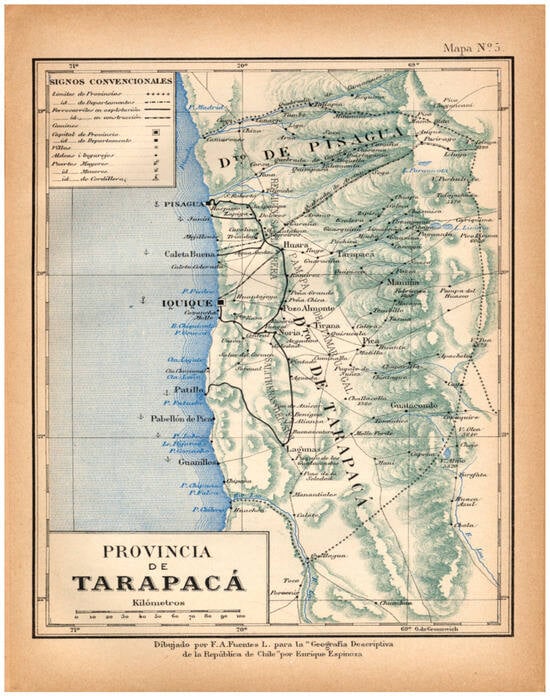
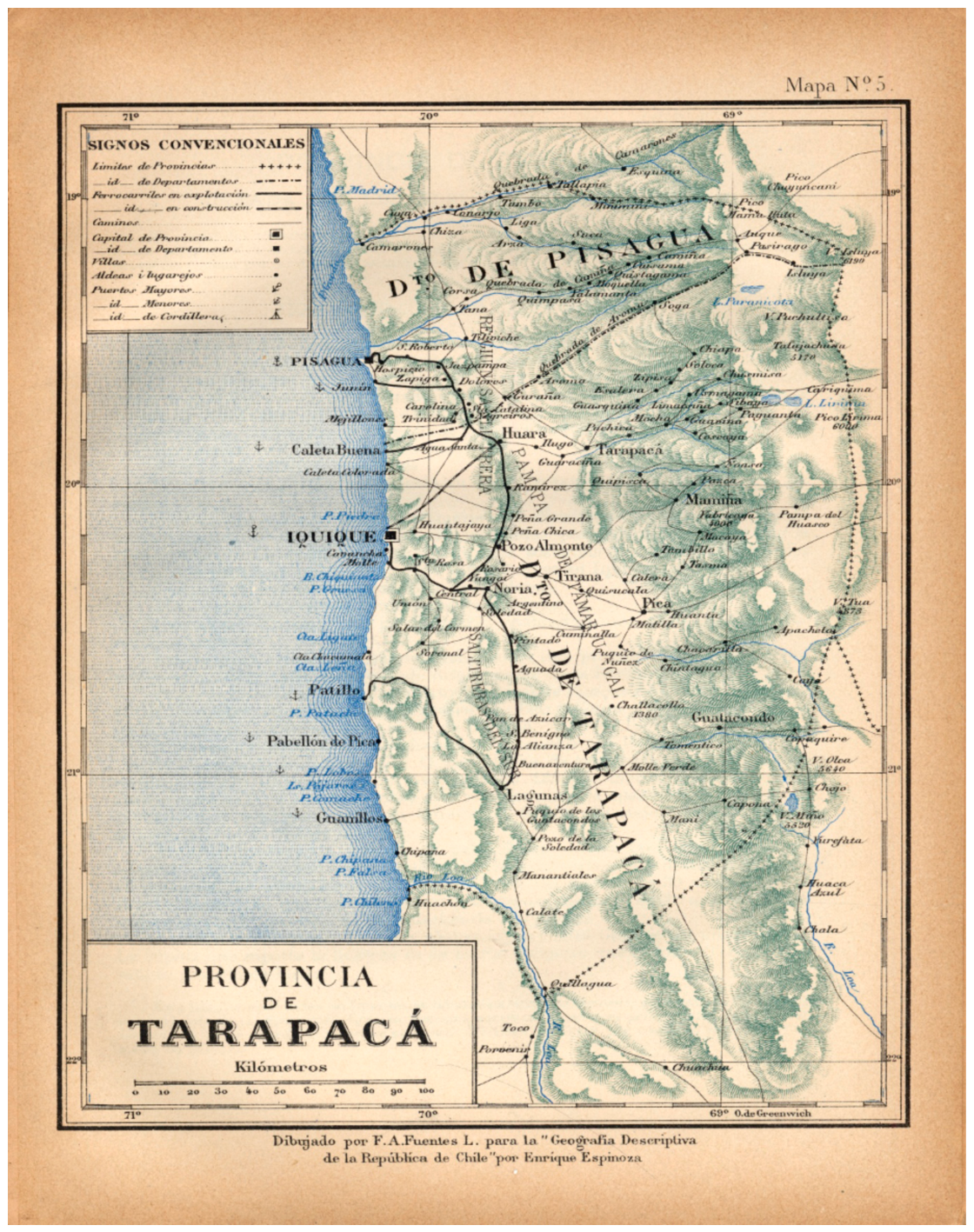
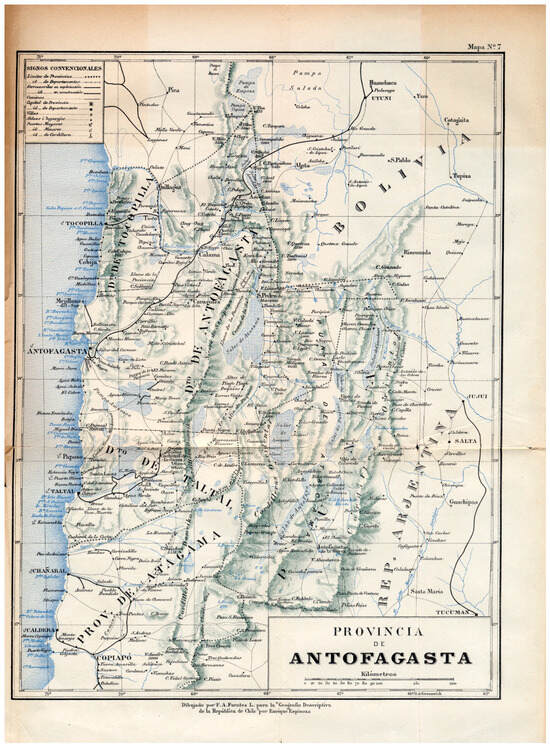
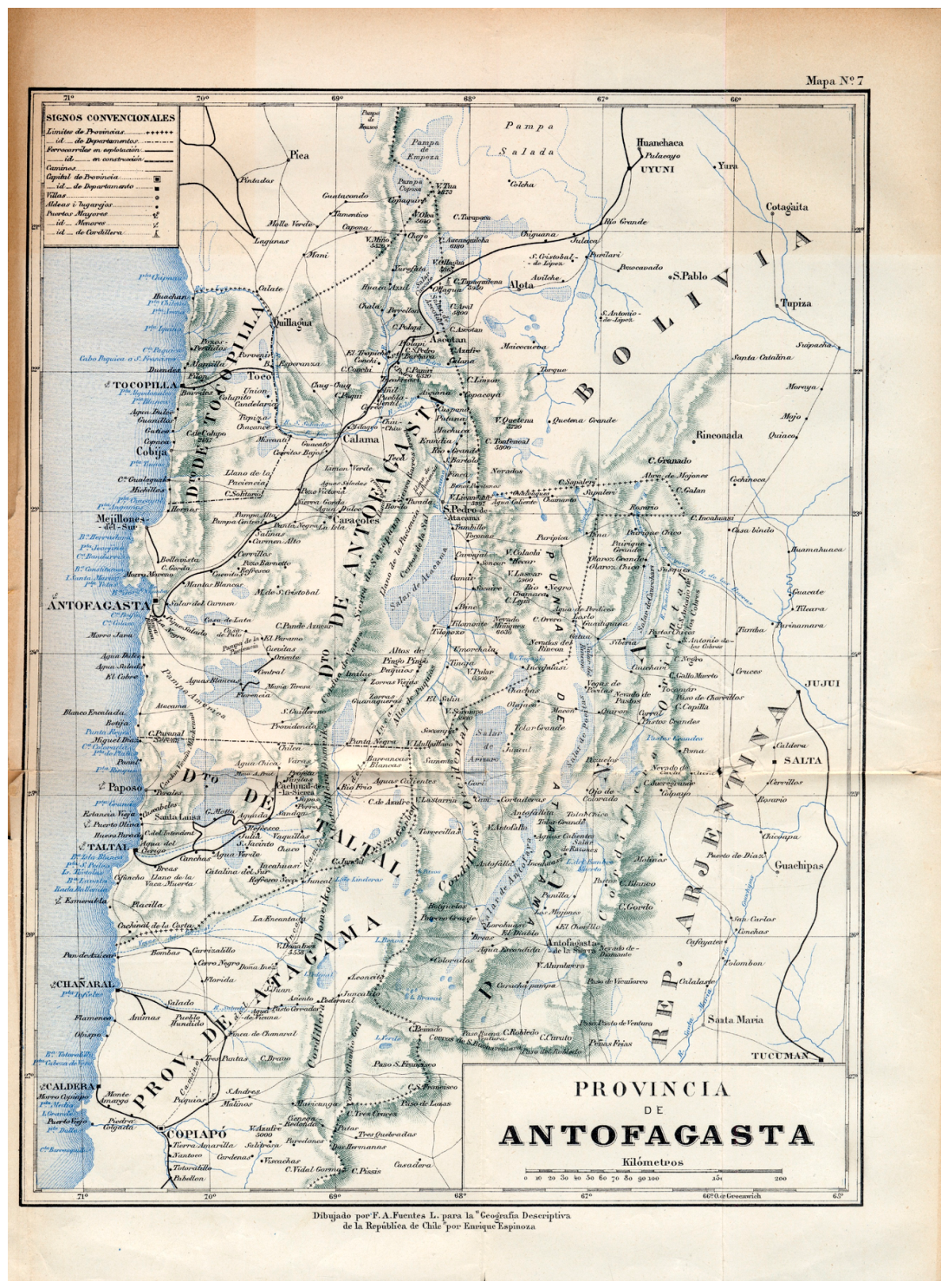

Disclaimer/Publisher’s Note: The statements, opinions and data contained in all publications are solely those of the individual author(s) and contributor(s) and not of MDPI and/or the editor(s). MDPI and/or the editor(s) disclaim responsibility for any injury to people or property resulting from any ideas, methods, instructions or products referred to in the content. |
© 2026 by the author. Licensee MDPI, Basel, Switzerland. This article is an open access article distributed under the terms and conditions of the Creative Commons Attribution (CC BY) license.