
Role of Bioimpedance Spectroscopy, Lung Ultrasound, and Inferior Vena Cava Diameter in Assessing Dry Weight in Hemodialysis Patients: A Narrative Review
 , , , ,
Abstract
1. Introduction
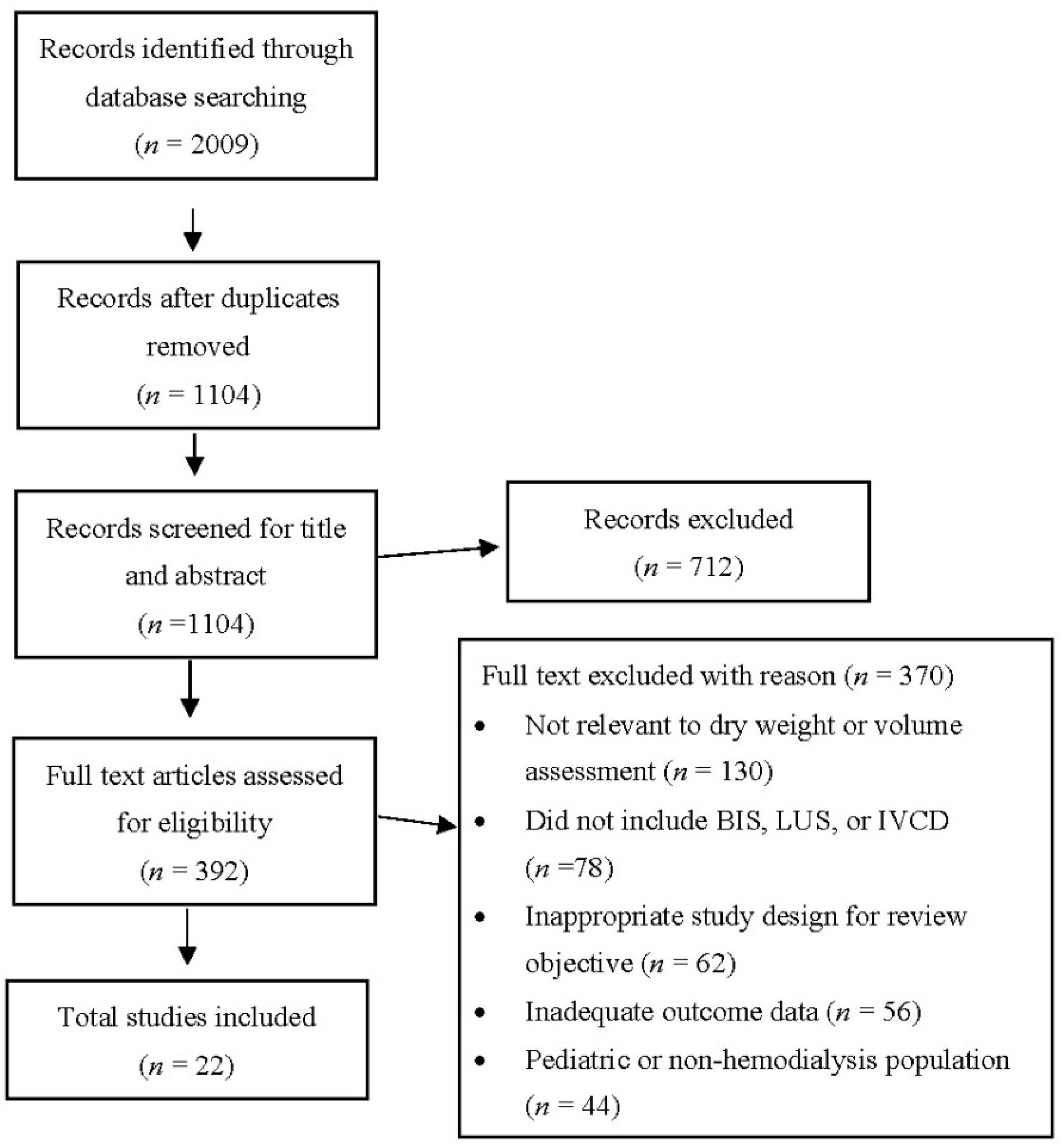
2. Literature Search Strategy and Selection Criteria
3. Discussion
3.1. Role of Clinical Method in Dry Weight Estimation
3.2. Role of the BIS Using BCM in Dry Weight Estimation
3.3. Role of LUS in Dry Weight Estimation
3.4. Inferior Vena Cava Diameter Measurement
3.5. Comparison Among the Three Techniques
3.6. Clinical Implementation
3.7. Strengths and Limitations
4. Future Perspectives
5. Conclusions
Author Contributions
Funding
Institutional Review Board Statement
Informed Consent Statement
Data Availability Statement
Acknowledgments
Conflicts of Interest
Abbreviations
| BIS | Bioimpedance Spectroscopy |
| IVCD | Inferior Vena Cava Diameter |
| LUS | Lung Ultrasound |
| CKD | Chronic Kidney Disease |
| HD | Hemodialysis |
| MHD | Maintenance Hemodialysis |
| ESKD | End-Stage Kidney Disease |
| BCM | Body Composition Monitor |
| ECW/ECF | Extracellular Water/ Extracellular Fluid |
| ICW/ICF | Intracellular Water/ Intracellular Fluid |
| TBW | Total Body Water |
| EVLW | Extravascular Lung Water |
| FO | Fluid Overload |
| SBP | Systolic Blood Pressure |
| DBP | Diastolic Blood Pressure |
| TLUS | Total Lung Ultrasound Score |
| IVC | Inferior Vena Cava |
| IVC-CI | Inferior Vena Cava Collapsibility Index |
| IVCDimax | Maximum Inferior Vena Cava Diameter indexed to Body Surface Area |
| BP | Blood Pressure |
| NYHA | New York Heart Association |
| IDH | Intradialytic Hypotension |
| KDOQI | Kidney Disease Outcomes Quality Initiative |
| KDIGO | Kidney Disease Improving Global Outcomes |
References
- Liyanage, T.; Toyama, T.; Hockham, C.; Ninomiya, T.; Perkovic, V.; Woodward, M.; Fukagawa, M.; Matsushita, K.; Praditpornsilpa, K.; Hooi, L.S.; et al. Prevalence of chronic kidney disease in Asia: A systematic review and analysis. BMJ Glob. Health 2022, 7, e007525. [Google Scholar] [CrossRef]
- Sommerer, C.; Felten, P.; Toernig, J.; Zeier, M.; Dikow, R. Bioimpedance analysis is not superior to clinical assessment in determining hydration status: A prospective randomized-controlled trial in a Western dialysis population. Hemodial. Int. 2021, 25, 380–390. [Google Scholar] [CrossRef]
- Hecking, M.; Rayner, H.; Wabel, P. What are the Consequences of Volume Expansion in Chronic Dialysis Patients? Defining and Measuring Fluid Overload in Hemodialysis Patients. Semin. Dial. 2015, 28, 242–247. [Google Scholar] [CrossRef] [PubMed]
- Chua, H.-R.; Xiang, L.; Chow, P.-Y.; Xu, H.; Shen, L.; Lee, E.; Teo, B.-W. Quantifying acute changes in volume and nutritional status during haemodialysis using bioimpedance analysis. Nephrology 2012, 17, 695–702. [Google Scholar] [CrossRef]
- Stenberg, J.; Keane, D.; Lindberg, M.; Furuland, H. Systematic Fluid Assessment in Haemodialysis: Development and Validation of a Decision Aid. J. Ren. Care 2020, 46, 52–61. [Google Scholar] [CrossRef]
- Patel, H.; Annigeri, R.; Kowdle, P.; Rao, B.; Seshadri, R.; Balasubramanian, S.; Vadamalai, V. Bioimpedance spectroscopy-guided ultrafiltration normalizes hydration and reduces intradialytic adverse events in hemodialysis patients. Indian J. Nephrol. 2019, 29, 1. [Google Scholar] [CrossRef]
- Kim, H.R.; Bae, H.J.; Jeon, J.W.; Ham, Y.R.; Na, K.R.; Lee, K.W.; Hyon, Y.K.; Choi, D.E. A novel approach to dry weight adjustments for dialysis patients using machine learning. PLoS ONE 2021, 16, e0250467. [Google Scholar] [CrossRef]
- Al Nusair, H.; Hamdan, W.; Garma, J.; Eid, A.; Alnjadat, R.; Al-Nsair, N.; Fonbuena, M.; Davao, C. The Implementation of a Modified Fluid Assessment Tool to Improve the Clinical Assessment, Detection, and Management of Blood Pressure Control and Fluid Alterations Among Hemodialysis Patients. Int. J. Nephrol. Renovasc. Dis. 2023, 16, 261–268. [Google Scholar] [CrossRef] [PubMed]
- Gómez Perales, J.L. Blood volume analysis by radioisotopic dilution techniques: State of the art. Appl. Radiat. Isot. 2015, 96, 71–82. [Google Scholar] [CrossRef] [PubMed]
- Loutradis, C.; Sarafidis, P.A.; Ferro, C.J.; Zoccali, C. Volume overload in hemodialysis: Diagnosis, cardiovascular consequences, and management. Nephrol. Dial. Transplant. 2021, 36, 2182–2193. [Google Scholar] [CrossRef]
- Levin, N.W.; Zhu, F.; Keen, M. Interdialytic Weight Gain and Dry Weight. Blood Purif. 2001, 19, 217–221. [Google Scholar] [CrossRef]
- Mathilakath, N.C.; Selvaraj, J.; Parameswaran, S.; Viswanathan, S.; Pillai, V.; Kt, H. Prevalence of Overhydration in Patients on Maintenance Haemodialysis as Determined by Body Composition Monitor and Effects of Attaining Target Dry Weight. Cureus 2022, 14, e29509. [Google Scholar] [CrossRef]
- Ngoh, C.L.Y.; Teng, H.L.; Chua, Y.T.; Leo, C.C.H.; Wong, W.K. Comparison between lung ultrasonography and current methods for volume assessment in Asian chronic hemodialysis patients. Hemodial. Int. 2020, 24, 516–527. [Google Scholar] [CrossRef]
- Arun Thomas, E.T.; Mohandas, M.K.; George, J. Comparison between clinical judgment and integrated lung and inferior vena cava ultrasonography for dry weight estimation in hemodialysis patients. Hemodial. Int. 2019, 23, 494–503. [Google Scholar] [CrossRef] [PubMed]
- Trirattanapikul, A.; Kongpetch, S.; Lukkanalikitkul, E.; Ahooja, A.; Seesuk, P.; Sharma, A.; Anutrakulchai, S. Lung Ultrasound Estimates the Overhydration and Benefits Blood Pressure Control in Normal or Mild Symptomatic Hemodialysis Patients. Int. J. Nephrol. Renovasc. Dis. 2022, 15, 383–395. [Google Scholar] [CrossRef]
- Tan, G.F.L.; Du, T.; Liu, J.S.; Chai, C.C.; Nyein, C.M.; Liu, A.Y.L. Automated lung ultrasound image assessment using artificial intelligence to identify fluid overload in dialysis patients. BMC Nephrol. 2022, 23, 410. [Google Scholar] [CrossRef]
- Volpicelli, G.; Mussa, A.; Garofalo, G.; Cardinale, L.; Casoli, G.; Perotto, F.; Fava, C.; Frascisco, M. Bedside lung ultrasound in the assessment of alveolar-interstitial syndrome. Am. J. Emerg. Med. 2006, 24, 689–696. [Google Scholar] [CrossRef]
- Basso, F.; Milan Manani, S.; Cruz, D.N.; Teixeira, C.; Brendolan, A.; Nalesso, F.; Zanella, M.; Ronco, C. Comparison and Reproducibility of Techniques for Fluid Status Assessment in Chronic Hemodialysis Patients. Cardioren. Med. 2013, 3, 104–112. [Google Scholar] [CrossRef] [PubMed]
- Brennan, J.M.; Ronan, A.; Goonewardena, S.; Blair, J.E.A.; Hammes, M.; Shah, D.; Vasaiwala, S.; Kirkpatrick, J.N.; Spencer, K.T. Handcarried Ultrasound Measurement of the Inferior Vena Cava for Assessment of Intravascular Volume Status in the Outpatient Hemodialysis Clinic. Clin. J. Am. Soc. Nephrol. 2006, 1, 749–753. [Google Scholar] [CrossRef]
- Sinha, A.D.; Agarwal, R. Can chronic volume overload be recognized and prevented in hemodialysis patients? The pitfalls of the clinical examination in assessing volume status. Semin. Dial. 2009, 22, 480–482. [Google Scholar] [CrossRef] [PubMed]
- Mamat, R.; Kong, N.C.T.; Ba’in, A.; Shah, S.A.; Cader, R.; Wong, V.; Mohd, R.; Abdul Gafor, A.H.; Ismail, R. Assessment of body fluid status in hemodialysis patients using the body composition monitor measurement technique. J. Clin. Nurs. 2012, 21, 2879–2885. [Google Scholar] [CrossRef] [PubMed]
- Voroneanu, L.; Cusai, C.; Hogas, S.; Ardeleanu, S.; Onofriescu, M.; Nistor, I.; Prisada, O.; Sascau, R.; Goldsmith, D.; Covic, A. The relationship between chronic volume overload and elevated blood pressure in hemodialysis patients: Use of bioimpedance provides a different perspective from echocardiography and biomarker methodologies. Int. Urol. Nephrol. 2010, 42, 789–797. [Google Scholar] [CrossRef]
- Inrig, J.K.; Patel, U.D.; Gillespie, B.S.; Hasselblad, V.; Himmelfarb, J.; Reddan, D.; Lindsay, R.M.; Winchester, J.F.; Stivelman, J.; Toto, R.; et al. Relationship Between Interdialytic Weight Gain and Blood Pressure Among Prevalent Hemodialysis Patients. Am. J. Kidney Dis. 2007, 50, 108–118.e4. [Google Scholar] [CrossRef]
- Kim, C.R.; Shin, J.; Hwang, J.H.; Kim, S.H. Monitoring Volume Status Using Bioelectrical Impedance Analysis in Chronic Hemodialysis Patients. ASAIO J. 2018, 64, 245–252. [Google Scholar] [CrossRef]
- Vitturi, N.; Dugo, M.; Soattin, M.; Simoni, F.; Maresca, L.; Zagatti, R.; Maresca, M.C. Lung ultrasound during hemodialysis: The role in the assessment of volume status. Int. Urol. Nephrol. 2014, 46, 169–174. [Google Scholar] [CrossRef] [PubMed]
- Jaffrin, M.Y.; Morel, H. Body fluid volumes measurements by impedance: A review of bioimpedance spectroscopy (BIS) and bioimpedance analysis (BIA) methods. Med. Eng. Phys. 2008, 30, 1257–1269. [Google Scholar] [CrossRef]
- Wabel, P.; Chamney, P.; Moissl, U.; Jirka, T. Importance of Whole-Body Bioimpedance Spectroscopy for the Management of Fluid Balance. Blood Purif. 2009, 27, 75–80. [Google Scholar] [CrossRef] [PubMed]
- Passauer, J.; Petrov, H.; Schleser, A.; Leicht, J.; Pucalka, K. Evaluation of clinical dry weight assessment in haemodialysis patients using bioimpedance spectroscopy: A cross-sectional study. Nephrol. Dial. Transplant. 2010, 25, 545–551. [Google Scholar] [CrossRef]
- Tangvoraphonkchai, K.; Davenport, A. Do Bioimpedance Measurements of Over-Hydration Accurately Reflect Post-Haemodialysis Weight Changes? Nephron 2016, 133, 247–252. [Google Scholar] [CrossRef]
- Keber, G.; Hojs, R.; Dvoršak, B.; Bevc, S.; Vodošek Hojs, N.; Petreski, T.; Ekart, R. Assessment of volume status with bioimpendance prior to hemodialysis and its importance for predicting survival in hemodialysis patients. Clin. Nephrol. 2021, 96, 68–73. [Google Scholar] [CrossRef]
- Covic, A.; Ciumanghel, A.-I.; Siriopol, D.; Kanbay, M.; Dumea, R.; Gavrilovici, C.; Nistor, I. Value of bioimpedance analysis estimated “dry weight” in maintenance dialysis patients: A systematic review and meta-analysis. Int. Urol. Nephrol. 2017, 49, 2231–2245. [Google Scholar] [CrossRef]
- Moissl, U.M.; Wabel, P.; Chamney, P.W.; Bosaeus, I.; Levin, N.W.; Bosy-Westphal, A.; Korth, O.; Müller, M.J.; Ellegård, L.; Malmros, V.; et al. Body fluid volume determination via body composition spectroscopy in health and disease. Physiol. Meas. 2006, 27, 921–933. [Google Scholar] [CrossRef] [PubMed]
- Watanabe, K.; Ito, Y.; Fujimaru, T.; Nagahama, M.; Taki, F.; Nakayama, M. Role of the new bioimpedance monitoring device (Seca®) in assessing dry weight in hemodialysis patients. Clin. Exp. Nephrol. 2022, 26, 460–465. [Google Scholar] [CrossRef]
- Moissl, U.; Fuentes, L.R.; Hakim, M.I.; Hassler, M.; Kothari, D.A.; Rosales, L.; Zhu, F.; Raimann, J.G.; Thijssen, S.; Kotanko, P. Prevalence of fluid overload in an urban US hemodialysis population: A cross-sectional study. Hemodial. Int. 2022, 26, 264–273. [Google Scholar] [CrossRef] [PubMed]
- Lazarevic, T.; Petrovic, D.; Novkovic, L.; Janicijevic, K.; Janicijevic-Petrovic, M.; Vujic, A.; Ljujic, B.; Sazdanovic, M.; Kovacevic, Z. Assessment of volemia status using ultrasound examination of the inferior vena cava and spectroscopic bioimpendance in hemodialysis patients. Vojnosanit. Pregl. 2022, 79, 456–464. [Google Scholar] [CrossRef]
- Zoccali, C.; Moissl, U.; Chazot, C.; Mallamaci, F.; Tripepi, G.; Arkossy, O.; Wabel, P.; Stuard, S. Chronic Fluid Overload and Mortality in ESRD. J. Am. Soc. Nephrol. 2017, 28, 2491–2497. [Google Scholar] [CrossRef]
- Siriopol, D.; Voroneanu, L.; Hogas, S.; Apetrii, M.; Gramaticu, A.; Dumea, R.; Burlacu, A.; Sascau, R.; Kanbay, M.; Covic, A. Bioimpedance analysis versus lung ultrasonography for optimal risk prediction in hemodialysis patients. Int. J. Cardiovasc. Imaging 2016, 32, 263–270. [Google Scholar] [CrossRef] [PubMed]
- Ponce, P.; Pham, J.; Gligoric-Fuerer, O.; Kreuzberg, U. Fluid management in haemodialysis: Conventional versus Body Composition Monitoring (BCM) supported management of overhydrated patients. Port. J. Nephrol. Hypert. 2014, 28, 239–248. [Google Scholar]
- Huan-Sheng, C.; Yeong-Chang, C.; Ming-Hsing, H.; Fan-Lieh, T.; Chu-Cheng, L.; Tsai-Kun, W.; Hung-Ping, C.; Sze-Hung, H.; Hsien-Chang, C.; Chia-Chen, L.; et al. Application of bioimpedance spectroscopy in Asian dialysis patients (ABISAD-III): A randomized controlled trial for clinical outcomes. Int. Urol. Nephrol. 2016, 48, 1897–1909. [Google Scholar] [CrossRef]
- Liu, L.; Sun, Y.; Chen, Y.; Xu, J.; Yuan, P.; Shen, Y.; Lin, S.; Sun, W.; Ma, Y.; Ren, J.; et al. The effect of BCM guided dry weight assessment on short-term survival in Chinese hemodialysis patients: Primary results of a randomized trial—BOdy COmposition MOnitor (BOCOMO) study. BMC Nephrol. 2020, 21, 135. [Google Scholar] [CrossRef]
- Onofriescu, M.; Hogas, S.; Voroneanu, L.; Apetrii, M.; Nistor, I.; Kanbay, M.; Covic, A.C. Bioimpedance-guided fluid management in maintenance hemodialysis: A pilot randomized controlled trial. Am. J. Kidney Dis. 2014, 64, 111–118. [Google Scholar] [CrossRef] [PubMed]
- Onofriescu, M.; Mardare, N.G.; Segall, L.; Voroneanu, L.; Cuşai, C.; Hogaş, S.; Ardeleanu, Ş.; Nistor, I.; Prisadă, O.V.; Sascău, R.; et al. Randomized trial of bioelectrical impedance analysis versus clinical criteria for guiding ultrafiltration in hemodialysis patients: Effects on blood pressure, hydration status, and arterial stiffness. Int. Urol. Nephrol. 2012, 44, 583–591. [Google Scholar] [CrossRef]
- Torino, C.; Gargani, L.; Sicari, R.; Letachowicz, K.; Ekart, R.; Fliser, D.; Covic, A.; Siamopoulos, K.; Stavroulopoulos, A.; Massy, Z.A.; et al. The Agreement between Auscultation and Lung Ultrasound in Hemodialysis Patients: The LUST Study. Clin. J. Am. Soc. Nephrol. 2016, 11, 2005–2011. [Google Scholar] [CrossRef] [PubMed]
- Zheng, D.; Liu, Y.; Li, Y.; Jin, J.; He, Q.; Shen, X. Lung Ultrasound and Bioelectrical Impedance Analysis for Fluid Status Assessing Patients Undergoing Maintenance Hemodialysis. Int. J. Clin. Pract. 2024, 2024, 1232211. [Google Scholar] [CrossRef]
- Jiang, C.; Patel, S.; Moses, A.; DeVita, M.V.; Michelis, M.F. Use of lung ultrasonography to determine the accuracy of clinically estimated dry weight in chronic hemodialysis patients. Int. Urol. Nephrol. 2017, 49, 2223–2230. [Google Scholar] [CrossRef]
- Gargani, L.; Volpicelli, G. How I do it: Lung ultrasound. Cardiovasc. Ultrasound 2014, 12, 25. [Google Scholar] [CrossRef]
- Picano, E.; Frassi, F.; Agricola, E.; Gligorova, S.; Gargani, L.; Mottola, G. Ultrasound Lung Comets: A Clinically Useful Sign of Extravascular Lung Water. J. Am. Soc. Echocardiogr. 2006, 19, 356–363. [Google Scholar] [CrossRef]
- Ivanov, I.; Veselinov, V.; Celic, D.; Dejanovic, J.; Obradovic, D.; Knezevic, V. Lung ultrasound for volume status assessment in chronic hemodialysis patients. Vojnosanit. Pregl. 2020, 77, 943–949. [Google Scholar] [CrossRef]
- Allinovi, M.; Palazzini, G.; Lugli, G.; Gianassi, I.; Dallari, L.; Laudicina, S.; Gregori, M.; Rossi, F.; Giannerini, D.; Cutruzzulà, R.; et al. Pre-Dialysis B-Line Quantification at Lung Ultrasound Is a Useful Method for Evaluating the Dry Weight and Predicting the Risk of Intradialytic Hypotension. Diagnostics 2022, 12, 2990. [Google Scholar] [CrossRef]
- Pardała, A.; Lupa, M.; Chudek, J.; Kolonko, A. Lung Ultrasound B-lines Occurrence in Relation to Left Ventricular Function and Hydration Status in Hemodialysis Patients. Medicina 2019, 55, 45. [Google Scholar] [CrossRef] [PubMed]
- Cui, L.; Chen, J.; Ye, C. The role of lung ultrasonography in the assessment of overhydration in maintenance hemodialysis patients. Ren. Fail. 2022, 44, 1995–2002. [Google Scholar] [CrossRef]
- Loutradis, C.; Papadopoulos, C.E.; Sachpekidis, V.; Ekart, R.; Krunic, B.; Papadopoulou, D.; Papagianni, A.; Mallamaci, F.; Zoccali, C.; Sarafidis, P.A. Lung ultrasound-guided dry-weight reduction and echocardiographic changes in clinically euvolemic hypertensive hemodialysis patients: 12-month results of a randomized controlled trial. Hell. J. Cardiol. 2022, 64, 1–6. [Google Scholar] [CrossRef]
- Siriopol, D.; Onofriescu, M.; Voroneanu, L.; Apetrii, M.; Nistor, I.; Hogas, S.; Kanbay, M.; Sascau, R.; Scripcariu, D.; Covic, A. Dry weight assessment by combined ultrasound and bioimpedance monitoring in low cardiovascular risk hemodialysis patients: A randomized controlled trial. Int. Urol. Nephrol. 2017, 49, 143–153. [Google Scholar] [CrossRef] [PubMed]
- Loutradis, C.; Sarafidis, P.A.; Ekart, R.; Tsouchnikas, I.; Papadopoulos, C.; Kamperidis, V.; Alexandrou, M.E.; Ferro, C.J.; Papagianni, A.; London, G.; et al. Ambulatory blood pressure changes with lung ultrasound-guided dry-weight reduction in hypertensive hemodialysis patients: 12-month results of a randomized controlled trial. J. Hypertens. 2021, 39, 1444–1452. [Google Scholar] [CrossRef]
- Loutradis, C.; Sarafidis, P.A.; Theodorakopoulou, M.; Ekart, R.; Alexandrou, M.E.; Pyrgidis, N.; Angeloudi, E.; Tzanis, G.; Toumpourleka, M.; Papadopoulou, D.; et al. Lung Ultrasound-Guided Dry-Weight Reduction in Hemodialysis Patients Does Not Affect Short-Term Blood Pressure Variability. Am. J. Hypertens. 2019, 32, 786–795. [Google Scholar] [CrossRef]
- Torterüe, X.; Dehoux, L.; Macher, M.-A.; Niel, O.; Kwon, T.; Deschênes, G.; Hogan, J. Fluid status evaluation by inferior vena cava diameter and bioimpedance spectroscopy in pediatric chronic hemodialysis. BMC Nephrol. 2017, 18, 373. [Google Scholar] [CrossRef]
- Ekinci, C.; Karabork, M.; Siriopol, D.; Dincer, N.; Covic, A.; Kanbay, M. Effects of Volume Overload and Current Techniques for the Assessment of Fluid Status in Patients with Renal Disease. Blood Purif. 2018, 46, 34–47. [Google Scholar] [CrossRef]
- Kooman, J.P.; Van Der Sande, F.M.; Leunissen, K.M.L. Wet or Dry in Dialysis—Can New Technologies Help? Semin. Dial. 2009, 22, 9–12. [Google Scholar]
- Raimann, J.; Liu, L.; Tyagi, S.; Levin, N.W.; Kotanko, P. A fresh look at dry weight. Hemodial. Int. 2008, 12, 395–405. [Google Scholar] [CrossRef] [PubMed]
- Hafiz, M.A.E.H.; Mohamed, E.A.; Mohamed, M.A.E.N.; Ahmed, M.A.E.S. Inferior vena cava diameter and collapsibility index as a marker of fluid status in regular hemodialysis patients. Egypt. J. Intern. Med. 2021, 33, 43. [Google Scholar] [CrossRef]
- Mokhtar Mabrouk El-Atar, M.; Fathy Esmael Hasan, N.; Shawky Basiony, F.; Farrag Ahmed, S. Role of Chest Ultrasound and Inferior Vena Cava Diameter in Assessment of Volume Status in Hemodialysis Patients. Al-Azhar Med. J. 2022, 51, 1145–1154. [Google Scholar] [CrossRef]
- Trivedi, V.; Prajapati, M.; Prajapati, D.J.; Bhosale, G.; Nayak, J.; Panchal, H. Is Inferior Vena Cava Diameter, a Reliable Indicator for Fluid Status in End-Stage Renal Disease Patients?—A Prospective Observational Study. Indian J. Transplant. 2022, 16, 200–204. [Google Scholar] [CrossRef]
- Hussien Abd-Rabo, D.; Attia Mohamed, F.; Ibrahim, A.; Abdelhafez, M. Evaluation of Dry Weight in Hemodialysis Patients. J. Recent Adv. Med. 2021, 3, 38–44. [Google Scholar] [CrossRef]
- Da Hora Passos, R.; Caldas, J.; Ramos, J.G.R.; Dos Santos Galvão De Melo, E.B.; Ribeiro, M.P.D.; Alves, M.F.C.; Batista, P.B.P.; Messeder, O.H.C.; De Carvalho De Farias, A.M.; Macedo, E.; et al. Ultrasound-based clinical profiles for predicting the risk of intradialytic hypotension in critically ill patients on intermittent dialysis: A prospective observational study. Crit. Care 2019, 23, 389. [Google Scholar] [CrossRef] [PubMed]
- Kaptein, M.; Kaptein, J.; Oo, Z.; Kaptein, E. Relationship of inferior vena cava collapsibility to ultrafiltration volume achieved in critically ill hemodialysis patients. Int. J. Nephrol. Renov. Dis. 2018, 11, 195–209. [Google Scholar] [CrossRef]
- Haskin, O.; Falush, Y.; Davidovits, M.; Alfandary, H.; Levi, S.; Berant, R. Use of Point-of-Care Ultrasound for Evaluation of Extravascular and Intravascular Fluid Status in Pediatric Patients Maintained on Chronic Hemodialysis. Blood Purif. 2022, 51, 321–327. [Google Scholar] [CrossRef] [PubMed]
- Fadel, F.I.; Salah, D.M.; Mawla, M.A.A.; Galal, E.; Sayed, S. Assessment of volume status of pediatric hemodialysis patients. Pediatr. Nephrol. 2024, 39, 3057–3066. [Google Scholar] [CrossRef]


| Methods Used to Assess Fluid Status | Procedure | Equipment Required | Fluid Compartment Assessed | Hydration Status |
|---|---|---|---|---|
| Clinical method | Fluid status is assessed based on clinical parameters such as edema, blood pressure, interdialytic weight gain, cramps, ultrafiltration rate, the patient’s signs and symptoms, and intradialytic hemodynamic instability [10,11]. | The nephrologist sets the dry weight based on these clinical parameters. | Assesses extracellular fluid (ECF) and total body water (TBW). | Based on the results obtained by evaluating clinical parameters, patients are classified as underhydrated, normally hydrated, or overhydrated. |
| Bioimpedance spectroscopy with BCM | Hydration status and body composition are evaluated using a portable BIS device (BCM). This involves placing electrodes on the patient’s non-fistula forearm and ankle while the patient lies supine. The device analyzes resistance and reactance to the applied electric current. It operates at 50 frequencies to measure impedance spectroscopy [10,12]. | Requires a BCM device with disposable electrodes. | Assesses ECF, intracellular fluid (ICF), TBW, and overhydration. | If the absolute fluid overload is between −1.1 and +1.1 L, it indicates normohydration. Over- or underhydration is defined as a volume above or below this range, respectively [12]. |
| Lung ultrasonography | LUS is performed using a curvilinear (convex) probe (2–5 MHz) [13,14]. Scanning protocols vary—most commonly, the 28-zone protocol involves scanning 16 sites on the right hemithorax and 12 on the left [13,14]. The 12-zone protocol focuses on 12 specific lung areas: six on anterior axillary lines, three on mid-axillary lines, and three on mid-clavicular lines [15], while the 8-zone protocol includes two anterior and two lateral zones on each side to shorten examination time while maintaining good correlation with the 28-zone protocol [14,16]. The analysis focuses on sonographic artifacts known as B-lines to assess lung fluid accumulation [14,17]. | Requires an ultrasound machine with a curvilinear or convex probe. | LUS evaluates extravascular lung water (EVLW). | ≥4 B-lines at any site on an 8-zone scan indicate a positive region [14]. In a 12-zone scan, if total B-lines <7 = none/mild, 8–16 = moderate, ≥16 = severe overhydration [15]. TLUS <15 = none/mild, 16–30 = moderate, ≥30 = severe overhydration in the 28-zone protocol [15]. |
| IVC ultrasonography | The examination is usually performed with a 3–5 MHz convex probe. IVCD is explored in the subxiphoid window during expiration (IVCDmax) and inspiration (IVCDmin) within 2.5 cm of the confluence of the IVC and the right atrium. IVCD is indexed to body surface area (IVCDi). The IVC-CI is calculated as (IVCDmax–IVCDmin)/IVCDmax × 100 [18,19]. | Ultrasound machine with a convex probe. | Assesses the IVCD and collapsibility index. | Patients are categorized as underhydrated if IVCDimax is <8 mm/m2, normohydrated if IVCDimax is 8–11.5 mm/m2, and overhydrated if IVCDimax is >11.5 mm/m2 [18,19]. IVC-CI (%): Hypovolemia if >75%, euvolemia 40–75%, hypervolemia <40% [19]. |
| Features | Bioimpedance Spectroscopy | Lung Ultrasonography | Inferior Vena Cava Ultrasonography |
|---|---|---|---|
| Specific marker | Electrical impedance–derived body water compartments | B-line count | IVC diameter and collapsibility |
| Pros | Highly objective and reproducible. Non-invasive, rapid, bedside tool. Provides body composition data and reflects nutritional status. Widely studied for dry weight assessment in HD. Detects subclinical fluid overload and dehydration. | Non-invasive, bedside tool. Can detect early fluid overload. Direct visualization of pulmonary congestion. Useful for guiding ultrafiltration and preventing pulmonary edema. | Non-invasive, bedside tool. Reflects acute intravascular volume changes. Useful for dynamic assessment (pre- and post-dialysis). |
| Cons | Lacks compartmental resolution—unable to distinguish pulmonary congestion from peripheral edema. Requires expensive equipment. Limited availability in resource-limited settings. Results may be influenced by comorbidities (obesity, implants, amputations). | Operator-dependent. B-lines can be false positives (may occur in other lung diseases). Requires ultrasound expertise. Less informative about total body volume. | Operator-dependent with high inter-observer variability. Influenced by respiratory effort, intra-abdominal pressure, and cardiac dysfunction. Less reliable in chronic HD patients with vascular changes. |
| Clinical value | Guides dry weight prescription. Useful for setting long-term volume management and reflects nutritional status. | Detects early pulmonary congestion before clinical signs (crackles, dyspnea) manifest. Guides ultrafiltration. | Best suited for acute intravascular volume assessment and monitoring the immediate response to ultrafiltration. |
| Author | Sample Size | Type of Study | Volume Parameter Used | Quantitative Results | Outcomes (Fluid Status) | Key Limitations |
|---|---|---|---|---|---|---|
| Mathilakath et al., [12] | 110 | Prospective observational | BCM: OH/ECW ratio > 1.1 to define overhydration | Overhydration prevalence: 27.2%. Clinically undetected: 33%. ↓ Intradialytic hypertension (p = 0.017). ↓ SBP/DBP (p ≥ 0.05). | BCM identified hidden overhydration; guided dry weight adjustment reduced intradialytic hypertension episodes. | Lack of strict implementation of salt and fluid intake restrictions. Achievement of the target dry weight was delayed, requiring a mean of 20 weeks instead of the intended 12. |
| Mamat et al., [21] | 80 | Prospective cross-sectional | BCM: ECW, ICW, TBW | r = 0.987, p < 0.001 (BCM vs. nephrologist DW). Pre- vs. post-dialysis ECF/TBW/ICF reductions (p < 0.001). SBP reduction (p = 0.015). | BCM measurements significantly correlated with nephrologist-assessed dry weights, and BCM detected higher pre- and post-HD overhydration compared to clinical estimates. | The study lacked follow-up and did not assess long-term outcomes. |
| Kim, C.R. et al., [24] | 142 | Retrospective longitudinal | ECW/TBW Ratio | HR 4.7 (95% CI 1.4–16.1, p < 0.05): all-cause mortality (independent). HR 2.4 (95% CI 1.2–5.1, p < 0.05): Cardiovascular events (univariate only; Adjusted HR 1.7, NS). | Chronic volume overload independently predicted all-cause mortality. | The study was retrospective, limiting control over confounding factors, and volume assessment was performed within 30 min of dialysis initiation rather than the recommended pre-dialysis or post-dialysis timing. |
| Passauer et al., [28] | 370 | Cross-sectional | FO via BCM | Non diabetics: Pre FO vs. SBP: r2 = 0.046, p < 0.005. Post FO vs. SBP: r2 = 0.078, p < 0.001 FO vs. antihypertensives: Pre r2 = 0.044, p < 0.005; Post r2 = 0.029, p < 0.05 Diabetics: all correlations NS. | Bioimpedance analysis showed that 26% of patients assessed clinically for dry weight did not achieve normal fluid balance. | Measurement was performed only pre-dialysis, with post-dialysis of FO calculated indirectly. |
| Keber et al., [30] | 92 | Retrospective Cohort | FO via BCM | FO > 2.5 L: poorer survival (p = 0.039); independent predictor of death (p = 0.044). | FO > 2.5 L was linked to increased mortality. | Conditions such as congestive heart failure, liver cirrhosis, and patient medications were not included, although they can strongly influence fluid status and outcomes. |
| Watanabe et al., [33] | 78 | Cross-sectional observational | ECW/TBW Ratio (>45%) | ECF/TBW correlated with hANP (p = 0.001) and CTR (p = 0.003); ECW/TBW cut-off 45% for hANP ≥ 50 pg/mL. | ECW/TBW > 45% was associated with hANP ≥ 50 pg/mL and higher BP/CTR, identifying overhydration. | Medication use for hypertension and vasopressor support may have confounded blood pressure and CTR, making it difficult to distinguish actual FO from drug effects. |
| Moissl, U. et al., [34] | 170 | Cross-sectional | BCM: FO, FO/ECW ratio | Pre-HD FO correlated with SBP (r = 0.39, p < 0.01); 43% overloaded pre-HD, 12% post-HD; just 48% of overloaded patients were hypertensive. | Pre-HD FO was strongly associated with SBP; BP alone was not reliable for fluid status. | Post-HD fluid status was estimated indirectly from weight loss rather than measured directly, which may introduce error in detecting actual depletion or residual overload. |
| Lazarevic et al., [35] | 45 | Cross-sectional observational | BCM: TBW, ECF, ICF, OH, ECF/ICF ratio | Before HD: NT-proBNP vs. ECF/ICF ratio r = 0.499, p < 0.0005; post HD: r = 0.425, p = 0.004. BIS parameters (ECF, TBW, OH) significantly decreased post-HD (p < 0.0005). | BCM was useful for volume assessment; post-HD decreases in ECF, TBW, and OH confirmed correction of overhydration. | The absence of follow-up and long-term outcome assessment limits the ability to draw prognostic conclusions. |
| Zoccali et al., [36] | 39,566 | Large multinational observational cohort | BCM: FO (absolute FO, FO%) | Baseline FO predicted mortality across BP groups (HR 1.25–1.51), and cumulative FO exposure further increased mortality risk (HR 1.51–1.94, p < 0.001). | Chronic FO measured via BCM strongly predicted mortality. | Despite adjustment for many confounders, unmeasured or imprecisely measured risk factors could still influence the FO-mortality association, potentially affecting the stability of the risk estimates. |
| Siriopol et al., [37] | 173 | Prospective observational cohort study | BCM: Relative Fluid Overload (RFO) | BCM-derived fluid overload improved mortality prediction (ΔC = 0.058, 95% CI 0.003–0.114), and an RFO > 6.88% was associated with higher mortality risk (Sensitivity 74.2%, Specificity 52.1%). | BCM-driven fluid assessment (RFO) was independently associated with mortality. | Could not determine the exact cause of death. |
| Author | Sample Size | Type of Study | Volume Parameter Used | Quantitative Results | Outcomes (Fluid Status) | Key Limitations |
|---|---|---|---|---|---|---|
| Ngoh et al., [13] | 50 | Cross-sectional | LUS-BLS | Median BLS 46.5 (IQR 22.5–77.0); 88% moderate/severe congestion; pre-dialysis BCM-derived AHS correlated with LUS BLS (r = 0.46, p < 0.001). | LUS detected subclinical pulmonary congestion in 61% of patients classified as normohydrated by BCM. | The study excluded patients with severe heart failure, active cardiac disease, and BMI > 40 kg/m2—groups that often present challenges in fluid management, limiting generalizability to high-risk populations. |
| Trirattanapikul et al., [15] | 20 | Prospective cohort | LUS-BLS | TLUS–WG r = 0.38; TLUS–ECF r = 0.35; TLUS–OH r = 0.39; FO (L): ≤15 BLS = 2.18, 16–24 = 2.74, 25–33 = 3.13, 34–38 = 3.81, ≥39 = 5.03; SBP ↓ 10 mmHg. | TLUS was positively correlated with weight gain and ECF, aiding in dry weight adjustments and blood pressure control. | The study focused only on HD patients with NYHA Class I–II, excluding those with advanced cardiac disease. |
| Vitturi et al., [25] | 71 | Prospective observational | LUS-BLS | BLS pre vs. post dialysis: 3.13 ± 3.4 → 1.41 ± 2.47, p < 0.001; correlation pre vs. post BLS: r = 0.829, p < 0.005; B-lines reduction vs. weight loss: β = 0.36, p = 0.007. | Weight loss during dialysis was significantly associated with a decrease in BLS. | Measurements were limited to pre- and post-dialysis, without assessing interdialytic changes or long-term outcomes. |
| Zheng et al., [44] | 98 | Cross-sectional observational | LUS-BLS | Pre vs. Post dialysis: BLS ↓ from median 15 to 5 (p < 0.001); Severe group had lower survival vs. mild (χ2 = 10.05, p = 0.002). | The BLS decreased significantly after dialysis, and a higher BLS count was associated with lower survival. | Patients underwent LUS only once; a single LUS measurement may not reflect average fluid status over weeks or months. |
| Jiang et al., [45] | 17 | Observational | LUS-BLS | BLS vs. weight: r = 0.40, p < 0.05; BLS vs. UF: r = 0.33, p < 0.05. | Reduction in BLS correlated with fluid removal, improving dry weight determination. | The study was limited by its small sample size, and although dialysis prescriptions were blinded to the sonographer, other clinical decision-making factors may have introduced bias. |
| Ivanov et al., [48] | 83 | Cross-sectional | LUS-BLS | Mean BLS ↓ 18.9 → 7.3 (p < 0.0001); correlated with BNP pre-HD (ρ = 0.49, p < 0.001) and post-HD (ρ = 0.42, p < 0.001). | BLS significantly decreased post-HD, reflecting improvement in volume status, and could be used to evaluate patients’ volume status on chronic HD. | The study focused on assessing volume status via the B-line score and its correlation with other methods, without evaluating clinical outcomes or long-term prognosis. |
| Pardała et al., [50] | 54 | Cross-sectional | LUS-BLS | BLS positively correlated with IVCD (r = 0.221, p = 0.025) and with NT-proBNP (r = 0.455, p < 0.001); inversely with LVEF (r = −0.443, p < 0.001); positively with mitral gradient (r = 0.326, p = 0.001). | BLS reflected both overhydration and left ventricular dysfunction. | BLS occurrence was influenced by factors such as left ventricular dysfunction and pulmonary hypertension, reducing its utility as a standalone hydration marker. |
| Cui et al., [51] | 88 | Prospective observational | LUS-BLS | Pre-dialysis BLS OH 24.8, post-dialysis OH 7.5 (p < 0.001); ROC AUC 0.841, cut-off 13, sensitivity 66%, specificity 95%. Mortality: KM p = 0.048, Cox OR = 3.9 (p = 0.048). | LUS detected FO in HD patients, and higher lung congestion was associated with increased mortality. | Not all patients completed every assessment; for instance, only 74 of 88 underwent echocardiography. |
| Author | Sample Size | Type of Study | Volume Parameter Used | Quantitative Results | Outcomes (Fluid Status) | Key Limitations |
|---|---|---|---|---|---|---|
| Arun Thomas et al., [14] | 74 | Open-label interventional | IVC-CI (50–75%) | IVC-CI improved significantly from 0.23 ± 0.09 to 0.53 ± 0.16, p < 0.001. Breathlessness: p = 0.003 (24 h post-HD), p < 0.001 (pre-HD day); Orthostatic giddiness: p = 0.147; B-lines reduction: p < 0.001. | Redefining dry weight via USG significantly improved intravascular volume status and pulmonary congestion symptoms (breathlessness, B-lines). | The study had only a short 2-week follow-up, limiting evaluation of sustained benefits or harms. Long-term outcomes were not assessed. |
| Basso et al., [18] | 30 | Cross-sectional | IVCD during inspiration/expiration | Reduction post-HD: BIS, LUS, IVCD (p < 0.001); IVC-CI (p = 0.13). | IVCD correlated with BIS before HD, but was less correlated after HD; IVC-CI showed no significant post-HD change. | IVCD showed only modest changes post-dialysis, and delayed fluid re-equilibration makes the optimal timing for assessment uncertain. |
| Hafiz et al., [60] | 30 | Controlled cross-sectional | IVCD, IVC-CI | IVCD (expiration) vs. weight loss: p < 0.001. IVC-CI increased post-HD: p < 0.001. | IVCD and IVC-CI were strongly correlated with ultrafiltration, reflecting post-dialysis fluid changes. | Measurements were taken before and after a single dialysis session, without longitudinal follow-up, to assess prognostic value. |
| Trivedi et al. [62] | 60 | Prospective observational study | IVCD, IVC-CI | CVP vs. IVCD: r = 0.23, p = 0.08. CVP vs. IVC-CI: r = 0.14, p = 0.30. | No linear correlation was found between CVP and IVCD or IVC-CI. | Measurements were not performed during routine dialysis sessions. |
Disclaimer/Publisher’s Note: The statements, opinions and data contained in all publications are solely those of the individual author(s) and contributor(s) and not of MDPI and/or the editor(s). MDPI and/or the editor(s) disclaim responsibility for any injury to people or property resulting from any ideas, methods, instructions or products referred to in the content. |
© 2026 by the authors. Licensee MDPI, Basel, Switzerland. This article is an open access article distributed under the terms and conditions of the Creative Commons Attribution (CC BY) license.
Share and Cite
Nayak, A.M.; Prabhu, A.R.; Rao, I.R.; Bhojaraja, M.V.; Rangaswamy, D.; Shenoy, S.V.; Prabhu, S.; Naik, B.; Nagaraju, S.P. Role of Bioimpedance Spectroscopy, Lung Ultrasound, and Inferior Vena Cava Diameter in Assessing Dry Weight in Hemodialysis Patients: A Narrative Review. Kidney Dial. 2026, 6, 22. https://doi.org/10.3390/kidneydial6020022
Nayak AM, Prabhu AR, Rao IR, Bhojaraja MV, Rangaswamy D, Shenoy SV, Prabhu S, Naik B, Nagaraju SP. Role of Bioimpedance Spectroscopy, Lung Ultrasound, and Inferior Vena Cava Diameter in Assessing Dry Weight in Hemodialysis Patients: A Narrative Review. Kidney and Dialysis. 2026; 6(2):22. https://doi.org/10.3390/kidneydial6020022
Chicago/Turabian StyleNayak, Ajith M., Attur Ravindra Prabhu, Indu Ramachandra Rao, Mohan V. Bhojaraja, Dharshan Rangaswamy, Srinivas Vinayak Shenoy, Shwetha Prabhu, Bharathi Naik, and Shankar Prasad Nagaraju. 2026. "Role of Bioimpedance Spectroscopy, Lung Ultrasound, and Inferior Vena Cava Diameter in Assessing Dry Weight in Hemodialysis Patients: A Narrative Review" Kidney and Dialysis 6, no. 2: 22. https://doi.org/10.3390/kidneydial6020022
APA StyleNayak, A. M., Prabhu, A. R., Rao, I. R., Bhojaraja, M. V., Rangaswamy, D., Shenoy, S. V., Prabhu, S., Naik, B., & Nagaraju, S. P. (2026). Role of Bioimpedance Spectroscopy, Lung Ultrasound, and Inferior Vena Cava Diameter in Assessing Dry Weight in Hemodialysis Patients: A Narrative Review. Kidney and Dialysis, 6(2), 22. https://doi.org/10.3390/kidneydial6020022