Article

Kidney Transplants Before and During the COVID-19 Pandemic at the University Hospital of Guadeloupe

by
Jonathan Mutombo Muamba
1,2,
Joëlle Claudéon
1,
Arriel Bunkete Makembi
2,3,*,
Batcho Jimy
1,
Gerard Dalvius
1,
Jean-Robert Makulo
2,
Christian Lusunsi Kisoka
2,
Yannick Mayamba Nlandu
2,
Ernest Kiswaya Sumaili
2,
Nazaire Mangani Nseka
2 and
Befa Notokadoukaza
1
1
Department of Nephrology, Dialysis and Transplantation, University Hospital Center of Guadeloupe, Pointe-à-Pitre, 97110 Guadeloupe, France
2
Department of Nephrology, Internal Medicine Division, University Clinics of Kinshasa, Kinshasa University, Kinshasa 127 KINSHASA XI, Democratic Republic of the Congo
3
Department of Nephrology and Dialysis, University Clinics of French Guiana, Saint-Laurent-du-Maroni Site, 97320 Saint-Laurent-du-Maroni, France
*
Author to whom correspondence should be addressed.
Kidney Dial. 2025, 5(4), 57; https://doi.org/10.3390/kidneydial5040057 (registering DOI)
Submission received: 1 October 2025 / Revised: 12 November 2025 / Accepted: 13 November 2025 / Published: 1 December 2025

Abstract

Background: Kidney transplantation activity at the University Hospital of Guadeloupe was briefly interrupted at the onset of the COVID-19 pandemic, reflecting the global impact of this health crisis on organ transplantation. This study assessed patient and graft recovery in 335 recipients transplanted between 2013 and 2023, comparing those transplanted before 2020 and after the resumption of activity. The objective was to evaluate changes in recipient profiles, surgical parameters, and post-transplant outcomes following this disruption. Methods: This retrospective cohort included all kidney transplants performed at the University Hospital of Guadeloupe over a ten-year period. Most patients (70%) received transplants before 2020, with 30% afterward. All grafts were ABO-compatible, and 98.2% were from deceased donors. Trends in transplant activity were analyzed to identify variations over time, with a peak observed in 2018, followed by a decline until 2021 and a progressive recovery from 2022. Comparative analyses were performed to examine disparities in donor and recipient characteristics, ischemia durations, and outcomes between the two periods. Results: After 2020, recipients were more likely to be elderly (≥70 years), immunized, obese, have heterozygous sickle cell disease, or have polycystic kidney disease (p < 0.05). Mean cold ischemia time decreased (p = 0.009), while warm ischemia time increased (p < 0.001), reflecting procedural and logistical adaptations. Graft survival remained stable, with 97.5% at 6 months and 89.8% at 4 years for transplants before 2020, versus 100% and 96.9%, respectively, after 2020 (p = 0.160). Patient survival did not differ significantly between periods (p = 0.199). Independent factors associated with mortality included recipient age ≥ 60 years, diabetes, graft failure, transplantation before 2020, cold ischemia time ≥ 1200 min, and graft pyelonephritis. Conclusions: Despite the temporary suspension of activity and an increased proportion of transplants with expanded criteria after 2020, graft recovery and patient survival were not adversely affected. These findings suggest that kidney transplantation in Guadeloupe demonstrated strong resilience and capacity for adaptation during and after the COVID-19 crisis, maintaining outcomes comparable to the pre-pandemic period.

1. Introduction

Chronic kidney disease (CKD) has emerged as a major global public health issue. The World Health Organization reports that CKD currently affects nearly 850 million people [1].
Furthermore, CKD was ranked as the 27th leading cause of death worldwide in 1990, increasing to the 11th by 2016 [2]; projections suggest it could become the 5th leading cause of death by 2040 [3]. In Europe, approximately 100 million individuals are estimated to be living with CKD [4]. Around 6 million people in France suffer from end-stage renal disease (ESRD), with over 90,000 undergoing treatment [5].
The incidence rate of treated ESRD stands at 169 per million population, with rates 2.2 times higher in the overseas departments compared to mainland France [6]. The rising global prevalence of diabetes, obesity, and hypertension over recent decades has contributed significantly to the surge in CKD reported in numerous epidemiological studies. This increase has led to more patients requiring dialysis and a growing demand for kidney transplantation (KT) worldwide [7,8,9].
In Guadeloupe, KT has been performed since June 2004 [10], with steady expansion until the end of 2019. However, the onset of the COVID-19 pandemic in 2020 disrupted healthcare systems worldwide [11]. In France, a 25% decrease in organ transplants was observed compared to 2019, which was largely due to reduced organ procurement and the saturation of intensive care units [12]. Guadeloupe was no exception: the partial suspension of transplant activities significantly impacted the care pathways of patients with kidney failure, exposing them to increased morbidity and mortality.
The last decade also coincides with an expansion of access criteria for kidney transplantation. Indeed, recently, studies conducted in the West and North America have reported a greater proportion of transplants with expanded criteria, or even ABO-incompatible transplants [13,14].
This paradigm shift responds to the need to address the graft shortage and the aging of the population. To date, in Guadeloupe, no study has compared the profile of transplant recipients and their survival according to these two periods. The cessation of transplant activity and its resumption at the University Hospital of Guadeloupe provided the opportunity to conduct this work. The objective of this study was to characterize the clinical profiles and survival outcomes of KT recipients at the University Hospital of Guadeloupe, comparing the periods before and after the onset of the COVID-19 pandemic.
For the purposes of this study, and consistent with national data from mainland France, we defined the onset of the COVID-19 pandemic in Guadeloupe as 1 March 2020, corresponding to the first officially reported cases and the implementation of public health measures in the French territories.

2. Materials and Methods

2.1. Study Design

This is a retrospective cohort study of consecutive kidney transplants performed at the University Hospital of Guadeloupe between 1 January 2013 and 31 December 2023.
The pre-pandemic period was defined as 1 January 2013 to 29 February 2020, and the post-pandemic period as 1 March 2020 to 31 December 2023, in accordance with the epidemiological timeline established for France and its overseas territories.

2.2. Setting

The study took place in the Department of Nephrology, Dialysis, and Transplantation at the University Hospital of Guadeloupe, the regional reference center for renal replacement therapy and transplantation in the French West Indies. All kidney transplants performed between 1 January 2013 and 31 December 2023 were eligible. The pre-pandemic group included transplants from 2013 to 2019, and the post-pandemic group included those from 2020 to 2023. Data were collected between 25 August and 9 September 2025 from hospital databases and transplant registries.

2.2.1. Participants

All adult patients (≥18 years) who underwent kidney transplantation at the University Hospital of Guadeloupe during the study period were included. Exclusion criteria: transplants performed outside Guadeloupe or combined organ transplants (e.g., kidney–pancreas). Sources and selection: data were retrieved from the CRISTAL national transplant registry and the hospital’s electronic medical records (Easily® 8.1.0.18 software).
Follow-up: patients were followed during regular post-transplant consultations and registry updates until 31 December 2023. The immunosuppressive regimen and other post-transplant management strategies remained unchanged throughout the ten-year study period, ensuring consistency in care and follow-up conditions. The date of death or last follow-up was used for censoring in survival analyses. No matching was performed, as the present was an unmatched cohort.

2.2.2. Variables

The following variables were collected:
  • Exposure: period of transplantation (2013–2019 vs. 2020–2023).
  • Outcomes: graft survival and patient survival.
  • Predictors and confounders: recipient demographics (age, sex), comorbidities (hypertension, diabetes, obesity), primary renal disease, donor characteristics (age, sex, type), immunologic profile (anti-HLA class I/II antibodies, donor-specific antibodies), ischemia times, and immunosuppressive regimen.
  • Definitions:
    Delayed graft function (DGF): need for dialysis during the first week after transplantation.
    Renal graft failure (RGF): return to long-term dialysis or eGFR <15 mL/min/1.73 m2.
    High cold ischemia time (CIT): ≥1200 min.
    High warm ischemia time (WIT): ≥60 min.
    The immunized patient has anti-HLA antibodies present prior to transplantation.
    Deceased donor: a donor after brain death (DBD) or after circulatory death (DCD), defined as no spontaneous cardiac recovery after ≥30 min of resuscitation.

2.3. Data Sources and Measurements

Data were obtained from:
  • CRISTAL registry: demographic, donor, and surgical information.
  • Easily® records clinical follow-up, laboratory results, immunosuppressive therapy, and biopsy findings.
  • Immunology laboratory: standardized methods for crossmatch and HLA antibody detection applied consistently across both groups.

2.4. Bias Control

To minimize selection bias, all consecutive kidney transplants during the study period were included. Data extraction followed a predefined template, and information from different databases was cross-verified. Potential confounding factors were controlled through multivariable logistic regression, adjusting for clinical and transplant-related variables.

2.5. Study Size

The study included all kidney transplants performed between 2013 and 2023 (n = 335). No sample size calculation was required, as the entire population over the 10-year period was analyzed.

2.6. Quantitative Variables

Continuous variables (e.g., age, ischemia times) are presented as mean ± standard deviation or median (interquartile range). Group comparisons used Student’s t-test or Mann–Whitney U test, as appropriate. Categorical variables were compared with the chi-square or Fisher’s exact test. Cut-offs for CIT and WIT (≥1200 and ≥60 min) were defined a priori based on prior literature.

2.7. Immunosuppressive Regimens

All patients received a standardized post-transplant immunosuppressive therapy that remained unchanged throughout the ten-year study period. Induction therapy consisted of thymoglobulin. The maintenance therapy was based on standard of care (SOC) regimens, consisting of a calcineurin inhibitor [tacrolimus or cyclosporine (Neoral)], an antimetabolite (mycophenolate mofetil), and corticosteroids. No pre-transplant desensitization protocols were administered to any patient.

2.8. Statistical Analysis

Survival analyses were performed using the Kaplan–Meier method, and comparisons between groups used the log-rank test. Independent predictors of graft failure and patient death were identified using multivariable logistic regression (stepwise backward elimination). Results are expressed as odds ratios (OR) with 95% confidence intervals (CI). Exploratory subgroup analyses evaluated outcomes by donor type (DBD vs. DCD), recipient age (<60 vs. ≥60 years), and presence of diabetes or obesity. Missing data (<5%) were handled by complete-case analysis. Loss to follow-up (<2%) was censored at the last contact. Sensitivity analyses excluding transplants performed in 2020 confirmed the robustness of the results. Longitudinal trends in transplant activity and donor/recipient characteristics were analyzed using descriptive statistics, with chi-square tests for categorical variables and ANOVA or Kruskal–Wallis tests for continuous variables, as appropriate. All analyses were performed using SPSS version 21.0 (IBM Corp., Chicago, IL, USA), with p < 0.05 considered statistically significant.

2.9. Ethical Considerations

The study was conducted in accordance with the Declaration of Helsinki and ap-proved by the Ethics Committee of the University Hospital of Guadeloupe (Approval No. A207-08-2025, dated 25 August 2025). Informed consent was waived due to the retrospective nature of the study and the use of anonymized data, in accordance with the principles of the General Data Protection Regulation (GDPR).

3. Results

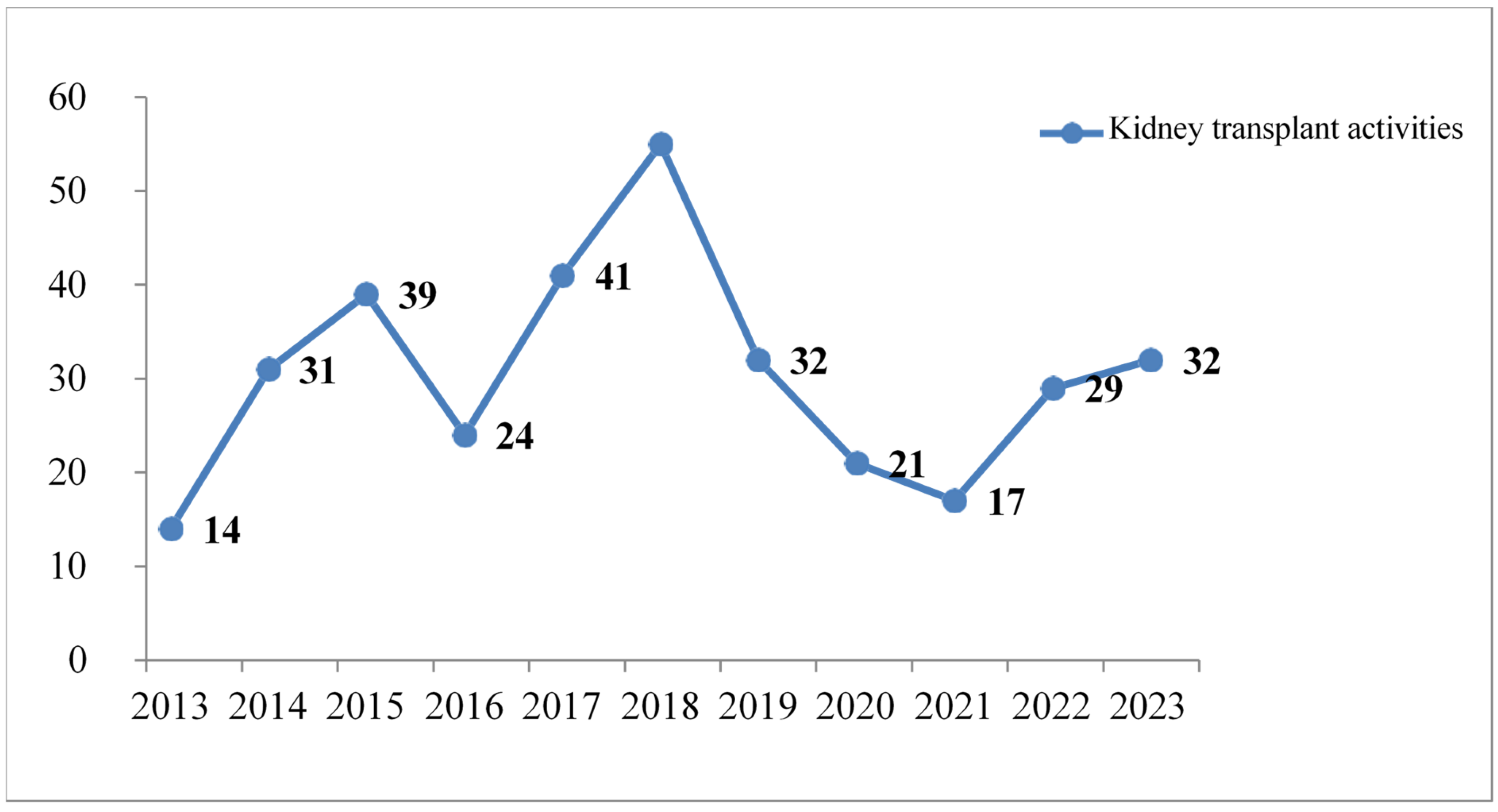
During the study period (2013–2023), 335 kidney transplants were performed at the University Hospital of Guadeloupe. Peak activity was observed in 2018, with 55 patients undergoing transplantation, representing 16.4% of the total. Between 2018 and 2021, the number of procedures fell steadily before rising again from 2022 onwards (Figure 1).

3.1. Kidney Transplant Recipients

Table 1 shows a comparison of the clinical profile of kidney transplant recipients during the pre-pandemic period (2013–2019) and the post-pandemic period (2020–2023). In the pre-pandemic period, the majority of recipients were male (63%) with a median age of 48 years (IQR: 41–56 years). The most common causes of kidney disease leading to transplantation included diabetic nephropathy (32%), hypertension (25%), and polycystic kidney disease (14%). In contrast, the post-pandemic period saw a significant increase in the number of older recipients (≥70 years), with polycystic kidney disease and hypertension becoming more prevalent as causes of kidney failure. Additionally, a higher proportion of patients in the post-pandemic period were vaccinated for COVID-19 (90% vs. 60%) and were obese (35% vs. 25%).

3.2. Kidney Transplant Donors

Table 2 shows that the average age of kidney transplant donors was 51.5 ± 16.1 years (range: 13–87 years) and was higher during the period from 2020 to 2023 (53.5 ± 14.4 vs. 50.6 ± 16.7 years, p = 0.007). The majority of donors were male (78.5%), although the proportion of female donors increased from 14.8% in 2013–2019 to 37.3% in 2020–2023. Almost all grafts were obtained from deceased brain-dead donors (DBD; 98.2%), with a small proportion from donors after cardiac death (DCD; 1.8%). In 95.2% of cases, grafts were from deceased donors with marginal/expanded criteria (ECD). All grafts were ABO-compatible.

3.3. Modalities of Renal Transplantation

The average hospital stay was 21.6 ± 8.8 days (range: 1–63 days). Between 2013 and 2019, the average was 21.1 ± 8.9 days, compared to 22.8 ± 8.5 days between 2020 and 2023 (p = 0.113). All transplanted patients received a kidney transplant from a donor with a compatible immunological profile. All virtual and real crossmatch tests were negative. All grafts were preserved with an IGL-1® solution. The mean CIT decreased significantly between 2020 and 2023, while the mean WIT increased (Table 3).

3.4. Anti-Rejection Immunosuppressive Therapy

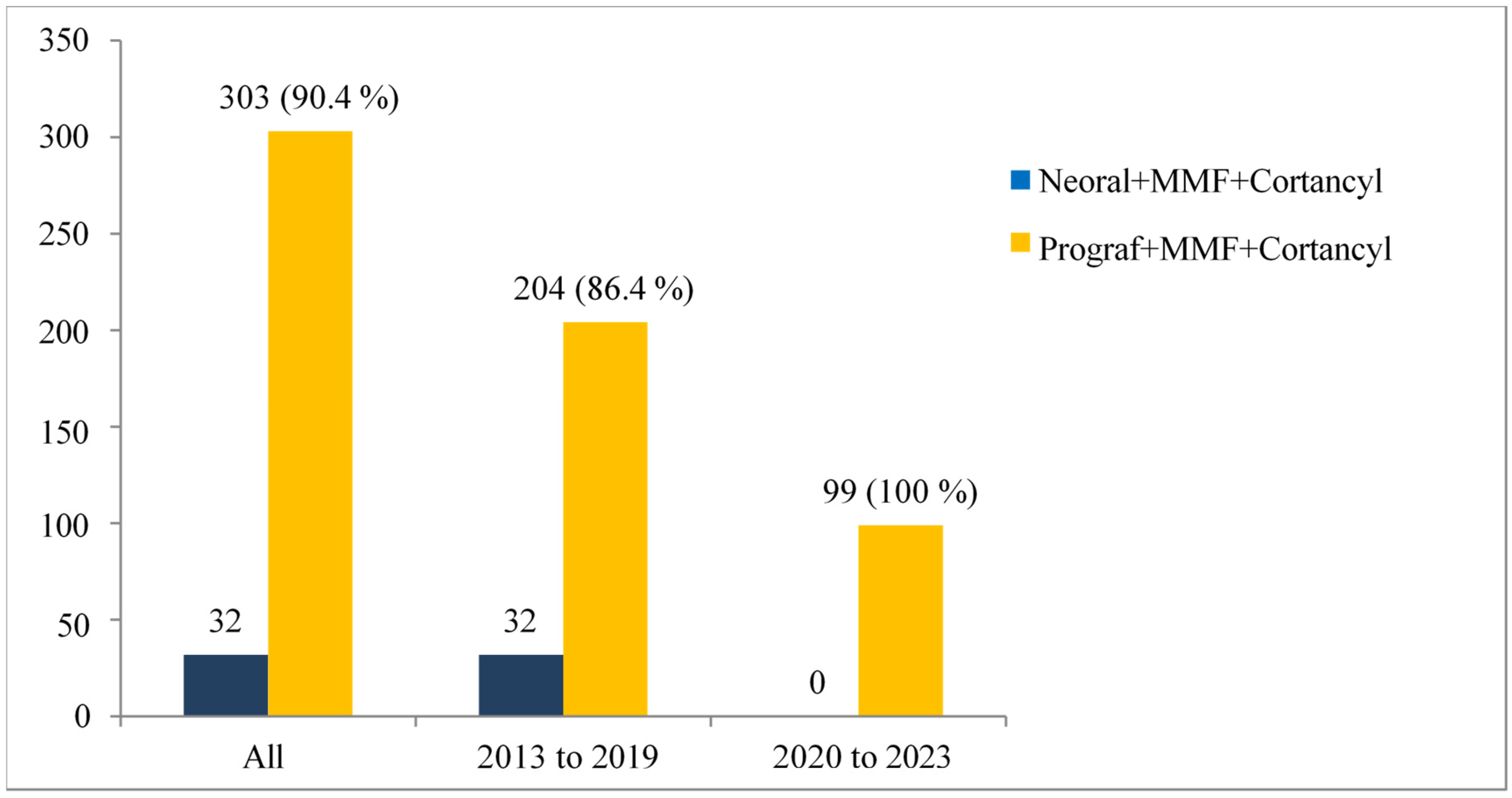
Induction therapy consisted of anti-thymocyte globulin (ATG), mycophenolate mofetil (MMF), and Solumedrol in all patients. (Figure 2) shows that maintenance immunosuppressive therapy was predominantly tacrolimus + MMF + Cortancyl (90.4%). This regimen became exclusive in the group transplanted between 2020 and 2023 (p < 0.001).

3.5. Post-Transplant Complications

The most frequent post-renal transplant complications were interstitial fibrosis, RGF, and acute graft pyelonephritis, followed by allograft nephropathy, recurrence of baseline nephropathy, BK virus infection, and hyperacute rejection (Table 4).

3.6. Graft Survival and Factors Associated with RGF

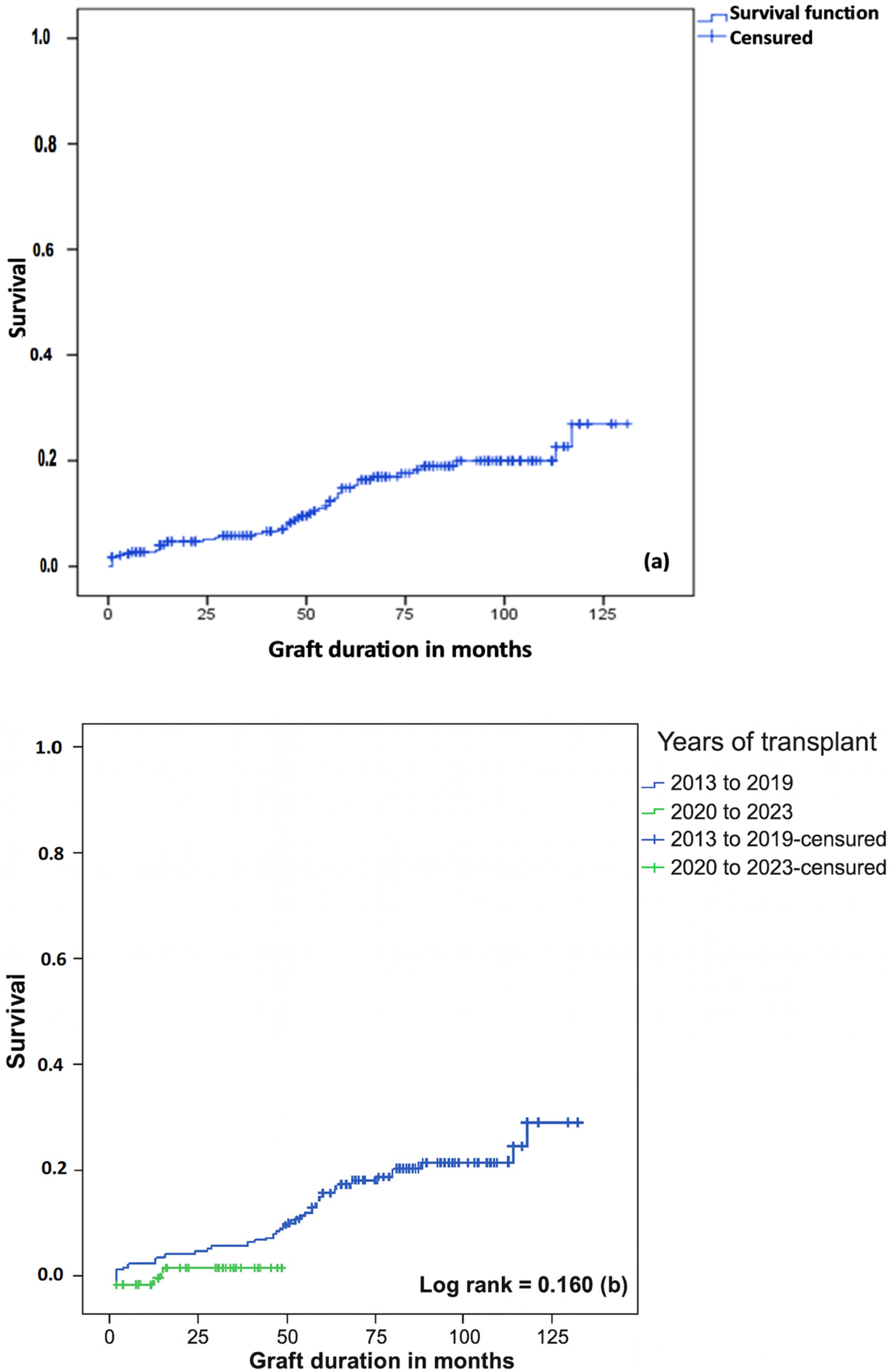
Table 5 reports on graft survival, which was 97.3% at 6 months post-transplant, compared with 85.1% at 5 years and 73.1% at 10 years in the whole group. Comparing patients according to the period in which their kidney transplant was performed, it appears that during the first 4 years post-transplant, graft survival was better in the group of patients transplanted between 2020 and 2023; however, this finding was not statistically significant.
Univariate analysis indicated that RGF was associated with the time of transplantation (years 2013–2019), male donor sex, intraoperative incident, postoperative cardiac arrest, interstitial fibrosis and tubular atrophy (IFTA) grade 1 score at 3 months post-transplant, allograft nephropathy, and the presence of anti-HLA class I Ac prior to transplantation. A history of blood transfusion, the presence of anti-HLA class II Ac, and a positive historical DSA result prior to renal transplantation were not associated with RGF. The multivariate analysis revealed that time of transplantation (years 2013–2019) and allograft nephropathy were the only factors independently associated with RGF (Table 6).

3.7. Patient Survival and Factors Associated with Death

Survival rates at 6 months, 5 years, and 10 years for all transplanted patients were 97.3%, 83.2%, and 72.3%, respectively (Table 7).
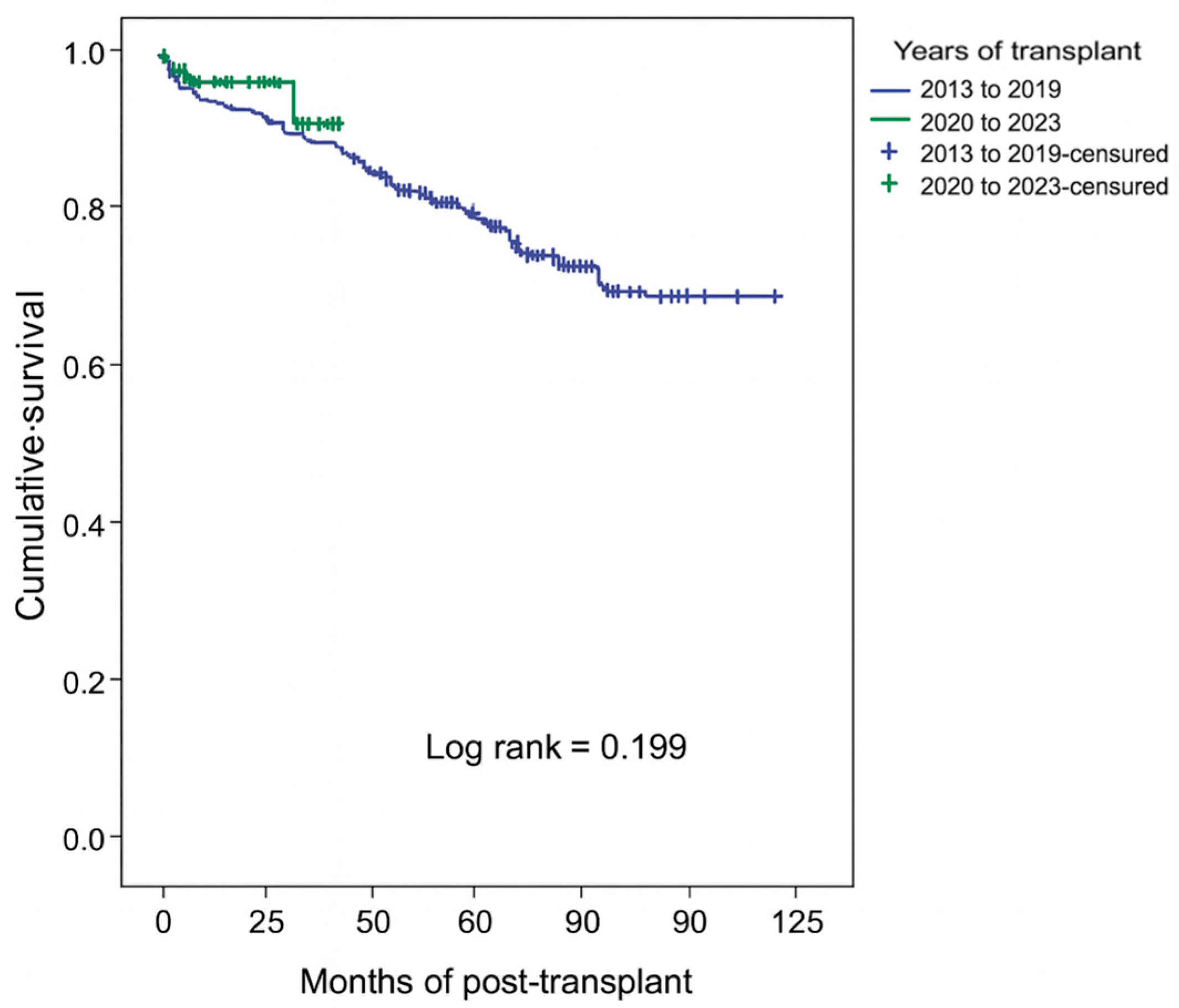
The Kaplan–Meier curve showed that during the first 4 years post-transplant, survival appeared to be better when transplantation was performed between the years 2020 and 2023; however, this finding was not statistically significant (Figure 3 and Figure 4).
The univariate analysis identified recipient age ≥ 60 years, RGF, transplantation between 2013 and 2019, diabetes mellitus, CIT ≥ 1200 min, postoperative cardiac arrest, graft pyelonephritis (GPN), as being associated with death. After adjustment, recipient age ≥ 60 years, RGF, transplantation between 2013 and 2019, diabetes mellitus, CIT ≥ 1200 min, and GPN emerged as factors independently associated with death (Table 8).
Of the patients with GRF (n = 48), 27 (56.3%) had resumed HD. The proportion of deaths was 6/27 (22.2%) in the group who had resumed HD, compared with 21/21 (100%) in those who had not resumed HD (p < 0.001).

3.8. Causes of Death

Table 9 displays the various causes of death. Death at home and multi-visceral failure predominated over sepsis.

4. Discussion

A total of 335 patients received KT during the study period. While KT activity gradually increased until 2018, it decreased again between 2019 and 2021. The Agence de la Biomédecine (ABM) confirmed this observation in France in its 2020 transplant activity report [11].
The decrease in KT activity is primarily attributed to the COVID-19 pandemic, during which hospitals focused their efforts on patients with severe forms of the disease [12].
In the present study, the average age of KT donors was 51.5 ± 16.1 years. This observation is consistent with data from metropolitan France [11]. However, due to the shortage of grafts, the use of elderly donors is becoming increasingly frequent [11]. Almost all the donors were DBD, i.e., 98.2 This quantity corresponds to only 1.8% of voluntary LRDs.
This proportion of LRDs is lower than the general average for transplant centers in France and in several other countries [11]. Despite the first successful kidney transplant in Guadeloupe in 2004, many challenges remain. Very few people agree to donate a kidney; the rate of opposition to kidney donation is estimated at 50% in the Guadeloupean population, compared with 33% in France [11]. To address this issue, the transplant coordination team at the CHU de Guadeloupe regularly organizes awareness-raising days to highlight the importance of live organ donation in saving lives. There are sex differences in the KT donation.
A multicenter study overseen by the European Committee on Organ Transplantation reported that men were the main source of DBMs, with proportions ranging from 63.3% to 71.9% in over 60 countries [15]. In contrast, women represented the main source of kidneys from LRDs, accounting for 61.1%. In line with data from the general population, the three most common blood groups among KT donors were O, A, and B. The proportion of group O donors rose from 48.7% between 2013 and 2019 to 52.5% between 2020 and 2023. This increase has little impact, as the Rhesus group is not involved in organ transplantation.
The average age of patients was 52.5 ± 11.9 years (range: 22–81 years). The proportion of patients over 70 had risen from 2.1% over the period 2013 to 2019 to 8.1% from 2020 to 2023. Advanced age may be a limitation to renal transplantation; however, older patients with fewer comorbidities and fewer vascular complications may be eligible for renal transplantation. The average age of patients at the time of KT is comparable to the average reported in France [11].
In many countries, the majority of harvested organs are transplanted into men rather than women [16]. In our study, approximately two-thirds of transplant patients were male. This proportion had fallen over the period 2020 to 2023 compared with 2013 to 2019 (55.6% versus 67.4%), possibly reflecting easier access to healthcare services for women.
In terms of comorbidities, hypertension was preeminent, followed by diabetes mellitus and obesity, with proportions of 97.6%, 25.4%, and 17.6%, respectively. This result reflects the importance of these pathologies in the epidemiology of CKD. Hypertension, diabetes, and obesity are the top three cardiovascular risk factors for CKD, both in Guadeloupe and worldwide [1,2,3].
Between 2020 and 2023, the proportion of transplant patients who were obese, had heterozygous sickle cell disease, had polycystic kidney disease, had a history of blood transfusion, and tested positive for class I and II anti-HLA antibodies increased significantly.
Access to renal transplantation has become easier despite these comorbidities, thanks to the implementation of close and effective follow-up programs. For example, obese patients can benefit from bariatric surgery, gastric banding, or gastric bypass to reduce their weight and facilitate renal transplant surgery [17].
For immunized patients, renal transplantation is no longer an absolute contraindication, as desensitization protocols and more effective immunosuppressive treatments with fewer adverse effects are now available [18].
The terms of the transplant included several conditions that donors and recipients had to comply with. In the present study, all transplanted patients benefited from KTs with a compatible donor. All virtual and real crossmatch tests were negative. To date, ABO incompatible kidney transplants are not performed in Guadeloupe. This modality could help reduce waiting times for KTs, particularly for candidates from minority blood groups.
In France, the average waiting time for KTs with DBD is 17.2 months; however, in Guadeloupe, it is two to three times longer than in some regions of mainland France [11].
According to the renal transplant activity report published by the ABM [11], the average CIT has fallen from 15.4 h in 2013 to 12.4 h in 2023 throughout France.
For locally allocated transplants in Guadeloupe and Reunion, CIT had decreased from 17.1 h to 14.3 h for DBD [11,19]. Our results also indicate that CIT decreased significantly between the two study periods (1126.6 ± 392.3 min vs. 1002.9 ± 402.5 min). Longer CIT is known to be associated with delayed recovery of renal function and is a risk factor for graft failure [20]. Strengthening logistical capacities and technical skills, as well as the introduction of an hourly tracking sheet for KTs, certainly helped us achieve the reduction in CIT during the second part of our study.
Our study did not specifically examine the possibility of fewer transplants from mainland France between 2020 and 2023.
Cold ischemia, a cornerstone of graft preservation, is associated with significant biochemical changes, including reduced adenosine triphosphate (ATP) production. The persistence of anaerobic glycolysis produces lactate, which generates acidosis with mediocre and inadequate energy production yield [20,21]. Organ cooling, while necessary, negatively impacts tissues by disrupting several metabolic pathways. For example, inhibition of the Na+/K+ ATPase pump leads to cellular and interstitial edemas, as well as disturbances in calcium homeostasis, which activate proteases and promote proteolytic lesions [21].
All the grafts in our study were preserved with IGL-1® solution, a new-generation preservation solution. Its colloid is a 35,000-dalton polyethylene glycol [22]. Multicenter clinical results in KT patients showed that this solution resulted in better recovery of graft function and graft survival compared to grafts preserved with Belzer’s solution (UW), which has been recognized as the reference preservation solution in organ procurement for many years [23].
Paradoxically, instead of decreasing, WIT actually increased during the second part of the present study (57.7 ± 17.8 min vs. 66.9 ± 21.5 min). Warm ischemia is also an important parameter of ischemia–reperfusion in transplantation, as it integrates the time taken to make graft anastomoses at the recipient’s body temperature. The prolonged duration of WIT induces cellular disorders responsible for kidney graft dysfunction [20,21].
Reasons that may explain our results include the introduction of new surgeons to the renal transplant unit, as well as a higher proportion of recipients aged 70 years or older, those who are obese, heterozygous sickle cell patients, and polycystic patients between 2020 and 2023. Comorbidities can promote atherosclerotic lesions, which may contribute to longer vascular anastomosis times.
In general, very few post-renal transplant complications were reported, both in 2013–2019 and 2020–2023. This low complication rate can be attributed to the fact that renal transplant practice at the CHU de Guadeloupe dates back to 2004, and the teams are better trained and have acquired experience [5].
RGF remains one of the most dreaded complications following KT. Our study showed that 14.3% of KT patients developed RGF, with the majority of these cases occurring among patients transplanted before 2020. Graft survival was 97.3% at 6 months, 85.1% at 5 years, and 73.1% at 10 years. Our results are in line with the literature [24,25,26]. According to a study from 1993 to 2016 [27], of 59,162 patients who received a KT, overall graft survival was 91.4% at 1 year, 79.4% at 5 years, and 62.4% at 10 years. Graft survival is known to vary according to the timing and modalities of renal transplantation. In recent years, there has been an increasing use of donors with extended criteria and recipients with multiple comorbidities. In addition, several teams now perform ABO–incompatible transplants. For example, the ABM report estimates 3-year post-renal transplant survival at 82.4% for the period 2018 to 2022, compared with 85.3% for the period 2012 to 2014 [11].
RGF was independently associated with intraoperative events and allograft nephropathy from 2013 to 2019.
It is known that after transplantation, the renal graft can be the site of allograft nephropathy, which is responsible for a progressive deterioration in renal function. Several studies indicate that this complication represents a major prognostic factor in long-term graft loss [24,28].
Most cases are attributable to causes such as calcineurin inhibitor intoxication, diabetic or hypertensive nephropathy, or viral infection, notably BK virus nephritis and cytomegalovirus (CMV) infection.
Pre-formed positive anti-HLA class I antibodies, a grade 1 IFTA score at 3 months post-transplant, and male donors were associated with RGF in the univariate analysis. It has been established that patients immunized prior to transplantation are at risk of graft dysfunction, and anti-HLA class I antibodies may appear following immunizing events, including blood transfusion (presence of platelets and granulocytes), as well as pregnancy and previous transplantation [18]. Despite the presence of preformed anti-HLA class II Ac and positive DSA results in some patients, these factors were not associated with RGF. This variation may be explained by the fact that not all anti-HLA antibodies have the same clinical significance and do not necessarily expose patients to rejection [25].
Furthermore, the quantification of DSA enables us to better assess its correlation with the risk of organ rejection [26].
The association between the IFTA score and RGF corroborates data in the literature [29]. Interstitial fibrosis and tubular atrophy correspond to an abnormal accumulation of connective tissue in the kidneys, resulting in structural damage and impaired kidney function [29].
No obvious explanation exists for the role of the male donor in justifying RGF in the univariate analysis of our study.
This link was not retained in the multivariate analysis. To date, few studies have investigated the role of male donors in graft survival. However, for other grafts, notably skin, the role of the sex-linked HY system has been reported [30]. This histocompatibility gene, located on the Y chromosome and therefore absent in women, can lead to rejection of a male skin graft transplanted to a female of the same lineage.
Patient survival at 6 months post-transplant was 97.3%, compared to 83.2% at 5 years and 72.3% at 10 years. Our results align with the existing literature [11]. Patient survival was better in the absence of RGF, in younger recipients (age < 60 years), in the absence of a history of diabetes mellitus, when KT was performed in more recent years (2020–2023 vs. 2013–2019), and for a shorter CIT (≤1200 min vs. >1200 min).
These results corroborate data in the literature [11,31,32]. Some patients with RGF died before being dialyzed. These are generally patients who did not present metabolic complications indicating emergency dialysis but who presented pathologies leading to death within a brief time.
Death at home, multi-visceral failure due to sepsis, and COVID-19 infection were the three main causes of patient death, regardless of the group (patients transplanted between 2013 and 2019 vs. patients transplanted between 2020 and 2023). These results are in line with the literature, which reports that infectious and cardiovascular complications are the main causes of death after KT [31,32].
This study has some limitations. These include the retrospective nature of the study, the duration of observation, which was limited to 4 years in the second group of patients (between the years 2020 and 2023), the monocentric nature, limiting observations to the University Hospital of Guadeloupe, the absence of certain data, such as mean fluorescence intensity (MFI) quantification, and de novo DSA results. Nonetheless, our study possesses certain strengths.
It is the first to compare transplant activity before and after the outbreak of the COVID-19 pandemic in Guadeloupe. Although there was a higher proportion of immunized patients and those with comorbidities among transplant patients in recent years, our results indicated that overall survival was unaffected.
It should also be noted that this study reported on practices carried out within the renal transplant team at the University Hospital of Guadeloupe, enabling us to consider strategies for further improving patient management.


5. Conclusions

Our study revealed a decline in renal transplant activity at the University Hospital of Guadeloupe following the COVID-19 outbreak in 2020; however, this trend began to increase again from 2022 onwards. Almost all KTs were taken from DBDs. All transplants were ABO-compatible and performed using conventional surgical techniques. Recent years have marked a greater proportion of older, more immunized KT recipients with several comorbidities compared to the period prior to COVID-19.
However, these conditions did not affect graft and transplant patient survival, which improved between 2020 and 2023.

Author Contributions

Conceptualization: J.M.M., A.B.M., B.N., J.-R.M.; Methodology: J.M.M., J.C., B.J., C.L.K., J.-R.M.; Data Collection: J.M.M., J.C., G.D.; Data Curation and Validation: A.B.M., J.-R.M., Y.M.N.; Formal Analysis and Interpretation: J.M.M., A.B.M., E.K.S., B.J., C.L.K., Y.M.N.; Investigation: J.M.M., J.C., G.D., Y.M.N.; Resources: B.N., N.M.N.; Writing—Original Draft: J.M.M., A.B.M., G.D., B.J., C.L.K., J.-R.M., Y.M.N.; Writing—Review and Editing: A.B.M., E.K.S., J.-R.M., N.M.N., Y.M.N.; Supervision: B.N., N.M.N., E.K.S., J.-R.M.; Project Administration: A.B.M., B.N., J.C. All authors have read and agreed to the published version of the manuscript.

Funding

This research received no external funding.

Institutional Review Board Statement

The study was conducted in accordance with the Declaration of Helsinki and approved by the Ethics Committee of the University Hospital of Guadeloupe (Approval No. A207-08-2025, dated 25 August 2025).

Informed Consent Statement

Informed consent was waived due to the retrospective nature of the study and the use of anony-mized data, in accordance with the principles of the General Data Protection Regulation (GDPR).

Data Availability Statement

Data supporting the findings of this study are available from the corresponding author upon reasonable request. Due to ethical and privacy restrictions, the data are not publicly available, as they contain sensitive patient information.

Acknowledgments

The authors would like to acknowledge the administrative and technical support provided by the staff of the Nephrology, Dialysis, and Transplantation Department at the University Hospital of Guadeloupe. No additional support or donations in kind were received for this study.

Conflicts of Interest

The authors declare no conflicts of interest.

Abbreviations

ADPKDautosomal dominant polycystic kidney disease
ATGanti-thymocyte globulin
ATPadenosine triphosphate
CHUcentre hospitalier universitaire CI: confidence interval
CITcold ischemia time
CKDchronic kidney disease
COVID-19coronavirus disease 2019
COV-GRCOVID Graft Recipients (patients transplanted during the COVID-19 pandemic)
DBDdeceased brain-dead donor
DCADdeceased cardiac arrest donor
DMdiabetes mellitus
DSAdonor-specific antibodies
DSA+donor-specific antibodies positive (historical)
ECDexpanded criteria donor
ESRDend-stage renal disease
GPNgraft pyelonephritis
HBPhigh blood pressure
HLAhuman leukocyte antigen
HLA I+human leukocyte antigen class I positive
HLA II+human leukocyte antigen class II positive
IFTAinterstitial fibrosis and tubular atrophy
KTkidney transplant
LVDliving-related donor
MFImean fluorescence intensity
MMFmycophenolate mofetil
ORodds ratio
Pre-COV-GRPre-COVID Graft Recipients (patients transplanted before the COVID-19 pandemic)
RGFrenal graft failure
SCDsickle cell disease
SLEsystemic lupus erythematosus
Transfusionblood transfusion prior to transplant
WITwarm ischemia time

References

  1. Jager, K.J.; Kovesdy, C.; Langham, R.; Rosenberg, M.; Jha, V.; Zoccali, C. A Single Number for Advocacy and Communication—Worldwide More than 850 Million Individuals Have Kidney Diseases. Kidney Int. 2019, 96, 1048–1050. [Google Scholar] [CrossRef]
  2. GBD 2016 Causes of Death Collaborators. Global, Regional, and National Age-Sex-Specific Mortality for 264 Causes of Death, 1980–2016: A Systematic Analysis for the Global Burden of Disease Study 2016. Lancet 2017, 390, 1151–1210. [Google Scholar] [CrossRef] [PubMed]
  3. Foreman, K.J.; Marquez, N.; Dolgert, A.; Fukutaki, K.; Fullman, N.; McGaughey, M.; Pletcher, M.A.; Smith, A.E.; Tang, K.; Yuan, C.-W.; et al. Forecasting Life Expectancy, Years of Life Lost, and All-Cause and Cause-Specific Mortality for 250 Causes of Death: Reference and Alternative Scenarios for 2016–2040 for 195 Countries and Territories. Lancet 2018, 392, 2052–2090. [Google Scholar] [CrossRef] [PubMed]
  4. Approche Systématique Européenne Face à l’Insuffisance Rénale Chronique. Available online: https://www.europarl.europa.eu/doceo/document/O-9-2022-000005_FR.html (accessed on 1 June 2025).
  5. Journée Mondiale du Rein—Le 10 Mars 2022: Le Réseau Épidémiologie et Information en Néphrologie (R.E.I.N) Tenu Par l’Agence de la Biomédecine Fête Ses 20 Ans. Available online: https://www.agence-biomedecine.fr/fr/observatoire-de-la-maladie-renale-chronique/journee-mondiale-du-rein-le-10-mars-2022-le-reseau-epidemiologie-et-information-en-nephrologie-(r-e-i-n)-tenu-par-l-agence-de-la-biomedecine-fete-ses-20-ans (accessed on 1 June 2025).
  6. Kazes, I.; Solignac, J.; Lassalle, M.; Mercadal, L.; Couchoud, C. Twenty Years of the French Renal Epidemiology and Information Network. Clin. Kidney J. 2023, 17, sfad240. [Google Scholar] [CrossRef]
  7. Francis, A.; Harhay, M.N.; Ong, A.C.M.; Tummalapalli, S.L.; Ortiz, A.; Fogo, A.B.; Fliser, D.; Roy-Chaudhury, P.; Fontana, M.; Nangaku, M.; et al. Chronic Kidney Disease and the Global Public Health Agenda: An International Consensus. Nat. Rev. Nephrol. 2024, 20, 473–485. [Google Scholar] [CrossRef] [PubMed]
  8. Kovesdy, C.P. Epidemiology of Chronic Kidney Disease: An Update 2022. Kidney Int. Suppl. 2022, 12, 7–11. [Google Scholar] [CrossRef]
  9. Vestergaard, A.H.S.; Jensen, S.K.; Heide-Jørgensen, U.; E Frederiksen, L.; Birn, H.; E Jarbøl, D.; Søndergaard, J.; Persson, F.; Thomsen, R.W.; Christiansen, C.F. Risk Factor Analysis for a Rapid Progression of Chronic Kidney Disease. Nephrol. Dial. Transplant. 2024, 39, 1150–1158. [Google Scholar] [CrossRef]
  10. Les Guadeloupéens Encore Très Réticents au Don d’Organes. Available online: https://rci.fm/guadeloupe/infos/Sante/Les-guadeloupeens-encore-tres-reticents-au-don-dorganes (accessed on 21 May 2025).
  11. L’Agence de la Biomédecine Publie Une Nouvelle Mise à Jour de ses Recommandations sur les Modalités de la Prise en Charge des Patients Dans le Contexte de Circulation du SARS-CoV-2. Available online: https://www.agence-biomedecine.fr/Recommandations-de-l-Agence-de-la-biomedecine-relatives-a-la-poursuite-des (accessed on 21 May 2025).
  12. Activité de Prélèvement et de Greffe d’Organes en 2023 et Baromètre d’Opinion 2024. Available online: https://www.agence-biomedecine.fr/fr/don-et-greffe-d-organes-et-de-tissus/activite-de-prelevement-et-de-greffe-d-organes-en-2023-et-barometre-d-opinion-2024 (accessed on 1 June 2025).
  13. Currie, I.S.; Henderson, L.K. ABO-Incompatible Renal Transplantation. Lancet 2019, 393, 2014–2016. [Google Scholar] [CrossRef]
  14. Argani, H. Expanded Criteria Donors. Exp. Clin. Transplant. 2022, 20 (Suppl. 4), 13–19. [Google Scholar] [CrossRef]
  15. Kidney Disease: Improving Global Outcomes (KDIGO) Transplant Work Group. KDIGO Clinical Practice Guideline for the Care of Kidney Transplant Recipients. Am. J. Transplant. 2009, 9 (Suppl. 3), S1–S155. [Google Scholar] [CrossRef]
  16. Greffe D’Organes: Données Générales et Méthodes. Available online: https://rams.agence-biomedecine.fr/greffe-dorganes-donnees-generales-et-methodes (accessed on 16 May 2025).
  17. Cozzi, E.; Álvarez, M.; Carmona, M.; Mahíllo, B.; Forsythe, J.; Lomero, M.; López-Fraga, M.; Sapir-Pichhadze, R.; Cardillo, M.; Domínguez-Gil, B. An Analysis by the European Committee on Organ Transplantation of the Council of Europe Outlining the International Landscape of Donor and Recipient Sex in Solid Organ Transplantation. Transpl. Int. 2022, 35, 10322. [Google Scholar] [CrossRef]
  18. Katz-Greenberg, G.; Shah, S. Sex and Gender Differences in Kidney Transplantation. Semin. Nephrol. 2022, 42, 219–229. [Google Scholar] [CrossRef]
  19. Lassalle, M.; Fezeu, L.; Couchoud, C.; Hannedouche, T.; Massy, Z.A.; Czernichow, S. Obésité et Accès à la Greffe Rénale Parmi des Patients Démarrant une Dialyse: Une Étude de Cohorte Prospective. Néphrol. Thér. 2016, 12, 281. [Google Scholar] [CrossRef]
  20. Betjes, M.G.H.; Sablik, K.S.; Otten, H.G.; Roelen, D.L.; Claas, F.H.; de Weerd, A. Pretransplant Donor-Specific Anti-HLA Antibodies and the Risk for Rejection-Related Graft Failure of Kidney Allografts. J. Transplant. 2020, 2020, 5694670. [Google Scholar] [CrossRef]
  21. Bonventre, J.V.; Weinberg, J.M. Recent Advances in the Pathophysiology of Ischemic Acute Renal Failure. J. Am. Soc. Nephrol. 2003, 14, 2199–2210. [Google Scholar] [CrossRef] [PubMed]
  22. Echterdiek, F.; Latus, J.; Döhler, B.; Schwenger, V.; Süsal, C. Influence of Cold Ischemia Time on the Outcome of Kidney Transplants from Donors Aged 70 Years and Above—A Collaborative Transplant Study Report. Transplantation 2021, 105, 2461–2469. [Google Scholar] [CrossRef] [PubMed]
  23. Jassem, W.; Fuggle, S.V.; Rela, M.; Koo, D.D.H.; Heaton, N.D. The Role of Mitochondria in Ischemia/Reperfusion Injury. Transplantation 2002, 73, 493–499. [Google Scholar] [CrossRef] [PubMed]
  24. Habran, M.; De Beule, J.; Jochmans, I. IGL-1 Preservation Solution in Kidney and Pancreas Transplantation: A Systematic Review. PLoS ONE 2020, 15, e0231019. [Google Scholar] [CrossRef]
  25. Maathuis, M.-H.J.; Ottens, P.J.; van Goor, H.; Zwaagstra, J.J.; Wiersema-Buist, J.; Schuurs, T.A.; Ploeg, R.J.; Leuvenink, H.G.D. Static Cold Storage Preservation of Ischemically Damaged Kidneys: A Comparison Between IGL-1 and UW Solution. Transpl. Int. 2008, 21, 473–482. [Google Scholar] [CrossRef]
  26. Jackson, K.R.; Motter, J.D.; Kernodle, A.; Desai, N.; Thomas, A.G.; Massie, A.B.; Garonzik-Wang, J.M.; Segev, D.L. How Do Highly Sensitized Patients Get Kidney Transplants in the United States? Trends Over the Last Decade. Am. J. Transplant. 2020, 20, 2101–2112. [Google Scholar] [CrossRef]
  27. Langewisch, E.; Mannon, R.B. Chronic Allograft Injury. Clin. J. Am. Soc. Nephrol. 2021, 16, 1723. [Google Scholar] [CrossRef]
  28. Burton, S.A.; Amir, N.; Asbury, A.; Lange, A.; Hardinger, K.L. Treatment of Antibody-Mediated Rejection in Renal Transplant Patients: A Clinical Practice Survey. Clin. Transplant. 2015, 29, 118–123. [Google Scholar] [CrossRef] [PubMed]
  29. Bouquegneau, A.; Loheac, C.; Aubert, O.; Bouatou, Y.; Viglietti, D.; Empana, J.-P.; Ulloa, C.; Murad, M.H.; Legendre, C.; Glotz, D.; et al. Complement-Activating Donor-Specific Anti-HLA Antibodies and Solid Organ Transplant Survival: A Systematic Review and Meta-Analysis. PLoS Med. 2018, 15, e1002572. [Google Scholar]
  30. Le Rapport Médical et Scientifique de L’assistance Médicale à la Procréation et de la Génétique Humaines en France. Available online: https://rams-archives2014.agence-biomedecine.fr/donnees/sommaire-proc.htm (accessed on 16 May 2025).
  31. Racusen, L.C.; Regele, H. The Pathology of Chronic Allograft Dysfunction. Kidney Int. 2010, 78, S27–S32. [Google Scholar] [CrossRef] [PubMed]
  32. Ouellet, G.; Houde, I.; Riopel, J.; Latulippe, E.; Douville, P.; Lesage, J.; Côté, I.; Lapointe, I.; De Serres, S.A.M. The Progression of Interstitial Fibrosis and Tubular Atrophy at 6 Months Is an Independent Predictor of Poor Graft Outcomes in Kidney Transplant Recipients. Transpl. Direct 2022, 8, e1375. [Google Scholar] [CrossRef]
Figure 1. Evolution of the number of kidney transplant patients between 2013 and 2023. This figure shows the annual number of kidney transplants performed at the University Hospital of Guadeloupe during this period. A total of 335 transplants were carried out. Peak activity occurred in 2018, with 55 transplants (16.4% of the total). The number of procedures declined steadily between 2018 and 2021 before rising again from 2022 onwards.
Kidneydial 05 00057 g001
Figure 2. Immunosuppressive treatment regimen according to patient group. Induction therapy consisted of anti-thymocyte globulin (ATG), mycophenolate mofetil (MMF), and Solumedrol in all patients. The figure shows that maintenance immunosuppressive therapy was predominantly tacrolimus + MMF + Cortancyl (90.4%). This regimen became exclusive in patients transplanted between 2020 and 2023 (p < 0.001).
Kidneydial 05 00057 g002
Figure 3. Kaplan–Meier survival analysis of kidney grafts. (a) Incidence of graft failure in the overall cohort. (b) Comparison of graft survival according to years of transplantation (2013–2019 vs. 2020–2023). The Kaplan–Meier curve suggests improved survival in patients transplanted between 2020 and 2023, although this difference did not reach statistical significance (log-rank = 0.160).
Kidneydial 05 00057 g003
Figure 4. Kaplan–Meier survival curves comparing post-transplant survival of kidney transplant recipients based on the period of transplantation. The blue curve represents patients transplanted between 2013 and 2019, while the green curve represents those transplanted between 2020 and 2023. Censored data are indicated by tick marks. The log-rank test did not show a statistically significant difference between the two groups (Log rank = 0.199). The x-axis represents the number of months post-transplant, and the y-axis represents cumulative survival.
Kidneydial 05 00057 g004
Table 1. Clinical profile of kidney transplant recipients according to period.
VariablesAll (n = 335)2013–2019 (n = 236)2020–2023 (n = 99)p
Age, years52.5 ± 11.952.3 ± 11.653.2 ± 12.70.553
Age ≥ 70 years13 (3.9%)5 (2.1%)8 (8.1%)0.024
Gender 0.040
Men214 (63.9%)159 (67.4%)55 (55.6%)
Women121 (36.1%)77 (32.6%)44 (44.4%)
Blood types 0.381
O167 (49.9%)115 (48.7%)52 (52.5%)
A107 (31.9%)74 (31.4%)33 (33.3%)
B54 (16.1%)43 (18.1%)11 (11.1%)
AB7 (2.1%)4 (1.7%)3 (3.0%)
Causes of Kidney Disease
HBP327 (97.6%)232 (98.3%)95 (96.0%)0.242
DM85 (25.4%)63 (26.7%)22 (22.2%)0.391
Obesity59 (17.6%)34 (14.4%)25 (25.3%)0.017
SCD8 (2.4%)2 (0.8%)6 (6.1%)0.010
SLE13 (3.9%)9 (3.8%)4 (4.0%)1.000
ADPKD29 (8.7%)15 (6.4%)14 (14.1%)0.021
Immunological Risk
HLA I+145 (43.3%)92 (39.0%)53 (53.5%)0.014
HLA II+105 (31.3%)61 (25.8%)44 (44.4%)<0.001
DSA+88 (26.3%)57 (24.2%)31 (31.3%)0.174
Transfusion114 (34.0%)69 (29.2%)45 (45.5%)0.004
Results are expressed as mean ± standard deviation or frequency (%). Abbreviations: HBP: High Blood Pressure; DM: Diabetes Mellitus; SCD: Sickle Cell Disease; SLE: Systemic Lupus Erythematosus; ADPKD: Autosomal Dominant Polycystic Kidney Disease; HLA I+: Human Leukocyte Antigen Class I Positive; HLA II+: Human Leukocyte Antigen Class II Positive; DSA+: Donor-Specific Antibodies Positive (Historical); Transfusion: Blood Transfusion Prior to Transplant.
Table 2. Clinical profile of donors according to study period.
VariablesAll
n = 335
2013–2019
n = 236
2020–2023
n = 99
p
Average age, years51.5 ±16.150.6 ± 16.753.5 ± 14.40.007
Gender 0.001
Men263 (78.5)201 (85.2)62 (62.6)
Women72 (21.5)35 (14.8)37 (37.3)
Type of donor 0.109
DBD329 (98.2)230 (97.5)99 (100.0)
LRD6 (1.8)6 (2.5)0 (0.0)
ECD319 (95.2)222 (94.1)97 (98.0)
Blood types 0.236
Results are expressed as mean ± standard deviation or frequency (%). Abbreviations: DBD: Deceased brain-dead donors; LRD: Living related donors; ECD: Expanded criteria donors.
Table 3. Cold and warm ischemia durations during renal transplantation.
VariablesAll2013–20192020–2023p
n = 335n = 236n = 99
CIT, min1090 ± 389.71126.6 ± 392.31002.9 ± 402.50.009
CIT > 1200 min136 (40.6)101 (42.8)35 (35.4)0.206
WIT, min60.4 ± 19.457.7 ± 17.866.9 ± 21.5<0.001
WIT > 60 min149 (44.5)92 (39.0)57 (57.6)0.002
Results are expressed as mean ± standard deviation or frequency (%). Abbreviations: CIT: cold ischemia time; WIT: warm ischemia time.
Table 4. Post-kidney transplant complications.
ComplicationsAllPre-COV-GR COV-GRp
n = 335n = 236n = 99
Delayed recovery of graft function4 (1.2)4 (1.7)00.193
Acute tubular necrosis1 (0.3)1 (0.4)00.517
Active humoral rejection M39 (2.7)8 (3.4)1 (1.0)0.219
Chronic humoral rejection M122 (0.6)2 (0.8)00.358
Acute cellular rejection M38 (2.4)8 (3.4)00.064
Chronic cell rejection M122 (0.6)2 (0.8)00.358
Post-operative cardiac arrest2 (0.6)2 (0.8)00.358
Graft artery thrombosis1 (0.3)1 (0.4)00.517
Urological complications
 Acute urinary retention1 (0.3)1 (0.4)00.517
 Graft artery stenosis1 (0.3)1 (0.4)00.517
 External iliac artery stenosis2 (0.6)2 (0.8)00.358
 Plicature of the graft artery1 (0.3)1 (0.4)00.517
 Ureterotomy1 (0.3)1 (0.4)00.517
 Ureteral breach1 (0.3)01 (1.0)0.517
 Surgical complications
 Transplantectomy1 (0.3)1 (0.4)00.517
 Section of the inferior polar artery2 (0.6)2 (0.8)00.358
Infectious complications
 COVID-199 (2.7)8 (3.4)1 (1.0)0.219
 BK virus infection13 (3.9)10 (4.2)3 (3.3)0.602
 Graft preservation fluid infection3 (0.9)2 (0.8)1 (1.0)0.885
 Acute graft pyelonephritis23 (6.9)15 (6.4)8 (8.1)0.569
Other complications
 Cortisonic diabetes3 (0.9)3 (1.3)00.260
 Native nephropathy disease 12 (3.6)9 (3.8)3 (3.0)0.725
 Chronic allograft nephropathy21 (6.3)17 (7.2)4 (4.0)0.276
 IFTA grade 1 M326 (7.8)9 (3.8)17 (17.2)<0.001
 IFTA grade 2 M322 (6.6)8 (3.4)14 (14.1)<0.001
 IFTA grade 3 M39 (2.7)4 (1.7)5 (5.1)0.083
 IFTA grade 1 M129 (2.7)7 (3.0)2 (2.0)0.625
 IFTA grade 2 M123 (0.9)3 (1.3)0 (0.0)0.260
 IFTA grade 3 M124 (1.2)3 (1.3)1 (1.0)0.841
 Arteriolar hyalinosis M1221 (6.3)12 (5.1)9 (9.1)0.168
 Graft failure 48 (14.3)44 (18.6)4 (4.0)<0.001
Results are expressed as frequency (%). Abbreviations: M: month; IFTA: interstitial fibrosis and tubular atrophy; Pre-COV-GR: Pre-COVID Graft Recipients (Patients transplanted before the COVID-19 pandemic); COV-GR: COVID Graft Recipients (Patients transplanted during the COVID-19 pandemic).
Table 5. Graft survival according to transplant year groups.
TimeAll2013–20192020–2023p
n = 335n = 236n = 99
6 months97.397.51000.160
1 year97.094.998.5
4 years90.989.896.9
5 years85.184.2-
10 years73.172.2-
This table shows graft survival rates after kidney transplantation, comparing two transplant periods (2013–2019 vs. 2020–2023). At 6 months, graft survival was slightly higher in the 2020–2023 group (100%) than in the 2013–2019 group (97.5%), with no statistically significant difference (p = 0.160). Results are expressed as percentages. The ‘-’ indicates that no data were available, as patients transplanted in 2020 had not yet reached these time points post-transplant.
Table 6. Risk factors for graft failure.
Risk FactorsUnivariate AnalysisMultivariate Analysis
OR95% CIpAOR95% CIp
Transplantation 2013–2019 vs. 2020–20237.532.28–24.88˂0.0016.241.84–21.140.003
Male vs. female donors3.421.18–9.850.014---
Surgical complications vs. no4.561.41–15.310.0186.011.61–22.400.080
Ab HLA1+2.041.05–3.960.033---
Postoperative cardiac arrest vs. no7.245.52–9.430.020---
IFTA grade 1 M3 vs. no1.181.12–1.240.035---
Allograft nephropathy vs. no3.331.26–8.770.0193.211.14–9.000.027
Abbreviations: Ab HLA1+: Positive antibody human leukocyte antigen (HLA) class I antibodies; IFTA: interstitial fibrosis and tubular atrophy. AOR: Adjusted Odds Ratio; OR: odds ratio; CI: confidence interval.
Table 7. Patient survival according to transplant year groups.
TimeAll2013–20192020–2023p
n = 335n = 236n = 99
6 months97.396.698.90.199
1 year95.394.597.6
4 years87.587.395.9
5 years83.283.0-
10 years72.372.0-
This table shows patient survival rates after kidney transplantation, comparing two transplant periods (2013–2019 vs. 2020–2023). No statistically significant difference was observed at 6 months (p = 0.199). The ‘-’ indicates that no data were available, as patients transplanted in 2020 had not yet reached these time points post-transplant.
Table 8. Risk factors associated with death in transplant patients.
Risk FactorsUnivariate AnalysisMultivariate Analysis
OR95% CIpAOR95% CIp
Age ≥ 60 years vs. no2.871.60–24.88˂0.0012.961.39–5.620.004
Graft failure vs. no2.871.60–5.13˂0.00110.314.76–22.22˂0.001
Transplantation 2013–2019 vs. 2020–20235.432.11–14.080.0014.481.52–13.330.007
Diabetes mellitus vs. no2.501.38–4.530.0043.261.57–6.750.002
CIT ≥ 1200 min vs. no1.881.06–3.320.0392.281.15–4.540.019
Post-operative cardiac arrest5.954.67–7.580.030---
Graft pyelonephritis vs. no2.801.13–6.940.0403.511.17–10.490.025
Risk factors are independently associated with mortality in kidney transplant patients. Significant variables included age ≥60 years, graft failure, diabetes, longer CIT, transplant period (2013–2019), and graft pyelonephritis. AOR: Adjusted Odds Ratio; OR: odds ratio; CI: confidence interval.
Table 9. Causes of death by study period.
VariablesAll2013–20192020–2023p
n = 335n = 236n = 99
Death at home 17 (5.1)16 (6.8)1 (1.0)0.028
Multivisceral failure due to sepsis18 (5.4)17 (7.2)1 (1.0)0.022
COVID-199 (2.7)8 (3.4)1 (1.0)0.219
Hemorrhagic shock2 (0.6)2 (0.8)0 (0.0)0.358
Hemorrhagic stroke3 (0.9)3 (0.9)0 (0.0)0.260
Cranioencephalic trauma1 (0.3)1 (0.4)0 (0.0)0.517
Clostridial colitis1 (0.3)1 (0.4)0 (0.0)0.517
Suicide1 (0.3)1 (0.4)0 (0.0)0.122
Cancer3 (0.9)2 (0.8)1 (1.0)0.925
Unknown1 (0.3)1 (0.4)0 (0.0)0.517
Causes of death in kidney transplant patients by study period (2013–2019 vs. 2020–2023). Death at home and multivisceral failure due to sepsis were significantly more frequent in the earlier period. Data are presented as n (%).
Disclaimer/Publisher’s Note: The statements, opinions and data contained in all publications are solely those of the individual author(s) and contributor(s) and not of MDPI and/or the editor(s). MDPI and/or the editor(s) disclaim responsibility for any injury to people or property resulting from any ideas, methods, instructions or products referred to in the content.