
Article

A Custom-Built SPIM Platform for Three-Dimensional Time-Lapse Imaging and Quantification of Anisotropic Tumor Spheroid Growth

1
Department of Mechanical Engineering, Faculty of Science and Technology, Keio University, Yokohama 223-8522, Japan
2
Graduate School of Science and Technology, Keio University, Yokohama 223-8522, Japan
*
Author to whom correspondence should be addressed.
Micro 2026, 6(2), 26; https://doi.org/10.3390/micro6020026
Submission received: 28 February 2026 / Revised: 15 April 2026 / Accepted: 16 April 2026 / Published: 18 April 2026
(This article belongs to the Section Microscale Biology and Medicines)

Abstract

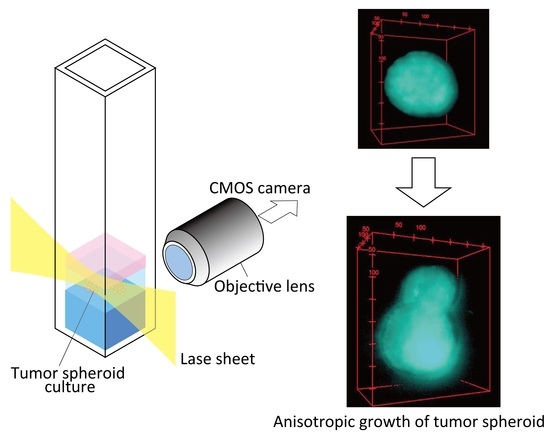
Mechanical confinement plays an important role in regulating tumor growth and invasion; however, the quantitative, time-resolved, three-dimensional evaluation of confined tumor spheroids remains technically challenging. In this study, we developed a custom-built selective plane illumination microscopy (SPIM)-based monitoring platform for long-term volumetric imaging of tumor spheroids under mechanically confined conditions. This system integrates a culture housing unit and a transparent cuvette-based spheroid culture method optimized for SPIM observation. Colorectal adenocarcinoma-derived cell spheroids were embedded in agarose gels with defined concentrations to modulate the stiffness of the surrounding matrix. Bright-field imaging and viability analyses confirmed sustained spheroid growth without necrotic core formation over a 4-day culture period, demonstrating that the SPIM-based system maintained the physiological culture conditions. Three-dimensional imaging using SPIM enabled a quantitative evaluation of spheroid growth and anisotropic invasion. Volumetric expansion was observed under all confinement conditions. Notably, increasing the matrix stiffness enhanced both the volumetric growth rate and anisotropic invasion, indicating stiffness-dependent directional growth under mechanical confinement. The developed SPIM-based platform has the potential to serve as a practical tool for the time-resolved three-dimensional analysis of tumor spheroid growth and may provide a useful approach for investigating the mechanobiological regulation of tumor progression in confined microenvironments.

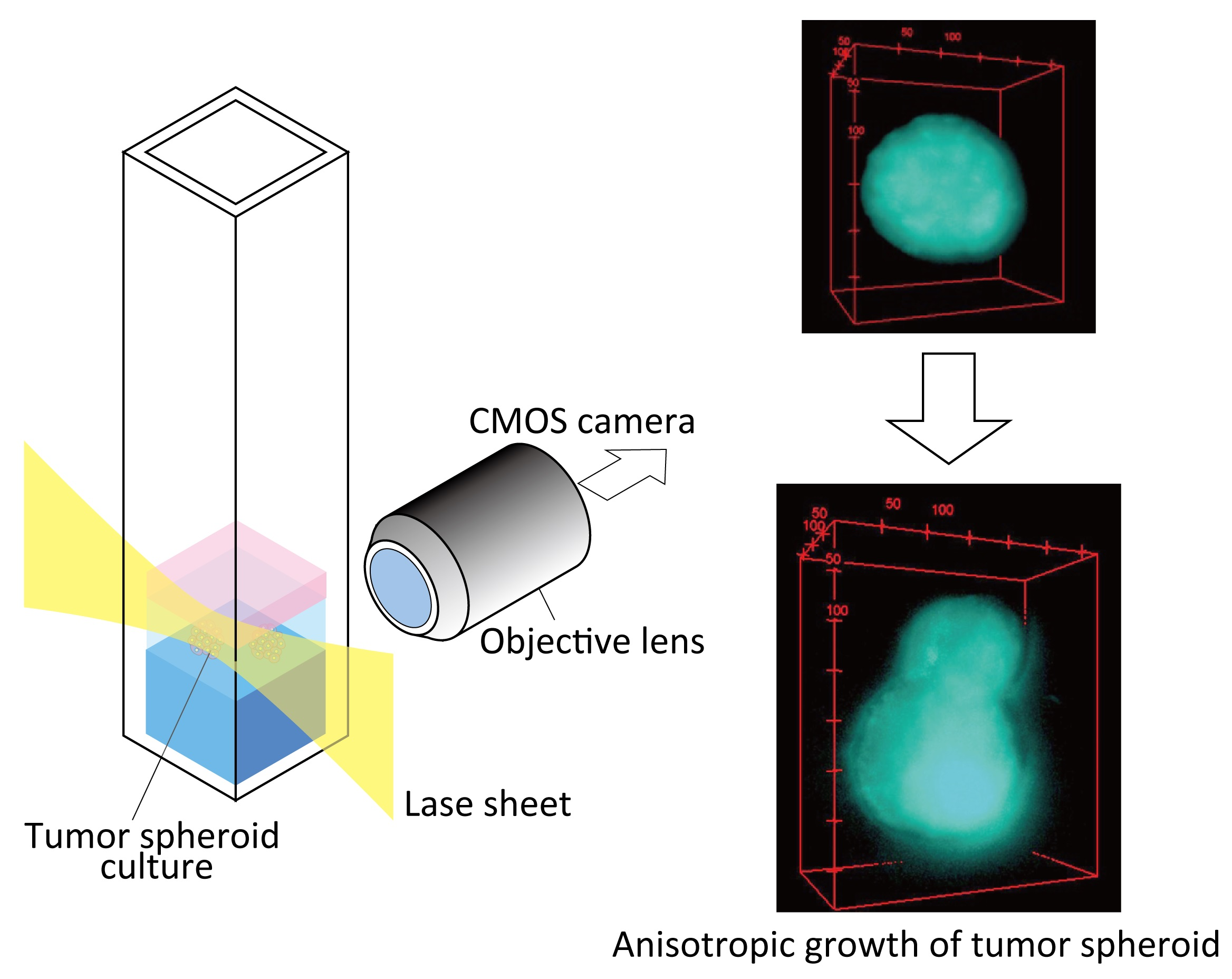
Graphical Abstract

1. Introduction

Colorectal cancer (CRC) is one of the most common malignancies worldwide and a leading cause of cancer-related mortality. CRC accounts for approximately 1.9 million new cases and over 900,000 deaths each year, ranking third in incidence and second in cancer-related mortality worldwide [1]. Local invasion and distant metastasis are hallmarks of CRC progression and major determinants of patient prognosis. Despite advances in surgical resection, chemotherapy, and molecular-targeted therapies, the prognosis of patients with advanced CRC remains poor [2]. Therefore, improving therapeutic strategies requires a deeper mechanistic understanding of tumor progression, particularly during the early stages of invasion and metastasis.
Tumor invasion and metastasis are influenced not only by genetic and biochemical alterations but also by the mechanical microenvironment surrounding cancer cells. During tumor growth, cancer cells are subjected to compressive stress, tensile forces, interstitial fluid pressure, and shear stress arising from interactions with the extracellular matrix (ECM) of surrounding tissues. Recent studies have shown that the mechanical environment can affect cellular proliferation, migration, cytoskeletal organization, and invasive potential. Matrix stiffness and solid stress have been reported to regulate tumor invasion by modulating cytoskeletal remodeling and cell–ECM interactions [3,4]. In addition, increased solid stress within the tumor microenvironment promotes metastasis and alters treatment response [5]. Together, solid stress and matrix stiffness influence tumor progression and metastatic behavior through mechanobiological regulation during cancer development.
In the field of cancer mechanobiology, three-dimensional (3D) culture systems have become valuable tools for simulating in vivo tumor microenvironments. Among these models, multicellular tumor spheroids simulate the structural and physiological characteristics of solid tumors, including spatial gradients of oxygen, nutrients, and metabolites, as well as cell–cell interactions [6]. Owing to these features, spheroid models have been widely employed to investigate tumor growth dynamics, drug responses, and invasive behaviors. In particular, functional assays using spheroid-based systems have enabled the quantitative evaluation of cancer cell invasion into surrounding matrices [7].
Furthermore, mechanical confinement imposed by the surrounding tissues is considered a critical factor in tumor progression. Experimental models have demonstrated that physical restrictions modulate the proliferation, morphology, and invasive potential of cancer cells. Tse et al. [8] reported that mechanical compression alters the malignant phenotype and enhances the invasive characteristics of breast cancer cells, highlighting the importance of solid stress generated by mechanical confinement in tumor progression. Despite the increasing use of spheroid-based tumor models, 3D, time-resolved evaluation of spheroid growth and morphology under mechanical confinement remains technically challenging.
To investigate the earliest stages of tumor development under mechanical confinement, we previously developed a confined tumor model in which cancer cell spheroids were embedded within hydrogels of defined stiffness [9]. This model enables a simulation of the mechanically constrained microenvironment of tumors at early developmental stages. Using this in vitro culture model, we reported that matrix stiffness influences tumor growth and invasion-related characteristics. However, in our previous study, tumor growth was evaluated primarily using two-dimensional optical microscopy. Although informative, two-dimensional observations are limited in capturing the volumetric expansion and anisotropic growth patterns of tumor spheroids.
3D imaging of cell spheroids is frequently performed using confocal laser scanning microscopy [6,7,10,11]. However, as tumor spheroids grow and reach diameters of 1–2 mm, the imaging depth and acquisition speed of confocal microscopy become limiting factors for deep 3D observations. In addition, repeated volumetric scanning may induce photobleaching and phototoxicity, restricting long-term time-lapse observation of living 3D cultures.
Selective plane illumination microscopy (SPIM), a form of light-sheet fluorescence microscopy, is a powerful approach for 3D imaging. In SPIM, a thin sheet of excitation light is introduced perpendicular to the detection axis to illuminate only a single optical section of the specimen, while fluorescence is collected orthogonally by a detection objective [12,13,14,15,16]. This configuration minimizes the photodamage outside the focal plane and enables the rapid acquisition of optical sections over large volumes. Owing to its reduced phototoxicity and improved imaging depth compared with conventional confocal systems, SPIM is well suited for the long-term 3D observation of living tumor cell spheroids.
In this study, we developed a custom-built SPIM-based 3D imaging system optimized for tumor spheroid cultures. By integrating a transparent cuvette-based spheroid culture method and a culture-compatible imaging environment, we established a platform enabling the 3D monitoring of volumetric growth and morphological changes in colorectal adenocarcinoma-derived spheroids. This study aimed to demonstrate the feasibility of the SPIM-based monitoring system and to quantitatively evaluate the 3D volumetric dynamics and growth anisotropy of tumor spheroids.

2. Materials and Methods

2.1. Development of SPIM-Based Monitoring System for Cell Spheroid Culture

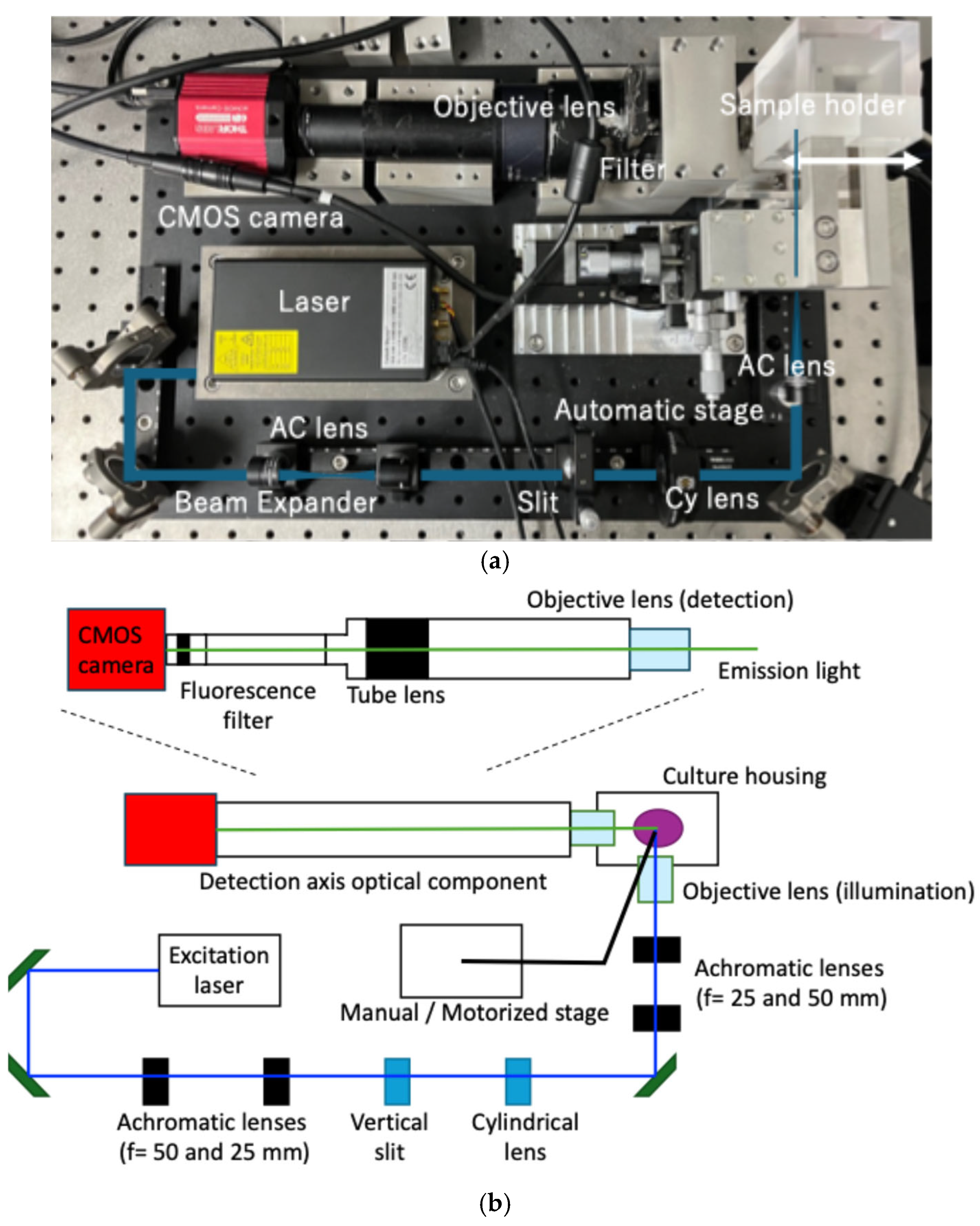
The custom-built SPIM system was constructed based on the open-source OpenSPIM platform [13]. A schematic overview of the system is shown in Figure 1a, and its optical configuration is illustrated in Figure 1b.
A 488 nm laser source (Skyra, Cobolt AB, Skyra, Solna, Sweden) was used for excitation. The light-sheet excitation pathway consisted of three dielectric mirrors (BB1-E02, Thorlabs, Newton, NJ, USA); two achromatic lenses with a 25 mm focal length (AC127-025-A-ML, Thorlabs, Newton, NJ, USA); two achromatic lenses with a 50 mm focal length (AC127-050-ML, Thorlabs, Newton, NJ, USA); a cylindrical lens with a 50 mm focal length (ACY254-050-A, Thorlabs, Newton, NJ, USA), a vertical slit (VA100/M, Thorlabs, Newton, NJ, USA); and a 10× dry objective lens with a 10 mm working distance (RMS10X-PF, Evident, Tokyo, Japan).
First, the laser beam was reflected by two mirrors to align the optical path. The beam was then expanded using a 25 mm achromatic lens and a 50 mm achromatic lens to double the beam diameter. The expanded beam was then passed through a vertical slit to adjust the beam width in the horizontal direction. Subsequently, a cylindrical lens was used to focus the beam along the vertical axis to generate a thin light sheet. After passing through the cylindrical lens, the beam was reflected by a mirror positioned 50 mm from the lens. The beam was then passed through a pair of achromatic lenses (focal lengths of 50 mm and 25 mm) to reduce the beam diameter to half of its original size. Finally, the excitation light was focused by a 10× objective lens to generate a thin light sheet perpendicular to the detection axis. Fluorescence emission from the specimen was collected using a 10× objective lens (RMS10X-PF, Evident, Tokyo, Japan; working distance: 10 mm). The emitted light passed through a tube lens (TTL180-A, Thorlabs, Newton, NJ, USA) and was filtered using an emission filter (MF530-43, Thorlabs, Newton, NJ, USA), which transmitted wavelengths above 500 nm to eliminate the residual 488 nm excitation light. Microscopic images were captured using a CMOS camera (CS2100M-USB, Thorlabs, Newton, NJ, USA).
A disposable optical cuvette (2-478-05, As-One, Osaka, Japan) containing tumor cell spheroids was mounted using a custom-designed sample holder with a motorized X-axis stage (TAMM50-10C, Sigma Koki, Tokyo, Japan) and a manual XYZ translation stage (TSD-405C, Sigma Koki, Tokyo, Japan). The motorized stage was installed on the manual XYZ stage. During image acquisition, the cuvette was first positioned using the manual XYZ stage to focus the spheroids. Optical sectioning was performed by translating the cuvette along the detection axis using the motorized stage to acquire the sequential optical slices. For bright-field imaging, the spheroids were illuminated from the lateral direction using an LED light source, and the transmitted light images were acquired using the same objective lens and CMOS camera as described above, following our previous study [9].
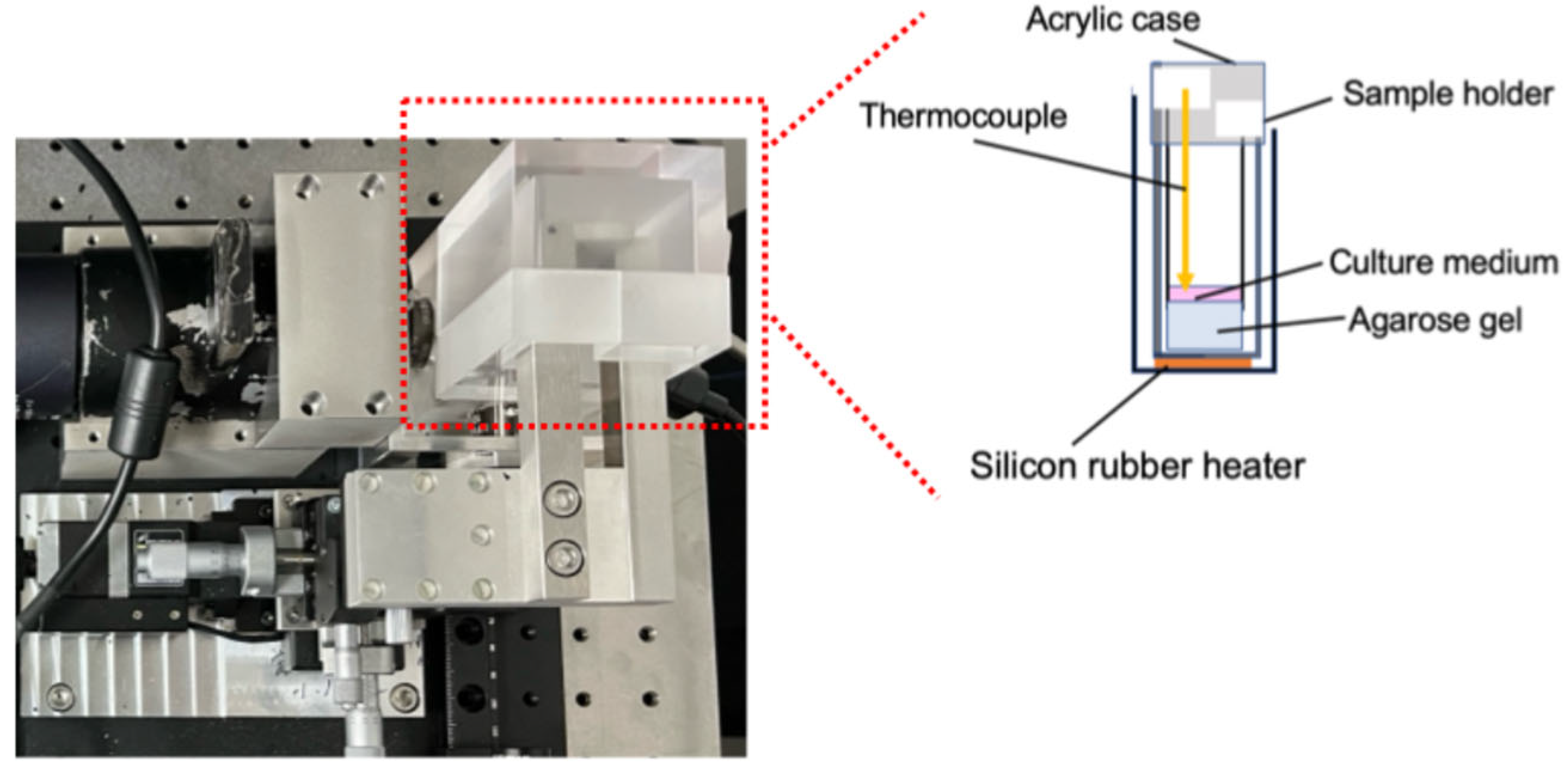
To enable long-term observations of living tumor spheroids, a culture-compatible imaging module was integrated into the custom-built SPIM system. Acrylic housing was fabricated to enclose the cuvette holder and reduce heat dissipation during the image acquisition (Figure 2).
To control the temperature of the cuvette containing the spheroids, the acrylic housing was heated from the base using a silicone rubber heater. The heater temperature was regulated to maintain the cuvette temperature at approximately 36.5–37 °C. The temperature of the cuvette was monitored using a thermocouple (LR5091 Communication Adapter, Hioki, Nagano, Japan). To maintain the physiological pH of the culture medium in the cuvette, 5% CO2 was introduced into the acrylic housing using a gas controller (CO-GAS1000, Taitec, Saitama, Japan).

2.2. Cell Culture and Spheroid Preparation

Human colorectal adenocarcinoma cells (DLD-1, JCRB Cell Bank, Ibaraki, Osaka, Japan) were used in this study. The cells were maintained in an RPMI 1640 medium supplemented with 10% fetal bovine serum (FBS) and 1% antibiotic–antimycotic solution. The cells were cultured at 37 °C in a humidified atmosphere containing 5% CO2 and set at 95% humidity.
For long-term fluorescence visualization, the cell membrane was stained with a fluorescent dye (excitation/emission: 490 nm/504 nm; PKH67, Sigma-Aldrich, St. Louis, MO, USA) according to the manufacturer’s protocol. Briefly, harvested cells were suspended in a serum-free medium containing 2 × 10⁻⁶ M PKH67 dye for 3 min. After staining, the cells were washed with culture medium by centrifugation to remove the dye-containing medium. PKH67 fluorescent labeling enabled the long-term fluorescence monitoring of cell spheroids.
Tumor spheroids containing PKH67-labeled cells were generated using a microwell-based aggregation method. Expanded cells were collected using 0.25% trypsin and seeded into agarose gel microwells formed using a commercial rubber template (3D petri dish, MicroTissues, Providence, RI, USA). The agarose microwells were fabricated by casting a 2.0% (w/v) low-melting-point agarose solution and imprinting the microwell structure using the template. The resulting microwells had a concave geometry with an approximate diameter and depth of 800 µm. The agarose microwell plate was equilibrated with a culture medium before cell seeding. Cells were seeded into the agarose microwells at a density of 4.0 × 10⁵ cells/mL. After seeding, the microwell plates were incubated for 24 h to allow cell aggregation and spheroid formation. The initial spheroid diameter was maintained at approximately 200 µm to prevent hypoxia and nutrient depletion within the spheroid core. The formed spheroids were collected to generate a confined tumor culture model.

2.3. Fabrication of Confined Tumor Culture Model

The confined tumor culture model used in this study was based on a previously established method [9], in which tumor spheroids were embedded within agarose hydrogels of defined stiffness to simulate mechanically constrained tumor microenvironments. Briefly, low-melting-point agarose (Agarose Type VII, Sigma-Aldrich) was dissolved in phosphate-buffered saline (PBS) to prepare gel solutions with concentrations of 0.5%, 1.0%, 1.5%, and 2.0% (w/v). The mechanical stiffness of these agarose gels was previously quantified in our previous study [9], in which the Young’s modulus was experimentally measured using the custom-made material testing device. The reported Young’s modulus values were 2.71, 9.93, 18.2, and 34.5 kPa for 0.5%, 1.0%, 1.5%, and 2.0% agarose, respectively.
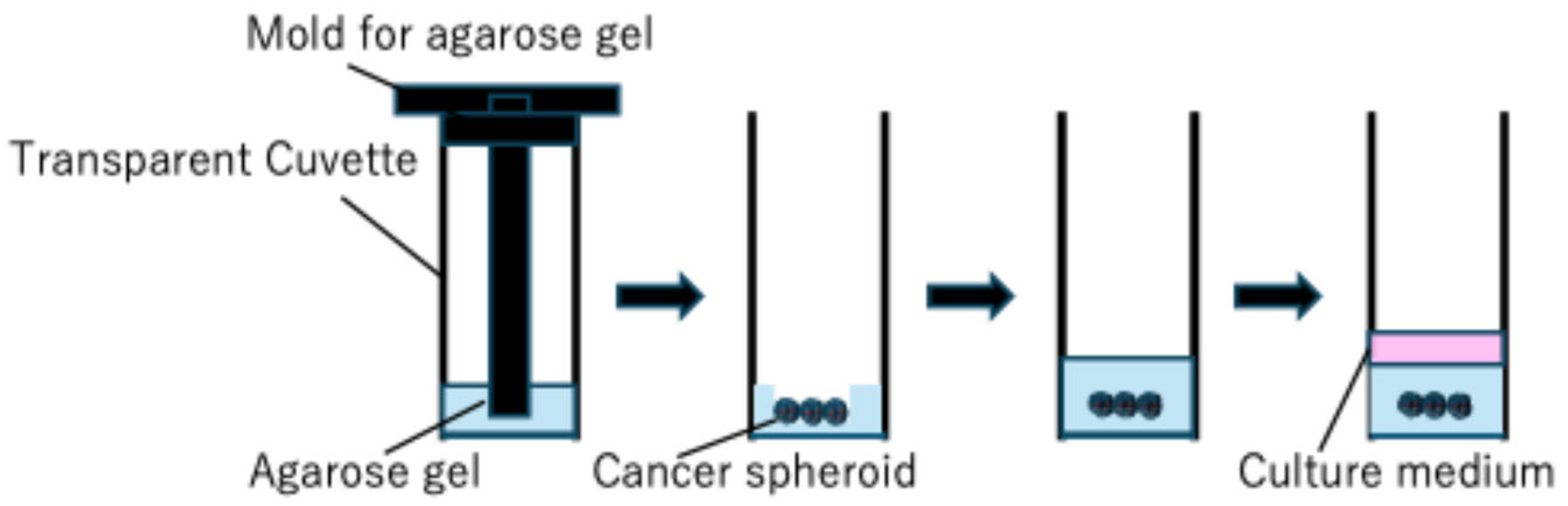
Sterilized disposable cuvettes with four transparent side walls were used as culture and imaging chambers for the developed SPIM monitoring platform. As shown in Figure 3, a custom-made mold was used to create a central pocket in the base agarose layer to position the spheroids at the center of the cuvette. After gelation of the base layer, the spheroids were placed in the pocket, followed by encapsulation with an additional agarose layer. The gel was allowed to solidify at 4 °C for 20 min before adding the culture medium. Both the base agarose layer and the encapsulating agarose layer were prepared using identical agarose concentrations and protocols to ensure spatial homogeneity of the gel stiffness. The cuvette containing the spheroids was mounted on the custom-built SPIM platform for the culture and monitoring of spheroid growth.
To validate the culture environment within the cuvette-based confined tumor model, cell viability was evaluated after 4 days of culture using Calcein-AM/propidium iodide (PI) staining. Tumor cell spheroids prepared without PKH67 labeling were used for this assay, while all other preparation and encapsulation procedures were identical to those described above. The culture medium was replaced with RPMI 1640 containing 1 μg/mL Calcein-AM (Dojindo, Kumamoto, Japan) and 2 μg/mL propidium iodide (Dojindo, Kumamoto, Japan). After incubation at 37 °C for 20 min, fluorescence images were acquired to assess the distribution of the live (Calcein-positive) and dead (PI-positive) cells within the spheroids.

2.4. Three-Dimensional Image Reconstruction and Quantitative Analysis

Sequential optical sections were acquired along the detection optical axis at 6 µm intervals until the entire spheroid volume was covered. Axial displacement was precisely controlled using a motorized translation stage to ensure accurate and reproducible positioning during the volumetric image acquisition. 3D image stacks were processed using Fiji (ImageJ ver.1.54; National Institutes of Health, Bethesda, MD, USA) [15]. The images within the stacks were converted to 8-bit grayscale images for subsequent analysis. Binary segmentation of the spheroids was performed using the Otsu thresholding method. Gaussian and median filtering were applied prior to segmentation to reduce background noise and improve boundary detection. 3D reconstructions were generated using the 3D Viewer plugin in ImageJ. Volumetric measurements were obtained using the 3D Objects Counter plugin in ImageJ. The voxel size was calibrated based on the optical magnification (0.504 µm/pixel in the lateral direction) and the Z-step size (6 µm) during acquisition.
To quantify the spheroid growth, the volume ratio S was defined as:
S = V d a y X V d a y 1
where Vday1 represents the initial spheroid volume and VdayX represents the volume on each observation day. To evaluate the anisotropic spheroid growth, the median and standard deviation of the distance from the spheroid centroid to the surface were calculated using the 3D measurement functions in ImageJ. The mean distance from the centroid to the surface, r, was defined as:
r ¯ = r 1 + r 2 + + r n n
where ri represents the distance from the centroid to each surface voxel, and n is the total number of surface points. The standard deviation of the distance, q, was defined as:
q = r 1 r ¯ 2 + r 2 r ¯ 2 + + r n r ¯ 2 n 1
To normalize variability in spheroid size, the anisotropy index a was calculated as:
a = q d a y   X r ¯ d a y   X
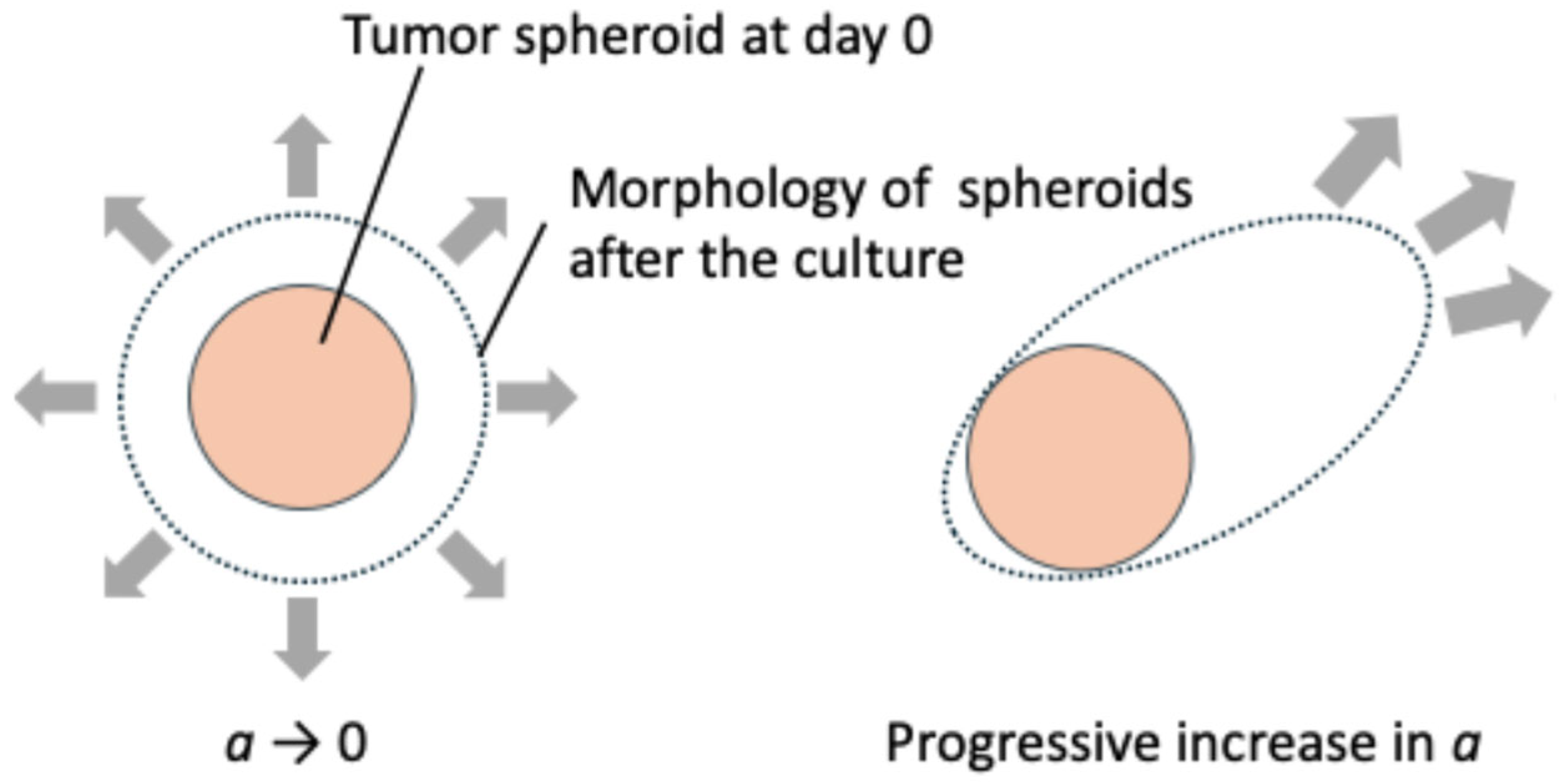
When spheroid growth remained isotropic, a approached zero. An increase in a indicated reduced morphological symmetry and increased anisotropic spheroid growth (Figure 4).

2.5. Statistical Analysis

The data are representative of the three independent experiments performed using different cell culture populations. For each experimental group, 3–5 spheroids (n = 3–5) were analyzed, with each data point representing the mean ± standard deviation. The statistical significance was evaluated using the one-way ANOVA followed by the Tukey–Kramer post hoc test. The statistical significance was defined as p < 0.05.

3. Results and Discussion

3.1. Cell Viability and Two-Dimensional Observation of Tumor Spheroids Cultured in a Transparent Cuvette

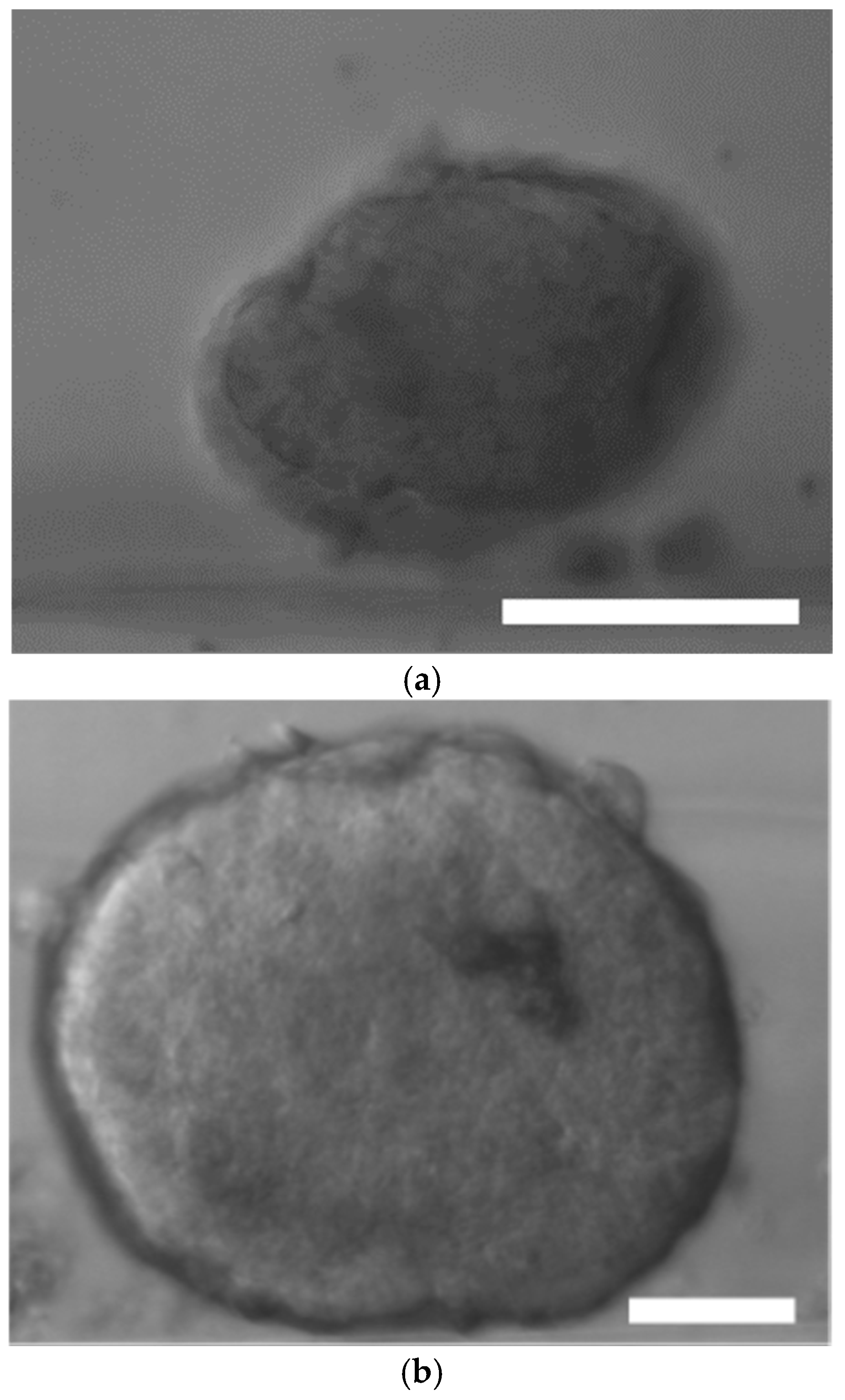
Bright-field observations of the tumor spheroids cultured within the transparent disposable cuvette revealed changes in spheroid size over a 4-day culture period. The extent of spheroid growth depended on the agarose concentration. Under low-stiffness conditions (0.5% agarose), only limited changes in spheroid size were observed. In contrast, spheroids embedded in higher-concentration agarose exhibited more pronounced increases in overall size (Figure 5). In addition, spheroids in higher-stiffness matrices tended to show directional growth. This trend is consistent with our previous study using a confined tumor model [9]. These observations indicate that spheroid growth behavior was influenced by the mechanical properties of the surrounding matrix.
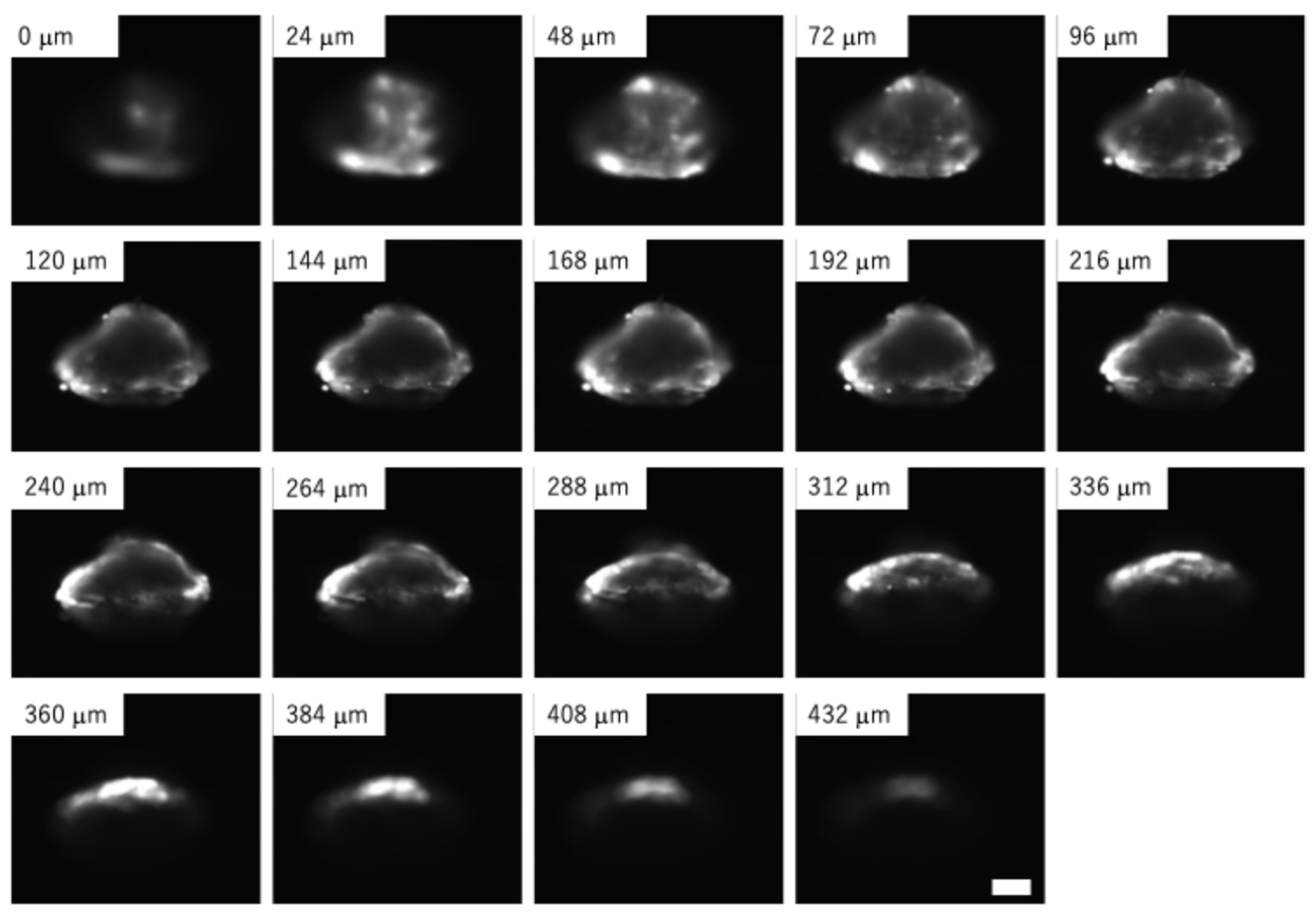
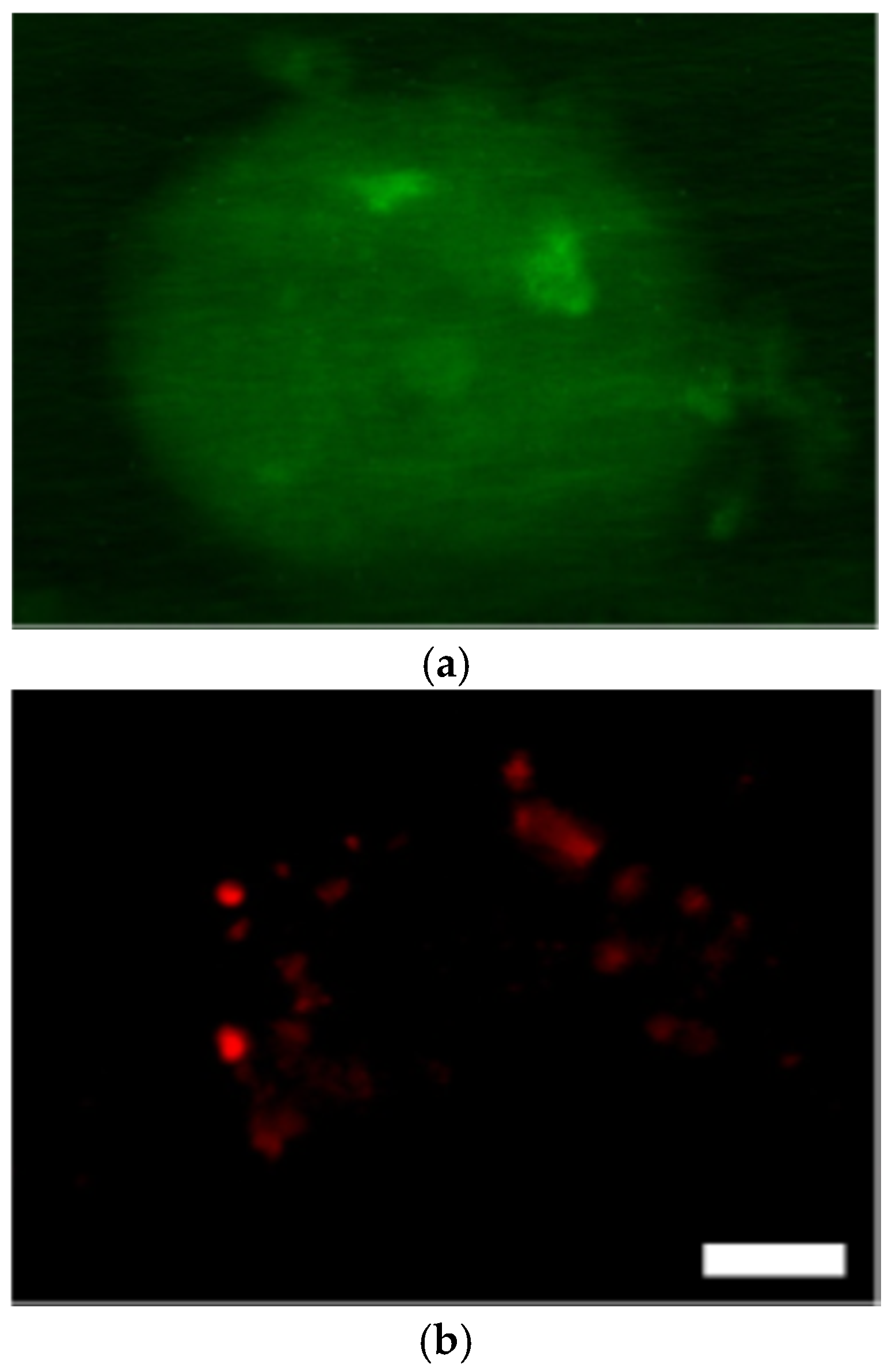
To evaluate the viability of the tumor spheroids cultured in the custom-built SPIM system, calcein-AM/propidium iodide (PI) staining was performed on day 4. Calcein-AM-positive cells were observed throughout the spheroids, although the fluorescence intensity appeared reduced in the spheroid core region. PI-positive cells were sparsely observed and were not localized to a specific region within the spheroids (Figure 6). Calcein-AM-positive cells were also observed in all sequential cross-sectional images of the spheroids (Figure 7). The reduced fluorescence intensity in the spheroid core is likely attributable to the optical attenuation within the spheroid without tissue clearing, rather than a decrease in cell viability. These results indicate that cell viability was maintained throughout the entire spheroid during the culture period.
These findings are consistent with previous reports demonstrating that tumor spheroids with diameters below approximately 1.5–2.0 mm can maintain high cell viability without necrosis core formation during culture. Friedrich et al. reported that multicellular tumor spheroids initially maintained uniform viability before forming hypoxic or necrotic regions as they grew to larger sizes [6]. Similarly, Vinci et al. reported that the nutrient and oxygen gradients within tumor spheroids are generated in a size-dependent manner, with necrosis forming in the core region after exceeding a critical diameter [7].
In the present study, the absence of PI-positive cell accumulation and the spatially distributed presence of calcein-AM-positive cells suggested that the culture conditions within the transparent cuvette and the integrated SPIM-compatible culture housing maintained 5% CO2 atmospheric conditions and supported nutrient diffusion during the 4-day observation period. These results indicated that the developed monitoring platform maintained physiological culture conditions suitable for time-lapse 3D observation of tumor spheroids. The monitoring platform also enables the three-dimensional observation of spheroid morphology, allowing a more comprehensive evaluation of spatial growth behavior. This capability allows for a more detailed investigation of the directional tendencies and underlying mechanisms of anisotropic growth in future studies.

3.2. Three-Dimensional Characteristics of Growth and Anisotropic Invasion of Tumor Spheroids

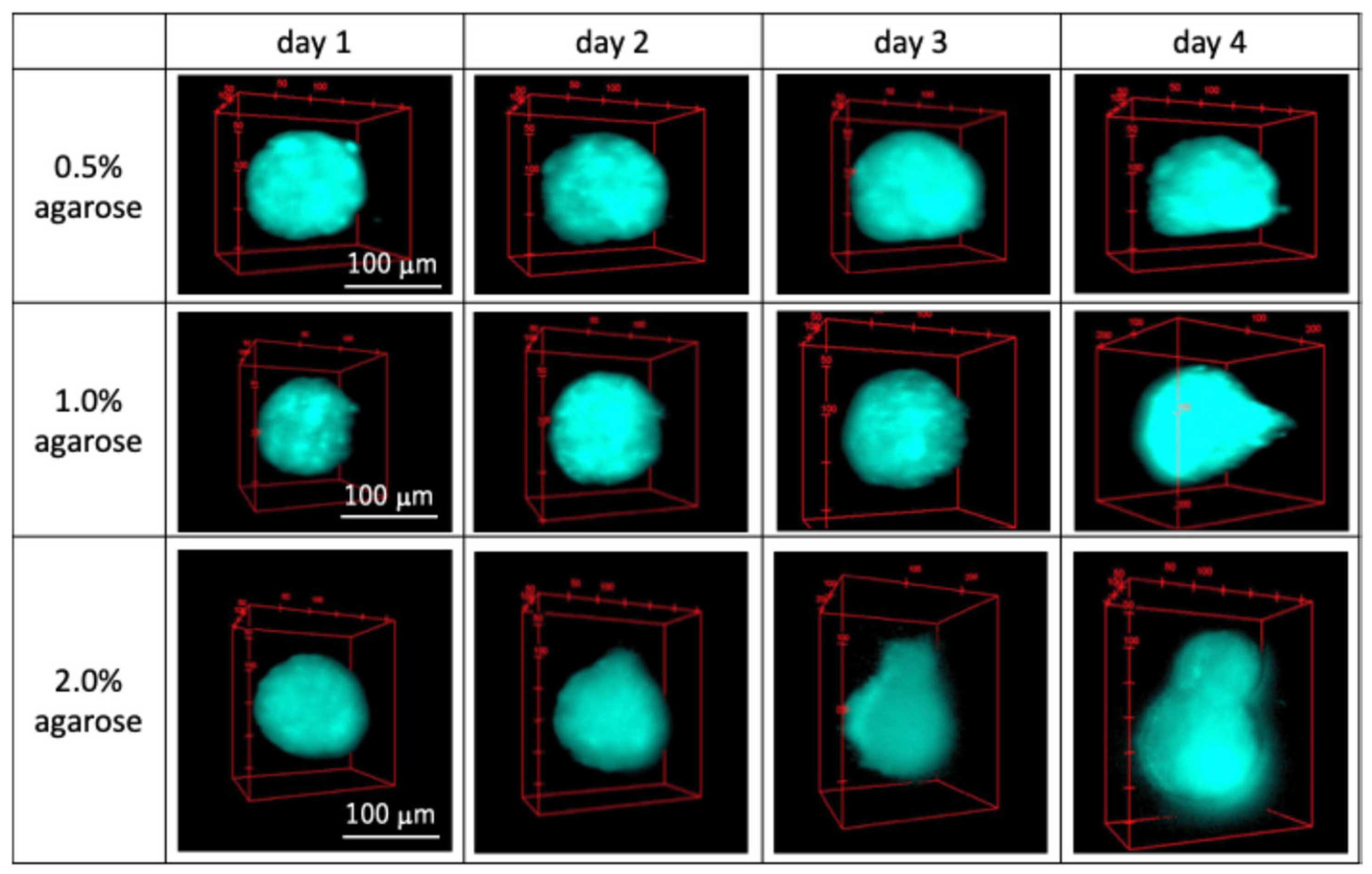
Sequential image stacks acquired along the optical detection axis using the custom-built SPIM system were reconstructed to evaluate the volumetric growth and morphological characteristics of tumor spheroids. Representative reconstructed images revealed the continuous volumetric expansion of spheroids over the culture period under all confinement conditions (Figure 8). However, increasing the agarose concentration, corresponding to increased surrounding matrix stiffness, resulted in decreased spheroid symmetry, suggesting that there was matrix stiffness-dependent anisotropic growth under mechanical confinement.
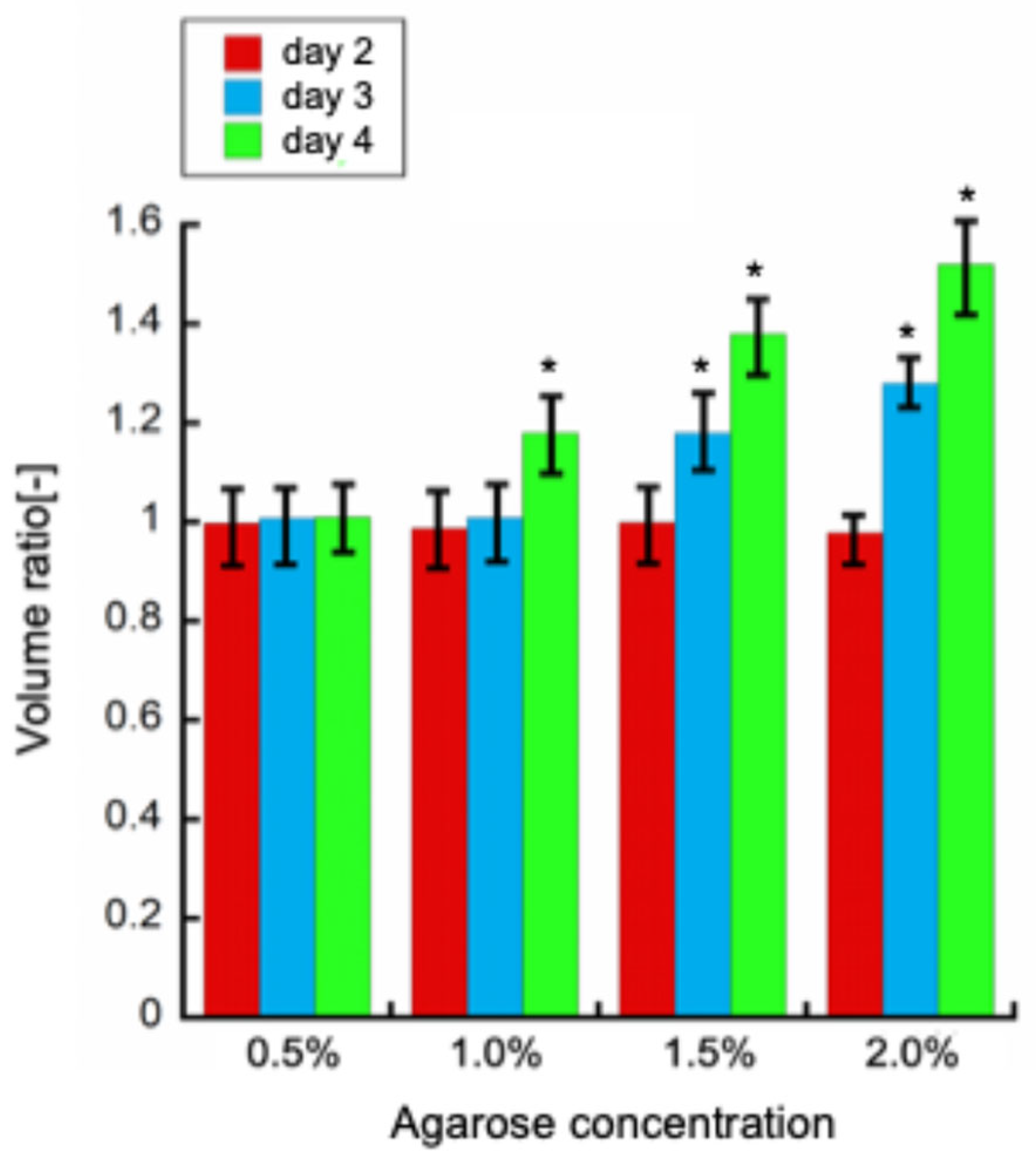
Quantitative volumetric analysis revealed that the extent of spheroid growth varied depending on the agarose concentration (Figure 9). Under low-stiffness conditions (0.5% agarose), only minimal changes in spheroid volume were observed over time. In contrast, spheroids embedded in higher-concentration agarose exhibited greater volumetric increases during the 4-day culture period. Moreover, the rate of volumetric increase became higher with an increasing agarose concentration, corresponding to a greater matrix stiffness.
This stiffness-dependent enhancement of the spheroid growth suggested that compressive mechanical stress derived from the surrounding matrix may stimulate tumor expansion. This result is consistent with our previous study [9], which reported that matrix stiffness regulates tumor growth under mechanical confinement conditions.
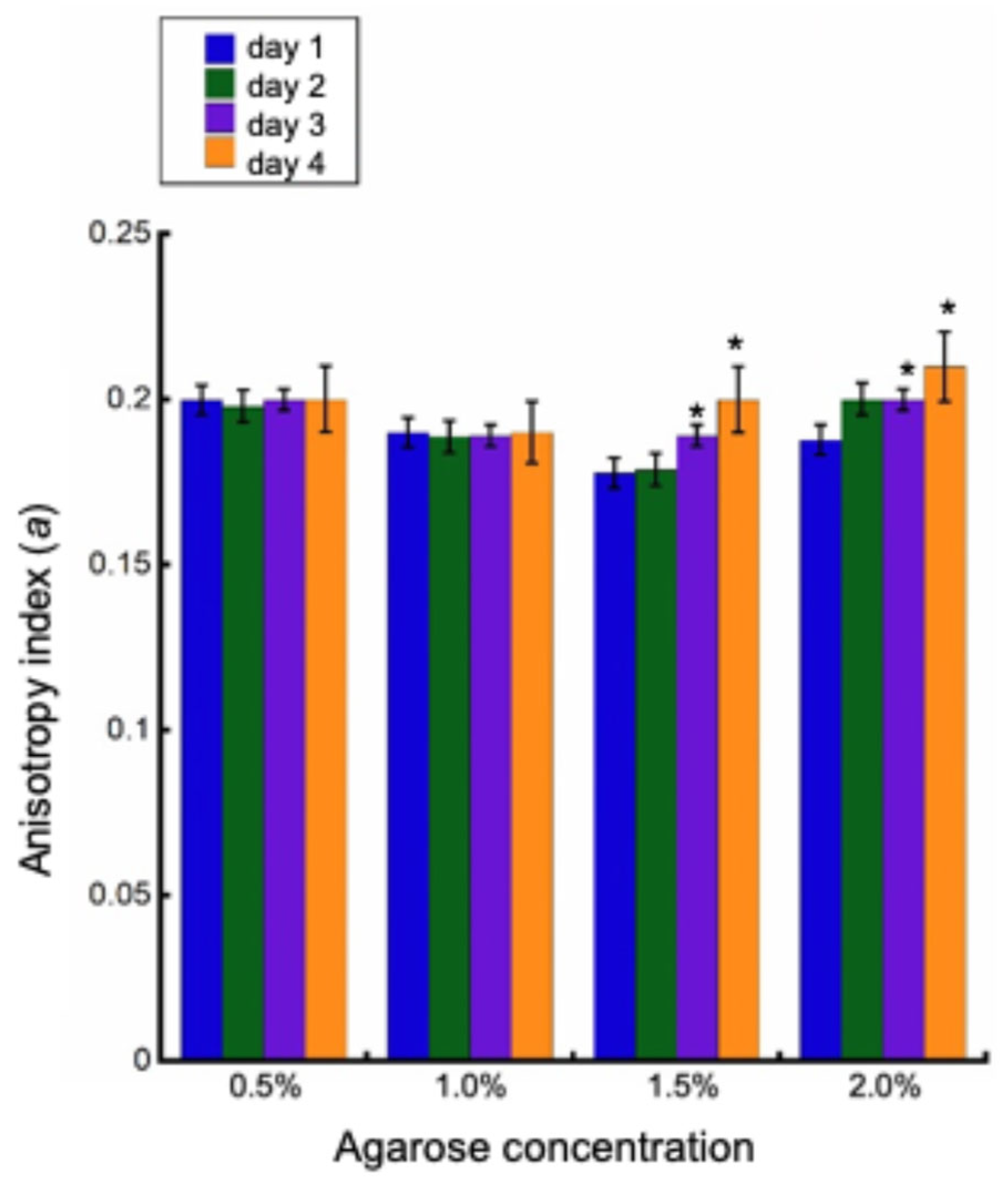
To assess directional growth characteristics, the anisotropy index (a) was calculated based on the spatial distribution of distances from the centroid to the spheroid surface (Figure 10). The anisotropy index remained nearly constant in spheroids embedded within the 0.5% agarose gels throughout the culture period, indicating isotropic growth within a low-stiffness matrix. In contrast, spheroids cultured in higher-concentration agarose gels (1.0–2.0%) exhibited a progressive increase over the culture period; however, the magnitude of this increase was relatively small compared with the morphological changes observed in the volumetric images (Figure 8). This discrepancy suggests that the present anisotropy index is more sensitive to global ellipsoidal deformation and may not fully capture localized protrusive or flattened growth patterns. Therefore, directional growth under higher-stiffness conditions may be underestimated by this index. Further evaluation using additional metrics, such as centroid displacement, may be necessary for a more comprehensive assessment of directional growth behavior.
These findings indicated that tumor spheroids expanded isotropically in low-stiffness matrices, whereas increased matrix stiffness promoted anisotropic growth. The stiffness-dependent enhancement of the anisotropy observed in the present 3D analysis is consistent with our previous two-dimensional observations reported by Nishi et al. [9], in which higher matrix stiffness altered spheroid morphology and invasion-related characteristics. The observed anisotropic growth is also consistent with our previous reports demonstrating that mechanical confinement modulates tumor morphology and invasive behavior [8,17,18]. Under mechanically constrained conditions, internal pressure caused by cell proliferation may alter the cell phenotype from proliferative to invasive, resulting in nonuniform expansion [18,19,20]. Our SPIM-based system enables monitoring of such anisotropic growth and invasion of tumor spheroids and can contribute to the analysis of the mechanobiology of tumor spheroids in confined 3D environments.

4. Conclusions

In this study, we developed a custom-built SPIM-based monitoring platform for quantitative 3D imaging of tumor spheroids under mechanically confined conditions. By integrating a motorized positioning mechanism with cell culture housing and establishing a transparent cuvette-based tumor spheroid culture method compatible with SPIM, the platform enabled the stable long-term acquisition of volumetric image stacks along the detection optical axis while maintaining cell viability.
Tumor spheroids cultured within the transparent cuvette exhibited sustained growth over a 4-day period without necrotic core formation, confirming that the developed imaging system maintained the physiological culture conditions. The 3D reconstruction of the SPIM image stacks allowed for a quantitative evaluation of volumetric expansion and invasive anisotropy. While spheroids embedded in low-stiffness matrices expanded isotropically, increased matrix stiffness promoted stiffness-dependent anisotropic growth.
Our SPIM-based platform has the potential to serve as a practical tool for analyzing the 3D growth dynamics of tumor spheroids over time. Furthermore, our platform provides a useful approach for investigating the mechanobiology of tumor progression in mechanically confined microenvironments.

Author Contributions

Conceptualization, S.M.; methodology, Y.O., M.M. and S.M.; validation, S.M. and M.M.; investigation, Y.O. and M.M.; resources, S.M.; data curation, Y.O. and M.M.; writing—original draft preparation, Y.O.; writing—review and editing, S.M.; visualization, Y.O., M.M. and S.M.; supervision, S.M.; project administration, S.M.; funding acquisition, S M. All authors have read and agreed to the published version of the manuscript.

Funding

This study was partially supported by JSPS KAKENHI (grant numbers 22H03943, 17K01369, and 26560222) and a grant from the Keio University Academic Development Funds.

Institutional Review Board Statement

Not applicable.

Informed Consent Statement

Not applicable.

Data Availability Statement

The datasets presented in this article are not readily available because of being part of an ongoing project. Requests for access to the datasets should be directed to the corresponding author.

Conflicts of Interest

The authors declare no conflicts of interest.

Abbreviations

The following abbreviations are used in this manuscript:
SPIMSelective plane illumination microscopy
RPMI 1640Roswell Park Memorial Institute 1640 medium
FBSFetal bovine serum

References

  1. Bray, F.; Laversanne, M.; Sung, H.; Ferlay, J.; Siegel, R.L.; Soerjomataram, I.; Jemal, A. Global cancer statistics 2022: GLOBOCAN estimates of incidence and mortality worldwide for 36 cancers in 185 countries. CA Cancer J. Clin. 2024, 74, 229–263. [Google Scholar] [CrossRef] [PubMed]
  2. Dekker, E.; Tanis, P.J.; Vleugels, J.L.A.; Kasi, P.M.; Wallace, M.B. Colorectal cancer. Lancet 2019, 394, 1467–1480. [Google Scholar] [CrossRef] [PubMed]
  3. Butcher, D.T.; Alliston, T.; Weaver, V.M. A tense situation: Forcing tumour progression. Nat. Rev. Cancer 2009, 9, 108–122. [Google Scholar] [CrossRef] [PubMed]
  4. Northcott, J.M.; Dean, I.S.; Mouw, J.K.; Weaver, V.M. Feeling Stress: The Mechanics of Cancer Progression and Aggression. Front. Cell Dev. Biol. 2018, 6, 17. [Google Scholar] [CrossRef] [PubMed]
  5. Nia, H.T.; Liu, H.; Seano, G.; Datta, M.; Jones, D.; Rahbari, N.; Incio, J.; Chauhan, V.P.; Jung, K.; Martin, J.D.; et al. Solid Stress and Elastic Energy as Measures of Tumour Mechanopathology. Nat. Biomed. Eng. 2016, 1, 4. [Google Scholar] [CrossRef] [PubMed]
  6. Friedrich, J.; Seidel, C.; Ebner, R.; Kunz-Schughart, L.A. Spheroid-Based Drug Screen: Considerations and Practical Approach. Nat. Protoc. 2009, 4, 309–324. [Google Scholar] [CrossRef] [PubMed]
  7. Vinci, M.; Gowan, S.; Boxall, F.; Patterson, L.; Zimmermann, M.; Court, W.; Lomas, C.; Mendiola, M.; Hardisson, D.; Eccles, S.A. Advances in Establishment and Analysis of Three-Dimensional Tumor Spheroid-Based Functional Assays for Target Validation and Drug Evaluation. BMC Biol. 2012, 10, 29. [Google Scholar] [CrossRef] [PubMed]
  8. Tse, J.M.; Cheng, G.; Tyrrell, J.A.; Wilcox-Adelman, S.A.; Boucher, Y.; Jain, R.K.; Munn, L.L. Mechanical Compression Drives Cancer Cells toward Invasive Phenotype. Proc. Natl. Acad. Sci. USA 2012, 109, 911–916. [Google Scholar] [CrossRef] [PubMed]
  9. Nishi, R.; Oda, Y.; Morikura, T.; Miyata, S. Effect of Compressive Stress in Tumor Microenvironment on Malignant Tumor Spheroid Invasion Process. Int. J. Mol. Sci. 2022, 23, 7091. [Google Scholar] [CrossRef]
  10. Costa, E.C.; Moreira, A.F.; de Melo-Diogo, D.; Gaspar, V.M.; Carvalho, M.P.; Correia, I.J. 3D Tumor Spheroids: An Overview on the Tools and Techniques Used for Their Analysis. Biotechnol. Adv. 2016, 34, 1427–1441. [Google Scholar] [CrossRef] [PubMed]
  11. Yau, J.N.N.; Adriani, G. Three-Dimensional Heterotypic Colorectal Cancer Spheroid Models for Evaluation of Drug Response. Front. Oncol. 2023, 13, 1148930. [Google Scholar] [CrossRef] [PubMed]
  12. Huisken, J.; Swoger, J.; Del Bene, F.; Wittbrodt, J.; Stelzer, E.H.K. Optical Sectioning Deep Inside Live Embryos by Selective Plane Illumination Microscopy. Science 2004, 305, 1007–1009. [Google Scholar] [CrossRef] [PubMed]
  13. Pitrone, P.; Schindelin, J.; Stuyvenberg, L.; Preibisch, S.; Weber, M.; Eliceiri, K.W.; Huisken, J.; Tomancak, P. OpenSPIM: An open-access light-sheet microscopy platform. Nat. Methods 2013, 10, 598–599. [Google Scholar] [CrossRef] [PubMed]
  14. Diosdi, A.; Piccinini, F.; Boroczky, T.; Dobra, G.; Castellani, G.; Buzas, K.; Horvath, P.; Harmati, M. Single-cell light-sheet fluorescence 3D images of tumour-stroma spheroid multicultures. Sci. Data 2025, 12, 492. [Google Scholar] [CrossRef] [PubMed]
  15. Lorenzo, C.; Frongia, C.; Jorand, R.; Fehrenbach, J.; Weiss, P.; Maandhui, A.; Gay, G.; Ducommun, B.; Lobjois, V. Live cell division dynamics monitoring in 3D large spheroid tumor models using light sheet microscopy. Cell Div. 2011, 6, 22. [Google Scholar] [CrossRef] [PubMed]
  16. Schindelin, J.; Arganda-Carreras, I.; Frise, E.; Kaynig, V.; Longair, M.; Pietzsch, T.; Preibisch, S.; Rueden, C.; Saalfeld, S.; Schmid, B.; et al. Fiji: An open-source platform for biological-image analysis. Nat. Methods 2012, 9, 676–682. [Google Scholar] [CrossRef] [PubMed]
  17. Stylianopoulos, T.; Martin, J.D.; Chauhan, V.P.; Jain, S.R.; Diop-Frimpong, B.; Bardeesy, N.; Smith, B.L.; Ferrone, C.R.; Hornicek, F.J.; Boucher, Y.; et al. Causes, consequences, and remedies for growth-induced solid stress in murine and human tumors. Proc. Natl. Acad. Sci. USA 2012, 109, 15101–15108. [Google Scholar] [CrossRef] [PubMed]
  18. Nia, H.T.; Munn, L.L.; Jain, R.K. Physical traits of cancer. Science 2020, 370, eaaz0868. [Google Scholar] [CrossRef] [PubMed]
  19. Fernández-Sánchez, M.E.; Barbier, S.; Whitehead, J.; Béalle, G.; Michel, A.; Latorre-Ossa, H.; Rey, C.; Fouassier, L.; Claperon, A.; Brullé, L.; et al. Mechanical induction of the tumorigenic β-catenin pathway by tumour growth pressure. Nature 2015, 523, 92–95. [Google Scholar] [CrossRef] [PubMed]
  20. Sun, X.; Zhou, Y.; Sun, S.; Qiu, S.; Peng, M.; Gong, H.; Guo, J.; Wen, C.; Zhang, Y.; Xie, Y.; et al. Cancer cells sense solid stress to enhance metastasis by CKAP4 phase separation-mediated microtubule branching. Cell Discov. 2024, 10, 114. [Google Scholar] [CrossRef] [PubMed]
Figure 1. (a) The gross appearance and (b) the optical configuration of the SPIM-based monitoring system for the tumor spheroid cultures.
Micro 06 00026 g001
Figure 2. Acrylic housing mounted on the SPIM system for the tumor spheroid cultures.
Micro 06 00026 g002
Figure 3. The fabrication process of the agarose-embedded tumor spheroid culture model for establishing mechanically confined conditions.
Micro 06 00026 g003
Figure 4. A schematic illustration of the relationship between the spheroid growth patterns and the anisotropy index (a).
Micro 06 00026 g004
Figure 5. The representative two-dimensional bright-field images of tumor spheroids embedded in 2.0% agarose and cultured in a transparent cuvette at (a) day 1 and (b) day 4, showing spheroid growth during the 4-day culture period. Scale bar: 100 μm.
Micro 06 00026 g005
Figure 6. The representative fluorescence microscopic images of tumor spheroids embedded in 2.0% agarose gel and stained with (a) calcein-AM and (b) propidium iodide (PI) for cell viability evaluation. Scale bar: 100 μm.
Micro 06 00026 g006
Figure 7. The representative sequential optical sections acquired by SPIM of a calcein-AM–stained tumor spheroid embedded in 2.0% agarose gel at day 4. Scale bar: 100 μm.
Micro 06 00026 g007
Figure 8. The three-dimensional reconstructed images generated from sequential SPIM acquisitions of PKH67-stained tumor spheroids embedded in agarose gels of different concentrations.
Micro 06 00026 g008
Figure 9. The time-dependent changes in normalized spheroid volume (S = Vn/V0) for tumor spheroids cultured in agarose gels of different concentrations. The data are presented as mean ± SD (n = 5). * indicates a significant difference compared with the previous time point (p < 0.05).
Micro 06 00026 g009
Figure 10. The time-dependent changes in the anisotropy index (a) of tumor spheroids cultured in agarose gels of different concentrations. The data are presented as mean ± SD (n = 5). * indicates a significant difference compared with the value at day 1 (p < 0.05).
Micro 06 00026 g010
Disclaimer/Publisher’s Note: The statements, opinions and data contained in all publications are solely those of the individual author(s) and contributor(s) and not of MDPI and/or the editor(s). MDPI and/or the editor(s) disclaim responsibility for any injury to people or property resulting from any ideas, methods, instructions or products referred to in the content.